Home Blog Page 2609

हम जब नींद में थे, लालटेन बुझ गयी…

0


प्रकाश साव

मयंक सक्सेना

प्रकाश साव से मुलाक़ात का श्रेय, रंगकर्मी और थिएटर एक्टिविस्ट राजेश चंद्र को देता हूं, लेकिन उनसे मिलने के कुछ मिनट बाद, यह लगना ही बंद हो गया कि उनसे पहली बार मिल रहा हूं…न जाने कितनी पुरानी जान-पहचान हो…ऐसा लगा और फिर अर्से बाद इतनी आत्मीयता से प्रकाश भाई के आगरा के उस छोटे से कमरे में ज़मीन पर बैठ कर खाना खाया कि आत्मा कई दिन तक तृप्त रही…फरवरी 2013 का समय था…प्रकाश भाई ने तब भी आंसू भरी आंखों से ज़िक्र किया था कि उनका केंद्रीय हिंदी संस्थान में किस कदर उत्पीड़न हो रहा था…जातीय टिप्पणियां भी होती थी…मैंने लिखने की बात की, तो अनुनय कर के मुझे न लिखने को मना लिया…प्रकाश भाई को दवाएं…ढेर सारी दवाएं खाते देखा था…प्रत्यूष उस समय 3 साल का भी नहीं था शायद…उसके साथ, जी भर खेला…और चला आया…अब प्रकाश भाई चले गए हैं…हां, आत्महत्या की है उन्होंने…उसी उत्पीड़न से निराश हो कर…उनकी कुछ कविताएं पढ़िए…जीते जी, जिसे आप नहीं समझ सके…उसकी कविताएं उसकी पूरी ज़िंदगी का पता देती हैं…प्रकाश भाई, आप मार गए हम सबको…न जाने कब तक, हम सब ऐसे ही मरते हुए ज़िंदा रहने को अभिशप्त रहेंगे…
 
युवा कवि प्रकाश की कुछ कविताएं….
 
आत्मन् ! ऐसे ही

नदी भागी जाती है
सागर की ओर
पांवों पर झुक कर
लीन हो जाती है
यह नमस्कार की नित्यलीला है
आत्मन ! 
ऐसे ही नमस्कार करता हूँ !
 
 
लालटेन

हर आदमी की आंख में
लालटेन उठाकर झांकता था
हर आंख में एक छोटा- सा गड्ढा था
जिसमें कीचड़ भरा थोड़ा- सा पानी था
और पानी में रोशनी नहीं थी
पूरी पृथ्वी पर लिए- लिए जलती लालटेन
घूमता रहा दौड़ता- भागता
मेरे पास कुछ नहीं था कभी भी
फकत एक जलती लालटेन के सिवाय
और इसी लालटेन की रोशनी
मैं हर आंख में ढूढता था
यह लालटेन कब से मेरे साथ थी
या मैं इस लालटेन को कब मिला
लालटेन ने मुझे खोजा था
या लालटेन मेरे द्वारा खोज ली गयी थी
यह उस क्षण तक मालूम नहीं था
जब मैं चारपाई पर लेटा आखिरी सांसें ले रहा था
लालटेन चारपाई के पास पड़ी
थिर जल रही थी
दस-बीस लोग पास खड़े- बैठे थे
बिलखते जाते थे पूछते आखिरी इच्छा
मूर्छा में मैंने जाने क्या कहा 
किसी जनम में मुझे याद आया
कि मेरी इच्छा और मूर्छा के बीच
लालटेन की पीली रोशनी झर रही थी !
 
अकथ

मेरे पास कहने को कुछ नहीं था
सो जन्मों से कहता जाता था
कहने को होता 
तो कहकर चुक जाता
कहने को कुछ नहीं था
सो वाणी डोलती न थी
केवल कुछ तरल सा हुआ करता था
कहने को कुछ नहीं था
सुबह कोहरा रहता था
समय चुपचाप बहता था
मैं हर बार एक हिलते पौधे से 
एक अंजुरी फूल चुनकर
धारा में डाल देता था
और चुपचाप प्रणाम करता था !
 
जन्म की खबर

मुझे पता नहीं था मैं जन्मा था
बहुत बाद में बताया गया
कि तुम जन्मे थे
अपने जन्म की मुझे कभी खबर नहीं थी
न भूला था
भूल जाता तब जब खबर होती
और खबर होती तो याद रखता
जन्म की खबर किसी ने बाद में
मुझ पर चिपका दी
चिपके हुए को अनजाने मैं ढोता रहा
नदियों में पानी बहता रहा 
चाँद से रोशनी झरती रही
रोशनी में नहाते हुए 
मेरी मुस्कुराहट में एक सोच थी
सचमुच कभी मेरा जन्म हुआ होता
और जनमने से पहले जनमने की मीठी खबर 
मेरे रोओं में खिलती !
 
अ-उपस्थित

वहां एक दृश्य असहाय- सा चुपचाप पड़ा था
दृश्य का कोई दर्शक नहीं था
दृश्य के पास एक गाना रखा हुआ था
गाना गाया नहीं जा सकता था
कोई गायक नहीं था
एक हूक थी पसरा हुआ आकाश था
एक विस्मय था और अनंत था !
 
सुरति

वह सारे नामों को भूल गया था
अचानक उसे अपना नाम याद आता था
वह उसे पुकारता था—आकाश ! आकाश !! आकाश !!!
आकाश तालियों से गडगडा उठता था !
 
ललाट

मै उसके विराट ललाट को एकटक देखता था
मै उसका तिलक करना चाहता था
मै हाथ बढ़ाता था—–
सामने पृथ्वी का मस्तक उठ आता था
मै ठिठककर रुकता था
फिर तिलक को हाथ बढ़ाता था 
कि अन्तरिक्ष का मस्तक सामने झुक आता था
मै रूककर उसके मस्तक को निहारता था
कि शून्य का विराट ललाट दिख जाता था
हंसकर मैंने अपने संक्षिप्त ललाट पर तिलक कर लिया
अब पृथ्वी,अन्तरिक्ष और शून्य
लालच से मेरा ललाट निहारते थे !
 
हरे नृत्य का दृश्य

वृक्ष का हरा वृक्ष पर नृत्य करता था
नृत्य की थिरकन से कांपकर 
उस पर आया एक पक्षी मुड़कर
वापस आकाश में उड़ जाता था 
पृथ्वी का रस उसकी पुतलियों में दिपकर
उसे पास बुलाता था
वह अपने पंखों और हवा के साथ नृत्य करता हुआ
पुनः वृक्ष के हरे पर उतरता था
हवा की बांह में
वृक्ष और चिड़िया के हरे का
युगल नृत्य एक समय में अहर्निश होता था
नृत्य को मुस्कुराता हुआ ऊपर से आकाश निहारता था
नीचे हिलता हुआ तरल जल चुपचाप बहता था !
 
 
यही तो घर नहीं और भी रहता हूँ
जहाँ-जहाँ जाता हूँ रह जाता हूँ
जहाँ-जहाँ से आता हूँ कुछ रहना छोड़ आता हूँ
जहाँ सदेह गया नहीं
वहाँ की याद आती है
याद में जैसे रह लेता हूँ
तो थोड़ा-सा रहने का स्पर्श
वहाँ भी रह जाता है
जो कुछ भी है जितना भी
नहीं भी जो है जितना भी
वहाँ-वहाँ उतना-उतना रहने की इच्छा से
एक धुन निकलती है
इस धुन में घुल जाता हूँ
होने की सुगन्ध के साथ।
 
मैं आया ही था कि जाना आ गया

धुआँती सुबह की तरह मैं
अस्तित्व के बरामदे में प्रवेश करता था
कि साँझ की तरह मैं ही वहाँ रिक्त
लेटा पड़ा हुआ मिल जाता था
किसी जन्म का कुछ पता नहीं चलता था
व्याकुल मैं उसे कवच-सा ढूँढ़ता था
कि मृत्यु अपने रथ पर आरूढ़
सामने मुस्कुराती खड़ी मिल जाती थी

जो नहीं होता था
उसका उलट पहले हो जाता था !
 
(प्रकाश साव, युवा कवि थे…शिल्पायन द्वारा प्रकाशित कविता संग्रह 'होने की सुगंध' के लिए भारतीय भाषा परिषद् द्वारा सम्मानित, पंजाबी में कविताओं का अनुवाद, मलयालम और अंग्रेज़ी में जारी…मंगाने के लिए शिल्पायन पब्लिशर्स, 10295, स्ट्रीट नम्बर 1, वेस्ट गोरखपार्क, शाहदरा, दिल्ली-110032, फोन – 9868218917 से सम्पर्क किया जा सकता है…)


Lessons Unlearned: Nine years after the Thorat Committee report

0


In 2007, then prime minister Manmohan Singh set up the Thorat Committee Report following grave and widespread allegations of differential treatment and discrimination against students belonging to what is commonly regarded as students from marginalized sections of society  as also students from the Adivasi sections of society. Dalit students also known as students from the Scheduled Caste category and Adivasi students complained of direct and subtle forms of discrimination that were painstakingly documented by the Committee. The committee consisting of professor SK Thorat (chairperson) and Dr. K.M. Shyamprasad  and Dr. R.K. Srivastava(members) was set up to “enquire into allegations of differential treatment of SC/ST students in the All India Institute of Medical Sciences (AIMMS). This was in the wake of media reports and complaints to the Government about the said harassment and abuse. The committee was given the mandate to look into all matters connected with the said harassment.”
 
The AIIMS being a 100 per cent grant-in-aid institution of the Government is to comply with all the directives of the Government and provide for the constitutionally guaranteed safe guards to the weaker sections particularly the Schedule Castes and Schedule Tribes.
 
The observation and findings of the committee in summary form are relevant after the continuing alienation experienced by students from weaker sections, including Dalits in institutes of higher learning. The context of the Thorat Committee investigation had been the anti-quota agitation in AIMMS.
 
The Ministry for Human Resources Development (MHRD) has 40 central universities under it. There are another five under the government of India. How many of these Institutions have internalized the findings of the Thorat Committee Report?
 
In 2007 the Thorat Committee that thoroughly investigated the had recorded some disturbing findings from India’s premier medical institute. Excerpted below are the findings and recommendations from the report.
 
Excerpts from the Thorat Committee Report
 
Absence of special programs in AIIMS
 
AIIMS has not taken any initiative to arrange remedial coaching in English language, basic courses or any other spheres for SC/ST students as is required by the educational institutions. About 84 per cent of SC/ST students mentioned the need for remedial coaching in English language and basic courses.
 
Assessment and Examination and Teachers Support to SC/ST students
 
AIIMS examination system involves both internal and external assessment. A large component of the examination has a high subjective element. The examination system with 50 per cent internal assessment and with significant role of individual faculty, gives scope for faculty to misuse this privilege, if he/she wishes to do so.
 
The internal assessment and the training are linked so that through a mentoring and hand holding process the teacher gets the best out of the student while imparting skills and knowledge. The following are the responses of the students to the questions about discrimination in teaching sessions, laboratories and clinical.
 
Lack of consultation and interaction – About 69 per cent of the SC/ST students reported that they do not receive adequate support from teachers about half of them give inaccessibility and indifference as reason for less contact with teachers. About one third give caste background as reason for avoidance by the teachers. Thus it emerged that the SC/ST students do not receive the kind of support that the other students received from their teachers. Given the dependence of students on teachers for learning and skill, the lack of adequate support to the SC/ST reflects in performance and psychological problems.
 
Discrimination in Teaching – Of the total responses about 72 per cent of them mentioned some kind of discrimination being faced in teaching session.
 
Evaluation of Theory Paper-About 76 per cent of students mentioned that their papers were not examined properly. About 88 per cent mentioned that they got fewer marks than they expected. Only 20 per cent mentioned that they got feedback on their answers papers.
 
Discrimination in Practical and Viva- –About 84 per cent of respondents mentioned that evaluation in practical and viva was unfair. About 85 per cent of them mentioned that the SC students don’t receive enough time with the examiners, as compared with the higher caste students About 40 per cent of the students also mentioned that more difficult questions are generally put to them. About 76 per cent of the respondents reported that the examiner had asked the caste background; about 84 per cent mentioned that their grades were affected because of their caste background.
 
The self reported experiences of SC/ST students indicate that discrimination take the form of avoidance, contempt, non- cooperation, and discouragement and differential treatment by teachers towards these students.
 
Class representatives- A representative of the class has a role in facilitating academics and even his/her role has been discriminatory. Only on few occasion the SC/ST students are elected as class representative. About 80 per cent of the student respondent reported differential treatment being faced. in distribution of instructions, in informing schedule of examination or rescheduling of classes, class trips and cultural activities.
 
Problem in the Hostel
 
Segregation in Hostel- Over a period of time and particularly in the wake of the anti-quota
agitation, several students belonging to the SC/ST categories have shifted to the two top floors of Hostels 4 and 5 leading some sort of segregation on caste line. The SC/ST students are forced to shift to these hostels by a sustained pressure in the form of humiliation, abuse and even violence by the higher caste students. About half of the respondent students indicated caste harassment by higher caste students as reason for shifting from other hostel to hostel 4 and 5.
 
Inter-personal relation in hostel, Mess and Dinning
 
1. Social isolation –Students living in hostel where a majority students are from higher caste complained of social isolation in inter-personal relation. About 88 per cent of the students reported experiences of social isolation in various ways. and 84 per cent of the student respondent reported violence in various forms..
 
2. Discrimination in Mess- While the general messes are open to the reserved categories, about 76 per cent of SC/ST respondent students mentioned that they faced restrictions on the joining the private messes. There is a caste divide in formation of private mess.
 
Social segregation in games and sports and cultural events
 
Participation in game-The SC/ST students faced discrimination in participation various games. About 88 per cent faced discrimination in access to basket ball game followed by 60 per cent in cricket.
 
Participation in the Cultural Event PULSE-The AIIMS organize a big cultural event which goes by the name of PULSE “. About, 32 per cent of the SC/ST students have not participated in the PLUSE all together. About 68 per cent participated in PULSE in various capacities. Of these about 80 per cent participated as observer and volunteer and only 11 per cent as competitor and 7 per cent as representative in any committee. The SC/ST students feel that the PULSE organizing committee works in a biased manner such that the SC/ST students are not give due participation
 
 
Ragging and Caste Overtone
 
Even though ragging is officially banned in the AIIMS, there appears to be a month period of unofficial ragging. Students of SC/ST category have stated that ragging has serious caste
overtones and several forms of humiliation are meted out to them.
 
Problems of SC/ST Senior and Junior Residents
 
There is sufficient reason and evidence including Supreme Court observations that AIIMS followed a reservation policy which is not in conformity with the directives of the Central Government while selecting junior residents (postgraduate students). These mechanisms effectively denied a good number of opportunities to the SC/ST community…

This should be quickly corrected. Discrimination of residents of the SC/ST category is evident in a subtle as well as direct manner.
 
The Residents who did not cooperate with the administration in the anti quota agitation had harrowing experiences as repercussions… The case of Dr. Ajitha Gill is a unique example.
 
Circumstances of the SC/ST Faculty
 
Post based Roster system of selection and appointment was never followed by the AIIMS for the faculty even though it is a requirement under Central Government rules and directives. This has been to the disadvantage of the SC/ST category of faculty. A recent Supreme Court order has exposed several wrong doings on the part of the AIIMS administration faculty appointments and promotions. The SC/ST group was adversely affected by these methods of appointment. Faculties are discriminated by the HOD’s in allotting thesis guidance for post graduate residents. This reduces their research opportunities and has to compete with their colleagues with lesser publications. Clinical opportunities are also reduced so that they do not get full exposure to clinical problem solving. Conference/ workshop and external academic participation is selectively blocked in many ways.
 
Anti-quota Agitation
The anti-quota agitation was planned by a group of people who had strong views against the reservation bill to be passed soon in the parliament. Various people have given evidence to support the view that the administration of the AIIMS played a proactive role in the organization of the agitation. The AIIMS became the venue for this so called national agitation because it could paralyse health care services to thousands and thereby attract public attention. Paralyzing of the health care services including emergency services would put pressure on the government. The administrative support which was widely covered in the media went to the extent of penalizing and punishing several students and staff that did not support the agitation.
 
The manner in which the Dean Dr. Deka was humiliated needs further investigation.
 
 
Summary and Observations of the Thorat Committee
 

  • The AIIMS has a liaison office with a Liaison officer who is a senior faculty member and staff to assist him.


  • The liaison office deals with appointments of SC/ST non –faculty staff and submits annual reports to the Ministry of Health, SC/ST cell on the compliance of the institution to the directives of the central government regarding post based rosters.


  • AIIMS does not have any grievance redressal system or mechanism to deal with complaints of non-compliance of constitutional protections and safeguards to the SC/ST community against the incidences of discrimination in AIIMS.


  • The AIMS does not have a special cell for SC/ST students to deal with their difficulties (academic, financial, language) to cope with a strenuous academic program, taking into account their backward origins.


  • AIIMS does not apply the rule of post-based roster in the selection of senior and residents and faculty.


  • The liaison office does not deal with appointments of senior residents or faculty who are also staff and reservation rules apply to them. The liaison office has not submitted any reports to the government about the compliance of reservation policy/rules regarding this large section, namely senior residents and faculty as is required by the law.


  • Thus the reservation policy for student and resident doctors and faculty is dealt by the administration. Similarly in the absence of Grievance Cell, the cases of discrimination and similar cases are dealt in an ad-hoc manner by the administration.

 
Recommendations
 
Based on some insights from the study of the student’s, situation, the Committee makes the following recommendations to address some problems confronting the SC/ST students in AIIMS.

Recommendations of Special Programmes
The educational institutions are required to undertake remedial coaching for SC and ST students to improve their language skill and also remedial courses in the basic courses so that they are able to cope up with the regular course.
 
Since the majority of SC/ST students have expressed the need of special programmes, the Committee recommends that the AIIMS should start remedial course in English language and catching up courses in the core subjects. These types of programmes are run by the IITs since a long time.
The Committee also recommends that the Governing Body should set up a Committee to work out the nature of these programmes in close consultation with the SC/ST students.
 
 
Recommendation to improve the Teachers Consultation, and fair Evaluation and Examination
 
Recommendations to improve consultation with teachers:
The Committee observed that about 2/3rd of the SC/ST students reported that they do not receive as much support from the teachers, as the other students receive. The SC/ST students perceived that avoidance and indifference shown by the faculty is associated with their caste background.
It may be mentioned that it is often difficult to capture the nature of caste bias, as they are imbedded in social relations and behavior. In view of this Committee recommends that the AIIMS should undertake measures to make the faculty more sensitive towards the problems faced by the SC/ST students and develop cordial relations with them, so that the students regain their confidence in their teachers. It appears to the Committee that at present, there is lack of positive and supportive relationship and a relationship of confidence between the SC/ST students and the faculty. The Committee, therefore, recommends the following measures by the AIIMS :-
 
(a) The Governing body of AIIMS should initiate a dialogue between the faculty and the SC/ST students to understand their problems and to take measures to build up confidence in them for a positive inter-personal relations and guidance.
 
(b) The AIIMS should introduce the formal system of consultation between SC/ST students and faculty with display of schedule for the information of the students. It should not be left to informal and open ended methods of consultation. The Faculty also should be asked to keep the record of proceedings of the meetings with the students.
 
Recommendations for fair evaluation and examination
 
A very large majority of SC/ST students reported biases and unfairness in the evaluation of theory paper, practical. A large portion of them attributes this to their caste background.
 
It may be mentioned that internal evaluation constitutes half of the marks. The internal evaluation gives enough power to the faculty members to intimidate the students. Majority of the SC/ST students reported that discrimination takes the form of avoidance, non-cooperation and discouragement. Majority also reported that they do not receive fair treatment in evaluation theory and viva.
 
How to address the problem of perceived discrimination in evaluation and examination is an issue. Perhaps the objective test may be one way to overcome some of the attitudinal problems of the faculty. The objective method brings transparency and gives limited scope for personal judgment.
 
So, objective method of examination seems to be one way to overcome the problem of personal bias. However, objective method may not solve the problem of non-cooperation of faculty towards SC/ST student altogether. This indicates that there is a need of reform of examination system in AIIMS. Over a period of time internal assessment has enhanced and in the process increase the power of teacher’s differential treatment.
The Committee therefore suggests that the Governing Body of AIIMS should address this issue. It is necessary that this issue is discussed by faculty and students to take steps to build up confidence among the SC/ST students.
 
The Committee recommends that AIIMS may take following steps:
First, the examination system may be reform in which the component of objective questions may be increased significantly and subjective elements in evaluation be reduced to the minimum. This should be for all examinations.
 
Secondly, internal evaluation through practical and viva should be done in more transparent and open manner so that there is limited scope for bias. The AIIMS should develop a more transparent method for practical examination and viva, probably with independent only to regain confidence in the system.
 
Recommendation on class representative
The Committee observed the institution of class representative which is used for limited purpose by AIMS also works in discriminatory and unfair manner in the case of SC/ST. From the students it emerged that the system of class representative works in unfair manner due to two reasons. First is that in practice the election of the class representative seems to be influenced by caste divide rather than relevant issues. In that situation since the SC/ST students are in minority, they are completely under representation in class representative system. Second problem related to the working of institution of class representative. As long as the class representative work in a fair manner it will not matter as to who is the class representative. However the majority of the SC/ST students reported that it works in a discriminating unfair manner for the SC/ST students.
 
In view of this the Committee recommends the reforms of class representative system. First relates to the method of election of class representative. The Committee recommends that the concept of two representatives for a class, one of which would be from the SC/ST should be used. This will ensure the representation of the SC/ST students. Second suggestion is that authority should frame the working rule of class representative in such a manner that it is fair, transparent, and democratic so as. to ensure equal access to all the students.
 
Recommendations to improve the inter-personal relations and bring social harmony
The Committee observed that the social life in the Hostel suffer from the caste divide. It appeared that this has been going on for quite some time and this has aggravated during the anti- reservation agitation. The caste division has laid to social exclusion of SC/ST students. As has been observed in the earlier discussion the social exclusion is reflected in segregation of SC/ST students in some hostels, restrictions on dining in the private mess dominated by the high caste students, inter-personal relations and sharing of materials, participation in cultural events like PULSE and in some selected games. Based on the survey of the students and personal interviews, the Committee observed that the over a period of time the caste division has occurred in the social life of AIIMS student community. This caste divide has reflected in formation of students groups on caste line and thereby restricted the relationship to the caste groups. Recently this caste division has also consolidated around the identity of pro- and anti-reservation group which generally coincide with the caste division of the students and also faculty. It appeared to the committee that this division of the students on caste line in the associated living on the campus has lead to serious social problems. The SC/ST students in fact suffer from abuse, humiliation and violence. The caste related ragging is a classical example of the culture in AIIMS. The caste division has resulted into a culture, which at time has taken an ugly shape. Two examples of this division can be given, one relates to the video documentary showing the burning of Dr. Ambedkar’s writings by the students and second relates to grouping on the internet.

In view of this it is necessary that the AIIMS should address this issue immediately. The consequences of the social exclusion for the SC/ST are far more serious as this has developed in to psychological problems and a sense of insecurity among the SC/ST students.
In the interest of the harmonious development of any institute, there is a need that students and teaching community live in socially harmonious and helpful manner.
 
It appears to us that that AIIMS authority has not recognized the gravity of the social divide that has emerged over a period of time. Neither did it develop any mechanism to check this tendency of caste divides. The committee received representation in which it was mentioned that number of complain were given to the authority and the administration has not taken a serious note of the reported incidences.
 
In view of this the Committee makes the following recommendations:-
1. The Committee suggests that the Governing Body of AIIMS should set up a Joint Committee, comprising of students, residents and faculty to examine and study the social atmosphere in campus and understand the reasons and also develop an insight for the social division that has emerged over a period of time.

It will not be in the interest of the institute, the administration, faculty and students to deny the existence of the problem of social divide. In the experience and perception of the SC/ST student there has emerged social divide leading to their exclusion in community life of the campus. It is necessary that heart to heart discussions are held to build the confidence and address the issue collectively and together.
 
2. The Committee also recommends that the Governing Body should take some necessary steps to remedy the situation and also develop a policy and mechanism to regain the social harmony in the campus.
 
3. The Committee recommends that the AIIMS should set up a special office called “Equal Opportunity Office” to deal with all the issues relating to SC, ST and OBC students. This office should implement the remedial coaching programme and other schemes for the SC/ST students. It should also serve as an office which will address the grievances of SC/ST students and also other problems. It should be headed by a senior faculty and supported by one more faculty with proper supporting staff and funding.
 
4. The Committee has observed that the lack of participation of SC/ST students in cultural activities like PULSE and some games is because of the lack of representation of SC/ST on various Committees and the unfair working of this Committee towards the ST/ST students.
 
Therefore, the Committee recommends that the ST/ST students should be nominated as representative on all Committees dealing with matter related to students. Secondly the authority should develop the norms and regulations for the working of this Committee, which will be fair, transparent and democratic.
 
For Faculty

5. The committee recommends that Post based roster system of reservation be applied in the selection of Senior Residents and Faculty.

6. The Ministry of Health should closely monitor the implementation of reservation at the AIIMS.
 
It is a moot point today, nine years later, whether or not AIMMS or all the other Central Universities under the government of India have at all institutionalized the findings of the Thorat Committee report. The entire report can be read at https://sabrangindia.in/reports/report-committee-enquire-allegation-differential-treatment-scst-students-all-india-institute

Distressing state of Pakistan’s minorities

0

 
Jinnah Institute releases its second report on the sorry state of religious freedom in Pakistan

Discrimination and violence against minorities and vulnerable communities in Pakistan poses a grave threat to society, and a change in mindset is needed to ensure that the life, dignity and rights of minorities are protected. This was the fundamental assertion made at the launch of Jinnah Institute’s latest report, ‘State of Religious Freedom in Pakistan” and the screening of its documentary “Strangers in Their Own Land” aired at the Marriott Hotel, Islamabad on January 19 (2016).

The report, which is the second report in a series on religious freedom, examines the state of Muslim and non-Muslim minorities in Pakistan through quantitative and qualitative research based on reported incidents on discrimination and violence, along with interviews and focused group discussion with vulnerable communities across Pakistan.

Speaking on the occasion, Jinnah Institute President Senator Sherry Rehman noted that while discrimination against minorities is part of a larger regional trend across South Asia, this was no justification for the distressing state of religious freedom in Pakistan. She called on all stakeholders to recognize the real and present danger posed by prejudice, bigotry and exclusionary practices towards the state’s vulnerable citizens. She emphasized the need of incorporating Quaid-e-Azam’s August 11 speech in curricula to ensure that future generations uphold the principles of a tolerant and plural Pakistan. As such Senator Rehman welcomed Jinnah Institute’s report, and painstaking research that included over 100 interviews, as an important step in the country’s quest for a tolerant and inclusive society.

Ali Dayan Hasan, who supervised and edited the report, noted that the state’s response to discrimination has become more nuanced in recent years. He noted that it was important for policy think-tanks in Pakistan to speak to minority rights issues in indigenous voices. Executive Director Christian Studies Centre, Jennifer Jag Jiwan took the opinion that bigotry, prejudice and bias cultivated the space for discrimination against marginalized groups. Religion is just one of several vectors responsible for discrimination in Pakistan. It is the foremost responsibility of any state to protect its citizens and not discriminate when it comes to different groups.

Ramesh Kumar Vankvani, MNA Pakistan Muslim League-N (PML-N), noted that the Supreme Court in its seminal June 2014 judgment has given a roadmap to the government for ensuring that the rights of minorities in Pakistan are upheld according to the Constitution. He lamented that despite the passing of a year and a half, the SC judgement had yet to be implemented in its entirety. He highlighted that curricula reform was also essential to cultivate societal change.

Human rights advocate Tahira Abdullah praised the report as a significant contribution to the debate on minority rights. She urged the government to convene an inter-provincial meeting of education ministers to ensure that hate material is expediently removed from curricula across Pakistan.

Forced marriages, abductions and rape of Hindu girls were the overriding concerns of the Hindu community of Pakistan.  In 2015 alone, at least ten incidents of forced conversion, one case of rape and abduction, and two cases of desecration of worship places were reported. Shia Muslims continue to face some of the gravest consequences of religious intolerance in Pakistan

The report notes that recent years have witnessed an escalation in the persecution of minority communities in Pakistan. Faith-based violence and discrimination against non-Muslims is only half the story. Over time, extremists have also targeted Muslims from the minority sects of Islam. During the period, 2012-2014 at least 351 incidents of faith-based violence were reported across Pakistan. 43 attacks of varying intensity targeted the Christian community; seven churches were damaged; and 14 people were charged with blasphemy. 39 Ahmadis lost their lives in faith-based killings; the highest number of targeted killings were carried out in Sindh and Punjab. Little improvement was noticed in the socio-cultural attitudes of majority Muslim sects towards Ahmadis in Pakistan. Mass desecration of the Ahmadi graveyards was also reported.

Forced marriages, abductions and rape of Hindu girls were the overriding concerns of the Hindu community of Pakistan.  In 2015 alone, at least ten incidents of forced conversion, one case of rape and abduction, and two cases of desecration of worship places were reported. Shia Muslims continue to face some of the gravest consequences of religious intolerance in Pakistan. During 2012-2015, 23 attacks on the Imambargahs and 203 targeted killings took place. In addition, 1304 lives were lost in bomb blasts.

Until the launch of the National Action Plan (NAP) in December 2014, there was no high-level policy by the state to tackle the menace of faith-based violence and discrimination, even now progress on safeguarding minority groups remains uneven. Civil society, human rights advocates and sections of the media have been highlighting faith-based violence; and there were some gains made too. For example, the Supreme Court delivered a landmark judgment in 2014 on minority rights, and a young Christian Rimsha Masih was acquitted of blasphemy in 2013. Similarly, the National Commission for Human Rights has been activated with a retired judge as its head, however its powers and remit remain limited.

The report highlights the following recommendations, among others, to improve the status of minorities in Pakistan:
1.   A parliamentary committee should undertake a review of constitutional provisions that spur discrimination against minority groups including the oaths administered to the office of high level officials of the state.
2.    The National Commission on Minorities should be given authority to take suo motu notice of discrimination and violence against minorities, with the ability to pursue public interest litigation to protect the fundamental freedoms enshrined in the Constitution.
3.     The implementation on the June 2014 Supreme Court judgement should be carried out in its entirety and the progress of provinces monitored diligently.
4.     Full implementation of job quotas for minorities and protection of businesses owned by non-Muslim groups.
5.      Hate speech and hate campaigns need to be curbed by further strengthening existing legislation and policies.
6.       Curriculum reform through inclusion of messages of religious tolerance, and shunning of violent methods against non-Muslims is urgently required in support of the Supreme Court ruling.
7.       Intensive training of police forces across all provinces to ensure that they are equipped to deal with faith based violence in their areas with sensitivity.

Click here for full report in PDF format.

(Source: http://jinnah-institute.org/wp-content/uploads/2016/01/Minority-Report-2016.pdf)


Statement of Concern by Professors of Turkish Studies and Ottoman History Regarding Diminishing Academic Freedoms in Turkey

0


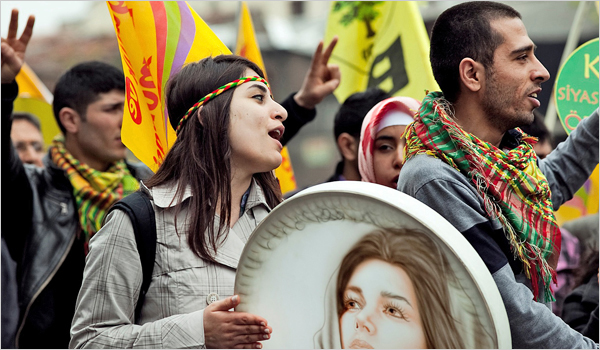
Photo credit: New York Times

[On 10 January 2016, 1128 academics from Turkey and 356 from abroad signed a petition calling the Republic of Turkey to end ongoing violence and curfews affecting 1.5 million predominantly Kurdish citizens of Turkey. At a press conference the next day, Turkish President Tayyip Erdogan denounced the letter as "treachery." By the end of the week, the government had launched 109 criminal investigations into academics based in Turkey. According to reports, the government arrested 33 academics who were later released.
The following statement was issued by a group of scholars of Turkish Studies and Ottoman History on 20 January 2016 in regards to concerns over academic freedoms and freedom of expression in Turkey.]

Statement for Academic Freedom In Turkey

Prof. Dr. Ahmet Davutoğlu, Prime Minister of the Republic of Turkey.

We, the undersigned professors of Turkish Studies and Ottoman History working at various universities throughout the world, from the USA to Asia, declare that we are profoundly concerned about the diminishing academic freedoms in Turkey.  On 10 January 2016, 1128 academics from Turkey and 356 from abroad signed a petition calling the Republic of Turkey to end ongoing violence and curfews affecting 1.5 million predominantly Kurdish citizens of Turkey in seven cities in the eastern provinces and to return to negotiations with the Kurdish movement.

We consider this petition within the framework of freedom of expression and consider the criminalization of our fellow academics unacceptable. We are deeply worried about the campaigns by the political authorities accusing our colleagues of “treason” and “supporting terrorism” as well as investigations by the prosecutors and Turkish Higher Education Council (YÖK) against them. We, thereby, invite the Turkish political authorities, judiciary and YÖK to abide by the universal standards of academic freedom and freedom of expression.

We also remind the Turkish authorities that Turkey is a signatory of the European Convention for the Protection of Human Rights and Fundamental Freedoms, the Universal Declaration of Human Rights, the International Covenant on Civil and Political Rights, and the Final Act of the Conference on Security and Cooperation in Europe. Based on these conventions and, and more importantly, the Constitution of the Republic of Turkey, the state is required to protect freedom of thought, expression, association, and assembly. Thereby, we ask the authorities of the Republic of Turkey to respect academic freedom and freedom of expression.

References
http://www.sciencemag.org/news/2016/01/turkish-academics-pay-price-speaking-out-kurds

http://www.theguardian.com/world/2016/jan/15/turkey-rounds-up-academics-who-signed-petition-denouncing-attacks-on-kurds

Signature list as of January 20, 2016

Prof. Dr. Daron Acemoglu – Elizabeth and James Killian Professor of Economics, MIT, USA
Dr. Can Açıksöz – University of Arizona, USA
Dr. Iris Agmon – Ben Gurion University, Israel
Dr. Gabor J Agoston – Georgetown University, USA
Prof. Dr. Samim Akgonul – University of Strasbourg, France
Prof. Dr. Jun Akiba – Chiba University, Japan
Dr. Yigit Akin – Tulane University, USA
Dr. Karabekir Akkoyunlu – University of Graz, Austria
Prof. Dr. Virginia Aksan – McMaster University, Canada
Dr. Ayca Alemdaroglu – Associate Director of Keyman Modern Turkish Studies Program, Northwestern University, USA
Dr. Ece Algan – Director, Center for Islamic and Middle Eastern Studies, California State University at San Bernardino, USA
Prof. Dr. Guillermo Algaze – University of California, San Diego, USA
Prof. Walter Andrews – University of Washington, USA
Dr. Sedef Arat-Koc – Ryerson University, Canada
Dr. Febe Armanios – Middlebury College, USA
Dr. Tuna Artun – Rutgers University, USA
Dr. Senem Aslan – Bates College, USA
Dr. Nurcan Atalan – Skidmore College, USA
Dr. Sabri Ateş – Southern Methodist University, USA
Dr. Marc Aymes – CNRS, France
Dr. Kathryn Babayan – University of Michigan, USA
Prof. Dr. Marc Baer – London School of Economics, UK
Dr. Ulas Bagci – University of Central Florida, USA
Dr. Onur Bakiner – Seattle University, USA
Prof. Asli Bali – University of California, Los Angeles, USA
Prof. Dr. Karl K. Barbir – Siena College, USA
Dr. Sami Bargaoui – University of La Manouba, Tunisia
Dr. Betul Basaran – St. Mary’s College, USA
Prof. Dr. Shahzad Bashir – Stanford University, USA
Dr. Birol Başkan – Georgetown University, USA
Dr. Sahar Bazzaz – College of the Holy Cross, USA
Prof. Dr. Joel Beinin – Donald J. McLaclan Professor of History, Stanford University, USA
Dr. Ceren Belge – Concordia University, Canada
Prof. Faruk Bilici – Institut National des Langues et Civilisations Orientales, France
Dr. Patricia Blessing – Society of Architectural Historians, USA
Dr. Grigor Boykov – CRSA, University of Sofia, Bulgaria
Prof. Dr. Hamit Bozarslan – EHESS, France
Prof. Dr. Sibel Bozdogan – Harvard University, USA
Dr. Marcy Brink-Danan – The Hebrew University of Jerusalem, Israel
Prof. Dr. Petra de Bruijn – Leiden University, Netherlands
Prof. Dr. Palmira Brummett – Brown University, USA
Dr. Guy Burak – New York University, USA
Dr. Rebecca Bryant – London School of Economics, UK
Dr. Michelle Campos – University of Florida, USA
Dr. Lale Can – City University of New York, USA
Dr. Giancarlo Casale – University of Minnesota, USA
Dr. Sinem Casale – University of Minnesota, USA
Prof. Dr. Ekrem Causevic – University of Zagreb
Dr. Erdem Çıpa – University of Michigan, USA
Dr. Natalie Clayer – CNRS-EHESS, France
Prof. Dr. Juan Cole – University of Michigan, USA
Prof. Dr. Howard Crane – Ohio State University, USA
Dr. Robert Crews – Stanford University, USA
Dr. Ferenc Csirkés – Tübingen University, Germany
Prof. Dr. Jocelyne Dakhlia – EHESS, France
Dr. Rosito D’Amora – University del Salento, Italy
Emeritus Prof. Robert Dankoff – University of Chicago, USA
Prof. Dr. Linda T. Darling – University of Arizona, USA
Dr. Yorgos Dedes – School of Oriental and African Studies, UK
Emerita Professor Dr. Carol Delaney – Stanford University, USA
Prof. Dr. Devin DeWeese – Indiana University, USA
Emeritus Professor Dr. Arif Dirlik – University of Oregon, USA
Prof. Dr. Beshara Doumani – Joukowsky Family Distinguished Professor of Modern Middle East History, Brown University, USA
Dr. Markus Dressler – University of Bayreuth, Germany Dr. Vera Eccarius-Kelly — Siena College, USA
Dr. Howard Eissenstat – St. Lawrence University, USA
Dr. Lerna Ekmecioglu – McMillan-Stewart Associate Professor of History, MIT, USA
Dr. Evrim Emir-Sayers – San Francisco State University, USA
Dr. Bogac Ergene – University of Vermont, USA
Prof. Carl Ernst – Kenan Distinguished Professor of Religious Studies, University of North Carolina at Chapel Hill, USA
Dr. Sinem Eryilmaz, CSIC, Madrid, Spain
Dr. Tolga Esmer – Central European University, Hungary
Dr. Kristin Fabbe – Harvard University, USA
Prof. Dr. Khaled Fahmy – Harvard University, USA and American University in Cairo, Egypt
Dr. Heather Ferguson – Claremont McKenna College, USA
Dr. Emine Fetvaci – Boston University, USA
Emeritus Professor Dr. Carter Findley – Humanities Distinguished Professor in History, Ohio State University, USA
Prof. Dr. Cornell Fleischer – Kanuni Suleyman Professor of Ottoman and Modern Turkish Studies, University of Chicago, USA
Dr. Benoit Fliche – CNRS, France
Prof. Dr. Ben Fortna – University of Arizona, USA
Dr. Elizabeth Frierson – University of Cincinnati, USA
Prof. Nancy Gallagher – University of California, Santa Barbara, USA
Dr. Pascale Ghazaleh – The American University in Cairo, Egypt
Prof. Dr. Fatma Muge Gocek – University of Michigan, USA
Dr. Banu Gokariksel – University of North Carolina, USA
Emeritus Professor Dr. Peter B. Golden – Rutgers University, USA
Dr. Rachel Goshgarian – Lafayette College, USA
Prof. Dr. Rossitsa Gradeva – Bulgarian Academy of Sciences and American University in Bulgaria 
Prof. Dr. Molly Greene – Princeton University, USA
Prof. Dr. Alexander H. de Groot – Leiden University, Netherlands
Dr. Mehmet Gurses – Florida Atlantic University, USA
Dr. Gottfried Hagen – University of Michigan, USA
Prof. Dr. Shirine Hamadeh – Rice University, USA
Prof. Dr. Jane Hathaway – Ohio State University, USA
Dr. Beatrice Hendrich – University of Cologne, Germany
Dr. David Henig – University of Kent, USA
Prof. Dr. Bernard Heyberger – Directeur d’études, EHESS, France
Prof. Dr. Colin Heywood – University of London, UK
Prof. Dr. Elizabeth Hurd – Northwestern University, USA
Dr. Asli Igsiz – New York University, USA
Prof. Dr. Colin Imber – University of Manchester, UK
Dr. Katharina Ivanyi – Columbia University, USA
Dr. Ralph Jaeckel – University of California, Los Angeles, USA
Prof. Dr. Cemal Kafadar – Vehbi Koç Professor of Turkish Studies, Harvard University, USA
Dr. Efthymia Kanner – University of Athens, Greece 
Dr. Burcu Karahan, Stanford University, USA
Dr. Ayfer Karakaya-Stump – The College of William and Mary, USA
Prof. Dr. Ahmet T. Karamustafa – Maryland University, USA
Prof. Dr. Hakan Karateke – University of Chicago, USA
Prof. Dr. Resat Kasaba – Stanley D. Golub Professor of International Studies, University of Washington, USA
Dr. Dimitris Kastritsis, St. Andrews University, UK
Dr. Zeynep Kaya – London School of Economics, UK
Dr. Hasan Kayali – University of California, San Diego, USA
Dr. Michael Kemper – University of Amsterdam, Netherlands
Dr. Zeynep Kezer – Newcastle University, UK
Prof. Dr. Dina Khoury – Elliot School of International Affairs and George Washington University, USA
Dr. Ilham Khuri-Makdisi – Northeastern University, USA
Prof. Dr. Hans-Lukas Kieser – University of New Castle, Australia
Dr. Ramazan Kilinc – University of Nebraska, USA
Dr. Mariya Kiprovska – CRSA, University of Sofia, Bulgaria
Dr. İpek Kocaomer Yosmaoğlu – Northwestern University, USA
Prof. Dr. Markus Koller – Ruhr University, Bochum, Germany
Prof. Dariusz Kolodiejczyk – University of Warsaw and the Polish Academy of Sciences, Poland; Honorary Member of Turkish Historical Society (TTK)
Dr. Elias Kolovos – University of Crete, Greece
Dr. Zeynep Korkman – University of Arizona, USA
Prof. Dr. Yavuz Kose – University of Hamburg, Germany
Dr. Tijana Krstic – Central European University, Hungary
Dr. Harun Kucuk – University of Pennsylvania, USA
Dr. Paul Kubicek – Oakland University, USA 
Prof. Dr. Timur Kuran, Professor of Economics and Political Science and Gorter Family Professor of Islamic Studies, Duke University, USA
Dr. Vjeran Kursar – University of Zagreb, Croatia
Dr. Ahmet Kuru – San Diego State University, USA
Prof. Dr. Selim Sirri Kuru – University of Washington, USA
Dr. Paul Levin – Stockholm University, Sweden
Prof. Dr. Mark Levine – University of California, Irvine, USA
Dr. Darina Martykánová – Universidad Autonóma de Madrid, Spain
Prof. Dr. Mark Mazower, Columbia University, USA
Dr. Morgan Y. Liu – Ohio State University, USA
Prof. Dr. Beatrice F. Manz – Professor of History, Tufts University, USA
Professor Lenore G. Martin – Emmanuel College and Harvard University, USA
Dr. Elise Massicard – Sciences-Po CERI, France
Dr. Adam Mestyan – Society of Fellows, Harvard University, USA
Prof. Dr. Laurent Mignon – Oxford University, UK
Dr. Alan Mikhail – Yale University, USA
Dr. Amy Mills – University of South Carolina, USA
Dr. Mostafa Minawi – Cornell University, USA
Prof. Dr. Timothy Mitchell – William B. Ransford Professor, Columbia University, USA
Dr. Yael Navaro – University of Cambridge, UK
Prof. Dr. Gülru Necipoğlu – Agha Khan Professor of Islamic Art, Harvard University, USA
Prof. Dr. Christoph K. Neumann – Ludwig Maximilian University, Munich, Germany
Dr. Vanessa Ogle – University of Pennsylvania, USA
Prof. Dr. Bernard O’Kane – American University in Cairo, Egypt
Dr. Kerem Oktem – University of Graz, Austria
Prof. Dr. Ozlem Onaran – Greenwich University, UK
Prof. Dr. Victor Ostapchuk – University of Toronto, Canada
Dr. M'hamed Oualdi – Princeton University, USA
Prof. Dr. Umut Ozkirimli – Lund University, Sweden
Dr. Hakan Ozoglu – University of Central Florida, USA
Dr. Esra Ozyurek – Chair for Contemporary Turkish Studies, London School of Economics, UK
Dr. Tatjana Paic-Vukic – The Oriental Collection of the Archives of the Croatian Academy of Sciences and Arts, Croatia
Prof. Dr. Leslie Peirce – New York University, USA
Dr. Karen Pinto, Boise State University, USA
Dr. Oyku Potuoglu-Cook – University of California, Riverside, USA
Prof. Dr. Scott Redford, SOAS, UK
Dr. Andras Riedlmayer – Harvard University Libraries, USA
Prof. Dr. Aron Rodrigue – Charles Michael Professor in Jewish History and Culture, Stanford University, USA
Prof. Dr. Dani Rodrik – Harvard University, USA
Prof. Dr. Eugene Rogan – Director of the Middle East Center, Oxford University, UK
Dr. E. Natalie Rothman – University of Toronto, Canada
Dr. David Romano – Missouri State University, USA
Dr. Avi Rubin – Ben Gurion University of the Negev, Israel
Prof. Dr. Khaled El-Rouayheb – James Richard Jewett Professor of Arabic and of Islamic Intellectual History, Harvard University, USA.
Dr. Kim Rygial – Wilfrid Laurier University, Canada
Dr. Hanan Sabea – American University in Cairo, Cairo
Dr. Dana Sajdi – Boston College, USA
Dr. Adam Sabra – University of California, Santa Barbara, USA
Dr. İbrahim Kaya Şahin – Indiana University Bloomington, USA
Dr. Christa Salamandra – City University of New York, USA
Dr. Ariel Salzmann – Queen's University, Canada
Dr. Safa Saracoglu – Bloomsbury University, USA
Dr. Marinos Sariyannis – Institute for Mediterranean Studies/FORTH, Greece
Dr. Hakan Seckinelgin, London School of Economics, UK
Dr. David Selim Sayers – San Francisco State University, USA
Dr. Jan Schmidt – Leiden University, Netherlands
Dr. Kent Schull – SUNY, Binghamton, USA
Dr. Anna Secor – University of Kentucky, USA
Dr. Günter Seufert – German Institute for International and Security Affairs, Germany
Dr. Prakash Shahah – Queen Mary, University of London, UK
Prof. Dr. Elizabeth Shakman-Hurd – Northwestern University, USA
Prof. Dr. Wendy Shaw – Freie University, Germany.
Prof. Dr. Kim Shively – Kutztown University, USA
Prof. Dr. Kemal Silay – Indiana University, USA
Dr. Brian Silverstein – University of Arizona, USA
Prof. Dr. Amy Singer – Tel Aviv University, Israel
Prof. Dr. Radhika Singha – Jawaharlal Nehru University, New Delhi, India
Dr. Mark L. Stein – Muhlenberg College, USA
Dr. Gerrit Steunebrink – Radboud University, Netherlands
Prof. Dr. Martin Strohmeier – University of Cyprus, Cyprus
Prof. Dr. Martin Stokes – King’s College, UK
Dr. Emmanuel Szurek – EHESS, France
Emeritus Professor Richard Tapper – University of London, UK
Dr. Eren Tasar – University of North Carolina, Chapel Hill, USA
Dr. Deniz Tat – Leiden University, Netherlands
Dr. Baki Tezcan – University of California, Davis, USA
Dr. Gunes Murat Tezcur – Jalal Talabany Chair for Kurdish Political Studies, University of Central Florida, USA
Dr. Nicholas Trépanier – University of Mississipi, USA
Dr. Cihan Tugal – University of California, Berkeley, USA
Prof. Dr. Berna Turam – Northeastern University, USA
Dr. Zeynep Turkyilmaz – Dartmouth College, USA
Prof. Dr. Masayuki Ueno, Osaka City University, Japan
Dr. Ebru Ustundag – Brock University, Canada
Prof. Dr. Nicolas Vatin – Collège de France, France
Dr. Ali Yaycioglu – Stanford University, USA
Dr. Eunjeong Yi – Seoul National University, Korea
Dr. Kadir Yildirim – Rice University, USA
Dr. Zeynep Yurekli – Oxford University, UK
Prof. Dr. Sabra J. Webber – Ohio State University, USA
Prof. Dr. Jenny White – Boston University, USA
Dr. Charles L. Wilkins – Wake Forest University, USA
Dr. Carole Woodall – University of Colorado, USA
Dr. Sara Nur Yildiz – St. Andrews University, UK
Prof. Dr. Gokce Yurdakul – Georg Simmel Professor of Comparative Studies on Diversity and Social Conflicts, Humboldt University, Germany
Dr. Konstantina Zanou – Columbia University, USA
Prof. Dr. Fariba Zarinebaf – Chair, Middle East and Islamic Studies Program, University of California, Riverside, USA
Prof. Dr. Dror Zeevi – The Hebrew University of Jerusalem, Israel
Prof. Dr. Madeline Zilfi – University of Maryland, College Park
Prof. Dr. Erik-Jan Zürcher – Leiden University, Netherlands