Home Blog Page 2613

Stop the killings, Gandhi tells India and Pakistan

0


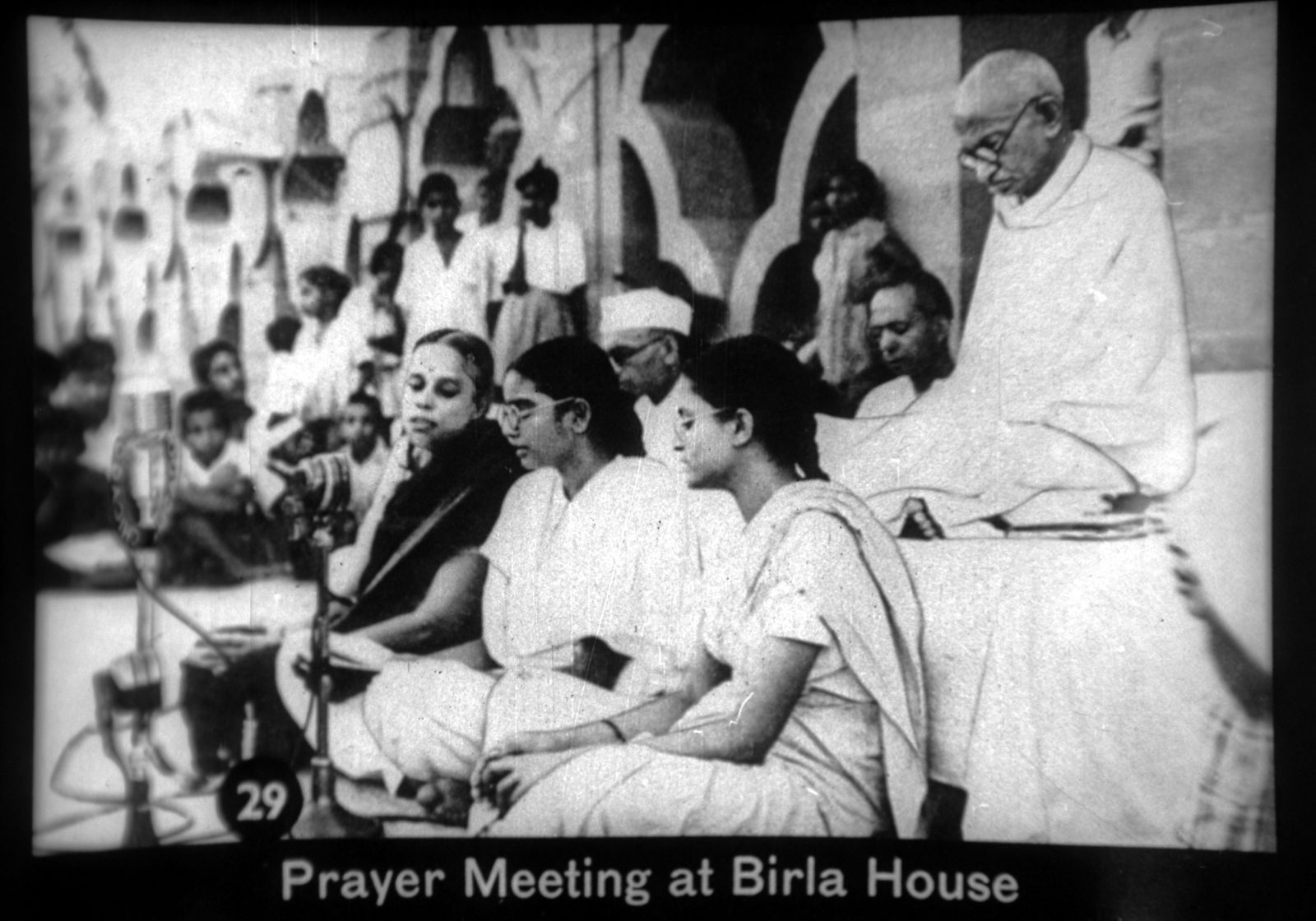
Text of the speech on the first day of his last fast, on January 13, 1948 at the Prayer meeting at Birla House, New Delhi

On January 13, 1948 Gandhiji began his last fast to protest the brutal killings that had bloodied the streets of Delhi and other parts of India and Pakistan following the Partition of the sub-continent. His speech that day at the Prayer Meeting is worth recalling given the Goebellian propaganda around his motives propagated by the votaries of a Hindu nation

Brothers and Sisters,
Today I may not finish my speech in 15 minutes as usual, as I have much to say.

Today I have come to the prayer meeting because for the first twenty-four hours after beginning a fast, the body does not feel it or should not feel it. I began eating at half past nine this morning. People kept coming and talking to me. I finished eating a little before eleven. So I have been able to come to the meeting and this is not surprising. Today I can walk about and sit up and I have also done some work. From tomorrow there will be some change. Rather than coming here and not speaking, I might as well sit in my room and think. If I have to utter the name of God, I can do it there. I therefore feel that I shall not be coming to the prayer meeting from tomorrow. But if you do wish to join in the prayer you may come if you feel like it. The girls will come and sing the prayer. At least one of them will come. I have told you my programme in case you should feel disappointed at my not coming.

I had written down yesterday's speech and it has been pub­lished in the newspapers. Now that I have started my fast many people cannot understand what I am doing.

Who are the offend­ers- Hindus or Sikhs or Muslims? How long will the fast last? I say I do not blame anyone. Who am I to accuse others? I have said that we have all sinned. That does not mean that anyone particular man has sinned. Hindus in trying to drive out the Muslims are not following Hinduism. And today it is both Hindus and Sikhs who are trying to do so. But I do not accuse all the Hindus and Sikhs because not all of them are doing it.

People should under­stand this. If they do not, my purpose will not be realized and the fast too will not be terminated. If I do not survive the fast, no one is to be blamed. If I am proved unworthy, God will take me away. People ask me if my fast is intended for the cause of the Muslims. I admit that that is so. Why? Because Muslims here today have lost everything in the world. Formerly they could depend on the Government. There was also the Muslim League.

Today the Mus­lim League is no longer there. The League got the country partitioned and even after the Partition there are large numbers of Mus­lims here. I have always held that those who have been left behind in India should be given all help. It is only humanity.

Mine is a fast of self-purification. Everyone should purify himself. If not, the situation cannot be saved. If everyone is to pu­rify himself, Muslims will also purify themselves. Everyone should cleanse his heart. No one should find fault with the Muslims what­ever they may do. If I confess before someone that I have done wrong, then it is a kind of atonement.

I do not say this in order to appease the Muslims or anyone else. I want to appease myself which means that I want to appease God. I do not want to be a sinner against God. Muslims also must become pure and live peacefully in India. What happened was that for election purposes Hindus and Sikhs recognised the Muslim League. I shall not go into that history. Then followed the partition. But before partition became a fact the hearts had already become divided. Muslims were also at fault here, though we cannot say that they alone were at fault. Hindus, Sikhs and Muslims, all are to blame. Now all of them have to become friends again. Let them look to God, not to Satan. Among the Muslims too there are many who worship Satan. Among the Hindus and the Sikhs many worship not Nanak and other Gurus, but Satan. In the name of religion we have become irreligious.

Since I have undertaken the fast for the cause of the Mus­lims, a great responsibility has come to devolve on them. They must understand that if they are to live with the Hindus as brothers they must be loyal to the Indian Union, not to Pakistan. I shall not ask them whether they are loyal of not. I shall judge them by their conduct.

I shall terminate the fast only when peace has returned to Delhi. If peace is restored to Delhi it will have effect not only on the whole of India but also on Pakistan and when that happens, a Mus­lim can walk around in the city all by himself. I shall then terminate the fast

Then the name of the Sardar is being mentioned. The Mus­lims say that I am good, but the Sardar is not and he must be removed. They say that Jawaharlal too is good. They say if I join the Government it will be a good thing. They object only to the Sardar. I must tell the Muslims that their argument serves no pur­pose, because the Government is the whole Cabinet, neither the Sardar nor Jawahar by himself. They are your servants. You can remove them. Yes, Muslims alone cannot remove them. But at least they can bring to the Sardar's notice any mistakes which in their opinion he commits. It will not do merely to criticize him by quoting some statement or other he might have made. You must say what he has done. You must tell me. I meet him often and I shall bring it to his notice. Jawaharlal can dismiss him and if he does not, there must be some reason. He praises the Sardar. Then the Govern­ment IS responsible for whatever the Sardar does. You too are responsible for he is your representative. That is how things go in a democracy. Therefore I shall say that the Muslims must become brave and fearless. They should also become God-fearing. They must think that for them there is no League, no Congress, no Gan­dhi, no Jawaharlal but only God; that they are here in the name of God. Let them not take offence at whatever Hindus and Sikhs may do. I am with them, I want to live and die with them. If I cannot keep you united, my life is worthless. The Muslims thus carry a great responsibility. They must not forget this.

The Sardar is blunt of speech. What he says sometimes sounds bitter. The fault is in his tongue. I can testify that his heart is not like his tongue. He has said in Lucknow and in Calcutta that all Muslims should live here and can live here. He also told me that he could not trust those Muslims who till the other day followed the League and considered themselves enemies of Hindus and Sikhs and who could not have changed overnight and suddenly become friends. If the Leage is still there who will they obey, Pakistan or our Government? The League's persistence in its old attitude makes him suspect it, and rightly so. He says that he no longer has faith in the bona fides of the League Muslims and he cannot trust them. Let them prove that they can be trusted. Then I have the right to tell the Hindus and Sikhs what they should do.

The song these girls sang was composed by Gurudev. We sang it during our tours in Noakhali. A man walking alone calls others to come and join him. But if no one comes and it is dark, the Poet says, the man should walk alone because God is already with him. I asked the girls especially to sing this song which is in Bengali. Otherwise they would have sung only Hindustani songs. The Hin­dus and Sikhs should cultivate this attitude if they are true to their religions. They should not generate an atmosphere in which the Muslims should be compelled to flee to Pakistan. Hindus and Sikhs should become brave and show that even if all the Hindus and Sikhs in Pakistan were to be killed there would be no retaliation in India. I do not want to live to see our people copy Pakistan. If I am to live I shall ask every Hindu and every Sikh not to touch a single Muslim. It is cowardice to kill Muslims and we must become brave and not cowards.

I shall terminate the fast only when peace has returned to Delhi. If peace is restored to Delhi it will have effect not only on the whole of India but also on Pakistan and when that happens, a Mus­lim can walk around in the city all by himself. I shall then terminate the fast. Delhi is the capital of India. It has always been the capital of India. So long as things do not return to normal in Delhi, they will not be normal either in India or in Pakistan. Today I cannot bring Suhrawardy here because I fear someone may insult him. Today he cannot walk about in the streets of Delhi. If he did he would be assaulted. What I want is that he should be able to move about here even in the dark. It is true that he made efforts in Calcutta only when Muslims became involved. Still, he could have made the situation worse, if he had wanted, but he did not want to make things worse. He made the Muslims evacuate the places they had forcibly occupied and said that he being the Premier could do so. Although the places occupied by the Muslims belonged to Hindus and Sikhs he did his duty. Even if it takes a whole month to have real peace established in Delhi it does not matter. People should not do anything merely to have me terminate the fast.

So my wish is that Hindus, Sikhs, Parsis, Christians, and Muslims who are in India should continue to live in India and India should become a country where everyone's life and property are safe. Only then will India progress.
(Speech at the Prayer Meeting, New Delhi, January 13, 1948, Collected Works of Mahatma Gandhi Vol-90, P. 413)

 … My fast, as I have stated in plain language, is undoubt­edly on behalf of the Muslim minority in the Union and, therefore, it is necessarily against the Hindus and Sikhs of the Union and the Muslims of Pakistan.
It is also on behalf of the minorities in Pakistan as in the case of the Muslim minority in the Union.
(Excerpt from the Speech at Prayer Meeting, New Delhi, January 15, 1948, Collected Works of Mahatma Gandhi Vol-90, P. 428-429)

Relieve Rural Distress, Release MGNREGA funds, FM told

0

Over 65 Citizens including academics urge the Modi government to release budgetary commitments as per law

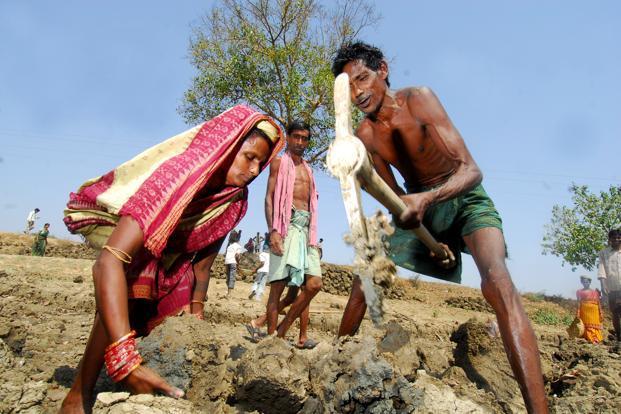
Image Courtesy: Indranil Bhoumik/Mint
 

  • Release Funds earmarked in Central Budget for MGNREGA
  • 95 per cent of current year’s budgetary releases for MGNREGA exhausted
  • MGNREGA workers in at least 12 States are at work with no funds available with the State Governments to pay their wages
  • Threat of Illegal and Inordinate delays in payment of wages; Worse, implementing agencies in the country will not even register demand for Rural Work
  • Demand based framework of the legislation appears not to be backed by Central government
  • FM Arun Jaitley’s 2015 Budget Speech allocated only Rs 34,699 crore (of which Rs 6426 crore was required simply to meet the pending obligations of the previous year)
  • FM Jaitley promised another Rs. 5,000 crore, should there be tax buoyancy; tax buoyancy has been acknowledged by Government
  • An Act like MGNREGA passed unanimously by Parliament must be unconditionally financed by Government and not depend upon ad hoc decisions of the Finance Ministry

 
What is MGNREGA ?

  • MGNREGA was unanimously passed by Parliament in 2005, providing a demand based legal guarantee for any rural family seeking up to 100 days of work
  • In the decade since it has provided employment to over 10 crore families and continues to be a lifeline for lakhs of families, particularly in times of distress.
  • The 2016 drought has brought home the usefulness of the programme in providing immediate relief to rural citizens as well as providing some injection of demand in depressed rural markets.
  • The Ministry of Rural Development notifying additional days of employment under the MGNREGA to 150 in six drought-affected states is an indication of this  

 
These demands were made in an Open Letter to Finance Minister Arun Jaitley today. The signatories are Aruna Roy, Jean Dreze, Jayati Ghosh, Nikhil Dey among others


The text of the letter:
 
Dear Mr Jaitley,         

This is a submission to be handed over to you at the pre-budget consultation on the social sector on January 12, 2016, sent through invited members of citizen groups.

While the continuing trend of meagre and slashed budget allocations for the entire social sector is a reason for alarm, we write to you today regarding an immediate and urgent concern regarding the budgetary allocations and disbursement of funds for the Mahatma Gandhi National Rural Employment Guarantee Act (MGNREGA) for the current financial year. We feel that if this issue is not addressed conclusively, the discussions of the pre-budget consultation for the upcoming budget would be rendered symbolic, and inspire little confidenceas an actionable consultation.

As you know the MGNREGA was unanimously passed by Parliament, providing a demand based legal guarantee for any rural family seeking up to 100 days of work. In the ten years since then, it has provided employment to over 10 crore families and continues to be a lifeline for lakhs of families, particularly in times of distress. The drought this year has again revealed the usefulness of the programme in providing immediate relief to rural citizens as well as providing some injection of demand in depressed rural markets. The notification of additional employment days to 150 in six drought-affected states by the Ministry of Rural Development is an indication of this.  

Timely release of funds this year so far, has led to some improvement in the demand for work generated over last year, and in making timely wage payments. However, as funds have dried up, the crisis of the last few years threatens to be repeated. As the Minister of Rural Development communicated to you on December 31, 2015, Ninety-five % of the current releases from the Finance Ministry have been exhausted. States have been making repeated requests to the Ministry based on their approved labour budget. Further, workers in at least 12 States are at work with no funds available with the State to pay their wages. This will inevitably lead to illegal and inordinate delays in payment of wages. It will also mean that most implementing agencies in the country will not even register demand.

This pattern of fund shortage is undermining the credibility of the legal framework. It has passed a chilling message down the administration that the demand based framework of the programme is not backed by the Government of the day. Another fund crisis at this point would not only multiply rural distress but also deal another crippling blow to the law and the programme.

We would also like to point out that simply maintaining the allocation in 2010-11 at Rs. 40,100 crore, taking into account inflation, would imply a budget in 2015-16 of Rs. 61,445 crore.In terms of percentage of GDP, the MGNREGA budget allocation has fallen from 0.59% in 2009-10 to 0.25% in 2014-15.In your budget speech for 2015-16 you allocated only Rs 34,699 crore (of which Rs 6426 crore was required simply to meet the pending obligations of the previous year) with a promise for another Rs. 5,000 crore, should there be tax buoyancy. While the Government itself has acknowledged increased tax buoyancy this year, we would like to underscore that the MGNREG Act passed unanimously by Parliament legally mandates unconditional availability of funds to honour demand for work and therefore the amounts provided cannot be based on decisions of the Finance Ministry.

We have two submissions: Given the immediate crisis and the requirement of the remaining three months of the FY 2015-16, we request the additional Rs. 5,000 crores to be made available to the Ministry of Rural Development immediately. Secondly, subsequent budget estimations and allocations to the programme must be brought in line with inflation;be measured and maintained as a percentage of share of GDP and fundamentally operate through a ‘demand pull’ system as required by the law.

Budgetary allocations for social sector programmes, when compared with allocations to other sectors in India, are a matter of national shame. This is in turn reflected in our pathetic indicators on health, education and women’s participation in the workforce. Claims of shortage of funds ring even more hollow when one considers the continual hike in allocations for elected representatives, and to public servants through the Seventh Pay Commissions.It is intriguing that the central government that denies resources for fulfil the basic needs of the majority of the population can easily find over Rs 1,00,000 crore additional resources from 2016-17 onwards to meet the recommendations of the 7th Pay Commission that benefit employees and retirees who are less than 1 per cent of the population.

This is why we reiterate our overwhelming concern about the release of adequate funds for MGNREGA this year. The law requires it. The States are demanding it. The Ministry of Rural Development is making repeated demands for it. Implementing agencies are in desperate need of it. People will be driven to inhuman conditions of distress and starvation without it. There can be no legitimate justification for not making the releases to meet these demands and further increasing the amount as per demand.           

It is left to be seen how the Finance Ministry will respond.

Minority Institutions: Rights or Privilege?

0

‘AMU is not a Minority Institution,’ says the Modi government to the SC

 
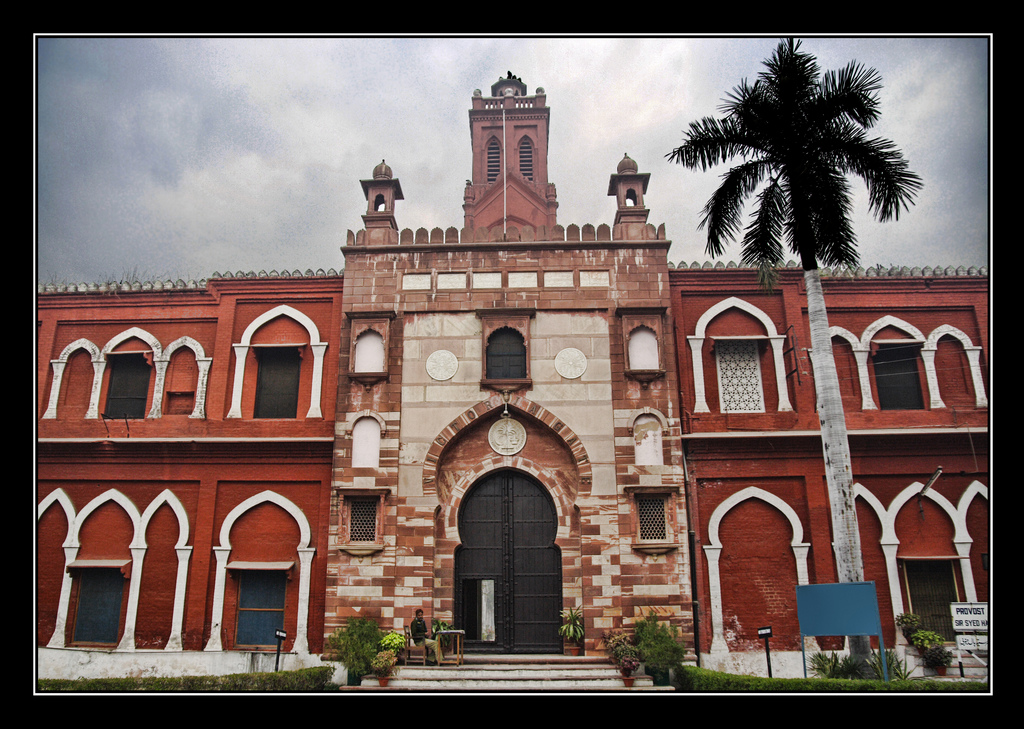
Showing its true colours on issues related to minority rights, the Central government dominated by the supremacist Rashtriya Swayamsevak Sangh(RSS) has opposed the minority status of the Aligarh Muslim University (AMU). In a complete turnaround from the earlier Central government, under UPA I and II, that had challenged a judgement of the Allahabad high court reversing AMU's minority status, the Modi government has withdrawn its name as one of the petitioners challenging the 2005 Allahabad high court verdict.[1] The Supreme Court had stayed implementation of the high court judgement in 2006.

Making the submission in the Supreme Court, attorney general, Mukul Rohatgi said, “It is the stand of the Union of India that AMU is not a minority university. As the executive Government at the Centre, we can’t be seen as setting up a minority institution in a secular state.” He was referring to the Aligarh Muslim University Act, 1920 that was subsequently amended by Parliament twice in 1951 and 1981. The stand came as a surprise to the three member bench consisting of Justices JS Khehar, MY Eqbal and C Nagappan who pointed out that this stand of the Centre was contrary to what was filed previously by the Centre before this court and the Allahabad HC. Justice Eqbal asked, “With the change in Government, can you change your stand?” The Bench has asked Rohatgi to file an affidavit in this regard and posted the case for hearing next on April 4, 2016.

Communalism Combat has been analysing and tracking the issue of the minority status of the AMU for the past decade. We bring you some of our archival issues that trace the background of establishment of this institution as also the erosions in certain principles that require rectification.

Advocate Mihir Desai author of a book on the subject [2] analysed for us the grave fallacies in the verdict of the Allahabad high court. Faizan Musatafa, then registrar of the AMU too argued how the judgement was bad in law. CC brought to its readers a critical dimension to the issue when we investigated and found that communal reservations at Aligarh Muslim University have struck at the very character and repute of the institution. Noted scholar Asghar Ali Engineer argued that while the Aligarh Muslim University is, without doubt, a minority institution, it must allow reservations for Backward Caste Muslims.

We bring to our readers the various dimensions of the issue that has a crucial bearing on minority rights within a democracy.

Links to 2005 Communalism Combat issues archived here

  1.  The Case of the Aligarh Muslim University, 2005 : Alas, Your Lordships!
  2.  Minority Institutions: Rights or Privilege?
  3. Wong in Law 
  4. No to Communal Reservations
  5. Flawed Judgement


[1] Modi govt opposes minority character of AMU in Supreme Court, http://muslimmirror.com/eng/modi-govt-opposes-minority-character-of-amu/
[2] Minority educational institutions and law, 1996, Mihir Desai, Akshar Prakashan