Home Blog Page 2617

Socialist and Free: Cuba 57 years later

0


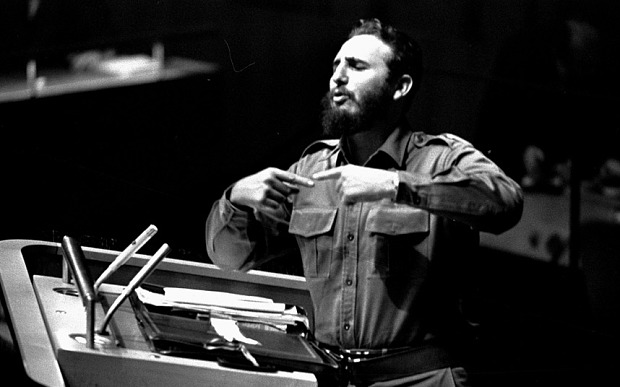
Cuban President Fidel Castro during an address to the United Nations in 1960                           Image Courtesy: AP Photo

January 1, 1959
Fifty seven years ago, Cuban dictator Fulgencio Batista fled from the national capital as the rebel forces of Fidel Castro and Che Guevara closed in. This historic occasion marked the end of a brutal, pseudo-imperialist regime, which was replaced by the revolutionary, guerrilla fighters headed by Castro.  For fifty seven years, the Cuban republic has remained a socialist state, defying all the attempts by its looming neighbour to interfere.
 
Amidst great public support, Fidel Castro, the first President of Cuba, addressed the United Nations General Assembly in 1960. We reproduce extracts from the speech which was centred on denouncing Colonialism and Imperialism in all kinds and forms, and empowering colonial states to fight for their freedom. 
 
Excerpts:
Now, to the problem of Cuba.  Perhaps some of you are well aware of the facts, perhaps others are not.  It all depends on the sources of information, but, undoubtedly, the problem of Cuba, born within the last two years, is a new problem for the world.  The world had not had many reasons to know that Cuba existed.  For many, Cuba was something of an appendix of the United States. Even for many citizens of this country, Cuba was a colony of the United States.  As far as the map was concerned, this was not the case:  our country had a different colour from that of the United States.   But in reality Cuba was a colony of the United States.
 
How did our country became a colony of the United States?  It was not because of its origins; the same men did not colonise the United States and Cuba.  Cuba has a very different ethnical and cultural origin, and the difference was widened over the centuries.  Cuba was the last country in America to free itself from Spanish colonial rule, to cast off, with due respect to the representative of Spain, the Spanish colonial yoke; and because it was the last, it also had to fight more fiercely.

How can an unpopular regime, inimical to the interests of the people, stay in power unless it is by force?  Will we have to explain to the representatives of our sister republics of Latin America what military tyrannies are? 
 
Spain had only one small possession left in America and it defended it with tooth and nail.  Our people, small in numbers, scarcely a million inhabitants at that time, had to face alone, for almost thirty years, an army considered one of the strongest in Europe.  Against our small national population the Spanish Government mobilized an army as big as the total forces that had fought against South American independence.  Half a million Spanish soldiers fought against the historic and unbreakable will of our people to be free.
 
For thirty years the Cubans fought alone for their independence; thirty years of struggle that strengthened our love for freedom and independence. But Cuba was a fruit — according to the opinion of a President of the United States at the beginning of the past century, John Adams — it was an apple hanging from the Spanish tree, destined to fall, as soon as it was ripe enough, into the hands of the United States.  Spanish power had worn itself out in our country.  Spain had neither the men nor the economic resources to continue the war in Cuba; Spain had been defeated. Apparently the apple was ripe, and the United States Government held out its open hands.
 
How can an unpopular regime, inimical to the interests of the people, stay in power unless it is by force?  Will we have to explain to the representatives of our sister republics of Latin America what military tyrannies are?  Will we have to outline to them how these tyrannies have kept themselves in power?  Will we have to explain the history of several of those tyrannies which are already classical?  Will we have to say what forces, what national and international interests support them?
 
The military group which tyrannized our country was supported by the most reactionary elements of the nation, and, above all, by the foreign interests that dominated the economy of our country.  Everybody knows, and we understand that even the Government of the United States admits it, that that was the type of government favoured by the monopolies. Why?  Because by the use of force it was possible to check the demands of the people; by the use of force it was possible to suppress strikes for improvement of living standards; by the use of force it was possible to crush all movements on the part of the peasants to own the land they worked; by the use of force it was possible to curb the greatest and most deeply felt aspirations of the nation.
 
That is why governments of force were favoured by the ruling circles of the United States. That is why governments of force stayed in power for so long, and why there are governments of force still in power in America. Naturally, it all depends on whether it is possible to secure the support of the United States.
 
Source: Excerpted from the speech delivered at the United Nations General Assembly on September 26, 1960. For the entire text of the speech visit:  http://lanic.utexas.edu/project/castro/db/1960/19600926.html


Neither Free Not Basic, say over 100 IIT and IISC Professors

0


In a strong and cogent statement issued to challenge the aggressive campaign by Facebook in promoting its ‘Free Basics’ proposal, over 100 IIT and IISC professors have challenged the ‘lethal combination’ that threatens to control usage, dictate costs and access personal information of millions of Indians, that too by an entity based on foreign soil

 
The statement rejects Facebook’s misleading and flawed ‘Free Basics’ proposal
 
Allowing a private entity

  • to define for Indian Internet users what is ‘basic’,
  • to control what content costs how much, and
  • to have access to the personal content created and used by millions of Indians

is a lethal combination which will lead to total lack of freedom on how Indians can use their own public utility, the Internet.  Facebook’s ‘free basics’ proposal is such a lethal combination, having several deep flaws, beneath the veil of altruism wrapped around it in TV and other media advertisements, as detailed below.
 

Flaw 1:   Facebook defines what is ‘basic’.
The first obvious flaw in the proposal is that Facebook assumes control of defining what a ‘basic’ service is.  They have in fact set up an interface for services to ‘submit’ themselves to Facebook for approval to be a ‘basic’ service.  This means: what the ‘basic’ digital services Indians will access using their own air waves will be decided (if the proposal goes through) by a private corporation, and that too one based on foreign soil.  The sheer absurdity of this (on political, legal, and moral grounds), is obvious.

To draw an analogy, suppose a chocolate company wishes to provide ‘free basic food’ for all Indians, but retains control of what constitutes ‘basic’ food — this would clearly be absurd.  Further, if the same company defines its own brand of ‘toffee’ as a ‘basic’ food, it would be doubly absurd and its motives highly questionable.  While the Internet is not as essential as food, that the Internet is a public utility touching the lives of rich and poor alike cannot be denied.  
 

What Facebook is proposing to do with this public utility is no different from the hypothetical chocolate company.  In fact, it has defined itself to be the first ‘basic’ service, as evident from Reliance’s ads on Free Facebook.  Now, it will require quite a stretch of imagination to classify Facebook as ‘basic’. This is why Facebook’s own ad script writers have prompted Mr. Zuckerberg to instead make emotional appeals of education and healthcare for the poor Indian masses; these appeals are misleading, to say the least.
Flaw 2: Facebook will have access to all your apps’ contents.
The second major flaw in the model, is that Facebook would be able to decrypt the contents of the ‘basic’ apps on its servers.  This flaw is not visible to the lay person as it’s a technical detail, but it has deep and disturbing implications.  Since Facebook can access un-encrypted contents of users’ ‘basic’ services, either we get to consider health apps to be not basic, or risk revealing health records of all Indians to Facebook.  Either we get to consider our banking apps to be not ‘basic’, or risk exposing the financial information of all Indians to Facebook.   And so on.  This is mind boggling even under normal circumstances, and even more so considering the recent internal and international snooping activities by the NSA in the US.

Flaw 3: It’s not free.
The third flaw is that the term ‘free’ in ‘free basics’ is a marketing gimmick.  If you see an ad which says ‘buy a bottle of hair oil, get a comb free’, you know that the cost of the comb is added somewhere.  If something comes for free, its cost has to appear somewhere else.  Telecom operators will have to recover the cost of ‘free basic’ apps from the non-free services (otherwise, why not make everything free?).  So effectively, whatever Facebook does not consider ‘basic’ will cost more.

If Facebook gets to decide what costs how much, in effect Indians will be surrendering their digital freedom, and freedom in the digital economy, to Facebook.  So this is not an issue of elite Indians able to pay for the Internet versus poor Indians, as Facebook is trying to portray.  It is an issue of whether all Indians want to surrender their digital freedom to Facebook.

That the ‘Free Basics’ proposal is flawed as above is alarming but not surprising, for it violates one of the core architectural principles of Internet design: net neutrality.  Compromising net neutrality, an important design principle of the Internet, would invariably lead to deep consequences on people’s freedom to access and use information.  We therefore urge that the TRAI should support net neutrality in its strongest form, and thoroughly reject Facebook’s ‘free basics’ proposal.

 
Signed by:

  1. Krithi Ramamritham, Professor, CSE, IIT Bombay
  2. Bhaskaran Raman, Professor, CSE, IIT Bombay
  3. Siddhartha Chaudhuri, Assistant Professor, CSE, IIT Bombay
  4. Ashwin Gumaste, Associate Professor, CSE, IIT Bombay
  5. Kameswari Chebrolu, Associate Professor, CSE, IIT Bombay
  6. Uday Khedker, Professor, CSE, IIT Bombay
  7. Madhu N. Belur, Professor, EE, IIT Bombay
  8. Mukul Chandorkar, Professor, EE, IIT Bombay
  9. Amitabha Bagchi, Associate Professor, CS&E, IIT Delhi
  10. Vinay Ribeiro, Associate Professor, CS&E, IIT Delhi
  11. Niloy Ganguly, Professor, CS&E, IIT Kharagpur
  12. Animesh Kumar, Assistant Professor, EE, IIT Bombay
  13. Animesh Mukherjee, Assistant Professor, CSE, IIT Kharagpur
  14. Subhashis Banerjee, Professor, CSE, IIT Delhi
  15. Shivaram Kalyanakrishnan, Assistant Professor, CSE, IIT Bombay
  16. Saswat Chakrabarti, Professor, GSSST, IIT Kharagpur
  17. H.Narayanan, Professor, EE, I.I.T Bombay
  18. Vinayak Naik, Associate Professor, CSE, IIIT-Delhi
  19. Aurobinda Routray, Professor, EE, IIT Kharagpur
  20. Naveen Garg, Professor, CSE, IIT Delhi
  21. Amarjeet Singh, Assistant Professor, CSE, IIIT-Delhi
  22. Purushottam Kulkarni, Associate Professor, CSE, IIT Bombay
  23. Supratik Chakraborty, Professor, CSE, IIT Bombay
  24. Kavi Arya, Associate Professor, CSE, IIT Bombay
  25. S. Akshay, Assistant Professor, CSE, IIT Bombay
  26. Jyoti Sinha, Visiting Faculty, Robotics, IIIT Delhi
  27. Joydeep Chandra, Assistant Professor, CSE, IIT Patna
  28. Parag Chaudhuri, Associate Professor, CSE, IIT Bombay
  29. Rajiv Raman, Assistant Professor, CSE, IIIT-Delhi
  30. Mayank Vatsa, Associate Professor, CSE, IIIT-Delhi
  31. Anirban Mukherjee, Associate Professor, EE, IIT Kharagpur
  32. Pushpendra Singh, Associate Professor, CSE, IIIT-Delhi
  33. Partha Pratim Das, Professor, CSE, IIT Kharagpur
  34. Dheeraj Sanghi, Professor, CSE, IIIT Delhi
  35. Karabi Biswas, Associate Professor, EE, IIT Kharagpur
  36. Bikash Kumar Dey, Professor, EE, IIT Bombay
  37. Mohammad Hashmi, Assistant Professor, ECE, IIIT Delhi
  38. Venu Madhav Govindu, Assistant Professor, EE, IISc Bengaluru
  39. Murali Krishna Ramanathan, Assistant Professor, CSA, IISc Bangalore
  40. Sridhar Iyer, Professor, CSE, IIT Bombay
  41. Sujay Deb, Assistant Professor, ECE, IIIT Delhi
  42. Virendra Sule, Professor, EE, IIT Bombay
  43. Om Damani, Associate Professor, CSE, IIT Bombay
  44. V Rajbabu, Assistant Professor, EE, IIT Bombay
  45. Hema Murthy, Professor, CSE, IIT Madras
  46. Anupam Basu, Professor, CSE, IIT Kharagpur
  47. Sriram Srinivasan, Adjunct Professor, CSE, IIT Bombay
  48. K.V.S. Hari, Professor, ECE, IISc, Bengaluru
  49. Shalabh Gupta, Associate Professor, EE, IIT Bombay
  50. Suman Kumar Maji, Assistant Professor, CSE, IIT Patna
  51. Udayan Ganguly, Associate Professor, EE, IIT Bombay
  52. Rahul Banerjee, Professor, CSE, BITS Pilani
  53. R K. Shevgaonkar, Professor, EE, IIT Bombay
  54. S.C. Gupta, Visiting Faculty, CSE, IIT Delhi
  55. Ashutosh Gupta, Reader, STCS, TIFR
  56. V Krishna Nandivada, Associate Professor, CSE, IIT Madras
  57. Ashutosh Trivedi, Assistant Professor, CSE, IIT Bombay
  58. Ganesh Ramakrishnan, Associate Professor, CSE, IIT Bombay
  59. Amit Patra, Professor, EE, IIT Kharagpur
  60. Jayalal Sarma, Assistant Professor, CSE, IIT Madras
  61. Rajesh Sundaresan, Associate Professor, ECE, IISc Bangalore
  62. Deepak Khemani, Professor, CSE, IIT Madras
  63. Vinod Prabhakaran, Reader, TCS, TIFR
  64. Saroj Kaushik, Professor, CSE, IIT Delhi
  65. Kumar Appaiah, Assistant Professor, EE, IIT Bombay
  66. Bijendra N Jain, Professor, CSE, IIT Delhi
  67. Aaditeshwar Seth, Assistant Professor, CSE, IIT Delhi
  68. Nupur Dasgupta, Jadavpur University
  69. C.Chandra Sekhar, Professor, CSE, IIT Madras
  70. Pralay Mitra, Assistant Professor, CSE, IIT Kharagpur
  71. Krishna Jagannathan, Assistant Professor, EE, IIT Madras
  72. Venkatesh Tamarapalli, Assistant Professor, CSE, IIT Guwahati
  73. Ajit Rajwade, Assistant Professor, CSE, IIT Bombay
  74. D. Manjunath, Professor, EE, IIT Bombay
  75. Subhasis Chaudhuri, EE, IIT Bombay
  76. S. Arun-Kumar, Professor, CS&E, IIT Delhi
  77. Alka Hingorani, Associate Professor, IIT Bombay
  78. Swaroop Ganguly, Associate Professor, EE, IIT Bombay
  79. Shishir K. Jha, Associate Professor, SJMSOM, IIT Bombay
  80. Sabyasachi SenGupta, Professor, EE, IIT Kharagpur
  81. Mythili Vutukuru, Assistant Professor, CSE, IIT Bombay
  82. Harish Karnick, Professor, CSE, IIT Kanpur.
  83. Piyush Rai, Assistant Professor, CSE, IIT Kanpur
  84. Jayakrishnan Nair, Assistant Professor, EE, IIT Bombay
  85. T.V.Prabhakar, Professor, CSE, IIT Kanpur
  86. Nitin Saxena, Associate Professor, CSE, IIT Kanpur.
  87. Sundar Viswanathan, Professor, CSE, IIT Bombay
  88. Sushobhan Avasthi, Assistant Professor, CeNSE, IISc Bangalore
  89. Sumit Darak, Assistant Professor, IIIT Delhi
  90. Ajai Jain, Professor, CSE, IIT Kanpur
  91. Indranil Saha, Assistant Professor, CSE, IIT Kanpur
  92. Dipankar Sinha, ISI, Kolkata
  93. Purushottam Kar, Assistant Professor, CSE, IIT Kanpur
  94. Sandeep Kumar Shukla, Professor, CSE, IIT Kanpur
  95. Surender Baswana, Associate Professor, CSE, IIT Kanpur
  96. Soumyadip Bandyopadhayay, Visiting Faculty, CSE, BITS-Pilani Goa
  97. Rogers Mathew, Asst. Professor, CSE, IIT Kharagpur.
  98. Samit Bhattacharya, Assistant Professor, CSE, IIT Guwahati
  99. Richa Singh, Associate Professor, CSE, IIIT Delhi
  100. Raghavendra Rao B. V., Assistant Professor, IIT Madras.
  101. Chandrashekar C.M., Assistant Professor, Theoretical Physics, IMSc Chennai.
  102. Aditya Gopalan, Assistant Professor, ECE, IISc
  103. Ritwik Kumar Layek, Assistant Professor, ECE, IIT Kharagpur
  104. Madhavan Mukund, Professor, Chennai Mathematical Institute
  105. Piyush P Kurur, Associate Professor, CSE, IIT Kanpur
  106. Debajyoti Bera, Assistant Professor, CSE, IIIT-Delhi
  107. Sudebkumar P Pal, Professor, CSE, IIT Kharagpur
  108. Rajat Mittal, CSE, IIT Kanpur
  109. Sandip Chakraborty, Assistant Professor, CSE, IIT Kharagpur
  110. R. K. Ghosh, CSE, IIT Kanpur
  111. Anuradha Sharma, Assistant Professor, Mathematics, IIT Delhi
  112. Kannan Moudgalya, Professor, IIT Bombay
  113. Saurabh Lodha, Associate Professor, EE, IIT Bombay
  114. Ashutosh Mahajan, Assistant Professor, IEOR, IIT Bombay
  115. S. C. Patel, Professor, IIT Bombay
  116. P Sunthar, Associate Professor, Chemical Engg, IIT Bombay
  117. Ateeque MalaniAssistant Professor, Chemical Engg, IIT Bombay
  118. J. K. Verma, Professor, IIT Bombay
  119. Rajendra M Sonar, Associate Professor, IIT Bombay
  120. Ramkrishna Pasumarthy, Assistant Professor, EE, IIT Madras
  121. Dipan K. Ghosh, Professor (Retd.) IIT Bombay
  122. Vinish Kathuria, Professor, SJMSOM, IIT Bombay
  123. Anirban Sain, Professor, Physics, IIT Bombay
  124. S P Sukhatme, Professor Emeritus, Mech Engg, IIT Bombay
  125. Ravi N Banavar, Professor, Systems and Control Engg, IIT Bombay
  126. Shyam Karagadde, Assistant Professor, Mech Engg, IIT Bombay
  127. Sourangshu Bhattacharya, Assistant Professor, CSE, IIT Kharagpur
  128. Bhaskaran Muralidharan, Associate Professor, EE, IIT Bombay
  129. Ravi Raghunathan, Associate Professor, Mathematics, IIT Bombay
  130. Krishna Mohan Buddhiraju, Professor, CSRE, IIT Bombay
  131. T T Niranjan, Assistant Professor, SJMSOM, IIT Bombay
  132. Anurag Mittal, Associate Professor, CSE, IIT Madras
  133. A.K. Suresh, Professor, Chemical Engineering, IIT Bombay
  134. Rowena Robinson, Professor, Humanities and Social Sciences, IIT Bombay
  135. Urjit Yajnik, Professor, Physics Department, IIT Bombay
  136. Bharat Seth, ex-Professor, ME, IIT Bombay
  137. Himanshu Bahirat, Assistant Professor, EE, IIT Bombay

Source: Reddit
*Parenthesis added
 

Babur on Hindustan: Excerpts from the Babur-Nama

0

 
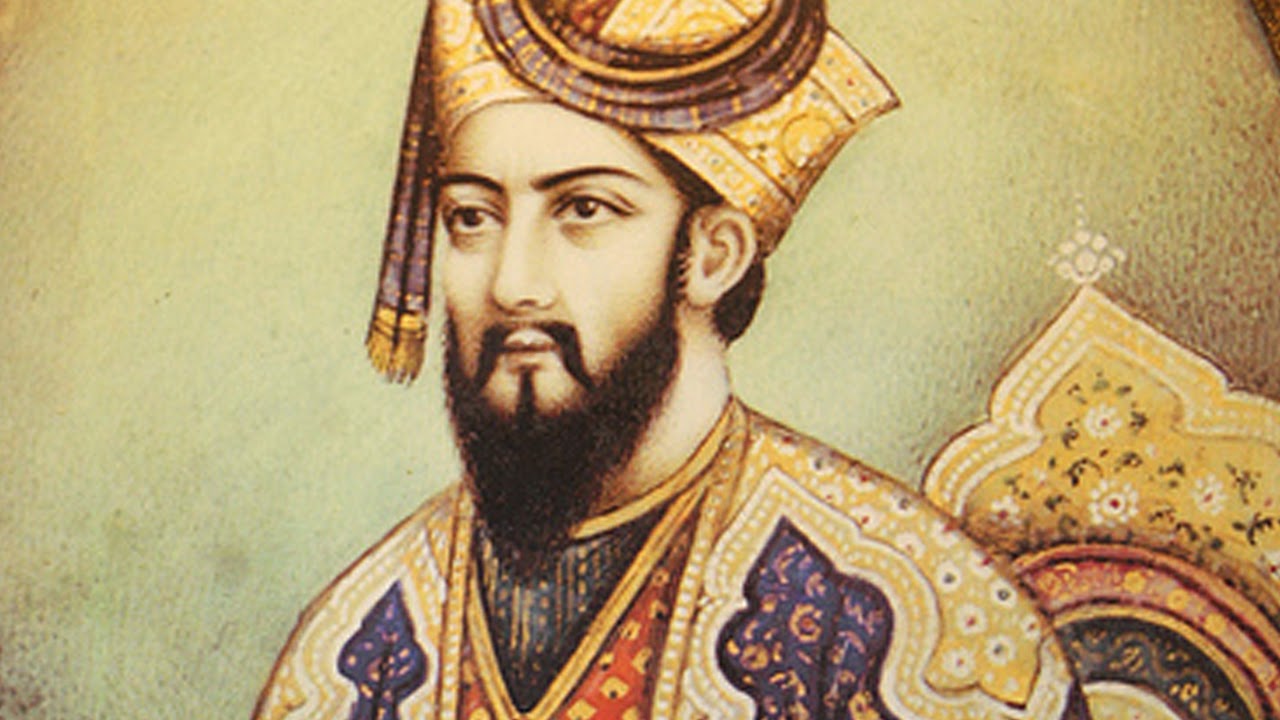
Four days ago, December 26 was the death anniversary of Babur the founding Mughal. He died on December 26, 485 years ago in 1530. Reviled in recent Indian history by proponents of the supremacist Hindutva brigade (remember Sadhvi Rithambara’s rantings of Babur ki Aulad to revile all Indian Muslims as the Sangh Parivar legitimised the demolition of the Babri Masjid on December 6, 1992), Babur (Zahiru'd-din Muhammad Babur, original name) was a man of letters who had a keen fascination for flora and fauna besides being an intrepid traveller-warrior. Babur-Nama (Memoirs of Babur), originally written in Turki was translated into Persian during his grandson, Akbar’s reign. We bring you some excerpts
 
Of  Hindustan
Hindustan is of the first climate, the second climate, and the third climate; of the fourth climate it has none. It is a wonderful country. Compared with our countries it is a different world; its mountains, rivers, jungles and deserts, its towns, its cultivated lands, its animals and plants, its peoples and their tongues, its rains, and its winds, are all different. In some respects the hot-country (garm-sil) that depends on Kabul, is like Hindustan, but in others, it is different. Once the water of Sind is crossed, everything is in the Hindustan way (tariq) land, water, tree, rock, people and horde, opinion and custom.
 
Of the northern mountains
After crossing the Sind-river (eastwards), there are countries, in the northern mountains mentioned above, appertaining to Kashmir and once included in it, although most of them, as for example, Pakli and Shahmang (?), do not now obey it. Beyond Kashmir there are countless peoples and hordes, parganas and cultivated lands, in the mountains. As far as Bengal, as far indeed as the shore of the great ocean, the peoples are without break. About this procession of men no-one has been able to give authentic information in reply to our enquiries and investigations. So far people have been saying that they call these hill-men Kas.[1] It has struck me that as a Hindustan pronounces shin as sin (i.e. sh as s), and as Kashmir is the one respectable town in these mountains, no other indeed being heard of, Hindustanis might pronounce it Kashmir.[2] These people trade in musk-bags, b:hri-qutas,[3] saffron, lead and copper.
 
Hindus call these mountains Sawalak-parbat. In the Hindi tongue sawai-lak means one lak and a quarter, that is 125,000, and parbat means a hill, which makes 125,000 hills.[4] The snow on these mountains never lessens; it is seen white from many districts of Hind, as, for example, Lahor, Sihrind and Sambal. The range, which in Kabul is known as Hindu-kush, comes from Kabul eastwards into Hindustan, with slight inclination to the south. The Hindustanat[5] are to the south of it. Tibet lies to the north of it and of that unknown horde called Kas.
 
Of  Rivers
Many rivers rise in these mountains and flow through Hindustan. Six rise north of Sihrind, namely Sind, Bahat (Jilam), Chan-ab [sic], Rawl, Biah, and Sutluj [6]; all meet near Multan, flow westwards under the name of Sind, pass through the Tatta country and fall into the ‘Uman (-sea).
 
Besides these six there are others, such as Jun (Jumna), Gang (Ganges), Rahap (Rapti?), Gumti, Gagar (Ghaggar), Siru, Gandak, and many more; all unite with the Gang-darya, flow east under its name, pass through the Bengal country, and are poured into the great ocean. They all rise in the Sawalak-parbat. Many rivers rise in the Hindustan hills, as, for instance, Chambal, Banas, Bitwi, and Sun (Son). There is no snow whatever on these mountains. Their waters also join the Gang-darya.
 
Of the Aravalli
Another Hindustan range runs north and south. It begins in the Dihli country at a small rocky hill on which is Firuz Shah’s residence, called Jahan-nama,[7] and, going on from there, appears near Dihli in detached, very low, scattered here and there, rocky little hills.[8] Beyond Miwat, it enters the Biana country. The hills of Sikri, Bari and Dulpur are also part of this same including (tuta) range. The hills of Gualiar – they write it Galiur – although they do not connect with it, are off-sets of this range; so are the hills of Rantanbur, Chitur, Chandiri, and Mandau. They are cut off from it in some places by 7 to 8 kurohs (I4 to I6  m.). These hills are very low, rough, rocky and jungly. No snow whatever falls on them. They are the makers, in Hindustan, of several rivers.
 
Other particulars about Hindustan
The towns and country of Hindustan are greatly wanting in charm. Its towns and lands are all of one sort; there are no walls to the orchards (baghat), and most places are on the dead level plain. Under the monsoon-rains the banks of some of its rivers and torrents are worn into deep channels, difficult and troublesome to pass through anywhere. In many parts of the plains thorny jungle grows, behind the good defence of which the people of the pargana become stubbornly rebellious and pay no taxes. Except for the rivers and here and there standing-waters, there is little “running-water”. So much so is this that towns and countries subsist on the water of wells or on such as collects in tanks during the rains.

In Hindustan hamlets and villages, towns indeed, are depopulated and set up in a moment! If the people of a large town, one inhabited for years even, flee from it, they do it in such a way that not a sign or trace of them remains in a day or a day and a half [9]. On the other hand, if they fix their eyes on a place in which to settle, they need not dig water-courses or construct dams because their crops are all rain-grown,[10] and as the population of Hindustan is unlimited, it swarms in. They make a tank of dig a well; they need not build houses or set up walls-khas-grass (Andropogon muricatum) abounds, wood is unlimited, huts are made, and straightway there is a village or a town!
 
(Excerpted from Babur-Nama (Memories of Babur, author Zahiru’d-din Muhammad Babur Padshah Ghazi, translated by Annette Susannah Beveridge from the original Turki, Complete and unbridged, a Venture of Low Price Publications)


[1] Are they the Khas of Nepal and Sikkim? (G. of I.)
[2] Here Erskine notes that the Persian (trs.) adds, “mir signifying a hill, and kas being the name of the natives of the hill country.” This may not support the name kas as correct but may be merely an explanation of Babur’s meaning. It is not in I.O. 217 f. I89 or in Muh. Shirdzi’s lithographed Waqi-at-i-baburi p. I90
[3] Either yak or the tassels of the yak. See Appendix M
[4] My husband tells me that Babur’s authority for this interpretation of Sawalak may be the Zafar-nama (Bib. Ind. Ed. Ii, I49).
[5] i.e. the countries of Hindustan
[6] so pointed, carefully, in the Hai. MS. Mr. Erskine notes of these rivers that they are the Indus, Hydaspes, Ascesines, Hydraotes, Hesudrus and Hyphasis
[7] Ayin-i-akbari, Jarrett 279
[8] parcha parcha, kichikrak kichikrak, anda munda, tashiq taqghina. The Gazetteer of India (I907 I, I) puts into scientific words, what Babur here describes, the ruin of a great former range
[9] This” notes Erskine (p. 315) “is the wulsa or walsa, so well described by Colonel Wilks in his Historical Sketches vol. i.p. 309, note ‘On the approach of an hostile army, the unfortunate inhabitants of India bury under ground their most cumbrous effects, and each individual, man, woman, and child above six years of age (the infant children being carried by their mothers), with a load of grain proportioned to their strength, issue from their beloved homes, and take the direction of a country (if such can be found,) exempt from the miseries of war; sometimes of a strong fortress, but more generally of the most unfrequented hills and woods, where theyprolong a miserable existence until the departure of the enemy, and if this should be protracted beyond the time for which they have provided food, a large portion necessarily dies of hunger.’ See the note itself. The Historical Sketches should be read by every-one who desires to have an accurate idea of the South of India. It is to be regretted that we do not possess the history of any other part of India, written with the same knowledge or research.”
“The word wulsa or walsa is Dravidian. Telugu has valasa, ‘emigration, flight, or removing from home for fear of a hostile army.’ Kanarese has valase, olase, and olise, ‘flight, a removing from home for fear of a hostile army.’ Tamil has valasei, ‘flying for fear, removing hastily.’ The word is an interesting one. I feel pretty sure it is not Aryan, but Dravidian; and yet it stands alone in Dravidian, with nothing that I can find in the way of a root or affinities to explain its etymology. Possibly it may be a borrowed word in Dravidian. Malayalam has no corresponding word. Can it have been borrowed from Kolarian or other primitive Indian speech?” (Letter to H. Beveridge from Mr. F.E. Pargiter, 8th August, 1914).
Wulsa seems to be a derivative from Sanscrit ulvash, and to answer to Persian wairani and Turki buzughlughi.

[10] lalmi, which is Afghani (Pushtu) signifies grown without irrigation.


The Conspiracy of the Sangh Combine: Citizens Tribunal on Ayodhya

0

 
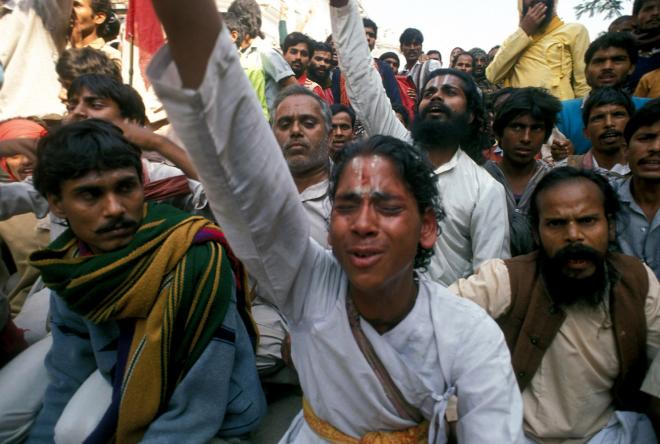
Image Courtesy: Pablo Bartholomew

Justice O. Chinnappa Reddy, Justice D. A. Desai, Justice D. S. Tewatia (Panel)

Premeditated attempts to gather kar sevaks, well armed and well trained to destroy the 450 year old Babri Mosque was a calculated strategy of the BJP-RSS-VHP combine

Role of Sangh Combine
(Chapter Five)
 
Clearly Stated Intentions
 
The Sangh combine had clearly decided to demolish the mosque. Repeated statements to this effect were made. The White Paper of the Union Government itself summarises some of these explicit statements. On November 9, 1992, VHP President Vishnu Hari Dalmia declared, in Delhi, that the Ramjanambhoomi temple would be constructed in the same way it was demolished by Babar. "Kar sevaks", he, said "were pressurising the leadership that they should be called not to construct the Ramjanambhoomi temple but to demolish the masjid". The BJP President, Murli Manohar Joshi, speaking at Mathura on 1 December 1992, "appealed to the gathering to assemble at Ayodhya in large numbers for kar seva and to demolish the so called Babri Masjid". The BJP Vice President, Vijaya Raje Scindia said at Patna onNovember 23, 1992, that "the Babri Masjid will have to be demolished". On  December 1, 1992, stated at Kanpur that, L.K. Advani kar seva did not mean bhajans and kirtans, and said: "kar seva would be performed with bricks and shovels on the 2.77 acres of acquired land".
 
The U.P. Chief Minister Kalyan Singh repeatedly called for the handing over of the disputed site to the Hindus for the construction of the Ram Temple. On November 19, 1992, he reiterated this demand, and advocated the removal of the mosque. He offered to provide land free of cost for the construction of a mosque 10-15 kilometers away from the present site. On the same day, Vinay Katiyar, leader of the Bajrang Dal warned: "If the Prime Minister wants to convert a temple into a mosque we cannot guarantee its protection".
 
The Sangh combine leaders repeatedly criticised the role of the judiciary, and rejected its jurisdiction in the Ayodhya dispute. M.M. Joshi in meetings at Bulandshahar, Hathras and Meerut, on December 2, 1992, criticised the Supreme Court for appointing an observer, and stated (at Hathras) The nature of kar seva would be decided by the Sants and not by a Court of Law…" Similarly, Ashok Singhal, General Secretary of the VHP, speaking in Ayodhya on December 3, 1992, asserted that "whether it was legal or illegal, VHP would follow the decisions of the S ants. The Supreme Court may take any action it likes on the report of the observer". (Appendix-XIII, pp.90-92 of the Report).
 
It is significant to note that none of the senior-most functionaries such as the President or General Secretary of the organisations cared to provide any undertaking to the Courts, nor were they called upon to do so directly.
 
Misleading the Courts
 
Significantly, the assurances given by the `sangh parivar' leaders to the courts were quite different. Swami Chinmayanand, a senior VHP and BJP leader, on November 27, 1992, stated in a statement placed before the Supreme Court by the UP government, that the kar seva would be performed on December 6, without violating the Court order. In a letter to the UP Chief Minister, placed before the apex court, Vijaye Raje Scindia, also a trustee of the VHP, concurred with this statement. Yet, within days both resiled from their earlier positions. Participating in a discussion in the Lok Sabha on 3 December 1992, Swami Chinmayanand, after averring that "We will never defy the courts", added, "I am not ready to take any responsibility for what may happen in Ayodhya". Vijaye Raje Scindia, speaking at the disputed site on December 2, 1992, disclosed that the U.P. CM was ready to face the dismissal of the U.P. Government for the cause of construction of the Ramjanambhoomi temple, and appealed to kar sevaks to be prepared for the supreme sacrifice to this cause. (ibid., p.92)
 
It appears therefore that the Sangh combine's strategy in filing false affidavits in the Supreme Court was to buy time. This was explicitly announced at the meeting held at the Ram Katha Kunj on the afternoon of December 5. VHPBJP leaders stated that the UP government had filed appeals in the courts as a "Chanakya tactic" so that their plans did not fail. This strategy was subsequently revealed in an article in the Organiser (December 13, 992), and by Govindacharya, BJP General Secretary in Frontline (January 15, 1993).
 
The ‘Sangh Parivar' obviously wanted to retain its government in UP so that it could continue its mobilisation for kar seva, while avoiding both central as well as judicial intervention. Simultaneously, its leaders had to make belligerent noises in order to retain their political legitimacy with the potential kar sevaks. Thus, they deliberately spoke in two voices. Therefore, their apparently ambiguous posture and misleading statements in public and before the Supreme Court were premeditated and politically motivated. The evidence clearly suggests that the demolition on December 6, 1992 was part of a carefully laid plan. (See below and Chapters 2, 3 and 6).
 
Cadre-based kar sevaks
 
The kar sevaks who gathered in Ayodhya from November end to 6th December were, according to all reports, almost exclusively from the RSS, VHP, Bajrang Dal, Durga Vahini and the Shiv Sena. Some of them had reportedly been trained in a VHP-sponsored training camp in Sarkhej village near Ahmedabad, under the overall supervision of Brig. Udaysingh Bhati (Retd.), in early October 1991. This was later confirmed by Rajesh Pilot, Minister of State for Home Affairs in Parliament. Specific information was not provided but there are indications that more such training centres were in operation for selected cadres mobilised for the kar seva by the `Sangh Parivar'.
 
The Sangh combine was prepared for intervention by the Centre. On November 19, 1992 Katiyar had declared that their deployment was based on the assumption that the Centre would dismiss the UP government before the resumption of kar seva on December 6, 1992. In anticipation of a police crackdown, the Bajrang pal had decided to fill all villages within a 20 kilometer radius of the disputed site with kar sevaks. On  November 24, the kar sevaks from outside the State started gathering in Ayodhya. At a meeting organized by the VHP on the same day at which where Ramchandra Paramhans, Mahant Avaidyanath and Katiyar were present, it was announced that the last battle for building the Ram temple would be on December 6, and that the kar seva could not be stopped this time. It was disclosed that the names of the leaders of the kar seva would be announced on December 5.

M.M. Joshi in meetings at Bulandshahar, Hathras and Meerut, on December 2, 1992, criticised the Supreme Court for appointing an observer, and stated (at Hathras) The the nature of kar seva would be decided by the Sants and not by a Court of Law…

 
The VHP conducted a house-to-house campaign in Ayodhya and Faizabad for the Ram temple, reiterating that the kar seva this time would not be stopped under any circumstances. According to local police reports, secret Sangh combine meetings were being held. On  November 26, the police reported that 2,000 to 5,000 trained kar sevaks were expected to participate in the 'main' kar seva, and the leaders were Ashok Singhal, S.C. Dixit, Paramhans, Katiyar and Mahant Gopaldas. It would seem, thus, that the large crowd as a whole may not have been privy to the detailed planning of the demolition, but there were groups who had been specifically assigned this task. That could explain why the task was accomplished with such precision and within a very limited time.
 
The same day, plans for a lalkar saptah' starting from November 29, were announced by the VHPBajrang Dal, which was to include 'prabhat pheris', demonstrations, street corner meetings, ringing of bells and blowing of conches at 9.00 p.m.
 
Particular cadres of kar sevaks, organised region-wise, stayed in separate camps in Ayodhya and Faizabad. They had regular drills, generally RSS-style. Their processions were organised, and often led by men in khaki shorts with whistles. Prior to the demolition, these cadres had been making their intentions clear by destroying graves and mazaars in Ayodhya since December 1, 1992. Virulent anti-Muslim slogans were raised during processions. Muslims were threatened, and Muslim houses were marked out. Kar sevaks from Andhra Pradesh staying in the Lodhi Chatri Mandir in Ayodhya started collecting tools from December 1, and openly declared that they would make bonfires of the Supreme Court judgements. ("Hum Supreme Court ke adesh ko bathi bana ke ghose denge".) Mohd. Hashim Ansari's house (he was the major litigant in cases for repossession of the Babri Masjid) in Ayodhya was attacked and damaged on December 2, despite a police guard. Because of the belligerent mood of the kar sevaks and the Sangh combine leadership, by December 3, there was widespread speculation in Ayodhya and Faizabad about the demolition of the Masjid. IPF leaders in a meeting in Ayodhya on November 20, 1992 had already warned about a preplanned demolition of the masjid. The local police also obtained this information and categorically warned the local authorities on December 1 that the kar sevaks were determined to start construction of the temple on December 6. In view of the attacks on Muslims the police warned that serious problems might occur and recommended special security measures. On  December 2, their information was more explicit. They expected 30,000 to 35,000 Shiv Sainiks to arrive and join other kar sevaks in destroying the Masjid on 6 December. Kar sevaks were also reported as obtaining details of all mazars and Muslim graves with a view to destroy them before December 6. They were also planning to destroy all mosques and Muslim homes. This information was obviously obtained from informants privy to meetings of the sangh combine and Shiv Sena where all this was planned.
 
In the attacks on Muslim graves, mazaars, mosques, houses and residents, the kar sevaks showed consistent organisation based on accurate information. Muslim houses even in mixed mohallas in interior areas away from the road were identified, attacked, looted and burnt on  and December 6 and 7.
 
Despite orders to the contrary, meant evidently for public consumption, many kar sevaks were armed with spears, knives, daggers, lathis, trishuls, and even countrymade firearms, some of which were procured after their arrival in Ayodhya. A large number also had tools, especially pickaxes, hammers, shovels, crowbars, iron rods, ropes, etc. Many of the tools were apparently stored near the gathering in Karsevapuram. In order, apparently to keep these arrangements as also other operational details secret, journalists were debarred from Karsevapuram from December 1. They were also barred from entering several camps where kar sevaks were staying, probably for similar reasons. The stored tools were later collected on December 5 and 6, and used for the demolition of the Babri Masjid.
 
These kar sevaks persisted in openly declaring that they had come to demolish the masjid and build the temple. On December 6 morning, groups of them shouted slogans against the proposed symbolic kar seva, "Hum mittee nahin khiskayenge, hum mandir wahin banayenge". (We won't remove the dirt, but will build the temple at the same site).
 
Three new elements in the situation made the danger apparent:
 
(1)        Mazars had been systematically attacked for the first time.
 
(2)        Neighbours had warned Muslim families that they would not be protected. As a consequence, most women and children were sent away from Ayodhya by December 4, since no protection seemed forthcoming.
 
(3)        Kar sevaks were often quartered in sensitive areas, close to Muslim inhabited localities, more so in Faizabad, where Muslims are in sizeable numbers.
 
The kar sevaks were divided into various groups and assigned different tasks. While some only participated in the daily processions, others destroyed minority properties, or permitted looting by locals, or blocked the roads and entry points to the disputed site, while a core group nerformed the critical operations for the actual demolition. There were adequate steps taken to prevent the leakage of the plans and information about the demolition, materials collected and the attacks on the Muslims. Despite this, the local police had, as we have seen, sufficient advance information.
 
Rehearsal for Demolition?
 
There was an alleged rehearsal for the demolition at the Ram Katha Kunj on the afternoon of  December 5, photographs of which were taken and widely published in the press. An eyewitness, Praveen Jain, a photographer for the Pioneer, has stated: "On Saturday afternoon a Bhartiya Janata Party (BJP) Member of Parliament forewarned me of the events to follow on Sunday. He smiled as he directed me to the spot where the kar sevaks were rehearsing how to bring down the 465-year old structure. The kar sevaks, with ropes and rods had roped a rock pile and were tugging at it from different directions. As events turned out later, this was the very manner in which the three domes of the mosque were brought down the next day. Near the mosque, a concrete dias had been erected. Hordes of kar sevaks were periodically racing towards the dias. This was the run-up to Sunday afternoon. Even as we took pictures, we were accosted by belligerent kar sevaks who jostled us and said we could not take photographs. We were pushed out of the site." (Pioneer, Lucknow, December 8, 1992).

In the attacks on Muslim graves, mazaars, mosques, houses and residents, the kar sevaks showed consistent organisation based on accurate information. Muslim houses even in mixed mohallas in interior areas away from the road were identified, attacked, looted and burnt on  December 6 and 7, 1992.

 
These kar sevaks may have been from the select group that the local police had reported as having been chosen to participate in the 'main' kar seva. Umesh C. Tiwari, the former ADM in Faizabad, denied this, and claimed that the photographs were taken post-demolition. But Parveen Jain's account has been corroborated by other eyewitnesses, including journalists, and photographs were published in the Pioneer and the Indian Express on 6 December. Moreover, by all accounts, no such activity near the site would have been possible after the demolition.
 
The Kendriya Margdarshak Mandal’s decision
 
The decision of the Kendriya Marg Darshak Mandal to perform symbolic kar seva of cleaning, clearing and filling of land in the disputed area, but away from the mosque, was announced on the morning of December 5. The sadhus refused even at that stage to spell out the modalities. Nor were the specific details announced to the over one lakh kar sevaks, who were only asked to follow the instructions of the (unnamed) leaders selected by the VHP, with the injunction that whatever they ordered would be in the interests of the Ram temple. This was perhaps a reference to the 17 coordinators selected to look after arrangements in the 5 sectors in which the sangh combine had divided Ayodhya. Thus the actual plans were known to a very limited number of leaders.
 
At the daily press conference that day at 3.00 P.M., Swami Ramchandra Paramhans and Ashok Singhal made defiant statements. Singhal categorically said that they would not listen to the Supreme Court ruling, and that what happened on the next day would give a message for the establishment of Hindu Rashtra.
 
Speeches on December the Fifth
 
Inflammatory speeches were made at the mass meeting at Ram Katha Kunj on the afternoon of 5 December, at which major leaders of the RSS,VHP, Bajrang Dal, BJP, and Shiv Sena were present. Those present included, Ashok Singhal, Ramchandra Paramhans, Swami Chinmayanand, Swami Vasudevanand, Mahant Avaidyanath, Acharya Vamdev, Sadhvi Rithambara, Acharya Dharmendra and Vinay Katiyar, among others. Acharya Dharmendra, a key VHP leader and reportedly a major organiser of the events the next day, repeatedly stated that they would obey the commands of the Sants which they considered the true law, and break the law of the courts. He had, from December 3, onwards, been saying "chashmen ke number badal lo, dekh lo mandir vahin banega".(Change your spectacles, the [Ram] temple will be built at that very site [where the masjid was located]). Both Dharmendra and Swami Ramchandra Paramhans, said at the conclusion of the Gita path (recital from the Bhagvad Gita) that: "Kurukshetra ki ladai prarambh hogi, mandir banega, ladai jab tak chalegi, Hindu Rashtra banega". (The battle of Kurukshetra [a reference to the epic struggle between good and evil as told in the Mahabharata] will begin, the temple will be made, and the battle will continue until the establishment of Hindu Rashtra). Dharmendra clarified that the battle would begin the following morning, which was anniversary of the original battle according to tradition.
 
Other statements were made expressing the following sentiments: condemning the description of the structure as a mosque; stating that any law that hurt Hindu sentiments would be opposed, even though they would not like to violate Supreme Court directives; to the effect that the UP government had filed appeals in the courts as a Chanakya tactic to ensure that the kar sevaks plans did not fail; stressing that Hindus would not be free until all the masjids with signs of temples were taken back, and that until three temples (at the sites of mosques in Ayodhya, Varanasi and Mathura) were taken back Ram Rajya could not be established in India; and reiterating that 70 crore Hindus loved the Ramjanambhoomi, they would construct a mandir there and offer flowers. These speeches were clearly intended to stir up the crowd in the area, which numbered in the tens of thousands. They were often asked to respond to slogans initiated from the dais. Despite the earlier announced decision of the Marg Darshak Mandal to have only symbolic kar seva, this was not relayed to the crowd. The kar sevaks present were not instructed about the nature of the symbolic kar seva, but were merely told to follow the orders of the sadhus, as the latter had the best interests of the Ram temple in mind. But, since these very same sadhus were making such fiery and provocative speeches, mass hysteria was created for the demolition of the Masjid. And on the night of 5 December, that day slogans suggesting explicitly the demolition of the mosque structure were heard in Ayodhya.
 
Attacks on Journalists
 
From around December 3, 1992  journalists were being threatened. Those photographing the demolition rehearsal on December 5, were threatened and made to leave. At 5.15 P.M. Ashok Singhal speaking at the mass meeting at Ram Katha Kunj wrongly accused the BBC of misreporting, in the previous day's broadcast that "a lathicharge had broken out". This enraged the kar sevaks, thirty of whom later attacked a German TV crew, injuring them and damaging their equipment.
 
On the morning of December 6, media persons, all of whom had been given badges by the VHP, were systematically, though perhaps selectively, attacked and their equipment destroyed. The photographers who were video recording for the VHP were not attacked. The attacks were therefore not indiscriminate, and were apparently directed at destroying evidence. About a hundred media persons, in a statement in Ayodhya the next day, blamed the RSS-VHP-BJP for these incidents, holding Ashok Singhal squarely responsible for his anti- media speeches, and regretted that H.V. Seshadri and L.K. Advani had not tried to stop the attackers. Vijaya Raje Scindia when stopped outside her hotel in Ayodhya by protesting mediapersons, allegedly retorted: "You deserve it". She later denied the statement.
 
All evidence therefore suggests that this attack on the press was preplanned and coordinated. The effort was apparently to ensure that there was no evidence of the specific role of sangh combine leaders and cadres. Foreign media persons were perhaps singled out to ensure that no detailed coverage was available in the international media. For their part, the kar sevaks would have been interested in destroying such evidence, apart from those also interested in looting equipment and valuables from the journalists.
 
Crucial Meetings of the Sangh Combine
 
Late on the evening of December 5, there was a meeting at Digambar Akhara in Ayodhya, where informants claim, H.V. Seshadri, Vinay Katiyar and Ashok Singhal, among others, were present. L.K. Advani arrived at night, preponing his arrival from 1.00 P.M. on  December 6, and joined this meeting. Another meeting was held in Katiyar's residence from about 8.00 A.M. on December 6, where it is reported that Advani, Singhal, K.S. Sudarshan (RSS Joint Secretary), Seshadri and Moreshwar Save (Shiv Sena leader) were present. Pramod Mahajan, BJP MP, joined them around 10.00 a.m.
 
These two meetings appear crucial. What was to transpire later was apparently decided upon and given the final shape in these meetings. As these discussions were highly secret for obvious reasons, the Commission was able to obtain no details. According to eyewitness reports, Advani left the December 6, morning meeting grim-faced. The fact that he preponed his arrival in Ayodhya indicates the urgency and importance of the meetings.
 
Demolition of the Masjid
 
The Sangh combine had already created the atmosphere and the conditions for the demolition. Significantly, the first attempts to break past the cordon of RSS volunteers and the police occurred between 10-10.30 a.m. on December 6, when Advani and Joshi arrived on the scene. No serious effort was made by any of the major leaders to stop the demolition.
 
The systematic way in which the Babri Masjid was demolished points to prior planning and training. The old mosque's structure was not weak. Because of damages caused to it when it was attacked in 1934, the central dome and parts of the walls had been repaired at that time using cement, etc. Though the claim that there was an explosion has not received any confirmation, all eyewitness reports indicate a purposive destruction. Only about 2,000 of the kar sevaks participated in the actual demolition. A few hundreds were the main workers. The initial successful assault was by kar sevaks who had distinctive yellow headbands.

According to local police reports, and all available video records, kar sevaks attacked the Babri Masjid simultaneously from more than one direction and in more than one group. The entire operation was therefore marked by a careful division of labour.

About a hundred media persons, in a statement in Ayodhya the next day, blamed the RSS-VHP-BJP for these incidents, holding Ashok Singhal squarely responsible for his anti- media speeches, and regretted that H.V. Seshadri and L.K. Advani had not tried to stop the attackers. Vijaya Raje Scindia when stopped outside her hotel in Ayodhya by protesting mediapersons, allegedly retorted: "You deserve it". She later denied the statement.

The Babri Masjid was not the only shrine destroyed. The Ram Chabootra where Hindus had worshipped for centuries, as well as the Sita Rasoi (more recently also called Kaushalya Rasoi) were also destroyed. The destruction of the disputed structure was therefore not the only instance of demolition of a shrine at the site by the sangh combine.
 
The manner in which injured kar sevaks were taken away, and ambulances provided, with access to the hospital despite roadblocks, again point to preplanning. The way in which the routes that the central forces would have to take to get to the site, were blocked, with rubble, burning tyres and other barricades, shows that it could not have been spontaneous. The human wall formed near Saket Degree College which stopped the RAF contingent on the afternoon of December 6, was also, informants have testified, premeditated. The Principal Of the college was an active BJP sympathiser who had earlier expelled anti-BJP student activists.
 
The call by Singhal and others, to kar sevaks to come down from the domes of the masjid, may have been a pro forma effort to indicate claim of willingness to honour Supreme Court orders. But it could also have been an attempt to avoid injuries to the latter when the domes collapsed. Singhal was seen signaling some kar sevaks to move towards the mosque. While the demolition was on, Advani reportedly warned the police not to "touch kar sevaks or use force". In the early afternoon, around 2.30 p.m., he called upon the kar sevaks to block all entry points to the complex so that central troops could not enter. S.C. Dixit, Vice President of the VHP, congratulated the police forces for their "restraint" while the demolition was going on. Uma Bharati and Sadhvi Rithambara shouted inflammatory slogans, instigating kar sevaks against Muslims.
 
The attitude of these senior leaders was clear encouragement to the kar sevaks to launch a pogrom against the Muslim community, which was already terrified by what some of its members had seen of the demolition, and many had heard over the public address systems. Even if, for the sake of argument, allegations the widespread about specific communal slogans and speeches by prominent leaders are exaggerated and untrue, the consistent support by sangh combine leaders to the depredations of the kar sevaks which had been going on since at least December 1, was tantamount to encouraging their actions.
 
If that is indeed the case, and this would require further investigation, all these leaders are guilty not only of instigating communal passions, but also of aiding and abetting acts of murder, attempt to murder, assault, rioting, looting and arson.
 
Post-Demolition Events
 
The demolition of the Masjid, the Ram Chabootra and Sita Rasoi was followed by the systematic removal of rubble and the construction of a platform for the installation of the Ram Lalla idols. The manner in which the Ram Lalla idol was removed by the pujari before the destruction of the Masjid, and brought back later in the night also indicates careful planning. The fact that leaders like Singhal, Katiyar, Dharmendra and Vamdev supervised the construction of the platform, the erection of the canopy and the installation of the idol, late on the night of December 6, further highlights their complicity.
 
Statements of regret that followed appear to be for the record. The joint statement on  December 6, by H.V. Seshadri, Advani and Joshi, while terming the demolition "unfortunate," blamed the government, the courts and secular parties for the delays causing the outburst of "popular feeling" which led" to the demolition. It also called upon the Union government to accept the "nationalistic feeling" in Ayodhya. Singhal, in his statement on the same day, expressed no regrets. He denied that the demolition was "preplanned" but went on to claim that, "Hindu sentiments cannot be subjugated for long. This has been proved today". He also announced that kar seva would continue for the next 13 days in the first phase, and then resume and go on till the construction of the temple was complete. The manner in which the entire programme was carried out, from the initial mobilisation of kar sevaks, to the installation of the Ram Lalla in the purported sanctum sanctorum, shows meticulous planning. This level of preparation could not have been achieved in a few days or a couple of weeks. Thus, pinning the blame, for the demolition, on the delay caused by the Allahabad High Court judgement, appears to be a strategem. The die must have been cast before that.
 
The denial by the Sangh combine prior knowledge about, or participation in, the demolition is also not sustainable. And if Advani, Seshadri, Dalmia and others considered the demolition unfortunate, why didn't they make much more vigorous efforts to stop it? Why did the leadership, including Advani himself, advise kar sevaks to block the troops? And why did they direct the construction of a makeshift Ram Lalla shrine? Apart from the demolition itself, these latter acts were also against the law, and the Constitution, as well as the assurances solemnly and repeatedly given to the legislature, courts and the National Integration Council.
 
The BJP State government kept its members away from Ayodhya. In effect then, the local law and order administration was left to take its lead from the party and its associated organisations. From the evidence that has been assembled, it is crystal clear that the sangh parivar' was in full command of a highly organised cadre, a body of kar sevaks whose religious fervour was systematically aroused, a core planning group of RSS/VHP and Bajrang Dal and high level functionaries present in Ayodhya. The leadership of the Sangh Parivar' was most likely party to the events in Ayodhya from November 24 to December 8, 1992 or simply acquiesced into it out of fear for losing its support. The former seems more probable from the conduct pattern of the administration in dealing with the unfolding situation, inspite of all the local intelligence at its command. The Sangh Parivar' and its top leaders, more so those present in Ayodhya, were responsible for planning violation of law, defiance of the orders of the courts concerned, and terrorising of the minorities in Ayodhya.
 
(The report of the Citizens Tribunal was published in May 1994;  the Amici Curiae: K. G. Kannabiran, A. G. Noorani, Lotika Sarkar; the Secretariat Members: Anuradha Chenoy, Achin Vanaik, E. Deenadayalan, Gautam Navlakha, Raju Damle, Sumanto Bannerjee, Tapan Bose)

Further Excerpts from the Report:
The entire Report of the Citizens Tribunal Report is available at  https://sabrangindia.in/reports/1994-citizens-tribunal-ayodhya

Faizabad 1992, the attacks on Muslims, the Media: Citizens Tribunal on Ayodhya

0


Image Courtesy: Pablo Bartholomew
 
Justice O. Chinnappa Reddy, Justice D. A. Desai, Justice D. S. Tewatia (Panel)

 
Further Excerpts from the Report:  The Ground Situation in Ayodhya Faizabad
 
Kar sevak mobilisation
 
The mobilisation of kar sevaks as an all India phenomenon is an innovation of the Sangh combine. Evidence suggests that a three dimensional strategy was followed. There was a trickle of kar sevaks into Ayodhya-Faizabad, coinciding with the arrival of central forces. There were possibly larger numbers from adjoining states in the rural areas, within easy reach of Ayodhya. The kar sevaks coming from distant places were the last to arrive. The Attorney General's submission to the Supreme Court, about the wrong affidavit by UP government in this regard, was based on information about the ground realities.
 
The buildup of numbers in Ayodhya-Faizabad alone was 27,000 before November29, 1992; 50,000 on December 1, 1992; 90,000 on December 2; and more than 150,000, including large numbers of women, by December 3. Even an organiser like Ramchandra Paramhans was surprised by this mobilisation and thought that controlling such numbers was not possible. The BJP itself reportedly asked the U.P. district units to stop more kar sevaks from coming to Ayodhya.
 
Evidence suggests that tension was going up along with this build up. The kar sevaks were highly disciplined, and always followed a leader at the head of the column, but their provocative slogans increased in stridency along with the increasing numbers. Their attack on Muslim graveyards started from December 1, 1992 and the terrorisation of Muslims continued unabated. A march led by Kalyan Singh marked by provocative slogans left the impression that the administration would totally collaborate with the kar sevaks.
 
The arrival of kar sevaks from outside Ayodhya started from November 24-25, 1992 but increased from November 27, 1992. Local people feel that policies of the Railways facilitated the much larger turnout thereafter. The kar sevaks were stationed alongside Muslim localities this time, a departure from previous occasions. It appears that the safety and convenience of kar sevaks was considered the primary duty of the State officials. It also appears that the Union government knew almost, everything.
 
Position of Minorities
 
The minorities constitute roughly 8-10 percent of the population of Ayodhya. They number between 4000 to 5000. As kar sevaks started arriving in large numbers, the Hindu neighbours of Muslims expressed their inability to protect them this time. The slogans chanted by kar sevaks were very provocative and were openly permitted by the administration.
 
The minorities did not expect that the BJP government would be able to protect the mosque or prevent violation of court orders. They also apprehended attacks against them. In their testimony to the Commission they expressed a sense of betrayal by the Central government. Their main grievance was that the Prime Minister should not have issued assurances if the Union government meant to do nothing. These assurances had given them a false sense of security and they thus did not provide adequately for their own safety.
 
Position of the Administration
 
The local administration was seen to be working hand-in-glove with the sangh parivar' and its local leaders. The organisers of kar seva had established a level of autonomy where the local administration proved pathetically helpless. The DM/SSP did not seem to have made any efforts to change that situation.
 
Ayodhya was made out of bounds for any group except the BJP combine. The Janata Dal/Left Front march to Ayodhya was stopped outside and leaders arrested. A local peace march by IPF and others was similarly treated. A Sadbhavna rally organised by the Nehru Brigade on 3 December was opposed by the BJP combine and had to be rescued. Union Minister Arjun Singh was persuaded by the Congress(I) leadership not to visit Ayodhya. From 1 December, Karsevapuram became out of bounds even for journalists and a sense of hostility was visible against them from December 4, 1992. Thus, an effective offensive against the fundamental freedoms guaranteed in the Constitution was mounted and enforced.
 
The administration up to the highest levels in Ayodhya – Faizabad had turned a blind eye to the aggression of the kar sevaks and their organisers. No protection was provided to places of worship and graves when attacks started from 1 December onwards. The victims were reportedly assured that everything would be all right. Legal action to regulate the developing situation was not taken. The police remained a mute spectator. Thus, the situation continued to deteriorate on a day to day basis. And, as admitted by one of the senior officials posted there then, "when the law and order situation became critical, it was too late to control the situation".
 
Coverage by the Media
 
The reporting by the media did not reflect the ground realities in all its aspects. The reaction of the people of Ayodhya, of all political and non-political shades, did not come out clearly. The attitude of the police and the administration in consistently disregarding minority complaints was not adequately reported. The aggressiveness of the kar sevaks was played down in contrast to their so-called discipline. This created a false sense of security among the readers outside Ayodhya-Faizabad.
 
There were also attacks on the civil liberties of those other than minorities. Local opposition to activities of the Sangh Parivar', in terms of planned or thwarted meetings and processions, were inadequately reported. The impression created was one of a grand mobilisation without any dissenting voice to the Sangh Parivar' activities. The divisions amongst the mahants was not reflected clearly. The media, in effect, helped in the buildup, as also in providing a positive impression of the same.
 
A retrospective reading of press reports from November 24 to December 6, 1992, also makes it quite clear that editors of newspapers took the statements of the central government and happenings in the courts far too seriously. They seem to have ignored the ground reality in Ayodhya contributing to a sense of complacency among the reading public. If the press reporters present in Ayodhya in the two weeks prior to 6 December 1992 had adequately and accurately reported what was happening and what was being said there, then the events of 6 December would not have come as a surprise.
 
The kar seva of December 6, 1992, thus, came to mean physical labour for demolishing the Babri Masjid. The construction of the temple was started, but not in the manner announced and not from the place it was terminated in July 1992. This was perhaps to forestall the possibility of the site remaining without any structure connected with Hindu worship, at the place where Ashok Singhal and L.K. Advani had stated that there was no Masjid!
 
 
The Aftermath (Chapter 4)
 
The assault on the Babri Masjid had several immediate consequences. After the kar sevaks stormed the mosque, Muslims, their properties and religious places, were systematically attacked from 1.00 p.m. onwards on 6 December. In mixed neighborhoods, including those away from major thoroughfares and in interior areas, only Muslim properties were attacked. This shows the planned and premeditated nature of these attacks.
 
Since attacks on graves and mazaars had begun on 1 December, and were followed by regular and belligerent anti-Muslim processions by kar sevaks, the State and district authorities had plenty of warning. As we have seen, police reports had warned about the likelihood of such incidents even earlier, from the last week of November 1992. Despite this, the State and district authorities not only took no preventive action, they scarcely intervened later to protect the lives and property of the citizens. In the overwhelming majority of cases, when Muslim houses and shrines were attacked in Ayodhya in the afternoon and evening of 6 December, the police and other forces did not intervene. In some instances, these forces themselves allegedly joined in the looting, or even attacked the victims (see Chapter 5 for details).
 
The situation did not improve after the imposition of President's rule at 9.10 P.M. on 6 December. Despite the large presence of the CPMF in Ayodhya-Faizabad, these forces were not deployed to protect the citizenry. Attacks against the minority community continued till the late hours of the 7 December. Only on the morning of 8 December did the new administration intervene to normalise the situation. By at least 14 people had been killed and another 14 injured, all Muslims. Another 3 were missing. The damage to property was extensive. According to the Muslim relief organisations, 267 houses, 23 mosques and 19 mazaars were destroyed or damaged. Government estimates are substantially lower. According to official figures only one mosque and two graves were substantially destroyed, and 542 Muslim residences were destroyed and looted, with losses estimated to be Rs. 1,91,39,400. In most instances, local officials just estimated the losses of one household per building, although in almost all cases more than one family resided in each structure. Thus, official figures are, according to the incomplete information available with the Commission, a gross underestimate. (See Annexure 2).
 
In other words, for about 36 hours President's Rule in Ayodhya- Faizabad was largely notional. On the ground, the kar sevaks and their leaders continued to rule, acting in flagrant violation of the law and the Constitution. In view of the numbers, organisation and belligerency of those involved, ordinary law-abiding citizens were able to do precious little to protect their Muslim friends and neighbours, even when they tried to. Victims and eyewitnesses have claimed that the concentrated violence during this interim period significantly exceeded anything they had seen in the past.
 
On the evening of 6 December, the clearing of the rubble of the demolished Masjid commenced without any intervention by the State authorities. Later at night the construction of a platform and canopy to house the Ram Lalla idols began. Though President's Rule had been imposed, there was no effort by the Union government and its agencies to intervene, to stop, or even limit, this activity. This building activity went on the next day, i.e., 7 December, without any intervention. By the time the central forces, in the form of the RAF intervened, the whole issue became significantly more complicated. The issue no longer remained that of the destruction of the Babri Masjid, but involved too, the action to be taken in regard to the makeshift shrine of Ram Lalla that had been constructed during the intervening period. Thus the problem was compounded, as the `Sangh Parivar' had probably planned. (See Chapter 5). 
 
The newly appointed Advisors to the Governor arrived in Lucknow before noon on 7 December. It is reported that before giving instructions to the CPMF to clear the kar sevaks from the disputed site, the advisers felt it necessary to refer the matter back to the Union government. It allegedly took 7 hours for them to receive a reply. At 8.00 P.M. that night, construction of the makeshift sanctum sanctorum of the Ram temple stopped. Aarti was then performed. By 10.00 P.M., according to local police reports, only about 500 kar sevaks were left at the site. By the time the RAF took charge of the site at about 4.00 A.M. on the morning of 8 December, the few hundred kar sevaks left at the site, including some women, only offered token resistance.
 
In the meanwhile, from 7 December onwards, the departure of tens of thousands of kar sevaks from Ayodhya was facilitated by the special provision of trains. No effort was made to identify, much less detain, those guilty of the unprecedented assault on the judicial process and the Constitution. A large number of kar sevaks carried along pieces of the debris of the Babri Masjid, the exhibition of which stoked communal tension throughout the country.
 
The communal violence that followed in many parts of the country thereafter, the consequent loss of hundreds of lives, with thousands injured and deprived of shelter and property, and a cumulative loss of thousands of crores of rupees, are all part of the aftermath, which ought to have been expected, of the demolition of the mosque. On 8 December, while communal violence and tension was unabated, the Prime Minister announced a judicial inquiry into the Ayodhya events, a ban on communal organisations and the government's decision to construct both a mosque and a Ram temple in Ayodhya. The same day, the non-BJP opposition parties supported by the Congress (I) called for a Bharat Bandh to protest against the demolition of the Babri Masjid. On 8 December, L.K. Advani, Vishnu Hari Dalmia, M.M. Joshi and Uma Bharati were arrested.
 
On 9 December, the Prime Minister announced the Union government's decision to build a mosque at the earlier site. On the same day, the BJP called for a Bharat Bandh in protest against the arrests of their leaders. On 15 December, the BJP governments in Rajasthan, M.P. and H.P. were dismissed. On 17 December, Parliament condemned the demolition of the Babri Masjid.
 
A chapter in the history of this dispute has come to an end. The Judicial Commission of Inquiry which was expected to complete its work within three months, i.e. by 16 March 1993, has started its work. However, under its terms of reference, the Commission is not authorised to look into the conduct of officers and agencies of the Union Government in Ayodhya, as also lapses, if any, on the part of the Union Government in assessing the risk to public order and in taking appropriate measures. Its terms of reference also do not specifically provide for an inquiry into lapses, if any, on the part of the UP administration for the 36 hour period immediately after the imposition of President's Rule during which Ayodhya was virtually besieged by kar sevaks. The inquiry is thus limited to a coverage of only a part of the events covered in this Report.
 
The Ayodhya controversy appears to have entered yet another phase. The two trusts proposed by the Union Government to construct a Ram temple and a mosque remain to be established. Some Muslim leaders and organisations are demanding a mosque at the original site of the Babri Masjid. This demand also has the support of some secular groups and individuals. On the other hand the Sangh Parivar' has stressed its determination not to allow a mosque to be built in Ayodhya, within a large area to be specified by it. The demolition of the Babri Masjid and the subsequent construction of a makeshift temple has thus not resolved the problem, but has given it a new dimension.
 
(The report of the Citizens Tribunal was published in May 1994;  the Amici Curiae: K. G. Kannabiran, A. G. Noorani, Lotika Sarkar; the Secretariat Members: Anuradha Chenoy, Achin Vanaik, E. Deenadayalan, Gautam Navlakha, Raju Damle, Sumanto Bannerjee, Tapan Bose)

Further Excerpts from the Report:
The entire Report of the Citizens Tribunal Report is available at  https://sabrangindia.in/reports/1994-citizens-tribunal-ayodhya