Home Blog Page 2622

India’s Top bureaucrats speakout

0

“It is an unfortunate fact that in successive communal riots in independent India, justice has not been done to the victims. In many cases the guilty have gone unpunished. There have also been allegations of biased handling by our police. These factors only increase alienation. Let’s not forget our peculiar circumstances – we have a neighbour whose intelligence wing is waiting to manipulate such alienation. It is potentially a very dangerous situation. The state and every section of civil society must urgently look into it

B.G.Deshmukh
Former cabinet secretary


“We put justice as the first principal of our Constitution, but how many of us believe in it today ? We will pay a heavy price for relegating justice to the far corner. Why cannot we see that impartial justice is meant to prevent individuals or groups from taking the law into their own hands to secure it? Why does communal rioting continue in the land ? Why did the Coimbatore bomb blast shatter and kill?

KF Rustomji
Former DGP, BSF Padma Vibhushan


Archived from Communalism Combat, March  1998, Year 5  No. 41, Cover Story


Policemen speak out

0


Julio Ribeiro
Former commissioner of police,Bombay and DGP, Punjab

““We must remember that fundamentalism of the majority, by sheer virtue of the numbers involved, is much more dangerous than the fundamentalism of the minority. It therefore needs to be singled out and targeted first because it is through this fundamentalism of the majority that the politics of hate gets exacerbated. What were the two major incidents of bomb blasts at Bombay and Coimbatore but a terrorist response. And what is terrorism but violent actions, in retaliation, that target innocents? Terrorism doesn’t pick and choose its targets. It’s a man-eating tiger, that’s why it is so dangerous. Terrorism is the response of those who cannot really fight . This was the message from Bombay and Coimbatore: ‘We cannot fight you so there’…..It is about time that the state sat up and took notice.

The experience of the minority during riots , which is to a great extent based on real-life, true experiences has resulted in a complete loss of faith in the law and order machinery. Unless the police shows through attitude and action that they are impartial, this faith cannot be restored.


Satish Sahney
Former commissioner of police, Bombay

“Muslims must really experience that they have a stake in this system that wants them here and is there to protect them. Or else, we will be creating more disgruntled youngsters like the young Jalees Ansari . Ansari , in his affidavit before the Justice Srikrishna Commission enquiring into the Bombay riots and the bomb blasts, has shown how a youngster, if he feels that he is denied rights of free and fair existence, drifts towards fundamentalist outfits. The biography of this youngster also reveals how from making crude explosives, his training grew into making more and more sophisticated explosives.

We are all aware that Pakistan’s ISI does have a one-point programme of causing eruptions here since it believes that this is an effective proxy war to conduct against its neighbour. But what was the spark that ignited the young Ansari into doing what he did? The feeling that as a Muslim, he and his religion are not safe and free from attack, so he had to learn to protect himself. This is a potentially very dangerous situation.

It is vital from the point of view of both justice and national security that we begin to take cognisance of this dangerous reality.”


Vibhuti N.Rai
Inspector General Border Security Force

“ “In Bombay during the post-Babri Masjid demolition riots (December 1992 and January 1993 ), it was quite evident that state failed to provide security to the minorities. Many hundred Muslims were killed, the whole community was left at the mercy of Hindu communal goondas.

In Coimbatore, also, after the assassination of a traffic constable, Selvaraj, about two dozen Muslims were killed in a manner which puts into very serious question the neutrality and professionalism of the Tamil Nadu police. The failure of the state in providing protection to the minorities will always lead disgruntled elements to become instruments in the hands of agencies such as ISI who will be only too happy to utilise them in blasts like Bombay and Coimbatore.

We should not forget that the failure of the state in the anti-Sikh riots after the assassination of Mrs Indira Gandhi provided thousands of volunteers to the separatist movement launched by Sikh militants. The sooner we learn lessons from the Coimbatore blasts the better.”


We have now been witnessing not riots but tendencies towards ‘ethnic cleansing’

Shankar Sen
Chairperson, National Human Rights Commission, former IPS officer

“The manner in which members of the minority community are branded ‘anti-national’ is wrong and incorrect. The other regrettable fact is that in very few cases are the perpetrators of crimes during communal riots ever punished. Scores of cases are withdrawn under the guise of ‘preserving communal amity’.

The broadening of the composition of the police force is a must. This need not be through reservations but in a situation where there is an abysmally low representation of minorities in the police force, through affirmative action. We must urgently strive to have a more mixed and representative police force in the country. We have now been witnessing not riots but events that are marked in their tendencies towards an “ethnic cleansing.” Such a situation reflects not only a gross failure of the state’s law and order machinery but lays the country and sections of our populace vulnerable to take recourse to unlawful acts in retaliation.”


The question of alienation (in mino-rities) must be addressed’

Padma Rosha
Former Director General of Police

“In Bombay during the post-Babri Masjid demolition riots (December 1992 and January 1993 ), it was quite evident that state failed to provide security to the minorities. Many hundred Muslims were killed, the whole community was left at the mercy of Hindu communal goondas.

In Coimbatore, also, after the assassination of a traffic constable, Selvaraj, about two dozen Muslims were killed in a manner which puts into very serious question the neutrality and professionalism of the Tamil Nadu police. The failure of the state in providing protection to the minorities will always lead disgruntled elements to become instruments in the hands of agencies such as ISI who will be only too happy to utilise them in blasts like Bombay and Coimbatore.

We should not forget that the failure of the state in the anti-Sikh riots after the assassination of Mrs Indira Gandhi provided thousands of volunteers to the separatist movement launched by Sikh militants. The sooner we learn lessons from the Coimbatore blasts the better.”


Archived from Communalism Combat, March  1998, Year 5  No. 41, Cover Story,


Demanding justice, 31 years later

0


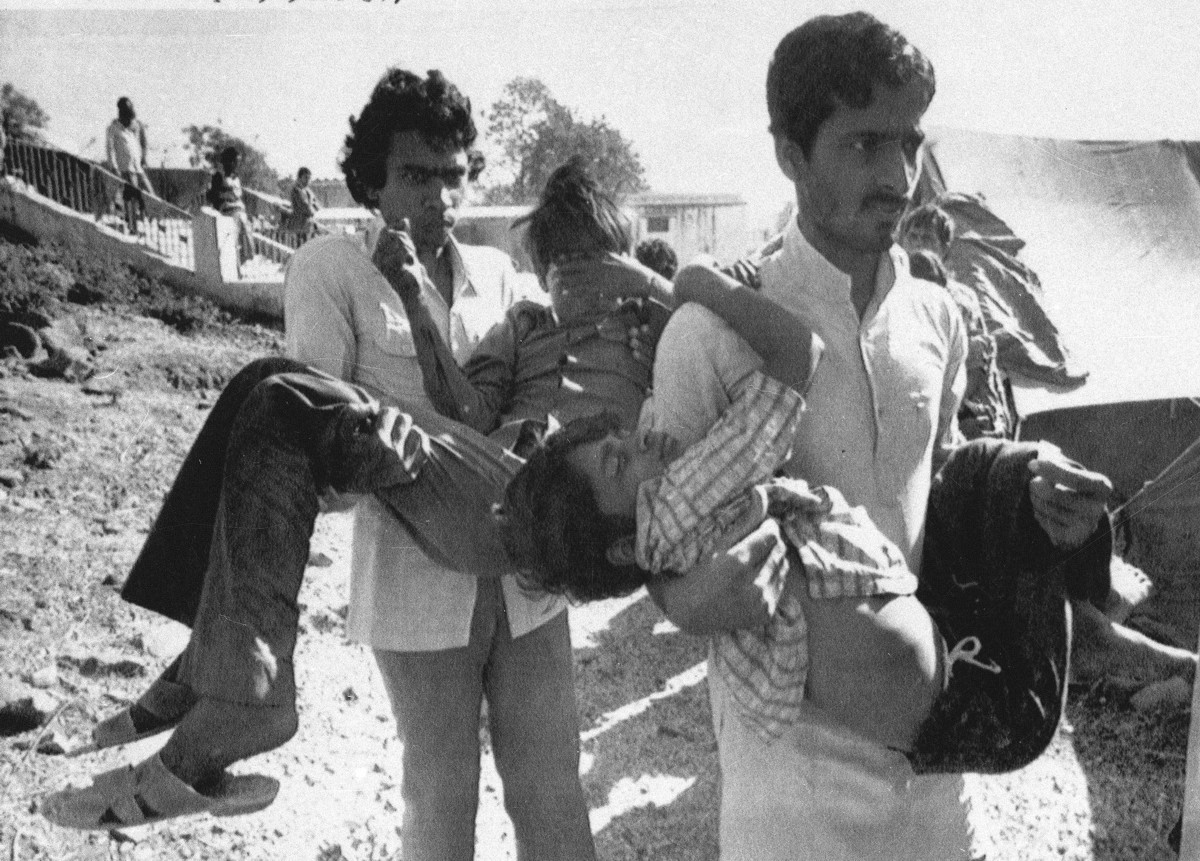
Courtesy: AP

31st Anniversary of the Bhopal Gas Leak, December 2, 2015
In the words of the victims and defenders

 
The tragedy, what actually happened ?
The escape of about 40 tonnes of methyl isocyanate (MIC) – a highly toxic chemical – from a storage tank on the premises of the pesticide plant of Union Carbide India Limited (UCIL) in Bhopal – the capital of Madhya Pradesh – on the night of December 2/3, 1984 resulted in disaster of mammoth proportions. Due to culpable criminal negligence manifest in an absence on the part of the plant management in taking adequate safety precautions, water and other impurities – that cause MIC to react violently – entered one of the MIC storage tanks resulting in exothermic reactions and forcing MIC and its reaction products to escape in the form of froth and lethal gases. The escaping poisonous gases, which were heavier than air, spread across 40 square kilometres of the area of Bhopal, covering about 36 of the 56 municipal wards, leaving in its wake more than 20,000 dead (over several years) and inflicting injuries in varying degree on about 550,000 others. About 900,000 persons had inhabited Bhopal then. The pernicious impact on the flora and fauna in the affected area was equally grave. UCIL was then under the control of Union Carbide Corporation (UCC) – a U.S. multi-national company, which is currently wholly owned by the Dow Chemical Company (DOW), USA. 

The struggle for justice and accountability by, with and for the survivors has encompassed issues of medical relief, rehabilitation, compensation, environmental remediation and justice. Over three decades, consecutive governments, state and central have simply rejected legitimate demands for a comprehensive assessment of the ramifications of the disaster to enable just remedial measures. The limited settlement of February 14/15, 1989 was rejected by survivors and rights groups representing them as paltry and a sham. Each gas-victim today, has been finally awarded less than one-fifth of the sum allotted even as per that settlement.

Year 2015 brought little progress during 2015 on the most pressing issues concerning the Bhopal gas-victims. This remains a matter of serious concern. The current status of issues such as health care, enhancement of compensation, rehabilitation, prosecution of the accused, remediation of the environment, etc., may be briefly recounted as follows:         
                                                                                                               
Basic right to health denied
The gross indifference on the part of both the state and central governments to the health needs of the gas-victims continues to be as grim as ever. Apart from the fact that a fairly large health-infrastructure has been built in terms of buildings and number of hospital beds due to the pressure exerted over the years by organizations supporting the cause of the Bhopal gas victims, the quality of health care in terms of investigation, diagnosis,  treatment, research and record-keeping continues to be abysmal. The persistent apathy of the Indian Council of Medical Research (ICMR) and the government of Madhya Pradesh in monitoring the health status of the Bhopal gas victims has been shocking.

Bhopal gas disaster survivors do not have the simple benefit of proper medical records (of each person) and even a health-booklet each to enable monitoring and treatment. Despite the showcase hospital infrastructure, clinics with computerization this simple and organised basic right remains unfulfilled.

The limited settlement of February 14/15, 1989 was rejected by survivors and rights groups representing them as paltry and a sham. Each gas-victim today, has been finally awarded less than one-fifth of the sum allotted even as per that settlement.

No proper protocol for treatment of each gas-related ailment has been evolved even 31 years after the disaster reflecting the chronic callousness and apathy of concerned authorities. Mere symptomatic treatment, over-medication due to lack of proper monitoring, and dispensing of sub-standard and spurious drugs has resulted in increasing number of renal failures among the gas-victims. Bhopal-disaster-related medical research, which the ICMR had thoughtlessly discontinued in 1994 and which the ICMR was compelled to revive in 2010, is yet to be pursued with the necessary vigour. The fact is that neither the ICMR nor the state government has any idea of the number of gas-victims suffering under each category of disease arising from respiratory, ophthalmic, gastro-intestinal, neurological, psychiatric, and other problems.

What is equally shocking is that even 31 years after the disaster, most of the gas-victims seeking treatment continue to be classed as suffering from ‘temporary injury’ in order to deny them compensation for permanent injury.    
         
Legal Accountability
It was because of this utter insensitivity on the part of the union of India and the state of Madhya Pradesh that BGPMUS, the Bhopal Group for Information & Action (BGIA) and BGPSSS (as petitioners numbers one, two and three) had filed a writ petition (number 50 of 1998) before the Supreme Court on January 14, 1998. The petitioners pleaded for restarting of disaster-related medical research, monitoring & recording the health status of each gas-victim, improvement in health care facilities, appropriate protocol for treatment of each disaster-related ailment, etc. Fourteen years after the onset of the litigation, and after several interim directions, the Supreme Court finally issued a comprehensive directive on August 9, 2012 acceding to the above prayers of the petitioners. Necessary directions were issued to the union of India, the state of MP and to other concerned institutions in this regard. The petitioners were further directed to pursue the matter before the high court of Madhya Pradesh (MP) – writ petition number 15658 of 2012– a task that BGPMUS & BGPSSS are actively engaged in at present.

Governments defy SC directives
Shockingly, even 39 months after the Supreme Court had passed the said order dated August 9, 2012, neither the central nor the state government(s) has taken the necessary steps to comply fully with all the directions of the Court. What is most appalling and disheartening is that even 31 years after the disaster, proper health records of the gas-victims are not being maintained and, although claims are being made to the contrary, the fact is that gas-victims do not have a hard copy of his/her complete medical record in his/her possession.

It is because of this failure of the respondents to comply with the said order of the Supreme Court dated August 9, 2012, BGPMUS & BGPSSS were compelled to file a contempt petition (No.832 of 2015) on May 15,2015 against the concerned officials of the government of India and Madhya Pradesh and allied institutions such as ICMR, NIREH and BMHRC.

Chronology of the contempt petition
May 15,2015     contempt petition against concerned officials of the government of India and Madhya Pradesh and allied institutions such as ICMR, NIREH and BMHRC filed by BGPMUS & BGPSSS

October 27, 2015      contempt petition admitted, notice issued, petitioners asked to filed rejoinder

September 16, 2015   the chief secretary, government of MP, and the secretary, Bhopal Gas Tragedy Relief & Rehabilitation Department (BGTRRD), who are respondent numbers 3 & 4, had already filed their reply

November 30, 2015 since, the responses in the Reply filed by the said Respondents were mostly false and misleading, petitioner no.2; BGIA filed an application under article 266 of the Constitution urging the high court to take suo motu action against respondent nos.3 & 4 under sections 191 and 193 of the Indian Penal Code (IPC) for committing perjury. The application has been admitted. The next date for hearing is January 12, 2016

The persistent apathy of the Indian Council of Medical Research (ICMR) and the government of Madhya Pradesh in monitoring the health status of the Bhopal gas victims has been shocking.
 
Illegal Drug Trials
In 2008, a shocking discovery came to light. The illegal manner in which secret drug trials were being conducted on gas-victims at BMHRC in the period between 2004-2008. Following the exposure, authorities at BMHRC have been making every effort to shield the culprits. BGPMUS & BGPSSS have sought a detailed inquiry into this unsavory incident of using the gas-victims as guinea pigs and have demanded stringent action against the guilty. To legally pursue the matter, BGPMUS & BGPSSS have become interveners in writ petition (C) No.33 of 2012, which was filed to oppose unregulated drug trials in the country, especially by multinational drug companies, and it is currently pending before the Supreme Court.  

Compensation
Twenty-one years after the unjust Bhopal Settlement of February 14/15 1989, the union of India had decided to file a curative petition [curative petition (civil) number 345-347 of 2010] before the Supreme Court on December 3, 2010. This followed a huge public campaign and public outcry (even by the electronic media that has been fairly silent since). This petition challenged the terms of the settlement on grounds that it underestimated figures of both the dead and injured. The UOI has sought enhancement of compensation by an additional Rs.7728 crores over the 1989 settlement amount that was merely about Rs.705 crores. The petition has been admitted but has not yet been taken up for hearing, five years down.

There are significant points of difference in the two interventions. The BGPMUS and BGPSSS do support the UOI’s curative petition especially with regards the total casualty figure (i.e., 5,73,586 victims, including dead and injured) and on the modalities for enhancing compensation (i.e., that it should be based on the dollar-rupee exchange rate that prevailed at the time of the settlement). However, BGPMUS and BGPSSS have serious differences with the central government’s stand on the number of dead (just 5295 according to the curative petition) and the seriously injured (only 4944). The two survivors and human rights organizations also oppose the centre’s paltry claims for relief and rehabilitation and for environmental remediation.

Well documented figures by these organizations (BGPMUS and BGPSSS) put the dead at 20,000+ and seriously injured at 150,000+. These are also the figures (explained in detail) in the special leave petition (SLP No.12893 of 2010) currently pending and which will be heard only after the disposal of UOI’s Curative Petition.  It is to remedy the attempts at dilution of the tragedy both in terms of numbers dead and gravity of the fallout that the organizations concerned have on October 24, 2013 filed an interlocutory application in the centre’s curative petition pointing out the serious inadequacies.

The centre’s conduct, when examined in detail, gets more and more murky. No attempts were made to place the relevant ICMR reports before the claim courts to enable them to fairly assess the types and gravity of injuries suffered by the Bhopal gas victims. In the absence of proper health booklets, which the ICMR and the state government had failed to provide to each gas-victim, circumstantial evidence would have been very valuable in determining the likely degree of injury suffered by a gas-victim.

On all these serious issues, this 31st anniversary of the tragedy, the organizations and Survivors make a collective plea that the curative petition, pending before the Supreme Court for the last five years, should be heard without delay. Before this, the health booklet with his/ her complete medical record should be issued to each gas-victim. Without this, the victim survivors would not be able to access fair compensation that is awarded in terms of the category and degree of injury that can be seen from the individual health record. Today the victims simply do not have the empirical means to prove the extent of injury and the category it falls under.

Hence, the computerisation of health records and coordination between the records contained in various hospitals and clinics treating gas-victims before providing each gas-victim with his/her complete medical records is an immediate need.

Environmental Remediation
Toxic waste that was generated during UCIL’s operation from 1969 to 1984 was dumped in and around the plant leading to severe soil and water contamination. A comprehensive study to estimate the extent and gravity of the damage has not yet been carried out by either the centre or the state government, though thirty one years have passed. Instead, the magnitude of the problem has been grossly underestimated by making it appear that the total toxic waste that needs to be safely disposed of is only about 345 tonnes that is stored at the plant site.

This issue has also been agitated before the Supreme Court both independently in the SLP as also in the intervention in the curative petition.

Survivor organizations have argued that the current proposal to incinerate/bury the toxic waste near Indore is wholly misconceived and it would only result in shifting the problem from Bhopal to Indore. On the contrary, in a preliminary study that was jointly carried out by the National Environmental Engineering Research Institute (NEERI), Nagpur, and the National Geophysical Research Institute (NGRI), Hyderabad, during 2009-2010, it was estimated that “the total quantum of contaminated soil requiring remediation amounts to 11,00,000 MT [metric tonnes](p.68). Since the Government of India has submitted that the private incinerator at Pitampur (Indore) has been suitably upgraded to prevent any toxic emission, the Supreme Court has permitted test-incineration of toxic waste currently stored at the Bhopal plant. The results of the tests are awaited.

Bhopal gas disaster survivors do not have the simple benefit of proper medical records (of each person) and even a health-booklet each to enable monitoring and treatment.

Based on the “Polluter Pays Principle”, it is the duty and responsibility of the Dow Chemical Company, USA, which currently owns UCC, to meet the cost of remediating comprehensively the affected environment in and around the UCIL plant with the latest available remediation technology. Similarly, the cost of providing safe-drinking water to the affected population residing in and around the former UCIL plant too has to be borne by DOW. However, the responsibility for providing safe drinking water to the affected population is entirely that of the state government. However, the state government is yet to fulfill that responsibility since supply of safe-drinking water to the affected areas is still very erratic. Moreover, the victims of contaminated water have still not been made eligible for free medical treatment.         
                                                   
Remediation of the estimated 11,00,000 MT of contaminated soil is a far more difficult task. At the initiative of the Centre for Science and Environment (CSE), Delhi, a preliminary attempt was made in April 2013 to bring together on a common platform the various stakeholders (including BGPMUS & BGPSSS) and experts to prepare an Action Plan to remediate the degraded environment. While a draft Action Plan has been worked out, it requires further refinement as well as inputs from other experts and stakeholders, including the government of Madhya Pradesh. The stoic indifference of the state government to this daunting task is alarming. In situ decontamination of the toxic waste (including the contaminated soil & groundwater) using closed-loop remediation technologies is a possibility. With inputs and technical help from UN Environment Programme, cleaning up of the contaminated site in Bhopal is quite feasible. However, the entire costs for the cleanup should be ultimately borne by Dow Chemicals.

Relief and rehabilitation                                                                                       
The State Government has failed to address adequately and with sensitivity a host of socio-economic problems that confronts the chronically sick, the elderly, the differently abled, the widowed, and other vulnerable sections among the gas-victims. The pittance, which was disbursed as compensation in most instances to these sections was never enough to take care of their daily needs. Finding gainful employment in accordance with the reduced capacity to work and to lead a dignified life has been a serious challenge. The state government needs to give far more attention and provide far larger support to the most vulnerable sections of gas-victims than in the past. 

On the 31st anniversary of this man-made-disaster, the Bhopal Gas Peedith Mahila Udyog Sanghathan (BGPMUS) and the Bhopal Gas Peedith Sangharsh Sahayog Samiti (BGPSSS) pay their homage to the deceased victims and reiterate their determination to continue to uphold the cause of the survivors and to seek justice for the hapless victims.

 (This article has been prepared based on the detailed press release by Abdul Jabbar and ND Jayaprakash of the BGPMUS and BGPSSS respectively. They can be contacted at jabbar.bhopal@gmail.com / jaypdsf@gmail.com)

A Cry for Reform, Islam

0


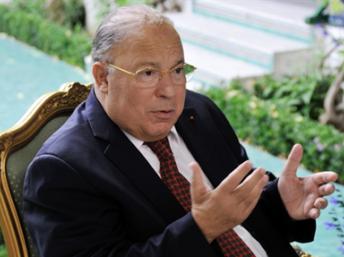
Dalil Boubakeur, rector of the Great Mosque of Paris.           Courtesy: AFP/Aurore Marechal

The November 14 Paris attacks that killed 130 persons, fast on the heels of the Baghdad and Beirut bombings that also cost many lives, have, once again raised questions within the fold of Islam. Earlier this year, Dr Tawfik Hamid an Egyptian scholar famously wrote “From the heart of an honest Muslim” which he began with, "I am a Muslim by faith, a Christian by spirit, a Jew by heart, and above all I am a human being."

Islamic leaders and scholars are risking lives and seeking strongly, a reformation within Islam, some even saying that the political content needs to go and the compassionate and just part, emphasised. Closer home, Mumbai to Kerala, Delhi to Lucknow clerics and leaders have been sending a strong and similar message.

(Preachers denounce ISIS in Friday sermons,
http://epaperbeta.timesofindia.com/Article.aspx?eid=31804&articlexml=Preachers-to-denounce-ISIS-in-Friday-sermons-27112015011025 and In war against IS, clerics to add 1k Instagram accounts, FB pages
 http://indianexpress.com/article/cities/mumbai/in-war-against-is-clerics-to-add-1k-instagram-accounts-fb-pages/
 
In January this year, the rector of the main mosque in Paris, Dalil Boubakeur, speaking to the CNN had reverted from the French to English to make his point. He said that Islam has to reform. There is a need to take out the political content of Islam and the compassionate part emphasised.
 
In the early days of Communalism Combat when it was published in a tabloid format, we had met Dalil Boubakeur in Paris who had spoken to us of the difficult role he has had to play, teaching tolerance and respect for the belief of others to his people and struggling for the rights of a migrant Muslim population, victim of both racial and religious prejudice, on the other. This account was published in November 1997 and we reproduce it here for the benefit of our readers to help contextualise a difficult and painful issue.
 
(sub head) Fighting phobia, teaching tolerance
 
(Intro) As head of the Muslim clergy in France, a country where phobia against Islam and its followers is on the rise, the rector of the Muslim Institute and the Mosque of Paris, Dalil Boubakeur, has a difficult double role to play: teaching tolerance and respect for the belief of others to his people and struggling for the rights of a migrant Muslim population in France which is a victim of both racial and religious prejudice. Excerpts:
 
The role of religion, religious heads and religious institutions in a secular state are indeed complex. France is a democratic country where secularism and human rights are of prime concern to the state. All religions in turn respect the state. We are not to interfere in the political business of the state just as the state and its administration does not interfere in matters of faith.
 
In 1905, France passed a law making a formal separation between religion and state. For Islam, a new religion in France, also a religion of the migrant community, to realise and maintain this equation is not easy. Christianity and Judaism have reached an equilibrium after co-existing with the state for hundreds of years when Islam was not here in France. They have their churches, their synagogues. They have consolidated their institutions, the Church has for long had a sophisticated organization.
 
Islam came here much later and was, therefore, always considered an “outside” religion of the migrant worker whose focus of worship and religion was, in turn, “outside” the nation. The mosque of the Muslim worker was in Africa, their religious feast was in Africa, their women were in north Africa.
 
Only men from the community first came here to work. Families arrived much later after the French government enacted a law, the Familie Rapprochement Act through which families were allowed entry. After the families came, population grew and there has been a demographic explosion since the 1970s.
 
This caused a revolution in the suburbs of the cities of France and the authorities coped by building buildings, kilometers of them, “quick” buildings, to accommodate the growing numbers.  These were buildings without any social, human or cultural dimensions. Outside Paris and Lyon, these buildings look like barracks. This was not good. As the young grew up or came to France, they found little or nothing to welcome them.
 
Also, Islam had to make specific adjustments to integrate because the French constitution relates to the individual, with no concessions to communities of people or religious communities. All of us must integrate into the general population. This is very important and I think, very natural. If a country relates to different nationalities within its geographical area, say Italian, Indian, Spanish, whatever, what you will get is a splintered image of the mirror and no unified image will be visible.
 
There is no priority given here to anyone. No distinction in the application of laws is made, as long as you are a French citizen. Polygamy, female circumcision and other such practices are downright illegal here.
 
Now, is the French state genuinely secular towards all, especially migrants? Or does it have a bias? While the theory of secularism and the secular state exists, in reality there are many human problems. Muslims here, are poor, disadvantaged, the migrant working population is ignorant of the systems of law and the principles of secularism that operate here. Hence, they find it extremely difficult to adapt.
 
They assume, for instance, that expenses of their mosques, the salary for the imams, land for cemeteries will come from the state, little realizing that it requires legislation. A law needs to be enacted to give salaries to any section of the clergy, a law is needed to grant a piece of land for a mosque.

The question of Muslims and Islam in France is linked critically to the immigrant problem. The March 1996 amendment in French immigration law has titled the balance against immigrants, and is even being used to victimise people. As rector of the Paris Mosque, our role as mediators between our community and the state is very sensitive in this political situation.

 
There are economic difficulties faced by a disadvantaged migrant community, for whom there are little facilities. Then, there are many imams (preachers) who, coming from Africa, from a different background, who don’t always have a message of tolerance or the message for the good and wise voyage of the Muslim in this life. This is largely because there is a very low level of secular education for many of our imams: traditionally, they are just taught the Holy Scriptures.
 
In all these contexts, our role is crucial. The Mosque, of Paris has made all efforts to train 130 “good” imams, to give a religious, non-political, spiritual message to followers: to realise their ideals through education, good conduct and behaviour: to be a good Muslim, respecting all religions, other people’s beliefs, men of other religions, and above all respecting the state they are living in. This is critical for co-existence between different religions.
 
The financial upkeep of the imam, mosque and other religious institutions remains an ongoing difficulty. The imam is a religious man with a family, with childen, he too needs social security, where does it come from? The social service cell of the Paris Mosque is thus very active. We organise health camps, special camps for some Muslim migrants in prison. There are about 40-50 persons, including women, who are involved in the social service leagues that collaborate with the 20 mosques in Paris.
 
The only problem that we face are financial. We are trying to make adjustments through money generating activities like running a cafe, hamaam (public bath); there is also donation from visitors, income from the conferences that we hold.
 
The question of Muslims and Islam in France is linked critically to the immigrant problem. The March 1996 amendment in French immigration law has titled the balance against immigrants, and is even being used to victimise people. As rector of the Paris Mosque, our role as mediators between our community and the state is very sensitive in this political situation.
 
Things are very difficult now because the recent amendments, have not only stopped immigration but also placed severe restrictions on access to means of livelihood. In this scenario, it is our hope that Muslim people will behave with responsibility for only then will the negative attitude against them reduce. For example, if they don’t terrorise people in the suburbs, the negative image people have against the migrant population will slowly disappear. As rector of the Paris Mosque in this situation, I inspire the community against bad examples of terrorism and preach non-violence. The Friday sermon is a message of peace, non-violence, a lesson to Muslims on how to behave as good citizens.
 
We know that the number of Muslims here is high and an upswing in racist or xenophobic attitudes can only be tackled if our community listens to us and makes conscious efforts to respect the law, to enjoy rights just as all other French people do. We hope that there never is a “Muslim problem” in France.
 
The French national commission for women has been looking into the question of representation of Muslim women, as all others, in the different professions. The Mosque of Paris, also hopes in future to be the voice of Muslim women and seeks to represent their cause in France to the government.
 
Other related questions arise. In France, Muslim women and men who are French citizens have to live under French law, not the Shariah. This does not affect their religious laws and practices, however. As long as basic principles of law are maintained, there should be no problem in following other laws laid down by the nation state.
 
As the rector of the Mosque of Paris, in a country that sets store by its secular foundations equality of all religions – I agree that the primary French law should apply to all communities. Our religious practices are never interfered with, anyway. When it comes to marriage, for example, we first have to register then perform the nikaah ceremony. In case of any dispute, they go before the French Tribunal.
 
Women have a separate space to pray within the Paris Mosque. They move around freely, no one controls of directs their movements. Freedom is the first principle of Islam for women. Some come with only a scarf, that is their right. We prefer that the heads of the faithful be covered as a sign of respect within the mosque. But outside, all Muslims are free to dress as they choose. No one inside will try and dictate or control their behaviour outside. They are free to do wear what they want, work wherever they like.
 
We recognise that women have much more capacities and capability than only that of the homemaker, though of course this is also important. In France we find Muslim women generally showing great aptitude for academics and have a particular talent in the field of diplomacy.
 
Crucial for any community is the nature and quality of the institutions it generates. The mosque is meant to be the veritable hub, the centre of the community just like the first mosque of Islam at Madina was. The first statutes of Islam, the relationship between Jews and Christians, issues or war and peace, etc., were all deliberated upon inside the Madina mosque soon after it was constructed.
 
The mosque of Paris, built in 1922, has a curious history. It was established first in recognition of the sacrifices of Muslims in the service of the French nation during the First World War. In the late 19th century (1870), many Muslim groups were active in France. Again, 1914, when France mobilised soldiers from Algeria, Morocco, Senegal and Tunisia it was the second major participation of Muslims in the French national struggle.
 
This painting that has its pride of place behind the rector’s chair in the mosque here depicts Muslims fighters from north Africa meeting French diplomats.
 
The design of the Paris mosque was also thoughtfully and approximately chosen. It is an amalgamation of the best of all the existing architectural traditions. It is both an Islamic institute open to everybody and a mosque.
 
(As told to Teesta Setalvad, co-editor of Communalism Combat and published in the Ethos section of the issue, November 1997)