The Rajasthan Muslim Forum: Call for action
Demanding justice for victims of anti-minority violence in Rajasthan
In Sept-October 2011 Communalism Combat had reproduced the preliminary report of a fact-finding team set up by the People’s Union for Civil Liberties to investigate the attacks on the Meo Muslim minority in Gopalgarh, Rajasthan, on September 13-14, 2011, where police brutality and mob violence claimed 10 lives and left several persons injured. Thereafter, in a report on the All India Democratic Women’s Association’s Convention against Communal Conflict in December 2011, CC had revisited the incident.
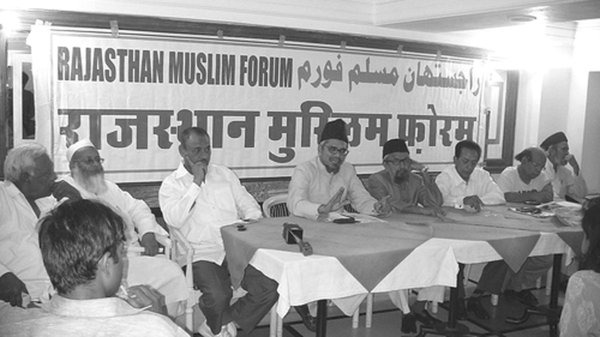
Distressed by the state government’s reluctance to punish the culprits, including police officers responsible for dereliction of duty, in the violence against innocent Muslims in Gopalgarh (Bharatpur) and elsewhere in Rajasthan, representatives of Rajasthan’s Muslim minority under the banner of the Rajasthan Muslim Forum (RMF) led delegations to the National Commission for Minorities and met ministers in the central government in June 2012 to submit a detailed representation in this regard. In what appears to be a clear instance of contrary messages being sent out by the United Progressive Alliance, a month before the RMF felt compelled to take such steps and meet senior functionaries of the UPA in Delhi, union minister Salman Khurshid and Congress general secretary Digvijay Singh had in a public meeting in Jaipur on May 6, 2012 urged the chief minister of Rajasthan, Ashok Gehlot, who was present on the dais, to give prompt and fair justice to the victims of the Gopalgarh violence and punish the guilty.
The press release issued by the RMF on June 26, 2012 tragically encapsulates the attitudes of the state (Congress) and central (UPA) governments towards the punishment of the perpetrators of communal violence in a state under their rule.
Summary of demands
The victims of the Gopalgarh violence of September 13-14, 2011 and concerned citizens and social workers appeal to the government of Rajasthan (GoR), the government of India (GoI) and the Central Bureau of Investigation (CBI) to give fair and prompt justice to the victims. Documentary evidences and the attitudes of officers show that the victims are not only not getting justice but have been made to suffer further injustice, discrimination and harassment due to delays and arbitrary procedures. Thus victims are made to fend for their own security and legal defence whereas the accused are given a clean chit due to faulty investigations and delays. Ten Muslims died due to police firing and burning and several were injured. Many houses and shops were looted and damaged while the police looked on.
None of the officers responsible for such flagrant dereliction of duty, including the district magistrate (DM) and superintendent of police (SP) of Bharatpur, have been punished. In fact, they have now been reinstated by the state thus demonstrating its desire to shelter them. This is one of the reasons why Rajasthan has witnessed increasing violence against Muslims, in the regions of Marwar, Mewar, Hadoti and Mewat, in recent months. No officer has so far been punished for these incidents of anti-Muslim violence.
The law of the land must apply equally to all, irrespective of class, status and religion.
The adverse roles of the CBI and the state
- Using subterfuge (e.g. calling victims for assessment of losses for compensation and then arresting them in Bharatpur), Muslim victims of violence have been treated as perpetrators; they have been arrested and are being harassed by the CBI and police. This is done with the desire to immobilise victims, to undermine their commitment to fight for justice and file first information reports (FIRs) against the accused and officers who conspired with perpetrators and/or committed gross dereliction of duty which resulted in deaths and massive loss of property.
- Ignoring the clear instructions in two government (GoR and GoI) notifications, the CBI took a biased approach while dealing with Muslim victims and guilty officers like the DM and SP; the FIRs filed by Muslim victims were ignored while those filed by the police were investigated and action was taken on them.
- The CBI is intimidating witnesses to the violence. It is asking Muslims only two specific questions (‘How many Muslims were in the masjid?’ and ‘Who instigated the violence?’) without allowing them to narrate the sequence of events which would reveal who cast the first stone. Why is the CBI not interested in a complete chain of circumstances when such an investigation would expose the preplanning and conspiracy behind the violence and bring in the calculated assault on the imam of the Jama Masjid and other Muslims on September 13, 2011 which occurred before passions were allowed to build up and violence erupted? The approach of the CBI is selective, to say the least, and reveals a biased approach in the investigation itself.
- Despite the assurances given to Muslims by the chief minister of Rajasthan, he has not taken strict action against the officers accused of dereliction of duty and others who indulged in arson, looting and killing i.e. those responsible for the loss of Muslim life and property.
- Although the DM and SP of Bharatpur were suspended from service in late September 2011, serious administrative loopholes in the orders passed have ensured that they and other officers could not be punished. The state government deliberately failed to issue show-cause notices to or file charge sheets against the two officers either before or during their suspension. Worse, the state government consciously chose not to intervene before the Central Administrative Tribunal (CAT); hence it was not heard before the CAT delivered its interim order. The government did not file a review application against the judgement delivered by the CAT nor has it to date appealed against the CAT judgement in the high court, explaining forcefully the reasons for the officers’ suspension.
- Soon after the DM and SP were suspended, representatives of the Indian Administrative Service and Indian Police Service associations in the state met the then chief secretary to protest against the suspension, claiming that this had demoralised their officers. Such belligerence reveals a disturbing mindset among the senior bureaucracy in the state – where firm action following criminal dereliction of duty is interpreted as a cause for loss of morale. In fact, the suspended officers had violated their constitutional duty and the code of conduct that enjoins IAS/IPS officers to uphold the fundamental rights to life and equality before the law.
- There is a nexus between the various arms of the bureaucracy that is protecting guilty officers responsible for the carnage in Gopalgarh.
- Compensation for the loss of property has been calculated in accordance with the GoR (home department) rules of 2008; these amounts are miserably low and do not reflect the price index. Most victims have refused to accept the compensation offered. It has been a consistent finding that during communal violence and one-sided violence against Muslims, it is the Muslims who suffer the most in terms of loss of life and property. The corollary then is equally disturbing: while the compensation paid to Muslims for loss of life and property ought to be much higher, it is in fact unrealistically low. This shows a deep-seated prejudice against minorities. The rules were framed during the Congress regime in 2008 when Ashok Gehlot was chief minister. Such norms must be reviewed and upgraded realistically (as has been done in the case of victims of the 1984 Sikh massacre in Delhi or the 2002 Muslim massacre in Gujarat).
- The victim community’s requests for an appointment with the chief minister had not been successful.
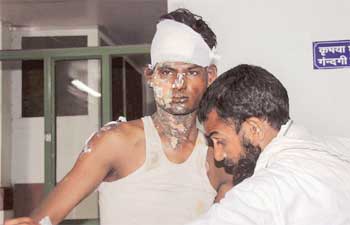
Gopalgarh: Victims of mob and state
Background
- GoR notification F-19 (13) Home-5/2011, dated September 21, 2011, mentions five FIRS registered (thus far) at the Gopalgarh police station. However, the notification contains clear instructions that all FIRs in the case: "All cases registered at police station Gopalgarh, district Bharatpur, and attempts, abetments and conspiracies in relation to or in connection with the above-mentioned offences and any other offence or offences committed in course of the same transaction or arising out of the same facts" must be investigated.
- GoI notification F. No. 228/65/2011-AVD-II, dated October 11, 2011, refers to the GoR notification above and repeats verbatim GoI instructions which include all cases/FIRs for CBI investigation.
- However, going against the explicit instructions in the GoR/GoI notifications, SS Kishore, additional superintendent of police, CBI, registered (and thereafter investigated) only five FIRs on October 11, 2011, deliberately excluding the 14 FIRs filed by victim Muslims against the DM, SP, local officers and Gujjars/Hindus, accusing them of conspiracy and of abetting the crimes committed against the victims on September 13-14, 2011. The CBI was quick to register a fresh case on October 11, 2011 but it did not take cognisance of the 14 FIRs that had also been registered at the police station before that date and which it deliberately ignored. This shows that the CBI had acted mala fides in its willingness to protect bureaucrats accused of gross dereliction of duty. This despite the fact that the divisional commissioner of Bharatpur had indicted these officers for dereliction of duty, stating that the investigation must be conducted by an inspector-general of police.
- The GoR notification mentions 20 FIRs, including the 14 FIRs filed by Muslims, and the same instructions (i.e. to investigate all cases/FIRs relating to the incident) were reiterated to the CBI in October 2011.
- About three and a half months later, on January 20, 2012, the GoI issued another notification which mentioned 18 FIRs, including the 14 FIRs filed by Muslims. There was no need to do this, as it was a mere repetition. This appears to have been done with deliberate purpose. It gave the CBI a handle to protect the DM and SP while maintaining that it (the CBI) could begin investigations into the 14 FIRs (which named the DM and SP among other accused) only after the (second) GoI notification of January 20, 2012. This time lag of over three months (October 11, 2011 to January 20, 2012) also allowed the CBI to file a charge sheet against those accused in the five FIRs first registered by it without delay. Since the DM and SP were not mentioned in these FIRs (at least two of which were filed by policemen), both officers could be given a clean chit; there was nothing to incriminate them. The damning accusations against these officers were contained in the 14 FIRs filed by victims which had been registered earlier but which the CBI had deliberately overlooked.
The CBI is determined to protect bureaucrats somehow. It has managed to give them a clean chit despite evidence of their complicity and incompetence. The government of Rajasthan has aided this
- Moreover, the CBI did not act promptly even after the GoI’s second notification had been issued on January 20, 2012. It only registered the cases on February 24, 2012 after a deliberate delay of one month. This amounts to a total delay of five months if the initial GoR/GoI notifications are taken into consideration. In contrast, the CBI acted on the GoI’s first notification (albeit selectively) the very same day i.e. October 11, 2011. It appears that for the CBI, the ‘accused’ named in the five FIRs that were first registered (which include Muslim victims who were attacked in the market and those whose property was looted) are more serious offenders than the high-profile ‘accused’ (the DM, SP and other officials) named in the 14 FIRs filed by Muslim victims. This shows a clear bias towards the powerful accused and a communal bias against the victims. The conduct of the investigation, the CBI’s selective promptness and delays, served to protect the district administration, particularly the SP and DM, while the victim Muslims were further victimised. While the victim Muslims were in jail, or nursing their injured kinsmen in hospital, the accused were allowed to roam free.
- The 14 FIRs filed by Muslim victims in the incidents of September 13-14, 2011 were registered between September 25 and 27, 2011 after curfew was partially lifted and only after the victims, occupied with the treatment of the injured and the burial of their dead, could muster the courage to do so. There was thus a 12-day delay in the registration of these FIRs. This is not an insurmountable delay in law. Meanwhile, the policemen and Gujjars were at an advantage; they had nothing to fear and were able to file FIRs immediately. (The very fact that the entire police staff of the Gopalgarh police station was transferred to the Bharatpur police lines about a week after the incident points to their complicity in the violence.)
- If all 19 FIRs had been clubbed together for the CBI investigation as per the explicit instructions in the state and central government notifications, the dereliction of duty and collusive roles of the district administrators and others accused by the victims would have become clear, in particular the mala fide intent and conduct of the DM, the SP and other local officials.
- In sum, the CBI is determined to protect bureaucrats somehow. It has managed to give them a clean chit despite evidence of their complicity and incompetence.
The GoR has aided this. As mentioned earlier, it did not file charge sheets against or issue show-cause notices to the DM and SP before or during their suspension, allowing the CAT to give a verdict in their favour. Nor did the state put its views on the conduct of these officials before the tribunal. The GoR had enough evidence against these officers for dereliction of duty as a result of which precious lives were lost, property damaged/looted and communal and social harmony jeopardised or destroyed.
The officers’ failures and culpability were manifested in:
a) Their failure to take preventive measures on September 13, 2011 by arresting those named in the FIR filed by Abdul Gani for assaulting his family and the imam of the Jama Masjid (before the violence had escalated);
b) Their deliberate failure to impose prohibitory orders, or Section 144 of the Code of Criminal Procedure (powers to issue an order in urgent cases of nuisance or apprehended danger), on the morning of September 14, 2011 when a crowd had assembled to protest against the assault on the imam; and
c) The DM and SP’s failure to resolve the graveyard land dispute by referring the same to the revenue department and Wakf Board expeditiously.
By their deliberate inaction, passions were allowed to build up.
Among the signatories to the representation are Quari Moinudin, Nazimudin Engineer, Mohd Saleem and Prof M. Hasan (all of the Rajasthan Muslim Forum) along with victims of the Gopalgarh violence, including Abdul Rashid, the imam of the Jama Masjid who was brutally assaulted on the evening of September 13, 2011, as well as several prominent members of the Muslim community across Rajasthan. Prof HC Bhartiya, Prof RC Bhandari, Prof HC Rara, Prof Surendra Singh Chaudhari, Prof NC Jain, Prof RP Bhatnagar and Prof CH Hada (all formerly of the University of Rajasthan) and Prof SS Shukla, formerly of the Government College, Ajmer, are also key signatories.
Archived From Communalism Combat, July 2012, Year 18, No- 167. Focus

.png)