Home Blog Page 2629

When the impossible happens

0


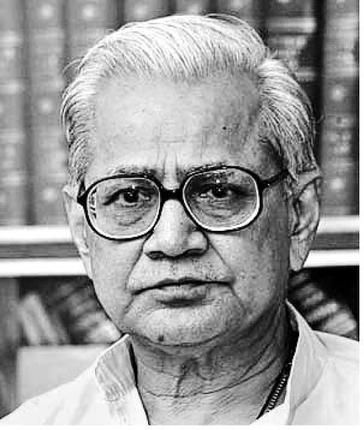
Justice VN Khare             Courtesy: thehindu.com

In September 2003 the then chief justice of India, VN Khare, had sharply chastised the Gujarat government for not only its failure to protect lives and property but its open collusion in the subversion of the justice process and had subpoenaed evidence in the now famous Best Bakery case. The indignities heaped on the Gujarat state apparatus included the cross-examination in open court of the two most senior civil servants in Gujarat at the time – its chief secretary, PK Lahiri, and director general of police, K. Chakravarti. The judge’s remarks were occasioned by the state’s abysmal failure to offer cogent explanations for the hasty completion of the Best Bakery trial (in a matter of a few weeks!) and the failure to protect evidence or to ensure that all witnesses had appeared for the prosecution, which led to speedy acquittals. It was possibly the first time ever in the history of independent India that the higher judiciary had spoken, and spoken sharply, in a case of mass communal violence. (The apex court then decided to monitor the government’s appeal in the case and subsequently, in an indictment of the Gujarat high court which had dismissed the appeal, ordered retrial and transfer of the case to Mumbai, Maharashtra.)

Two months after these remarks, the first ever conviction in a 2002 carnage case occurred in Nadiad in Kheda district. On November 24, 2003 Judge CK Rane sentenced 12 persons to life imprisonment and three to two years’ rigorous imprisonment. Forty-eight persons were acquitted. The crime: the brutal massacre of 14 Muslims at Ghodasar and Jinger villages in Kheda on March 3, 2002. Six years later, six convicts had jumped parole and the Gujarat state apparatus claimed inability to track them down. About a year earlier, in October 2002, two other carnage cases, Pandharwada, where about 25 Muslims were killed (the unofficial figure is higher), and Kidiad, where 61 Muslims had been chased and burnt alive in two tempos, saw complete acquittals. In both cases, senior elected representatives and functionaries of the ruling dispensation were accused; in both cases, the story behind the acquittals was similar to that in the Best Bakery fast track trial in Vadodara in May 2003 – witnesses had been made to turn hostile.

In February 2006 the Best Bakery retrial judgement of Judge AM Thipsay finally convicted nine persons (if the Gujarat police are to be believed, seven of the accused are still absconding!). On October 30, 2007 eight persons who were accused of rape and murder in Eral, Panchmahal, were sentenced for life while 29 were acquitted. They were part of a mob that had brutalised, raped and then killed seven Muslims. In January 2008, in the Bilkees Bano case, also transferred to Mumbai, Judge UD Salvi sentenced 11 to life imprisonment. The case involved the brutal gang rape of Bilkees and the slaughter of her three-year-old daughter Saleha, during an incident in which 14 Muslims had been massacred. Though a constable was convicted for destruction of evidence, government functionaries, including doctors, escaped the arm of the law and senior policemen who had orchestrated the subversion of the case were let off by the court.

It is in this overall context that the November 9, 2011 verdict in the Sardarpura massacre case – which convicted 31 persons, all of them landed Patels responsible for assaulting defenceless agricultural labourers who had toiled in their fields for generations – must be viewed and assessed. Communalism Combat brings its readers edited excerpts of the judgement as this month’s cover story. This is the highest number of convictions ever recorded in a case of targeted communal violence in independent India. It is a tribute to the grit and courage of the 33 survivor witnesses, displaced from their homes, who testified in court, identified the accused despite threats and inducements and ensured that justice was delivered. That the case was one among those monitored by the Supreme Court, whose directives had ensured effective witness protection, enabled the impossible to happen. That the judge cleared Citizens for Justice and Peace and its secretary of malicious and motivated charges of tutoring witnesses was another landmark. None of this would have been possible without the energetic and committed CJP team, especially its lawyers in Gujarat. Advocates Yusuf Shaikh, Aslam Baig and Sameer Mansuri assiduously participated in an onerous process.

Some points for reflection: Even in simple cases wherein a group of persons acting with one mind have assembled to commit a set of crimes, the charge of conspiracy holds. Why then were the charges of conspiracy under Section 120B of the Indian Penal Code dropped?

Remember that Gujarat 2002 was about 300 ghastly incidents in 19 of the state’s 25 districts. Evidence was led through witnesses who testified about significant preparations by politicians and leaders of the Bajrang Dal who enjoyed state patronage and protection. Witnesses also sought to lead evidence on Tehelka magazine’s courageous sting ‘Operation Kalank’ which revealed specific and relevant aspects concerning arms and ammunition being brought into Mehsana (the district in which Sardarpura is located) prior to Godhra, February 27, 2002. At witnesses’ insistence, the Special Investigation Team (SIT) did record the statement of Tehelka’s correspondent Ashish Khetan but they did not call him as a witness. Why? Though former director general of police RB Sreekumar’s affidavits, with annexed reports of the State Intelligence Bureau, corroborated some of this evidence, the SIT was reluctant to probe this aspect further.

Sharp and aggressive in its approach to the Godhra train burning tragedy, the SIT and its prosecutor had not only bought the Gujarat police’s shaky and shady version of conspiracy but had argued for the death penalty, which was imposed on 11 of the 31 accused. In the Sardarpura case, witnesses, being opposed to retributive justice, did not argue for the death penalty at all.

And thus a niggling question remains: do we view the incidents of Godhra and post-Godhra as qualitatively and quantitatively different kinds of crimes? This is a tough one, which the Indian system would do well to answer.

— EDITORS

Archived from Communalism Combat, December 2011, Year 18, No. 162, Editorial

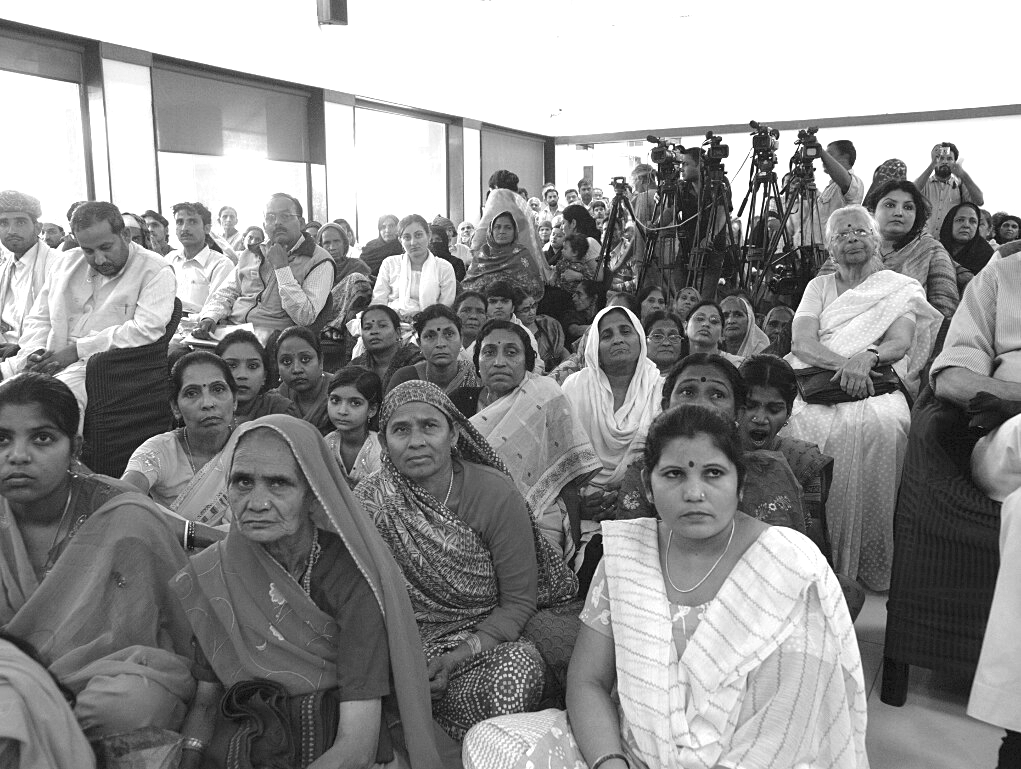
Survivor eyewitnesses

0
 

The culture of impunity must end

0


Courtesy: saddahaq.com

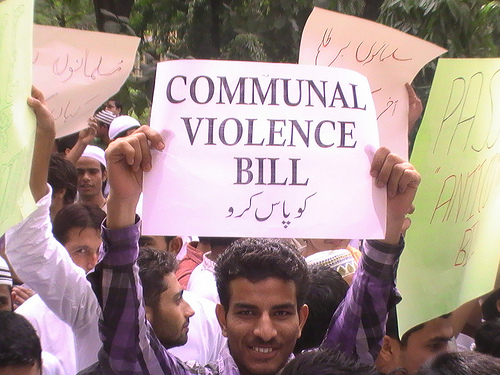
It is often said that India is afflicted by three Cs, all in capital letters: Casteism, Communalism, Corruption. The issue of corruption and Team Anna’s own peculiar recipe to deal with it have so hogged the headlines through most of 2011 that insufficient attention has been paid to another bill on the anvil – the Communal and Targeted Violence Bill – which addresses the other two Cs. In May this year the Sonia Gandhi-headed National Advisory Council (NAC) placed its draft Prevention of Communal and Targeted Violence Bill 2011 in the public domain, inviting comments from the public. The draft bill now awaits the consent of the union cabinet before it can be tabled in Parliament. Meanwhile, the sharpest attacks, the loudest howls of protest against the proposed law have come from the BJP, other constituents of the sangh parivar and their political allies. The fact that communal organisations are so vehemently opposed to the proposed law indicates that something must be very right with what has been suggested.

It is true that some misgivings have also been expressed vis-ŕ-vis certain provisions of the draft bill by some allies of the Congress and a few others from within secular quarters. The rationale behind the bill is the subject matter of our cover story this month, in which the misconceptions and apprehensions of some secularists have also been comprehensively dealt with. Our limited purpose here is to draw our readers’ attention to an issue that Communalism Combat has repeatedly focused on, more so since the genocidal targeting of Muslims by the Narendra Modi-led BJP government in Gujarat in 2002.

The issue in question is the culture of impunity in the context of communal or targeted violence, which has prevailed in the country since independence. Reports of various judicial commissions – appointed by different governments from time to time to probe incidents of communal violence, fix responsibilities and make recommendations – have two conclusions in common. One, the violence was not spontaneous but the result of meticulous planning, organisation and implementation by Hindu communal bodies. Two, the police and the administration displayed anti-minority bias. The repeated recommendations by commission after commission on what needs to be done to pre-empt violence and punish the police officers and administrators guilty of dereliction of duty have gone unheeded. It is in this climate of permissiveness and the absence of accountability mechanisms that the culture of impunity has flourished.

As lawyer HS Phoolka – who for over two decades has spearheaded the legal battle for justice for the victims of the anti-Sikh carnage in 1984 – has repeatedly stated in recent years, if the perpetrators of 1984 had been prosecuted and punished, the 1992-93 anti-Muslim pogrom in Mumbai may have been prevented; and if the perpetrators of 1992-93 had been punished, the 2002 genocide in Gujarat may have been pre-empted. Not only have the perpetrators and errant policemen and civil servants never been punished; in the last 25 years we have repeatedly seen the state playing the role of mute witness, co-conspirator or even sponsor of mass crimes whose targets have been the country’s religious and other minorities.

It is against this backdrop that civil society groups have been campaigning, since the 2002 killings, for an appropriate law to bring an end to this unconscionable and blatantly unconstitutional state of impunity. It was in response to this persistent campaign, in which Citizens for Justice and Peace and Communalism Combat were among the most vocal, that in 2005 the first UPA government floated a draft – The Communal Violence (Prevention, Control and Rehabilitation of Victims) Bill 2005 – for discussion and debate. The bill elicited widespread criticism from the very groups and organisations which had been at the forefront of demands for a new law. To them, it was evident that the bill as it stood then would be worthless in preventing future massacres. A principal demand was that the new law should hold public servants – politicians, senior civil servants and police officers – accountable for their failure to control targeted violence. If anything, the 2005 draft envisaged even greater powers for the police instead of holding them accountable. In the face of all-round criticism, the draft was reworked but even the second draft was far from satisfactory.

In a welcome move, soon after the UPA-II government took charge in 2009 and the NAC was revived on Sonia Gandhi’s initiative, the council included a Communal Violence Bill among its priorities. The bill of 2011 is a result of that initiative. We need only add here that since both the UPA-I and UPA-II governments had in principle accepted the need for such a bill, they now have an obligation to ensure that the new bill sails through Parliament notwithstanding the expected resistance from the BJP and its allies. For the UPA government to delay or procrastinate on the bill – simply because, unlike Team Anna, the NAC members have neither threatened indefinite hunger strike nor issued deadlines and ultimatums – would be unfortunate, to say the least.

– EDITORS

Archived from Communalism Combat, November 2011, Year 18, No.161- Editorial

Act Now – Why the Communal and Targeted Violence Bill must be codified into law

0

In 1998, five years after we launched Communalism Combat, we had pointed out, in possibly one of the first researched compilations on judicial pronouncements on communal violence, that from the first ever bout of communal violence in free India (Jabalpur, 1961) to the full-blown pogroms that followed some decades later, two characteristics typified the violent frenzies that frequently cost us lives and property (‘Who is to blame?’, Communalism Combat, March 1998).

Both characteristics hold good today.

One is the silent yet strident mobilisation by right-wing supremacist groups through hate speech and hate writing against religious and other minorities for months beforehand. Though these have always amounted to violations of the Indian Penal Code (IPC), they have gone unchecked and unpunished, creating a climate that is fertile ground for the actual outbreak of violence. The other major cause of such violence has been found, by several members of the Indian judiciary, to be the failure of large sections of the administration and the police force to enforce the rule of law, resulting in a complete breakdown indicating deliberate inaction and complicity.

Both these features combined each time – whether in Jabalpur (1961), Ranchi (1967, Justice Raghubir Dayal Commission of Inquiry), Ahmedabad (1969, Justice Jagmohan Reddy Commission of Inquiry), Bhiwandi, Jalgaon and Mahad (1970, Justice DP Madon Commission of Inquiry), Tellicherry (1971, Justice Joseph Vithayathil Commission of Inquiry), Hashimpura (1987) or Bhagalpur (1989) – to ensure that minorities were not just brutally targeted but also denied free access to justice and reparation.

The organised violence in Delhi in 1984, Bombay in 1992-1993 and Gujarat in 2002 took the levels of impunity for state and non-state actors to hitherto unknown heights. A historiography of communal violence since Indian independence thus reveals a poor report card on justice delivery and reparation. Today unfortunately, we have extant examples of victim survivors, Muslim, Sikh and Christian, still waiting at the threshold for the first stages of investigation and trial to begin decades after the crimes have taken place.

The newly drafted Prevention of Communal and Targeted Violence (Access to Justice and Reparations) Bill 2011 (commonly referred to as the Communal and Targeted Violence Bill), which awaits a nod from the cabinet before it is tabled in Parliament, is an attempt to address the imbalance and the despair caused by over six decades of discriminatory justice delivery. Far from being discriminatory against the majority, it entitles any victim – whether from the majority or a minority – to a robust scheme for compensation and reparation.

The bill is legislative acceptance of the discriminations in justice delivery faced by sections of our population that have long been subject to communal and targeted violence. When citizens who are numerically weak and socially disadvantaged are attacked on account of their identity, institutions of governance – law enforcement and protection and justice delivery – most frequently act in ways that discriminate against them.

The Communal and Targeted Violence Bill seeks to protect religious and linguistic minorities in any state in India, as well as the scheduled castes and scheduled tribes, from targeted violence, including organised and communal violence. Apart from including the offences listed under the penal code, the proposed law modernises the definition of sexual assault to cover all sexist crimes that heap indignity on the victims (including stripping in public, etc), not just rape, and broadens the definition of hate speech and writing already penalised under Section 153A of the IPC.

Most significantly, it deepens the definition of dereliction of duty – which is already a crime under the IPC – and for the first time in India includes offences by public servants and/or other superiors for breach of command responsibility. “Where it is shown that continuing unlawful activity of a widespread or systematic nature has occurred,” the draft bill says, “it may be presumed that the public servant charged with the duty to prevent communal and targeted violence has failed… to exercise control over persons under his or her command, control or supervision and… shall be guilty of the offence of breach of command responsibility.” With the minimum punishment for this offence being 10 years’ imprisonment, superiors will hopefully be deterred from allowing a Delhi 1984 or Bombay 1992-1993 or Gujarat 2002 to recur. The proposed law will also act as a deterrent to acts of complicity by public servants during smaller bouts of violence and awards fair compensation and reparation to victims when they do occur.

Positive and reasonable legislative steps to correct either the discriminatory exercise of state power or the discriminatory delivery of justice draw strength from a clear constitutional mandate. Article 14 of the Indian Constitution states that: “The state shall not deny to any person equality before the law or the equal protection of the laws within the territory of India”. Article 21 clearly places the responsibility on the state to ensure equal protection of life and liberty (and, by implication, property) and Article 15(1) provides that “the state shall not discriminate against any citizen on grounds only of religion, race, caste, sex, place of birth or any of them”. This is recognition that vulnerable groups may require protection from the state.

Every democracy is premised on the assumption that while the majority can take care of itself, minorities need special protection. Consider for a moment India’s experience in tackling communal violence (or its failure thereof) alongside our history of recurring bouts of targeted violence, when numerically weaker and socially disadvantaged groups –linguistic or religious minorities or Dalits or tribals – are attacked because of their identity. Throw into this analysis the review of the application (or non-application) of the Scheduled Castes and the Scheduled Tribes (Prevention of Atrocities) Act 1989. And the reasoning behind the need for this law, applicable to minorities defined not just by faith but also by other criteria, becomes immediately evident.

“Minority” is not, or should not be, a rigidly frozen concept based on religion alone. The reality is otherwise, as our sordid experience of the attacks on Kashmiri Pandits in the Kashmir valley or the violence unleashed on North Indians/Biharis in Mumbai and Maharashtra or Tamils in Karnataka has shown. With the migration of populations and altering demographies, democracies need to develop sound measures for the protection of all the people. Jurisprudence through justice delivery and reparation through compensation packages must reflect this ever changing reality.

There is a simple way in which to make the proposed law applicable to the state of Jammu and Kashmir. The Jammu and Kashmir assembly must first pass a simple resolution addressed to the president of India asking that the law be made applicable in the state. Thereafter, it would require a reference made to Parliament by the president of India for amendment of the Jammu and Kashmir (Extension of Laws Act) 1956 so as to extend the new law to Jammu and Kashmir.

A law to protect the minorities draws its source from already existing powers granted to the centre, implicit in Article 355 of the Indian Constitution regarding the “Duty of the union to protect states against external aggression and internal disturbance” which provides that: “It shall be the duty of the union to protect every state against external aggression and internal disturbance and to ensure that the government of every state is carried on in accordance with the provisions of this Constitution”. This has generated considerable debate and will also be deliberated upon when the bill is put before the parliamentary Standing Committee. Detractors who speak only of India’s federalism baulk at admitting the ground realities during prolonged bouts of violence; such selective public amnesia negates years of bitter experience in dealing with outbreaks of majoritarian mob frenzy.

Over the decades the collective experience of civil libertarians and jurists at such times has been to ask for law and order enforcement to be temporarily handed over to the army. Assimilating this experience without impinging on the responsibilities of state governments to protect lives and property, the proposed law, under Chapter IV, envisages the creation of a National Authority for Communal Harmony, Justice and Reparation. The authority’s role will be to serve as a catalyst for implementation of the new law. Its functions will include receiving and investigating complaints of violence and dereliction of duty and monitoring the build-up of an atmosphere likely to lead to violence.

The National Authority cannot compel a state government to take action – in deference to the federal nature of law enforcement – but it can approach the courts for appropriate directions. There will also be state-level authorities, staffed, like the National Authority, by a process that the ruling party of the day cannot unduly influence. The monitoring of relief and rehabilitation of victims will be a major part of their responsibilities.

The creation of this new entity was incorporated in the draft bill after much deliberation with practitioners, including former judges who felt that without a body to supervise, monitor and properly intervene when smaller but recurring bouts of communal and targeted violence take place, state governments would continue to be lax, as we have seen even recently in Bihar (Forbesganj, June) Rajasthan (Bharatpur, September) and Uttarakhand (Rudrapur, October 2011).

The powers of this authority are recommendatory and in no way violate federal principles. Similarly, the state-level authorities have also been created in order to facilitate district-level inputs towards the prevention of violence and its containment as well as justice delivery. Moreover, the National Authority has no power to issue binding orders against any state government except for the purposes of providing information. The National Authority is only empowered to issue advisories and recommendations with which the concerned state government/public servants may disagree, the only condition being that the reasons for such disagreement must be recorded.

Since mid-2011 when the National Advisory Council (NAC) invited comments on the draft bill, many voices have been raised expressing concerns about some basic precepts of the proposed law. These concern, in the main, the definition of the victim group – religious and linguistic minorities and scheduled castes and scheduled tribes – and the creation of a National Authority to monitor the build-up and occurrence of targeted and communal violence, issue advisories, extract replies from the state governments and intervene in courts hearing the cases. The provisions on witness protection, the rights of victims during trials and the thorough scheme of compensation and reparation have been largely welcomed.

There are two questions of concern expressed among those, across the ideological spectrum, who have objected to the draft bill’s definition of the victim group. One of these voices disquiet about a law which, if it comes into existence, will divide people on the basis of minority and majority. The second objection is sharper; it asks whether a law premised on the assumption that a minority has never committed or will never commit acts of violence can be just or fair. It comes as no surprise that the second criticism was first made through an article by Arun Jaitley, the leader of the opposition in the Rajya Sabha who is also a senior lawyer. Others who have vociferously echoed Jaitley’s criticism – with the sole exception of Tamil Nadu chief minister Jayalalithaa who is also dead against the law – belong to India’s main opposition party, the Bharatiya Janata Party (BJP), or are among its votaries. Lending voice to this criticism is the ideological fountainhead of the BJP, the Rashtriya Swayamsevak Sangh (RSS), and its affiliates, the Vishwa Hindu Parishad (VHP) and the Bajrang Dal.

Other protests against the bill have come from the leaders of some regional parties, such as West Bengal chief minister Mamata Banerjee of the Trinamool Congress who appears to be more concerned with the role of the centre/National Authority under the proposed law and how this may impinge on the rights of state governments.

Let us first address the concern relating to the definition of the victim group.

Democracies, based as they are on electoral and representative politics, reflect the voice of different sections but do also privilege the majority. This majority is not always religious; it could be from a certain social stratum or caste or committed to a certain ideology. At their best, democracies maintain the balance of power while always giving space and protection to the minority voice, the single voice. Short of this delicate balance, democracy can tip over into the rule of the mob, a mobocracy. Values of constitutional governance, equality for all, especially equality before the law, are principles that could fall by the wayside when mob rule takes over. Can we in India – looking back with candour – accept that we have collectively succumbed to the rule of the mob?

While we rightly celebrate elections as a fundamental reaffirmation of the vibrant, live democracy that India is, the power of every individual’s right to vote can and has been subverted by the manifestation and legitimisation of brute majority power through the same electoral process that we celebrate.

Sober reflection reminds us that even while we cringe at categories like majority and minority, the anomalies of the very electoral victories we celebrate must force us to reconsider our views. Mass crimes have sat comfortably with electoral politics in India. And electoral discourse seems reluctant to propagate the principles of justice for all and discrimination against none.

Let us recall a moment in our history. In November 1984, within a short and bloody spell lasting about 72 hours, more than 3,000 Sikh residents of Delhi were massacred in cold blood. When Parliament convened in January the following year, no official condolence motion was moved to mark the massacre. And what is worse, among those who sat in the wells of the lower house, having ridden to victory in elections held just a month earlier, were Congress leaders HKL Bhagat, Jagdish Tytler and Lalit Maken, men who, along with Sajjan Kumar, had been named as guilty of inciting mobs by the People’s Union for Civil Liberties and People’s Union for Democratic Rights in their 1984 report ‘Who are the Guilty?’. (This was later corroborated by the testimonies and affidavits of victim survivors.)

Twenty-seven years have passed since then.

The four politicians identified as perpetrators of the 1984 Sikh massacres have never been punished. Instead, three of them were elected to Parliament within a month of the violence, from the city where they were accused of leading mobs, signalling democratic sanction for the brutal massacres. They had not only been given tickets by the ruling Congress party but Hindu voters, expressing brute majority support for their actions, had voted them in.

Should this brute democratic sanction of mob violence by the majority have gone legislatively unchecked?

Should Indian democracy not rise above political and partisan interests and enact a law that ensures protection of its minorities?

Following a similar pattern, those named as perpetrators of the violence against innocent Muslims in Bombay in 1992-1993 by Justice BN Srikrishna in his report on the post-Babri Masjid demolition violence in Bombay – Bal Thackeray’s Shiv Sena and its leaders – rode to power in the state of Maharashtra in 1995. Shiv Sena leader Madhukar Sarpotdar was elected member of Parliament from the Mumbai North-west constituency in 1996 and again in 1998. The man elected had been named in the Srikrishna Commission report as leading mobs, as was Gajanan Kirtikar, the Sena leader from Goregaon. The judge’s report also indicted 31 policemen who, instead of being prosecuted and punished, were elevated by a cynical Congress-Nationalist Congress Party regime that has ruled the state since 1999.

The genocide in Gujarat in 2002 and the near decade since has taken the “democratic” sanction for mob violence to new heights. The Concerned Citizens Tribunal – Gujarat 2002 in its findings held chief minister Narendra Modi to be “the chief author and architect” of the state-sponsored genocide. Modi not only rode to power in December 2002 and again in 2007 but he and the party that he represents have also shamelessly used these electoral victories to erase his guilt in the massacres. As chief minister and home minister, he is responsible for the subversion of justice in many pending cases and faces the possibility of being charge-sheeted as the main accused in a criminal complaint. The offences are as serious as destruction of official records and the appointment of public prosecutors with an ideological affiliation to the very groups that perpetrated the violence.

Here constitutional governance has been held to ransom by the very aspects of democracy, the electoral politics that we celebrate. Unchecked with each bout of violence, the subversion of the justice process has reached an all-time high. When majoritarianism creeps into systems of governance, legislative checks like those contained in the Communal and Targeted Violence Bill become vital.

It is therefore evident that one of the greatest challenges of our time – though by no means the only one – is how we in India equally protect all citizens. Can we safely say that there is no bias in the delivery of justice? Can we deny that during periodic bouts of targeted and communal violence over the years it is the minorities who have suffered the greatest loss of lives and property and who have also been denied justice? And that the perpetrators of such targeted crimes have got away unpunished?

Nowhere does the Communal and Targeted Violence Bill make the assumption that targeted violence can never be perpetrated by a minority group. There is no denying that in, say, Marad (Kerala), Malegaon (Maharashtra) or Bhiwandi (Maharashtra), Muslims were rioters. The bill simply reflects a legislative acknowledgement that when such incidents do occur, the police and the administration will behave in accordance with existing laws and will not fail to record accurate first information reports (FIRs), carry out thorough investigations and prosecute the guilty – which has been the sorry record of communal and targeted violence in India to date. If the criminal justice system is tardy and floundering for all Indians, when it comes to those in the minority, it is that much worse.

Hence the bill through its definition provisions provides that apart from the sections relating to remedy and reparation, all aspects that involve higher performance from the policeman and administrator are made applicable only if the victim is a member of the defined group. To ensure fair and non-discriminatory governance, the protected group comprises the religious and linguistic minorities and scheduled castes and scheduled tribes.

In 2009 about 50 Dalit organisations had collectively reviewed the functioning of the 20-year-old Scheduled Castes and the Scheduled Tribes (Prevention of Atrocities) Act 1989. In the course of this review, it was identified that among the many factors responsible for the failure in the act’s implementation was the absence of any provisions for pinning down the accountability of public servants. This coupled with the fact that in the caste hierarchy, scheduled castes and scheduled tribes represent the most deprived minority was the rationale for their inclusion in the protected group in the proposed law.

Apart from the Atrocities Act, we have in place the Protection of Women from Domestic Violence Act 2005 which was also a special legislative response to social reality and experience. Until this law was enacted, the amended Section 498A of the IPC was the section of criminal law invoked when domestic violence against women occurred. Many of those who had opposed the empowerment of women through this amendment had long argued for the repeal of Section 498A on the grounds that it had in a few cases been abused. Fortunately, the facts on the ground carried the day.

The BJP through Jaitley has also sought to project communal violence as a mere “law and order” problem even as it conveniently disregards the crucial element that allows communal violence to occur in the first instance, intensify in the second and fail to deliver justice in the third. They are equally outraged that the proposed law recommends that four of the seven members of the National Authority should, in the interests of representative governance, belong to minority communities.

The crucial component mentioned above – administrative and police bias – is blithely overlooked in Jaitley’s outraged arguments. This should come as no surprise, since his party rose to power on a wave of majoritarian mob frenzy and the crimes committed by BJP leaders (including a former deputy prime minister) in Faizabad-Ayodhya in 1992 and Gujarat in 2002 – to give only two examples – reflected the impunity of men secure in the knowledge that institutional tardiness and majoritarian bias would assist them in escaping prosecution. And punishment.

At a more intellectual level, the arguments proffered by sociopolitical commentator Ashutosh Varshney also appear to be mired in a frozen reality, three decades old. Unlike in the 1960s and 1970s when communal violence generally occurred in communally sensitive cities like Bhiwandi, Ahmedabad, Aligarh, etc – a hypothesis that Varshney uses – communal violence and serious eruptions of mob frenzy are today spreading to rural India and to towns and cities hitherto free from this malaise. A major reason for this is the widespread currency of majoritarian communalism which accompanied the BJP’s rise to power together with the moral failure of the “secular” Congress or the left to tackle the ideological onslaught. This encroachment by the majority, brutish and arrogant, has crept into our systems of governance, the administration and the police. While the proposed Communal and Targeted Violence Bill in no way pretends or purports to tackle the scourge of irrationality and prejudice, it certainly aims to hold to account those public servants who fail to abide by Articles 14 and 21 of the Indian Constitution, to protect the lives and liberties of innocent victims who are targeted simply because they belong to a minority group.

It is imperative that those concerned with justice and reparation join the campaign for the restoration of fair debate. Currently the proposed law has become the victim of hysterical propaganda – led, unsurprisingly, by players whose political trajectory gained momentum by legitimising irrational prejudice and even hatred, who rose to power on the wings of communal mob frenzy.

To enable a reasoned rational discourse on a long overdue law, the Communal and Targeted Violence Bill must be tabled in Parliament and be put before a Standing Committee forthwith. Any anomalies within it can be ironed out at that stage. We must not allow this process to be derailed by the same cynical political players who have gained political brownie points and mileage through the spread of hatred and the generation of mob frenzy. 

Archived from Communalism Combat, November 2011,Year 18, No.161, Cover Story

Lapses and lacunae

0

Decades after the Atrocities Act 1989 and the Rules 1995: Facts about enforcement

Continuing atrocities

  • Despite the enactment of the Scheduled Castes and the Scheduled Tribes (Prevention of Atrocities) Act to protect the lives and security of the scheduled castes and scheduled tribes (SCs and STs), from 1995 to 2007 less than one-third (30.7 per cent) of the crimes committed against SCs/STs across India were registered under the provisions of the act.
  • As per the National Crime Records Bureau (NCRB) data, 1,21,464 (only one-third) of a total of 3,71,942 crimes against SCs and 14,263 (only one-fifth) of a total of 69,482 crimes against STs were registered under the act. It also states that the annual average of crimes registered against SCs/STs is 33,956 crimes while the daily average of crimes registered against SCs/STs is 93 crimes.
  • If we look at the extreme forms of atrocities, a breakdown of the 4,41,424 registered crimes against SCs/STs during 1995 to 2007 includes 9,593 cases of murder, 61,168 cases of hurt or grievous hurt, 20,865 cases of rape, 4,699 cases of arson, 4,484 cases of kidnapping and 10,512 cases of ‘untouchability’ practices.
  • A study of 500 cases of violence against Dalit women across Andhra Pradesh, Bihar, Tamil Nadu and Uttar Pradesh between 1999 and 2004 revealed that the majority of the women faced several forms of violence from either or both perpetrators in the general community and the family. The most frequent forms of violence were verbal abuse (62.4 per cent), physical assault (54.8 per cent), sexual harassment and assault (46.8 per cent), domestic violence (43 per cent) and rape (23.2 per cent).

The police

  • As per the NCRB, 67 per cent of crimes committed during 1992 to 2000 and 64.9 per cent of crimes committed during 2001 to 2007 were not registered under the act. A study covering 11 atrocity-prone areas in Gujarat also exposed that between 1990 and 1993, 36 per cent of atrocities cases were not registered under the act. In 84.4 per cent of the cases where the act was applied, the cases were registered under wrong provisions with a view to concealing the violent nature of the incidents.
  • A large number of cases have been closed by the police for various reasons. As per the NCRB, the police closed a substantial 21.7 per cent of the cases registered under the act during 1997 to 2007.
  • As per the NCRB, investigation has been completed in only 1,34,534 out of a total of 1,76,397 cases, which includes the pending cases. A charge sheet has been submitted in only 97,341 of these cases and there are 37,193 cases pending charge-sheeting even 10 years after investigation.
  • The Andhra Pradesh high court, in an interim order in writ petition 1019 of 2006 filed by Sakshi Human Rights Watch, Andhra Pradesh, observed that as per the statistics furnished by the director general of police regarding cases registered under the act: one case has been pending investigation for almost six years, 53 cases for between three to five years, 190 cases for almost two years and 805 cases for about one year. In response to this writ petition, a counter-affidavit filed by the police reveals that during 1995 to 2006, 21,000 cases were registered under the act. Of these, more than 14,000 were pending without a charge sheet being submitted even though the act stipulates that the investigation must be completed within 30 days of the FIR being filed.
  •  A study covering 11 atrocity-prone districts in Gujarat during 1990 to 1993 showed that the time lag between the registration of murder cases and arrest of the accused was 121.2 hours; for rape cases, it was 532.9 hours; and for grievous cases, it was 862.4 hours. A study in Tamil Nadu revealed that out of 371 cases of atrocities for which data was available on arrests, in 25.6 per cent of the cases, the accused were never arrested while in only 25.9 per cent of the cases were all the accused arrested immediately after the registration of the FIR or on the next day. In 20.7 per cent of the cases, the arrests occurred at any time from a week to one year after the incident had taken place. Further, in 23 cases (six per cent), the accused succeeded in getting anticipatory bail from the high court.

The judiciary

  • Given that the trial pendency rate is roughly the same for all crimes committed under the Atrocities Act, the Protection of Civil Rights Act 1955 and the IPC, reality shows no ‘speedy trials’ for crimes committed under the Atrocities Act. Also, in contravention of Section 14 of the act, special courts have still not been set up in 133 of the 612 districts/divisions across India.
  • As per the NCRB, at the end of 2007, 99,659 cases in crimes against SCs/STs (79 per cent) remained pending for trial in criminal courts across the country, showing no significant improvement over the trial pendency rate (82.5 per cent) in 2001. Similarly, the trial pendency rate for crimes registered under the act did not decrease below 80 per cent during 1997 to 2007, averaging 82.9 per cent.
  • As per the NCRB, the conviction rate under the act in 2007 was the fourth lowest (26.1 per cent) as compared with cases under more than 20 special and local laws (SLL). In fact, the average conviction rate under the act during 2003 to 2007 stood at just 25 per cent as compared to 72 per cent for other SLL cases.

Rights of victims and witnesses

  • In spite of the provisions in the act, instances where victims and witnesses do not receive immediate relief, compensation and rehabilitation, and travelling and maintenance expenses, are very common. Wherever this phenomenon has been studied, be it Andhra Pradesh, Gujarat or Tamil Nadu, the figures show that the government is not paying adequate relief and compensation. In spite of the recommendations by various commissions, the National Human Rights Commission (NHRC) and the National Commissions for Scheduled Castes/Scheduled Tribes (NCSC/ST), relief and compensation is hardly ever paid to the victims of atrocities unless the case receives a lot of publicity.
  • Both the ministry of social justice and empowerment’s annual report of 2006 on the implementation of the act as well as the NHRC’s 2004 report on prevention of atrocities against SCs observed that very few atrocity victims receive legal aid, which leaves them to the ‘due process of law’ without the help of a lawyer.


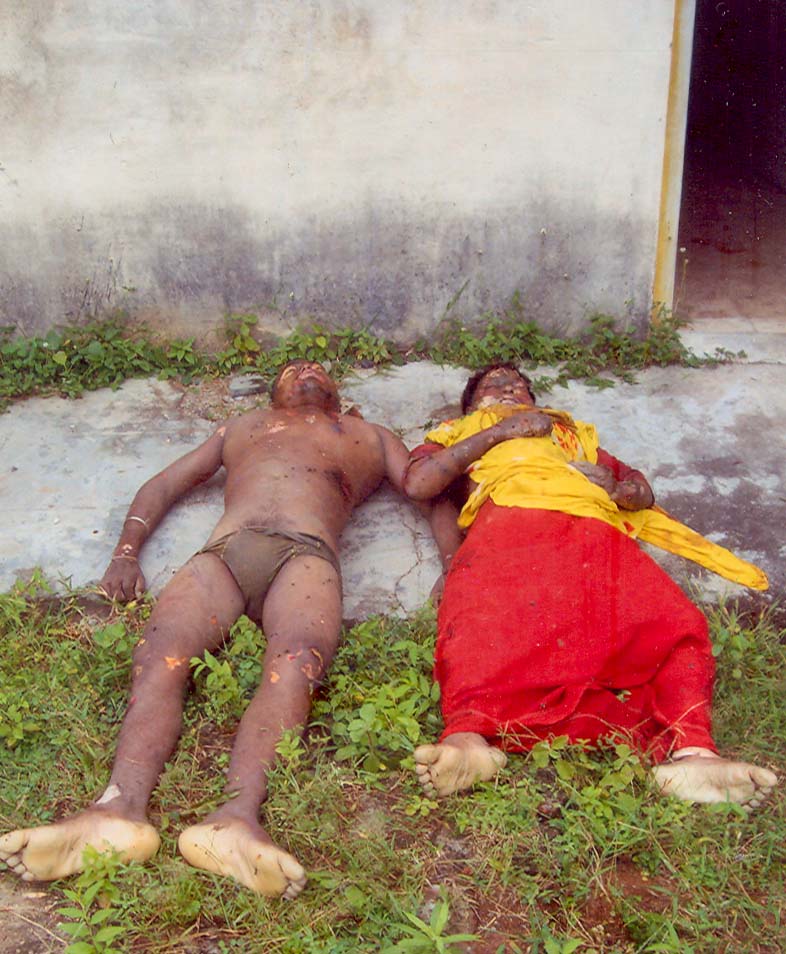
Kherlanji, September 2006

Implementing mandatory provisions of the act

  • State governments must make known the atrocity-prone districts so that they can focus their resources on prevention of atrocities. Only 12 out of 35 states/union territories (UTs) have declared atrocity-prone districts.
  • Whereas SC/ST Protection Cells are necessary to ensure public order and tranquillity, a Contingency Plan is necessary to implement the act. But only half of the states/UTs have set up an SC/ST Protection Cell and only nine states have created a Contingency Plan
  • Nomination of nodal officers and appointment of special officers are necessary to coordinate the implementation of provisions of the act. But five states have not yet nominated their nodal officers while only 14 states have appointed special officers.
  • One-third of the states/UTs have not yet set up the district-level and state-level Vigilance and Monitoring Committees. Even the union minister for social justice and empowerment and state ministers agree that regular meetings are not being organised so there is still a need for more meetings of the Vigilance and Monitoring Committees.
  • The union ministry of social justice and empowerment has mostly not been adhering to its role of submitting an annual report, mandatory under Section 21(4) of the act. Its 1991-92 report was placed before Parliament in 1998, the finalisation of annual reports of 1993 to 1995 was delayed by almost four years, placing of the 2000 annual report was delayed by two years and the last annual report it placed before Parliament was in 2006.

Recommendations

  • Appoint high-level committees at the centre and in the states/UTs to review the implementation of the act, assess the realisation of its objectives and take appropriate and speedy action for strengthening the act and for effective implementation in the future
  •  Direct the concerned central and state ministries dealing with implementation of the act and rules to evolve ways and means for formulating and including the required legal amendments as well as for their effective operation
  • Set up exclusive special courts, exclusive public prosecutors and exclusive investigators for the speedy trial of cases under the act.
  • Include additional crimes which SCs and STs are subjected to but which do not figure in the present list of offences in the act, such as social and economic boycotts and false counter-cases.
  • Delete expressions such as “intent”, “on the ground”, “wilful”, etc from various sections of the act, which give leeway to the police and judiciary to weaken cases of atrocities through subjective or arbitrary interpretations of the act.
  • Add a new chapter in the act to deal with the rights of victims and witnesses thereby explicitly granting them various citizen rights with regard to atrocity cases.
  • Amend the act to explicitly bring in all types of negligence by public servants at various stages in their handling of atrocity cases
  • Enhance punishment for offences of atrocities under the act to be on par with the Indian Penal Code as well as based on the nature and gravity of the offences so as to ensure its deterrent effect
  • Amend the definitions of “scheduled castes” and “scheduled tribes” in the act so as to add all Christians or Muslims belonging to any of the castes in the Schedule, all ethnic minority communities subjected to atrocities on the basis of their ethnicity and SC/ST migrant labourers on the basis of their caste/tribal status in their state of origin.
  • Give priority attention to accepting and implementing the recommendations of national and state commissions as well as civil society organisations working to defend and promote the rights of SCs and STs.

Courtesy: National Campaign on Dalit Human Rights; www.ncdhr.org.in

Archived from Communalism Combat, November 2011,Year 18, No.161-Cover Story