Home Blog Page 2630

Still Under Fire

0

Although the road ahead is a long one, the Supreme Court ruling in the Zakiya Jaffri and CJP case is certainly no victory for Narendra Modi

On June 8, 2006 when Zakiya Ahsan Jaffri, as-sisted by Mumbai-based Citizens for Justice and Peace (CJP), filed a mammoth 119-page complaint supported by 2,000 pages of documentary evidence, little did she know – or really expect – that the Supreme Court of India would actually conduct an investigation under its watch through a Special Investigation Team (SIT) and thereafter ensure through a detailed order that her complaint would be treated as an FIR and a charge sheet also be filed. In the event that the SIT files a closure report, the petitioners’ right to a protest petition has been allowed.

The course of the Supreme Court-monitored investigations over a one-year period revealed serious lacunae in the functioning of the SIT, including the SIT chairman’s attempt at exonerating Narendra Modi. The chairman’s efforts were checked by the report of his own investigating officer (IO), AK Malhotra, and the independent assessment provided by the amicus curiae in the matter, Raju Ramachandran. After Ramachandran submitted his 10-page preliminary note in January 2011, the Supreme Court had, in March 2011, directed the SIT to reassess its own findings submitted 10 months earlier.

If nothing else, the verdict of the Supreme Court delivered on September 12, 2011 is a huge victory for the rule of law and for those of us who believe in due process and transparency and accountability in governance.

While not wasting valuable column space on the banal attempts by Modi and his party to give himself, and themselves, a clean chit, it is worth looking carefully at paragraphs 8 and 9 of the order (uploaded on the CJP website, www.cjponline.org) which clearly state that under Section 173(2) of the Code of Criminal Procedure (CrPC), the complaint – now to be treated as a de facto FIR – will, along with all relevant investigation papers, first be placed before a regular magistrate’s court and then, if so deemed, be committed to the court already hearing the Gulberg Society case. The task will be to file a substantive, expanded charge sheet against Modi and 61 others. What is more, according to the law, and a specific direction of the Supreme Court in this order, the complainants will be given a chance at every stage – in case the SIT baulks again, which is not unlikely, or the judge decides to exclude one or more individuals from among those named as accused – to be heard and carry their appeal right up to the Supreme Court.

The process will no doubt be arduous. And in the current climate where communalism and mass crimes do not commandeer national outrage as, say money matters in the 2G spectrum scam do, it will take every bit of effort to ensure that the battle, bravely fought, reaches an effective conclusion. For any one of the 20-odd magistrates before whom the SIT report/charge sheet could be placed, it will be a definitive test of independence and integrity.

Will a magistrate sitting in Ahmedabad be able to withstand the pressure, vitriol and vindictiveness of Modi’s administration? Difficult though it may be to keep the faith, at such a time we would do well to remember Judge SP Tamang, the Ahmedabad metropolitan magistrate inquiring into the Ishrat Jahan case, who, on September 7, 2009, submitted an exemplary report against all odds. The report indicted a number of police officers, including the then Ahmedabad police commissioner, for the murder in 2004 of the Mumbra-based teenager and three others that Modi and the central government had cynically made out to be hardened terrorists.

Contrary to popular belief, the Supreme Court verdict in the Zakiya Jaffri-CJP case exceeds the petitioners’ demands. While the now historic petition No. SLP 1088/2008 sought the registration of an FIR against Modi and 61 others, the Supreme Court order in fact goes several steps further, taking the criminal matter to the committal stage where cognisance will be taken, and prosecution begun, of the complaint.

Not surprisingly, the facts are at variance with the pernicious propaganda spread by the Rashtriya Swayamsevak Sangh (RSS) and the Bharatiya Janata Party (BJP) in this regard. Their views were unfortunately echoed on many of India’s television channels, raising questions about the media’s competence as well as its allegiances. Many in the broadcast media cheerfully announced a ‘clean chit’ for Modi early in the morning of September 12 and then tempered their telecasts as initial interviews with Tanvir Jaffri (son of Zakiya and the late Ahsan Jaffri) and Teesta Setalvad, and print interviews with amicus curiae Raju Ramachandran over the next few days, stated to the contrary. Far from being an exoneration of Modi and company, the recent judgement demonstrates that the apex court finds merit in the complaint and has now directed a lower court to take it forward as procedures allow.

The petitioners have never pleaded that the Supreme Court should directly indict Modi. They have never said and do not believe that anyone should be convicted without due process of law, hanged as they are so easily in RSS-desired Taliban-style kangaroo courts. They would also like to state for the record that they do not believe in the death penalty for anyone, not even a gun-wielding terrorist or a Narendra Modi who calculatedly employed all the resources at his command to paralyse his administration while murder stalked the streets. Apart from conspiracy to commit murder, other serious charges in the complaint include the deliberate efforts to doctor investigations through faulty registration of FIRs, the appointment of incompetent and ideologically biased public prosecutors, the destruction of evidence and terrorising witnesses into turning hostile.

All this and more is the subject matter of the criminal complaint filed in 2006. The only one of its kind in India, it is the first criminal complaint related to communal violence that goes beyond indicting individuals responsible for acts of violence to trace the outbreak of violence further, drawing links between the chief minister, his cabinet colleagues, leaders of empathetic political right-wing outfits and officials of the Indian Administrative Service (IAS) and the Indian Police Service (IPS) who bowed to the murderous designs of their political boss.

We must not allow ourselves to forget what Gujarat 2002 was about. Over 300 well-orchestrated incidents of violence spread across 19 of Gujarat’s 25 districts, the calculated murder of 2,500 innocents in reprisal killings, several instances of daylight rape, the destruction of Muslim-owned property worth Rs 4,000 crore and the destruction of 270 dargahs and masjids. Almost or just as bad as the violence itself is the deliberate subversion of justice, the destruction of evidence and the intimidation and influencing of witnesses.

The conclusion of the case so doggedly fought by Zakiya Ahsan Jaffri and Citizens for Justice and Peace will be a litmus test for the Indian system, to establish whether it has the courage to punish those responsible for some of its bleakest hours.

A unique trajectory

After the Gujarat police refused to entertain their complaint in June 2006, the petitioners moved the Gujarat high court for registration of an FIR against 62 persons and transfer of the investigation to the Central Bureau of Investigation (CBI). The high court dismissed their petition in November 2007. However, the petitioners efforts were subsequently rewarded when the Supreme Court took cognisance of the case on March 3, 2008. A little over a year later, on April 27, 2009, the Supreme Court handed over the investigation not to the CBI but to the Special Investigation Team headed by former CBI chief RK Raghavan, which had been appointed by the apex court 13 months earlier to reinvestigate nine major Gujarat carnage cases.

In May 2009, Communalism Combat had, in its cover story ‘The Accused’, detailed critical elements of this complaint which was substantively different from that of the Gulberg Society case, one of the nine major carnage cases being reinvestigated by the SIT. Yet both the SIT and the state of Gujarat kept confusing the two cases. The primary distinction between the carnage cases and this complaint is the list of accused and the offences.

The accused in the complaint of June 8, 2006 (now treated as an FIR by the Supreme Court) are: the chief minister, Narendra Modi, 11 state cabinet ministers, three MLAs, three members of the ruling party in the state, three office-bearers and three members of extremist right-wing organisations and 38 high-ranking police officers and bureaucrats, beginning with the director general of police, Gujarat.

The progress of this case has been marked by high drama and behind-the-scenes subterfuge. However, it received scant attention until January 20, 2011 when the newly appointed amicus curiae, Raju Ramachandran, submitted a preliminary note to the Supreme Court which resulted in the court issuing directions to the SIT to reassess its findings. Until then, the media seemed uninterested in the proceedings, choosing to overlook the additional substantive evidence that the petitioners had regularly filed in support of their original complaint. The January 2011 order was the first sign that the SIT’s pathetic attempts to exonerate Modi and others from prosecution, in spite of the investigations carried out by its own IO, AK Malhotra, would not be accepted by the court.

Within days of the amicus curiae’s report being submitted to the Supreme Court and the court’s directions in the matter, Rahul Sharma, a serving IPS officer whose upright testimonies had allowed crucial evidence to enter the public domain, was served with a show-cause notice by a vindictive Narendra Modi-led Gujarat government. The notice was served on February 4, 2011. Sharma was later charge-sheeted on August 13, 2011 for speaking to the Supreme Court-appointed SIT and the state-appointed Nanavati-Shah Commission (now the Nanavati-Mehta Commission). It was Rahul Sharma’s deposition before the Nanavati-Shah Commission in 2004, when he made available a CD containing vital cellphone call records, that enabled CJP to analyse this data and place it before the commission and the courts.

Each hearing of this and related cases in the Supreme Court was punctuated by dubious attempts by the state of Gujarat and even the SIT to mislead the court and malign the petitioners – especially after October 2009 when CJP questioned the quality of the investigations being conducted by the SIT in the nine carnage cases. CJP secretary Teesta Setalvad was a specific target.

Vindictive action

CJP condemns the arrest of Sanjiv Bhatt

Citizens for Justice and Peace strongly condemns the vindictive action of the Gujarat government in arresting Sanjiv Bhatt, senior IPS officer, in an action that is nothing short of an attempt to intimidate an important witness in the Zakiya Ahsan Jaffri and CJP criminal complaint against chief minister Narendra Modi and 61 others. This action of the Gujarat police, under the direct instructions of the state’s home minister – Narendra Modi, amounts to tampering with evidence and direct intimidation of a key witness. It is also a cheap attempt to slur his character and standing.

Key issues need to be raised here. One, that through his affidavit before the hon’ble Supreme Court dated April 2011 he had testified to criminal and unconstitutional instructions being issued by Modi at a late-night meeting on February 27, 2002, the day of the Godhra incident. In his statements before the Supreme Court-appointed Special Investigation Team, he also gave documentary data about Modi’s abdication of responsibility on February 28, 2002, the day attacks on Gulberg Society and Naroda Patiya in Ahmedabad were in full swing. Finally, last but not least, in an affidavit filed before the Gujarat high court recently, Bhatt had even mentioned that both Modi and Amit Shah, former minister of state for home, had tried to intimidate and pressurise him into not giving facts and evidence in the possession of the State Intelligence Bureau, related to the assassination of former minister of state for revenue, Haren Pandya. The CBI investigation into the Pandya assassination has recently been severely criticised by the Gujarat high court.

Most critically, Bhatt had challenged this FIR for which he was arrested, through writ petition 135/2011 in the Supreme Court. (This criminal complaint is allegedly a fabricated FIR filed in June 2011 by KD Panth, his former driver, alleging that Bhatt had pressurised him into filing an affidavit to support the officer’s claim that he was present at the meeting held at the chief minister’s residence on February 27, 2002). The Supreme Court had issued notice to the Gujarat government on July 29, 2011. This hasty and vindictive, even desperate, action of the Gujarat police, while the matter is under consideration by the Supreme Court, raises serious issues of contempt of the highest court, due process and, most importantly, intimidating a witness critical to a trial to ensure public justice. With our matter now awaiting charge-sheeting before a Gujarat magistrate’s court, the arrest of Bhatt is also a clear attempt by the state of Gujarat to warn us all collectively and individually of repercussions if we struggle for justice. It is a pathetic subversion of the Constitution and the rule of law.

(Press release issued by Citizens for Justice and Peace on October 1, 2011.)


In a report to the apex court during hearings held in September-October 2010, the SIT mentioned a routine call made by Setalvad to the public prosecutor in the Gulberg Society case, RC Kodekar, who claimed that she had tried to threaten him. In January 2011, during the hearing of the matter pertaining to the carnage cases, the amicus curiae in that matter, Harish Salve, pointed out correspondence between CJP and the Geneva-based United Nations Office of the High Commissioner for Human Rights on the threats received by senior advocate SM Vohra, counsel for the victims in the Gulberg case. Unfortunate observations by the bench on this matter attracted media publicity which worked to the advantage of a state responsible for mass crimes and determined to target those who stood up against it.

During this period a national daily was also used, on or about the date of every hearing, to project complete victory for the Modi government. On December 3, 2010, the date of the Supreme Court hearing in the Gujarat 2002 matters, as in January 2011, blatant efforts were made by an accused and cornered Gujarat government to manipulate sections of the media (‘SIT clears Narendra Modi of wilfully allowing post-Godhra riots’, The Times of India, December 3, 2010).

And yet, through 2010, when the SIT investigations were underway, it was reports in The Times of India and The Hindu that drew attention to the 15 phone calls made between the chief minister’s office/secretariat and the Ahmedabad police commissioner, PC Pande, between 11 a.m. and 4 p.m. on February 28, 2002, significant because they were made around the same time that the massacres at Naroda Patiya and Gulberg Society were taking place even as the police did nothing. CJP submitted detailed analyses of important phone call records to the Nanavati-Shah Commission in May 2010 (reported in Communalism Combat’s cover story, ‘Dial M for Massacre’, in June 2010) and to the Supreme Court in July 2011.

But finally, it was the exhaustive coverage by Tehelka magazine, which scooped the SIT report and contrasted this with evidence that CJP had gathered and submitted to the court, in two important stories (‘Here’s the smoking gun’, February 12, 2011, and ‘I was there. Narendra Modi said let the people vent their anger’, February 19, 2011), that impacted on the entire discourse. Television channels were now forced to look at the issues that Jaffri and CJP had raised over the past five years.

A subsequent report by Tehelka, ‘Whose Amicus is Harish Salve?’, in its March 12, 2011 issue exposed that the conduct of senior lawyer Harish Salve as amicus curiae in the Gujarat carnage cases gave rise to a conflict of interest. The story revealed that even while he was amicus curiae in the crucial mass murder cases before the Supreme Court, Salve continued to lobby the Gujarat government for projects for his wealthy corporate client, Eros Energy (Kishore Lulla). Incidentally, RK Raghavan, chairperson of the Supreme Court-appointed SIT, happens to be a corporate security adviser at a Tata company.

In April 2011 events took another dramatic turn as the much publicised affidavit of deputy inspector-general of police Sanjiv Bhatt, filed before the Supreme Court, drew widespread attention to the illegal instructions issued at a secret meeting held by Modi on February 27, 2002 – almost nine years after details of this meeting were first revealed in Crime Against Humanity, the report of the Concerned Citizens Tribunal – Gujarat 2002. In the affidavit, submitted directly to the Supreme Court registry and amicus curiae Raju Ramachandran, Bhatt detailed among other things how his testimony before the SIT in November 2009 and early 2010 had been leaked to the state government and led to intimidation from his superiors. This provided further confirmation of the petitioners’ suspicions about the conduct and integrity of the SIT.

In March 2011 the SIT had recorded a subsequent, formal statement from Bhatt under Section 161 of the CrPC. With this, Bhatt also submitted voluminous documents from the State Intelligence Bureau (SIB), including material that would prove that Modi was personally aware of the impending attack on Gulberg Society on the morning of February 28, 2002 when he deliberately did not intervene but instead allowed the mobs to attack former parliamentarian Ahsan Jaffri and others. After first informing OP Singh, Modi’s personal assistant (PA), Bhatt is stated to have personally informed the chief minister of the worsening situation at Gulberg Society.

Sanjiv Bhatt was suspended from service on August 8, 2011 and then charge-sheeted on September 18 even as Narendra Modi was fasting for ‘sadbhavna’, or communal harmony! On Friday, September 30, he was arrested on apparently trumped-up charges.

Doubts have been raised about the authenticity of Bhatt’s disclosures ever since his dramatic and relatively late appearance in public view. In response to this, we would like to point out that Sanjiv Bhatt was in fact cited as a witness by the petitioners in their original complaint precisely because his name figured extensively in the SIB records available to them.

Bearing testimony

Extracts from the complaint

List of witnesses:

1. KC Kapoor, in 2006, principal secretary, home; 2. Manoj D. Antani, in 2002, superintendent of police (SP), Bharuch; 3. AS Gehlot, in 2002, SP, Mehsana; 4. Vivek Srivastava, in 2002, SP, Kutch; 5. Himanshu Bhatt, in 2002, SP, Banaskantha; 6. Piyush Patel, in 2002, deputy commissioner of police (DCP), Vadodara; 7. Maniram, in 2002, additional director general of police (ADGP), law and order; 8. Vinod Mall, in 2002, SP, Surendranagar; 9. Sanjiv Bhatt, in 2002, SP, security, State Intelligence Bureau; 10. Jayanti Ravi, in 2002, collector, Panchmahal; 11. Neerja Gotru, in 2003, special investigating officer assigned to reopen investigations in some riot-related cases; 12. Rahul Sharma, in 2002, SP, Bhavnagar; 13. RB Sreekumar, in 2002, ADGP, intelligence.

In their complaint, the petitioners have also pointed out that Modi held several secret, undocumented meetings during that period at which many witnesses were present, who should also be examined and interrogated for information.

The superintendents of police in the districts of Mehsana, Banaskantha, Sabarkantha, Patan, Gandhinagar, Ahmedabad rural, Anand, Kheda, Vadodara rural, Godhra and Dahod, where mass killings were reported during the riots, all need to be specifically interrogated for their roles as also their failure to document illegal and unconstitutional instructions from the chief minister and other representatives of the state government.

Archived from Communalism Combat, Sept.-October 2011,Year 18, No.160 – Cover Story

Vindictive action

0


CJP condemns the arrest of Sanjiv Bhatt

Citizens for Justice and Peace strongly condemns the vindictive action of the Gujarat government in arresting Sanjiv Bhatt, senior IPS officer, in an action that is nothing short of an attempt to intimidate an important witness in the Zakiya Ahsan Jaffri and CJP criminal complaint against chief minister Narendra Modi and 61 others. This action of the Gujarat police, under the direct instructions of the state’s home minister – Narendra Modi, amounts to tampering with evidence and direct intimidation of a key witness. It is also a cheap attempt to slur his character and standing.

Key issues need to be raised here. One, that through his affidavit before the hon’ble Supreme Court dated April 2011 he had testified to criminal and unconstitutional instructions being issued by Modi at a late-night meeting on February 27, 2002, the day of the Godhra incident. In his statements before the Supreme Court-appointed Special Investigation Team, he also gave documentary data about Modi’s abdication of responsibility on February 28, 2002, the day attacks on Gulberg Society and Naroda Patiya in Ahmedabad were in full swing. Finally, last but not least, in an affidavit filed before the Gujarat high court recently, Bhatt had even mentioned that both Modi and Amit Shah, former minister of state for home, had tried to intimidate and pressurise him into not giving facts and evidence in the possession of the State Intelligence Bureau, related to the assassination of former minister of state for revenue, Haren Pandya. The CBI investigation into the Pandya assassination has recently been severely criticised by the Gujarat high court.

Most critically, Bhatt had challenged this FIR for which he was arrested, through writ petition 135/2011 in the Supreme Court. (This criminal complaint is allegedly a fabricated FIR filed in June 2011 by KD Panth, his former driver, alleging that Bhatt had pressurised him into filing an affidavit to support the officer’s claim that he was present at the meeting held at the chief minister’s residence on February 27, 2002). The Supreme Court had issued notice to the Gujarat government on July 29, 2011. This hasty and vindictive, even desperate, action of the Gujarat police, while the matter is under consideration by the Supreme Court, raises serious issues of contempt of the highest court, due process and, most importantly, intimidating a witness critical to a trial to ensure public justice. With our matter now awaiting charge-sheeting before a Gujarat magistrate’s court, the arrest of Bhatt is also a clear attempt by the state of Gujarat to warn us all collectively and individually of repercussions if we struggle for justice. It is a pathetic subversion of the Constitution and the rule of law.

(Press release issued by Citizens for Justice and Peace on October 1, 2011.)

The offences and the evidence

0

The FIR, the SIT report and the data unearthed during CJP’s investigations contain considerable evidence of serious crimes and grave miscarriages of justice, leading to serious allegations that have emerged in this context. We examine some of them.
 
Allegation I: The decision to take the charred bodies of the victims of the Godhra arson to Ahmedabad, handing them over to an office-bearer of the Vishwa Hindu Parishad (VHP), not to government officials. The bodies were handed over to the then state general secretary of the VHP, Dr Jaideep Patel, who is accused of instigating the mob in the Naroda Gaon case. The decision to parade them through Ahmedabad in unrestrained funeral processions during which mobs raised provocative slogans. The allegation in the FIR is that the decision to take the bodies in a ceremonial procession to Ahmedabad was a premeditated decision taken by chief minister Narendra Modi against the advice of the Panchmahal (Godhra) collector/district magistrate, Jayanti Ravi.

The SIT has in its findings stated that given the presence of the then minister of state for home, Gordhan Zadaphiya, at Godhra, it was a collective decision of the cabinet. Although Zadaphiya and Jaideep Patel initially concurred on this, Zadaphiya has since given a contrary statement to the SIT that implicates Modi. Investigating officer AK Malhotra speaks of two separate cremations at Ahmedabad on February 28, 2002 whereas SIT chairperson RK Raghavan casually mentions one. Neither of the two SIT officials gives weight to the documentary evidence provided in the Gujarat State Intelligence Bureau report (titled C/Dir/Smashan yatra/176/2002 and dated February 28, 2002) marked to Modi’s office and senior police officials, wherein the “likelihood of disturbances” after funeral processions was pointed out.

Call records of Jaideep Patel
An analysis of Jaideep Patel’s call records is revealing. It shows that between 8:03 p.m. and 11:58 p.m. on February 27, 2002 he made and received calls to/from Gordhan Zadaphiya. Patel was also in constant touch with police officers; we do not know why. His call records show that between 1:05 p.m. and 9:16 p.m. on February 27, 2002 he made and received calls to/from the then DCP (zone V), Ahmedabad, RJ Savani. CJP submitted details of Patel’s call records to Malhotra which show that he was also in close touch with chief minister Narendra Modi’s office. Malhotra is strangely silent on this. On February 28, 2002 Jaideep Patel had five telephone conversations with the chief minister’s office (CMO). Why?

The question that remains is whether it is normal procedure to hand over bodies of the victims of a tragedy in such a sensitive matter, which could have widespread repercussions on intercommunity peace and harmony, to an office-bearer of an organisation like the VHP which has a virulent track record of instigating violence but which happens to have powerful political patrons, including the chief minister and senior functionaries of the ruling party in the state?

Allegation II: The illegal instructions, to allow Hindus to vent their anger, issued by Modi at a top-level meeting held at the chief minister’s residence on February 27, 2002. It is clear from the SIT’s investigations that such a meeting did take place. It has also been established that no minutes of the proceedings were kept. The continuing dispute is about what transpired at the meeting.

The SIT recorded a joint statement from Justice PB Sawant, a former judge of the Supreme Court, and Justice Hosbet Suresh, a former judge of the Bombay high court, who had been members of the Concerned Citizens Tribunal – Gujarat 2002. They narrated details about the February 27 meeting from the confessions made to them by the late Haren Pandya, former minister of state for revenue, in mid-May 2002 when he deposed before the tribunal. In their statement before the SIT, they clearly stated that Pandya had testified before them that “Narendra Modi had made it clear that there would be a backlash from Hindus on the next day… and police should not come in their way”. The FIR also refers to Pandya’s testimony relating to a high-level meeting convened by the chief minister to which the then chief secretary, the then home secretary and senior policemen were summoned and to whom clear instructions were given “not to deal with the Hindu rioting mobs”.
Sanjiv Bhatt, who is currently making headlines, had earlier told the SIT that he would speak about this meeting and the illegal instructions issued at the meeting only if there was a legal obligation to do so. Bhatt, who in 2002 held the post of SP, security, in the SIB, also referred to a message received at the  control room on February 27, 2002 announcing that the chief minister had called for a situational review meeting. As is now well known, the SIT subsequently recorded a statement from Bhatt under Section 161 of the CrPC and he has since submitted an affidavit in this regard to the Supreme Court of India.

The FIR records that RB Sreekumar, who in 2002 held the post of ADGP, intelligence, had stated in an affidavit before the Nanavati-Shah Commission that the then director general of police (DGP), Gujarat, K. Chakravarti, had told him about the crucial meeting held by Chief Minister Modi on February 27, 2002. The chief minister had said at the meeting that “in communal riots, police takes action against Hindus and Muslims on one-to-one basis. This will not do now, allow Hindus to give vent to their anger” (paragraph 84 of RB Sreekumar’s fourth affidavit before the Nanavati-Shah Commission dated October 27, 2005).  

Allegation III: The illegal stationing of two ministers in the state and city police control rooms is a fact that has been established. The SIT admits this. However, there has been no attempt to further investigate the logical consequences of political interference with the proper functioning of the police i.e. preventing the police in several districts from doing their constitutional duty. The FIR refers to press reports of the time which documented the presence of senior cabinet ministers in the state and city police control rooms and their illegal interference in police functioning, their subversion of police rules and protocol by instructing policemen not to function and otherwise manipulating instructions.
 

Ringing evidence
Who was the chief minister calling while Gujarat burned?

The CMO makes 15 calls to the Ahmedabad police commissioner, PC Pande, on February 28, 2002. The CP does not step out of his office between 10:50 a.m. and 7:10 p.m. although the city was aflame from about 11 a.m. onwards. Were these calls directly correlated to the instructions given to top echelons of the police not to act?

The CMO makes contact with the VHP Gujarat general secretary, Dr Jaideep Patel (now an accused in the Naroda Gaon massacre), five times on February 28, 2002. This includes three conversations with Sanjay Bhavsar, officer on special duty to
the chief minister, and one with the chief minister’s PA, Tanmay Mehta.

The chief minister’s office numbers record only three telephone calls through the day that Ahmedabad was burning i.e. February 28, 2002. His residence records only two calls. Is this not unusual?

Allegation IV: The failure of the police to act, especially as a direct result of political interference. The FIR details several instances that corroborate this.

a) K. Chakravarti, the then DGP of Gujarat, had not given any special instructions about the preservation of law and order and no strict instructions on how mobs should be dealt with.

b) The then CP, Ahmedabad, PC Pande, commented on Newshour, Star News, on February 28, 2002 that: “These people also, they somehow get carried away by the overall general sentiment. That’s the whole trouble. The police are equally influenced by the overall general sentiments.”

c) Rahul Sharma, who in 2002 held the post of SP, Bhavnagar, stated during his cross-examination before the Nanavati-Shah Commission in 2004 that the attack on a madrassa housing hundreds of Muslim children, which took place under his jurisdiction on March 1, 2002, appeared to be an organised one. He also revealed that the minister of state for home, Gordhan Zadaphiya, had later complained to him about the greater number of Hindu deaths in police firing in Bhavnagar as compared to Muslims.

d) Police Inspector (PI) Khurshid Mysorewala, who was stationed at the Naroda police station in 2002, in an affidavit and during his cross-examination before the Nanavati-Shah Commission in 2004, averred that due to the lack of preventive measures, the instructions from superiors about system overload, the non-provision of reinforcements and other reasons, he was unable to avert the attacks or respond to the Muslim victims’ cries for help and stop the heinous crimes that took place in Naroda Patiya.

e) MK Tandon, in 2002, the JCP, Ahmedabad, stated in his cross-examination before the Nanavati-Shah Commission that when the incidents at Naroda Patiya and Gulberg Society, Meghaninagar, occurred, neither he nor the police commissioner were present; that none of the policemen who were present used force to try and disperse the mob; and that no inquiries were made by the state home minister regarding the breakdown of law and order. When the attack on Gulberg Society took place, two deputy superintendents of police, one PI and one officer of the Central Industrial Security Force were present but no strict measures were taken to disperse the mob.

Allegation V: The illegal instructions given by upper echelons of the Gujarat executive to senior policemen, recorded by the then ADGP, RB Sreekumar, in a handwritten personal register and detailed in the FIR.

a) RB Sreekumar, in his third affidavit before the Nanavati-Shah Commission dated April 9, 2005, records the attempts made by senior officers in his department and the then undersecretary, Dinesh Kapadia, the then secretary, law and order, GC Murmu, and the then government pleader, Arvind Pandya – after Sreekumar had filed his first affidavit before the commission – to pressurise him to refrain from filing further affidavits and from telling the truth before the commission i.e. to make him commit the criminal offence of perjury. Sreekumar stated that he was intimidated and warned by Murmu and Pandya to lie on oath and to avoid telling the whole truth.  
   
b) Paragraph 91 of Sreekumar’s fourth affidavit dated October 27, 2005 lists the names of several senior bureaucrats and police officials who, despite the expanded terms of reference of the Nanavati-Shah Commission (which, after July 2004, included within its ambit the “role and conduct of the then chief minister or any other ministers in his council of ministers, police officers, other individuals and organisations” in regard to the post-Godhra violence), bowed to pressure and did not file second affidavits that would have enlarged on the conduct of the chief minister Narendra Modi or any other ministers, etc.

Allegation VI: Officers of the state have been directly influenced to testify to falsified events and thereby commit the criminal act of perjury, as the FIR demonstrates. At the time when the FIR was prepared, this related to the lies and contradictions stated on oath by senior IPS and IAS officers in their affidavits before the Nanavati-Shah Commission.

Former Ahmedabad police commissioner PC Pande (accused No. 28 in the FIR) stated on oath before the Nanavati-Shah Commission that he had a memory lapse regarding what actually transpired at Gulberg Society on February 28, 2002. The commission failed to question him about why curfew was not imposed in Ahmedabad city until as late as 1 p.m. on February 28 when on February 27, 2002 itself at least 14 incidents of mob violence had been recorded in FIRs by the police. He was subsequently examined by the SIT on two occasions when, having apparently regained his memory, he denied being in possession of control room records and other crucial evidential material.

The absence of these documents was recorded by the SIT’s investigating officer, AK Malhotra. Listing the constraints faced by him as IO, he cites “destruction of critical documentary evidence” as one of the limitations he faced. Ironically, records were ostensibly destroyed in 2007 while the Supreme Court was seized of the matter thus amounting to contempt of court.

Chapter XI of the Indian Penal Code, ‘Of False Evidence and Offences Against Public Justice’ (Sections 201-205), and Chapter X, ‘Of Contempts of the Lawful Authority of Public Servants’ (Sections 175, 177, 187 and 188), refer to offences by public servants of failing to assist the course of public justice, destroying evidence and so on. After the Supreme Court first indicated that it would look beyond the SIT’s dismissive conclusions (January 20, 2011) and the SIT began formally recording statements under Section 161 of the CrPC, PC Pande made an interesting turnabout.

In its earliar report submitted to the Supreme Court, the SIT did find Modi guilty of a brazenly communal mindset. It remains to be seen what shape the SIT report/charge sheet will now take

On April 11, 2011 AK Malhotra came to Mumbai to record the statement of CJP’s Teesta Setalvad under Section 161. She insisted on mentioning the destruction of records as a specific culpable, criminal offence whereupon Malhotra unexpectedly informed her that, post-January 20, while the SIT was recording his statement under Section 161, PC Pande had done a complete turnaround and submitted a CD containing 3,500 scanned pages of hitherto ‘destroyed’ documents. Setalvad had in a letter to the SIT dated April 21, 2011 pointed out that Pande’s selective suppression of records during the SIT’s earlier investigations, and the mysterious reappearance of these documents, itself merited thorough investigation.

Allegation VII: The top echelons of the state administration and police force deliberately ignored the reports and warnings issued by their own State Intelligence Bureau, and other indicators, as demonstrated in the FIR.

a) RB Sreekumar, in paragraph 17 of his first affidavit before the Nanavati-Shah Commission dated July 6, 2002, stated that in response to a message received from the Uttar Pradesh intelligence department (during the period preceding the Godhra incident), the Gujarat SIB had requested all SPs and police commissioners to inform the SP, Faizabad, about the movement of kar sevaks from their respective jurisdictions. Following this, on February 16, 2002 the SP, Western Railway, Vadodara, had informed the IGP, intelligence, Uttar Pradesh, that on February 22, 2002 Prahlad Patel, president of the Bajrang Dal, Mehsana, would be leading a group of 150-200 trishul-bearing Bajrang Dal activists to the Ayodhya Maha Yagna on the Sabarmati Express.

b) In paragraphs 18 and 19 of the affidavit, Sreekumar points to the failure of the central and Uttar Pradesh (police) intelligence departments to provide adequate and timely information to the Gujarat state or SIB about the return journey of the kar sevaks, their unruly behaviour while returning from Ayodhya aboard the Sabarmati Express and, more specifically, their altercation with Muslims when the latter attempted to board the train at Rudauli.

c) In addition to the reports relating to the trouble anticipated on and after February 28, 2002, as communal violence persisted beyond the initial phase, the Gujarat SIB continued to provide specific intelligence reports, as revealed in paragraph 26 of Sreekumar’s first affidavit. In two such reports dated April 15 and April 26, 2002, the SIB provided information about impending communal trouble, including among other things the plan by radical Hindu elements to launch a large-scale assault on a Muslim colony in Ahmedabad and a plan by Bajrang Dal leaders to distribute lethal weapons. None of these reports were acted upon by the police hierarchy or the state executive.

Allegation VIII: The punitive treatment meted out by the state to those police officers who acted constitutionally to maintain law and order. While the FIR mentions six officers who were so punished, since then, at least three more officers have received similar treatment at the hands of the state.

Allegation IX: The rewards given to the senior IAS and IPS officers who bowed to Chief Minister Modi’s diabolical, unconstitutional plans. The FIR names 14 officers who were so rewarded.

Allegation X: The subversion of the criminal justice system.

The appointment of public prosecutors (PPs) with allegiances to the groups that led the violence was covered exhaustively in the May 2009 issue of Communalism Combat. Since then, CJP has investigated further and filed applications under the Right to Information Act, especially after a report on NDTV on March 29, 2010 revealed that many of the defence lawyers appearing for the accused in the nine major carnage trials have been appointed special public prosecutors to be paid Rs 12-15,000 a day with a specially amended rule of the Gujarat government’s legal department stating that fees would even be paid for days of adjournment. Hence the state of Gujarat is footing the bill for many lawyers appearing for the key accused in the post-Godhra massacres.

  • Gulberg Society trial: Defence counsel Mitesh Amin is also a special PP, Gujarat. (Amin was paid Rs 25,52,000 by the state between April 1, 2009 and March 31, 2010.)
  • Sardarpura trial: Defence counsel HM Dhruv, BC Barot and JG Rajput (now retired) were appointed special PPs, Gujarat. (HM Dhruv was paid Rs 17,28,000 by the state between April 1, 2009 and March 31, 2010.)
  • Naroda Patiya trial: Defence counsel NM Kikani, BO Sharma, NR Shah, Bharat J. Joshi, MJ Dagli, HC Patel, SR Patel, GS Solanki, KN Thakor and RN Kikani were appointed special PPs, Gujarat.
  • Naroda Gaon trial: Defence counsel Chetan K. Shah, Rohit H. Verma, Rajesh N. Modi, MR Khandar, Nilesh Lodha, HC Patel and PO Sharma were appointed special PPs, Gujarat. (Chetan Shah was paid Rs 2,97,000 by the state between April 1, 2009 and March 31, 2010.)
  • Odh trial: Defence counsel CK Patel, Bharat J. Joshi and Ashwin H. Dhagad were appointed special PPs, Gujarat.
  • In its earliar report submitted to the Supreme Court, the SIT did find Modi guilty of a brazenly communal mindset. It remains to be seen what shape the SIT report/charge sheet will now take.     

Mass Graves at Lunawada

0

Burying the truth

As matters relating to the 2002 anti-Muslim pogrom in Gujarat reach a critical juncture, Modi’s government tries to frame Teesta Setalvad in the Pandharwada massacre and other carnage cases in a bid to save its own skin

For over six months now the Gujarat state administration and the police machinery under Chief Minister Narendra Modi have been running a malicious and motivated campaign against Teesta Setalvad (secretary, Citizens for Justice and Peace, and co-editor, Communalism Combat), against lawyers engaged by CJP and against other human rights activists fighting for justice for the victims and survivors of the genocidal killings in Gujarat in 2002.

The objective is clear: to derail the ongoing justice process in the Supreme Court – where Modi’s own fate hangs in the balance – and the fast track courts in Gujarat – where nearly 350 accused, including many senior leaders of the Bharatiya Janata Party (BJP), the Vishwa Hindu Parishad (VHP) and the Bajrang Dal, face the prospect of conviction and long years in prison. If the objective is clear, the method too is apparent: malign and discredit activists and lawyers fighting for justice, embroil them in cooked up charges and constrain their personal liberties through illegal arrests.

The attack on Teesta Setalvad in particular has been three-pronged: a widespread and malicious disinformation campaign against her, slapping false charges on her and the threat of impending arrest, all aimed at distracting her, as secretary of CJP, from the relentless pursuit of justice since 2002. In making her the main target the aim is also to intimidate and frighten hundreds of eyewitnesses in the major carnage cases being tried in eight fast track courts as directed by the Supreme Court of India.

The timing of these attacks is significant. The three-judge bench of the apex court hearing the Zakiya Jaffri/ CJP petition is clearly dissatisfied with the fact that though the Special Investigation Team (SIT) report had seriously indicted Modi and his lieutenants for their role in the 2002 Gujarat genocide, it claimed there was not enough evidence to register criminal offences, charge-sheet the chief minister and other perpetrators and haul them into court. On May 5, the Supreme Court issued orders asking amicus curiae Raju Ramachandran to carry out an independent scrutiny and report back to the court before July 28.

That the court was unhappy with the functioning of the SIT, its own creation, was evident from news reports on the court proceedings the next day. ‘SC snubs SIT, calls in amicus’ read the headline on page one of The Indian Express while the opening paragraph of the report read: “In an unprecedented stance since the Supreme Court started monitoring the Gujarat riots cases, the apex court on Thursday [May 5] sidestepped its own Special Investigation Team (SIT) to directly ask amicus curiae Raju Ramachandran to ‘independently’ consider whether there is evidence against Gujarat Chief Minister Narendra Modi and others in the Gulberg Society massacre case.”

‘Go beyond SIT report on Jaffri case, court tells amicus curiae’ was the headline in The Hindu while the report said: “The Supreme Court on Thursday empowered the amicus curiae in the Zakiya Jaffri case to go beyond the report submitted by the Special Investigation Team (SIT) [on the complaint of Ms Jaffri, alleging that the Gujarat chief minister, Narendra Modi, and 61 others had orchestrated the 2002 riots]… A three-judge bench of Justices DK Jain, P. Sathasivam and Aftab Alam asked the amicus, Raju Ramachandran, to analyse and examine the SIT’s report and give his comments in the light of the statements of the witnesses filed along with the report. The bench, in its order, said: ‘If the amicus curiae, on the basis of evidence on record, finds that any offence is made out against any person, he shall mention the same in the report… The copies of the report, along with the comments of the [SIT] chairman, [shall] be given to the amicus curiae who shall analyse them in the light of evidence, statements of witnesses, and have his independent assessment of the entire evidence which has come on record’.” The amicus curiae was also given full authority to speak to any person if he thought it necessary to do so.

All this can hardly be good news for Modi. At the heart of the sustained and malicious campaign is the cynical and calculated intention of the Gujarat state to derail the course of justice being monitored by the apex court and ensure the acquittal of the accused, which includes Modi himself, senior politicians and functionaries of the BJP, VHP and Bajrang Dal as well as top police officers and civil servants.

It may be recalled that the appointment of the SIT by the apex court was the result of a complaint and tireless legal battle waged by Zakiya Ahsan Jaffri and Setalvad of CJP before the Supreme Court. It is no surprise then that a government that has acted vindictively and maliciously against serving and retired IPS and IAS officers who have stood by the Indian Constitution is training its guns on activist Setalvad.

The charges levelled in the criminal complaint against Modi and others are very serious indeed. Despite all the efforts of the Gujarat government and its political mentors and allies to subvert the course of public justice, preliminary investigations by the SIT have revealed details of high-level involvement, of the chief minister and his chosen others, in a series of criminal and unconstitutional actions that engineered the massacre of 2,500 Muslims in the wake of the Godhra incident. No less serious are the SIT’s findings on the subsequent manipulation of evidence, subversion of witnesses and so on.

The objective is clear: to derail the ongoing justice process in the Supreme Court – where Modi’s own fate hangs in the balance – and the fast track courts in Gujarat – where nearly 350 accused, including many senior leaders of the BJP, VHP and Bajrang Dal, face the prospect of conviction and long years in prison

The allegations against Modi and the government of Gujarat – issuing criminal instructions to police officers and the illegal stationing of ministers in the state and city police control rooms thereafter – are substantiated by the macabre violence, killings, rapes and burnings unleashed on minorities in 19 districts of the state. These allegations and the current investigation are unprecedented in the history of independent India. The illegal handing over of the bodies of victims of the Godhra mass arson to a functionary of a rabid right-wing outfit – the VHP – not to an official of the administration or the police, and the inflammatory media coverage of the Godhra incident by leading Gujarati newspapers, further points to how premeditated the conspiracy actually was. The VHP leader who was given charge of the dead bodies in Godhra on February 27, 2002 is among those accused of instigating mass murder in Naroda Gaon the next day.

On March 15, 2011 the Supreme Court had pulled up the SIT, saying that the evidence it had gathered did not match its inferences. On March 21, 22, 23 and 25, the SIT was compelled to record the statement of yet another serving IPS officer, Sanjiv Bhatt, who, according to reports in the media, has deposed that he was present at a meeting held at the chief minister’s residence on the evening of February 27, 2002 when the latter clearly directed police officers to allow Hindus to “vent their anger” against Muslims. Finally, on May 5, 2011 the apex court directed the amicus curiae to arrive at an independent assessment, without consulting the SIT, of whether or not a criminal offence can be made out.

The other equally relevant point is that the patently false allegations against Setalvad of tutoring witnesses are being orchestrated at a time when crucial trials are nearing completion in the fast track courts in Gujarat. What is at stake is the conviction of over 350 accused in the eight major trials (Gulberg, Sardarpura, Odh – two separate trials, Naroda Patiya, Naroda Gaon, Deepda Darwaza and the British national case) that are underway, some of them nearing completion. Included among the accused in the ongoing trials are top politicians, leaders of the BJP, VHP and Bajrang Dal, senior police officers and civil servants. Despite the threat of intimidation and repression, eyewitnesses and survivors have deposed without fear in Gujarat courts, facing a hostile police and court atmosphere but standing by the affidavits they had filed, through CJP, in the Supreme Court of India.

It is these developments in the Supreme Court and the fast track trial courts in Gujarat that explain the frantic efforts of the Gujarat government under Modi to somehow detract from the incriminating evidence piling up against the perpetrators. This is sought to be achieved by somehow implicating on false charges the person who has been at the forefront of the struggle for justice in Gujarat: Teesta Setalvad. And in this desperate gamble the perpetrators have found a willing ally in the Ahmedabad-based Rais Khan, a former employee of CJP who was asked to leave the organisation in January 2008 after financial irregularities were suspected and survivor witnesses supported by CJP complained against his questionable conduct.

Ironically, the baseless allegations being levelled today are similar in substance to the tactics previously adopted by an unrepentant Gujarat government against Setalvad and other human rights activists since the genocidal carnage of 2002. Absent is any concern for the lives lost or any shame in the continuing subversion or perversion of the justice process. While the individuals making the accusations have changed, the charges have remained the same. Since September 2010, the principal agent for dissemination of this malicious propaganda has been Rais Khan. And the accusations made by him, more than two years after he was asked to leave CJP, have been widely publicised by The Pioneer, edited by Chandan Mitra, a BJP MP, and other mouthpieces of thesangh parivar.

Here in brief are the four alleged offences in which Setalvad is sought to be falsely implicated: Rais Khan has accused Setalvad of hacking his email account.

  • Rais Khan has accused Setalvad of tutoring witnesses in the Naroda Gaon case, one of the eight major carnage cases being tried in a fast track court in Gujarat.
  • At the instance of Rais Khan, Setalvad was first named in the FIR (first information report) and, more recently, charged by the Gujarat police as an “absconding accused” in the Pandharwada mass graves case.
  • Five years ago a Mumbai fast track court delivered its judgement in the Best Bakery case wherein most of the accused – earlier acquitted by a lower court in Vadodara whose ruling was upheld by the Gujarat high court – were found guilty and given severe punishments. Now, more than 60 months later, Yasmin Shaikh, sister-in-law of Zahira Shaikh, has claimed before the Bombay high court that she was forced by Setalvad to lie before the Mumbai trial court. It may be recalled that following accusations against her by Zahira Shaikh in 2004, Setalvad had herself approached the Supreme Court urging a full inquiry into the charges whereupon a team headed by the registrar of the apex court was appointed by the court to investigate the charges. The investigation concluded that the charges against Setalvad were totally baseless and false. Zahira Shaikh served a one-year prison sentence for lying in the court during the retrial proceedings in Mumbai. Now, by filing an affidavit before the Bombay high court and making accusations against Setalvad, Yasmin Shaikh is by implication also pointing fingers at Judge Abhay Thipsay in whose court the retrial of the Best Bakery case was conducted.
  •  


Pandharwada: Truth of the grave 

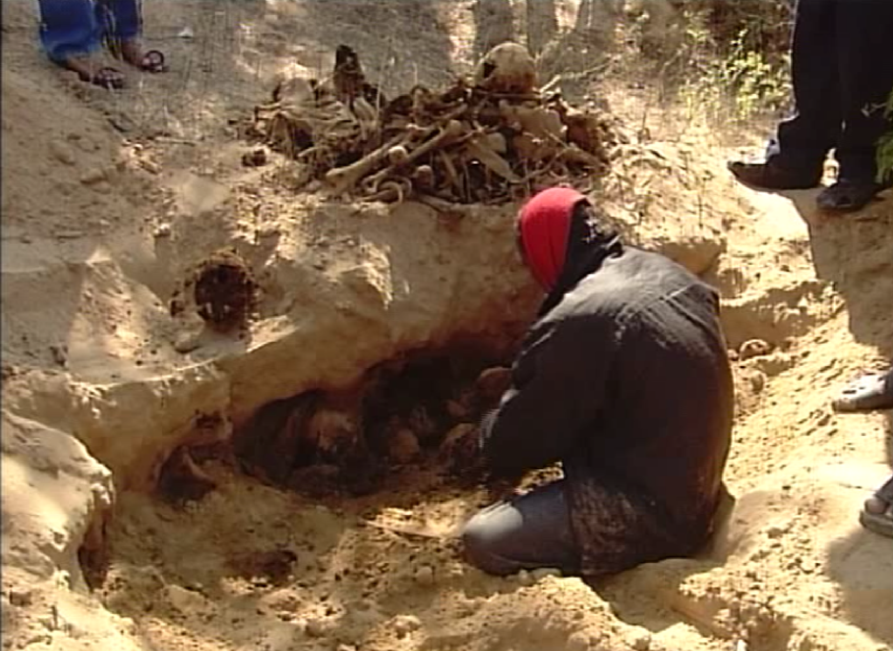
But the most serious allegation against Setalvad to date has to do with her being falsely implicated in the Pandharwada mass graves case. This is a five-year-old case that was recently pulled out of cold storage when suddenly, and inexplicably, Setalvad was not only named in an FIR but also charged as an “absconding accused”. The Lunawada police summoned her to be present at the police station on May 31 and her arrest appeared to be the obvious motive. Setalvad moved the Gujarat high court in the matter and on May 27 the court ruled that naming her as an absconding accused was “illegal and mala fide”. The police were however permitted to make corrections and prepare a fresh charge sheet in the case. Setalvad now proposes to appeal to the Supreme Court, hoping to quash the FIR itself.

The facts of the Pandharwada case, as detailed in the petition filed by Setalvad in the Gujarat high court on May 17, 2011, are a telling account of the blatantly communal, shameful and inhumane character of the Gujarat police and state administration:

  •  March 1, 2002: The Khanpur police station records the commission of the crime (the massacre of over 40 persons in two separate incidents at Pandharwada in Panchmahal district).
  •  March 2, 2002: Some of the injured eyewitnesses are shifted to the Cottage Hospital, Lunawada, in a government van. All those who were killed, including the kin of the injured eyewitnesses, are brought to the Cottage Hospital, Lunawada, as well. Post-mortem reports on the dead are also prepared on the same day and they are subsequently buried on the ground that nobody had come forward to claim the bodies and therefore the dead bodies were not handed over to their kin.

No panchnama (written and attested record) of this ‘burial’ is prepared. Moreover, despite the fact that there were three graveyards in Lunawada, the dead bodies are ‘buried’ in forest land near the Paanam river on the outskirts of the town. The bodies of the victims of both offences – CR No. I-11/2002 and CR No. I-13/2002 – were buried separately in the same area.
 

  • March 3, 2002: A local newspaper, Gujarat Today, reports that four persons, including Jakir Deshot, were killed by rioters on March 1 and that their bodies had been buried in the nearby jungle. The report also states that the guardians of these four persons had pleaded with the district collector to hand them the bodies but their requests went unheeded. (Ultimately, after the DNA from Jakir Deshot’s remains was found to match that of his kin, his remains were handed over to his parents and then buried according to religious custom on August 27, 2010.)
  • October 8, 2002: In response to an application by close relatives, the bodies of eight of those killed are handed over to them.
  • October 29, 2002: The two separate incidents of killing are tried in a sessions court and all of the accused in both incidents are acquitted.
  • September 22, 2004: An application for further investigation into the case is granted by the police.
  • February 1, 2005: Some of the relatives of those killed file affidavits with the police asking that the dead bodies of their kin be handed over to them. This clearly shows that 11 months before the dead bodies had been dug up, the victim survivors had placed on record that the bodies had yet to be handed over to them by the police.
  • December 27, 2005: On receiving information from victims’ relatives, Rais Khan goes to Lunawada where it was found that several dead bodies were buried after the commission of the offence on March 1, 2002. A ‘Janva Jog’ entry is registered by the police and the statements of Rais Khan and Gulam Gani are recorded.
  • December 27, 2005: The additional director general of police, Gujarat, writes to the inspector-general of police, Vadodara range, and the superintendent of police, Dahod, asking them to keep the aggrieved parties informed of the recovery and attachment of bones and skeletons, etc in order to ensure the impartiality and credibility of the police.
  • December 28, 2005: A writ petition is filed in the Gujarat high court by a relative of a victim, and CJP, asking for transfer of investigations to the Central Bureau of Investigation.
  • December 29, 2005: The Gujarat high court directs the CBI to collect the human remains that have been recovered and send them to a laboratory in Hyderabad for DNA analysis. The court also orders relatives of the deceased to cooperate in the DNA testing process by giving blood, etc.
  • January 2, 2006: With a view to preventing them from cooperating with the CBI in giving blood samples, etc for the DNA tests, the Lunawada police register an FIR against the relatives of the deceased, charging them with illegal digging of the bodies. The time at which the FIR was filed, 1:30 a.m., indicates that it was filed with deliberate intent to pre-empt the efforts of victim survivors in getting justice. It is only after assurances are given by the CBI officers that the relatives provide blood samples for DNA matching; the local police were asked not to arrest the accused named in the FIR.
  • April 18, 2006: After the accused were arrested and released on regular bail as was required under the conditions of the anticipatory bail order, the police applied for remand of the victim survivors and because the victim survivors could not be present on the required date, the local court issues non-bailable warrants against them.
  • December 8, 2006: The Gujarat high court orders a stay on proceedings in the case in response to a petition filed by the victim survivors.
  • August 27, 2010: The remains of eight persons, whose DNA was found to match that of their relatives, are handed over to their kin.
  • November 24, 2010: The accused victim survivors who are the petitioners in the matter, Special Criminal Application No. 408/2006, withdraw the petition, as it had become infructuous without adjudication on the merits.
  • December 14, 2010: Rais Khan and other co-accused surrender themselves to the police and make a statement under Section 164 of the Code of Criminal Procedure (CrPC). The timing of this incident is significant, as this happens around the time Rais Khan is making allegations against Setalvad with regard to the Naroda Gaon and Sardarpura matters and receiving wide coverage from a section of the media led by The Pioneer.
  • December 21, 2010: Rais Khan and the co-accused are granted regular bail by the magistrate, Lunawada. Khan makes public his desire to see Setalvad arrested. This reveals the impunity that he enjoys within Gujarat.
  • February 15, 2011: Setalvad is granted anticipatory bail by the additional sessions judge, Panchmahal.
  • March 18, 2011: The investigating officer issues summons under Section 160 of the CrPC, asking Setalvad to be present at the Lunawada police station on March 25. Setalvad replies, requesting the investigating officer to consider the provision of Section 160 of the CrPC which specifies that being a woman, her statement as a witness was required to be recorded at her residence, in Mumbai. Mysteriously, the investigating officer is suddenly transferred.
  • April 3, 2011: In the same charge sheet filed against all the accused who were earlier arrested and then released on bail, strangely, Setalvad is mentioned as an “absconder”.
  • April 28, 2011: Setalvad again receives summons from the investigating officer asking her to be present at the Lunawada police station. She replies.
  •  May 9, 2011: Setalvad receives another summons asking her to be present at the police station on May 31, with no correction having been made in the charge sheet.

It was this attitude of the Lunawada police that forced Setalvad to file a petition in the Gujarat high court. The petition pointed out that as a human rights activist, she and her organisation had every right to provide legal aid to the poor victim survivors of Pandharwada. Pointing to the devious intent of the police, she underlined that they had initially opposed her application for anticipatory bail which was however granted by the additional sessions judge, Panchmahal. The police then issued a witness summons to her and in less than two weeks’ time she was inexplicably turned from a “witness” into an “absconding accused”. From all this it was evident that the police were engaging in blatant abuse of the law in a brazen attempt to illegally detain or arrest her.

If the objective is clear, the method too is apparent: malign and discredit activists and lawyers fighting for justice, embroil them in cooked up charges and constrain their personal liberties through illegal arrests

As already mentioned above, through its order of May 27, the Gujarat high court quashed the charge sheet that had named Setalvad as an “absconding accused”. Setalvad is now planning to move the Supreme Court, seeking to quash the FIR itself.

The state has persistently maintained that the mass burial was not an illegal dumping. It further claims that it had followed proper procedure in carrying out the mass burial in forest land by the Paanam river. But the panchnamaof the original crime does not list the skeletal remains. So legally speaking, this disproves the version proffered by the Gujarat state and its police. Victim survivors and rights activists have pointed out that Lunawada has a large kabristan (graveyard) spread over more than 100 acres of land. Hence, even assuming that the Gujarat police could not trace relatives, why did they need to so callously dump the victims’ remains in riverside land instead of giving them a dignified burial in the kabristan? Why dump them in an obscure spot outside Lunawada town rather than handing them over to community leaders for a dignified burial?

The worst aspect of the belated attempt to falsely implicate Setalvad is that it hides the inhumanity that compounds the criminality of the Gujarat police. Having waited for years, relatives of the deceased – thanks to their own efforts and the order of the Gujarat high court – were at last able to establish the identity of their dead relatives in 2005-2006.

But it was only after a Supreme Court order in February 2008 and a subsequent order of the trial court in December 2008 that a proper burial was finally conducted in August 2010 i.e. eight years after the brutal massacre.

Given the seriousness of the charges against the Gujarat state and its functionaries, these brazen attempts at intimidation and threat need to be seen for what they are. There is no guarantee that more false cases will not be cooked up by a vindictive state government in the coming days and weeks. After Tehelka scooped the SIT report indicting Modi (‘Here’s the smoking gun. So how come the SIT is looking the other way?’, February 12, 2011),IPS officer Rahul Sharma was served with a show-cause notice for placing crucial telephone records before the Nanavati-Shah Commission and the SIT. Clearly, the Gujarat government is worried that offences could be registered against its chief functionaries for not only aiding a massacre in 2002 but thereafter destroying evidence and subverting the course of justice by doing all they can to intimidate victim survivors and human rights groups who have stood by them.

The malicious campaign against Setalvad was initially launched in May 2009 by the Gujarat government’s counsel in the Supreme Court. Now, in Rais Khan, they have found a convenient ally. As stated at the beginning of this report, the objective of this campaign is plain and simple: to derail the trials, subvert the course of justice and thus escape conviction.

Archived from Communalism Combat, June 2011. Year 17, No.158 – Cover Story

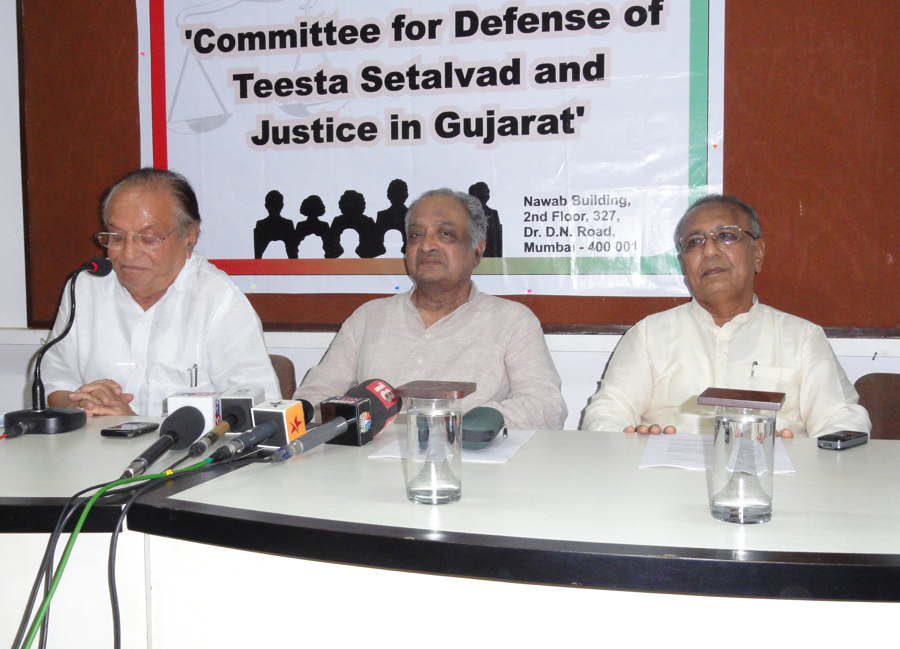
Committee for the Defence of Teesta Setalvad and Justice in Gujarat

0


Alarmed at the persistent efforts of the  Gujarat state  through its police to  derail the justice process by targeting Teesta Setalvad personally, prominent human rights defenders have announced the formation of the Committee for the Defence of Teesta Setalvad and Justice in Gujarat, an initiative launched at a press conference in Mumbai on May 23, 2011. Chaired by a distinguished former judge of the Supreme Court of India, PB Sawant, the committee has two vice-chairpersons, veteran Islamic scholar Dr Asghar Ali Engineer and former chief minister of Gujarat Suresh Mehta; its conveners are advocate Balwant Desai and social activist Irfan Engineer.

The members of the committee include renowned academics and historians Romila Thapar, Irfan Habib, Rajmohan Gandhi and Prabhat Patnaik as well as prominent public figures such as Aruna Roy, Juzar Bandukwala and Binayak and Ilina Sen.
Speaking at the press conference, Justice Sawant said: “The malicious and motivated campaign against Teesta and the lawyers struggling for justice for the victims of the genocide in Gujarat in 2002 is aimed at distracting the course of justice and attacking the personal liberties of the human rights activists who have stood by the course of truth and justice.” Coming down heavily on the Gujarat government, he observed that what happened and continues to happen in Gujarat is a “rape of the legal system”.

“In Gujarat today, every constitutional norm is subverted; there is corruption and intimidation of the most vindictive kind,” opined former chief minister Suresh Mehta.

“The attack against Teesta Setalvad is three-pronged, aimed at threatening her personal liberty through arrest, a widespread disinformation and malicious campaign to affect the process of justice and distracting her from the demands of the struggle,” said senior lawyer Mihir Desai, speaking at the launch.

This intimidation comes at a time when finally, after nine long years, serious allegations against the Gujarat chief minister, Narendra Modi, of masterminding the criminal conspiracy to commit mass murder, have reached a pivotal stage. In a path-breaking development, the Supreme Court of India on May 5, 2011 directed the amicus curiae to examine all evidence and meet all witnesses and report back to the court on whether a case exists against the chief minister and 61 others. Serving and retired Indian Police Service (IPS) and Indian Administrative Service (IAS) officers have testified to the illegal and unconstitutional instructions given by Narendra Modi on February 27, 2002 which led to the carnage. In the ensuing days at least 2,500 people, mostly Muslims, were murdered. Rape and other terrible acts of violence were committed while the state police and administration stood by.

In addition to the evidence of high-level complicity that is being unravelled through the relentless pursuit of justice, the next six months or year could see the conviction of over 350 accused in the eight major carnage trials being monitored by the Supreme Court and in which Citizens for Justice and Peace, the organisation Setalvad represents, has been providing legal aid to victims and witnesses. The real story of the struggle for justice is the courage with which survivors have deposed, without fear or favour, within Gujarat even as the perpetrators walk free on bail.

Prosecution of all those responsible for these crimes is an essential prerequisite for justice, peace and reconciliation. It will help guarantee that similar crimes are not committed in the future. It is this judicial process, set inexorably in motion by the grit and persistence of the victim survivors, and supported by Setalvad and her organisation, that the government of Gujarat is brazenly seeking to thwart through its persecution of Teesta Setalvad.

Apart from a Facebook presence, more information can be sourced at http://justice4guj02.blogspot.com/. A US-based medical practitioner, Dr Bindu Desai, has initiated an online petition to the president of India, accessible at http://www.petitiononline.com/guj2002/petition.html, which states: “We follow with increasing concern and dismay events related to efforts seeking redress for the victims of the carnage in Gujarat in 2002. We have witnessed the relentless harassment and intimidation of Teesta Setalvad who has been working tirelessly and courageously for justice for these victims. She is targeted with character assassination, false allegations and threats to her personal security. In a concerted attempt to derail the course of justice, the government of Gujarat has foisted four false criminal cases against her. She faces the very real threat of arrest.

“The victims of 2002 have waited far too long for redress and justice. We urge you therefore to use the powers of your high office to ensure justice for the victims. We want you to make certain that the law and the process of justice take their proper course without being subverted or influenced by vested interests, however powerful. We demand that the government of Gujarat ceases the harassment and intimidation of Teesta Setalvad and other human rights defenders.”