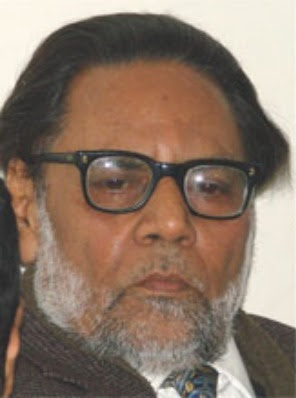
The uncanny prescience of Maulana Abul Kalam Azad
In April 1946, at a time when the British Cabinet Mission was holding its proceedings in Delhi and Shimla, the then Congress president, Maulana Abul Kalam Azad, is said to have given the following interview to journalist Shorish Kashmiri for a Lahore-based Urdu magazine, Chattan. Azad made some startling predictions during the course of the interview, many of which have been borne out by subsequent events. He envisaged that religious conflict would tear Pakistan apart, that its eastern half would carve out its own future and that Pakistan’s incompetent leadership could pave the way for military rule.
The interview has only been published in one book so far, Kashmiri’s own book on Abul Kalam Azad which was printed by Matbooat Chattan, Lahore, a now defunct publishing house. Former Indian cabinet minister Arif Mohammad Khan discovered the book after years of searching and translated the interview for Covert magazine.
Q: The Hindu-Muslim dispute has become so acute that it has foreclosed any possibility of reconciliation. Don’t you think that in this situation, the birth of Pakistan has become inevitable?
A: If Pakistan were the solution of the Hindu-Muslim problem then I would have extended my support to it. A section of Hindu opinion is now turning in its favour. By conceding the NWFP [North-West Frontier Province], Sindh, Balochistan and half of Punjab on one side and half of Bengal on the other they think they will get the rest of India – a huge country that would be free from any claims of a communal nature. If we use the Muslim League terminology, this new India will be a Hindu state, both practically and temperamentally. This will not happen as a result of any conscious decision but will be a logical consequence of its social realities. How can you expect a society that consists 90 per cent of Hindus, who have lived with their ethos and values since prehistoric times, to grow differently?
The factors that laid the foundation of Islam in Indian society and created a powerful following have become victims of the politics of partition. The communal hatred it has generated has completely extinguished all possibilities of spreading and preaching Islam. This communal politics has hurt the religion beyond measure. Muslims have turned away from the Koran. If they had taken their lessons from the Koran and the life of the holy prophet and had not forged communal politics in the name of religion then Islam’s growth would not have halted. By the time of the decline of Mughal rule, the Muslims in India were a little over 22.5 million, that is, about 65 per cent of the present numbers. Since then, the numbers kept increasing. If the Muslim politicians had not used the offensive language that embittered communal relations, and the other section acting as agents of British interests had not worked to widen the Hindu-Muslim breach, the number of Muslims in India would have grown higher.
The political disputes we created in the name of religion have projected Islam as an instrument of political power and not what it is – a value system meant for the transformation of the human soul. Under British influence, we turned Islam into a confined system; and following in the footsteps of other communities like Jews, Parsis and Hindus, we transformed ourselves into a hereditary community. The Indian Muslims have frozen Islam and its message and divided themselves into many sects. Some sects were clearly born at the instance of colonial power. Consequently, these sects became devoid of all movement and dynamism and lost faith in Islamic values.
The hallmark of Muslim existence was striving and now the very term is strange to them. Surely they are Muslims but they follow their own whims and desires. In fact, now they easily submit to political power, not to Islamic values. They prefer the religion of politics, not the religion of the Koran. Pakistan is a political standpoint. Regardless of whether it is the right solution to the problems of Indian Muslims, it is being demanded in the name of Islam. The question is when and where Islam provided for the division of territories to settle populations on the basis of belief and unbelief. Does this find any sanction in the Koran or the traditions of the holy prophet? Who among the scholars of Islam has divided the dominion of god on this basis?
If we accept this division in principle, how shall we reconcile it with Islam as a universal system? How shall we explain the ever growing Muslim presence in non-Muslim lands, including India? Do they realise that if Islam had approved this principle then it would not have permitted its followers to go to non-Muslim lands and many ancestors of the supporters of Pakistan would not have even entered the fold of Islam? Division of territories on the basis of religion is a contraption devised by the Muslim League. They can pursue it as their political agenda but it finds no sanction in Islam or the Koran. What is the cherished goal of a devout Muslim? Spreading the light of Islam or dividing territories along religious lines to pursue political ambitions?
The demand for Pakistan has not benefited Muslims in any manner. How Pakistan can benefit Islam is a moot question and will largely depend on the kind of leadership it gets. The impact of western thought and philosophy has made the crisis more serious. The way the leadership of the Muslim League is conducting itself will ensure that Islam will become a rare commodity in Pakistan and Muslims in India. This is a surmise and god alone knows what is in the womb of the future. Pakistan, when it comes into existence, will face conflicts of a religious nature. As far as I can see, the people who will hold the reins of power will cause serious damage to Islam. Their behaviour may result in the total alienation of the Pakistani youth who may become part of non-religious movements. Today, in Muslim-minority states, the Muslim youth are more attached to religion than in Muslim-majority states. You will see that despite the increased role of the ulema, the religion will lose its sheen in Pakistan.
Q: But many ulema are with Quaid-e-Azam [MA Jinnah].
A: Many ulema were with (Mughal emperor) Akbar-e-Azam too; they invented a new religion for him. Do not discuss individuals. Our history is replete with the doings of the ulema who have brought humiliation and disgrace to Islam in every age and period. The upholders of truth are exceptions. How many of the ulema find an honourable mention in the Muslim history of the last 1,300 years? There was one Imam Hanbal, one Ibn Taimiyya. In India, we remember no ulema except Shah Waliullah and his family. The courage of Alf Sani is beyond doubt but those who filled the royal office with complaints against him and got him imprisoned were also ulema. Where are they now? Does anybody show any respect to them?
Q: Maulana, what is wrong if Pakistan becomes a reality? After all, "Islam" is being used to pursue and protect the unity of the community.
A: You are using the name of Islam for a cause that is not right by Islamic standards. Muslim history bears testimony to many such enormities. In the battle of Jamal [fought between Imam Ali and Hazrat Ayesha, widow of the holy prophet], Korans were displayed on lances. Was that right? In Karbala, the family members of the holy prophet were martyred by those Muslims who claimed companionship of the prophet. Was that right? Hajjaj was a Muslim general and he subjected the holy mosque at Mecca to brutal attack. Was that right? No sacred words can justify or sanctify a false motive.
If Pakistan was right for Muslims then I would have supported it. But I see clearly the dangers inherent in the demand. I do not expect people to follow me but it is not possible for me to go against the call of my conscience. People generally submit either to coercion or to the lessons of their experience. Muslims will not hear anything against Pakistan unless they experience it. Today they can call white black but they will not give up Pakistan. The only way it can be stopped now is either for the government not to concede it or for Mr Jinnah himself – if he agrees to some new proposal.
Now, as I gather from the attitude of my own colleagues in the (Congress) working committee, the division of India appears to be certain. But I must warn that the evil consequences of partition will not affect India alone, Pakistan will be equally haunted by them. The partition will be based on the religion of the population and not based on any natural barrier like mountain, desert or river. A line will be drawn; it is difficult to say how durable it would be.
We must remember that an entity conceived in hatred will last only as long as that hatred lasts. This hatred will overwhelm the relations between India and Pakistan. In this situation, it will not be possible for India and Pakistan to become friends and live amicably unless some catastrophic event takes place. The politics of partition itself will act as a barrier between the two countries. It will not be possible for Pakistan to accommodate all the Muslims of India, a task beyond her territorial capability. On the other hand, it will not be possible for the Hindus to stay, especially in West Pakistan. They will be thrown out or leave on their own. This will have its repercussions in India and the Indian Muslims will have three options before them:
1. They become victims of loot and brutalities and migrate to Pakistan; but how many Muslims can find shelter there?
2. They become subject to murder and other excesses. A substantial number of Muslims will pass through this ordeal until the bitter memories of partition are forgotten and the generation that had lived through it completes its natural term.
3. A good number of Muslims, haunted by poverty, political wilderness and regional depredation, decide to renounce Islam.
The prominent Muslims who are supporters of the Muslim League will leave for Pakistan. The wealthy Muslims will take over industry and business and monopolise the economy of Pakistan. But more than 30 million Muslims will be left behind in India. What promise does Pakistan hold for them? The situation that will arise after the expulsion of Hindus and Sikhs from Pakistan will be still more dangerous for them. Pakistan itself will be afflicted by many serious problems. The greatest danger will come from international powers who will seek to control the new country and with the passage of time this control will become tight. India will have no problem with this outside interference, as it will sense danger and hostility from Pakistan.
The other important point that has escaped Mr Jinnah’s attention is Bengal. He does not know that Bengal disdains outside leadership and rejects it sooner or later. During World War II Mr Fazlul Haq revolted against Jinnah and was thrown out of the Muslim League. Mr HS Suhrawardy does not hold Jinnah in high esteem. Why only the Muslim League, look at the history of the Congress. The revolt of Subhas Chandra Bose is known to all. Gandhiji was not happy with the presidentship of Bose and turned the tide against him by going on a fast unto death at Rajkot. Bose rose against Gandhiji and disassociated himself from the Congress. The environment of Bengal is such that it disfavours leadership from outside and rises in revolt when it senses danger to its rights and interests.
The confidence of East Pakistan will not erode as long as Jinnah and Liaquat Ali are alive. But after them, any small incident will create resentment and disaffection. I feel that it will not be possible for East Pakistan to stay with West Pakistan for any considerable period of time. There is nothing common between the two regions except that they call themselves Muslims. But the fact of being Muslim has never created durable political unity anywhere in the world. The Arab world is before us; they subscribe to a common religion, a common civilisation and culture and speak a common language. In fact, they acknowledge even territorial unity. But there is no political unity among them. Their systems of government are different and they are often engaged in mutual recrimination and hostility.
On the other hand, the language, customs and way of life of East Pakistan are totally different from West Pakistan. The moment the creative warmth of Pakistan cools down, the contradictions will emerge and will acquire assertive overtones. These will be fuelled by the clash of interests of international powers and consequently both wings will separate. After the separation of East Pakistan, whenever it happens, West Pakistan will become the battleground of regional contradictions and disputes. The assertion of sub-national identities of Punjab, Sindh, Frontier and Balochistan will open the doors for outside interference. It will not be long before the international powers use the diverse elements of Pakistani political leadership to break the country on the lines of Balkan and Arab states. Maybe at that stage we will ask ourselves what have we gained and what have we lost.
The real issue is economic development and progress, it certainly is not religion. Muslim business leaders have doubts about their own ability and competitive spirit. They are so used to official patronage and favours that they fear new freedom and liberty. They advocate the two-nation theory to conceal their fears and want to have a Muslim state where they have the monopoly to control the economy without any competition from competent rivals. It will be interesting to watch how long they can keep this deception alive.
I feel that right from its inception, Pakistan will face some very serious problems:
1. The incompetent political leadership will pave the way for military dictatorship as it has happened in many Muslim countries.
2. The heavy burden of foreign debt.
3. Absence of friendly relationship with neighbours and the possibility of armed conflict.
4. Internal unrest and regional conflicts.
5. The loot of national wealth by the neo-rich and industrialists of Pakistan.
6. The apprehension of class war as a result of exploitation by the neo-rich.
7. The dissatisfaction and alienation of the youth from religion and the collapse of the theory of Pakistan.
8. The conspiracies of the international powers to control Pakistan.
In this situation, the stability of Pakistan will be under strain and the Muslim countries will be in no position to provide any worthwhile help. The assistance from other sources will not come without strings and it will force both ideological and territorial compromises.
Q: But the question is how Muslims can keep their community identity intact and how they can inculcate the attributes of the citizens of a Muslim state.
A: Hollow words cannot falsify the basic realities nor slanted questions make the answers deficient. It amounts to distortion of the discourse. What is meant by community identity? If this community identity has remained intact during the British slavery, how will it come under threat in a free India in whose affairs Muslims will be equal participants? What attributes of the Muslim state do you wish to cultivate? The real issue is the freedom of faith and worship and who can put a cap on that freedom. Will independence reduce the 90 million Muslims into such a helpless state that they will feel constrained in enjoying their religious freedom? If the British as a world power could not snatch this liberty, what magic or power do the Hindus have to deny this freedom of religion? These questions have been raised by those who, under the influence of western culture, have renounced their own heritage and are now raising dust through political gimmickry.
Muslim history is an important part of Indian history. Do you think the Muslim kings were serving the cause of Islam? They had a nominal relationship with Islam; they were not Islamic preachers. Muslims of India owe their gratitude to Sufis, and many of these divines were treated by the kings very cruelly. Most of the kings created a large band of ulema who were an obstacle in the path of the propagation of Islamic ethos and values. Islam in its pristine form had a tremendous appeal and in the first century won the hearts and minds of a large number of people living in and around Hijaz. But the Islam that came to India was different, the carriers were non-Arabs and the real spirit was missing. Still, the imprint of the Muslim period is writ large on the culture, music, art, architecture and languages of India. What do the cultural centres of India, like Delhi and Lucknow, represent? The underlying Muslim spirit is all too obvious.
If the Muslims still feel under threat and believe that they will be reduced to slavery in free India then I can only pray for their faith and hearts. If a man becomes disenchanted with life, he can be helped to revival but if someone is timid and lacks courage then it is not possible to help him become brave and gutsy. The Muslims as a community have become cowards. They have no fear of god; instead, they fear men. This explains why they are so obsessed with threats to their existence – a figment of their imagination.
After British takeover, the government committed all possible excesses against the Muslims. But Muslims did not cease to exist. On the contrary, they registered a growth that was more than average. The Muslim cultural ethos and values have their own charm. Then, India has large Muslim neighbours on three sides. Why on earth will the majority in this country be interested [in wiping] out the Muslims? How will it promote their self- interest? Is it so easy to finish 90 million people? In fact, Muslim culture has such attraction that I shall not be surprised if it comes to have the largest following in free India.
The world needs both a durable peace and a philosophy of life. If the Hindus can run after Marx and undertake scholarly studies of the philosophy and wisdom of the West, they do not disdain Islam and will be happy to benefit from its principles. In fact, they are more familiar with Islam and acknowledge that Islam does not mean parochialism of a hereditary community or a despotic system of governance. Islam is a universal call to establish peace on the basis of human equality. They know that Islam is the proclamation of a messenger who calls to the worship of god and not his own worship. Islam means freedom from all social and economic discriminations and the reorganisation of society on three basic principles of god-consciousness, righteous action and knowledge.
In fact, it is we Muslims and our extremist behaviour that has created an aversion among non-Muslims for Islam. If we had not allowed our selfish ambitions to soil the purity of Islam then many seekers of truth would have found comfort in the bosom of Islam. Pakistan has nothing to do with Islam; it is a political demand that is projected by the Muslim League as the national goal of Indian Muslims. I feel it is not the solution to the problems Muslims are facing. In fact, it is bound to create more problems.
The holy prophet has said, "God has made the whole earth a mosque for me." Now do not ask me to support the idea of the partition of a mosque. If the nine crore Muslims were thinly scattered all over India and a demand was made to reorganise the states in a manner to ensure their majority in one or two regions that would be understandable. Again, such a demand would not have been right from an Islamic viewpoint but justifiable on administrative grounds. But the situation as it exists is drastically different. All the border states of India have Muslim majorities sharing borders with Muslim countries. Tell me, who can eliminate these populations?
By demanding Pakistan we are turning our eyes away from the history of the last 1,000 years and, if I may use the League terminology, throwing more than 30 million Muslims into the lap of "Hindu Raj". The Hindu-Muslim problem that has created political tension between the Congress and the League will become a source of dispute between the two states and with the aid of international powers this may erupt into full-scale war any time in the future.
The question is often raised that if the idea of Pakistan is so fraught with dangers for the Muslims, why is it being opposed by the Hindus? I feel that the opposition to the demand is coming from two quarters. One is represented by those who genuinely feel concerned about imperial machinations and strongly believe that a free, united India will be in a better position to defend itself. On the other hand, there is a section who opposes Pakistan with the motive to provoke Muslims to become more determined in their demand and thus get rid of them. Muslims have every right to demand constitutional safeguards but the partition of India cannot promote their interests. The demand is a politically incorrect solution of a communal problem.
In future, India will be faced with class problems, not communal disputes; the conflict will be between capital and labour. The communist and socialist movements are growing and it is not possible to ignore them. These movements will increasingly fight for the protection of the interests of the underclass. The Muslim capitalists and the feudal classes are apprehensive of this impending threat. Now they have given this whole issue a communal colour and have turned the economic issue into a religious dispute. But Muslims alone are not responsible for it. This strategy was first adopted by the British government and then endorsed by the political minds of Aligarh. Later, Hindu short-sightedness made matters worse and now freedom has become contingent on the partition of India.
Jinnah himself was an ambassador of Hindu-Muslim unity. In one Congress session Sarojini Naidu had commended him with this title. He was a disciple of Dadabhai Naoroji. He had refused to join the 1906 deputation of Muslims that initiated communal politics in India. In 1919 he stood firmly as a nationalist and opposed Muslim demands before the Joint Select Committee. On October 3, 1925, in a letter to The Times of India, he rubbished the suggestion that the Congress is a Hindu outfit. In the All-Parties Conferences of 1925 and 1928 he strongly favoured a joint electorate. While speaking at the national assembly in 1925, he said, "I am a nationalist first and a nationalist last" and exhorted his colleagues, be they Hindus or Muslims, "not to raise communal issues in the House and help make the Assembly a national institution in the truest sense of the term".
In 1928 Jinnah supported the Congress call to boycott the Simon Commission. Till 1937, he did not favour the demand to partition India. In his message to various student bodies, he stressed the need to work for Hindu-Muslim unity. But he felt aggrieved when the Congress formed governments in seven states and ignored the Muslim League. In 1940 he decided to pursue the partition demand to check Muslim political decline. In short, the demand for Pakistan is his response to his own political experiences. Mr Jinnah has every right to his opinion about me but I have no doubts about his intelligence. As a politician, he has worked overtime to fortify Muslim communalism and the demand for Pakistan. Now it has become a matter of prestige for him and he will not give it up at any cost.
Q: It is clear that Muslims are not going to turn away from their demand for Pakistan. Why have they become so impervious to all reason and logic of arguments?
A: It is difficult, rather, impossible to fight against the misplaced enthusiasm of a mob but to suppress one’s conscience is worse than death. Today the Muslims are not walking, they are flowing. The problem is that Muslims have not learnt to walk steady; they either run or flow with the tide. When a group of people lose confidence and self-respect, they are surrounded by imaginary doubts and dangers and fail to make a distinction between the right and the wrong. The true meaning of life is realised not through numerical strength but through firm faith and righteous action. British politics has sown many seeds of fear and distrust in the mental field of Muslims. Now they are in a frightful state, bemoaning the departure of the British and demanding partition before the foreign masters leave. Do they believe that partition will avert all the dangers to their lives and bodies? If these dangers are real then they will still haunt their borders and any armed conflict will result in much greater loss of lives and possessions.
Q: But Hindus and Muslims are two different nations with different and disparate inclinations. How can unity between the two be achieved?
A: This is an obsolete debate. I have seen the correspondence between Allama Iqbal and Maulana Hussain Ahmad Madani on the subject. In the Koran, the term qaum has been used not only for the community of believers but has also been used for distinct human groupings generally. What do we wish to achieve by raising this debate about the etymological scope of terms like millat [community], qaum [nation] and ummah [group]? In religious terms, India is home to many people – the Hindus, Muslims, Christians, Parsis, Sikhs, etc. The differences between the Hindu religion and Islam are vast in scope. But these differences cannot be allowed to become an obstacle in the path of India gaining her freedom nor do the two distinct and different systems of faith negate the idea of unity of India. The issue is of our national independence and how we can secure it. Freedom is a blessing and is the right of every human being. It cannot be divided on the basis of religion.
Muslims must realise that they are bearers of a universal message. They are not a racial or regional grouping in whose territory others cannot enter. Strictly speaking, Muslims in India are not one community; they are divided among many well-entrenched sects. You can unite them by arousing their anti-Hindu sentiment but you cannot unite them in the name of Islam. To them Islam means undiluted loyalty to their own sect. Apart from Wahhabi, Sunni and Shia, there are innumerable groups who owe allegiance to different saints and divines. Small issues like raising hands during prayer and saying ‘Amen’ loudly have created disputes that defy solution. The ulema have used the instrument of takfir [fatwas declaring someone an infidel] liberally.
Earlier, they used to take Islam to the disbelievers; now they take away Islam from the believers. Islamic history is full of instances of how good and pious Muslims were branded kafirs. Prophets alone had the capability to cope with these mind-boggling situations. Even they had to pass through times of affliction and trial. The fact is that when reason and intelligence are abandoned and attitudes become fossilised then the job of the reformer becomes very difficult.
But today the situation is worse than ever. Muslims have become firm in their communalism; they prefer politics to religion and follow their worldly ambitions as commands of religion. History bears testimony to the fact that in every age we ridiculed those who pursued the good with consistency, snuffed out the brilliant examples of sacrifice and tore the flags of selfless service. Who are we, the ordinary mortals; even high-ranking prophets were not spared by these custodians of traditions and customs.
Q: You closed down your journal, Al-Hilal, a long time back. Was it due to your disappointment with the Muslims who were wallowing in intellectual desolation or did you feel like [you were] proclaiming azan in a barren desert?
A: I abandoned Al-Hilal not because I had lost faith in its truth. This journal created great awareness among a large section of Muslims. They renewed their faith in Islam, in human freedom and in consistent pursuit of righteous goals. In fact, my own life was greatly enriched by this experience and I felt like those who had the privilege of learning under the companionship of the messenger of god. My own voice entranced me and under its impact, I burnt out like a phoenix. Al-Hilal had served its purpose and a new age was dawning. Based on my experiences, I made a reappraisal of the situation and decided to devote all my time and energy to the attainment of our national freedom. I was firm in my belief that the freedom of Asia and Africa largely depends on India’s freedom and Hindu-Muslim unity is key to India’s freedom.
Even before the First World War, I had realised that India was destined to attain freedom and no power on earth would be able to deny it. I was also clear in my mind about the role of Muslims. I ardently wished that Muslims would learn to walk together with their countrymen and not give an opportunity to history to say that when Indians were fighting for their independence, Muslims were looking on as spectators. Let nobody say that instead of fighting the waves, they were standing on the banks and showing mirth at the drowning of boats carrying the freedom fighters.
(This article was published in Covert magazine, November 1, 2009.)
Courtesy: Covert; www.covertmagazine.com
Archived from Communalism Combat, January 2010 Year 16 No.147, Focus