The central government is playing with fire by not repealing the three agriculture laws opposed by farmers, said People’s Archive of Rural India (PARI) Founder P. Sainath on January 16, 2021 during a dialogue co-organised by Nation for Farmers (NFF,) Bihar Mahila Samaj (BMS) and Tatpar Foundation.
Sainath, the former editor of Rural Affairs for The Hindu, demanded a special Parliament session for hearing farmers and their demands in the context of unprecedented mobilisation of peasants on the issue of farm laws – the Farmers (Empowerment and Protection) Agreement on Price Assurance & Farm Services Act, the Farmer’s Produce Trade and Commerce (Promotion and Facilitation) Act and the Essential Commodities (Amendment) Act – in Patna on Saturday.
He sought restoration of the farmers’ universe and status that collapsed because new economic reforms are not in sync with equality.
“Agriculture is a state subject under the Constitution of India. These three laws aggravate the existing agrarian crisis. APMC is to agriculture what the government school is to the education sector. APMC is like the government hospital of the health sector. Reforms must be farmer friendly, and not corporate friendly,” said Sainath.
Sainath also talked about how farmers have begun directly confronting corporate power. He said their protest is in defense of democracy and for reclaiming the republic. The renowned journalist questioned the enactment of these laws during the pandemic and talked about various aspects of the agrarian crisis. He also talked about the effect of these laws on many allied professions and the importance of Minimum Support Price (MSP) and its relation to procurement.
“This is one of a series of struggles. The nation is with farmers and this fight is ours. We need to show our solidarity with the mobilisation of farmers because it is not an ordinary event. It merits special attention from all sections of society because these laws will have adverse effects on the rights of all citizens,” said Sainath who returned to the state capital on January 17 to speak at the Kisan Sansad.
Similarly, NFF member Dr. Gopal Krishna introduced the subject and explained the backdrop in which Bihar’s APMC Act was repealed because of irrational and unconvincing reasons and made a case for its restoration.
Later, speaker Dr. Anamika Priyadarshini made a case for enactment of a law that protects women farmers. Social activist Nivedita Jha spoke about the march of women farmers which is being held on the occasion of Mahila Kisan Diwas on January 18.
Over the last 50 days or so, farmers in India have burnt copies of the three laws. On the call of the Sanyukta Kisan Morcha (SKM), farmers near Delhi border are gearing up for a tractor rally on Republic Day, demanding repeal of these illegitimate unconstitutional laws.
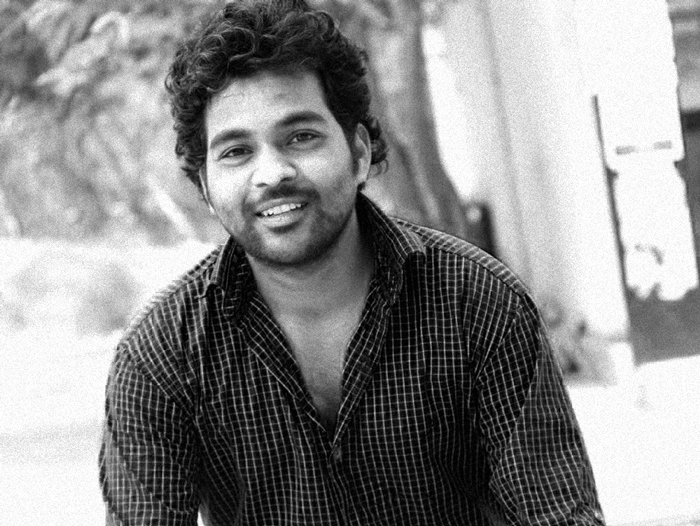
Rohith Vemula’s mother kisses his forehead, then cheeks gently, and plants a final one on the tip of his nose. It is his fifth death anniversary, commemorated as Rohith Shahadat Divas, and Radhika Vemula showers her kisses on his larger than life bust of her son, installed at the university from where he would have earned his PhD, had he not fallen prey to the demon of caste discrimination.
Radhika Vemula is hailed as ‘amma’ or mother by the thousands of Dalit and Bahujan scholars, who continue to draw strength from her scholar son Rohith’s legacy. Rohith Vemula’s fifth death anniversary was a special one for the Vemula family, as his brother Raja Vemula, now an advocate brought along his law degree, laid it at the memorial, dedicating to Rohit. For the proud mother, this was a bittersweet moment. Rohith, a promising Dalit scholar had died by suicide at the University of Hyderabad campus, allegedly driven to it by extreme caste discrimination. His death had been called an “institutional murder”.
“I wait 364 days for this one day. We think about him all the time. Not a single day has gone by without remembering him,” said Radhika Vemula, her voice still soaked in the deep grief of losing her son, but her tears held back as she dedicated her younger son Raja to seek justice not just for Rohith, but for all those who suffer.
In December, Radhika Vemula had announced that her younger son Raja was now a lawyer, and a month later, the young man, came to place his degree at his brother’s memorial.
Raja Vemula, my younger son, is now an Advocate. After 5 yrs, It’s one of the major changes happened in our lives since Rohith Vemula. Adv. Raja Vemula will now work/fight for the people & their Rights in the Court of Law and it’s my “Pay Back to Society”. Bless him.
According to Radhika, encouraging Raja to become a lawyer is her “pay back to society” and now he will fight for all the disadvantaged people in the court of law, and teach them about their legal rights. She said she was inspired to make him a lawyer after she met Fatima Nafees the mother of Nazeeb Ahmed a student of Jawaharlal Nehru University (JNU) Delhi who is reported missing under “mysterious circumstances” since 2016. He simply ‘disappeared’, after an attack in JNU allegedly by members of the BJP’s student wing the Akhil Bharatiya Vidyarthi Parishad (ABVP) that year. Fatima has been fighting for information about her son since.
Radhika said, “Our demands for justice have remained unheard. We do not know enough about laws and courts, so I wanted Raja to become a lawyer. He will fight against injustice and for the rights of people now with legal knowledge.”
As her fight for justice continues, even five years after Rohith’s death, Radhika has had to face even more of caste based discrimnation and villification has constantly been challenged to prove that she does belong to a Dalit caste. Rohith, was one of the five Ph.D students who had been expelled and had been protesting the discriminatory attitude of the university authorities, sleeping out in the open since the night of January 4, 2016, a spot dubbed “Velliwada” for that is where Dalit students were forced to sleep. On January 17, a Sunday, he died by suicide. He was just 28-years-old, and was in his second year as a Ph.D scholar.
Due to the Covid-19 restrictions this year the memorial meeting organised by the Ambedkar Students Association (ASA) was a virtual one on Sunday January 17. The hashtags however were impactful: #FiveYearsOfDeniedJustice #NeverForgetNeverForgive.
After she visited the memorial of her son earlier in the day Radhika Vemula, joined her son’s admirers including activists, scholars and lawyers online, and recalled the impact he has had on their lives and on the Dalit rights movement.
According to Dr. D Ravikumar, Member of Parliament from Villupuram, Rohith Vemula has become “a symbol for Dalit students,” and an inspiration for demorcratic forces of the country. Ravikumar called Vemula’s death an “institutionalised murder” and said he would continue to fight in Parliament for a Rohith Act, a legislation against caste based discrimination in academic institutions, just as the death of Delhi’s ‘Nirbhaya’ had also created a national outrage, leading to a commission being apppointed and eventually the Nirbhaya Act being enacted.
However he said both the state and central government have so far “ignored the death of Rohith Vemula, they did not even appoint a comission, but we have to fight for the rights of Dalit students.” As an MP Ravikumar recalled that he has often raised the issue of scholarships for higher education, and that of discrimination in educational institutions in Parliament. He spoke about the need to bridge the skewed Gross Enrolment Ratio (GER) and bring more Dalit students, and those from the marginalised communities into higher educion. However, he warned that the new National Educatio Policy (NEP) was also targetting Dalit students, in various ways, creating an environment that will result in higher drop out rates. “We have to create institutions not only to remember, pay tributes, but to take up the cause which Rohith and others laid down their lives for: ending discrimination in education,” he said, asking the civil society to “come together to create a forum to help research scholars. For Dalits involved in research, especially in the sciences it is difficult, the Union govt has put many obstacles. Without outside support Dalit PhD scholars cannot complete their studies. You have to support them from outside institutions also … start a journal in every language to support scholars” he added, that there was a need to create a forum to support scholars, economically support scholars from marginalised communities. “Even in Rohith’s case, the university denied him a stipend, he used it to support his family too… Dalit scholars do that… financial help is very essential” he stated.
Joining the online memorial from Maharashtra, Disha Pinky Shaikh, Spokesperson of Vanchit Bahujan Aghadi said that many activists like her came to know of Rohith’s struggles only after his death. However, they began to live his legacy and his activism in their own lives. “We see the mother of the Ambedkarite movement in Radhika amma. She is taking his fight ahead… today thousands of Rohiths are fighting for equality, Ambedkarite rights in schools and colleges” said Shaikh. She added that the legacy of Rohith Vemula is alive and he remains at the centre of the students movements, and added all Ambedkar rights workers will keep him alive even though “the Manuwadi government is trying to end it, we have to keep an eye on it… be aware that education is taking a backseat in all the mandir masjid issues. Education is being hindered, Ph.D scholars are not being enrolled. Rohith always fought or that… became its face, and even ended his life for it. His death was the start of a new fight. So many of us began to live Babasaheb’s legacy then.” According to Shaikh, now in every college Rohith Vemula is a symbol of struggle and revolution, and as a gender rights activist she too drew strength from him to fight “right wing groups who are trying to end democracy.”
According to Shaikh the Lefist wing is also to be critiqued as it has “kept the youth engaged with foreign revolutionaries like Marx” and appealed to the youth to learn about Ambedkar as well, “Do not go left or right.. Babasheb gave us the rights in the Constitution”.
Academic Prof. Sowmya Dechamma, Centre for Comparative Literature read a dedication to Rohith from the works of Carl Segan to illustrate the juxtaposition of scientific thought with social awareness, “Rohith was a science student who took social religious issues head on. We cannot retire until we achieve justice.”
Advocate Bhimrao who has been on the forefront of seeking justice for Rohith said the fight began even before he died, “We started filing legal cases when the expulsions were first ordered. Since then, I notice that even after the sacrifice of Rohith, the university has not changed its attitude in dealing with students, especially those from the downtrodden communities,” he said adding that several students have been harassed by various inquiry committees. However, out of those facing the accusation of killing Rohith, several accused have obtained orders that stay arrest. Only the vice chancellor has not got this order, but he continues in his post, has not been taken into custody,” said Bhimrao.
He added that even after many witnesses have been examined and spoke confirming the caste status of Radhika Vemula, no order has been passed yet. “Instead she has been served another notice issued in Guntur asking Raja and Radhika to prove their caste status. This is harassment of the revenue authorities,” he added.
Two journalists were arrested and booked under the draconian Unlawful Activities (Prevention) Act as well as sedition and conspiracy charges for an article that allegedly supports armed revolutionary groups.
According to a report in the Indian Express, the arrested journalists are Paojel Chaoba (Executive Editor) and Dhiren Sadokpam (Editor-in-Chief) of Frontier Manipur, an online news portal. The article titled Revolutionary Journey in a mess, written by M Joy Luwang was published on January 8, following which Manipur Police filed a suo moto FIR naming Luwang, Chaoba and Sadokpam.
Chaoba and Sadokpam have been charged under provisions of IPC sections 124A (sedition), 120B (criminal conspiracy), 505(b) (causing alarm to induce offence against the state), and 34 (common intention), as well as the UAPA’s Section 39 (supporting terror organisation).
According to the FIR, “In the article the author openly endorsed revolutionary ideologies and activities and expressed shock and dismay at the deteriorating character of the armed revolutionary leaders of Manipur in the recent decade.”
The Wire points out that though the same article was simultaneously published in The Imphal Times and Kangla Pao, these two publications have not been named in the FIR. The Wire further says that Frontier Manipur was probably being singled out for their reportage of a drug haul case where the key accused is allegedly close to Manipur Chief Minister N. Biren Singh. A decorated officer who conducted the arrest in that case had reportedly told the High Court that she was under pressure from Singh to release the accused from custody. She also subsequently returned her gallantry medal.
This fresh assault on the fourth estate in the state is significant given previous instances of vindictive arrests, such as that of Kishorechandra Wangkhem, who was first arrested under the National Security Act (NSA) and jailed in 2018, and then arrested once again in 2020. The journalist was charged with sedition, promoting enmity between different groups and intent to incite a community to commit an offence against another, and under SC/ST (Prevention of Atrocities) Act.
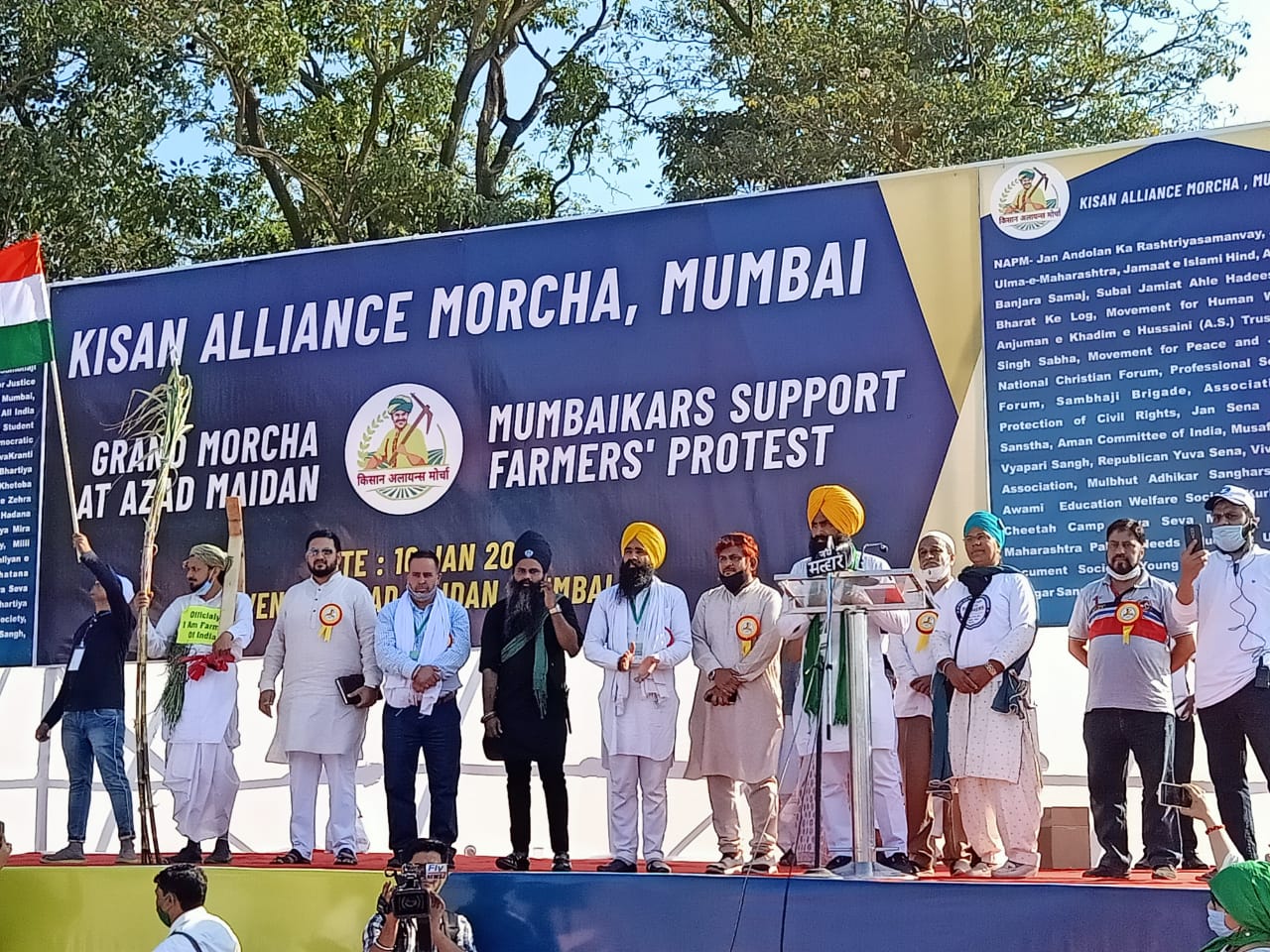
Around 10,000 people marched towards Azad Maidan in Mumbai on January 16, 2021 in support of India’s farmers battling the three agriculture laws forcibly passed by the central government.
A mammoth number of supporters walked from Islam Gym to the protest point at the call of a coalition of people’s and peasant’s organisations such as Mumbai Aman Committee, All India Ulema Council, Citizens for Justice and Peace (CJP,) the Swabhimani Shetkari Sanghatana (SSS,) the National Alliance of People’s Movements, Hum Bharat ke Log, the All India Banjara Samaj, the Chhatrapati Sambhaji Brigade and many others.
Organisations put up “Mumbai with Farmers” hoardings all over the city for mass mobilisation from 2 PM to 4 PM.
CJP Secretary and renowned journalist Teesta Setalvad congratulated the farmers near Delhi for awakening the people of India. She reminded attendees at Azad Maidan every Indian citizen needs to stand united in this struggle for food security and people’s rights because farmers.
“Farmers, who put all their efforts in the land are all too aware of what happens when agriculture is corporatized. Our farmers are adivasis (indigenous people,) Dalits, OBCs, Muslims, Sikhs and Christians. And so, we need to stand together,” said Setalvad.
She added that the farmers protests on the “borders” of the capital, Delhi was historic as it poses a political challenge to the policies of the regime. Punjab farmers who challenged the British with the Pagdi Sambhal Jatha in the late 1800s are today challenging the 21st century version of neo colonisation.
Similarly, SSS Founder Raju Shetti applauded the assembled Mumbaikars for promising their solidarity with farmers.
“They call us annadaatas. But these annadaatas have been forced at the border of Delhi like beggars for near two months now. India’s farmer cannot enter the national capital to assert his own right. What Independence is this? For whom is it?” said Shetti.
Speaking exclusively to SabrangIndia, Shetti said that the three laws have been thrown upon farmers under the false claim that farmers themselves demanded these laws. Instead of these laws, he said that farmers want the legalisation of Minimum Support Price (MSP) that it not accessible to all farmers.
He warned that the government was spreading a false narrative that this is a farmers’ struggle when in reality both farmers and poor people would suffer under these laws due to its impact on food security.
When asked whether the government was likely to listen to farmers, Shetti said that the alternative would lead to results similar to 1980s when former Prime Minister Indira Gandhi tried to silence farmers.
Along with state leaders, three farmer leaders from Punjab Amarjit Singh, Mukesh Chandar Sharma and Jangbir Singh Chauhan also attended the Saturday protest in decrying the three laws and demanding the rights of farmers.
Leaders thanked the people of Mumbai for assembling in the “economic capital” of India and showing Prime Minister Narendra Modi that every state in India opposed the three laws as opposed to the false narrative of it being a Punjab-Haryana agitation.
“This is the country’s struggle. [Union Home Minister] Amit Shah kept making laws as per your wishes. We kept silent. But now that 78 percent of people’s lives are under threat, then the entire nation has stood against you. You are stealing food from the poor!” said one of the leaders.
They also condemned the government for selling public sector undertakings to the private sectors.
Some of the organisations that participated in the Saturday event are listed below:
1. Mumbai Aman Committee
2. Chhatrapati Sambhaji Brigade
3. National Alliance of People’s Movements
4. All India Ulema Council, Mumbai
5. Jamiat Ulema-e-Hind
6. Citizen for Justice and Peace
7. Jamiatul Ulema Ahle Sunnat
8. Movement for Human Welfare
9. All India Banjara Samaj
10. Subai Jamiat Ahle Hadees, Mumbai
11. Jamaat e Islami Hind
12. All India Majlis e Mashwerat
13. Kamgar Sanghatna Sanyukt Kruti Smiti
14. Hum Bharat Ke Log
15. Panjabi Sanjhi Sabha
16. Jan Andolanachi Sangharch Samiti
17. Milli Council
18. Guru Singh Sabha
19. Teachers Democratic Front
20. Yuva Kranti Sabha
21. National Christian Forum.
22. Ghar bacho ghar banao andolan.
23. Akhil bhartiya Obc Mahasabha.
24. Sadbhavna Sangh
25. Sambhaji Brigade Paksha
26. Janasena Samajik Sanstha
27. Sanvidhanvadi Republican Paksha
28. Republic Yuva Sena.
29. Manav Uddhar Samajik Sanstha
30. Bhartiya Aatma Sanghthana
31. Youth Wing JIH Maharashtra
32. Professional Solidarity Forum
33. Ham Bhartiya Mira Bhayandar
34. Mujtama e Olama wo Khotaba, Mumbai
35. Mahfil e Sani e Zahra (s.a.), Zaib Palace, Mumbai
36. Kisan Morcha All Kurla Committee
37. Bhartiya Bodh Mahasabha Kurla
38. Kurla Voice
39. Mulbhut Adhikar Sangharsh Samiti.
40. Rashtra Seva Dal-Mumbai
41. Students Islamic Organisation of India, Mumbai
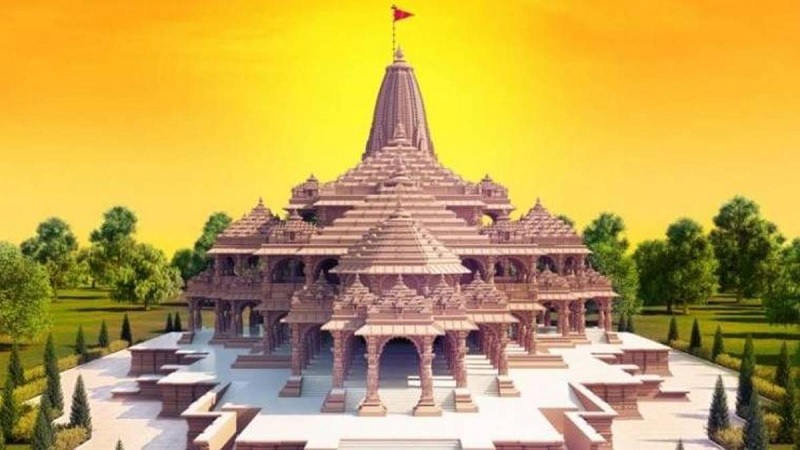
The Shri Ram Janmabhoomi Tirth Kshetra Trust (SRTKT) kickstarted its fundraising drive to construct the Ram Mandir in Ayodhya this week, but according to a report in The Telegraph, the Bharatiya Janata Party (BJP) is using this drive to gauge its popularity in different regions of the state of West Bengal.
Vishwa Hindu Parishad (VHP) and BJP members were reportedly distributing receipts for donation amounts in denominations of Rs 10, Rs 100 and Rs 1,000. They were also reportedly collecting details of donors. The Telegraph quoted a source saying that this database of donors would serve as a “dipstick survey” of supporters in the state.
This raises several concerns given how this will help the BJP ascertain not only who its supporters are, but also help them figure out those who did not donate, thus enabling their targeting. West Bengal is perhaps the state that the BJP covets the most and with state assembly elections due in a few months, areas from where there have been fewer donors could be in the party’s crosshairs. Non-donors could face intimidation, and this fear itself might make people make donations even if they do not support the cause.
Meanwhile, this week President Ramnath Kovind became the first person to make a donation to the trust set up for building the Ram Mandir in Ayodhya. NDTV reported that Kovind donated Rs 5 lakhs for temple construction after SRTKT co-president Govind Dev Giriji Maharaj, paid a visit to him along with temple construction committee chief Nripendra Misra, VHP working president Alok Kumar and Rashtriya Swayamsevak Sangh (RSS) leader Kulbhushan Ahuja.
News agencies quoted Kumar as saying, “He is the first citizen of the country so we went to him to initiate the drive.”
Now, while there is no law to prevent persons holding public offices from making monetary donations in their private capacity to any cause, when the President of India donates to a cause that has a deeply communal and violent history, it appears to send a message.
Carnatic musician and activist TM Krishna tweeted, “Donating to a temple is not the issue, that is his right. But the signal that donating to the Ram Temple in Ayodhya sends out to the citizens of this country is something the President seems to have forgotten, or may be he did not forget.”
Donating to a temple is not the issue, that is his right. But the signal that donating to the Ram Temple in Ayodhya sends out to the citizens of this country is something the President seems to have forgotten, or may be he did not forget.
Madhya Pradesh Chief Minister Shivraj Singh Chauhan also made a donation and even tweeted about it from his official account saying, “It is the luckiest day of my life. I feel like I have accomplished what I needed to as a human being.” He further said, “My family is also offering one brick.”
आज निवास पर #श्रीराम_जन्मभूमि_निधि_समर्पण_अभियान में सहयोग राशि दान कर विश्व हिंदू परिषद के श्री विनायकराव देशपांडे जी एवं अन्य गणमान्य साथियों के साथ अभियान का शुभारंभ किया।
आज का दिन मेरे जीवन का सबसे सौभाग्यशाली दिन है। ऐसा लग रहा है, जैसे मानव जीवन सफल हो गया। pic.twitter.com/R15Wv6ISNr
Once again, the issue is not a donation to a cause, but to publicise it, that too using official channels appears to normalise the blurring of lines between one’s personal and professional lives.
It is also noteworthy, that though the Supreme Court had ruled in favour of handing over the disputed land in Ayodhya to the Hindu parties, it also held that the demolition of the mosque was “an egregious violation of the rule of law”.
A 20-year old was killed in Mainpuri, district of Uttar Pradesh. The victim is said to be mentally challenged and was shot dead by villagers who suspected him of being a cattle thief. According to a report in Times Now, this horrific murder took place in the Nagla Sawaj village, under Oncha police station on Wednesday.
The victim was identified as 20-year-old Sunny Yadav, a resident of Kheria village under Jasrana police station in Firozabad district, who had come to Mainpuri two days ago. The police have registerd a case of murder against villagers.
On Wednesday morning at 5 am, the victim reportedly strayed into the nearby fields in Mainpuri village as there was low visibility due to heavy fog. However the villagers apparently thought he was a cattle thief, and began thrashing him. According to the news report the victim managed to escape the beating somehow, but as he ran into the fields someone shot and killed him. He was shot fatally in the stomach, collapsed near a brick kiln and died.
According to a report in Hindustan daily, senior police officials reached the spot, took custody of the body and sent it for postmortem. Mainpuri SP Avinash Pandey was quoted as saying: “Police reached the spot after receiving information about the incident. The villagers beat him up and shot him dead thinking he was a thief. We have filed a murder cased based on the complaint of the victim’s father. We will soon arrest the accused,”
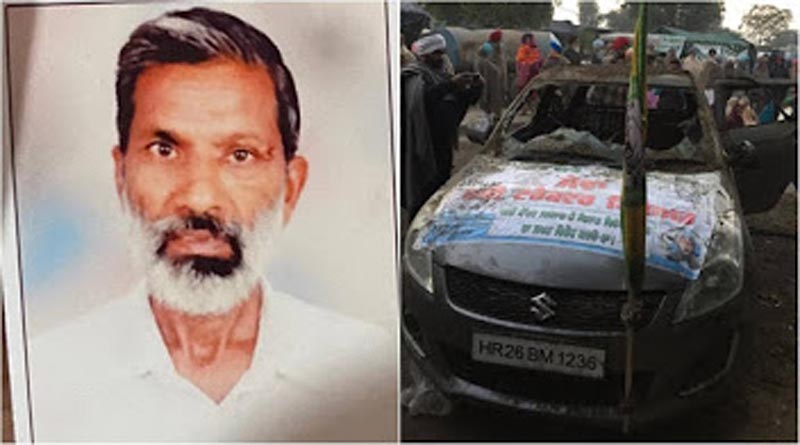
Farmers have started a ‘Human Cost of Farmers Protest’ blog website to keep a record of all people who were martyred during the farmers struggle, said the Sanyukta Kisan Morcha (SKM) organisation on January 13, 2021, 50 days after they began their sit-in protests around Delhi in November.
The SKM said that News of martyred farmers from various protest sites is not reaching national and international platforms.
“This signifies the insensitivity of the government that farmers are dying on the borders of Delhi and the other sites of protests in the country. The government’s disregard for this undoubtedly exposes their inhuman faces,” it said in a press release.
To honour the martyrs who supported the struggle against the three agriculture laws of the central government – the Farmers (Empowerment and Protection) Agreement on Price Assurance & Farm Services Act, the Farmer’s Produce Trade and Commerce (Promotion and Facilitation) Act and the Essential Commodities (Amendment) Act – volunteers compiled facts and all pieces of information.
“The separation of all these lives from us is undoubtedly a big loss for us all but the government is still so insensitive that it is not taking up this issue seriously,” said the SKM.
The organisation said that opposition to the farm laws has reached a national-level and farmers are “strict on their demand” for repeal of the laws and the legal right to Minimum Support Price (MSP.)
“Despite many efforts of the government and anti-social elements, we want to tell that without these demands the farmers will not withdraw their strike,” said farmer leaders.
Moreover, they also alleged constant harassment of farmers by police along the Jaipur-Delhi highway. The SKM appealed to police to cooperate with peasants because peacefully demonstrating for their cause is a fundamental right of farmers and Indian citizens.
Farmers in Madhya Pradesh including Bhind and Guna districts, as well as in other states like Maharashtra, Odisha, Chhattisgarh, Andhra Pradesh, Rajasthan and Karnataka have been agitating against the laws. Bihar farmers, who have already faced the result of an open market in the agriculture sector, have been protesting against these laws since the beginning.
Meanwhile, Lohri was celebrated at Delhi borders and protest sites everywhere by burning the copies of three farm laws. All farmer leaders at the Singhu border participated and challenged the government by remembering Punjab folk hero Dulla Bhatti.
Accordingly, they also condemned the Supreme Court for questioning women’s participation in farmers protests and asking them “to go home.” The SKM said women’s contribution in agriculture is incomparable and that “this movement is also a movement of women.” Members called it shameful that women’s agency is being questioned.
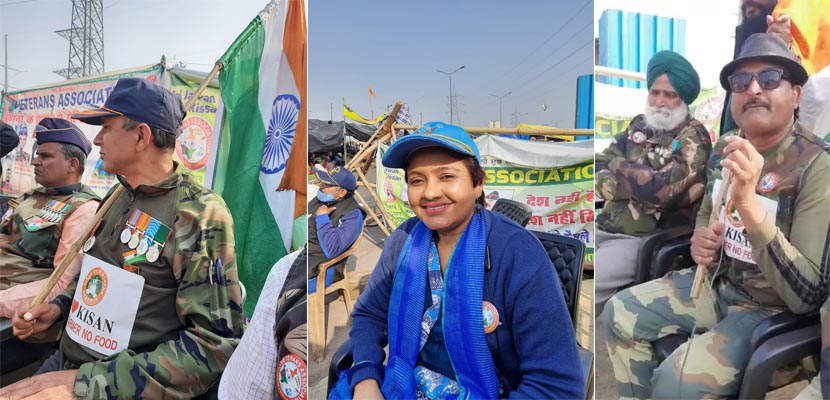
Most soldiers serving in the Indian armed forces come from farming families, many return to active farming once they retire. “We are kisans, we come from the farms and we return to the farms,” they say. However, in 2020-2021, the retired soldiers have worn their uniforms once again, some wear their gallantry and service medals on their chest, others wear their insignia bearing caps, and all of them shout ‘kisan ekta zindabad’, as they sit on the borders of the national in solidarity with farmers who are seeking the repeal of the three farm laws they say are anti-agriculturist and only pro-corporate.
The armed forces veterans presence at the protest sites also has another effect on the farmers gathered there. There is a sense of security and national pride, and scores visit the farmers groups, bringing children to meet the ‘heroic faujis’. There are hundreds of handshakes, even more salutes given and many selfies taken. The soldiers, many are retired war veterans, in turn share a sense of military conduct, discipline and response skills without even taking the centre stage. They hold the Tricolour high, and even the armed, combat ready state security teams keep a respectful distance.
SabrangIndia spent another day at the border protests and met a group of retired armed force vetran, who are among the over 5000 of their fraternity, taking part in the farmers’ protests in solidarity with the hands that feed the nation.
We met retired wing commander Anuma Acharya who is from the first batch of women logistics officers commissioned in the Indian Air Force in 1993. She took a premature separation from the force, that is a voluntary retirement, nine years before she was due to retire, and in full disclosure said even though she is often identified as a Congress affiliate, she is here at the farmers protest donning her IAF veterans’ cap, in solidarity as a citizen, and an ex soldier. Excerpts from the conversation:
What brings you to the farmers’ protest, wing commander Acharya?
The first thing that attracts the entire country [here] is that there is an issue that is clear. I do not know why the sarkar does not acknowledge it. I see the essential commodities act affecting us all. All of us may not understand the issue of MSPs but we are all affected by essential commodities being hoarded. They [farmers] will not even get a judicial redressal. I feel this [laws] should have been discussed ahead, with the stakeholders. I must disclose that I have a political affiliation with the Congress, but this protest is not political at all, this is a people’s protest, of the citizens.
Now the Supreme Court has suggested women should leave the protest sites.
As a woman, there is no problem in participation in a protest. I respect all decisions of the Supreme Court but here I feel that the suggestion to remove women and children may the government wants to take stringent measures. Maybe that is why they want women and children to be removed from the protest, so brutal measures may be deployed. Otherwise Article 14 gives equal rights to all.
As a woman Air Force veteran, what is your message to your fraternity?
When we joined the fauj, we were taught to stand with the truth for the country. The government should not be so stubborn. All that the farmers are saying is that, just repeal the laws once, and then we can sit together and talk. Why can’t that be done? There is no hard and fast rule that a law cannot be related. It’s not as if the Modi government has not repealed laws before.
Some are saying that the farmers will disrupt the Republic Day parade, what is your reaction?
It’s just creating an issue. Why would any farmer, who is an Indian want to disrupt the Republic Day parade? The farmers have a right to celebrate the Republic. A hindrance or problems will only be possible if tear gas shells are launched or force is used, if that does not happen we will see that even farmers will have a parade just as we do, and unfurl the national flag.
*******************************
SabrangIndia also met Anurag Lathwal, a retired soldier who has served on border postings, and participated in the Republic Day parade on Rajpath himself. He makes sure he is always holding the national flag high when he is sitting at the farmer’s protes. An office bearer of the veterans association, he told SabrangIndia that this was a united fight against unjust laws.
How long have you been living at the tent at the protest?
I came here from Chandigarh on December 16 to support the farmers. I come from a farmer family, and I worked in the fields with my father before I joined the force. After 16 years of service I took a voluntary discharge and came back to farming my lands, my father had continued farming while I was anway, and is still working in the fields today, when I am sitting on this Delhi border.
Have you seen so many former soldiers join a protest like this before?
The reason is that all the former soldiers are coming to support the farmers protests is because we are all sons of farmers. The farmer is our father, and wherever the father goes, the sons follow. The government must think about this, because the people already know this. I came when I heard on social media that the government was spreading rumours like ‘tukde tukde gang’ are here at the protests etc. That had upset me, so I first studied the three laws, and then came here to join the farmers movement.
What will happen to the protest movement now after the Supreme Court hearing?
The government wants the protest to be withdrawn somehow, but it will not happen, the government’s intentions are clear. Just as they passed these laws in the Corona times when without any committee, or discussions. The government just wants to benefit corporations, and that intention has now been exposed. The farmers have understood these laws, and the government will have to take them back, isime bhalai hai (that will be beneficial).
But there are talks about farmers disrupting the Republic Day parade?
This will never happen. All the farmers, and the ex-soldiers who are participating are all peace loving, and fully disciplined. Many of us have participated in the parade when they were on duty. I have paraded down Rajpath in 1998 myself, as have our colleagues here. We keep discipline first, above all. The kisan parade will happen as instructed by the Kisan Sanyukt Morcha committee. When they order us, we will conduct a parade. Peacefully, holding the Tricolour high. There are over 5000 veterans who are participating in the protest along all borders of Delhi everyday. Some are in civilian clothes, and some are in uniform.
What is your opinion on those who have returned their medals, or want to?
Many have returned the medals. In my personal opinion I do not agree with returning medals. Medals are our pride, as long as they are on our chest we will be soldiers, and we will be identified as that. The medals remind us of sacrifice and disciple.
*************************************
According to Manidev Chaturvedi, who retired from Border Security Force (BSF), and is the most conversant in the group, the SC committee will not have an impact that will help the farmers. He too stays at the protest site all day and night.
Could you share on record why you feel there will be no impact of the SC appointed committee?
I have retired from the BSF, have served on the country’s borders, and have come here from Varanasi [Prime Minister Narendra Modi’s Lok Sabha constituency]. I feel setting up a committee is sad, these committees have not had any result in the past. There was no need to pass these laws in the manner they were. There should have been consultations with experts, then discussions in both houses of Parliament. That is the beauty of the Indian democracy. But here there were no discussions, even now the winter session has not been called. The laws are under suspicion. The laws do not need a [new] committee, the laws need to be repealed first, and then discussions need to be held in Parliament
What is the reason so many of you are sitting in protest in uniform?
We can wear the uniform even after retirement. This uniform stops us from doing anything wrong. And if someone else is in trouble they can come to us. The uniform has been created for that, a common man can identify us and come seek help if needed. That is why we are here in uniform, jawans are all sons of farmers. If the jawans father is here on the road, so is the son.
**********************************************
According to Shamvir Taliayan, ex-serviceman, and a professional bodybuilder who hails from a farming family, the protests will intensify even more. He told SabrangIndia, that more tractors will come from villages across Uttar Pradesh to join the farmers movement.
You are a professional athlete, why did you come to Ghazipur?
I am from Meerut. I am a former soldier and an international level sportsman. I have participated in Asia level bodybuilding championships twice. My purpose to come here is to have the farm laws repealed. We [farmers] do not have faith in this committee that the SC has constituted. Our only aim is that these laws should be repealed.
How many people came here with you this time?
For now around 15 tractors are coming from our area each day. There is renewed enthusiasm even after the Supreme Court hearing. For the January 26 tractor rally every house in the village will send a tractor, this was decided in the village panchayat as well. We have paraded as faujis before, now we will parade as farmers.
Is there any fear as the state government is said to be keeping a strict watch over farmers, especially in Uttar Pradesh?
They are keeping an eye, but there is no fear in the farmers community. They [police and administration officials] are going to farmers’ homes, and say they want to try to make us ‘understand’. Some make phone calls and tell us no to go, some scold. But farmers cannot be scolded. Then there are some who try to misguide us and tell us to go via misleading routes. Imagine! But we cannot be fooled. We are here.
Jai jawan, jai kisan, or hail the soldier, hail the farmers, is not a mere slogan anymore. Decades after it was first heard, it has taken on a life of its own in 2020-2021, with mazdoor ekta (workers unity) adding to the trinity.


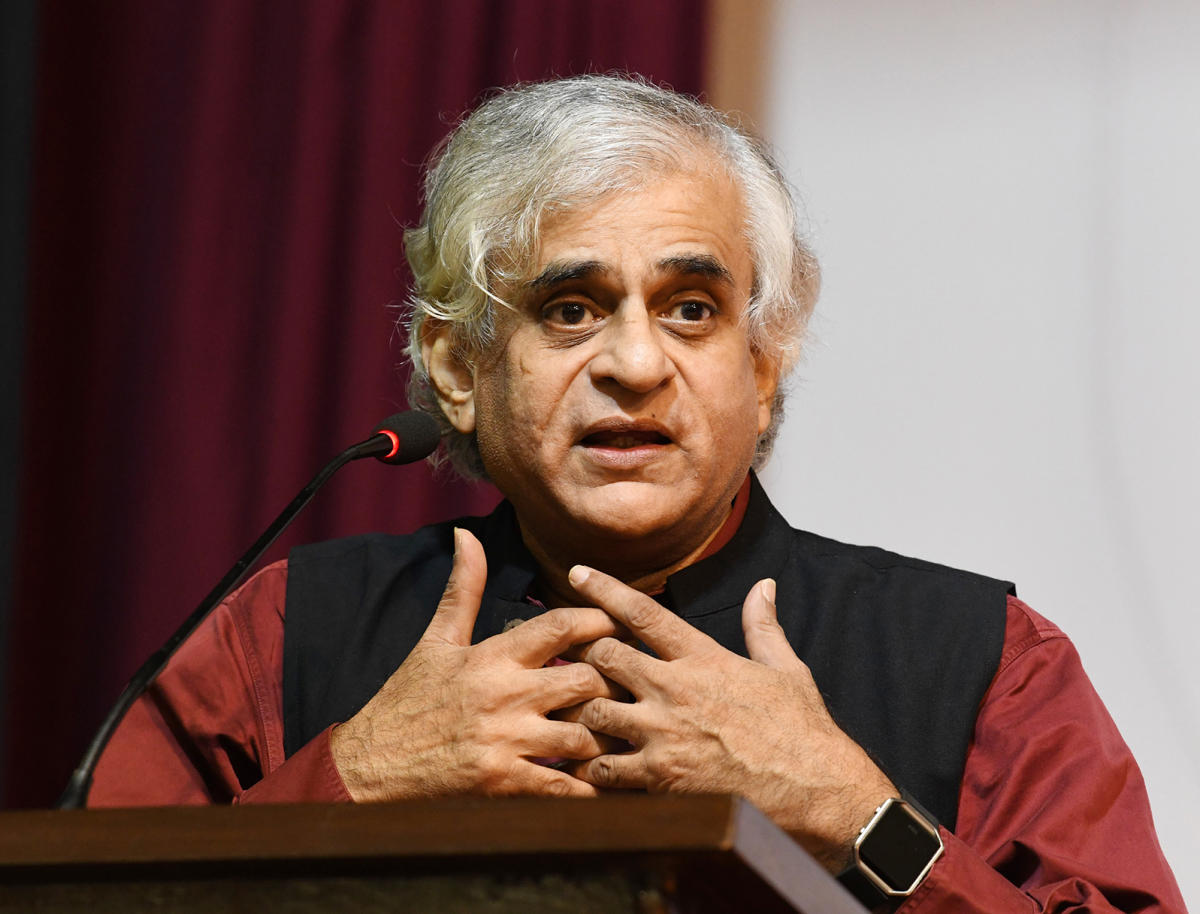 Image courtesy: Deccan Herald