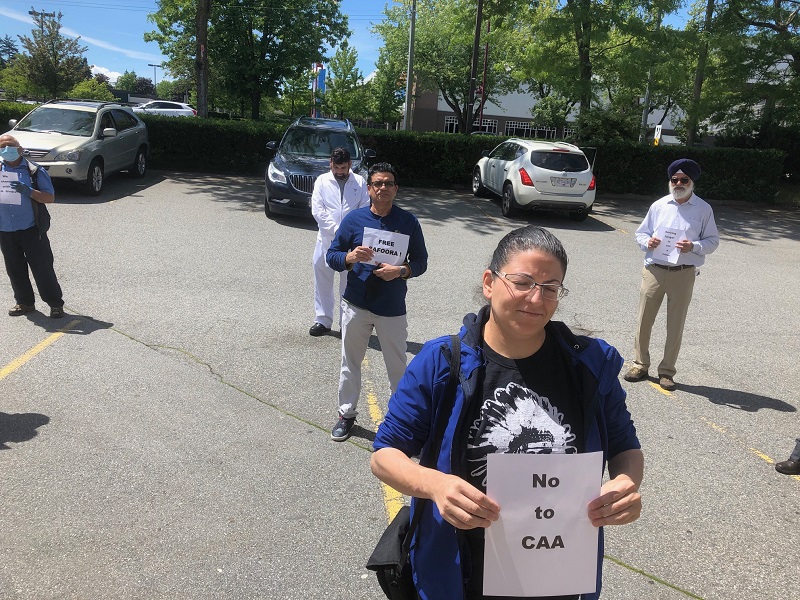
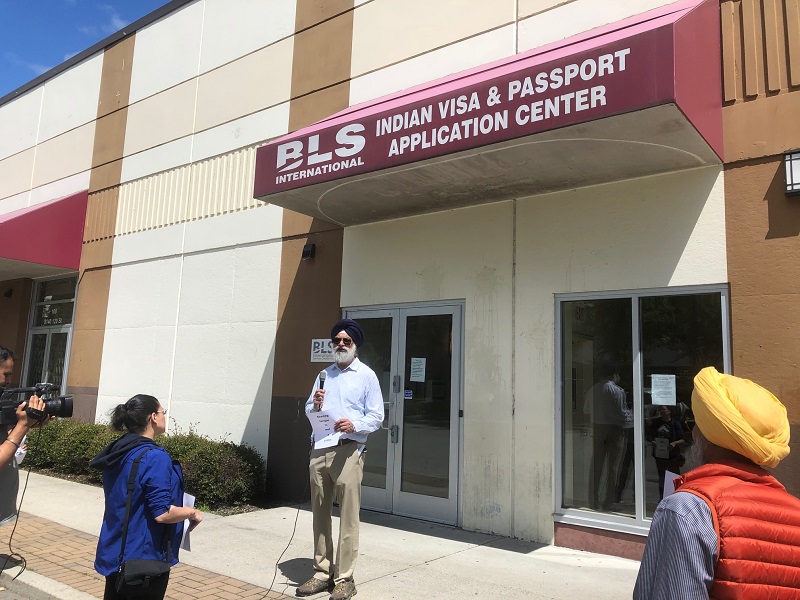
Members and supporters of Indians Abroad for Pluralist India (IAPI) held a rally for D.S. Bindra outside Indian passport and visa application center in Surrey on the afternoon of Sunday, June 21.
An advocate and activist, Bindra has been named in a charge sheet filed by Delhi police against individuals accused of inciting violent protests against India’s discriminatory Citizenship Amendment Act (CAA), which is unfair to Muslim refugees coming to India from neighbouring countries.
Bindra’s only fault was that he had organized langar or a community kitchen for the peaceful protestors in accordance with his Sikh traditions in Delhi. This follows the arrests of several activists, including a pregnant woman Safoora Zargar for raising their voices against CAA passed by a right wing Hindu nationalist government.
Canada-based IAPI came into being in response to growing attacks on religious minorities and political dissidents under the current regime.
On Mother’s Day last month, the IAPI held a car rally outside the same venue for Safoora due to COVID 19. The June 21 rally was also kept very small because of health emergency guidelines while the physical distance was maintained by those in attendance.
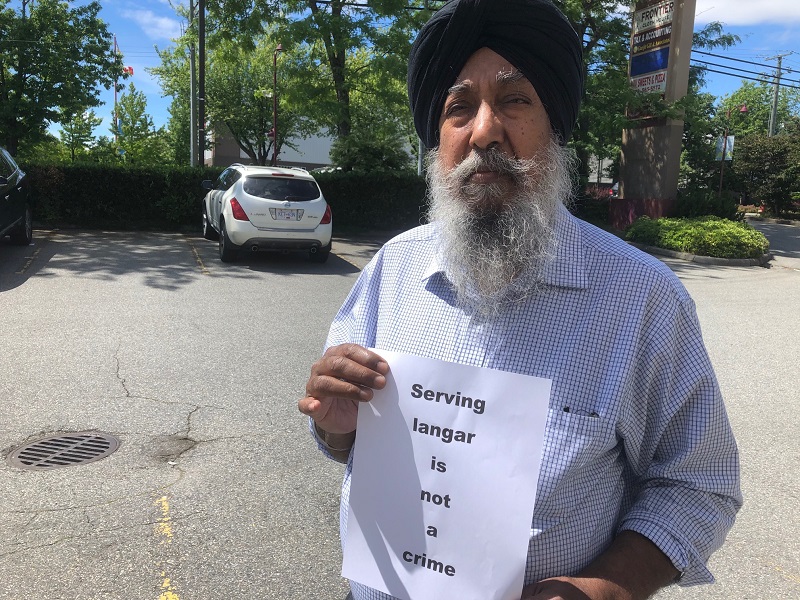
The participants held signs reading, “Serving Langar is not a crime” and “We stand with D.S. Bindra”, besides those reading, “No to CAA” and “Free Safoora”. They raised slogans against state violence in India. Since June 21 is National Indigenous Peoples’ Day, the rally was started with a moment of silence for Chantel Moore and Rodney Levi, an indigenous woman and a man who died at the hands of police recently in New Brunswick.
The speakers were unanimous in their demand for freedom of Safoora and other political prisoners and condemned the highhandedness of Delhi Police against Bindra. The Sikh activists who showed up felt that it was a direct assault on their faith and came as a rude shock to the community which is grieving the military attack on their holiest shrine, the Golden Temple Complex by Indian forces 36 years ago in the month of June, 1984.
Those who spoke on the occasion included former spokesman of Gurdwara Dashmesh Darbar, Gian Singh Gill, the president of Guru Nanak Singh Temple, Surrey-Delta Hardeep Singh Nijjar, Sikh scholar Charanjit Singh Sujjon, independent Sikh activist Kulwinder Singh, prominent anti-racism educator Annie Ohana, well known progressive Punjabi poet Amrit Diwana, and IAPI members, Sayed Wajahat and Gurpreet Singh.
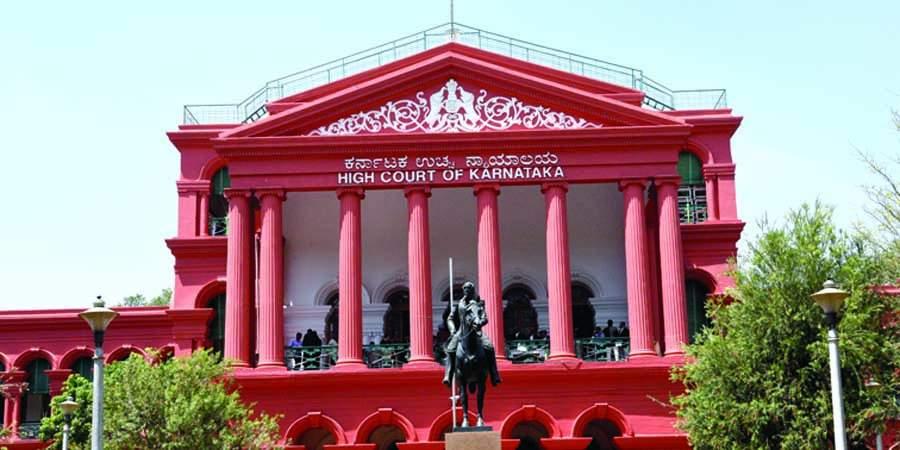
In a recent order passed in connection with the bail petition for a father-daughter duo, who are said to hail from Bangladesh, but have been living in India for several years, the Karnataka High Court examined key issues related to the treatment of illegal immigrants till they are deported to their country of origin, especially if a child is involved.
46-year-old Babul Khan and his 20-year-old daughter Taniya had allegedly migrated to India from Bangladesh without a proper passport or visa. They lived in West Bengal for several years and came to Bangalore for the medical treatment of Taniya’s minor son. This is where they were booked for committing offences under sections 14 A and 14 B of the Foreigner’s Act (1946). Some bullets were also recovered from them as were Aadhar Cards that they allegedly obtained using false information. Thus, they were also booked under section 25 of the Arms Act as well as section 34 of the Aadhar Act. The two were arrested and remanded to judicial custody, where they have spent over an year. Taniya’s minor child has been living with her in jail.
The court examined the question of granting bail while clarifying that it did not mean legitimising the stay of illegal migrants in India. It also looked into transferring people to detention camps till the pendency of their trial, or even after acquittal till the day they were deported to the country of their origin. This especially when the ‘foreigners’ are either being tried for or have been convicted of committing offenses other than those that fall under the Foreigners Act or Passport Act. The court was especially concerned about the welfare of women inmates and their children in such cases, emphasizing that the child in such cases be given all rights in accordance with the United Nations Declaration of Rights of the Child, including being allowed to “develop physically, mentally and socially, in a healthy and normal manner with dignity.”
The petitioners submitted that they were residents of West Bengal and were rag-pickers. They claim that they were in town for medical treatment of the minor child when they were falsely implicated and arrested in the case. They also said that after the treatment of the child, they were planning to leave India.
The court directed that they be released on bail on executing personal bond for a sum of Rs 50,000/- each with one surety for the like sum. The court directed that they be lodged at a Detention Center in or near Bangalore during the pendency of the trial.
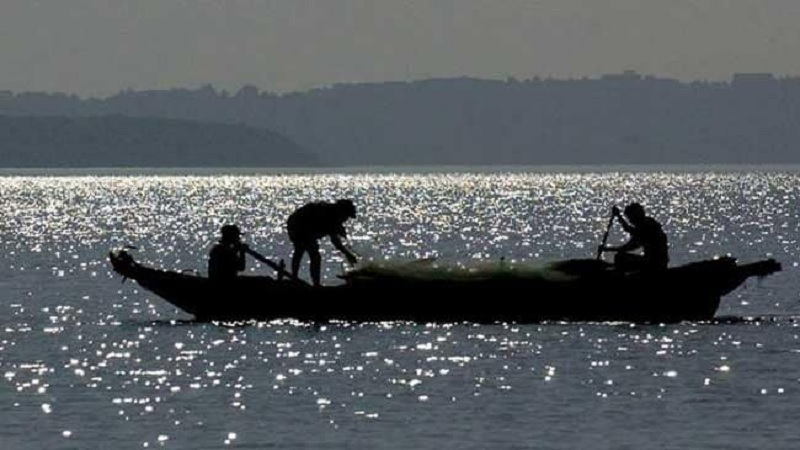
Four fishermen went out on their routine fishing trip on June 13, a calm Saturday morning, off the coast of Rameshwaram, in Tamil Nadu coastline’s Mannar Bay area. As usual, they took the small mechanised boat owned by William Castro. This time, Castro opted to give the fishing trip a miss. So it was just Regin Basker, Malar, Austin Sujinder (also known as Anand) and Jesu, who at over 65 years of age, was the eldest of the team. They have fished together a number of times before. That day, they were around eight-10 nautical miles into the sea, this was as far as they usually went to fish near Ramanathapuram, adjacent to the waters of Kottaipattinam.
In a few hours, everything changed. They noticed a small hole in the boat and water began seeping in, soon enough the boat also developed a mechanical fault. The men could not fix it and the boat started sinking. “We could just shout for help,” recalled Jesu. He is the only one to have survived after the boat sank. A week after the incident, other local fishermen from Pudukottai who had volunteered to go out for a search operation found the bodies of Bhaskar, and Anand too. They say it is impossible that Malar has survived but as his body has not been found, the administration will not declare him dead. A strange situation for his family, as they have to hold on to an impossible hope that Malar comes back alive, or just wait for official word so they can apply for getting ex gratia payment, of upto Rs 2 lakh given by the government’s fisheries department if a fisherman dies accidentally.
“If the fish dies it is GDP. If fisherman dies its ex gratia,” said A Palsami, state secretary National Fishworkers Forum (NFF), and president Ramnad Fishworkers Trade Union (RFTU). He and other fishworker activists have for long been demanding that a search and rescue system be set up for the safety of the thousands of fishworkers who venture out to sea every day, across the vast coastline of the Indian peninsula. “The government says there is no fund to set up a search and rescue department with boats and trained people. The navy boats also do not have standing instructions to help search with their helicopters and boats,” said a fisherman of the area who also confirmed that the bodies of the missing fishermen had been found on Saturday, June 20.
Just a week ago, as their boat was sinking, the four men had held on to the large ice box that was still afloat. Jesu, the survivor is understandably still traumatised and is said to be in a deep shock and slipping in and out of consciousness. However, he narrated his ordeal when he was rescued by local fishermen, a day after the boat sank. He said Malar and Anand told them they would swim to the nearest island and bring help. “We will go get help. Don’t worry,” they said and started swimming towards the shore as Bhaskar and Jesu tried to stay afloat and held on to the icebox.
The ones who had ventured out did not return even the next morning. By then the ice box too began breaking down. By noon Bhasker told Jesu: “no one will come to rescue us, I am willing to risk my life and swim towards the shore…” he had not swum far, and a shocked Jesu watched the younger man drown. An image he kept describing even through his own pain when he was was eventually spotted and rescued by fishermen of Kottaipattinam village, that is adjacent to Ramanathapuram district. He was brought back on the shore on Monday night. He had been found around 11 nautical miles from the shore. “These are not deep waters, it is well within Indian territorial waters,” said a fisherman who wished to remain anonymous.
It was the local fishermen, most of them members of the area trade union who went out in five boats to rescue their colleagues. There is still a sliver of hope that the last one remaining may reached, or that his body washed ashore on the nearby islands. However, some of those islands are in Sri lankan waters.
Even as late as yesterday, a fisherman reported a foul smell, perhaps because of a decaying human body floating near that area. So, local fishermen ventured out on their own boats. But when the fishermen reached there was no body, perhaps it was swept away by the current flow. The search and rescue ops are on, but still no luck. Almost a week has passed.
“These are individual volunteers, no choppers or rescue department were sent. This is always the case, the department does not have enough funds to search and rescue. I am a fisherman and I can confirm that . I have gotten this reply more than ten times in my life too,” said Jones Thomas Spartegus who is now doing his doctoral research in disaster and fisher rights. He is currently doing field work in Thoothukudi.
“The irony, and the sad side of this is that the fisheries department has been slack and negligent,” said a Fisheworkers Union leader adding, “there has been a long standing demand from the fishing unions of Tamil Nadu that some funds should be allocated to search and rescue with boats and rescue teams, for fishers who are risking their lives during fishing, but there have been no funds.”
The fishermen’s families get a small ex gratia payment when a body is found. “This is how the welfare of the fishermen work. The fisheries department will wait for a body to be found and release an ex gratia payment,” explained Jones.
Now that two bodies have been found, the Fishworkers Union wants the officials of the fisheries department to start talks with the counterparts on the Sri Lankan side to help search for Malar’s body. The Ramnad Fishworkers Trade Union ( RFTU) has said that they will be forced to launch a protest soon, after consulting the affected families, if their requests are ignored yet again. If the body is not found for over two months the department issues a notice. Only after that can the family claim the ex-gratia payment. Most of the fisher workers do not have personal life insurance. This is all they are entitled to under the official welfare schemes:
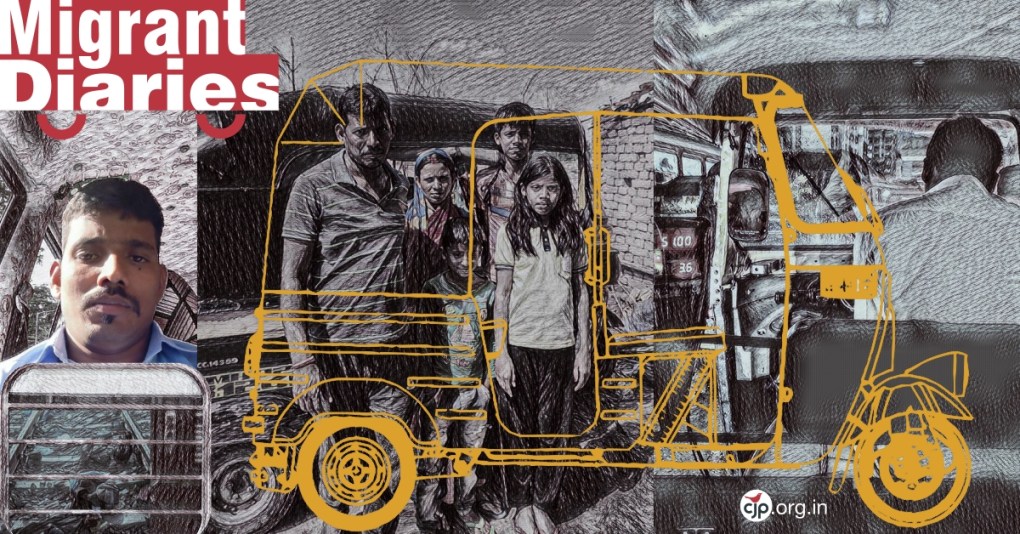
43-year-old Laxman Prasad, has been living and working in Mumbai for the past 27 years. He has lived in different parts of the city, but moved with his family to Kalina, Santacruz 15-years ago. He worked as an auto rickshaw driver and had bought his vehicle just two years ago, on a five-year-loan. Laxman and his family packed their bags and he drove them across the country, in this autorickshaw on May 10. They reached May 15 and went into quarantine for the next. Once that was over with, he called up the CJP team to inform us he was fine.
He was feeling very nostalgic about the city which he has spent a large chunk of his life in and recalled his early days as a migrant from Jharkhand. “Before I started driving an auto rickshaw, I used to work as a waiter in a hotel. Initially I used to stay with other migrants from Jharkhand but five years ago I brought my wife and children over an we lived in Kalina,” says Prasad for whom his kids are his pride and joy, “my elder son studies in class 8, my daughter studies in class 5 and my younger son studies in class 2.” The children study in a school run by the Brihanmumbai Municipal Corporation.
Prasad’s parents and three younger brothers stayed back in the village, “We are seven brothers, two of us drive auto rickshaws, two work as waiters.” Prasad would earn almost Rs 25,000 per month, but the expenditures would drain his pocket fast, “I paid Rs 6,000 as my room rent, and had an EMI of Rs 6,000 to repay the autorickshaw’s loan. I managed to send around Rs 3,000 back home and whatever remained was used to buy ration and meet our daily expenses.” He tried his best to save a small amount each month. All that changed when the sudden lockdown was imposed. The earnings stopped, but the expenses did not.
“This lockdown has cost me Rs 60,000 to 80,000 already, but we cannot blame anyone, this is a situation which we all are facing,” he said, adding that it was the government that should have planned ahead for the poor citizens. He felt let down by the authorities and felt he could not depend on them anymore. “The government had not made any plans for us poor people, that’s why I didn’t depend on the government and decided to drive my auto from Mumbai to get home to my village in Jharkhand,” he recalls the longest drive he has undertaken in his beloved vehicle.
Laxman Prasad with his wife and daughters on the way to his village
Like many others, Prasad thought the lockdown was announced for a limited time only, “I didn’t think it would be extended for such a long time.” Even under the first lockdown Prasad ferried around a few passengers who were out for emergencies, but when the police started beating and slapping fines he decided not to risk it anymore. “We live hand to mouth, and slowly it started getting difficult for us. In the initial phase we used up our savings to buy ration and essential items,” he says but that money was over soon and the crisis began. This is when the CJP Team reached Prasad’s neighbourhood with ration kits. “I am thankful to CJP who provided us with rations that lasted for 15-20 days. There were some others in Kalina who were distributing cooked food. We used to stand in a queue for food daily,” he remembers those days as some of the worst he has spent in Mumbai. “We did not like standing in a queue for food, but we had no other option,” he says.
Survival was at stake and Prasad didn’t want to go back to the village, “because in Mumbai I feel we can survive somehow.” But his family back home was worried, “They were constantly telling me to make some arrangements to return to the village.”
As the number of Covid-19 cases rose steadily so did Prasad’s stress level. “We live in slums and I was also worried for my family, especially my children. The volunteers from CJP had called me to inform me about the Emergency Travel form. I along with my friends and their families filled the emergency travel form. I even followed up with the police station but they said they will call once the train schedule was confirmed,” recalls Prasad.
No such calls came, “After waiting for five days I and a few other drivers decided to go home by our own auto rickshaw. We left Mumbai on May 10. We drove through Maharashtra, Madhya Pradesh, Odisha, and finally reached Jharkhand on May 15.” At Madhya Pradesh a thermal screening was done and they paid Rs 25 as toll tax too. “We used to travel from morning to afternoon, take a lunch break, and then again travel till night. This continued for the next five days,” he says he was the only one driving and was thankful that there were people distributing food, snacks, water to the labourers returning home. “We managed with that and sometimes had food at dhabas and paid. I spent Rs 12,000 on petrol and Rs 2,000 on food. I had no other choice but to go home so I had requested my brother to send me Rs 15,000,” Prasad says this money helped him take his family home safely.
Laxman Prasad’s wife and children
“After reaching Rourkela which on the Odisha-Jharkhand border another round of thermal screening was done, and then we reached Kohlu, Jharkhand which is our village. We were kept in quarantine in the Panchayat School for 14 days. We were provided tea, biscuit and a banana each for breakfast, for lunch we got sabji, dal and rice and for dinner we got dal and rice,” Prasad does not dwell on the taste of the food, he was grateful to be fed.
However, he remembers that many others in quarantine had asked their families to get food from home because the quality of the meals served at the school was not good. “We didn’t trouble our family because my mother is old and it would have been difficult for her to cook for five of us. We managed the food which was provided. After 14 days, another thermal screening was done and then we were told to go home.”
Prasad says the quarantine was a struggle too but the family had no choice. The children are never going to forget this experience he says, “But I am glad that I have reached my village and I am with my entire family, the situation here is first class and we no need to beg in front of anyone for food.” He is an optimistic man and is waiting for the situation to get normal, “Then I will go to Mumbai again, because now I am used to working in Mumbai. There, I can earn Rs 25,000 per month which will be difficult here in Jharkhand.”
Laxman Prasad
He is also not going to blame anyone for the crisis, “I don’t want to complain about anything, because the situation is so difficult that even the government is struggling. People are doing their best to survive, some travelled on trucks, by some buses, some even walked. I was lucky to have my own vehicle. I am happy to be back here and now I don’t have any tension, because we all are together if anything happens people are there to support you and take care of you.”
His faith in humanity soars, but his wife is upset and worried about the impending financial crisis, “I am feeling very bad that all our savings have got over in this lockdown, whatever was left we spent on travelling back to home. While on the highway, I was scared of accidents because travel by auto rickshaw was not easy and there were big trucks driving beside us,” she says. She too is grateful that people shared food along the way. “We had sufficient food during our journey, because people were distributing food, and I had even carried biscuits, and some fruits with me. Now everything feels fine as we have reached home, that is the major relief.”
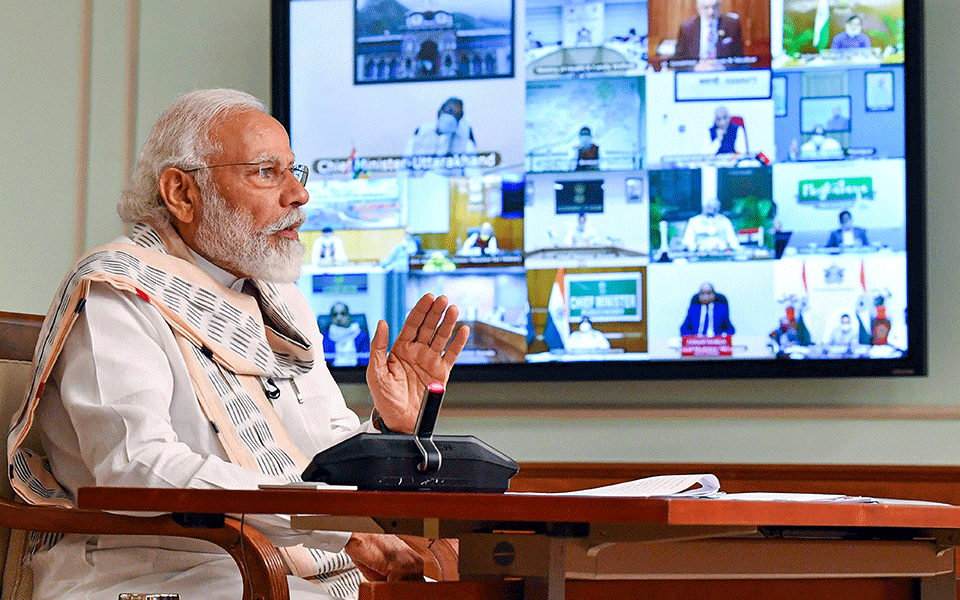
The Prime Minister’s Office issued a clarification on June 20 on PM Narendra Modi’s comment that “no one entered Indian territory and no Indian posts were taken over.” Modi had made the comment at the All Party Meeting of June 19 to talk about the India-China border situation via video conferencing. The meeting was attended by leaders of various political parties from across the country.
He had said that no one was inside Indian territory nor was any Indian post captured. He had added that “24 of our brave soldiers made the supreme sacrifice for the nation in Ladakh but also taught a lesson to those who had dared to look towards our motherland. The nation will forever remember their valour and sacrifice.”
I thank leaders from all parties, who gave their valued opinions during today’s all-party meet.
Statements are still available online, as a video clip on the official Twitter handle of the PM, and on the Press Information Bureau (PIB) website as press releases. The PIB stated, “The Prime Minister said that the entire country is hurt and angry at the steps taken by China at LAC.”
Govt issues clarification on PM Narendra Modi’s comments that no one entered Indian territory and no Indian posts were taken over
On Saturday, according to the latest statement uploaded on the PIB website: “Attempts are being made in some quarters to give a mischievous interpretation to remarks by the Prime Minister at the All-Party Meeting (APM) yesterday.”
The PIB states that the PM had been clear that India would respond firmly to any attempts made by China to any attempts to transgress the Line of Actual Control (LAC). The statement said, “In fact, he specifically emphasized that in contrast to the past neglect of such challenges, Indian forces now decisively counter any violations of LAC (“unhe rokte hain, unhe tokte hain”).
Attempts are being made in some quarters to give a mischievous interpretation to remarks by the PM @narendramodi at All-Party Meeting yesterday
PM was clear that India would respond firmly to any attempts to transgress the Line of Actual Control
The PIB has posted, on June 19, that the PM also spoke about ramping up border infrastructure and said, “The government has given primacy to development of border area infrastructure to make our borders more secure. Provision has also been made for fighter planes, modern helicopters, missile defence systems and other such needs of our forces.”
The PM also said that patrolling capacity at LAC has also increased, and that “We are better informed about the developments at LAC and consequently are able to monitor and respond better”, stated PIB. According to the information bureau the PM said “the movement of those which used to take place without any disruption earlier is now checked by our jawans, which at times leads to build up of tension.”
However, once the PM’s remarks at the APM were reported by journalists, including Chinese meadiaman Shen Shiwei, whose bio describes him as CGTN News Producer, Modi’s comment was interpreted as the Indian PM having ‘accepted’ that there was no intrusion. “No outsider was inside #Indian territory in #Ladakh nor had any border post of the Indian Army captured by outside forces.” Chinese media has translated the speech by #Indian Prime Minister Narendra Modi on an all- party meet called by him on Friday. #ChinaIndiaFaceoff
“No outsider was inside #Indian territory in #Ladakh nor had any border post of the Indian Army captured by outside forces.” Chinese media has translated the speech by #Indian Prime Minister Narendra Modi on an all- party meet called by him on Friday. #ChinaIndiaFaceoffpic.twitter.com/mM58NBjytG
This post set off reactions such as this one from Shiv Sena politician, Rajya Sabha MP Priyanka Chaturvedi who said, “Here’s what I mean for all those trolling me, the Chinese are using PMO statement not the opposition’s to make a case for themselves. Hence these need to be responded to by GOI, also immediately condemned as this change of status quo in China’s favour is unacceptable to Indians.”
Soon enough discussions began on the facts around the alleged “intrusion” itself, and also added to the ongoing discussions on the Indian army men being unarmed when they were attacked brutally and killed. Statements made by the PM at the APM were shared by the government’s official channels, before they were analysed, discussed, and reported by journalists, and defence experts.
According to the clarification issued a day after the APM meeting, the political leaders had also been informed by the PM that “This time, Chinese forces have come in much larger strength to the LAC and that the Indian response is commensurate. As regards transgression of LAC, it was clearly stated that the violence in Galwan on 15 June arose because Chinese side was seeking to erect structures just across the LAC and refused to desist from such actions.”
The PIB stated, “Words of Prime Minister ‘Those who tried to transgress our land were taught a befitting lesson by our brave sons of soil’, succinctly summed up the ethos and the values of our armed forces. The Prime Minister further emphasised, ‘I want to assure you, that our armed forces will leave no stone unturned to protect our borders’. What is Indian territory is clear from the map of India. This Government is strongly and resolutely committed to that. Insofar as there is some illegal occupation, the APM was briefed in great detail how over the last 60 years, more than 43,000 sq km has been yielded under circumstances with which this country is well aware.” The statement added, “It is unfortunate that an unnecessary controversy is being created to lower their morale.”
The leaders of the political parties had expressed solidarity with the government on the India-China issue. Congress president Sonia Gandhi had noted that “the leaders are still in the dark about the details and questioned the government about intelligence reports and other related matters,” stated the PIB on Friday.
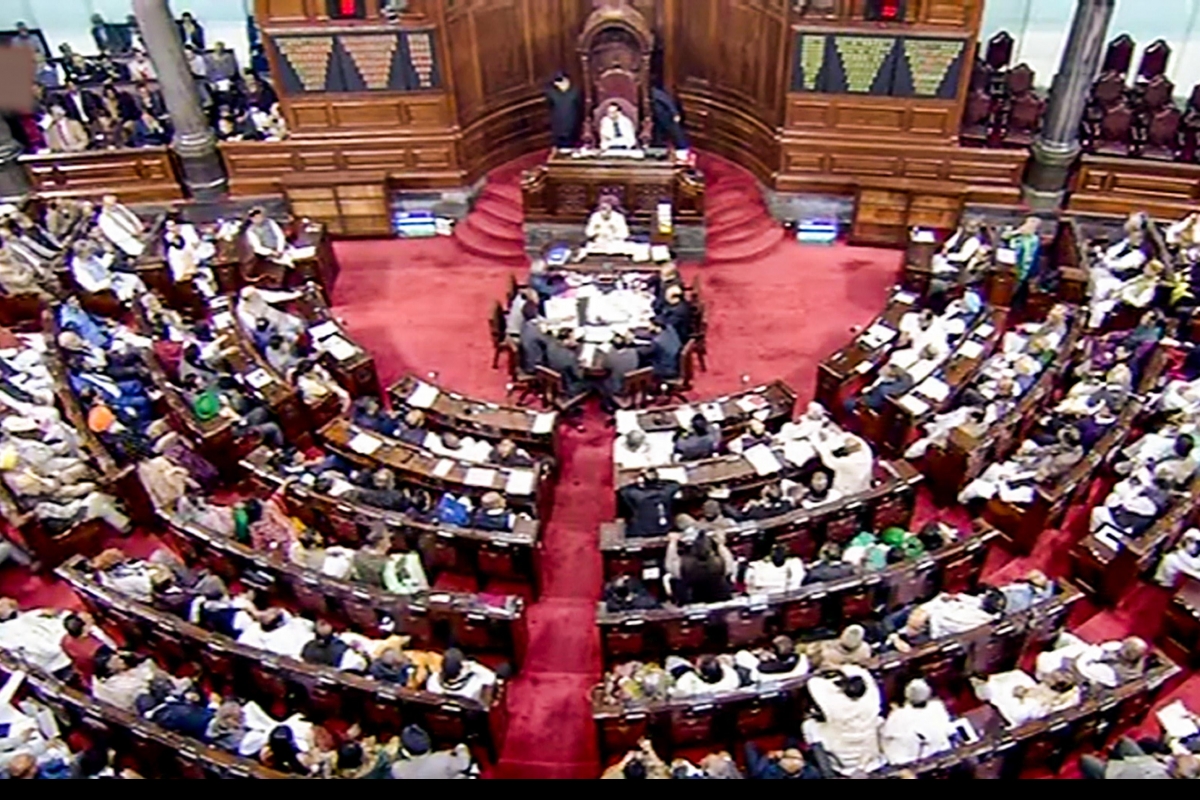
Elections were held for 19 Rajya Sabha seats on Friday and now the results are out. While the BJP won 8 seats, the Congress and YSRCP won 4 each. But the election was not devoid of drama.
In Gujarat, BJP has managed to hold on to three seats with Abhay Bhardwaj, Ramila Bara and Narhari Amin emerging victorious. Congress candidate Shaktisinh Gohil won the fourth. Two legislators of the Bharatiya Tribal Party (BTP); Chhotu Vasava from Jhagadia constituency in Bharuch and his son Mahesh from Dediapada constituency in Narmada, reportedly abstained from voting.
It is noteworthy that Vasava is at the forefront of the tribal agitation against land acquisition by Sardar Sarovar Narmada Nigam Ltd. (SSNNL). Therefore, despite arriving in town to vote, the MLAs first demanded an assurance from both parties to implement not on Schedule 5 of the Constitution, but also provisions of Panchayats Extensions to Scheduled Areas (PESA) Act in order to protect affected tribal communities. In the absence of any assurance, they chose to abstain from voting.
Meanwhile, in Manipur, where the BJP led state government is on the verge of collapse in wake of resignations of 3 BJP MLAs and withdrawal of support from 6 alliance MLAs, the contest for the single seat got exciting. While the Congress earlier had the numbers to help their candidate get elected, Speaker Y Khemchand disqualified three Congress MLAs and a TMC MLA just before the election. This, along with cross voting, helped the BJP candidate win.
Disqualification petitions had been pending before the Speaker for seven MLAs and the matter was set to be discussed on June 22. But the speaker brought forward the date to June 19. However, the High Court had previously ordered the Speaker to announce the disqualifications only after June 19. Meanwhile, 2 Congress MLAs voted for the BJP candidate Leisemba Sanajaoba, and erstwhile royal Leisemba Sanajaoba thus ended up bagging 28 votes, while Congress candidate Tongram Mangibabu Singh got 24.
It was smooth sailing as predicted for the YSRCP in Andhra Pradesh where the party bagged all four seats. In Jharkhand Shibu Soren also sailed through easily, though the state’s second seat went to BJP’s Deepak Prakash. In Rajasthan, Congress candidate Neeraj Dangi and KC Venugopal emerged victorious. In Madhya Pradesh, while Congress heavyweight Digvijay Singh won a seat, the other two went to the BJP’s Madhavrao Scindia and Sumer Singh Solanki.
The lone Mizoram seat went to the ruling party Mizo National Front (MNF) candidate K Vanlalvena. In Meghalaya, Meghalaya Democratic Alliance (MDA) candidate Dr WR Kharlukhi won the single RS seat, defeating Congress candidate Kennedy Khyriem.
Polling did not take place in Arunachal Pradesh as BJP nominee Nabam Rebia was previously declared elected unopposed. Similarly, in Karnataka, elections were not held in four seats where former prime minister HD Deve Gowda, Congress leader Mallikarjun Kharge, and BJP candidates Iranna Kadadi and Ashok Gasti, were declared elected unopposed.
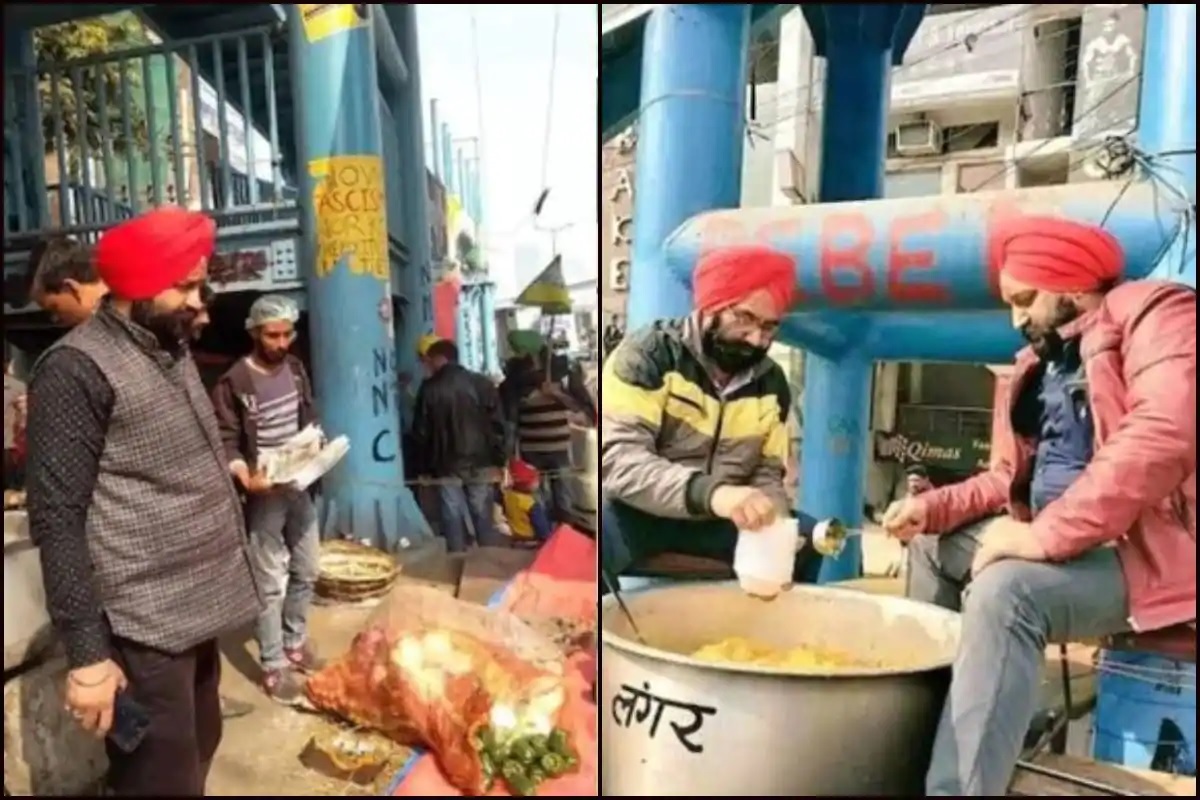
During the peak of anti-Citizenship Amendment Act (CAA) protests, a Delhi High Court lawyer, DS Bindra became popular for offering langar or free food to protesters gathered at Shaheen Bagh, one of the most prominent protest venues. Bindra reportedly sold his flat to fund his campaign to feed the hungry protesters. He also organised langar at the Chand Bagh sit-in protest site in Mustafabad and also in Khureji for around five days, helping feed hundreds of protesters.
While many appreciated the gesture, right-wing trolls were quick to dismiss it as a publicity stunt by the All India Majlis-e-Ittehadul Muslimeen (AIMIM) of which Bindra was said to be a member. However, Bindra had told media persons at the time that he did not support any political party.
Now, Bindra has been mentioned in a chargesheet filed by the Delhi Police in the matter of the killing head constable Ratan Lal. SabrangIndia has obtained a copy of the chargesheet. Some of the accused named in the chargesheet have mentioned DS Bindra as one of the organisers of the sit-in protest at Chand Bagh, to the extent that he ordered that tents be set up at the site and langar be cooked and served. The accused also stated that at an allegedly secret meeting with other organisers, Bindra spoke about the CAA as being anti-minorities and that the Sikh community was here to support them so that the barbarism of 1984 was never repeated. The accused also stated that speeches in similar vein were made at the protest site.
Statements of two beat constables were also mentioned where they said that Bindra, along with Salim Khan, Slaim Munna, Suleman Siddiqui, Ayub, Athar, Shadab, Upasana, Ravish and others, was one of the organisers of the protest at Chand Bagh.
However, it is noteworthy that Bindra himself has not been named as one of the accused in the case. But his presence at the location, and role as one of the alleged organisers of the protest is being stretched to suggest that Bindra, with his words and actions, may have instigated the riots that took place in the area later in February, specifically an instance in which head constable Ratan Lal was killed on February 24, 2020. It says that after Salim Munna allegedly made a provocative speech at the site of the sit-in protest people started converging there with lathis, rods etc. Police tried to stop Munna from continuing with his allegedly inflammatory speech, but were outnumbered. At around 1 P.M, DCP Sharda Amit Sharma was present at the site with policemen, including the two constables who made the statement referred to in the chargesheet. They were first surrounded by women and then attacked by a violent mob. This led to the death of Ratan Lal.
A total of 17 people have been named in the chargesheet that suggests that the “incident was a consequence of a deep-rooted conspiracy which was hatched under the garb of democratically opposing the Citizenship Amendment Act.”
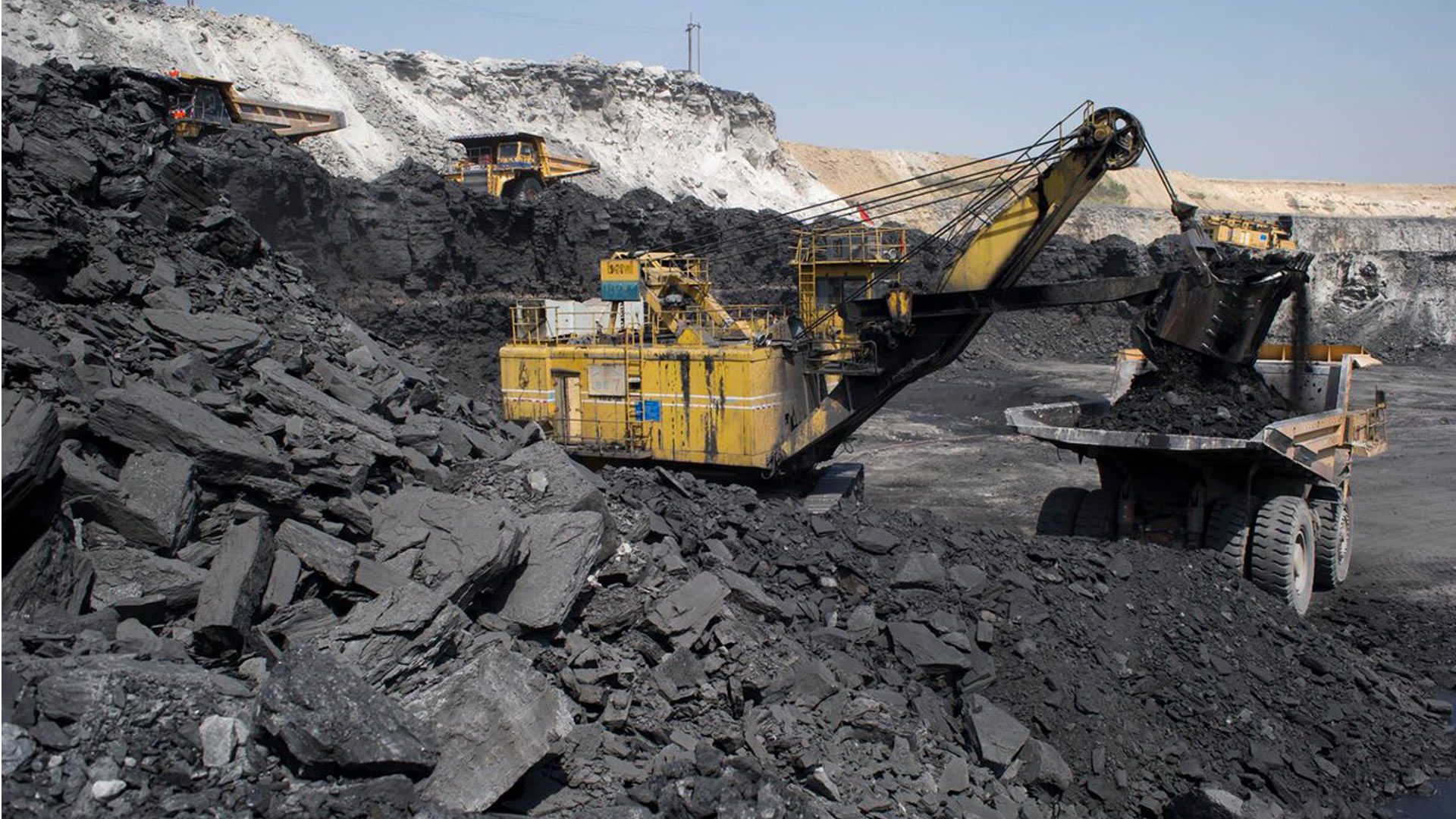
Following the Modi.2 government’s controversial decision announced yesterday, June 18, the auction of 41 coal blocks, including 20 of Jharkhand, for commercial mining, widespread protests have broken out, especially as all ownership rights of the land owners and Gram Sabhas will potentially be snatched away and natural resources opened up. People’s organisations and environmentalists have dubbed this move as opening the door for “for more corporate plunder” and also said that it “again exposes the atmanirbhar initiative,” propaganda by and of the prime minister.
In a strong statement issued by the Jharkand Mahasabha, the organisation has also said that it is deeply worrying that Jharkhand government has extended support to the central government’s decision. However, the fact that the state has asked for a moratorium period of 6-9 months indicates that it is not fully on-board this decision.
The detrimental impact of the decision to allow commercial coal mining on the domestic coal industry and market is well documented. However, the most worrying aspect of the decision is that it simply overlooks the staggering impact on the lives of landowners, people living nearby and the environment. The Mahasabha organised an online meeting on June 17, attended by experts and activists, to discuss the impact of Modi government’s decision on Jharkhand.
A large proportion of Jharkhandis, especially Adivasis, depend on agriculture and forest-based livelihoods. Jharkhand, as one of the richest mineral states, stands witness to the fact that rampant mining, especially in corporate interests, does not improve well being of the people. Needless to say, mining, especially of coal, has significant environmental and human costs. Opening the state for domestic and foreign corporate mining entities will further destroy the livelihoods and environment. Mining companies, supported by the government, flout laws that aim to check environmental degradation, left, right and centre. Hundreds of unreclaimed spent-mines, across the state, stand witness to this.
The decision also violates several legislations and constitutional provisions that aim to protect the poor and marginalised and the right of Adivasis to self-govern (“atmanirbhar”). PESA and Constitutional Vth schedule provisions clearly define the role of Gram Sabhas as primary decision-making body of a village. The Samata judgement allows Adivasis and their cooperatives the right to undertake mining in their land, if they so wish. Further, the Lodha bench of Supreme Court in its landmark judgement of 2013 clearly said that ownership of minerals should be vested with the landowners. Further, the forest rights act clearly defines forest as a community property of the Gram Sabha. The central government did not even bother to discuss the plan to auction coal for commercial mining with relevant Gram Sabhas. Opening coal mines for commercial plunder will also further weaken rights of coal workers.
The statement also states that the gatbandhan coalition of JMM, Congress and RJD was given a decisive mandate against the anti-people and pro-corporate policies of the earlier Raghuvar Das government. It is expected that the state government will stand with the people in their fight against forceful acquisition of their land or mining on their land without their consent. Even during the lockdown, coal mining companies have been trying to acquire land or extend their lease without any public consultation. Struggle against such forceful acquisition or illegal extension of lease is already going on in different corners of the state.
The debate on any form of mining needs to start from the question whether people of the area want mining to happen or not, no government should, in a democracy have the unilateral power to take such a decision. If the people and Gram Sabhas want mining, cooperatives of landowners or Gram Sabhas can be supported by the government with capital and technological help to undertake mining and allied activities on their own. Gram Sabhas have effectively demonstrated their ability to manage forest and forest-based products. The Mahasabha firmly believes in community ownership of natural resources. Also, agricultural land and forests should not be used for any kind of mining.
On June 18, 2020 when the central government auctions the coal blocks for commercial mining, without any consultation with the people and Gram Sabhas, Mahasabha gives a call to all Gram Sabhas of affected area to protest against Modi government’s decision and not allow mining activities to start. Mahasabha will work with the people to oppose the mining activities on the ground. The Mahasabha also demands that the state government should take a firm stand against commercial mining and centre’s decision to auction coal blocks, implement the laws and legislations that protect people’s rights to natural resources and self-govern, in letter and spirit, and present an alternative non-exploitative vision to the country.