That the Covid-19 pandemic and resulting lockdowns across the world have had an adverse impact on the global economy is an understatement. However, perhaps the greatest victims of this economic downturn are children, especially those hailing from socio-economically backward backgrounds.
A joint report by the International Labour Organisation (ILO) and the United Nation International Children’s Education Fund (UNICEF) has discovered that these children are at risk of being pulled out of school and put to work, especially in the informal sector where labour laws and regulations are loosely implemented.
The study says, “The pandemic has increased economic insecurity, profoundly disrupted supply chains and halted manufacturing. Tightening credit is constraining financial markets in many countries. Public budgets are straining to keep up. When these and other factors result in losses in household income, expectations that children contribute financially can intensify. More children could be forced into exploitative and hazardous jobs. Those already working may do so for longer hours or under worsening conditions.”
Highlighting how this would disproportionately impact the girl child, the report says, “Gender inequalities may grow more acute within families, with girls expected to perform additional household chores and agricultural work. Temporary school closures may exacerbate these tendencies, as households look for new ways to allocate children’s time.”
The report explains the relationship between economic turbulence and child labour saying, “With poverty comes child labour as households use every available means to survive. Prospects vary by country, but causal estimates of elasticity are mostly above 0.7. In other words, a 1 percentage point rise in poverty leads to at least a 0.7 percentage point increase in child labour.”
Warning about the possibility of children being absorbed in the informal sector, the report says, “As is well documented, child labour is prevalent mainly in the informal economy, where children can easily step in as unskilled labourers. Threats to children’s rights from an enlarged informal sector should therefore not be underestimated. Greater informal employment coupled with economic hardship could push many children out of school and into the labour market.”
The report also highlights the vulnerability of the girl child in such a situation saying, “Girls are particularly vulnerable to exploitation in agriculture, informal labour and domestic work, and face greater risks of sexual and gender-based violence.”
But another huge crisis is the reduced access to education in wake of lockdowns across the world. The report says, “Most governments around the world have temporarily closed educational institutions to reduce the spread of COVID-19. School closures have affected more than 90 per cent of total enrolled learners, or about 1.6 billion students. Many schools have moved online with distance learning, but nearly half the world has no access to the Internet, leaving many students even further behind.” It also says, “While fallout from schooling disruption may be limited for most children, this may not be true for those in poor households and in areas most intensively hit by COVID-19. Even when classes restart, some parents may no longer be able to afford to send their children to school.”
“What?? Can you repeat?… Stop the music… ” Masarat Zahra, can now recall with a laugh, straining to hear the call on Thursday night informing her she had won the prestigious Anja Niedringhaus Courage in Photojournalism Award given by the International Women’s Media Foundation (IWMF).
“I will talk to you later,” she told the caller, unable to speak anymore as her voice choked and she broke into tears. She had just become the first woman photojournalist from Kashmir to have won such a prestigious international award.
“I was at my cousin’s wedding when the call came, and I had to ask the family to shut the music, because I could not hear anything. Then I just started crying,” said Masrat Zahra, speaking to SabrangIndia over the phone.
Image: Instagram / masrat_zahra
As happy tears flowed, the celebrations at the family wedding she was at doubled and no one minded that they had to mute the music for a bit. The award honours the life and work of Pulitzer Prize-winning AP photographer and IWMF’s Courage in Journalism Award winner Anja Niedringhaus (1965-2014). It is given to women photojournalists whose visual documentation reflects the circumstances they work under, and honours their courage and dedication.
Masrat Zahra, knows a thing or two about both courage and dedication. She was in the news recently when she was booked under the stringent Unlawful Activities Prevention Act (UAPA), for her work. The case against the 24-year-old photographer barely in her fourth year as a freelance photojournalist has still not been dropped. The future, as is the case for all those currently booked under UAPA across the country, is still uncertain. “Right now, the case is still on it is like a sword hanging on my head,” said Zahra, adding that her family has been very supportive, but continue to worry for her well being.
For now, all she has is a verbal assurance from the investigating agencies. They have not contacted her again after they had called her for ‘questioning’. Nor have they dropped the case. In fact, Masarat does not even have a copy of the first information report that was perhaps filed that day, and so does not know any details about the case.
Zahra had been booked for allegedly “uploading anti-national posts with criminal intention to induce the youth and to promote offences against public tranquillity.” The Cyber Police, Srinagar, has charged Zahra under the draconian Unlawful Activities Prevention Act (UAPA) and Section 505 of the Indian Penal Code (IPC).
According to the press release, issued at that time, by the Cyber Police Station Kashmir Zone, Srinagar, the FIR was filed against a ‘Facebook user’ on April 18, under Section 13 of the UAPA and Section 505 of the IPC. Investigations are on, the press release stated and alleged: ‘The Facebook user, identified by the name Masrat Zahra, is uploading photographs that can provoke the public to disturb law and order and glorify anti-national activities.’
In the days that followed her questioning, Zahra was showered with support from journalists, rights, and feminists’ groups from across the country, and abroad. She remembers the Kashmir Press Club standing by her all through. The UAPA case, she says, is a “message to the whole journalist fraternity [of the region]. ‘Do not talk, do not tell the truth… do not speak,” she adds it is an attempt to silence voices of journalists. She wonders why else would they pick her, a young freelance woman photo journalist, to be booked under the UAPA.
Being a journalist in Kashmir is challenging to say the least, being a photojournalist is even riskier, and being a woman photojournalist would just top the ‘risk-assessment-list’ if there was one. Perhaps there should be one, and it should have a roll of honour for those who dare. Kashmiri-Muslim-woman-photo journalist, may read as an over-hypehnated mouthful, but it reflects the challenges of both the profession and the socio-political situation Zahra lives and works under.
The middle child of a homemaker mother and a government employee father, members of a conservative extended family, Zahra perhaps also has to swim against social norms, as she continues her work. This award has also come as a token of reassurance to Zahra’s parents, that their daughter is doing well on her chosen path. Especially after all the stress induced by the UAPA charges.
“My family is happy now,” she says. The award also empowers her to shut down naysayers and venture out for her stories more, “I got my award for my work not for sitting at home. It is my journalistic work,” says the freelancer who regularly updates her social media handles with the photos she takes, “i use my social media as my portfolio. I get commissions, including some international work.”
She wants to continue working in Kashmir and explore stories that are not yet known to non locals, “there are many untold stories. I want to tell them. I will not stop.” She wants to make long form documentaries and credits her achievements to guidance from her mentor, Shaukhat Nanda, a Kashmir based documentary filmmaker. “After I told my parents I rushed to tell my teacher Shaukat Nanda,” said Zahra adding that he was the one who helped her with everything, including submitting the application to be considered for this award.
I am incredibly honored to share that I have won the Anja Niedringhaus Courage in Photojournalism Award from @IWMF I’m happy that my work has finally been recognized. After thanking Almighty,I would like to say a big thank to my mentor, @ShowkatNanda for his guidance, love & care pic.twitter.com/ztMcdlpEKO
“He was shocked, left the tea he was drinking and was crying too,” she remembers her phone call to him, adding the award is for the entire community of journalists in Kashmir, “It is a big thing for all of us.”
With this award, her work will be showcased to a larger audience and she will also get a cash prize of $20,000. She already knows where that money will be spent, “I will update my [photography] gear, I will buy professional gear and editing software.” She will then continue her freelance work, as well as her long-term documentary project on forgotten and untold stories of Kashmir. “Studying further is also an option,” says Zahra who holds a Masters degree in Journalism from the Central University of Kashmir.
Zahra’s evocative work has been published by several magazines, online and other media outlets including The Caravan, The Washington Post, TRT World, Al Jazeera, The New Humanitarian, and Religion Unplugged. She has also exhibited her portfolio titled: “Journalists Under Fire”, at the annual Photoville festival in New York.
Construction labourer Dilip Rana and 10 of his co-workers had migrated from Odisha to Mumbai around 15 years ago. They lived near Nariman Point and worked at construction sites in South Mumbai, earning around Rs 450 as daily wages. However, they got paid at the end of each month, and lived together as a community as it was cheaper than taking a room each.They worked hard all day, cooked and ate together, a brotherhood of sorts. Then the national lockdown struck, like a thunder bolt from the blue and all work stopped.
A month passed living on whatever they had managed to save, just enough food to survive. Social distancing was impossible in their cramped living space, and all they could do was wash hands regularly and keep their mouth and nose covered.
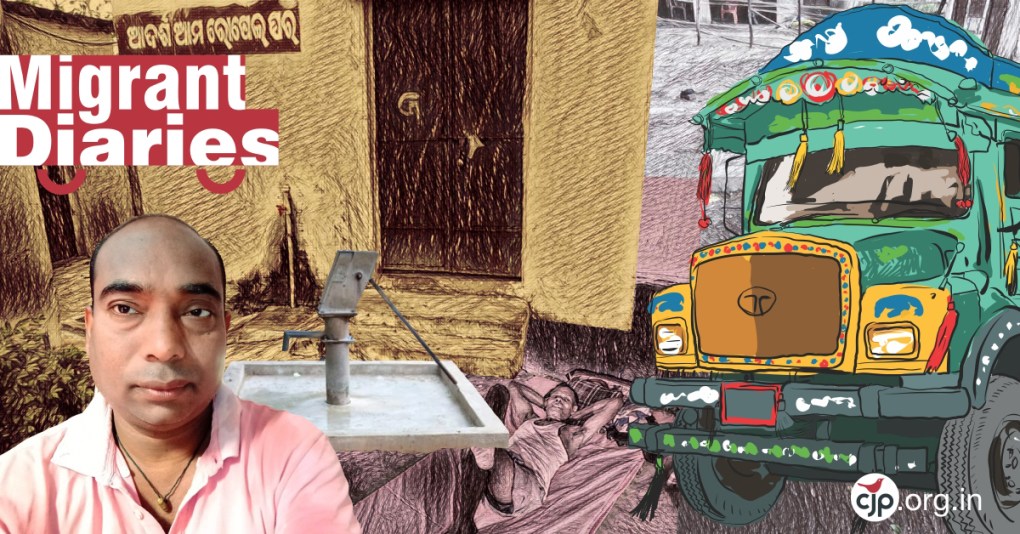
In April, Citizens for Justice and Peace (CJP) volunteers engaged in relief work all across Mumbai reached them and coordinated with the Mumbai City Collector to ensure urgent ration supplies to Dilip Rana and the other migrant workers from Odisha. But there was no scope of work restarting, with the lockdown being extended further, and 45-year-old Rana soon realised that it was best to return home to Odisha. However, his choice of transport was different than most. “It was getting very difficult for us to survive in Mumbai, so we decided to go back home, by truck. There were 50 people in the truck and we sat beside each other without any social distancing,” he remembers the desperation everyone was feeling, but there was no choice.
He is now back home in Tukla, Odisha and is now under quarantine. When CJP volunteers called to check on him, he was only too happy to chat with the people for whom he had developed a fondness. Rana is waiting for the end of quarantine when he can go back to his wife and three daughters. The eldest had completed class 10, but was forced to quit school after that, as the family could no longer afford it. That is perhaps his biggest regret. The second daughter goes to an Anganwadi and the youngest is only two-and-a-half years old. “My youngest daughter has some medical issues, doctors have said that once she is a teenager they will have to perform a surgery,” he says, already worried about that as well as the wellbeing of his ageing parents. “My parents also stay in Tukla, Odisha but they stay in a separate house,” he explains.
Initially, when the lockdown was announced, Rana, like other migrant workers also thought it would get over soon, and the government would have everything in control. “But, once the second lockdown was announced, the biggest concern for us was food supply, and I was also worried about my family because I was not with them and I knew Coronavirus was spreading fast.”
He remembers how CJP volunteers arranged ration kits twice, but that was also not sufficient for the group of 11 labourers. “So, I requested money from my wife. She sent Rs. 4,000 in April and Rs. 4,000 in May. When we had to leave Mumbai I needed more money and she was the only one I could reach out to. I needed Rs. 8,000, which she borrowed from someone on interest and sent to me,” he said.
Rana was also worried that he had not heard from the government if they had been given place in the Shramik Special trains being run by the Ministry of Railways. “We had even filled the emergency travel forms, hoping that our State and Central governments would make some arrangements for us to go back home. But even after 15 days after filling the forms, none of us got a call from the police station. Our money and rations were running out fast. I was scared of getting infected with Coronavirus, so I decided to go back home by whatever means of transport I get.”
The group of 11, decided to leave Mumbai in batches. “Five people left one night, and then the remaining six of us left the next day. We could not find any trucks leaving from Mumbai and the local police also stopped us at different points,” he said they had to escape like thieves. “We began hiding from them, and moved slowly and steadily until we reached the Mulund check post,” he recalls. It was then they heard truck owners shouting the names of their destinations.
“Some trucks were going to Nagpur, some to West Bengal and some to Odisha. So we hired one truck from Mulund check post, then we contacted the rest of the group who had left the night before and realised they have already reached Nashik, on foot!” Rana was shocked and said they were coming on a truck, to get them, “I told them that we have hired a truck, and we will soon reach Nashik and pick you guys up.” The truck owner had charged Rs. 4,500 from Mulund, and the group picked up from Nashik was charged Rs. 3500.
“During the journey our only concern was to reach home safely. I am thankful to the NGOs and all the people who gave us food, water, biscuits in Maharashtra and Madhya Pradesh. After Madhya Pradesh we ate food at our own expense from highway dhabas,” he recalled seeing a caravan of people returning home, “There were many trucks and buses full of people going back to their homes. We even saw some who were walking home. It took us two nights and three days to reach Orissa”.
He remembers that as the most unusual journey he had undertaken so far, “In the morning we used to freshen up at a river or pond, and after eating something resumed our journey. Around 1 PM we would stop for a quick lunch and drive on till 8 PM when we had dinner. At night we drove on till we found a safe place around midnight and took a break to sleep till 4.30 AM. This was our routine for three days.”
After reaching Odisha border, Karia Road the group was taken to the Police Station where their Aadhar Number, Mobile Number, Village Name was recorded and they underwent a medical screening before being sent to their respective villages by bus. They were put under quarantine at the Panchayat School. “My family visited me once, but they were not allowed to come close, so I told them not to come again,” said Rana adding that the quarantine center was not “that good” but he was grateful for the food, “We get three meals and bananas, which is more than I expected.” He, and the others, have already undergone the Covid-19 test, and the report is awaited. “Once the reports come negative, then we will be allowed to go home,” Rana is optimistic, even though he knows an uncertain financial future may unfold.
THE CONTAINMENT CENTER WHERE DILIP RANA WAS QUARANTINED UPON ARRIVAL IN ODISHAA HAND PUMP AT THE CONTAINMENT CENTER
The future seems too far away for now, he has bigger money problems even now. “From January to March there was no regular work anyway, and then the lockdown was suddenly announced. The boss gave me Rs. 1,000 only. Usually I earned Rs. 12000 to Rs. 14000 per month and I would send Rs. 8,000 back home to my wife. This lockdown has cost me the loss of Rs. 40,000 to Rs. 45,000 and add to that Rs. 16,000 which my family had sent me to survive in the lockdown,” his stress is obvious, “Will the government repay me the money I have lost due to the lockdown?”
“Now that I have reached my village and will soon be allowed to go home, my only request from the government is to at least repay our expenses, because we don’t know when we will start working again. It is very risky to go out now, and with no money it will be very difficult for us to survive. Whatever we had managed to save over the years my wife was forced to send me when I was in Mumbai, so the government should do some arrangements for the poor,” says Rana.
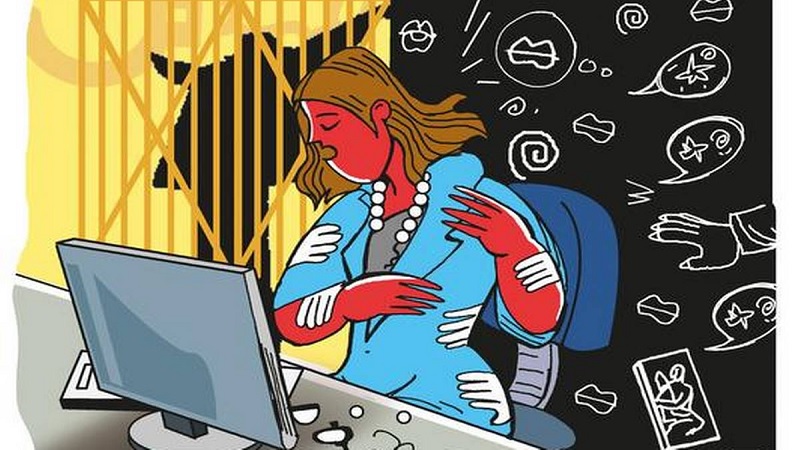
It is pertinent to point out that the rules and regulations that govern the company’s employees in the office work space as per the company policy including the application of the Sexual Harassment of Women at Workplace (Prevention, Prohibition and Redressal) Act, 2013 (hereinafter referred to as (the ‘Act’) would be extended to the Work From Home (WFH) scenario. The safeguards, protection and precautions need to be in place along with the process and procedure for escalation of the grievances and complaints of the employees through the Internal Committee (IC) of the company.
The definition of the word harassment doesn’t mean just an act with sexual overtones. It would also include to mean any act by a co-worker which makes the work space including virtual uncomfortable for the employee in question, whether it is with language, reference to religion, caste, regional differences, language, action or behaviour including but not limited to discrimination of all kinds. The virtual distance of the employees shouldn’t be a deterring factor for raising issues that fall under the Act and also for the company to act on the complaints raised. Under the Act, the workplace ( Section 2(o) ) is defined more in a manner of where one is employed rather than the actual physical place of employment. The presence of words “department”, “organisation”, “establishment” are examples of this. Violence and Harassment Convention, 2019 (in particular Article 3) (https://www.ilo.org/dyn/normlex/en/f?p=NORMLEXPUB:12100:0::NO::P12100_ILO_CODE:C190) gives a wider definition to the term ‘workplace’. The ‘employer centric’ , if one may say so, approach to the definition of ‘workplace’ under the Act often leads to issues with regard to the applicability of the Act to incidents of harassment in places which are not within the confines of a space used normally for work by an employer. Therefore, the concept of notional extension will come into play.
Examining the current scenario where ‘office’ has shifted from brick and mortar high rises to residences for millions across the world, the traditional meaning of ‘workplace’ has to be redefined. WFH, the latest acronym to join the lexicon of the millennials, has been followed by companies across the globe for some years now mainly to bring down cost, improve employee happiness or for scoring brownie points on reducing carbon emission. Covid -19 has made WFH the new norm. The important issues that needs to be considered in this new normal are:
a. The present framework with its limitations referred above and short of any legislative intervention, has enough play in its joints to adapt to the sudden shift that we are experiencing. Sexual harassment, misogyny, discrimination, inappropriate behaviour can all manifest in a virtual office and their definition would apply on all of us in a virtual office. Any form of biased, regressive or discriminatory behaviour would attract the same penal law as it would in an office space as is commonly understood. Apart from the provisions of the Act, such acts of inappropriate behaviour which would amount to harassment may also attract provisions of the IT Act, 2000. Thankfully there are some precedents that have shown the way in this regard. In the case of Saurabh Kumar Mallick Vs CAG ( MANU/DE 0956/2008), the Delhi High Court held that the expression ‘workplace’ is to be defined having regard to the objective with which the Vishakha Judgment was pronounced .Keeping in view the objective behind the said judgment, a narrow and pedantic approach cannot be taken in defining the term ‘workplace’ by confining the meaning to the commonly understood expression “office” that is a place where any person of the public could have access.
b. Having said that, the onus on monitoring and reporting the said discriminatory/harassing behaviour lies with the employee who is a victim and also the co-workers. All employees should be encouraged to report any incidents of harassment at virtual workplace to the HR or IC. There have been instances where the victim may feel helpless to bring forward the issues they may be facing or have faced. The system of checks and balances has to be in order. The managers who monitor the online meetings, digital communications and are privy to the conversation of the co-workers should be more vigilant. Any act, statement, action that puts a co-worker in an uncomfortable position particularly because of her gender, familial obligations amongst others would constitute as discrimination. Extra care should be given to note and observe the conduct of every employee to note any out of the ordinary behaviour or sudden lack of interest in the work or interaction with other co-workers.
c. The company also has to maintain an open-door policy regarding any grievances and complaints. All the protocols that were followed and observed during the regular working days in the office space should be followed during the WFH scenario too. All employees should be encouraged to approach the HR/IC in the event of any untoward incidents. There should not be any deviance from the standard operation procedures that would have been followed in the event of any complaint/grievance that would have been raised in similar circumstances when the offices would have been functioning before the WFH became a new normal.
d. In the case a complaint has been brought to the attention of the HR/IC, online interviews can be conducted. The confidentiality of the victim statements and evidence collected should be maintained at all times. All statements can be signed off virtually. All evidence can be collated and filed using an online medium. All process(s) that would be followed should be followed without any lacunae or in any manner that would adversely affect the victim’s case. Both the parties should be given a fair and unbiased forum to present their case. The IC should be involved from the initial stage.
e. All women employees also have recourse to file a complaint through She-Box. It is an effort by the Government of India to provide a single window access to every woman, irrespective of her work status, whether working in organised or unorganised, private or public sector, to facilitate the registration of complaint related to sexual harassment under the Act. Once a complaint is submitted to the ‘She-Box’, it will be directly sent to the concerned authority having jurisdiction to take action into the matter. More information can be found at http://www.shebox.nic.in/user/about_shebox.
To sum it up, the HR/IC should communicate clear and distinct policies, rules and regulations against harassment and discriminatory behaviour. These kinds of behaviour should be clearly termed as prohibitory behaviour. The virtual workspace should be a safe workspace for the employees. The assumption that an employee working out of their homes are in a safe space would be an erroneous one. The role of the IC/HR shouldn’t just be for redressal but also preventive. A constant re-affirmation of the company’s policies on harassment should be sent across to all employees and a no tolerance stand should be taken. An awareness and sensitisation guidance session or webinar should be conducted with all employees concerned. Protection of employees from all forms of harassment and discrimination is the duty of the Companies. Nulla Excusatio Estne Officium Tuum Exsequaris
Divya Nair, is an advocate working in Delhi. A graduate of University of Kerala, she began her career as a junior litigating lawyer in the Supreme Court and later moved on as in-house legal counsel to a media house based in Delhi. She is currently practising law in Delhi. She can be reached at divyainhere@gmail.com.
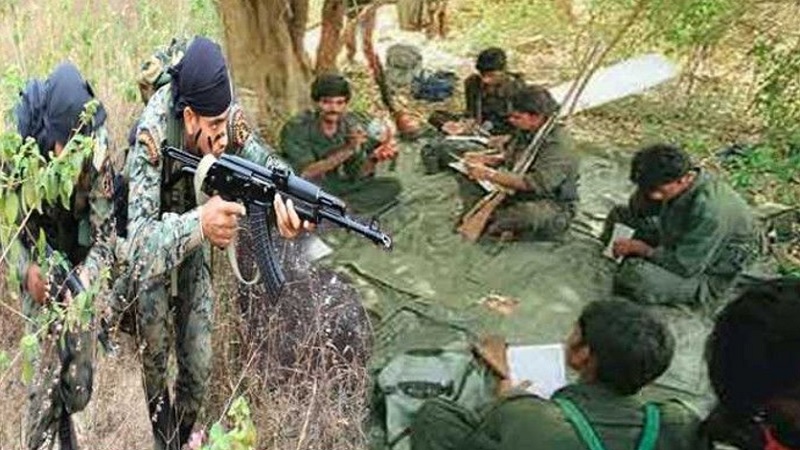
Under the Surrender and Resettlement policy, Jharkhand Chief Minister Hemant Soren has approved the proposal to release grants to twelve naxals of the CPI (Maoist) and two rebels of another banned outfit who have shunned violence and surrendered to the police, the Hindustan Times reported.
According to the official statement by the Chief Minister’s Office, Nakul Yadav, the CPI (Maoist)’s regional committee member from the Chatra district and the zonal commander of the banned Jharkhand Janmukti Parishad, Rajendra Oraon of Gumla district will get Rs. 4 lakh each and 11 other former perpetrators will get Rs. 2 lakh each.
The state government has also announced an ex-gratia of varying amounts to eight CRPF personnel who were injured in an encounter with Maoists in Latehar in 2013. The CRPF personnel were injured during a search operation in Latehar’s Barwadih police area. Out of these, 5 jawans will get Rs. 1.50 lakh each, 2 jawans will get Rs. 1 lakh each and the remaining jawan will get Rs. 50,000.
Earlier this month, National Herald reported that the one of the most dreaded Naxal commanders operating in the Khunti and Bundu areas, Kundan Pahan who is accused of killing former minister Ramesh Singh Munda and two other commanders have been offered four lakhs by the Jharkhand government.
The Hitavada reported that in June, seven naxals, including a woman who were frustrated with the hollow ideology of the Maoists and impressed with the Surrender and Rehabilitation policy of the Government, surrendered in Chhattisgarh’s Sukma district in the presence of 219 CRPF personnel.
In April, two surrendered naxals, Lakkha and Vekko from Chhatisgarh’s Sukma district made masks for the locals and police personnel. Lakkha had surrendered in August 2019 and Vekko had quit in 2018.
Under the guidelines for surrender-cum-rehabilitation of naxalites in naxal affected states by the Ministry of Home Affairs, persons eligible may be imparted training in a trade / vocation of their liking. They shall be paid a monthly stipend of Rs. 2,000 for a minimum period of 36 months. Also, the guidelines call for an immediate grant of Rs. 1.5 lakh to be kept in a bank in the name of the surrenderee as a fixed deposit which can be withdrawn by him/her after 3 years. Apart from this the guidelines stated that In the event of a surrenderee being able to secure any Government job, this amount shall not be given to the surrenderee. The guidelines also make provisions for payments for surrendered weapons and ammunition.
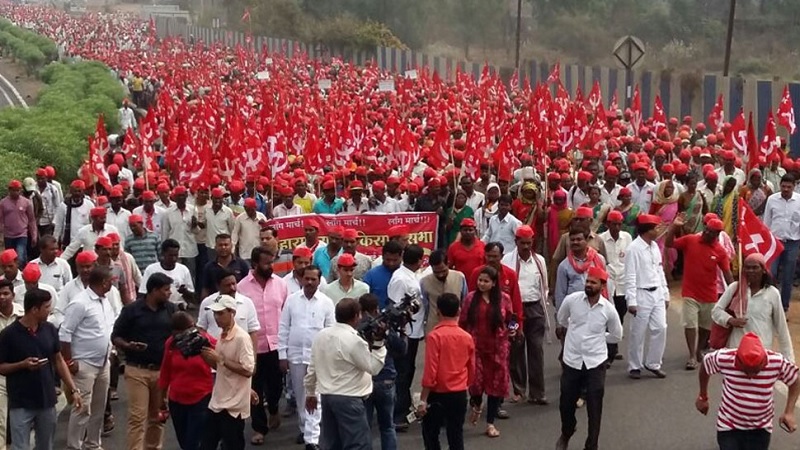
On August 9, Quit India movement day the All India Kisan Sabha (AIKS), All India Agricultural Workers’ Union (AIAWU) and Centre of Indian Trade Unions (CITU) will lead a nationwide mass movement of farmers and workers. They will gather and demand health, food, income and employment for all farmers, farm workers, migrant workers, labourers.
The organisations have demanded that the government give the farmers and workers across India, access to free universal healthcare, including Covid-19 tests and treatment if required. As workers and farmers have been the worst hit by the Covid-19 lockdown, the unions have demanded that each person be given 10kg free food grains per month, for at least the next six months. A crucial demand, which had been recommended by leading economists too, was to put money in the pockets of the marginalised to restart the stalled economy. The trade unions ask that the government pay Rs.7500 per month for all non tax- paying families, for next six months.
As lakhs of migrant workers have been rendered homeless, and are under great financial stress even as they have returned home, the CITU, AIKS and AIAWU have also raised their voices. According to Hannan Mollah, General Secretary AIKS, the unions have demanded that these workers be given “200 days of work” under the Mahatma Gandhi National Employment Guarantee Act 2005 (MGNREGA) “at the rate of Rs 600 as wages per day, or an unemployment allowance.”
“It was the sudden lockdown that forced factories to shut, and the workers were out of their jobs,” said the union leaders. A major demand, said Mollah, that has already been voiced but still needs to be reiterated is to seek that the government rescind the recently passed Ordinances, that have done away with many labour welfare laws, as well as executive orders on Essential Commodities, Farm Trade, and Electricity Act.
To ensure that these demands are heard, and met, the union leadership has announced that they are launching multiple campaigns in the coming months.Some rural campaigns are already underway at villages across the country, said Tapan Sen General Secretary, CITU, they will culminate at a sub-divisional level mobilisation July 23.And that will be a curtain raiser to a national level demonstration on August 9.
According to the farmer, worker, and trade union leadership, they may also consider going to court against the various Ordinances that have been passed during the lockdown. “The issue must also be discussed in Parliament,” said Tapan Sen. “These are anti farmers and will benefit the corporates only. The farmer will be reduced to being slaves on their own land,” added Hannan Mollah, “families will become slaves.” He added that these ordinances will only benefit big corporate houses, and hoarders.
The farmer, and worker unions have said the government has used the lockdown to make a shift in the agricultural economy, to benefit corporates and landlords, and “depriving the producers,” the real wealth creators. The government, they alleged, have “finished off self reliance” and undone 70 years of work that was behind earning all the rights for labourers and workers of India.
With the lockdown creating a situation of reverse migration, there has been a rise in “acute unemployment, deepening absolute poverty and total lack of health facilities,” in the rural areas of the country. “Only the Kerala model has worked,” said B Venkat, General secretary of AIAWU. The union leaders said there isa need to “step up combative countrywide united struggles against the anti-people, anti-farmer, anti-worker neoliberal policy regime.”
“We have to defy, resist, combat,” said Tapan Sen, “we have to do a massive mobilisation.”
“We will strive to develop massive joint struggles of the trade unions, peasant organisations and organisations of various class mass and social organisations against these anti-national policies in the coming days,” stated the trade unions in a signed statement. The AIKS and AIAWU will also support the calls given by CTUs, to observe a day of protest on July 3. This protest will be one of “non cooperation and defiance”.
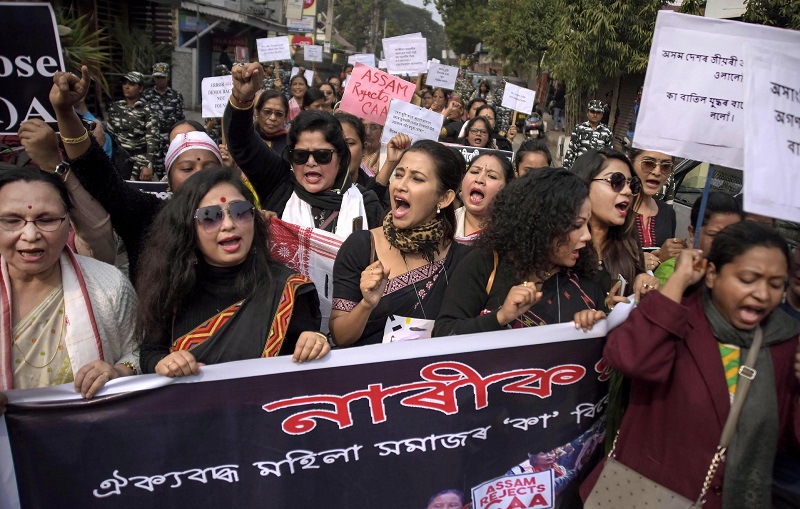
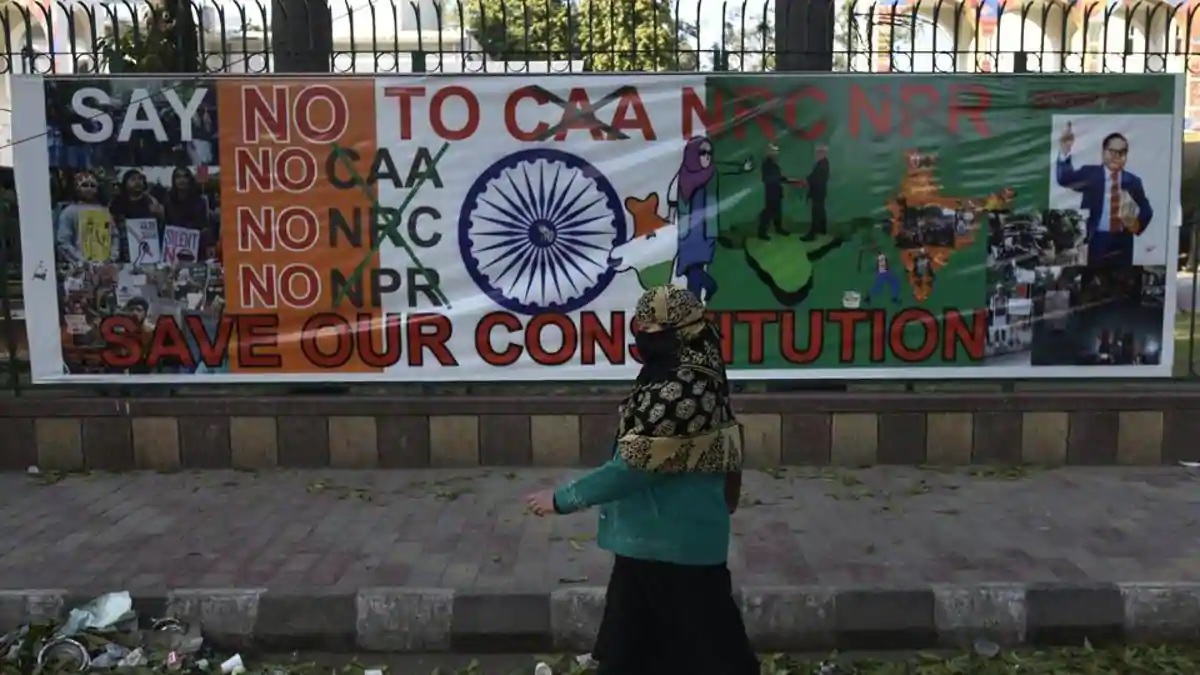
In what seems a continued effort to undermine the importance of the anti-Citizenship Amendment Act (CAA) protests, the Assam Police have sent around 33 anti-CAA protestors belonging to the Krishak Mukti Sangram Samiti (KMSS) to 14 days’ home quarantine for allegedly violating corona-induced lockdown norms over the first 24 hours, The Telegraph reported.
This has led to the anti-CAA brigade decrying the move alleging that the government was trying to derail anti-CAA protests. Shahjahan Ali, KMSS adviser told TT that they have responded by filing an FIR at the in-charge of the Palashbari police station for their unfair action. He also said that they have asked the district administration to quarantine the police station as they had come in contact with the protestors when officials had physically assaulted them. KMSS has also decided to move the Assam Human Rights Commission against the police action.
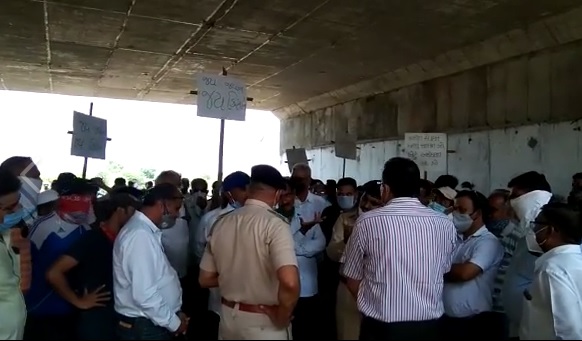
On Monday, June 8, around 13 members from KMSS were asked to home quarantine in Kamrup district under the Palashbari Police station and on Tuesday, June 9, 22 KMSS members were first detained at the Morigaon police station, asked to undergo a medical examination and then placed under home quarantine.
Morigaon SP Swapneel Deka told The Telegraph that the KMSS members didn’t have permission to stage the protest and were in violation of Section 144. However, senior KMSS leader Mukut Deka said that they had staged the protests seeking the release of four KMSS leaders – Akhil Gogoi, Dhaijya Konwar, Bittu Sonowal and Manash Konwar, keeping social distancing in mind. Ali and Deka, both said that the government was trying to impose on them by going after protestors and student activists and not understanding the sentiments of the people. They added that the government was trying to “finish the KMSS” and that it was “scared of KMSS which is not afraid to speak up against the government”.
Dr. Hiren Gohain, the President of Coordination Committee of the anti-CAA organizations who is also under home quarantine told TT that the police action smacks of highhandedness. He said, “Everybody has the right to protest democratically and peacefully by adhering to social distancing norms.”
Akhil Gogoi, Dhaijya Konwar and Bittu Sonowal have been incarcerated under the Unlawful Activities Prevention Act (UAPA) since December 2019. Earlier this month, KMSS leaders had condemned the National Investigation Agency’s (NIA) effort to establish that they were guided by a Maoist ideology. They said that the chargesheet made against the KMSS leaders had no basis and only attributed charges based on books read and words like ‘Laal Salaam’ and ‘Comrade’ being used by them.
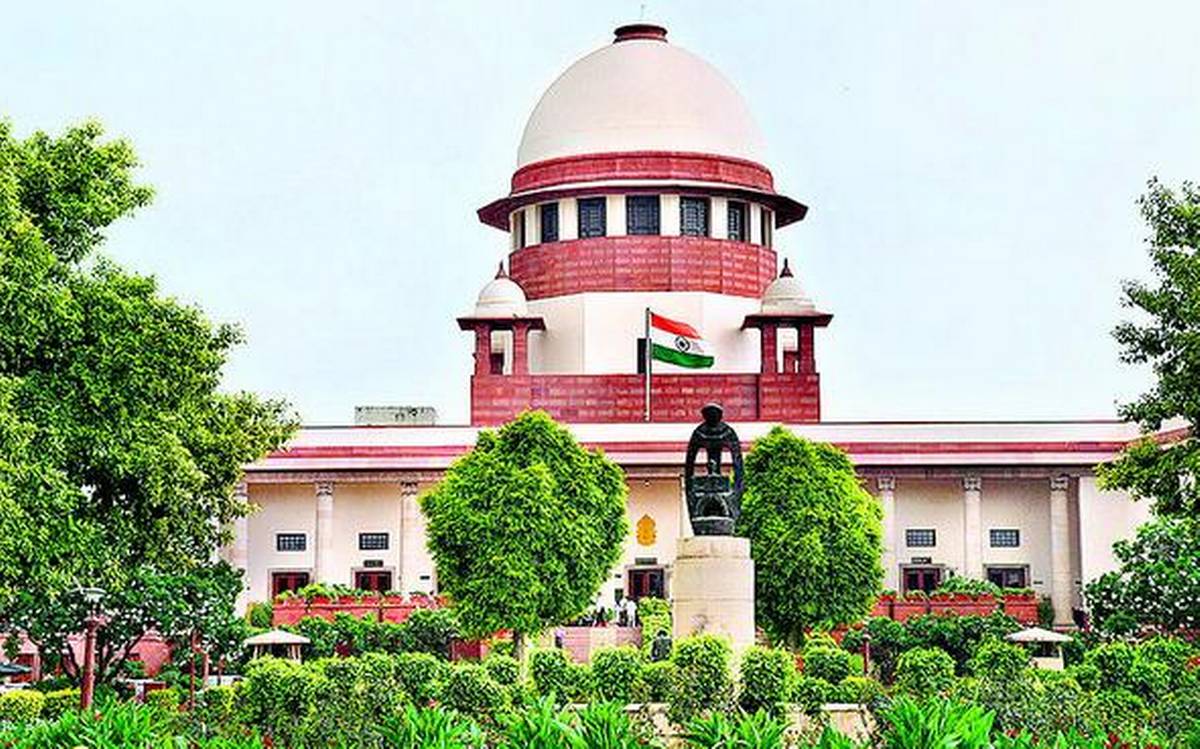
The Supreme Court has issued directions to effectuate negotiations between industry/company and workers on the issue of full payment of wages. The court said that the negotiations should be carried out without considering the MHA notification dated March 29. Many private establishments had approached the court questioning the validity of this order and highlighted how this adversely affects their business.
A notification issued by Ministry of Home Affairs, on March 29 had directed that “All the employers, be it in the industry or in the shops and commercial establishments, shall make payment of wages of their workers, at their workplaces, on the due date, without any deduction, for the period their establishments are under closure during lockdown period.”
The Supreme Court combined together all petitions filed by private establishments against the March 29 MHA order directing full payment of wages. On June 4, the court had passed interim directions that no coercive action be taken against private establishments if they failed to comply with the order.
On June 12, the bench comprising Justices Ashok Bhushan, SK Kaul and MR Shah found negotiation to be an effective measure, “No industry can survive without workers. Thus, employers and employee need to negotiate and settle among themselves. If they are not able to settle it among themselves, they need to approach the concerned labour authorities to sort the issues out.”
The bench also issued the following directions:
1. A date for conciliation and settlement may be effectuated by the MHA.
2. Directions for participation of employees for effectuating this settlement may be publicised for the benefit of all employers and workers
3. State governments to facilitate such settlements and initiate the process for the same and submit reports before the concerned labour commissioners.
4. Workers who are willing to work should be allowed to work notwithstanding disputes regarding wages.
The bench has directed the Centre and states to circulate this order through their labour departments in order to facilitate settlements.
At the last hearing, Attorney General (AG), KK Venugopal had defended the MHA notification saying that the intention behind the notification was to ensure that the migrant workers stay put in their migrated locations to prevent their movement to their native states or cities.
Counsels appearing for petitioners had argued that the MHA direction insisting payment of full wages was unfair to them and argued that there is a need of proportionality and that it was the government’s responsibility to mitigate workers issues in such crisis.
This order ceased to operate from May 18, as a notification dated May 17 stated, “Whereas, save as otherwise provided in the guidelines annexed to this Order, all orders issued by NEC under Section 2(10)(I) of the Disaster Management Act, 2005 shall cease to have effect from 18.05.2020.”
The case will be heard in last week of July and until then the interim protection against coercive action granted to private establishments shall remain in operation.
The story will be updated once the court order is available.