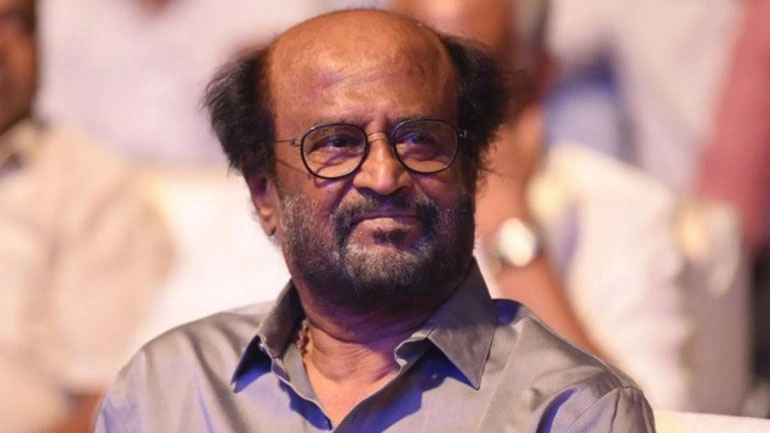
A Chennai court on Tuesday dismissed a petition filed by Dravidar Viduthalai Kazhagam, a fringe outfit, seeking criminal case against film actor turned politician, Rajnikanth for his remarks on rationalist leader Ramasamy Periyar. During the golden jubilee celebrations of Thuglak magazine on January 14, Rajnikanth gave a speech about Periyar’s denigration of Hindu gods in an anti-superstition rally held in Salem in 1971 by Thanthai Periyar.
The court deemed the case to be “at best defamatory” rather than police case as was being sought by the petitioner. The petitioner had sought charges under sections 153A [Promoting enmity between different groups on grounds of religion, race, place of birth, residence, language, etc., and doing acts prejudicial to maintenance of harmony], 504 [Intentional insult with intent to provoke breach of the peace] and 505 [Statements conducing to public mischief] of the Indian Penal Code (IPC) to be invoked against Rajnikanth. As per the petitioner, Rajnikanth made “false and fraudulent statements insulting Dravidhiyan ideologists with intention to provoke breach of public peace, by promoting enmity and hatred among the public of Tamil Nadu, in the name of religion, only to score political mileage and gather support from particular community”.
The Court, however, after hearing the speech delivered by Rajnikanth deemed that “he has stated what he thought was a fact, about a rally held in Salem in 1971, by Thanthai Periyar, and which according to him was also published in the Thuglak weekly magazine of that period…. the speech of actor Mr. Rajinikanth, is at best defamatory. The offence u/s. 499 r/w 500 IPC alone appears to be made out. The said offence is non-cognizable, and maintainable as private complaint. In the circumstance, on the discussion supra, this court finds that no grounds are made out for concluding offences u/s. 153A, 504 and 505 IPC are attracted, and the petitioner can file private complaint for defamation, damages, and compensation, if so advised.”
The petitioner, is reportedly set to file an appeal against this order.
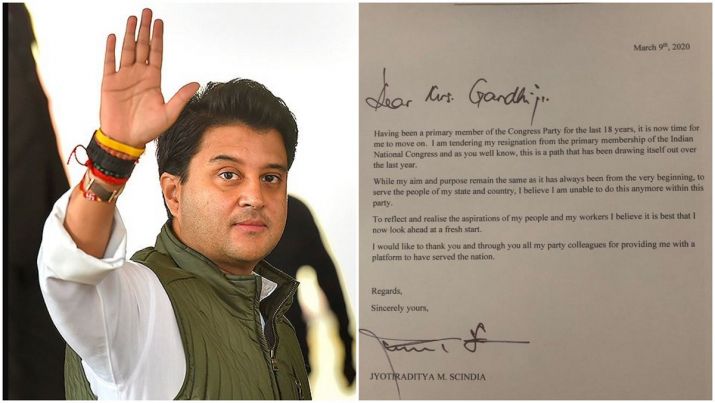
On Tuesday, March 10, Congress’s blue-eyed boy Jyotiraditya Scindia appeared to have changed colours abruptly on the occasion of Holi. Shortly after a meeting with Prime Minister Narendra Modi and Union Home Minister Amit Shah, Scindia a four time Member of Parliament from Madhya Pradesh’s Guna constituency, posted a picture of his letter of resignation from India’s grand old party on Twitter sending political circles and the media into a tizzy.
But it wasn’t just Scindia who exited the Congress. 22 MLAs said to be loyal to him also resigned from the state government, sending the Kamal Nath led establishment into damage control mode to check the hemorrhage. The 230 member MP assembly had 114 Congress MLAs as opposed to 107 of the BJP. Now, the Congress has lost its majority and has sent its MLAs into hiding to prevent them from being wooed by the other side.
Amidst this, a video was posted by Dr Anand Rai, who had previously exposed the Vyapam scam, showing alleged ‘horse-trading’ by the BJP. Dr Rai claims the video is of a ‘sting operation’ where BJP leader Narottam Mishra is offering Rs 100 crores and a ministerial birth to MLAs in exchange for toppling the Kamal Nath government.
SabrangIndia has not been able to independently verify the authenticity of the video. Meanwhile, Rai told PTI, “This video was shot at a room in the Madhya Pradesh Bhavan located in Chanakyapuri area of Delhi which was recorded with an spy camera during my meeting with BJP leader Narottam Mishra last year.” This suggests that the alleged conspiracy to overthrow the Congress government in MP had been afoot for a while. However, state BJP spokesperson Umesh Sharma has dismissed the video as “fake and misleading.”
The timing of Scindia’s exit and Rai’s video is also curious given the upcoming Rajya Sabha elections in the state. It is noteworthy that Scindia who hails from the erstwhile royal family in the state and has often played a key role in securing victory for the Congress Party was rather publicly snubbed by the party when Chief Ministership of the state was handed over to Kamal Nath and not Scindia after the 2018 legislative assembly elections. Then in 2019, Scindia lost from Guna for the first time to BJP’s KP Yadav in the Lok Sabha elections. Moreover, hawk eyed media watchers had also noticed how Scindia had changed his Twitter bio to just “Public servant, cricket enthusiast” instead of one containing any information on allegiance to or position in the Congress party last year.
Word is that Scindia will join the BJP officially at 12:30 on March 11. Meanwhile, India Today reports that, “Congress has booked 42 of the 52 rooms at Buena Vista Resort in Jaipur for its 92 MLAs. The other rooms may also likely to be taken over by the Congress party in a while. This is the same hotel where Maharashtra Congress MLAs were lodged during the crisis over government formation in the state last year.”
Following in the footsteps of Seattle City council, which unanimously passed a motion against the discriminatory citizenship law adopted by India, a councillor in New Westminster has made a similar move.
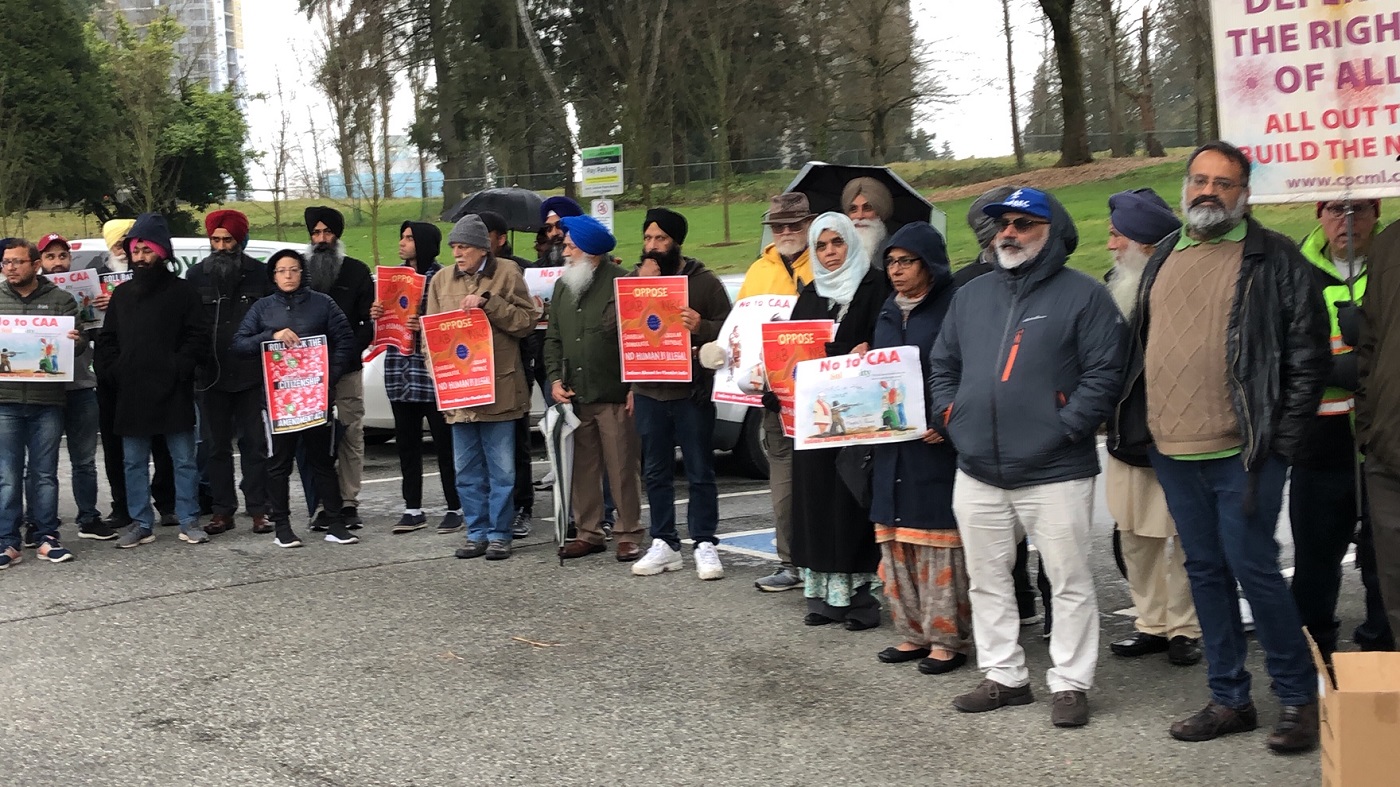
On Monday, March 9, Chuck Puchmayr, who is vocal on social justice and human rights, tabled a motion calling for the scrapping of Citizenship Amendment Act (CAA) amidst a tense atmosphere inside the council chamber. The motion also urges the Canadian government to intervene.
The right wing Hindutva nationalist Bhartiya Janata Party (BJP) government in India recently passed CAA, which discriminates against Muslim refugees coming from neighbouring countries, including Pakistan, Afghanistan and Bangladesh, on the pretext of giving shelter to non-Muslims facing religious persecution in those places. This had stirred angry protests in India and Canada. More than 50 people have died in New Delhi alone during violence. Most of the dead were Muslims who were systematically targeted by the supporters of BJP with active help of the police.
The motion clearly says that the city of New Westminster which is one of the most multicultural cities in North America “raises concerns with the Government of India’s December 11, 2019 passing of the Citizenship Amendment Act which clearly discriminates against Muslims and has sparked fatal attacks on Muslims inside India.”
The motion is yet to be passed and is scheduled for debate on March 30.
Both the supporters and opponents of the CAA were present inside the council chamber, and there were heated exchanges between the two sides outside before the meeting started. The opponents of CAA outnumbered the people on the opposite side and had lined up more speakers. A significant number of Muslims came out to show their support for the motion.
Puchmayr faced lot of pushback from pro BJP activists. However, he ended up moving the motion that needs majority vote to pass.
In the meantime, a move to bring another anti-CAA motion in Vancouver city council has fizzled out. Brought by Councillor Jean Swanson, it received backlash from pro India lobby. In the absence of any potential support from within the council she has now withdrawn it.
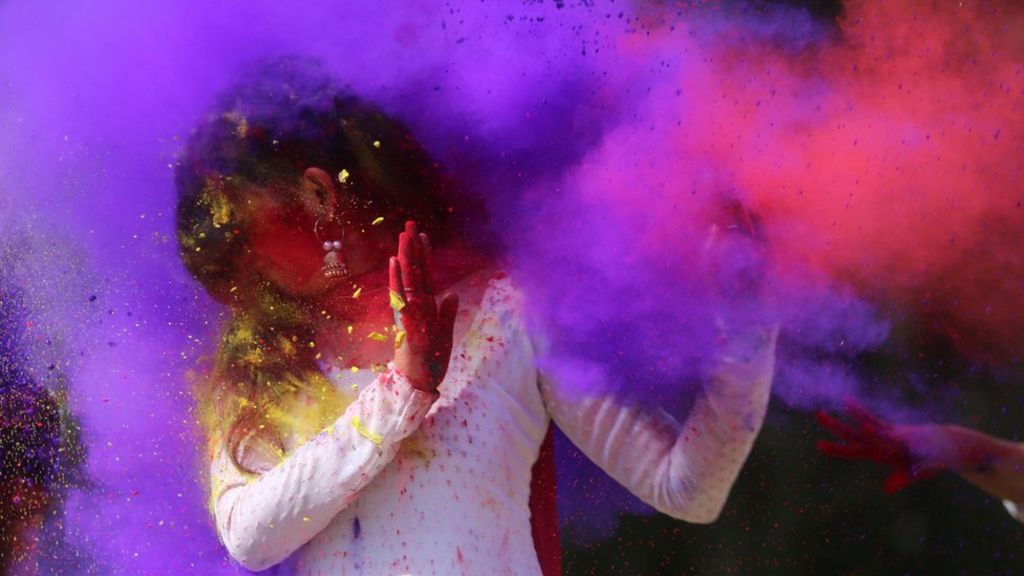
The festival of colors, Holi is here and soon all over one message is set to boom across – ‘Bura na maano, Holi hai (It’s Holi, take no offense).” However, we have been slow to realize what a travesty of consent the above slogan is. Starting by being normalized through Bollywood, the idea of a woman’s consent washed off faster that the color on her. From then to now has come such a time that this festival is now been given a communal colour by the right-wing saffron brigade.
We tell you why the celebration of Holi in its current form is a threat to women throughout India.
For decades, the slogan, “Bura na maano Holi hai”, is being seen as a free pass by some to take advantage of women. They see it as a free pass to touch women inappropriately, either forcefully smearing color on them by approaching them on roads or aiming balloons with ingredients apart from water, at their breasts and genitals. It is during this celebration – one that signifies good over evil – that women have reported being groped, molested and in some cases, raped by men. In 2018, in New Delhi, a woman was pelted with semen filled balloons on her way home, reported PAPERMAG. In a 2018, Guardian repor, a young woman was attacked by a group of men on the day of the festival, but she was casually dismissed by a policeman on complaining saying they couldn’t do anything about it. A 1996 report by Delhi University on sexual harassment showed how instances of sexual assault peaked during Holi, with 60.5% women on campus telling of aggravated violence on the day of the festival. In 2016, the Delhi Police’s control room received 21 calls complaining of rape and molestation, including three rape cases that were reported by minors on the festival.
To top it all, this normalization of not seeking consent, has seeped in from Bollywood. Writing about women’s chunaris (stoles) and cholis (blouses), Bollywood, through its song, dance and music slyly shoved in close up shots of women’s wet bosoms in songs with heroes like Rajesh Khanna singing, “Chaahe bheege terei chunariya, chaahe bheege re choli, khelenge hum holi” and Priyanka Chopra singing to her own husband Akshay Kumar in Waqt, “Jaa re jaa, don’t touch my choli. Uff ye holi”.
Another reflection of a man taking pleasure from a woman’s harassment on Holi comes through this song from Mohabbatein, where the lyrics say –
Soni soni akhiyon wali Dil de jaa ya de jaa tu gaali Ja Kudiye jo kar le Gora badan tera rang diya (O one with the beautiful eyes, Either give me your heart or give me abuses, Go do whatever you can, I have coloured your fair body.)
Another song from the 90s, Ang se Ang Lagana, went something like this –
Rapat likhaado rapat likhaado thane meh Hum bhar denge jurmaana Ang se ang lagana Sajan humein aise rang lagana (File the FIR, file the FIR, I’ll go to the station to pay the fine, Touch every part of my body with yours, O beloved, colour me thus.)
In all these songs, women are objectified and aggressive male sexuality is on display with the man picking the woman up without her will or overpowering her in some other way. Writing for Feminism in India, Shrishti Malhotra mentions that most of the songs begin with the male actor dancing and coloured, while women actors making their entry completely free of colour. If playing with colours is symbolic of people freely enjoying their sexuality and not being coloured symbolises sexual control, then these songs portray men as having no sexual control – for this control is irrelevant. However, for the sake of their individual and societal ‘honour’, women have to be careful about that control, relinquishing it when pushed to the brink by the leading men’s harassment misrepresented as charm.
And now, given the current atmosphere in the country, the saffron brigade, mostly from the Hindi belt in Uttar Pradesh and Bihar have started to give the festival a communal colour.
One such example is the rampant dissemination of a song by Sandeep Acharya who calls himself to be Hinduvadi. His song targets Muslim women saying even if you come out on the streets with your brother, we will forcibly smear colour on you.
The song has spread like wildfire on popular social media apps like TikTok and Facebook with sexist and misogynistic captions.
Many Muslims in India don’t play Holi by choice. Not just Muslims, even practicing Catholic nuns, Jain Sadhvis and Khalsa Sikhs don’t celebrate the festival. Practicing Muslims who are in their religious attire which is worn for prayers don’t play holi because having clean clothes and clean body is precondition for Namaz.
In 2019, when the brand Surf Excel came out with an advertisement promoting the sentiment ‘Rang Laaye Sang’ (colours bring us together), by depicting a Hindu girl cleverly getting her friends to douse her in colours so that her Muslim friend could safely go for namaz, Hindutva supporters slashed the ad for promoting ‘love jihad’. People are still talking about it in 2020.
#BoycottRedlabel All ads of @HUL_News are portraying Mullahs in Good and Hindus in Bad light 1. Redlabel tea ad of Neighborhood mullah 2. Surf Excel Holi Ad 3. Kumbh mela ad 4. Latest in thr coffin is Ganesha ad Let’s make sure Unilever is forced to pack thr business
#SpareHinduFestivals Remember the anti hindu surf excel ad on Holi last year…Tolerate no such nonsense any more. Raise your voice NOW. Let no one defile our traditions.#SpareHinduFestivals
The current call of smearing colour on burqa clad women without their consent is just a regressive fantasy of some who wish to impose their power and supremacy on minorities and women.
The result of such a campaign is that though being visually wrong, it is being spread among people who innocently forward it as a step towards communal harmony, without understanding the actual intention behind it.
Forcibly touching anyone without their consent is criminal. Holi is not an excuse for sexual abuse. The licentious behavior by men is the curse of the society. With this thought turning communal in nature and no one to check its spread, it will result in social destruction that will be beyond control and ruin the psyche of the nation.
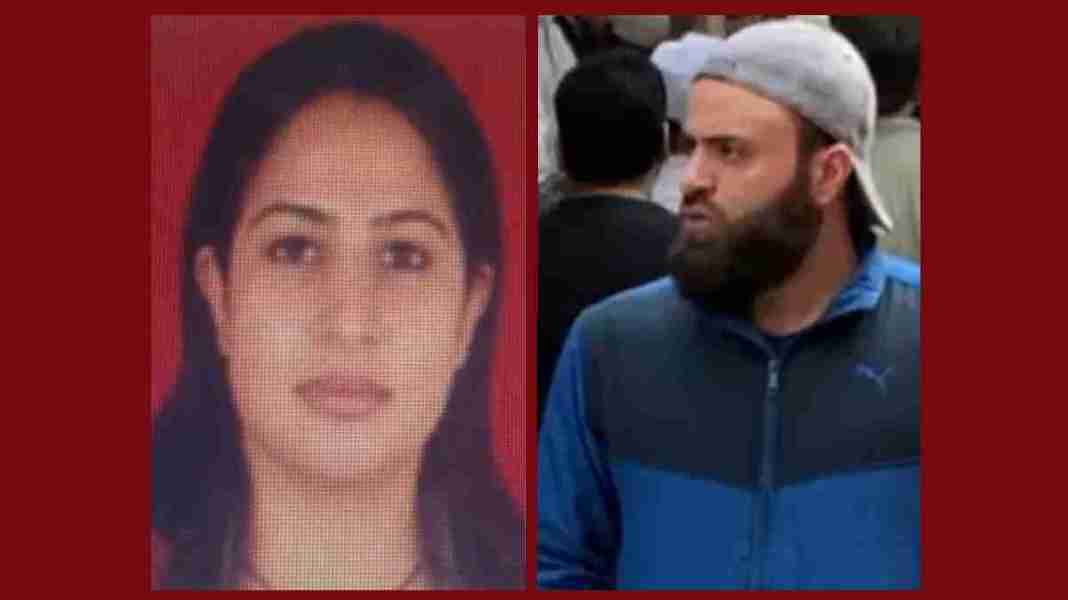
A couple with alleged links to the Islamic State (IS) has been arrested from the Okhla area in Delhi. Police have identified the duo as Jahanjeb Sami (36) and Hina Bashir Beg (39), and say that they are linked to the Khorasan module of IS.
The arrests were made early on Sunday morning and a lot of literature allegedly related to ‘jehad’ has been recovered from the duo. Police also seized four mobile phones, one laptop and one external hard drive from them and are currently scanning the devices for more information on other members of the module. An FIR has been registered against both at Jamia Nagar police station.
DCP (Special Cell) Pramod Singh Kushwah told Indian Express that the couple hails from Srinagar’s Shivpora and that they “have links with the Khorasan module of IS (ISKP)”. Police also accused Sami, who works with a private firm and has experience in web design, of helping publish the February edition of IS magazine Sawt al Hind (Voice of India), adding “further evidence is being gathered”. Kushwah added, “They were propagating the banned terrorist outfit’s ideology of hatred against non-Muslims… They were also inciting Muslims to take up a violent struggle against the State, and against the CAA.” He also said, “During interrogation, it was found that the couple had created several anonymous IDs on social media platforms such as Telegram, Facebook, Threema, Surespot, Instagram and Twitter.”
The couple were allegedly instigating protests against the Citizenship Amendment Act (CAA) and it is this element that can have problematic implications for civil society groups and individuals belonging to the minority community. As it is minorities have borne a disproportionate brunt of the violence that spread across Delhi from February 23, 2020. Then there is the element of ‘othering’ and constant ‘dehumanisation’ using terms like ‘termites’ and ‘infiltrators’ by some of the most powerful political leaders and ministers in the country. This has already led to widespread alienation of minorities, now to accuse someone of ‘IS links’ for allegedly instigating anti-CAA protests might be perceived as an act of harassment and even persecution by members of already distressed communities.
In a huge relief to non-government organisations working in the field of human rights and social welfare, the Supreme Court has ruled that as long as they are not affiliated to any political party, these organisations are not barred from seeking funding from international sources in terms of the Foreign Contribution (Regulation) Act (FCRA) 2010 and Rules made thereunder.
According to section 3 (1) (f) of the FCRA 2010, “No foreign contribution shall be accepted by any organisation of a political nature.” Rule 3 of FCRA Rules 2011 laid down norms for declaring an organization. Their validity was challenged by the petitioner Indian Social Action Forum (INSAF) in the SC. Rules (v) and (vi) were found to be particularly problematic by NGOs as they state that: “The Central Government may specify any organisation as organisation of political nature on one or more of the following grounds:-
(v) organisation of farmers, workers, students, youth based on caste, community, religion, language or otherwise, which is not directly aligned to any political party, but whose objectives, as stated in the Memorandum of Association, or activities gathered through other material evidence, include steps towards advancement of political interests of such groups;
(vi) any organisation, by whatever name called, which habitually engages itself in or employs common methods of political action like ‘bandh’ or ‘hartal’, ‘rasta roko’, ‘rail roko’ or ‘jail bharo’ in support of public causes.”
This was hugely problematic as NGOs often express dissent by organizing public gatherings and peaceful protests. Moreover, it gave the central government a wide range of ambiguous rights. In fact, many NGOs have alleged harassment at the hands of the government. Vindictive regimes are known to have withdrawn FCRA licenses of organisations that they perceive as a threat to their agenda.
Now, a division bench comprising Justices L Nageshwar Rao and Deepak Gupta, has read down rule 3 (v) and 3 (vi). The SC said in its judgment, “A balance has to be drawn between the object that is sought to be achieved by the legislation and the rights of the voluntary organisations to have access to foreign funds.” It added, “… those voluntary organisations which have absolutely no connection with either party politics or active politics cannot be denied access to foreign contributions.”
The judgment further said, “Support to public causes by resorting to legitimate means of dissent like bandh, hartal etc. cannot deprive an organisation of its legitimate right of receiving foreign contribution. It is clear from the provision itself that bandh, hartal, rasta roko etc., are treated as common methods of political action. Any organisation which supports the cause of a group of citizens agitating for their rights without a political goal or objective cannot be penalized by being declared as an organisation of a political nature.”
The entire judgment may be read here:
Sabrang FCRA case
As mentioned earlier, vindictive regimes are known to have penalised organisations that threaten their agenda. Sabrang Trust has been in the eye of the storm in a similar case. Co-founded by journalists and activists Teesta Setalvad and Javed Anand, Sabrang has been at the forefront of exposing divisive politics and communal agenda of the right-wing supremacist organisations as well as their members and sympathisers in the ruling regime.
While Sabrang’s previous publication Communalism Combat exposed the ugly truth behind communal riots in Mumbai, and bomb blasts in Malegaon among other instances of targeted violence, Setalvad and Anand’s work has not been limited to just the printed word.
Forged in the fires that ravaged Gujarat in the aftermath of the Godhra train burning incident in February 2002, Citizens for Justice and Peace, a humanitarian organisation, spearheaded the quest for justice for riot affected people by holding the top brass of the Gujarat state government, administration and police accountable. Teesta Setalvad is the secretary of CJP and has spent years helping survivors of the violence get justice in the courts and beyond.
A vindictive regime started hounding Setalvad and Anand, and when they failed to arrest the duo on trumped up charges, they launched a witch hunt using provisions of the FCRA 2010. In 2015, writing to the MHA, now under the same political dispensation that was in power in Gujarat during the genocidal carnage of 2002, the Gujarat Police goaded them into an investigation under the Foreign Contribution Regulation Act (FCRA) against all three organisations run by the couple, viz. Sabrang Trust, Citizens for Justice and Peace (CJP) and Sabrang Communications.
For one whole week in June 2015, all the aforementioned organisations cooperated fully with the MHA, answered all queries and submitted all documents for scrutiny. The organisations also pointed out the malicious nature of the various cases foisted upon them. They also pointed out linkages between the powerful perpetrators of the riots and the chief complainant in each case, a disgruntled former employee.
Within weeks of this MHA visit, there were rumours in the media, that despite satisfying all requirements of investigation agencies, another case could be initiated by the CBI against one of the organisations. Setalvad and Anand wrote to the CBI offering full cooperation. Despite this the CBI conducted raids on the properties of the organisations.
Both, Setalvad and Anand have been forced to run from pillar to post to seek anticipatory bail multiple times, despite fully cooperating with police investigations and making all documents available for scrutiny on each occasion.
On the subject of the landmark judgment, CJP secretary Teesta Setalvad said,
“The judgement of the Supreme Court is a welcome interpretation of a grossly misused law. Today, political parties have given themselves complete impunity from financial scrutiny and media stooges vilify both rights groups and people’s movements.”
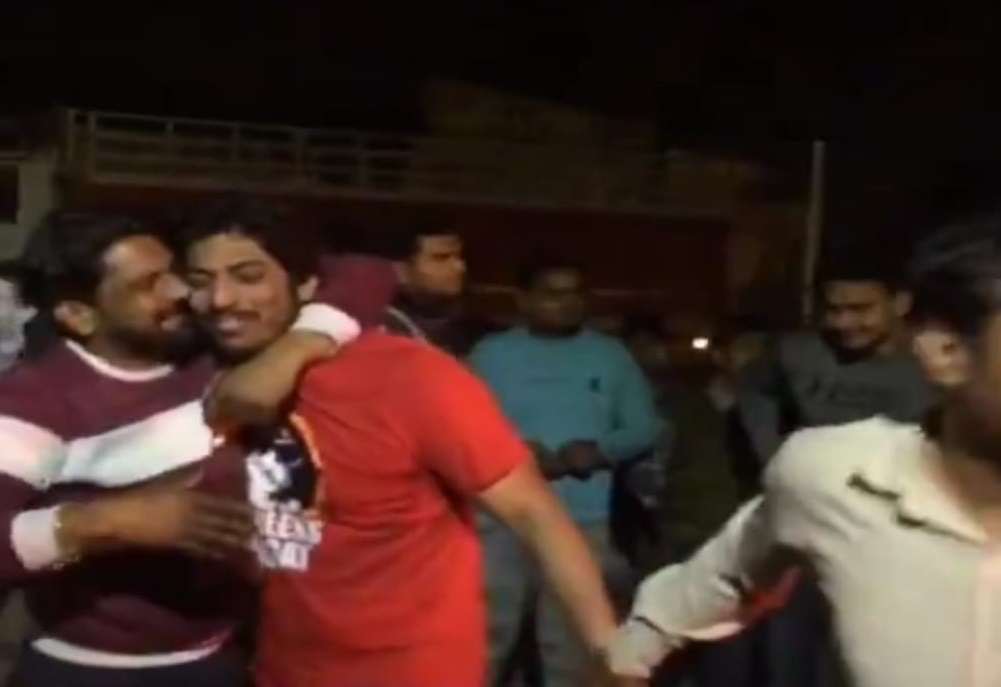
The Saket District Court granted bail to Kapil Baisla (Gujjar) in the case of firing shots during the anti-Citizenship Amendment Act (CAA) protests at Shaheen Bagh on February 1, 2020.
Baisla’s advocate Narveer Dabas had said that Baisla was falsely implicated for the crime he did not commit and that the case had been filed after an unexplained delay of 6 hours and nothing had been recovered from him even after days of him being in judicial custody. While seeking bail, Dabas also told the court, “It is further submitted that the applicant has clean antecedents and he has never been involved in any other case in the past.”
Granting bail to Baisla, Additional Sessions Judge Gulshan Kumar said, “On considering the totality of facts and circumstances, the accused Kapil Baisala is admitted to bail on furnishing bail bond in a sum of Rs 25,000 with one surety in the like amount to the satisfaction of the learned Metropolitan Magistrate.”
On February 1, when shot twice near the Shaheen Bagh protest site, he had said, “Sirf Hinduon ka raj chalega (Only Hindus will rule).” He was arrested on the spot and two empty shells of fired bullets were also recovered from the site. On February 6, the Delhi Police had told the court that the shooting was a “well-thought-out” incident and that Baisla needs to be interrogated to make sure whether or not he was part of a “political conspiracy”.
Soon after Baisla was arrested, the Deputy Commissioner of Police (Crime Branch), Rajesh Deo, had released photos of Baisla with Aam Aadmi Party (AAP) leaders saying that he had joined the party a year ago along with his father.
However, Baisla’s father contradicted the claims of the Delhi Police saying, “He was a follower of Modi and Amit Shah. My son always speaks of Hindustan and Hindutva.”
Father of Kapil Gujjar says, “My son is ‘sewak’ of PM Modi and Amit Shah.” Why didn’t ANI run this news? The video belongs to them.
Aslo, will Amit Shah Army (Delhi Police) release a statement stating what Kapil Gujjar’s father is saying? pic.twitter.com/RBMLNcVzWS
Wondering what would have happened if a Muslim shooter had fired on a Hindu crowd shouting “Only Muslims will rule here”?
But Kapil Gujjar, the Shaheen Bagh shooter, is out on bail. And being felicitated for his ‘brave act’ of firing on unarmed protesters. pic.twitter.com/a1Q4zYfCPy
Baisla’s bail comes at a time when many anti-CAA protestors are languishing in custody on charges of sedition, just for either being part of a protest or giving a speech. This just goes to show the impunity granted to people who commit heinous crimes, further threatening the minorities at a time when they, along with the marginalized sections of the society are fighting hard to retain their place in the country post the announcement of the fascist policies of the ruling government.
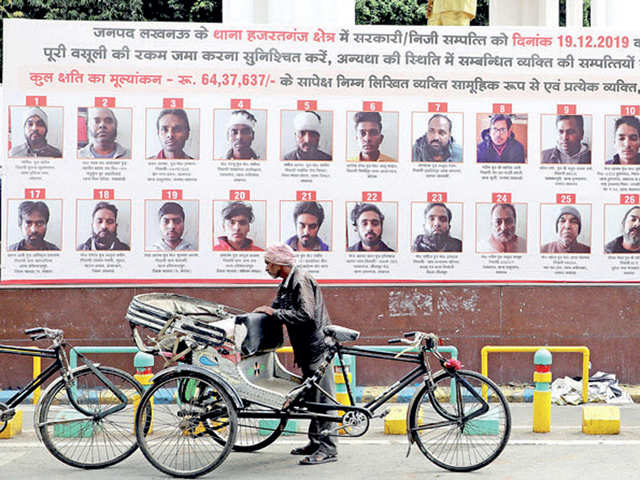
In response to the arbitrary and undemocratic actions of UP state government, the Allahabad High Court was compelled to take suo moto cognizance and hold hearings on Sunday, March 8. The Lucknow administration put up banners with photographs and personal details of more than 50 persons who were accused vandalism during the anti-CAA protests of December 2019. The poster is seeking compensation from the accused persons and further to confiscate their property, if they failed to pay compensation.
Noticing injury to the right of privacy, the Chief Justice of this Court directed the Registry to register a petition for writ in public interest. The Commissioner of Police, Lucknow and District Magistrate, Lucknow were called upon to explain the provisions under which the banners were placed on road side that also causes interference in movement of traffic in crowded areas.
While defending the state of UP, Advocate General even challenged the territorial jurisdiction of the court and termed the state’s action to be bonafide. The Court said that this PIL resulting from its suo moto cognizance is justified given that the law is disobeyed and the public is put to suffering and where the precious values of the constitution are subjected to injuries. The Bench, led by the Chief Justice held that this incident amounted to gross negligence on part of public authorities and government and as a constitutional court it can take notice of it on its own.
The Court further held thus, “The Court in such matters is not required to wait necessarily for a person to come before it to ring the bell of justice. The Courts are meant to impart justice and no court can shut its eyes if a public unjust is happening just before it.”
The Court while emphasizing on right to privacy, stated, “In the case in hand, a valid apprehension of causing serious injury to the rights protected under Article 21 of the Constitution of India exists which demands adequate treatment by the Court at its own. The economic status of the persons directly affected in such matters is not material. The prime consideration before the Court is to prevent the assault on fundamental rights, especially the rights protected under Article 21 of the Constitution of India.”
The Court, while establishing its jurisdiction, deemed the “cause” in this case to be, “not about personal injury caused to the persons whose personal details are given in the banner but the injury caused to the precious constitutional value and its shameless depiction by the administration. The cause as such is undemocratic functioning of government agencies which are supposed to treat all members of public with respect and courtesy and at all time should behave in manner that upholds constitutional and democratic values.”
The Court held that while the state may take steps to ensure maintenance of law and order, but it cannot violate fundamental rights of the people in doing so. The Court also observed that while under Code of Criminal Procedure, 1973, the power is available to a Court to publish a written proclamation requiring appearance of a persons against whom a warrant has been issued, No other power is available in the Code to police or the Executive to display personal records of a person to public at large.
The Court further cited several judgments of the Supreme Court, which have established right to privacy under Article 21 of the Constitution of India; including the very recent Justice Puttaswamy (Retd.) judgment [K.S. Puttaswamy (Retd.) and another Vs. Union of India and others, 2015 (8) SCC 735]. In this judgment, the individual right to privacy in a democracy was further solidified and got entrenched as a constitutional right and as an intrinsic component of Part III of Constitution of India.
While the court noted that the right to privacy is not an absolute right, and that persons privacy interests can be overridden by compounding state and individual interests subject to satisfaction to certain tests and bench marks, it held that no law is in existence permitting the State to place the banners with personal data of the accused from whom compensation is to be charged.
The Court held that the accused persons are not fugitives and the state of UP had failed to satisfy the court as to why placement of the banners is necessary for a democratic society for a legitimate aim. The Court deemed that the placement of banners with personal details of accused persons even failed the tests of liability, legitimate goal, proportionately and procedural guarantees; as laid out by the apex court’s nine-judge bench in the Justice Puttaswamy case.
The Court deemed these actions of the state to be “colourable exercise of powers by the Executive” which amounted to violation of Article 21 of the Constitution.
The Court then directed the District Magistrate, Lucknow and the Commissioner of Police, Lucknow Commissionerate, Lucknow to remove the banners from the road side forthwith and file compliance report by March 16. The court also directed the state of UP not to place such banners on road side containing personal data of individuals without having authority of law.