The District Court of Bidar, Karnataka made a fundamental observation while granting anticipatory bail in the Bidar school sedition case. The court made a prima facie observation that ingredients of section 124A of Indian Penal Code (IPC) which deals with the offence of sedition, are not made out in this case. The court also observed that the drama has not caused any disharmony in the society. The petition for anticipatory bail was filed by the President of Shaheen Group of Institutions, Abdul Qadeer apprehending arrest in the case.
About the case
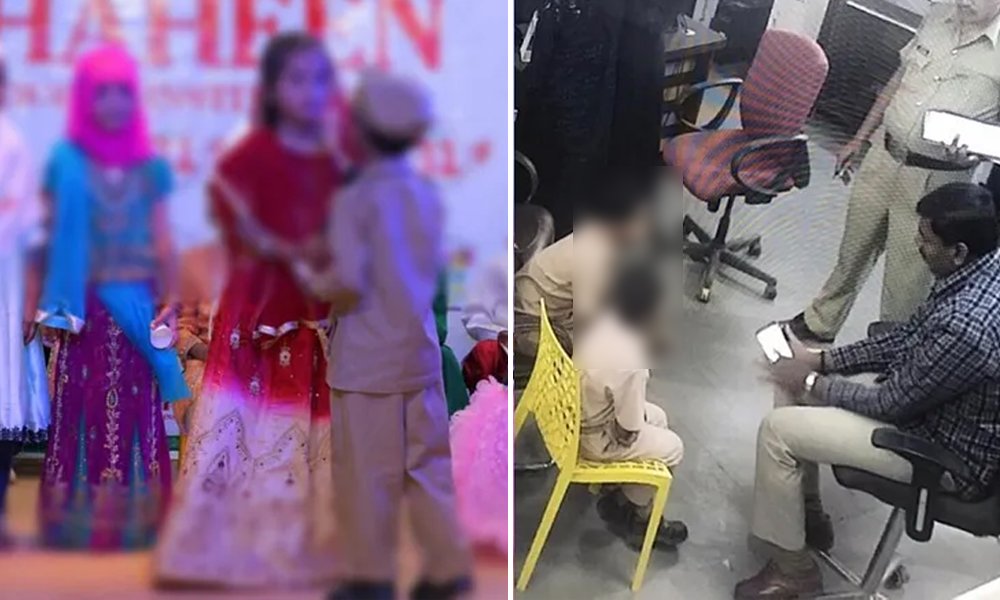
The said case has been in the spotlight due to arbitrary charge of sedition as well as due to the interrogation carried out by the police of the young school children for over 5 days.
The play was enacted in the school on January 21 and the complaint was lodged on January 26 for offences punishable under following sections of IPC: Sections 504 [Intentional insult with intent to provoke breach of the peace], 505(2) [Statements creating or promoting enmity, hatred or ill-will between classes], 124A [sedition], 153A [Promoting enmity between different groups on grounds of religion, race, place of birth, residence, language, etc., and doing acts prejudicial to maintenance of harmony]. The complaint had stated that Shaheen Educational Institution attempted to bring disharmony between two communities and have given a wrong message to society through the drama and have tried to oppose the Laws intended to be brought in force.
Shortly after the complaint, the school’s Principal, Fareeda Begum and Nazbunnisa, mother of one of the children who took part in the play were arrested and were eventually granted bail in February.
The court observed that the dialogue in the play where the children have expressed that they will have to leave the country if they do not produce the documents does not amount to bringing about hatred or contempt or even to “excite disaffection towards government”. The court also observed that “everybody has got the right to express disapprobation of the measures of the government with a view to obtain their alteration by lawful means”. These are words from the IPC itself which explain what the offence of sedition entails. The court concluded that the school play while “expressing disapprobation of the measures of the Government with a view to obtain their alteration by lawful means” did not “excite or attempt to excite hatred, contempt or disaffection” towards the government and hence it did not amount to sedition.
Sedition law in India
The law on sedition has been a controversial one mostly inviting criticism for its misuse in the judicial system. The law inherited from the British colonizers of India has been notoriously exploited for muzzling dissenting voices against the ruling government, more so in the BJP era which began in 2014. Clearly, the intention of the colonizers was to stifle opposition against their government and to curb the attempts of freedom fighters to mobilize the masses against them. The popular view is that a law like sedition has no place in a democracy as one of the fundamental foundations of a democracy is freedom of speech and expression which the law of sedition straightaway curtails.
Other criticisms of the law are that the words used in the explanation of the offence in the IPC is very vague and hence, subject to misuse by the State. The sedition law can also be termed to be antithetical to the underlying principles of a democracy, specially a democracy like India which has been thriving for more than 70 years now. Even the Law Commission of India has, in 2018, recommended that sedition be done away with or at least be revised to align it with our democratic principles.
The central legislature has, however, not paid heed to such prevailing criticisms and hence a controversial offence like sedition remains open to misuse, giving unbridled powers to the State to curtail dissent. Despite of the fact that the United Kingdom has done away with the offence of “seditious libel”, Indian legislature shows no intentions of doing the needful.
The Court’s observations
The Bidar district court took in consideration the argument of the petitioner that “every citizen of the country has right to submit his view whenever a new Act is proposed to be brought in force and opposing an enactment itself cannot be termed as sedition”. The Court concluded that although the school play had derogatory words of using chappal against Prime Minister Sri Narendra Modi, if read as a whole, sedition is not made out against the government.
The Court also disregarded that the case makes out the other offences such as inciting enmity since the play does not mention any other religion and hence question of disharmony between two religions does not arise. The court further said that since the person being insulted, Prime Minister Narendra Modi, is not the complainant, no offence can be made out under section 504 of IPC.
Bidar Superintendent of Police Nagesh D L told The New Indian Express that the judge’s observations were in respect of the order granting anticipatory bail; it will not be part of the ongoing trial against the staff, the parent and the management members of Shaheen Urdu Medium School.
The Court’s observations, even if they can be seen as being fundamental to the current political scenario, effectively, is only a passing comment which will tend to have very little impact during the trial of the case, depending on the bench that will hold the trial of the case. Even though, this observation can be depended upon, it is far-fetched to say that the accused will not be convicted for sedition, it can, although, be said there is still hope in the judicial system interpreting draconian laws in a way that does not hamper democratic principles.
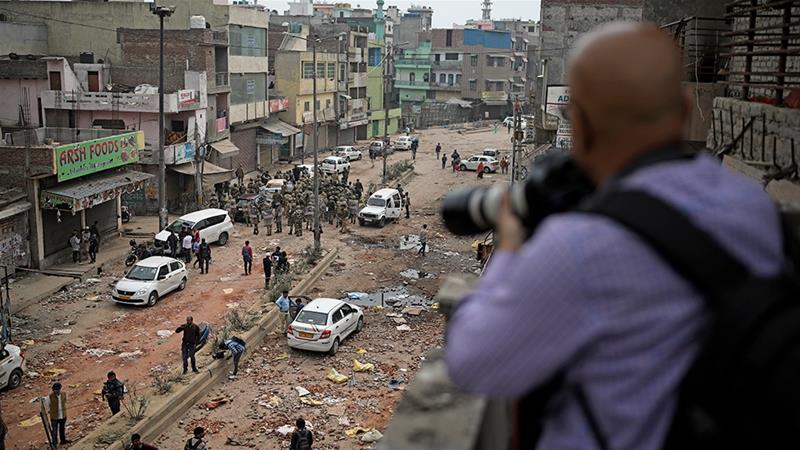
The Committee Against Assault on Journalists (CAAJ) has released a report titled “Republic In Peril” that showcases recent cases of assaults on journalists in Delhi during the period from December 2019 to February 2020. The report documents a total of 32 such cases spread across three phases.
Phase 1: December 15-20, 2019
The report documents seven cases of journalists being assaulted when the went to cover the violence at Jamia Milia Islamia University (JMIU). According to the report, during this period, “These assaulted journalists included mainstream news channels, agency, international media BBC and digital platforms. The assaulters included mob and police.”
One of the most infamous cases of assault during this period was that of Shaheen Abdulla, who was covering the story for Maktoob Media, an English digital news platform based in New Delhi. Video of him being chased by cops, being dragged and beaten brutally and then being shielded by two young women Ayesha Renna and Ladeeda Sakhaloon outside the JMIU campus had gone viral. In an interview to NDTV Abdullah had recounted his story as follows:
“When I saw them trapped (the female students of Jamia Millia Islamia), I rushed towards them. I knew them personally. I tried to help them to move to a safe place. When the cops came running, I showed them my press card and told them that I am a journalist. ‘Don’t beat me up; I am not here for any kind of violence. I am just trying to help them for medical attention’. But they started tapping me with their lathis on my legs. While I tried explaining them with the ID in my hand, they kept beating me. Then we went to a safe place, cops came in a group and they were like ‘now you come out’. They tried to induce me to follow their instruction. The girls protected me by shielding around. When girls started to come in-front, cops started to come inside. And somehow they (cops) got a hand on me and they pulled me outside.”
Another case was that of BBC journalist Bushra Sheikh who was physically assaulted by a policeman. She said, “I came here for BBC’s coverage. The police took away my phone and broke it. A male cop pulled my hair. They hit me with a baton and when I asked them for my phone, they hurled abuses at me.”
Nationwide, there were a total of 16 cases where reporters and camera persons were covering protests against the Citizenship Amendment Act (CAA).
Phase 2: January 2020
The report says, “On January 5, 2020 journalists were targeted outside Jawaharlal Nehru University campus, which was attacked on the same evening by a veiled mob. The number of cases reported in various media outlets and first-hand cases reported on twitter count to half a dozen. Those assaulted were also specifically targeted, stopped from coverage and directed/intimated by the mob.” It adds, “This phase reached its peak on the last day of January, 2020 when journalists were hounded, beaten up and detained at ITO and Rajghat. The numbers included more than ten, many of them senior scribes who were there to report Satyagraha March and pay homage to Mahatma Gandhi on his death anniversary. More than half a dozen journalists were detained until dark in a local stadium. Delhi Police was solely responsible for this assault.”
The report quoted first hand accounts by many journalists. For example, Rohan Venkataramakrishnan of Scroll.in was recording a video of the sloganeering right-wing activists at the JNU main gate on January 5, 2020, when he was surrounded, called a “Naxalwadi”, shoved around and hit on the head. Karnika Kohli of Scroll.in reported that a group armed with bats and sticks was stationed near the main gate. She overheard one of the members of the group say: “Beat up NDTV guys if you see them.”
On January 31, 2020, many journalists were violently attacked at detained by the police at ITO. The Press Club of India in a condemnation statement said, “From the first reports we have, Rajesh Kumar, Shivesh Garg and a clutch of other journalists were forcibly taken away to an unknown destination- probably a distant detention centre or police station. We have no further information.” Other journalists also attacked by police included photographer Sanjay K. Jha of The Telegraph, and S. K. Pande, a senior journalist and leader of the Delhi Union of Journalists.
Phase 3: February 2020
The report reveals several horror stories of intimidation, violence and humiliation inflicted upon journalists during this period. The report says, “The third phase is a dark chapter of horror in the history of Freedom of Press in Delhi that reminded many of the Emergency days. Around 18 cases were reported where journalists were not only stopped from coverage, but identified as Hindu/Muslims, ashamed publicly and beaten up by the rioting mob. There camera, equipment broken and vehicles burnt up by the mob.”
On February 24 Akash Napa of JK 24 was shot at while reporting from Maujpur. He was admitted to the GTB Hospital. “The bullet is stuck inside and the doctors have said operating is risky,” his brother told Newslaundry. “He has been shifted to a ward and they are doing some tests.”
On February 25, 2020, NDTV’s Saurabh Shukla and Arvind Gunasekar were brutally assaulted while covering the vandalism at a Muslim shrine at Meet Nagar. Shukla describes events saying, “I was just behind Arvind, 20-30 metres behind him. When we stopped recording, one protester, or one rioter for that matter, he spotted Arvind. They grabbed Arvind and started beating him up. I saw Arvind was lying on the floor. He was bleeding. I came for his rescue,” he said. “They were about to hit Arvind with a stick on his head. I intervened, and so that stick landed on my shoulder.”
Saurabh said the mob punched him and dragged him away from Arvind because they thought Arvind alone was filming. “Later, I did not show them my NDTV ID. I had a Foreign Correspondents’ Club card. I had shown them that and told them that I was not reporting for any Indian television; I was from some foreign agency,” he said. “They kept telling us, get Arvind to delete everything from his phone. And later, they did stop beating us up because they saw my name and said, ‘You’re from our own community. You should not be doing this. You should not be filming this.’”
But things were much worse for freelance journalist Sushil Manav who was allegedly forced to strip and even recite the Hanuman Chalisa to prove he wasn’t Muslim. Times of India’s Anindya Chattopadhyay also faced a similar ordeal on January 24, 2020. He wrote about his ordeal in the newspaper. Stepping out of the Maujpur metro station just past noon, he wrote, he was “taken by surprise when a Hindu Sena member suddenly approached me offering to put tilak on my forehead saying it would make my work ‘easier’. ‘You are also a Hindu, bhaiya. What is the harm?’ the man said.”
When Chattopadhyay tried to photograph a building that had been set on fire, a few men wielding bamboo sticks and rods surrounded him. They tried to snatch his camera, but his colleague, Sakshi Chand, stepped in, and the men went away. But later, he wrote, a group of men followed him. A youth accosted him and said, “Bhai, tu zyada uchhal raha hai. Tu Hindu hai ya Musalman?” Chattopdhyay said they threatened to take off his pants so they could confirm if he was Hindu or Muslim. Only after pleading with folded hands that he was let go.
Conclusion
The report concludes by drawing a grave image of the republic indicting the legislature and the executive in equal parts for their role in the entire matter. It also speaks about the polarization of media and its disastrous consequences. It says, “In recent times, we have witnessed a complete partisan character of media owing to its ownership and business model. The coining of new terms such as “Godi” (lapdog) media and “Rashtrawadi” media suggest a complete polarisation among media outlets. This has created a perception polarisation among media consumers who consume the information and news from “our” media and reject “their” media. The polarisation of news landscape has resulted in identification of individual journalists from their banners/brands. This identification either glorifies an individual journalist or vilifies it.”
It adds, “Here comes the polarised character of assault too. The assaults on journalists have increasingly become some sort of “identity punishing”, depending which group he/she is representing. This we have shown in first two phases of assault in December and January. Whenever this sort of assault takes place, the reaction inside the media fraternity is also divided on the same lines. Never has been a single incident of assault in last few years when the whole fraternity spoke in a single voice.”
The report then showcases the consequences of polarization and lack of unity saying, “The natural result of this complicity and partisanship was what we witnessed in the last week of February when no one was in the condition to prove his/her innocence and credentials in front of a rioting mob, asking for identity proof. A scribe from a partisan media house was targeted for the same cause whereas another scribe from a non-partisan outlet was targeted due to the polarised perception. The reality and perception both stand polarised heavily. Journalists on ground are paying price for it.”
After Uttar Pradesh, the Aurangabad police in the state of Bihar have filed a chargesheet against alleged rioters on charges of stone pelting, reported Firstpost. Out of the 46 people arrested, the police have not found any evidence against five said Meraj Khan, the lawyer representing the accused.
The violence took place on December 21, 2019 following which the five identified as Shams Waris, Shahbaz Nawab, Haseena Khatoon, Ishrat Khatoon and Ishran Khatoon were arrested after false charges were allegedly foisted upon them. Now, their names have been dropped.
It was reported that while the rioting transpired, Shams Waris was actually in the court, securing bail in another case. In the case of Shahbaz, there were two variations with regards to how he was arrested. According to the FIR, he was arrested from a terrace along with five other “culprits”, but according to the police diary, Shahbaz was in his lane trying to get home when rioters were pelting stones there. The diary quoted an eyewitness who stated that Shahbaz was hurt in the stone pelting after he ran away from the police, towards the rioters, where he fell and was injured. However, a video of Shahbaz being brutally beat up by the police after being cornered at a shop have been circulated and in that video Shahbaz is seen making a futile attempt to save himself from the blows that the police are raining on him. Shahbaz’s brother Sajid, is relieved now that Shahbaz has been reunited with his wife and eight-month-old son. “He even started working to get back to normalcy. We hope to put it behind us and resume our ordinary lives,” Sajid said.
Haseena Khatoon who was arrested with Ishrat and Ishran from an engagement ceremony along with two women and ten men in Qureshi Mohalla is angry with the police. She said, “We cried endlessly, but the police did not stop beating us. We told them we have not seen anything. We told them to have mercy. But they did not listen.” Mohammed Qiyamuddin, Ishrat husband had told Firstpost, “They upended the table where all the food had been prepared. They smashed the TV, and ruined the sofa. They started beating us and abused us continuously. They arrested women in the absence of women constables.”
Shahabuddin Qureshi, the head of the Qureshi family where the ceremony was happening told The Print, “It was my brother-in-law’s son Shaukat Qureshi’s wedding. The lawyer told us not to file a case, else the District Magistrate would falsely implicate us instead. That’s why we didn’t say anything. The police beat up a 15-year-old Imran too at our home. A total of five people suffered injuries to their hands and legs. The police destroyed the cupboards, drawers and food. The police entered our home at around 1:30 PM and left about 45 minutes later. We weren’t even a part of the rally.”
Thankful that her name was dropped from the chargesheet she was still horrified as she recollected the events to Firstpost. She said that the police first took her and the others to Jama Masjid, clicked their photos and proceeded with them to the police station. “We were scared,” she said, adding, “They had already broken someone’s arm or someone’s leg. So we did not say much at the police station.”
However, post dropping the names of the five people from the chargesheet, the police have added three names to it based on photographs, bringing the total number of accused to 44. Meraj Khan, the lawyer trying to secure the release of the accused said, “Out of those, 13 were said to be minors, but one of them has turned out to be an adult after his medical examination. All the minors are out on bail and 18 adults have also received bail.”
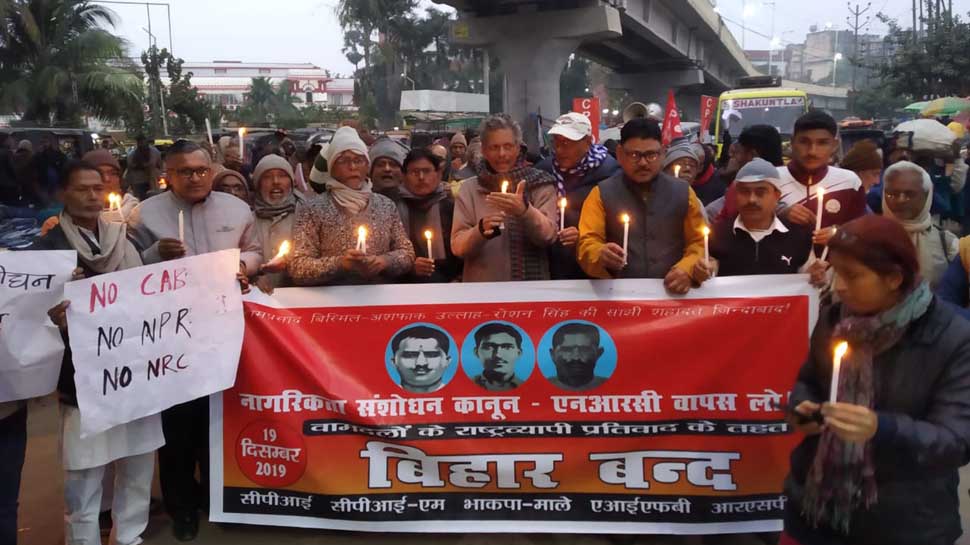
The police said that the protest that was called on by the Rashtriya Janata Dal (RJD) on December 21, 2019, turned violent after a mob of 200 people led by local councilor Sikandar Hayat arrived at the site. The police had said that stone pelting ensued after the mob began beating up shopkeepers and the police arrest five, including Hayat after they failed to comply with the police’s warnings. However, in the FIR by the police it was mentioned that Hayat was arrested again while jumping off a roof along with others allegedly indulging in stone pelting.
The FIR accuses him of leading a mob, and triggering riots against the police. The first page of the FIR claims when the bandh ended at around 12.15 pm, a mob of 200, led by Hayat, emerged at the scene. “The mob started beating up shopkeepers near a book store, asking them to shut shop,” the FIR notes. “When police tried to intervene, the mob chanted slogans against them and started throwing bricks and stones. A brick landed on a policeman’s head, and he got seriously injured. Hayat was egging the protesters on.” However, the shopkeepers who were reportedly beaten up by Hayat do not feature as witnesses in a police diary submitted at a district court at Aurangabad, Bihar.
One of the 18 adults out on bail is Sikandar Hayat, the main accused behind the riots. He told Firstpost, “The FIR is 100 percent wrong. When I realised that there was unrest, I stepped out to see what was happening. Qureshi mohalla, where I live, was quiet then. I told people in my mohalla to get back in to their homes so there won’t be any problem. I was ensuring that things don’t blow up in my locality.”
He added that after he got people back to their homes, he returned to his place too. “That is when the police emerged and picked me up,” he said. “The police have claimed I did a lot of things in the FIR. I am sure they do not have any proof. Not one photo or video.”
Reports of police brutality have been rampant in the anti-CAA protests in Bihar, mostly in Muzaffarpur, Gopalganj, Bhagalpur, Patna, Phulwari Sharif and Siwan.
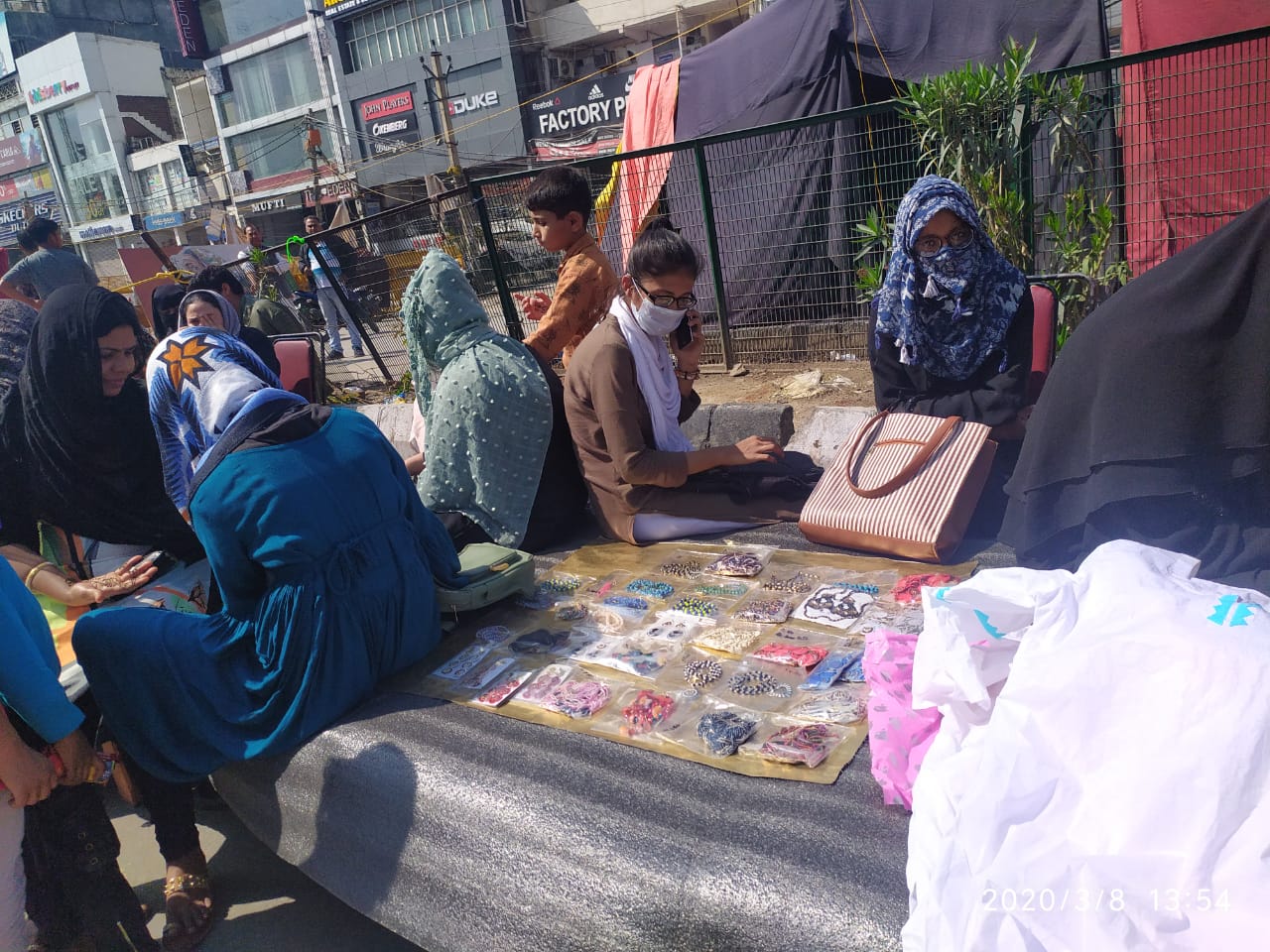
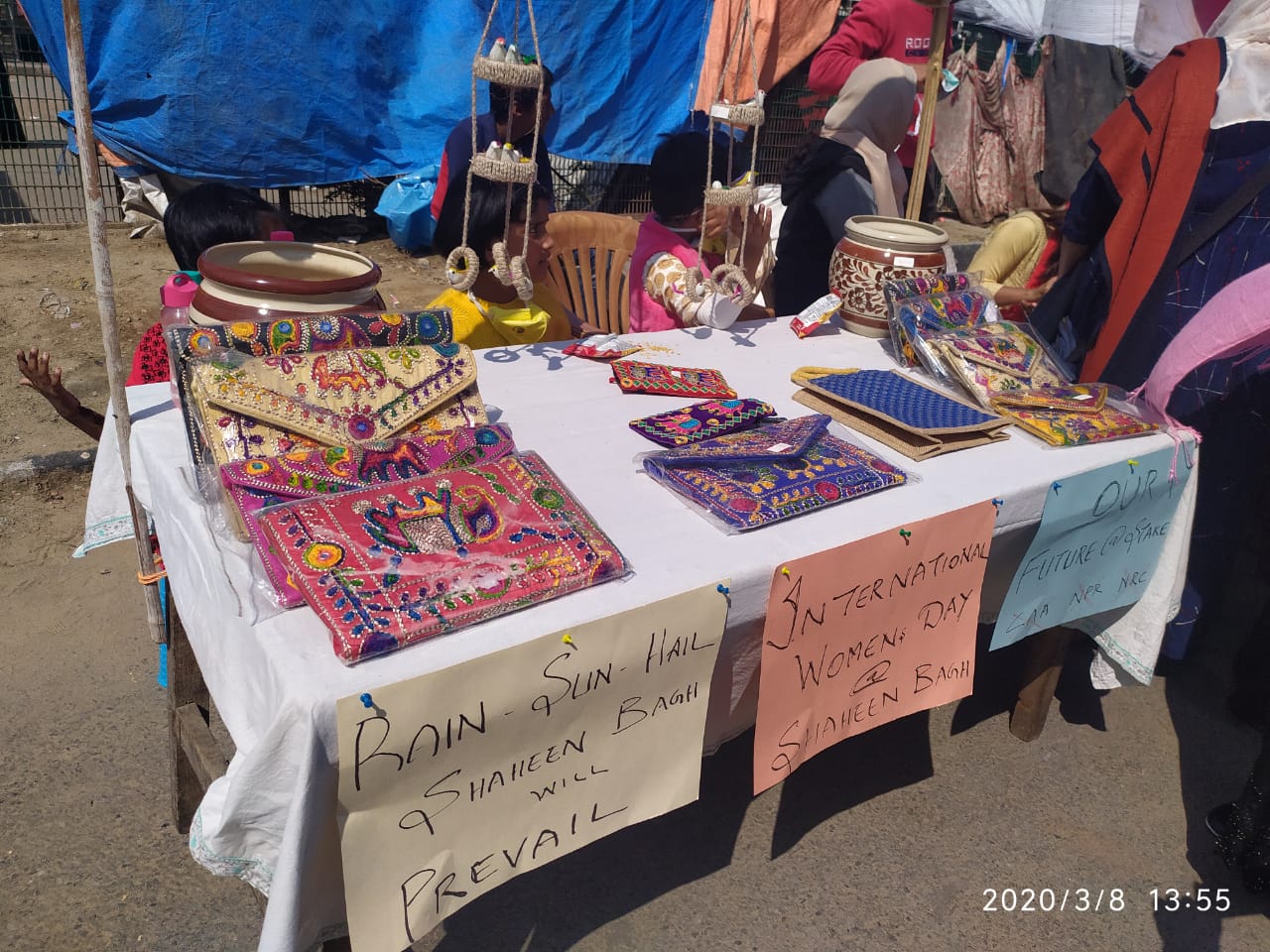
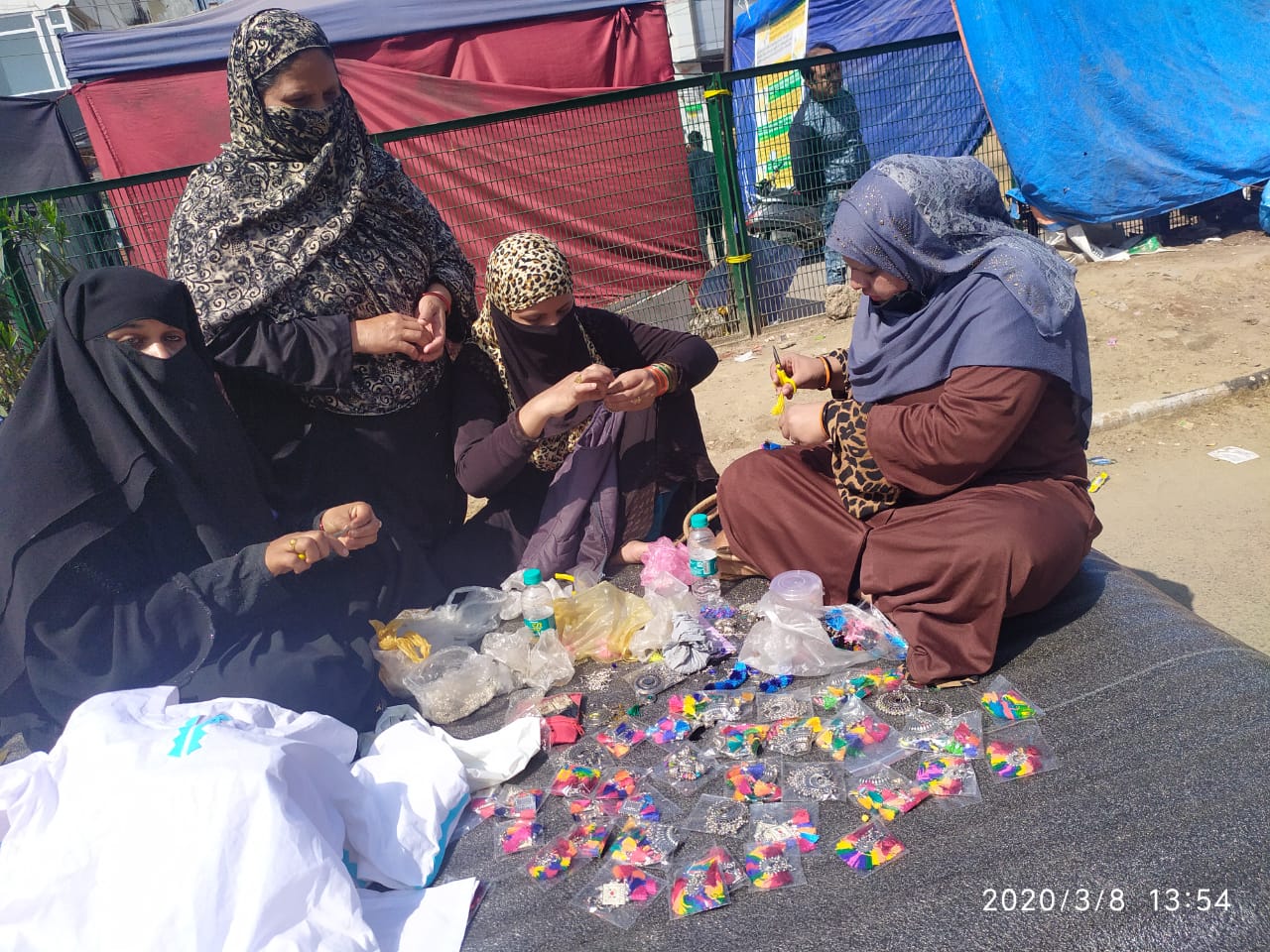
On Women’s Day, a sale was held at Shaheen Bagh, the site of the longest-running and women-led protest against the new citizenship matrix, to raise funds for the Delhi riot victims and a moment of silence was observed for everyone killed in the carnage. Shaheen Bagh was teeming with an assortment of activities dedicated towards the relief fund, the primary discussion was centred on the stir against the controversial Citizenship Amendment Act (CAA) and the proposed nationwide National Register of Citizens (NRC).
One protester, Kausar told the gathering that Shaheen Bagh had observed a moment of silence on Sunday for those killed in the riots. “We mourn for head constable Ratan Lal and Intelligence Bureau employee Ankit Sharma. Mothers understand what it is to lose a child. That’s why on Women’s Day we decided to contribute to the relief effort,” she said.
“Log tut jate he ek ghar banane mein,
tum taras nahin khate bastiyan jalane mein”
[People break their backs building a home, You don’t pity burning down villages]
This moving couplet of noted poet Bashir Badr was emblazoned on the posters hung around the street stalls near the Shaheen Bagh protest site on Sunday. It was this powerful yet poignant verse found resonance amongst the women of Shaheen Bagh who banded together on the occasion of International Women’s Day to lend a helping hand to the victims of the Delhi violence, which rendered many homeless and over 50 dead.
“People have put their lifelong savings to build homes. All have been plundered in this violence; shops looted, many have lost their loved ones,” Aslima laments before she explains the purpose behind this initiative in detail.
“On this Women’s Day, we want to do our bit in whatever way possible. We have set up shops here selling our handmade craft items and doing mehendi art. We will donate the money to the riot victims in Mustafabad, Jafrabad, Chand Bagh among others,” she sums up.
Next to Afreen’s stall was Shahdah’s set-up where she lined up handmade colourful potteries. The bespectacled woman remained resolute when asked about the government’s unwavering stance on the CAA.
“Jab tak upar wale ki marzi hogi, tab tak datte rahenge. Inshallah (Till the Almighty is with us, we will remain steadfast),” she says. There is also a special message for prime minister, Narendra Modi. A group of three women had this poster, “We would urge him to stop doing politics of religion.”
Bail for the Assailant
In sharp contrast to the mood at Shaheen Bagh, in another part of Delhi, the gunman who had opened fire at the protest site had been given a hero’s welcome after he was freed on bail, and a perceived fresh attempt was under way to defame the protesters. East Delhi dairy farmer Kapil Baisla, who had fired at the site on February 1, was granted bail on Friday (March 6) and was released on Saturday (March 7). Baisla received a hero’s welcome when he arrived home at the urban village of Dallupura, suggests a viral TikTok video that showed men embracing him and dancing to folk songs. The gunman’s lawyer, Narveer Dabas, had demanded bail citing a six-hour delay in filing the FIR while arguing the investigation was over and the police did not need him, and that Baisla was in no position to influence witnesses, who were police officers anyway.
The court was further told that Baisla has a wife and child to take care of. The prosecution opposed bail on the grounds that the allegations were “very serious in nature and the case was only at its initial stage”. Additional sessions judge Gulshan Kumar granted bail against a bond of Rs 25,000 and a surety of the same amount. Such relief is usually not granted to those considered prone to violence and a risk to peace. A person who opened fire at a crowded — and peaceful — protest site normally checks both boxes.
Targeted violence had broken out after an incendiary speech by BJP leader Kapil Mishra in the presence of the police on February 23. The Centre told the apex court last week that conditions were “not conducive” to filing FIRs against BJP leaders for hate speeches.
Earlier, the police had declared as a minor another gunman who had shot and injured Jamia student Shadab Farooq on January 30 during an anti-CAA march.
This shooter, who described himself as “Rambhakt”, is in judicial custody at an observation home for boys and has been allowed to take his Class XII board exams in his home state of Uttar Pradesh. “Rambhakt” and Baisla opened fire after Union minister Anurag Thakur led a rally in chanting “shoot the traitors”.
Farooq, a mass communication student whom “Rambhakt” allegedly shot in his left forearm, told this newspaper: “At some point of time we realised that we had to leave safety behind and protest en masse. Nothing else will work… The media is in the hands of the regime. The whole country knows that the CAA is a bad law, and these attacks are just attempts to divert the attention of people.”
Arrests around Jamia
On Sunday, the police claimed to have picked up two suspected Islamic State terrorists from Jamia Nagar, located near Shaheen Bagh and home to the Jamia Millia Islamia, for allegedly “instigating anti-CAA protests”, news agency ANI reported.
It is against such a backdrop that word spread about the police’s claim on the arrests.ANI quoted deputy commissioner (special cell) Pramod Kushwah as saying: “A couple, Jahanjeb Sami and Hina Bashir Beigh, linked to (the) Khorasan module of ISIS were apprehended from Jamia Nagar, Okhla. The couple (were) instigating anti-CAA protests.”
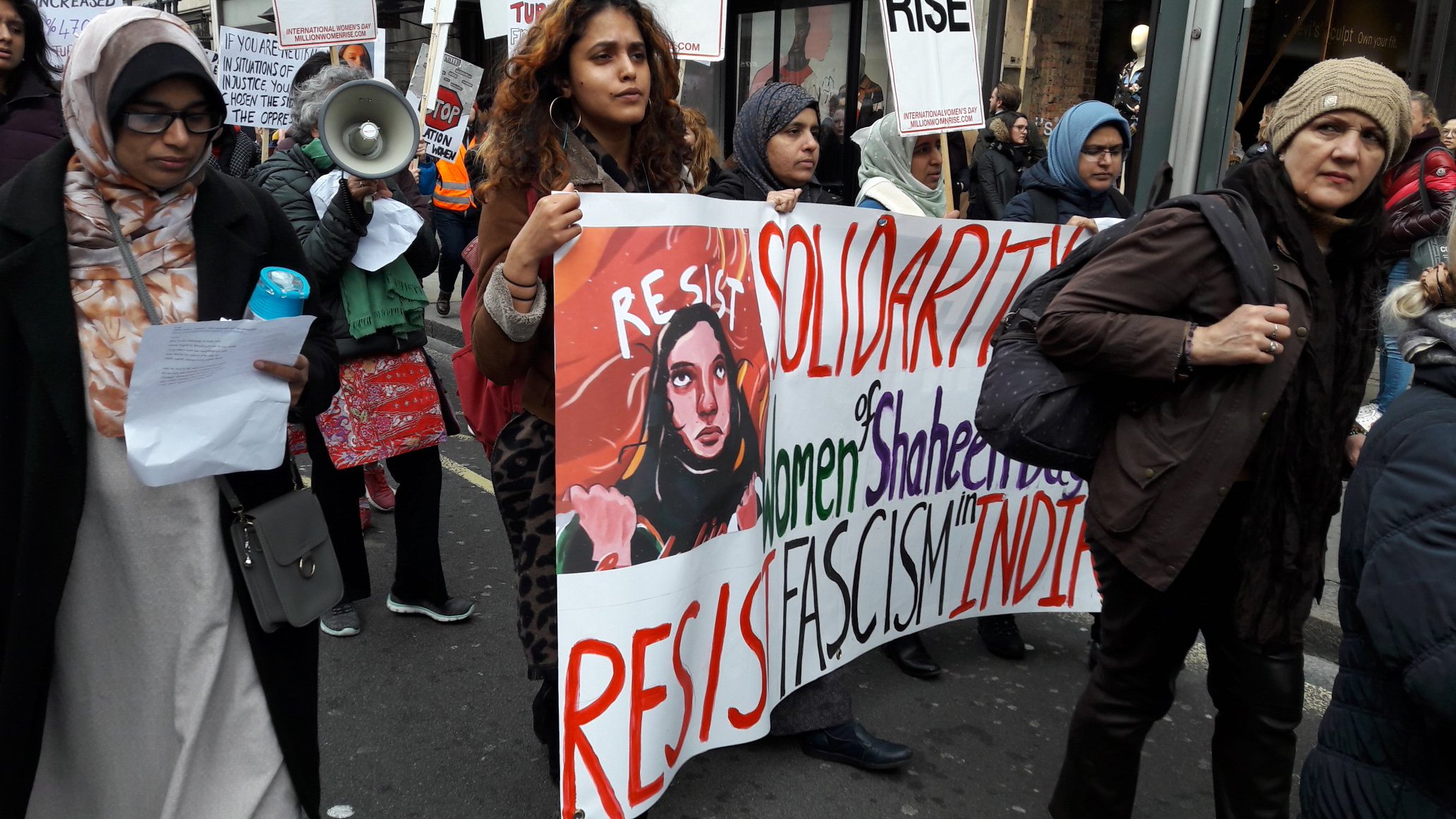
At the Million Women Rise 2020 march held on the eve on International Women’s Day in London, thousands of women marched in solidarity with Shaheen Bagh, the women-led protest in Delhi against the Modi regime’s discriminatory and fascistic Citizenship Amendment Act (CAA).
The press release issued by the South Asia Solidarity Group said that it sees the ruling regime’s measures like the CAA and the National Register of Citizens (NRC) are seen as the first step towards ethnic cleansing and genocide, while representing the vision of an exclusive Hindu state promoted by India’s Hindu supremacist BJP government led by Narendra Modi.
This is a global agenda linking India’s prime minister Modi with Trump, Netanyahu and Boris Johnson. Linking the suffering of Kashmir, Myanmar, Palestine and India to the US and UK. In India this fascism takes the form of upper-caste Hindu supremacy. The Indian government is demanding that people prove their citizenship with documents going back generations. If you are a Muslim and have no papers of this sort you will be locked up in a detention centre even if your family has always lived in the country. Massive detention centres have already been set up and many who have been detained have died there. The new Citizenship laws make religion central, for the first time. In this country we know about the horrific injustice of Windrush, we know about Yarls Wood, these are the symptoms of fascism. In India we can see the next terrifying stage. As in Hitler’s Germany, denial of citizenship to millions of people is likely to be followed by a genocide. But in these dark days, the wonderful inspiring flowers of resistance have bloomed. Muslim women, those who have been stereotyped as passive, as unresisting, have come out in their thousands, they have organised continuous sit-ins in resistance to these genocidal laws.
The Shaheen Bagh bloc at the demonstration highlighted the iconic nature of the women’s occupation in Delhi which has been going on since 14 December and has inspired hundreds of other Shaheen Baghs all over India. The protests sites have become spaces of safety and creativity where women are putting forward an alternative vision of the future in which all kinds of oppression can be challenged. Muslim women will be those most affected by the citizenship measures and they have been at the forefront of resistance, countering the stereotypes, which are also pervasive in India, of Muslim women as passive victims.
The press release also mentioned the horrific Delhi pogrom in which 53 people lost their lives and hundreds were severely injured during which Shaheen Bagh remained stoic and unshakeable. Though right-wing mobs and the police tried to intimidate women at the protests at sites such as Jaffrabad in North East Delhi, but couldn’t keep them away from continuing their peaceful protests.
The Shaheen Bagh bloc in London’s march marched alongside Turkish, Latin American and other feminists across the world and shouted slogans like, ‘Shaheen Bagh we stand with you, you won’t let the fascists through’, ‘Modi, Shah you can’t hide, you are committing genocide’ and ‘Shaheen Bagh is here to stay, until you scrap the CAA’, apart from carrying a banner with artwork produced at Shaheen Bagh.
Post India’s independence, our society has gone major transformation vis-a-vis Hindu – Muslim relations, and in this journey there have been several stages:
Green revolution resultant emerging strong farmer community and emergence of their leadership specially from OBC’s
Nationalisation and India’s decisive victory over Pakistan and resultant Bangladesh
Emergency, JP movement and resultant decisive defeat of Congress with RSS and Lohiates combining together
India winning cricket World Cup and emergence of Amitabh Bachchan as angry young man and resultant Shahanshah of Bollywood
Indira Gandhi and Rajiv Gandhi’s assassination
Rise of BJP, Ram Mandir movement,and resultant Babri Masjid demolition
Neo-liberalisation, resultant huge emerging Hindu middle class, rise of OBC and Dalit leadership
First BJP govt at the Centre under Atal’s leadership
Gujarat riots and emergence of Modi as face of Hindu chauvinism
Khan troika ruling the Bollywood
India’s hegemony in World cricket and Sachin Tendulkar as Emperor of World cricket
Return of Congress and Manmohanomics and resultant more buoyant Hindu middle class
Modi winning big and Congress losing badly with Gandhi-Nehru family aura completly wiped out
Emergence of new regional faces of Akhilesh, Kejriwal, Mamta, Jagan and Stalin
Modi-Shah in control, with divisive CAA pushing Muslims back to the wall politically and making them fight for their survival and amidst that, India facing it’s biggest economic slowdown in the last 50 years.
Amidst all these stages Hindu society, by and large, was also reshaping into distinctive social classes as per their belief in Indian Constitution and Hindu thought and they can be categorised as follows:
First, who believe in the essence of the Vedas, the ‘Puranic’ and religious texts and it’s approach to the oneness of Man with the divine i.e. the eternal ‘Atman’ (the soul) and its eventual merger with the Paramatman (the supreme) in the ‘divine karmic’ order. All the while, upholding the egalitarian and non violent spirit of Hindu theism and it’s well propounded philosophies.
The first kind is further divided into two sub categories:
1. That has acceptance of all religions in conformity with the traditional Hindu vedantic thought of ‘Vasudev Kutumbakam’ (world is a family) and perhaps, is a bit in the atheistic mould. Yet, believes in a higher power and life cycles of cause and effect and thinks of the other as his own.
2. Is more adjunct to his religious and ritualistic duties: in his devotion and prayers to the chosen one in the pantheon of Hindu gods, a believer in the holy texts and the essence thereof, as also in the play of karmic cycle in the destiny of man etc. But deep down, still believes that all paths lead to one god and therefore, is tolerant of other religions and dogmas if they don’t infringe on his faith and religious practices.
Second is the one who is having this fear of the ‘other’, that is Muslims in this context, apprehensive of his country being subsumed overtime by the radical wave of Islamization that is currently sweeping across some parts of the world, including Europe, and so is willing to fraternise with the Hindutva philosophy as his shield, despite government demographic statistics stating otherwise and thus serving to Sangh’s political agenda.
Third is left liberal who thinks Hindu ethos can be kept on the back-burner to push their agenda of liberalism which cannot be compromised for anything.
Similarly, the Muslim society reshaped exactly the same with greater influence of Gulf money a clergy led society came with large influence of Wahabi Islam.This Islamic school of thought believed in purtitanism and ridiculed those who practiced Islam with Indian traditions and that is Sufi Islam or Barelvi school of thought.
Then, of course, there was the emerging middle class among Muslims which because of modern education came in contact with left liberal ideology on the one side which believed in the equality and liberalism with women being given equal opportunities whereas within that middle class there was those who where in the influence of Wahabi Islam and puritanism.
The Hindu-Muslim relations in India are decided by this middle class, of both the communities, and it is a contradiction that their aspirations do not match their actions. Both aspire to a luxurious life with economic betterment but ongoing struggle leads to social disorder thus economic slowdown. Whether they are left liberal Hindus and Muslims they have to bear the brunt of clash of Wahabi Islam and Hindutva and resultant social disharmony.
The immense harm that this can cause to the ‘philosophy of (Sanatan Dharma) Hinduism and Islam which teaches equality and brotherhood and the nation cannot be overstated, since it is bound to lead to further fissures and distrust in society, shredding the social fabric of India. This is a matter of grave concern for all of us, residing here in India, and also for our future generations, as it is our responsibility and duty to keep the country united, safe and strong; free of sectarian strife, to prevent foreign investment from shying away from Indian shores. Growth of a nation is commensurate with its social stability and unity. Let us not disrupt it to irreconcilable and irredeemable levels, it is perhaps time for us who believe in Indianess only to barricade this onslaught of hate and insecurity.
* The author is Director, Centre for Objective Research and Development (CORD), Lucknow.
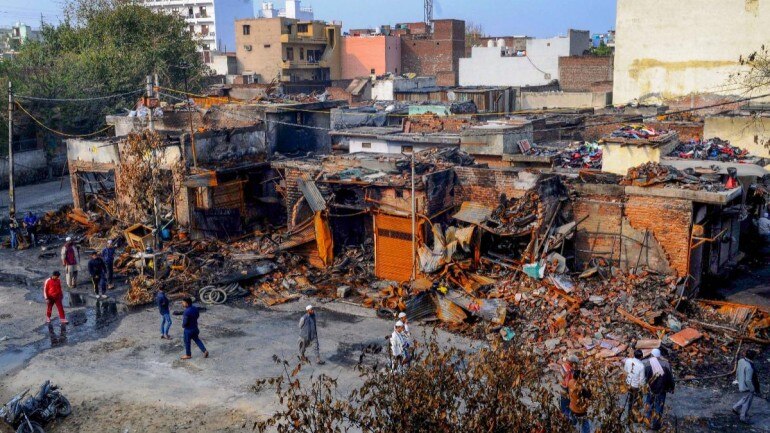
They say ‘history repeats itself first as a tragedy and then as a farce’. In case of India, communal violence not only keeps repeating itself, the pattern of the tragedy keeps changing every time. Some features of the violence are constant, but they are under the wraps, mostly. The same can be said about the Delhi violence (February 2020). The interpretations, the causative factors are very discernible, but those who are generally the perpetrators, have a knack of shifting the blame on the victim community or those who stand for the victims.
As the carnage began presumably in the aftermath of statement of Kapil Mishra of BJP, which was given in front of a top police official, in which he threatened to get the roads emptied. The roots of violence were sown earlier. The interpretations given by the Hindu Nationalist camp is that the riot is due to the changing demographic profile of the area with Muslims increasing in number in those areas, and coming up of Shaheen Bagh which was presented was like ‘Mini Pakistan’. As per them the policies of BJP in matters of triple talaq, Article 370 and CAA, NPR, NRC has unnerved the ‘radical’ elements and so this violence.
As such before coming to the observations of the activists and scholars of communal violence in India, we can in brief say that violence, in which nearly 46 people have died, include one from police and another from intelligence. Majority of the victims are Muslims. The violence started right under the nose of the police and the ruling party. From the videos and other eye witness accounts, police not only looked the other way around, at places it assisted those attacking the innocent victims and burning and looting selective shops. Home minister, Amit Shah, was nowhere on the scene. For first three days the rioters had free run. After the paramilitary force was brought in; the violence simmered and slowly reduced in intensity. The state AAP Government, which in a way is the byproduct of RSS supported Anna Hazare movement, was busy reading Hanuman Chalisa and praying at Rajghat with eyes closed to the mayhem going in parts of Delhi.
Communal violence is the sore point of Indian society. It did begin during colonial period due to British policy of ‘Divide and Rule’. At root cause was the communal view of looking at history and proactive British acts to sow the seeds of Hindu-Muslim divide. At other level, the administrative wing and police, the British were fairly neutral. On one hand was the national movement, uniting the people and creating and strengthening the fraternal feeling among all Indians. On the other were Muslim Communalists (Muslim League) and Hindu Communalists (Hindu Mahasabha, RSS) who assisted the British goal of ‘divide and rule’ promoting hatred between the communities. After partition the first major change was the change in attitude of police and administration which started tilting against Muslims. Major studies by Dr. Asghar Ali Engineer, Paul Brass and Omar Khalidi demonstrated that anti Muslim bias is discernible in during and after the riots.
Now the partisan role of police has been visible all through. Sri Krishna Commission report brought forth this fact; as did the research of the Ex DIG of UP police Dr. V.N.Rai. Dr. Rai’s studies also concluded that no communal violence can go on beyond 24 hours unless state administration is complicit in the carnage. In one of the violence, investigation of which was done by concerned Citizen’s team (Dhule, 2013) this author observed that police itself went on to undertake the rampage against Muslims and Muslim properties.
General observation about riots is that violence sounds to be spontaneous, as the Home Minister is pointing out, but as such it is a well planned act. Again the violence is orchestrated in such a way that it seems Muslims have begun the riots. Who casts the first stone? To this scholars point out that the carnage is so organized that the encircled community is forced to throw the first stone. At places the pretext is made that ‘they’ (minorities) have thrown the first stone.
The pretexts against minorities are propagated, in Gujarat violence Godhra train burning, in Kandhamal the murder of Swami Laxamannand and now Shaheen bagh! The Hindu Muslim violence began as riots. But it is no more a riot, two sides are not involved. It is plain and simple anti-minority violence, in which some from the majority are also the victims.
This violence is possible as the ‘Hate against this minority’ is now more or less structural. The deeper hate against Muslims and partly against Christians; has been cultivated since long and Hindu nationalist politics, right from its Shakhas to the social media have been put to use for spreading hatred. The prevalent deeper hate has been supplanted this time by multiple utterances from BJP leaders, Modi (Can be recognized by clothes), Shah (press EVM machine button so hard that current is felt in Shaheen Bagh), Anurag Thakur (Goli (bullet) Maro) Yogi Aditya Nath (If Boli (Words)Do not work Goli will) and Parvesh Varma (They will be out to rape).
The incidental observation of the whole tragedy is the coming to surface of true colors of AAP, which not only kept mum as the carnage was peaking but also went on to praise the role of police in the whole episode. With Delhi carnage “Goli Maro” seems to be becoming the central slogan of Hindu nationalists. Delhi’s this violence has been the first one in which those getting killed are more due to bullets than by swords or knifes! Leader’s slogans do not go in vain! Courts the protectors of our Constitution seem to be of little help as if one of them like Murlidhar Rao gives the verdict to file against hate mongers, he is immediately transferred.
And lastly let’s recall the academic study of Yale University. It concludes; ‘BJP gains in electoral strength after every riot’. In India the grip of communalism is increasing frighteningly. Efforts are needed to combat hate and hate mongers.
Often referred to as the weaker, fairer sex, women around the world and their voices have been silenced under the din of patriarchy. Though throughout eras, there have been women who have managed to scream and make them heard; even for the betterment of their sisters; it is now, at this moment precisely that women across the world have put a collective foot forward, taken the narrative into their own hands, broken the glass ceiling and emerge as the voice of the universe.
From domestic violence to sexual abuse, equal rights and even overthrowing governments, women have now stood up to be the superpower that will hopefully make the sly rabble rousers and wrongdoers accountable for their actions now and in the future.
From India to Mexico, from Brazil to America, here is a look at how women are claiming their rights, not as the second gender, but the equal one.
India: From Razia Sultan to Savitribai Phule to the Dadis of Shaheen Bagh
India has produced historic iconic women who have championed various causes – be it education, science or art. Be it the valor of Razia Sultan – the first and last female ruler of Delhi who proved her worth as a just ruler, who was an ace administrator or the undying perseverance of Savitribai Phule who founded the first girls’ school in the country, India has witnessed a spurt in social reforms through the actions of such brave women.
From then to now, not much has changed. From women forces behind the success of Mangalyaan to Adivasi activists learning how to fight for their jal, jungle, zameen; women in India have now taken the centre stage in a bid to protect their identity.
Post the announcement of the Citizenship Amendment Act (CAA) and the possible implementation of the nationwide National Register of Citizens (NRC) that is set to affect the minority communities and the marginalized, the women in India have hit the streets to make the government accountable of its fascism and repeal the above mentioned CAA and NRC.
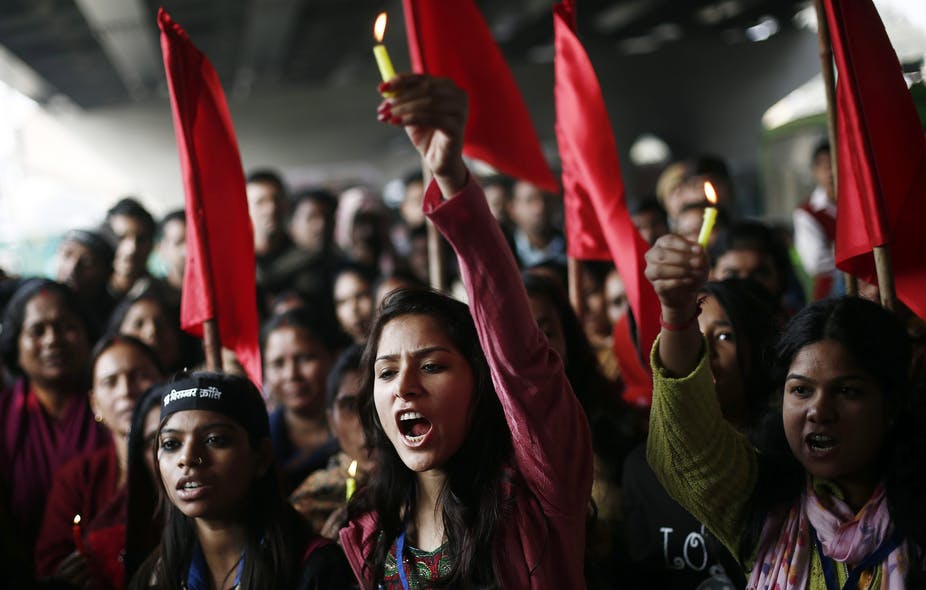
This is possibly the first time that women have become the face of political protests in India. In Shaheen Bagh, a working-class, majority-Muslim neighborhood, the protests began with a small, peaceful sit-in and candlelit vigil by local women. It has been over 70 days now that the women continue undeterred by threats to their lives and possible police and state sponsored atrocities. With children in their laps, they shout slogans for a united and secular India.
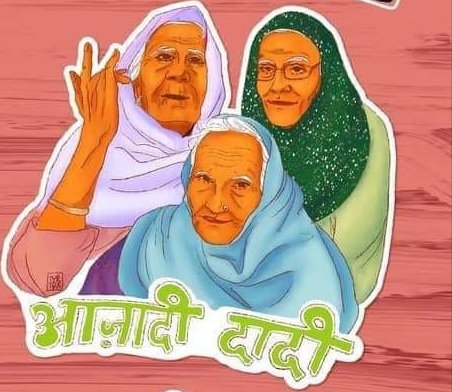
Age no bar, it is now the grandmothers who are leading the protests from Shaheen Bagh in Delhi. Following their footsteps, women throughout India have become inspired to come out of their homes and take responsibility for their future and their childrens’ future with mini Shaheen Bagh’s sprouting all over the country.
With artwork, poetry recitals, interfaith prayers, community kitchens that keep the stomach full and the fire burning along with the Constitution of India in hand, the women are going from strength to strength to stand up with their sisters from different communities and overthrow the oppressive policies of the government.
Speaking to Time Magazine, veteran activist and the frontrunner in the Save Narmada Movement Medha Patkar said, “The specialty of a women-led movement is that they can be sustained longer. Women don’t give up. India sees women as shields, but in fact, they are the swords.”
Chile: ‘Never again without us women’
With the slogan – “Nunca más sin nosotras” – Never again without us women, the women in Chile are raising their voices against patriarchal violence, fighting for specific ender-related issues like an end to domestic violence, equality at the workplace and legal abortion, says Alondra Carrillo of La Coordinadora Feminista 8M, the largest feminist advocacy group, reports The Guardian.
The anti-rape song, Un Violador en Tu Camino – A Rapist in Your Path, popularized by a Chilean feminist collective, Las Tesis, was sung by women everywhere across the world to denounce the inaction of the police, judges and the highest authorities in preventing sexual violence.
The song read, “The patriarchy is a judge that judges us for being born, and our punishment is the violence you don’t see,” the chant begins. “It’s femicide. Impunity for the killer. It’s disappearance. It’s rape. And the fault wasn’t mine, not where I was, not how I dressed. … The rapist is you. It’s the cops, the judges, the state. The president. The oppressive state is a rapist.”
According to a report by the Chilean Network Against Violence Against Women, 42 cases of sexual abuse are reported each day. Paula Cometa, a member of Las Tesis told The Guardian that the song was never intended to be a protest song, but the women of the marches transformed it into something more.
She said, “It adapted to the moment that we are now living in Chile. The violence and the human rights violations that women have been exposed to recently.”
Talking about the part of the song where the performers squat down, assuming a position similar to that of arrest she said, “It’s a simple form of torture and punishment carried out by the Chilean police.”
Feminists in Chile say that the right-wing government hasn’t done much to address women’s issues. Belén Calcagno, a woman organizing protests throughout the country says that women have always pushed social movements in Chile.
Camila Vallejo, the former student protest leader said, “We will all march for our own reasons. But every woman will march for her own reasons, and on 8 March we will unite with a common demand: to be respected.”
Mexico: ‘This is our feminist spring’
3,825 Mexican women were killed in 2019, out of which the government accounted 1,006 to be femicides – where women are killed because of their gender.
On March 9, the women in Mexico are planning a national strike #UNDIASINMUJERES, or “a day without women” to throw light on the unending violence on women there. On Monday, March 9, women in Mexico will stay off the streets and purchase nothing throughout the day to put across the message – “what if we all just disappeared?”
A total of 1,006 killings were officially classified as femicides, based on a variety of criteria, including whether the victim’s body showed any signs of sexual violence and whether there had been a “sentimental” relationship between the victim and the killer, reported the LA Times.
Now, a call for action is growing louder and protestors are bringing the world’s attention to the failure of the Mexican government to put a stop to the femicides. Speaking to The New York Times, Sabina Berman, a Mexican novelist and feminist activist, said that the nucleus of these latest protests was a younger generation of women who have lost patience with a more measured approach to activism.
Last month, masked feminists covered the presidential palace with blood-red paint and graffiti, calling out the president’s failure to protect women.
“This is not the fight against any government,” she said. “t is against the entire Mexican state, against the private sector, against the men who harass, who rape, who kill, and against those good men who stand by and do nothing.”
Carolina Barrales, one of the founders of Circulo Violeta, a Tijuana-based feminist collective says, “This is our feminist spring here in Tijuana … and we won’t stop until we get justice.”
Fighting to keep the world safe – From India to Brazil to Greta Thunberg
Citizen’s for Justice and Peace, an NGO, tells us the story of Sokalo Gond – the Adivasi warrior, a human rights defender and one of the most important forces in the struggle for the implementation of forest rights act 2006 in Sonbhadra, a heavilty forested region in Uttar Pradesh.
It also tells us the story of Rajkumari Bhuiya, resident of Sukhda tola [hamlet] in Dhuma village, near Dudhi in Uttar Pradesh who has traveled far and wide to educate people about their rights on their lands for they are dependent on the forest for their livelihoods.
Adivasis often collect Tendu leaves, honey, dry branches and medicinal herbs from the forests and sell those in the markets. Some also have small farms, on which they grow rice or different vegetables. Many Adivasis living in the region have been denied of their lands and rights because of the Sections 4 and 20 of the Indian Forest Act, 1927-a colonial legislation to regulate the movement and transit of forest produce. Many Adivasis have also been charged with false cases under this Act.
The entire region is affected by industrial pollution and displacement of local people has become a regular phenomenon. Researches have pointed out that Sonebhadra’s waters have become poisoned and the air toxic to breathe.
Speaking to CJP Sokalo recounted the horrific firing she and her fellow protestors were subjected to by the police when they were agitating against the Kanhar Dam project. “18 rounds were fired right in front of my eyes. It was terrible. They arrested almost all the women leaders including Rajkumari immediately,” she recalled.
However, encouraged by her and Rajkumari’s unwavering spirit, Adivasis in the region began to file claims to land as a community resource under relevant provisions of the Forest Rights Act 2006.
In Brazil, the indigenous women, the keepers of the Amazon rainforest, came out against President Jair Bolsonaro, also known as the ‘Trump of the Tropics’ and his campaign of destruction claiming that the Amazon forest fires were started deliberately.
Since his inauguration earlier this year, Bolsonaro has worked to dismantle key protections and policies that protect the rights of Indigenous peoples and the Amazon in Brazil. His administration’s devastating assaults on social and environmental protections has led to a surge in deforestation and violations of Indigenous Rights, culminating now in massive fires, reported commondreams.org.
The indigenous women in Brazil have been speaking up for years, in shrill voices, warning about the dangers to the Amazon due to demands of fossil fuel and mining which have been emboldened under Bolsonaro’s administration.
The women’s march in Brazil in 2019, marked another step forward for women-led protests for the protection of the Amazon. Speaking with Amazon Frontlines, Nemonte Nenquimo, Waorani leader and President of the regional Waorani political organization of Pastaza, CONCONAWEP, who led her people’s struggle and triumph against the Ecuadorian government, said, “Around the world, the governments are trying to kill us. They want to exploit our lands with no regard for us as human beings. Yet we are the guardians and owners of our territories, which we have cared for and protected for thousands of years. We want to protect our land for the future generations. We want our forest to be free from contamination, free from destruction.”
Across Brazil, indigenous women are taking the baton to spearhead resistance movements for Mother Earth which gives them life. Indigenous leader Sonia Guajajara rightly put it when she said, “We don’t have to accept the destruction of our rights. ubmission is not culture. We are here to demystify the idea that indigenous women do not participate in this struggle and to demonstrate that we are prepared to occupy any space.”
Another powerful woman, Greta Thunberg – a Swedish teenage climate activist, deserves a special mention. She began with holding a placard that read, “School Strike for Climate” when she started missing school on Fridays to strike against climate change, while urging students across the world to join her.
Her activism went viral on social media and climate change had a new hashtag #FridaysForFuture. Little did she anticipate in August 2018, around when she started the movement that by December 2018, more than 20,000 students across the world would join her in her fight to protect the earth.
Choosing to travel by road and waterways to practice what she preached, she also travelled to New York in 2019 to address a United Nations climate change conference in a yacht, enduring a journey of over two weeks, to educate people of the consequences of air travel.
She was named Time Magazine’s Person of the year in 2019 after she pulled up world leaders as she boomed into the mic at the climate change conference saying, “How dare you? I shouldn’t be up here. I should be back in school on the other side of the ocean, yet you all come to us young people for hope. How dare you?”
She has been mocked by Donald Trump and Vladimir Putin, but that has not knocked her down. In her fight to make authorities accountable for their actions against the environment and in her protests to create awareness for cutting down carbon emissions, Greta is one girl, who has inspired everyone to fight for the world they live in and that the future children will inherit.
To write about the brave women of the world, all the pages would not be enough. From fighting against sexual abuse to fighting for equal pay, from fighting against domestic violence to fighting for legalizing abortion and reclaiming reproductive rights, from fighting for education to fighting for an identity; women have now broken all shackles to truly identify their power and demand what is theirs.
It is now, with collective solidarity and empathy, that women have found the courage to overcome their fears and march ahead as their own savior.


 From Shaheen Bagh a special Women’s Day