Two weeks after activist Sadaf Jafar returned home from her ordeal at the Hazratganj police station in Uttar Pradesh (UP), the state administration allegedly hacked her mobile phone device to delete all evidence of the protest and the police brutality that she may have had recorded in her device.
Sadaf alleges that her device was hacked and offline videos that she had captured from her phone camera, apart from photos at the site of the protests were deleted. Sadaf had evidence of people dressed in Muslim attire reading the namaaz during the protest, even when it wasn’t the time for it and that this was a completely state-sponsored exercise.
She said that she could access them from the Google cloud, but found that they were deleted from there as well and she couldn’t retrieve them. She says that she isn’t affected by this tactic of the UP administration, because she doesn’t have anything to fear as the UP administration has no evidence of any wrongdoing against her.
Sadaf and other activists were detained from Parivartan Chowk and she was beaten up in custody by the jail authorities, men and women, both. A junior police officer had kicked her in the stomach, causing her to bleed and other officers constantly hurled communal abuses at her and slapped her for her presence at the protest.
Only when Sadaf was taken to prison from the police station, was she given the required medical attention for her rising blood pressure and bleeding, that too more than 12 hours after she was detained.
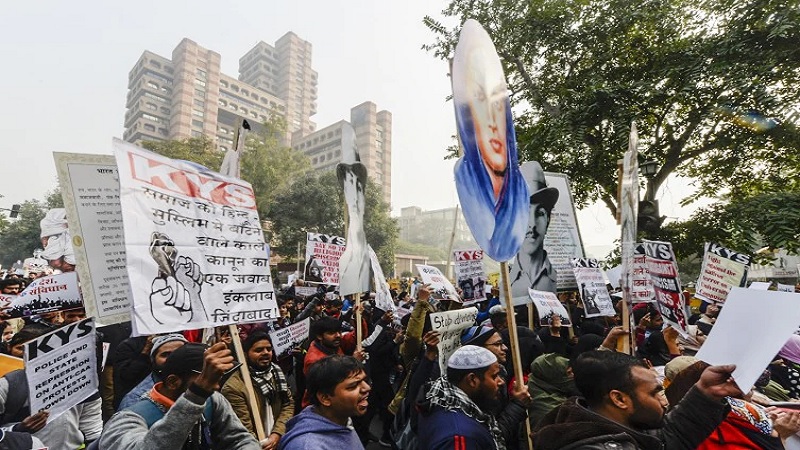
Defying Section 144 that was imposed at Mandi House in Delhi, hundreds of demonstrators, including students, activists and members of civil organizations among others marched to condemn the violence on students and teachers of the Jawaharlal Nehru University (JNU) and demanded that the VC of the University MamidalaJagadesh Kumar step down from his post.
Slogans of ‘HallaBol’, ‘InquilabZindabad’, ‘Reject violence’, etc resounded at the march to the HRD Ministry at which leaders like SitaramYechury, D Raja, Brinda Karat, Prakash Karat and LJD’s SharadYadav were also present.
JNUSU’s protest march begins from Mandi House to Ministry of Human Resource Development. Aishe Ghosh leading march along with Sitaram Yechury and other leaders. #CAAProtest#CAA_NRCpic.twitter.com/RlIZFFxqfR
However, reports of lathi charge on protestors at Mandi House came in and a new call was issued to march from ShastriBhavan to RashtrapatiBhavan. However, before protestors could reach RashtrapatiBhavan, they were met with a large police force who charged them with batons and detained many at the Mandi Marg police station.
Delhi police brutality against JNU students who were marching towards Rashtrapati Bhavan to protest against JNU VC and demand for his removal. #STANDWITHJNUpic.twitter.com/0fURCfY9iJ
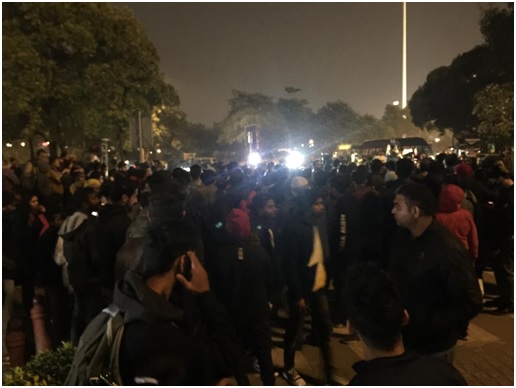
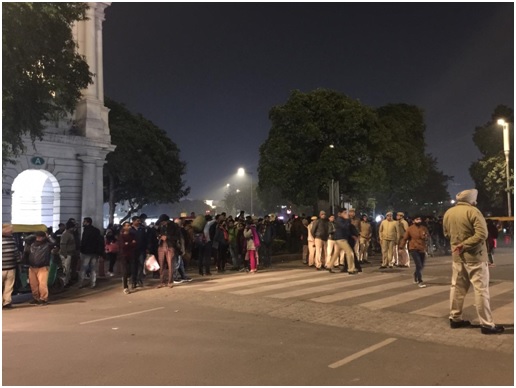
Sources say that another flash protest call was issued for central park gate no. 7 to decide the plan of action. These pics at central park, where police has already gathered and is waiting for orders while the GeneralSecretary and Vice President JNUSU are taking a call on the plan of action.
Students and protestors informed that due to the Delhi crackdown and indiscriminate use of Section 144 and police excesses, they were unable to protest anywhere and are met with brutal force and made to disperse or detained. But they intend to continue to protest no matter the clampdown and wait for the call issued on the group to assemble.
Protestors also conveyed that they have been closely following the Bombay protests, which they find incredible and inspiring. They were celebrating the spirit of the city and democratic expression. And would be taking their protest to ShaheenBagh next.
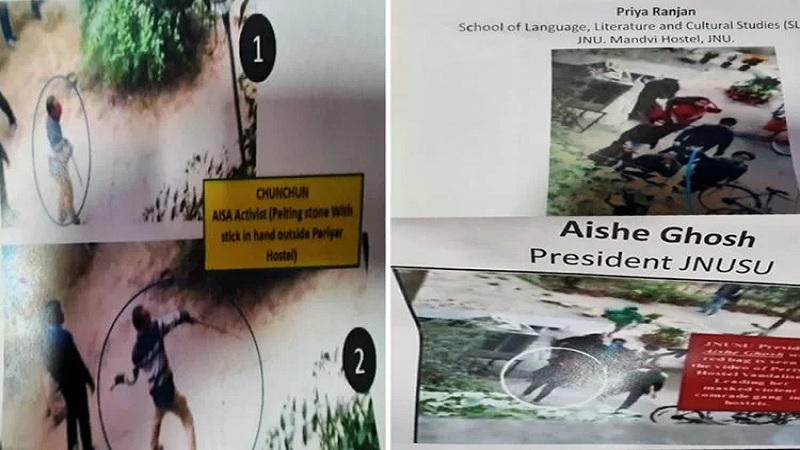
In fresh developments in the matter of attacks on the students of Jawaharlal Nehru University (JNU), the Delhi Police has identified nine suspects including victim Aishe Ghosh, the JNU students’ union President who was gravely injured in the incident that was carried out by masked goons.
Other people identified by the Delhi police are said to be members of Left-wing student organizations.
DCP Joy Tirkey who addressed a press conference in the matter, said that the cases are under investigation by the Crime Branch of India. He also said that generally, the Delhi Police informs the media after the investigation, but because of the misinformation spread in this matter, the police was holding the briefing to ascertain the chain of events in the matter.
The police disclosed nine names and released the photographs of the suspects saying that they haven’t detained anyone yet, but will serve notices to them and ask them about their presence at the place of the incident.
The names given by the Delhi Police are:
Aishe Ghosh, JNUSU President
Vikas Patel, MA Korean Studies
Pankaj Mishra, School of Social Science
Chunchun Kumar, former JNU student
Yogendra Bhardwaj, PhD Sanskrit
Dolan Samanata, School of Social Science
Sucheta Talukdar, School of Social Science
Priya Ranjan, School of Language and Cultural Studies
The police have named organizations like Students’ Front of India, All India Students’ Association, All India Students’ Federation, Democratic Students’ Federation to be involved in the violence, claiming they were the ones who threw out the staff of the Central Server room to stop students from registering for the semester exams. The police also said that they attacked people at the Periyar hostel and claimed that some members of the JNUSU were also involved.
The students have been booked for assault, criminal intimidation and other charges. This, after the police said that they could not find CCTV evidence and were only acting based on accounts of witnesses and videos and photographs from mobile phones.
No information about the masked goons was given by the police during the briefing.
However, JNUSU President Aishe Ghosh has spoken to the media saying, “”Delhi Police can do their inquiry. I also have evidence to show how I was attacked. Biased information by the police. I don’t fear anything, haven’t done anything wrong. I have not carried out any assault.” She said she spoke to the HRD Secretary Amit Khare discussing the demands of the students of JNU and that he has ensured positive intervention in the matter, a circular for which will be released soon.
The JNU students union also issued a statement on the matter saying that the SIT that was instituted was fake. Their statement said that the DCP had maintained a deafening silence on the involvement of the ABVP students and very had conveniently forgotten to mention that some of the students named as suspects were in fact from the ABVP. It also pointed out to the shoddiness of the investigation where the DCP has passed of one student to be another.
They also stated that Aishe Ghosh and some other students who were named as suspects were falsely implicated on the basis of fake videos and that the ABVP students who attacked the JNU students on the night of January 5 also had knives and acid to potentially injure students.
Their statement read, “The Police is conveniently talking the language of Mamidala Jagadesh Kumar. For Mamidala, only people with ABVP are students and rest are agitators. Same is the case with the Delhi Police. It is a fact that the registration process undertaken by the JNU administration was a sham in which the overwhelming majority of students did not take part and the administration has gone on to the extent of claiming that those who merely cleared their mess dues, without taking the fee hike are registered! The registration process which is a process of physical verification was turned into a mockery by the administration through its whatsapp university model.”
Speaking about the MHRD they said, “The MHRD on the other hand is talking about addressing students demands by revoking the utility and service charge. Although it is significant that such an administration was forced to concede even if their intention to ultimately raise is clear, the approach of the MHRD is to wash it’s hands off rather than address the crisis May we remind the MHRD secretary that it is only a part of the discussion that took place on 11th. And considering the culpability of the VC and his supporters within faculty in the violence, the MHRD should follow up on advice it had given to the VC which he ignored and take steps to remove him. The advice of the secretary to students would be well founded if he took action on the VC who is responsible for the chaos.”
They said that to deflect attention from imported goons, incidents were being twisted and distortions spread and asked the public to look through the malicious agenda apart from saying that their spirit would never die down.
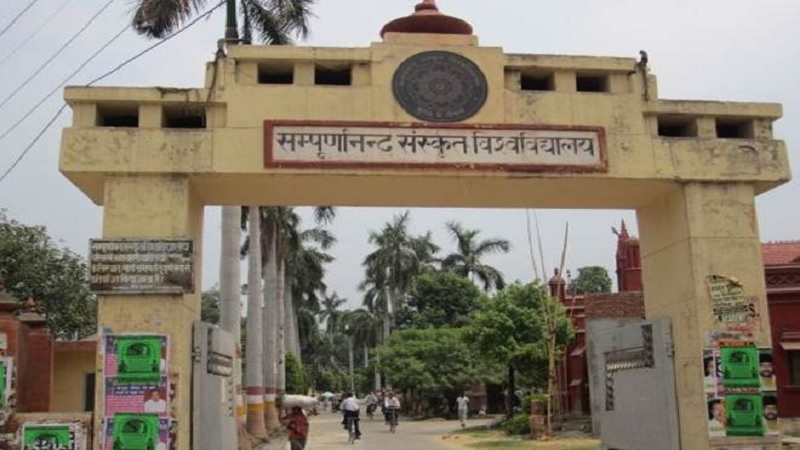
In the student’s union elections held on December 8 at Varanasi’s Sampoornanand Sanskrit University, the ABVP lost all the tops posts to NSUI (National Students’ Union of India) which is the Congress party’s student wing.
NSUI candidates won the top 4 posts, president, vice-president, general secretary and library secretary becoming a big reason for celebration for Congress worker in Varanasi as well as Lucknow. This win has come with an impeccable timing for the Congress. After masked goons attacked the JNU campus on January 5, there were strong affirmations that the attacked was carried out by ABVP “goons” by JNU students and many others condemning the attack. Some screenshots of Whatsapp messages were doing the rounds on social media allegedly belonging to ABVP group planning as well as celebrating the attack on JNU. Whereas ABVP had blamed the violence on “Naxals” and leftist students while also claiming that they were carrying lathis for self defence.
This win for Congress possibly indicates that the students believed in this allegation against the ABVP and hence voted for the Congress student wing. This probably indicates a shift in student’s sentiment towards right-wing, the same students who are going to be voting in the next state election of Uttar Pradesh. In this is really an indication then it as spelled trouble for the BJP.
Of the total 1,950 students, 99 casted their votes in the polls. Shivam Shukla was elected as the President defeating ABVP’s Harshit Pandey and Chandan Kumar Mishra became the vice-President defeating ABVP’s Gaurav Dubey by a margin of 71 votes.
Harshit Pandey, after the results were declared said, “We also worked hard but are sad that we could not make it.” Congress general Secretary, Priyanka Gandhi tweeted congratulatory message
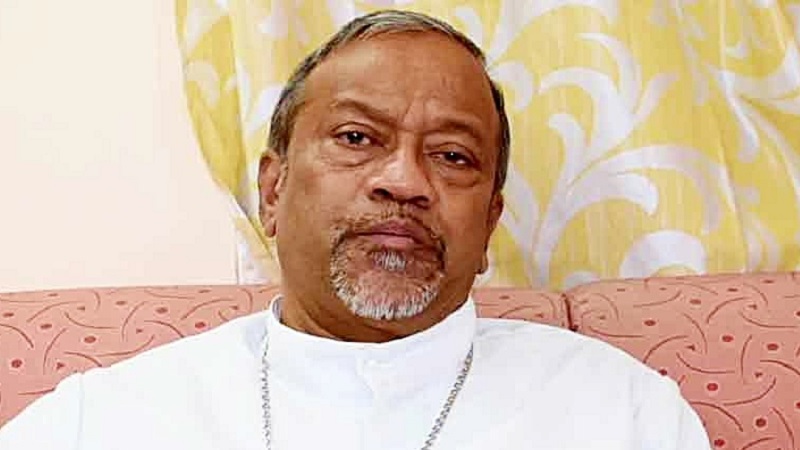
In another move of support those opposing the Citizenship Amendment Act (CAA), the Archbishop of Bangalore wrote to the President of India, Ram Nath Kovind, expressing their criticism towards the Act saying that it could polarize people based on religious lines.
Reverend Peter Machado, the Metropolitan Archbishop of Bangalore and President of the All Karnataka Christian Forum for Human Rights, appealed to the Central government to grant citizenship to the illegal migrants not on the basis of their religions, but on the merit of each individual case.
Reiterating the statement by the Archbishop of Mumbai, Oswald Cardinal Gracias, Reverend Machado said that the government has a dialogue with those opposing the Act and come to an agreement about the way forward with justice, equity and fairness.
Making a powerful statement, he told the President that there is no harm in backtracking; changing course if this is necessary for the good of the country and our people. Saying that doing so, will convince the citizens of the country that it upholds the sacredness of the Constitution and respects the rights of all the linguistic and religious minorities without any discrimination, he said that the backtracking would mete out justice to all the illegal migrants and thus promote equity among them.
Making a powerful statement at this time of unrest that has gripped the country, Reverend Machado said that the Christian community would continue to work for the betterment of all citizens without any discrimination and continue to build the nation based on equality, justice and fairness.
He added that the community expressed its solidarity with those who had been discriminated on the basis of religion, and assured them of support and fellowship.
Earlier, speaking to reporters Reverend Machado had said that the Christians would like to stand with the Muslim community, and as minorities, put up a ‘united front’. He also said that he had not submitted his statement earlier because there was confusion about the Act’s specifics. He also said that justice may be granted to those discriminated against and that all may live as one family, as brothers and sisters in the Mother Land.
Mudhol’s Vittal Tolamatti is laughing his way to the bank, crying tears of joy after he earned a whopping Rs. 92.8 lakh growing onions on his 24 acres of land in the quarter of October – December, reported the Deccan Herald.
But Tolamatti seems to be the lucky one. A Reuters poll of economists has predicted that rising vegetable prices may have had pushed retail inflation to its highest at 6.20% in December for a third straight month, exceeding the Reserve Bank of India’s medium-term target of 4%.
Onion prices went through the roof, soaring tenfold, contributing to the surge in food inflation that has been spiking since March. Products like vegetables, eggs, meat and fish pushed the retail inflation higher.
The National Sample Survey (NSS) recorded a 3.8 percent fall in per capital consumption expenditure for the country, with the decline in rural areas being close to 10 percent; potentially pushing more people towards destitution and undernourishment.
India has been suffering from ‘stagflation’ or ‘recession – inflation’ witnessing a slow economic growth and a high rate of joblessness with unemployment rate being at 7.7 percent in December 2019.
The output of primary goods that include the industries of agriculture, fishing, mining and forestry fell by 6 percent, consumer durables declined by 18 percent, construction and infrastructure output declined by 9.2 percent and the production of capital goods (buildings, machinery, equipment, tools & vehicles) fell by 21.9 percent. However, the output of intermediate goods (partly finished goods used as inputs in the production of other goods) increased by 22.2 percent.
The current inflation, experts say, is caused by the decline in output of several commodities relative to the shrinking purchasing power in the hands of the people, who are spending more money on food items, leaving them with less to spend on industrial and other commodities thus enhancing the already soaring demand deficiency in such sectors.
Now, after the tensions between the United States of India and Iran, the already suffering economy could suffer a shock from the outside, weakening the already shaky economy.
India meets more than 80 percent of its crude oil requirements, importing 4.5 million barrels of oil per day; and since the killing of General Qassem Soleimani lead to an increase in the hike of petrol prices. Currently, petrol and diesel prices are at around Rs. 75.69 and Rs. 68.68 a liter in Delhi respectively.
Higher crude oil prices and the unstable situation means India will have to pay more for insurance of the oil tankers that come to Indian shores. Experts estimate that for every $10 rise in crude oil prices, India will have to end up paying an extra $1.5 billion every month. This will push retail inflation in the country by 0.4 percent transport runs on fuel.
In 208-19, India’s import bill was around $140 billion, the current food inflation and any further increase in oil prices could only end up stoking inflation at a time when the economic growth is at an 11-year low of 5.8 percent.
However, experts believe that India will not face a crude oil shortage if tensions escalate because many countries like Venezuela, Saudi Arabia and other Mediterranean and Middle East countries can ensure supplies to the nation.
With the current economic downturn, India is facing a risk of slipping back into the ‘fragile five’, making it dependent on outside investment to fund economic growth. Slower growth in the construction sector means lesser employment opportunities and lower income. Not only the decline in exports, but also the lower imports due to lower consumption pose a worrying scenario.
Stressed loans have exceeded 12 percent of total lending, food inflation has spiked, core industries – automotive, retail and manufacturing have contracted, consumer expenditure is dwindling and the GDP growth is in the doldrums. Will this turn for the better in 2020? Only time will tell.
(Information sources – Economic Times, India Today, Newsclick)
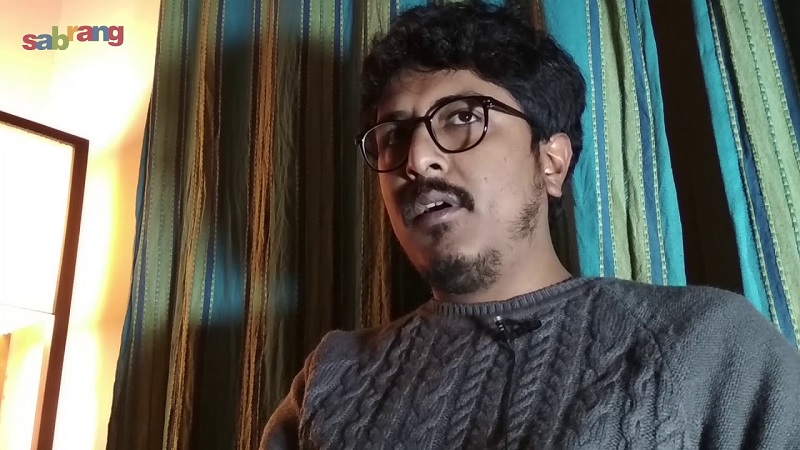
Kolkata-based filmmaker Ronny Sen, known for his internationally acclaimed feature film ‘Catsticks’, was attacked on Monday, 6th January, night for participating in the anti-Citizenship
Amendment Act (CAA) protests. Sen filed a police complaint where he accused one Avijit Dasgupta for physical assault.
He spoke exclusively to SabrangIndia giving his account of the incident, discussing the nature of protests all around the country and the violent ways in which the Government is trying to suppress them.
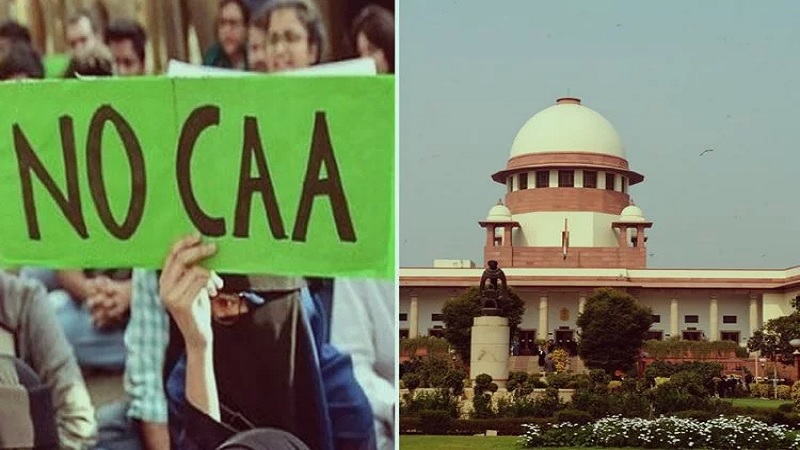
The Supreme Court bench comprising of CJI SA Bobde and Justices BR Gavai and Surya Kant issued notice at the hearing of the Transfer petition filed by the Centre for transfer of the cases challenging the Citizenship Amendment Act (CAA) from the high courts to the apex court. The Centre had moved the Supreme Court in this regard on December 8.
The Supreme Court had taken a prima facie view that “high courts should hear petitions challenging CAA and in case there is a conflict we may look into it.” While Centre took a stand that different high courts will have conflicting views and lawyers will have to move to different courts to attend to each of the hearings. To which, the bench had responded that the convenience of the lawyers was not its priority in considering a transfer petition.
The Transfer petition seems like an attempt of the Centre to skip a vital tier of judicial examination and evaluation. After all we have a four-tier system for a reason, that appreciation of law and facts needs reasoning as well as mature judicial determination.
The petition will now be heard on January 22, the same day when about 60 petitions challenging the constitutional validity of CAA are being heard at the apex court.


 Image Courtesy: freepressjournal.in