Email: sabrangind@gmail.com

| Assembly Seats | BJP | NDA | Congress | UPA | Others |
| 4120 | 1321 | 475 | 833 | 327 | 1026 |
| Parties | % |
| BJP | 32 |
| NDA | 43.6 |
| Congress | 20.2 |
| UPA | 28.1 |
| Others | 24.9 |

Image Courtesy: steelguru.com
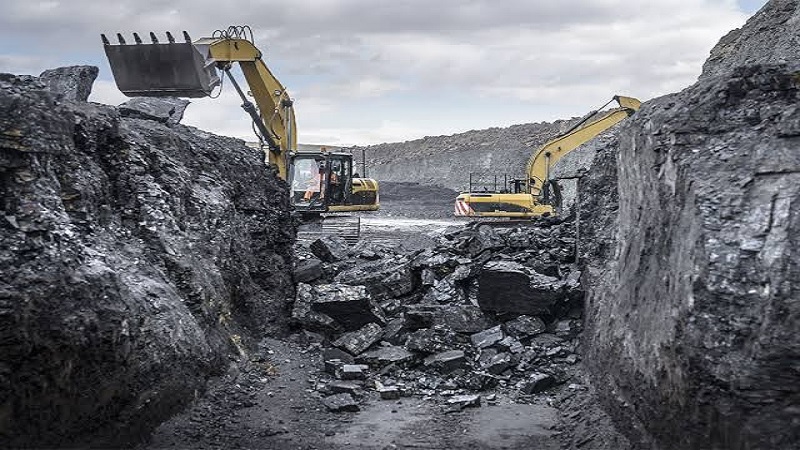
The villagers sitting on dharna at Udaipur block in Ambikapur district recalled how Rahul Gandhi visited them in June 2015 at Madanpur pledging his support to the people’s protest against the coal mines in the Hasdeo-Arand coalfield region but the Chhattisgarh government led by Congress now “ignores” their plea, The Indian Express reported.
The very biodiversity-rich Hasdeo-Arand coalfield region was declared ‘No-Go’ area for mining in 2010 by Jairam Ramesh, then Union Minister for environment and forest.
However in 2013, he refused the recommendations of the Forest Advisory Committee (FAC), which he had earlier accepted. The reasons he cited for the refusal of the recommendations and allocations of the coal blocks were that the coal blocks were located in the fringe area of the forest and not the actual biodiversity-rich area, that changes had been made to mining plans to lessen the damage, that concerned raised about the wildlife in the forest could be managed through a wildlife management programme, that these would meet growing energy demands in an ‘environmentally friendly’ manner and that he, as minister, “has to balance and keep the broader developmental picture in mind and balance out different objectives and considerations”.
It has been over a month that villagers have held indefinite demonstrations demanding the cancellation of land acquisition and environmental clearances for coal projects in the region where around 20 coal blocks have been identified in coalfields of which 8 coal blocks have been auctioned.
Villagers say that a memorandum of demands had been given to the Chief Minister Bhupesh Baghel and collectors of Surajpur, Korba and Jashpur, but the tehsildar of the area says that no such memorandum has been received.
Coming together under the Hasdev Aranya Bachao Sangharsh Samiti (HABSS), the protestors have written to Baghel demanding that no mining project be carried out in the region, while also asking him to scrap land acquisition on the villages of Salhi, Hariharpur and Fathepur in the Parsa coal block in Surguja and Surajpur districts.
The protestors also demanded that the developer-cum-operator agreement between the Adani group and Chhattisgarh Power Generation Company, which was allotted the Paturia and Gidhmuri coal block, be cancelled, The Hindustan Times reported.
With the Congress-ruled state government yet to respond, the villagers continue fighting for their rights over ‘jal-jungle-jameen’ and observed ‘Rajya Bachao Utsav’ (save the state) when the entire Chhattisgarh was busy celebrating its 20th Foundation Day festival in the first week of November.
The land which also figures under the 5th Scheduled Area cannot be taken without the consent of the villagers but this provision is being violated, alleges Alok Shukla, convener of the Chhattisgarh Bachao Andolan (organisation fighting for forest rights of tribals and the mining issues).
The Parsa East and Kete Basan coal block in the region, which was considered an inviolate forest area, has seen mining activities over the years despite ongoing legal cases.
The Parsa mine, awarded to the Rajasthan Rajya Vidyut Utpadan Nigam Limited, is one of the 30 mapped mines in Chhattisgarh’s Hasdeo Arand region. It is home to forest-dwelling Adivasi communities, such as the Gonds, who are deeply dependent on forest produce, and agriculture. The region is also highly bio diverse and ecologically fragile with dense sal forests, rare plants, perennial water sources, and wildlife species. But the vast coal reserves in the region threaten its rich ecosystem—the Hasdeo Arand Coalfield, as mapped by the ministry of coal, has more than a billion metric tonnes of proven coal reserves, spread over an area of 1,878 square kilometres. Of this area, 1,502 square kilometres comprise forest land.
Residents of the villages destroyed by the PEKB mine have not been rehabilitated and regret giving up their land for a good cause. Many have not got jobs and have resorted to menial work. Animals displaced by the mining are now coming to the villages and there are increased instances of elephant and bear attacks which have caused crop and house damage. Streams used by villagers have now become polluted. The authorities have not assessed the required land for mining and nor have they considered alternatives. Adivasis whose livelihoods depends on forests know that Hasdeo is their home and that the government cannot illegally snatch it from them.
In an interview to The Caravan, Jainandan Singh Porte, a member of the HABSS said that the villages have filed community claims under the Forest Rights Act (FRA) and will continue to fight for their land undeterred.
Related:

Image Courtesy: DNA India
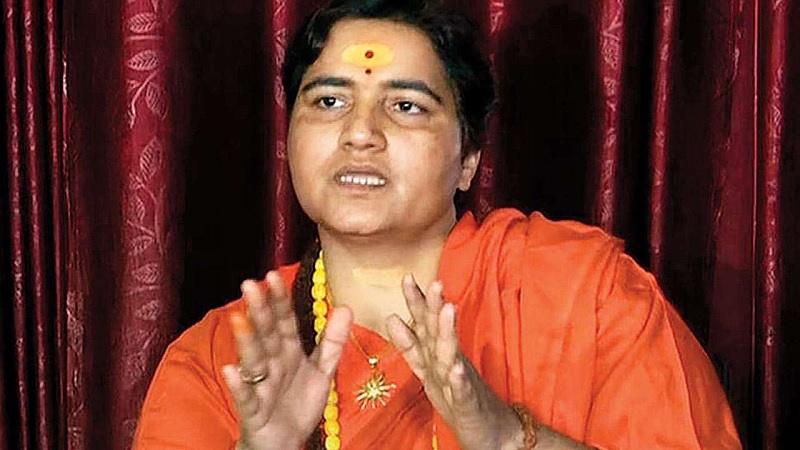
Bhopal: Malegoan blast-accused and Member of Parliament from Bhopal constituency, Pragya Singh Thakur, yet again raked up a controversy by claiming that Nathuram Godse, assassin of M K Gandhi, was a patriot.
When asked why she was missing from the 42-day long ‘Gandhi Sankalp Yatra’ organised by her own party (Bharatiya Janata Party or BJP) to mark the 150th birth anniversary of Mahatma Gandhi, Thakur said on Wednesday that she believed in following the path shown by Gandhi ‘instead of publicising it’.
“The Congress only cashed in on Gandhi’s name for political benefits, but never followed his ideals. Congress will never have empathy for anybody, whether it’s Gandhi or Godse. They cannot reach up to the ideal of Gandhi, or the ideology and ‘patriotism of even Godse’.They play with public feelings for political gains,” she said.
After calling Godse a patriot again, Thakur, who had earned Prime Minister Narendra Modi’s ire for praising Godse as a “deshbhakt” during the Lok Sabha polls, praised the PM. “The day he took the office, Prime Minister Narendra Modi ji has been following his ideals and propagating Gandhi ji’s teachings. And the changes are clearly visible across the country,” Thakur was quoted as saying by the Times of India on Wednesday.
During the Lok Sabha election campaigning in Agar-Malwa district of Madhya Pradesh, the BJP MP had called Godse a patriot. Her statement had kicked up a row across the country. Days after her statement on May 17, PM Modi said, “Will never forgive Pragya Thakur for insulting Gandhi.”
Later on, she apologised for her statement, but the then BJP president, Amit Shah had claimed that the issue has been referred to the party’s internal disciplinary committee to review her statement and take action. Six months on, no action has been taken so far.
To mark 150th birth anniversary of Gandhi, the state BJP unit had observed ‘Gandhi Sankalp Yatra’ from October 2 to November 12—launching campaigns for plastic-free city, de-addiction and self-dependence among youth, plantation, blood donation and cleanliness drives. However, Thakur was seen missing from the programmes. Her absence gave ammunition to the Congress leaders, who then launched a scathing attack on her.
On Wednesday, Congress leader and Labour Minister Mahendra Singh Sidodia said: “There are several people like Pragya Singh Thakur who worship Gandhi’s assassin Nathuram Godse. They do not follow Gandhi ji but, display their double face for obvious reasons.”
Pragya hit back and said, “It’s evident that we (BJP), and not Congress, followed the path shown by great personalities who sacrificed everything for us. I am a sanyasin (ascetic) and patriotism has been in my blood from [my] birth. But we do not publicise our work. We do not indulge in fake propaganda like Congress.”
“We do not want any certificate [to say] that we believe in Gandhi. We won’t forget what he has done for the country. We follow his ideology, but do not indulge in propaganda. I am unwell and could not attend a single function during the Gandhi Yatra. I wanted to recover fast, but my health worsened. I want to recover quickly now so that I can attend the winter session of Parliament,” said Pragya.
Coming down heavily on BJP MP, senior journalist Shahroz Afridi said that her love for Gandhi’s assassin is not hidden. “We have already seen it during the Parliamentary elections. She distanced herself from ‘Gandhi Sankalp Yatra’ because she admire Godse. Her party, too, has affection for Godse, else the disciplinary committee would have taken action against her after PM Modi’s statement against her.”
Courtesy: News Click

“The preparation was accomplished with phenomenal secrecy, was technically flawless with consistency and assured results. The theme was power. It attracted clusters of young men to support the hidden agenda. Leaders know how passions are aroused and how to prevent the same; they however always see what would be beneficial to them rather than what would be good for the nation. This is what happened in Ayodhya.” (from Liberhan Commission report on demolition of Babri mosque).
Preface
Babri Masjid has become history. A thing of the past.
Soon we will have a Supreme Court judgment on the case regarding the mosque, but as we know, the name of the case itself is something vague — Ram Janmabhoomi – Babri Masjid land dispute case. It is about two entities, and just like the first one, the second one is also nearly a myth by now.
Problems with things of the past is that we soon forget what it was and where it stood. And in current India, it will not be a surprise if after a few more years it does not even find a place in the history books taught in schools. If it finds, it would only appear as a symbol of Muslim aggression. Even the court dispute has become more about beliefs and people’s sentiments than about historic and archaeological evidences. Rightly so. But when an ‘almost’ Hindu nation weighs its sentiments, sentiments of a large section of people go unnoticed. Forgotten. Ignored.
That is precisely why an alternative recording of events become important. Alternative sources of history, when the mainstream history is limited to the heroic accounts of the dominant society and its protagonists. Ram Rajya’s history is about the heroics of Ram. The villainy of Ram and his disciples will have to be heard from the backyards of history. It needs to be told nevertheless. it needs to be heard nevertheless. At least by those who do not want to be run over by these cultural bulldozers.
A multitude of accounts
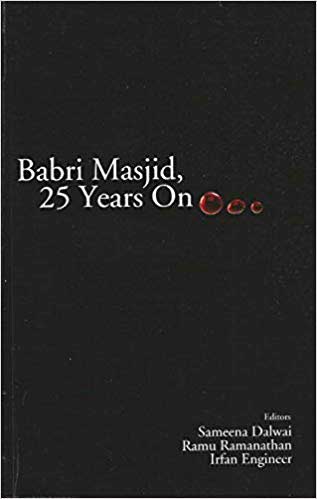
‘Babri Masjid, 25 Years On’ is a book that came out in 2017, a collection of essays edited by Sameena Dalwai and Ramu Ramanathan. Irfan Engineer’s name is listed as ‘Journal Editor’. It comes after two other important books on the same topic — ‘The Babri Masjid Question 1528-2003: A Matter of National Honour’ and ‘Destruction of the Babri Masjid – A National Dishonour’, both by veteran lawyer and political commentator A G Noorani. What makes this book different is the multitude of accounts and angles covered in the book, as it is told by a spectrum of authors that covers many prominent artists and activists.
I know it is too late to introduce a book that came out almost two years back, so I will stick to highlighting some parts of the book that I find important, and placing it in the context of the legal and sentimental dispute as well as the ‘conscience of the society’ that I am a part of.
Countdown and a Witness account
In his essay ‘Countdown to Ayodhya’, senior journalist Anant Bagaitkar describes political developments centred around the Ayodhya issue close to the demolition. He recollects how he and some other journalists secretly met a senior RSS leader and the conversation they had, where the leader clearly said they were prepared to break the structure if the Government did not yield to pressure by the end of the three month deadline that they had given. This was in July 1992. Later in September, VHP leaders VH Dalmiya and Ashok Singhal declared that a temple could not be constructed without the demolition of the Babri Masjid. In October, VHP organised a meeting of the dharma sansad to consider the future course of action on the issue. In this meeting the decision was taken to resume the kar seva and the date decided was 6 December, 1992.
He also recalls that by November end RSS, VHP, Bajrang Dal and Shiv Sena workers had gathered in Ayodhya as kar sevaks, and even before 6 December, the assembled mob indulged in attacking mosques and mazars (shrines) in the vicinity of Ayodhya.
What follows is a witness account of the events from 1st to 6th December 1992, in an essay by then Maharashtra Times journalist Pratab Asbe who was entrusted with reporting the events in Ayodhya. He recollects that on 5 December, during the rehearsal of the kar seva, leaders had announced that the kar seva on 6th will only be a symbolic gesture. They said, “On 6 December, two lakh kar sevaks will put a fistful of soil in the four-acre premises of Ram Mandir and the monks will clean the Ram Chabutra with the holy water from the river Sharayu.” However, we know that was not to be the case.
On 6th December afternoon, Adwani gave an inflammatory speech that went like this, “No power in the world can stop the construction of Ram Mandir. If the central government tries to obstruct, then we will not allow the government to run. Those who have come to be martyrs let them be martyrs. Let the fortunate ones be able to make it to Lord Ram’s feet. Let them be martyred.”
It is particularly interesting how they manhandled the media persons who tried to cover the incidents of that day. “Many national and international journalists were standing near Ram Chabutra. Kar sevaks and saints started misbehaving with these media persons. The so-called holy men started abusing journalists. One of the monks was hitting a journalist from Voice of America. This was followed by a Time magazine journalist getting beaten up. Even BBC’s Mark Tully couldn’t escape this. And then anybody and everybody started hitting the journalists. Just then, television cameras faced the wrath of this aggressive mob of kar sevaks. Around 60-70 television cameras were damaged..” “only the photographers with a still camera were able to put the cameras in a leather bag and escape. They were also followed and beaten up. As a result, the photography and video shoot of kar seva came to a halt. This attack on the press was pre-planned and a well-co-ordinated strategy..”
The final acts of the drama unfolded soon. In his own words, ~as if the doors of a dam were opened, mobs of kar sevaks started jumping on the compound surrounding the Babri Masjid. In no time, they broke the compound and entered the mosque and with an unswerving determination, climbed the mosque up to its dome. They started hitting the mosque with anything that they could catch hold of. Immediately, they were being supplied with spades, shovels and ropes. This boosted the demolition process. High on the sadistic pleasure derived from the act, kar sevaks were repeatedly attacking the mosque as if it was a living human being. Unable to withstand the shocks, the mosque began disintegrating. The soil and bricks started falling apart. At this end, the voice on the microphone announced, “Siyawar ramchandra ki jai, mandir yahin banayenge.” Seeing the attack on the mosque, women spectators along with their men counterparts started dancing and shouting slogans..~
~at 2.45 p.m., the first dome of Babri Masjid was demolished. The moment the dome collapsed, Uma Bharti joyously embraced Murli Manohar Joshi. Uma Bharti and Sadhvi Rithambara shouted inflammatory slogans, instigating kar sevaks. Sadhvi Rithambara announced: “ek dhakka aur do, babri masjid tod do” (Pound and thrash till it collapses). While all this was happening, the police was also seen clapping and expressing its joy. Around 4.00 p.m. in the evening, another dome collapsed. And then the third and the last dome at 4.46 p.m. Sadhvi Rithambara congratulated the Hindu population on the microphone by saying, “The shameful structure has fallen.”~
Artists’ accounts
The first among the six artists’ acoounts is that of theater actor, director and activist Sudhanva Deshpande of Jan Natya Manch New Delhi. He weaves his narration beginning with his memories of Operation Blue Star and Indira Gandhi assassination that he witnessed as a teenager and his experiences during 1992.
In the next essay ‘How it feels to be a Muslim in India’, award winning playwright Shafaat Khan talks about the post-Babri Muslim life in India and in Mumbai in particular. He says, “the Mumbai riots ensued by the demolition of the Babri Masjid had brought a change in direction. Until that time I believed that violence was in the hands of a few goondas and politicians. For the first time I saw that physically and mentally, the common man was imbibed with the destructive forces all the way. A whole society was given over to violence with a strong belief that it provided all the answers.” He explains how this affected his life as a playwright and director, and how his adaptation of Asghar Wajahat’s Hindi play Jis Lahore Nai Dekhya, O Jamyai Nai, was an attempt to communicate with ‘the rioters, supporters of riots and those who strengthened them by standing upright on the street.’
Unfortunately, around 27 years on, that ‘whole society’ is still at large, making use of every opportunity to ‘annihilate the other’. The hatred machines have got more and more official channels at their disposal and perpetrators of hate crimes are rewarded with election tickets, increased popularity and more and more power.
In her essay ‘Why I never wish to forget the violence’, Playwright and screenplay writer for popular Marathi TV serials Manaswini Lata Ravindra tells how her mother who never wore religious symbols was forced to wear a bindi to escape violence from a Hindu mob. She also recollects memories from her school days, about how the dominant ones in the class silenced those who had different opinions, or were just different, say by name / religion. “The day the episode of Shivaji Maharaj chopping off Shaista Khan’s fingers was taught in the class, all the Hindu boys assumed themselves in the role of Shivaji and the Muslim boy was obviously considered to be Shaista Khan. I remember the Muslim boy was so petrified that he skipped school the following day.” She also tells about how she realised that at no cost will she ever be able to gain experiences from someone else’s societal environment. “How much ever one tries, it is very difficult to change your context of being someone.” Which is an important point in any intersectionality we talk about these days.
Joy Sengupta writes about how he woke up to a hard realization at home, that ‘the well-oiled mechanism was geared towards bringing about a preconceived, elite-driven Hindu unity’. He adds that “Middle-class India, under the mask of liberal democracy, was nothing but a sheer bunch of fence-sitters belonging to the Hindu majority waiting to cross over. This demolition just helped them unmask and breathe in soft Hindutva. Indian nationalism and the modern Indian state were getting crafted out of the affirmations of Hindutva.”
Veteran theatre artist and television host Dolly Thakore has contributed with a piece titled ‘Joining hands, building trust’. She was also a volunteer for an NGO ‘Citizens For Peace’ that did relief works in a riot-struck Mumbai. Playwright, actor and women’s rights campaigner Sushma Deshpande feels the ‘obsessive need for communicating the ideologies of Jyotirao and Savitribai Phule to the masses’ and writes about her experience of conducting a theatre workshop for Muslim girls in Hyderabad. She notes that ‘when the whole community is under attack, the scope to address the issues and the rights of the weaker sections within that community get further eroded.”
Activists
In her account ‘Where is the place for the activist’, academician and activist Shama Dalwai explains how being a Muslim or having a Muslim in family in Mumbai became a frightening prospect by end of 1980s. She says that the school that her children went to, though seemed like a liberal institution, “affixed a Muslim identity to my children by singling them out as ‘strangers’ and ‘the others’.” During the Mumbai riots that broke out post the demolition of the mosque, as a Hindu mother of half-Muslim children, she recounts how she became terrified for the safety of her children (Sameena is her daughter). The police violence, mayhem by Shiv Sainiks and, most shattering, she says, was the withdrawal of the Leftist comrades from the scene. She also talks about how media selectively omitted certain kinds of news, and talks about her attempts to calm down the Muslims.
Helen Bharde, a former corporator affiliated to Indian National Congress, is a christian woman married to a Muslim. Her write-up is mostly about setting up and running the relief camp at her locality Golibar. She writes about how that place, near Santacruz, became a haven for the Muslims during the riots. How Muslims, fearing for their lives, had run away from their homes and formed a community at Golibar and sought refuge there. It does not mean it was all safe there. She recalls an incident when a young boy who was playing in the vicinity was mistaken for a rioter and shot down by the police. And ‘if that wasn’t tragic enough, the old man who went to retrieve the boy was also beaten up brutally’, she adds.
In her essay ‘Walking the tightrope: Balancing gender and community’ Flavia Agnes critiques the women’s movement that failed to create a strong alternative for women of all castes and religions.
Rekha Thakur of Bharipa Bahujan Mahasangh in her note writes about the ‘dual agenda’ of Massacring the Muslims and criminalising Bahujan at the same time. One could say it is problematic to make such a reading, as the growth of Hindutva in India from late 80s to 2019 can not be understood only as a savarna ideology. It is essentially based on hatred of Muslims (and Christians, though to a lesser extent). Many of the Sangh leaders were from OBC communities. It also succeeded in containing the OBC angst post anti-Mandal uprisings of 1990s.
In ‘Riots in the pink city’, M Hassan narrates Jaipur of 1989 to 92. He describes it as a period of intense polarisation and violence. How the southern hilly region, being predominantly tribal, is a fairly known ‘laboratory’ of communalism due to the Vanvasi Kalyan Parishad of RSS, which spread its tentacles in each tribal settlement. About how Jaipur’s Musafirkhana acted as a shelter and relief camp during communal riots, and how the Musafirkhana issued guidelines to
ward off confrontation and escalation of conflict in 1989 and 1991. Hassan writes about how the ‘Game of riots’ that is often played to alienate one community. It is a game that continues even now, Musaffarnagar being the latest major instance.
In her essay ‘A bruised nation’, Shaila Satpute, who was Maharashtra State leader of Janata Dal once, confesses that she is more afraid today than what she was during the days of riots. “At that time there were sporadic incidents of violence. Today, I notice that the seeds of hatred that were planted have grown into a poisonous tree. Now, everyone is a target. At that time, the Babri Masjid incident provided a reason for violence. Now, people don’t need a reason to resort to violence”, she says.
Vaze College Physics Professor Dr. Sanjeewani Jain’s account of the collective action of teachers and students is the last in the section.
Asghar Ali Engineer’s Special Essay
Noted Islamic Scholar, social reformist and peace activist late Asghar Ali Engineer in a lengthy special essay notes that the Babri Masjid-Ram Janmabhoomi controversy was one of the major controversies which was exploited politically to the hilt in post-independence India. He also connects it to theShah Bano controversy during 1985-86, and feels that had the controversial Muslim Women’s Bill not been passed in early 1986, the Ram Janmabhoomi controversy would not have arisen. He criticizes not only BJP and Shiv Sena, but also Congress for the cynical exploitation of Babri issue for winning 1989 elections, in an attempt to capture ‘popular imagination’.
Engineer gives a summary of the history of the controversy and observes that the ‘historical’ accounts suggesting that Babar demolished a temple before erecting a mosque there are based on prejudices and guesswork. To quote from his essay, ~The translator of Babar’s Memoirs Mrs AF, Beveridge in a footnote suggests that Babar being a Muslim, and “impressed by the dignity and sanctity of the ancient Hindu shrine” would have displaced “at least in part” the temple to erect the mosque. She bases her inference on the fact that Babar being Muslim must have been intolerant of other faiths and thus demolished the temple which was supposedly in existence there. It is, at best, a very generalised inference..~
He adds that there is no doubt that the laying of the foundation stone of Ram Janmabhumi on 9 November, 1989 could not have been done without the connivance of the then Government led by Rajiv Gandhi, and how KK Nayar who was DM of Faizabad resisted all attempts to remove the idol when an idol first ‘appeared’ in those premises in 1949 and how Congress was helpless at that time. He feela that “if locking (the premises) was murder of justice and ideals of secularism, its unlocking (in 1986, opening it for Hindus to worship) was greater injustice and outright slaughter of ideals of secularism.” He concludes the essay with the most sane thing to say, that we should “do every thing possible to resolve this issue through constructive dialogue in the spirit of reconciliation” and it is “highly necessary to arrange a round-table dialogue between the religious and secular leaders of the two communities.”
Strengths, and what it lacks
The book is not by any means an apologetic one. Irfan Engineer does not mince his words when he says “Twenty-five years ago, Babri Masjid came crumbling down on 6 December 1992, amidst massive mobilisation by the Sangh Parivar — organisations affiliated to right-wing Hindu supremacist Rashtriya Swayamsevak Sangh..” That itself is the major strength of the book.
Sameena Dalwai and Ramu Ramanathan do not see the demolition of the Babri mosque as an isolated incident, and they place it in a context. Reading from Sangh Parivar idol Vinayak Damodar Savarkar’s book Six Epochs of Indian History, they observe that “In this, Savarkar admonishes Marathas for not taking revenge on Muslims in response to the atrocities committed around the year 1757 by Abdali. It seems, Savarkar would have liked the Marathas to not merely take revenge, but to annihilate Muslim religion (Mussalmani Dharma) and exterminate the Muslim “people” and make India Muslim-free.. According to Savarkar, the Maratha army should have exterminated ordinary Muslims (i.e. not just soldiers), destroyed their mosques and raped Muslim women.” This is particularly relevant in a time when BJP makes election promises of honoring Savarkar with Bharat Ratna, which can be seen as a token of gratitude for laying the foundation stones of a religious hatred on they have built their political empire.
They also take into account another major factor that has contributed heavily to the hatred against Muslims in this country, partition. They observe that “India’s partition is not documented very well. The blame can hardly be placed on the British as the main culprits, as that remains untold. So does the fact, that arson, murder and rape was done by both sides to the ‘other’. Now young authors and curators alike are trying to keep alive the history of partition through collecting stories that turn into artefacts from a dying generation into live narratives”. These narratives are crafted well in order to produce hatred. Connecting to more recent times, “Khairlanji happened. Gujarat Carnage happened. Mumbai riots happened. Otherwise our next generation will only be told to remember Godhra and Mumbai Bomb Blast, but not what happened before or after.”
Despite this clarity in thoughts and a good overall vision about the whole sequence of events that led to the demolition of the mosque and what happened after that, I think the book misses out on one aspect intentionally or unintentionally. It is the ‘bad Muslim’. The bad Muslim does appear in a couple of articles as an element to be calmed down, but the book fails to address the so called bad Muslims or the outfits that raise the Muslim political question. Be it AIMIM, SDPI or any such groups. Dalit / Ambedkarite perspectives are also missing in the book. Also I feel there is an excess of brahmin accounts. It wouldn’t do any harm even if a couple of such accounts were omitted. As Manaswini rightly points out in the book, there is a limit to the extent to which one can relate to another person’s feelings, how much ever one tries. That space could have been given to more Muslim writings.
Times of extraordinary stress and distress have not ended
In the Foreword to the book, Professor Upendra Baxi says ‘Dr Sameena Dalwai and Ramu Ramanathan collect here the reminiscences of living together in the times of some extraordinary stress and distress twenty-five years ago’, but it is not only about a time frame that is twenty-five or twenty-seven year old. It is about living together in the times of extraordinary stress and distress in the current India also. It is also about how we move forward from this point.
I will end with a poem that is quoted in the book, written by Zbigniew Herbert in a poem in 1956.
We stand on the border
We hold out our arms
For our brothers, for our sisters
We build a great rope of hope
Yes, we stand on the border
That is called reason
We gaze back at historical fires
And we marvel at death.

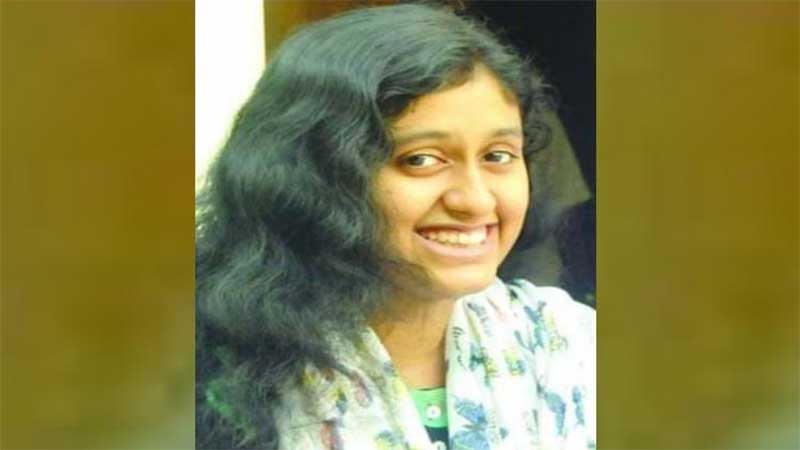
On November 9, Fathima Lathif, reportedly a first-year student of Master’s in humanities and development studies (integrated) in IIT Madras, committed suicide by hanging herself. She hailed from Kollam in Kerala and was a class topper. Fathima left a suicide note in her phone in which she blamed a few faculty members of IIT Madras for her suicide. While names of some persons were mentioned, specific allegations against them were not mentioned in the suicide note that she left in her mobile phone.
It has not yet been ascertained what exactly prompted the IIT-M topper to take such a drastice step, her father Abdul Lathif is known to have said that the victim was being mentally harassed by some faculty members. Since Fathima belongs to the minority community, many have reached a conclusion that Fathima faced religious discrimination in the educational institute, some are estimating that she was bothered by her low internal marks, but it is incorrect to reach any kind of conclusions now unless any further evidence is gathered in the case by the police, as the same would be termed as conjecture.
The police had registered this case as a case of unnatural death, however, after having recovered certain “notes” from the mobile of the victim, the phone is now in the custody of the police for further investigation. The father of the victim has alleged harassment and has even approached the Chief Minister of the State to intervene.
Reactions
The reports of the suicide sparked some protests by Students Federation of India (SFI) outside the campus of IIT-Madras and also prompted a hashtag on social media #JusticeForFathimaLatheef which was trending on Twitter. Many Twitter users have alleged that the first name mentioned by the victim in her suicide note is of a Professor, who is being termed as a Hindutva bigot.
Student Suicides in IITs
Reportedly, this is the fifth case of suicide in the IIT-M, this year and this has raised serious questions on the institution’s environment and lack of mental health support for the students. A look at the data from last decade, 52 suicides were reported across eight IITs in India and IIT-Madras tops the list with 14 suicides!
Students who get admission in one of the country’s most premier institutes like IIT-Madras, are meritorious and academically bright and at the same time remain under the pressure of maintaining the good performance. It remains the prerogative of the educational institute, especially one of such a high esteem, that a conducive environment is provided to its students who work hard to get good scores and to cope with the curriculum of the institute. An environment that is conducive to students who stay away from their family should be healthy, free from any kind of harassment, discrimination and one that stimulates their academic performance as well as their holistic growth and development.
It’s time the administration departments of such institutes do some introspection and focus on student’s mental health as one of the important priorities apart from academics.
Related:
With 14 cases in 10 years, IIT-Madras tops list of suicides among contemporaries
Class topper in all subjects but one, IIT-Madras student kills self
Fear of “objectionable video” going viral led Dalit youth to commit suicide, says family
26-year-old found dead, students allege delay, clash with police: Aligarh
India Has The Highest Suicide Rate in South East Asia, But No Prevention Strategy
In India’s Suicide Country, Catching Mental Illness Before It Is Too Late

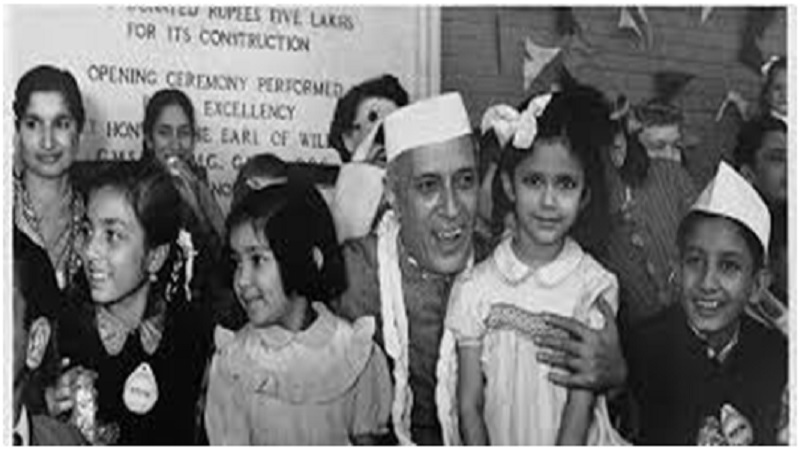
Happy Children’s Day to all! Every year, as a tribute to the first Prime Minister of India – Pandit Jawaharlal Nehru, India celebrates Children’s Day or Bal Diwas on November 14. Celebrations date back to 1956 and the day is observed to increase awareness about child rights and the education of children. Jawaharlal Nehru or ‘Chacha Nehru’ as he was fondly called is remembered for having said, “The children of today will make the India of tomorrow. The way we bring them up will determine the future of the country.”
Worldwide, Children’s Day is celebrated on November 20 in keeping with the date set by the United Nations. In India, the day is a commemoration to Nehru who advocated for child rights and the right to education, overseeing the set-up of India’s publicly funded government school system and the Indian Institutes of Management. He also established the Children’s Film Society India in 1955 to create indigenous cinema solely for kids.
Nehru had pushed for a Special Act through which the first IIT was set up in Kharagpur, West Bengal, in May, 1950. Addressing the first convocation ceremony of the institution, Nehru had said, “Here in the place of that Hijli Detention Camp stands the fine monument of India, representing India’s urges, India’s future in the making. This picture seems to me symbolical of the changes that are coming to India.”

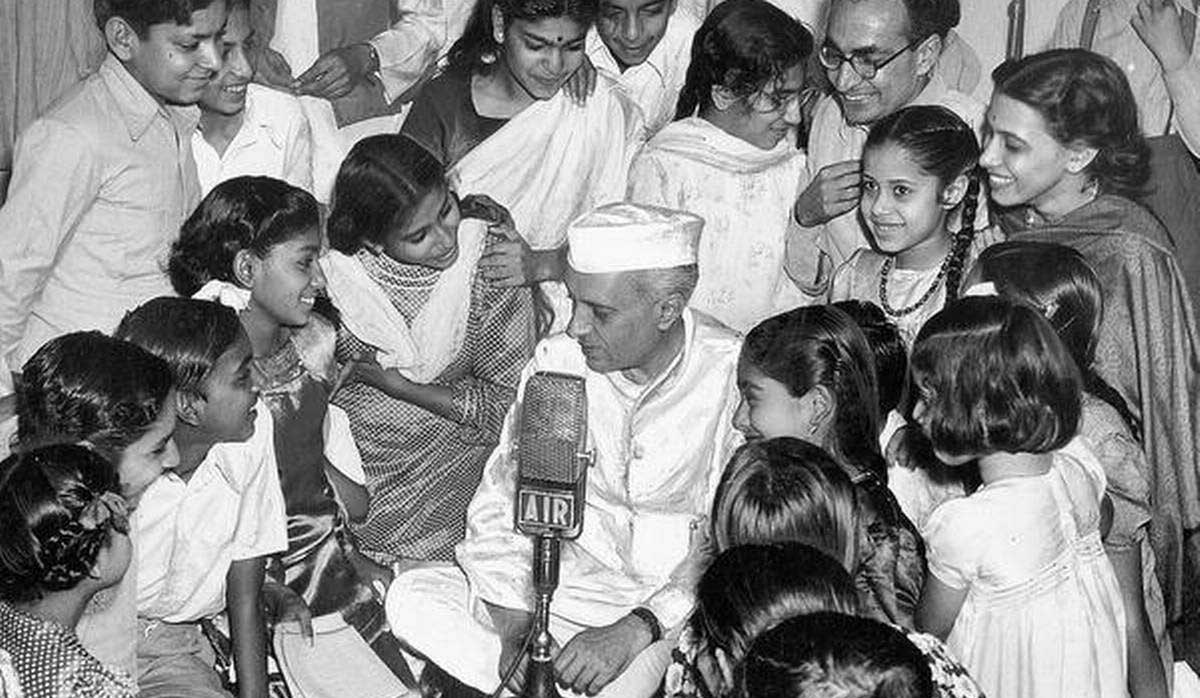
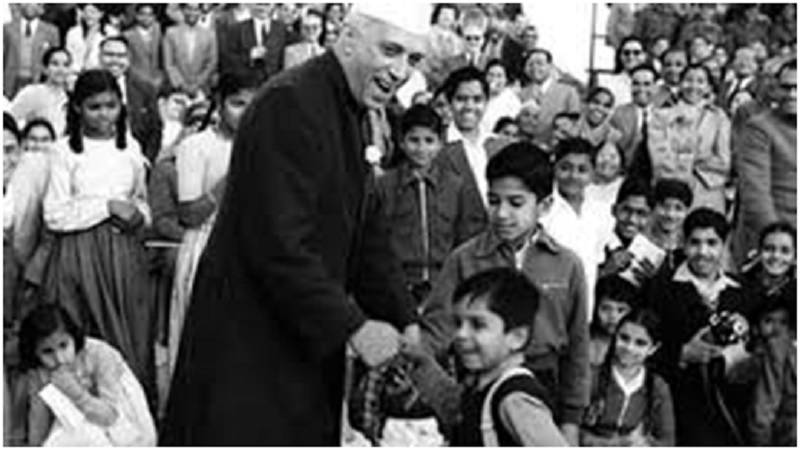
Image Credits – dailyo.inNehru’s affection for children could be witnessed by one and all. At public gatherings, he would throw his marigold garlands to them. He would sit cross-legged on the floor to listen to happenings at their school or tales their grandmothers had told them. Jawaharlal often wore a red rose on his jacket. Some people say he began to do so from the day that a child pinned one on him.
Nehru wrote many books that still hold popularity worldwide. Among these, Letters from a Father to his Daughter and Glimpses of World History have become popular children’s classics because any child can respond to their warm, affectionate tone and spontaneous style. When ten-year-old Indira was at Mussoorie in the Himalayas, he began to write her a series of letters from Allahabad in 1928. In Letters from a Father to his Daughter, he wrote of when there were no men or women on an earth that was too hot for human life, of the rocks and fossils that reveal these times. Before the written word, rocks and mountains, seas, stars, rivers and deserts were the book of nature.
Glimpses of World History is a compilation of letters written in different circumstances, begun while he was in Central Prison, Naini in 1930. It is a vast tome of 1155 pages, not really a book to be read in one sitting but to be taken a few chapters at a time. While Letters… is more impersonal, with the focus on sharing information, in Glimpses… an intimate note creeps in with accounts of life in jail, his hopes and aspirations for the country he loves, his political philosophy and most poignant, his anxieties about his family.

Image Credits – e-pao.netHow child rights have fostered in India since 1956
The Constitution of India has several provisions to secure and safeguard a child’s rights. India still has many underprivileged children who lack basic means to food and education, India has come a long way in protecting their rights but still has a long way to go to ensure that the benefits of India’s development reaches every child who dreams of a better tomorrow.
Constitutional Guarantees that are meant specifically for children include:
Nehru’s first five year plan, which he presented as the Prime Minister of Independent India addressed issues of children’s health and reducing infant mortality. Today, keeping in mind his Nehruvian philosophy, we hope that the dignity of the future of the country, the children of India who are embattling the problems of child labour and violence is restored and that they are empowered with education to bloom and achieve their full potential.
Related:

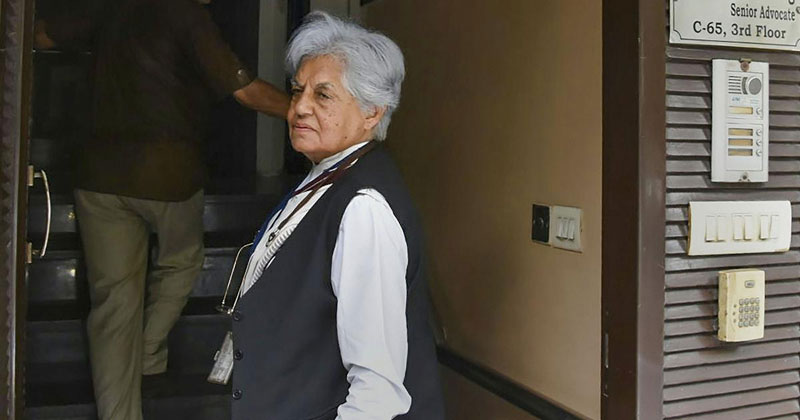
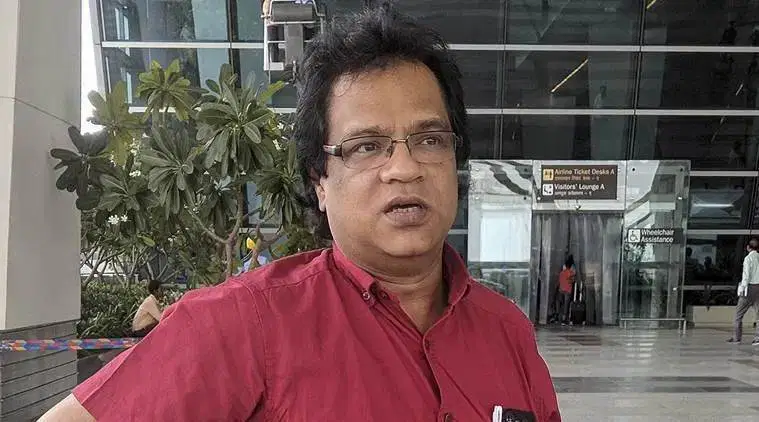
The Supreme Court refused to entertain a petition filed by Lawyer’s Voice Serling coercive action against senior advocates and human rights practitioners, Indira Jaising and Anand Grover. The court however issued notice to the NGO Lawyers Collective and its founders Senior Advocates Indira Jaising and Anand Grover in the petition filed by CBI against the interim protection granted to them by the Bombay High Court in the criminal case registered for alleged FCRA violations.
Ms Jaising and Mr Grover are among the recent targets of the Modi 2 government.
A bench comprising CJI Ranjan Gogoi, Justices Aniruddha Bose and Krishna Murari also dismissed the PIL filed by NGO Lawyers’ Voice, observing that since action has already been taken by the CBI, the petition no longer survived. Lawyers’ Voice had sought criminal action against Grover and Jaising for alleged violation of Foreign Contributions Regulation Act by Lawyers’ Collective.
Most critically , the bench declined stay of the Bombay HC order which granted interim protection from arrest to the Senior Advocates. Justice Aniruddha Bose expressed that he was recusing from hearing the matter further.
The Central Bureau of Investigation had challenged the July 25, 2019 order of the Bombay High Court which granted interim relief to the NGO Lawyer’s Collective and its founders Senior Advocates Anand Grover and Indira Jaising.
A Division bench headed by Justice Ranjit More, after hearing an application by Lawyer’s Collective seeking quashing of FIR, had directed CBI not to take any coercive steps against the NGO which works in the field of human rights and its founders until further orders.
Thereafter, the matter was listed on August 19, 2019 and the ad interim relief was continued. Court adjourned the matter and currently the website shows an auto generated dated of June 2021 as the next date of hearing.
The High Court had noted that there was no new material on the basis of which a FIR has been registered against Lawyers Collective in June this year following a complaint made by Anil Kumar Dhasmana, an Under Secretary in the Ministry of Home Affairs (MHA), alleging that the NGO diverted foreign contributions for activities not mentioned in the objects of association and that funds were used for personal expenses unrelated to these objects.
The FIR alleged that the NGO “was registered for carrying out social activities and had received foreign contribution amounting to Rs 32.39 crore between 2006-07 to 2014-15, but money was used for political purposes”.
On November 27, 2011, the NGO’s FCRA registration was cancelled and decision was taken to freeze all their bank accounts. While hearing an appeal by Lawyer’s Collective against the said decision, Justice MS Sonak in an interim order held that the Centre’s allegations of “mixing of foreign contribution with domestic funds” were “vague and bereft of reasoning.” Thereafter, Court ordered Lawyer Collective’s domestic accounts to be de-freezed.
Related
Mumbaikars protest raid against Indira Jaising and Anand Grover
Now Members of Parliament bat for Indira Jaising and Anand Grover

She is in labour. Her contractions are coming faster, getting more intense! But she still has to walk the 500 yards from her home to the large black gate with barbed wire all around, and guards outside. And when she reaches the gate and informs the guards, it will be a one to two hour wait before permission is granted for the gate to be opened, the big black gate to the outside world…and then, if she’s lucky, a car to take her to the nearest hospital 15 kilometres away. Can she make it? She must make it! She must!
I am watching Sacred Games sitting in my favourite armchair. My back just hurts a little from sitting so long, which all my doctors have forbidden me to do, but I just have to finish this engrossing episode!
She has barely reached the barbed wire fencing, when her baby decides to arrive with little regard for time, space or convenience. The women accompanying her crowd around, trying to shield the intimate process of birthing from the eyes of the male inmates of their prison. The baby slips out onto the earth amidst the dirt and the muck. Someone cuts the umbilical cord with a piece of split bamboo. A makeshift surgical knife. Ingenious! Would it be better for the new-born to die? Or live to be brought up in the same prison as its parents, in a makeshift home without electricity or potable water, behind a huge black gate, outside which is the throbbing, pulsating, land of opportunities that they know as India?

I have finished binge watching Sacred Games and have now switched on to a discussion about NRC on television. A moment of panic! I don’t have a birth certificate! I was born in my grandparent’s home with a highly qualified doctor in attendance, but did anyone think to register my birth?
Ah! But I do have a passport! The date of my birth is imprinted clearly there along with the place – Kolkata, India. A sigh of relief. I go back, yawning a little, to the TV debate about NRC. It doesn’t really concern me. I think I’ll turn in now…but before that I must turn down the air conditioner. It’s a tad too chilly.
Munmun Bibi (Muslim) and Mumpy Burman (Hindu) lie awake with their husbands late into the night in enclaves known as chhit-s while their children whimper in the dark heat of their small rooms. No lights for them. No fans either. But that’s a minor issue right now for their parents. They are worried about when they will be given their citizenship cards, as promised after Constitutional Amendment no 119 was made in 2015, and the historic LBA or Land Boundary Act passed in Parliament.
But who are these people and where did they come from, these inhabitants of the fifty-one chhitmahals that are strewn all over Cooch Bihar? I am ashamed to say that I had never heard the word chhitmahal before. I learnt about them only after I was told the shocking story of the woman giving birth by the barbed wire. So, who are they?

They are the ‘nowhere’ people.
Their ancestors were once the subjects of the Maharaja of Cooch Bihar whose kingdom stretched from Rangpur, now in Bangladesh, to Jalpaiguri and the Himalayan foothills. It was then a part of undivided India. Back in 1947, there were still independent kingdoms that had not acceded to the Indian state. Cooch Bihar was one such.
Radcliffe, who had no idea about the geography of India except in theory, drew the boundary line dividing our subcontinent into India and Pakistan, and left as hurriedly as possible for the more temperate climes of England. The Maharaja of Cooch Bihar acceded to the Indian state two years later, in 1949. So his subjects, who had all along thought of themselves as Indians, were now divided between India and Pakistan and lived in little enclaves or chhit-s on either side of the boundary line, not knowing whether they were Pakistani citizens or Indian.
We had gone to visit them recently. Bolan Gangopadhyay, Mudar Patheria and I, aided by the NGO Masum.
Why, I ask myself, did we bother to fly to Bagdogra, take a car to the New Jalpaiguri station, board a train to Cooch Bihar and then drive out the next morning to Dinhata, more than an hour’s ride away, to find out about these people who were no concern of ours? Our group Citizenspeakindia has no political affiliations. I, personally, have no political ambitions whatsoever. What drew me there? A possible subject for a film? We filmmakers are notorious for using people as ‘subjects!’ But searching deep within, I find that that is not the answer. It is the plight of that pregnant woman that haunted me, haunts me still. As a woman. As a mother myself. And I believe that image haunts Mudar and Bolan as well.

We don’t find her anywhere when we get to the chhit that is known as Karala 2, even though the local women tell us that the incident actually happened. Dinhata is the nearest town to Karala 2. It took us 20 minutes by car to get there. But we are not allowed inside. “The area is sensitive,” the BSF guards explain politely, and they can’t possibly allow us in without written permission. Fair enough. We should have thought of that. We did inform the DIG (BSF), the SP and the DM of Cooch Bihar of our visit on that particular day attaching a route map of our tour. Receiving no reply from any of them, we assumed that we were not forbidden to go. After all, there is no wartime emergency now, and we were not planning to cross over to Bangladesh, only to visit the inhabitants of the chhit to see what their living conditions are like. We were not planning on having a picnic there, or going on a shopping spree as someone from the BSF pointed out rather sarcastically! In any case, according to article 19 of the Constitution, all Indian citizens are allowed to travel freely anywhere in India. We thought we were too.
Well, we are proved wrong. No matter. The cooperation of the BSF guards (who are after all, simply obeying orders) cannot be faulted. They allow some of the inhabitants to come out and talk to us.
We learn a lot from them. We learn that the big black gates of their ‘prison’ are opened twice a day. Once in the morning and once in the evening.
According to the Geneva Convention of 1945, to which India was a signatory, the barbed wire fencing is supposed to be only 150 yards away from the pillars at an international border. The area between the pillar and the fencing is no man’s land. But at Karala 2, the fencing is 500 yards away. So the enclave falls within the no man’s land from which entry and exit are strictly regulated. If only the fencing were shifted to 150 yards from the border, the enclave would fall within Indian territory and the inhabitants would be allowed to move about freely. No barbed wire. No gate. No guards. It is a small demand to make, is it not? No rickshaws or vans are allowed inside the enclave either. Munmun bibi, a young inhabitant of Karala 2 tells me that she had to walk 500 yards to her home after her caesarean operation.
None of the children at Karala 2 like going to school. Why? Because they get hungry! School ends at 2 PM, but they have to sit outside on empty stomachs until the black gate re-opens at 4 PM to let them back in. Don’t they get mid-day meals at school, I wonder.
There are eleven families living in this enclave, fifty-one residents in all, a negligible number in a nation of 133+ crores. But these eleven families have been intermarrying amongst themselves for years! Brides who would agree to enter the world behind the barbed wire fencing are impossible to find. No point worrying about what kind of genetic effect this kind of inbreeding is bound to have on their future generations sooner or later…
Children don’t like school—it gets over at 2 pm, but hungry students have to wait till 4, when the big gate opens.
This is just Karala 2, the worst of all the chhits we visited. The others are marginally better. At least they are not enclosed by barbed wire. Thanks to the Pradhan Mantri Sadak Yojana and the efforts of the State Government, the roads in the district of Cooch Bihar are fairly smooth and well-paved. But inside the chhit called Paschim Bakhali’r Chhara, the scene is entirely different. During the monsoon season, the roads in the enclave are nothing more than a mire of knee-deep mud! Now, even after a few weeks of strong sun, they are still difficult to traverse! We see a narrow earth road in the middle of the chhit. It is framed by two large ponds on either side. When the rains come, the ponds and the road become one – a large and treacherous body of water that is impossible to negotiate! Some children had fallen into the pond by mistake and drowned, we are told by Mumpy Barman who is married to one of the men in this chhit,
I ask them about their toilet facilities in ‘Swachh Bharat’ and am shown a faded pink slab, which has the Mahatma’s name engraved on it in faint lettering. It is part of the Swachh Bharat campaign. “So where is the shauchalay?” I ask. The lady of the house points to a space behind the pink Mahatma slab, curtained off with a torn sari. No door to it, so I take a peek. There is an earthen platform with several haandi like vessels on it, and a sacred tulsi mount close by. I still don’t get it. Where is the shauchalay then? Someone patiently explains that the haandi-s have to be removed for the shauchalay to be used. I am left wondering whether the same haandi-s are used for cooking, but refrain from asking. It seems sad enough to see the Mahatma reduced to a shauchalay in this manner
The next day we meet the representatives from the various chhits and ask them what their main problems are, so that we may try to present them to the State and Central governments. It is exhausting to write down all the details. Bolan does that. Mudar talks to one group while I start taking video shots of another as they relate their woes. They actually believe that we will be able to help them. Their faith in us brings me close to tears, because all I can really do is listen. Reassurances ring false even to my own ears.
“Which is our Independence day?” one of them asks me in all seriousness. “Is it 15th August 1947? Or is it in 1949, when the Maharaja of Cooch Bihar joined India? Or in 1974, when Mujibur Rahman and Indira Gandhi signed a pact for exchange of land and residents? Or is it in 2015 when the Land Boundary Act was passed?”
I have no answer.
These people are like pawns being shifted around by pacts, which they can’t even begin to understand. All of them are Barmans – Rajbanshi-s, they tell us proudly. Is that Hindu or Muslim, I ask in my ignorance. Hindus, I am told.
“I have papers of the East India Company from my forefathers’ time, and documents from the Maharaja of Cooch Bihar to prove that the land I am tilling is mine” complains an elderly resident of Phalanapur chhit, “But I don’t have the right to sell any of it. I have no papers from this side of the border to prove that the land is mine!”
Phalanapur is actually more affluent than the other enclaves and the inhabitants have a fair amount of land that they have always known as theirs, except that they don’t have papers from India to prove it. There is a river called Buri Dharala that runs in the middle of their chhit with people living on either side. One of their demands is that a bridge be built over it to facilitate the movement of the inhabitants, but despite repeated pleas to concerned authorities, nothing seems to have happened.
We hear varying reports about the amount of money that was allotted by the Centre for the development of the chhit-s after 2015 – 30,000 crores…3,000 crores…1,000 crores… Whatever the actual amount, the general complaint seems to be that a good part of it has been spent on projects that have nothing to do with the chhits….a stadium was built somewhere…another bridge was built somewhere else…
All seem to agree that the Land Boundary Act of 2015 was a good move, but that the process was left incomplete. Land and residents have been exchanged between India and Bangladesh, but there has been no follow up. At the time the Act was passed, they had been promised mainly three things: Citizenship. Rehabilitation. Development. None of which they have got.
They all have voter cards. That’s the first thing they were given. Most have Adhaar cards as well, though many of these have been made under false names – names of Indian acquaintances, friends, relatives or in-laws who are passed off as parents or husbands. There was no other way they could go out and earn a livelihood or send their children to school. Now, after 2015, those names need to be corrected. Up until recently, they had been assured by various agencies that their voter and Adhaar cards were proof of citizenship. It is only now that they have woken up to the fact that they will need valid citizenship cards in order to stay on in India – cards that were promised to them when they were exchanged like so many sheep by two governments. An exchange in which they had no say.
In the one hundred and eleven ‘chhitmahals’ in Bangladesh, the erstwhile subjects of the Maharaja of Cooch Bihar don’t have citizenship rights either.
They are the ‘nowhere’ people on both sides of an international border, with no country to call their own.
I realise that I am an Indian citizen just by an accident of birth. And because of that accident, no guard can stop me from going back to my apartment in Kolkata tomorrow and resume watching a debate about NRC on television.
This article by well known film artiste, Aparna Sen was penned after a visit to the Chhitmahals and was also published in the Outlook. It is being published here with permission from the author.
Join our mailing list to get the latest human rights news that matters, straight to your mailbox.
© Sabrang | All Rights Reserved