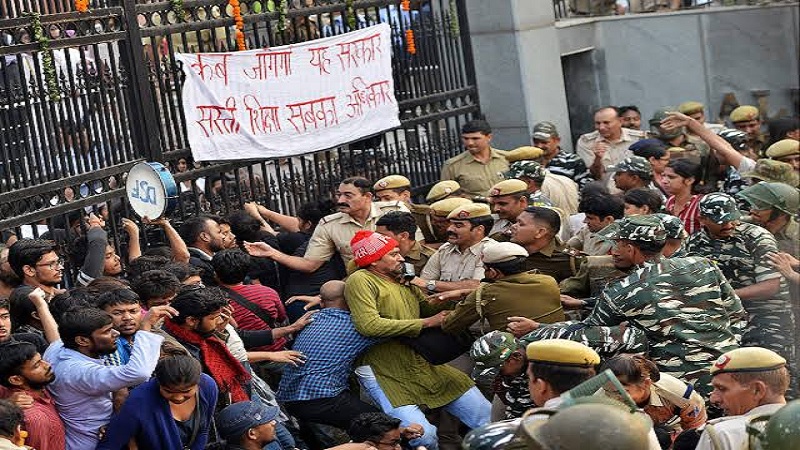
Protests by the Jawaharlal Nehru University (JNU) students intensified after they took to the streets against the proposed fee hike by the Inter-Hall administration without the consultation of the pupils.
In the protest that lasted for hours, the students blocked the campus for hours, inadvertently manhandling three female journalists and police personnel.
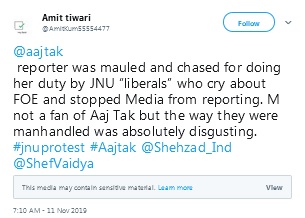
Anupam Gautam from IANS TV, covering the protest, was one of the journalists manhandled by the students. She spoke to The Indian Express and said, “While I was taking a few shots of the protests, some of the students surrounded me and started raising ‘Godi Media Go Back’ and other slogans. One male student blocked my way and tried to snatch away my camera.”
“They also tried to grab me, twisted my arms and attempted to break my equipment. They also hurled abuses at me and my fellow reporters covering the incident,” she added.
It was not just the media who faced the ire of the protestors. The police too was reminded of their fragility when the students started raising slogans of “Tis Hazari, Tis Hazari” and “Vakilo ko bulao” (call the lawyers), in a reference to the police-lawyer clashes at the Tis Hazari court complex last week.
Faculty member Vandana Mishra was also kept in illegal captivity by protesting students in the classroom.
In a video which has been doing the rounds on social media, Dr Vandana Mishra, Associate Dean of Students, is seen sitting helplessly in a packed classroom where protesting students are seen sloganeering and hooting in deafening volume. Few students can be seen playing the Tambourine while others raise slogans in a rhythmical manner.
She was also roughed by the students earlier in the day.
The agitation by the students had taken a turn for the worst after their demands for an audience with the Vice Chancellor were not met. They were only pacified when HRD Minister Ramesh Pokhriyal ‘Nishank’ who was attending the convocation ceremony yesterday, agreed to mediate between the students and the administration and find a middle ground.
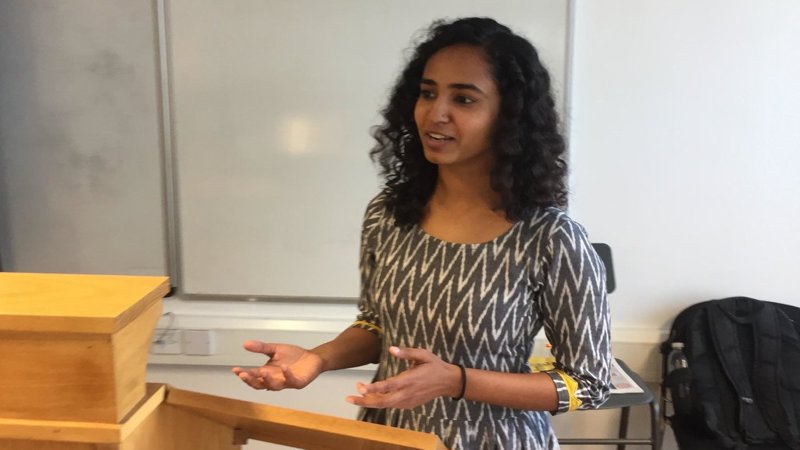
LONDON: A strong protest from hundreds of UK-based academics, students and activists in the form of an open letter to lobby the UK Home Office to reconsider its decision to deny a University of Cambridge scholar permanent residency in the UK for spending too much time in India, which she says was essential for fieldwork and research. PTI reports that Dr Asiya Islam’s application for Indefinite Leave to Remain (ILR) was refused by the UK Home Office last week on the grounds that she had been out of Britain for longer than the stipulated period for such an application.
In response, the 31-year-old academic points out that she had supplied supporting documents to explain the absence, which was due to time spent in New Delhi for her PhD on ‘Gender, Class, and Labour in the New Economy of Urban India’.”Yes, that’s right, the Home Office refused my application because I was away doing academic work for a UK university. The mind boggles,” said Islam, as she took to Twitter to express her shock.
“I provided several letters to present the case that fieldwork is a crucial aspect of my work and should not count towards my days out of the country. But nope, apparently I failed to provide any exceptional reasons in support of your out of time application,” she said.
Asiya Islam has been based in the UK for over a decade and was awarded a three-year Junior Research Fellowship after completing her PhD from Newnham College at the University of Cambridge this year.”Dr Asiya Islam is a highly valued member of the research community at Newnham College and the University of Cambridge. Dr Islam has an impressive academic record: she was a Gates Scholar at the University of Cambridge, was awarded the best degree performance award at the London School of Economics, and received the Dr Zakir Hussain medal for academic excellence from Aligarh Muslim University,” said a spokesperson for Newnham College.
In a letter weeks after Islam’s ‘super priority’ ILR application costing nearly 3,500 pounds, the Home Office replied that it would not be ‘unreasonable’ to expect her to “re-integrate back into life and society in India”, having only been in the UK for a ‘short period’. “In addition, it is considered that you would be able to re-establish a private life and form new friendships, or resume friendships with former acquaintances, upon your return,” the letter adds.
The response has caused widespread outrage in the academic community and a retaliatory open letter, doing the rounds on social media and now signed by over 900 academics and students, describes Islam as an “outstanding young academic with a promising career in the UK”.
It urges the Home Office to reconsider its stance and calls on Home Secretary Priti Patel for “appropriate discretion” in deciding her application. “Her case is distressing, but it also sends a foreboding signal that despite policy changes to protect Tier 2 researchers, UK universities will continue to lose the talented PhD researchers that they have invested years in training,” notes the open letter.
“Her qualitative research on the ground in New Delhi is the key element of her PhD’s contribution to knowledge. Her research is an asset to the UK and its academic community, yet her very success in academic fieldwork is now being held against her,” it notes.
The scholar plans to appeal against the Home Office decision, which she believes flies in the face of the UK government’s ‘Global Britain’ message. “Good luck building a ‘Global Britain’ when you can’t even support global universities,” she said.
The UK Home Office does not comment on individual cases but said that it considers each immigration application on its own merits, on a case-by-case basis.An ILR application under the Tier 4 student visa category is normally turned down if an individual has been out of the UK for more than 540 days over the course of 10 years.
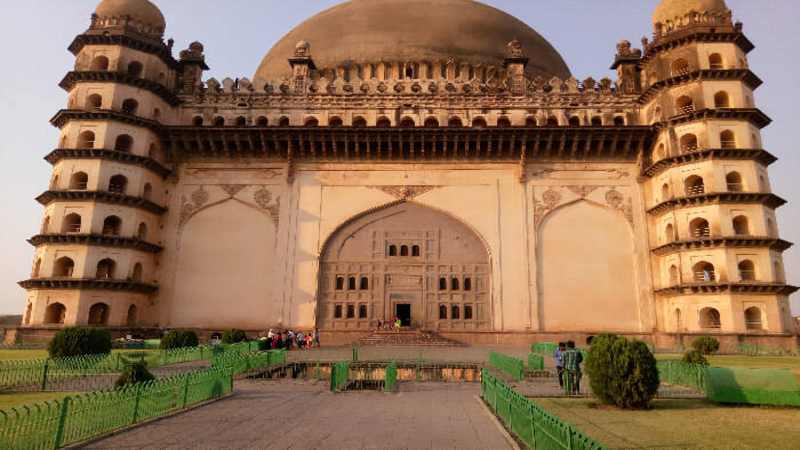
Hours after Tipu Sultan’s birth anniversary celebrations, it has come to notice that a dome of the Gumbaz has developed cracks and minor cracks have been seen in other parts of the monument, as reported by the Deccan Herald.
The monument is currently under the management of the Archaeological Survey of India (ASI) and Wakf Estate Secretary Irfan Ahmed has said that he had written to the ASI in this regard 15 days ago.
“The officials have informed that the funds have to be released from Delhi. We are waiting for them to take up the works,” he said. Sunil of ASI said that the cracks in the Gumbaz had not been brought to his notice. “I will visit the spot and take stock of the situation. In case cracks are observed, a report would be submitted to higher officials.”
Earlier, in May this year, the ASI had taken up restoration work at the Tipu Sultan palace at Chamarajpet, to repair cracks on the roof. These cracks allegedly came up due to work taken up by the Bangalore Metro Rail Corporation Limited (BMRCL) at the adjoining KR Market metro station.
According to ASI officials, not only the roof, but the east-facing wall has also developed cracks. The palace is one of the oldest monuments in the city and several other factors like the age of the monument, the deterioration of materials as well as climate are other reasons for the cracks to develop, sources said.
Last year in 2018 heritage activists in Karnataka had cried hoarse over the deteriorating condition of the Gol Gumbaz after the building started to develop cracks on its dome and corner minarets. Even the walls and the parapet of the building have now developed cracks, allowing rain water to seep in and posing serious threat to the strength of the structure.
The plaster has been peeling off. This is evident especially along the staircase and on walls where one can see huge holes. Its white colour is turning to brownish. No major conservation work has been taken to protect the building in the recent past, leaving it to suffer irreversible damage.
Until now, officials have only taken up cosmetic conservation work. This will not help save the monument. In April 2019, ASI officials sought funds of up to Rs 1 crore after inspecting the mausoleum to carry out restorative work. They had said that they would make sure to use original materials used to build the structure and refrain from using any modern materials or machines to maintain the novelty of the monument.
Will it be restored to its former glory or will negligence chip away at it slowly?
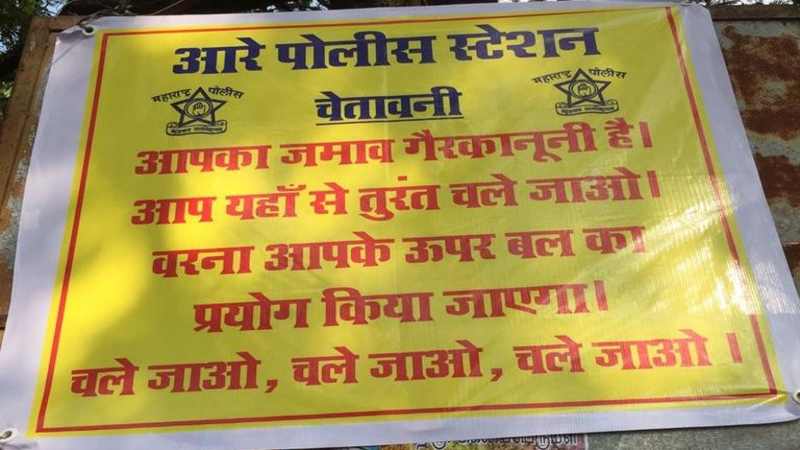
In what seems to be a first, the Mumbai Police has put up posters all over the Aarey forest intimidating people that it will use force in case they witness a gathering on people in the area.
A tweet put up by Aarey activist Zoru Bathena shows the poster put up by the police.
@MumbaiPolice Is this the way to word posters? How very Crude!
p.s. You’ll should have asked your twitter PR team to word it Do try next time ???
#day865 A public notice put up in Aarey.We do respect law&order& abide by it as responsible citizen but this was not the way it should hv been put up. A humble &honest appeal stating the need rather potraying the assembly&peaceful demonstrations as illegal #SaveAareyForestpic.twitter.com/oneodNpfJA
Speaking to Sabrang India he said, “I’ve heard that these posters have been put up at other venues as well. Aarey has always been a hub of protests. It also had a part to play during the 1992 Mumbai riots, and the posters could have been put up keeping in mind the Ayodhya verdict after Section 144 was imposed in Maharashtra. Having said that, the language used is very crass and crude and does not reflect the spirit of the Mumbai Police.”
We also spoke to Sahil Parsekar who has been a continuous fixture in the Aarey protests who said that, “Section 144 was imposed in Mumbai in light of the Ayodhya verdict, but it ended on November 2. The poster was still there on Sunday, November 3 and the police used it to intimidate us activists in the name of Section 144. The order that they showed us clearly stated that the imposition of Section 144 had ended on Saturday itself. Police in civilian clothes has always been intimidating us since the protests against the felling of trees for the Metro car shed began. People respect the Mumbai Police and it is very unbecoming of the department to use such language to threaten the people from protesting for the right cause.”
Activists Radhika Zhaveri and Asha Bhoye said that they didn’t have complete information in the matter yet.
The #SaveAareyForest protest intensified after the ruling BJP-led government gave the sly permission to fell more than 2,141 trees to make space for the Metro 3 car shed. The move saw ferocious, yet peaceful protests from the Adivasis living in Aarey and they gained massive support from the public against the government who destroyed the green lungs of Mumbai.
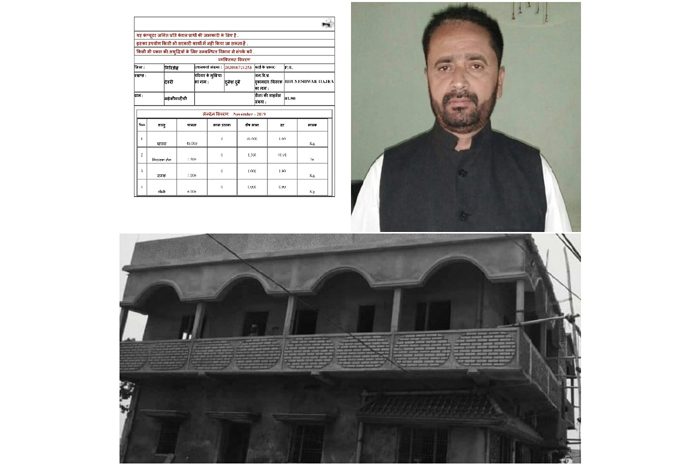
The online Antyodaya card and house of Giridih BJP’s vice-president Mahadev Dubey
Ranchi: In the past three years, Jharkhand has witnessed at least 23 hunger deaths. At a time when eligible poor are not getting rations and other benefits from social welfare schemes, ruling party leaders are milking all the benefits and perks of the scheme, that too on time.
BJP vice- president of Giridih district, Mahadev Dubey not just holds a Mahatma Gandhi National Rural Employment Guarantee Act (MNREGA) job card but also Antyodaya ration card, which is mostly issued to individuals from BPL category.
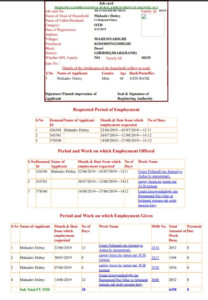
Ironically, the BJP leader hails from the same Jamua assembly segment, of which Savitri Devi was a resident. While Dubey got access to all the social schemes, Devi was denied of all the benefits promised by government welfare schemes. Dubey, not just got the cards, but also managed to get 38 days of work too, in 2019.
The 48-year-old BJP leader is in-charge of the Jamua assembly segment and has two-storey building in Deori. Antyodaya Cards have been issued in the name of his family members. For the uninitiated, Antyodya card, allows a family to get 40 kilograms of rice every month at the rate of rupee one per kilogram, among many other food-grains.
MNREGA job card of Mahadev Dubey
However, the recent hunger death victim, Savitri Devi, was denied of an Antyodya card. Her application for a new card had also not been accepted by the food-grains supply department.
Significantly, not only BJP vice-president has got a job under MNREGA but he has been paid on time and there are no pending dues to be cleared for him.
His ration card details reveal that he has been regularly availing the benefit of purchasing 40 kilograms of rice. His most recent rice purchase was in November month.
A scan of social media profile of Mahadev Dubey will let you know, that he is close to all bigwigs of Giridih BJP like Jamua MLA Kedar Hazra, Gandey MLA Jai Prakash Verma and Koderma’s both present and former Member of Parliament (MP)s Annapurna Devi and Ravindra Rai, respectively.
When contacted BJP’s Giridih District President Sunil Agrawal, he claimed he has no idea about it. He refused to comment on the same.
Jamua MLA Kedar Hazra gave a similar reaction, he said, “I am out of Giridih at the moment. On my return, I shall look into the matter for a better understanding, following which I will be able to comment on the same.”
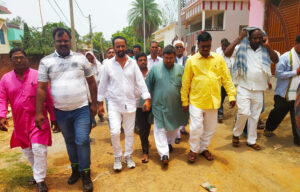
Mahadev Dubey in white shirt-pant with Jamua MLA Kedar Hazra (Yellow shirt)/ Facebook
However, members from the opposition camp were not lax in letting the issue simply pass away, especially with election round the corner. “This is a classic example in Jharkhand to know what a common man and what a politician are getting in the state. Savitri Devi, who had no pucca house and was entitled to all government welfare schemes, was not just denied the Antyodya card but was also deprived of the PM Awas. Neither did she get the much-hyped gas connection under Pradhan Mantri Ujjwala Yojna, nor did her sons manage to get the MNREGA job card,” said Krishan Murari Sharma, Aam Aadmi Party (AAP)’s District Coordinator while talking to eNewsroom.
He added, “In the same assembly constituency, a ruling party leader is getting all the welfare scheme facilities, while Savitri was denied. Dubey Ji has got MNREGA job cards and jobs too; he has also been paid as well while thousands of MNREGA labours are still waiting for their wages for six months now to be cleared by the government in Jharkhand. He is also getting rations on time through his Antyodaya card,” added Murari.
Deputy Development Commissioner Mukund Das, told eNewsroom, “It is not necessary that a socially well-known or a person a two-storey building cannot make job card or get work under MNREGA. But I cannot rule out the possibility of him not working as labour. I will look into the matter.”
However, Dubey, when contacted, defended himself. Speaking to eNewsroom, he said, “I am an MNREGA labour and I also avail ration using the Antyodaya card. Not a single person from my family has a government job. We have 15 members in my family, so I avail of all these benefits.”
Dubey, a graduate in Political Science, added, “I welcome any inquiry in this regard.”
Historically, for Dalits to be on crossroads is a new phenomenon. They have, with their own labour and sweat, gradually progressed through a most difficult journey, unique in the world, from being treated and sanctioned as ‘untouchable’ to being equal citizens. And yet, the fact is, their enemies have been more powerful than the ten-headed imaginary demons.
They fought discriminatory laws during the colonial rule, the society at large which segregated them in all fields of life, and the religion, including its scriptures. Amidst all their weapons, including education, reservation and rejection of the enslaving faith, the most powerful of them has been the legal tools emerging from the Constitutional guarantees, post-Independence. The legal protection has been the latest crossroad in the epic journey.
A year ago, more than a dozen Dalits lost their lives when they descended on the streets to protest the Supreme Court directions on implementation of the Scheduled Caste (SC) and Scheduled Tribe (ST) (Prevention of Atrocity) Act. The Apex Court’s concluding observation was that the Act has been misused in the absence of any credible research or data.
Dalits had not expected this from the Apex Court, especially when, following Dr BR Ambedkar, they had adhered to non-violent and constitutional approach to fight the menace of the caste system. A year later though, the Supreme Court did not agree with its own order and removed the earlier directions.
However, Dalits and Adivasis did not celebrate this important milestone as victory. Perhaps the scar on their minds caused by the earlier Apex Court action has been too deep to retain their faith in the judiciary as neutral-judicious organ.
The second crossroad has been the political situation. The Dalits, who adored Dr Ambedkar almost as God, chose however to be part of the mainstream political parties rather than putting their stake in political party such as the Republican Party of India. They preferred not to be isolated and confine themselves into a party perceived as ‘Dalit-specific party’. Their strategy of political integration has been the reason for grave concern now.
The fact remains that even when the NDA won maximum Dalit and Adivasi reserved seats in the 2014 Lok Sabha elections, which gave them the edge majority, government data confirms that the incidents of atrocities on Dalits and Adivasis have increased between 2014-2018 (Ref: Bhedbharat, 2019, ed: Martin Macwan).
Karnataka BJP Dalit MP Narayanaswamy
Death of manual scavengers in sewer lines, ironically, is not considered an ‘atrocity’. What is equally troubling is complete absence of state action and political will to control caste violence with a firm hand. The situation signifies that Dalits are losing the value of their ‘vote’, which has never been ‘untouchable’ to any political party, and their negotiating ability to better their situation.
For India, the largest democracy thriving to be a major economy in the world, the presence of untouchability has been deeply embarrassing. The present government, following the footsteps of their predecessors, has been far from willing to accept the fact that, amidst tall claims of development, we as a society have failed to abolish untouchability, a root cause of atrocities.
This situation raises a serious question on the definition of development itself. Post-Independence, India did not see a spirited social movement against untouchability, which was undertaken pre-Independence.
Today, the voluntary organizations which address the issues of untouchability, manual scavenging abolition and violence against Dalits and Adivasis as a ‘Constitutional call’ are intimidated by the government. Little doubt, these factors contribute in weakening the fight against the menace of the caste system and strengthening the caste system.
It was disturbing to see how the tricolour-wrapped body of a martyr of militant attack in Pampore (Jammu and Kashmir) was not allowed to be cremated in the common cremation ground in Uttar Pradesh because, although a martyr, he was an untouchable (June 2016). Caste violence on the families of Dalit security forces in their own villages, though not highlighted, is not new.
It was expected that there would be a national uproar over the incident in Karnataka last month where a BJP SC member of Parliament (MP), A Narayanaswamy, was not allowed to enter a village of his own constituency.
The villagers did not want their action seen as insulting, hence they sent a chair for the MP to sit upon outside the village. At the same time, the villagers took pride in the fact that even their own representative was not being allowed to enter their village.
This happened in the presence of the police. Not to be surprised, the government maintained complete silence over the incident. However, it was even more surprising that 88 Dalit MPs maintained studied silence over such a grave incident, in which the entire Constitution of India was insulted, which was worse than mere abrogation of Article 370.
Martin Macwan at a Dalit gathering
The lawmaker in his reaction for being treated as powerless untouchable MP advocated for change of conscience of people as a remedy to the problem of untouchability. The underbelly of the reaction was perhaps a painful admission of the fact that the tools for social justice, the law, the political reservations for Dalits and the vote value of Dalits at 16.5%, have lost its cutting edge.
Gandhi too had advocated the ‘change of hearts’ as the ultimate remedy to defeat untouchability. Dr Ambedkar had negated the Gandhian appeal and firmly advocated ‘rule of law’ to annihilate caste.
Worrisome has been the fact that this act of humiliating the Dalit MP has been committed by a community belonging to the other backward classes (OBCs).
OBCs have been poorer in many pockets and less educated than Dalits.
Political parties have been completely silent on the rising incidents of violence on Dalits committed by OBCs. One wonders whether this phenomenon of consciously promoting enmity between Dalits and OBCs as against the earlier long-term efforts to unite them as a force against economic marginalization of both has been the political conspiracy.
Gujarat has seen similar phenomenon where Dalits and Muslims were pitted against one another in many pockets during communal riots. Communal and social harmony amongst the marginalized population seems to be the biggest enemy of the rich in the war over unequal distribution of the nation’s wealth between the rich and the poor in India. So, the writing on the wall perhaps is getting clearer for Dalits: They need to ‘re-strategize’ their struggle for equality. The situation is also due to the fact that Dalits have miserably failed to abolish caste distinctions among themselves. A Navsarjan study, first of its kind, ‘Understanding Untouchability’, confirms the fact that the same forms of caste-based discrimination, present in the relationship between Dalits and non-Dalits, are present within Dalits sub-castes.
Dalits have missed Dr Ambedkar’s call on the annihilation of caste by not being the ambassadors and crusaders of the movement for the annihilation of caste. While petty politicians have bred antagonism in the younger Dalits minds against Gandhi owing to bitter confrontation between Gandhi and Ambedkar during the Poona Pact, the fact remains that Gandhi and Ambedkar, both great minds, had a common conviction: The moral power is far more powerful than the legal or the positional power.
It’s a shame of the nation today that, while we have enormous money to spend for war planes, which will help nobody to win, we have no money and effective programmes to tackle malnutrition among mothers and children, especially among the Adivasis.
We tend to emphasize the illusion that solution to the problems of discrimination and justice lies with our political institutions. It’s time to re-think and understand the value of a stronger civil society, especially when the rich have followed the Ambedkar call to ‘organize’ themselves, but Dalits, Adivasis and other poor have ignored the call.
—
*Well-known Dalit rights activist, founder of Dalit rights organization, Navsarjan Trust; winner of Robert F Kennedy Human Rights Award, 2000, declared one of the five outstanding human rights defenders for 2000 by Human Rights Watch. An edited version of this article has appeared in India Today
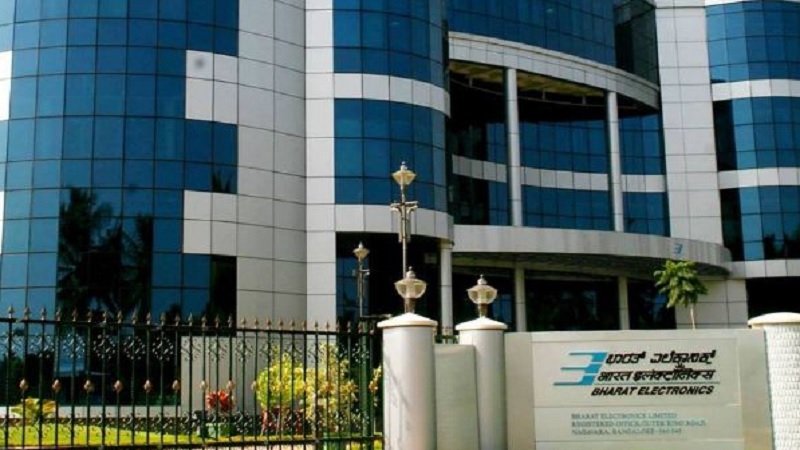
Readers may remember reading my despatch from September 2019 in which I had explained how Bharat Electronics Ltd. (BEL) did a volte face under The Right to Information Act, 2005 (RTI Act) about supplying information relating to Electronic Voting Machines (EVMs) and Voter Verified Paper Trail Units (VVPATs) deployed during the 2019 General Elections to the Lok Sabha.
After demanding copying charges of Rs. 1,434, the Central Public Information Officer (CPIO) returned the money claiming that BEL did not hold some of the information and that disclosing names of Engineers deputed to provide technical support for these machines at the constituency-level, would endanger their lives. The CPIO also refused access to operational manuals relating to these machines. The CPIO of Electronics Corporation Ltd. (ECIL) which also supplied EVMs and VVPATs for use during the same elections had also denied information sought in an identical RTI application.
Now in a welcome turnaround, ECIL’s First Appellate Authority (FAA) has upheld my first appeal and directed its CPIO to provide access all information which he had denied earlier.
Meanwhile BEL’s FAA directed the CPIO to transfer the queries relating to the number of EVMs and VVPATs deployed during the 2019 Lok Sabha Elections to the Election Commission of India (ECI) but upheld his decision to reject information about Engineers and operational manuals used.
After being rejected by BEL and ECIL, I had submitted an identical RTI application to ECI’s CPIO. He did not bother to send a reply for more than 40 days. Now I have filed a first appeal and am waiting for the FAA’s decision in this case. ECI’s CPIO is also required to reply to similar queries transferred to him by BEL’s CPIO.
A tale of three RTI Interventions
After closely scrutinising some of the election-related information and statistics that ECI published, on 17th June, 2019, I decided to file two identical RTI applications seeking the following information from BEL and ECIL which neither they nor the ECI have placed in the public domain:
“I would like to obtain the following information pertaining to the Electronic Voting Machines (EVMs), Voter Verified Paper Audit Trails (VVPATs) and Symbol Loading Units (SLUs) supplied by your company for use during the recently concluded General Elections to the Lok Sabha, under the RTI Act:
1) The maximum number of votes recordable on each EVM supplied for use in the 2019 Lok Sabha Elections,
2) The maximum number of votes printable on each VVPAT Machine supplied for use in the 2019 Lok Sabha Elections,
3) The district-wise number of Control Units of EVMs transported across India for use in the 2019 Lok Sabha Elections,
4) The district-wise number of Ballot Units of EVMs transported across India for use in the 2019 Lok Sabha Elections,
5) The district-wise number of VVPATs transported across India for use in the 2019 Lok Sabha Elections,
6) The district-wise number of thermal paper rolls used in VVPATs transported across India for use in the 2019 Lok Sabha Elections,
7) A clear photocopy of the List of Engineers with name and designation, deputed for carrying out tasks relating to the preparation of EVMs and VVPATs that was sent to every District Election Officer in India for the purpose of the 2019 Lok Sabha Elections,
8) A clear photocopy of the List of Senior Level Engineers with name and designation, deputed for supervision and coordination during the preparation of EVMs and VVPATs that was sent to every District Election Officer in India for the purpose of the 2019 Lok Sabha Elections,
9) The total number of SLUs used by your Team(s) of Engineers during the 2019 Lok Sabha Elections,
10) A clear photocopy of the official document handed over to every District Election Officer during the 2019 Lok Sabha Elections containing details of every SLU allocated to your team(s) of Engineers,
11) A clear photocopy of the User Manual prepared by your company, pertaining to the VVPAT machines used during the 2019 Lok Sabha Elections, if any,
12) A clear photocopy of the User Manual prepared by your company, pertaining to the SLUs used during the 2019 Lok Sabha Elections, if any,
13) A clear photocopy of the application filed with the Office of the Patent Controller for securing a patent on VVPAT, if any, along with the postal address of such office, and
14) A clear photocopy of the application filed with the Office of the Patent Controller for securing a patent on SLU, if any, along with the postal address of such office.”
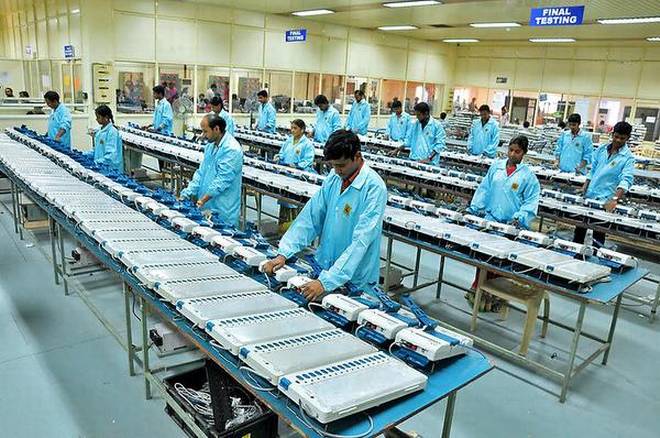
Electronic moving machines in ECIL unit, Hyderabad
ECIL CPIO’s RTI reply:
ECIL’s CPIO did not bother to send me a signed reply. Instead he uploaded some text on the RTI Online Facility without a signature replying as follows:
1) RTI Queries 3, 4, 5 & 6: ECIL’s CPIO claimed that information about EVMs and VVPATs despatched to the Lok Sabha constituencies and the number of thermal paper rolls used for printing the ballots is not readily available and they will be sent as soon as they are received.
2) RTI Queries 7 & 8: The CPIO denied access to the list of Engineers who were stationed in the constituencies to do prepare the EVMs and VVPATs for polling and their superiors who supervised the whole exercise claiming that it was personal information exempt under Section 8(1)(j) of the RTI Act.
3) RTI Queries 10 & 12: The CPIO rejected access to the User Manual of the Symbol Loading Units and the official document related to them, handed over to the district administration after the candidate information is loaded on the EVMs and VVPATs. The CPIO says that it is classified information and attracts Section 8(1)(a) and 8(1)(d) of the RTI Act. Section 8(1)(a) exempts information which will prejudicially affect security and strategic interests of the State. Click HERE for the ECIL-related RTI application and reply.
First appeal sent to ECIL and the FAA’s order
Aggrieved by the ECIL CPIO’s unsigned reply, I submitted a first appeal with the FAA in September, 2019 arguing as follows:
1) ECIL’s CPIO had committed an procedural error by not sending a signed reply;
2) As more than three months had passed since the completion of the 2019 Lok Sabha Elections, information relating to RTI Queries 3-6, that is, constituency-wise deployment of EVMs, VVPATs and thermal paper rolls used in VVPATs should now be available for disclosure;
3) The List of Engineers deployed by ECIL at the constituency-level cannot be treated as personal information whose disclosure would violate their privacy because they were performing public duties;
4) The VVPAT and Symbol Loading Unit User Manuals and VVPAT patent application are also information that must be in the public domain and that the CPIO had not issued a speaking order justifying how the exemptions were attracted.
ECIL’s FAA examined the issues raised in the appeal and directed the CPIO to collect all the information and supply it under the RTI Act. However, the FAA has not specified a time limit for compliance. Click HERE for the 1st appeal and ECIL FAA’s order (1st attachment).
First appeal sent to BEL and the FAA’s order
Aggrieved by the BEL CPIO’s decision to reject access to the information sought in a similar RTI application, despite demanding additional fees initially, I had submitted a first appeal with the FAA in September, 2019 arguing as follows:
1) It is difficult to understand as to why the CPIO who initially charged additional fees calculating the exact number of page for every RTI query, later on claimed that he did not hold the information about the constituency-wise deployment of the EVMs and VVPATs;
2) It is not clear as to how the disclosure of details of Engineers deputed would endanger their lives; and
3) The CPIOs’ revised reply denying access to most of the information which he was prepared to disclose initially indicated that he was under pressure from some internal or external agency to change his stance.
BEL’s FAA upheld the CPIO’s refusal to supply information relating to the Engineers deployed, the operating manuals relating to VVPATs and SLUs and the application submitted for claiming a patent on the VVPATs. However, she directed the CPIO to transfer the first part of the RTI application to the ECI to answer queries relating to the constituency-wise details of deployment of EVMs, VVPATs and thermal paper rolls used in VVPATs.
Click HERE for the 1st appeal and BEL FAA’s order (2nd attachment).
ECI’s treatment of the RTI application for similar information
As both BEL and ECIL had initially rejected my request for information about EVMs and VVPATs deployed during the 2019 Lok Sabha Elections and the list of Engineers deputed to render technical support, I submitted an RTI application with the ECI seeking similar information. ECI’s CPIO did not bother to send a reply for more than 40 days. So I have filed a first appeal. Now ECI has to make a decision not only on this first appeal but also make a decision on the RTI application transferred to it by BEL, in accordance with the FAA’s orders.
Click HERE for the RTI application and the first appeal submitted to ECI (3rd attachment).
Lack of uniformity of treatment of similar RTIs
Even after 15 years, the implementation of the RTI Act in many public authorities is not predictable. Identical RTI applications yield diverse responses. This is a clear indicator of the failure of the system to make the transformation from secrecy to transparency as envisaged in the preamble of the RTI Act. The political leadership which only pays lip sympathy to the democratic values of transparency and accountability, the lack of seriousness and commitment from the bureaucracy to making this transformation and the clearly demonstrable weaknesses of the oversight mechanisms such as the FAAs and Information Commissions are to blame for this state of affairs.
However, the ECIL FAA’s order provides the proverbial silver lining to the dark clouds of poor implementation. The FAA appears to have recognised the imperative of transparency in all matters relating to elections (except voters’ choices) and directed the CPIO to disclose all information. As there is no time limit in his order, I will wait for a month before I explore the need for approaching the Central Information Commission (CIC). As for the BEL, I will challenge the FAA’s order upholding rejection of a part of the RTI application, before the CIC. Meanwhile, the wait for ECI’s response to my first appeal and the RTI application transferred from BEL continues.
—
*Programme Head, Access to Information Programme, Commonwealth Human Rights Initiative, New Delhi
Mumbai: India ranked 82nd among 128 countries for generosity over the last 10 years, as per the 10th World Giving Index (WGI).
Up to a third of Indians helped a stranger, one in four donated money, and one in five gave their time volunteering, the report said, attributing India’s low ranking to its strong culture of unorganised and informal giving to family, community and religion. It recommended more formal mechanisms of donating to charity.
The report, published online in October 2019, was based on surveys of 1.3 million people in 128 countries over the last 9 years (2009-2018). It asked interviewees if they had helped a stranger, donated money to charity or volunteered their time in the past month. The surveys used Gallup World Poll data and were commissioned by Charities Aid Foundation (CAF), a UK charity that provides services and assistance to international charities and their donors.
India’s rank on the Index has yo-yoed vastly, the lowest being 134th in 2010 and the highest being 81st last year. This year’s report aggregated data for each country for the last 10 years. India’s overall WGI score this year was 26%.
Of the top 10 countries, seven are among the wealthiest in the world. Yet, global generosity is on the decline, stated the report, highlighting that individual giving is now lower in countries with long histories of philanthropy such as the United States, Canada and the United Kingdom.
“The top ranking countries will usually have a strong culture of giving, or are more developed,” said Meenakshi Batra, who leads CAF India, a non-profit organisation that works to enable effective giving. “Individuals have more resources to give and there is infrastructure for them to give to formal organisations.”
India’s 26% WGI score was less than half of 58% scored by the United States in the top spot. China, with a score of 16%, was at the fag end of the index. The Asian giant also had the lowest score for all three measures considered–helping a stranger, donating money and volunteering.
New Zealand, on the other hand, was the only country to appear in the top 10 on all three counts.
India fails to match Asia’s pace
Five of the 10 countries to have improved their rankings the most on the giving index were in Asia. Indonesia, the country that improved its ranking the most, moved into the top 10 for donating money and volunteering. Sri Lanka achieved the highest score for volunteering in the world; at 46%, its volunteering score was more than double of India’s 19%.
The report attributed this rise in rankings to cultural factors. For example, a majority of people in Myanmar are practising Buddhists, 99% of whom are followers of the Theravada branch that mandates giving. Sri Lanka too has a high population of Theravada Buddhists.
Similarly, in Indonesia, which has the largest Muslim population in the world, giving is closely tied to the religious obligation of giving, zakaat.
The improved rankings are also an outcome of countries’ economic development. “It is not a surprise that these Asian countries have been increasing [their ranking] due to their rising economic prosperity,” said Ingrid Srinath of the Centre for Social Impact and Philanthropy at Ashoka University in Sonipat, Haryana.
India was the least generous of the seven South Asian countries in the Index, behind neighbours Pakistan, Nepal and Sri Lanka. India’s economic growth in recent decades has been felt by fewer and fewer people, which may explain why its philanthropy is not increasing at a rate similar to that of its Asian counterparts, Srinath said.
Lower-income families are less likely to have donated or sponsored in the last 12 months (69%), than those with a household income of more than Rs 1.7 lakh (~$2,400) per month (82%), the report stated. “The study does not account for the degree of giving from an individual, only whether they are giving or not,” said Batra of CAF India.
“India also has more cleavages than other countries around it in terms of religion, class and caste,” said Srinath. “It is possible that these divides make people less inclined to commit to national philanthropic efforts.”
Under-reported giving
“In India, there is a strong culture of regularly helping and assisting each other,” said Batra. More Indians (64%) said they give money directly to people and families in need or to a church or religious organisation (64%) than to a non-profit or charitable organisation (58%), as per the India Giving Report, a country-specific report by the CAF Global Alliance, a network of organisations working in philanthropy and civil society.
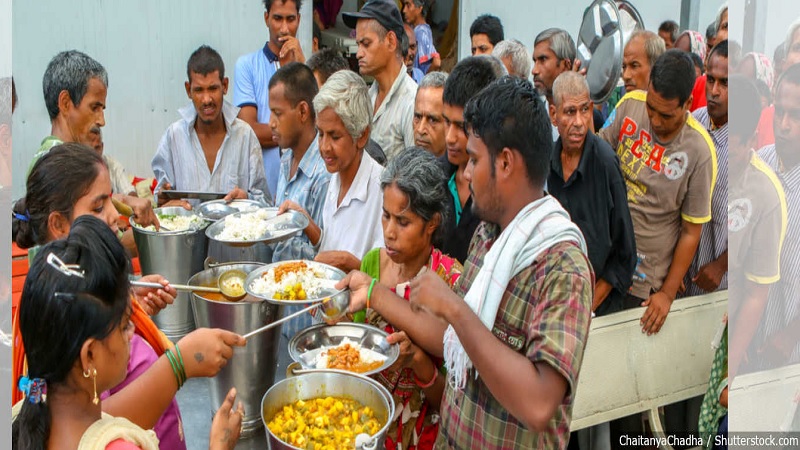
Besides, India has over over 500 forms of traditional religious giving, such as Hindu daan and utsarg, Islamic zakaat, kums and sadaqa. “This form of giving may not show up on the Index because Indians consider this a family or a religious obligation,” said Batra. “For instance, it is commonplace for Indians to feed poor people outside places of worship, or serve a meal to pious and holy men. Those responding to the survey would not have counted this as giving, because they consider this to be their duty.”
Incidentally, upto 38% Indians said they would donate more if they knew how their money would be spent, and 32% would donate more if there was more transparency. “There is potential for organised non-profit organisations to provide more formal options of giving,” said Ben Russel of CAF.
Billionaires show little giving spirit
In 2017, the wealth held by India’s wealthiest 1% increased by Rs 20,913 billion ($303 billion). This was equivalent to the central government’s total budget that year, as per this report by Oxfam India.
The contribution of India’s richest to philanthropic activities has grown at a slower pace than the increase in their wealth, as reported by IndiaSpend earlier this year. Large contributions (more than Rs 10 crore) by ultra-high net worth individuals (individuals who have a net worth of more than Rs 25 crore) have decreased 4% since 2014.
India’s lowest WGI score in the last six years (22% in 2018) coincided with its reporting a record number of 121 billionaires–the third highest number of ultra-rich individuals in any country, behind China and the United States.
(Habershon, agraduate from the University of Manchester,is an intern with IndiaSpend.)