Bhumi Adhikar Andolan, a forest rights collective, held a planning meeting at Indian Social Institute regarding the action planned on November 21, 2019 to have a Sansad Gherao at Sansad Marg, Delhi. The Gherao,along with state, district and village level actions, have been planned to protest violationsof people’s rights and dilution of Forest Rights Act.
The two-hour long meeting witnessed a detailed discussion over various key issues. Mobilization processes were reviewed with various representatives of mass organizations. The meeting highlighted the fact that it is important to take the discussion to the public about Forest Rights Act 2006, and the current situation happening in the Supreme Court of India.
In the meeting, All India Kisan Sabha’s Hannan Mollah stressed on the fact that the central government is showing a blind eye towards the Supreme Court’s proceedings regarding the hovering question about the constitutional legitimacy of the Forest Rights Act 2006. He noted, it is very important to inform each and every citizen of this country about the importance of FRA 2006 in protecting the rights of the adivasi populace and forest dwellers.
He noted that the central government has not sent their legal representation to the Supreme Court on the hearing dates to defend the legitimacy of FRA 2006. Under the pretext of forest conservation, he said,thegovernmentis indirectly pushing forward their corporate agenda to appropriate forest land from the indigenous populace.
He further noted that these marginalized indigenous people have been living in India’s forests maintaining the flora and fauna of Indian forests. Evicting them from their forestsis likely to leave a severe impact on the ecology of India’s forests. Therefore it is essential to expose the illegalities in the execution of central government to weaken the FRA 2006 to each and every citizen of India and globally.
Over 12,000 people all over India, at the minimum, will be joining the protest programme.
It was recently reported that an autopsy report confirmed that a Pakistani Hindu medical student who was found dead in her hostel room in Larkana in September this year, was raped before being murdered. The student was found hanging from a ceiling fan and her brother had insisted that she was murdered as she was neither depressed and there were no signs that she would kill herself. After massive province wide protests, the Sindh government was compelled to order a judicial inquiry and this finding that she was raped is a crucial finding of the on-going inquiry which is supervised by the Larkana District and Sessions Judgeon the directives of the Sindh High Court.
Hindus in Pakistan, the ignored minority
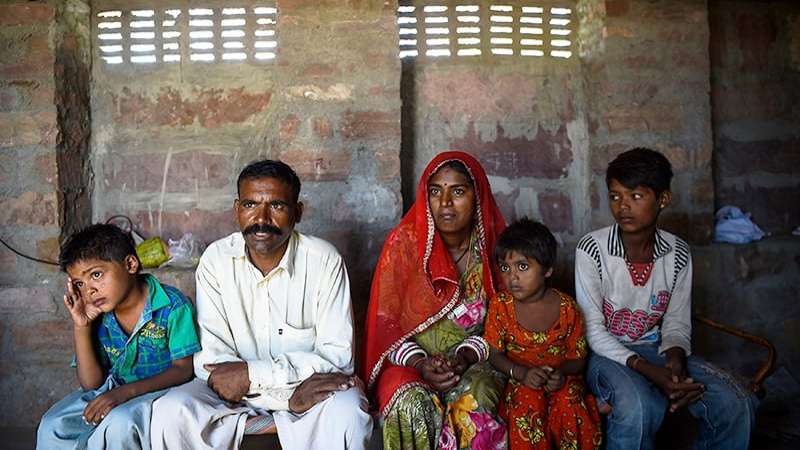
The less discussed topic is of Hindus in Pakistan. The media has for some reason shied away from highlighting crimes against Hindus in Pakistan who are a small minority, and reportedly, nearly 82 per cent of them are lower castefarm labourers. Although such crimes are reported, they do not come to the fore and catch people’s attention.While the exact number has not been ascertained by either the Pakistan government or any other independent study, it is estimated that Hindus comprise of 2% (around 3 million people) of Pakistan’s population. However, in 2019 the All Pakistan Hindu Panchayat (APHP) launched a campaign to collect data to ascertain the number of Hindus in Pakistan whereby it asked Panchayats to gather such data and send it to APHP. Reportedly, Hindus are mainly concentrated in Sindh province where they form nearly 8% of the population.There were also reports that some Hindu families in Pakistan were hiding their identities due to safety concerns and changed their names to “non-hindu” names.
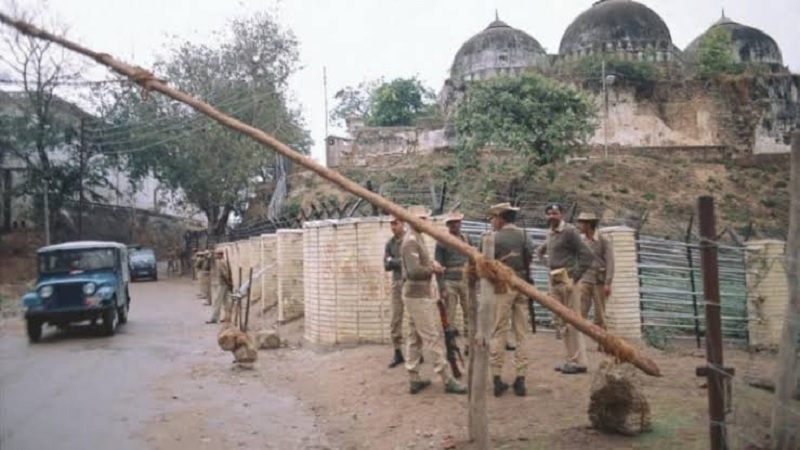
It was reported in 2015 that as per the Indian government, more than 1,400 Pakistanis were given Indian citizenship since 2011 and majority of them were Hindus. The fateful event of the demolition of the Babri Masjid in December 1992 led to Pakistani Hindus seeking refuge in India fearing threat tot heir lives. That event, perhaps for the first time after Partition, triggered extreme and massive anti-India and anti-Hindu sentiments in Pakistan. Enraged Muslim fundamentalists demolished a large number of Hindu and other non-Hindu shrines and relics. One example is that of a historical Jain Mandir near the famous Anarkali Bazar of Lahore’s old city.
“Hindus in Pakistan particularly felt vulnerable after the demolition of Babri Masjid in 1992. We felt very insecure as there was a spate of attacks on our religious places,” says Sardari Lal, one of the many people who moved to India with his family, after the Babri Masjid demolition. Pakistani Hindus have often complained of destruction of their religious places, forced conversions and abduction of girls for forced betrothal to Muslim men.
Dr Ramesh Kumar Vankwani is a high-profile leader of the Hindus of Pakistan and is a member of the National Assembly on a seat reserved for the minorities. He claims that Hindus were being subjected to forced conversion in Sindh where Hindus were the second largest minority and also claimed that Because of the state’s neglect, annually 5,000 Hindus are forced to migrate to India.
Reports of forced conversions
There are also reports of rampant conversions similar to the “love jihad” phenomenon in India. However, in Pakistan it seems that the fears are valid. AnOutlookmagazine report of 2006, had reported of many cases of forced conversions of not only Hindu girls but also young boys. In this report, the Human rights Commission of Pakistan had told the reporter that between January 2000 and December 2005 there were 50 reported cases of conversion of Hindu girls to Islam and as per their investigations, most cases were of abduction and forced conversion.
India has also officially raised concerns against such forced conversions and has asked Pakistan government to take stringent and immediate action to tackle this menace. Early this year, Pakistan Prime Minister, Imran Khan had ordered a probe into reports of abduction, forced conversion and underage marriages in Pakistan after two such cases were reported then.
According to Aurat Foundation, around 1,000 women and young girls from religious minorities in Pakistan are forced to convert to the religion of the majority and marry their kidnappers every year. The Human Rights Commission of Pakistan believes that more than 20 Hindu girls are kidnapped every month. In October, the Pakistan People’s Party rejected a proposed bill in Sindh Assembly against forced conversions, clearly indicating that Pakistan’s right wing does not deem their minorities problems as social issues at all and has no intention to correct the social evil.
A prima facie look at news reports on crimes against Hindus in Pakistan indicate that one of the major concerns of the Hindu minority in Pakistan is abductions and forced conversions of Hindu girls, sometimes even minor girls and boys. While the Pakistan government has failed to take decisive measures against this social evil, the decreasing population of Hindus in Pakistan, continue to live in country where they are regarded as “napak” or impure and reluctantly exercise their freedom of religion.One can draw parallels between this and similar rhetoric back home where Muslims (who are a more sizeable minority compared to Hindus in Pakistan) are, in recent times, being targeted sometimesbeing lynched under the guise of cow vigilantism and or by having a mandate of refusing to give citizenship to immigrant Muslims under Citizenship Amendment Bill.
There is no denying that the problem of illegalimmigration from Bangladesh is quite real. Although one cannot view this in the background of the NRC (National Register of Citizens) and Foreigners Tribunals, since that is, from its inception a questionable and even arbitrary exercise and has at its base a historically and politically driven document, the Assam Accord. The question in Assam has been deemed by stake-holders there to be state-specific arising out of the tumultuous and even violent years of the 1970s and 1980s. End result however has been a callous and crude bureau-political exercise that led to a humanitarian crisis of unprecedented proportions.
In “preparation for a nation wide NRC”, many states in India have taken up the task of constructing detention centres within their jurisdictions and the police have started cracking down on suspected illegal immigrants, never mind the fact that the exercise in itself may be not quite lawful or statute-driven. This process of trying to identify illegal immigrants is more like a game of darts, sometimes they hit, sometimes they miss. Not knowing how to differentiate a Bengali speaking Indian from a Bengali speaking Bangladeshi immigrant, is the premise of this game.
Recently, the police in RT Nagar of Bengaluru, Karnataka arrested a 37 year old woman from Bangladesh for overstaying. The woman who had come to India on a student visa in 2003, later on got married and has a child. She even procured a PAN Card, Aadhar Card, Voter’s ID and she applied for a passport, when it came to light that she had overstayed and was thus labelled an illegal immigrant and arrested under the Foreigners Act.If ultimately this becomes a legitimate case of illegal immigration, thendue tothe woman’s ignorance of the law her family will have to pay a heavy price.
Not far back, Sabrang India reported that Bengali speaking workers were facing a likely and informal ban in housing complexes in Bengaluru wherein it was also highlighted how many low income Bengali speaking Indians as well illegal immigrants live in the outskirts of Bengaluru and work as rag pickers and how they are exploited. It is now being reported that the many rag pickers living in these outskirts, who were apparently hailing from Assam and West Bengal have fled apprehending detention or arrests, adversely affecting the dry waste processing in the city.
There are reports coming from other states were police are nabbing illegal immigrants from Bangladesh in the cities of Mathura or Delhi or Agra or Bengaluru itself.
But there is another side of this coin where Bengali speaking population in Bengaluru is accusing the state of targeting them without reason. In a recent incident, Kaustav Bhattacharya, a resident of Electronic City said he was taken to the local police station for questioning simply because his address on his driving license was of West Bengal.
While it is too early to determine how legitimate will such impending detentions be, one can only hope that innocent and rightful citizens do not meet the same fate as the citizenry in Assam.
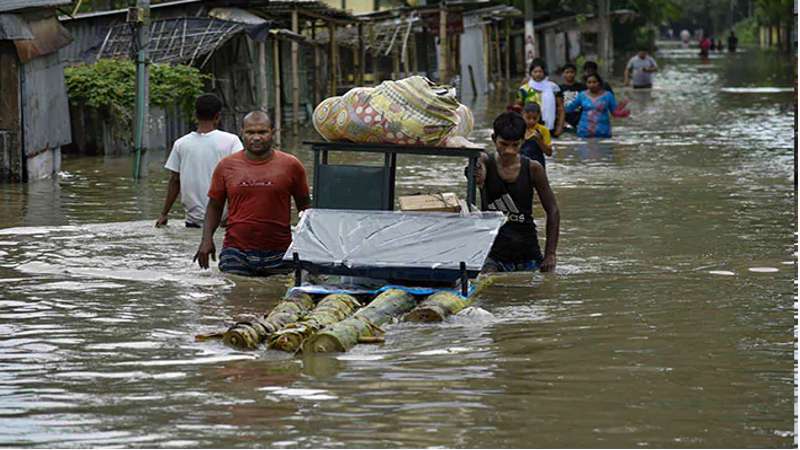
The floods in Assam this year, caused by the overflowing Brahmaputra, Dhansiri, Desang and Kushiara rivers, affected at least 8 lakh people all over the state.
Yet, more than three months after the disaster, Assam’s flood-affected victims have not received their due compensation as per the relief manual, reported The Sentinel.
Compensation, as part of flood relief, has always been a chronic problem in Assam. According to the relief manual of disaster management, each family affected by floods, taking refuge in shelter camps, is supposed to get a compensation of Rs. 3,800 on their exit from the shelter. But, in reality, 90 percent of the families who languished in these relief camps are yet waiting to get the promised amount.
Even though help had poured in from all corners, Dispur’s red-tapism has proved to be the culprit in the matter. According to official sources, the file for the release of Rs 40 crore for making payment of Rs 3,800 to each of the flood-hit families who had to stay in relief camps has been lying in the State Finance department.
In July this year, leader of the Opposition in the Assam Assembly Debabrata Saikia on Monday urged Chief Minister SarbanandaSonowal to release the disaster relief funds pending since 2014 – 15.
He said that even under the State Disaster Response Fund, there was a “noticeable shortfall between funds allocated and funds actually released” for Assam since 2014-’15. In 2015’-16, only Rs 425 crore of the allocated Rs 460 crore was released, while the next year, Rs 400 crore was released out of an allocated Rs 483 crore. In 2017-’18, Rs 400 crore out of the allocated Rs 507 crore was released. He asked the state government to release all of the Rs 559 crore allocated to be released for the relief of the victims.
According to the procedure followed, a state-level committee headed by the Chief Secretary has to approve the list of beneficiaries for flood relief. What makes people raise their eyebrow is – the State-level committee has not met as yet for approving the list of beneficiaries and the amount of the funds sought.
Though 1.5 lakh hectares of farm lands was destroyed in the floods this year, when the damage itself has not been assessed by the state, compensation for affected farmers seems quite a distant dream. According to the standing rules, such damage of houses and farmlands should be verified on the spot by the latmandals, who send the lists of beneficiaries to their respective deputy commissioners. The deputy commissioners should send the lists to the secretary of the departments concerned, who should send the lists to the Revenue Department. It’s the Revenue department that has to compile all such lists received from various departments and then send them to the Finance department for the release of funds.
According to Assam State Disaster Management Authority (ASDMA), more than 45 lakh people have been affected in 4,620 villages of the state, with 1,01,085 people taking refuge in 226 relief camps, PTI reported. As many as 562 distribution centers have been set up for providing relief to the affected people.
Last year itself, man-made flood-affected victims staged an agitation near Numaligarh-Morangi demanding compensation from the North Eastern Electric Power Corporation (NEEPCO), after more than 91 villages in Golaghat were affected in the wave of floods that hit the district after NEEPCO released excess water from the reservoir of the Doyang Hydro Electric Project, without prior intimation, causing irreversible damage to the lives and livelihoods of people living downstream from it.
No one knows because the media is mum
India’s apathy towards the plight of Assam is disappointing and North-East Indians have no illusions about it. The floods in Assam and its aftermath has not found any sympathies or even coverage by the national media.
While the national news hovers around issues and activities from Hindi heartlands, the North-East gets the short end of the stick. It is not just the geographical remoteness of the location, because the national media hugs Assam’s sports masters every time they win accolades for the country.
Hence, it can be argued that the mainstream media is indulging in ‘othering’ and regional disparity when it comes to portraying the real problems faced by the people in this region.
Only picking and choosing to show a political crisis, especially in the cases of the GS Road incident, Karbi-Anglong lynching, terrorist activities in Manipur, riots in north-eastern states etc. the coverage of the floods in Assam was pitiful was compared to that of the coverage coming in from Uttarakhand or Kerala.
Even now, all that Assam is in the news for is the National Register of Citizens (NRC). No coverage of issues related to floods, their repercussions, erosions or landslides have taken place.
Writing in the media site The Hoot, analyst Kakoli Thakur says while the murder mystery in Mumbai “involving a woman from Assam was hogging the limelight but the state itself, where thousands of people were hit by the worst spate of floods in decades, was reduced to fillers in the newspapers and small news capsules on TV channels”.
“What is seen as usual rarely gets importance as news in Indian media. And floods in Assam seem to be the usual thing,” says Ashis Biswas, a veteran journalist who has worked in Assam.
Mr Biswas recalls senior editors telling him during his days in Assam, “Please, no flood stories again”.
The TRP hungry media has always ignored real issues that affect real people. Even in the case of Assam, it was the good Samaritans on social media who helped bring aid to the affected humans and animals of the flood-hit state.
Caught between bureaucracy on one side and a shrill, biased, uninterested media on the other, will the screams for help from the citizens of the worst flood-affected state ever be heard?
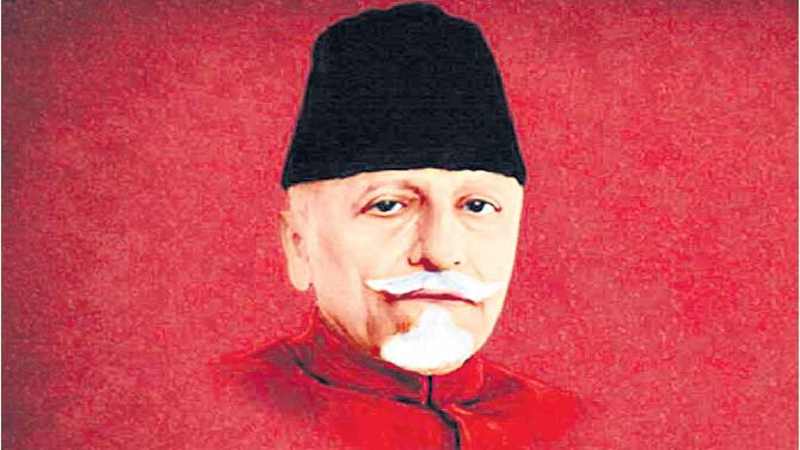
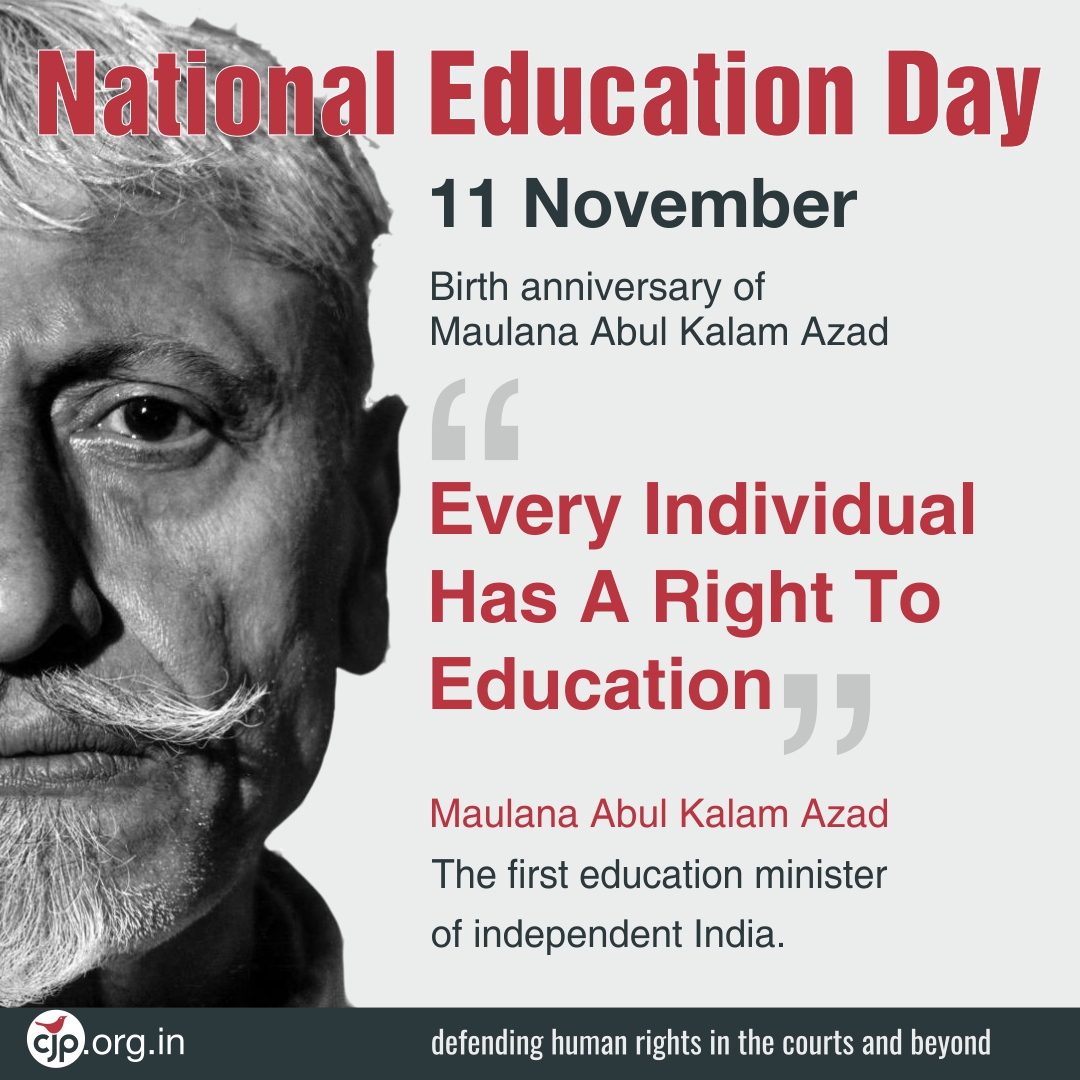
Maulana Abul Kalam Azad with his erudite and scholarly views on composite nationhood, has not been a favourite with too many Delhi dispensations. In fact, though India’s first Education Minister ( he served as India’s first education minister of independent India, who served from 15 August 1947 until 2 February 1958), the Indian government’s decision to celebrate his birth anniversary as National Education Day (India) came only in 2008. Before that, Azad was conferred the Bharat Ratna posthumously in 1992. The BJP now wants the highest civilian honour to be awarded to Savarkar.
But today Delhi’s ultra supremacist regime wishes to obliterate even this delayed celebration by now “celebrating” November 11 not as National Education Day but with a Conference on Vikram Savarkar. The Sangh parivar’s validation of Savarkar, despite his abject plea for clemency written to the British while he was in prison, is fundamentally his espousal of an exclusivist Hindutva, that is premised on an othering –bordering on demonization –of Muslims, Christians and more.
Who is Maulana Azad ?
Azad was not only this century’s most articulate votary of Hindu-Muslim unity but also the only one erudite aalim (Islamic scholar) who claimed Quranic sanction for his faith in that unity and the freedom of the nation.MaulanaAbulKalam Azad is, by any reckoning, a major figure in twentieth-century Indian history. He was a scholar thoroughly trained in the traditional Islamic sciences, with great intellectual abilities and eloquence of pen and speech. He had, in addition, a remarkable openness to modern western knowledge even as he opposed the western rule over India.
But this year, his birth anniversary will be “celebrated”, as per a circular of the MHRD with a conference on Savarkar, the infamous votary of a two nation theory himself, Hindutva. The Telegraph reports that two steps — taken by two Union ministries and the Indian Council of Historical Research (ICHR), respectively — mark the latest instances of the “reinvention” of memorable days associated with national icons and others. Now, the ICHR has decided to organise a conference to discuss “Veer (Vinayak) DamodarSavarkar: Life and mission” on November 11.
Azad, who spent his formative years in Calcutta, was highly respected throughout his life for his moral integrity. Opposed to Partition, Azad had advocated a single India where Hindus and Muslims lived in harmony. In his presidential address to the Congress in 1923, he said that the ability of Hindus and Muslims “to live together was essential to primary principles of humanity within ourselves.”
Maulana Azad’s words at the Ramgarh session of the Congress party in 1940, when he was President of the grand old party resonate
“…Islam has now as great a claim on the soil of India as Hinduism. If Hinduism has been the religion of the people here for several thousands of years, Islam also has been their religion for a thousand years. Just as a Hindu can say with pride that he is an Indian and follows Hinduism, so also we can say with equal pride that we are Indians and follow Islam… The Indian Christian is equally entitled to say with pride that he is an Indian and is following a religion of India, namely Christianity…”
His moving address to Indian Muslims at the time of India’s vivisection and bloody partition are memorable. Spoken from the steps of the Jama Masjid in Delhi, he emotionally appeals to Muslims not to migrate to Pakistan.
Maulana Azad’s Opposition to Jinnah
Maulana Azad was an outspoken opponent of Mohammad Ali Jinnah and Partition and a symbol of collective will of Muslims to co-exist in a secular India. In a press statement on April 15, 1946 as Congress President Maulana said, “I have considered from every possible point of view the scheme of Pakistan as formulated by the Muslim League. As an Indian, I have examined the implication for the future of India as a whole. As a Muslim I have examined its likely effects upon the futures of Muslims of India. Considering the scheme in all its aspects I have come to conclusion that it is harmful not only for India as a whole but for Muslims in particular. And infact it creates more problems than it solves.”
Maulana Azad as Congress President tried to convince Jinnah to change his rigid attitude and sent him a confidential telegram: “I have read your statement of 9 July. Delhi resolution is genuine about national government which would mean a coalition not confined to any single party. But the League not prepared to agree to any transnational scheme which is not based on Two-Nation scheme.”
Jinnah’s response to this was not only negative but positively insulting. “I do not want your confidence. You have totally lost confidence of Muslim India. Don’t you feel that the Congress has made you a show boy President to hoodwink non –Congress parties and other Countries of the world? You represent neither Muslims nor Hindus. This Congress is a Hindu organisation and if you have any self respect you should resign forthwith.”
It is a measure of Maulana Azad’s generosity and commitment to the cause of unity that inspite of this impudence he did not oppose Mahatma Gandhi’s efforts to persuade Jinnah. Gandhi could not bring about a change of heart in Jinnah. His response to Gandhi was no different. Ignoring all pleadings of Gandhi, he reasserted his Two–Nation theory saying: “we can confidentially affirm that according to all standards and definitions Muslims and Hindus are two major nations. We are a nation in terms of all international measures and principles.”
Maulana Azad did his best to convince the Congress leaders to wait till a correct solution was found, but he was not successful. Maulana attributed it to “blindness of Congress leaders to facts, and their anger and frustration clouding their vision.” The publication of his work, India Wins Freedom, first in abridged form, and then in its entirety on his thirtieth death anniversary, February 22, 1988, documents these historical disagreements.
How prophetic Maulana Azad was, when he said, “Even within West Pakistan, the three provinces of Sind, Punjab and the Frontier have internal incompatibility and are working for separate aims and interests. A year before Pakistan was created Maulana Azad in an interview to Lahore based Urdu magazine “Chattan” predicted the darkness that engulfs Pakistan today.
“History alone will decide whether we have acted wisely and correctly in accepting partition”. Maulana was himself conscious of the fact that not many people went along with him. He said, “In religion, in literature, in politics on the path of philosophy, wherever I went I went alone. The Caravans of the times did not support me on any of my journeys.”
Re-writing history
Why is it crucial for the ruling regime to obliterate historical figures like Maulana Azad and replace them with those who sang a Hindutva separatist and supremacist tune?
In 2014, the Modi I government announced that December 25, which is celebrated as Christmas day, would henceforth be celebrated in India as Good Governance Day. Similarly, October 31 was earmarked as National Unity Day to celebrate Congress leader Sardar Patel’s birth anniversary.
Constitutionalist and first law minister Bhimrao Ambedkar’s birth anniversary, 14 April, as Samrasta Divas. Samrasta reflects the ideological position of the Hindutva Right on the caste system. Instead of preaching equality of citizens based on the Constitution, it preaches harmony within the established caste hierarchy based on traditional Hindu caste divisions.
Clearly the present regime has no respect either for history or the Indian Constitution.
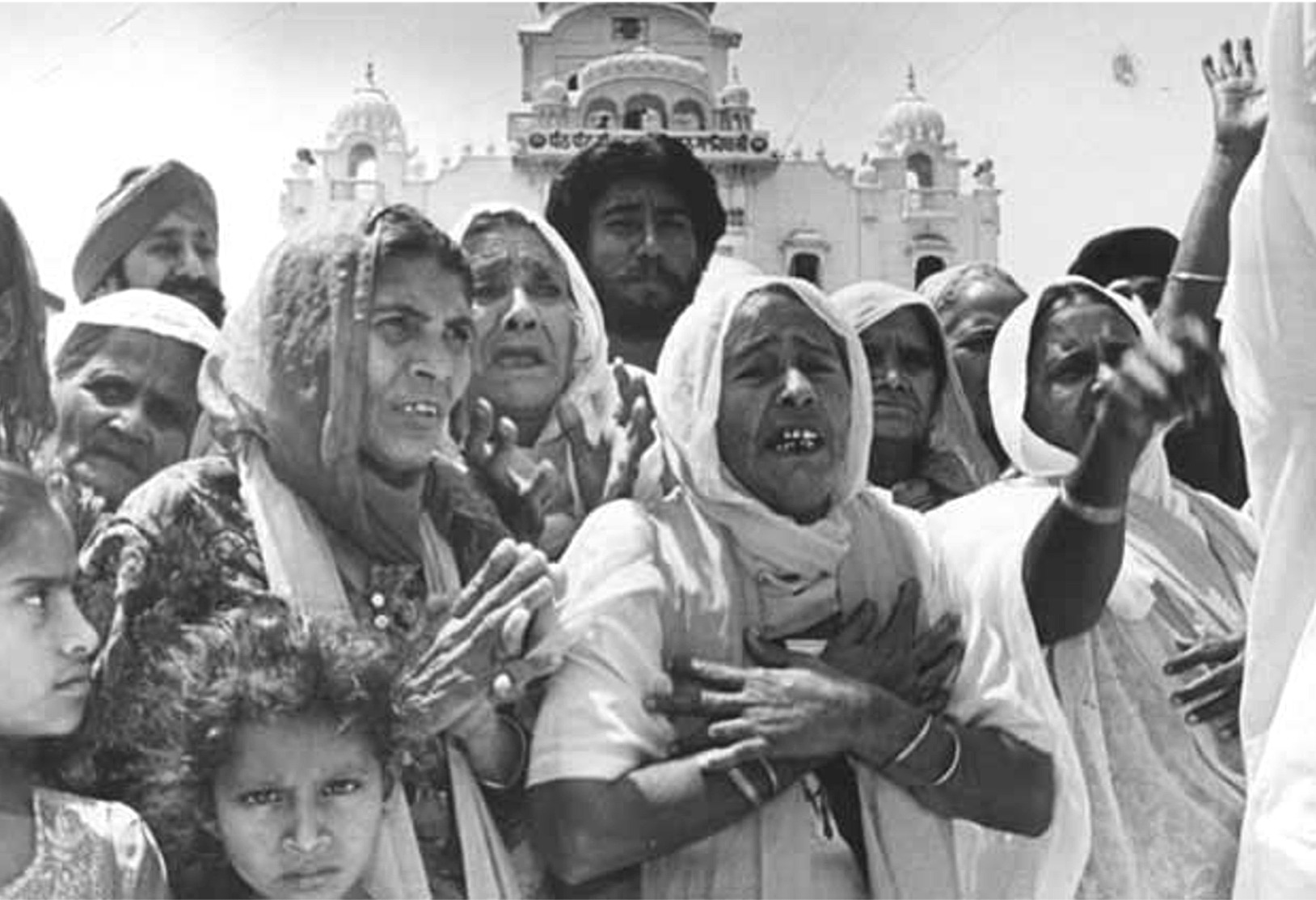
Exactly 35 years ago, around this time in 1984, thousands of Sikhs were murdered all across India following the assassination of then-Prime Minister Indira Gandhi by her Sikh bodyguards. The massacre was orchestrated by the ruling Congress party that claims to be secular with the connivance of police to polarize Hindu majority to win the forthcoming general election in the name of national unity.
The Hindu mobs were incited to kill Sikhs, as a result of which in the national capital of New Delhi alone close to 3,000 people had died. Many of the top senior officials, including the succeeding Prime Minister and Indira’s son Rajeev Gandhi remained unpunished in spite of their complicity in the crime. The judiciary also failed to deliver justice, barring the conviction of a single former Member of Parliament Sajjan Kumar and that too 34 years after the mass murders.
Every year, Sikhs all over the globe remember the dead. In Canada, they hold annual blood drive which has saved more than 1,40,000 human lives since 1999. On Saturday, I donated blood as part of this campaign for the very first time. As I sat on the chair with my blood dripping into the pouch, the memories of those dark days came back haunting.
I was fourteen when the massacre happened. Although I was lucky enough as we lived in Punjab, the Sikhs in most parts of India outside the state were being hunted down by the Congress led goons. The TV imagery of Congress supporters chanting “Blood for Blood” as the body of Indira Gandhi lay in state is permanently etched on my mind. While the Indian state machinery was after Sikh blood, here the Sikhs are trying to save human lives by giving their blood. But that wasn’t the only tragedy I have not been able to forget. Many more bloody incidents were yet to come.
Eight years later, Hindu mobs demolished Babri Masjid – a 16th century mosque in Ayodhya, Uttar Pradesh as the police stood by. Hindus claim that the mosque was forcibly built by the Muslim emperor Babar after removing a temple that stood at the birthplace of Hindu God, Lord Ram in Ayodhya. At the behest of currently ruling right wing Hindu nationalist Bhartiya Janata Party (BJP), the mobs had razed the mosque to the ground in December, 1992.
Whereas, the BJP ruled the state of Uttar Pradesh, the Congress ran the national government led by Prime Minister Narasimha Rao back then. Notably, Rao had served the country as Home Minister when the Sikh Genocide happened. Although he was the in charge of law and order, he did nothing to protect the Sikhs. And now, he failed to stop an assault on the mosque as a Prime Minister.
Much like some BJP supporters participated in the Sikh massacre as foot soldiers; some Congress supporters were also among those who wanted to see the mosque replaced by a temple. A makeshift Hindu temple has remained on the controversial site since then. In fact, when Sikhs were being killed a movement for Ram temple was picking up. The BJP had started mobilizing people against Babri Masjid. Rajeev Gandhi too did not leave any stone unturned to pander the supporters of this campaign. His government started TV serial based on the epic of Lord Ran. Most of the actors who played lead role, including that of Ram later joined the BJP.
In 2002, more than 50 passengers had died after a train bringing Hindu pilgrims from Ayodhya caught fire in Gujarat. The then-Chief Minister of Gujarat, Narendra Modi who is the current Prime Minister had blamed the incident on Pakistan sponsored Islamic extremists after which the state of Gujarat went up into flames. Thousands of Muslims were slaughtered by the mobs led by BJP activists in the state. Thus, Modi repeated 1984 in Gujarat to win the upcoming assembly election and much like Rajeev Gandhi, he mustered a majority in the legislature.
The most recent Supreme Court verdict ordering for the construction of Hindu temple at the disputed site and giving a separate piece of land to the Muslims for building a mosque is like rubbing salt on the wounds. Instead of punishing those who were responsible for the demolition of the mosque and restoring back the place of worship to a minority community, the courts have clearly sided with the mandate of the BJP. It is no secret that the BJP always wanted to build Ram temple in Ayodhya and has remained steadfast on its promise to the Hindus.
It would be more appropriate to put the blame on the Indian state rather than one party or the other to understand the pattern of impunity and systematic violence against minorities in India which has become a majoritarian democracy under the garb of secular democracy.
As of now, I stand with the organizers of annual blood drive and its Campaign Against Genocide to send a strong message to the Indian government that continues to patronise violence against religious minorities. It is no surprise that under Modi, who first got elected as Prime Minister in 2014,attacks on minority communities have sharply increased. The Supreme Court verdict that came close to this year’s blood drive only indicates how Modi has institutionalized bigotry through his influence over the judiciary. Some of those I met at the blood donation campsite in Surrey were outraged over the verdict and felt that the Indian judiciary has deceived minorities. Giving blood to save lives is our collective response to a repressive regime.
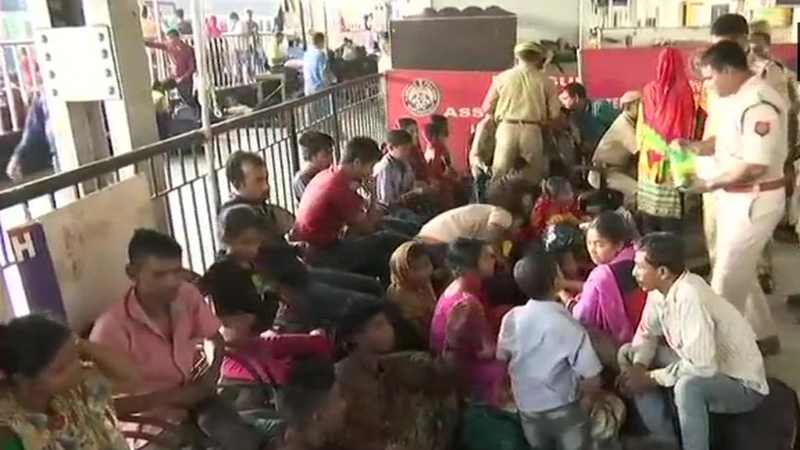
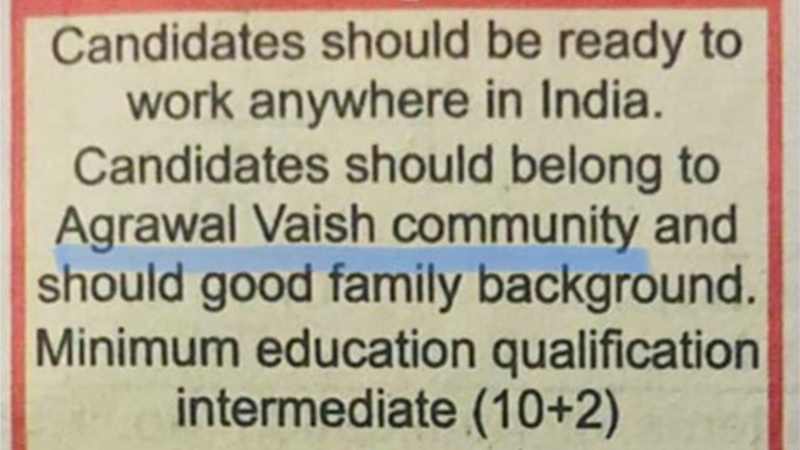
Brandavan Food Products, or RK Associates, which is a private contractor from Delhi’s Okhla area andthe caterer for at least 100 trains, gave an advertisement in a prominent English newspaper on November 6 stating that it requires 100 men for various managerial positions on an urgent basis in departments such as the railway food plaza, train catering, base kitchen and store manager.
The Railways have since written a strong “displeasure letter” to the company. In a statement, the railway authority said, “Serious view is taken by the IRCTC and the contractor has been asked to refrain from giving notice on caste lines and recruit eligible candidates.”The Indian Express reported thatIRCTC has been been informed of the firing ofthe human resource manager who posted the advertisement.
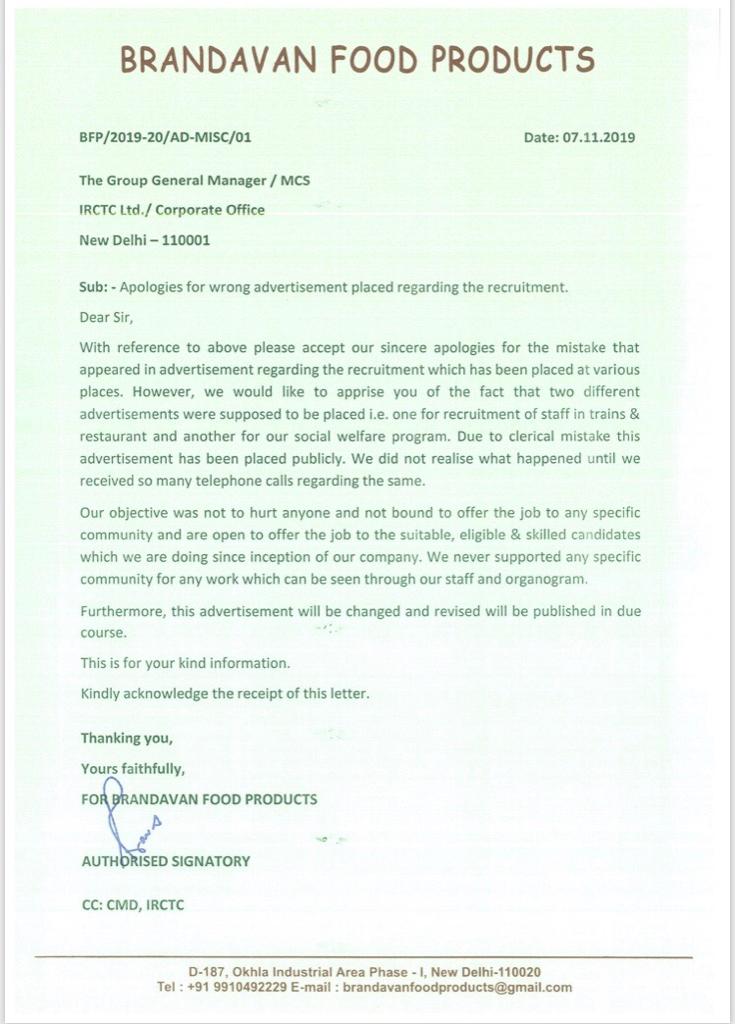
In response, the Group General Manager of the enterprise wrote an apology lettter to IRCTC, stating that this advertisement was placed publicly due to a “clerical mistake” and that they did not realize what had happened until they received telephone calls over the issue.
Hindustan Times reports that the railways currently operate 378 mobile and 9208 static catering units and that IRCTC was made responsible for food-related business for the railways, including its preparation and distribution.IRCTC is currently handing out central contracts to private parties to run the mobile catering units. A total of 48 catering contractors are serving the railways as of now.
Other scandals
Brandavan Food Products was also party to a CBI case which was labeled as the “Rail Neer scam”, in which private caterers were investigated for money launderingby allegedly supplying other brands of drinking waters instead of the IRCTC brand water in Rajdhani and Shatabditrains and thereby causing losses to the government exchequer.
In 2017, the Railways Ministry hadterminated its contract with Brindavan Food Products apantry car staffer employed by this contractor was arrested for allegedly raping a passenger on the Aravali Expressafter pretending to help her get a berth in the train.At the time, the Ministry had tweeted, “Notice for termination of contract for 19707/8 has been issued to Brindavan Food Products,3 days notice has been given.”
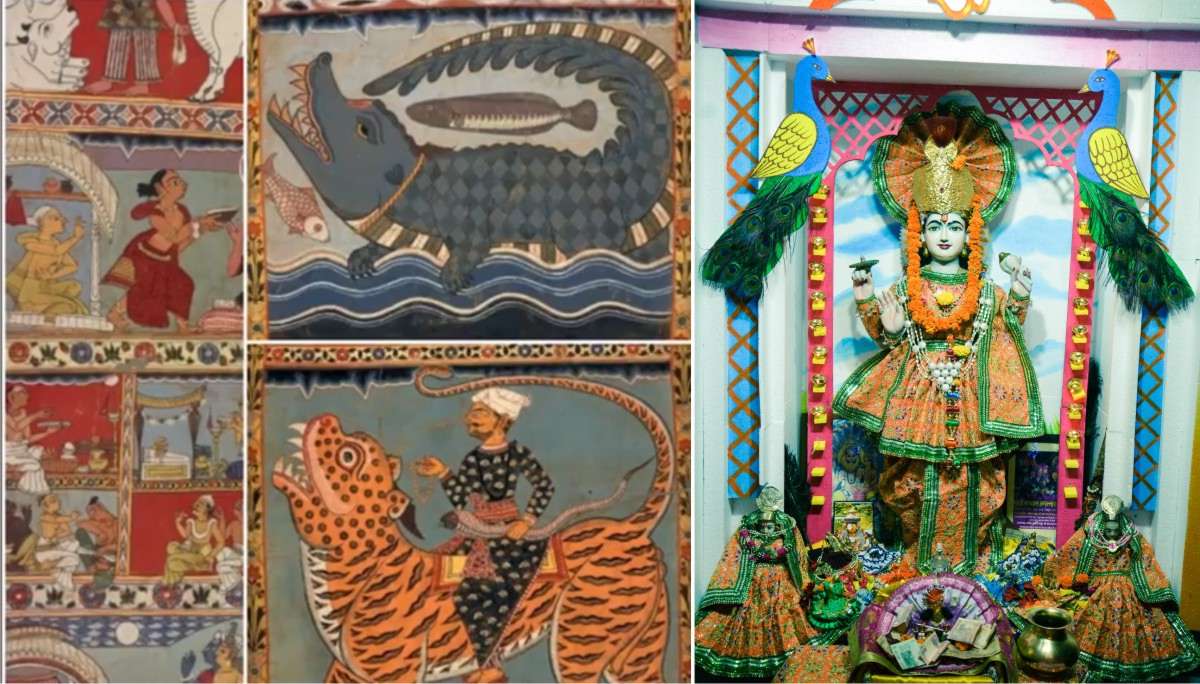
Satya Pir worship is one of the popular religious beliefs and practices originating from Bengal, that symbolizes syncretism of Hindu and Muslim religions. While Satya means Vishnu in Sanskrit, also known as Satya Narayana; Pir means “old man” in Persian which was colloquially similar to the meaning of Faqir (ascetic). The Satya Pir belief in Muslims is synonymous with Satya Narayana reverence in Hindus. Satya Narayana Puja and Katha involve fasting during the day and then offering food like Shirni, which was a typical Muslim household preparation, to Lord Satya Narayana who is represented by a plain wooden plank, used to denote the seat of the Satya-Pir where offerings of edibles like confectioneries, milk, sugar, betel-leaf, betel nuts are made. It is rare to see any deity or imagery of Satya Narayana in such worship which is also in line with Muslim beliefs. Even the origin stories of the belief among Hindus and Muslims have significant overlap.
According to one story, Lord Vishnu appeared in the guise of a Muslim Faqir before a poor Brahmin and told him he would have bounty if he worshipped Lord Satya Narayana. To assuage the Brahmin’s scepticism of following the words of a Faqir, the Faqir (SatyaPir) told him “Except one Brahma, no two Brahma exist, the Lord of all is one Niranjan Gosain, in whose name Brahma, Bishnu and Maheswar utter prayers. In one pore whose skin lies the endless universe. Without hands, without legs, he holds the world. He has no mouth to eat, he hears without ears, sees without eyes. None can recognize Him though He is omnipresent. Bismillah is but another name of that very same Niranjan: Vishnu and Bismillah are not at all distinct” (as quoted in Bangla Sahityer Itihas). The Brahmin obeyed and found himself quite well off in a matter of days. According to another story told about Satya Pir, which also finds mention in Satya Narayana Katha, a merchant pledged to worship Satya Pir if he could have a child. He later had a daughter but put off the worship till her marriage. The consequence of forgetting to worship Satya Pir as promised, led to him being engulfed in a storm along with his son-in-law. It was his wife who then completed the worship on mainland and they were able to return safely.
These legends and stories were meant to inspire awe of the Satya Pir and allude to his supernatural powers. In the stories and in real life, the worship of Satya Narayana was done by the women of the house. During the 15th-16th century, Islam was being taken up by more and more people in the Bengal region. The Muslim women though, had regular interaction with Hindu women who came to visit their households as friends, workers, sellers of knick-knacks, etc. The Hindu women’s beliefs also percolated easily in these interactions and Muslim women would also put their faith in the “brata” (fasting) and ascetic practices popular among the Hindu women to ensure good luck and prosperity of their menfolk who would often be away traveling.
The advent of Bengali Pir literature also helped spread the legend of SatyaPir with ‘Pir-kavya’ (or the eulogical poetic verses on the Pirs). Satya Pir was the symbolic imaginary Pir who acted as a messenger establishing synthesis between the Hindus and the Muslims. Besides SatyaPir, various Gods and Goddesses had arrived in the literature as the Pir-Piranis of the Hindus and the Muslims. Olai Chandi of the Hindus had become Olai bibi in the Pir literature. Similar transformations took place like from Bandevi to Banbibi, Matsyendranath to Masnad Ali and Machchandali, Bastudevi to Bastubibi.
The Pir Panchali Kavya or the eulogical poetic verses about Satya Pir are still read out in the Bengali households for Satya Narayana Puja and making offerings to Satya Pir. In the local folk tales, Hindu and Muslim poets alike had imagined the Satya Pir as the Khudah(God) manifesting dressed as a Faqir. Some Muslim poets also describe him as a Pir from Mecca. The character of Satya Pir had been created by describing him as a Muslim Faqir or Pir possessing supernatural powers.
In this way, the Satya-Pir (or Satya-Narayana) literature gained popularity among the people; the main purpose of the literature was to glorify the Satya-Pir. The first book on Satya-Pir called Satya-Pir Kavya is attributed to Shaikh Faizullah and the book is supposed to have been written between 1545 to 1575 AD.
Faizullah’s writing contains clear hints of cultural assimilation. He has saluted the deities of both communities in the beginning of his book, “You are Brahma, you are Vishnu and you are Narayan, Listen, O Ghazi, pay heed to yourself to preaching in the assembly (i.e. instead of fighting)”.
Towards the closing period of the Mughal rule in Bengal the first effort towards bringing the Hindus and Muslims together started through the medium of the ballad of Satya Pir and Satya Narayan. In the book Bangla Sahityer Itihas, SukumarSen says that the scribes of the Pir ballads were Hindus, the singers were Muslims, but their composers were the poets of both communities. Sen states further that numerous Hindu writers from West Bengal to Assam composed Satya Narayan or Satya Pir Panchalis (poems) by equating Rahim of Mecca and Rama of Ayodhya.
From 16th to 18th centuries various local Pir cults grew in Bengal with traditions and legends around some Muslim saints (Pirs) and mythical heroes of uncertain identity which became very popular among the masses of the both communities, the Hindus and the Muslims. Khawajah Khizir, Pir Badr, Zindah Ghazi, Madar Pir, Panch Pir etc. are very important among them. They were worshipped by the masses irrespective of religion.
Just as the Hindus found a reflection of Guru-Chela relationships in the Pir-Murid dynamic, to the Muslims who had converted, the Pirs occupied a similar space to Tantriks and learned sages while their dargahs held significance paralleled to the Chaityas and Stupas of the Buddhists. Slowly the people of all three religions in Bengal region developed a shared understanding of reverence that is witnessed even today in parts of Odisha, West Bengal, and Bangladesh. May this centuries-old tradition continue and Satya Pir always protect and bestow his blessings on all his devotees, regardless of who they are or what religion they follow or what name they call him by, for the power of faith is greater than all human differences.