Home Blog Page 1286

Ambedkar King Study Circle Concludes Annual Conference in California

0

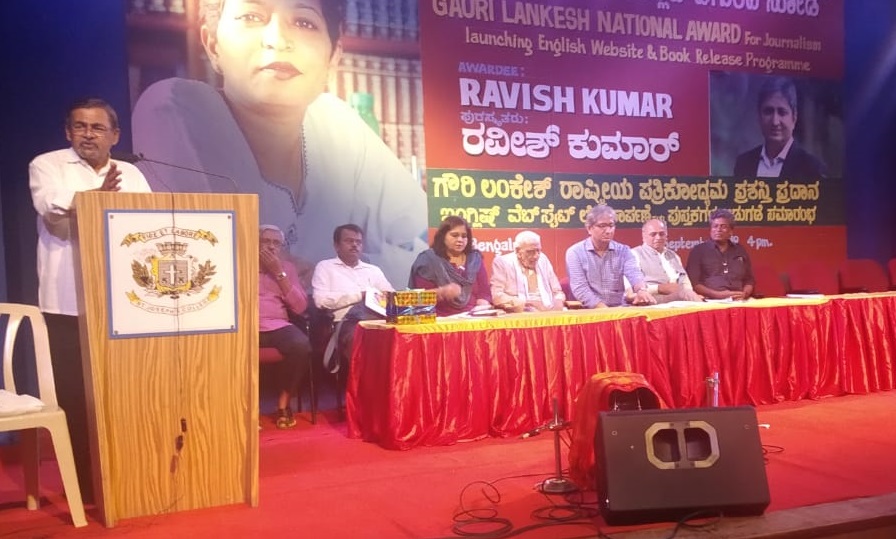
Around 120 people gathered with enthusiasm and engaged in lively discussions at Ambedkar King Study Circle’s (AKSC) 2nd annual conference held on September 7, Saturday in Cupertino, California. Dr. Kancha Ilaiah Shepherd inaugurated the conference and delivered the keynote address under the title ‘Ambedkar and Martin Luther King. Jr: the Giant Epoch Makers’. Dr. Ilaiah is Director – Centre for Social Exclusion and Inclusive Policy, Maulana Azad National Urdu University (MANUU), Hyderabad, India.


Dr. Kancha Ilaiah Delivers Keynote Address

According to conference organizer Mr. Karthikeyan, Dr. Kancha Ilaiah has revolutionized the psyche of the oppressed class people with his historical outlook. In his address Dr. Ilaiah said that non-Brahmins are the producer class who developed agriculture by working on fields and developed various technologies in ancient India to meet the needs of the common men whereas the priestly class exploited the producers by chanting slogans. He took a strong position on the de-politicalized nature of Indian Christians. He appealed to the Indian Christians that the Indian Christians should take a leaf out of the book from American Christians especially the black Christians who used religion for their spiritual emancipation.

The conference was organized with three panel discussions followed by a question and answer section. Mr. Kunal Shankar (Columbia University) and Ms. Sabiha Basrai (Co-ordinator, Alliance of South Asians Taking Action) spoke in the first panel ‘21st Century Organizing: Issues, Results, Challenges, and Responsibility’. Kunal delivered his speech based on his M.A thesis, ‘Jobless Growth and the General Lack of Unionizing in the Age of Digital Monopolies’. He explained as the big tech industries ignored the idea of the nation-state and freely moving their capital and technology across the borders, the IT workers too should organize at a global scale. He supported his argument with ‘Platform cooperative’ model in which the software will be owned by a community. Fairbnb is a successful cooperative model against the corporate-owned Airbnb and Green Taxi Cooperative, the largest Taxi company in Denver, USA, is an alternative to Uber and Lyft. Sabiha narrated her experience in working with ASATA (Alliance of South Asians Taking Action) on social issues. She explained about ASATA’s some important interventions since the formation of ASATA. She talked about Lakireddy Bali Reddy case in which poor people were brought to San Francisco area to work in his restaurant with a little pay and he was convicted of trafficking and sexual offences. This panel was moderated by Mr. S Karthikeyan, Ambedkar King Study Circle. Karthikeyan said that the class conscious activists in social organizations should work the socially conscious activists in class-based organizations to develop a collective conscious against class and social exploitation.


AKSC Conference Attendees

Dr. Suraj Yengde (Harvard University) and Ms. Rachel Herzing, Center for Political Education (CPE) spoke on the panel, Assimilation of Race and Caste Question & Building Global Organic Movement and this panel is moderated by Mr. Chaitanya Diwadkar, Ambedkar King Study Circle.

Ms. Racheal stated that CPE is anti-imperialist and internationalist. She said that capitalism is racist and casteist and oppressions are bound with one another. The concessions made so far and given to the black people from the court and the legislation are results of the people’s struggles rather than these power structures voluntarily passing some progressive laws and judgements. Mr. Suraj started with the religious sources of Brahminical supremacy as mentioned by Dr. Ambedkar. The people who are fighting against social oppression should have social and political understanding. He said that we need class and caste solidarity to defeat discrimination. He exposed the savarnas in American diaspora who fight against racism in America under the umbrella of ‘people of color’ while silent on existing caste practices in the United State and caste oppression and discrimination back in India. He said that Dalit question and Black question are basically a human question and need to be solved as a human question.

Prof. Hatem Bazian Director, Islamophobia Research & Documentation Project Center for Race and Gender. The University of California, Berkeley and Mr. Anto Akkara, award-winning investigative journalist & author were part of ‘Religious Freedom and Freedom in Religion.’ and this panel was moderated by Ms. Anu Mandavilli, ASATA. Hatem took upon the roots of Islamophobia and connected the eurocentric development of the nation-states and how it’s forced upon on other geographies which are completely different from the European experience.  Anto shared his working experience on Hindutuva’s violence against the Dalits and religious minorities. He’s shared a chilling incident where Dalits are doused with sewage water by the police in one of their protests. He narrated Swami Laxmanananda Saraswati’s murder in 2008 and how 7 innocents are framed by the police. He explained the deep nexus among the bureaucracy, the executive and media houses.


Question & Answer Session

In conclusion session, fraternal organizations expressed their willingness to build a strong coalition against the casteist and communal forces. Mr. Fouad Khatib, President, Muslim Community Association – San Francisco Bay Area, Mr. Benjamin Paul Kaila, Friends for Education, Mr. Ashan Khan, President, Indian American Muslim Council, Dr. Sharat Lin, board member, San Jose Peace and Justice Center, Ms. Asti Bhat, Board of Directors, Association for India’s Development, Dr.Piyush Dhanuka and Mr. Selvaraj, Ambedkar King Study Circle spoke at the conclusion. Mr. Elancheran, secretary of Ambedkar King Study Circle gave the vote of thanks. Cheran also summarized the AKSC’s activities of the previous year and explained to the audience about future activities for the coming year.

During the lunch break the women participants of the conference, around 50 women, met themselves to discuss the issues exclusively pertain to them. A documentary directed by Ms. Rucha Chitnis-‘In the Land of my Ancestors’ was screened after the lunch break. The documentary depicts how the lives of native Americans are inseparable from nature. It talks about non-native Americans’ interest in preserving nature by learning from native Americans. The conference was started with traditional parai music by Mr. Adhiyaman Arasappa and Ms. Arulmozhi Palanisamy. The different part of the conference was anchored by Ms. Kanaglaxmi Ramesh, Mr. Gowtham, Mr. Karthikeyan and Mr. Kanakaraj from AKSC.

Courtesy: Two Circle

The Curious Case of RSS’ Praise for Dara ‘Shukoh’

0

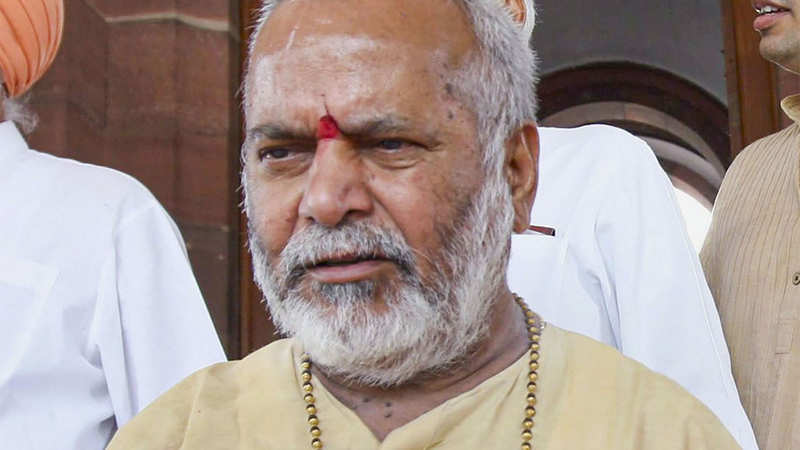
In this episode of Present, Past and the Future, Nilanjan Mukhopadhyay and historian Harbans Mukhia try to correct misconceptions on the rivalry between Dara Shukoh and Aurangzeb.

Recently, RSS Joint General Secretary Krishna Gopal made a laudatory reference to Mughal prince Dara Shukoh (mistakenly referred to as Shikoh) saying that had he been an emperor instead of his brother, Aurangzeb, the face of Islam in India and the story of the country would have been completely different. In this episode of Present, Past and the Future, Nilanjan Mukhopadhyay and historian Harbans Mukhia try to correct misconceptions on the rivalry between Dara Shukoh and Aurangzeb. They also talk about how a false reading of the past impinges on the present.

Courtesy: News Click


Gujarat High Court bullet train judgment dubbed bad in law, spirit, undesirable

0

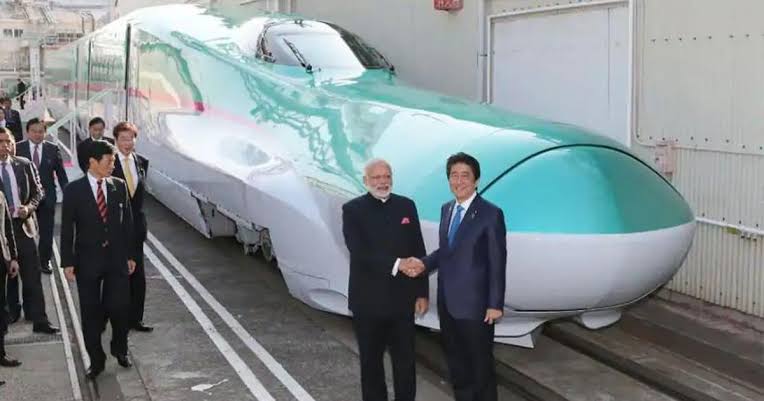
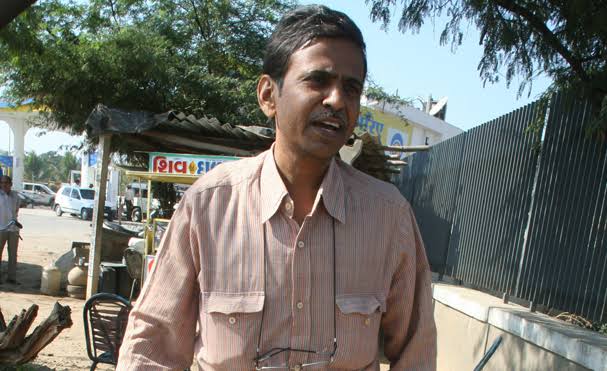
Well-known environmentalist and human rights activist Rohit Prajapati, in a “quick comment” on the Gujarat High Court’s Judgment on the acquisition of land for Prime Minister Narendra Modi’s pet 508 km-long Mumbai-Ahmedabad bullet train project, has said that the judgment dated September 19, is “bad in law, spirit and undesirable”.


Prajapati, who was one of the top activists who represented before the Japanese funders of the project, Japan International Cooperation Agency (JICA) expressing concern over the manner in which farmers were allegedly sought to be evicted, regretted that the judgment “reads like a recording of the proceeding and at the end opinion of the court and not like a well-conceived comprehensive judicial order.

According to him, “Crucial principles of the law of the land, legal and other issues raised in the Petition are not dealt within proper legal framework, either in letter or in spirit”, adding, “Acritical and complex matter has been narrowed down to simple opinion by the court without a sound basis, critical examination of all the facts, factors, democratic process of decision making, social and environmental impacts.”

Prajapati, who heads the Vadodara-based environmental organization, Paryavaran Suraksha Samiti, believes, “All in all, the judgment not only sets a bad precedent, but also has severe and grave impacts as well as short and long-term consequences for the project affected people, justice and the environment (including biodiversity).”
 

Rohit Prajapati
In what has been interpreted as a setback to farmers in Gujarat, the High Court on September 20, junked more than a 100 petitions challenging the land acquisition process for the ambitious bullet train project on grounds of “inadequate” compensation. In their petitions, farmers had challenged the Gujarat government’s notification for the acquisition of their land, contending that the State had no power to acquire land for a multi-state project like that of the bullet train.

The bench, consisting of Justices Anant Dave and Biren Vaishnav, upheld the validity of the Land Acquisition Act, amended by the Gujarat government in 2016, and declined to entertain the petitions challenging the land acquisition for project. Gujarat government sources said, the judgment clears a major hurdle in the way of the ambitious project.
According to them, by upholding the validity of the Gujarat amendment of 2016 to the Centre’s land acquisition law, the High Court recognized that it is a multi-state project, but the Centre has executive powers, which have been given to the state government, to acquire land. Before the amendment, the court noted, the state had no such power, but things changed in 2016.

The court also rejected the farmers’ plea for conducting social impact assessment (SIA), justifying the state’s move to the skip mandatory provisions, which were part of the 2013 Central law. It justified the SIA process carried out under JICA guidelines as “appropriate and satisfactory.”

An estimated 5,000 of the total 6,900 farmers affected by the project are said to have registered objections to the land acquisition process initiated by state authorities.About 1,000 farmers, while the hearing was ongoing, had filed a one-page affidavit registering their objection on the land acquisition process, demanding the nature of compensation should be aligned with the Centre’s land acquisition law.

First published in https://www.counterview.net