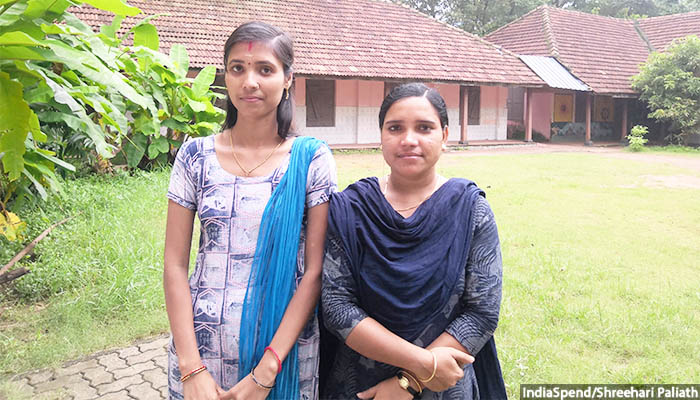
Ernakulam (Kerala): Supriya Debnath, 24, a migrant from Odisha’s Kendrapara district, sat in a blue and white salwar kameez in one corner of the upper primary government school in Edappally, in central Kerala’s Ernakulam district. A thin vertical streak of vermillion reached the horizontal dash of sandalwood paste on her forehead. Next to her, Hasina Khatun, 27, a migrant from West Bengal’s Murshidabad district, sat listening in rapt attention to her colleagues who were sharing their teaching experiences, as part of a programme called Roshni, a project helping migrant workers’ children stay in school by helping them become proficient in Malayalam.

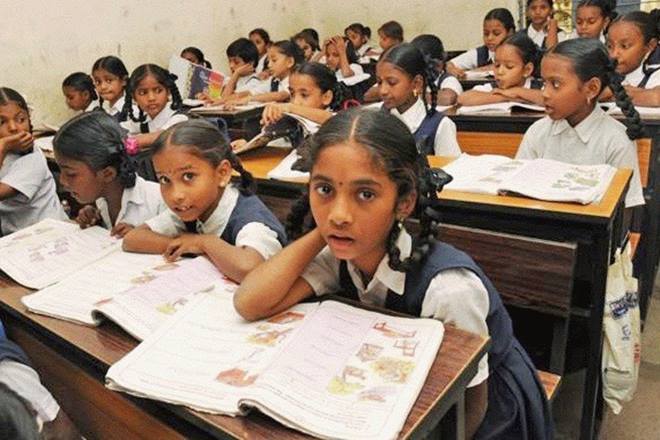
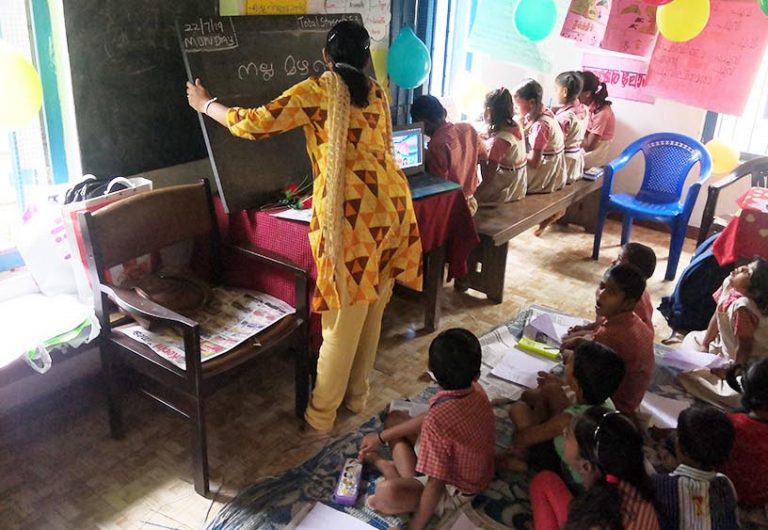
Children learn Malayalam as part of Roshini, a program to help children of migrant workers in Ernakulam learn Malayalam in government and government-aided schools, through the use of multiple languages, including their mother tongue.
Non-native Malayalam speakers such as Debnath and Hasina are among Roshni’s 40 education volunteers helping migrant workers’ children learn the local language and perform better in tests in 38 government and government-aided schools in Kerala.
About 2.5 million migrants make-up 8% of Kerala’s population, according to a 2013 study by the Gulati Institute of Finance and Taxation for the Kerala labour department, and about 38% of the total Indian population migrate for work or family, according to the 2011 census. Children of migrants, whose families travel back and forth from their native land, are more likely to drop out of school, impacting their skills and opportunities in the future, according to experts.
In Kerala, the largest proportion of migrants hail from West Bengal (20%), Bihar (18.10%), Assam (17.28%) and Uttar Pradesh (14.83%), the 2013 study noted, and most of them would find it challenging to study with Malayalam as the medium of instruction. Programmes such as Roshni could help bridge the education gap for migrant children.
Roshni trains volunteers in government and government-aided schools to help more than 1,000 migrant workers’ children learn Malayalam through the use of multiple languages as the medium of instruction, including the children’s mother tongue. Its breakfast component ensures the children do not go hungry, incentivises attendance, and helps them assimilate into the local culture.
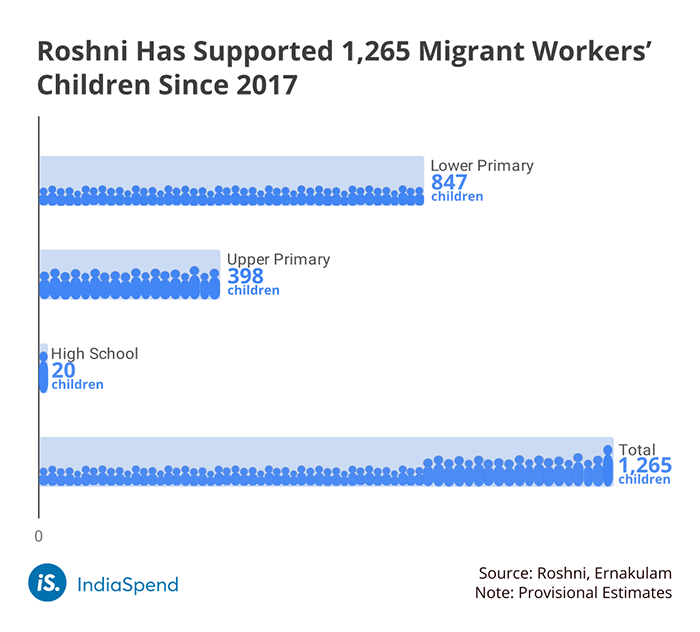
The Roshni project, launched by the Ernakulam district administration in 2017, has supported 1,265 migrant workers’ children from lower primary to high school. School dropouts across 20 schools reduced by nearly half (48%) to 65 in 2018-19, when compared to 2017-18, data from the programme show.
Kerala’s economy is dependent on migrants
With Kerala sending out large numbers of workers overseas–2.4 million in 2013, based on a May 2018 report by the Centre for Development Studies–it needs migrants from other Indian states for Kerala’s economic activities, explains Benoy Peter of Centre for Migration and Inclusive Development (CMID), an Ernakulam-based non-profit.
“Kerala has immensely benefited from migration,” said Peter. “But given unemployment among the educated and a population which will see a negative growth (two district already do) in the future, there is a need for migrant workers for the state to maintain its economic activities.” The exact number of migrants coming to Kerala is unknown. As much as 11% of the population now (between 3.5 and 4 million) could be migrant, according to estimations in a 2017 study by CMID.
The government has been “more proactive compared to other states”, Peter added, with migrant welfare programmes such as Apna Ghar, accommodation for interstate migrant workers on rental basis, and Aawaz, a health insurance scheme, and education schemes like Roshni.
Making it easier for migrant children to stay in school
“Enniku Malayalam annu easy (I find Malayalam easy),” said Susmitha, as her schoolmate, Anjali, nodded in agreement. “Paanch saal ho gaya hai mujhe yahan, isliye Malayalam easy hai (I have been here for five years, so Malayalam is easy),” said Anjali, after an initial reluctance to speak in Hindi. Although from Varanasi, Uttar Pradesh, both 10-year-olds at Ernakulam’s Malayalam-medium Binanipuram Government High School are more comfortable speaking the local language than their mother tongue, Hindi. They have been living in Kerala for over half a decade, since their fathers moved here for work. Most of their conversations, except with their parents at home, are in Malayalam.
Susmitha and Anjali were part of the first group of students in 2015-16 to learn Malayalam as part of the pilot programme before Roshni was formally launched in 2017, Jayashree K, academic coordinator of Roshni told IndiaSpend.
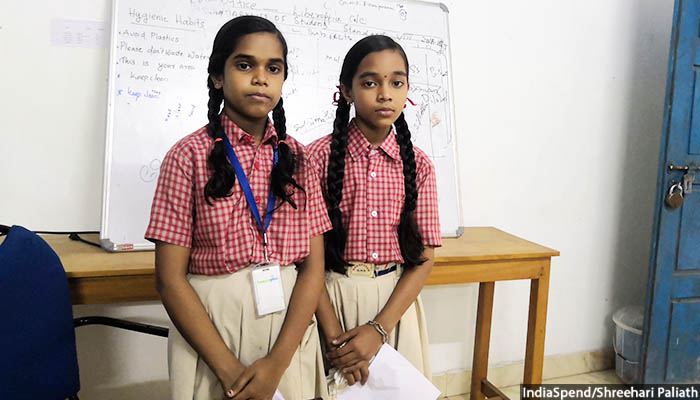
Susmitha (left) and Anjali are from Varanasi, Uttar Pradesh. They are more comfortable conversing in Malayalam than their mother tongue Hindi, they say.
The number of migrant students in Ernakulam’s government and government-aided schools increased 44% to 3,985 over a year to 2019-20, according to data from the government’s education portal, Samagra Shiksha Kerala (SSK).
“Our survey each year finds between 150-200 migrant children who are out of school. This year [2019-20] we found 160,” Sajoy George, district programme officer for Ernakulam, SSK told IndiaSpend. “Often these children are first generation school goers.”
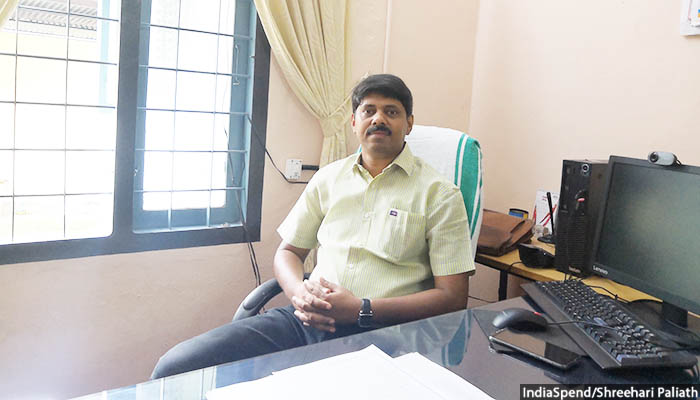
Each year there are between 150-200 migrant children who are out of school, and often they are first generation school goers, says Sajoy George, district programme officer for Samagra Shiksha Kerala.
One of the challenges with the nature of migrant work is keeping children enrolled in school. Often migrant families return to their home state for family functions or festivals and do not return, or leave the children behind when they come back.
Further, natural calamities, like the August 2018 flood, have an adverse effect on migration. In 2018-19, 26 students dropped out due to job losses caused by the flood, 24 due to family issues, and 15 due to seasonal festivals, according to data from the Roshni programme for 20 schools.
“There are three types of migrant workers here; those who come for work and settle down, those who look for work temporarily, and seasonal migrants. The migrant student drop-out rate depends on the nature of migration,” said George.
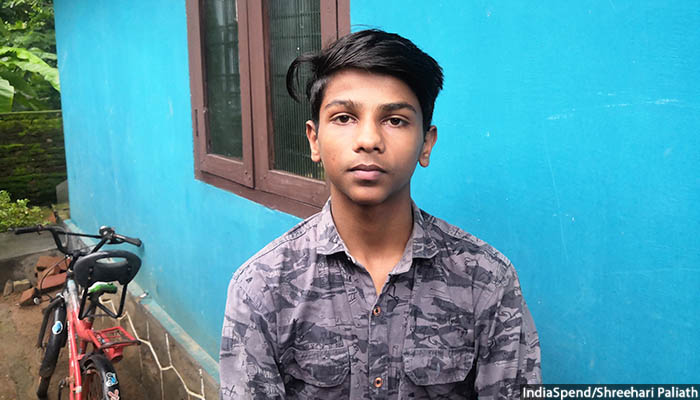
Children like Mohammed Dilshad, whose family has lived in Kerala for years, have benefited from the programme. He topped the school with an A+ in all subjects. Although he knew Malayalam when the pilot began in 2015, “it helped him improve his Malayalam skills by learning songs and poems”.
Dilshad, the eldest son of migrants from Bihar’s Darbhanga district, and a first generation student, wants to be an engineer when he grows up. His father, Mohammed Sajid, is uneducated, works in a shoe factory in Ernakulam, and is the sole breadwinner for a family of seven. Dilshad’s mother Abida Khatun has attended a madrassa (school for Islamic teaching) in her village in Samastipur.
Mohammed Dilshad topped his class 10 exams in his Malayalam medium high school in Binanipuram. He is the eldest of five children of illiterate parents from Darbhanga, Bihar.
“I still find it difficult to speak Malayalam, although it is better than before,” Khatun, who has lived in Kerala for over two decades, told IndiaSpend. “It is peaceful here” compared to Bihar, which she has not visited in five years. Despite her limited education Abida wants her children to study.
“We used to spend Rs 200 a month on Dilshad’s tuition when he started school. We hardly saved anything,” said Abida. “Abhi bhi wohi halaath hai (Circumstances have not changed). But I want all my children to study and pursue whatever they wish to.”
“Learning Malayalam through pictures and drawings helped when I joined the school in Binanipuram in class 5 after moving from Bihar,” said Dilshad’s schoolmate and neighour Daraksha Parveen. Parveen, who is studying to be a fashion designer, believes that a programme like Roshni helps migrant students. Neither of them prefer Hindi, except when talking to their parents.
The Birth of Roshni
“When I was appointed as an upper primary teacher in Binanipuram in 2014, I noticed that more than 50% of the children in the school were migrant children and were having trouble learning Malayalam, and therefore other subjects in school due to the medium of instruction,” Jayashree, the academic coordinator of Roshni, said.
The problems persisted even after the headmistress informed officials about the high number of migrant children, and a volunteer would help these students understand Malayalam. Since 2008, the Sarva Shiksha Abhiyan (SSA) has had volunteers in schools with a large number of migrant children to help school teachers communicate. Still, migrant children faced a tough time in school understanding Malayalam, the medium of instruction.
In September 2015, a research group consisting of the headmistress, class teacher, a volunteer from SSA, and Jayashree as a teacher researcher developed a pilot project in Binanipuram school to help 11 migrant workers’ children–the majority were Hindi speakers–learn Malayalam.
“The challenge is that teachers in schools are monolingual, and may not be able to communicate in the child’s language. This is still an issue, but volunteers help,” said Jayashree. “Language lives as discourses. We speak to a newborn through songs or lullabies. In the same way we cannot expect a child to pick up a language by just teaching them alphabets when they join school. It is unscientific.”
During the pilot, Jayashree slowly developed the teaching module and pedagogic method based on class interactions and teachers’ reflections on each day. “There was already a programme [Malayalathilakkam] to teach Malayalam to primary school students in Kerala. I managed to adapt the modules to include graphic reading for migrant children,” said Jayashree. The pedagogy (for Roshni) was developed under the guidance of linguist K N Anandan.
In this method, the teacher “code switches” from the migrants’ language to Malayalam and writes sentences, uses graphic representations, drawings, songs, etc., so that children are able to identify letters in a sentence and develop proficiency.
In three months, by December 2015, the children had developed phonemic awareness (ability to hear and manipulate sounds in spoken word) for 16 of the 56 letters in Malayalam, according to Jayshree. This pilot turned into the programme Roshni.
“We speak to a newborn through songs or lullabies. In the same way we cannot expect a child to pick up a language by just teaching them alphabets when they join school. It is unscientific,” says Jayashree K, academic coordinator of Roshni, who is helping develop teaching modules for volunteers and pedagogy.
In October 2017, Mohammed Safirulla, former district collector of Ernakulam, was informed about the project. Four schools were shortlisted, including the one in Binanipuram, for the first phase of Roshni. With Roshni’s launch, the language-based intervention has come under the district administration and not the state education department.
“It is an additional package for boosting their [children’s] performance, not a parallel schooling process,” Safirulla told IndiaSpend. “The focus was to reach more and more students initially.”
“A priority area was migrant welfare,” said Safirulla. “There were a large number of children of migrant workers who were out of school. The migrant workers often start their day early, and sometimes children did not receive sufficient nutritious food. I wanted to ensure that a food component was included in the project.”
The project, costing nearly Rs 1 crore annually, is financially supported by the district’s education funding, and in part by Bharat Petroleum’s (BPCL) corporate social responsibility (CSR) fund. The food component includes Rs 20 for each child and Rs 100 a day as cooking charge per school per day. It also includes Rs 20 per child, on average, for stationary and crafts.
“The food component is supposed to be an incentive for the children to attend school in the morning given that Roshni classes begin 90 minutes before regular classes start at 10 AM,” said Jayashree.
“We see Roshni as a flagship project,” Ancy Jhonson, manager CSR of BPCL, told IndiaSpend. “Often companies invest in capital expenditure, but here, although there is nothing to showcase in terms of physical infrastructure, the impact is more.”
The project expanded to 20 schools in the second phase in 2018-19, and to 38 in the third phase in 2019-20.
Although the “intent is positive”, experts such as Peter of CMID believe that it may be too early to judge on Roshni’s impact, given that its impact would measure both the impact of Roshni and the longer running government programme since 2008.
As both programmes (the one started in 2008 with three volunteers, and Roshni) have the same aim of helping migrant children, they can be converged at a later stage to ensure “synchronisation and avoid de- duplication”, said S Suhas, district collector of Ernakulam.
Making language learning easier
“It is difficult to learn Malayalam,” said Debnath, the education volunteer. “Yes, I mean, naallu is four, naalley is tomorrow. Similarly vallum is boat and vellam is water. It is very confusing at first,” concurred Hasina with a smile. When she came here after her marriage to Mafikul Mondal, a driver, she knew Bengali, a smattering of Hindi, and no Malayalam. “I confined myself to my house due to the language barrier,” she said.
Supriya Debnath (left), speaks Odia, and Hasina Khatun, Bengali. They are volunteers helping migrant children learn Malayalam through Roshni.
Marriage is the biggest reason for migration of women, and nearly 97% of 211 million married people who said marriage was the reason for migration were women, according to census 2011 data.
But things changed for the high-school graduate when she had to enrol her daughter at school where many children were Bengali speakers, and the headmistress requested her assistance. “Initially I did not know how and what to teach. I was asked to help communicate with students in Bengali. But then as I started helping the class teacher I learned more. I ensured that I spent more time in class 1 where the basics of Malayalam are taught,” said Hasina, preferring to respond in Malayalam.
Similarly, Debnath, who instantly took a liking to Kerala during her first visit after marriage to Prashanth Samal, a supervisor at a plywood company, said that she too was asked to help out in a school where most of the students were Odia speakers.
“I could speak very little Malayalam,” she said. “But I thought that just teaching children Odia would not offer them a future. When I came to know about the interview calls for volunteers for Roshni, I prepared by learning to read and write Malayalam by watching YouTube videos.”
“Volunteers like Hasina and Supriya are vital for the project as the number of migrant workers’ children increases,” said Jayashree of Roshni.
Currently the programme has 40 volunteers across 38 schools. Two schools which have high number of migrant students have two volunteers each. Roshni’s volunteers are multilingual (Hindi, English, Tamil speakers) and from Kerala, except for Hasina and Debnath. They are paid Rs 10,000 a month from the SSA and BPCL funds.
The volunteers are given teaching modules and provided training. Based on class interactions, they share their reflection each week on a WhatsApp group that other volunteers can learn from. “I also share feedback over the course of the month to help the volunteers based on their issues,” said Jayashree.
While Hasina is improving her skills by teaching fellow migrants’ children, she is glad her daughter, Aliva, is doing well in school. “She has received awards. Importantly she knows Malayalam and four other languages (Hindi, English, Bengali and Arabic). I often take her help with Malayalam,” said Hasina.
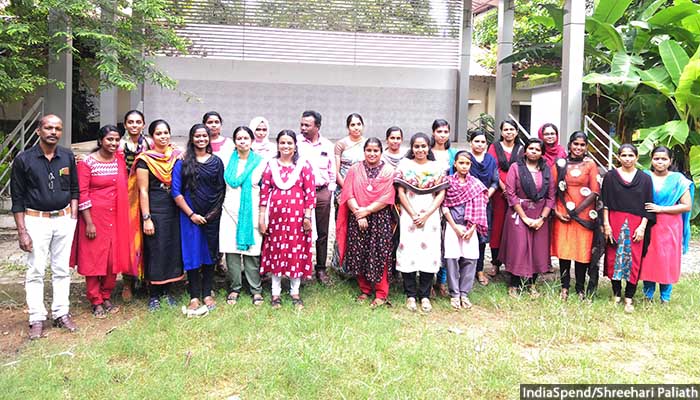
Forty education volunteers teach in 38 government and aided schools in Ernakulam. Their work has helped more than 1,000 migrant children learn the local language and stay in school.
Scalability and sustainability
Ensuring that the funding for the project and its pace continues even if key officials are transferred in the district administration should not be an issue, according to Safirullah, the former district collector. The funds for salaries of the education volunteers should not be a problem considering that CSR funds are available. “The funding required is small, which the government can afford if need be, but the impact is enormous,” said Safirulla.
“Language is the gateway to the [local] culture and Roshni will help the second generation of migrants assimilate into the local culture.” If government plans to expand the project to other districts, “it should be done in phases”, he said, as it may be more effective to focus on districts that have a higher population of migrants.
More education volunteers from the migrant workers’ community or those who can speak the children’s language must be included, like Hasina and Debanth, Peter of the think tank CMID noted.
Samagra Shiksha Kerala, the government’s education department, plans to develop a bridge programme in Perumbavoor, which has a high population of migrant families, to help seasonal migrants’ children assimilate into schools, and support more than 2,700 migrant students in Ernakulam who are not currently covered under Roshni. “We also plan to create bridge material in the next few months including best practises from Roshni to be shared across other districts,” said George, the district programme officer of Samagra Shiksha Kerala.
“If we can successfully show that Roshni can be scaled across the district in the next year or so, I do not see why it cannot be done across the state,” Suhas, Ernakulam’s district collector, told IndiaSpend.
(Paliath is an analyst with IndiaSpend.)
Courtesy: India Spend