Sriram Dalton from Daltongunj in Palamu district of Jharkhand walked from Mumbai to Ranchi this environment day to spread awareness on the privatisation and corporatisation of natural resources in India.
Sriram wears multiple hats, that of a director, editor, writer and more
Born on 25th August 1979 in Daltonganj, Jharkhand India, Sriram completed his Bachelor’s in Fine Arts from Banaras Hindu University (B.H.U) India in commercial art in the year 2001. After which he came to Mumbai and under tutelage of legend late Ashok Mehta, he endeavoured to beautify camera work of films like Kisna, Waqt, Family, No entry, God Tusi Great Ho, Meridian, part of pop culture. His creative genius also nourished some corporate ad films. His film profile maps a wide range.
In a career spanning more than two decades, he has seen how the corporate and corrupt politicians have exploited natural resources.
Deeply concerned about the issue of privatisation of water, where corporate giants are selling water at exorbitant rates, unaffordable for common masses, on this world environment day he decided to walk from Mumbai to Jharkhand and tell people on the way that water, forest and land belong to the people of India. And we must at least get free water.
He documented his journey on Facebook live, interacted with people, and visited many schools in Maharashtra, MP, Chhattisgarh and Jharkhand.
He ended his walk on 9th September in Ranchi.
Local environment groups joined his rally in Ranchi and walked from Bhagwan Birsa Samadhi to Bapu Vatika. The corporate control over people’s water, mineral and forests is against the nature and it is also unconstitutional.
His film on the Uranium mafia, Spring Thunder is scheduled for its world premiere on September 23 at BASAFF (Bay Area South Asian Film Festival), USA. The film showcases the fight in rural India between sustainability and development against the backdrop of Uranium mining. Showcasing the tussle between ‘Sustainability’ & ’Development’ in the context of rural India, ‘Spring Thunder’ narrates the story of a Uranium mining tender at the highest plateau of India, enriched with thick forests where various native communities are living. Starting from conflict of policymakers, to crime, money, politics, and rage at the local level concerning land acquisition to universal environmental concerns. The selfish political inadequacy leads the local tribes to unite and retaliate for the survival of their existence.
He wants like-minded people to support him in his long term mission of having free water in India and short term goal of promoting his film on the conflict of sustainability and so called development.
A line of protesters against the construction of the Dakota Access oil pipeline on the Standing Rock Reservation in North Dakota head to a unity rally on the west steps of the State Capitol in September 2016 in Denver. (AP Photo/David Zalubowski)
Discoveries continue to reveal unexpected details about our shared human past. But the new information also brings new responsibilities and concerns about the political, ethical and social dimensions of archaeological research and heritage management. This is especially true for Indigenous peoples for whom heritage is about more than objects of scientific study or items to preserve in museum displays.
A leaf shaped slate point is one of over 490 artifacts found near an Indigenous burial site of at least 35 bodies of the ancestral lands of Ye’yumnuts in Duncan, B.C. The Canadian Press/Chad Hipolito
Indigenous perspectives of heritage have become widely known over the past 30 years, and are being integrated into research projects and management practices. In some cases, divisive relationships between Indigenous and Native American communities and archaeologists, (sometimes labelled grave robbers), have been transformed into collaborative, mutually beneficial relationships.
More importantly, a growing number of Indigenous archaeologists and anthropologists are discovering, interpreting and protecting their own ancestral sites. And there is a growing recognition of the legitimacy of Indigenous traditional knowledge. For example, the Nyungar Cultural Rangers program in Western Australia is a community-driven program, in which Indigenous men and women train others in the traditional ways of caring for their own lands.
Nyungar Cultural Rangers. Despite these incremental changes, Indigenous peoples continue to press for meaningful engagement with those controlling their heritage. Current policies in settler countries like Australia, Canada and the United States still provide only limited room for Indigenous input into decision-making on issues of heritage.
The influence of economic development
Development projects are claiming ancestral sites at alarming rates. This ineffective protection of Indigenous heritage is a violation of human rights, while the continued destruction of ancient sites, burial grounds and sacred places can be considered a form of violence. While heritage is essential to all peoples, Indigenous peoples in colonized lands have historically had the least control over theirs. State-controlled heritage policies are a source of regular conflict, with substantial social, political and economic consequences.
Fundamental differences in how heritage is valued raise tremendous challenges to establishing respectful, ethical and effective policies to protect objects, practices and places of local significance.
Buildings are seen on the Jericho Lands, a 15.7-hectare parcel of land formerly owned by the Department of National Defence, in Vancouver, B.C., on April 8, 2016. The Musqueam, Squamish and Tsleil-Waututh First Nations have paid $480-million for the prime piece of real estate on the west side of Vancouver. THE CANADIAN PRESS/Darryl Dyck
In the U.S., there is extensive federal legislation, but archaeological sites on private land receive little protection. This is not the case in Canada, where most heritage legislation is provincial but no less problematic.
Economic pressures strongly influence heritage policies. Today, heritage site protection is largely the domain of professional cultural resource management, a $1-billion-a-year industry. Some critics say this profession helps commercial projects comply with heritage laws and effectively facilitates development more than it protects heritage.
Furthermore, protecting heritage sites may pit Indigenous peoples against private landowners and other interest groups.
In British Columbia, private landowners wishing to build are responsible for the cost of archaeological testing, as required by provincial legislation, raising loud complaints about protecting “a bunch of stones and bones.”
Grace Islet, B.C. is the home to a sacred burial ground. Flickr, CC BY
In South Dakota in 2016, the Standing Rock Sioux tribe led the resistance to the Dakota Access Pipeline not only over lack of adequate consultation, but also failure to recognize the impact of the pipeline on the cultural, spiritual and environmental dimensions of the land and water.
Ancestors vs. scientific specimens
The unequal protection under the law for settler vs. Indigenous human remains is especially problematic, with the latter often considered to be scientific specimens.
In B.C., human remains dating before 1846 (the date of Confederation) — predominantly ancestral First Nations — are considered part of the archaeological record, which is protected by the Heritage Conservation Act. Those dating after 1846 — predominantly white — are protected under the much stronger Cemeteries Act.
Ache Indigenous people open a coffin containing the bones an Ache woman and child captured 114 years ago in the jungles of Paraguay, in Ypetimi, about 300 kilometers southeast of Asuncion, Friday, June 11, 2010. Preserved at a museum in Argentina, the bones of the boy and another Ache woman, whose indigenous name was Kryygi, were returned by Argentine authorities to their ancient community in an act of historical reparation to the Ache tribe. (AP Photo/Jorge Saenz)
Not surprisingly, it has proven very difficult to redress the types of inequalities faced by Indigenous peoples because of Western notions of heritage and the guiding principle of stewardship. There is a lack of neutrality, with heritage management policies operating from a privileged, largely Western-centric position.
There is now some accommodation of Indigenous knowledge, but with limited credence given to oral histories, except when it concurs with archaeological sources. Some scientists have concerns of relinquishing any significant control over decisions about archaeological projects and policy development — lest the integrity of the archaeological record be diminished.
These concerns include fear of an “anything goes” non-scientific approach to heritage. The idea is that if we protect Indigenous heritage we will only operate from a stance of political correctness and will no longer engage in science. Yet this is challenged by recent studies that demonstrate the complementarity of Western science and Traditional Knowledge.
Working together
Despite these hurdles, there is increasing acknowledgement worldwide that protection of everyone’s heritage needs to be a fundamental human right.
Government agencies and NGO’s are increasingly joining with universities and Indigenous organizations to develop solutions. Protecting Indigenous cultural heritage is more than an issue of academic interest, however.
UVic anthropologist Brian Thom points to a board mapping out ancient ancestral settlement sites of Cowichan Tribes in the area as Dianne Hinkley looks during a cultural tour of the ancestral lands of Ye’yumnuts in Duncan, B.C., in July 2018. The Canadian Press/Chad Hipolito.
We urgently need a set of practical guidelines for addressing and preventing heritage loss by Indigenous peoples.
Canada’s Truth and Reconciliation Commission was created in 2008. The U.S. established its commission in 1998 but with a much broader mandate and has yet to address specific Native American concerns.
It is another matter to transition these ideas from theory to practice to policy. There is uncertainty about what the acceptance of UNDRIP means and what the steps are for implementation, especially for Canada, the U.S. and New Zealand, the three countries that initially voted against it.
The various initiatives launched in recent years offer at least nominal restitution for past harms suffered by Indigenous peoples, including the loss of land, language, cultural traditions and sovereignty due to colonialism.
The passage of the Native American Graves Protection and Repatriation Act in the U.S. in 1990 sent shock waves through the discipline of archaeology, but the world did not end as some archaeologists feared.
Instead it has contributed to new and productive relationships with Native Americans. It created opportunities for scientific research on the ancestors that has revealed their life histories, as well as connections between past and present-day communities.
School District 79’s head of Aboriginal Education Program Rosanna Jackson is photographed during a cultural tour of the ancestral lands of Ye’yumnuts in Duncan, B.C., in July 2018. THE CANADIAN PRESS/Chad Hipolito
Some Indigenous Elders believe the ancestors let themselves be found so they can teach today’s Native youth about their history.
Herb Joe, a member of the Stó:lō House of Respect Caretaking Committee, said:
What comes to mind for me is the gift of knowledge [and] awareness that is happening for us [in working] with the ancestors. The amount of knowledge that we’re acquiring and will continue to acquire with the DNA samples and all that, that’s going to be a gift to the Stó:lō people … our children, grandchildren, and great-grandchildren, they’re going to be healthier people with the gift of this knowledge about who they are and where they came from.
There can be no argument that colonialism robbed First Nations of much of their heritage. As a society today, we must support the restoration and protection of their cultural heritage beyond lip service.
(Please note, this story quotes excerpts from multiple news publications and websites.)
The Press Conference Parambir Singh, ADG (Maharastra Police), flanked by his two deputies – Shivaji Bodkhe, JCP, Pune and the investigating officer, Shivaji Pawar, ACP, in a press conference in Mumbai, inaugurated a distinctly new storyline, incorporating and retaining only fragments of the earlier official versions, on the nationwide raids and arrests carried out on August 28. In fact, during the briefings, he himself said as much. Here’s a useful summarisation of the press conference, echoing the charges made by the Pune Police: <https://mobile.twitter.com/iMac_too/status/1035567590293164032?s=08>.
The New Storyline The sum and substance of this surprise version is as under: Finding-I. The CPI (Maoist) is engaged in a conspiracy to overthrow the lawfully established government through unlawful means. Analysis: That’s, however, hardly any discovery of America! The outfit is engaged in armed insurgency against the Indian state, in a bid to overrun it, for years by now. Even since well before the emergence of the current structure back in 2004. It would, eventually, be banned in 2009.
Finding-II. The CPI (Maoist) is of late engaged in trying to expand to urban areas – link up with Dalit and Muslim groups. Analysis: While the insurgency, for decades, remains limited to rural patches, or rather remote and fairly inaccessible backwaters of India, the outfits involved, in their various avatars, always had urban pockets of influence – mostly among students and, to a significantly lesser extent, workers. That’s also rather widely known.
Reports of systematic Maoist attempts to link up with Dalit groups is also hardly anything new.
Here’s just an example: A 2004 document seized by investigating agencies suggests that garnering support of Dalits formed an integral part of the Maoist agenda before the Khairlanji (in Maharashtra) incident (in 2006, involving a ghastly attack on a six-member Dalit family, rape of the women – two in number, parading them naked and murder of all barring one.
The fact that the Naxals reportedly aimed at amalgamating the Dalit aspirations and struggle with the revolutionary zeal since the last few years was established after the seizure of literature and documents found in possession of several arrested sympathisers like Anil Mhamane and three others and leaders like Arun Ferreira, Murli, Vishnu, Vikram and Tusharkant Bhattacharya.
Similar is the case with Muslims: The current statement (by CPI-Maoist in 2008) relating to the (extension of) proscription of SIMI could be understood by considering the following. One, it is an attempt to win over the support of the Muslim community and thus broaden their base.
Two, the Maoists are making common cause with SIMI by condemning its proscription as they too are a proscribed organisation in some states; they are also banned by the central government under the Unlawful Activities Prevention Act.
Three, and more importantly, this should be seen in the context of the Maoist tactic of making common cause with any organisation or body that opposes the Indian state either through peaceful means or violently. This is part of the United Front tactics of the Maoists.
Finding-III. The five accused, now under house arrest, are linked to the CPI (Maoist).
But, then: (M)ere membership of a banned organization cannot incriminate a person unless he is proved to have resorted to acts of violence or incited people to imminent violence, or does an act intended to create disorder or disturbance of public peace by resort to imminent violence. (Excerpted from: ‘Arup Bhuyan vs. State of Assam; decision dated 3-2-2011 of Supreme Court in Criminal Appeal No.889 of 2007 – held applicable.’ p. 1-2.)
Finding-IV. The five accused are actively engaged, including procurement of arms, mobilisation and disbursal of funds and plot to assassinate the Indian Prime Minister, in the project “overthrow”, by violent and unlawful means. The police have allegedly recovered “thousands of letters” (mostly from Rona Wilson’s hard disk) to substantiate this claim. The above allegation, beyond doubt, constitutes a serious offence.
A Sudden Departure The interesting point is that even on August 29, two days before the press conference, the Maharashtra police didn’t, reportedly, cite the project “overthrow” as a ground for seeking remand of the accused either before the Delhi High Court or the Supreme Court, even though the arguments of the Public Prosecutor, the same day before a Pune court, seeking remand of three of the accused, broadly, prefigured the case that’d be put across in the press conference two days thereafter.
At least five leadingnational dailiesfollowed up with stinging editorials, the next morning. The fact that some of the raided and arrested, this time round, are well-known public figures with pretty impressive track records, conceivably, went a long way to trigger the nationwide outrage. Five eminent persons, none with any known “Maoist” tinge, took the initiative to knock the doors of the Supreme Court to scuttle the much derided move of the Pune police.
The reports of highhanded and outright brutish conduct of the forces during raids also, apparently, helped stir the conscience of the nation.
Here’s a representative sample: “They asked me (Varavara Rao’s son-in-law, who heads the Department of Cultural Studies at the English and Foreign Languages University (EFLU) in Hyderabad, whose house was also raided), why are there so many books in your house? Do you read all of them? Why purchase so many books? Why do you read so many books? Why are you reading books on Mao and Marx? Why do you have books published in China? Why do you have songs of Gaddar? Why are there photos of Phule and Ambedkar in your house, but no photos of gods?’’ he said. One officer, Satyanarayana said, pointed to the books and told him he was “reading too many books” and “spoiling students”.
The Backdrop It may be recalled here that the Bhima-Koregaon violence, which was officially alleged to be the ground for raids and arrests on the previous, and first, occasion, on the June 6, and also this time (as was being presumed till now), had occurred around the New Year’s Day 2018.
On April 17, this year, the first instalment of raids in multiple cities were carried out. The Pune police have carried out searches at five places at the residences of some prominent activists and a lawyer in connection with their alleged links to the Bhima-Koregaon commemorative program on January 1. The activists include Rona Wilson (Delhi) and lawyer Surendra Gadling (Nagpur). The residences of Sudhir Dhawale and Harshali Potdar, Jyoti Jagtap and Ramesh Gaichore and Dhawala Dengle are being searched in Pune.
A senior police official said, “An offence had been registered at Pune against Kabir Kalamanch in connection with alleged provocative speeches during Elgar Parishad at Pune on January 1. The program had been organized on the occasion of Bhima-Koregaon commemoration. We already had some evidence of Maoist links to the events connected Bhima-Koregaon. The searches on Tuesday are to check for further evidence in the matter.”
This was followed up with arrests of five on the June 6 following, after an interval of over a month and a half, from Delhi, Mumbai and Nagpur.
This was claimed to be based on the forensic analysis of the materials seized during the raids on April 17. Police sources said that following the forensic analysis of electronic and other evidence obtained during the search operations [on April 17], four teams of Pune city police were dispatched to Mumbai, Delhi and Nagpur on Tuesday (June 5). Police teams started arresting the suspects in the early hours of Wednesday.
The ground, as indicated by the police was: “We have been able to establish the money trail between these Naxal sympathizers and Naxals ahead of the Elgar Parishad in Pune on 31 December 2017. Offences were registered against some of these activists, including Dhawale, in January ***for the violence in Bhima-Koregaon on 1 January*** [emphasis added] that we believe was triggered by their inflammatory speeches at the Elgar Parishad. We have accumulated more evidence in the last few months and have a stronger case now,” the official said.
It’s worth noting that: A special court had granted the Pune police a 90-day extension for filing charge sheet against the five activists arrested on June 6 for their alleged links with the outlawed Communist Party of India (Maoist) and the Bhima-Koregaon clashes of January 1.
Also noteworthy: On the prosecution’s claim about purported funds being supplied to the accused to aggravate the clashes, he (defence counsel Advocate Rohan Nahar) said: “We have nothing to confirm or deny the allegations as we are not furnished with any report of the police’s investigations or their findings. We will come to know of the specific allegations only once the charge sheet is filed.”
So, after more than four and a half months since seizure of the incriminating materials and almost three months after the first wave of raids and arrests, based on the forensic analysis of the materials seized during the raids on April 17, while carrying out the second instalment of raids and arrests, the Pune police are unable to file a charge sheet against those arrested earlier within the stipulated (first) deadline of 90 days of arrests.
The Storyline Challenged It’s yet another matter that those who were arrested now, and also some others, have just pooh-poohed these “letters”. Some of these articles may be read here:
Questionable Legality of the Press Conference It’s also pertinent to note that whether the subject press conference has breached the bounds of legality is an issue of controversy.
It, in fact, appears that the press conference has very much violated the instructions laid down in the Para 2. VI & X of the ‘Advisory on Media Policy of Police‘ issued by the GoI on April 1st, 2010. Even more relevant: The Bombay High Court (on Sept. 3) has pulled up Maharashtra Police for holding a press conference, elaborating on the evidence it claims to have, against activists arrested in connection with the Bhima Koregaon case. While hearing a petition, the court said how can the police hold a press conference when the case is subjudice.
“How can the police do this? The matter is subjudice. The Supreme Court is seized of the matter. In such cases, revealing information pertaining to the case is wrong,” said Justice Bhatkar.
Why Press Conference? Be that as it may, one just can’t help wonder why the Maharashtra police opted not to ambush its opponents with a sudden disclosure as regards the “thousands of letters” at the next hearing of the case in the Supreme Court on the coming 6th! That too going beyond the bounds of permissible conduct. That’s rather remarkable.
The press conference was, plausibly,
a defensive response deeply rattled by the nationwide outrage, as also encapsulated in the five editorials by leading newspapers, cited above, and the harsh reaction of the Supreme Court,
the urge to influence and pressurise the Supreme Court ahead of the 6th September hearing and, finally,
as brought out by a tweet summarising the briefings, cited above, to shape public opinion in its favour, by stirring up paranoia and all that.
Implications of the Storyline As we did see above, out of the four essential points, listed above, made during the press briefings, there is nothing earth-shaking as regards the first three. The points, one and two, are just old points, presented as something new.
The presentation of attempted link-up with Dalits and Muslims, as something new, understandably, apart from trying to sensationalise and stir up anti-Dalit and anti-Muslim sentiments, suggests that the police want also to open a window to launch attacks on the Dalit activists, in view of rising belligerence against the incumbent regime, and also Muslims to quell future protests against mob lynching by Gau Rakshaks, using the alleged link-up with Maoists as a useful peg.
The third point, that the accused are linked to the CPI (Maoist) is by itself not an incriminating one, as has been brought out above.
The fourth one, the charge of active involvement in the project “overthrow” including a plot to assassinate the incumbent Prime Minister, by way of mobilising of forces, collection and disbursal of funds and procurement of lethal and sophisticated weapons rests solely on the “thousands of letters”, three (?) of which had already been leaked to the friendly media outlets – at least two as early as in early June, but none produced in the court so far. And, this is a charge distinctly different from one anchored in Bhima-Koregaon violence, which had (officially) been the case till now. It’s also not clear, at least as yet, what the new FIR looks like.
Credibility of the “Letters” The accused have, based on the contents shared publicly, have trashed these as just “concocted”.
One of the points raised there (point: VI.), in a way, has now been echoed and quite sharply put across by a senior Congress politician:
After disclosing that he is defending some of the arrested activists in court, senior Congress spokesperson Abhishek Manu Singhvi said, “Do you think it’s an illusion of grandeur that the Pune police is in-charge of investigation and the NIA and CBI are nowhere to be seen? The biggest investigating agencies of our country are not to be seen in a case of an assassination attempt against the PM. The Pune police is in-charge? I find it absurd. [Emphasis added.] I am gravely concerned about the security of the Prime Minister if you are leaving a matter like this to the Pune police.”
In fact, a plain reading of these leaked “letters” would reveal how implausible they look like. (Ref. points VI to VII of the ‘audit’ referred to above.)
In this context, one should very well remember how the Prime Minister himself, during the closing phase of the campaign for the last Gujarat assembly poll, had hurled a charge of treason, nothing less (!) at his immediate predecessor and the previous Vice President of India, only to be meekly withdrawn later, the poll having been over and results declared, on the floor of the parliament:
“Thousands of Letters”: Likely Use/Impact In any case, the claim of “thousands of letters”, whether contents fully disclosed or not would be used to pressurise the Supreme Court. The fact that the draconian UAPA has been applied which mandates establishment of prima facie innocence by the accused makes the things even trickier, regardless of the fact that various procedural and other lapses have already been pointed out.
Not difficult to imagine that the arguments made by the government advocate before the Court, citing selected portions of the alleged “letters”, would also be used to launch a vicious and vigorous campaign against those raising their voices against stifling of dissenting voices within the country and stir up a mood of paranoia.
In case of grant of remand of the accused to the Pune police by the Supreme Court, which cannot just be ruled out, under the weight of “thousands of letters”, this campaign would get even more vicious and shriller by tom-tomming it as its conclusive vindication.
It’s precisely, in this context, the following thoughtful observation becomes particularly pertinent: Obviously, not a single charge will actually stick, but that is clearly not the intention. The case will drag on in what I have described as a process of “punishment by trial”. The judicial system is slow, and is willing to pretend that it does not notice the utter silliness of the prosecution’s submissions. The accused will either continue to languish in jail or, even if enlarged on bail, will be harassed for years by the judicial process.
Bogey of “Urban Naxals” It’d be pertinent to note here that the DGP, during his briefings, repeatedly pointed out that anybody daring to take on the police version and challenge its validity is an overground Maoist, trying to discredit the police. One only wonders whether he’d place the Supreme Court and High Courts, apart from the editorial boards of the five leading national newspapers, cited above, in the same very slot.
Obviously, the purpose is to throttle voices of opposition by dangling the threat of implicating as “Maoists”. Not that it’s not already being done.
Interestingly, here’s a strong refutation of the police version of the Bhima-Koregaon violence, as manifested in terms of their actual actions on the ground, by an officially appointed panel to probe into it led by the Pune Dy. Mayor: The ‘secret’ report also revealed that villagers were aware about the clash conspiracy a night before it took place but were forced to stay quiet. Water tractors full of kerosene were also prepared a night before the violence, while lathis and swords were stacked up at a tea stall in the village, the report stated. The eight-page report, submitted on January 20, claimed that Hindutva activists Sambhaji Bhide and Milind Ekbote allegedly roped in Hindutva ultras to create unrest. The document further stated that Milind and Ekbote’s men also announced the conspiracy on social media and were aware about the clashes since 16 December 2017.
This, however, is a dangerous game threatening to subvert the very purported purpose as has been quite aesthetically brought out here: The projection about Urban Naxals may help the government gain immediate political support, but it could help the guerrillas in two ways. First, it perpetuates a myth about their spread and might. An underground insurgent needs a mythical aura. An insurgency is as much a reality as it is the product of myths that society weaves around the insurgent.
The Main Danger Coming to the essential purpose of the latest wave of onslaughts, backed up with sustained media campaigns, the observation by an eminent, and no radical by any whatever stretch, analyst deserves careful attention: The most alarming aspect of the current situation is that these specific arrests and raids are a pretext for something even more sinister: The creation of permanent internal war. This is an excuse to say that the nation is always under peril — first from anti-nationals, then the urban Naxals, and maybe next will be Homo sapiens. The idea of a nation under constant peril is the pretext for legitimising excessive state power, it is the pretext for targeting your opponents as traitors, and it is the pretext for creating the conditions where the necessity of a “strong” leader who can confront the peril becomes an inevitability. [Emphasis added.] … This may not be a declared Emergency. And, statistically, the crackdown might pale in relation to the Emergency. But the Emergency was merely about power. What we are seeing is something more insidious: The production of a psychological complex where everyone is a traitor. It is time for the courts and civil society to push back against a power that seeks to not just imprison our bodies, but stultify our souls. [Emphasis added.]
Broadly similar sentiments have been expressed by an octogenarian academic-activist of some eminence, whose house was raided this time: The mahaul [current environment] in … the country is that if you raise questions and find facts, you are anti-development. If you are anti-development, you are anti-government. If you are anti-government, you are anti-national. That is the logic being followed here.
That, of course, doesn’t rule out the room for other subsidiary objectives.
Conclusion In any case, the essential, and inescapable, point that emerges is: It is time for the courts and civil society to push back against a power that seeks to not just imprison our bodies, but stultify our souls. The cost of failure is going to be too high.
Akhil Bharatiya Vidyarthi Parishad (ABVP) members reportedly vandalised property at Zakir Hussain (Evening) college and assaulted students and staff.
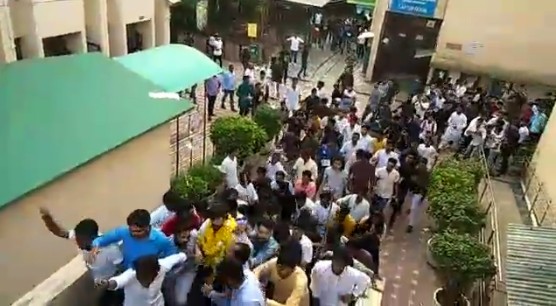
The said incident took place on Monday as the ABVP’s vice-presidential candidate, Shakti Singh, had gone for college campaigning. When Shakti Singh and other members of ABVP were denied entry by the college guard, they resorted to violence and ran amok on the premises wielding sticks and raising slogans, breaking flower pots and furniture.
“I don’t know how it started, but I was shocked to hear the commotion. They vandalised college property, broke chairs and threw flower pots. It was ABVP activists who beat up students; they even hit girls and staff” said the college principal Masroor Ahmad Baig. Police were then called in and the college is filing a complaint.
“Police personnel were present at the spot when the incident took place and they controlled the crowd. No complaint has been received from the college administration,” the DCP (central) Mandeep Singh Randhawa, said.
“This all began when ABVP candidate Shakti Singh forcibly entered the college with 50-100 of his friends and started ransacking property. To protect ourselves we left the college and later picketed on road for hours demanding action,” Anoop, a student of the college, told IANS. Disturbed by the unruliness of the ABVP members, students of the college picketed outside the college and demanded action against this incident of violence
In a video of the incident, men with placards around their necks, with ‘Shakti Singh’ written on them, can be seen lifting and breaking flower pots, chasing people with sticks, breaking chairs and littering the premises.
ABVP national media convenor Monika Chaudhary has denied the involvement of ABVP in the incident calling it a “fight” between two groups.
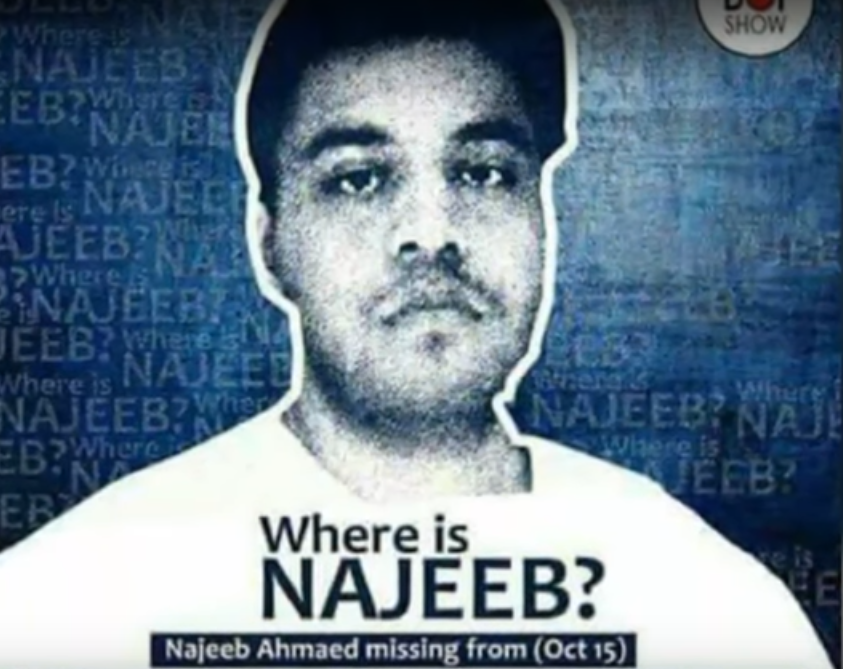
The Students Islamic Organisation of India (SIO) is just like RSS– communal–said one of my dear comrades from the All India Students’ Association (AISA), with visceral disdain once we got back from a protest at the CBI office after a student from our campus in JNU went missing. Najeeb Ahmad was a first-year student, meek and quiet, who had gone missing post a scuffle with a group of right-wing students; however, in the right vs. left narrative, it didn’t strike many that Najeeb had gone missing and was consistently denied justice specifically because he was a ‘Muslim’.
When Muslim groups stated the obvious, there were claims that it was an attempt at ‘communalising’, the disappearance, Najeeb was just a ‘student’ of JNU! I didn’t feel it was right, but I didn’t know enough then to articulate why using ‘communal’ in such a reckless manner was wrong. Is it ‘communal’ to identify religion as a sociological category of existence that intensifies discrimination? In that sense, is SIO or any ‘Muslim’ organisation in India, ‘communal’ if it understands this ‘social category’, and organises Muslims based on this identity to speak for justice? ‘Up, Up Secularism; Down, Down Communalism!’ is a slogan many of us use to start any protest in JNU, often having no idea of its history and the insidious manner this binary is being used to shut minority voices of dissent rather than question power. I think it’s time we stop using this term ‘communalism’, as every time we do that it results in blowbacks, and recognise that to be a Muslim is to have your very citizenship questioned by your mere existence like Najeeb, and to organise based on this identity then isn’t ‘communal’, as even leftists misunderstand.
Ideally, in a Communist Utopia, people would have risen above their immediate, ‘community’ identities to embrace merely the materiality of a fragile existence, where identities wouldn’t crystallise into anything ‘essential’. However, liberal democracies are far from Communist Utopias, and the state, or rather those in power, use identities to profile and define as a threat, often the most marginalised groups of people and call them ‘communal’. Liberal Democracies survive on the constant creation of an enemy, appropriate pain from collective mainstream consciousness- market it, create the dangerous, irrational ‘other’ and survive through the sustained ‘othering’, to the point of dehumanisation. ‘Communal’, ‘terrorist’, ‘fanatic’ is dog whistles that hit a deep paranoiac space in the Malayali- dominantly liberal left psyche, that once labelled, it becomes impossible to talk to the person on the opposite side as language has enabled a dehumanisation which makes it ‘okay’, to inflict pain and violence on this perceived enemy. Now, why is that? I think it’s because we are deeply afraid of ‘Human Aggression’; it’s a fear possibly deeper than the fear of death itself. We’d rather die than be betrayed, humiliated or let anyone we love to be attacked. Now, this has a problem when there is an attempt to create a collective psyche because it always needs the fear of the enemy to survive.
Liberal politics, even if its left lenient, is very good at tapping into this deceptive phobia and a lot of insanity can be covered up under the constant rhetoric of potential attack and intermittent shocks created through media spectacle and state rhetoric. Narratives can now easily be made, random statistical facts connected and ‘exceptional’ situations created to profile and survey these ‘communal’, ‘fanatic’ and ‘terrorist’ forces when real issues like political representation and voice remain. So now the possibility of ‘Muslim Aggression’, in its perceived ‘communalism’ is used against a minority to silence it’s very material and psychosocial qualms.
The American Empire was the first to master this in recent history, through the whole discourse of ‘Islamic terrorism’ or ‘Radical Islam’- which was started for an imperial mission outside, but however has ended up as blowback with increasing surveillance and profiling of its own citizens, mostly its racialised black and brown minorities. White nationalists talk about the end of a glorious white race(as if there is anything essentially white!) that is threatened by the ‘Radical Islamists’, ‘Black Gangsters’ and ‘Mexican Rapists’. Even if many regular Americans think of white nationalism as ridiculous, constant exposure to this rhetoric creates a real fear which enables ‘exceptional’ use of power, through ‘war on terror’, ‘war on drugs’ and most recently a ‘war on immigrants’ and over a period of time even allows for a ‘scientific’, ‘statistical’ and ‘academic’ study of these ‘threats’.
The Indian state had benefitted much from the paranoia that burst out post 9/11 in America, thanks to a burgeoning global industry of academic-military and media complex that attempted to understand these “threats” through incessant debates which have only legitimised the phobia rather than question its irrationality. It shouldn’t have been a surprise for us when a course on ‘Islamic Terrorism’ was introduced on campus. The stupidity of it was funny but sadly, stupidity can be toxic. Terrorism and Islam have been used so often together that it has caused a cognitive fusion in many minds. Articles had to talk about why talking about ‘Islamic Terrorism’ was just as absurd as to talk about ‘Jewish Terrorism’, ‘Christian Terrorism’ or ‘Hindu Terrorism’.
Much like White nationalists, Hindu nationalists have benefitted the most from the corporate media that uses Islam and Terrorism alternatively, as it’s becoming quite an accepted idea in many parts of the country, the potential threat- aggression of Muslims, and it is conveniently pitted against ‘National Security’. Of course, this isn’t to place the fear of the other, within the short span of merely two decades. We have always been afraid of ‘difference’, in the case of mainstream Kerala, it was always the ‘Muslims’ not the Christians and Communists as much. However, the logic of Hindutva that operates now in its micro fascistic ways even through those it oppresses the most has exploded beyond control, that words like ‘fascists’, ‘fanatic’ ‘communal’ ‘fundamentalist’ and ‘terrorist’ are used carelessly against any political force that has considerable Muslim presence, even if not an ‘exclusive’ Muslim presence, rather than critique the actual source of power.
The murder of a student SFI leader Abhimanyu on Maharajas Campus in Kerala was a traumatising eye opener to this reality for me. Endless scholarly articles, news debates and social media discussions associated the horrific activities of a few members of PFI, a party with considerable Muslim presence, but not exclusively, to philosophical and political trends in WANA and other Muslim majority nations of South Asia. Accusations of Salafi Jihadism, Maududism, Qutubism and Wahhabism to be the cause of the violence was put forth along with theories of Saudi Funding, SIMI terrorism and in the worst cases, even funnily ISIS. It’s difficult to think beyond all this scholarly jargon, which ultimately was often just lazy journalism, which confirmed existing stereotypes, in a dangerous sensational way, without looking at the peculiarities of Kerala politics and the precariousness of Muslims in politics. Why do genuine domestic qualms about material and political existence by Muslims in the Indian state always get treated as a global conspiracy?
To be a Muslim in itself is a politically charged precarious situation to be in, in an ever-growing Hindu Nationalist country and to assert political visibility is almost suicidal. The Muslim in Kerala always needs to prove his /her (especially ‘his’) Nationalism, Secularism and hatred for Terrorism, in whatever way the state defines all of these. The so-called ‘Muslim Organisations’ which, I repeat aren’t exclusively ‘Muslim’ organisations are vulnerable unlike how media reports make them out to be. It’s this very vulnerability, the trauma of always being dismissed, erased and invisibilised that informs their political practice. It’s hilarious when organisations like CPI (M) patronisingly calls for ‘class’ politics rather than caste or community without examining its own community base; or when Congress calls forth Nationalism, in a state that has, again and again, failed its Muslim and Dalit citizens and has often opportunistically used ‘Secularism’ for electoral gains. What ‘Secularism’ as a binary of ‘Communalism’ in the current Indian state implies is the extermination of Muslim presence in liberal democracy by hypocritically saying it is communal, without any self-reflexivity. In a ‘Hindu State’, it has meant arbitrary arrests, extrajudicial or encounter killings, incarceration and in some cases even death sentence without a fair trial for its Muslim and Dalit citizens.
If Kerala wants to fancy itself as some kind of liberal utopia that is now being destroyed by ‘communal’ forces or increasing ‘religious fundamentalism’ which strangely is disproportionately Muslim, well then we need to rethink how our textbooks killed, all those who talked about justice by either calling them ‘fanatic’ or invisibility the voices of dissent.
Let’s talk about the ‘real’ history of exclusion, which hasn’t been written, where Marx says the conflict of contradictory forces happens for transformation. I doubt if he would have agreed with the expulsion of a minority, (whose citizenship itself is always under scrutiny) from the political presence in a liberal democracy to be definitional of class politics. Of course, he wouldn’t have agreed with the theory or current practice of many of these dominant ‘‘Muslim’’ parties, but he would have placed it in the specificities of a political understanding that is attempting to merely survive, to exist. Maybe he would have expanded his theory to include the psycho-social in his Political Economy. And who cares about Marx anyway today, we Malayalis have become sick of his language and Socialism, or the critique of Capital (which no doubt is brilliant) isn’t exclusive to Marx.
The author is currently pursuing Masters In International Relations from Jawaharlal University, Delhi
Opposition takes on the Modi Government even as the widespread protests fail to elicit a response from the Prime Minister.
Nationwide protests against record high petrol and diesel prices are bringing India to a halt as the call for protest given by the left parties is now joined by twenty one others. As opposition unites, the BJP has gone in damage control mode.
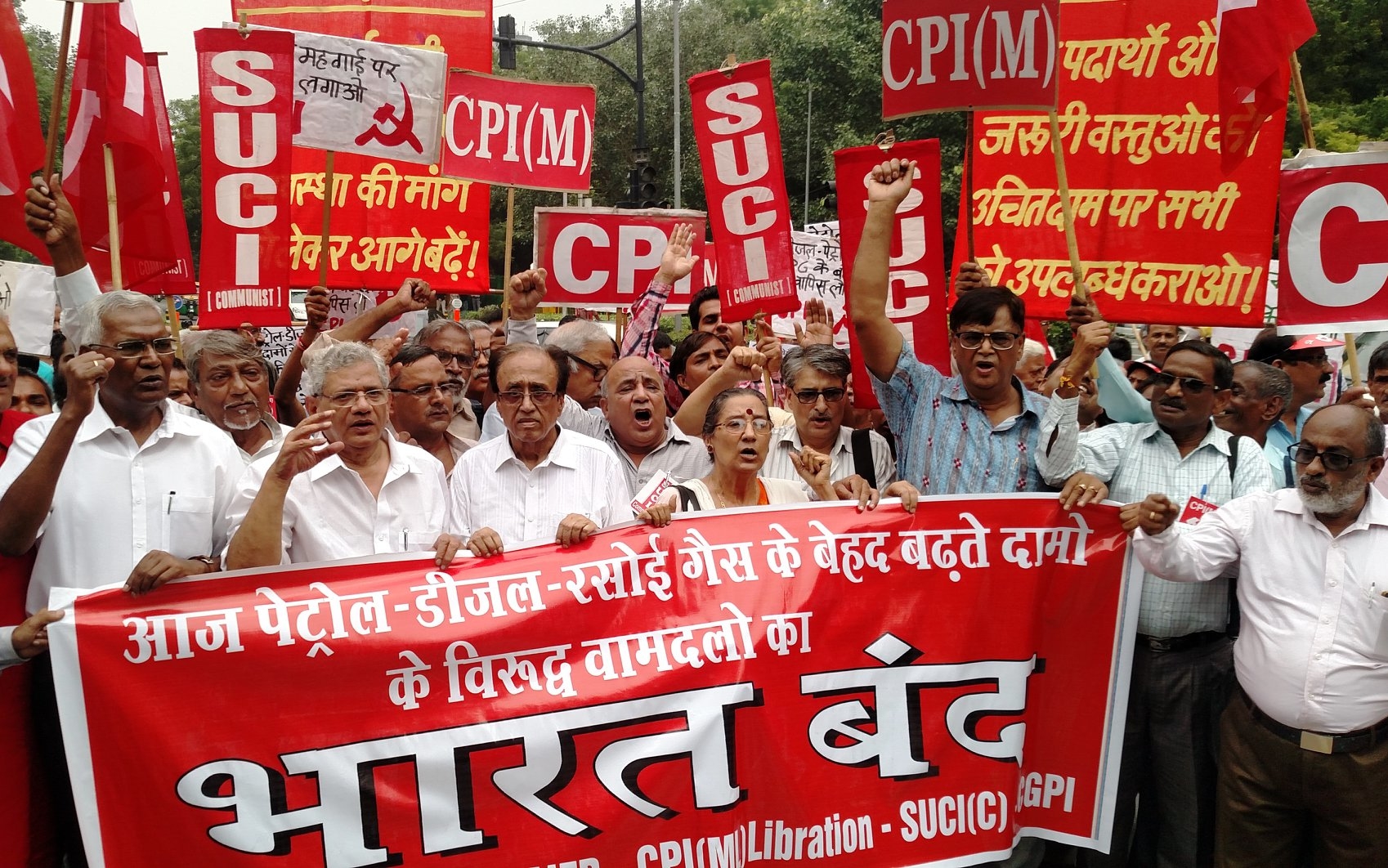
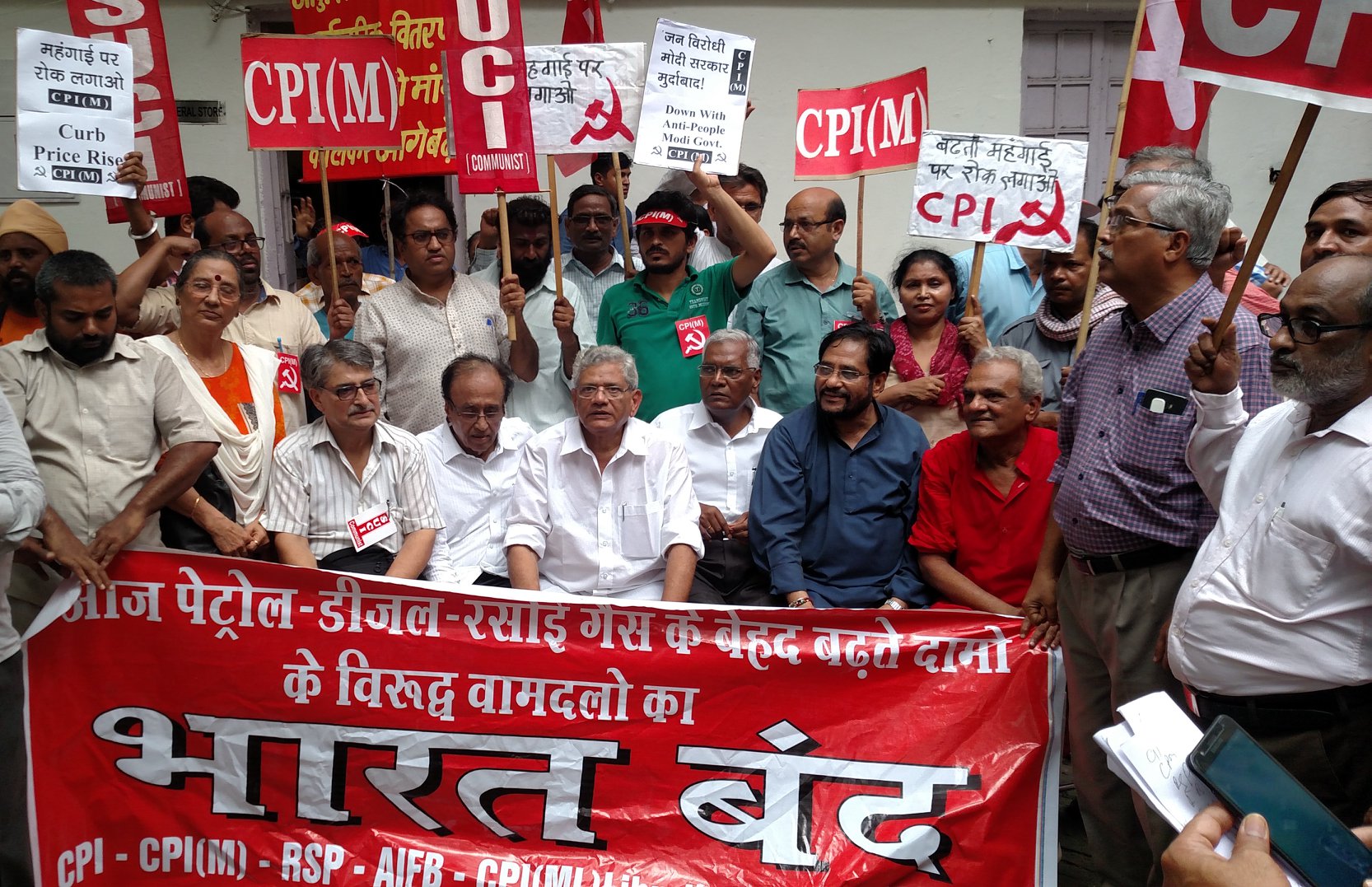
Seven Left parties, including CPI (M), CPI, RSP, Forward Block, CP(ML), Socialist Unity Centre of India (Communist) and Communist Ghadar Party of India, staged a demonstration, alleging that the rise in fuel prices has a cascading inflationary effect. The Left parties, led by the Communist Party of India (Marxist) [CPI(M)], had called for the all-India bandh to protest against the slowdown of the economy due to rising fuel prices, agrarian crisis, inflation and unprecedented fall of the rupee. “We all must protest in the strongest manner to force this callous Narendra Modi government to reduce fuel prices by cutting excise duty drastically,” said Sitaram Yechury, general secretary of the CPI (M). Yechury and D. Raja of the CPI have been taken into custody by the Delhi Police over the protests.
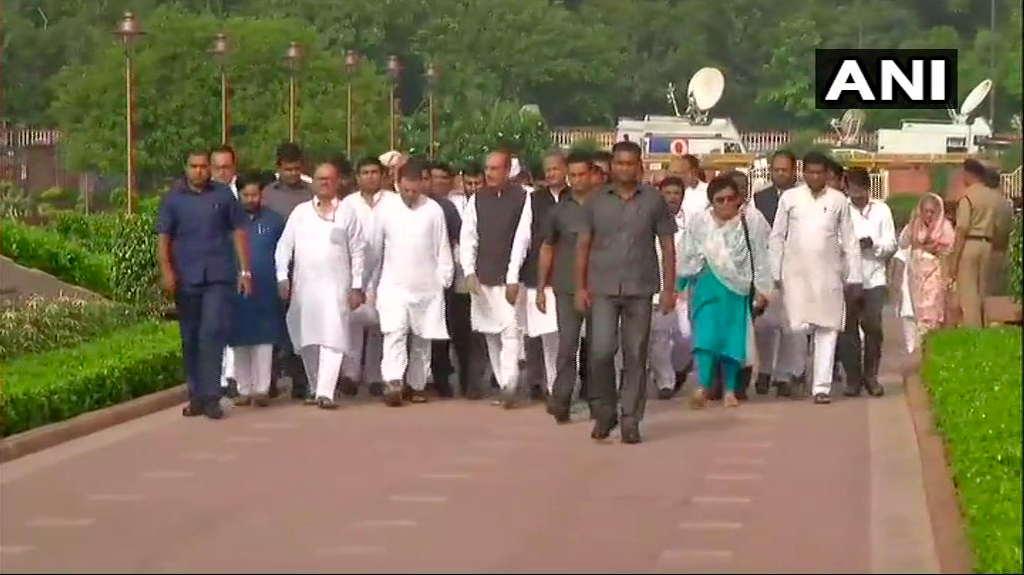
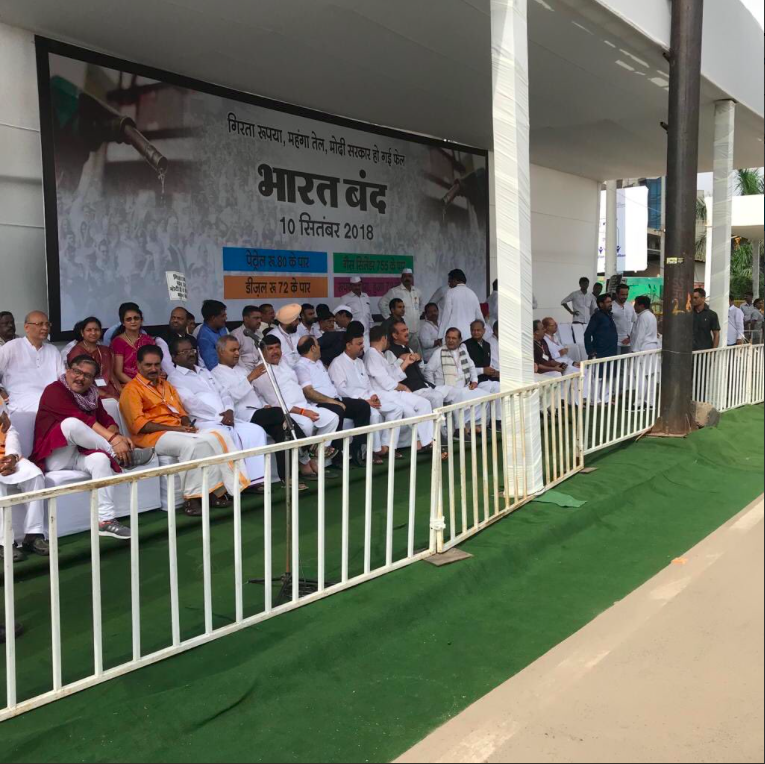
The protests were kickstarted by the Congress President Rahul Gandhi from Ram Lila Maidan in New Delhi. He said “The opposition is coming together to defeat the BJP government.” He added, “Narendra Modi ji is silent, he has not spoken a word on the rising prices of fuel, or condition of farmers, neither on atrocities against women.” Former Prime Minister Manmohan Singh also added, “Modi government has done a number of things that were not in the interest of the nation. The time to change this government will come soon.” The Congress leadership was joined by NCP chief Sharad Pawar and former JD(U) chief Sharad Yadav (now leader of the Loktantrik Janata Dal) in slamming the government. AAP MPs Sanjay Singh and Manoj Jha were part of the protests at Ramlila Maidan while other activists of the party held protests at Jantar Mantar.
Fuel prices had been constantly rising in several states across the country over the past few weeks, burning a hole in the pocket of common man. As such the call for bandh had elicited widespread response as visible from the impact of the bandh across the states. Speaking with NewsClick, Subhashini, a Political Bureau member of the CPI (M) said, “The protest marches and the juloos taken out by the opposition show a clear picture of people’s anger towards the government.” Currently on ground in Lucknow, she added, “The people are now protesting using tangas (horseback carriages) to show that under this government we cannot afford to ride in fuel run vehicles.” Kavita Krishnan, Secretary of the All India Progressive Women’s Association (AIPWA), also confirmed the success of the call for protests.
Meanwhile, the BJP has chosen to ignore the widespread impact of the bandh. “People are against Bharat Bandh because they understand that rise in fuel prices is temporary and due to factors beyond the control of government,” said Union minister Ravi Shankar Prasad, showing a complete lack of understanding of the situation on the ground.
Orissa and Karnataka have also announced a complete shutdown. The dawn-to-dusk hartal, called by the ruling CPI(M)-led LDF and Congress-headed opposition UDF to protest the rising fuel prices, has led to halt in the daily life in Kerala, Rajasthan, Andhra Pradesh and West Bengal. Both public and private transport buses and auto rickshaws are keeping off the roads, and with shops and schools remaining shut, the impact of the bandh shows the support it has from the public.
A major impact of the bandh was also visible in Bihar, which witnessed several instances of violence and multiple rail rokos were organised by the workers of Jan Adhikar party. Vandalism, including setting tyres on fire, and breaking of the windows of cars and buses gave the political protests a violent color. Instances of vandalism were also reported as the protests turned violent in Gujarat’s Bharuch district and Maharashtra’s Pune. While MNS workers vandalised buses in Pune, protesters burnt tyres and halted the traffic in Bharuch.
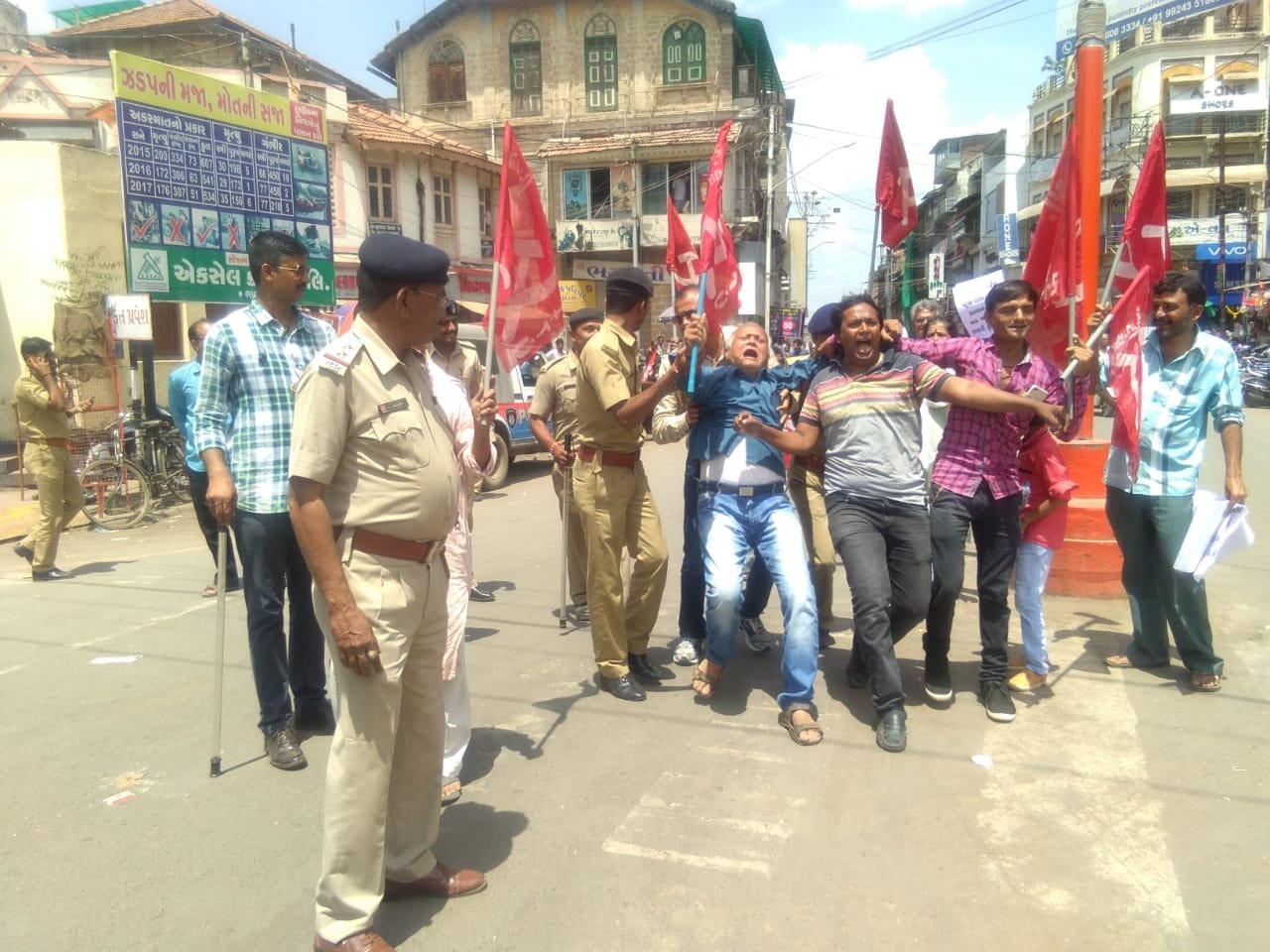
In Gujarat, 50 members of the CPI (M), including Central Committee member Arun Mehta was arrested.
In Arunachal Pradesh, several Congress activists including Mahila Congress workers and Youth Congress president Geli Ete were arrested. Even though an official call for protests was not given by the TMC in West Bengal, however, the impact of the protests was visible across Kolkata and other parts with multiple rallies being taken out.
While protests continue in full swing, the BJP lashed out at the Congress at multiple fronts. In a press conference, BJP leader Ravi Shankar Prasad said, “Everyone has a right to protest but what is happening today? Petrol pumps and buses being set ablaze, putting to risk lives. A child died after an ambulance was stuck in the protests in Bihar’s Jehanabad. Who is responsible?” Initial reports had indicated that a two year old girl had died awaiting the ambulance amidst the bandh, but it was later confirmed that the death did not have anything to do with the bandh. Attacking the Congress, Yogi Adityanath also stated, “They represent the frustrated Opposition which doesn’t have strategy and leadership,what else can be expected from them. I hope God gives them sense so they can differentiate between positive and negative, otherwise in future they will lose their position as Opposition as well.”
The free fall of the rupee has worsened the situation. On the day of the protests, the rupee hit an all time low of 72.50 against the dollar. The hike has fueled angst amongst the Opposition and citizens alike. Despite the scale of the protests and the ongoing crisis with the high fuel prices, Prime Minister Modi has not broken his silence on the issue. The opposition has clearly indicated that this show of unity will be used in paving the way for the 2019 elections.
Reacting to the bandh, Akhilesh Yadav took to Twitter, saying that the BJP government is arrogant and autocratic, and the people of the country will teach the government a lesson. Echoing a similar sentiment Tejashwi Yadav questioned the government over the soaring prices of fuel, he tweeted, “If the government cannot regulate the prices then, who will?” The opposition is capitalising on the bandh, to raise larger issues of GST, demonetisation, and communal politics against the government.
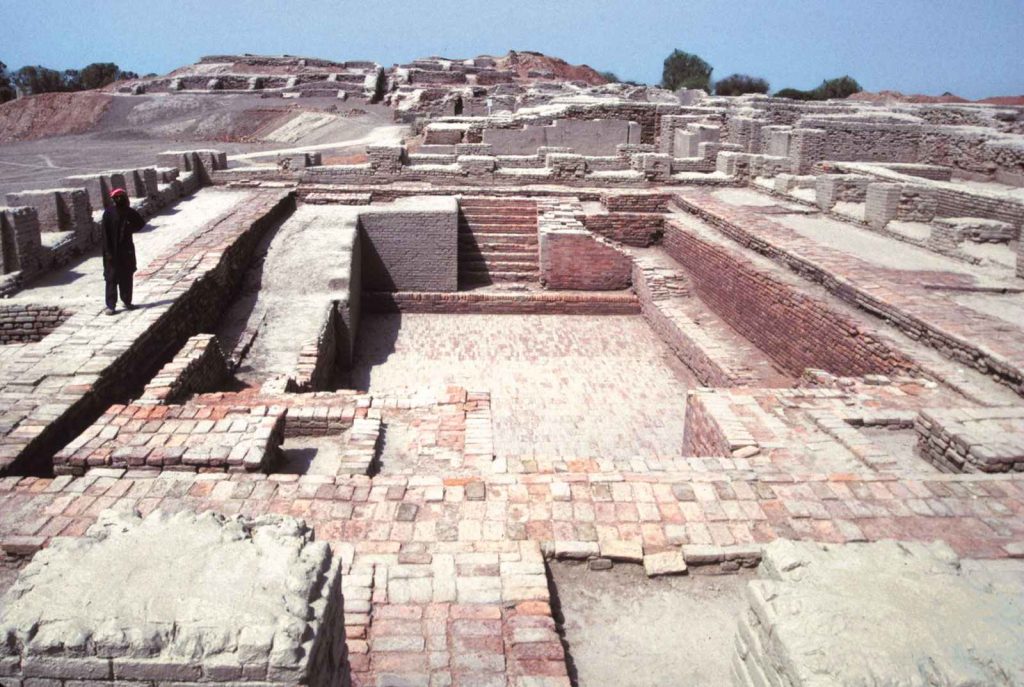
In my earlier article “Shudras Built The Indus Valley Civilization!” I argued that the Agni and Vayu worshipping Rigvedic Aryans might have caused the destruction of 1500 years of Harappan and post-Harappan civilization. My broad thesis that the South Indian names and spiritual cultures match with the productive and spiritual cultures of Harappan civilization is confirmed by the DNA analysis of the Rakhigari skull (The Explosive Truth, by Kai Friese, India Today, September 10, 2018).It is now well established that the Indo-African DNA and Indo-Aryan DNA have significant differences. The Indus Valley Civilization was built by Indo-Africans.
The Rigvedic Aryans never believed in worshiping a God who ‘created the universe’. Their devotion to fire and air indicates that they believed in material reality but not the spiritual abstractness of God. It is in Rigveda that they constructed the theory of Varna (colour and caste) in what is known as Purusha Sukta (there is no God Sukta in that book), as they never believed in God of human creation too. Though Brahma appears as a Purush who created Varna based human society in India in Rigveda, his presence in the text is minimal but the real Purush (the heroic man) who significantly figures in Rigveda is Indra.
Rakhigarhi skeleton
Apart from Agni and Vayu the text is full of Indra, who is shown as a hero who could do many destructive things, but there is no moral strength and constructive energy in him. May be because of that he was never projected as part of the Aryan Hindu Gods, as Brahma, Vishnu and Shiva were projected.
The Rigvedic priests worship Agni, Vayu and Indra in that order. Soma was the Rigvedic intoxicant drink that gets lot of adulation.
The Agni worshipping culture of Aryans who named themselves as Brahmins in the post-Rigvedic period saw to it that all the roots of productive and scientific cultural values of India were undermined with massive promotion of Fire worshipping spiritual practice called performing Homam. They have thrown tons of food materials in the Fire and systematically developed a spiritual culture that denied even the basic food for human survival.
The Indian poverty got institutionalized both by anti-production values of Brahminism and food wastage. This they do even in the 21 century in the name of doing Yagas and Kratus. The Brahmins live semi-naked while performing these Yagnas and Kratus and also around the temples by showing their non-transformative and primitive brain and body culture. Since the Shudras follow them in spiritual domain their modernity is also in crisis. The Shudras never could assert their identity and autonomy.
Their worship practice and dress code is accepted by Shudras (All Backward Classes) even in the contemporary times even though they oppose granting of equal spiritual and social and economic rights to Shudras. The Shudras still remain an uncritical social mass without developing their own spiritual thought processes. They follow Brahminsim that came into operation with the writing of Rigveda and continue that life in modern political democracy. It has institutionalized a structure of Spiritual Fascism that resists change and transformation. In this spiritual system the Shudras live as second grade citizens.
Most of the Brahmin modern intellectuals oppose equal education rights (in Sanskrit language in the ancient and medieval times, in English language now) to Shudras. The Brahmins from Nehru days supported private English medium education mainly enrolling the Brahmin-Bania children. By and large they oppose the reservation system put in place by Dr.B.R.Ambedkar, the modern Mesaiah of the Shudras/Dalits and Adivasis.
Unfortunately many Shudras trust Brahmin spiritual and political pundits but do not trust themselves.
From the days of Rigveda to present all major institutions were controlled by Brahmins and the Shudras could not challenge them in any sphere. They could not challenge them in spiritual and philosophical realm because they accepted the Brahminic superiority as God- given. After the Bharatiya Janatha Party came to power in 2014 where the Bania-Brahmin control of central institutions became more pronounced even the top layers of Shudras like Marathas, Jats, Patels, Gujjars and so on, began to fight for reservations in jobs. They lately realized that they are nowhere to be seen in the Delhi power structures. But the same Veda pundits know how to handle them. The Shudras had no knowledge of Sanskrit in ancient and medieval times and now they do not have enough knowledge of English to challenge the Brahmin-Bania intellectual domain.
The Brahmin priests, with the support of their intellectuals, waste millions of tons of food by throwing it in their spiritual Fire, while the Indian masses—including children- keep starving. Even the modern Shudras participate in such performances not knowing all this has marginalized their productive and constructive history.
The Rigvedic Aryans, who perhaps would have been the Indo-African slave owners like the Greek and Roman slave owners (with their own Aryan characteristics) constructed a theory of fourfold Varna. The last Varna—Shudras—must have been the real descendants of the Harappans. A whole lot of peoples must have been forced to become the slaves of newly settling Aryans over a period of time because they won the wars that followed the Aryan invasion.
By 1500 BC around which they wrote Rigveda the Indo-African enslavement must have been complete. This is what exactly the Rigveda says while constructing the theory of fourfold Varna that had huge historical implications for millennia later.
These two lines decided the fate of Indian society for millennia. It actually means that the Brahmins have been created from the mouth (head) of Purush, the Ksatriyas were created from the shoulders of the Purush, the Vyshyas were created from the Thighs of Purush and the Shudras (the Indo-Africans of that time) were created from the Feet of the Purush. It is said that the noun Purush is used in the sense of the noun Brahma—the first God of Hinduism, now the first among the Threemurthies-Brahma, Vishnu and Shiva. The Shudras accepted this construction of an undivine creation theory where there is no place for equality. The Hindu philosophy revolves round these three names and they all justify caste system, as that survives in the 21st century. Even the Post-Ambedkarite Hinduism operates in that Rigvedic ideology. Though Ambedkar embraced Buddhism the Shudras hung on to Hinduism which treats them as second grade citizens. Their Rigvedic status has not changed as yet. Their place in English India is as bad as it was in the Sanskrit Brhamin India.
The Rastriya Swayamsevak Sangh and its its political wing –the BJP—mobilize hundreds of Brahmins to perform such Food burning rituals and Banias give hundreds and thousands of millions of rupees to spend on this kind destructive Fire spiritual practices. After these forces got internationalized food—particularly ghee, rice, pulses and so on— being wasted in the Fire has spread to America, Europe, Australia and Canada.
Earlier they were willing to reform and change but with the backing of the RSS they became more rigid and unrelenting for change. Even from the foreign countries they are humiliating the productive Shudras and their food culture, history and lineage. The Shudras living in the foreign countries are also not in a position to challenge them. This is because they see the Hindu religion that is said to have its roots in Rigveda is under the control of the Brahminic forces even in those countries. Even in Christian and Muslim majority countries the Shudras still live in the grip of the Brahminic spiritual philosophy since they need a religious identity. They have not acquired any spiritual philosophical energy to challenge Hindu religion.
The Rigvedic culture set back Harappan economy and culture pushed it back to Pastoralism, which was non-productive and was mere cattle economy. To take India out of that backward anti-Urban civilization a Buddhist school had to emerge and rebuild Indian economy and agriculture by re-connecting Harappan civilization of city building to Buddhist urbanization.If Gautham Buddha were not born in India at that particular juncture, perhaps India would have remained in Pastoralism for several hundreds of years. No urbanization would have come back to build cities like Pataliputra, Hasthinapura in the Ganga Belt.
In pre-Buddhist India after the destruction of the Harappan (Indus Valley) Civilization no significant urban civilization seemed to have been built. Mythological cities like Ayodhya or Madhura do not show proper character of city like Pataliputra, which became big urban dwelling while Gauthama Buddha and the first great emperor, Magadha Bimbisara, were alive and lived in and around it.
From the writing of Rigveda to the present, the Brahmin community never laid its hands on a plough and spade nor did they stop throwing food in the fire. A system of throwing food in the fire is no religious practice by any means. It is a process of destroying food and that too without getting involved in any process of its production. This is where they succeeded moulding the descendants of Harappa and their civilization as Shudras, who remained supplicant followers of Brahminism till our contemporary times.
How this became possible? The short answer lies in control of Sanskrit language brought in by Aryans to India earlier and the control of English brought in by the British rulers now, by the same caste and class forces. The Shudras did not challenge the process of Sanskrit remaining a private teaching and learning domain of the top two or sometimes three communities—Brahmin, Ksatriya and Bania—in the pre-British times. Now they are not in a position to challenge the English medium education where the Shudras hardly have any presence. The agrarian Shudras like Marathas, Patels, Jats and Gujjars (all are the descendants of the Harappna civilization) are fighting for reservation but they may not win the battle as hardly any of their representatives are in the higher judiciary, top bureaucracy and English handling political and academic intellectuals. So far they have not produced a single high end philosopher, who could write in English any major spiritual philosophical text.
They lost the ground in Rigveda and it is very difficult to regain it unless they get complete access to God (as priests and philosophers) and English (as intellectuals) in the modern Brahminic India with a command to write spiritual philosophical texts of their own.
Prof. Kancha Ilaiah Shepherd, Director, Centre for the Study of Social Exclusion and Inclusive Policy, Maulana Azad National Urdu University
Does it amaze you when you hear the stories of poverty and success in same sentence? Does it amaze us when we hear the stories of some of the best sports-persons and the hardship they have dealt with before and throughout their careers? Does it amaze us when we hear about the sorry state of affairs of sports facilities and some athletes still coming up with great performances? Does it amaze that most of these athletes come from rural India and mostly where they have much economic and social constraints, where work and employment is still precarious? Does it alarm when one get to know that some of these phenomenal sports-persons come from the areas which are still dealing with the issues of hunger, high rate of unemployment, major gender gap? Areas where women coming out and trying to make cut into sports are still taboo? How often does one hear about women from marginal sections (Dalit/Backward caste/tribal) becoming a sportsperson?
Hima Das
Some stories of these kinds make usual snippets in many Hindi newspapers around big sports events. Though, these stories, which are posed as individual heroic one and less of a critical approach to see the working of sports administration, are meant to be sensational and don’t do justice to the entire sports affairs in India.
The Asian Games 2018 at Jakarta, Indonesia has ended now. It has been a good run, to be expected from 541 (277 men and 247 women) Indian athletes who participated, with some expected wins and some unexpected losses.
In midst of all this, there are some inspiring and promising stories which needed special mention in order to reflect on sports affairs in India. Some athletes who went ahead against all odds not only represented India but also won the medals. Personally, I was thrilled to see three athletes making a cut into ‘elite’ club of medal winner. Dutee Chand and Hima Das in Track and Field and Divya Kakran in Wrestling are to be mentioned. These three impressive performances came in Asian Games representing a country where dowry and ‘honour’ killings are still living reality. Institutions like Khap Panchayats still dictate the terms for women and their movements with wider social sanction from society and religion. On top of that the sports administration is not gender neutral! Women sports-persons are not taken seriously or not provided with the support system they needed! Though there are few exceptions, but generally the situation is grave.
Dutee Chand
Dutee Chand doesn’t come from an affluent family background and has battled underprivileged conditions of all sort in a distant corner of Odisha. This young and promising athlete didn’t have very smooth carrier from early age of 17. Her performances range from holding a National record to winning bronze in Junior Asian Championship and from being the first Indian athlete (at the age of 17!!) to enter IAAF (International Amateur Athletic Federation) World Championship to getting Olympic berth. At this young age, these are achievements any athlete, irrespective of their gender, will die for!
However, it was not the challenges on the track but ‘off-the-track’ which were multi-fold. Her gender was in question as she was banned to participate in Rio Olympics. IAAF found ‘extra testosterone’ in her body which means she wasn’t enough ‘woman’. ‘Science’ was used to define the ‘enough’ or ‘less’ womanhood that made Dutee Chand disqualify from 3 major events. This was the time when federation should have stepped in and stood next to her in this difficult time. Unfortunately, she wasn’t the Yuvraj Singh of Cricket, who was greatly backed up by BCCI during his cancer treatment. This pushed Dutee Chand in the dark and she was lost in between. Her Coach N Ramesh, Badminton Coach P. Gopichand and Bruce Kidd, a former athlete from Canada, were few individuals who believed in her and stood by her. She had to go the arbitration to prove her legitimacy; essentially to prove her gender!
The ‘sensational’ media was in action again. Indian newspapers were filled with those ‘allegations’ on her, which no-one even cared to understand, respond or defend. The mass hysteria works as such that these ‘allegations’ came out through brutal gaze towards Dutee Chand. She could not stay around the sports fraternity and had to take refuge in Gopichand’s academy in Hyderabad.
The support system male athletes are entitled to get in India are just not available (with some exception) to women athlete at all! The overall scenario works like that! However, she fought back on her own and now very much celebrated by all those who backed out in the time she needed them the most. Dutee Chand’s performance promises that she has many more years and many more achievements waiting for her. The colour of her silver medal in Jakarta truly represents her struggles at many fronts which should put these male-dominated federations in remorse and shame.
When Karnam Malleshwari became the first Indian woman to win an Olympic medal everyone noticed that Indian women are also participating in Olympics. PT Usha did the same after winning multiple medals at Asia Games. I remember after bronze in Weightlifting everyone wanted to take credit for Malleshwari’s success. A successful male athlete can spare his credits for friends, family, coach and God. But, given the gender bias in Indian society, it is not possible for women athlete. Everyone jumped to take credit for her success. ‘Even (though) she was a woman, but I knew that she is going to make India proud’. This kind of common phrases from sports federations’ male officials summarize everything.
Hima Das’s success came through something similar like that. First, her gold medal at Junior World Championship and then 1 silver and 1 gold medal at Jakarta Asian Games made her immediate star overnight. She became first Indian woman Athlete to win at any level of World Championship. Hima Das is one of the top 5 athletes running in circuit right now and had so much potential in future. Though many sports federations and governments announced cash and kind prizes for her, but I wonder if this support will go much further than that? I wonder what if she would get stuck in a similar situation like Dutee Chand’s? Would the Federation withdraw themselves as they did in Dutee Chand’s case or would they back her? My hunch is that they will withdraw! (Though, I want to be proved wrong)
My assumptions have a material base as well. Whereas her difficult journey to overcome patriarchy and poverty would have been inspiring for all, but most of the people found looking for her caste background in internet. This casteist quest to know her caste seems to overshadow her years of hard training and struggles. She knows that this journey from her family’s paddy fields to track & field will have many of these continuous obstacles of casteism and patriarchy.
In this regard, wrestling seems to sort out bit of it. From the movie Dangal, the world got to know about the women wrestling scene in India (read North). Overnight Geeta Phogat became the household name, Mahavir became the liberal father and Haryana became the nursery of women wrestling. Popular image of Haryana also got little better because of it. This shift was changing the narrative from Caste and ‘honour’ related killing to women empowerment. (Geeta became the face of Beti Bachao Beti padhao). There is no denying in any of those stories (in some sense!) but, there is more to it. Especially when one try to un-weave the caste dynamics of it.
Divya bharat kesari
In nutshell, wrestling in India is dominated by dominant castes like; Jats or upper castes. No wonder most of the women players will come from these castes only. This has become an accepted norm from ushering years of women wrestling in India. With this background, Divya Kakran, coming from backward caste from a working-class neighbourhood in Delhi established herself. Unfolding her struggles had many aspects, caste is just one of it. In May 2017, Divya won a silver medal in Asian championship held in Delhi and in March 2018, she defeated Geeta Phogat quite comfortably in Bharat Kesari Dangal. These two were quite promising from many other performances from her kitty. Her performance at Jakarta Asian Games brought her bronze medal.
Divya, a daughter of homemaker mother and street-tailor father didn’t have financial resources to try big in wrestling. Unlike others, she neither did have a father like Mahavir who made decent money from property boom in Delhi/NCR nor did she have a larger clan support system to carry forward an expensive and demanding sport like wrestling. She had to fight the hardest battle in some of the miserable conditions. She got trained at Premnath’s Akhara in GurMandi, majorly a Dalit/Backward Caste neighbourhood. Despite having Divya and many other promising junior level women wrestlers, the Akhara is in miserable condition even now. The building is not in ideal condition to produce national level players let alone that players who can compete in world level.
A cursory (but clearly myopic) look at immediate history of wrestling in India will give any reader a sense that it is popular either among well-to-do communities (read Brahmins) or rural/agrarian castes in North Indian state of Haryana, Uttar Pradesh and Punjab, (Jats, Gujjars and Ahirs). But, when one looks beneath this popular understanding it will be found that others (Dalit/OBCs and Muslims) have had their fair share in wrestling development in India. From Idgahi Maidan at Jama Masjid to numerous working class Akharas in and around industrial Delhi had a vibrant wrestling culture. Though, these Akharas fizzled out slowly, some with the decline and shift of industrial Delhi and some without any patronage from government.
Let’s not deny the fact that sports in India is not a ‘modern’ way of living (except cricket;). People still don’t look up to sports with due respect. It definitely makes people proud in these moments during big events, but it ends there! A popular saying from our childhood, पढ़ोगे लिखोगे बनोगे नवाब, खेलोगे कूदोगे बनोगे ख़राब, echoes this perfectly. On top of that, Women athletes have added pressure, expectations and post-carrier struggles and the respective federations should better understand that! Even if it is very new and hard for them to know!
There are numerous other stories which has made it or in making like these three. They need much more constant support as an equal individual from this casteist and patriarchal social setup, which is reckoning same in these federations as well.