Email: sabrangind@gmail.com
Media: 4th Pillar of Democracy Crumbles Under BJP Rule
Indian journalists and activists protest against Bangladeshi photographer’s arrest
Over 250 photographers, artists, journalists and activists have issued a statement demanding Bangladeshi photographer Shahidul Alam’s immediate release.

Image: Munir Uz Zaman—AFP/Getty Images
Celebrated Bangladeshi photographer Shahidul Alam was arrested by the Bangladesh Police late on Sunday, hours after his interview with Al Jazeera regarding student protests that have currently enveloped the country. Alam had also been sharing photos of the protests on his Facebook profile and discussing them through Facebook Live.
“The detective branch of the Bangladesh police picked up Shahidul Alam, a prominent Bangladeshi photojournalist, hours after his explosive interview with Al-Jazeera, to interrogate him about his Facebook posts regarding the protest and ‘provocative comments’ made in the interview. While being taken to a court for a remand hearing, he seemed unable to walk on his own. He said that he was not allowed to have a lawyer and beaten in custody by his captors who wanted to coerce him into signing a statement, reported exiled Bangladeshi journalist Tasneem Khalil. “[They] washed my blood-stained Punjabi (tunic) and made me wear it again,” Shahidul was quoted as saying by Shafiqul Alam, the AFP bureau chief in Dhaka,” reported Firstpost.
“He has eventually been placed on seven-day remand in a case filed against him under Bangladesh’s notorious Information and Communication Technology (ICT) Act, reported local newspaper The Daily Star. While a number of journalists—especially those carrying a camera—came under attack while covering protests, Alam’s arrest was an extraordinary escalation. With a career spanning over four decades, Alam is arguably Bangladesh’s most prominent photographer, whose works have been featured by almost all major western media outlets. He has also founded Drik Gallery and Pathshala, a photography school that has trained hundreds of photographers. Committee to Protect Journalists and Amnesty International have called for his immediate release,” the report said.
Protests in India over his arrest
Around 150 journalists and photographers from the Mumbai Marathi Patrakar Sangh, Bombay News Photographers Association, Crime Reporters Association and Mumbai Press club gathered outside Mumbai’s Press Club to express solidarity. Various press organisations in Mumbai gathered together on Tuesday to protest police brutality meted out to two photojournalists – DNA’s Pravin Indrekar from Ahmedabad and Shahidul Alam in Dhaka. Journalism students also joined the protest.
In India, over 250 photographers, artists, journalists and activists including Ram Rahman, Vivan Sundaram, Parthiv Shah, Pushpamala N., Raghu Rai, Devika Daulet-Singh, Pablo Bartholomew, Prashant Panjiar, Dinesh Khanna, Sunil Gupta, Jitish Kalat, Krishen Khanna, Ravi Aggarwal and Gauri Gill, have issued a statement demanding Bangladeshi photographer Shahidul Alam’s immediate release.
The statement forwarded by Safdar Hashmi Memorial Trust (SAHMAT) is as follows:
In a shocking development, late night on 5 August 2018, Dr. Shahidul Alam, internationally renowned photographer, pedagogue, activist, and founder of Drik and Pathshala South Asian Media Institute, was forcibly abducted from his house in Dhanmondi, Dhaka in Bangladesh. According to eyewitnesses, around 30 to 35 plainclothes men, claiming to be from the Detective Branch (DB) of Dhaka Metropolitan Police, forcibly entered Dr. Alam’s home, pushed him into a waiting car and sped away. They taped up the CCTV camera and took away the camera footage. The security guards were manhandled and locked up.
Additional Commissioner of Dhaka Metropolitan Police (Detective Branch), Abdul Baten, told UNB (United News of Bangladesh) that Dr. Shahidul Alam has been detained for interrogation over his Facebook posts on the ongoing student protests in Bangladesh. Later news reports confirm that Dr. Alam has been arrested under the draconian ICT Act (Information and Communication Technology Act), routinely used to suppress freedom of speech, and to harass writers, activists and journalists for their comments on social media. When Dr. Alam was produced before a Dhaka court on Monday, 6 August, he had to be supported as he could not walk on his own. He had been made to wash his own bloodied clothes to wear again. The Dhaka police were granted a 7-day remand after producing him before the court.
There have been further developments. On Tuesday, 7 August, the court ordered that Dr. Alam should be taken to a government hospital for a medical check-up in response to a petition filed by his lawyers; however, the written orders were not produced in time and so he spent another night in police custody. He was finally taken to the hospital at 9.30 am today, 8 August, but it appears that once the medical checkup takes place he will be back in police custody. The next hearing at the court is on Thursday, 9 August 2018, when the State lawyers will attempt to oppose the High Court order and argue against it.
The detention and murderous attack on Dr. Shahidul Alam is symptomatic. Writers, journalists and social media activists in Bangladesh have over the last several years suffered similar repression. Dr. Alam is determined to hold on to the ideal of social justice and to engage in cultural action that strengthens democratic and egalitarian values. He has disseminated these ideas through his critical writings, a sustained pedagogical programme around photography and numerous curatorial projects that engage the public. He is admired and respected all across the world and especially in South Asia for his exemplary work as a photographer-activist and for his courageous stand on the fraught relationship between the State and the people.
Consider how Dr Alam’s position resonates with that in India; how it adds to the urgencies needing to be addressed by the citizenry here.
We condemn, in the strongest possible way, the arrest, brutality and dishonour done to Dr. Shahidul Alam. The message is simple. Dr. Alam exercised his right as a citizen. No charges must be bought under section 57 of the draconian ICT Act.
We demand his immediate and unconditional release.
| Aban Raza Abhay Sardesai Abhijan Gupta Abhishek Hazra Adira Thekkuveetil Aditi De Aishwaryan K Ajay Sinha Akkitham Vasudevan Alnoor Mitha Aman Bahl Amar Kanwar Amita Desai Amrita Jhaveri Anant Joshi Ananya Vajpeyi Anita Dube Anita Khemka Anju Dodiya Anmol Vellani Anoli Perera Anshuman Dasgupta Anup Mathew Thomas Anuradha Kapur Anusha Yadav Aquin Mathews Archana hande Arpana Caur Arshiya Lokhandwala Arun Kumar HG Arundhati Ghosh Arvind Lodaya Ashish Rajadhyaksha Ashwathi Vijaykumar Astad Deboo Avinash Veeraraghavan Ayesha Singh Babitha Lingraj Babu Eshwar Prasad Bari Kumar Belinder Dhanoa Bharat Chowdhary Bharat Sikka Bharati Kapadia Bhavna Kakar C.F. John Chandan Gomes Chander Haat Chimuk Kaur Chinar Shah Chittrovanu Mazumdar Clay Kelton Cop Shiva Daljeet Wadhwa Dayanita Singh Deepa Bhasthi Deepak Ananth Deepanjana Pal Desmond Lazaro Devika Daulet Singh Dhruv Malhotra Dileep Prakash Dimple B. Shah Dinesh Khanna Diva Gujral Fawzan Husain Franck Barthelemy Gargi Raina Gauri Gill Gayatri Sinha Geeta Kapur Gigi Scaria Gitanjali Dang Gopika Chowfla Gopika Nath Gulammohammed Sheikh Hans Kaushik Harish Tyagi Harsha Vardhana Himangshu Dhanda Himanshu Joshi Imran B. Kokiloo Indira Chandrasekhar Indrapramit Roy Ira Raja | Jagadeesh Reddy Jahangir Asgar Jani Jamshed Chinoy Jasmeen Patheja Jatin Das Jeroo Mulla Jitish Kalat Jyotindra Jain K. P. Reji Kajri Jain Kaushik Narayan Ramanathan Ketaki Sheth Kirtana Thangavelu Krishen Khanna Kristine Michael Kurchi Dasgupta, Lalitha Shankar Leena Chethan M. Madhava Prasad M. S. Prakash Babu M.K. Raina Madan Gopal Singh Madhuban Mitra Madhusree Dutta Malvika Murali Manas Acharya Manas Bhattacharya Manish Pushkale Manisha Gera Baswani Manmeet Devgun Mariam Suhail Maseeh Rahman Maya Krishna Rao Meenakshi Shedde Megha Mehndiratta Mekhala Bahl Mithu Sen Mohita Bhatia Mrugen Rathod Murali Cheeroth N.K. Sharma Naeem Mohaiemen Nalini Malani Nancy Adajania Nandakumar Raman Nandesha Shanthi Prakash Naveen Kumar Navjot Altaf Navroze Contractor Neha Choksi Nilima Sheikh Nimi Ravindran Nina Sabnani Niyati Ozha Srivatsava P. Daroz Pablo Bartholomew Parthiv Shah Parvathi Nayar Parvathi Nayar Pooja Sood Pooja Vukosavich Prabir Purkayasth Pradeep Das Gupta Prakash Babu Prakash Moorthy Prashant Panjiar Pratul Dash Probir Gupta Purshottam Diwakar Pushpamala N R. Nandakumar R. Siva Kumar Radhakrishnan KS Radhika Chopra Raghavendra Rao Kulkarni Raghu A Wodeyar Rahul Gudipudi Rajendra Prasad Rakhi Peswani Ram Rahman Raman Siva Kumar Ranbir Kaleka Randhir Singh Ranjit Hoskote | Rashmi Munikempanna Ratnabali Kant Ravi Agarwal Ravikumar Kashi Reena Saini Kallat Rekha Hebbar Rao Ribhu Borphukon Riyas Komu Rohini Devasher Rohit Chawla Rosalyn Dmello Roshan Shahani Ruchira Gupta Sabeena Gadihoke Sabih Ahmed Sabina Kidwai Sadanand Menon Sahej Rahal Samar Singh Jodha Samit Das Sandeep Biswas Sasanka Perera Sashi Kumar Saurab Hura Seher Shah SG Vasudev Shaina Anand Shalini Sawhney Shamala Billava Shamala Nandesha Shanta Gokhale Shantamani Muddiah Sharbendu De Sheeba Chhachhi Shefalee Jain Shilpa Gupta Shireen Gandhi Shohini Ghosh Shreyas Karle Shukla Sawant Siddharth Laxman Sindhu Thirumalaisam Sohail Akbar Sohail Hashmi Sonal Khullar Sonia Khurana Soumyadip Ghosh Srinath Iswaran Subba Ghosh Suchismita Ukil Sudharak Olwe Sudharshan Shetty Sudhir Patwardhan Sumakshi Singh Suman Gopinath Sumesh Sharma Summer Kohli Suneel Mamadapur Suneet Chopra Sunil Gupta Sunil Kothari Sunitha Kumar Emmart Surabhi Sharma Suresh Jayaram Sushma Bahl Susie Tharu Tabasheer Zutshi Tallur L.N. Tanveer Ajsi Tapati Guha Tapati Guha-Thakurta Tara Sabharwal Umesh Kumar Vani Subramanian Vasudevan Akkitham Veer Munshi Vibha Galhotra Vidisha Saini Vidya Shivadas Vijay Prashad Vinod Bhardwaj Vivan Sundaram Vivek Vilasini Yashodhara Dalmia |
17 Lakh Maharashtra govt employees on strike till Aug 9
Under the banner of the Maharashtra State Government Employees, they are pressing for various demands, including immediate implementation of the Seventh Pay Commission report.

Mumbai: Services related to government offices in Mumbai and other parts of Maharashtra are likely to be hit till Aug 9 as around 17 lakh employees, under the banner of the Maharashtra State Government Employees, began their three-day strike on August 7, to press for various demands, including immediate implementation of the Seventh Pay Commission report. It is said that on the first day of the stir, around 63 per cent of class 3 and class 4 employees remained absent from work.
On Aug 6, the unions had announced that class 3 and class 4 employees of Zilla Parishads, state hospitals, staff working at Mantralaya (Secretariat) will participate in the strike.
The other demands include payment of dearness allowance (DA) for 14 months, five-day working week and increasing the retirement age to 60 years from the existing 58.
“However, around 1.5 lakh of the 17 lakh employees withdrew from the strike after a Government Resolution (GR) was issued on Monday night, stating that pending arrears of the DA for a period of 14 months will be paid to them. Another GR was issued stating that the Seventh Pay Commission will be implemented from January 2019,” reported The Indian Express
The demand of employees for a five-day work week and retirement age will be taken up during Diwali, an official said in the report. “The arrears will be paid with the salaries of employees for August, as per the GR. If the implementation of the Seventh Pay Commission is delayed, the employees will get the benefit as per the wage structure of the central government employees from January 2019,” it added.
“Earlier on Monday, state Government Employees Organisation President Nitin Sardeshmukh said class III and class IV employees of Zilla Parishads, state hospitals, staff working at Mantralaya (secretariat) will participate in the strike. “The employees of the Central government have been getting the benefits of the Seventh Pay Commission since 2016. Seven state governments have implemented the pay commission,” he said,” reported Firstpost.
Sardeshmukh said the employees are yet to receive the arrears accrued to them since the implementation of the Sixth Pay Commission by the state government.
He said 1.85 lakh posts of class III and class IV employees are lying vacant in Maharashtra.
“Moreover, the demand for filling up 30,000 posts on compassionate grounds is also not accepted by the state government,” Sardesmukh claimed in the report. He said around 30 to 40 per cent of total posts are lying vacant in hospitals and other essential services departments.
“A General Administration Department (GAD) official said the employees working in essential services departments like hospitals, fire brigade, water supply etc. have been directed not to join the strike or else provisions of Essential Services Maintenance Act (ESMA) will be invoked against them,” the report added.
“The arrears of Seventh Pay Commission will be given with retrospective effect from January 2016, while the Dearness Allowance will be given retrospectively for the last 14 months,” CM Devendra Fadnavis had said after holding a meeting with various employees’ unions.
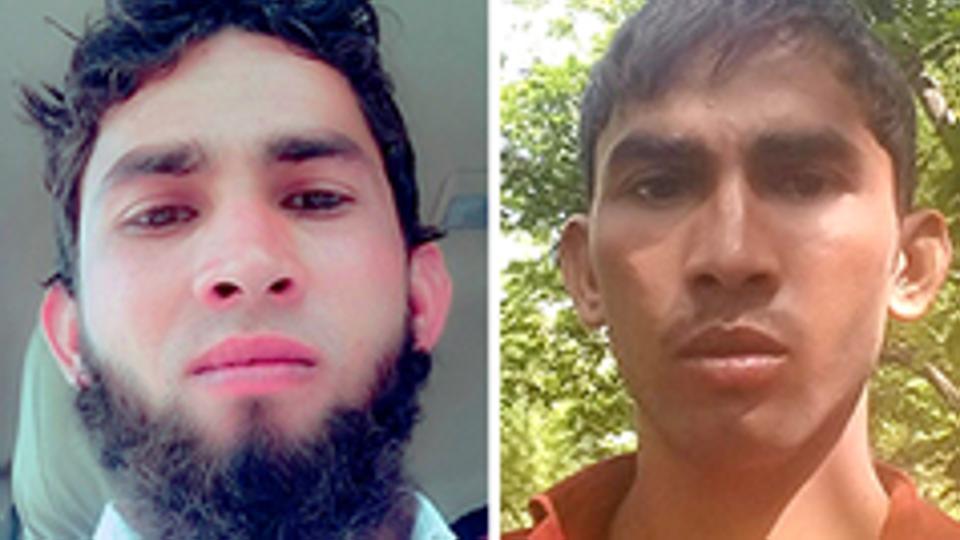
Muslim man called ‘Pakistani’, beard forcibly shaved off in Gurugram
22-year-old Jaffruddin initially ignored the religious insults, but later got into an argument. The accused then beat him, took him to a salon and forcibly shaved his beard.

Image: Yogendra Kumar/ Hindustan Times
Haryana: 22-year-old Jaffrudin Hamid had a usual day. He worked at his dhaba near IFFCO chowk, Gurugram and on July 31, stepped out with his cook Ibrahim to buy vegetables in Khandsa Mandi. He decided to get a haircut and that’s when things turned ugly.
“I wanted to get my hair cut. So, we went to a roadside salon near the mandi. Two people were already inside the shop and were getting their beards and hair cut. One of the miscreants, after getting his shave asked me to cut my beard. When I refused saying that it was a religious practice, they started abusing me. They held both my hands and forced the barber to shave off my beard. Though the barber initially refused, they threatened him and assaulted me multiple times,” Jafruddin said in a report by Hindustan Times.
He was branded a ‘Pakistani’ by the perpetrators and assaulted with death threats made to him and the barber. A video of the incident was also circulated on social media.
“Jaffruddin initially ignored the religious insults, but later got into an argument. Then the accused started thrashing Jaffruddin. They took him to a salon and chopped his beard off,” Gurgaon Police public relations officer Subhash Bokan told PTI.
“They said I was from Pakistan since I had refused to get my beard shaved off. The two men then tied me up to the chair with a scarf and threatened to kill me,” said Jafruddin in a report by The Hindu.
Three assailants have been arrested and identified as Gaurav alias Tedha, Nitin Kumar and Ikhlash, a barber.
“I was frightened after the incident as they threatened to kill me if I was seen in the area again. I got upset and left for my village. On Wednesday, I narrated my ordeal to my family members and they discussed the matter with the village panchayat after which we called the Gurugram police and reported the matter,” Jafrudden said in the report by HT.
Jafruddin lodged a complaint with the police late Wednesday night following which a case was registered under sections 295A (hurting religious sentiment), 323 (voluntarily causing hurt), 34 (common intention)and 506 (criminal intimidation) of the Indian Penal Code.
The report also added that Sumit Kuhar, DCP (Crime) said, “The incident took place on Tuesday evening and we received a complaint a day after. We also received a video of the incident. We formed teams and identified the miscreants within two hours. The team of Sector 37 police arrested the accused from Khandsa.”
Gurgaon Police told the news agency ANI that the three accused have denied the involvement of any organisation behind the attack. “Three people including the barber have been arrested and will be produced before the court today. This is an isolated incident and no organisation is involved in it,” Kuhar told ANI.
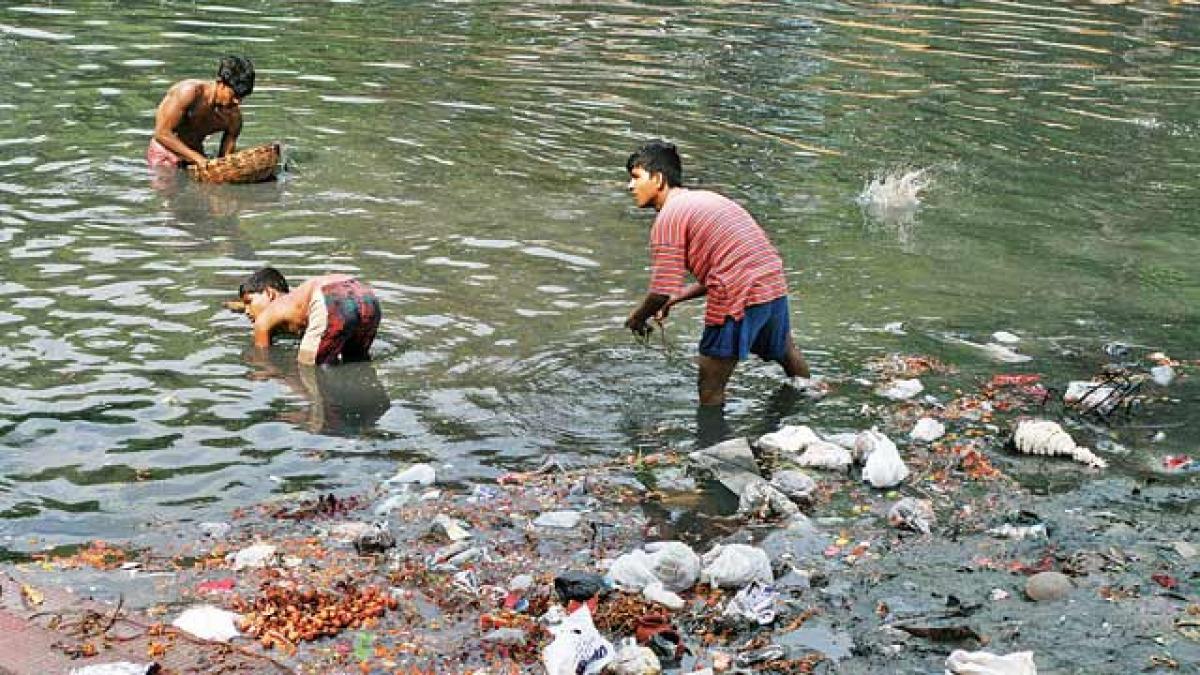
No end in sight for Ganga conservation crusaders fast unto death
86-years-old Swami Gyan Swaroop Sanand, formerly known as Professor G.D. Agarwal, of IIT Kanpur and Member-Secretary Central Pollution Control Board, is on fast unto death at Haridwar since 22 June 2018, demanding a law for conservation of river Ganga.

Haridwar: Prominent activist urged the government to save the Ganga river conservation crusader Swami Gyan Swaroop Sanand, who has been on a hunger strike (fast unto death) since June 22 demanding a law for the conservation of the river.
Medha Patkar, Swami Agnivesh, Sohail Hashmi, Writer and Film Maker and Sandeep Pandey, Socialist Party, were some of the signatories of the signature campaign. “86-years-old Swami Gyan Swaroop Sanand, formerly known as Professor G.D. Agarwal, of IIT Kanpur and Member-Secretary Central Pollution Control Board, is on fast unto death at Haridwar since 22 June 2018, demanding a law for conservation of river Ganga. He has played an important role in stalling 3 hydroelectric projects to ensure the uninterrupted flow of Bhagirathi, which becomes Ganga after meeting Alaknanda, for the initial 175 kms,” the letter stated.
“Close to Rs. 500 crores were spent as part of the previous Ganga Action Plan and now Rs. 7,000 cr, out of Rs. 20,000 cr, the proposed budget for Namami Gange project under the current government, has been spent but most of industrial waste and sewage continues to flow untreated in Ganga similar to other rivers like Sabarmati in the country because, firstly, the installed capacity of Sewage Treatment Plants and Common Effluent Treatment Plants is woefully short of the total waste generated and, secondly, whatever capacity has been built remains non-functional for various reasons, including corruption,” it said.
“It is shocking that this government which projects itself as a champion of Hindutva and changed the name of Water Resources Ministry to include Ganga Rejuvenation in its name is completely silent on Swami Gyan Swaroop Sanand’s fast and the media is colluding in this conspicuous conspiracy. We demand that the government enter into a dialogue with Swami Sanand to save his life and take some concrete steps to save the rivers and other water bodies of the country,” they wrote.
On Aug 5, he once again rejected Union Minister Uma Bharti’s plea to end his stir, saying he won’t do the same until his demand for passing the draft of Ganga Protection Act was met, reported The Tribune.
“On July 10, about 20 people, including policemen, forcefully dragged him from Matri Sadan Ashram in Haridwar, where he was observing fast, into an ambulance to Dehradun-based Doon Hospital. Later, on July 12, he was shifted to AIIMS, Rishikesh. During his eleven-day stay at AIIMS, doctors attempted to feed him through the drip. However, they failed,” reported The New Indian Express.
If you want to add your name to the signature campaign ‘Save Swami Gyan Swaroop Sanand, Ganga and other water bodies’, send a mail to Prakarsh Srivastava at srivastava.prakarsh@gmail.com or call or send an sms to 9818554465.
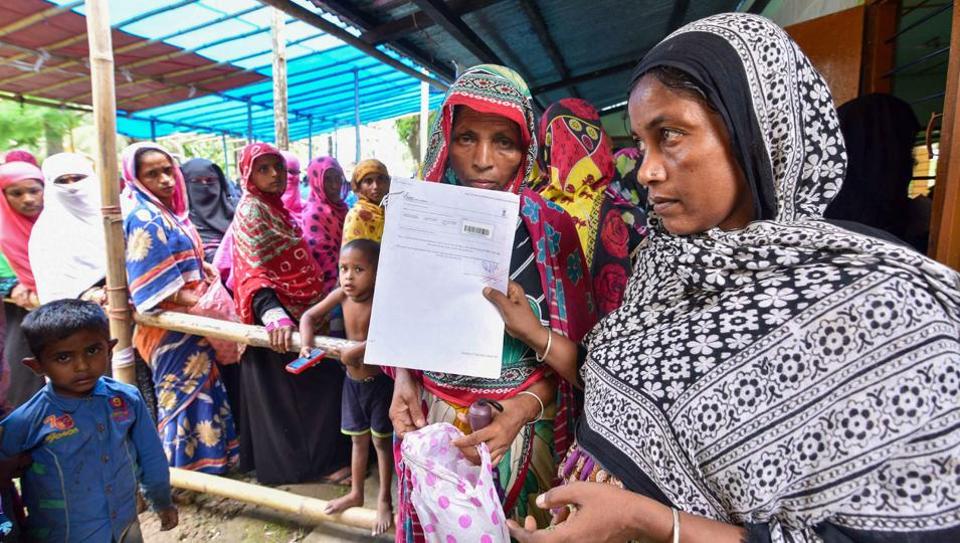
EXCLUSIVE: The Updated NRC: Big jolt for BJP ?
Higher Rate of Exclusion from NRC in Bengali Hindu dominated Districts of Assam

Image Courtesy: PTI
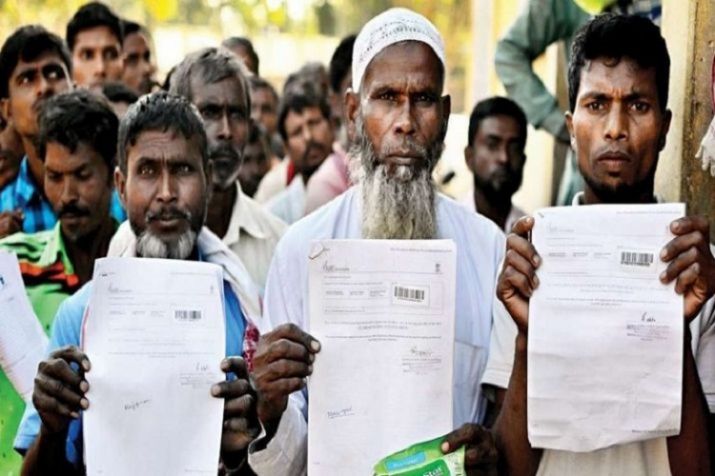
Assam has 33 Districts presently, of which 10 districts have a more than 50% Muslim population. However, other than Darrang, all other, nine, Muslim dominated districts of Assam are seeing lower percentage drop rates from the NRC draft list as compared to other Districts with a lesser Muslim population…. This overall situation has created trepidation, fear and dis-satisfaction amongst the state leadership of BJP.
Guwahati, August 7: The Assam Movement started in 1979 for not only to detection and deportation of Foreigners but to push for the deportation of all Indians who were outsiders in Assam. Later, as the movement progressed, it turned into a Movement against ‘Ali, Coolie, Bengali, Nepalese with flat noses’ Ali, here in Assam, means the Muslims, Coolie stands for the Tea Tribes of the labouring class and the Adivashi Santhals, Bengalis for Bengali speaking Hindus and the Gorkhas! Further progression of the hysteria, with the growing influence of the RSS and its brand of Hindutva, the Movement took the shape of a mass hysteria targeted at Muslims alone. Since 1983, when the pogrom behind the Nellie massacre shaped carnages to come, right up to the latest round of rather inhuman torture of the Muslim labouring class in various parts of Assam, the state’s Minority Muslims have been targeted quite specifically by this brand of communal-chauvinist politics.
In the past 30 years, this brand of politics has successfully spread a Muslim phobia among the general Assamese people, giving currency to the widely prevalent view that Muslims in Assam are the ‘illegal intruders’ in the state. Due to acute socio-economic under development, the higher growth of Muslim population in Assam was also seen as illegal infiltration. This brand of misperception has been doing the rounds since the time of the Assam Movement.
The Assam Movement started in 1979, articulating a demand for the ‘ouster’ of 80,00,000 foreigners who were posited as a ‘danger to Assamese nationality. Later, the number of ‘foreigners’ touted by chauvinist groups had mounted to even 1,20,00,000 (1 crore and 20 Lakh). The sangh parivar, consisting of more than a hundred allied groups connected closely to the RSS have been continuously propagating that all the ‘illegal intruders’ in Assam are minority Muslim and that they number over 80,00,000. This propaganda of the RSS and its allied organizations was at the root of their successful capture of power in Assam, in 2016. The BJP succeeded in seizing power in the State only on the base of this false propaganda and fear amongst other sections of the Assamese society in the name of Bangladeshi infiltration, especially the mis-conception that hundreds of thousands of Bangladeshi Muslim have settled in the state, posing a danger to Assamese society and the ‘indigenous’ people of Assam.
These mis-conceptions have been, first and foremost, exposed by the declaration of final draft of the updated NRC. More than 40,00,000 plus people have been dropped from the draft NRC released on July 30, 2018, there is growing concerns that Indian citizens find no place on the draft list. More than anything else, this has exposed the long running, vicious propaganda of the RSS-led sangh parivar and other chauvinist forces, active in the State.
Immediate Findings*
Assam has 33 Districts presently, of which 10 districts have a more than 50% Muslim population. However, other than Darrang, all other, nine, Muslim dominated districts of Assam are seeing lower percentage drop rates from the NRC draft list as compared to other Districts with a lesser Muslim population. For example, the South Salmara-Mancachar district of lower Assam, bordering Bangladesh has a population of 96% of Muslims. In this district more than 93% residents have found their names in the final draft NRC. The drop percentage list from the draft NRC is only 6.78%. Even of the 6.78 per cent dropped out, reasons are not their Bangladeshi origin but due to the requirement of ‘weak documents’ as declared by the NRC authority. Due to the cancellation of a large number of Panchayat certificates, which documents were allowed as link certificates primarily, the inclusion of such persons has not happened. Likewise, in the second largest Muslims dominated district of Dhubri which is also bordering Bangladesh, and which has a 75% Muslim population, the percentile of drops from the NRC final draft list is 8.4%. A large number of persons from the labouring classes who generally go to upper Assam Districts in search of livelihood are the targets here. They are out of the list.
Barpeta: The district of Barpeta with 70.74% Muslim population, Goalpara with a 57.52% Muslim population in Lower Assam are also seeing a 13.99% and 12% drop out percentage, respectively. Though the number of drop outs (from the NRC) of persons from Barpeta District is much higher than the state average, this is not because of the presence of the Muslims in the population. This becomes clear for anyone who goes through the Revenue Circle wise break up of those included and excluded in the NRC Final Draft.
In the Chenga Revenue Circle of Barpeta the District, that has 80% of Muslims in the population, the drop out percentage from the final draft of the NRC is only 9%. In the Jania Revenue Circle of the same district, with a 96% Muslim population witnessed a drop out of 8%. In the same district, the Baghbor Revenue Circle which is a part of the island area of river, Brahmaputra, there is a drop percentage of 14% from the NRC. This revenue circle of Baghbor is part of a completely eroded part of the Brahmaputra, having the highest number of illiterate and poor people in the population. Unfortunately, the NRC authority took a hasty decision to call this very impoverished section of the people, from Baghbor, to the Bajali Sub-Divisional office which is 70 kilometres away, for the NRC hearing! The motive was not simply to harass this impoverished section, but the ill-conceived decision was premised on the idea that all these poor and illiterate people from the area are mostly foreigners, that it will be easy to isolate them if the NRC hearing is both ‘strict’ and ‘inaccessible’. However, these efforts failed as more than 86% names from this section have appeared in final draft of the NRC. Contrary to this, in the Rupsi Revenue Circle of the same district, with only about 35% of Muslims in the population, there is a substantial number of Bengali Hindus who appear to have been dropped with 20% of people from this district, excluded from the NRC. This is a hard core support base for the BJP presently, state BJP President, Ranjit Das hails from here. He represents the party in the Assam Legislative Assembly: the Sorbhog Constituency includes the Rupsi Revenue Circle. This has caused a distinctly uneasy situation for the state BJP Leadership.
In two other strong BJP belts, where BJP candidates have won four times due to a division in the minority vote, a similar situation prevails. The Darrang District under Mangoldoi Parliamentary Constituency, where the Muslim population is about 64 Percent, has witnessed a huge 31.39% drop out from the Final Draft NRC. This is not so much because of the Muslim population, however. The exclusion of the Muslim Population from the final draft of the NRC, from Darrang district, is due to the issue of linkage certificates, but it is still not above 20% in any place. On the contrary, in areas which have been the traditional vote bank for BJP, with a substantial presence of Bengali Hindus in the population, there is a drop of a staggering 45 per cent of the people from the final draft of the NRC in these districts.
There is a similar story in the Nagaon Parliamentary Constituency, where the BJP candidate has won four consecutive terms. In this Parliamentary Constituency, Nagaon District which has a 50% plus of Muslims in the population, the drop percentage from the final draft of the NRC is 15.27%. The drop outs of the Muslim population from this district from the final draft of the NRC are not above the state average in population, meaning there is no especial targeting of Muslims. In sharp contrast, in the case of the Bengali Hindu population, the drop percentage is above 30%.
In Morigaon district with a 52.56% Muslim population, the percentage of drop out from the final draft NRC is 14.97%, which is far higher than the state average. This district also has a larger number of ‘Declared foreigners’ and ‘D Voters’. But, even after all these factors, the drop out percentile of the Muslim population in this district is below the state average. But in case of the BJP’s traditional vote bank Bengali Hindu dominated districts, the percentile of the dropout rate is far higher, above 35%, as per initial surveys and reports.
The single biggest jolt for the Assam unit of the BJP is from the district of Hojai, which is the only Bengali Hindu dominated district in the Brahmaputra valley. The Hojai District has a 52% Bengali Hindu Population and has seen a drop percentage of 30.3%. (Going deeper, within different segments of the population, for the Bengali Hindu, the drop our percentage is assessed at 47% in this district, where as in case of the substantial Muslim Population the drop out percentage is below 20 percent!
In Bongaigaon district, the Muslim Population is 50.22%, the percentage of drops in this district is 22.71%, which is highest to be found in lower Assam Districts. Even here, the drop percentage of the Muslim population is below 20% in this district.
In Karimganj District of the Barak Valley, which has a 56.36% Muslim population, the percentage of drop out from the Register is at 8.4%. In Hailakandi district, which has a 60.31% Muslim population, the district has witnessed a drop out of 9.3% from the draft NRC against 12.54% in the Cachar District. Cachar district has a Muslim population of 37.71 percent. In sharp contrast, in Dima Hasao district where the Muslim population is only 2.04% and in Karbi Anglong district, with only 2.12% of Muslims in the population, these districts have witnessed a drop out of 16.06% and 14.33% respectively from the draft NRC.
The districts of Tinisukia and Dhemaji where the Muslim population is a bare 3.64% and 1.96% respectively, the Muslim segments of the population have seen a higher rate of drop percentage out of the draft NRC. These two districts have recorded a drop out of 13.2% and 9.7% respectively.
This overall situation has created trepidation, fear and dis-satisfaction amongst the state leadership of BJP.
*Grassroot activists and senior journalists who have been crunching local data have discovered some startling trends.

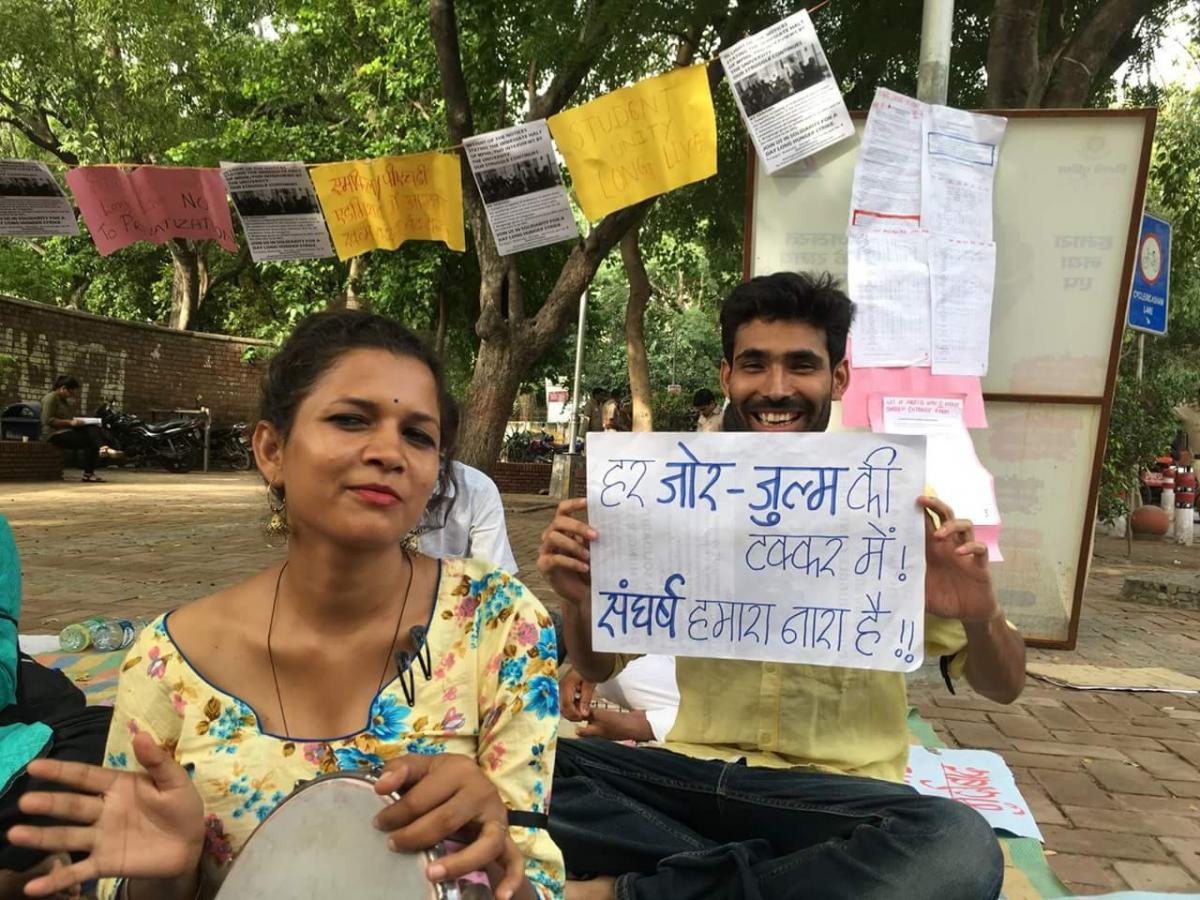
93% JNU teachers vote for VC’s removal
Out of total 586 listed faculty members at JNU, 300 turned up to cast their votes. Among the voters, 93% or 279 teachers voted in favour of the VC being relieved (8 were invalid and 5 abstained.) 96% of the voting teachers voted against the HEFA loan for the university.

New Delhi: The results of the JNUTA referendum are out and it is very clear that teachers want the current Vice-Chancellor, Prof. M. Jagadesh Kumar to go and the Rs. 515 crore HEFA loan should be cancelled.
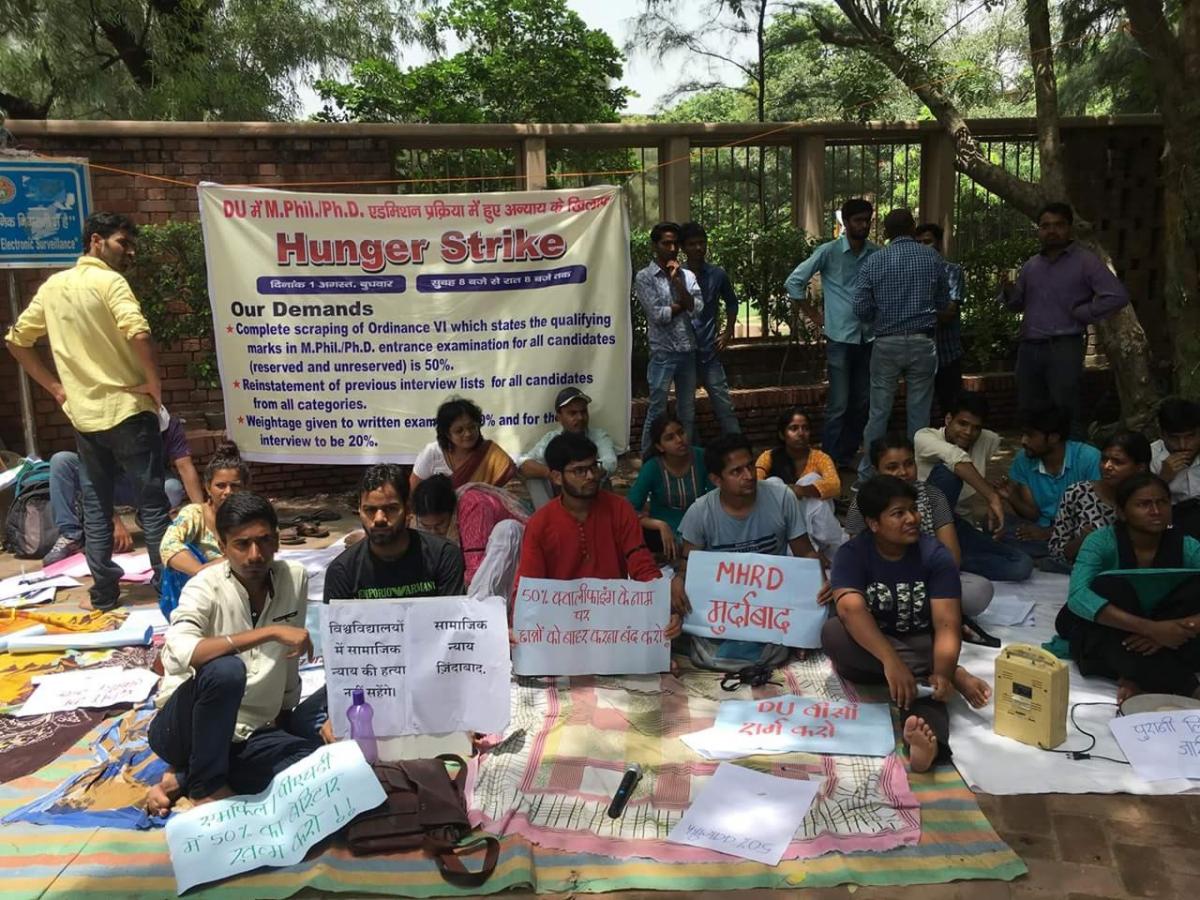
The Jawaharlal Nehru Teachers’ Association (JNUTA) organized a referendum on August 7, asking the JNU teachers to vote on two questions: (1) Should the current Vice-Chancellor of JNU be relieved of his office? and (2) Should JNU take a HEFA loan?
Out of total 586 listed faculty members at JNU, 300 turned up to cast their votes. Among the voters, 93% or 279 teachers voted in favour of the VC being relieved (8 were invalid and 5 abstained.) 96% of the voting teachers voted against the HEFA loan for the university.
External observers who were invited to observe the referendum included Prof. M.H. Qureshi (noted geographer), Prof. P.K. Yadava (eminent scientist), Prof. Arun Kumar (noted economist) and Prof. Chaman Lal (acclaimed writer), all of whom are retired professors of JNU as well as ex-presidents of the JNUTA.
They opposed the proposal seeking a loan of Rs. 515 crore from Higher Education Funding Agency (HEFA) for what the JNUTA called were the V-C’s “pet projects”. The association believed that the loan will lead to “indebtedness for the university community”.
“In a surprise turnout, 300 faculty members out of a total strength of 586 listed faculty of the university turned up to cast their votes, despite heavy showers through the day and more so, despite the general atmosphere of fear that has been created by the current administration. The university has been recently indulging in individual targeting, issuing notices against faculty members who dare to express dissent in any manner. For instance, on the day after a protest march that took place last week, individual letters were issued against those who were “…seen to be …” protesting. The numbers who turned up to cast votes (300) is therefore substantial, given the numerous faculty who are currently on long leave and deputation; those who are fearful of personal targeting (whose confirmations and promotions etc. are on the line); and those who are currently holding administrative posts,” said Sonajharia Minz, President of JNUTA and Partho Datta, VP.
“Today’s referendum followed a protest march around the university campus on the 31st of July to register resistance against the Vice Chancellor and his administration, who over the last two and a half years, have vitiated the academic environment of the university campus. On 3rd and 4th of August, JNUTA had organized a convention on public higher education. On the first day of the convention, an array of parliamentarians from across a spectrum of political parties spoke on the recent changes in public higher education and also extended support to JNUTA’s struggle. The second day of the convention was held in JNU and included the screening of a film on JNU and a panel discussion including teachers’ associations from across the country. The JNUTA events successfully underscored the high level of concern on the current state of public higher education in general and on the recent targeting of JNU in particular,” they said.
Sabrang India had reported in July that the JNUTA had planned protest against the vitiating academic atmosphere. JNUTA put forward seven charges against the administrations and their callous approach to serious offences before launching their protest on July 31.
“JNU was built with objectives of a socially, economically and a gender-just university and also achieved exceptional academic record much before joining of the present Vice-Chancellor, into an authoritarian ‘teaching shop,’ a statement by JNUTA read.
Related articles:
JNU teachers go on strike against University VC and administration
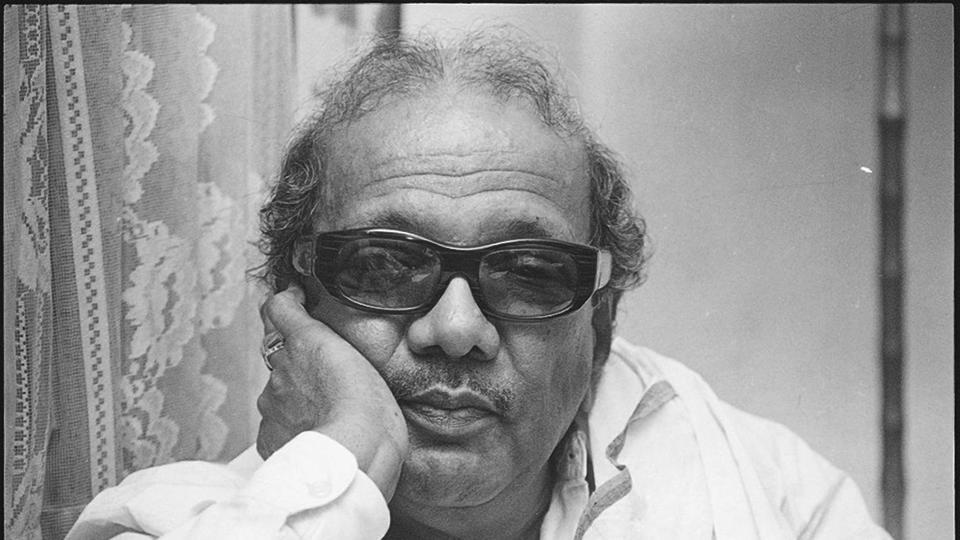
Watch Karunanidhi’s 28-year-old speech against religion as a political tool
As the titan of Tamil politics passed away on Aug 7, watch his views on secularism and his thoughts about religious promotion for political gains in this video

Image Courtesy: Hindustan Times
Chennai: Muthuvel Karunanidhi, also known as Kalaignar (the artist) was a titan of Tamil Nadu politics. He passed away on August 7 after succumbing to illness. He was 94. The five-time chief minister and president of DMK party for 50 years began his political career with the atheist and rationalist philosophy of Periyar.
“Under Karunanidhi’s chief ministership, Tamil Nadu witnessed multiple economic, social, and welfare programmes. In 1969, his government was the first to set up a commission for backward classes. It also introduced the concept of free education for people belonging to certain castes and classes. Government jobs were reserved for women and several self-help groups set up for their progress,” wrote Quartz.
In the following speech said during the 100th birth anniversary of Dr. Ambedkar, M Karunanidhi talks about the need for politicians to espouse secularism and why there is no space for religion or religious promotion in state and national welfare.
https://www.youtube.com/watch?v=f679CU6tRms&t=14s
Full text of Video:
The secular principle enshrined in our constitution have important implications. Basically, it means, that religion should be strictly kept out of both parties and government. The state cannot discriminate in favour of or against any particular religion. On the part of political parties, it implies that no issue of a religious nature can allowed to become a political issue. This means that no political party should be allowed to adopt a religious issue as a part of his program or political activity. In a democracy, political power and following from the state power is based on the wishes of the majority. If the majority tries to influence this skill purely on the grounds of religious persuasion, the secular principle is undermined. In such a circumstance, religious minorities cannot be assured of the religious freedoms. This is the centenary year of Dr. Ambedkar. Ambedkar said the meaning of freedom is that the govt should run with the constant co-operation of the minorities. India must remain a garden, in which many flowers of rich colours flourish together. These are the wishes of leaders like Mahatma Gandhi and Anna which we must resolve to uphold