
Coming soon on Sabrangindia.in

Email: sabrangind@gmail.com

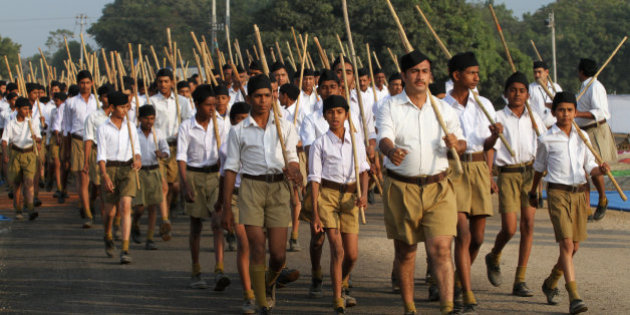
Image Courtesy: AP
An internal Emergency was imposed on the country by the then Prime Minister Indira Gandhi on June 25-26, 1975, and it lasted for 19 months. This period is considered as ”dark times’ for Indian democratic polity. Indira Gandhi claimed that due to Jaiprakash Narayan’s call to the armed forces to disobey the ‘illegal’ orders of Congress rulers, it had created a situation of anarchy and there was a danger to the existence of Indian Republic, so there was no alternative but to impose Emergency under article 352 of the Constitution.
RSS claims that it opposed Emergency promulgated by Indira Gandhi heroically and suffered immensely for resisting Emergency 43 years ago. But there are dozens of contemporary narratives which decry this claim. We will be referring here to such two narratives by a veteran thinker and journalist of India, Prabhash Joshi and TV Rajeswar, former Intelligence Bureau [IB] chief who was the deputy chief of IB when Emergency was imposed. They recounted the days of Emergency (or state terrorism) when RSS surrendered to the repressive regime of Indira Gandhi, assured her and her son, Sanjay Gandhi, to enforce faithfully, the draconian 20-point programme announced by the Emergency regime. A large number of RSS cadres came out of jails by submitting Maafinamas (mercy petitions.)
Despite this betrayal, thousands of RSS cadres continue to get a monthly pension for persecution during Emergency. The BJP ruled states like Gujarat, Madhya Pradesh, Rajasthan and Maharashtra decided to award a monthly pension of Rs. 10,000 to those who were jailed during the Emergency period for more than a month and Rs. 5000 to those who were jailed for less than a month. This rule took care of the financial interest of those RSS cadres who might have submitted mercy letters completing only one or two months’ jail term. For securing such a fat pension there was no such condition that the beneficiary should have been in jail for the whole period of the Emergency.
Interestingly, in the case of anti-British freedom struggle, there has not been even a single RSS cadre to claim the freedom fighter pension. It may be noted that nobody remembers hundreds of Communist youth, branded as Naxals, who were killed in fake encounters during the Emergency. Interestingly, Shiv Sena, the Hindutva co-traveller of the RSS openly supported the Emergency.
The narrative by Prabhash Joshi appeared in the English weekly Tehelka on the 25th anniversary of the Emergency. According to him, even during the Emergency, “there was always a lurking sense of suspicion, a distance, a discreet lack of trust” about RSS joining the anti-Emergency struggle. He went on to tell that “Balasaheb Deoras, then RSS chief, wrote a letter to Indira Gandhi pledging to help implement the notorious 20-point programme of Sanjay Gandhi. This is the real character of the RSS. You can decipher a line of action, a pattern. Even during the Emergency, many among the RSS and Jana Sangh who came out of the jails gave mafinaamas (apologies.) They were the first to apologise. Only their leaders remained in jail: Atal Behari Vajpayee, LK Advani, even Arun Jaitley. But the RSS did not fight the Emergency. So why is the BJP trying to appropriate that memory?”
Prabhash Joshi’s conclusion was that “They are not a fighting force and they are never keen to fight. They are basically a compromising lot. They are never genuinely against the government.”
TV Rajeswar, who served as Governor of Uttar Pradesh and Sikkim after his retirement from service, in his book, ‘India: The Crucial Years” [Harper Collins] corroborated the fact that “Not only they (RSS) were supportive of this [Emergency], they wanted to establish contact apart from Mrs. Gandhi, with Sanjay Gandhi also.” Rajeswar in an interview with Karan Thapar disclosed that Deoras “quietly established a link with the PM’s house and expressed strong support for several steps taken to enforce order and discipline in the country. Deoras was keen to meet Mrs. Gandhi and Sanjay. But Mrs. Gandhi refused.”[i]
According to Rajeswar’s book, “RSS, a right-wing Hindu nationalist organisation, was banned in the wake of the Emergency. But its chief, Balasaheb Deoras, quietly established a link with the PM’s house and expressed strong support to several steps taken to enforce order and discipline in the country. Sanjay Gandhi’s concerted drive to enforce family planning, particularly among Muslims, had earned Deoras’s approbation.”
Rajeswar also shared the fact that even after Emergency the “organization (RSS) had specifically conveyed its support to the Congress in the post-emergency elections.” It will be interesting to note that even according to Subramanian Swamy, in the Emergency period, most of the senior leaders of RSS had betrayed the struggle against Emergency.
The contemporary documents in the RSS archives prove the narratives of Prabhash Joshi and Rajeswar. The third supremo of RSS, Madhukar Dattatraya Deoras wrote the first letter to Indira Gandhi within two months of the imposition of Emergency. It was the time when state terror was running amok.
In a letter dated August 22, 1975, he began with this praise of Indira:
“I heard your address to the nation which you delivered on August 15, 1975, from Red Fort on the radio in jail [Yervada jail] with attention. Your address was timely and balanced so I decided to write to you.”[ii]
Indira Gandhi did not respond to it. So Deoras wrote another letter to Indira on November 10, 1975. He began his letter with congratulating her on being cleared by the Supreme Court of disqualification which was ordered by the Allahabad High Court, “All the five Justices of the Supreme Court have declared your election constitutional, heartiest greetings for it.” It is to be noted that opposition was of the opinion that this judgment was ‘managed’ by Congress. In the course of the letter, he declared that “RSS has been named in the context of Jaiprakash Narayan’s movement. The government has also connected RSS with Gujarat movement and Bihar movement without any reason. The Sangh has no relation to these movements.”[iii]
Since Indira Gandhi did not respond to this letter also, RSS chief got hold of Vinoba Bhave who supported the Emergency religiously and was a favourite of Indira Gandhi. In a letter dated January 12, 1976, he begged that Acharya should suggest the removal of the ban on RSS.[iv]
Since Acharya too did not respond to Deoras letter, he wrote another letter, without a date, in desperation:
“According to press reports respected PM [Indira Gandhi] is going to meet you at Pavnar Ashram on January 24. At that time there will be a discussion about the present condition of the country. I beg you to try to remove the wrong assumptions of PM about RSS so that ban on RSS is lifted and RSS members are released from jails. We are looking forward to the times when RSS and its members are able to contribute to the plans of progress which are being run in all the fields under the leadership of PM.”[v]
Riding the juggernaut of the rulers, especially the autocratic ones, has been an old practice of RSS. It was this reason that no leader and cadre of RSS participated in the anti-colonial freedom struggle. In fact, the RSS worships brute force and totalitarianism. The most prominent ideologue of the RSS, the second boss of the organization, Golwalkar decreed as back as in 1940 that, “The RSS inspired by one flag, one leader and one ideology is lighting the flame of Hindutva in each and every corner of this great land.”[vi]
Recently, the former President of the Indian Republic, Pranab Mukherjee was invited by the RSS chief, Mohan Bhagwat to be the chief guest at its graduation ceremony for the new recruits. Pranab Mukherjee was indicted as one of the top leaders of Congress for Emergency excesses. The tragedy of RSS is that India continues to be run under a democratic polity so its love for brazen power has to be balanced by double-game.
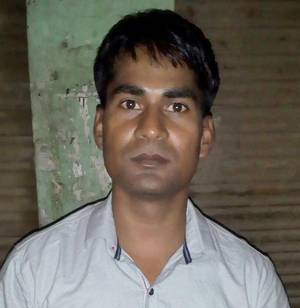
Mohammad Arif | Photo Credit: De21 Arif
Nuh, Haryana: What is being seen as a crackdown on human rights defenders, the police in Nuh, Haryana, raided human rights activist Mohammad Arif’s house in his absence on June 19.
Journalists and activists have written to Haryana CM ML Khattar seeking protection and safety for him and his family. “Abid Hussain, ASI, Mewat police, along with three other unidentified police officials barged into the house of Mohd. Arif Tain without a warrant or substantiated suspicion. They came at a time when only his mother, wife and children were at home. When the family asked the police to show a warrant, the same was denied to the family and they threatened the family. The police after entering the house without any warrant or court order, vandalized his property and made baseless accusations and unsubstantiated claims against Mohd. Arif, saying he was in possession of illegal arms, which have not been recovered,” the letter stated.
The human rights activist has been fighting against lynchings and encounter killings in Mewat and is the first responder in most of these incidents. He is also the Haryana state co-ordinator of Aman Biradari, an organisation that works for human rights.
“Mr. Arif, claimed that he was away to Punahana to conduct fact-finding into encounter cases in the area, when the police reached his house in Tain village. Four policemen, led by Assistant Sub-Inspector Abid Hussain arrived around 8 p.m. in a PCR van and carried out a search operation,” He said in a report by The Hindu.
Mohd. Arif’s response
“Mr. Hussain directed the team to search for alleged illegal weapons hidden in the house, said Mr. Arif, who claimed that he got the information about the raid from a fellow villager and ex-Block Samiti member Subedar Khan. Mr. Arif said that the raid continued for around 15 minutes. “My wife, mother and daughter were at home at that time. When he [Mr. Khan] informed me about the raid over phone, I asked him to rush to the house and film it. However, it was all over by the time he reached,” he said in the report.
Mr. Arif has featured in the Limca Book of Records for setting up India’s first community radio-based consumer helpline. He held a protest against this raid on June 20 at Gandhi Park in Nuh along with friends and well-wishers, the report stated. He sought to know as to how a raid was conducted without a warrant and demanded action against the four policemen. He said that he had been honoured by the district administration on several occasions for social work.
“Mr. Arif said that it could be an attempt to mount pressure on him since he has been conducting fact-finding into alleged cases of encounters in Mewat, spread across Nuh, Mathura, Alwar and Bharatpur. He said there could be a larger conspiracy to arrest and eliminate him. “I have been conducting fact-finding into encounters into this region over the past decade. More than 50 people, all Muslims, have been killed in several encounters since 2007. In a few cases, the police did not even hand over the body to the families of the deceased,” said Mohd. Arif in the report.
SP (Nuh) Nazneen Bhasin said she was not aware of the matter and assured to look into it.
“Mohd. Arif is a frontline Human Rights defender and activist working with Aman Biradari where is providing socio-legal support to the families of lynching victims as well as those who lost their lives in police encounters. He has an impeccable human rights record working for the Mewat community on various issues including education of girl children, rural digital empowerment, entitlements and more recently raising the issue of lynching and alleged false encounters by police before various forums including Human Rights Commissions, police officials and the courts. It is feared that through these illegal means, attempts are being made to silence Mohd. Arif’s voice against lynchings and illegal encounters and also implicate him in false legal cases which could lead to criminal charges being filed against him, his incarceration and assault on his reputation,” the letter to CM Khattar stated.
The declaration of Governor’s rule in Jammu and Kashmir has plunged the valley into political turmoil. Apprehensions are running high. CJP Secretary Teesta Setalvad spoke to Kashmiri Pandit Sangharsh Samiti (KPSS) leader Shri Sanjay Tickoo to find out more about the situation.
First Published on https://cjp.org.in
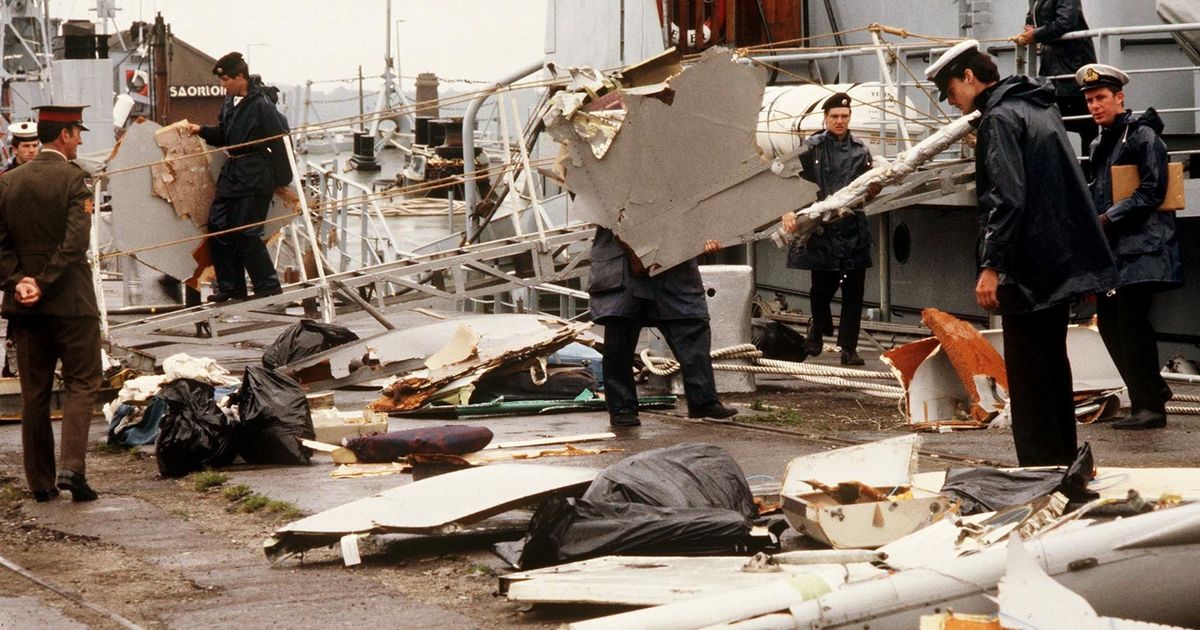
Canada: The autobiography of a philanthropist who lost his wife and two children in the Air India bombing was released in Delta, British Columbia, on Sunday afternoon.
Ray of Hope is the memoir of Dr. Chandra Sankurathri whose wife Manjari, son Srikiran and daughter Sarada were aboard the ill-fated Air India Flight 182 that was bombed mid-air in June 1985, killing all 329 people aboard. This was the worst attack in the history of aviation terrorism before 9/11. Widely blamed on the Sikh separatists seeking revenge for the repression of Sikhs in 1984, the attack had turned the life of Sankurathri upside down. Yet, turning his grief into strength, Sankurathri established a foundation in memory of his wife in her native city of Kakinada, Andhra Pradesh in India.
The Manjarai Sankurathri Memorial Foundation currently runs a free school and an eye hospital for poor and needy. Whereas, the school is named after his daughter whose dream of going to school was shattered as she was only four. He named the hospital after his son.
The memoir was released at George Mackie Library in his absence by other Air India victims’ families and friends and two prominent journalists Charlie Smith and Robert Matas. However, his message was read out at the beginning of the event that was organized by Indians Abroad for Pluralist India (IAPI) in commemoration of the Air India bombing anniversary that falls on June 23. A day before the book launch, the victims’ families had gathered at the Air India memorial in Stanley Park in Vancouver, Canada, to remember their loved ones.
Among those who unveiled the book were Major Singh Sidhu – who lost his sister, a nephew and a niece and Mandeep Grewal who lost his father. Bhama, a close friend of Dr. Sankurathri joined the unveiling ceremony on his behalf.
A short documentary on Dr. Sankurathri’s work was shown at the event that was opened with a Punjabi poem dedicated to the Air India victims by Amrit Diwana. Both Smith and Matas spoke at length about the Air India tragedy and encouraged people to read Ray of Hope that inspires everyone to fight hatred with love. Describing the Air India disaster as an attack on the Indian diversity, the IAPI cofounder Gurpreet Singh threw light on the ugly political events of 1984 that led to the bombing and cautioned the gathering about growing attacks on religious minorities in India from Hindu Right and its impending consequences. He pointed out that the Air India bombing was the culmination of similar violence against Sikhs.
Among those in attendance were former British Columbia Premier Ujjal Dosanjh, World Sikh Organization founder Gian Singh Sandhu and University of British Columbia researcher and an activist Sukhvinder Kaur Vinning. Others present included the IAPI cofounder Parshotam Dosanjh and visiting Punjabi leftist activist from India Sardara Mahil.

Gandhi during the Salt March, March 1930. Credit: Yann via Wikimedia Commons. CC0 Public Domain.
Once again I’m thinking back to the 16th of February 2003. By that time, my own experiments with nonviolence had formed my lukewarm (at best) opinion of the marches and rallies currently in fashion. But February 16th was not a day to let skepticism reign. The Iraq War was imminent and people were taking to the streets. I knew I ought be among them. And, while I cannot claim that I stepped out on that winter morning with every bit of my hard-earned skepticism left at the door, I did step out. With an earnest and open heart, I stepped out.
Downtown, I met up with a small group from my Quaker meeting. We wove among many thousands of our fellow San Franciscans, adding our voices to a resounding “no,” collectively and clearly pronounced in the face of the looming re-invasion of Iraq. It was an exhilarating day. It was a day of passion and purpose. Perhaps most dazzling and heartening was the knowledge that our voices were lifted in concert with millions of others the world over.
Remember that? We were experiencing a taste of the immense potential of people and of the great underlying solidarity that bound us together. It was a marvelous day. And, it was one of the loneliest days of my life. The profound loneliness I experienced wasn’t simply a case of my skeptic shadow getting the best of me. On the contrary, it was the relaxed grip of my skepticism that opened me to the truth I encountered that day. In the painful isolation I had that singular experience of clearly seeing something for the first time that at some level I had known all along.
Amidst the day’s exhilaration it was plain to me that something essential was missing—that there was, in fact, a gaping void at the very heart of it all. Deep down, I knew that this marvelous day was a day of certain failure. I knew that our massive mobilization to stop the war would inevitably and necessarily fade, and it would do so quickly. During the march, my eyes were invariably drawn by particular phrases scrawled on several of the signs and banners. And I couldn’t help but think of the person behind those catchy one-liners: Gandhi.
Like every great prophet Gandhi is customarily placed on a pedestal. We revere him as a patron saint of nonviolence, a mahatma—the Sanskrit term of veneration meaning great soul—a larger-than-life figure we can never hope to fully emulate. We hold him at this comfortable distance, deeply impressed and inspired, while remaining free and clear from what he actually taught. Gandhi himself bristled at the thought of being called mahatma, doubting his worthiness of the accolade, and knowing well that such veneration would necessarily distract people from what he was actually doing. Gandhi urged his fellow Indians not to exalt him but to look at the nuts and bolts of nonviolent transformation.
Over the last decade, I’ve seen my primary work as that of taking Gandhi down off the pedestal. I’ve studied him closely, including his teachings about Satyagraha, a term coined by him and variously translated as “truth force,” “soul force” or “clinging to truth,” generally used in reference to nonviolent resistance or a specific nonviolent campaign. I am committed to listen to Gandhi as a trusted guide with concrete instructions relating to my here-and-now, day-to-day life. Following February 16, 2003, this quest became particularly focused. I felt compelled to understand both the gaping hole I experienced that day and the nature of its possible remedy. I hoped Gandhi’s life and work would offer guidance. And in due time, I found this guidance in the space of a single paragraph penned by Gandhi at a critical point in his life.
On February 27, 1930, two short weeks prior to launching the Salt Satyagraha, a pivotal episode in India’s struggle for independence from the British Empire, Mohandas Gandhi wrote a short article for a national publication. The article was called “When I am Arrested.” While the Salt Satyagraha has been the subject of immense interest to scholars and activists, this article appears to have gone mostly unnoticed. This is understandable, given the drama of the “great march to the sea” and the massive civil disobedience that followed it.
The British, in order to maintain their monopoly on the salt industry, had prohibited any unsanctioned production or sale of salt. Gandhi defied British imperialism by leading a 385-kilometre trek to the Dandi seashore and lifting a now-iconic fistful of salt above his head in contravention of the salt laws. It stands as one of the most potent touchstones in the history of nonviolent resistance.
It’s hard not to get lost in the drama, power and personality of the Salt Satyagraha, but if we look closely at “When I am Arrested,” we catch a behind-the-scenes glimpse at the inner workings and design of India’s independence movement. Gandhi published the article to put the masses of India on alert and to give them a final set of instructions. It also offered an impassioned battle cry, culminating with Gandhi’s declaration that this time not a single nonviolent devotee of Indian independence “should find himself free or alive at the end of the effort.”
Within this call to action I found the paragraph I believe we activists most need to hear. The paragraph refers to the ashram that was Gandhi’s home, a place where religious devotees lived, raised their food and worshipped together. It was also the starting point of the march to the sea.
“So far as I am concerned, my intention is to start the movement only through the inmates of the Ashram and those who have submitted to its discipline and assimilated the spirit of its methods. Those, therefore, who will offer battle at the very commencement will be unknown to fame. Hitherto the Ashram has been deliberately kept in reserve in order that by a fairly long course of discipline it might acquire stability. I feel, that if the Satyagraha Ashram is to deserve the great confidence that has been reposed in it and the affection lavished upon it by friends, the time has arrived for it to demonstrate the qualities implied in the word satyagraha. I feel that our self-imposed restraints have become subtle indulgences, and the prestige acquired has provided us with privileges and conveniences of which we may be utterly unworthy. These have been thankfully accepted in the hope that some day we would be able to give a good account of ourselves in terms of satyagraha. And if at the end of nearly 15 years of its existence, the Ashram cannot give such a demonstration, it and I should disappear, and it would be well for the nation, the Ashram and me.”
What struck me that day in San Francisco, on the eve of war, was that we peace-minded folk were entirely unprepared for the battle at hand. Our so-called “movement” lacked the depth necessary to sustain it. It came as no surprise, then, to see that after the bombs started dropping, we returned, with few exceptions, to our lives—to business, “progressive” though it may have been, as usual. Though committed nonviolent practitioners dappled the crowd that day, the marching thousands were not grounded by the presence of a core group such as that which gave such depth to India’s independence movement or the civil rights movement, which drew heavily on Gandhi’s teaching and example. Try as we might to organize faithful and effective nonviolent resistance, if we proceed as though the battle doesn’t require that kind of depth, discipline and training, our efforts will necessarily continue to come up short. And where does such depth come from?
In Gandhi’s article, “When I Am Arrested,” he offers us a valuable clue: 78 people prepared for 15 years. In community life, they underwent the training of spiritual discipline and constructive work of social uplift. Though they were the core of the Salt Satyagraha, those 78 did not carry it out on their own. The great power of that movement was many-layered, involving literally millions of individuals responding to the direction of a superlative leader. But the role of that core of 78 was essential to the Salt Satyagraha’s success and the ultimate success of India’s struggle for independence.
If we want to truly benefit from Gandhi’s guidance here, we need to enter into a deep and soulful investigation of this ashram experience, and discover what Gandhi meant when he said that the Salt Satyagraha would only be started by those who had “submitted to its discipline and assimilated the spirit of its methods.” Gandhi calls for true transformation, a trading in of old lives for new. What is remarkable about Gandhi the teacher is not that he introduced novel concepts—he said himself that nonviolence is as “old as the hills”—but that he so deftly systematized the transformative work of building a nonviolent life, and that he did it in a way that can be effectively translated for our time and place.
Gandhi’s approach to nonviolence, which was the foundation of his ashram communities, points us to interrelated, mutually supportive spheres of experimentation. Nonviolence scholar Gene Sharp notes three such spheres in Gandhi’s writings: personal transformation, constructive program (work of social uplift and renewal), and political action, prioritized in that order. At the heart of Gandhi’s approach to social change is his understanding that the building blocks of a nonviolent society are the vibrant, productive, nonviolent lives of individual women and men.
Effective nonviolent political action does not spring from a vacuum; it grows out of daily living grounded in personal and communal spiritual practice, and in constructive service to one’s immediate and surrounding communities. Nonviolence on the political stage is only as powerful as the personal and community-based nonviolence of those who engage in it. The importance of the ashram experience flows from this understanding.
This fundamental aspect of the Gandhian design almost entirely eludes us in our North American context. Here, we most often employ the reverse order of Gandhi’s threefold approach, seeking a political response first, the building up of a constructive alternative second and the stuff of all-out personal reformation third, if at all. This reversal allows North American activists of faith to sidestep some of the most foundational aspects of Gandhi’s nonviolent recipe: namely, radical simplicity, solidarity with the poor and disciplined spiritual practice.
Because we do not believe nonviolence requires these of us, we miss the necessity of the ashram experience. No one can build a nonviolent life as an individual. I may be able to practice some measure of piecemeal nonviolence more or less on my own, but if I’m going to pluck the seeds of war from every part of my life that I possibly can, if I am going to renounce and abandon the violence of my first-world way of life, I need to be surrounded by others whose knowledge, wisdom and experience will complement mine, and whose example and company will inspire me to stay the course.
The 78 members of Satyagraha Ashram who were the cadre of “foot soldiers” Gandhi chose to be the nucleus of the Salt Satyagraha were doing all of this for one another for a period of nearly 15 years. This prepared them for the high level of self-sacrifice that Gandhi foresaw when he said, “Not a single believer in nonviolence as an article of faith for the purpose of achieving India’s goal should find himself free or alive at the end of the effort.” Until faith communities embrace this level of commitment and clarity of purpose, it is up to those of us who feel called in this direction to seek each other out.
We need to hold one another accountable to this magnificent charge. We need to manifest our shared strength and leadership. We need to move together toward the key ingredients in Gandhi’s nonviolent recipe—radical simplicity, solidarity with the poor and disciplined spiritual practice. As we walk that long, disciplined, grace-filled path we and our religious communities will be rightly stretched. And in time, I trust that we will be gradually readied for sustained nonviolent struggle.
Syndicated from www.earthlingopinion.files.wordpress.com.This article originally appeared in Geez magazine. Geez is an independent quarterly Canadian magazine dealing with issues of spirituality, social justice, religion, and progressive cultural politics. A version of this article appeared in Friends Journal, April 2006.
Chris Moore-Backman has been involved in human rights accompaniment in Colombia as well as tax resistance and car-free living. He now lives in Bisbee, Arizona and leads workshops on the teachings of Gandhi.
Courtesy: https://www.opendemocracy.net/
US Ambassador to the United Nations Nikki Haley and US Secretary of State Mike Pompeo have announced the US was withdrawing from the UN Human Rights Council (“HRC”).
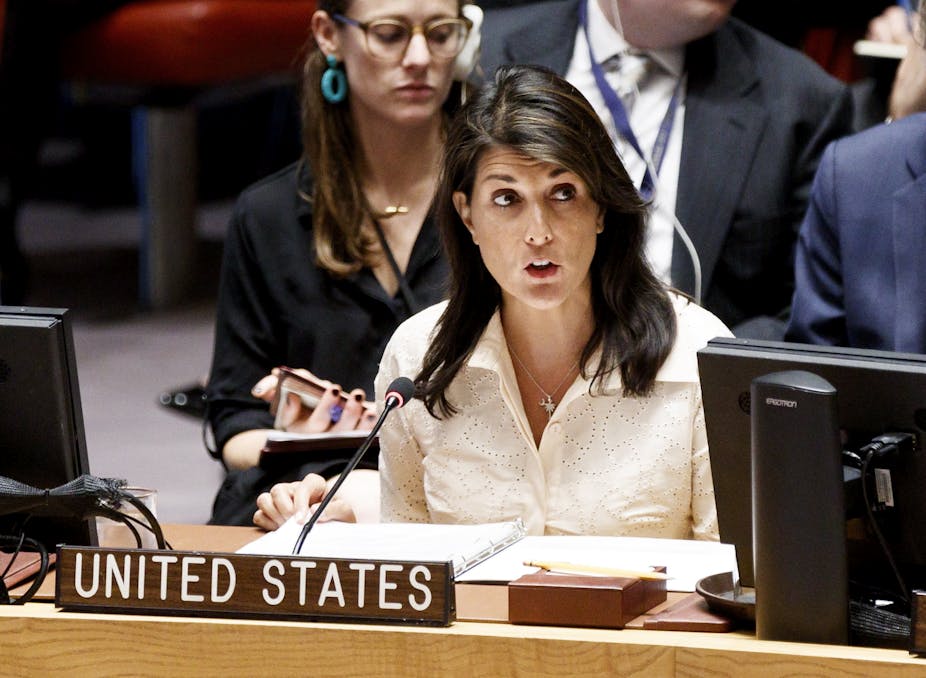
In doing so, they claimed the council was a roadblock to genuine global human rights protection. This move by the Trump administration has been anticipated for some time. In a sense, the elephant has left the room. But in doing so, the elephant has belled the cat on a number of serious issues regarding the HRC.
Is the United States’ decision sound in terms of international human rights protection? Is it one that Australia, an HRC member from 2018-2020, should follow?
The UN Human Rights Council was established in 2006 to replace the UN Commission on Human Rights, which ran from 1947 to 2006. By the time of its demise, the commission was criticised from all sides for being overly politicised.
The HRC’s 47 seats are divided between the five official UN regions in the following way: Africa (13); Asia (13); Latin America and the Caribbean (8); Western Europe and Other (7); Eastern Europe (6). The US (and Australia) is in the Western Europe and Other Group, known as WEOG.
One-third of the council is elected each year by the UN General Assembly, and members serve three-year terms. No member may serve more than two consecutive terms. A member can also be suspended from the council in a vote of two-thirds of the UN General Assembly: Libya was suspended in 2011 after Muammar Gaddafi’s crackdown on Arab Spring protesters and armed dissidents. No other member has been suspended.
The HRC meets three times a year for a total of around ten weeks. Its 38th session has just begun. It also meets for one-day special sessions at the initiative of one-third of its members. It has so far held 28 special sessions.
The HRC’s functions include the drafting and adoption of new human rights standards, as arose in its first year with the adoption of new treaties dealing with the rights of people with a disability and the scourge of enforced disappearances, as well as the adoption of the Declaration on the Rights of Indigenous Peoples in 2007.
The HRC also authorises independent investigations into particular human rights issues, either thematic (dealing with a human rights issue such as torture or LGBTI rights) or, more controversially, focused on a particular state. At the time of writing, there are 46 thematic mandates and 12 country mandates for these “special rapporteurs”.
It has one major new function compared to its predecessor, the Universal Periodic Review (“UPR”), whereby the human rights record of every UN member is reviewed by the HRC (as well as all other “observer” nations) every five years.
The US’ grievances against the HRC arise with regard to the human rights records of its members, and its politicised character. Its key red line concern seems to be the HRC’s “unconscionable” and “chronic bias” against Israel (to quote from this morning’s press conference). These issues are examined in turn below.
Membership criteria as they stand are very soft: candidates commit to the highest standards of human rights, and states should take into account a nominee’s human rights record when voting. Both of these rules are basically unenforceable.
Human rights criteria were mooted as prerequisites for membership when the HRC was created. However, the UN’s nearly 200 members could not agree on substantive criteria, as they have very different views on human rights. The US, for example, wanted only “democratic nations” to be eligible. Such a criterion would have led to debates over the meaning of “democracy”, and would seem to prioritise civil and political rights over economic, social and cultural ones. A focus on the implementation of economic and social rights might have led to the exclusion from eligibility of the US itself.
In any case, the “measurement” and respective ranking of human rights records across states is contentious. While comparisons between two states may lead to easy conclusions over which one is better or worse, it is a fraught exercise across the entirety of the UN membership.
Procedural criteria, such as a nation’s record on ratification of human rights treaties, would be more objective. However, such criteria might have led to the exclusion of the two most powerful countries in the world – the US and China, which have both failed to ratify crucial treaties. Realpolitik indicates that such an outcome is very unlikely.
In the press conference, Haley and Pompeo decried the presence of human rights abusers on the council, including China, Cuba, Venezuela and the Democratic Republic of the Congo. Consternation has also commonly been expressed over the common presence of Saudi Arabia and Russia on the HRC. Certainly, none of those states is remotely close to upholding the highest standards of human rights. Haley and Pompeo went further, claiming that these states manipulate the HRC to shield abusers and target blameless states in its resolutions.
So how bad is the HRC membership? Freedom House is a non-government organisation (NGO) that rates states as “free”, “partly free”, or “not free”, according to certain civil and political rights criteria, such as press freedom. While Freedom House’s methodology is assailable, I will use its rankings in assessing the current HRC, as the US itself historically uses them in making certain policy choices.
According to its 2018 rankings, the HRC of 2018 contains 21 “free” states, 12 “partly free”, and 14 “non-free”.
2018 is in fact one of the worst years in terms of the numbers of non-free HRC members. Nevertheless, free states always outnumber unfree states on the HRC, and can easily pass or block any resolution with the cooperation of just a few partly free states, if they vote together.
Any problem with “bad” resolutions on the HRC arises not from a preponderance of bad states, but from bloc voting within regions, like-minded groups and alliances.
Nevertheless, one can still fairly criticise the HRC for containing 14 non-free states. How do such states get elected?
A major problem for HRC elections is the issue of “clean slates”, whereby the number of candidates presented by a UN region correlates exactly to the number of seats it is scheduled to have elected at any particular time. For example, a region might put forward only two candidates for two seats. In such circumstances, the various candidates’ election seems to be a fait accompli. This phenomenon of clean slates was what Pompeo was referring to when he said that some states were elected by a rigged, collusive process.
Yet clean slates are a problem with all of the UN regions. The US itself was initially elected to the HRC on a clean slate in 2009. Australia was elected to the HRC on a WEOG clean slate in 2017, due to France’s belated withdrawal of its candidature.
Genuine elections do occur when open slates are presented by regions. This is how Russia was rejected in 2016, an unprecedented and humiliating blow that probably led to Russia’s failure to even stand for election in 2017. Other serious human rights abusers, such as Azerbaijan, Sri Lanka and Belarus, have failed to gain seats in similar circumstances.
Although states are elected on a regional basis, each member must still attain the majority of votes in the general assembly in order to be elected. There remains a possibility that an unacceptable candidate will simply not reach that threshold, even in the case of a clean slate.
That possibility has in the past led to the late replacement of controversial candidates, such as Syria’s replacement by Kuwait in 2011. This author eagerly awaits the day when the General Assembly finally flexes its muscle by refusing to elect an entire clean slate, thus depriving a region of a seat for a year. Such an outcome, in the absence of a relevant reform, is one way to dissuade future clean slates.
Finally, while states – particularly WEOG countries – might rail against the awful records of other members, those sentiments might not be reflected in their actual voting. After all, voting is by secret ballot. For example, given that Saudi Arabia is a key US geopolitical ally, it seems likely that the US (and even Australia) has voted for it on occasion. Certainly, the UK seems to have done so.
The US is correct that membership criteria should be revisited. Certain obstacles could be put in the way of the worst abusers, such as compulsory open slates, public voting (which might help prevent UK votes for Saudi Arabia), and a requirement that an eligible state must allow visits by all special rapporteurs.
As the HRC’s members are representatives of their governments, the HRC is a highly politicised body, like its predecessor. State governments are political constructs, so any institution made up of government representatives is inevitably political too.
Unfortunately, states will generally vote in favour of their national interests rather than human rights interests if the two should clash. Pompeo inadvertently admitted that this morning, when he praised Haley by saying that she always put “American interests first”.
Politicisation inevitably leads to the manifestation of political biases. The most notorious HRC bias concerns Israel. It seems that the US’ biggest complaint over the HRC, and the “red line” that has led to its withdrawal, is the HRC’s treatment of Israel.
The HRC is biased against Israel. It has aimed a disproportionate number of resolutions against that country. The HRC’s regular agenda of ten items contains only one item that focuses on a particular state, that state being Israel.
Its special rapporteur mandate stands until the occupation is over, so its renewal is automatic rather than the subject of periodic debate, as is the case with other mandates. The mandate-holder investigates its actions rather than those of the Palestinian authorities, whose abuses are largely ignored.
Israel has been the subject of more special sessions than any other state (more than a quarter of the 28 sessions). Having said that, it was the subject of the first three special sessions in 2006, and four of the first six, so the “hit rate” of 4 out of 22 is less stark since then.
Why is the HRC preoccupied with Israel? For a start, Israel has committed serious human rights abuses that are worthy of the HRC’s condemnation. It is absurd for Pompeo to have implicitly suggested that Israel has “committed no offence”. Any HRC bias does not mean that the substance of its criticisms is wrong. The recent killings of Palestinian protesters, targeted killings, illegal settlements, forced evictions, war crimes, the Gaza blockade and, most fundamentally, an ongoing occupation of Palestine that has lasted for more than 50 years, will cause critics to proliferate.
Nevertheless, that does not explain the HRC’s disproportionate attention to one country, given the scale of human rights abuses by other states that receive far less attention.
Ardent supporters of Israel often contend that the bias is driven by anti-Semitism. While such a motivation cannot be dismissed, there are other reasons that seem likely to be driving this phenomenon. The equation of “anti-Israel” with “anti-Semitic” is simplistic.
Israel has many enemies among UN states. Some have never accepted Israel’s right to exist, believing that it was established illegitimately on Arab (Palestinian) land. Indeed, the Organisation of Islamic Cooperation was set up in 1969 to unite Muslim states after the 1967 war in which Israel seized the occupied territories, so opposition to Israel has been an article of faith since its inception. The OIC routinely brings as much diplomatic pressure to bear on Israel as possible. As OIC states straddle the two biggest UN groupings, Africa and Asia, they can rely on significant bloc solidarity for support in their initiatives.
The racial element, whereby the Jewish State of Israel illegally occupies lands populated by Arabs in the occupied territories, attracts the ire of developing states, which have historical grievances regarding racial oppression. Yet other instances of racial tension – such as the oppression of the Tibetans, the Kurds, the West Papuans, the Tamils or the Chechens – fail to attract the same HRC scrutiny.
One difference is that Israel’s occupation of the Palestinian Territories is not recognised as legitimate by any other state, unlike for example China’s sovereignty over Tibet or Indonesia’s sovereignty over West Papua.
Indeed, increasing numbers of states have diplomatically recognised the occupied territories as the State of Palestine, and the UN General Assembly voted in 2012 to recognise Palestine as a non-member state.
Occupation also allows states to feel safe in attacking Israel without being too hypocritical. While human rights abuses are sadly common, the status of “occupier” is rare. Indeed, Israel is sometimes seen as a remnant of colonialism, and its actions certainly breach the right of self-determination enshrined in the UN Charter.
However, Israel is not the only occupier. Morocco has long annexed the [Western Sahara], yet the global silence on that situation is deafening in comparison.
Israel is also seen as a surrogate for the West, particularly the US. Given that Israel is almost always defended within the UN by the US, and is often defended by much of WEOG, the question of “Israel-bashing” has become part of a greater North/South divide in the UN. Anti-American states such as Cuba, Venezuela, Ecuador and Russia see Israel as a US surrogate in the Middle East, and exploit the issue accordingly.
Bias against Israel is matched by biased displays of support for Israel by its allies, such as the US and Australia. For example, the US instinctively presumed that the recent border killings were justified. Past bombings of Gaza (in 2009 and 2012) have been blithely dismissed by Australia as an exercise of Israel’s right to self-defence. But a legitimate case of self-defence can still result in an illegal use of excessive, indiscriminate or unnecessary force.
Regardless of its causes, the HRC’s perceived bias against Israel is counterproductive. It provides Israel with a ready-made argument to reject even legitimate condemnation, thus providing cover for human rights abuses. Indeed, claims of bias (within and outside the UN) have become a dominant part of the Middle East narrative on both sides, detracting from a focus on the actions of the actual protagonists. It has facilitated Israel’s progressive disillusionment with and disengagement from the UN, and now, the disengagement of the US. It reduces the HRC’s credibility and opens it up to charges of hypocrisy. None of these outcomes is useful for those who sincerely wish for improvements in human rights for all in Israel and the Palestinian occupied territories.
Finally, the biggest problem with the focus on Israel is the corresponding lack of focus on other serious human rights situations. While it is impossible to demand or expect that a political body, or even an apolitical one, should achieve perfect balance in its human rights focuses, it is fair to expect that such focuses not be way out of balance.
Haley and Pompeo reassured us that the US will continue to play a leadership role in human rights, despite its withdrawal from the HRC. And certainly, the US’ role on the HRC was in many ways positive. For example, it took the lead in addressing impunity in Sri Lanka. The WEOG group suffers from some dysfunctionality on the part of EU states, which generally seek a common position. Strong non-EU voices are important in this regard.
Yet the US is as political as other players on the HRC. Just as some states instinctively oppose Israel, the US instinctively supports it. Neither position is principled. The US has also protected other allies, such as Bahrain.
Outside the HRC, US President Donald Trump is not a credible leader on human rights. He seems to have an affinity with leaders with horrible records, such as the Philippines’ Rodrigo Duterte. Most recently, he responded to comments about North Korea’s human rights record, which is possibly the worst in the world, by praising the “talented” Kim Jong-un.
And of course, the US has long had its own serious human rights problems, which are too numerous to mention, but which include torture and the highest proportion of incarceration in the world. Its recent decision to separate migrant children from their parents and intern them reflects its status as the only country in the world that has failed to ratify the Convention on the Rights of the Child.
Furthermore, it is nonsense for Pompeo to suggest that the HRC had sought to infringe on US sovereignty. This betrays a serious misunderstanding of the concept of sovereignty, indicating that it dictates immunity from criticism. It does not.
The US is correct to note there are major deficiencies in the current HRC. Is its response therefore the correct one? If so, that would seem to indicate that Australia should also quit the HRC. It is very unlikely that Australia will do so.
The HRC is the peak global intergovernmental human rights body, which may represent the world of today, warts and all. The battle for universal human rights observance will not be won by adopting an “us and them” mentality, which excludes significant numbers of countries in the world from “the human rights club”. Such a solution is more likely to lead to balkanised human rights discussions, and possible competing institutions inside and outside the UN.
The HRC must remain a forum where non-like-minded states, and civil society, can talk to each other, and occasionally cross divides to make important human rights decisions.
Furthermore, the HRC is meant to be a political body. Other parts of the UN human rights machinery are made up of independent human rights experts, and accordingly take a more impartial approach than the HRC. While their human rights findings are more credible, it also seems that states generally take their findings less seriously.
States tend to care more about what their peers think than what human rights experts might think. Hence, human rights would suffer in the absence of a relevant intergovernmental global body.
Despite its flaws, the HRC does make decisions that benefit human rights, even in the face of political lobbying by members with scurrilous motives. For example, a special rapporteur was appointed to investigate Iran (after the application of US pressure), and it remains in place, despite that influential country’s forceful efforts to dismantle the mandate. A special rapporteur on LGBTI rights was appointed in 2016, despite fierce opposition from the OIC and homophobic states, due to an alliance of developed and developing states, and civil society.
The HRC will continue to be an imperfect institution for as long as the UN is made up of states with imperfect human rights records. However, the council still can and must be improved.
But the worst way to achieve that goal is by just walking away.
Sarah Joseph, Professor, Director, Castan Centre for Human Rights Law, Monash University
This article was originally published on The Conversation. Read the original article.
The most dangerous man in history might not be who you think it is. Not Caligula, Pinochet, or Ivan the Terrible. Not Hitler.
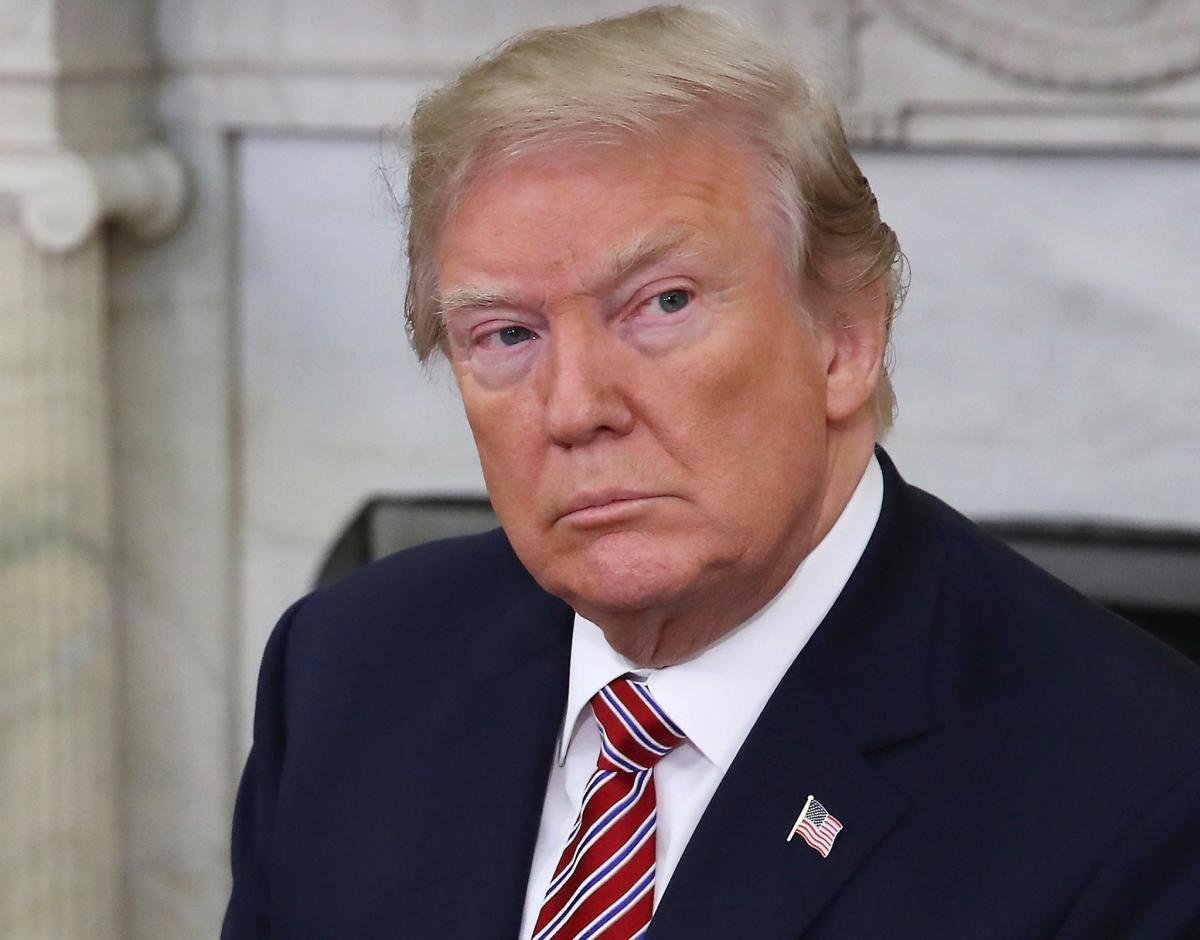
Trump is dangerous for many reasons. He has no moral compass. He has no ideology, which means he has no limits. Most of those throughout history who were evil had a world view that would limit them. Trump has no world view – no concept of history.
There is an even more serious problem with Trump. His recent actions are evidence that he lacks the important ability to connect the dots. His failure to foresee how his actions would cause the humanitarian crisis on the border is reason for great concern. He does not understand ‘cause and effect’. He is unpredictable. He has no limits. His intent was to cause the most pain to the largest number of refugees – including children and babies. He failed to learn from history that there will be ‘Blowback’.
Consider this – Trump has control of the largest stockpile of nuclear weapons in existence. If he is angry some night, is there anyone who will prevent him from accessing the nuclear ‘football’ ? Has he already made plans to go to Raven Rock? No one knows. https://www.npr.org/2018/06/22/622515587/in-the-event-of-attack-heres-how-the-government-plans-to-save-itself
Trump is dangerous, but he is not the most dangerous man in history. If Clinton had won the election things would be different – but maybe they would not be any better. Maybe right now we would be in the middle of WW3 with Russia.
Even considering all the facts – Trump is not the most dangerous person on the planet. The greatest danger on the planet is the apathetic US voter. Voters who continue to vote D/R, election after election and expect a different result are the real danger. The most dangerous man in history is the man who casts an uninformed vote and fails to understand the consequences.
Rosemarie Jackowski, Bennington, Vermont
dissent@sover.net
Jackowski is a Peace Activist and author of “Banned in Vermont”.
Courtesy: https://countercurrents.org
Join our mailing list to get the latest human rights news that matters, straight to your mailbox.
Join our mailing list to get the latest human rights news that matters, straight to your mailbox.