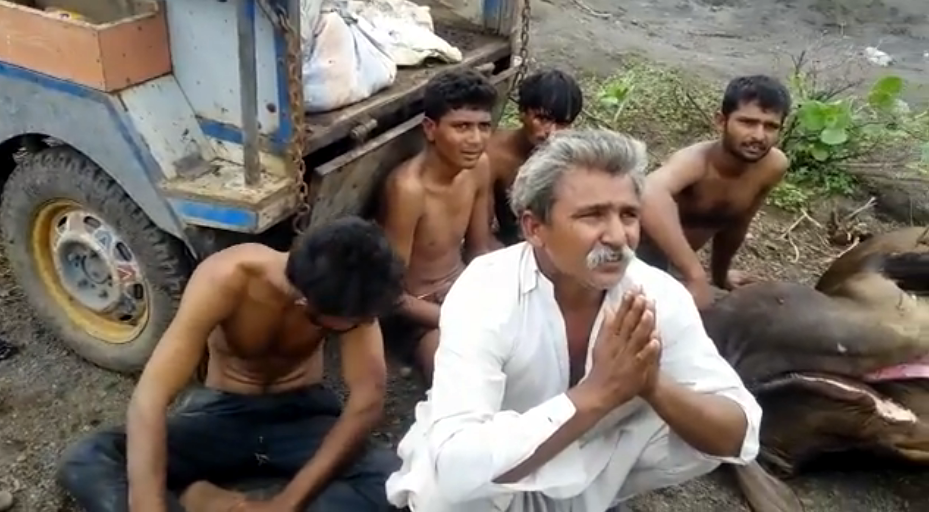
Urmilesh discusses how Sangh’s ideology is dangerous to the country.
Interview with Urmilesh
Courtesy: Newsclick.in
SPOILER ALERT: If you have not seen Raazi, please don’t read this review because it contains spoilers.
Rabindranath Tagore, the composer of the poems that serve as the national anthems of India and Bangladesh, wrote an essay on nationalism in which he asserted, “it is my conviction that my countrymen will gain truly their India by fighting against that education which teaches them that a country is greater than the ideals of humanity.” In a letter to a friend, he wrote, “I will not buy glass for the price of diamonds and I will never allow patriotism to triumph over humanity as long as I live.”
My concern, as I watched Meghna Gulzar’s Raazi, was about how the film handles its central tension – between the values of humanity and patriotism.
The plot is, by now, well known: in 1971, with the Bangladesh war impending, the film’s protagonist Sehmat is approached by her father to take his place as an Indian spy who enjoys the confidence of the Pakistani military establishment. She agrees to the unusual arrangement: where she would be married to a Pakistani army officer Iqbal, who is himself the youngest son of a senior Pakistani army officer. The film follows this plotline to depart from the usual jingoism and demonization of Pakistan that usually marks spy thrillers. The Pakistanis in the film are humane, gentle, and upright, and the relationship between Sehmat and her husband Iqbal is tender and loving. Inevitably, then, the viewer finds it unusually difficult to empathise one-sidedly with the protagonist when she murders the family retainer who discovers that she is a spy, and then, to cover up that murder, cold-bloodedly follows orders from the Indian intelligence establishment and murders her brother-in-law who is on the verge of discovering the truth.
The viewer, like the protagonist herself, is torn with feelings of remorse for having caused such pain to her loving in-laws. She has sleepless nights, is haunted by the memory of the family retainer in her dreams, and is racked with sobs over and over at having had to kill her brother-in-law.
This tension is written into the script early on. During training, when Sehmat is taught by the Indian intelligence agent how to use a poison to ‘remove someone from the way’, she asks, ‘Remove someone? You mean kill someone?’ He responds, ‘Any problem?’ and she replies, ‘Shouldn’t I have a problem?’
The film disappoints in its resolution of this tension, because it falls short of courage. Instead of exploring the full moral and ethical implications of espionage and war, it falls back on formula: the reassuring idea that decent people of every country must inevitably jeopardise and betray every loving relationship (father-daughter, husband-wife) to obey the imperatives of espionage and war. Other commentators have already remarked on the fact that the film inverts the patriarchal notion that a woman, once married, takes on the identity and loyalties of her husband’s family: but is her father’s assumption that he has a right to use his daughter as a spy any less patriarchal? Sehmat answers her father’s doubts on this count by asking, why then do we send sons into war? That, indeed, is the profound question. But the film, after teetering on the brink of asking why war and espionage and its terrible human costs are inevitable – draws back from really looking into the abyss and facing the answers. It stops short of questioning the inevitability of wars that require the sacrifice of sons and daughters. It stops just short of asking hard questions about the ethical obligations of soldiers and spies in battle: should soldiers/spies follow orders to endanger or kill civilians and children and console themselves that such collateral damage is inevitable and permissible? This question is a serious one, that the world has made an attempt at answering. The Geneva Convention, for instance, that soldiers have “the right and duty not to obey” any order that involves violation of the Convention, for instance through custodial executions or forced disappearances. The film ‘The Reader’ explores the issue of the moral obligation of guards at a Nazi concentration camp to disobey orders they knew to be immoral. But Raazi turns away from these questions that stare it in the face.
The film has enough of tension between the impulses of humanity and patriotism to be extremely disturbing, however. Sehmat’s anger at her handler for ordering the killing of Iqbal (and the woman the handler thinks is Sehmat) is not assuaged by his answer, that “Many innocents are killed in war. In a war, nothing else matters but the war. Not you, not I, just the war.” She draws away, shaking her head tearfully and saying, “I can’t understand this world of yours – where there is no respect either for relationships or for life. I want to get out of this before I become completely like you. I want to go home.” Later, when she realises she is pregnant, she tells her mother, “I won’t abort Iqbal’s child. I can’t commit another murder.” The film also hints at the lasting mental trauma of the acts of violence and betrayal Sehmat committed: she is shown in an unknown bare room that could possibly be a mental asylum.
Were these acts of violence really needed by India? Did India really need to help ‘break off a piece of Pakistan’ (the phrase used by the Indian military officer in his speech in the opening shots of the film)? Whether we are Pakistani or Indian, must we not ask ourselves why our rulers demand that we sacrifice our humanity at the altar of ‘patriotic’ wars? Must we not seek to redefine love for our country in a way that makes it compatible with peace in the world?
The Pakistani army officers, shown laughing at Bangladesh’s demand for independence from Pakistan, point out that ‘mukti’ in the name Mukti Bahini refers to ‘azaadi’ (freedom). That, again, is a tantalising reminder of the cries of azaadi in Kashmir. In a film which showcases a Kashmiri woman as a postergirl of Indian patriotism, this scene could, possibly, serve to subtly nudge the discerning viewer to ask why India enabled Bangladesh’s azaadi from Pakistan but brands it intolerable even to give a sympathetic ear to the cry for azaadi for Kashmir.
Unfortunately, though, the film resolves this tension with the anodyne conclusion that country is, indeed, greater than the ideals of humanity: Sehmat’s and Iqbal’s son ends up as an officer in the Indian armed forces, and while the forces are encouraged to remember the human costs of war, the implication is that these consequences are tragic but inevitable. “Ours not to reason why, ours but to do or die” – or kill, as it may be – this is the message the viewer is left with. I suspect, though, that the discomforts the film generates are too strong to be appeased with this message. This is a spy film, a war film, after all, that leaves you recalling the tragedy of the death of the ‘enemy’ soldier Iqbal for hours after you leave the hall. This is a film that has no antagonist, no villain whose downfall we are able to contemplate with satisfaction. You could imagine a ‘Strange Meeting’ between Sehmat and Iqbal, in which the latter tells the former, “I am the enemy you killed, my friend” – in the words of the great anti-war poem by Wilfred Owen, Strange Meeting.
As I write about Raazi, I recalled an exchange from the last few pages of Umberto Eco’s The Name of the Rose set in an abbey in medieval Europe. Adso, the acolyte, asks Brother William
Isn’t affirming God’s absolute omnipotence and His absolute freedom with regard to His own choices tantamount to demonstrating that God does not exist?
What follows is this:
William looked at me without betraying any feeling in his features, and he said, “How could a learned man go on communicating his learning if he answered yes to your question?”
I did not understand the meaning of his words. “Do you mean,” I asked, “that there would be no possible and communicable learning any more if the very criterion of truth were lacking, or do you mean you could no longer communicate what you know because others would not allow you to?”
I wonder if, in our country today, questions about the human costs, ethical implications, and necessity of war and espionage can only be raised while genuflecting to the idea that patriotism must trump humanity. If so, we have moved backwards from the times of Rabindranath Tagore, who even as an anti-colonial freedom struggle was raging, could assert that humanity was greater than country – without being subjected to hateful abuse branding him ‘anti-national’.
Kavita Krishnan is Secretary, AIPWA, and Politburo member of the CPI(ML)
Courtesy: kafila.online
The Supreme Court on Friday issued notices to the Union Government as well as the state governments of Assam and Meghalaya in furtherance of a habeas corpus petition filed by Kaushik Phukan, son of missing United Liberation Front of Asom (Independent) [ULFA(I)] negotiator Rebati Phukan. According to the petitioners, Rebati Phukan had gone missing when he failed to return from his morning walk in Guwahati on April 22. After protests broke out in different parts of the state, the state government initiated a CID investigation. However, later reports and audio messages from Paresh Baruah claimed that Phukan had been abducted by state agencies and was being kept in Meghalaya.
When the vacation bench asked the petitioners why they did not approach the High Court of Gauhati, they said that the reason is the reports and statements issued by Paresh Baruah pointing towards the possible involvement of intelligence agencies. This, they alleged, would render any investigation carried out by the CID irrelevant.
Rebati Phukan was a childhood friend of ULFA(I) Chief Paresh Baruah. Though he had never had any involvement with the Liberation Front, he had been approached by Indian intelligence agencies to convince the rebel leader to enter talks with the government. Phukan had reportedly been coordinating with R. N. Ravi, the Indo-Naga interlocutor, over bringing Baruah for talks.
Baruah has denied any involvement in Phukan’s disappearance and the family appears to trust Baruah’s statements. On the other hand, the role of the intelligence agencies in his disappearance appears strange considering that if Baruah were to enter negotiations with the government, ULFA’s armed movement would be finished. On the other hand, Baruah’s demand that sovereignty should be one of the options to be discussed is not palatable to the Indian State. Thus, keeping him away could enable the government to resolve the matter with the Arabinda Rajkhowa-led faction, while putting Baruah on the back foot in terms of manpower and movement.
Image Coutesy: Live Law In

Image: George Osborne arriving at the Evening Standard offices. Credit: Victoria Jones/PA Images, all rights reserved
London’s Evening Standard newspaper, edited by the former chancellor George Osborne, has agreed a £3 million deal with six leading commercial companies, including Google and Uber, promising them “money-can’t-buy” positive news and “favourable” comment coverage, openDemocracy can reveal.
The project, called London 2020, is being directed by Osborne. It effectively sweeps away the conventional ethical divide between news and advertising inside the Standard – and is set to include “favourable” news coverage of the firms involved, with readers unable to differentiate between “news” that is paid-for and other commercially-branded content.
Leading companies, most operating global businesses, were given detailed sales presentations by Evening Standard executives at the newspaper’s west London offices in an effort to sign them up to the lucrative deal.
Among those that have paid half a million pounds each to be involved are international taxi-app firm Uber, which is facing an imminent court appeal against the decision to cancel its licence to operate in London. The Evening Standard has previously come under fire for not declaring Osborne’s £650,000-a-year part time job with the fund managers BlackRock, who hold a £500mstake in Uber.
The global tech giant, Google, still recovering from reputational damage over its low UK tax bills and criticism over its close relationship to the Cameron-Osborne government, has also signed up.
Some companies, including Starbucks, walked away from the Evening Standard’s pitch, rejecting the offer of paying to boost their reputations through tailored news and comment.
London 2020 is scheduled to start on June 5. Unbranded news stories, expected to be written by staff reporters – but paid for by the new commercial “partners” as part of the 2020 deal – have already been planned for inclusion in the paper’s news pages within a week of the project’s launch.
The London Evening Standard has a circulation of close to 900,000 and distributes more copies within a two-mile radius of Westminster than the Times does across the UK nationally. Many London commuters, who pick up their free copy of the Standard at underground and rail stations, will be unaware that they will be reading paid-for news coverage that is part of a wider commercial deal.
An increasing number of British newspapers often carry “native advertising”, essentially paid-for commercials designed to look like independent editorial articles.
Although the 2020 campaigns will involve branded, native and advertorial pages, along with public debates hosted by the Standard, the six partners have also been promised the Standard will carry “money-can’t-buy” positive news and “favourable” comment pieces that will appear to readers as routine, independently written editorial.
By the established industry definition of “news” – which makes or breaks a newspaper’s integrity and its editor’s reputation – a commercial pay-off is supposed to play no part.
One Starbucks senior executive, who asked not to be named, told openDemocracy: “Buying positive news coverage is PR death…something you might do in Saudi Arabia, but not here. This wasn’t right for us. We do engage in advertorial [a hybrid mix of advertising and editorial] but that’s just marketing. We don’t need to buy our reputation.”
A formal statement from Starbucks confirmed that the company “had met with ESI and opted not to move forward with the project”.
A spokesman for ESI Media said that the “allegations about the Evening Standard are baseless and wrong.”
“We would never offer ‘positive news’ coverage and ‘favourable’ comment as part of a commercial deal. The Evening Standard’s editorial integrity and independence is always at the heart of everything we do and is beyond question. That’s why we have such a big and loyal readership.
“No commercial agreement would ever include ‘favourable’ news coverage. Like all British newspapers, the Evening Standard has valued commercial partners and works with them on specific campaigns for the benefit of our readers. Indeed, editorial independence is and remains guaranteed in the contracts we sign.”
openDemocracy contacted Uber and Google for their comments on the London 2020 project. At the time of publishing, no response had been received from either.
Uber’s involvement offers further conflicts-of-interest for George Osborne. The world’s largest fund manager, BlackRock, pays Osborne £650,000 a year for a one-day-a-week role as an adviser. BlackRock also has an investment stake in Uber worth £500m.
Image: Twitter/Fair use
Google’s decision to involve itself in this paid-for news deal will also raise eyebrows, given the objectives of its Digital News Initiative in Europe. The DNI has a budget of €150 million over the next three years. Google have stated their aim is to “combat misinformation and disinformation” and “help consumers distinguish fact from fiction online”.
London 2020 involves six “themed projects” running for two years. These include politicised initiatives on clean air, plastic pollution, schools and workplace tech and a project designed to address London’s housing crisis. The six 2020 “partners” have each paid half a million pounds to head projects that will be sold to Standard readers as “improving London for the benefit of all.”
In language lifted directly from Osborne’s years as head of the UK Treasury in David Cameron’s government, the project was presented to potential partners as aiming to highlight London as an “innovative and economic powerhouse” which is “fit for the future”.
The paid-for campaigns will conclude close to the date of the next London mayoral elections in 2020. Partners have been promised the Standard will be “dedicated to delivering” the aims of the six projects over the next two years.
As part of the sales pitch at the Evening Standard’s West London offices, would-be partners were told to expect campaigns that will “generate numerous news stories, comment pieces and high-profile backers”.
One executive with knowledge of the project said that the paying partners were told that their company’s own planned communications and marketing strategies could be coordinated with the Standard’s news coverage. The Standard would trail positive “news” from the six 2020 partners, with other news organisations and media outlets expected to follow.

Image: Presentation given by Evening Standard executives promising companies “money-can’t-buy” news and comment stories
Another executive was told the “money-can’t-buy” campaigns in the Standard aimed to create “news that will make news, but news that comes with a positive message.” According to one insider: “What was being offered was clear – theatrically constructed news, showing everything good being done.”
“What was being offered was clear – theatrically constructed news, showing everything good being done.”
Uber, for its half-million fee, will be given the branded lead role in the “clean air project” which is supposed to highlight the benefits of “cleaner transport” and of turning London “electric” by 2020.
Starbucks was offered the “plastic pollution project” which claims it will be “lobbying to sharply reduce London’s single-use plastic consumption.” The coffee company refused to sign up, telling Standard executives they already had their own plans.
Google’s fee will cover parts of the schools and work tech projects. Both involve the promised promotion of digital skills and the development of a “network of digital training hubs.”
For their £3 million the partners have also been promised a special monthly print section themed to individual projects; a “bespoke” social media strategy including readers polls; and public debates, exhibitions and large-scale events organised by the Standard.
The deal is also set to include “specially created wraps”, where the front and back pages of the newspaper become a large showcase advert, along with special “native advertising” that matches the form and design of the Standard’s editorial pages.
Last week all the department heads in the Standard, including the news and comment editors, were given their first sight of the London 2020 project. Until then Osborne had confined the project to a small core team.
Earlier this year openDemocracy exposed a similar paid-for deal at the Evening Standard involving the Swiss bio-chem and agriculture company, Syngenta. Positive news coverage and skewed public debates were part of the arrangement with the commercial division of the Standard, ESI Media.
Staff news reporters were involved in the Syngenta coverage which included telling Standard readers how GM crops would help solve the world’s food problems – without mentioning ESI’s lucrative deal with the GM-producing giant Syngenta.
ESI Media, owned by the Moscow-based oligarch, Alexander Lebedev and run in London by his son Evgeny, also governs the UK’s online Independent newspaper, which is located in the same Kensington office as the Standard.
The group commercial director of ESI, Jon O’Donnell, has previously said ESI no longer sees itself as just involved in advertising, but was now a “media business”. O’Donnell has also said the once “strict divide between the so-called ‘church and state’ [editorial and advertising] was doing more harm than good.”
Details of London 2020 and Osborne’s lead role in driving the project has brought criticism from leading media commentators and industry figures.
The journalist and broadcaster, Peter Oborne, currently associate editor of The Spectator and a political columnist with the Daily Mail, resigned as the chief political commentator of the Daily Telegraph in 2015. He alleged there was an unscrupulous relationship between the editorial and advertising departments at the Telegraph, which led to the suppression of negative stories about the global banking giant HSBC because it was a major source of revenue. His resignation letter was published by openDemocracy. The Telegraph dismissed Oborne’s claims.
Speaking in reaction to the London 2020 deal, he told openDemocracy: “George Orwell – who worked for the Evening Standard – once said that journalism is printing what someone else does not want printed, and everything else is public relations. George Osborne, as the Standard’s editor, appears to be ignoring the dangers Orwell pointed out and is converting PR into news – for a price.
“It’s essential that the commercial arm of any newspaper is kept at arm’s length from editorial. openDemocracy’s report suggests that news and PR have become hopelessly intertwined and confused at the Standard. George Osborne as editor has a great many questions to answer as to why he’s doing this – the main one being that the news and comment pages of his newspaper seem to be up for sale. If this is allowed, how can the integrity of this newspaper be maintained?”
General Secretary of the Licensed Taxi Drivers’ Association, Steve McNamara, accused the Standard of putting “its profits ahead of Londoners” by selling favourable coverage to Uber.
“Uber was stripped of its licence in London for failing to protect passengers in this city. Uber deliberately did not report serious crimes or conduct appropriate background checks on its drivers. Buying positive news coverage to try and influence the upcoming licence appeal hearing is the lowest of the low. If Uber is really sorry for its ‘mistakes’ it should use this money to clean up its operation and pay its drivers more.”
Amendments, 31 May 2018
A comment from an ESI media spokesperson was added to this story. It was received a day after the company made comments about London 2020 to other media. A formal statement from Starbucks has also been added.
This article was first published on Opendemocracy.net.

Bangladesh’s per capita income will breeze past India’s by 2020, provided the country’s economy continues to deliver market beating growth statistics.
In order to overtake its larger neighbour, Bangladesh will have to hold the GNI and GDP lead it has maintained over India in recent years.
Bangladesh has already outperformed India in social indicators such as child mortality rate, gender equality, and life expectancy.
According to data from the United Nations Conference on Trade and Development, Bangladesh’s per capita income went up by 39.11% to $1,355 in 2016 from $974 in 2013. Meanwhile, India’s per capita income moved up by 13.80% to $1,706 and Pakistan saw 20.62% growth to $1,462 over the same period.
In the three years from 2013-2016, Bangladesh’s gross domestic product (at current prices) in dollar terms grew at a compounded annual rate (CAGR) of 12.9%, more than double the 5.6% by India.
Bangladesh’s GDP has been showing steady growth in recent years. In the last fiscal year, Bangladesh witnessed a 7.28% growth in GDP, according to the Bangladesh Bureau of Statistics (BBS).
In the budget for FY2018-19, Bangladesh is reportedly going to set a GDP growth target of 7.5%.
Considering Bangladesh maintains the same growth gap in Gross National Income (GNI) and GDP with India, the country will overtake its larger neighbour in terms of per capita income by 2020, Centre for Policy Dialogue Research Director Khondaker Golam Moazzem told the Dhaka Tribune.
An advantage for Bangladesh is that its economy has been doing well in recent times and growth may remain the same, the economist said.
He added that while the future is bright for the country, the Bangladesh government should focus on employment generation to further increase per capita income.
He also urged the government to ensure a business friendly atmosphere in order to increase private sector investment .
The manufacturing industry, especially the country’s $28 billion RMG sector, has been one of the heaviest contributors to Bangladesh’s economic development.
The RMG sector has benefited from China shifting its business focus towards more hi-tech and value added products due to increases in labour costs. According to a World Bank study, a 1% apparel price increase in China would create 1.36% additional demand for Bangladeshi products.
Efforts to reduce child marriage, as well as increasing access to education, and financial inclusion for women, also played a role.
Furthermore, the completion of mega projects, such as the Padma Bridge and the Dhaka-Chittagong highway, in the coming years is also set to give Bangladesh’s economy a boost.
The government has also made it a priority to set up a number of Special Economic Zones across the country in an effort to boost investment.
A key driver of economic growth in Bangladesh is its young population and the government’s efforts to engage them in information technology. The government has already established a
Hi-Tech Park dedicated for the ICT sector.
This article was first published on Dhakatribune.com.

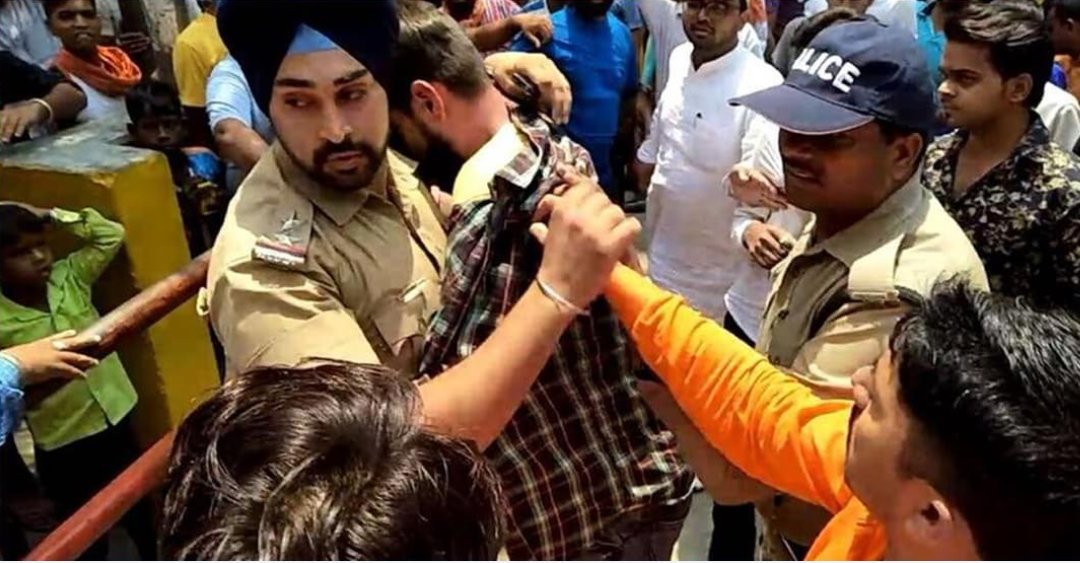
Police officer Gagan Deep Singh, who had saved a young Muslim boy from being lynched by a Hindutva mob, is facing death threats and has gone underground. His family members are also facing death threats from local RSS and BJP leaders. The reason: he defended “indecent behaviour”.
The police inspector in Ramnagar, Uttarakhand shot to fame after saving a Muslim boy from a lynch mob which attacked him for being with his Hindu girlfriend on the premises of a temple. Gagan Deep Singh is now sent on leave, say his colleagues. His seniors in the police department are not protecting them. The Senior Superintendent of Police of Nainital district says that he would like to first provide counseling to him before thinking of any action against Gagan Deep Singh, as if it was his fault.
No action has been taken against the Hindutva goons who were engaged in lynching or the BJP leaders who continue hounding his family. Instead of giving him an award for his bravery, this government wants to fix this officer who has been in service for only 7 months now. We are living in the worst times of our lives. Hope this too shall pass!
Mr Singh earned a lot of fans after the video of him saving the couple went viral on social media. The mob was alleging love jihad by the Muslim youth when the police officer intervened and saved him. In the process, he received several blows on him, too.
The local BJP politicians are also angry with the inspector. “It is not right for the Muslims to bring Hindu girls to the temple,” BJP MLA Rakesh Nainwal is quoted as saying. “They know that it is a temple and it is a pious place.” Rajkumar Thukral, another BJP MLA, is quoted as saying that it was an attempt to hurt the Hindu community’s religious feelings. He questioned the act, saying when Hindus do not go to mosques knowing it is not a place for them, why the Muslims come to the temple.
This article was first published on Countercurrents.org.
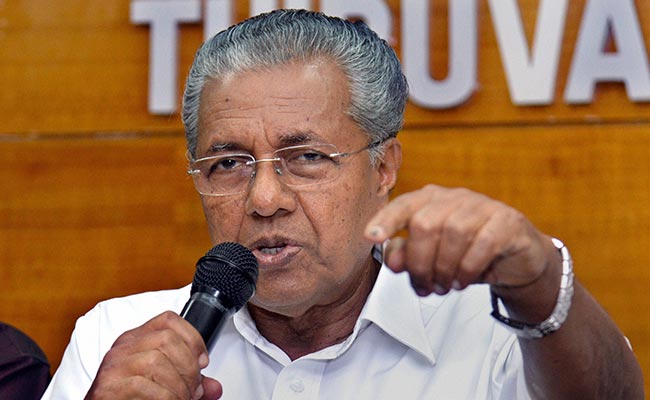
The Left Democratic Front of Kerala, headed by the Communist Party of India (Marxist) and led by Chief Minister Pinarayi Vijayan completed two years of rule in the state this year. On this occasion, the government released a Progress Report that comprehensively states the policies implemented, the timelines adhered to, and the advancements made since the government came into power. The Two Year Progress Report was written in a manner that addressed all 600 proposals forwarded in the manifesto. The first year’s progress report spoke about the 35 most important categories into which the 600 proposals were divided. This year’s report is written in comparison to the election manifesto of the LDF when it campaigned in 2016 to help people analyse the performance of the government in the past two years.
(Read the original Malayalam version of the report here)
Revival of the Public Sector
One of the foremost promises made during the election campaign was to revive the public sector that had been plundered by the former UPA government and the neo-liberal policies of the central government. Under the watch of this government, Travancore Titanium Products Ltd, Travancore Cochin Chemicals Ltd, Transformers And Electricals Kerala Limited, Traco cables, Steel & Industrial Forgings Limited, and The Kerala Minerals & Metals Ltd. became profitable. In the year 2015-16, before the LDF government came into power, net loss in the public sector was a whopping Rs.131.87 crores. By the end of the last financial year, however, the loss had come down to Rs.80.67 crores with 14 public sector units becoming profitable. As of now, the public sector is making a gross profit of Rs.106.91 crores and this is a huge leap forward in the short span of two years. In comparison to the last financial year, PSUs such as the KMML and the TTP have increased their profits by 6 and 3 times, respectively, reaching an all-time high. “It is the comprehensive intervention by the government to turn the PSUs profitable which led to the historic achievement of the Industries Department”, said AC Moideen, the Industries Minister. “The government adopted a professional approach for the renovation of the companies”, he further said.
Employment
The first point raised in LDF’s election manifesto was the creation of 25 lakh jobs for the people of Kerala within the period of 5 years. Out of this, 10 lakh jobs were to be created for the educated youth in the IT and Tourism sector, while an additional 15 lakh jobs were to be provided in the fields of agriculture, commerce, small scale industries, and construction. In this front, the government clearly stated in the report, that when it came into power, the office space available for the IT sector in Kerala was 1.7 crore sq. feet. The government, since then took measures and signed deals to increase the overall space available by another 1 crore sq. feet. This monumental increase would certainly help with being able to provide the 10 lakh jobs they had promised in the manifesto. By the end of the first year, around 2,13,745 jobs were already created in various fields excluding Tourism, Electronics and IT related sectors. Additionally, the projects such as Amballur Electronic Hardware, Light Engineering Park, Palakkad, Mega Food Park, Cherthala, Petrochemical Park, and Ernakulam are confirmed to create another 2 lakh jobs as they near completion this year.
Start-ups Sector
The promotion of start-up industries and allocation of funds for their support and incubation was a primary agenda in the manifesto. In the last two years, the government has analysed around 1300 start-up projects out of which 125 have received financial support ranging from packages of Rs.2 lakhs to Rs.15 lakhs per project. The start-up known as Genrobotics had earlier garnered international attention and laurels for developing the robot named BANDICOOT to clean manholes and to forever eliminate the inhumane practice of manual scavenging in India.
Labour Policy Changes
As per the new Kerala State Labour Policy, the revised minimum wage for all sectors is fixed at Rs.600 per day. This is the highest minimum wage rate in the entire country. The policy also paves way for the complete eradication of child labour in the country. The policy focuses on the issue of gender neutrality in work environment. In organizations where there are women workers, a ‘crèche cess’ will be collected and crèches will be started in association with the Social Justice Department. The policy envisages a pro-active intervention of the state to ensure proper lodging facilities while travelling, overtime remuneration, weekly leaves, rest intervals etc. for female labourers. This policy also extends its benefits to the large number of migrant workers in the state as well.
Education Sector
The manifesto proposes the setting up of 45,000 “high tech” classrooms in 4775 schools and orders for 60,250 laptops and 4,375 projectors for the same purpose have already been placed. Additionally, in 66 higher secondary public schools around the state, the project to revamp the vocational higher secondary curriculum to meet the national standards have begun. The state-wide teacher training programme has been instructed to include the need to inculcate and promote the talents and passions of all students in the fields of arts and sports in schools. During a time when the entire country is in a rat-race to prepare students to merely be tools for a corporate world, LDF-led Kerala is leading the way and showcasing the need for a more holistic approach to education and the need to promote co-curricular and extra-curricular activities while adhering to the high academic excellence the state has always managed to achieve.
An evaluation meeting presided over by Chief Minister Pinarayi Vijayan has decided to ensure at least 200 teaching days and 1000 teaching hours per year in the public schools of the State. The Education Rejuvenation Mission aims to raise 1000 schools to “international standards”. The very month that the Education Rejuvenation Mission began, the LDF government took over a government-aided school in Malaparamba in Kozhikode district, which its owner had tried to close down claiming that it was “uneconomical”. The move became symbolic of the efforts to protect and strengthen public education in the State. The previous Congress-led United Democratic Front (UDF) government had decided to close down the Malaparamba school on the basis of the request from its manager, who claimed that it is “unviable” for him to run the school. The Mission also lists out school libraries and laboratories that are to be modernised, and aims to create school campuses which are free of plastics, pesticides and intoxicants. Knowledge and skills to communicate in at least three languages is also to be ensured. The mission seeks to reduce dropout rates and give special attention to students belonging to backward and marginalised sections. The LDF government’s efforts to upgrade public education seem to be bearing fruit already. The academic year 2017-2018 saw an increase in the total number of students in government and government-aided schools. In Std. I alone, there was an increase of 5703 students in government schools and an increase of 6495 students in government-aided schools. In Std. V, there was an increase of 40,385 students in government and government-aided schools, while in Std. VIII, there was an increase of 30,083 students. This magnitude of increase had occurred after the gap of a decade.
Agricultural Sector
Kerala has been importing their vegetables from neighbouring states for a long time now. This is an outcome of the low level of importance given to food cultivation in the state as the millennials are increasingly moving towards the service sectors. However, the LDF government’s manifesto has given huge importance to revamping the agricultural sector with a special focus on the cultivation of vegetables within the state. Within the last two years, production of vegetables in the state has gone up by 4 lakh metric tonnes. Additionally, 63 lakh households have been given vegetable packets along with needed training in order to cultivate vegetables in their own backyards. Another major promise in the manifesto was the commencement of organic farming in 50,000 hectares of land in the state. Out of this, the area under organic farming has already crossed the 16,800 hectares mark in just two years. This project further went ahead and collected the fully organic vegetables for a high price from the farmers and distributed it under the brand of ‘Kerala Organic’. The Kerala government also provides the highest price to paddy farmers in the country. Paddy is procured for Rs.2,300 per quintal while the rest of the country sees promises from the government to procure paddy at Rs.1,550 per quintal while the actual procurement is even less at Rs.900-Rs 1,000 per quintal.
Health Sector
The government in its health policy has advocated assured free treatment of any kind to all children below the age of 18 in government hospitals. The Ardram mission envisages locally available preventive care through early intervention by the PHCs in the case of lifestyle diseases. The ASHA workers, who have been consistently ignored by the centre, will receive a hike of Rs.2000 each for their monthly allowance. The aim of the health policy states the increase of health expenditure from the current 0.6% to 5%, with a 1% increase each year to reduce the out-of-pocket expenditure of the residents. An IMA study has found that around 500 small hospitals (run by one or two doctors) were closed down in Kerala in the last 10 years with the advent of big corporate hospitals. To counter this trend, the policy envisages tax exemption for small private hospitals that provide cheap and affordable healthcare. The state plans on setting up public or co-operative drug production centres that can manufacture generic drugs to be sold at lower prices, and for this the current Rs.40 crores medicine production unit is being upgraded to a Rs.100 crores facility. Kerala already has the lowest infant and maternal mortality rates in the country and the policy aims to further bring it down by providing antenatal and neonatal services to the few communities such as in Palakkad and Wayanad that still do not have access to them. Kerala also made headlines by becoming the first state to extend their medical insurance scheme to all migrant workers in the state to the effect of Rs.15,000 coverage in government hospitals and Rs.2 lakhs to be claimed in case of accidental death at the workplace.
Law and Order
The top priority of the LDF government was to curb the violence against women and children in the state. The successful community policing programme, Janmaithry Stations is being extended to all police stations in the state for this. The government has introduced Pink Patrol in 6 cities and Pink Beat in other cities to ensure safety of women, and an amount of Rs.6 crores was allocated in the budget to create gender awareness and to provide women friendly spaces. Steps have been initiated to increase the total percentage of women in police force to 15%. At present, women constitute 6% of the total police force. It is proposed to be increased incrementally to 25%. For the first time in the history of the state, the government is starting a Women Police Battalion. 451 new posts are being created for the same. According to the National Crime Records Bureau data, Kerala has a high crime rate. But it doesn’t mean that the law and order of the state is vulnerable. Quite on the contrary, it means that more and more crimes are being reported since police stations have become accessible to people. Moreover, Kerala also has the distinction of being the state with the highest conviction rate. This is suggestive of the better capability of the police force to prove and charge crimes more efficiently in comparison to their counterparts in the rest of the country. The law and order department has effectively thwarted many attempts by anti-social and communal elements to disrupt the peace and harmony of the state during the past two years.
Apart from these monumental strides made by the LDF government in the last two years, the state has also been the lone fort in thwarting the communal politics of the BJP and the RSS. In the social front, Kerala became the first country to formulate a transgender policy and the government has introduced free sex-reassignment surgery for transgenders in all government hospitals. The Cultural department has organized around 6000 public meetings in celebration of the social reformist Sreenarayana Guru’s proclamation “I have no caste”. Government has also taken adequate steps to get permanent venue for the internationally acclaimed IIFK and Kochi-Muziris Biennale, which had become landmark cultural events of Kerala. iIncidentally, both events were conceived and instituted by previous LDF governments. The successful commencement of the Kochi Metro Rail is another feather in the hat of the government and the humanitarian concerns of the project also needs to be highlighted. The cleaning, parking, and the distribution of tickets will be supervised by the Kudumbashree with an estimated 80% of the Metro Rail workforce being women.
The Progress Report further states clear timelines for the completion of the other major and minor programmes forwarded in the manifesto.
This Progress Report comes with another resounding victory for the LDF as the CPM regained the Chengannur seat following Monday’s assembly by-poll with the LDF candidate Saji Cherian winning with a margin of 20,956 votes over the UDF candidate while the vote share of the BJP went down from last time. The People’s Alternative of Kerala is making massive strides in all fronts and continues down on the inclusive developmental path. The LDF election manifesto slogan of “A new Kerala, Secular, Corruption-Free and Developed” is thus living up to the expectations.
This article was first published on NewsClick.in.
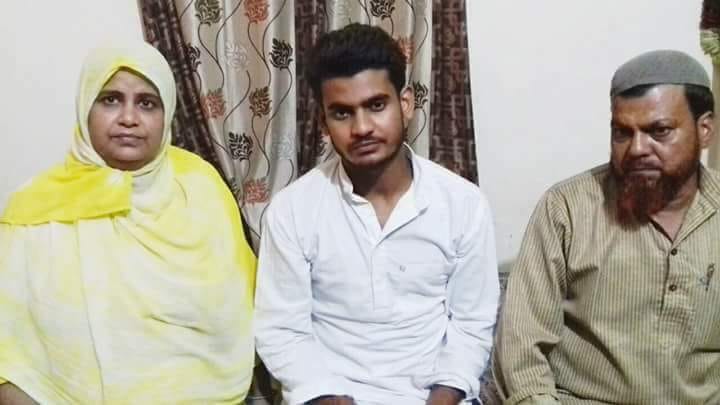
The district headquarters of Bihar’s Araria district is near Chandani Chowk. A short distance from the collectorate office is Azad Nagar – a Minority-dominated colony with a striking resemblance to a metropolitan Muslim ghetto – which falls under Ward Number 19 of Araria Municipal Council. Councilor Arshi Parween alias Lovely Nawab’s second son Adeeb Raza ‘Somi’ – an 18-year-old young fitness freak who appeared for class 12 Bihar board examination this year – was arrested along with two others for allegedly raising pro-Pakistan slogans during Rashtriya Janata Dal (RJD)’s victory rally in Araria Lok Sabha by-election on March 15.
Adeeb’s family is close to former union minister and RJD leader late Taslimuddin’s family. He describes himself as a non-political person. When he heard of RJD’s Sarfraz Alam’s victory in the polls, he couldn’t stop his joy, borrowed his mother’s green ‘dupatta’ and went out. Shahzad Alam, another accused was trying to do Facebook live. He asked Adeeb to confirm whether they were doing that right. He claims they raised a slogan ‘Kitnon kariyo baap-baap, Phir Bhi jeetiyo Lalten Chhaap’ (No matter how much you remember your father, lantern wins). He came home and went to bed; little did they know a moment of joy would come back to haunt him as a nightmare. A video of Sultan Azam ‘Banni’, Shahzad Alam and Adeeb raising pro-Pakistan slogan had gone viral on social media by that night and it was all over the news. Adeeb was scared and behind the bars by March 21. He was granted bail after 65 days on May 25. His next hearing is on June 18 and families of Shahzad and Sultan hope to get bail on the day.
Somi is second of three siblings; the elder brother manages a coaching institute in the city and younger sister is in school. Adeeb runs the family’s water supply business since his father was paralyzed two years ago. His mother extols ‘ek din mein gaadi chalaane seekh gya tha beta’ (my son learnt driving trolley truck just in a day). His father and uncle are proud that Somi took over the business without any delay and does not hesitate to deliver water cans himself to the customers. Before his arrest, the family used to deliver water cans to 150 homes and offices. But in his absence, they hired a staff but the number of customers has come down to 50. Legal procedures and treatment of Areeb’s father have financially deprived the family. Father Nawab admits they are under the debt of around Rs 5 lakh, while Sultan’s family has a debt of around Rs. 3 lakhs since after his arrest, their mobile recharge shop remains closed mostly.

Somi is multi-talented but confused about career decisions as any millennial stepping out of school would be. Spending 65 days in jail has cost him a lot. He was selected to play for his city in Bihar Cricket Association’s Hayman Trophy and missed the selections for Araria U-19 cricket team. He continued his love for cricket inside the jail and added playing volleyball to his extra-curricular skills. He couldn’t sit for Aligarh Muslim University’s medical entrance exam. He wanted to do modelling and try his luck in acting – his Instagram account is a testimony to that.
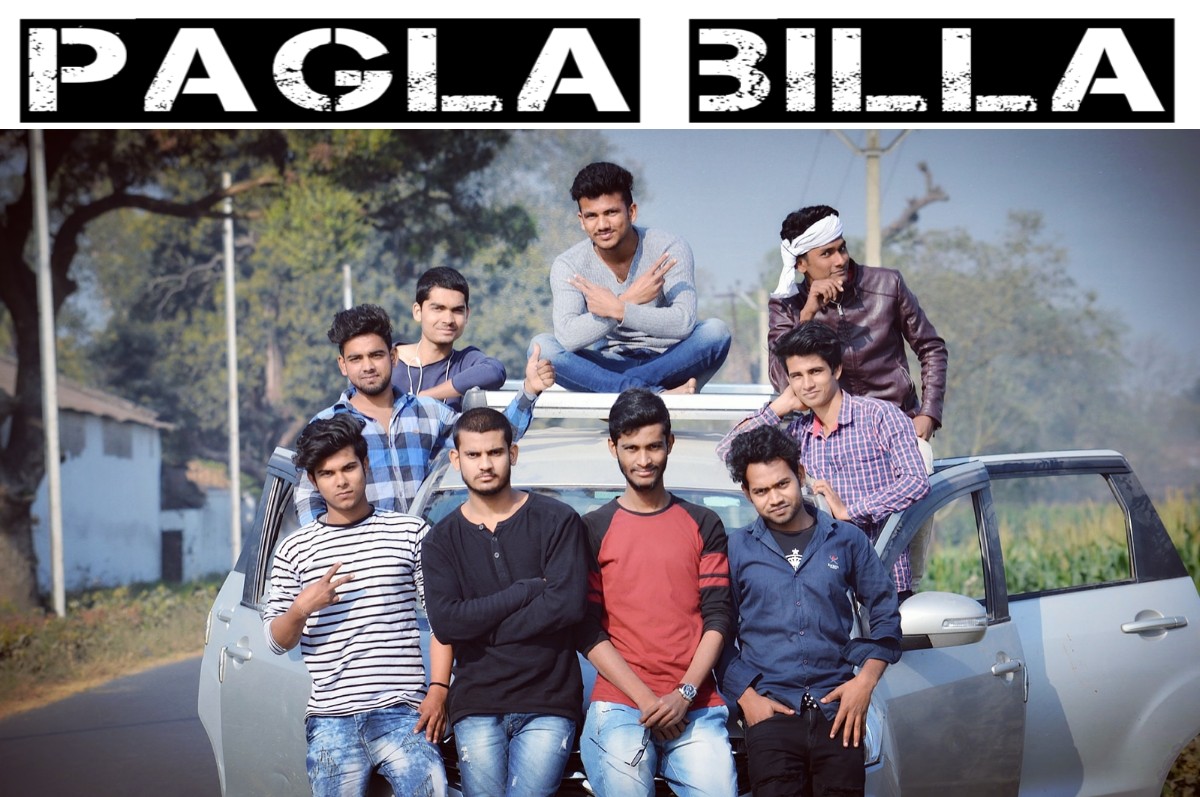
Along with his friends Masoom, Ahmad, Krishna and 8 others, Adeeb wanted to start an entertainment start-up owing to the success of their YouTube channel ‘Pagla Billa’, which is not available for public view now. They make music videos with the theme of harmony and brotherhood. In one of their videos ‘Yaara Teri Yaari ko,’ the group can be seen praying together in a temple and mosque. They were suggested by friends and relatives to delete the videos after the incident. Ahmad agrees ‘we were very scared; I left the town for many days’. Masoom who is the director and manages the channel differs saying ‘he was irritated by followers’ demand for more videos’. The group claims they have turned Araria into Hollywood – ‘now there are many YouTube channels making such videos, a group called ‘Bihari Billa’ copied our theme, luck favoured them and look their video has more than a million views.’ A hoarding hangs from the first building in Adeeb’s street asking people to subscribe to ‘Bihari Billa’.
He is unsure of the many career options he had thought of after what he went through. Now he wants to join the Indian Navy and his mother seconds that with a list of all virtues – from height to his personality. Parents are scared for Adeeb, they don’t allow him to go away from their eyes even for delivering water cans.
Araria MP Sarfraz Alam calls the video ‘fake’ but wants to wait for the forensic report and court procedure. However, Alam admits the three youngsters were punished for RJD’s victory in the election. Similarly, fact-checking website Alt News’ founder Pratik Sinha’s audio analysis raises many suspicions of the authenticity of the video, but he restrains from calling it ‘fake’ before ‘a thorough forensic analysis’.
Courtesy: Two Circles
Join our mailing list to get the latest human rights news that matters, straight to your mailbox.
© Sabrang | All Rights Reserved