223 Students In solidarity with students and faculty at JNU

The following statement has been signed by students and faculty from universities across the world. You may sign on by adding your name in the comments section.
In solidarity with the School of Arts and Aesthetics, JNU
We, the undersigned students and faculty members in art history, cinema studies, and other concerned academic departments across the world, are writing in protest against the recent removal of Prof. Kavita Singh from her position as Dean of the School of Arts and Aesthetics (SAA) at Jawaharlal Nehru University (JNU) in New Delhi. This represents a serious attack on academic freedom, a blatant disregard for due process, and a worrying precedent being set by the University’s Vice Chancellor to silence and repress reasoned, principled dissent and disagreement. As students and scholars who have learned a great deal from Prof. Singh’s scholarship and benefited from the cutting-edge research fostered at SAA, we stand in solidarity with its students and faculty as they strike to protect the school’s autonomy from the brazenly undemocratic acts being carried out by the current Vice Chancellor.
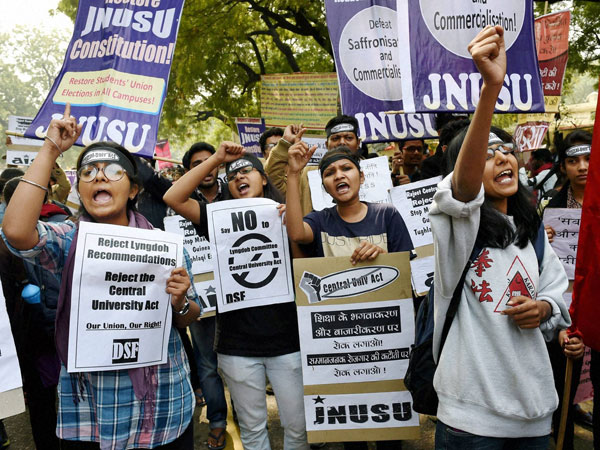
Recent administrative decisions taken under the VC of JNU are a matter of grave concern. Earlier this year, the administration came out with a ruling according to which M.A. and PhD students are required to mark their attendance in person at the university for more than half the academic year (approximately 250 times) even in years when they have no ongoing coursework. Since this new regulation blatantly disregards the nature and process of academic research and the autonomy of individuals enrolled in various programs, students and faculty members at JNU have been protesting against it in a peaceful and reasoned manner over the last month. In her capacity as Dean of SAA, Prof. Kavita Singh also protested the new regulation, which has been termed “arbitrary and unnecessary” by the JNU Teachers’ Association, by writing about it for various media outlets (see https://thewire.in/223494/fuss-attendance-view-jnu/ and https://scroll.in/article/868724/it-is-illegal-jnu-has-made-marking-attendance-mandatory-heres-why-we-are-refusing-to-do-so). In her accounts, Prof. Singh highlights the questionable circumstances under which the new regulations were introduced, framing them as part of a broader disregard for the integrity of the University’s rules. In what can only be described as a repressive measure meant to stifle opposition, the Vice Chancellor of JNU issued an order on March 15 to replace Prof. Singh and seven Chairpersons of various Schools and Departments who had also opposed the new regulation, as punishment for refusing to implement the new orders. Prof. Singh was replaced by a recently hired junior scholar who is still on probation and therefore has no choice but to comply with the dictates of the administration.
We stand with students and faculty members at JNU who have exercised their democratic right to protest the administration’s draconian measures. We appeal to the University administration to reinstate Prof. Singh and other faculty members who were summarily removed from their appointed positions, and to grant duly appointed faculty representatives greater autonomy in academic decision-making. As members of academic, research, and cultural institutions with deep respect and admiration for the work of our colleagues at JNU we understand that real scholarship can only be nurtured under conditions of academic freedom and integrity. We offer our strongest support, encouragement, and gratitude to the SAA and other departments at JNU that are fighting to uphold that freedom.
Signed,
1. Akshaya Tankha, Department of Art, University of Toronto
2. Kajri Jain, Departments of Visual Studies and Art History, University of Toronto
3. Erag Ramizi, Department of Slavic Languages and Literatures, University of Toronto
4. Radhika Mongia, Department of Sociology, York University, Toronto
5. Christiane Brosius, Heidelberg Centre for Transcultural Studies, University of Heidelberg
6. John Clark, Professor Emeritus, Art History, University of Sydney [former visiting Professor in SAA]
7. Bhaskar Sarkar, Chair, Film and Media Studies, UC Santa Barbara
8. Monica Juneja, Heidelberg Centre for Transcultural Studies, University of Heidelberg
9. Srirupa Roy, Centre for Modern Indian Studies, University of Göttingen
10. Saloni Mathur, Dept of Art History, University of California, Los Angeles
11. Karin Zitzewitz, Department of Art, Art History, and Design, Michigan State University
12. Rashmi Varma, Department of English and Comparative Literary Studies, University of Warwick
13. Letha Victor, Department of Anthropology, University of Toronto
14. Paula Chakravartty, Department of Media, Culture and Communication and the Gallatin School, New York University
15. Vasuki Nesiah, The Gallatin School, New York University
16. Marcus Verhagen, Sotheby’s Institute of Art, London
17. Ilan Kapoor, Faculty of Environmental Studies, York University, Toronto
18. Ajay Sinha, Art History and Film Studies, Mount Holyoke College
19. Francis Cody, Department of Anthropology/Asian Institute, University of Toronto
20. Bhavani Raman, Department of History, University of Toronto.
21. Jayeeta Sharma, Department of History/Historical & Cultural Studies, University of Toronto.
22. Brian Price, Department of Visual Studies, University of Toronto, Mississauga
23. Nilita Vachani, Tisch School of the Arts, New York University
24. Dipti Khera, Department of Art History and Institute of Fine Arts, New York University,
25. Sumathi Ramaswamy, Department of History, Duke University, Durham, NC, USA.
26. Anthony Gardner, Head of the Ruskin School of Art, University of Oxford, UK
27. Charles Musser, Professor of American Studies, Film and Media Studies, Yale University.
28. Meghan Sutherland, Department of Visual Studies & Cinema Studies, University of Toronto
29. Debashree Mukherjee, Assistant Professor of Cinema and Media Studies, MESAAS, Columbia University. Proud alum of JNU’s School of Arts & Aesthetics.
30. Divya Cherian, Assistant Professor, Department of History, Princeton University
31. Rosie Thomas, Professor of Film, Centre for Research and Education in Arts and Media, University of Westminster.
32. May Adadol Ingawanij, Reader and Co-director, Centre for Research and Education in Arts and Media, University of Westminster
33. Nitin Govil, Cinema & Media Studies, School of Cinematic Arts, University of Southern California
34. Tula Goenka, Department of Television, Radio & Film, Syracuse University
35. Manishita Dass, Department of Media Arts, Royal Holloway, University of London, UK
36. Corey K. Creekmur, Department of Cinematic Arts, University of Iowa, USA
37. Danielle Taschereau Mamers, Department of Political Science, University of Toronto
38. Anupama Kapse, School of Film and Television, Loyola Marymount University
39. Brian Larkin, Director of the Institute for African Studies, Columbia University. Professor of Anthropology. Barnard College, Columbia University
40. Tejaswini Ganti, Department of Anthropology, New York University
41. Malavika Kasturi, Department of History, University of Toronto
42. Ying Qian, Department of East Asian Languages and Cultures, Columbia University
43. Ranita Chatterjee, Department of English and Film, University of Exeter, UK
44. Debjani Dutta, Cinema & Media Studies, School of Cinematic Arts, University of Southern California
45. Brinda Kumar, Assistant Curator, The Metropolitan Museum of Art, New York
46. Ravindran Sriramachandran, Department of Sociology/ Anthropology, Ashoka University.
47. Darshana Sreedhar Mini, Cinema & Media Studies, University of Southern California
48. Anirban Kapil Baishya, Cinema & Media Studies, University of Southern California
49. Kuhu Tanvir, Film and Media Studies Program, English Department, University of Pittsburgh (JNU M.Phil Cinema Studies alum, 2012)
50. Sudhir Mahadevan, Comparative Literature, Cinema and Media, University of Washington, Seattle
51. Priya Jaikumar, Cinema and Media Studies, School of Cinematic Arts, University of Southern California
52. Neepa Majumdar, Film and Media Studies Program, University of Pittsburgh
53. Sonal Khullar, Art History, University of Washington
54. Avinoam Shalem, Art History and Archaeology, Columbia University NY
55. Sameena Siddiqui, Art History, Visual Art and Theory, University of British Columbia, Vancouver.
56. Pavitra Sundar, Department of Literature and Creative Writing, Hamilton College
57. Sanghita Sen, Department of Film Studies, University of St Andrews
58. Aarti Sethi, Postdoctoral Fellow, Brown University
59. Nayan Shah, American Studies & Ethnicity and History, University of Southern California
60. Usha Iyer, Assistant Professor, Film and Media Studies, Dept of Art and Art History, Stanford University (Former guest faculty at JNU’s School of Arts & Aesthetics)
61. Priyadarshini Shanker, Department of Cinema Studies, New York University.
62. Nicole Wolf, Senior Lecturer, Goldsmiths, University of London
63. Monika Mehta, Department of English, SUNY Binghamton
64. Shane Denson, Assistant Professor of Film & Media Studies, Department of Art & Art History, Stanford University
65. Lalit Vachani, Centre for Modern Indian Studies, University of Göttingen
66. Suvir Kaul, A M Rosenthal Professor of English, University of Pennsylvania
67. Ritika Kaushik, Cinema and Media Studies, University of Chicago
68. Susan Z. Andrade, Associate Professor, English, University of Pittsburgh, Pennsylvania
69. Sean Batton, Cinema and Media Studies, University of Chicago
70. Sandeep Mertia, Department of Media, Culture, and Communication, New York University
71. Sean Pue, Department of Linguistics and Languages, Michigan State University
72. Rakesh Sengupta, Department of South Asia, SOAS
73. Aditi Chandra, Global Arts Studies Program, University of California-Merced
74. Srdan Keca, Assistant Professor of Documentary Film and Video, Department of Art & Art History, Stanford University
75. Abhishek kaicker, Department of History, UC Berkeley
76. Allison Busch, Associate Professor, Middle Eastern, South Asian, and African Studies, Columbia University
77. Rohan D’Souza, Graduate School of Asian and African Area Studies, Kyoto University
78. Sarandha Jain, Graduate Fellow, Anthropology Department, Columbia University.
79. Rachit Anand, Department of Comparative Literature, State University of New York at Buffalo.
80. Elizabeth Gellis, Graduate Assistant, Department of English, Purdue University
81. Rajgopal Saikumar, Department of English, New York University
82. Bishnupriya Ghosh, Global Studies, UC Santa Barbara
83. Rajesh Mahapatra, Editor at Large, Hindustan Times, JNU (CESP) alum
84. Nitasha Dhillon, MTL Collective and PhD Candidate Department of Media Studies, State University of New York at Buffalo
85. Gaurav Mittal, Department of Geography, National University of Singapore
86. Sohini Chattopadhyay, Department of History, Columbia University
87. Shaunna Rodrigues, Department of Middle Eastern, South Asian and African Studies, Columbia University
88. Deepali Dewan, Dept of Art & Culture, Royal Ontario Museum and Dept of Art, University of Toronto
89. Rajarshi Sengupta, Art History, University of British Columbia, Vancouver
90. Cristin McKnight Sethi, Dept. of Art History, George Washington University
91. Finbarr Barry Flood, Department of Art History and Institute of Fine Arts, New York University.
92. Daniel Ehnbom, Lindner Center for Art History, McIntire Department of Art, The University of Virginia, Charlottesville.
93. Sayori Ghoshal, Department of Middle Eastern, South Asian and African Studies (MESAAS), Columbia University
94. Derek Dunlop, History of Art, University of Toronto.
95. Padmini Ray Murray, Digital Humanities, Srishti Institute of Art, Design and Technology.
96. Iftikhar Dadi, Department of History of Art, Cornell University
97. Sangita Gopal, Department of Cinema, University of Oregon
98. Atreyee Gupta, Department of History of Art, University of California, Berkeley
99. Claudine Bautze-Picron, CNRS, Paris (National Centre of Scientific Research)
100. Devi Vijay, Indian Institute of Management Calcutta; Fulbright Fellow at Mailman School of Public Health Columbia University
101. Isabella Nardi, independent researcher, Italy
102. Kirtana Thangavelu, Department of Fine Arts, S N School of Arts and Communication, University of Hyderabad
103. Mark Betz, Department of Film Studies, King’s College London (former Visiting Professor in SAA, 2011 and 2017)
104. Adam Hardy, PRASADA, Welsh School of Architecture, Cardiff University
105. Santhosh Kr. Sakhinala, Research Scholar, Centre for Studies in Social Sciences Calcutta
106. Susan Stronge, Senior Curator, Asian Department, Victoria and Albert Museum, London
107. Awdhesh Tamrakar, Department of Fine Arts, S N School of Arts and Communication, University of Hyderabad
108. Sarah Aoife Richardson, Department of Historical Studies, University of Toronto Mississauga
109. Baishali Ghosh, Art History & Visual Studies, University of Hyderabad
110. Suresh BV, Department of Fine Arts, S.N.School of Arts & Communication,
University of Hyderabad
110. Kate Addleman-Frankel, Herbert F. Johnson Museum of Art, Cornell University
111. Divia Patel, Senior Curator, Asian Department, Victoria and Albert Museum, London
112. Susan S. Bean, Chair, Center for Art & Archaeology, American Institute of Indian Studies, Past-president American Council for Southern Asian Art, Associate, Harvard University Peabody Museum, Senior Curator of South Asian Art (retired)
113. Catherine Becker, Associate Professor, Department of Art History, University of Illinois at Chicago
114. Anna Seastrand, Department of Art History, University of Minnesota
115. Anustup Basu, Department of English, University of Illinois at Urbana-Champaign.
116. Sandeep Ray, Dept. of Humanities, Arts and Social Sciences, Singapore University
of Technology and Design.
117. Raphael Susewind, King’s College London
118. Shalini Puri, Department of English, University of Pittsburgh
119. Molly Emma Aitken, Art Department, The City College of New York and CUNY Graduate Center, New York
120. Parnisha Sarkar, University of Toronto, Toronto
121. Mehak Sawhney, Sarai-CSDS, Delhi
122. Pragya Paramita Ghosh, The Media School, Indiana University, Bloomington
123. Rebecca M. Brown, Department of the History of Art, Johns Hopkins University
124. Frederick M. Asher, Department of Art History, University of Minnesota
125.Juergen Neuss, Independent Scholar, Berlin, Germany
126. Jaya Neupaney, Santa Monica College, Santa Monica, California
127. Alison Syme, Department of Visual Studies, University of Toronto
128. Lisa Anetsmann, Institut für Medienkultur und Theater, Universität zu Köln
129. Mark A. Cheetham, FRSC, History of Art, University of Toronto
130. Luke Kuplowsky, Cinema Studies Institute, University of Toronto
131. Koel Banerjee, Cultural Studies, University of Minnesota
132. Arunabh Ghosh, History Department, Harvard University
133. Usha Raman, Department of Communication, University of Hyderabad
134. Byapti Sur, Institute of History, Leiden University
135. Deborah Hutton, Department of Art and Art History, The College of New Jersey
136. Suvani Suri, Department of New Media, National Institute of Design, India
137. Vivek Gupta, History of Art and Archaeology, SOAS University of London
138. Katyayani Dalmia, Anthropology, New School for Social Research, New York
139. Arushi Singh, Department of World Arts and Cultures/Dance, University of California, Los Angeles
140. Kartik Nair, Film and Media Arts, Purchase College (JNU SAA M.Phil Cinema Studies, 2010)
141. John Seyller, Dept. of Art and Art History, University of Vermont
142. Chandan Bose, Manipal Centre for Philosophy and Humanities
143. Bhargav Rani, The Graduate Center, City University of New York
144. Samira Junaid, Dept of South Asia Studies, University of Pennsylvania
145. Silpa Mukherjee, Dept of Film and Media Studies, University of Pittsburgh
146. Nancy Lin, Group in Buddhist Studies, UC Berkeley
147. Heeryoon Shin, Dept of History of Art, Vanderbilt University
148. Alexios Tsigkas, Anthropology, The New School for Social Research
149.Sharika Thiranagama, Department of Anthropology, Stanford University
150. Aparna Kumar, Dept of Art History, University of California, Los Angeles
151. Eleanor Ford, Dept of Art History, University of Toronto, Canada
152. Nadia Augustyniak, Dept. of Anthropology, The Graduate Center, CUNY
153. Aparna Sundar, Asian Institute, University of Toronto
154. Rochelle Kessler, Dept. of Humanities and Communication, Embry-Riddle Aeronautical U, Prescott.
155. Liliana Gil, Anthropology, The New School for Social Research
156. Julie Codell, Professor of Art History and Affiliate Faculty in Gender Studies, Asian Research Center, and Film and Media Studies, Arizona State University
157. Radha Surya, Indiana University
158. Emily Doucet, Graduate Department of Art, University of Toronto
159. Nicole Morse, Cinema and Media Studies, University of Chicago
M160. Christian Luczanits, School of Oriental and African Studies, University of London
161. Randi L. Irwin, Department of Anthropology, The New School for Social Research
162. Yi GU, Department of Arts, Culture & Media, University of Toronto Scarborough
163. Uponita Mukherjee, Columbia University, New York.
164. Chaitanya Sambrani, Centre for Art History and Art Theory, Australian National
University, Canberra.
165. Meera Ashar, School of Culture, History & Language, Australian National
University, Canberra.
166. Samyak Ghosh, Columbia University, New York.
167. Aakash Solanki, Department of Anthropology, University of Toronto
168. Jyotirmay Das, Department of Humanities and Social Sciences, Indian Institute of
Technology, Delhi
169. Preema John, Asia Society India Centre, JNU/SAA/MA Batch of 2007
170. Aviroop Sengupta, PhD student, MESAAS, Columbia University.
171. Sneha Krishnan, St John’s College, University of Oxford
172. Alisa Lebow, Reader in Film Studies, University of Sussex
173. Yashodhara Dalmia Art Historian and Independent Curator
174. Ishan Agarwal, National Centre for Biological Sciences, Bangalore
175. Kimberley Presseau, Graduate Department of Art, University of Toronto, Canada.
176. Rajika Seth, Institute of Development Studies, University of Sussex, Batch of 2015
177. Tamara Sears, Dept. of Art History, Rutgers University, New Brunswick, NJ, USA
178. Ira Singh, Dept of English, Miranda House, University of Delhi
179. Dmitri Potemkin, Graduate Department of Art, University of Toronto
180. Swarnadeep Mitra, Ex-Student 2016 Batch, Department of Film Studies, Jadavpur University, Kolkata
181. Vishesh Sharma, Cluster Innovation Centre, University of Delhi
182. Hema Ganapathy-Coleman, Historical Studies, University of Toronto Mississauga
183. Douglas Colban, Graduate Department of Art, University of Toronto
184. Sriram Mohan, Department of Communication Studies, University of Michigan
185. Angela Weiser, Centre for Comparative Literature, University of Toronto
186. Malini S Ghanathe, Acharya School of Design, Bangalore
187. Shivani Sud, University of California, Berkeley
188. Shailka Mishra, Freer Gallery of Art and Arthur M. Sackler Gallery, Washington DC & Mehrangarh Museum, Jodhpur
189. Niharika Dinkar, Art Department, Boise State University
190. Amy Elizabeth Alterman, PhD Student, Department of World Arts and Cultures, UCLA
191. Lee Grieveson, Professor of Media History, University College London
192. Jess Bailey, University of California, Berkeley.
193. Elizabeth Legge, Department of Art, University of Toronto.
194. Vasudha Dalmia, Professor Emeritus University of California, Berkeley, JNU Alum
195. Taru L Dalmia, JNU Alum
196. Aranye Fradenburg Joy, Department of English, UC Santa Barbara
197. Zahid Chaudhary, Dept of English, Princeton University
198. V.V. Ganeshananthan, Department of English, University of Minnesota
199. Mark Geraghty, Jackman Humanities Institute, University of Toronto
200. Manuela Ciotti, Department of Global Studies, Aarhus University
201. Cathleen Cummings, Associate Professor, Dept of Art and Art History, The University of Alabama at Birmingham
202. Corinna Wessels-Mevissen, independent researcher, Berlin / Germany
203. Shalmali Jadhav, Department of Comparative Literature, University of Michigan
204. John Stratton Hawley, Claire Tow Professor of Religion, Barnard College, Columbia University
205. Emily Gilbert, Jackman Humanities Institute, University of Toronto
206. Genta Nishku, Department of Comparative Literature, University of Michigan
207. Patrick Krueger, History of South Asian Religions, Dept of Religious Studies, Ruhr University Bochum
208. Elizabeth Blight, MA student, History of Art, University of Toronto
209. Jamie Clegg, Department of Comparative Literature, University of Michigan
210. Duygu Ergun, Department of Comparative Literature, University of Michigan
211. Antoine Traisnel, Department of Comparative Literature, University of Michigan
212. Youngkyun Choi, Department of Romance Languages and Literatures, University of Michigan
213. David Martin, Department of Comparative Literature, University of Michigan
214. Maximillian Alvarez, Department of Comparative Literature, University of Michigan
215: Megan Berkobien, Department of Comparative Literature, University of Michigan
216. Anton Shammas, Dept. of Comparative Literature, University of Michigan
217. Raya Naamneh, Department of Comparative Literature, University of Michigan
218. Lauren Benjamin, Department of Comparative Literature, University of Michigan
219. Jacquelyn Miller, Center for Bioethics and Social Sciences in Medicine, University of Michigan
220. Rosalind Galt, Chair, Department of Film Studies, King’s College London
221. Carla Maria Kayanan, Department of Urban and Regional Planning, University of Michigan
222. Janaki Phillips, Department of Anthropology,y, University of Michigan
223. Xiaoxi Zhang, Department of Comparative Literature, University of Michigan