To
Image Courtesy: The Hindu
To
Image Courtesy: The Hindu
Outside in public: Smiling, dressed real fine, manners on point. I am well schooled on how to be respectful, how to take up space, how to use silence when necessary. Travelling home on transit listening to music to drown out my day — filled with injustices from the minute I left my “sanctuary” ten hours earlier. Fumbling for keys, nearly pushing the door down to my home. All I experienced outside threatens to crash down my door and engulf my insides and swallow me whole. My breath struggles to calm itself. Grief shadows me through the hallway. I self-talk my way into the kitchen, slipping my armour off; my thick silver bangle hits the floor, the sound awakening me to reality. I am home. I sit still for a minute and contemplate how I will go out again to face the monster of anti-Black racism. I drink my tea quickly, and begin to make dinner. – Feb 9, 2018, author’s journal

Health impacts from anti-Black racism and anti-Indigeneity are often dismissed or kept silent by health scholars and health care workers. Shutterstock
Witnessing and hearing stories about racism can impact your health. The feelings evoked can make you ill if not processed.
The recent news of Tina Fontaine’s trial and the acquittal of Gerald Stanley, a white farmer accused of killing a young Indigenous man, Colten Boushie, of the Red Pheasant First Nation are examples of the Canadian legal system’s commitment to the Indian Act and colonial dominance.
This ongoing colonial dominance has a transgenerational trauma impact on the health of Indigenous and colonized peoples.
Two recent examples that indicate the kind of violence that Black people experience: A school that allowed police to shackle a Black six-year old girl’s wrists and ankles; a children’s aid system that put a child refugee from Somalia into foster care yet never applied for his Canadian citizenship, so years later he received deportation orders to a country where he does not speak the language.
The impact of this colonialism and anti-Black racism on the health of Black and Indigenous peoples is elongated and insidious. We navigate systems, structures and communities that perpetuate abhorrence towards us in all aspects of our lives.
Experiencing and fighting such systems for justice for our children, ourselves and our community members has devastating effects on our health.
As a health and human rights researcher, therapist and professor who has explored the deep implications of racism, I would like to share some insights into the impacts of racism on our health.
My hope is that by doing so I create dialogue and encourage communities to continue to voice their experiences of violence and racism — in order to demand changes and ultimately create more supports.
Health indicator statistics of Indigenous communities report increasing disparities between Indigenous and settler populations. Systemic racism affects Indigenous population’s health in various ways, this includes limited healthy food choices, inadequate living conditions and substandard health care. The infant mortality rate within Indigenous communities is almost 12 times that of settler communities.
The statistics, usually presented by state authorities, come without context or consideration to the broad range of causes — one of which is the continued exposure to state violence on a daily basis.

Family and supporters of Thelma Favel, Tina Fontaine’s great-aunt and the woman who raised her, march on Friday, Feb. 23, 2018, in Winnipeg the day after the jury delivered a not-guilty verdict in the 2nd degree murder trial of Raymond Cormier. THE CANADIAN PRESS/John Woods
We have anecdotal evidence: We see loved ones, friends, ourselves and respected community leaders struggle with the emotional and physiological impacts of racism on a daily basis. While anti-Black racism’s effect on the health of Black communities is documented, studies from the U.S. are more illustrative.
In one U.S. study, researchers studied 1,574 Baltimore residents of which 20 per cent reported that they had been racially discriminated against “a lot.” This same group had higher systolic blood pressure than those who perceived they had been discriminated against very little. Additionally, over a five-year period the group that felt they had been discriminated against “a lot” had higher declines in kidney function.
In a 1997 to 2003 study on racial discrimination and breast cancer in U.S. Black women, researchers found that perceived experiences of racism resulted in increased incidents of breast cancer, especially among young Black women. In 2011, a pivotal study on the impact of racism on health scholars linked lifetime experiences of discrimination to higher prevalence of hypertension in African Americans.
These are just a few examples of some studies being done on the impact of racism on health. However, most studies have been conducted in the U.S., the U.K., New Zealand and Australia. Canada does not yet collect race-based health or experiences of racism on health data through any formal mechanism. This poses a problem when scholars are asked to produce “scientific data” to prove that racism impacts health inequities and disparities. How do you provide “statistically significant evidence” on the impact of anti-Black racism when systemic issues limits your access to collecting this same data? My future research proposes to support the collection of increased health data on the impact of anti-Black racism in Canada and globally.
In Black communities no one is immune from racism — from our unborn to our school age children to our elderly. Consciously and unconsciously our health becomes obstructed.
The impact on health intensifies for those in Black communities who are women, working class, lesbian, gay, bisexual or trans (LGBT), dis(abled), refugees or newcomers. Here, the combination of oppressions creates additional stress on mental and physical health and well-being. I call this intersectional violence.
For example, the massacre of Muslims in a Québec mosque and anti-Islam policies continue to further impact the health of marginalized, often surveilled communities. Two victims of the Québec massacre were Black. This fact is hardly mentioned. This is an example of anti-Black racism within communities of colour.
Health impacts from anti-Black racism and anti-Indigeneity are often dismissed or kept silent by health scholars and health-care workers. The findings challenge the illegitimacy of systems of dominance and question the humaneness and accountability of colonial power. As such, research on the health impact of anti-Black racism is underfunded and under researched.
The “realness” of health impacts related to racism interrupts narratives of the “disadvantaged,” the “poor,” the “lazy” and the “needy.” Such stereotypes re-victimize and further aggregate health inequities. Yet understanding racism as a determinant of health is important to understanding economic and social barriers to success.
When we fail to address the real impact of racism on Black communities’ health, we not only lose our community members to often preventable disease, illness, institutionalization and ultimately death, we also lose our opportunity for redress and to energetically participate in transnational anti-oppression movements.

Protesting against white supremacy and racism in downtown Chicago on Aug. 21, 2017, after the tragedy in Charlottesville. Shutterstock
Experiencing racism throughout our lifespan can overwhelm our health functionality. Repetitive acts of untreated trauma and violence lead to debilitating health issues.
The impact of anti-Black racism within our educational system is well documented by our lived experiences and “unexplained” drop-out rates. The effect of prolonged injustice from junior kindergarten through to post-secondary education, can lead to exacerbated health conditions.
The under-recruiting and under-hiring of African/Black and Indigenous peoples in medicine, psychology, education, health and in academia directly affects the impact of racism on these same communities.
Adversely, the over-hiring of African/Black community members as personal support workers, health aids and child care workers with little opportunity to move into positions of power in these fields directly establishes a division between the “helper” and “the helped,” resembling enslavement roles where Africans served whites while living in conditions that gravely impacted their own health.
The impact of the over-representation of our children in state care on the health of Black families due to separation and transgenerational trauma is never measured.
As our children and elders endure acts of violence during vulnerable times in their lives, without protection or support, their grief response becomes hidden or dissociated. This leads to challenges in seeking and receiving health care which increases despairing health results.
The myth that Black people do not seek mental health therapy comes from a falsified notion of “super resiliency” instead of the reality of under-funded and purposely delayed services that prevent health and wellness in our communities. This leads to many community members suffering and seeking services in silence and isolation.
The burden on Black and colonized folks’ bodies, minds, spirits, health and wellness is all-encompassing.

Experiencing racism throughout our lifespan can overwhelm our health functionality. Shutterstock
Having a provincial anti-racism directorate and local Toronto anti-Black racism action plan indicates a way forward. Much activism over many years resulted in these strategies getting put into action.
The directorate’s effectiveness will be measured in its implementation, the diversity of its members and its power to eliminate health disparities and address the health impacts of racism and violence on the daily lives of Black, Indigenous and racialized peoples.
Research funding needs to be increased. Universities need to hire scholars from communities who are directly impacted by racism and whose work address these health inequities — to support communities impacted by these same injustices.
What if the Afrocentric Alternative school, the only one in Canada, was well resourced and supported as a health strategy to combat the early stigmatization and violence experienced by school-aged Black children?
What if, in the case of the killing of the late Colten Boushie, the jury was not all white?
What if we looked to Black Live Matters as a public health racial justice movement trying to prevent further health atrocities?
What if we collected health data on the impact of racism – using both informal and formal research methods – empowered, developed and implemented by Black and colonized communities to create health equity programs and strategies to address our health disparities?
Roberta K. Timothy, Assistant Lecturer Global Health, Ethics and Human Rights School of Health, York University, Canada
This article was originally published on The Conversation. Read the original article.

On Tuesday evening, as crowds of tourists and Christians gathered to pray outside of the church, local Palestinian Christians and Muslims marched together from the Christian quarter of the Old City to the Church of the Holy Sepulchre to protest the new policies.
The tax plan and proposed property legislation was suspended later Tuesday evening. An Israeli committee will negotiate with church representatives to resolve the plans to tax church-owned commercial property within Jerusalem, according to Netanyahu’s office. “This is a victory. We’re celebrating,” Adeeb Joudeh, the custodian of the keys of the church, told Al Jazeera.


Seth Herald is an American documentary photographer raised in Southern Indiana and is now based in Jerusalem.
Courtesy: http://mondoweiss.net

In many ways, the Batla House ‘encounter’ was a defining moment for the residents of the area and the larger Muslim community in India. For the migrant population living in Batla House and its adjacent localities, the stigma of being from the area meant that they were in very real danger of losing their odd jobs. For the students of Jamia campus, it meant being additionally burdened by the tag of ‘terror’ which attached itself through the insidious police leaks to the media. Having taught at the university those days, I remember the many questions the students had in their mind and the many refusals of the Delhi autos to ferry to that locality. The media, as pliant as ever, resorted to the worst form of profiling of Muslims living in the locality, as always refusing to ask difficult questions from the police and virtually acting as the lapdogs of the state machinery.
Most affected perhaps were students and other migrants from the city of Azamgarh. Local Muslims refused to give them accommodation and kicked out their tenants overnight. The fear within the Muslims was so much that the Ummah fizzled out: Muslims were condemning other Muslims as terrorists. The reason was clear. Majority of those killed in the police were from Azamgarh. Anyone from that place automatically became a suspect: for the state, for the general population and for Muslims themselves. But ultimately what defined Batla House was not the fact of the encounter but the resistance to it mounted by the locality and the university. Encounters had taken before: in BJP ruled Gujarat as well as in Mayawati ruled UP. And although there was widespread disbelief at the story that the police was peddling, there was no concerted attempt on the part of civil society or others to challenge the police version.
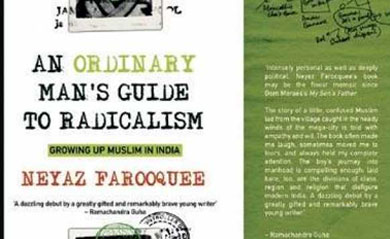
The Batla House encounter singed the community as before. But what was different this time was that people began questioning the police version and were successful in pointing out huge contradictions in the version of the state. The present book by Neyaz Farooquee must be understood in this backdrop: a courageous attempt by a young man to understand how the world around him changed after the so called encounter and how the resistance to it gave him the courage to open up.
Neyaz’s book should be considered a testimonio. Growing up as a student in those times, his narrative is representative of the voices of many a young men who would have undergone a similar emotional and mental turmoil. The structure of the book seems a little confusing at first but then it makes a lot of sense in juggling time: the constitution of the present is always informed by the past. Through his eyes, we see what the incident meant for young Muslims in Batla House.
What comes across starkly in the book is the deep distrust which Muslims have towards the police and state machinery. This is not imaginary: Muslims have been unfairly targeted by the police in riots after riots. Actually, more than anything else, Muslims fear the police the most in any communally charged situation. This fear and distrust is only exacerbated by the negative portrayal of Muslims in the media as potential terrorist. Through an engaging narrative, Neyaz is able to bring out the hurt of the locality towards the media personnel who were more than willing to become complicit with the statist agenda. That hurt became acute, when organizations like the NHRC, charged with protecting the human rights of individuals, refused to visit the site of the encounter in order to put fears of the locals at rest.
This autobiographical book brilliantly tells us the process through which the Muslim community is put on the path of alienation through a systematic othering by the Indian state. What is noteworthy about the book is the complete refusal by the author to put the blame for this state of affairs on any one political party. Thus it is far balanced in many ways from other works which squarely blame the rise of Hindu right wing parties for the many ills which beset the Muslim community. A dispassionate analysis will tell us that the story is perhaps more complex. Parties of all shades have been responsible for the current mess that the Muslims have themselves into.
However, it is also true that the community itself has done little to come out from the morass that it finds itself. Simply blaming others for its own conditions never solves any problem. Rather it is the misrecognition of the problem itself. It would have been better if Neyaz would have gone into this aspect also. There is a certain opaqueness within the community when it comes to discussions about lack of education, jobs, representation, etc. Unfortunately, what we end up hearing is that all this is the result of discrimination against the Muslim community. This is not to deny the existence of such a problem, however, that cannot be the only reason for the backwardness of the community.
Muslims have to look within and do a soul searching about their political priorities. They also have to ask whether there is anything wrong with the theology which they have been practising so far. There is a problem if there is a reluctance on part of the community to teach their young about modernity and become an obstacle in the education of millions of young children. There is the added problem that the hegemonic Muslim theology has had a complicated relationship with the idea of the nation itself.
But then, one single book cannot encapsulate each and every facet of the problem which Muslims as a community are facing. This book gives us a slice of the problem: how the Indian state itself alienates the community which it should be integrating in the first place. Through police action and various other processes of othering, the Indian state produces the Muslim minority as the perpetual other which is in need of humanization. All the time, the inhumanity of the state towards this community is hardly talked about. Neyaz’s book is a timely reminder to all those who are interested in the integration of the Muslim minority that without being empathetic to the concerns of the community, we are only alienating it further. This can have potential serious consequences for our collective destiny as a nation.
Arshad Alam is a columnist with NewAgeIslam.com
Saturday was a dark, dark day for Bangladesh.
Muhammad Zafar Iqbal, one of the leading progressive intellectuals and educationists of the country, was stabbed multiple times by a bearded man while on stage at an event he was attending as chief guest in Shahjalal University of Science and Technology (Sust) campus, Sylhet.
The assailant, who is aged about 25 and identified as one Foyzur Rahman hailing from Jagannathpur upazila, Sunamganj, attacked Dr Iqbal from behind with a sharp weapon and can be seen lurking behind Dr Iqbal on the stage minutes earlier in a picture that was later released in the media.
During his interrogation, Rahman said: “Zafar Iqbal is an enemy of Islam. That is why he attacked him,” according to RAB-9 Commander Lieutenant Colonel Ali Haider Azad Ahmed. Rahman also stated that he was a student of Sylhet’s Alia Madrasa, but this has not yet been confirmed by the madrasa administration.
While official investigations are underway to confirm the precise affiliations of the assailant, certain facts may help contextualize the attack.
This has happened before
Dr Iqbal has been an open critic of outlawed Islamist group Jamat-e-Islami (members of which were allegedly involved in his father’s killing during the Liberation War). Additionally, he has been a staunch and outspoken opponent of the epidemics of militancy, extremism, and communalism, the sort of which are increasingly plaguing our country.
For these political stances, he has frequently received death threats in the past. For instance, in 2016, Dr Iqbal and his wife received death threats from an unidentified person claiming to be affiliated with banned militant outfit Ansarullah Bangla Team (ABT), which read: “Hi unbeliever, we will strangulate you soon.”
It is crucial to understand that this is not only an attack against our freedom of expression and thought, it is part of an ongoing and co-ordinated attempt to permanently cripple our free thinking intelligentsia — attempts which continue to be done with complete impunity and go wholly unpunished.
When the machete-wielding murderers of Avijit Roy and his many counterparts walk scot-free, is anyone surprised by continuous attacks of this kind?
It is crucial to understand that this is not only an attack against our freedom of expression and thought, it is part of an ongoing and co-ordinated attempt to permanently cripple our free thinking intelligentsia
Crimes unpunished
Every time the murder or attempted murder of a secularist goes unpunished, we essentially sow the seeds for similar attacks in the future. What kind of message does a series of unpunished murders give to potential extremists who know that all they have to do is ostensibly invoke the name of Islam to avail immunity?
How much longer are we, as a state and society, going to allow these self-appointed barbarians to use Islam as a cloak to legitimize their political violence?
At what point do we say “enough is enough,” and adequately penalise militant zealots driven by selfish and political interests so they are no longer able to bastardise religion to institute violence?
While it is a relief to hear that the doctors have declared injuries to Dr Iqbal as non-life threatening, it is incumbent upon us to ruminate as to how close we were to losing one of the brightest minds in our country and how we may not be so lucky the next time, unless we do our very best in eliminating the possibility of there ever being a next time.
In closing, it is pertinent to call out those insensitive news outlets that were shamelessly running the scene of a wounded and bloodied Dr Iqbal being rushed on a stretcher over and over again, showing him at his most vulnerable. To them, I ask: Where is your sense of proportion and integrity? They should know that they are doing the very thing the attackers want.
Taqbir Huda is currently working as a researcher at Bangladesh Institute of Law and International Affairs (BILIA) and volunteers at Bangladesh Society for the Enforcement of Human Rights (BSEHR).
This article was first published on Dhaka Tribune
Gorakhpur and Phulpur, the two Lok Sabha seats, were vacated last year when Yogi Adityanath and Keshav Prasad Maurya took oath as Chief Minister and Deputy Chief Minister respectively of the state. The bypolls on these two seats will take place on March 11.
Ahead of the elections, Samajwadi Party already announced a coalition with Nishad Party and Peace Party. SP has also given clear hints in making a secular and “anti-BJP” alliance with smaller political outfits in Uttar Pradesh.
The announcement on Sunday came in the presence of Nagendra Pratap Singh Patel and Praveen Nishad, SP candidates for Phulpur and Gorakhpur respectively.
In two previous reports related to the bypolls, TwoCircles.net had speculated an understanding between Samajwadi Party and Bahujan Samaj Party when latter did not file any nomination. The reports can be accessed here and here.
While making the announcement on Sunday, BSP leader Ghanshyam Kharwar informed media that to avoid division of votes, Bahin Ji (Mayawati) has taken such a decision. The meeting on Saturday was conducted with the top leaders of the party to know their views over the current conditional alliance.
However, party sources have informed that the meeting was just a “quorum” to let the party leaders feel about the long-awaited alliance between the two.
Before the announcement of results of 2017 state assembly elections, Samajwadi Party and Bahujan Samaj Party were rumoured to be in talks to forge a post-poll alliance in case of a hung assembly, but it did not materialise because of a huge majority gained by BJP.
But many fear that while the alliance may benefit the SP if it manages to gain SC and OBC votes, the same may not apply to the BSP because it might lose its vote bank built over the years. Gorakhpur-based journalist Manoj Kumar Singh told TwoCircles.net, “It is early to speculate if SP will gain anything from such ‘understanding’ or alliance, but BSP may end up losing its voter to SP, or BJP in the worst case.”
Courtesy: Two Circles
The Left
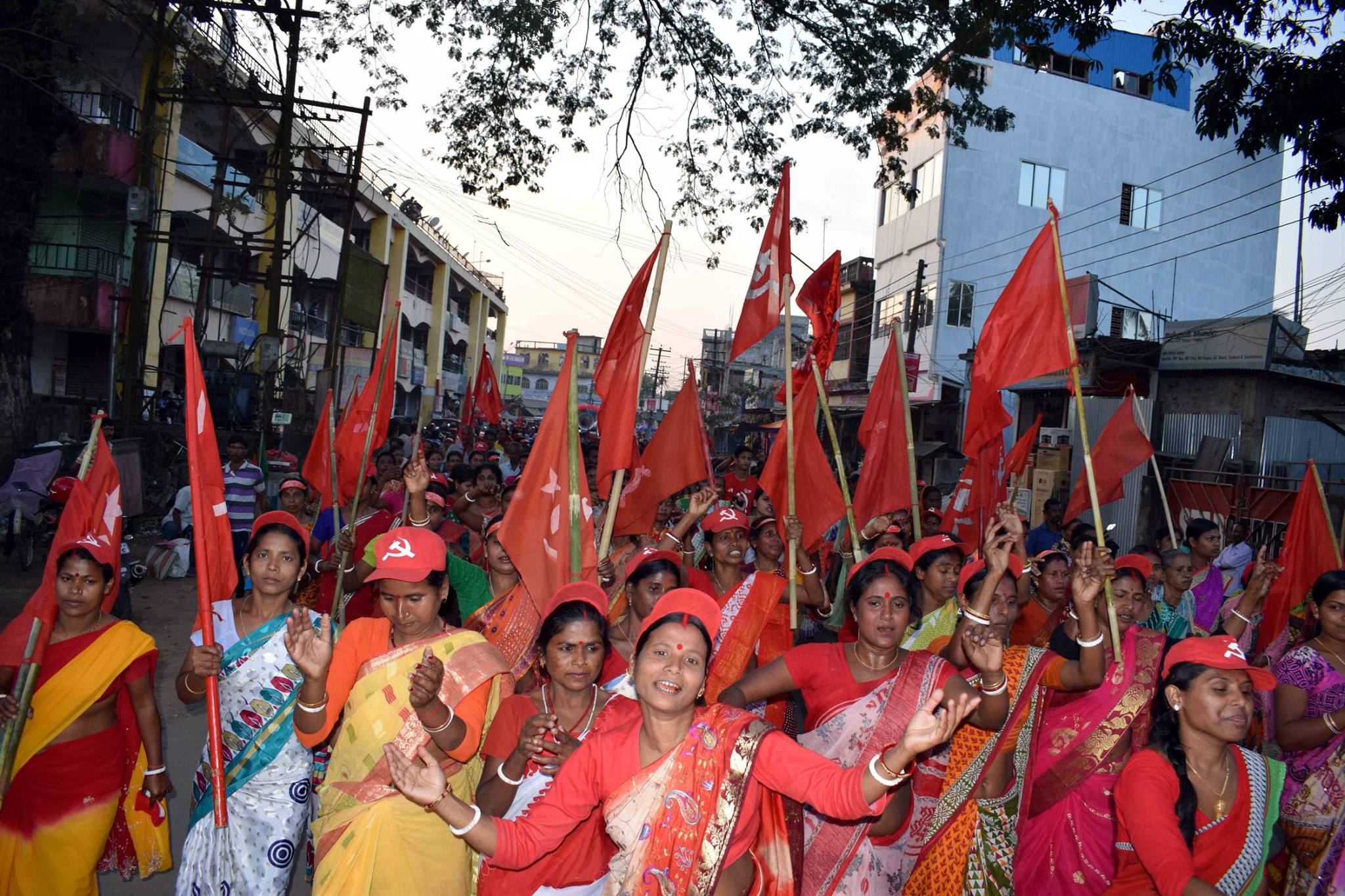
It is the first time in twenty-five years that Tripura, a state of four million people in India’s northeast, will be without a government of the Left. The outgoing chief minister – Manik Sarkar of the Communist Party of India (Marxist) [CPI-M] – has been in that office since March 1998. Before Manik Sarkar, the chief minister was CPI-M leader Dasarath Deb, whose Left government ruled the state from April 1993.
Since the first elections in Tripura in 1963, the Left has played a crucial role in the state. It was the principle opposition to the Congress Party’s governments and to president’s rule. The Left ruled the state in coalition and then for a decade from 1978 to 1998 under the leadership of CPI-M leader Nripen Chakraborty.
During this long period of active work in Tripura, the Left played the role of the architect of the state’s tremendous achievements. When the Northeast was wracked by State violence and secessionist insurgency, the Left government in Tripura put its focus on education and health care, on human security over military security. Great investment of popular energy and social wealth went towards increasingly the literacy rate and decreasing vulnerabilities from ill health and old age. Recently, Tripura – this small state – moved into the top position on India’s literacy chart. The literacy rate in Tripura is now 94.65% – one of the singular achievements of the people of Tripura and of its Left government. V. K. Ramachandran and Madhura Swaminathan, who have closely studied the social progress in the state, make an important point about the literacy rate in their article last year in The Hindu ,
A measure of progress in schooling of the population in these villages is the number of years of completed schooling among women in the age group 18 to 45 years. In Khakchang in 2005, more than 50% of women in the age group had not completed a year of schooling. By 2016, the median number of completed years of schooling among women in the age group was seven — outstanding progress for a decade. The corresponding figure for Mainama, also a Scheduled Tribe dominated village, was six years in 2005 and nine years in 2016.
In terms of health care, Ramachandran and Swaminathan point out, the infant mortality rate ‘almost halved between 2005-06 and 2014-15 declining from 51 per thousand live births to 27 per thousand’. There are more numbers to look at – the sex ratio, the child mortality rate, and so on. In each of these, over the course of the past sixty years, Tripura has done better than any other comparable state and indeed better than most states in India. There is no question that the Left government and Left struggle has had a role in driving some of the state’s surplus towards improving the social lives of Tripura’s people.
There is little doubt that the Left in Tripura governed with sincerity. It is one of the states with almost no corruption. The Chief Minister Manik Sarkar is famously known as the poorest head of government in India. The Left’s Members of the Legislative Assembly (MLAs) had little wealth amongst them. These are people who care about their state and care to put forward a left agenda for the people. Corruption scandals are unknown and no scandal of any kind wracked the government.
The Loss
So, why did the Left lose? It is important to point out that the Election Commission’s data shows that the Left won 43% of the total vote – almost identical to the vote secured by the BJP. This means that a sizable section of the voting public continues to vest its hopes and aspirations in the Left. It would be irresponsible to ignore this basic fact. No previous election in Tripura has been this close. In 2013, the Left won 48% of the vote, while its closest competitor – the Indian National Congress – won 36.5% and in 2008, the Left won 48% of the vote, while the Congress won 36% of the vote. This time, the two main parties won almost equivalent percentages of the vote.
It is also important to bear in mind that this is less the BJP’s victory than the complete decimation of the Congress Party. The BJP has operated here like a corporate megalith with its mergers and acquisitions strategy. It essentially used its immense money power to draw in large numbers of low level and senior level Congress leaders – many of them going through the Trojan Horse of the Trinamul Congress. An illustrative example is Sudip Roy Barman, the son of a former Congress leader and Chief Minister of Tripura Samir Ranjan Barman. Sudip Roy Barman was the Congress Party’s leader in the Tripura Legislative Assembly. He was a major figure in the party. In 2016, Barman joined the Trinamul Congress – hoping that its success in West Bengal would translate into Tripura. It did not. So Barman, in 2017 and in anticipation of this Assembly election, went with others into the BJP. So, the first important point to bear in mind is that the BJP was able to acquire Tripura’s ready-made political opposition and arm it with the full arsenal of the BJP’s financial and organisational resources.
Then, the BJP merged its campaign with that of the Indigenous People’s Tribal Front of Tripura, a secessionist group that demands the creation of Tripraland. Armed extremist groups such as the National Liberation Front of Tripura and the Tripura National Volunteers have backed the IPFT. In orientation, these armed groups – and the IPFT – are in favour of ethnic cleansing. The Tripura National Volunteers, which merged into the IPFT, stood for the expulsion of those of Bengali nationality from the state. The Congress had earlier allied with the IPFT, which gave this narrowly ethnicist party respectability. It did so to try and eject the Left. That failed. Now the BJP has used the IPFT to allow it to make inroads into the various tribal communities of Tripura.
A combination of this merger and acquisition strategy, immense amounts of money for the election and an anti-incumbency strategy (Chalo Paltai) allowed the BJP and its IPFT ally to prevail. They are now in power.
What Next?
A taste of what is to come can be seen in the 23-Dhanpur assembly seat, where Chief Minister Manik Sarkar is in the contest. The BJP hastily called for the counting to be stopped when it appeared that Sarkar was in the lead. According to a letter that the CPI-M sent to the Chief Election Commissioner, ‘we have got reports that with the help of the [police], counting agents of the CPI-M are being driven out from the counting centre leaving Manik Sarkar alone, who is being gheraoed and heckled by the BJP agents’. This is a taste of the thuggishness that is to come.
But the Left, with the support of almost half the population, is prepared to be a radical and sincere opposition force. It will fight to defend the social gains of the people and win the trust back of those who have voted for the BJP. There is no doubt that disenchantment with the BJP will come fast and furiously. The Left must be prepared to win those people back.
This was the first time the Left went head to head with the BJP. The loss is a blow, but it does not define the contest. The Left is the most trusted force to combat the fascistic RSS (from where the next Tripura chief minister Biplab Deb comes) and to combat the communalist BJP. It remains in power in Kerala and has asserted itself with dignity and courage on the streets besides the farmers of Rajasthan and the ASHA workers of Haryana.
There is no time to be lost. Today the ruling classes will preen about the defeat of the Left in Tripura. But the Left has ground to cover. This was not the defeat of the Left as much as the loss of an election. The Left is alive and well, awake to its responsibilities now and in the future.
Courtesy: Newsclick.in
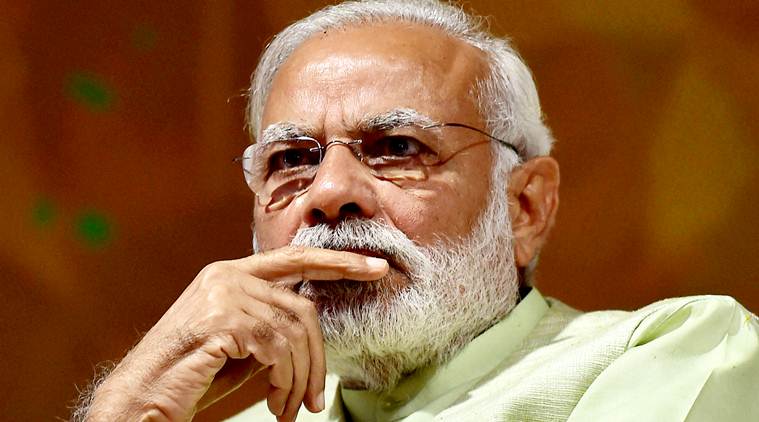
My Dear Prime Minister Modi ji,
Namaskar.

It is heartening to note that you, as PM of our democratic-secular state, have underlined the great diversities in the Indian nation which needed to be celebrated. While addressing a conference on ‘Islamic Heritage: Promoting Understanding and Moderation’ in the presence of the King of Jordan, Abdullah II in Delhi on March 1, 2018 you were kind enough to declare that India’s democracy was “a celebration of our age-old plurality” recalling that “religions and beliefs from all over the world” flourished in the country. It was great to hear you to commit that “We Indians are proud of our diversity.” While specially addressing the Muslim youth of India, you were kind enough to advise them to hold Quran in one hand and computer in the other for an all-inclusive progress and welfare. However, I would beg to say that this call for Quran or any other scripture in one hand is a risky proposition. The US taught Afghan youth Quran in one hand and AK47 in other hand and what price Afghan Muslims paid for it is well known.
Sir,
You also showed deep concern about radicalization of Muslim youth and appreciated the king’s work toward de-radicalisation. Your tweet addressing youth (Muslim though not referred as such) in Hindi read:
PMO IndiaVerified account @PMOIndia
मज़हब का मर्म अमानवीय हो ही नहीं सकता। हर पन्थ, हर संप्रदाय, हर परंपरा मानवीय मूल्यों को बढ़ावा देने के लिए ही है। इसलिए, आज सबसे ज्यादा ज़रूरत ये है कि हमारे युवा एक तरफ मानवीय इस्लाम से जुड़े हों और दूसरी तरफ आधुनिक विज्ञान और तरक्की के साधनों का इस्तेमाल भी कर सकें: PM 9:54 PM – 28 Feb 2018
These words of yours were, in fact, reaffirmation of your commitment towards an all-inclusive India thus assuring the minorities that they were equal partners in the polity. It was not first time that you called upon to celebrate the diversity of a nation. While visiting Sri Lanka in May 2017 too you had declared that in Sri Lanka “diversity calls for celebration, not confrontation” and offered to assist the Sri Lankan government in improving living conditions of minority Tamils there.
Respected Sir,
I am grateful to you for publicly expressing love for diversity in the presence of foreign heads of the states not once but twice. However, I would like to draw your attention to the shocking ideas against our all-inclusive India which were expressed by the RSS sarsanghchalak, Mohan Bhagwat ji on February 25, exactly four days before your heartening expression of belief in diversity. If you are not aware of it allow me to refresh your memory.
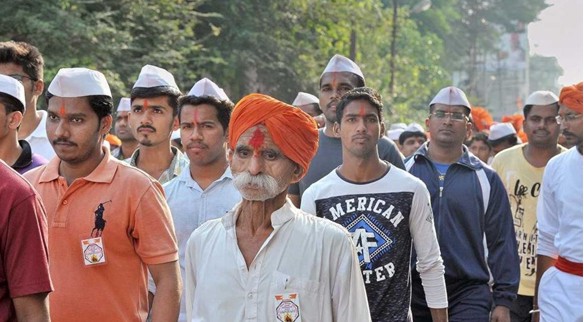
He was speaking on the occasion of 25th Swayamsevak Samagam, called Rashtryoday touted as the biggest gathering of RSS workers in recent years at Meerut. According to the Times of India Bhagwat ji told the gathering, “Say with pride that you are a Hindu. As Hindus, we have to unite because the responsibility of this country is upon us. From ancient time it is our home. We have nowhere else to go in this world. If anything, wrong happens with this country, we will be responsible”.
While underlining an exclusive Hindu identity of India, he called upon Hindus to adopt hard-line, staunch or orthodox Hindutva. Surprisingly, according to him, “when we become [Hindutva] hardliners we will celebrate diversity more” and as a worshipper of power he said the world, “has a rule that it listens to good things only when there is a power standing behind them.” It was news to Indians that so far known as Hindutva was now hard-line Hindutva; more aggressive Hindutva.
He denigrated other world civilizations and religions when he declared that “we are Hindus and our ancestors attained the Truth which no one else did”. He also expressed the old Hindutva vision to lead the world. Intelligence agencies must have shared with you the fact that around one lakh RSS cadres, most of them young men had gathered for this meeting and one of the slogans raised constantly was “khoon se tilak ker, golion se aartee/pukarta hae Kashmir, pukartee maa Bharti” thus giving open call for violence.
Sir,
I would like to draw your attention to the fact that since RSS will be organizing Hindus, naturally, there will be Muslim/Sikh/Christian/Buddhist/Jain organizations organizing their respective followers of religions. The first casualty will be Indian nationalism. If RSS declares that responsibility of saving India of Hindus then they are surely pushing out all those who are not Hindus from being Indians.
The call for India for Hindus is tantamount to de-nationalize followers of other religions residing in India, as citizens so far. According to RSS India, a land of Hindus can survive only under the hegemony of hard-line Hindutva and not under a democratic-secular polity established by the Constituent Assembly of India. This call of RSS will surely lead to Balkanization of India; an evil project in which Muslim League succeeded once. Moreover, while taking steps against radicalization of Muslim youth you as PM of India should not overlook constant and open radicalization of the Hindu youth by RSS.
PM Sir,
Since you have long association with the RSS, being one of its ideologues who identifies himself as Hindu nationalist and credits RSS for grooming yourself into a political leader (your interview to the Reuters journalists, Ross Colvin and Sruthi Gottipati, on July 12, 2013 at Gandhinagar) I will beg you to ask RSS to desist from its agenda aiming at destruction of our dear democratic-secular India. It is really unfortunate that even 71 years of India’s Independence RSS has not got rid of its hatred for an all-inclusive India. You must be familiar with the fact that the RSS English organ, Organizer in its issue on the very eve of Independence, dated 14 August, 1947, rejected the whole concept of a composite nation (under the editorial title ‘Whither’):
“Let us no longer allow ourselves to be influenced by false notions of nationhood. Much of the mental confusion and the present and future troubles can be removed by the ready recognition of the simple fact that in Hindusthan only the Hindus form the nation and the national structure must be built on that safe and sound foundation…the nation itself must be built up of Hindus, on Hindu traditions, culture, ideas and aspirations”.
Thus, all non-Hindus were not to be treated as part of the Indian nation. One had hoped that RSS would change itself and stop denigrating Indian democratic-secular polity like an enemy. On the contrary, attacks on Indian polity have immensely increased and even date set (2022) when India would be cleansed of Muslims and Christians. The holy book for RSS cadres Bunch of Thoughts, collection of Guruji Golwalkar’s views openly denigrates Indian Constitution, Tricolour, even has a chapter (16) in which Indian Muslims and Christians without any exception are declared to be internal threats number one and two respectively. This book also declares Casteism, Hinduism and Hindu nationalism synonymous.
Respected Sir,
While being rightly concerned about Muslim extremism, please, take note of Hindutva extremism also which has more potential to undo our constitutional polity as it is being allowed a free run. I wish you give a call to the RSS leaders and cadres to discard anti-national ideas. For the sake of our country, please, ask them to carry a copy of the Indian Constitution in one hand which may check their other hand doing any nasty thing against all-inclusive India.
Sir,
Since you believe in celebrating the diversity of the Indian nation, lastly, I would request that when you visit foreign countries next time apart from gifting Bhagvad Gita (which you gifted to the British PM David Cameron, US President Obama, Chinese President Xi Jinping and Japanese PM Shinzo Abe) please also present to host dignitaries, Pali Canon of Buddhism, Guru Granth Saheb of Sikhism and Agams of Jainism as these three great religions also originated in India.
Wishing you a Happy Holi,
Shamsul Islam
Join our mailing list to get the latest human rights news that matters, straight to your mailbox.
© Sabrang | All Rights Reserved