“Currently, at Jawaharlal Nehru University currently, the flag of RSS happily flies with the flag of neo-liberal world-politics.”
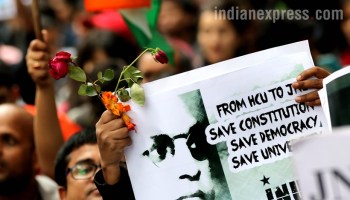
The series of events that has unfolded, and is still unfolding, at Jawaharlal Nehru University, one of the premier institutions of higher education and research of this country, is symptomatic of a deep-seated, mostly unconscious, malaise. From a distance, it appears that it is the internal conflict between two opposing political ideologies – “left” and “right” – truing to seek domination. In fact, this is precisely the appearance that a certain group is invested to proclaim. This is not without reason.
A closer look should reveal the real truth: that this “appearance” is a fiction which is invested with the value of “truth”, and that it is propagated by those who are apologetic of the current administrative apparatus. And it is not difficult to see why.
The question is not really the internal battle between “left and “right”.
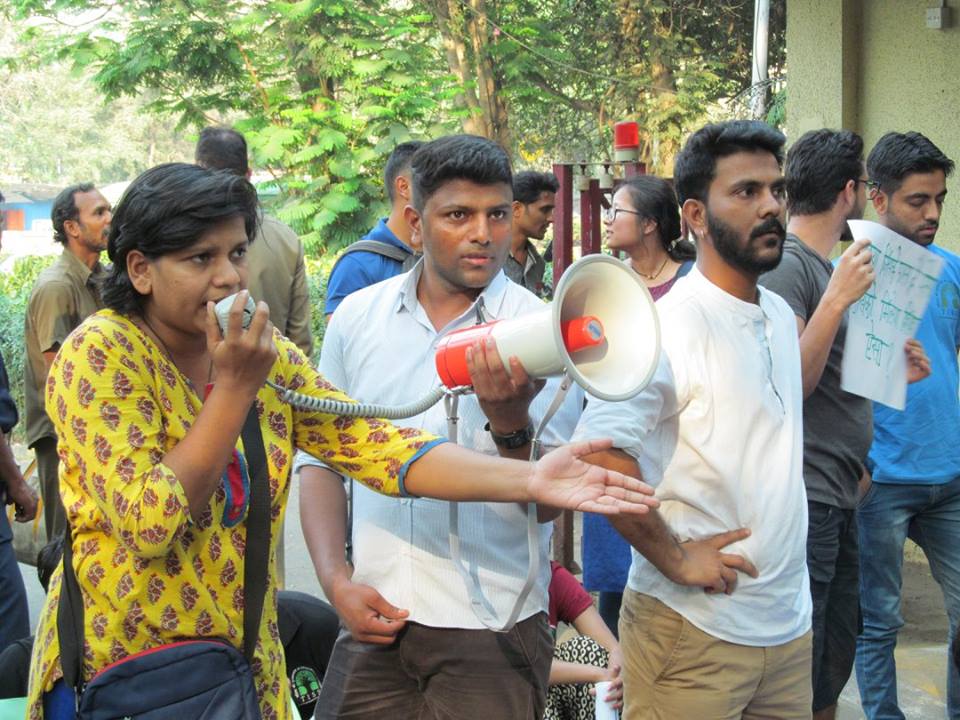
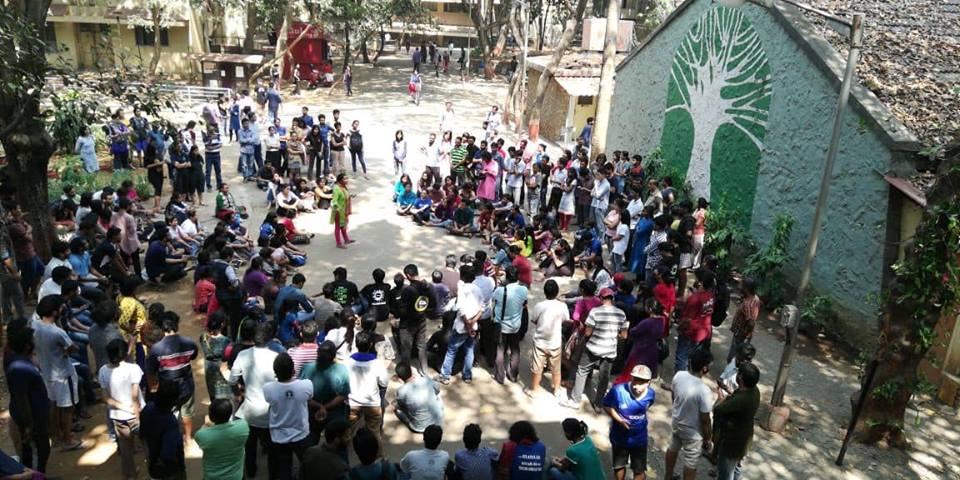
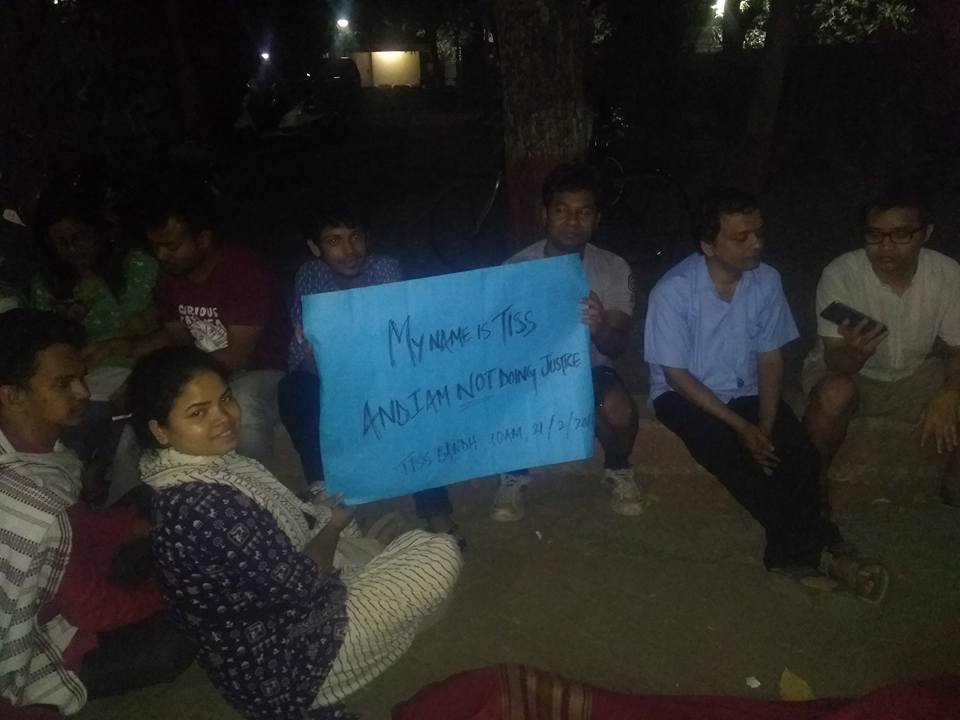
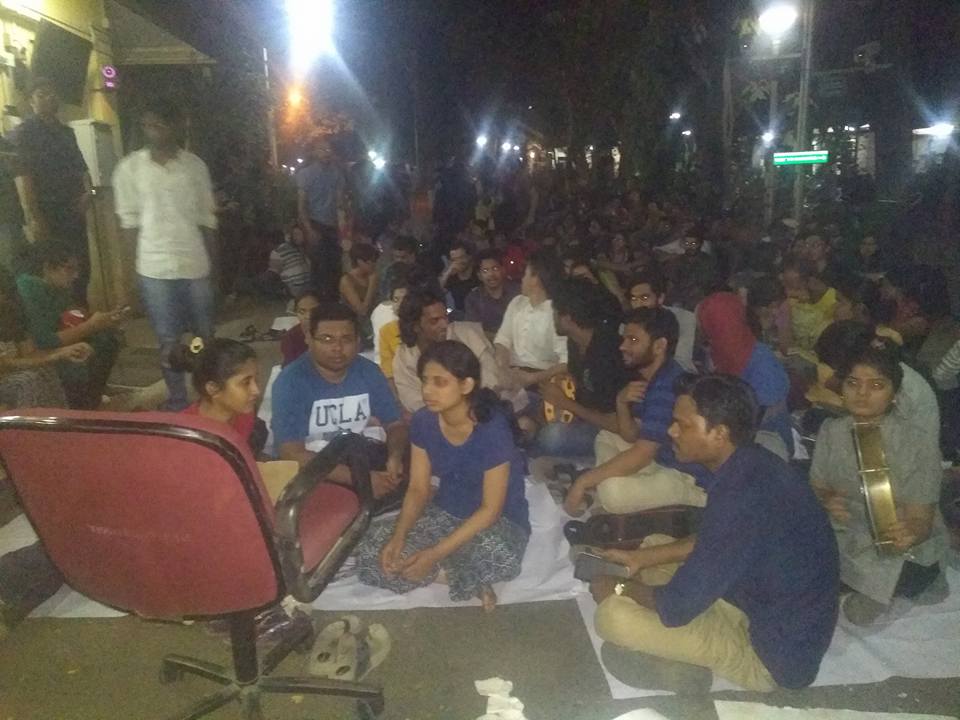
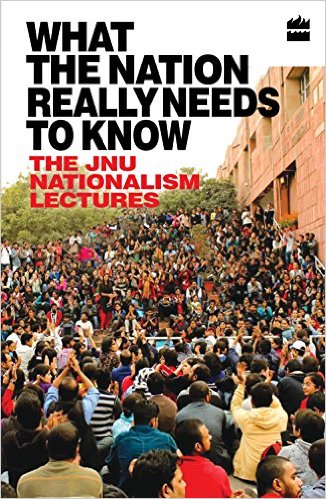
It is true that those few faculty members who support “the regime” at place can be said to be more or less of the conservative disposition. But the immense number of students and teachers on the other side (the overwhelming number is demonstrated each time in all those massive events of protests that have occurred in the last two years) are not necessarily the supporter of any “left” political ideology, or of any party for that matter.
The real question, which is obscured in all those heated debates that have taken place in last two years, is rather this: an immense number of students and teachers of this University is attempting to preserve the very ethos of, not only of this University, but of what University as such by definition is, and ought to be: a place of intellectual and spiritual freedom.
This includes freedom from the hegemonic regime at place (whatever that regime may be at any instance of time, left or right); freedom from all external coercion to pursue, fearlessly, what is beneficial to the interests of the Universe as such (that is why it is called “University”); and of humanity at large, beyond all closures of the nation, race, community, religion or sexuality.
The state and the administration should be facilitating agents to foster knowledge and wisdom of the highest order that flourish in this spiritual site. They are responsible for this nourishment of critical thinking and intellectual freedom: in this sense, the state and the administration are obliged – if not by the force of the law, but at least ethically (therefore, this obligation is even higher than any legal obligation) – to protect and nourish the University as such.
What we see in the last few decades is the transformation of the role of the state in relation to the country at large. The state, now, no longer wants to see itself as a “social welfare” state, but as one multinational company among others, albeit bigger one than most of the other companies.
With this transformation, the responsibility of the state to the social welfare is also fast disappearing. The state now wants to enter into the vast, global market of profit-making business partnership with other countries through facilitating of free market and privatisation of almost every mode of our existence (including health care and transport) using the tax payer’s money.
In this process, not only is the question of “social justice” (to the deprived sections, to the Dalits and minorities) considered redundant, the very space of University, too, is becoming a useless institution for the profit-making state, unless the University itself somehow becomes another profit-making institution, a factory or industry among others.
When the University is reduced to a profit-making institution, the question of intellectual freedom and critical-creative transformation of humanity does not occur. Instead, the real stake is how much profit the University is making. The decisive 55% budget cut to University Grants Commission is only one symptom among others: there are massive seat cuts in almost all government funded central universities of the country; a huge number of faculty is working on Ad-hoc basis without any hope of recruitment in any near future; fellowships to research scholars in humanities and social sciences are more or less either reduced or stopped altogether; even in a University like Jawaharlal Nehru University, reservation policies in students’ intake are not followed in last two years. This puts the constitutional norms and rules that seek to establish social justice and equality to shame.
Very soon, this process of privatisation of education will reach such magnitude that most of the young people of the coming generation of this country will be deprived of higher education and research altogether, not to speak of the alarming phenomenon of unemployment that has already made itself felt.
What is happening here? What is happening at JNU is only symptomatic of what is happening in all institutions of higher education and research of this country. Like the state — which has forgotten its role as a “social welfare” state, and instead has become a player in the market place of the capital accumulation (which destroys the very idea of social justice, social equality, and upliftment of the well-being of the citizens) — the administrations of the universities (JNU is the prime example here) too have become players in the free market where knowledge is a commodity, students and teachers are mindless cogs in the immense apparatus of knowledge production. Students, by definition, must be deprived of any intellectual freedom to debate, to think, to examine matters of prime concern, not only of the nation but of the entire humanity.
It is not for nothing that current Vice-Chancellor of JNU speaks not only of battle tanks but also of “industry”. The latter idea is far more sinister than the former. For him, this University is a laboratory and a factory which will produce commodities in the market place of the world; the University, for him, is a multinational company within the big multinational company of the nation. The administrator now no longer thinks himself as the facilitator of intellectual freedom and social justice, but as the engineer of profit in the market place of the world.
The paradoxical fact is that – in fact it is not at all a paradox – this very “neo-liberal” economic theology is now combined with the most obscurantist and the most regressive, which is at once most dangerous and terrifying, political view to the society at large. The current administration happily combines the “neo-liberal” economic theology (supported by the most sophisticated and advanced technological apparatus) with the most regressive and socially unjust cultural standpoint of extreme conservatism.
Currently, at JNU, the flag of RSS happily flies with the flag of neo-liberal world-politics.
What, then, is destroyed is the very place of an excellent University that for decades have contributed to the intellectual life, not only of the nation but to the world of learning as such. What, then, is destroyed is the very ethos of democracy and intellectual freedom, the very passion of critical thinking and creativity which flourished at this University for last so many decades.
One is tempted to say that what could not happen, to such an extent, at the level of national politics, has now happened in JNU.
This includes the rise of the absolute state; the merciless dictatorship of the VC at JNU which is supported by few other profiteers; the taking place of the regime of terror where dissenting students and teachers are daily harassed and punished and humiliated; the establishment of a machinery of surveillance, of discipline and punish.
The question of attendance, which has recently raised such a huge uproar among students and teachers alike, is not one question among others: it is precisely the protest against the regime of terror at place today at JNU where everyone is terrorised. It is one desperate attempt, on part of the students and teachers, to salvage the University from its headlong rush into the abyss of annihilation.
Not to speak of corruption: all possible norms, rules, laws – of the University and the law of the land – are thrown to the dustbins! What once resonated: “Hail, intellectual freedom!”, now appears: “Hail, our leader VC!”
It is the responsibility of the nation to protect and nourish its intellectual and spiritual institutions. What is going on at the University currently is neither a sectarian fight of a sect for some tangible privileges and benefits, nor even political domination for a “ left” ideology, but a painful, bitter, difficult struggle to preserve a precious institution of an entire nation from forces of destruction.
This article was first published in the Indian Cultural Forum.