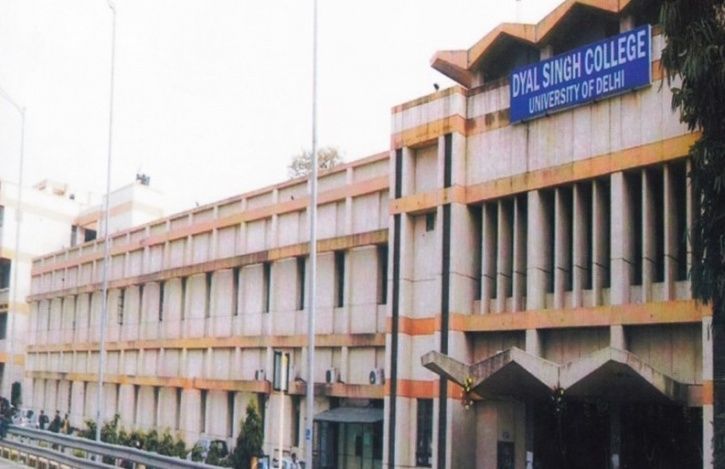
All hell was let loose on the evening of November 17, when the Chairman of Dyal Singh College on Lodhi road New Delhi made an announcement after an irregular meeting of the Governing body meeting that the name of Dyal Singh College(Evening Classes) now onwards will be ‘Vande Matram College’!
Prior to this meeting and afterwards unpleasant scenes were witnessed. Students of the college who were protesting against bifurcation of the college were threatened with expulsion from the college by the Chairman. College teachers who questioned Chairman’s unsavoury conduct towards students (as he had forcibly taken away the identity card of some students), were also shouted at by the Chairman. A shouting match ensued and videos of this Chairman-teachers-students shout each other went viral on social media.

Next day, newspapers, first in Delhi followed by Punjab further ignited the issue. Protests broke out among not only political groups, even among academics and writers, who took it as an affront to attack on the healthy progressive legacy of great son of pre-partition Punjab-Sardar Dyal Singh Majithia-the philanthropist, who willed all his huge property to ensure that the institution and many others take birth: schools/colleges and libraries. Newspapers like The Tribune and even the Punjab National Bank had already been set up through his efforts from Lahore.
Dyal Singh Majithia, born in 1849 and died in 1898, at rather young age, made a will prior to his untimely death. When the will was opened, he left a small part of his vast properties for his family and bequeathed most of the properties for public good. He formed a committee of Trustees himself to take care of School/Colleges, Public library and The Tribune-all three in Lahore. The trustees included at that time Lala Harkishan Lal, Babu Joginder Chander Bose, Lala Ruchi Ram, Dewan Narender Nath and many more eminent personalities of the period. The Tribune was set up in year 1881 itself and remained in publication until the time of his death. Dyal Singh trust Lahore set up Dyal Singh Public library Lahore in 1908 and Dyal Singh College was set up later in 1910 at Nisbat road Lahore, just adjacent to Dyal Singh Public library. This legacy continued later from Indian side at Delhi, Karnal and Chandigarh, as well as at Lahore itself. Dyal Singh College Lahore was set up in the leadership of first Principal N G Wellinkar, followed by Principal Sadhu T L Vaswani, who served from 1912 to 1915 as Professor of Religion and Philosophy as well. He was succeeded by Principal S C Roy and later by Pandit Hemraj, Professor of Mathematics as long time Principal from 1922 to 1938. Professor of English Daya Nath Bhalla succeeded him, who continued till partition of 1947, when Prof. Bhalla migrated to Delhi.
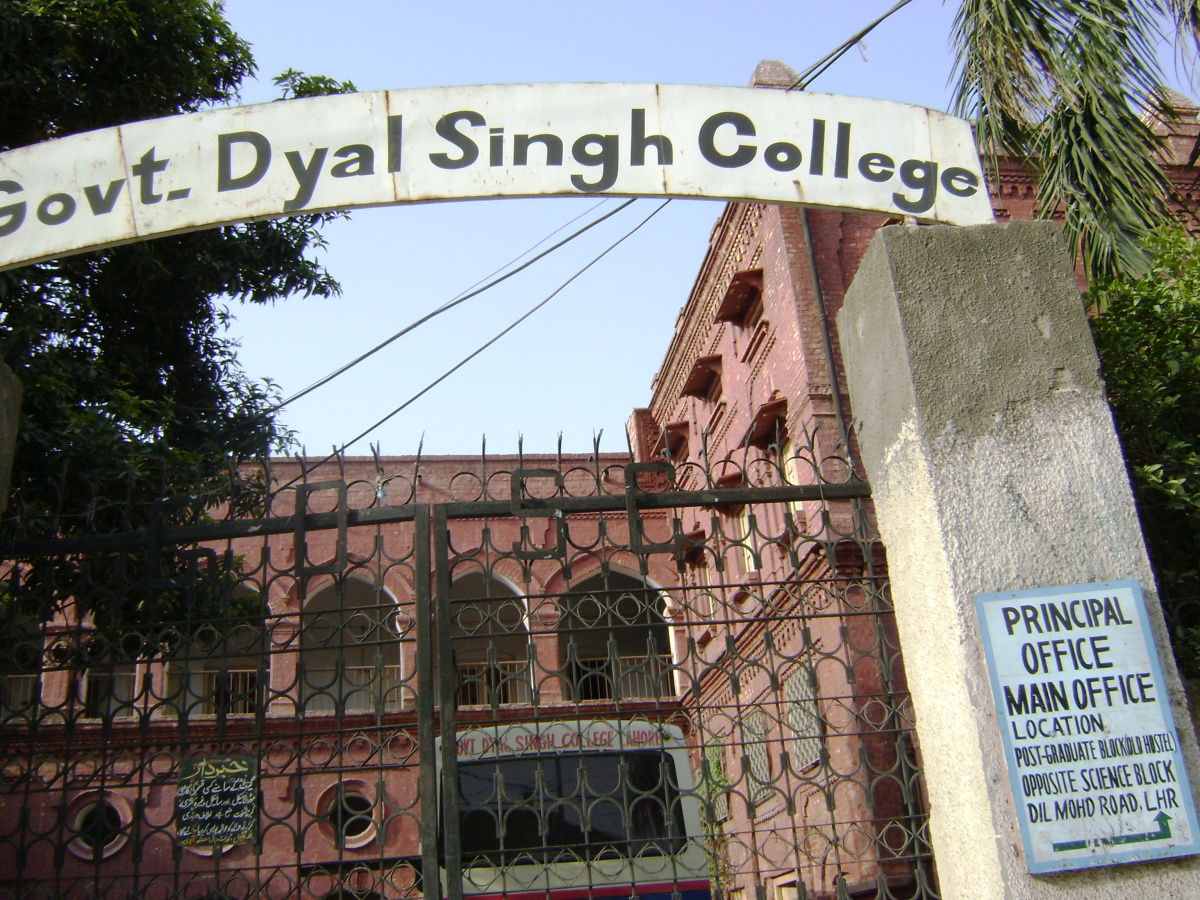
Dyal Singh College in Lahore was taken over by Government of Punjab and was renamed as Govt. Dyal Singh College, which name it bears, to date. Very few Professors remained in College after partition and Syed Abid Ali was appointed Lahore College Principal on September 1, 1947 and College reopened on October 1, 1947. (Reference to above facts from book-‘100 years of Dyal Singh College Lahore-1910-2010’ by Dr. Syed Sultan Mahmood Hussain, 2010 from Izharsons Lahore)
Dewan Anand Kumar, son of Raja Narnder Nath , a founder trustee of Dyal Singh trust, made efforts to rebuild Dyal Singh institutions at Delhi and Karnal in post partition India. A camp college for refugee children was set up at the Mandir Marg primary school in 1948 at Delhi, affiliated to newly set up Panjab University in Punjab, a transgression on Delhi University jurisdiction area. Classes were held in evening after school hours. Later, the Dyal Singh library, Tribune office and Dyal Singh College was set up in Rouse Avenue, this college was recognised by UGC in 1952. Camp College was attached to this College and this status of College continued till 1959, with affiliation to Panjab University. Dewan Anand Kumar, brother of Rameshvari Nehru, had become Vic Chancellor of Panjab University was a major functionary of Dyal Singh trust society, registered at Karnal in post partition India. His son Dewan Gajender Kumar at the age of 94 years still continues to be the member of Dyal Singh trust society, though he is immobile now. His son D K Raina is present secretary of society.
From August 1959, Dyal Singh College was affiliated to Delhi University and it was allotted land on Lodhi road in 1961. The College was shifted to its present location in October 1962. Camp college was merged into it and Camp college material can still be found in present Dyal Singh College, since Camp college was evening classes college, so Dyal Singh college first became two shift college between 1963-66, later from 1967, evening classes started at present college location and it was designated as Dyal Singh College (Evening classes), the governing body of the College remained same and continues till date same. Evening classes had Vice Principal in charge earlier, later from 1997, full-fledged Principal and staff was recruited for evening college. In 1976, Dyal Singh Trust society offered Delhi University to take over the college as constituent college of the University, without seeking any monetary reimbursement for land and building.
However an agreement was signed between Delhi University and the society, in which clause 12 mentioned that the name of the college will not be changed and as per clause 16, the land will be transferred to the DU subject to No Objection certificate from the Land & Development office, incidentally that NOC has not been given by L&DO till date and all correspondence continues in the name of Dyal Singh trust society. In 1984, additional land was given to college that too was in the name of the society. Electricity bill still is in the name of the society.
Dyal Singh College has many luminaries on its trust and Governing body in the past. D N Bhalla continued as Principal from Lahore to Delhi, later many more Principals served the college including B M Bhalla, present Principal Inderjit Singh Bakshi joined as Principal in year 2006 and he has not seen such tense days in College, as he feels in last two years. The governing body of the college has had chairmen who were prominent freedom fighters and writers from the Lahore days, in the past . For example, Lala Feroze Chand, Dewan Anand Kumar, Prof. V P Dutt, Lala Brish Bhan, Shailja Chander, S S Gill and Prof. Shahid Mahdi.
However, this quality and eminence has declined during present NDA II rule. The Delhi University Vice Chancellor (in order to appease political bosses) has been appointing non educationist persons, affiliated to the RSS-BJP as chairmen of the college’s governing bodies. Incidentally, the Delhi University VC has been rejecting such respectable names sent by Delhi government for its own 28 colleges such as as Prof. S K Sopory, former VC of JNU, Prof. Ira Bhaskar, just because they have a ‘JNU’ tag, an offence for present NDA government! Present Chairman of Governing body of Dyal Singh College is Mr. Amitabh Sinha, a BJP leader and Supreme Court advocate. The eight to twelve member governing body consists of the principal of Morning College is member secretary, responsible for calling meetings of body and taking minutes. However in Mr. Sinha’s chairmanship, the principal has been reduced to nobody. The chairman has for the first time in the 107 year history of the college, has forcibly occupied conference room and put his name plate there, the room which has name boards of all the former chairmen and former pPrincipals of the college. College officials are scared even to open that room as Chairman misbehaves with officials and staff, get their signature on attendance sheets of the Governing body meeting and holds indoor meetings with only some members of his choice in bolted room, keeping many members sit out and prepares or get minutes prepared on his own and without the presence of member secretary in deliberations, forces him to own the minutes.
Even during the meeting held on November 17, in which name of Dyal Singh College (Evening) was illegally changed to ‘Vande Matram’ College, the member secretary was not allowed to sit in the meeting. Earlier while suspending a more than 70% physically charged assistant Professor of Hindi Dr. Kedarnath Mondal, the principal was not allowed even to indicate that suspension of any teacher cannot be effected without Delhi University approval, as college is constituent college of the University. Dr. Mondal was not issued any show-cause notice and suspended straightaway, just because as a Dalit literary critic, he made some remarks about Durga, as happened in the case of film S…Durga!
The Dyal Singh Morning college has nearly 5200 hundred students at present and evening college has 3200 plus students. Turning the evening college into morning college in the same building is an absurd idea, as the infra structure can house only students of one college. With evening college it was fine as the same infra structure was shared in different time schedule. And why Delhi University is allowing closure of evening colleges at all? There are number of working people, including women, who continue their higher education after office hours, there has been no complaint from women students facing any problem in evening time in this prime South Delhi area college.
Technically, the land and building of college is still in the name of the Dyal Singh trust society, as per the agreement of DU with the society, the name of College in this land cannot be other than Dyal Singh, so chairman of the college is illegally violating the agreement. Even Delhi University has not formally divided the college into two colleges, as a demarcation committee is formed, which has yet to give its report. The whole process adopted by Chairman of the college smacks of political design rather than any academic or social concern for either the students or higher education in general.
The only appropriate step in present circumstances is to remove this non-academic chairman of the governing body of the college and replace him with some respectable educationist, who could honour the legacy of Dyal Singh Majithia, honour the agreement between Dyal Singh trust society and DU, win the trust of students and staff of the college, thus saving the fair name of college from ignominy! Delhi University or Chairman of college can set up another college in different location and name it as they wish to, but Punjab people will not allow this chairman to harm Dyal Singh Majithia legacy in any form.
(The author is is a retired Professor from JNU and a Fellow of Panjab University Chandigarh; who visited Dyal Singh College and wrote to Delhi VC to not approve change in name of the College)

.png)