As India’s Statutory Human Rights Body Calls the Central Government’s Counter-Insurgency Ops to Account, When Killings and Arson of Adivasis toom Place, Is it a Little Too Late?

The National Human Rights Commission has sought responses from the Chhattisgarh government on the anomalies by state officials, including police, over the alleged killing of seven persons and burning of houses by the now-disbanded Salwa Judum in Sukma district in 2007.
In a strongly worded communication dated October 26 to the chief secretary of the state, the rights body has asked it to respond within eight weeks. The communication of the NHRC may be read here. The incident pertains to the alleged burning of houses in Kondasawali, Kamaraguda and Karrepara villages and killing of seven villagers in 2007 by the special police officers (SPO) of Salwa Judum, a force created by the state to counter the Naxalite menace.
Responding to a complaint submitted by Sudha Bhardwaj, general secretary, People’s Union for Civil Liberties (PUCL), the NHRC said it was “unimaginable and unacceptable” that the incidents, on which a report was filed only in 2013, did not come to the notice of the village/block/police post/police station level functionaries of Sukma district. The NHRC has commented adversely on the fact that though the officials knew of the incident soon after they had taken place, but deliberately turned a blind eye to them. Not taking cognisance of the incidents for seven years strongly showed that these crimes had been abetted by the district or state officials and indicated that they had indeed been committed by the SPOs of Jagarguda base camp, it said.The rights body also observed that the objective of the state machinery, both the police and the magistracy is not to ascertain the truth as is amply clear in the manner the investigation being conducted and the manner in which the Konta tehsildar has conducted his enquiry.
A mere reading of the tehsildar’s inquiry report and the statements recorded by the investigation officers shows that his objective is not to dig out the truth and that he is only conducting a cover-up operation.
“These acts of omission by the public servants of state of Chhattisgarh constitute a gross violation of human rights of the deceased residents of village Kondasawali, Kamaraguda and Karrepara and of those residents of these villages whose houses/huts were burnt,” the NHRC observed. However, before it took a final view in the matter, it had decided to seek responses from the Chhattisgarh government to explain the anomalies of the officials. The commission also know the name of patwaries, naib tehsildar, tehsildar, block development officers and other officers who were posted in this region from 2007 to 2013, it said.
Background
In 2013, the villagers of Village Kondasawali, Police Station Jagargunda, district Sukma, Bastar Divison, Chhattisgarh had lodged a complaint with the Collector regarding the fact that a few years before that, in 2007, some SPOs and Salwa Judum leaders had come to their village, burnt 95 huts in three settlements in their panchayat, killed 7 people, and threatened the villagers against telling anyone about these incidents. The villagers had been forced to leave their village after the arson attacks, and had only come back to the village after the end of Salwa Judum. In 2013, they (villagers) wrote a complaint asking for compensation and investigation to the Collector and NHRC, which was subsequently taken up by the Chhattisgarh PUCL and forwarded to the NHRC. The said complaint was registered with the NHRC as Case No. 657/33/3/2013.
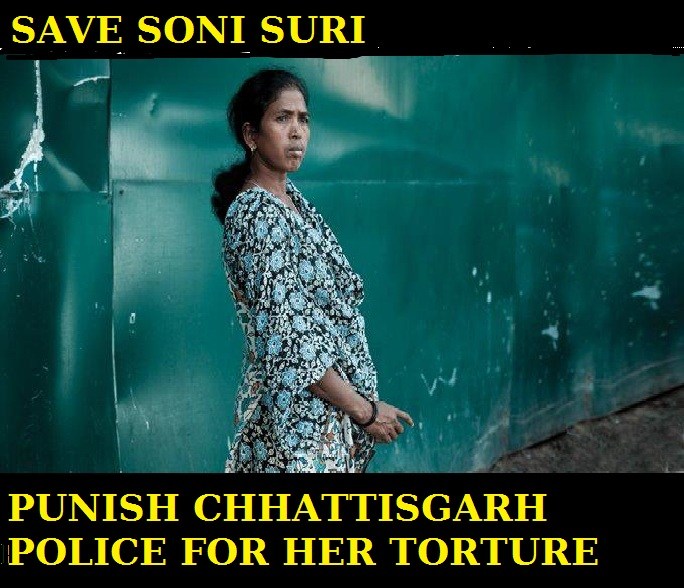
Advocate Sudha Bharadwaj, being General Secretary of the Chhattisgarh PUCL and the complainant in Case No. 657/33/3/2013 received a letter from the National Human Rights Commission dated June 16, 2017 in respect of the aforesaid case directing her to gather further information in the complaint which was filed on 22.08.2013 and for that purpose visit the villages under Gram Panchayat Kondasawali, Police Station Jagargunda, Block Konta, District Sukma, Chhattisgarh. She assigned JK Vidhya, Delhi and Soni Sori, on her behalf to visit the concerned area and gather information in regard to the case. Vidhya and Soni along with two other male companions, an interpreter, two journalists and the Personal Security Officer assigned to Ms Soni Sori were able to undertake the visit to the villages on 21st-22nd August 2017. After which video testimonies of the villagers along with a report was submitted last month to the NHRC. It is following this complaint that the NHRC had passed the October 26 order.
In this order, the Commission concludes that these incidents had come to the notice of police, revenue and other officials of District Sukma soon after they had taken place but police and district officials had deliberately turned a blind eye to these killings and incidents of arson.
Further the NHRC states that ” In fact, the omission by the state and district Sukma Officer to take cognizance of these incidents for seven years is also a very strong circumstance to show that these crimes had been abetted by the district officials of Sukma/or state government officials of the State of Chhattisgarh.”
Besides, “This willful omission of taking cognizance of these incidents for such a long period is also a very strong circumstance indicative of the fact that these ghastly crimes had been committed by the SPOs of Jagarguda base camp as has been alleged by the complainant of case FIR No.10/2013 P.S. Jagarguda.
Thus, says the NHRC, “That the objective of the state machinery, both the police and the magistracy is not to ascertain the truth about these incidents but to gloss over these crimes is also amply clear in the manner the investigation of case FIR No.10/2013 P.S. Jagarguda is being conducted and the manner in which the Tehsildar, Konta, District Sukma has conducted his enquiry. A mere reading of the enquiry report of Tehsildar Konta and the statements recorded by the I.O. shows that his objective is not at all to dig out the truth and that he is only conducting a cover up operation. These acts of omission by the public servants of State of Chhattisgarh constitute a gross violation of human rights of the deceased residents of village Kondasawali, Kamaraguda and Karrepara and of those residents of these villages whose houses/huts were burnt.”
Detailed Context of the Complaint
In 2013, the villagers of Village Kondasawali, Police Station Jagargunda, district Sukma had lodged a complaint with the Collector regarding the fact that a few years before that, some SPOs and Salwa Judum leaders had come to their village, burnt 95 huts in three settlements in their panchayat, killed 7 people, and threatened the villagers against telling anyone about these incidents. The villagers had been forced to leave their village after the arson attacks, and had only come back to the village after the end of Salwa Judum. With the situation improving, they felt confident enough to write this complaint to the Collector, which was subsequently taken up by the Chhattisgarh PUCL and forwarded to the NHRC. The said complaint was registered with the NHRC as Case No. 657/33/3/2013.
The undersigned, Advocate Sudha Bharadwaj, being General Secretary of the Chhattisgarh PUCL and the complainant in Case No. 657/33/3/2013 received a letter from the National Human Rights Commission dated 16.06.2017 in respect of the aforesaid case directing me to gather further information in the complaint which was filed on 22.08.2013 and for that purpose visit the villages under Gram Panchayat Kondasawali, Police Station Jagargunda, Block Konta, District Sukma, Chhattisgarh.
Since I do not reside in their area, after making some preliminary enquiries, I wrote to Ms Sumedha Dwivedi, SSP NHRC on August 2, 2017 that I had been able to get the assistance of Ms JK Vidhya, Researcher and Ms Soni Sori, social activist and HRD and would depute them on my behalf to visit the concerned area and gather information in regard to the case.
Owing to various reasons including heavy rains, difficulty in arranging transport and intermittent inaccessibility owing to security operations in the area, Ms JK Vidhya and Ms Soni Sori along with two other male companions, an interpreter, two journalists and the Personal Security Officer assigned to Ms Soni Sori were able to undertake the visit to the villages only on August 21-22, 2017. I informed the Superintendent of Police of Dantewada and Sukma regarding the visit and requested their co-operation in the same.
Prior Information Available with Complainant
The present complainant had filed her complaint regarding burning of about 95 houses and killing of 7 persons in Gram Panchayat Kondasawali on behalf of the People’s Union for Civil Liberties, Chhattisgarh Branch on 5th September 2013.
This complainant was a follow up of the original complaint of the then Sarpanch of Kondasawali made to the Collector on July 12, 2013, a copy of which had also been sent to the NHRC. The PUCL had been especially concerned because after the then Sarpanch had submitted his complaint to the Collector, Ms Barse Nande w/o Barse Nanda (s/o Lati) aged about 37 was attacked and killed by security forces on 13th August 2013. She had been one of the complainants whose husband had been killed. Hence the PUCL, feeling that the complaint of the villagers might have invited retribution, felt the need to take up the case with the NHRC.
A delegation of the PUCL also met the Inspector General of Police and Commissioner, Bastar Division, Jagdalpur on September 13, 2013 and apprised them of the case. (Copies of the representations made are collectively annexed hereto as Annexure 1)
Further, when lawyer members of the PUCL in Jagdalpur followed up the case through RTI they obtained the following information:-
- That on November 19, 2013, the Additional Collector, Sukma had written to the SP Sukma requesting for a copy of the FIR registered as well as the details of the loss of property so that a proper reply could be sent to the NHRC.
- That after this, the complaint was first registered as a zero FIR at Police Station Chintalnar and subsequently transferred to Police Station Jagargunda as FIR No. 10/013 dated November 23, 2013.
- That however, till July 11, 2014, the Additional Collector Sukma had not been able to disburse any compensation in regard to the killings to their families, ostensiblysince the Death Certificate and Post Mortem Reports of the deceased had not been made available. The Collector/ Additional Collector had written to the Superintendent of Police, Sukma on April 21, 2014 and July 11, 2014 requesting him to send these documents expeditiously.
- That also it is apparent from his correspondence with the Sub Divisional Officer, Kontathat, till August 4, 2014, the Additional Collector Sukma had also not disbursed any monetary compensation for the losses of property. Letters of 26.07.2014 and 04.08.2014 from the Additional Collector to the SDM state that the names of the victims do not appear in the Electoral Rolls or List of Ration Cards, and exhort the SDM to provide a list of legal heirs of the deceased, their death certificates, post mortem reports, clear recommendation and opinion regarding grant of economic assistance, and signed panchnama of the affected people.
- That on September 17, 2014 the Superintendent of Police, Sukma wrote to the NHRC stating the following:-
- That after registration of Crime No. 10/013 dated 23.11.2013 every possible effort had been made for the identification, search and arrest of the “unknown armed persons” responsible for the killing.
- That the complainant and other victims had not requested for any “police protection” or complained of any “Naxal threat” or “Naxal incident”. It was not possible to give them any protection unless they shifted to the Relief Camp at Jagargunda Base Camp of the security forces.
- That because of the lack of Death Certificates it was not possible to provide compensation for the deceased. The SHO, Police Station Jagargunda had written to the Sarpanch/ Sachiv of Gram Panchayat Kondasawali to provide the same on September 8, 2014. The SHO, Police Station Jagargunda had also written to the Tehsildar Konta on September 8, 2014 to provide the Schematic Map of the area where the incidents had taken place.
- There had been no further in the matter since then.
The documents provided to a lawyer of the Jagdalpur Legal Aid Group and a member of PUCL under the Right to Information Act by the Public Information Officer of the Collector, Sukma are annexed hereto collectively as Annexure 2.
The Team
The members of the team belonged to various places and came from a range of backgrounds. This was the constitution of the fact-finding team:
- Soni Sori, r/o Geedam, district Dantewada, human rights defender;
- Lingaram Kodopi, r/o Village Sameli, district Dantewada, human rights defender;
- J K Vidhya, r/o Delhi, research student;
- Sukul Prasad, r/o Village Matenar, district Dantewada, human rights defender;
and
- Danti Poyim, r/o Dantewada, interpreter.
The above team members were accompanied by:
1. Pushpa Rokde, journalist;
2. Nitin Rokde, journalist;
3. Soni Sori’s guard and PSO.
Methodology Followed by the Team
On the August 21, 2017, the fact-finding team of four people, an interpreter, two journalists and a PSO went to Kondasawali gram panchayat. This team of eight persons travelled from Dantewada town towards Palnar, crossing several CRPF camps, including Aranpur, and reached the border of Dantewada-Sukma district. The CRPF camps crossed housed the 111st Battalion at Aranpur and the final CRPF camp at the border was 231st Battalion. The team left Dantewada at 1 pm and reached the border at approximately 3 pm. En route, the team, which was travelling in private vehicles, was stopped twice – once at the Aranpur camp and once again at the 231st Battalion camp. At the Aranpur check post, each member stated their name and 5 members gave their phone numbers to the CRPF guards posted. At the final CRPF camp, the team was stopped and after instructions from higher authorities, the members were allowed to move further. The road has been constructed only up till the camp. The team members parked their vehicles near the camp and proceeded on foot. The general instruction was to continue walking ahead through the forest for another two kilometres in order to reach Kondasawali village.
The team climbed down approximately 800 feet or 300 meters down the hill and reached the foot of the hill. On not finding a clear path, and without any natural indicators visible due to rainfall and cloudy skies, the team proceeded through the forest looking for a clear path to follow towards the village of Kondasawali. After walking through the forest for over two hours, along a nala or stream, anticipating possible habitation along or at the end of the stream, the team reached a point where a man was grazing his cattle. This man indicated a suitable path to follow in order to reach the village of Kondasawali. After walking for another hour the team reached the edge of the village of the Kondasawali Gram Panchayat but had to walk another hour before it reached the Kondasawali settlements. En route, the team introduced themselves as members of a team trying to reach the village of Kondasawali on the instructions of the National Human Rights Commission regarding the incident of killing and burning reported in a complaint made by the then Sarpanch of Kondasawali, Sandam Sannu.
The team reached the Kondasawali settlementat around 7:30 pm and the villagers allowed them to rest at one of their homes. They appealed to them to call the then Sarpanch of Kondasawali. In half an hour, the ex Sarpanch reached where the team conveyed to him that they were a team of people sent to talk to the complainants, record the testimonies and report back to the National Human Rights Commission on the basis of the complaint written by the villagers as well as by Advocate Sudha Bharadwaj of PUCL on the behalf of the people of Kondasawali. On hearing the purpose, the ex Sarpanch told the team to wait while he sent word to others in the various paras of Kondasawali Gram Panchayat. He told the team that the next morning (22nd August) he would be able to reach out to the rest of the villagers. The team stayed the night at the very same home.
The next morning, the team waited to hear back from the ex Sarpanch and the rest of the village. The ex Sarpanch had indicated that this would take time for two reasons – there were several paras within the gram panchayat that were fairly far apart and sending word to each one would take time, and secondly, it was raining and that had been and would be a serious impediment to quick communication between the paras regarding our visit. The team waited at the house and conveyed to the villagers that they were open to simply talking to them, or if they permitted us, they could take detailed notes, and they could record their testimonies as audio recordings, or best yet, if they would allow the team to record their testimonies on camera for the NHRC to see.
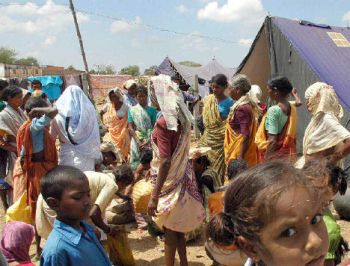
By 12:30 pm the next day, the ex Sarpanch sent word that all the family members of those killed in 2009-10 as well as the 2013 incident, as well as some members of each para where homes were burnt had congregated at a common ground in a part of the village that was a short distance away. The team walked for half an hour and reached this common area. They found that approximately 300 people of the Kondasawali Gram Panchayat had congregated there and the crowd was slowly growing in size.
After a brief discussion with everyone present, it was decided that each person who lost a family member during the incidents in 2009-10 and 2013 would testify on camera. Following their testimony, all those present from the three paras where homes were burnt would testify collectively on camera. And finally, after that, all those present could speak up if they wished to do so. The order of those who testified was as mentioned chronologically in the original complaint dated July 12, 2013 to the Collector of Sukma. The videos of the entire testimonies (Videos A and B)are being submitted along with the Report and their summary is provided below.
Following the individual testimonies of the family members of those killed as well as the group testimonies of those whose homes were burnt, the team got to hear from the women in the village, the ex Sarpanch and even a collective demand put forward by the villagers after discussing amongst themselves once they got to know of the purpose of the team’s visit. This allowed the team a wide range of views across the gram panchayat, men, women and children, across ages, as well as a sense of the collective condition of the village. The testimony of the ex Sarpanch has been videographed as well as the reading out of the collective demand letter (Videos C and D respectively). These videos are also being submitted along with this Report and their summary is being provided below.
After recording all these testimonies, the team promised to find a way to communicate with the villagers the response of the NHRC at the earliest, and proceeded back to the home where they had spent the night. On the way back, the team crossed a small shed where a girl of not more than 8 or 9 years was lying on the floor with a paste of wild medicinal herbs all over her legs. On enquiring the team found out that a few days before we arrived, this young girl had been burnt by the bonfire lit each night. Her injuries appeared extremely serious and since she had no parents, her grandmother, her only relative was distraught. As the team could not help in any way at that time, they expressed their concern and conveyed to her that her best course of action would be to proceed to Jagargunda for medical care, it was clear that there was no primary health care available in the village. During the visit the team observed a few aspects of the Kondasawali village that were striking. The team crossed four hand pumps and tube wells but all of them were broken or in shambles, the people were using the accumulated rain water in and around the Jora nala as drinking water. There was no school in the entire panchayat. The people of the village lived in very meagre conditions and consumed whatever they produced. There was no means of immediate communication with Jagargunda or any other part of the district, all routes in and out of the village were kachha, and motorized vehicles, with the possible exception of motorbicycles, could not move in the area.
Finally, the team returned to the home where they had stayed the night and bid the villagers farewell. A few of the young members of the village agreed to help the team find the shortest route back to the camp at the top of the hill. The team started their journey back around 4 pm and after a long walk and a strenuous climb back up the steep hill, reached the camp at around 7:30 pm. The team got on the bikes and returned to Sameli village, where they stayed the night, and proceeded back to Dantewada the next morning.
It is not at all surprising that almost all members of the team became severely ill after this trip. Ms Soni Sori and Mr Sukul Nag had to be hospitalised. Ms Vidhya was diagnosed with malaria of the falciparum type. The journalists Pushpa Rokde and Nitin Rokde were also ill. This shows the precarious conditions of health villagers are surviving in. It was also the reason for delay in submission of the instant report.
Testimonies of the Dead (Video A)
1.Madvi Bhima (killed 2009-10)
Family member: Wife – Masa, approximately 35-36 years old from Patelpara.
After spending nearly twenty years in jail, Madvi Bhima had finally returned in 2009-10 and the husband and wife had gone to tend to their land. After tending to their land, they left their cattle and were on their way home. When they were about to reach home, 60-70 people together arrived, fired at them, and killed him.
There was no prior warning. They were passing the hill and suddenly this firing happened. Masa returned home.
Since this incident, there has been no communication with the police, forces or any official. No one came to visit to enquire. Since the incident, the forces, police, or Salwa Judum has not harassed them.
She lives alone as her two daughters are married and have moved to other villages.
She says she has lost her husband and does not have any more children to care for and says that those who killed her husband should know that she strives to put in jail all those responsible for killing her husband. The perpetrators should be punished, she says.
She has nothing more to say to the NHRC.
2.Barse Nanda (killed 2009-10) and Barse Nande (killed 2013)
Family member: Son – Barse Somru, approximately 16 years old.
In 2009-10, his father had left the field for the day and was at home. The force that attacked first shut the door, fired at him and even hacked him with the chisel. In 2013, his mother had gone to graze the cows near Jagargunda and she was killed there.
The people who killed his father in 2009-10 include the following who are part of the police: Masa from Targude, Bhima from Janagude, Anda from Kamareguda. These three were SPOs.
He doesn’t know who killed his mother in 2013 as she was near Jagargunda grazing cows when she was killed. But he knows it was the police.
Since 2013, there has been no contact with any police, official or member of the armed force.
After losing his father and mother, he is living with his uncle’s son (his elder brother – cousin).
His demand is that the perpetrators should be punished. He has nothing more to say to the NHRC.
3.Barse Suklu (killed 2009-10)
Family member: son – Barse Nanda, approximately 18 years old from Karrepara.
In the incident that took place in 2009-10, his father was killed in the evening at around 4 pm.The police (SPOs) fired at him. The force came in large numbers during the time of Salwa Judum.After the incident, no one has tried to contact him and he has no information. There are four sons in the family, an elder brother, him and two younger brothers. They all still live in Karrepara. Those who have perpetrated this should be dismissed from their jobs and they should be punished.
He has nothing more to say to the NHRC.
4.Kunjam Boda (killed 2009-10)
Family member: son – Joga, in his twenties, from Karrepara.
In 2009-10, his father had gone to collect Mahua. While doing that he was met with Anda, Bhima and Masa. These three brought more SPOs with them along with the force. They chased him and fired at him, killing him on the spot.
He recognises three of them but estimates that roughly there were 60-80 members in the force that attacked his father and the village.
He may not be able to recognise Anda, but he would be able to recognise Bhima and Masa. Since he was young when it happened, he isn’t confident he can recognise all of them definitely.
On that day, many were in their fields or collecting Mahua. This included old, young and even children. When the firing started, everyone ran away. Some ran to their homes, and others, to the hills. So, it’s hard for anyone to fully identify everyone who came.
Since the incident, no one has contacted him.
He felt that those three he recognised, at least, should be removed from their jobs and punished, as till those three exist, it will be a tough time for his village and its people as they are the ones who bring the force to the village.
5.Sudam Bhima (killed 2009-10) and Sudam Bhima (killed 2009-10)
Family member – Mangru – father of one Sudam Bhima and uncle of the other from Patelpara (Parlegatta).
Wife’s name is Sanni. Ages of both young men were approximately 18-21 and both were married.
The young men were working on the local patel’s field along with him. In the morning the force came, picked them up and took them to Jagargunda. They were killed in Jagurgunda but he doesn’t know how they were killed (was it firing or some other means). He was never handed over the bodies and the two are still considered untraceable.
On the day the force came to burn the homes, that very day the young men were taken to Jagargunda. All three of them were in the field while their wives were at home. The force that came took the young men and told him to take his cows home and told him that they will take the young men to Jagurgunda and then leave them.
He has had no contact with any official since the incident and the young men were taken away. They used to come and beat the villagers up, roughly two hundred villagers have been beaten up, and so there is fear among all the villagers. So, they run at the sight of police and they don’t have any information.
He lost one of his daughters in law and now lives with his wife and the other daughter in law.
He says, they killed his young family members and now he doesn’t need cows. He can’t have children or grandchildren. So he has no needs. He just demands that those who did this be removed from their jobs punished and be given the death penalty.
He has nothing more to say to the NHRC.
6.Midyam Aiti (killed 2009-10)
Family member: uncle – Malla, her father Somru has died and was his elder brother from Kamarpara, Parlegatta para.
His brother’s daughter along with a friend had gone to the jungle to collect Basta (fresh bamboo shoot). Her friend managed to escape but she got caught in the firing. The force that came took her body away with them and never returned it.
He doesn’t think she was raped, as it seems she was fired at and the other girl had managed to run away. The SPOs and the force did the firing. When the incident happened, the rest of the family was at home. When they reached the spot, they (the force) had taken her body away.
The force used to come but every time they saw the force, they ran to the forests, as whoever was caught by them was badly beaten – irrespective of age or gender. So, in the meantime, they have not talked to any police, force or SPOs.
Aiti’s mother and father are both dead and besides her uncle, no one else from her family is alive.An adivasi man Madiyam Bhima was an SPO who fired first and then the rest of the force fired. This they found out later. He said he would be able to identify him as before he joined as the SPO, he belonged to their family.
He demands that the perpetrators be punished and they be removed from their jobs.He had nothing further to add.
Testimonies of the Victims of Home Arson (Video B)
1.Karrepara There were 40 homes in Karrepara. After the coming of the SalwaJudum to the area in 2006-7, the SPOs and force came to the village and lit the homes on fire and moved on. Since then, all the people of Karrepara ran away out of fear. Besides their homes, all their grains, rice were taken or burnt. Cows, buffaloes, goats were confiscated by the forces and taken away. The people of the village had run away to the foot of the hill and spent time talking amongst themselves about what they should do.
Since 2006 till 2010, all of them stayed in the forest. They couldn’t get any food or water and so they asked people in nearby villages to help them and spent their days living on the food provided by these villagers. They used to eat the Kanda found in the jungles and survived those years.
They lived in the forest till 2010. They dared to return to their land from 2011-2 onwards and slowly each one spent time returning to their homes and had started rebuilding their homes. This they did by 2013-4. They started rebuilding their families and started tilling their land and slowly over a period of time they have resettled in their own land.
They refuse to leave their land. They struggled in the forest for many years, eating whatever they could find, they worked in Bailadila and Andhra and whatever they earned there, they used for food and water to survive. They know they won’t get land anywhere else and know they can’t leave this land. So, they have returned and all the people of the village have decided that they won’t give away their land.
From 2006 to 2009, the people of the village faced a lot of violence at the hands of the Salwa Judum. Anyone who was found, old or young, men or women, even children were regularly picked up and beaten and harassed. At that time their entire para was empty and everyone lived in the forest. The force and SPOs had taken their cows, buffaloes and cattle and they had nothing with them.
The implements and cultural objects they had, the things they had collected for people’s marriages, drums, gold, silver, money and other such things were also taken away. The homes were burnt, looted and destroyed. Between 2006 and 2007, their homes were burned.
When the 7 people were killed in different parts of Kondasawali in 2009-10, the homes in the villages had already been burnt. When the killing happened villagers were gradually trying to move back to their homes. Among the things looted – pigs, chicken, goats, cattle, musical instruments, utensils, and anything the people had was taken away.
The people of Karrepara have now returned to Karrepara. All the gold, silver and things they had saved up since the time of their grandfathers, fathers and for several generations were taken away by the SPOs and the force. The people of the village feel that what is the point of asking the people who looted everything they had for compensation? The people feel that the suffering experienced by the people of Karrepara, the perpetrators should experience the same suffering and should be prosecuted for their crimes. This is their main demand from the NHRC.
Despite all this happening, they don’t know what the perpetrators will face. But they feel that the force and the SPOs should not come back to their village.
2. Kamaraguda In one day, 45 homes were burnt in 2006. The few that were left standing, the SPOs and forces returned and burnt them too. First they looted the homes, took away gold, silver and anything valuable in it, then, killed the cattle and took some away with them, and then, set the homes on fire.
The SPOs and force came together to the village and as soon as they came, started beating people up, most of the villagers ran away to the forest. When they were hiding in the forest, the SPOs and forces looted and burnt down their homes. So, they don’t clearly know how many came during this attack on the village.
After the attack on their village, they stayed in the forest for some years. They asked neighbouring villages for help and survived by working nearby.
The number of families that lived in the village is unclear. They couldn’t fully account for everyone as some ran to the forest and others went to Andhra. So, the exact details are unclear.
Since the situation appeared to improve after 2011 or so, the people started returning to their village by 2013-4 and rebuilt their homes and are now living there. Now there are 35 families (homes) in Kamaraguda that have been recently built. 45 were burnt.
When the 7 people of Kondasawali gram panchayat were killed, the people of Kamaraguda were either coming back to the village from the forest or still in the forest.
They saw the forces and SPOs burn their homes but as they ran away they won’t be able to identify anyone individually. Those who killed the people also quickly vanished.
The people who burnt the homes included people who belonged to Salwa Judum, SPOs and the force. They are able to identify three people specifically who were SPOs who brought the force to the village – Bhima aka Ramesh of Talaguda, Andal and Masa. They don’t know any of the others.
Now they are afraid of the forces who continue to harass them, detain them, and when they run away to the forest, declare them Naxals. Besides this, they have no other grievance.
3.Kondasawali In 2006-7, 40 homes were burnt in Kondasawali. SPOs and forces burnt the homes. They used to come from behind the hill and enter the village and on the way back, they did the same and burnt more homes. The number of homes in Kondasawali has come down since then as when the villagers ran away to the forest and spent some years there, some of them lost their lives to snake bites and animal attacks as well as disease and ill health, some even went away to Andhra.
The people of Kondasawali started returning 3-4 years back and have rebuilt their homes.
They (SPOs and forces) looted their homes, took away their gold and silver, even took away their cots, their rice, cattle, and whatever they could not take away, they burnt it.
They (the villagers) have not had any contact with the police or the administration of the state in the meantime but recently, the CRPF took two children, roughly 7-9 years of age, and detained them in their camp. This happened this year (2017) in June-July. They were taken to the Kondaguda camp near Palnar. The women of Kondasawali gram panchayat gheraoed the camp and got the children released. They don’t know why the children were taken. The children had gone fishing and they picked up the children with the fish they caught that day.
The force and SPOs still come on occasion at night, search for people and leave. They come at night expecting to catch people in meetings with Naxalites.They don’t come to investigate regarding the case or for anything official during the day. They only come at night and leave at night itself.
Testimony of the Erstwhile Sarpanch of Sundam Sannu
(One of the original complainants)(Video C) (Translation from Gondi)
In 2013 we had told (the authorities) that Salwa Judum should not be sent here. That a camp should not be setup here. We cannot go anywhere leaving our agriculture and land here. We cultivate here, we gather forest produce. Bhima and Sannu of Silenger; Handa and Masa of Jagargunda have caused us a lot of harm. Because of the camp at Aranpur, people are facing a lot of problem and harassment. We do agriculture on our lands, we cannot give our land to set up a camp. We were not in the village for 3-4 years, we were in the forest, we had run away there. When we came back, the camp people starting harassing us. When we came back there was nothing, there was nothing left in the village. We are surviving with great difficulty. We have rebuilt our houses. Where will be go leaving our houses, our families, our village?
Collective demands of the Villagers of the Gram Panchayat (Video D)
The villagers of Gram Panchayat Kondasawali gathered together and prepared a list of demands. They read out these demands in public which has also been recorded by the team. The team assured the villagers that the same would be conveyed to the NHRC though they did not all strictly pertain to the complaint that the team had come to enquire into. The said demands are reproduced verbatim in translation below:-
“1. Those who have killed our brothers and sisters should be removed from their jobs and punished for their actions.
2. The CRPF and police should not come into our village and beat up the villagers. In a village where the people are farming and surviving on their own, they should not be harassed in this manner. The people of the village should be allowed to live peacefully on their own lands.
3. We do not want camps near our village. This is because the CRPF forces catch anyone moving around their own land and accuses them of being Naxalites. This is restricting our movement on our own land. Thus, we do not want the camps.
4. Those who are responsible for the atrocities committed on the people of Kondasawali are the following – Madkam Bhima known as Bhima here and Ramesh now as part of the SPOs belonging to Junaguda village, Sundam Masa from Tarlaguda, Madvi Anda known as Anda here and Rakesh as part of the SPOs from Kamaraguda, Sodi Dasru from Miliampalli, Kosa Deva from Singer. These are the people who have been responsible for pushing the most marginalised of our village to absolute misery. They should be punished.”
Observations
- People of the Kondasawali Gram Panchayat are prepared to testify.
It was evident from the manner in which the villagers responded to the team that both the relatives of the deceased and those who suffered and observed the burning of houses are ready to testify and are still very keen to pursue their efforts for justice.
This is very significant given the fact that the villagers have faced one more murder after the complaint was submitted to the Collector, and that they have not got any relief in the past 4 years rather they have faced apathy, harassment and hostility.
However it is very possible that the non-threatening manner in which the team approached them; the team being accompanied by well-known social workers like Soni Sori, Lingaram and Sukul Nag; and the fact that there was a non-threatening interpreter to render their expression verbatim were also important factors in such co-operation. 2. The lack of documentation cannot be used to deny justice to these villagers. It is equally clear that they have lost whatever documentation they might have earlier had, in the arson of their homes and during the period of their displacement. They do not possess death certificates, post mortem reports, election identity cards, or ration cards. However this reason alone cannot be the ground for denying the truth of the incidents they have suffered and rejecting their demands for justice.
2. The incidents of arson and murder do not appear to be isolated but rather a strategy to displace the villagers from the area. After the incidents of murder and arson these villagers spent several years in extreme hardship in the forests. They lost many family members to illness, snake bites etc. They have repeatedly tried to return to their land and rebuild their homes. Whatever rebuilding they have achieved is through their own extremely hard labour.
This is also probably why there is no demand for compensation now, as originally voiced by them in 2013.They are only stressing that they want the persons who murdered their family members to be punished.
3. From among the members of the force who murdered their family members and burnt their houses, the people recognise several SPOs. In the testimonies given by the villagers it is clear that large groups of the security forces had attacked and burnt their villages. However the people could recognise some of the adivasi SPOs who used to belong to nearby villages or are distantly related to them. It is apparent that these persons are being used as the lowest rung in the force and are carrying out the most brutal of atrocities. This very much vindicates the understanding of the Hon’ble Supreme Court in the Nandini Sundar case when it had prohibited the use of such adivasi youth in counter insurgency operations. Despite the villagers recognising these SPOs, most of whom are surrendered Naxals, not only are they not being punished, but rather they are known to be rewarded for their role in encounters, arrests and surrenders; thus incentivizing brutality on their part.
4. People feel that the police and administration is hostile and they are afraid of interacting with them since in their experience it has only increased their repression. No efforts whatsoever seem to have been made by the administration and police to record the statements of the relatives of the victims, to assess the damage they have suffered or try to assist them in rebuilding their houses and livelihoods. Even their sources of water and livelihood are of their own making. There have also been no efforts of the administration to provide them with necessary documents to substantiate their case. On the other hand, admittedly, the attitude of the police and administration is that they cannot approach these villages without 150-200 armed security personnel, as if they have assumed the villagers to be dangerous Naxals.
5.People from all the villages expressed their apprehensions from the nearby camps People from Karrepara told the team that currently there are several camps in the hills surrounding the village. The people of the village generally avoid the camps, particularly the young men and women. If anyone is spotted by the CRPF they said,then they are harassed, interrogated, stopped and threatened with dire consequences. Those who are returning to the villages, the CRPF calls them Naxalwadi.
The villagers feel that the CRPF camps are not doing anything for their safety. In fact, when the villagers go to till their field they carry their sickle or to the forest to forage and hunt they carry their axe and bow and arrow, and when the CRPF see these with the villagers they harass them, beat them up and chase them away. Moreover, the CRPF attack the villagers even when they go out to the forest for latrine, and even attack them when they are bathing in the stream nearby. When people travel to visit their family or go the market to sell their wares, the CRPF harasses and beats them up. Thus, the camps are affecting their everyday movement and they wish it would be moved away from here.
Similarly villagers of Kamaraguda expressed to the team that they feel that they don’t want the camps nearby as the more the camps there are, the more they will be harassed. They said that the camp in Jagargunda is enough and they wanted this to be conveyed to the NHRC.
Villagers from Kondasawali also told the team that the camp on top of the hill should be removed and moved to the Jagurgunda camp. This is because when people go to the foothills for basta (bamboo shoots) and other things, the CRPF misbehaves with them, particularly the women, whom the CRPF sexually harasses as well.
The villagers have heard that one more such camp will be set up soon and this is something they are against as when they travel in and around the area carrying their sickle and axe from their fields and back, they are picked up by the CRPF and harassed, accused of being Naxalites, beaten, killed or jailed on trumped up charges. That’s why they appeal to the NHRC to stop the setting up of such camps. They said they don’t know why these camps are set up and it isn’t for their security.
Some years ago, four of their villagers were picked up from the marketplace and accused of being Naxalites and jailed. Two were released while two are still in jail. They are fighting for their release. They appeal to the NHRC to look into this matter as well. The two in jail are Kosal s/o Sannu and Bhima s/o Bhida in Dantewada jail. They don’t know on what charges. The SPOs picked them up from the marketplace. 5 more people from Talaguda gram panchayat nearby were recently also picked up in this manner and taken to Jagargunda camp a year and half ago.
6. Women seem to have experienced frequent cases of sexual harassment and sexual violence at the hands of security forces. The women did not speak individually to the team but collectively. Ms Soni Sori interpreted the conversation. This is a gist of what they spoke.
Our houses have been burnt, our cattle, all our belongings have been burnt, even the utensils. We will work and survive. We don’t want money from the government but we will not give our land. We don’t want a camp in our village. Please tell the authorities that the police people harass us a lot. We do not want a camp in Kondasawali village, we are all opposing it. The camp people come to our village and give us a lot of trouble. They threaten us and sexually molest and rape us. Even if we go to the bazaar they harass us. We feel afraid of going to the forest. If the camp is set up in the village, they will catch us, beat us and rape us. (When the team asked how many women had faced such a situation) they said that about 50 women in that Panchayat had been raped, some had been killed also. They said they felt very afraid to venture out anywhere.
It was not the mandate of the team to investigate into the details of these incidents of sexual molestation and rape. However the team came away with a distinct impression that the women have suffered greatly on this count and these cases also required to be followed up. If so directed by the NHRC, the complainant can attempt to do the same.
7. The villagers are experiencing restriction on their normal life activities and mobility in the hostile environment created by the camps. The villagers are unable to access the forest, carry implements for agriculture or hunting, go to markets, celebrate traditional festivals, visit relatives or attend marriages; in short they are not able to conduct their lives in a normal and peaceful manner because of the hostile environment of the camps surrounding them. They have faced brutal violence in the past and are still extremely apprehensive of the same.
Suggestions
1. The fact that the atrocities spelt out in the complaint were indeed committed on the people of Kondasawali Gram Panchayat has been corroborated and the people of Kondasawali are willing to testify to the fact.
2. It is clear that there has been no positive assistance from the district administration and the police and security forces to the people of Kondasawali, rather the villagers have suffered apathy, harassment and outright hostility from them. Thus we suggest that the Investigation Wing of the NHRC immediately undertake an independent investigation of the same to ensure justice to the victims, rather than leaving it to the state authorities.
3. That in carrying out such investigation, we suggest that the NHRC team should preferably not be accompanied by heavy armed force or members of the local force and SPOs who have been themselves perpetrators of atrocities.
4. We suggest that the NHRC team requires to take into account that the villagers of Kondasawali have once lost all their properties and documents in arson of their houses, have been forced to take refuge in jungles and have only recently rebuilt their homes. It is thus not practicable to expect them to possess documentary evidence of their identities. The NHRC will therefore have to work out some other mechanism such as relying upon the statements of the erstwhile and present Sarpanch, and elders of the village or neighbouring villages etc. to verify the same.
5. That the experience of many villagers who have tried to file cases against the security forces has been that they have been foisted with false cases, and the villagers in Kondasawali also apprehend the same. While they have been brave enough to state their testimonies on video, they are apprehensive that such videos, if handed to the local authorities, might result in the deponents being implicated in false Naxal cases. Thus it is requested that the NHRC keep the videos accompanying the Report confidential, closely monitor the situation in the Gram Panchayat Kondasawali and direct that the police and the security forces inform the NHRC prior to any detention, interrogation, arrest, or other operation of the security forces in the said village.
6. That in punishing the perpetrators in particular, the NHRC should also consider the role played by SPOs, particularly surrendered Naxals, in general in the counter insurgency operations and advise the State Government in this regard.
7. That the team had observed that while in our criminal justice system, a crime is seen to be committed against individuals, by individuals, and is testified to by individuals; adivasi people are used to deciding and acting collectively. Thus it would be important to respect their collective will and gain their trust in order to work to provide justice to individuals.
8. Finally, the NHRC is urged to communicate with the complainants (namely the original complainant Sundam Sannu and the present complainant) regularly and ensure that they are kept informed about any progress in the case in the coming days.
Submitted by: Sudha Bharadwaj, General Secretary, Chhattisgarh PUCL, JK Vidhya, Researcher, member PUCL
LIST OF ANNEXURES
- Representations made by the Chhattisgarh PUCL on September 13, 2013.
- Documents provided under the Right to Information Act by the Public Information Officer of Collector Sukma to Adv Parijata Bharadwaj, Jagdalpur Legal Aid Group and a member of the PUCL.
LIST OF VIDEOS SUBMITTED
- Video A: Testimonies of the family members of those killed.
- Video B: Collective testimonies of residents of various villages regarding burning of houses.
- Video C: Interview of the then Sarpanch Sundam Sannu.
- Video D: Collective demand letter being read out among the villagers.