Email: sabrangind@gmail.com


The letters reminded these companies that their operations in and with illegal Israeli settlements are in violation of “international law and in opposition of UN resolutions.” They also requested that these companies respond with clarifications about such operations.
According to senior Israeli officials, some of the companies have already responded to the UN High Commissioner for Human Rights by saying they won’t renew their contracts or sign new ones in Israel. “This could turn into a snowball,” worried an Israeli official.
Of the 150 companies, some 30 are American firms, and a number are from nations including Germany, South Korea and Norway. The remaining half are Israeli companies, including pharmaceutical giant Teva, the national phone company Bezeq, bus company Egged, the national water company Mekorot, the county’s two biggest banks Hapoalim and Leumi, the large military and technology company Elbit Systems, Coca-Cola, Africa-Israel, IDB and Netafim.
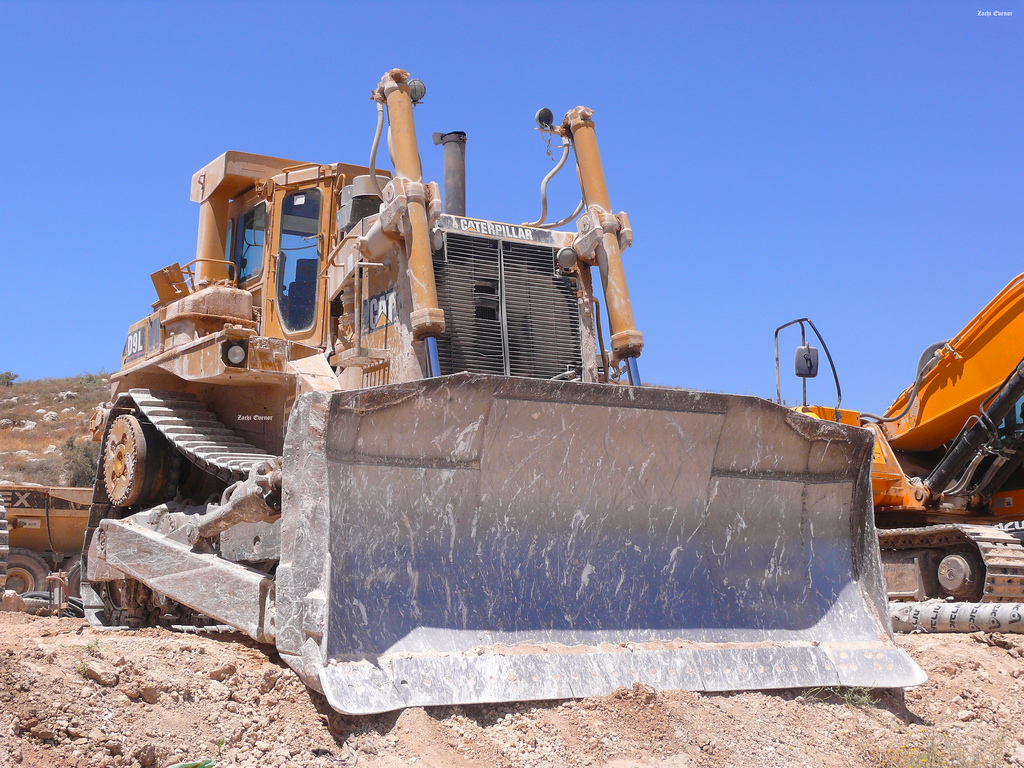
American companies that received letters include Caterpillar, Priceline.com, TripAdvisor and Airbnb.
The Trump administration is reportedly trying to prevent the list’s publication.
Omar Barghouti, co-founder of the BDS movement, commented,
After decades of Palestinian dispossession and Israeli military occupation and apartheid, the United Nations has taken its first concrete, practical step to secure accountability for ongoing Israeli violations of Palestinian human rights. Palestinians warmly welcome this step.
We hope the UN Human Rights Council will stand firm and publish its full list of companies illegally operating in or with Israeli settlements on stolen Palestinian land, and will develop this list as called for by the UN Human Rights Council in March 2016.
It may be too ambitious to expect this courageous UN accountability measure to effectively take Israel “off the pedestal,” as South African anti-apartheid leader Archbishop Desmond Tutu once called for. But if implemented properly, this UN database of companies that are complicit in some of Israel’s human rights violations may augur the beginning of the end of Israel’s criminal impunity.
Courtesy: http://mondoweiss.net

A Youth for Life anti-abortion campaigner. Photo: Youth for Life/Facebook.
Irish politicians have been deaf to the clamour of women’s voices calling for abortion rights for decades. Despite being the first country to legalise same-sex marriage by popular vote (in 2015), the republic of Ireland still maintains an abortion regime stricter than Saudi Arabia’s.
Abortion is legal in Ireland only when the mother’s life is at risk. The country’s constitutional misogyny has baffled fellow European states and earned it the censure of international groups including the United Nations, the Council of Europe, and Amnesty International.
In northern Ireland, women carry the passports but not the entitlements of British citizens (who have had access to legal abortions for 50 years, since 1967). This island seems united in its deliberate disregard for women’s fundamental rights if nowhere else; those seeking terminations from either side of the border must travel abroad.
‘This island seems united in its deliberate disregard for women’s fundamental rights if nowhere else.’
Yesterday the Irish government announced that a referendum will be held next year, in May or June, on whether to repeal a constitutional amendment that gives equal rights to a woman and her unborn child, thus opening the door to legalising abortion.
Battle lines have been drawn between those who want the eighth amendment repealed, and those fighting to keep it. In northern Ireland, anti-abortion lobbying has so far succeeded in blocking attempts to bring reproductive rights in line with the rest of the UK.
On the frontline are two anti-abortion groups who work loosely together across the border: Precious Life in northern Ireland and Youth Defence in the south.
In the past, both groups spent their time protesting against family planning clinics holding nightmarish posters purporting to show ‘the aborted baby’ (despite the fact that abortion was already illegal) and assuring those of us trying to enter that we were going straight to hell.
Today these groups have successfully attracted articulate millennial women to their ranks, who are then placed front and centre to recruit others. Grisly images remain, but threats of eternal damnation have been replaced with “Love Life” protests and “Rally For Life” marches.
The tone has titled to mirror the language of human rights activism and growing pro-choice movements that have been propelled by a new and active, engaged and connected generation. The last five years have seen rising pro-choice mobilisation in Dublin, Belfast and elsewhere, amid ‘repeal the eighth’ campaigns.

Precious Life at the ‘Rally for Life’ in Dublin. Photo: Lucy Kelly/Youth for Life/Facebook.
In July I joined the youth brigade of Precious Life, called Youth For Life NI, as they embarked on a summer roadshow tour of northern Ireland. They visited eight towns and cities in a week, almost at the same time as a similar Youth Defence tour, which made 17 stops across the rest of Ireland over ten days.
Appointed to speak to me was the eloquent and charming 20-year-old Lucy Kelly, who joined Precious Life through an affiliate group at Queen’s University in Belfast, where she studies law. Kelly describes herself as a “pro-life feminist”. She’s a committed campaigner and, I gathered, a serial over-achiever.
“Abortion is absolutely femicide”, she told me. “Consider who is aborted now – over half of the babies are female. So many times it’s about gender selective abortions. It’s this whole thing about women’s rights, but what about a woman’s right to be born?”
“What about a woman’s right to be born?”
Kelly is a strong communicator and her talent is clearly being recognised within the organisation. At this year’s ‘Rally For Life’ in Dublin, she was tasked with introducing the entire march before it kicked off.
This march is the highlight of the Irish anti-abortion calendar, and a potent display of the immensely well-connected, church-backed and community-centred lobby. This year, organisers claim 70,000 people attended (though this figure is disputed).
When we met, Kelly and half a dozen other young activists were cheerfully handing out pamphlets, featuring improbable horror stories from US abortion clinics, to shoppers caught in Belfast’s summer rain.
They had set up a table displaying aged plastic props – a womb and vagina, and foetuses at different stages of development – and advertisements for Stanton Healthcare, founded by US Christian activist Brandi Swindell, that opened its first overseas anti-abortion clinic in Belfast in 2014, on the same central street as reproductive rights charity Marie Stopes.
Swindell, described by Cosmopolitan magazine as ‘the woman who wants to take down Planned Parenthood’, is also one of the founders of a group called ‘Generation Life’, which recruits young anti-abortion campaigners and teaches abstinence as a form of contraception. Swindell has also worked with Youth Defence in Ireland.

Lucy Kelly (left) in Dublin at the ‘Rally For Life’. Photo: Youth for Life/Facebook.
“We are not anti-women”, Kelly insists. “We want to save both the life of the mother and the life of the baby – we want better care for both.”
Youth for Life is small – “we’re about 30 really pro-active and engaged members,” Kelly says – but has a large network of supporters offline and, increasingly, online. Among other things Precious Life sends out weekly emails, which Youth For Life contributes to, with updates for supporters and requests for donations.
Their funding, Kelly insists, does not come from the US, as is widely believed to be the case, and instead is from “grassroots” activists. But there is certainly a level of collaboration across the Atlantic. “Pro-life people stick together,” she says. “The big march in Washington DC, [the] numbers get bigger every year. Some of us are actually hoping to go…this year.”
There are also links being built across Europe: for this summer’s roadshow in northern Ireland, the group was also joined by activists from a Slovakian anti-abortion group. “People all over seem to be waking up,” says Kelly.
“Pro-life people stick together.”
Kelly laments that “the media are very biased in favour of abortion,” and that “the media totally misinforms people of the facts.” To this she said: “bring on the referendum, because you will lose.”
There’s a slightly counter-culture feel to it all: Kelly’s group is small, but everyone I meet is under 30 and appears deeply invested in trying to win over the hearts and minds of those few members of the public who did stop to challenge their views.
They presented themselves as activists for truth more than God, who wasn’t mentioned as far as I could hear – at least not in the conversations I was trying to earwig.

Young anti-abortion activists on the roadshow. Photo: Youth for Life/Facebook.
“Something we don’t hear about is how women die in legal abortions,” Kelly adds. “There was a woman from Ireland who died in Marie Stopes in London. Hundreds of women have [died] from so-called safe and legal abortion – look it up online.”
The weaving together of facts, anecdote and fictions is disarming. Abortion is a safe medical procedure (in the US less than 1% of terminations results in complications), but it’s likely she was talking about the preventable death of 32-year-old Aisha Chithira who died in London hours after having an abortion at 22 weeks in January 2012.
At the time, Chithira’s husband told the The Irish Times that she had first gone to a maternity hospital in Dublin but was denied a termination. In Ireland on student visas, the couple’s journey to England was delayed as they raised travel funds. Late term abortions carry significantly higher risks; staff involved in Chithira’s care were cleared of negligence charges in 2016.
But this tragedy has been twisted by both Precious Life and Youth Defence online, and seized upon by activists in the US who leverage the immense power of social media to tell highly emotional stories peppered with truth that promote their agenda.
“The internet helps massively of course”, Kelly told me. “Social media is massive for us, and when it’s used well it can be extremely effective.”
“Social media is massive for us.”
The array of websites framed by anti-rights and anti-abortion ideology that have emerged over the past decade could be seen as a case study in the power of “fake news”.
During the roadshow, another young woman anti-abortion activist said: “I wasn’t always pro-life, I agreed with abortion under some circumstances, but then I saw something on Facebook that had a profound impact on me.” Then, she said, “the more I started looking into it and researching it on Facebook, the more pro-life I became.”
Grim online videos, including notoriously deceptive 2015 undercover films, made by the anti-abortion Centre for Medical Progress inside Planned Parenthood clinics in the US, are particularly potent currency on Facebook.
In the social media giant’s attempts to become a video-led platform, algorithms alert users to videos based on their ‘likes’. And so a particularly distressing video by a man called Dr. Anthony Levatino recently appeared on my radar.
The video, which has been viewed more than a million times on YouTube alone, purports to show a first-trimester abortion. It’s currently at the centre of a hunger strike outside Irish parliament, by a young man who says he will not eat until the prime minister watches it.
The hunger striker is also a member of Youth Defence, and has previously run as an independent candidate in the Irish general election. Being anti-abortion in Ireland brings a certain level of political capital with it that election hopefuls eagerly cash in.

This year’s Rally for Life march in Dublin. Photo: Youth for Life/Facebook.
This summer, Kelly found a number of male politicians willing to appear in a Youth for Life promotional video that is now on their Facebook page.
What’s more, she said that one of the politicians featured in the video boasted, separately, about refusing to help a constituent who came to his office asking for assistance to get to England to obtain an abortion.
“I don’t ever feel like I am on the losing side.”
“We were really lucky with the roadshow in that most of the major parties agreed to meet us,” said Kelly, naming the SDLP, UUP and DUP as among them. “Our big campaign at the moment is ‘lobby for life’…to encourage people to contact their representatives, as they will be the ones deciding on any changes to the law.”
Northern Ireland’s first minister Arlene Foster also met with Youth for Life this summer, and assured them that she would work to protect existing anti-abortion laws.
Looking ahead, Kelly seemed confident that the eighth amendment will stay in place, and that northern Ireland will continue to be a place where women’s reproductive rights are restricted.
“There will always be obstacles, but we have to stay positive,” she said. “In the pro-life movement, everyone is extremely happy. Everyone is fighting for life. I don’t ever feel like I am on the losing side.”
Lara Whyte is an investigative journalist and award-winning documentary and news producer focusing on issues of youth, extremism and women’s rights. Originally from Belfast in northern Ireland, Lara is based in London. She is currently commissioning editor (special projects) for 50.50 tracking the backlash against sexual and reproductive rights. Find her on Twitter: @larawhyte.
Courtesy: Open Democracy

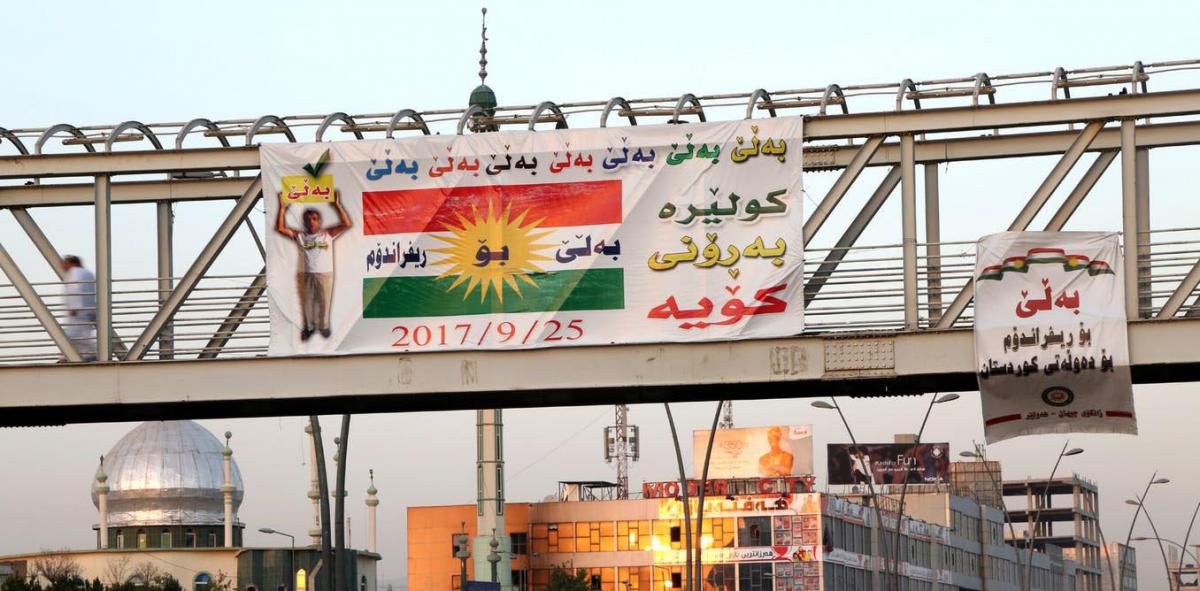
Although it was never quite clear what the September 25 referendum was intended to achieve, one thing’s for sure: while the Iraqi government, neighbouring states, regional powers and the international community were all against it from the off, the people of Iraqi Kurdistan have voted on self-determination and given a very clear mandate for independence.
It only takes a short stay in Iraqi Kurdistan to conclude that a separation from the rest of Iraq seems inevitable, thanks to both the long-held Kurdish desire for a homeland and the different trajectories that Iraqi Kurdistan and Iraq have followed now for more than a quarter of a century.
Barring diplomatic, economic, or even military action by Iraq or other states, the next step envisioned by Kurdistan’s president, Masoud Barzani, is to enter into negotiations with the Iraqi federal government over Kurdistan’s future status. Since the federal government would have to relinquish its sovereign claim over Kurdistan in order for it to become a state, Kurdistan’s path to independence travels through, and is dependent upon, Baghdad.
But just because separation is inevitable doesn’t mean achieving it will be easy. An independent Kurdistan will present problems for other states with secessionist movements and will immediately confront severe challenges of its own.
The most pressing problem that an independent Kurdistan would face is how to fund itself. Much of Kurdistan’s domestic economy is dependent on Turkey, which has threatened to cut off the flow of goods and stop exporting oil because of the referendum. Iraqi Kurdistan also currently receives approximately 13-17% of the national Iraqi budget. This funding has been a source of continued dispute, but is vital to Kurdistan maintaining its government and services. Advocates for independence make much of the potential financial windfall from oil production, but with oil prices low and political turmoil running high, the Kurdistan market is less and less attractive for international investors
.
In fact, since 2014, Kurdistan has been struggling with a long-term financial crisis. The costs of war with the so-called Islamic State (IS), an influx of refugees and a decline in oil revenues have combined to undermine the government’s budget. Since 2015 government salaries have gone unpaid or been cut. These would be onerous problems indeed for a new independent state to confront.

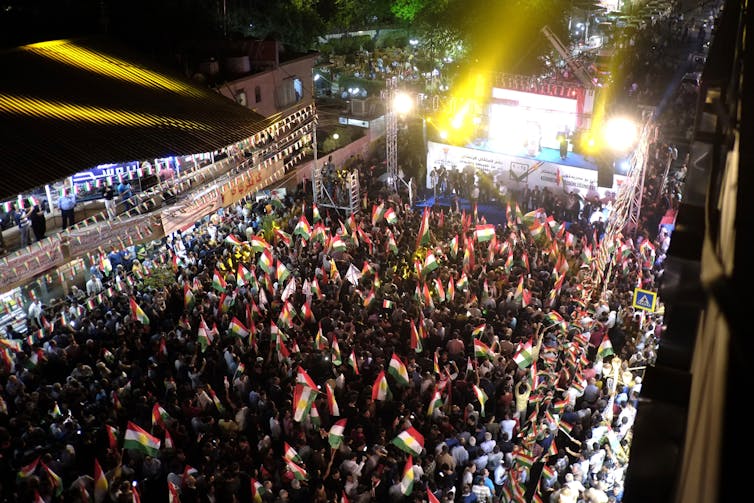
Raising the roof. EPA/Gailan Haji
This year’s referendum was a vote for the people of Iraqi Kurdistan as well as four Kurdish controlled regions within Iraq: Kirkuk, Makhmour, Sinjar and Khanaqin. Although these regions are currently controlled from Erbil, they are also claimed by Baghdad.
The perilous state of finances in Kurdistan mean Kirkuk in particular is vital. A multi-ethnic city, Kirkuk sits next to one of the largest oil fields in Iraq, and contestation over who it belongs to has long been a concern. Kurdistan has controlled it since 2014, but the decline of the IS threat in Iraq would allow Baghdad to commit military resources to reclaiming the city and its oil fields.
One issue that any negotiation between Baghdad and Erbil would have to resolve is the status of these oil resources. A peaceful resolution to this land and resource dispute would do much to allow Kurdistan to split from Iraq in an amicable fashion. But looking at a map of north and central Iraq, Kirkuk is only one of many potential flashpoints in the disputed territories that ring the borders of Kurdistan from Mosul to Tuz Khurmatu.
Even among Iraqi Kurds, the referendum in Kurdistan was not universally supported. Some parties argued that the timing of the referendum was wrong; others raised concerns that President Barzani was using the referendum to safeguard his own political future. It was not clear until the day of the referendum whether the polls would open in Kirkuk or not.
Further, Kurdistan is not just populated by Kurds – and many (including Iran and Turkey) are concerned for the status and future of Arabs, Turkmen, and other minority groups. Incorporating non-Kurds into a territory so closely associated with Kurdish identity and longstanding calls of Kurdish nationalism will be an obstacle that a Kurdistan outside of Iraq will have to address if it wishes to remain stable.

Something’s in the air in Erbil. EPA/Gailan Haji
Beyond that, though, the heightened sense of Kurdish nationalism amongst the Kurds themselves may have been necessary for mobilisation of society behind a yes vote, but it will also have to be carefully navigated by the Kurdistan government. In the run-up to the referendum, Barzani made clear and strong statements that Kurdistan would not stay within Iraq and that it would not be controlled by outside powers. But what happens if the promises of independent statehood cannot be realised?
The negotiations between Erbil and Baghdad carry no guarantees. If they want to avoid crisis, Barzani and his fellow leaders will need to engage in long-term and very careful politics with both Baghdad and Kurdistan’s population – if they’re mobilised and marched to the top of the hill, it could be dangerous to try to march them back down.
As things stand, all involved must confront two difficult facts. First, it is not easy or straightforward to become a new sovereign state and, second, any resolution to the question of Iraqi Kurdistan is still a long way off. The independence referendum has presented an optimistic future, but there are plenty of obstacles in the way.
Rebecca Richards, Lecturer in International Relations, Keele University and Robert Smith, Lecturer in International Relations, Coventry University
This article was originally published on The Conversation. Read the original article.
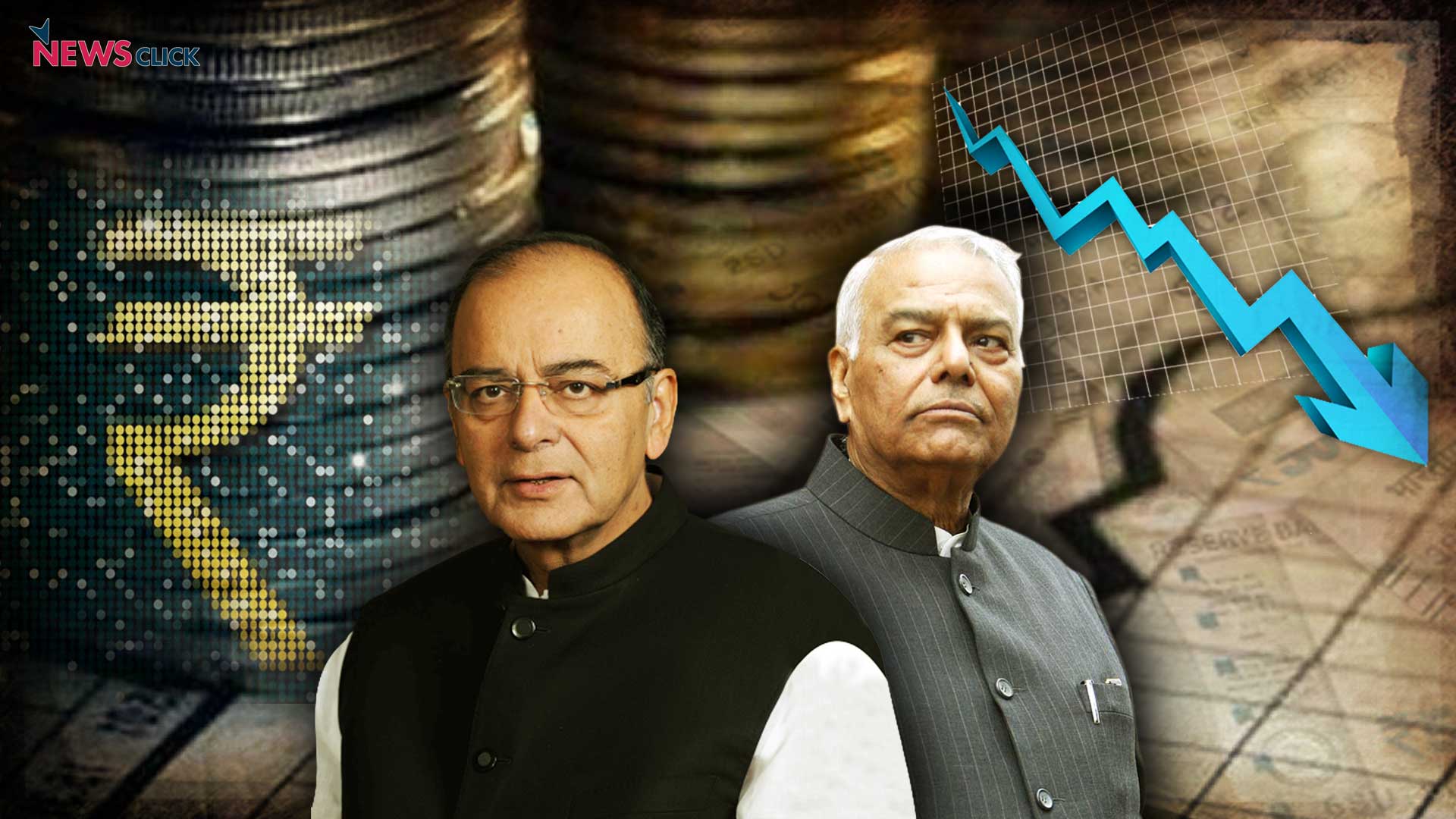
“The prime minister claims that he has seen poverty from close quarters. His finance minister is working over-time to make sure that all Indians also see it from equally close quarters”, wrote Sinha in a hard-hitting opinion piece in The Indian Express.
Industry, agriculture, construction and services have slowed down and exports have dwindled, said Sinha. Demonetisation “has proved to be an unmitigated economic disaster”, while “a badly conceived and poorly implemented GST has played havoc with businesses and sunk many of them and countless millions have lost their jobs with hardly any new opportunities coming the way of the new entrants to the labour market.”
The methodology for the calculation of GDP had been changed by the BJP government in 2015, after which the growth rate recorded earlier increased statistically by more than 2 per cent. “So, according to the old method of calculation, the growth rate of 5.7 per cent is actually 3.7 per cent or less”, wrote Sinha.
BJP leader Subramanian Swamy has been continuously attacking Jaitley on Twitter, while former BJP minister Arun Shourie had also come out against the Finance Minister’s handling of the economy.
Yashwant Sinha sought to blame “the heavy burden of so many extra responsibilities” that Jaitley had to bear for the state of the economy.
But long-time observers point out that the problems run much deeper. Economist Prabhat Patnaik pointed out in a recent article that the looming recession in India is a product of three factors: the world crisis being imported into the domestic economy, the demonetisation measure whose effects continue to linger, and the Goods and Services Tax (GST) which has suddenly readjusted tax-burdens in a manner detrimental to small producers and traders.
Patnaik, who was the among the earliest to predict the recessionary impact of demonetisation, said in a recent interview that demonetisation added to a recessionary tendency that has existed for some time because of the world capitalist crisis. While it had appeared for a while that countries like India and China were insulated against the impact of the crisis, that is no longer the case. It is known for some time that the crisis was beginning to hit them.
Investment, net exports and government expenditure have all been showing symptoms of slowing down. Government expenditure increased recently due to the Pay Commission recommendations, but that kind of stimulus will not be there all the time and once its impact wanes, the recession would become much more pronounced. That is what is happening now, said Patnaik. Demonetisation has added to the recessionary tendency, as the informal sector in particular was adversely affected.
Share of Exports in GDP Touch 14-Year Low; GST Collections Down
Figures for the first quarter of the 2017-18 financial year bring out the sluggishness in export growth. While GDP growth in the April-June 2017 quarter – at 5.7 per cent – was more than two per cent lower than in the corresponding period last year, the share of exports in India’s GDP declined to a 14-year old low in the same quarter, Business Standard reported . Export growth in the quarter was a mere 1.2 per cent at constant prices. Export of goods and services accounted for 19.4 per cent of the GDP at constant prices in the April-June 2017 quarter, down from a little over a quarter of the GDP at its peak in 2013-14.
Bad news on the economy front extended to tax revenue as well, with GST collections slowing down in August. GST collections for the month were at Rs. 90,669 crore, down from Rs. 94,063 crore in July. This comes on top of the fact that the final figures for GST revenue are expected to be substantially lower due to refund claims of a massive Rs 65,000 crore in July.
Negative Outlook on Growth
Meanwhile Anil Manibhai Naik, outgoing Group Executive Chairman of Larsen & Toubro (L&T), has said in an interview with Business Standard that the economy is unlikely to revive for the next two years.
“India is in election mode. There are polls either in one state or the other, apart from general elections for the next two years. This will keep the top leadership of the government busy with campaigning and crucial governance will get neglected”, said Naik.
“Besides, the private sector is not in a position to invest, as many companies are dealing with their debt problem, while other large corporates that wanted to invest have completed their capital expenditure programme.”
Courtesy: Newsclick.in

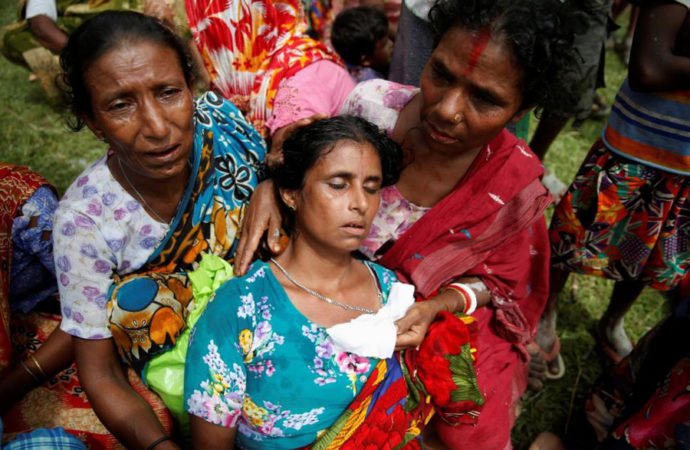
The Myanmar government have urged Hindu refugees who fled to Bangladesh to return, promising they will be cared for in Sittwe, Frontier Myanmar reports.
An estimated 500 Hindus crossed over to refugee camps in Bangladesh in the weeks since the August 25 attacks on police posts in Maungdaw by the Arakan Rohingya Salvation Army (ARSA).
U Bu Hla Shwe, Coordinator of the Danyawady IDP (Internally Displaced People) camp in Sittwe on behalf of the Rakhine State government, told Frontier on Tuesday that most of the Hindus across the border are from Ohtein village in Maungdaw Township, and had fled the day after the initial attacks last month.
A further eight Hindu women were from Ye Bauk Kyar village, around 15km south of the Bangladeshi border, whose inhabitants authorities previously believed had all been killed.
Tension between Myanmar’s majority Buddhists and the Rohingya, most of whom are denied citizenship, has exploded several times over the past few years as old enmities, and Buddhist nationalism, surfaced with the end of decades of harsh military rule.
There has been an exodus of Rohingya from Myanmar’s Rakhine state since August 25, when attacks by ARSA triggered a military crackdown that the United Nations has branded “ethnic cleansing”.
Courtesy: Dhaka Tribune
‘Vasudhaiva Kutumbakam’ meaning ‘the whole world is one family’, is an ancient Sanskrit phrase found in the Maha Upanishad, one of the Sacred Texts of Hinduism. This important phrase underlines a basic tenet of Hindu philosophy, which includes welcoming, hospitality, tolerance, harmony, unity and adaptability. For several centuries, India as a country and a large percentage of Indians have been doing their best to live up to this ideal. India has been home to races, nationalities, tribes, religions and cultures from across the world.

Image: AFP
India has always been a welcoming home to refugees. During the bloody and painful days of partition, there was a steady influx of refugees into India.
Thanks to the statesmanship of India’s first Prime Minister Jawaharlal Nehru, several hundreds of thousands of Tibetan refugees (including the Dalai Lama) have made India their home for more than fifty years now.
The Bangladesh Liberation War of 1971 saw another major influx into the country; it was estimated that more than ten million East Bengali refugees entered India to escape mass killings and the brutality of that war. Though most returned to Bangladesh after independence, an estimated 1.5 million have continued to stay on in India.
The Soviet-Afghan war of 1979, the more than twenty-five years of civil war in Sri Lanka since 1983, the atrocities on minorities in Myanmar, have in their wake brought in huge numbers of Afghanis, Sri Lankan Tamils, Chins and Rohingyas into India.
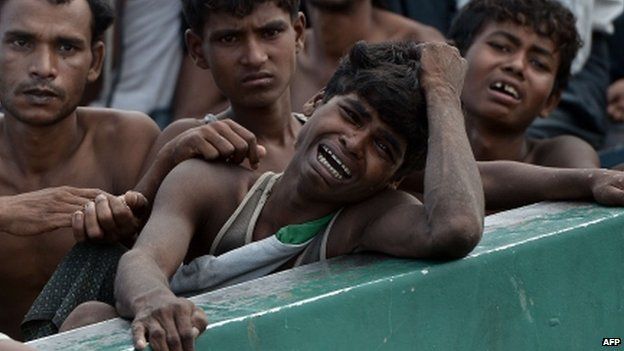
The persecuted Rohingya refugees fleeing Myanmar today and inhuman stand of the current Indian Government is very much in the news today. The Rohingyas (1.2 million approx.) are an ethnic minority group, mainly Muslim, who are concentrated in Myanmar’s Rakhine State. Despite having roots and living in the Buddhist- majority country for centuries, the Rohingyas since 1982 are denied citizenship, disenfranchised, regarded as illegal immigrants and rendered stateless. Since the late 1970’s, many of them have sought refuge in neighbouring countries, particularly Bangladesh
In February 2017, a United Nations report had documented numerous instances of gang rape and killings, including of babies and young children, by Myanmar’s security forces. In the past month, because of some insurgency on the part of a small group of Rohingyas, the army’s viciousness, already very ghastly, has escalated even further. The military action triggered Asia’s biggest humanitarian crisis since Cambodia’s Pol Pot. Recently, the United Nations’ top human rights official called Myanmar’s ongoing military campaign against the Rohingya Muslim minority group in that country’s Rakhine state “a textbook example of ethnic cleansing.”
In just a little over a month since August 25, more than 480, 000 Rohingyas have sought refuge in Bangladesh. Many were killed by the Myanmar military and other marauding mobs. Those who have survived the onslaught in Myanmar face land mines planted along the border presumably aimed at killing escapees. Others make the treacherous crossing, through inclement weather (torrential rains and floods) of the wide estuary of the Naf River, which separates Myanmar from Bangladesh. It is estimated that several hundreds have died in capsized boats, and boatmen have been charging exploitative rates for a ride that usually costs a pittance.
Victim survivors have been sharing horror stories of what they have been going through. The Rohingyas are referred to, as the minority, which is the most persecuted in the world today. The unbelievable and inhuman suffering, which they are being subjected to, has captured the attention: the anguish and anger of a sizeable section of the world community.
The Bangladesh Government, the UN and some local and International NGOs are doing their best; but the conditions are dire, food and drinking water is scarce. The UN Refugee Agency in a communique states, “there is also an increased risk of communicable diseases, infection, cholera and respiratory infections. It is incredibly difficult to keep warm and dry under these conditions and already weak and exhausted; many refugees will struggle to stay healthy.
Filippo Grandi, the UN High Commissioner for Refugees visited the Rohingya refugees in Bangladesh recently. On September 27, on his return to Geneva he said, “They had to flee very sudden and cruel violence, and they have fled with nothing. Their needs are enormous – food, health, shelter. They have absolutely nothing. I have hardly seen in my career people that have come with so little. They need everything,” Further adding, “I have spoken to several women who have been raped, or have been wounded because of their resistance to rape. I spoke to many children, shockingly absent of emotion, because they were so traumatized. They told me how they had seen their parents or relatives or friends killed in front of their eyes.”
Despite the suffering of the Rohingyas ,the Government of India is doing all they can to deport about 40,000 Rohingyas who are currently living in India and to prevent other Rohingyas from entering the country.
This is a very sad commentary on the moral fibre of the current ruling dispensation, besides the actions by India against the refugees would clearly go against the country’s obligations under international and domestic law.
The case of the rights of the Rohigya refugees is currently in the Supreme Court of India and the next hearing is scheduled for October 3 .
Some of the country’s best-known legal luminaires are defending the Rohingya petitioners and others against the Government of India. Their petition rests on two basic premises, that any deportation would violate their fundamental rights to equality and to life, under Articles 14 and 21 of the Indian Constitution, and, secondly that any action by India in returning them to Myanmar would infringe international law, particularly the principle of non-refoulement(Article 33 of the 1951 Refugee Convention).
The Government’s key arguments are that terrorists ‘might’ have infiltrated the Rohingyas, therefore the security of the country is at stake; and that the country is not bound to follow the principle of non-refoulement, since it is not a signatory to the 1951 U.N. Convention Relating to the Status of Refugees. No one with a bit of common sense and compassion will buy these arguments.
On September 11, in his Opening Statement to the 36th Session of the Human Rights Council Zeid Ra’ad Al Hussein, United Nations High Commissioner for Human Rights said, “I deplore current measures in India to deport Rohingyas at a time of such violence against them in their country. Some 40,000 Rohingyas have settled in India, and 16,000 of them have received refugee documentation. The Minister of State for Home Affairs has reportedly said that because India is not a signatory to the Refugee Convention the country can dispense with international law on the matter, together with basic human compassion. However, by virtue of customary law, its ratification of the International Covenant on Civil and Political Rights, the obligations of due process and the universal principle of non-refoulement, India cannot carry out collective expulsions, or return people to a place where they risk torture or other serious violations”. Strong words indeed but the plain truth. Several other prominent human rights organizations have criticized India’s stand.
There has been global condemnation of the atrocities committed by the Myanmar military and of the complicit silence by Nobel Peace Laureate Aung San Suu Kyi who is the State Counsellor of Myanmar – but also rather powerless. On the other hand, Myanmar has the support of some nations like China and very unfortunately, India too!
In two months from now, Pope Francis will be visiting Myanmar (Nov.27-30) and Bangladesh (Nov.30th to Dec 2nd). His visit will certainly focus global attention on the plight of the Rohingyas.
Pope Francis has consistently taken a stand for all refugees and displaced persons and he has been vocal in his defense of the Rohingyas. On August 27th, just a couple of days after this current onslaught he said, “Sad news has reached us of the persecution of our Rohingya brothers and sisters, a religious minority. I would like to express my full closeness to them – and let all of us ask the Lord to save them, and to raise up men and women of good will to help them, who shall give them their full rights. Let us pray for our Rohingya brethren.”
The Government and people of Myanmar, the Government of India, and the global community must pay heed to the fact that, “the whole world is one family”; that every citizen in a civilized world is endowed with rights; that even refugees have to be treated with compassion, care and the dignity they deserve. Above all, we have to realise that like the rest of us, the Rohingyas are human too!
(The author is a human rights activist)

Oral Statement by Sultan Shahin, Founding Editor, New Age Islam, on behalf of Asian-Eurasian Human Rights Forum; UNHRC, Item 9, General Debate, September 26, 2017
Mr. President,
Sixteen years after 9/11, the issue of Jihadi terrorism has become even more complex and widespread.
First, though Jihadism is a violent offshoot of Wahhabism and Salafism, the international community has allowed the fountainhead of Wahhabi/Salafi ideology to continue to spend tens of billions of dollars to Wahhabise the world Muslim community.
Second, we recently saw with horror, but without any protest from the international community, the sight of a UN-designated terrorist, with a ten-million-dollar bounty on his head, launch a political party and nominate another US-designated terrorist to contest democratic elections in Pakistan. Apparently, some countries can ignore UN directives with impunity.
Third, the Muslim community has failed to grasp that Jihadism spread so rapidly around the world because at its core it is not very different from the theology of consensus that informs the religious beliefs and practices of all Muslim sects. That is why Jihadis are not impressed when we Muslims either proclaim that Islam is a religion of peace and pluralism or when we try to wash our hands off Jihadism by claiming that it has nothing to do with Islam. If we Muslims want to live as honourable citizens in the 21st century’s globalised world, we must rethink our consensus theology in all its dimensions and make revolutionary changes to bring it in line with the needs of present times.
Let me elaborate a little on the similarities in the core theologies of Jihadism and mainstream Islam as well as suggest the contours of an alternative theology of peace and pluralism, inclusion and acceptance of diversity, respect for human rights and gender justice. What are the fundamental elements of theologies of all sects including Jihadism that are the same and what can be done about them. Let us discuss a few here briefly.
1. Infallibility, universality and uncreatedness of all verses of Quran, regardless of the context in which some of these instructions came from God to guide the Prophet and his followers on matters that needed to be urgently taken care of then, but are no longer relevant in the vastly different circumstances today.
This belief is common to all sects and sub-sects of Islam today. There is a consensus around it. So Jihadis are not inventing a new theology if they say that those Muslims who do not follow the war-time verses of Quran literally by fighting the kuffar constantly or staying away from all non-Muslims in day-to-day matters are hypocritical, and that a good, honest Muslim is one who is perpetually engaged in offensive Jihad against non-Muslims. After all, this is what is taught in all religious schools or madrasas, regardless of the sect. We are told in our theological books that the only relationship between a Muslim and a non-Muslim is that of war, and that it is the religious duty of all Muslims to bring Islam to power in all corners of the world, either by persuasion or force.
A new theology would seek to break this consensus and try to convince Muslims that war-time verses of the Prophet’s time maybe important as a historical account of the near insurmountable difficulties the Prophet had to face to establish Islam but do not apply to us today in the 21st century. We cannot possibly be fighting similar wars. Muslims were fighting existential battles in the early seventh century. Islam was in its infancy and infants do need to be taken special care of. Now the seed that Prophet Mohammad (pbuh) planted in the inhospitable terrain of the Arabian desert has grown into a giant tree with branches across the world. There is no need for us to be fighting offensive Jihad “at least once a year” as Imam Ghazali advised in late 11th and early 12th century CE.
2. There is a consensus among ulema (religious scholars) of all sects that Hadith narrations (the alleged sayings of the Prophet) are akin to revelation, even though these were collected up to 300 years after the demise of the Prophet and contradict many of the core teachings of the Quran, the exhortations of God whose messenger the Prophet was. This theology of consensus implies that the Prophet spent the better part of his prophetic career preaching against the messages revealed to him in the holy Quran.
What has actually happened is that in the 48th year of the demise of the Prophet, his entire family was massacred and reins of power taken over by scions of the inveterate enemies of Islam who had fought battles against the Prophet and joined Islam only after his victory at Mecca, in a clear bid to subvert Islam from within when they failed to destroy it from outside. But they had to rule Muslims for whom Quran was the only holy scripture, which they understood, as well as had mostly memorized and written down. To undermine Quran, and create a distance between Muslims and the Quran, they evolved over the coming decades and centuries two institutions that remain very powerful until today. One was Hadith, that was called akin to revelation, and the other was that of Ulema or clerics who were proclaimed to be of the status of heirs to the Prophet, much better able to explain religion to Muslims than they themselves could.
The new theology will have to bring the focus back to Quran, and seek to dislodge both Hadith and Ulema from their present position of pre-eminence. These institutions evolved in the era of dynastic, despotic rulers, called Khalifas. It was natural for them to look for scriptural justifications for their exploitative, tyrannical, imperialist, expansionist, and supremacist policies. Not able to find justification for their policies in the Quran, which essentially guided Muslims on a spiritual path to salvation, they naturally created another scripture and put that on the same pedestal as Quran. The ulema were also deployed to subvert the meaning of Quran’s verses of war and make contextual verses into universally applicable instructions for permanent war.
3. Sharia Laws were first codified 120 years after the demise of the Prophet and have been changing since from time to time and place to place. It is only marginally based on Quran, most of it has been borrowed from pre-Islamic Arab practices. But the theology of consensus insists on calling it divine.
The new theology will go strictly by the spirit of Quran and allow Muslims to formulate their laws according to the needs of their time and place. Laws are and should remain dynamic and just.
4. The theology of consensus propounds a Doctrine of Abrogation, whereby earlier Meccan verses preaching peace and pluralism, patience and perseverance, religious freedom for all, etc., have been abrogated by later Medinan verses of war, asking Muslims to fight, and talking about virtues and rewards of contributing to war efforts in the way of God. It is said that the so-called sword verse (9: 5) alone has abrogated 114 verses of peace and pluralism revealed in early Islam at Mecca.
The new theology of peace should emphasise that the Meccan verses are the foundational and constitutive verses of Islam. They cannot be abrogated by any later verses of war. The Doctrine of Abrogation will need to be rejected in toto. It is the latter Medinan verses of war that have lost their relevance not the original Islam preaching peace and pluralism as revealed at Mecca.
5. The concept of Caliphate has no basis in Quran, but our theology considers it almost mandatory. This consensus view needs to be corrected in the new theology.
6. The theology of consensus is of the view that Muslims should migrate from Land of Conflict (Darul Harb) which is dominated by non-Muslims to Darul Islam (land of Islam). This has no basis in Quran. This is not even practical in contemporary world, though ulema keep using these terms. Even individuals have great difficulty getting visas to visit any country, these days, what to speak of millions of Muslims settling down in, say, Saudi Arabia, the pre-eminent Darul Islam. Saudis did not take even one Syrian refugee despite their horrible situation, though Germany (so-called Darul Harb) took a million Muslim refugees out of compassion for the suffering humanity. The new theology will have to reject such medieval ideas as completely irrelevant and un-Quranic.
Clearly Muslims have much hard work to do. We will need to bring about revolutionary changes in our theology to make it compatible with the holy Quran as well as the needs of modern times.
Republished with permission from NewAge Islam.
Join our mailing list to get the latest human rights news that matters, straight to your mailbox.
© Sabrang | All Rights Reserved