Vijay Nambisan


He (Ambedkar) suggested larger safeguards against the communal majority. He created two concepts of representation, namely relative representation and balance representation. He advocated the concept of relative majority to overcome the dominance of communal majority vis-vis minority and suggested method to give relatively high weightage to minorities in number of seat in legislature. Between the minorities, however he suggested high priority to those minorities who are educationally and economically more backward. In other word he suggested a scheme which moderate the majority power and ensure balanced representation.
Dr Ambedkar was immensely concerned about the political consequences of a communal democracy. He argued that in India the majority is not a political majority. It is communal majority. He draws a useful distinction between the two. The communal majority is born, it is not made. The political majority is not fixed or is not permanent majority. It is majority which is always, unmade and remade. A communal majority on the other hand is permanent, and majority fixed in its attitude. (Ambedkar 1945)
Therefore he suggested larger safeguards against the communal majority. He created two concepts of representation, namely relative representation and balance representation. He advocated the concept of relative majority to overcome the dominance of communal majority vis-vis minority and suggested method to give relatively high weightage to minorities in number of seat in legislature. Between the minorities, however he suggested high priority to those minorities who are educationally and economically more backward. In other word he suggested a scheme which moderate the majority power and ensure balanced representation.
In 1945, he proposed the principle of ‘faith (in majority Executive)’ to elect the Executive from the majority party. He argued that the legislatures which occupy the Executive position and govern should have the faith of not only majority but also minority legislature. Hence, he suggested that the Prime Minister, and the Ministers from Majority party should be elected by the whole house, majority and minority party. Similarly, the Minority cabinet ministers from the majority party should be elected by members of minority in the house legislature. All these creative thinking goes to show that Dr Ambedkar was looking for a suitable check on the communal majority and to give space to the minority in political governance.
This lecture was delivered recently at the Ambedkar International Conference in Bengaluru (July 21-23, 2017). The views of the architect of India’s Constitution, Dr Babasaheb Ambedkar on balanced representation are crucial given the crass majoritarianism that has befallen India’s Legislature and Executive, where both the minority vote and representation has been silenced.
Full text:
I want to explain what I mean by principle of justice-the Principle of justice is a compendious one and includes most of the other principles which have become become the foundation of the moral order.
Justice has always evoked ideas of equality, of proportion of “compensation”.
Equity signifies equality. Rules and regulations, rights and righteousness are concerned with equality in value. If all men are equal, all men are of same essence and therefore, common essence entitled them to the same essence and common essence entitled them to the same fundamental rights and equal liberty. In short justice is simply another name for liberty, equality and fraternity. (Philosophy of Hinduism Published for the first time, 1987, page 25)
Extending this concept further at another place in the same essay Dr. Ambedkar stated, ‘Fraternity and liberty are really derivative notions. The basic and fundamental conceptions are equality and respect for human personality. Fraternity and liberty take their roots in these two fundamental conceptions. Digging further down it may be said that equality is the original notion and respect for human personality is the reflection of it. So that where equality is denied, every things else may be taken to be denied.’ (Philosophy of Hinduism, first published 1987, page 66).
Significance of Period of Dr Ambedkar’s Political Engagement: 1916-1956
This International conference is focused on the theme of, ‘Reclaiming Social Justice, Revisiting Ambedkar’. The main purpose of this get together of scholars, activists and policy makers, is to revisit Dr Ambedkar’s contributions in shaping the idea of India, and project of nation building and to note their relevance, for the contemporary problems that still persists.
Dr Ambedkar followed a unique approach. He propounded ideas and views on various issues of national importance, proposed solutions, and in the end, undertook advocacy through social and political action, for adoption of his views for economic, political and social framework, and policies by the government. He took among himself a triple task, namely, to analyses the roots of the problems through research, develop solutions, and convert some solutions in national goals, basis of economic, political and social institution and policies, and give practical shape to these suggestions through advocacy with the government using social and political action by the people.
It is necessary to keep in mind that Dr Ambedkar emerged on the political scene (August 21) 1917 after his return from the US (after completion of studies) and remained active till 1956. The period between early 1920 and mid 1950 is crucial in India history as a formative period, as India’s political social, and economic framework was shaped by the events that happened during this period spanning thirty years.
The main event was: realisation of political independence, adoption of a new Constitution which laid down the very idea of India as Nation with social, political and economic structure, and the economic and social policy framework which guide the policies since 1950 for next fifty years so. But most important is and was, the emergences of powerful social movement of depressed classes under Dr Ambedkar’s leadership during 1917 to 1956, which brought the goal of social justice for the Depressed classes to the fore, in these formative years.
It is also necessary to recognise the uniqueness of the situation, namely, that on most of these events, namely political independence, adoption of a new Constitution, which laid down the political, economic and social framework, the policy framework and others like question of women’s right and the minority problems, Dr Ambedkar was at the center of debates and issues, and hence able to influence the articulation of these issues and solution in most significant manners.
However, although Dr Ambedkar was successful in shaping the course of the events, his views and solutions were not made a part of the final solution. On many important issues, the final articulation of the issues and solution deviate from the views of Dr Ambedkar. Therefore, while analysing the ideas and solution of Dr Ambedkar on the issue of social justice, we will present his unique position.
Given the focus of the Conference I will discuss his contribution on question of social justice. The discussion will focus on Dr Ambedkar’s ideas and views on the issues of social justice, the solutions that he proposed and the relevance of his views and solutions in present context.
Ambedkar’s ideas of Social Justice
Dr Ambedkar’s efforts to bring Social Justice issue to the center of discourse are influenced by his notion of social justice.
In his view, the Principle of Social Justice has become the foundation of the moral order. ‘Justice’ has always evoked ideas of equality. Rules and regulations, rights and righteousness are concerned with equality them to the same civic and political rights.
Equality has a central place in Dr Ambedkar’s notion of social Justice.
He believed that, fraternity and liberty which form essential principles of moral order are derivative notions. The basic and fundamental conceptions are equality and respect for the human personality.
Fraternity and liberty takes roots in these two-fundamental conceptions. Dr Ambedkar however, argued that equality is the original notion and respect for human personality is a reflection of it. So that where equality is denied, everything else may be taken to be denied. (Ambedkar, 1987 pg 66).
Social Justice and Hindu Social Order: The Caste System
Equality being the essence of social justice, Dr Ambedkar examined the Hindu Social Order, namely the caste system that governs the social relation of Hindus (who constitute more than 80 percent of country’s population) from the point of view of equality. For obvious reasons Dr Ambedkar found the system being founded on the principle of graded inequality in all spheres of social life.
The caste system divides Hindus into five social groups, isolates each caste through endogamy-marriage within caste and restriction on inter-dinning and social relations. It fixes caste rights by birth in an unequal and graded manner, without freedom (or autonomy) for a change. The castes are ranked in term of rights and status in graded manner.
The ati-shudras or untouchables who are placed at the bottom of caste hierarchy and have no right to property, education and civil and religious rights. Their only job is to serve the caste groups above them. The unique feature is that untouchables are considered impure and therefore polluting, not to be touched. Therefore, they are socially and physically isolated and separated from the other castes.
Thus, from the point of view of justice, it comes out in a glaring manner that the Hindu Social order is inimical to equality, antagonistic to liberty and freedom and opposed to fraternity observed Dr Ambedkar. The catchment area of the influence of caste system is all inclusive. It is like a weft which crosses every aspect of Hindu life, and brings inequality in every spheres, social, economic and political, cultural, and religious. It adversely affect the social relations by denying civic and political rights, the political system bring communal aspect to democracy and the economic system, making it less efficient and bringing massive economic inequality in wealth and income and high poverty, particularly among the ex-untouchables. Dr Ambedkar therefore spent considerable academic energy to understand the consequences and implication of the caste inequality on economy, society and polity.
Dr Ambedkar’s is probably the only contemporary thinker who visualised the connection between the social structure based on caste and social justice, and the consequences, particular on the untouchables. How caste make it difficult for excluded people from accessing fundamental rights, and securing equality of status, and opportunities? How caste brings a communal character into political democracy and also excludes the untouchables from political governance? How caste discrimination results in unequal sharing of benefits from economic growth, and also brings inefficiencies in the economic?
Dr Ambedkar develops deep insights in the interrelations and suggested solution to deal with negative consequences of the caste system and to facilitate the agenda of social justice. It is here that he was innovative in conceptualising caste, its consequences and the solution to overcome them. And since the issue (in all its dimensions) still persists, hence the relevance of Dr Ambedkar in the present time.
We discuss the views of Dr Ambedkar on social justice, the solutions he proposed and their continuing relevance at the present time.
Firstly, we discuss the Political, Economic and Social framework proposed by Dr Ambedkar, taking social structure into account. This requires innovation in the traditional remedies or framework. We will therefore analysis his contributions.
Secondly, we specially discuss the solution to the massive Economic Equalities in Indian society that caste has produced.
Thirdly the safeguards and solution against Caste Discrimination in civic rights, economic rights, and in the Legislature, including Executive and administration, and the safeguards to minorities (social and religious) against Majority Communalism.
Fourthly the idea of Nation and Nationalism which is inclusive of all.
Dr Ambedkar ideas of Economic, Political and Social framework for India
Unlike the Hindu social order, Dr Ambedkar’s advocated a society which is founded on the principles of justice, equality, liberty, and fraternity, and proposal a particular form of social, economic and political structure which would enable (individuals) to secure justice, (social, economic and political) equality, liberty and fraternity.
Dr Ambedkar believed that some form of socialistic economy will ensure economic equality, and the political democracy as a method of political governance would ensure liberty and freedom. Therefore, he proposed a type of socialism with parliamentary democracy. He sees no alternative to political democracy. But at the same time, he suggested a modification in the traditional notion of democracy, given the limitation of this approach in securing economic democracy, which is he considered essential for the successful working of political democracy.
For Ambedkar, political democracy is more than a form of political governance. It is primarily a mode of associated living with an attitude of respect and reverence towards fellowmen. Therefore, the roots of political democracy are located in social, and economic relations. Political democracy will be successful, if the social and economic relations are also based on equality and liberty. “Social and economic democracy are the tissues and the fibre of a Political Democracy. The tougher the tissue and the fiber, the greater the strength of the body’.
Economic Equality and Democracy: Based on the view prevalent during the 1940’s, Ambedkar pointed out the limitation of the traditional notions of political democracy. In Ambedkar’s view this (kind of) democracy is based on the doctrine of one man, one value, but political democracy (as we know it) has attempted to give effect to this doctrine only by adopting the rule of one man one vote, It (has) only provided (for) political structure with adult suffrage and fundamental rights, leaving the economic structure to be decided by the legislature. In his view, it is equally essential is to prescribe the shape and form of the economic structure that ensure economic equality, if democracy is to live up to its principle of one man, one value. Therefore Dr Ambedkar proposed an economic framework that ensures equal access to agriculture land through state ownership of land and key and basis industries, and also insurance, health and education under state domain.
While this is the position of Dr Ambedkar which he put forth at the time of Constitution making, it did not receive support. As an alternative, therefore, Dr Ambedkar brought the provision for social and economic equality through the Directive Principles of State policy, which guide the efforts of the state for social and economic equality in passing laws and policies. The Fundamental Rights are primarily aim at assuring political freedom to the citizens, while the Directive principles aim at securing social and economic freedoms by appropriate state action. In particular, State is expected to strive to minimize the inequalities in income, and eliminate inequalities in status, facilities and opportunities, amongst individuals and amongst groups of people. The State is obliged to secure to common man an adequate means to livelihood. The ownership of the material resources of the community are to be distributed in a manner such that it best serve the common good of the people. And the operation of the economic system should not result in to the concentration of wealth and means of production which is detrimental to the people’s interest. One can see how socialist goal of economic and social equality are brought in through Directive principles, as a substitute by Dr Ambedkar, although a weak alternative, not enforceable in court of law. But it was one part of the accommodation, which Dr Ambedkar had to resort to.
What is the relevance of a democracy which makes economic equality a necessary condition for the success of a political democracy, and also asks to make this economic structure that ensures economic equality part of the Constitution? These indeed are new insights that Dr Ambedkar brought, which include the definition of democracy as a mode of associated living with an attitude of respect and reverence towards fellowmen, linking political democracy with economic relations securing economic equality, and making economic structure that ensure economic equality a part of the Constitution.
I am quite sure that the current theories of democracy do recognise the role of economic equality in success of political democracy, and the danger of concentration of wealth within a democracy. It was in early 1940 that Dr Ambedkar recognised the significance of economic democracy, which is even more relevant today.
Caste, and Democracy: Like economic equality, Dr Ambedkar considered social equality or social democracy as a necessary pre-condition for the success of political democracy. It became crucial in the context of a caste system which acts as an anti-theses of democracy. The social relations within the caste system are based on an unequal entitlement of rights. It (caste system) denies the civic, political, cultural, religious and economic rights to the caste in a graded manner and all rights to untouchables. It denies individual liberties to the untouchables and developed an anti-social attitude toward them. So the equality in access to rights, the inter-group communication and sharing of joy and sorry in social life, with feeling of brotherhood is absent in the Hindu social order, all of which are a necessary condition for social democracy. More importantly , the caste system as a corporate group, provides a communal or caste base to political democracy, and takes away its secular character.
Therefore, Dr Ambedkar had applied his mind to the question of social democracy right from the early 1920s until the farming of the Constitution in 1950, and even thereafter towards finding a solution. The solution in the form of safeguards are dual in nature.
There are particular schemes which he proposed for minorities that include both social minorities and religious minorities as safeguards against the communal majority and their effective and real participation. The second set of solutions include the safeguards against discrimination of scheduled caste in accessing civic rights, political representation and in access to jobs and education and other public and private spheres.
As regards the first set of remedies Dr Ambedkar put up an innovative proposal containing the safeguard to minorities from communal majority in 1945 in Memorandum, Communal Dead Lock and Way to Solve It, submitted to the Government and repeat again in 1947 in State and Minorities in Memorandum submitted to Constitution Assembly.
Dr Ambedkar was immensely concerned about the political consequences of a communal democracy. He argued that in India the majority is not a political majority. It is communal majority. He draws a useful distinction between the two. The communal majority is born, it is not made. The political majority is not fixed or is not permanent majority. It is majority which is always, unmade and remade. A communal majority on the other hand is permanent, and majority fixed in its attitude. (Ambedkar 1945)
The social relations within the caste system are based on an unequal entitlement of rights. It (caste system) denies the civic, political, cultural, religious and economic rights to the caste in a graded manner and all rights to untouchables. It denies individual liberties to the untouchables and developed an anti-social attitude toward them. So the equality in access to rights, the inter-group communication and sharing of joy and sorry in social life, with feeling of brotherhood is absent in the Hindu social order, all of which are a necessary condition for social democracy. More importantly , the caste system as a corporate group, provides a communal or caste base to political democracy, and takes away its secular character.
Therefore he suggested larger safeguards against the communal majority. He created two concepts of representation, namely relative representation and balance representation. He advocated the concept of relative majority to overcome the dominance of communal majority vis-vis minority and suggested method to give relatively high weightage to minorities in number of seat in legislature. Between the minorities, however he suggested high priority to those minorities who are educationally and economically more backward. In other word he suggested a scheme which moderate the majority power and ensure balanced representation.
Further, to provide more role to minority in decision making he proposed the principle of unanimity for decision making where the minority will voice.
In 1945, he proposed the principle of ‘faith (in majority Executive)’ to elect the Executive from the majority party. He argued that the legislatures which occupy the Executive position and govern should have the faith of not only majority but also minority legislature. Hence, he suggested that the Prime Minister, and the Ministers from Majority party should be elected by the whole house, majority and minority party. Similarly, the Minority cabinet ministers from the majority party should be elected by members of minority in the house legislature. All these creative thinking goes to show that Dr Ambedkar was looking for a suitable check on the communal majority and to give space to the minority in political governance.
Second set of measures relates to the safeguards to the untouchables against discrimination in accessing fundamental rights, representation in legislature, jobs, education (both private and public) and safeguards against cast discrimination against the untouchables by Executive and administration dominated by higher caste, in policy making, and implementation of policies and schemes.
As a safeguard against discrimination Ambedkar proposed a law against untouchability and caste discrimination so that untouchables could access fundamental rights, which was eventually enacted in 1955. As a safeguard against discrimination in jobs and education Ambedkar proposed the Reservation policy in jobs both public and private sectors, which was done in 1950 for only public sector.
As safeguards against discrimination representation in legislation, central and state reservation was introduced in 1932 and continue after 1950.
As a safeguard against discrimination by Executive and Administration, nothing much was done. In case of Executive a separate Ministry was set up with limited mandate. In case discrimination by administration nothing much was created, except that a Commission for Scheduled caste was created to provide a window to submit grievances by the scheduled caste.
For the general economic empowerment of the untouchables, general policies were used by giving them share in proportion to their population, in some in formal way and in other in informal way.
Relevance of Dr Ambedkar’s view on Current problem Facing Dalits
These were some of the achievements on the front of policies for the untouchables. However they deviate (significantly) from the Dr Ambedkar’s proposal. The policies for economic empowerment for the untouchables through the general policies have their limitations and they have brought limited success. Similarly, the reservation policy has been confined to the public sector alone and the private sector is excluded, as a result privatisation of jobs and education has led to an erosion of reservation policy. The laws against untouchability have had limited success. Political democracy has increasingly been consumed by a caste base. It is in this context that the proposals and suggestions of Dr Ambedkar assume great relevance today.
Limits of law and need of Social Conscience in favor of equity: Back to Dr Ambedkar
Laws are necessary to provide safeguards to individuals against discrimination. In fact Dr Ambedkar emphasized the need of legal safeguards against discrimination, but at the same time warn against the limitation of law in a situation where the entire community opposed equal rights to untouchables.
In his famous lecture which he delivered in 1943 at the Ghokhe Institute, Pune, that is Ranade, Gandhi and Jinnah, Babasaheb Ambedkar observed:
“The idea of making gift of fundamental rights to every individual no doubt is laudable. The question is how to make them effective? The prevalent view is that once rights are enacted in a law then they are safeguarded. This again is an unwarranted assumption. An experience proves, rights are not protected by law but the social and moral conscience of society. If social conscience is such that it is to recognize the rights which law chooses to enact, rights will be safe and secure. But (when) the fundamental rights are opposed by the community, no law, no Parliament, no Judiciary can guarantee them in the real sense of the words. Law can punish a single solitary recalcitrant criminal. It can never operate against a whole body of people who are determined to defy it. Social conscience – is the only safeguards of all rights fundamental or non-fundamental.”
In a Hindu social order, there is nearly absence of a social conscience that is supportive of equal rights and equal status, inequality being the foundation of caste system.
In Annihilation of Caste, Babasaheb Ambedkar argued that:
“People are not wrong in observing caste. We should realize that the acts of the people are merely the results of their belief inculcated up on their mind by the Shastra and that people will not change their conduct until they cease to believe in the sanctify of the Shasta on which their conduct is founded.” (Ambedkar 1936)
Therefore there is need to develop “the social and moral conscience of society such that it recognizes the rights of individuals. Our main focus has been on the laws, which is the right way.
But very little focus has been given on the transformation of norms and belief of people which opposite inequality, as a result the traditional norms and beliefs continuing to influence the behaviour of high caste towards the untouchable. We need to deal with the sources of discrimination, and make values in favor of laws supporting justice. This message of Dr Ambedkar is relevance today more than any time in Indian history.
In the context of the Village, Dr Ambedkar suggested separate settlements of scheduled caste and settlement of them in towns and cities to cope with discrimination.
The problems of continuing discrimination by the administration run by the higher caste in recruitment under reservation, in-service discrimination and discrimination in policy making and implementation of government schemes is also in the outcome of same set of reasons. The willful negligence with bias is the main reason for less effective implementation of reservation policy in jobs and in various government schemes. This is also a major issue when it comes to dealing with caste discrimination.
Present problem of Reservation in jobs and education and lesions from Dr Ambedkar
Similarly, the current reservation policy also deviates from the proposal by Dr Ambedkar, and is responsible for limited results. In jobs, business and education Dr Ambedkar suggested to cover both public and private sector, more specifically in private sector, where discrimination persists. The privatisation of government sector jobs and education has eroded the coverage of reservation. The safeguards against discrimination to scheduled caste farmers and entrepreneurs is also absent which affect their income. No wonder the poverty is high among them.
Present Problem of Reservation in legislature: Back to Dr Ambedkar’s solution
The present policy related to representation in central and state legislature, are also different from the schemes as suggested by Dr Ambedkar. And the consequences of this are visible. The experience has revealed the problem which Dr Ambedkar visualized. In the present electoral system of Reservation, since the election of SC representatives depends on the high caste due their majority, enviably, only the persons of their choice are elected. So, those elected persons (even from the SCs) are not free and independent to take or ask for policies of their choice. Dr Ambedkar has suggested a Separate Electorate with dual member constituency, with two votes for the SCs. This would mean that the SC voter would elect their own representative, and also vote for a high caste candidate. The SC candidate, so elected would be independent of the will f the higher, dominant castes and work for them (SC interests).
There is a clear lesson here, for a reform within the present system of political reservation. There is a need to reform the present system and bring back the system of Separate Electorates or a variation of this which would ensure the election of real and independent representatives of the scheduled caste.
Present status of Economic Empowerment of Scheduled caste: Lessons from Dr Ambedkar
The limited space in jobs and due to limited reservation and lack of group focus policies on the poor has not changed the basic economic status of the scheduled caste. They own less land and enterprises / business. The situation has not changed much as of today.
In 2012, at an all India level only 20 per cent of the total rural households among SCs were farmers and another 14 per cent were small entrepreneur / business households. In urban areas, the ratio of entrepreneur was 27 per cent, which is much lower than others. The Economic Survey of Private Enterprises for 2013 indicates that the share of SCs in the country’s enterprise was 10 per cent, which is lower than their share in the population.
A low incidence of ownership of income-earning assets by the SCs results in a high level of their dependence on wage labour. Of the total rural households / workers, about 52 per cent are wage labour, as compared to 32 per cent for OBCs and 21 per cent for Others. Similarly, in urban areas, about 21 per cent of the SCs were casual wage labourers, as compared to 15 per cent for OBCs and 6 per cent for Others.
They have also lagged behind in education and civic amenities. In 2014, the enrolment rate for higher education was 22 per cent for SCs as compared to 42 per cent for higher caste.
In 2011, the percentage of SC households without drinking water facilities at home was 68 per cent as compared with 57 per cent for Others. In addition, 77 per cent of the SC households had no latrines in their homes as compared to 66 per cent for Others, and 41 per cent of the SC households had no electricity as compared to a corresponding figure of 34 per cent for Others.
As a result of all this, income is low and poverty is high. In 2011, about 30 percent of SC were poor compared to 12 per cent of the Others and 25 per cent of the OBCs and 23 per cent of national average. The incidence of poverty among the SCs was more than double as compared to Others.
Thus, this shows that among the castes, the Dalit are poorer, more illiterate, more unemployed, more land less and without assets.
Dr Ambedkar suggested distribution of agricultural land through nationalisation of land to scheduled caste. He favoured making education, health, insurance, and housing a State Responsibility. Today the policies are going in an opposite direction. Land reforms have been bypassed the SC. Privatisation has eroded the reservation in jobs and education. There is need to revert to Dr Ambedkar solution for economic empowerment of the scheduled caste.
Relevance of Dr Ambedkar’s notion of Nation and Nationalism
The idea of India is embedded in the Constitution, which is, India as a Sovereign, Socialist, Secular Democratic Republic. There is another notion of the Nation which is propagated, India as a Hindu State, based on the concept of one culture, one race, and one language. All those who opposed the idea of Hindu Rashtra, are anti-national.
Dr Ambedkar had warned about his tendency as early as 1947. Dr Ambedkar observed:
Unfortunately for the minorities in India, Indian Nationalism has developed a new doctrine which may be called the Divine Right of the Majority to rule the minorities to the wishes of majority. Any claim for the sharing of power by the minority is called communalism while the monopolizing of the whole power by the majority is called Nationalism. (Ambedkar 1947 pg 427)
Dr Ambedkar was in a way prophetic in his articulation. What he saw in mid-1940’s is fairly obvious and visible in the present time.
Dr Ambedkar idea of Nation is different. In 1946 Dr Ambedkar define and conceive Nation and Nationalism.
“A nation is not a country in the physical sense, whatever degree of geographical unity it may possess. A nation is not a people synthesized by a common culture derived from common language, common religion or common race… Nationality is a subjective psychological feeling. It is feeling of corporate sentiment of oneness which makes those who are charged with it feel that they are kith and kin… It is a feeling of” consciousness of kind ‘which bind together those who are within the limits of kindred. It is longing (a strong feeling of wanting added) to belonging to one’s own group…This is essence of what is called a nationality and national feeling.” (Ambedkar, 1943 pg 223)
Dr Ambedkar goes on to argue:
“The point is that nationality is not primarily a matter of geography, culture or language… The nation is not a physical thing in which certain objective characteristics, such as commonality of language, race, territory, persists etc. Nation on the contrary, is a spiritual reality binding people into a deep comradeship.”
And add that:
“Nationality is social feeling of a corporate sentiment of oneness. It is a feeling of consciousness of kind, like mindedness, possessing things in common in life of communication, participation and of sharing with all those who constitute one nation. In this sense nation is a society where there is an unlimited scope for ‘social endosmosis’ Nation is a democracy, a mode of associated living, of conjoined communicated experience.” (Ambedkar 1946)
Thus, the communication, participation and sharing with all those who constitute one nation is a key thing for nationhood.
The relevant message from Dr Ambedkar ideas is that, economic and social equality and above all fraternity is a necessary condition to make nation and Democracy strong and all inclusive. Fraternity and brotherhood makes this possible. The lack of equality in social and economic life and of fraternity in our social relations undermine the efforts towards strengthening Democracy and the Nation. With the persistence of economic and social inequalities and lack of fraternity, we remain as a Nation in the making. We remain a Democracy in the making.
There is lot to draw from Dr Ambedkar’s idea and suggestions for making India Democracy strong and more resilient, India as nation more inclusive and of course lessons for empowerment for the scheduled caste. Reforming the Nation’s Agenda around Dr Ambedkar’s Ideas would make India more socially inclusive, and just.
(The author is Professor Emeritus, Jawaharlal Nehru University, New Delhi,Distinguish Professor, Savitribai Phule Pune University, Pune. (Maharashtra)Chairman, K.R. Narayanan Chair in Human Right and Social Justice, Mahatma Gandhi University, Kottayam (Kerala)
The Madhya Pradesh Government, bent to stifle the ongoing protest of Narmada dam evacuees, early Wednesday, arrested leader Medha Patkar after she was discharged from Bombay Hospital by the Indore Police. A Habeas Corpus application was filed in the Court there when none of her colleagues were allowed to meet her in hospital.

Earlier chief minister, Shivraj Chouhan and his administration had claimed she was on hospitalized given her failing health, but while in hospital she was denied access to her colleagues and and was under complete arrest. Only after much pressure, was one colleague from NBA, was reportedly given limited access to her.
On Wednesday, August 9, after her discharge from the hospital in the afternoon, Medha Patkar reportedly began from 4 PM from Indore, towards Badwani, after meeting her supporters and resting a bit. Ms Patkar has continued to fast and yesterday was the 14th day of her fast. All 9 other activists fasting continue under arrest at the Dhar District Hospital, where limited access has been given to them.
As her vehicle was moving towards Barwani, Medha Patkar’s vehicle was intercepted by nearly 35 police vehicles and she was taken by them. The vehicle’s driver was forced out and now TI is driving them all towards Dhar to be produced in front of the SDM.
NBA alleges that the administration wants to press charges –for the violence unleashed by the police on the protesters (August 7), in which 42 people were injured. So far, the police has refused to file any FIR, as urged by protesters of the NBA. On the contrary, the police FIR has named 35 people and another 2500 unknown persons as accused!
The NBA has alleged that this is a travesty of justice and nothing but an attempt to intimidate and terrorise the Andolan.
Urgent Alert
Call or send a message to Dhar Collector : 7694868888 / 07292 – 234702 dmdhar@nic.in
Dhar SP : 9425072424 / 07292-235228 spodha@mp.gov.in
Condemn and Demand them to release Medha Patkar and 9 others who have been arrested by them on false charges.
#ReleaseMedhaNow Medha Patkar taken to Dhar jail. Lawyer denied entry to jail. MP becoming haven of sarkari terror. https://t.co/PAIpLykf0x
Unlike Hamid Ansari who has repeatedly raised the issue, at no point did either the Prime Minister or the former President raise the question most pertinent to the climate of growing intolerance and violence in India: “breakdown of the ability of the authorities to enforce law”

The outgoing Vice-President of India, Hamid Ansari, has spoken yet again, done some plain speaking on the ideology and politics of hatred that has been targeting Muslims and Dalits and poses a direct threat to our democracy. In the growing climate of intolerance and violence since the BJP-led, RSS-controlled NDA government has assumed power, he has repeatedly spoken as the former President and the Prime Minister of our Republic too should have but never did.
In his interview to Rajya Sabha TV on his last day as vice-president, Ansari said Muslims in the country were experiencing “a feeling of unease. “A sense of insecurity is creeping in,” he noted. In his speech in Bangalore too last Sunday, he had spoken of the “enhanced apprehensions of insecurity amongst segments of our citizen body, particularly Dalits, Muslims and Christians”.
Responding to a question from his interviewer for RSTV, Karan Thapar the vice-president said he shared the view of many that intolerance was growing in the country. Without mincing words, he ascribed the spate of vigilante violence, mob lynchings, beef bans and “ghar wapsi” campaigns to a “breakdown of Indian values” and more significantly to the “breakdown of the ability of the authorities” [my italics] to enforce the law. “
It may be recalled that the issue of impartial enforcement of rule of law had also figured prominently in Ansari’s Bangalore speech: (The) Rule of Law… seems to be under serious threat arising out of the noticeable decline in the efficacy of the institutions of the State, lapses into arbitrary decision-making and even ‘ochlocracy’ or mob rule, and the resultant public disillusionment.
Asked for his comments on some recent court judgments concerning singing of national anthem in cinema halls (Supreme Court), obligatory chanting of ‘Vande Matram’ in educational institutions, government and private offices (Madras High Court), Ansari observed: “The propensity to be able to assert your nationalism day in and day out is unnecessary. I am an Indian and that is it… The very fact (of) Indianness of any citizen being questioned is a disturbing thought.”
Reminding the vice-president of his speech in Bangalore last Sunday where Ansari had said, “The version of nationalism that places cultural commitments at its core is usually perceived as the most conservative and illiberal form of nationalism. It promotes intolerance and arrogant patriotism”.
Thapar: “Were you actually commenting on what’s happening today?”
Ansari: Yes.
Thapar: Am I right?
Ansari: Yes…Yes.
Thapar: So you were talking with specific reference to the mood of the country in 2017?
Ansari: Oh absolutely.
Thapar: Can you give the audience a sense of why you felt this was an important thing to say. Because vice president’s normally don’t speak out in this way. Why did you deliberately choose to do so?
Ansari: No, vice presidents do speak out and I have in the last ten years spoken out again and again on matters that I think needed to be aired in public. So it was not unusual, at least not for me, to speak about certain issues about which I think needed to be discussed. There is to each individual a manner of speaking; I stuck to my manner of speaking.
Thapar: And you deliberately choose a moment to point out, that this exaggerated concept of nationalism, this unnecessary requirement of have to keep proving you are patriotic and nationalist is unhealthy. It makes for intolerance and arrogance that is a point you felt a personal need to make?
Ansari: Yes. And I am not the only one in the country; a great many people feel the same way.
In other words, the vice-president does not hesitate in pointing to the root of the problem of growing intolerance and violence in the country: the cultural nationalism agenda of the sangh parivar. (The above transcript is courtesy, The Wire).
The vice-president perhaps could not, should not, be expected to be any more direct in his critique of the ideology of Hindutva, be more specific in naming names. But as citizens we need to ask what kind of law enforcement is to be expected from the authorities when the Prime Minister, the Home Minister and most of the cabinet members have divided loyalties. To get to seats of power they may have sworn by the Indian Constitution but the sangh remains their soul.
As quoted above, while telling Thapar that there was nothing unusual in vice-presidents speaking their mind, Ansari had added: “There is to each individual a manner of speaking; I stuck to my manner of speaking”.
However, the “manner of speaking” becomes vitally important especially in the times that we live in. When the bull needs to be taken by the horns, when hard talk is the need of the hour, sweet homilies are simply no use. This is where, not for the first time, the manner of speaking of the Hamid Ansari has repeatedly stood out in sharp contrast to that of the former president and the incumbent prime minister.
When Mohammed Akhlaq was lynched for allegedly stocking beef in his refrigerator in Bisara village near Dadri in UP, the Prime Minister and master communicator, Narendra Modi took a full 10 days to utter some inanity. That too was forthcoming only after lots of cajoling from various quarters and a prompt from President Pranab Mukherjee about our “civilisational values”. All that Modi was prepared to say at long last was this: “Hindus and Muslims should decide whether they want to fight each other or fight poverty together!” Not a word of solace to Akhlaq’s family, not a word about lynch mobs and the rule of law.
In sharp contrast, speaking at a public function within 48 hours of the lynching at Dadri, Ansari stated that it was the “state’s responsibility to ensure right to life to every citizen irrespective of faith or creed”. “Despite being a Muslim”, Ansari was keeping faith in the Indian Constitution. (In September 2015, Union Culture Minister Mahesh Sharma had opined that former president APJ Abdul Kalam was a nationalist “despite being a Muslim”).
As one among the high officials of state sworn to protect the Indian Constitution, Ansari did not deliver a sermon to the citizenry in general but sent out a clear message for all concerned: The state must not abdicate its constitutional duty.
In his parting President’s message to the nation on July 24, Pranab Mukherjee said, “The soul of India resides in pluralism and tolerance”. He also said “the capacity for compassion and empathy is the true foundation of our civilization”.
Pious words, no doubt. But at no point in the last several years did he make even an oblique reference to the forces which are out to destroy “our civilisational values”. As for the prime minister, no real mann ki baat on the subject may emanate from his quarter for obvious reasons. So all the more reason for us to say: Thank you and fare thee well, Mr Vice-President.
P.S.: In 2015, BJP General Secretary Ram Madhav had put out a tweet obliquely hinting that because he was a Muslim Vice-President Hamid Ansari did not participate in the government’s Yoga Day functions and because of him RSTV did not cover the event. Following a public outrage Madhav had apologized. But it should be surprising if in the coming days, Ansari’s views are attributed the fact of his being a Muslim.
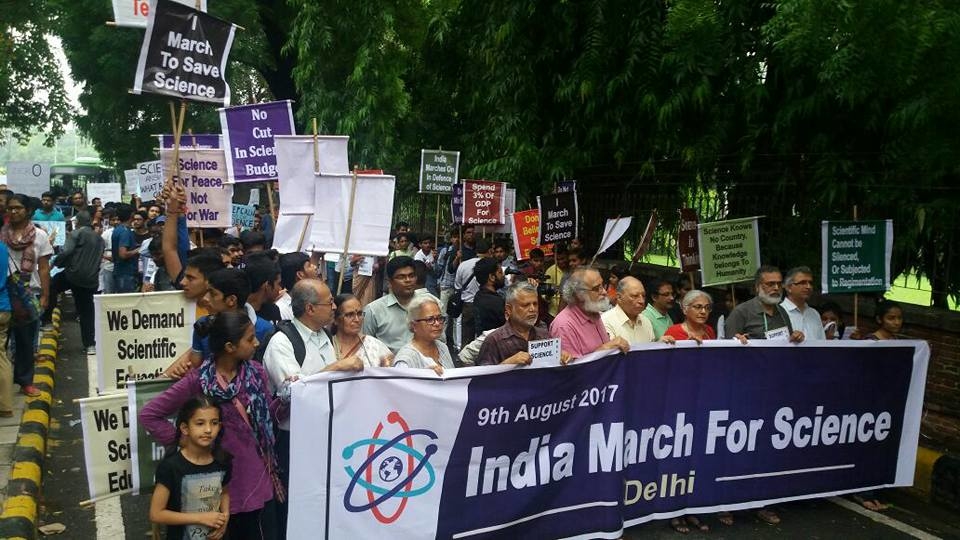
Hundreds of people marched from Mandi House to Jantar Mantar in Delhi as part of the India March for Science campaign call given by the scientific community. It was organised against the continuous fall in research funding along with the promotion of pseudoscience and baseless theories. The march took place in 25-30 cities all over the country, including the state capitals. The organisers of the march made the following demands:
1. Allocate at least 3% of GDP to scientific and technological research and 10% towards education.
2. Stop propagation of unscientific, obscurantist ideas and religious intolerance, and develop scientific temper, human values and spirit of inquiry in conformance with Article 51A of the Constitution.
3. Ensure that the education system imparts only ideas that are supported by scientific evidence.
4. Enact policies based on evidence-based science.
In India, the funding for scientific research has remained stagnant at 0.8-0.9% of the GDP, while in most countries doing notable research, 3% of the GDP is spent on it. The protestors demanded that action be taken on the recent cuts in funding, as well as the promotion of unscientific ideas.
In Delhi, the most stringent of these cuts have been seen at CSIR, Council of Scientific and Industrial Research. Research scholars working at CSIR labs said that over 50% of their funding has been cut. “There are people who have not been getting their salaries from the past few months, and they will not be getting paid in the future, until and unless their supervisors can manage to get funds from an external agency”, said a research scholar. Supervisors have been telling new PhD students that the labs cannot fund their research anymore. People who are already working on projects have now started using money from their salaries to fund their research. “We are a CSIR lab, but we cannot depend on CSIR for money. Any money which does come is mainly from DBT (Department of Biotechnology). But the priority of DBT would be to fund a DBT institute first rather than funding a CSIR lab.” The scholar from Institute of Genomics & Integrative Biology (IGIB), which is a part of CSIR wished to remain anonymous and refused to come on camera as she was afraid of the action that will be taken if it was discovered that she took part in the march. She said, an email had been sent to all the members of IGIB prohibiting them from participating in the march. CSIR has been told to get external funding for its activities. But the researchers of the institute say that any private organisation funding their work will want the research for its own profit. Because of this, they haven’t been able to secure any significant external funds.
Another scholar asked , “how will Make in India plan work, if you’ll not support your R&D? You cannot do science in India.” The situation is dire as many researchers and scientists said that they have been reduced to beggars under the current government. “To do science, you have to beg. Many ongoing projects had to be shut down because of lack of funding.”
Although the figures claim that the budget for the Department of Biotechnology has increased, this money doesn’t seem to be reaching the people and the purpose it is meant for. “Although the budget of DBT has gone up, NII (National Institute of Immunology) hasn’t been getting any money. We’ve seen fund cuts for the last couple of years. The research is moving at a slow pace. A lot of the institute’s money is spent in paying salaries but the seventh pay commission still hasn’t been enacted. This has been very problematic. We hire project staff but how will we pay them if DBT won’t release any money?” NII is a research institute that comes under the Department of Biotechnology.
A faculty member at JNU said that the number of requests for research grants has seen a huge surge. “Two years back, the government used to get 60-70 proposals asking for funding. Now, they get over 200 such requests. They don’t have the money to fund all these grants. So many people are now applying for grants and funds because earlier institutes used to have their own funds to facilitate this research. Now, scholars have to apply for grants as institutes cannot support their research.”
On being asked for the response that the march would have, no one seemed positive that it will result in any productive action soon. “Nothing can happen overnight, but we hope that at least the government sits up and takes notice, and this initiates conversations with the government and scientists on taking things forward.“
“This government is deaf and dumb. You cannot really expect anything.”
A procession of students and teachers from the Bharatmata Saraswati Balmandir Senior Secondary School in Narela, Delhi also participated in the march. The science teacher of the school said that she has brought her students to the march because of the rising unscientific temperament amongst them. She said that the interest of her students in unscientific ideas such as the benefits of cow urine is an example of this. She felt it is important to bring the students to the march so that they question things before believing in them.
An activist said that five years ago, he used to be amused at the kind of “scientific” research happening in Pakistan, talking about a research paper claiming that the distance between the Earth and heaven is increasing. Now, he is extremely saddened by the state of affairs in India as similar absurd ideas are being promoted in the name of science.
Largely, the sentiment the protestors portrayed was that India is moving backwards when it comes to science. They were marching to stop this backward movement before it is too late, and years of efforts and scientific research are undone.
Courtesy: Newsclick.in
Interview with Ch. Venkatachalam
Interviewed by Bodapati Srujana
C. H. Venkatachalam, General Secretary of All India Bank Employees’ Association (AIBEA), speaks to Newsclick on the reason why bank unions called for a strike on the August 22. The government’s gradual move towards privatising the banking sector is one of the reasons for calling the strike, he said and also demanded the government should provide the required capital to the public sector banks. It is a mistaken notion to think that public sector banks are a drain on the exchequer. These banks have to give back huge funds to the government in the form of dividend payments and income tax payments.
Courtesy: Newsclick.in
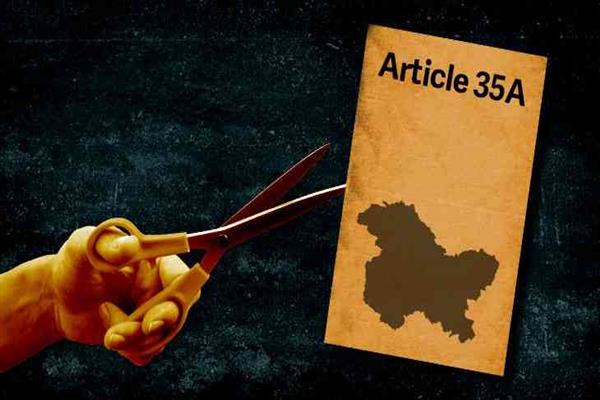
Two weeks ago, Jammu and Kashmir chief minister, Mehbooba Mufti, speaking at a public forum in Delhi, warned of any tinkering with Article 35 (A) of Indian Constitution, pertaining to special status of the state. She averred that if this happens, “there will be nobody left in Kashmir to hoist the national tricolor”. Omar Abdullah cautioned that any bid to tamper with this constitutional provision would amount to playing with fire.

Image: Kashmir Observer
The desperation in the tone matched the unusual bonhomie between her and her main political adversary, Farooq Abdullah, patron of National Conference (NC), on August 8. Media reports said that Mehbooba called on Farooq to discuss the current political situation in the state. Article 35 (A) was said to be the main agenda of the meeting that was held in a ‘cordial’ atmosphere, as vouched by Omar Abdullah in a tweet. Ever since, other opposition parties including the Congress have called for a united voice against this move: rising above party and partisan politics and getting together, in one voice, against any tinkering or weakening the article. They have also suggested an all party delegation led by chief minister Mehbooba Mufti to petition the Centre on this issue; to apprise the people there about the disastrous fallout of the weakening or abrogating Article 35 A.
The row over Article 35 (A) has not only brought Mehbooba’s Peoples Democratic Party (PDP) and NC on the same page but also the separatists who have called for protests against moves to tamper with the Article 35 (A). The move is seen as having a potential of inflaming the already tense and sensitive situation in the state.
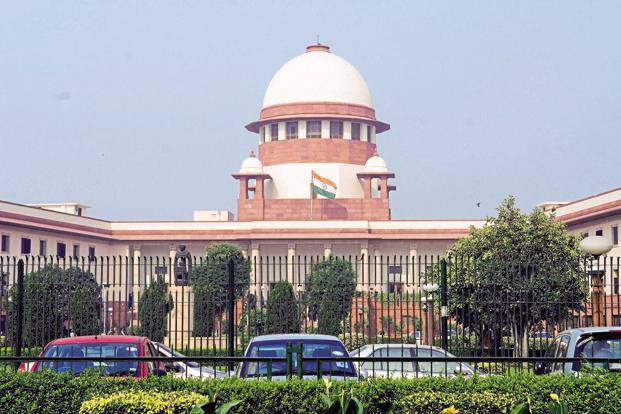
At the heart of this controversy, which is likely to throw up unique political equations at a certain level, is a petition filed by an RSS backed NGO in the Supreme Court challenging the validity of this constitutional provision. The petition has been pending in the apex court since two years.
Despite persistent pleas by the state government, the Centre has refused to challenge this legal intervention in the Supreme Court, enhancing the dangers of a possible lopsided hearing on the issue. Owing to the overtly sensitive politics of the state and in view of the historic special status, the issue assumes even greater significance.
Article 35(A) empowers the J&K legislature to define “permanent residents” of the state. This section was added to Article 35 through a Presidential Order called The Constitution (Application to Jammu and Kashmir) Order 1954, issued under Article 370. The order superseded an earlier order issued in 1950, which provided the framework for division of powers between J&K and New Delhi under Article 370. The Article incorporates the safeguards for the citizens of the state provided in the state subject law promulgated by the Maharaja Hari Singh-led government in 1927.
Article 370 which remains the constitutional link between India and Jammu and Kashmir and also guarantees special status to the state stands eroded today and diluted through a slew of central amendments right since 1950s. The permanent resident provision, protected by the Article 35 A, today remains the core of this special status that the state enjoys. Striking down this crucial provision, Article 35 A, which was not passed by the parliament or ratified by the state legislature but came as a presidential order, may create a constitutional crisis, impacting several other such presidential orders altering the state’s special status, including the recent one on GST.
Any debate on Article 35 (A) naturally invokes one on Article 370 as well, as the former was supposed to be a clarification provision to the latter. In 2015, a division bench of J&K High Court interpreted Article 370 as a permanent provision. “The Article 370, notwithstanding its title ‘temporary provision’ is a permanent provision of the Constitution. It cannot be abrogated, repealed or even amended as mechanism provided under Clause (3) of Article 370 is no more available”, pronounced the court in October 2015. Even if this verdict be challenged, a debate on these issues re-open the entire debate on accession, which is hinged to the constitutional provisions of Article 370 that form the vital link between Jammu and Kashmir and rest of the state.
The legal and constitutional technicality apart, the debates on Article 35 (A) and Article 370 are red rags that will further muddy the waters in Jammu and Kashmir, politically as well as socially, with dangers of not just a more lethal backlash in the Valley but also possible polarisation of state on dangerously communal lines. The issue thus brings political adversaries, NC and PDP, as well as Hurriyat on the same page. The consequences of attempts to tinker with the special status of the state in any way have been well grasped by political parties across the spectrum, barring the BJP. All of them have been advocating for initiation of dialogue and confidence building measures for resolution of Kashmir dispute. The BJP-RSS agenda, on the other hand, is to take away whatever little privileges the state enjoys owing to its special status.
In the midst of this fresh crisis, another petition pleading for striking down Article 35 (A) and Section 6 of the Jammu and Kashmir constitution has been filed in the apex court by a Kashmiri Pandit woman, Charu Walikhanna, who has maintained that she was denied the right to buy land in Jammu and Kashmir because she had married outside the state. The petition contends that the Article 35 (A) perpetuates gender inequality and strips a woman marrying outside the state of her permanent resident status. This narrow interpretation of the law, which is actually silent about gender, is erroneous and based on ignorance.
Section 6 of the J&K constitution lays down: “Nothing in foregoing provisions of this part shall derogate from the power of the State legislature to make any law defining the classes the persons who are, or shall be permanent residents of the State.” It further states, “A Bill marking provision for any of the following matters, namely:
(a) defining or altering the definition of, the classes of persons who are, or shall be, permanent residents of the State;
(b) conferring on permanent residents any special rights or privileges;
(c) regulating or modifying any special rights or privileges enjoyed by permanent residents; shall be deemed to be passed by either House of the Legislature only if it is passed by a majority of not less than two-thirds of the total membership of that House. It also states, “The permanent residents of the State shall have all the rights guaranteed to them under the Constitution of India.”
The Article 35 (A), thus, defines and qualifies the permanent resident of Jammu and Kashmir as well as guarantees fundamental rights and right to equality to these citizens as per the Indian constitution. Its silence on the rights of women marrying outside the side is settled by the clause that upholds the citizens’ constitutional rights which make no distinction on basis of caste, creed, religion or gender.
The apprehensions raised by the woman moving the Supreme Court are not without reason, however. The flawed interpretation stems from myths perpetuated for a long time, made worse by politicking by political parties over the issue.
In 1960s, the then Jammu and Kashmir revenue minister issued the orders for stamping the permanent resident certificates of women with a stamp saying, “Valid till marriage”. Noted political analyst Balraj Puri writes, “The fact is that neither the state subject law of 1927 nor the act under the state constitution (after which the earlier law in any case lapsed), provide for cancellation of the state subject; nor for different treatment of men and women. The state subject of Mrs. Ghulam Kabra and her right to inherit property was, for instance, challenged in the State High Court as early as in 1939 in Maharaja’s time on the ground that though a State Subject by birth, she had lost that status by marrying a non-state subject. The Court held that Ghulam Kabra was legal heir of the property which she could inherit.” (PUCL Bulletin, April 2004)
On the executive order of 1960s, Puri writes, “this order which lacked the force of law was differently interpreted.” He quoted the case of daughter of a senior bureaucrat of the state, SAS Qadri, who married, Mehmood-ul-Rehman, an IAS officer from outside the state, in 1973. “Her status as a permanent resident of the state and her right to inherit property of her father under that was declared valid by the Revenue Minister on the ground that ‘the constitution of Jammu and Kashmir or any other law does not provide for deprivation of a permanent resident of the state of his or her status’.”
Similarly, in 2002, a full bench of the High Court in a case, State of Jammu and Kashmir vs Dr Sushila Sawhney, said that daughter of a permanent resident of the State of Jammu and Kashmir will not lose status as permanent resident of the State on marriage with a person who is not permanent resident of the State of Jammu and Kashmir. One judge struck a discordant note with the argument that the rights of the woman should be limited only to inheritance of property.
Several similar petitions pending in the courts filed by women whose seniority or jobs were challenged on grounds that they had married non permanent residents since the 60s were also clubbed together by the Supreme Court which finally sent them back to the state government with the direction to come up with a suitable way that addresses the issue.
Later, the state government appealed in the Supreme Court against the high court judgement of 2002. In 2004 the then PDP government in 2004 withdrew the appeal and moved a Bill in the Legislative Assembly seeking disqualification of a woman marrying a non-State Subject. The bill was passed in the assembly unanimously without anyone raising a whimper but failed the test on the floor of the upper house of state legislature. The BJP turned the issue into an opportunity to give the controversy a saffron colour by equating the state’s autonomy with gender oppression. The row took an ugly turn with regional divides being played up by BJP, Congress and Valley based parties and soon assumed communal overtones.
(To say that Jammu opposes Article 370 and Article 35 (A) would be an over-simplified and also an erroneous view. Interestingly, when it comes to preserving the interests of locals, there has been strong opposition to attempts to tamper with the article. Last winter, chemist shops in Jammu were shut for three days to protest against the PDP-BJP coalition government’s decision to allow a non-state subject to open 57 pharmacy shops in violation of the Article 370.)
In the face of stiff resistance from Jammu based women groups and some political parties in 2004 to the Permanent Resident Disqualification Bill, the government created a select house committee to look into the lacunae which left the law open to interpretation. The contents of the report tabled by the committee are not fully known but it has not sought any changes in the law, nor advised anyone’s disqualification. Successive governments, thereafter, have desisted from bringing back the contentious bill in the legislature. More significantly, the state subject certificates of women no longer bear the stamp ‘Valid till marriage’ since the last one decade.
There is no way that legally the right of the woman to purchase property or retain her state subject right can be challenged. Article 6 of the J&K Constitution clearly upholds the right to equality as laid down in the Indian Constitution. Article 35 (A) clearly makes no reference to women losing their rights as permanent resident.
This kind of politicking in challenging the women’s status in courts or within the legislature has, thus, stood on a sticky wicket. There are enough safeguards in the existing laws to ensure that women’s status as permanent residents of Jammu and Kashmir cannot be challenged.
Walikhanna’s petition thus raises anxieties that are exaggerated and based on myths, deliberate or otherwise. Is her petition based on presumptions? Did some officials of revenue department prevent her from going ahead with purchasing land? Is it possible that perpetuation of myths and lies has created space for multiple interpretations of the law? Is it just a case of ignorance or a case of poor implementation of law? It is neither. The petitioner in question was never a permanent resident of the state and is Kashmiri by ancestry. Her petition that is based on the rejection of her claims to residentship of Jammu and Kashmir, made in a letter to the Governor, mentions that her family was part of the Kashmiri Pandit exodus during the Afghan period in the 18th century, at a time when the state was not even formed.
Interestingly, her petition to the Supreme Court includes the case of Sushila Sawhney, in which the High Court ruled against depriving her of her permanent resident status after her marriage with a non-permanent resident. The petition does not mention the verdict but selectively picks up the court’s observation (in Sushila’s case), “no law defining the Classes of persons, who are or shall be the permanent residents of the State has so far been enacted by the State Legislature in exercise of its power under section 8 of the State of Jammu and Kashmir Constitution” to argue that “under the guise of Article 370 and 35A, the men and women state subjects are subjected to different treatments and discriminated based on gender.”
These anxieties are as misplaced as the apprehensions created in the Valley of a demographic change through marriage patterns. That having been said, any bid to strike down the Article 35 (A) does enhance the dangers of alteration of the demographic profile of the state. Such fears are not off the mark.
For decades, the RSS has had a historic penchant for suggesting that the demography of the state needs to be changed to resolve the Kashmir issue permanently. Two months ago, union home minister Rajnath Singh suggested, without spelling anything, that the government had found a ‘permanent solution’ to Kashmir dispute. In recent weeks, Article 35 (A) has been raised, again, by right wing groups who are calling for a debate or simply demanding to revoke it along with Article 370. As for Walikhanna’s case, it is not known if it is inspired by presumptions based on half baked knowledge or plain mischief.
In this current context, for Kashmiris suspicious of the designs of the Hindu right wing, it is not difficult to connect the dots and see the RSS’ historic resolve, Rajnath Singh’s remarks, the present discourse, the Centre openly favouring a larger debate and the petitions in the apex court challenging the state’s special status as part of the same project. There is enough potential in the controversy for further causing provocation in an already volatile Valley, besides polarizing rest of the state on communal lines. The dangers of stirring this hornet’s nest are unimaginable.
Related Articles
Unravelling the Article 370 Rhetoric & Hysteria
J&K: Dangerous Demographics: Linking Article 370 with the Pandits’ return
Media hoopla apart, increasingly the BJP is looking at a party of well-ensconsced turncoats. As each state election draws near, the high optic drama of some or several legislators, corporators or members of parliament crossing have now, become painfully familiar. Though many or most of the desertions have been from the Congress party, a few have been from the NCP, Janata Dal and Biju Janata Dal as well.

Image: BJPlogo.com
With the drama surrounding the latest defections, including that of former union textiles minister, Shankasinh Vaghela apart, the ruling party at the Centre, headed by the duo of Modi and Shah, who gather laurels from fawning commentators for their ‘mastery’ and ‘strategising’, what is often lost sight of is the monetary and other temptations that such shifts represent.
Yesterday’s (August 8) Rajya Sabha elections from Gujarat expose how, the ruling party is basing its strength –not on programmes, policies or even ideology – but on emasculating the opposition. By hook or by crook. Today the Congress has been reduced to 44 MLAs in the state, and just before the 2017 state election, this spate of defections has further weakened the party.
The strategy, in Gujarat, as elsewhere, is to achieve high octane electoral victories –Shah has promised his fawning supporters 151 seats out of 182!—not necessary on political merit or delivery of poll promises but through aggressive poaching on ‘winnable’ candidates. To achieve its tall target of winning 151 of the 182 assembly seats in the 2017 elections, the state BJP, on instructions from Delhi, has started poaching low profile but locally powerful MLAs or district leaders who the Congress is considering for tickets. Ahead of the 2012 assembly elections and 2014 Lok Sabha elections, the BJP poached lots of individually-strong Congress leaders. Six of the sitting BJP MPs joined BJP before the 2014 Lok Sabha elections. Vitthal Radadiya, Poonam Madam, Devusinh Chauhan, Devij Fathepara, Lalisinh Vadodiya, Prabhu Vasava joined BJP from Congress.
At the height of its power, the Congress too, was willing to offer tickets to anybody who had money and fitted easily into local caste equations. This served the party when the going was good but when the going got tough, many of these “leaders” were found wanting as they did not have the ground experience of rebuilding a party and mounting a strong but responsible opposition. As electoral success becomes increasingly more important than ideology, the BJP is also following suit and, increasingly recruiting lifetime members of other parties. Several entrants from saffron outfits do not find it difficult today to march back towards the winner!
In Delhi Municipal Corporation, elections too, it was the same story. After Arvinder Singh Lovely, 10 more Congress leaders had joined BJP on the eve of the Municipal Corporation of Delhi (MCD) elections. In March 2017, the BJP grabbed headlines with former Congress leader and Karnataka CM SM Krishna joining the BJP.
Odisha
In Odisha too the pattern was similar. In June 2017, several BJD and Congress leaders ditched their parties for the BJP today joining the saffron party in presence of Union Petroleum minister Dharmendra Pradhan, Odisha BJP president Basant Panda and other senior party leaders here at the state headquarters. Well known Sukinda BJD leader Pradeep Bal Samant alias Tutu Bal, who had unsuccessfully contested the Assembly election in 2014, joined BJP along with his supporters.
Congress leaders reached the local party office in grand procession and formally wore the saffron cap as a symbol of BJP. Nayagarh district Congress chief Lala Manoj Ray, who quit his post yesterday, was one among others to shake hands with saffron leaders. Similarly, three other leaders of the grand old party in Keonjhar district-former MLA Dhanurjay Siddhu, PCC secretary (organisation) Prithivraj Kuanar, well known leader of Patana Satyaban Nayak- acquired the primary membership of BJP along with hundreds of supporters.
Maharashtra
This year began with NCP and Congress defectors joining the BJP in Maharahtra. A spate of resignations and defections across the civic bodies in Pune and Solapur has put the Nationalist Congress Party and the Congress on the back foot and has strengthened the Bharatiya Janata Party and the Shiv Sena. Three sitting corporators from the Sena — Seema Savale, Asha Shendge and Sangeeta Bhondwe — and two from the NCP — Balasaheb Taras and Maya Barne — have stepped down from their posts in the Pimpri-Chinchwad Municipal Corporation (PCMC).All five are expected to enter the BJP, which already has senior NCP leaders like Mahesh Landge and Azam Pansareby, who joined its fold in the PCMC area earlier.
The BJP had secured just three seats in the 2012 PCMC polls, as opposed to the NCP, which secured 83 seats. Now, after poaching on the rival politicians of parties, it plans to turn defeat into victory, by fair means or foul.
Like the NCP in Pune, the Congress was similarly cornered in Solapur. Seven of its corporators from the Solapur Municipal Corporation (SMC) announced their decision (January 2017) to enter the Shiv Sena. The corporators are reportedly close to the Sena’s Solapur in-charge, Mahesh Kothe, who is a former Congressman and a confidante of the district’s Congress stalwart Sushilkumar Shinde. Mr. Kothe had joined the Sena before the 2014 Assembly polls. He had fought against Mr. Shinde’s daughter Praniti for the Solapur City Central segment, which the latter won by a margin of 9,000 votes. The Congress had bagged 45 of the 102 seats in the 2012 civic polls, becoming the single-largest party in the SMC. Now this political dominance stands threatened.
April 2017: 50 Congress, other parties’ leaders join BJP ahead of Himachal Pradesh polls
Various leaders from Congress and other parties have reportedly joined the Bharatiya Janata Party (BJP) on the eve of Modi’s visit to the state in April this year. BJP State chief Satpal Singh Satti welcomed all these leaders who will now work to hold the saffron banner aloft, according to News18. Various prominent leaders from Shimla Nagar Nigam including former Mayor Madhu Sood, president of Kaushal Federation Brij Lal, former councilor Kamaljit Singh and Sanjay Sharma, Treasurer of Shimla Board of Trade Nitin Sohail, former District Council member Girdhaari Lal and others have joined forces with the saffron party.
Uttar Pradesh 2016-2017- Over 25 Congress leaders join BJP
Rita Bahuguna Joshi, a prominent Congress leader from Uttar Pradesh, prefaced her entry into the BJP today with a fierce attack on Rahul Gandhi, alleging that his leadership was acceptable to none.
More than 25 Congress leaders, including former state secretary Mamta Gurung, Congress youth president for Dehradun Ishant Ksehtri, former Principal of GIC, Guniyalgaun, Gunanand Uniyal and young leader Rajeev Kumar joined the BJP in the presence of state BJP president Ajay Bhatt, Mussoorie MLA Ganesh Joshi and former Cabinet minister Harak Singh Rawat, along with their supporters, at a programme held at Johari village today.
Addressing the gathering, Ajay Bhatt said due to the policies of the BJP, a retired principal, a person who assisted many students to become IAS, PCS, IPS officers, had shown his keenness in joining the BJP. He said a senior Congress leader and a youth leader had joined the party indicating the popularity of the BJP. He praised MLA Ganesh Joshi for his dedication for development of his constituency.
BJP Mussoorie constituency convener Niranjan Dobhal, BDC member Sandhya Thapa and Pramila Devi, Bharti Jwadi, Jyoti Kotiya, Geeta Devi, Vandana Bisht, Ramu Khatri, Nirmala Thapa, Deepak Pundeer, Sundar Kothal, Anurag Singh, Sandya Kshetri, Prabha Shah and hundreds of others were also present on the occasion.
Uttar Pradesh: Six MLAs from Congress, BSP, SP join BJP
Six MLAs, including three from Congress, two from BSP and one from ruling SP, on Thursday joined BJP with their supporters in presence of party state president Keshav Prasad Maurya.They were Congress’ Sanjay Pratap Jaiswal, Vijay Kumar Dubey and Madhuri Verma, BSP’s Rajesh Tripathi and Bala Prasad Awasthi and SP’s Sher Bahadur.
It all began in 2014
The landslide Modi victory of the May 2014 Lok Sabha elections witnessed several political leaders defecting from one party to another, with only some of them who joined the BJP actually tasting electoral success. Even before that, in March 2014 there were many Congress leaders from Gujarat who switched over. In 2016-2017 in the run up to the politically significant UP polls, there were dozens of such shifts from the Congress, Samajwadi Party and Bahujan Samaj Party to the BJP.
Among the big defectors who could grab a seat in the 16th Lok Sabha include Rao Indrajit Singh, Om Prakash Yadav, Sushil Kumar Singh, Brij Bhushan Sharan Singh, Jagdambika Pal, Dharamvir Singh, Ajay Nishad, Santosh Kumar, Mehboob Ali Kaiser, Ashok Kumar Dohare, Vidyut Baran Mahato, Col Sonaram Choudhary, Ram Kripal Yadav, and Heena Gavit. In Uttar Pradesh, which is considered crucial for any political party’s prospects in the Lok Sabha elections. So was it their vote base that won them the seat, combined with the gloss of power and bounty or the charisma of Shah and Modi?
Not that it was only the BJP who attracted political turncoats but it certainly headed the list. In Bihar, in 2014, the BJP had allowed seats to nine outside candidates on the 30 seats it contested from Bihar, of which five registered a win.
Gujarat
Despite the slogan of ‘Congress mukt’ Bharat, in Modi’s home state, the duo accommodated so many from the grand old party. That was in 2014. Of the BJP candidates in the fray for 26 Lok Sabha seats in the state, around 11 are former Congress leaders who joined the BJP just then! Similarly, in four of the seven assembly seats where by-elections are being held, the BJP has fielded Congress deserters who joined the party in March 2014. Public memory is short but given the recent drama around the Rajya Sabha elections, it’s important to recall that Congress turncoats have not only been welcomed into the BJP with open arms but given tickets in preference to the saffron party’s own leaders. This has caused much heartburn within the BJP with long-time party workers questioning the wisdom of giving tickets to Congress deserters. In 2012, Modi had welcomed Narhari Amin into his party, the man rose to become deputy chif minister.
Gujarat has seen a long line of such defections in which Shankarsinh Vaghela is only among the last. Long back, Congress faithful and Seva Dal till 1985, Liladhar Vaghela joined the Janata Dal thereafter where he remained till 1995. Since 1995 this former socialist has been with the saffron combine. Ramsinh Rathwa from Chhotaudaipur was in years gone by a Youth Congress leader also coming into the Rajya Sabha in 1985 to 1997. He lost Lok Sabha polls on BJP ticket in 2000 and 2004 but won in 2009 against Congress’ Naran Rathwa. Prabhu Vasava, a two-time Congress MLA from Mandvi. In the 2014 LS election, he was the BJP candidate from Bardoli against Union minister Tushar Chaudhary. Vasava, who joined BJP in February this year, got the ticket without any trouble. His father Nagar Vasava was a five-term Congress MLA.
In 2004, K C Patel from Valsad, earlier with the Congress since 1999, joined the BJP.Poonam Madam from Jamnagar, daughter of a veteran Ahir community leader and former Independent MLA late Hemant Madam, Poonam was general secretary of Youth Congress and Women’s Congress till late 2012 when she joined BJP and was elected Khambhaliya MLA. BJP has fielded her against her uncle, sitting Congress MP Vikram Madam. Then, Kirit Solanki, close aide of Congress leader Narsinh Makwana and Manubhai Parmar till 1995 when he joined the BJP. In 2009, he got BJP ticket for Lok Sabha elections and now represents the seat. Congress MLA till 2012 from Halvad, Gujarat, Devji Fatepura contested on a Congress ticket from Chotila but lost. He then joined the BJP in early 2014. Vinod Chavda from Kutch was poached by Modi into the BJP in 2014.
Assam
In Assam, an ambitious Congressman, Himant Biswa Sarma, was easily and readily welcomed to the BJP from the Congress. In Jharkhand, six JVM (P) MLAs joined the BJP earlier in 2014.. Just before the Lok Sabha elections, a galaxy of Congress “leaders” moved to the BJP – Satpal Maharaj, Purandeswari, Rajen Chavda and Chaudhary Birendra Singh. Many others joined the BJP later.
Former minister in the NDA I cabinet, Arun Shourie had famously described the BJP under Modi as “Congress plus the Cow.”
The major difference between the BJP and Congress has been the significant presence of RSS folks in the BJP. The training in the RSS is on a purpose larger than the self. The Congress was perhaps the same in the first 30 years when a large proportion of its workers were from the freedom movement.
However, over time, the sourcing in the Congress changed from freedom fighters to power seekers which in turn led to severe dissidence and power struggles. When the party lost power, the internal decay completely destroyed the party in many states preventing it from ever returning to power there. With increasing recruitment from parties with such cultures, the BJP is causing a long-term damage that may not be apparent today when the party is on a high.
Madhya Pradesh
Two months before the LOk Sabha polls of 2014, Congress MLA Sanjay Pathak, who quit the party alleging ill-treatment, today formally joined the BJP in the presence of Madhya Pradesh Chief Minister Shivraj Singh Chouhan.Before joining BJP, Pathak resigned from Congress and his membership in the State Assembly. He was accused of joining BJP to protect his mining business. Besides Pathak, another Congress leader Rajendra Singh Gehlot also joined BJP on the occasion.
Some other Congress leaders who left the party to join the Bharatiya Janata Party in 2014 are –
Satpal Maharaj – The senior Congress leader who has huge following in hilly area (Uttarakhand) in 2014 resigned from the Congress and joined the Bharatiya Janata Party (BJP). He is a sitting member of parliament from the Pauri Lok Sabha constituency in Uttarakhand. Maharaj was really angry when he was bypassed to make Harish Rawat a chief minister. Even the Congress high command refused to accept his list of candidates in the Garhwal region.
Jasa Barad – He was the sitting MLA from Somnath constituency of Junagadh district. He left the Congress to join BJP. After joining BJP he said that Congress at present is in dormant state and India and BJP will surely grow under the leadership of Narendra Modi. Barad is also a president of the Gujarat Rajput Samaj. But before joining Congress he was associated with BJP. Earlier he left BJP in 1995 with Shankersinh Vaghela who afterward formed his own party known Rashtriya Janata Party. The party later merged with Congress.
D. Purandeswari – A former Union minister and daughter of famous actor-politician NTR quits Congress to join BJP. She left Congress over Telangana issue. She was unhappy the way the state has been bifurcated.
Jagdambika Pal – He was the chief minister of Uttar Pradesh for one day and now a part of BJP cadre. He wants to contest from Domariyaganj. It is the same constituency from which he won the seat when in Congress. He cited communication gap between new and old generation political leaders of the Congress party as his reason of leaving party.
Bavku Undhad – Congress MLA from Lathi assembly constituency of Amreli district who left Congress to join BJP. He said that he had no grievance with anyone in the Congress. He has joined BJP to fulfill the demand of people to see Narendra Modi as the next PM. Nearabout 80 supporters have joined BJP with him.
Rajendrasinh Chavda – Congress MLA from Himmatnagar in Sabarkantha district. The only reason he cited for his resignation from Congress is that he want to see Narendra Modi as a PM of the country. He said that Congress at present has nothing. Chavda moved to BJP with 1,500 party workers.
Suresh Kotadia, a son of former Union minister Manu Kotadia along with 80 Congress leaders left Congress and joined BJP. Kotadia called Congress a vision-less. Also the leaders of the party are involved in internal fights. Moreover the state is growing under the excellent leadership of Narendra Modi.Vitthal Radadia and his son Jayesh Radadia resigned Congress to join BJP.
Other leaders who have quit the party after the election results were declared in May 2014.
1) G.K. Vasan : Former Union minister for shipping and son of late Tamil Maanila Congress (TMC) leader G.K. Moopanar, Vasan quit the party in November. Soon after leaving the Congress, he floated a new regional party called the “Desiya Tamil Maanila Congress”.
2) Krishna Tirath:In a major jolt to the Congress ahead of the then upcoming Delhi elections in January 2015, another former Union minister and the party’s Dalit face in Delhi, Tirath, joined the BJP last week. Tirath switched sides citing lack of “discipline” within the Congress. Tirath, a former Lok Sabha member from Karol Bagh, then contested assembly elections on a Bharatiya Janata Party (BJP) ticket from West Delhi’s Patel Nagar constituency.
3) Chaudhary Birender Singh: Soon after the Narendra Modi-led BJP swept to power at the Centre, the Congress saw a raft of defections, including some of its prominent leaders from states which were due to go to polls in 2014. Among them was a senior leader from Haryana, Singh. Singh quit as part of growing dissension within the state unit against then Haryana chief minister Bhupinder Singh Hooda. Immediately after switching sides, Singh was rewarded with a cabinet berth. He is currently the Union minister for rural development and panchayati raj.
4) Datta Meghe : Ahead of assembly polls in Maharashtra (September 2014), industrialist and educationist Meghe quit the Congress to join the BJP. A prominent leader from Wardha (Vidarbha region), Meghe was a former Lok Sabha MP from Wardha. Besides, he was also elected to the Rajya Sabha from Maharashtra in 2002.
5) Jagmeet Singh Brar: One of its senior leaders from Punjab, Brar, a former Congress Working Committee (CWC) member from Punjab, quit the party in 2-14. After its dismal performance in the Lok Sabha elections last year, Brar reacted suggesting that both Sonia Gandhi and her son Rahul must do some introspection for the result. Brar was suspended by the party following his statements. He quit citing “humiliation”.
6) Avtar Singh Bhadana: Another prominent former Congress leader and four-time MP, Bhadana quit the Congress ahead of assembly polls in Haryana. He quit the party after launching a scathing attack on Hooda and the central leadership. Having contested as a Congress candidate in the Lok Sabha polls, Bhadana lost from Faridabad. A prominent Gujjar leader, Bhadana subsequently joined the Om Prakash Chautala-led Indian National Lok Dal in August last year.
7) Ranjit Deshmukh: In October last year, former president of the Maharashtra Pradesh Congress Committee (MPCC), Deshmukh quit the party ahead of assembly elections in the state. Deshmukh, while in the Congress, was one of most senior leaders in Vidharba. He resigned from the party citing “poor organization”. Deshmukh has an interesting track record of repeatedly quitting the party (three times) throughout his career.
8) Mangat Ram Sharma: In what was a major jolt to the party ahead of assembly elections in Jammu and Kashmir, the state’s former deputy chief minister (2002) Sharma quit the party, and joined the People’s Democratic Party. Sharma was elected to the Lok Sabha from Jammu in 1996, when he contested on a Congress ticket.
(Compiled from reports in The Times of India, Indian Express, Tribune and Mint)

Join our mailing list to get the latest human rights news that matters, straight to your mailbox.
© Sabrang | All Rights Reserved