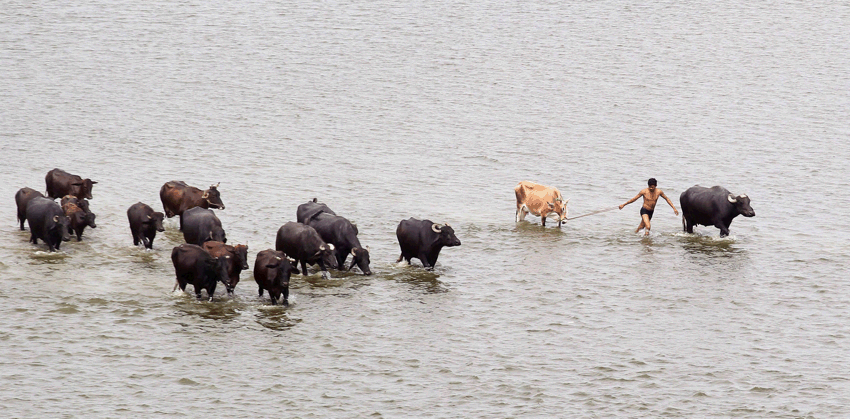
The Govt. of India & Assam must End Impunity: Ensure rights of scheduled tribes, forest, park dwellers and safeguard environment-wildlife with an objective & holistic conservation policy


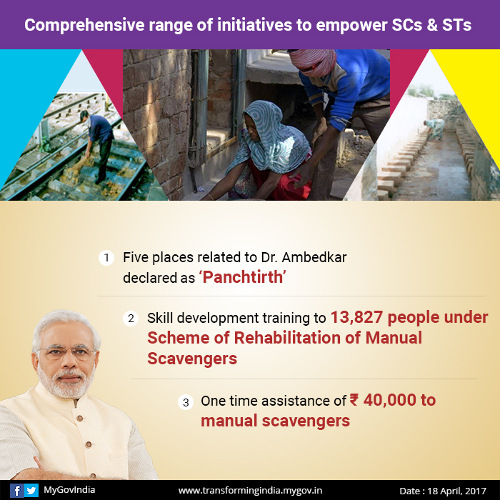
The central government has claimed that 91% of manual scavengers have been provided a one-time cash payment of Rs 40,000 and 108% of identified scavengers and their dependents have been selected for skill training under the rehabilitation programme for manual scavengers.

But the number of manual scavengers identified by the states is just 7% of the households with at least a single member engaged in manual scavenging, according to Census 2011. That leaves out 93% of identified scavengers, who clean sewers and clear human excreta, an act illegal for 24 years now.
Of 12,742 manual scavengers identified in India after the promulgation of The Prohibition of Employment of Manual Scavengers and their Rehabilitation Act, 2013, 11,598 (91%) have been provided one-time cash assistance of Rs 40,000 each as part of their rehabilitation, according to this April 2017 reply to the Lok Sabha (lower house of Parliament) by the minister of social justice and empowerment Thaawarchand Gehlot.
There are 182,505 households in rural India with at least one member doing manual scavenging, according to Socio Economic and Caste Census 2011.
Assuming there is only one person in those identified households doing manual scavenging, there are at least 182,505 manual scavengers in India.
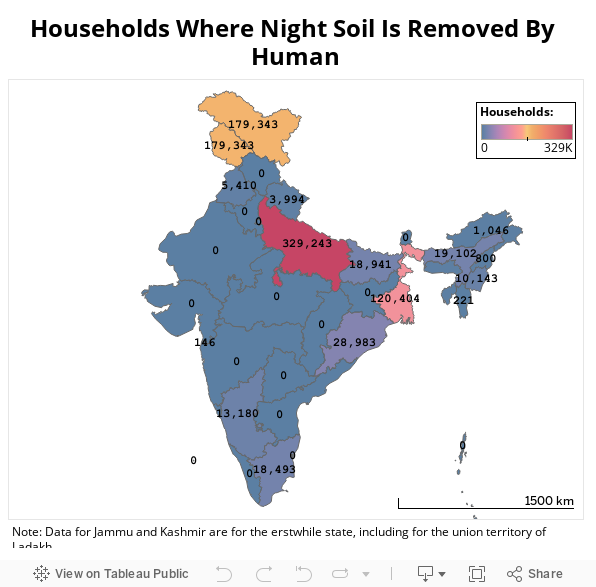
There are 740,078 households where night soil–human excreta– is removed by human beings, according to Census 2011.
Source: Census 2011
Proposals for skill development training of 13,827 manual scavengers and their dependents (that is, 108% of the 12,742 identified) have been sanctioned, the minister said.

A manual scavenger is a person engaged to manually clean, carry, dispose off, or otherwise handle in any manner, human excreta that is not decomposed.
Manual scavenging has been abolished in India, and The Employment of Manual Scavengers and Construction of Dry Latrines (Prohibition) Act, 1993, made employing a manual scavenger a cognisable offence with imprisonment and fine. The 1993 Act also made it the responsibility of the citizens, organisations and the state to maintain sanitary toilets.
The Prohibition of Employment as Manual Scavengers and their Rehabilitation Act, 2013, made the states responsible for identifying and rehabilitating manual scavengers by providing them training, giving assistance, loans and even houses. It further prohibits dry latrines and other forms of insanitary latrines.
The red tape that ties up the process of identifying manual scavengers
Under the Self Employment Scheme for Rehabilitation of Manual Scavengers (SRMS) launched in 2007, 18 states and union territories identified 118,474 manual scavengers and their dependents for rehabilitation. As many as 78,941 beneficiaries found to be eligible and willing were provided loans.
Self Employment Projects Sanctioned
| State | Beneficiaries Identified | Total |
|---|---|---|
| Andhra Pradesh | 78 | 0 |
| Assam | 191 | 0 |
| Bihar | 137 | 0 |
| Chhattisgarh | 3 | 0 |
| Karnataka | 726 | 190 |
| Madhya Pradesh | 36 | 0 |
| Odisha | 237 | 83 |
| Punjab | 91 | 35 |
| Rajasthan | 322 | 0 |
| Tamilnadu | 363 | 0 |
| Uttar Pradesh | 10317 | 182 |
| Uttarakhand | 137 | 71 |
| West Bengal | 104 | 97 |
Source: Lok Sabha
After the enactment of the 2013 Act, an additional cash assistance of Rs 40,000 would be given to each scavenger identified, and the loan amount was increased up to Rs 15 lakh for sanitation projects.
It is the responsibility of the chief executive officer of the panchayat or the municipal corporation to find the manual scavengers in the locality and give them identity cards and benefits as mentioned under the law.
It also makes it mandatory for all claims of being a manual scavenger to be verified by the local authority in order to be included in the identified list.
So far, only 13 states have been able to identify 12,742 manual scavengers. This comes to around 7% of the 2011 social economic census figure.
There are 22 states where not a single person has self-declared to be a manual scavenger, according to data from the ministry of social justice and empowerment.
“The problem lies in identification of manual scavenging,” according to 2016 Magsaysay award winner Bezwada Wilson, founder and national convenor of Safai Karamchari Andolan, which works to improve lives of manual scavengers and to end the practice. “There has been no survey conducted to find the number of manual scavengers in India in the last ten years.”
“It is left to the states to identify the numbers and many states have submitted affidavits in court saying there is not a single manual scavenger in their state,” Wilson said.
There are 160,000 dry latrine cleaners in India with 23,000 of them verified by photo, Wilson said.
2.6 million latrines that require human excreta to be cleaned by hand
Manual scavenging is linked to the presence of dry latrines in the country.
India has 2.6 million “insanitary” latrines, which require human excreta to be handled manually or in the pit or drain before it is decomposed, according to Census 2011.
It is the responsibility of the local authority to identify dry latrines in the area and demolish and convert them into sanitary latrines, according to the 2013 Act.
“In view of the prevalence of large number of insanitary latrines, the number of manual scavengers identified in the country is too small,” according to this 2015 Independence Day feature by the ministry of social justice and empowerment. “Even the identification of insanitary latrines is not in agreement with the data of Census 2011.”
“The states/UTs are slow in identification of insanitary latrines and manual scavengers as there is no time-bound plan for identification of insanitary latrines and manual scavengers,” the ministry note said.
It also mentioned that most states claim they do not have a single insanitary latrine due to fear of contempt of Court.
“Under Swachh Bharat Abhiyan, most states are interested in constructing new toilets but not in converting dry latrines into sanitary latrines,” said Wilson. “Madhya Pradesh has municipal corporations that are maintaining dry community latrines… this shows that their intention to abolish manual scavenging is not honest.”
Budget for self-employment falls 98% in four years
Even among manual scavengers identified, training has been slow over the first two years.
Self-employment projects–where loans up to Rs 500,000 are sanctioned at low interest rates–fare worse: Only 658 projects, benefiting 5% of the identified, were sanctioned in three years with no projects sanctioned in 2017-18.
Source: Lok Sabha
The reasons for the slow progress of rehabilitation are illiteracy of manual scavengers, their lack of confidence in running self-employment projects, and the hesitancy of banks in providing them loans due to low recovery, according to the 2015 feature from the ministry of social justice and empowerment.
“Due to low confidence levels, the identified manual scavengers demand that they may be provided jobs of safai karamchari (sanitation workers) in local authorities,” the ministry said.
The budget for SRMS has been slashed nearly 98% because of low utilisation. From a budget of Rs 448 crore in 2014-15, it was increased to Rs 470 crore in 2015-16 but has now been reduced to Rs 5 crore in 2017-18 with only Rs 56 crore spent in four years.
Courtesy: factchecker.in
Interview with Prof. Prabhat Patnaik
Interviewed by Bodapati Srujana , Produced by Newsclick Production
Consequently the states would become completely dependent on the centre. It is violative of the federal structure of the Constitution and is against the basic structure of the Constitution.
All kinds of ridiculous figures, like it is going to add 2 percent to our GDP growth rate and so on are bandied about which are based on econometric frauds, based on assumptions which make no sense whatsoever.
GST is a demand of the corporate elements in the country. The State governments are being bought off by promises that your resource position is not going to worsen in the short run.
Courtesy: Newsclick.in

Continuing the crackdown on Jawaharlal Nehru University Students’ Union (JNUSU), the administration has issued a letter barring JNUSU office bearers, President Mohit Pandey, General Secretary Satarupa Chakraborty and Joint Secretary Tabrez Hasan, from participating in all meeting of the Statutory Bodies and Committees of the University.
On May 16th, the second round of 143rd Academic Council (AC) had witnessed high-handedness of the university administration. This was a continuation of 143rd AC which had been adjourned on May 9. The meeting was held to discuss the issues around JNU admission policy and MPhil-PhD seat cut. During the meeting, VC, Prof. Jagdish Kumar, did not allow any sound of dissent. He and his brigade imposed their decisions on students and teachers.
Referring the suspension letter, JNUSU General Secretary Satarupa Chakraborty remarked: “This is nothing but a planned attack against us where, first we were not allowed to voice our dissent, then we had to undergo harassments by few faculty members in AC, followed by a severe politically motivated act by the JNU administration to restrict us from participating in important decision making bodies“. Satarupa Chakraborty also added that JNUSU hasn’t received any letter regarding the Standing Committee meeting which is scheduled on Friday.
Condemning the undemocratic actions of the university administration, JNUSU has released a press statement.
Jawaharlal Nehru University Students’ Union (JNUSU)
Press Release
22.06.2017
In an extremely shameful manner, the JNU administration continuing its history of targeting the JNUSU office bearers and the students’ activists, issued an extremely abhorrent notice to the JNUSU President and Joint Secretary on late evening of 21st June 2017. The notice shockingly mentions “Mr. Mohit Pandey/Tabrez Hasan is here by suspended from participating in all Statutory Bodies and Committees of the University with immediate effect until the final outcome of the Proctorial Enquiry Committee.”
The JNUSU condemns, in the strongest term possible, sheer targeting of a student representatives by the JNU administration. The manner in which a student representatives has been barred from attending important meetings that decide matters concerning students exposes the real intention of the administration. True to its dark history, the JNU administration under the leadership of Mr. M. Jagadesh Kumar yet again attempted to silence the critical voices where tough and uncomfortable questions were raised by the students’ representatives in the 143rd Academic Council meeting. Besides, it is distressful to witness how the administration is shielding the act of physical abuse and threats by a handful of its loyal faculty members by criminalising the student representatives.
Trampling Upon AC Functioning by the VC and His Cohorts-Imposing Seat-Cut Through Means Most Foul
We would like to highlight once again the sequence of events that took place in 143rd AC held on 16th June 2017. The VC opened the meeting by announcing the minutes of 142nd AC to be 'confirmed'. He not only insulted the members of AC, but also showed the audacity to announce unapproved minutes as 'confirmed'. Despite a long five hour meeting on 5th May 2017 AC which has taken a position categorically stating the forgery of 142nd AC’s minutes and thereby mandated to incorporate amendments into the minutes, the VC unilaterally declared the 'minutes' to be "passed" on 16th June 2017, without any change. While the JNUSU representatives and a vast majority of faculty collective continuously requested the Chair (the VC) to record the note of dissent, the VC and the Registrar went on reading agenda items, thereby declaring all agenda items as 'passed' without letting any member except their cohorts speak.
Let us recall the most crucial issues in the AC 'minutes' pertained to the massive seat-cut inflicted in M.Phil./Ph.D. admissions which majority members in the AC were opposed to, but the VC and his team were hell bent to show 'approval' of AC by hook or crook.
The JNUSU representatives and some faculty members kept insisting their legitimate concerns and objections against this open trampling of AC procedures by the VC chairing the meeting.
However, the script was ready on the part of administration as some of its chosen teachers were prepared to physically charge the faculty members and JNUSU representatives when we raised our objections.
In an extremely shameful and objectionable manner when two faculty members Ashwini Mahapatra and Atul Johri physically charged JNUSU representatives (a video of which is already in the public domain) in presence of the Chair, VC and the Registrar (Secretary of AC) chose to threaten the student representatives instead of bringing an order in the house. This disruption in AC and threatening by two faculty members were not only put under the carpet by the administration, but also, measures were taken by the VC to shield them by criminalising JNUSU’s President and Joint Secretary.
Unprecedented in JNU History
Indeed, the 'adjourned' session of the 143rd AC meeting held on 16 June will go down in JNU's history as the darkest episode, where VC trampled upon all norms of democratic norms of conduct of an august body like AC, where manhandling and abusive behaviour by some teachers loyal to the VC were unleashed on teacher and student members on the floor of the AC to silence differing opinions, with the sole purpose of imposing the grossly anti-student seat-cut agenda at all cost. The meeting saw some dangerous trends – (a) VC thoroughly misused his Chair where he kept reading out his agenda as 'passed' without allowing any discussion to take place, (b) VC even refused to record the dissent of the students and teachers which have already been submitted even in writing, (c) teachers who are not official members of the AC and who were not 'invitees' even in the original part of the 143 AC meeting of 5 May, but who flaunt their political pro VC loyalties, were 'invited' during the adjourned session of the 143rd AC Meeting only to orchestrate hooliganism and intimidate members inside the AC.
We have been witnessing that the voices of dissent are curtailed across campuses and in different states protests are being silenced. With the BJP-led government enjoying its majority in the parliament, continuous attacks are being unleashed on students, activists and people from the margins. Following the trend, concerted attacks are happening on universities where attempts are being made to destroy democratic institutions and targeting of student activists.
The JNUSU categorically states that such attempts will be thoroughly resisted and we will not be cowed down with such criminalization by the administration.
The JNUSU calls for an effigy burning of BJP Govt. and its stooge JNU administration on 22 June at 5:30 pm in Sabarmati Dhaba. We assert our position that any undemocratic and authoritarian move by JNU administration and its attempt to impose anti-student policies will be resisted in all manners.
Sd/-
Mohit K. Pandey, President.
Amal P.P., Vice-President.
Satarupa Chakraborty, General Secretary.
Tabrez Hassan, Joint Secretary.

Be careful! In Uttar Pradesh, the cow trade is now almost wholly criminalised. Jitendra Prakash/Reuters
“Even the third generation of Muslim brothers, whom I have seen since my young days, are continuing with their cycle-repairing job,” he said, referring to one of the many menial jobs to which Indian Muslims are often relegated. “Why does such misfortune continue?”
But instead of “bring[ing] about change in their lives,” as Modi promised, his government has made life harder for India’s Muslims by cracking down on the leather and beef industries.
Muslims and Dalits (the marginalised group once known as “untouchables” in the Hindu caste system) are among the poorest in India, and they have very little access to property. By tradition and due to a lack of other opportunities, many work in the leather sector, which employs 2.5 million people nationwide.
Over the past three years, this trade has increasingly made Muslims and Dalits the targets of so-called cow vigilantism – attacks perpetrated by Hindus on cow traders in the name of religion. And legislation adopted in May, which amends the 1960 Prevention of Cruelty on Animals Act, is set to victimise these populations economically.
Among other changes, the new rules mandate that cows, camels and buffalo may be sold to farmers only for agricultural purposes, not for slaughter.
In the northern state of Uttar Pradesh, India’s most populous state, one out of every 1000 work in cow-related industries, including slaughterhouses and the leather industry. The town of Kanpur recently saw several slaughterhouses close down, putting out of work over “400,000 employees linked to leather industries”, according to a Reuters report.

The supply of local hides has declined precipitously, leading to a decrease in Indian sales of leather and leather products. From April 2016 to March 2017, total leather exports dropped 3.23% from the previous year, to US$5.67 billion from US$5.9 billion.
India also does enormous trade in meat. In 2015, the main market for its buffalo meat was Vietnam, which buys up US$1.97 million worth of it, followed by Malaysia, Egypt, Saudi Arabia and Iraq.
Last financial year, annual production was estimated at 6.3 million tonnes and exports totalled US$3.32 billion, according to a report in the Economic Times. That’s down from US$4.15 billion the year before. In Uttar Pradesh alone, attacks on cow related-businesses have already triggered losses of US$601 million on the state’s export business.
States have also introduced several coercive measures aimed at people in the cow businesses. Uttar Pradesh, whose chief minister is a right-wing Hindu fundamentalist, leads the measures.
Illegal slaughterhouses have been at the core of the debate in recent months following a government crackdown in March 2017, as non-compliant facilities struggle to adapt to complex regulations, including locating shops at specific distances from religious places, getting appropriate documents from several administrations or particular freezers.
On June 6 2017, the state issued a new directive to punish cow slaughter and illegal transport of dairy animals under the National Security Act and Gangsters Act, effectively criminalising traders.
This has encouraged harassment of Muslims and Dalits in Uttar Pradesh. Even in the Muslim-majority village of Madora, residents are encouraged to denounce those who engage in slaughtering cows by the promise of a INR50,000 (US$1000) reward.
On the west coast state of Gujarat, cow slaughter is now a non-bailable offence, punishable with life imprisonment, meaning that people who kill a cow will serve the same time as a murderer.
Central Jharkhand and other states ruled by Modi’s BJP party have begun applying similar laws. The national government is also currently considering a petition to give cows an Indian identity card similar to those issued to its citizens.

These new rules have reinforced the impunity of criminal groups that burn down Muslim and Dalit businesses, terrorise cow traders and brutally beat or kill people. Rebranding themselves as animal activists, cow vigilantes exploit the sanctity of this animal in Hinduism to commit violence, with the tacit endorsement of state and national governments.
The violence has impacted both legal and illegal traders (bulls and buffalo are not included in new regulations), generating panic among flayers, contractors, truck drivers, traders, daily wage earners, who are now abandoning their posts out of fear. The majority are Dalit or Muslim.

Hindu slaughterhouse owners, on the other hand, have been largely spared by the wrath of cow vigilantes and onerous regulations. Of the country’s 11 largest meat-exporting companies, eight are Hindu-run.
None of this will help already-tense Hindu-Muslim relations in India, nor does it seem to bode well for Modi’s “Make in India” initiative to boost the country’s economic production.
According to the campaign website, the government hopes to increase leather exports to US$9 billion by 2020, from its present level of US$5.85 billion, and bring the domestic market to US$18 billion, doubling its current value.
To do so, the government says it will focus on maintaining India’s comparative advantages in production and labour costs and ensure the availability of skilled manpower for new or existing production units. But that may be hard when Muslim and Dalit workers are being systematically singled out and harassed.
Can Modi’s government really afford a crackdown on cow economics?
Afroz Alam, Associate Professor and Head, Department of Political Science, Maulana Azad National Urdu University
This article was originally published on The Conversation. Read the original article.

Devastation at Grenfell Tower. ChiralJon/Flickr. Some rights reserved.
Days after the Grenfell Tower disaster, London Mayor Sadiq Khan expressed the sentiments of many, not least the bereaved, the survivors and the local community at large, when he stated that, “if negligence or other wrongdoing by individuals or companies played any role whatsoever, I will fight for the full force of the law to be brought to bear.” But what exactly is the full force of the law in this case?One demand has been that those who had the knowledge and ability to prevent what has happened should be prosecuted for corporate manslaughter. And the fire at Grenfell seems exactly the kind of disaster which the Corporate Manslaughter and Homicide Act was introduced in 2007 to deal with. Yet in almost 10 years since it was introduced, the law has only been used successfully 21 times – and in no cases has a large organization been convicted following a multi-fatality disaster. In fact, following the deaths of six people at the Lakenal tower block in 2009, the CPS eventually decided against pursuing a case of corporate manslaughter against Southwark council despite the fact that the council “knew the building posed a fire risk but did not act and had not carried out a fire risk assessment.”
Even the laws that appear to be holding the wealthy to account tend to do nothing of the sort.
In any case, the scope of this relatively new law was carefully shaped to the needs of the business class rather than ordinary people. Champagne and Pimms glasses would no doubt have been chinking in some parts of Kensington and Chelsea when the Blair government announced in 2006 that the new law would grant a blanket exemption to directors and senior individuals in organizations. This means that the most likely result of any such prosecution is a fine against the organization (and in this case the costs of a fine against the Royal Borough of Kensington and Chelsea Council (RBKC) would ultimately fall on local taxpayers). It is a prime example of what happens so often in our legal system: even the laws that appear to be holding the wealthy to account tend to do nothing of the sort.
Some senior experts have noted that there may be evidence to support a different approach, a prosecution of individuals for the common law offence of manslaughter. We already know unequivocally from the testimonies of the Grenfell Tower Residents Association, that the RBKC was told about the fire risks, and were warned of specific risks on multiple occasions. Yet apparently there was no adequate fire safety assessment.
Here we confront a much deeper problem with the law designed to regulate organizations and businesses. Regulation has been on the back-foot in the UK for some 30 years. Successive governments have virtually mandated a withdrawal from law enforcement in health and safety and in local authority regulation.
When David Cameron pledged to kill off health and safety for good, he followed a long line of governments desperate to prove their pro-business credentials by cutting inspection and prosecution, and stripping back regulations. In most recent years, austerity cuts have taken us to the point that the average workplace can now expect an inspector to call once every 50 years.
The cuts to fire and rescue services have fallen hardest on the poorest.
Fire protection has been similarly compromised by the cuts. A report by the National Audit Office shows that between 2010 and 2015 funding for stand-alone fire and rescue authorities fell by 28% on average in real terms. Savings came predominantly from reducing staff costs and reducing audits, inspections and fire risk checks. The result: fire safety checks in tower blocks fell 25% in the most recent 5 years. Perhaps most alarmingly in light of Grenfell, the report noted that the government had “reduced funding most to fire and rescue authorities with the highest levels of need….as defined by the social and demographic factors.” In other words, the cuts to fire and rescue services have fallen hardest on the poorest – just like all austerity cuts.
More generally, at local authority level, since the cuts began to bite, campaigns to enforce regulation against business have become almost extinct. This is because most councils, unlike RBKC, have reached rock bottom in terms of their ability to maintain services. As an Environmental Health Officer in Merseyside put it to one of us recently: “it’s going to come to the point where it’s going to affect the residents, the local population, in many ways we are at that point now, public health and protection is being eroded.” Even more galling is that RBKC, the richest borough in London and one of the few councils that remains cash-rich, is choosing law enforcement on behalf of the rich over enforcing the law in the general interest.
We know this by looking closely at what building enforcement officers in Kensington and Chelsea have been doing in recent years. In 2015 RBKC embarked on a major campaign to stop construction companies displaying unlawful and ugly advertisements and messages on the side of the buildings. At the time, RBKC planning policy head Cllr Timothy Coleridge said:
“Unfortunately, some developers ignore the rules and turn their hoardings and scaffolding covers into huge adverts, sometimes in the heart of historic and sensitive residential areas. This is unfair on our residents and it is unfair on those developers that follow the rules and we will prosecute when required.”
In other words, this was a law enforcement campaign aimed at enhancing the aesthetic appeal of the area, and maintaining the successful gentrification of the area, rather than ensuring high standards of building renovation for working class residents.
The public inquiry and inquests will seek to learn how we can prevent another Grenfell Tower happening again. If the police and the CPS are serious about using the full force of the law, it may well be possible to prosecute for corporate manslaughter and for common law manslaughter. Individuals in charge of key decisions can be held accountable for this latter offense if they have acted with gross negligence and have breached a particular duty of care. It is very possible those conditions will be met in the case of Grenfell Tower.
By contrast, a lack of prosecution will send a clear and powerful message: that justice and accountability cannot be served in austerity Britain. But the solution to what happened at Grenfell will not be found in the courts. If there is one resounding lesson that must be learned, it is that any future government must reverse 30 years of attacks on regulation and law enforcement and cease this war against the poor.
Steve Tombs is Head of the Department of Social Policy and Criminology at the Open University and focuses on the incidence, nature and regulation of corporate crime and harm, particularly the regulation and ‘management’ of health and safety at work, and has published widely on these matters. He was also a Chair (1999-2009) of the Centre for Corporate Accountability and has continued to work with the wider Hazards Movement, the Institute of Employment Rights and the International Campaign for Justice in Bhopal.
David Whyte is Professor of Socio-legal studies at the University of Liverpool. He contributes regularly to openDemocracy and has written for The Guardian, The Herald, The Age and Red Pepper. His most recent book is The Violence of Austerity (Pluto, 2017, edited with Vickie Cooper).
Courtesy: Open Democracy

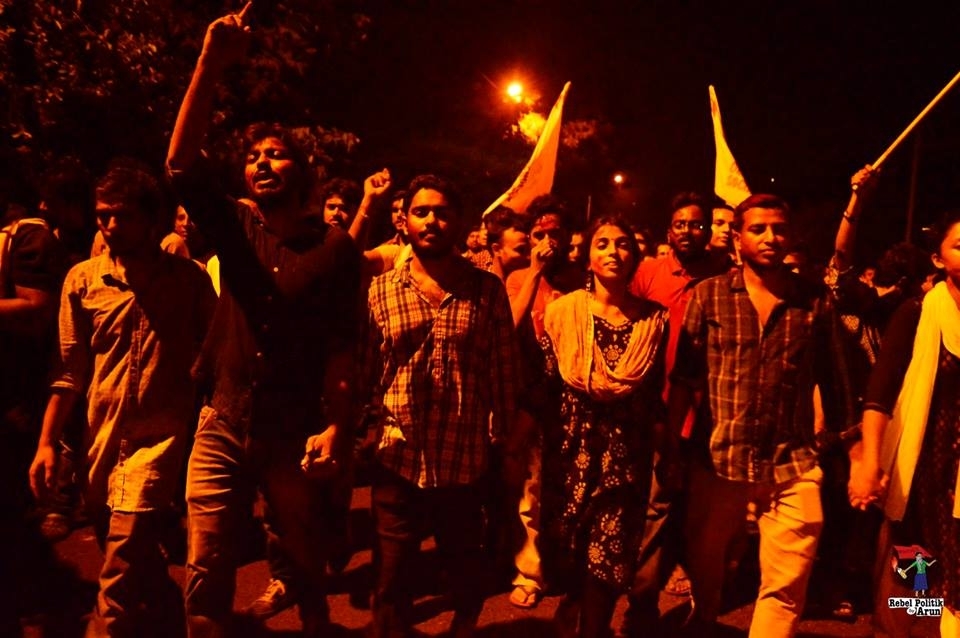
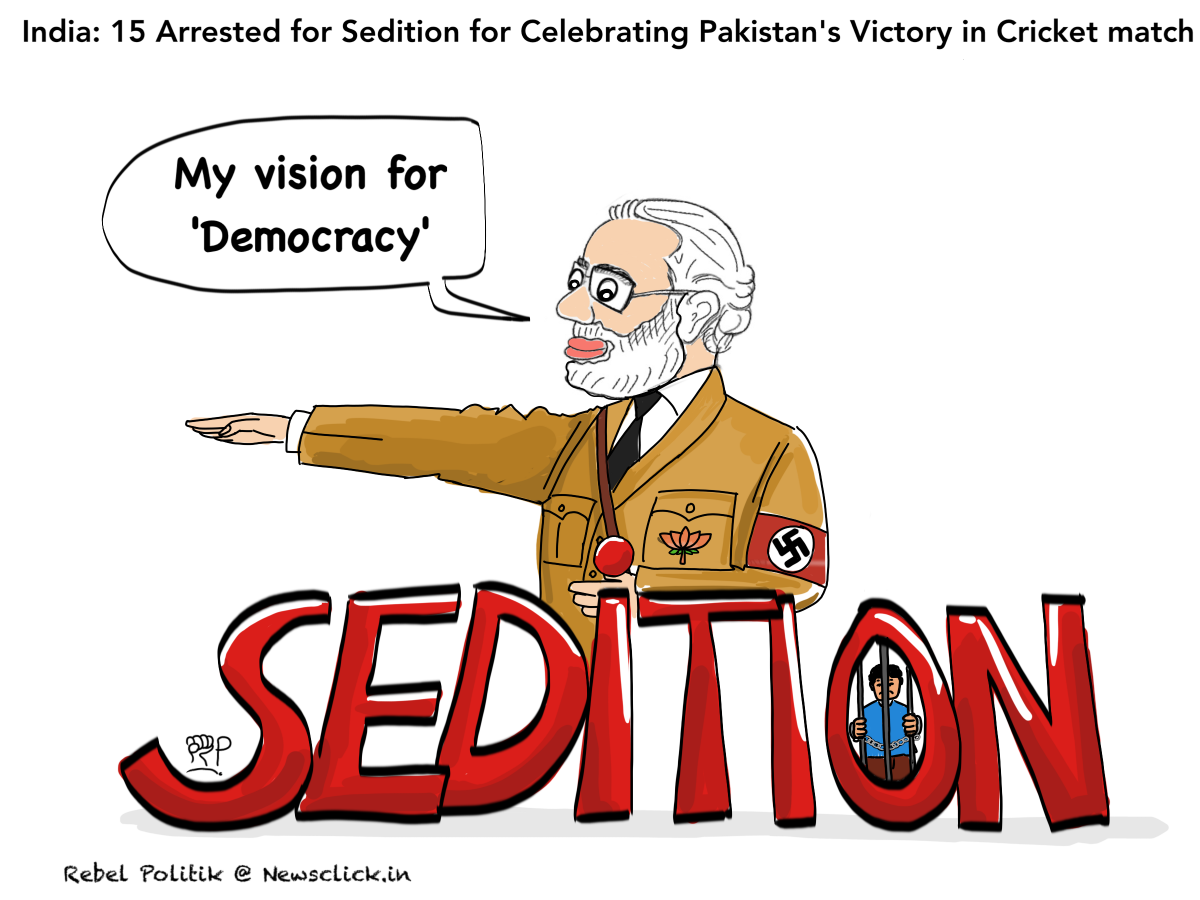
Image Courtesy: Rebel Politik
Police has arrested 15 Muslim men for cheering for Pakistan after the ICC Championship Trophy Tournament. The men have been charged with sedition – punishable by life in prison. The hatred-driven rhetoric that filled the airwaves forces us to ask, whatever happened to sportsmanship? Have we become so blinded by propaganda surrounding India-Pakistan cricket matches that we mistake aggressive jingoism for patriotism? Or have there been other forces at work that are creating a strong emotion of enmity against our neighboring country? Is this the ‘Democratic India’ we hoped to live in, where support for another country in a cricket match makes you seditious.
Courtesy: Newsclick.in
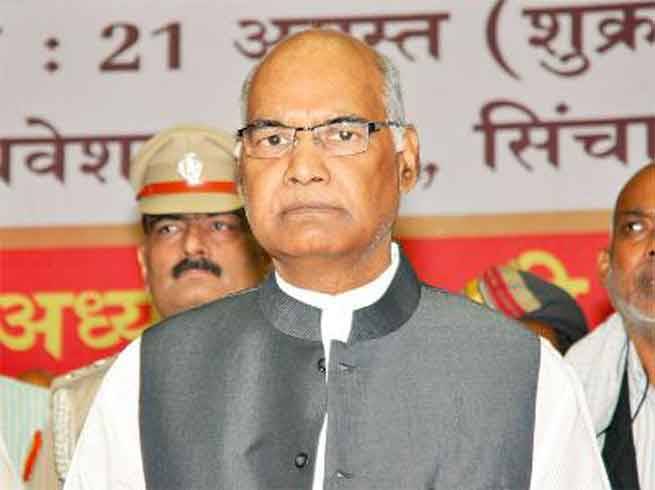
Respected Ramnath Kovind ji,
Namaskar, I must congratulate you for being chosen as Presidential candidate of the Indian Republic by the BJP. It is heartening, also, to note that you have been chosen, to quote BJP president Mr. Amit Shahji, for being “a Dalit who has struggled in life to reach the position he is in today.”

The fact that, in the forthcoming presidential elections your selection was made due to your Dalit identity was also underlined by Ram Vilas Paswanji, a Dalit minister in the Central Cabinet, when he declared that any one opposing your candidature will be seen as "anti-Dalit".
In a scenario when violence against Indian Dalits and minorities like Muslims and Christians (most of whom hail from Dalit stock) and their disempowerment has surged manyfold, your candidature gives us hope.
However, it is being claimed by the RSS leaders that you have been chosen for being an old and seasoned RSS swayamsevak or member. It is also being emphasised that you are a seasoned ‘Hindu nationalist’. We are informed that you donated your ancestral home in Kanpur Dehat to the RSS.
With these credentials, I fear a serious conflict of interests between your beliefs in theIdeologyof the RSS and yourbeing the highest constitutional authority of the democratic-secular Republic of India.
I put forward in the following some of the serious concerns of mine for your kind perusal.
Conflict Between Oath as President and Path as RSS Member
As a president you will be taking oath which reads:
"I, Ramnath Kovind, do swear in the name of God that I will faithfully execute the office of President of the Republic of India, and will to the best of my ability preserve, protect and defend the Constitution and the law, and that I will devote myself to the service and well-being of the people of Republic of India."
But as a member of RSS you are committed to fulfil the following oath:
“Before the all powerful God and my ancestors, I most solemnly take this oath, that I become a member of the RSS in order to achieve all round greatness of Bharatvarsha by fostering the growth of my sacred Hindu religion, Hindu society, and Hindu culture. I shall perform the work of the Sangh honestly, disinterestedly, with my heart and soul, and I shall adhere to this goal all my life. Bharat Mata Ki Jai.”[i]
Moreover, members of RSS are opposed to an all-inclusive democratic-secular India. The RSS English organ, Organizer, just on the eve of Independence (August 14, 1947), editorially (titled ‘Whither’) underlined its belief in the two-nation theory that Hindus are a separate nation in the following words:
“Let us no longer allow ourselves to be influenced by false notions of nationhood. Much of the mental confusion and the present and future troubles can be removed by the ready recognition of the simple fact that in Hindusthan only the Hindus form the nation and the national structure must be built on that safe and sound foundation…the nation itself must be built up of Hindus, on Hindu traditions, culture, ideas and aspirations.”
TRI-COLOUR AS NATIONAL FLAG VS BHAGWA JHANDA
RSS before and after Independence has been allergic to the National Flag. Guru Golwalkar while addressing a Gurupurnima gathering in Nagpur on July 14, 1946, stated that it was the saffron flag which in totality represented great Hindu culture. It was the embodiment of God: “We firmly believe that in the end the whole nation will bow before this saffron flag.”[ii]
Just on the eve of Independence the denigration of the national Flag by the RSS crossed all limits. ORGANIZER in its issue dated August 14, 1947 declared a kind of war against the Tri-colour in the following words: "the people who have come to power by the kick of fate may give in our hands the Tricolour but it never be respected and owned by Hindus. The word three is in itself an evil, and a flag having three colours will certainly produce a very bad psychological effect and is injurious to a country."
Even after independence when the Tricolour became the National Flag, it was the RSS which continued decrying it. In 1960 Guru Golwalkar writing about the National Flag wrote: “Our leaders have set up a new flag for our country. Why did they do so? It is just a case of drifting and imitating….Ours is an ancient and great nation with a glorious past. Then, had we no flag of our own? Had we no national emblem at all these thousands of years? Undoubtedly we had. Then why this utter void, this utter vacuum in our minds[iii]
INDIAN DEMOCRACY VS RSS HATRED FOR DEMOCRACY
India is the largest functional democracy on this earth. We have a democratic-secular Constitution which is in force for almost 7 decades. But RSS hates democracy. Guru Golwalkar, most prominent ideologue of the RSS while addressing a group of 1,350 top level cadres of the organization in 1940 had to say this about political system of India: “RSS inspired by one flag, one leader and one ideology is lighting the flame of Hindutva in each and every corner of this great land.”[iv]
I would like to bring it to your notice that this decree of ‘one flag, one leader and one ideology’ was also the battle cry of Fascist and Nazi parties of Europe in the first half of 20th century. What they did to democracy is well-known to this world.
NDIAN CONSTITUTION DECRIES CASTEISM BUT RSS DECLARES CASTEISM AS ESSENTIAL ELEMENT OF HINDUISM AND HINDU NATION
Indian Constitution provides a polity to the Indian Nation which is above Caste, Class, gender, race considerations. But Guru Golwalkar who demanded conversion of democratic-secular India into a Hindu Nation declared that Casteism was synonymous with the Hindu Nation. According to him, the Hindu people are none else but, “The Virat Purusha, the Almighty manifesting himself. According to purusha sukta sun and moon are his eyes, the stars and the skies are created from His nabhi [navel] and Brahmin is the head, Kshatriya the hands, Vaishya the thighs and Shudra the feet. This means that the people who have this fourfold arrangement, i.e., the Hindu People, is [sic] our God. This supreme vision of Godhead is the very core of our concept of ‘nation’ and has permeated our thinking and given rise to various unique concepts of our cultural heritage.” [Italics as in the original][v]
DEMOCRATIC-SECULAR INDIAN CONSTITUTION VS RSS DEMAND FOR PROMULGATION OF MANUSMRITI AS CONSTITUTION OF INDIA
The Constituent Assembly of India passed the Constitution which was drafted under the guidance of Dr. B.R. Ambedkar on November 26, 1949. RSS was not happy. Its organ, Organizer, in an editorial on November 30, 1949, complained:
“But in our constitution there is no mention of the unique constitutional development in ancient Bharat. Manu’s Laws were written long before Lycurgus of Sparta or Solon of Persia. To this day his laws as enunciated in the Manusmriti excite the admiration of the world and elicit spontaneous obedience and conformity. But to our constitutional pundits that means nothing.”
In fact, the RSS demand for promulgation of Manusmriti as Indian Constitution was in line with the demand by the Hindutva icon, ‘Veer’ Savarkar who declared it to be “that scripture which is most worshipable [sic] after Vedas for our Hindu Nation and which from ancient times has become the basis of our culture-customs, thought and practice…Today Manusmriti is Hindu Law”.[vi]
Some of the degenerated and inhuman instructions for Sudras contained in Manusmriti are reproduced below:[vii]
(1) For the sake of the prosperity of the worlds (the divine one) caused the Brahmana, the Kshatriya, the Vaisya, and the Sudra to proceed from his mouth, his arm, his thighs and his feet.
(2) One occupation only the lord prescribed to the Sudras, to serve meekly even these (other) three castes.
(3) Once-born man (a Sudra), who insults a twice-born man with gross invective, shall have his tongue cut out; for he is of low origin.
(4) If he mentions the names and castes (jati) of the (twice-born) with contumely, an iron nail, ten fingers long, shall be thrust red-hot into his mouth.
(5) If he arrogantly teaches Brahmanas their duty, the king shall cause hot oil to be poured into his mouth and into his ears.
It is to be noted that a copy of Manusmriti was burnt as a protest in the presence of Dr. B.R. Ambedkar during historic Mahad agitation in December, 1927.
GANDHI AS FATHER OF NATION VS ‘HINDU NATIONALISTS’ WHO CELEBRATE ASSASSINATION OF GANDHI
Nathuram Godse and others, who conspired to kill Mahatma Gandhi, claimed to be Hindu Nationalists. Shockingly, present day Hindu Nationalists celebrate his ‘vadh’. To cite one example in June 2013 Hindu Janajagruti Samiti (HJS) held its 2nd all India conference for converting India into a Hindu rashtra at Goa. This conference started with a felicitation message from Narendra Modi ji. In this conference from the same dais from where Modi ji’s felicitation message was read, one of the prominent speakers, K.V. Sitaramiah, declared that Gandhi was 'terrible, wicked and most sinful'. Rejoicing the killing of M.K. Gandhi, he went on to declare, “As Bhagwan Shri Krishna said in the Gita, Paritranaya Sadhunam Vinashaya Cha Dushkritam/ Dharamasansthapnaya Sambhavami Yuge-Yuge (For the protection of the good, for the destruction of the wicked and for the establishment of righteousness, I am born in every age) On…30th January 1948 evening, Shriram came in the form of Nathuram Godse and ended the life of Gandhi.”[viii]
CASTEISM FREE INDIA VS FATE OF DALITS IN RSS
BJP winner from Iglas Reserved constituency in UP, Diler ji a Dalit with family links to RSS for two generations (whose father was also BJP MP), while canvassing for the seat, not only used to sit on the floor but carry his own steel glass for drinking water/tea when he visited homes of upper-caste voters. Diler, a Valmiki, justified his desire to remain shackled in Casteism by saying ‘Main apni maan maryada khatm nahin kar sakta. Zama na chahe badalta rahe.’ (I cannot break away from tradition. Let the world change, I won’t).[ix]
Significantly, neither RSS nor BJP what to talk of condemning this self-imposed Untouchability, did not stop Diler ji from doing such reprehensible anti-constitutional acts.
Respected Kovind ji, I hope as President of India you will follow the constitutional oath and not the one obligatory in RSS, you will be flag-bearer of Indian Nationalism and not Hindu Nationalism, you will defend democratic-secular Constitution of India against any attempt to enforce Manusmriti, you will resist any attempt to bring back Untouchability by glorifying Casteism as essential ingredient od Hinduismand Hindu nationalism, you will check denigration of Father of the Nation and glorification of his killers, you will not allow any mischief with the National Flag and Indian democracy. And finally, you will not allow present India to be converted to a Hindu Pakistan.
Wishing you all the best.
Yours,
Shamsul Islam
notoinjustice@gmail.com
Join our mailing list to get the latest human rights news that matters, straight to your mailbox.
© Sabrang | All Rights Reserved