Home Blog Page 2089

A response to the London Terror Attack: The wrongs of counter-violence

0
The Guardian UK reports on the Saturday Night (June 3) terror attack on London Bridge. The story may be read here

Here is what happened:

♦ Attackers drove van into pedestrians on London Bridge before stabbing people in Borough Market
♦ Prime minister says too much ‘tolerance of extremism’ in UK
♦ 48 injured people taken to hospitals
♦ General election campaigning suspended

Full report: Police shoot dead three suspect after London attack

In the event of a major ISIS-inspired action in Britain, what principles do far-sighted – and brave – politicians need to observe? First published on 20 January 2017.


Stefan Rousseau/PA Wire/PA Images. All rights reserved.

"A few months before the 7/7 attacks in London in July 2005, and in the wake of the Madrid bombings, I went to a meeting that the Bishop of Bradford had convened to try and think through how a multi-confessional city like Bradford might respond if there was a similar attack in the UK. He brought together representatives from the local mosques, the police, the Council, the youth service and community groups, and I think this might have been one of the factors that helped maintain a degree of calm and resilience in the city when the 7/7 attacks came. Remembering this was part of what prompted me to write the following piece for openDemocracy in January, which was republished on 23 March in the light of the attack in Westminster.
Following last night’s terrible attack at the Manchester Arena, it may be helpful to look at the original column again. Now that we are in middle of a very fractious general election campaign it may be that the final few paragraphs, especially the last one, are particularly salient."
Paul Rogers  23 May 2017

Another 7/7-type attack in the United Kingdom is likely. In the aftermath, it will be essential to respond carefully with responses that seek to explain the wider context.
In London, the inquest has opened into the deaths of thirty British beach tourists in Sousse, Tunisia in June 2015. Eight others were killed in the ISIS-facilitated attack. Many questions remain over the warnings given and the levels of security offered.

The assault, as well as causing great grief to family and friends, had a substantial national impact. Yet this was less than the bombings of London's transport network on 7 July 2007, when fifty-two people were killed on a bus and three underground trains. (The four perpetrators also died). It remains the defining event for Britain in relation to political violence, closely connected to the Iraq war although this was strenuously denied by the Blair government at the time.

This “disconnect” has remained a feature of British attitudes to al-Qaida, ISIS and other extreme Islamist groups, even if some people pointed out at the time that the loss of life on "7/7" was no higher than the daily loss of life in Iraq.

Now, nearly twelve years later, the war goes on with a similar disconnect – there is simply no appreciation that Britain is an integral part of a major war that started thirty months ago, in August 2014. It may take the form of a sustained air-assault using strike-aircraft and armed-drones, but its intensity is simply unrecorded in the establishment media. This is a straightforward example of “remote warfare” conducted outside of public debate.

Thus, when another attack within Britain on the scale of 7/7 happens, there will be little understanding of the general motivations of those responsible. People will naturally react with horror, asking – why us? Politicians and analysts will find it very difficult even to try and explain the connection between what is happening "there" and "here".
The straightforward yet uncomfortable answer is that Britain is at war – so what else can be expected? It may be a war that gets little attention, there may be virtually no parliamentary debate on its conduct, but it is a war nonetheless.

There are several factors which underpin this approach.

The post-9/11 western-led wars in Iraq, Afghanistan, and Libya have left three countries as failed or failing states, killed several hundred thousand people and displaced millions. This causes persistent anger and bitterness right across the Middle East and beyond. While the Syrian civil war started as the repression of dissent by an insecure and repressive regime, it has evolved into a much more complex "double proxy war" which regional rulers and the wider international community have failed to address. This adds to the animosity.

The situation in Iraq is particularly grievous, given that it was the United States and its coalition partners that started the conflict and also gave rise directly to the evolution of ISIS. The Iraq Body Count project estimates the direct civilian death-toll since 2003 at more than 169,000. After a relative decline over 2009-13, an upsurge in the past three years has seen 53,000 lose their lives through violence.

Since the air-war started in August 2014 the Pentagon calculates that over 30,000 targets have been attacked with more than 60,000 missiles and bombs, and 50,000 ISIS supporters have been killed. But there is abundant evidence that western forces have directly killed many civilians. AirWars reports that:

"As ISIL was forced to retreat in both Iraq and Syria, the year [2016] saw a dramatic jump in reported civilian deaths from Coalition airstrikes. A total of between 2,932 and 4,041 non-combatant fatalities are alleged for 2016, stemming from 445 separate claimed Coalition-caused incidents in both Iraq and Syria."

ISIS, Jabhat Fateh al-Sham (JFS), and other groups have no air-defence capabilities yet are determined to continue the war, seeing themselves as guardians of Islam under attack by the “crusader” forces of the west. At a time of retreat they will be even more determined than ever to take the war to the enemy, whether by the sustained encouragement and even facilitation of individual attacks such as Berlin or Nice, or more organised attacks such as in Paris and Brussels.

The aims of these groups are threefold:
* Retribution via straightforward paramilitary actions, responding especially to the current reversals in Iraq.
* Demonstrating to the wider world, especially across the Middle East, that they remain a force to be reckoned with.
* Inciting as much anti-Muslim bigotry and hatred as possible in the target countries.

In the last of these they are greatly aided by the attitudes of Trump, Le Pen, Wilders, UKIP and other western political phenomena, especially the incitement of fear of refugees which reached its height in Britain in the closing days of the Brexit campaign.

A repeat 7/7–level attack in Britain is probable, although when and how is impossible to say.  Again, it will not be easy to respond. But in trying to do so, two factors need to be born in mind.
First, the aim of ISIS and others will be to incite hatred. Any tendency to encourage that is doing the work of ISIS. This can and should be said repeatedly.

Second, the links between the attack and the ongoing war in Iraq and Syria must be made. That Britain is still at war after fifteen years suggests that some rethinking is required.

Politicians who make these points will face immediate accusations of appeasement, not least in the media. But however difficult the case, it needs to be made if the tide of war is to be turned.

About the author:
Paul Rogers is professor in the department of peace studies at Bradford University, northern England. He is openDemocracy's international security adviser, and has been writing a weekly column on global security since 28 September 2001; he also writes a monthly briefing for the Oxford Research Group. His latest book is Irregular War: ISIS and the New Threat from the Margins (IB Tauris, 2016), which follows Why We’re Losing the War on Terror (Polity, 2007), and Losing Control: Global Security in the 21st Century (Pluto Press, 3rd edition, 2010). He is on Twitter at: @ProfPRogers
 

Lucknow: Blazing Fire in Kanshiram Echo Park

0

A raging fire broke out about 15 hours ago in Lucknow's Kanshiram Echo Park situated in front of the Ramabai Ambedkar Jail road Masjid

Some Videos on You-Tube

Lucknow: A fire in Eco Garden situated in front of the mosque of Ramabai Ambedkar Jail Road

कांशीराम ईको पार्क में लगी आग

Sangh’s Appropriation of Popular Culture: Karnataka

0

An interview with Professor Muzaffar Assadi

The Indian Writers' Forum participated in the Dharwad Literature Festival held on 6-7 May, 2017. The IWF Team spoke to Dr. Muzaffar Assadi, Professor of Political Science at the University of Mysore about the slow rise of communalism in Karnataka and the gradual co-option of local icons into the Hindutva fold. The aim, Professor Assadi explains, is to convert the masses into Hindus, mainly from the marginalised communities, into cultural and finally into political Hindus.


Cultural Syncretism and Tolerance
When compared to other parts of India, whether it’s Uttar Pradesh or Bihar, or Haryana and other places, Karnataka has been relatively free from communal tension and communal ideology.  Karnataka remained unaffected by the Partition. It never had any memories of the Partition. In fact, memories of Partition came to Karnataka through texts or in the form of textual memories.

The first instance of communal tension can be traced back to 1920. It started on a small pretext that is the Ganesha Festival. In fact, one may recall that there is a long absence of communal tension in the history of Karnataka. The reasons were: Karnataka had a tolerant society and it celebrated cultural syncretism. Some examples of its cultural and religious syncretism are represented by the ritual practice of Naga Pantha and the influence of Sufism. As a result, this syncretic culture gave rise to a “fuzzy” community where identities were blurred. 

The State was not only tolerant, it was also receptive. One remembers the Bahmani Kingdom/ Bahmani Sultanate around the Bijapur area which not only upheld Islamic tradition, they also extended their support to literature, the arts, and languages from the other princely states. 

In the 1920s, a non-Brahmin movement set the stage for an affirmative action to secure reservation for marginalized groups in the princely state. Not only was there a strong alliance between communities and the State but also among the different communities. There was no division based on communal identities. Watch the interview here and read the transcript below. 

 
Communal Ideology enters Karnataka in 1980
But in the late 1980s, the scene changed. Karnataka was on the verge of major communal shake up. Since then, certain pockets have been treated as experimental labs of the Hindutva. The coastal belt of Karnataka is the best example. What led to this transformation were the land reforms of 1970s. 
 

Coastal belt of Karnataka/Image courtesy Wikimedia
 

These land reforms were progressive in nature and they provided social security to backward classes in the coastal region. They created a category of cultivators who were not landlords. Prior to this, their economy was in doldrums. They were given small patches of land. But after the land reforms, they were able to secure their own social identity. But in the 1980s this changed. There was widespread social and economic crisis. The BJP took advantage of this crisis and tried to appropriate the disillusioned lot which in turn created many fringe groups. Therefore, communal violence in the coastal belt was mainly engineered by the Hindutva groups. 

The fringe groups comprised people from the Other Backward Classes. If one observes the structure of communal tension in Karnataka, three things become evident. Communal tension is primarily engineered by Hindutva groups in the coastal belt, the bashing category consists of people from the OBCs; and finally, the ideological apparatus for this was provided by the upper castes. However, this does not mean there was no backlash. 

 
Competitive Communalism
This further gave rise to competitive communalism in the region. Islamic Fundamentalist groups such as the Popular Front of India and the Socialist Democratic Party of India (SDPI) are results of the aforesaid competitive communalism.  

Any kind of dialogue between Muslims and Hindus has nearly stopped in the coastal region. Competitive communalism has also penetrated the public sphere. One sees saffron flags everywhere—in bus stands, tied to poles, rickshaws, etc. Communal tension has seeped into everyday life—one rarely sees people from these two communities get together in the coastal belt. 

Communal ideology is increasingly appropriating Karnataka’s syncretic culture. Liberal spaces are shrinking in Karnataka. They are also trying to influence civil society groups and trying to mobilise and organise them. 

 
Converting Hindus into Cultural-Political Hindus
 

Narayan Guru with Rabindranath Tagore in 1920/ Image courtesy RealBharat
 

Most importantly, political defeat is not the primary concern of communal politics in Karnataka. What is more important is the task of converting a Hindu into a cultural Hindu, especially people from the Other Backward Classes. In order to do this, they have started appropriating local symbols like Narayan Guru, Ambedkar, Rani Abbakka (the freedom fighter from a place called Ullal) and Kittur Rani Chennamma (by naming a university after her). 
 

Rani Abbakka/ Image courtesy NovelticIndia.com

In fact, Hindutva forces are also slowly appropriating the corporate sector. In the malls, they supply the security guards. 
 

Kittur Rani Chennamma/ Image courtesy navrangindia.blogspot.in

 
Multifaceted Fronts to Counter Communal Ideology

Who is countering this rapidly growing communal politics in Karnataka? 

There are five or six groups. However, they are not strong enough to confront or counter communal politics in Karnataka. Since communal politics has penetrated everyday life practices: culture, lifestyle, texts, etc, one has to build a strong counter-culture. Strong multifaceted civil society and institutional collectives should be formed to counter communal ideology with ideas of secularism, liberalism, and freedom. Only heterogeneous, multifaceted fronts can help rebuild a tolerant and communally free Karnataka. 

Courtesy: Indian Cultural Forum
 

Breaking Bread and Breaking Down Barriers of Caste, the Pinarayi Vijayan Way

0

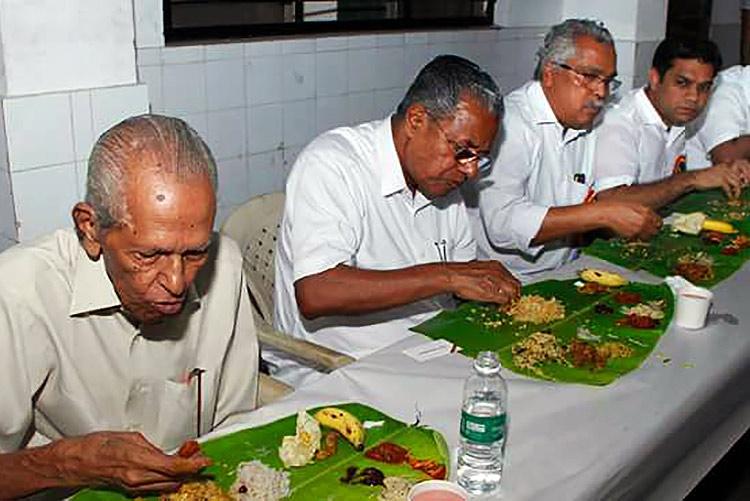
“In this era where Dalits, women and children are attacked and assaulted, it is very relevant to think about Misrabhojanam. The event was an announcement of equality on behalf of a group that was enslaved for centuries. Through the event the suppressed were given dignity. It was Sahodaran Ayyappan who sowed the seeds of forward and logical thinking in Kerala,”
CM Pinarayi Vijayan

Breaking Down the Barriers of Caste

Breaking down social barriers towards creating a more equal world Breaking down social barriers towards creating a more equal world An important area of social intervention that has a far-reaching effect on fostering caste unity and greater social accord, is the concept of community inter-dining of all social classes, eclipsing all man-made barriers and divides, that have worked to the detriment of the socially poor all through the ages. Mid-day meal scheme for the school children was initiated by the Government of India to reduce the school drop-outs, increase retention, provide nutritional supplement to the children in a country with a very high incidence of severe malnutrition and serious child undernourishment. But, one important consideration for an intervention of this kind was also to foster social unity and bring children of all the social classes together in partaking meal, and in the process, help in dismantling the external and visible features of caste inequities, a practice that has been so well entrenched and resilient as to survive for thousands of years, despite the efforts of great religious and social reformers to lessen the caste rigours. Buddhism and Jaimism were the first to challenge the established hierarchical orthodoxy, strongly disapproving of the socially discriminatory practices that relegated certain social classes to the margins. There were instances of some of the most enlightened souls setting personal examples of defying the rigid norms of social behaviour towards greater equality. It was Sujata, belonging to one of the socially marginalised communities, who served a bowl of milk porridge to Gautama Buddha after he had given up the path of asceticism following years of extreme austerity. This event had a major effect on his subsequently attaining enlightenment. During the modern era, the freedom movement was not just seeking political emancipation; it was social too, and saw several movements being launched to oppose and look down upon myriad superstitions, outmoded practices, dogmatic beliefs, and regressive social practices, responsible for the misery for so many, for so long. Kerala was a pioneer in ushering in the concept of community inter-dining, where it was rightly believed that if all were to eat together, the social rigours would be lessened, and it would help in fostering greater social amity, leading to overall and holistic progress, socially, economically and culturally. In celebrating the 100th year of ceremonial inter-dining of all social groups, including those who were socially marginalised, Kerala has shown that it led a virtual social revolution of breaking down the caste barriers and giving the much-needed self-respect and dignity to the hitherto excluded. Social discrimination and exclusions have historically divided the Indian society into a maze of myriad castes and sub-castes, hierarchically placed and rigidly stratified, never presenting a picture of social cohesion and unity. In ushering in this very significant and far-reaching measure of social intervention, a result of enlightened and progressive social policies by the successive governments, Kerala is reaping the benefits today of the most admirable human and social development indicators that it can boast, including high education and health outcomes. Not even Bengal, which was the beneficiary of enlightened liberal thoughts all through the nineteenth century, and where there was a succession of social reformers from Raja Ram Mohan Roy and Ishwar Chandra Vidyasagar, could be so pro-active in this very momentous area of social intervention. Till the mid-thirties and forties, separate dining for different castes continued. Even in Tagore’s Shantiniketan, this social evil was not nipped in the bud till the twenties of the last century. For far too long, we have lived with social prejudices and exclusions, and hierarchical privileges. But, times are changing. In the last five decades or so, this country, even where the social indices are quite low and hierarchies are well entrenched, has taken definitive strides towards breaking down all human-made barriers, despite occasional lapses, and towards modernity. We often hear of heart-breaking stories of social exclusion and people being denied their dignity and self-respect, but they are few and far between. The discriminatory practices, and dehumanising too, that were quite in the open in the past, are no longer so. Social reforms are always slow in coming, India being no exception, but the fact that the Constitution and the laws themselves act as a deterrent, would go a long way in ushering in a more equal world, humane, fair and just, as ordained in the Preamble to the Constitution.

An important area of social intervention that has a far-reaching effect on fostering caste unity and greater social accord, is the concept of community inter-dining of all social classes, eclipsing all man-made barriers and divides, that have worked to the detriment of the socially poor all through the ages. Mid-day meal scheme for the school children was initiated by the Government of India to reduce the school drop-outs, increase retention, provide nutritional supplement to the children in a country with a very high incidence of severe malnutrition and serious child undernourishment. But, one important consideration for an intervention of this kind was also to foster social unity and bring children of all the social classes together in partaking meal, and in the process, help in dismantling the external and visible features of caste inequities, a practice that has been so well entrenched and resilient as to survive for thousands of years, despite the efforts of great religious and social reformers to lessen the caste rigours. Buddhism and Jaimism were the first to challenge the established hierarchical orthodoxy, strongly disapproving of the socially discriminatory practices that relegated certain social classes to the margins. There were instances of some of the most enlightened souls setting personal examples of defying the rigid norms of social behaviour towards greater equality. It was Sujata, belonging to one of the socially marginalised communities, who served a bowl of milk porridge to Gautama Buddha after he had given up the path of asceticism following years of extreme austerity. This event had a major effect on his subsequently attaining enlightenment.

During the modern era, the freedom movement was not just seeking political emancipation; it was social too, and saw several movements being launched to oppose and look down upon myriad superstitions, outmoded practices, dogmatic beliefs, and regressive social practices, responsible for the misery for so many, for so long.

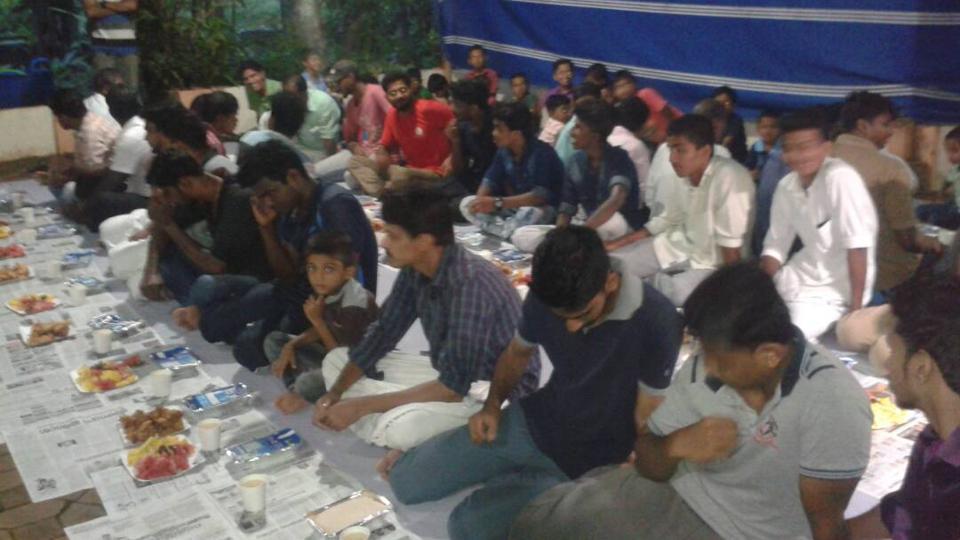
Kerala was a pioneer in ushering in the concept of community inter-dining, where it was rightly believed that if all were to eat together, the social rigours would be lessened, and it would help in fostering greater social amity, leading to overall and holistic progress, socially, economically and culturally. In celebrating the 100th year of ceremonial inter-dining of all social groups, including those who were socially marginalised, Kerala has shown that it led a virtual social revolution of breaking down the caste barriers and giving the much-needed self-respect and dignity to the hitherto excluded.
Social discrimination and exclusions have historically divided the Indian society into a maze of myriad castes and sub-castes, hierarchically placed and rigidly stratified, never presenting a picture of social cohesion and unity. In ushering in this very significant and far-reaching measure of social intervention, a result of enlightened and progressive social policies by the successive governments, Kerala is reaping the benefits today of the most admirable human and social development indicators that it can boast, including high education and health outcomes. Not even Bengal, which was the beneficiary of enlightened liberal thoughts all through the nineteenth century, and where there was a succession of social reformers from Raja Ram Mohan Roy and Ishwar Chandra Vidyasagar, could be so pro-active in this very momentous area of social intervention. Till the mid-thirties and forties, separate dining for different castes continued. Even in Tagore’s Shantiniketan, this social evil was not nipped in the bud till the twenties of the last century.

For far too long, we have lived with social prejudices and exclusions, and hierarchical privileges. But, times are changing. In the last five decades or so, this country, even where the social indices are quite low and hierarchies are well entrenched, has taken definitive strides towards breaking down all human-made barriers, despite occasional lapses, and towards modernity. We often hear of heart-breaking stories of social exclusion and people being denied their dignity and self-respect, but they are few and far between. The discriminatory practices, and dehumanising too, that were quite in the open in the past, are no longer so. Social reforms are always slow in coming, India being no exception, but the fact that the Constitution and the laws themselves act as a deterrent, would go a long way in ushering in a more equal world, humane, fair and just, as ordained in the Preamble to the Constitution.


Hackathon by EC In Question After Court Order: Uttarakhand

0

Election Commission's Hackathon In Question After Court Order

AAP, which has accused the Election Commission of colluding with the BJP to rig results in its favour, has announced that it will hold a parallel hackathon of its own tomorrow.

Highlights of Uttarakhand Court Order

♦Hackathon with vote machines could be unconstitutional: court

♦Political parties claim machines can be rigged

♦Election Commission dares them to prove it tomorrow

The Election Commission has organized more than 10 vote machines that were recently used in elections including in Uttar Pradesh and Uttarakhand for tomorrow's hackathon, where political parties will try to prove in Delhi that the machines can be rigged. However, the Uttarakhand High Court has said the event is unconstitutional; the Election Commission has said it will not cancel its plans. The court will deliver its verdict later this evening.

The same court that had earlier asked for voting machines used in the Uttarakhand election to be sequestered after Congress candidates complained that the result was gamed against them. Today's warning to the Election Commission against its plans for tomorrow is based on a case filed by a Congressman, Dr Ramesh Pandey, who says the Commission does not have the authority to conduct the event.

So far, these are the arrangements made for the hackathon. A total of 14 Electronic Voting Machines or EVMs will be made available to representatives of Sharad Pawar's party and the Left who hope to prove that the Election Commission is wrong and that the equipment used by it can be gamed, as alleged by a series of political outfits including the Congress and Delhi Chief Minister Arvind Kejriwal's Aam Aadmi Party or AAP after Prime Minister Narendra Modi front-lined his party's gigantic wins in Uttar Pradesh and Uttarakhand.

AAP, which has accused the Election Commission of colluding with the BJP to rig results in its favour, has announced that it will hold a parallel hackathon of its own tomorrow. The machine it will make available to techies and others is the one that was used by the party in the Delhi Assembly last month in a televised demonstration of its manipulation. The Election Commission said the machine used was a far cry from the real thing and rejected the result.

Hackers will get only five hours – from 10 am to 2 pm – and access to four machines each during the EC's Hackhaton tomorrow. The other EVMs will be kept as back up. 

The Election Commission has said its challenge has two parts – the hackers will have to prove that the EVMs used in the five states that just voted including Uttar Pradesh and Punjab were manipulated to favour a particular candidate or political party by altering the results stored in them.

Part Two of the challenge calls for participants to prove that the machines used in the assembly polls were manipulated before or on the day of voting.
The participant will be considered "failed" if the EVM stops functioning as a result of its inbuilt defense mechanism against tampering.

The participants – three members per party – can "physically examine" EVMs and check circuits, chips and motherboard, but cannot replace any part. Arvind Kejriwal's party had asked for these restrictions to be removed, claiming it "would not be possible to tamper with the machines without giving people a free hand to do so.