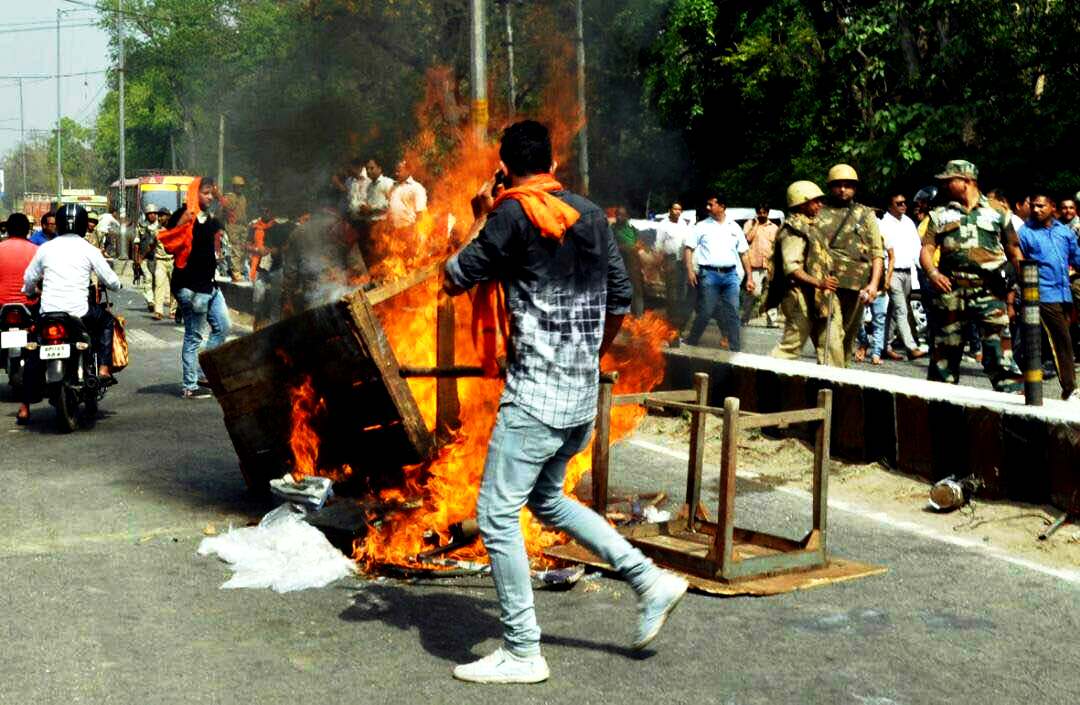
Two suspected cow thieves were lynched in Assam’s Nagaon district on Sunday.
The incident raised concerns about self-styled gau rakshaks being involved but the Nagaon superintendent of police, Devraj Upadhyay told the Telegraph there was no communal angle involved in the incident.
Meanwhile, the state spokesperson of the RSS added that there were no gau rakshaks or cow vigilantes in Assam.
The state’s organising secretary of the Jamiat Ulema-e-Hind, Maulana Kalimuddin too said he was not aware of gau rakshaks being active in Assam. Beef is not banned in this north-eastern state.
The lynched suspects were identified by the police as Riajuddin and Abu Hanufa. "They were caught in Kachamari village (around 3km from Nagaon town) while allegedly taking away a bull from the grazing area. It was only about a month ago that the two had been caught by villagers while trying to steal goats. They were fined Rs 5,000 by the villagers then. Today, the villagers chased them for over 2 kms before catching them," Upadhyay told the Telegraph.
On coming to hear of the incident, the police reached the spot and rushed the suspects to Nagaon hospital where they breathed their last.
More than 100 suspected cattle thieves have been arrested in Nagaon district, around 120km from Guwahati, over the past three months alone, Upadhyay said.
The stolen cattle are reportedly smuggled across the border to Bangladesh.
Kerosene poured in to foul up the well. Photos credit: NDTV
Because a Dalit from a village in Madhya Pradesh‘dared’ to have band baaja in his wedding procession, the local upper castes poured kerosene to foul up the water in the only well on which 500 Dalits depended for drinking water and other needs.
This happened two days after the wedding of Mamta, daughter of Chander Meghwal in Maada village in Madhya Pradesh, according to a report by NDTV. The wedding procession on April 23 had passed off without incident only because it was escorted by policemen, armed with batons, rifles and teargas. But two days later, kerosene was poured into the Dalit well.
Wedding procession under police protection
Authorities have had to be called in to clean up the well. But in the meantime, Dalit women have had no choice but to fetch water from a river 2 kms away for the past week.
Dalit women scooping water from a river bed 2 kms from their village
The village “rule” permits only upper caste people to have a music band at their wedding. The Meghwals had been warned to ensure that no band baaja accompanied the bridegroom’s party when it entered the village to marry Mamta. But the Dalits of the village stood by the Meghwal family and the collective punishment followed.
Durvijay Singh, a senior official, told NDTV the kerosene pouring was "not such a big issue" since the various communities in the village "live in amity". "Obviously someone has done this deliberately. It will eventually come out who was responsible," he said.
But no case has been registered in the matter and no investigation has been started, although the police have been stationed again in the village to provide protection to Dalits.
Days after a mob assaulted two women, an old man and a child in the name of cattle protection in Jammu and Kashmir, and weeks after another group of vigilantes murdered a man named Pehlu Khan in Rajasthan as he was transporting two cows, a member of India’s longest-running satyagrah to end cattle slaughter has spoken out against such violence.
“Jo hinsa karta hai, voh gau rakshak hai hi nahi [Those who commit violence cannot be cow protectors],” said Baldevraj Ilwadhi, 76, in an interview with Scroll.inabout the new crop of cow protection groups that have emerged in the last few years. “I appeal to them not to fight or attack people. I know there are even some who extort money from people. I ask them instead to focus on creating pressure on the government.”
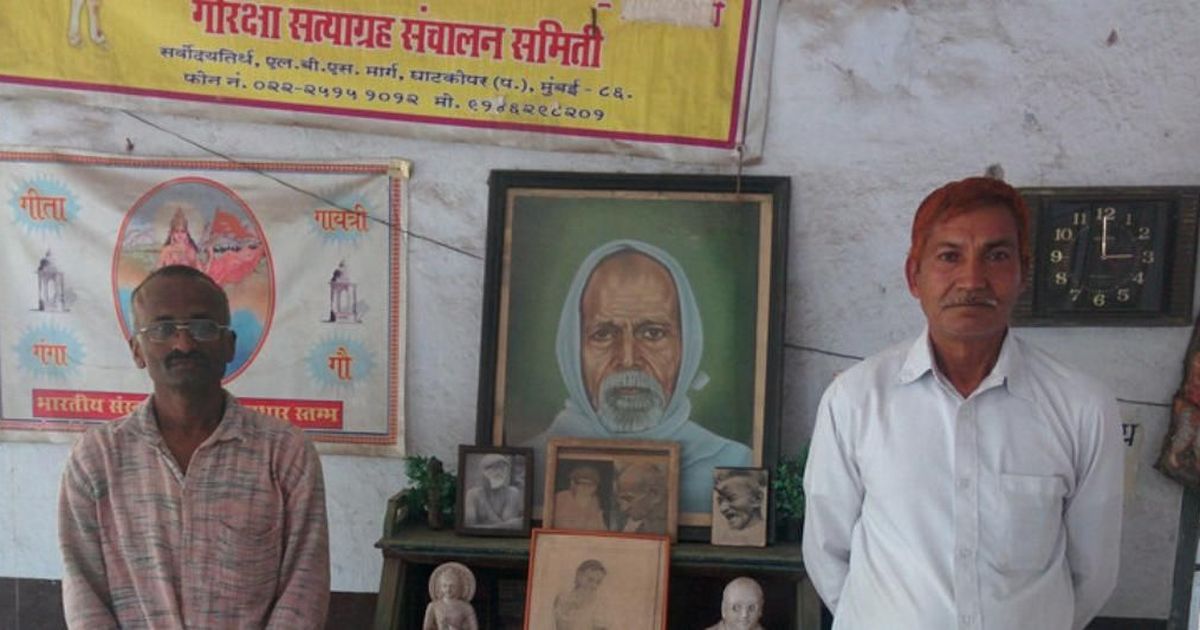
Ilwadhi is a member of the Goraksha Satyagrah Sanchalan Samiti, a Gandhian group once led by Vinayak Bhave, commonly known as Vinoba, which conducted a three-decade long civil disobedience campaign against cattle slaughter in Maharashtra.
For 33 years, Ilwadhi and others in the Vinoba Bhave-inspired group went regularly to the abattoir in Deonar, Mumbai, to waylay trucks bearing cattle for slaughter. The police, in turn, would detain them and release them almost immediately – only for them to repeat the process the next day. Their campaign – India’s longest such protest – ended with the state’s ban on bull and bullock slaughter in March 2015. Scroll.in had interviewed the group at the end of their protest.
“Anyone who has even some humanitarian feeling will be hurt by these incidents [of violence],” Ilwadhi wrote in a formal statement he posted to Scroll.in. “We at least were as hurt on hearing this news [of Pehlu Khan’s murder] as his family must have been. These incidents damage the cause of cattle protection.”
Need constitutional remedy
Ilwadhi explained that members of modern cow protection groups become angry when they see injustice being done in front of them, but the main culprit is the government for allowing slaughter to continue. The government itself is selling meat, he said, and so has more blame to shoulder than individual cow protection groups.
That said, Ilwadhi believes there is no reason to ban cow protection groups in the name of stopping this violence. The Supreme Court, responding to a petition by social activist Tehseen Poonawalla, asked the Centre and six states in April to explain within three weeks why cow protection groups should not be banned. The next hearing for this case is listed for May 2.
The family members of Pehlu Khan, who was lynched by cow vigilantes in Alwar in April, stage a sit-in demonstration to demand justice for him in New Delhi. (Photo credit: IANS).
The Constitution already has laws against murder and violence, which are the laws with which violent cow protection groups should be dealt with, Ilwadhi wrote in his statement. What is not yet in the Constitution is a national law that will put an end to all cattle slaughter and, by extension, to violence against those who transport or butcher cattle.
Even as Ilwadhi holds firm in his stance against violence resorted to by cow protection groups, he also spoke sternly against the violence he claims to have seen perpetrated by those who operate slaughterhouses, who, he claims, have even murdered for their cause.
“There is only one solution to stop cattle slaughter – if the government enacts a law against it,” Ilwadhi said. “Once they do that, the prices of goat meat will also go down and people will want to have that instead.”
Protest goes on
Ilwadhi’s long protest has taken its toll on him. Now 76, he has had surgery on his hernia and is too weak to travel. He is also effectively homeless – after years of peaceful protest at slaughterhouses across Maharashtra, Ilwadhi has lost all familial roots.
As long as Ilwadhi and his companions were protesting, the trustees of Mumbai’s Sarvodaya Hospital in Ghatkopar allowed them to live in a ward on the second floor of an annexe building in the hospital compound. Hospital employees still remember them as the gausevak satyagrahis who once lived there. Ilwadhi, the last such satyagrahi left in Mumbai, has the trustees’ permission to stay on.
Ilwadhi presented an array of reasons why cattle slaughter should stop, including climate change and the inherent violence associated with it. He once saw a buffalo pass him on its way to the slaughterhouse with tears streaming down its eyes. Ilwadhi also appeals to seemingly more rational sentiment. He claims that slaughterhouses are so polluting, both to the water and the air, that a hole in the ozone layer has built up over Kanpur because of the city’s vast trade in leather, and that the presence of slaughterhouses has exacerbated the air pollution in Delhi.
“Poor people, both Hindus and Muslims, actually don’t want cattle slaughter,” he continued. “People in villages are poor and they feel they have no other option but to take their cattle to slaughter. But even then there have been Muslim butchers who tell me they don’t want to do this and they have no choice. That is why it is the duty of politicians to help them out of this.”
Despite the present government’s avowed position of working to end cattle slaughter, Ilwadhi bemoaned its relative inaction.
Ilwadhi said, “There have been three years of the Modi government and all he does is talk. He still has not enacted any law about this. We told the Congress for so long to enact this and now see how they have fallen. Our warning to this government is that they too will fall if they do not act to protect cattle.”
This story first published on Scroll is republished with permission.
“I am an Indian. I am a Muslim. I am the part you won’t recognise. But get used to me.” (Photo: Rhythum Seth/ The Quint)
“I am an Indian. I am a Muslim. I am the part you won’t recognise. But get used to me. Confident, unapologetic. my name, not yours; my religion, not yours; my food, my choice; my clothes, my choice; my goals, my own; my skullcap, my choice; my hijab, my choice; my beard, my choice; get used to me.”
Far too often you have labelled me as stranger, anti-national, terrorist, sickular. You’ve called me ‘Memon ke baarati’, ‘Kasab ke bhai’, and ‘Aurangzeb ki aulaad’. You demonise my religion and impose your way of life on me. You want discriminatory legislations against my religion. From Gujarat to Muzaffarnagar, Dadri to Alwar, you unleashed your fury on innocent people.
‘Proud of Being an Indian and a Muslim’
You want to insist that Islam is not acceptable in this country. You want aggressive cultural nationalism to be forced on us, almost as if we had no right to believe, the way we believe.
You represent the forces in our society that are hell-bent on denying us a dignified existence in this country. You want me to go to Pakistan as you claim more entitlement to this land than others. It’s not just an offence to the Muslims, it’s an offence to India.
Let me tell you who I am. I am a Muslim, I am a human being and I am an Indian. Islam is my way of life. I am not hateful or intolerant. I am just a Muslim. I consider religion as a medium through which we can contribute to the world.
I believe that everyone is free to practice their religion. I love this land as much as anyone else and I love the people of this land even though some don’t view me as equal. As an Indian Muslim, I am proud of both being a Muslim and an Indian.
‘Get Used to me’
I refuse to accept your constrictive definition of nationalism. I will be at the forefront of this battle that wants to twist my faith. I will respond to your hate and ignorance in the same way Muslim American Muhammad Ali responded to the bigots and hate-mongers of his time:
“I am America. I am the part you won’t recognise. But get used to me. Black, confident, cocky; my name, not yours; my religion, not yours; my goals, my own; get used to me. “ — Muhammad Ali
Ali’s words give me courage in these troubled times. He is my inspiration and that’s who I want to be. Not only was he confident, but he loved his faith and he proudly represented Islam. He never missed an opportunity to tell people that he was who he was because of his faith.
This story, first published on Medium.com is being republished with the author's permission.
Experts say massive educational reform and social initiative is required to address the lure of extremism
Photo:Rajib Dhar/Dhaka Tribune
Businessman Alamgir Hossain from the capital’s Kazipara handed over his two sons to police after he became suspicious that they had been indoctrinated in religious extremism.
The man was hoping that the police would help with the rehabilitation of his sons. However, police produced the two boys in court on April 11, 16 days after their detainment on March 25, although they are legally required to bring detainees before court within 24 hours.
The frustrated father is now saying that law enforcement agencies were too busy collecting information from his sons instead of helping them rehabilitate to a normal life.
“Our finding is that about 82% of the arrested militants were radicalised by online writings and conversations. They were misled by militant outfits when they were out trying to sate their curiosity about their own religion:” Dhaka police
On January 14, authorities of Mymensingh Ishwarganj Girls High School and Women College found leaflets containing anti-state speeches and false misguiding information about Islam in the hands of students. They later saw a person clad in burka distributing the leaflets on their CCTV footage.
Since the Holey Artisan and Sholakia attacks in 2016, law enforcement has cracked down on radical militants. Almost 50 militants have been killed in confrontations with law enforcement and the army, and more than 100 militants have been nabbed.
The government, however, appears to be giving far less priority to protecting young boys and girls from getting easily drawn to violent radical ideologies. Most of steps to prevent radical ideologies from spreading among the public have gone unnoticed or been ineffective.
The government has taken many initiatives to fight radicalisation, key among them is engaging imams of mosques to preach against extremism. However, experts say massive educational reform and social initiative is required. Photo Credit: Dhaka Tribune
Bangladesh police’s Counter-Terrorism Focal Point and police headquarters assistant inspector general Md Moniruzzaman said: “Our finding is that about 82% of the arrested militants were radicalised by online writings and conversations. They were misled by militant outfits when they were out trying to sate their curiosity about their own religion.”
Experts are blaming a lack of coordination amongst the concerned ministries, lack of initiatives from different national and regional socio-cultural organisations and lack of unity amongst the country’s political parties.
Dhaka University’s History Professor Dr Muntassir Mamoon said: “Psychological change among the people is necessary to combat extremism.
“The government took many initiatives to counter radicalisation and militancy, which were praiseworthy and partially successful. But this is not enough. Nationwide socio-cultural movement and effective changes in the education system is necessary.”
A radical change in the country’s education system is must, the academic said.
“We need to synchronise the syllabi of Qawmi and Alia madrasas with mainstream education. Besides, social values and cultural movements must be strengthened in order to get rid of the problem permanently,” he said.
Ali Riaz, a professor of politics at Illinois State University, told the Dhaka Tribune: “Bangladesh has to dissolve the conditions favourable to radicalisation, like limitations to practice democratic rights, hindrance to expressing opinions, extremist speeches in politics, political imbalance and violence.
“The native socio-political crisis when mixed with the global trend of militancy and extremism creates a hazardous situation for the whole country,” he said. Home Ministry sources said there is no budget for nationwide anti-militancy campaigns.
A Home Ministry official seeking anonymity said people still think that the responsibility of de-radicalisation lies with the government, so they are not taking up any initiatives themselves.
Social scientist Dr Anupam Sen said: “People are not involved with cultural activities that much anymore. The cultural field has been captured by small groups. This is a cause behind radicalisation among youths.”
Islamic Foundation Director General Shamim Afzal Khan, however, claimed the foundation was almost successful with its anti-militancy campaign.
Prime Minister Sheikh Hasina last week assured that militants and extremists wanting to get back to normal life would be given support so that they can reintegrate into society.
This story, first published on Dhaka Tribune, is being republished with permission.
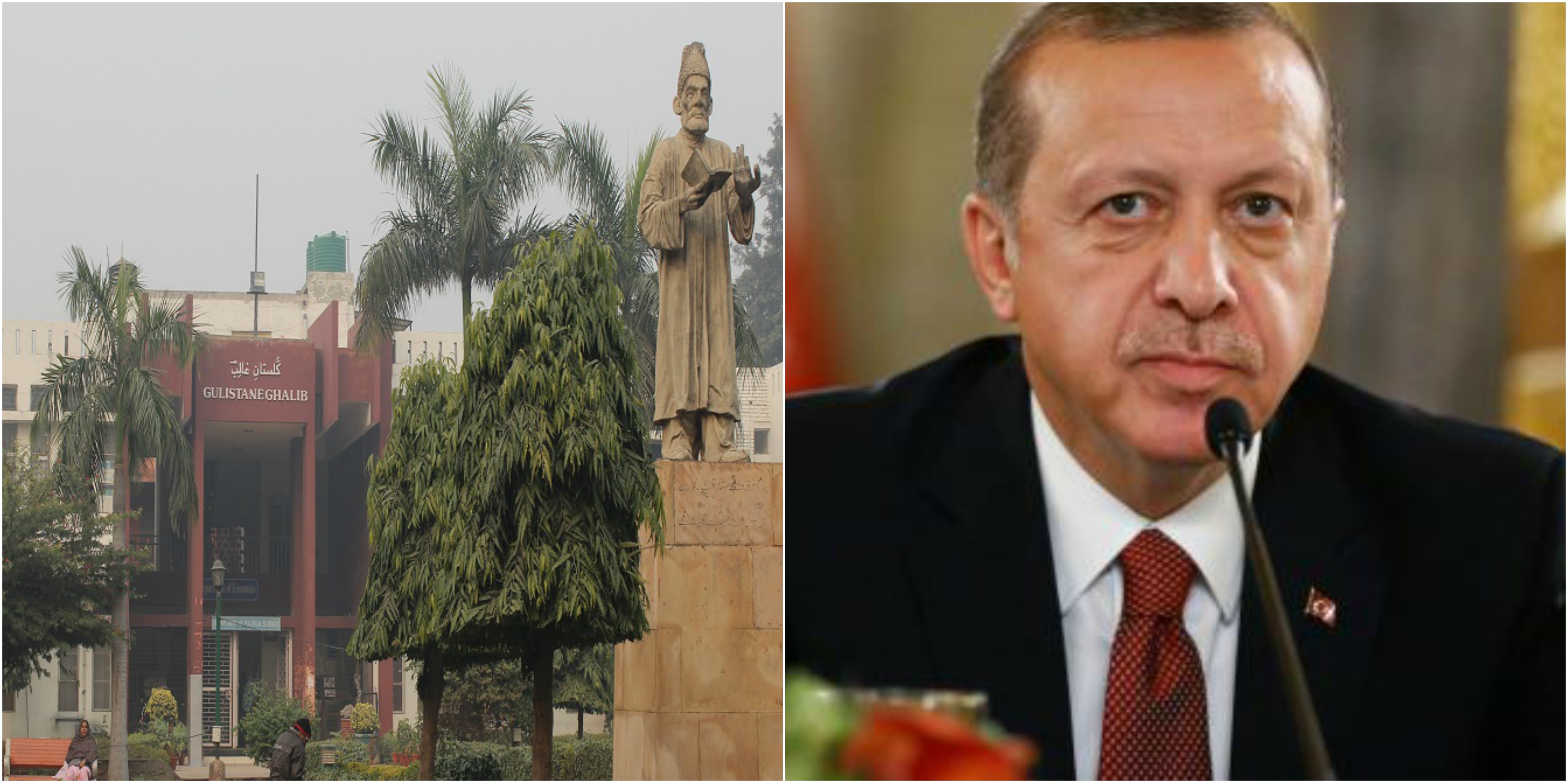
The decision of Jamia Millia Islamia to confer honorary doctorate degree to Turkish president Recep Tayyip Erdogan has not gone down well with a number of its students and alumni.
The step has been taken with regards to Erdogan’s visit to India and JMI as well, where he is likely to announce some bilateral academic relations between Jamia and Turkey. The welcome and doctorate ceremony is planned for May 1, 2017.
As for now, Jamia is the only institution which offers courses in Turkish languages. Dr. Mujib Alam, Coordinator of Turkish Language and Literature Program, welcomed the Turkish president and said, “The visit of the president will be very fruitful for the education sector and other sectors, so that further collaborations may be made between India and Turkey in future.”
However, the step to confer doctorate to Erdogan has not gone down well with alumni and students of the university.
Shuddhabrata Sengupta, a JMI alumnus, and social activist wrote on his Facebook timeline, “As a Jamia Millia Islamia alumnus, I am ashamed to see my university grant an honor to a cheap, fascist scumbag like Erdogan. He is destroying Turkish universities, and stifling political, intellectual and cultural life in Turkey and pursuing a war on Kurdish people, that is comparable to the brutal assault on Kashmiri people by the Indian state.”
“Jamia might as well garland Modi, Amit Shah and Yogi Adityanath while they’re at it, and confer posthumous honors on Saddam Hussain, the erstwhile Shah of Iran, Zia Ul Haq, Yahya Khan, Hafez Al Assad, Ruhollah Khomeini, Enver Hoxha and every other hangman head of state with a Muslim sounding name. Disgusting.”
It further reads, “JMI might as well garland Modi, Amit Shah and Yogi Adityanath while they’re at it, and confer posthumous honors on Saddam Hussain, the erstwhile Shah of Iran, Zia Ul Haq, Yahya Khan, Hafez Al Assad, Ruhollah Khomeini, Enver Hoxha and every other hangman head of state with a Muslim sounding name. Disgusting.”
While making the remark ‘Beyond disgusting’, Sengupta further wrote, “Oh wait, I forgot that they named their library after the King of Saudi Arabia. Beyond disgusting. I hope the students and faculty of JMI make this process of sucking up to yet another tyrant simply because he is Muslim deeply difficult and embarrassing.”
Sengupta has also started a petition named ‘Jamia Millia Islamia University, Delhi, Must Not Honor Recep Tayyip Erdogan’ on Change.org. Notably, the Turkish president is widely considered as Fascist in his approach of working under various circumstances. The condition of Press has severely declined during Erdogan’s regime as President as well as Prime Minister. His government is known for cracking down on newspapers. Moreover, Erdogan rules in a way that his critics call him a throne bearer rather than a democratically-elected president. Erdogan has openly challenged constitution court and said he did neither respect nor accept the constitutional court ruling.
Erdogan regime in Turkey is also accused of funding of IS fighters, a charge that Turkey denies. Also, Turkey government is accused of military crackdown on ethnic Kurdish towns and neighborhoods in the east of the country which has led to massive bloodshed in past couple of years. When academicians of the country signed the petition and asked to end the violence or Kurdish people, they were arrested from their homes in broad daylight.
Mahtab Alam, a journalist, JMI alumnus and activist, writes on his facebook, “Jamia is conferring an honorary doctorate to Recep Tayyip Erdoğan. I won’t be surprised if tomorrow it’s Narendra Modi’s turn. With likes of Talat Ahmad at the helm of affairs, nothing is impossible.”
JMI campus is also filled with protest against the university’s recent move to confer Erdogan. The protest has gathered support from student leaders and activists from JNU and DU as well.
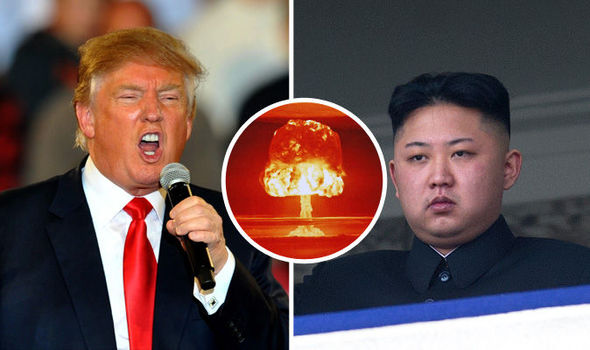
The US under Trump believes that more sabre rattling will cow DPRK down and make them surrender.
The nuclear stand-off between Democratic Peoples Republic of Korea (DPRK) and the US continues, with the US sending its aircraft carrier strike force Carl Vinson and USS Michigan, an Ohio class nuclear submarine, off the Korean peninsula. Trump has held out the threat that if China does not intervene, the US will “solve the problem” of a nuclear DPRK “by itself”. The Korean peninsula and nearby countries including Japan, are now in imminent danger of another US military misadventure that can spin rapidly out of control, leading even to a nuclear exchange.
While the world now admits that the Bush administration lied about the Iraq WMD's, no serious questioning has ever been done on Bush's claims that DPRK violated the 1994 Agreement. DPRK is held responsible for breaking of the 1994 Agreed Framework though it is the US that walked out of it. If we read the mainstream western media, DPRK leaders are “unstable”, “volatile”, “irrational” and the root of the problem of a nuclear DPRK today.
Neither has any serious consideration been paid to why DPRK has built a nuclear deterrence, dismissing its need for security as irrational. The world has forgotten that the US brutally bombed and napalmed DPRK during the 1950-53 Korean War, leading to the loss of 20% to 30% of its population. During the McArthur Congressional hearings, Gen. O'Donnell testified , “…I would say that the entire, almost the entire Korean Peninsula is just a terrible mess. Everything is destroyed. There is nothing standing worthy of the name…” (Vol. 4, p. 3075). While the world might have forgotten this carnage, for the Korean people, this memory remains still fresh.
The US has also never forgiven the DPRK and the Peoples Republic of China for the defeat that they inflicted on the US in Korea. At periodic intervals, the US ratchets up war hysteria over DPRK and conducts aggressive war games near its borders in the demilitarised zone around the 38th parallel. In violation of the 1953 Armistice, it introduced nuclear weapons in 1957 in Korea. The US also maintains a nuclear arsenal with sea and submarine forces, and has held nuclear weapons in Okinawa under secret agreements with Japan, though Japan has a constitutional bar against nuclear weapons on its soil. There are currently around 50,000 U.S. troops stationed in 23 military bases in Japan, and around 28,000 in 15 military bases in South Korea.
DPRK also looked at what has happened in the world after the fall of Soviet Union. The US and NATO forces bombed and invaded Serbia, Iraq and Libya. Would it have done so if they had nuclear weapons?
The DPRK started a nuclear and a missile program in the 1980's, and by early 1990's, was in position to create fissile material from its 5-MW reactor in Yongbyon. It felt that a nuclear capability would provide a bargaining counter with the US for longterm peace in the peninsula, and avoid costly conventional military build-up that it might otherwise need.
In early 90's, the US intelligence agencies claimed that DPRK had a stock of plutonium from the Yongbyon reactor and its plutonium reprocessing plant. Estimates varied from a few grams to a few kgs of fissile grade plutonium, sufficient for one or two bombs. DPRK had also started plans for two Light Water Reactors of 50-MW and 200-MW capacity for producing electricity. This were to be commissioned by early 2000. Once all these facilities were in place, DPRK would have had the capability of producing up to 20-25 bombs a year, and therefore a credible nuclear arsenal.
Simultaneously, it was also developing missile capability, by upgrading the Soviet era missiles in its stock, and creating the next generation of missiles.
The 1994 Framework Agreement was negotiated between the US and DPRK in this context. Its key features was dismantling the existing Yongbyon reactor, stopping the construction and eventual dismantling of the 50-MW and 200-MW reactors, and put all its spent fuel from which fissile plutonium could be extracted under IAEA safeguards. In lieu of this, the US agreed to provide two 1000-MW Light Water Reactors and supply fuel oil for producing electricity till these two reactors were built.
Unlike what we read in the western media, DPRK did carry out its part of the bargain. It dismantled its reactors and put its spent fuel rods under IAEA safeguards. Joel Wit, a former State Department official and very much a part of the 1994 Agreement, writes (Foreign Policy: April 27, 2016 ), “Pyongyang’s development of a plutonium production program, ongoing since the 1960s at a cost of tens, maybe hundreds, of billions of dollars… became a pile of unsalvageable junk.”
What the mainstream media neglects to mention is that the US never held up its side of the bargain. By 2002, instead of the two 1,000 MW reactors being finished as agreed, only some civil works had started. The fuel oil shipments, supposed to continue as long as the reactors were being built, saw only sporadic supplies.
The Bush administration, when it come to office in 2002, had identified DPRK as a part of the axis of evil, along with Iraq and Libya, and wanted to blow up the 1994 Agreement. The AQ Khan link to DPRK and its importing centrifuges from Pakistan for a uranium enrichment program was the excuse. As John Bolton, the US Ambassador to the UN puts it, “It was the hammer I had been looking for to shatter the Agreed Framework. ” The US walked out of its commitment of the 1994 Agreement, laid down conditions that DPRK had to “surrender your nuclear and missile program or else.” DPRK chose “or else”.
Did DPRK conduct a clandestine uranium enrichment program forbidden under the 1994 Agreement? While the US argued that any uranium enrichment program was against the “spirit” of the agreement, they never addressed the question under what clause was producing Low Enriched Uranium (LEU) fuel barred in the 1994 Agreement.
Did DPRK have a legitimate reason to start a uranium enrichment program? Much of the discussions that apply to DPRK is also common to the Iran issue. The Nuclear Non Proliferation Treaty (NPT) allows for peaceful use of nuclear energy including a fuel cycle. If DPRK did not want to be dependent on the US for nuclear fuel, it would need an indigenous fuel program. Therefore, uranium enrichment for fuel was a legitimate need of its civilian nuclear energy program. Of course, the same centrifuges can also produce Highly Enriched Uranium (HEU) required for a weapons program. That is why it is a dual use technology.
The US had the option of accepting, as it has now done for Iran, that DPRK has the right to a nuclear fuel cycle. It had also the option to negotiate capping of DPRK's missile program, give guarantees against aggression, and stop the highly provocative military exercises it carries out each year. Instead, it walked out of a functioning Framework Agreement, which had effectively dismantled DPRK's plutonium program. DPRK then walked out of NPT, took back the 8,000 kg spent fuel roads it had handed over to IAEA, and within a few years conducted nuclear tests. Its missiles can now reach Japan and the US military bases in Okinawa and Guam, and in another 3-4 years, even reach the US mainland.
The US under Trump believes that more sabre rattling – this time with aircraft carriers and nuclear submarines – will cow DPRK down and make them surrender. The US and Bush Junior's policy of browbeating DPRK did not work in 2002. Why would the US and Trump's threats be more credible today after DPRK has built a nuclear arsenal?
Or does Trump believe what Bolton wrote recently: the only way to end North Korea's nuclear program is to “end North Korea ”. Something that Senator Lindsay Graham is also advocating. Take out North Korea in a preemptive strike even if it means “sacrificing” South Korea and Japan, and damage to China. Do China, South Korea and Japan have an opinion regarding such a suggestion? Is this what Trump is contemplating when he says that the US “will solve the problem by itself”?
After a humiliating electoral defeat in Uttar Pradesh in March, demoralised secular parties and liberal intellectuals largely fear raising their voices. Has India lost its secular soul?
Members of the Hindu Yuva Vahini, a far-right vigilante group in Uttar Pradesh state, India. Cathal McNaughton/Reuters
Indolent Indian cows sitting or eating on the busiest roads of the country’s cities are common sights for anyone who has ever visited the subcontinent.
Today, this mammal is at the centre of the country’s increasingly violent social upheaval. In the name of defending Hindu values, vigilante mobs are lynching and killing people suspected of eating or trading cows, and the country’s openly hindutva, or “Hindu-first”, government has done little to stop them.
In fact, on April 25, the right-wing ruling Bharatiya Janata Party (BJP), proposed a measure to identify cows using an electronic ID system similar to the one deployed in 2012 to identify all Indian citizens. Welcome to Indian “meat politics”.
Cows are sacred for many Hindus, yet India is also one of the largest beef exporters in the world. Marco Zanferrari/Flickr, CC BY
Holy cow
Cows are considered sacred in certain interpretations of Hindu philosophy. But some academics, such as the retired Delhi University historian Dwijendra Narayan Jha, have debunked the myth of the absolutely “holy cow”.
That did not prevent a mob from murdering a 55-year-old Rajasthan dairy farmer, Pehlu Khan. In the April 6 incident captured on video and widely viewed on social media, vigilantes brutally thrashed him and the other Muslims traders, ostensibly for transporting cattle.
The Hindu trailer driver, however, was allowed to leave safely, casting doubt on the real aim of this cow vigilantism.
Rajasthan’s home minister, Gulab Chand Kataria, defended the act, saying that “the cow protectors [did] a good job by protecting cows from smuggling”. He refused to label Khan’s death a murder, blaming “both sides” for the violence.
And, in March, a vigilante mob set fire to three meat shops in Hathras, a district in western Uttar Pradesh.
The rise of the yogi
Such attacks on religious minorities have increased across India since Narendra Modi was elected prime minister in 2014, backed by the Hindu nationalist BJP.
And it has happened even though he assured Indian citizens that minorities would be protected, and people who voted for him believed him.
Today, the country’s Muslim population are uneasy.
According to the last census, from 2011, 14% of Indians are Muslim, and nearly 80% report being Hindu. Other minority religions include Christianity, Sikhism, Buddhism and Jainism.
In March, the electoral victory of Yogi Adityanath as chief minister of Uttar Pradesh, a heavily Muslim state in the north, sent a strong signal to India’s minorities and defenders of the country’s constitutionally enshrined secularism.
Newly-elected chief minister of Uttar Pradesh, Yogi Adityanath, is a Hindu extremist. Pawan Kumar/Reuters
Adityanath is a firebrand Hindu priest who has obliged his own ministers to meet for hours, almost without sleeping, and to follow strict ascetic and monastic rules. He once said that people opposing Surya Namaskar (a yoga pose) “should drown themselves in the sea”.
Adityanath is also known for his strident anti-minority rhetoric. In 2015, he compared the world famous Bollywood actor Shah Rukh Khan to Pakistani terrorist leader Hafiz Saeed. And last year he claimed that Mother Teresa was part of a conspiracy to “christianise” India.
In January, Adityanath suggested that Donald Trump’s proposed immigration ban on Muslims entering the United States should be replicated in India.
Nonetheless, he was elected chief minister in March 2017.
Killing the cow trade… and its traders
Soon after, Adityanath summarily shuttered many of the state’s illegal slaughterhouses, the majority of which are Muslim-run.
Since the state government’s crackdown, the industry has been facing a critical situation nationwide as many other BJP-ruled states follow Uttar Pradesh’s lead. In March, Gujarat passed legislation increasing the punishment for cow slaughter from seven years in prison to to a life sentence. It is the country’s harshest cow-protection law (though if the chief minister of Chhattisgarh state, in central India, had his way, anyone caught killing cows there, he says, would be hanged).
India’s leather industry, a significant producer that feeds off the meat industry, is also feeling the crunch.
Minorities in the crosshairs
The cow trade in India mainly benefits Muslims, as they are the dominant traders and consumers of beef (Islam does not prohibit its consumption), so the surge in cow protectionism has disproportionately impacted them.
But Christians also routinely face the ire of India’s Hindu extremists. According to OpenDoors, a Holland-based Christian human rights NGO, violence against Christians in India has increased since 2016. Churches have been destroyed; priests, nuns and parishioners have been beaten.
On April 5, the members of the Uttar Pradeish’s Hindu Yuva Vahini group forced the police to halt prayers at a church in the town of Maharajganj, alleging that it was forcing Indians to convert to Christianity.
India’s Dalit community – so-called “untouchables” – is also being targeted. In July 2016, seven members of a a Dalit family in Una town, in western Gujarat, were beaten for skinning a dead cow – a traditional occupation in this outcast community. The event sparked nationwide protests, but the government’s response has been tepid.
What is left of secular India?
Cow protection may have made India “a subject of ridicule internationally”, as one commentator wrote online in The Daily O news site, but it is not the only sign of the resurgent Hindu cultural nationalism that Modi’s administration has ushered in.
An ‘Anti-Romeo Squad’ questions a young man in Uttar Pradesh in April 2017. Cathal McNaughton/Reuters
From meat politics to love jihads, such incidents have strained India’s constitutional values and secular fabric, leaving many to wonder whether Prime Minister Modi’s development agenda – for which he has declared “Sab Ka Saath Sab Vikaas” (development for all together) – is just a farce.
Indeed, the atmosphere of fear and insecurity stoked among India’s minorities may have been intentionally crafted to consolidate Hindu power in the upcoming 2019 legislative elections.
In the year after Modi’s 2014 election, a series of incidents of communal violence revealed a rising climate of intolerance in India. Intellectuals in India and abroad, including Salman Rushdie, quickly and powerfully denounced the affront to Indian values.
Now, after a humiliating electoral defeat in Uttar Pradesh in March, demoralised secular parties and liberal intellectuals largely fear raising their voices. Has India lost its secular soul?
Aftab Alam is a professor at Aligarh Muslim University.
This story was first published on The Conversation. Read the original.