On the occasion of International Women’s Day on March 8, Ashutosh Sujan produced an advert to protest the torture and discrimination of women.
After its release online, the commercial started taking the Internet by storm.
From small-screen star Niloy Alamgir to promising model-actress Sporshia, many a celebrity shared the commercial featuring a young woman in respective Facebook profiles.
The advert garnered praise through Facebook comments by many such stars. Now, the advert has drawn the attention of the world media, who are analysing and hailing it, according to a Bangla Tribune report published on Tuesday.
On April 5, The Indian Express, a leading Indian news agency, ran a special report on the commercial, while the New York Times published a special article on it eight days later, the report said.
Even Twitter, another popular social networking site, is flooded with growing admiration for the work, the report added.
The commercial of Bangladeshi brand Jui Coconut Oil was produced marking International Women’s Day-2017.
Directed by Ashutosh Sujan, the key model in the advert is Shahnaj Sumi.
Ashutosh has said: “I am delighted that the commercial has gone viral across the world. Foreign media are analysing the advert after it appeared online, which is good news for Bangladesh. But, I do not deserve the success alone. Actually, Sun Communications gave me the task. Without their support and idea, it could not have been possible for me do make the commercial.”
The New York Times in a special supplement wrote that the commercial, lasting around two minutes, shows a young woman going to a hairdressing saloon to have her hair cut. Each time a female barber cuts her hair, the latter suggests it be cut “even shorter.” Finally, the customer says: “Cut my hair so short that nobody can grip it in their hand.”
The last dialogue, in essence catches the attention of the audience.
Sumi, the actress portraying the young woman, was first noticed in a dance show on a private TV station called Channel i. She became the talk of the town through the advert.
When contacted, she told Bangla Tribune: “This is the kind of advert which was not even aired on TV. It was produced only for online. And, we are getting immense response. After watching it, many filmmakers from India contacted me to work with them. A Kolkata-based movie director also talked to me. But I am not working with him. I am satisfied with the chatter taking place in the world media about the advert.”
Gender justice within the Muslim community will be achieved primarily by the struggle of Muslim women, of course with the support of democratic institutions. Politicisation of the issue to score brownie political points will harm the cause of Muslim women.
Heightened media coverage on the issue of triple talaq along with the statement of the Prime Minister Narendra Modi and the Chief Minister of UP Yogi Adityanath is causing harm to the struggle for gender justice within the Muslim community. Media coverage is making a public spectacle of victims of triple talaq and encouraging voyeurism for TRPs. Media manages to get a “maulvi” of dubious repute for giving sound entertaining sound bites that make buffoon of the community.
Gender justice within the Muslim community will be achieved primarily by the struggle of Muslim women, of course with the support of democratic institutions. Politicization of the issue to score brownie political points will harm the cause of Muslim women. What Muslim women need is solidarity and support from the feminist movement in particular and liberal democratic forces in general.
Pronouncing the word ‘talaq’ (I divorce thee) thrice in one sitting and instantly snapping matrimonial ties unilaterally by the husband is once again in news as the Supreme Court is going to hear Shayara Bano’s petition on the issue and the PM has chosen to speak on the issue. This form of divorce is called talaq-e-bidat (bad in theology but valid divorce) and popularly it is called as triple talaq.
The ulema (learned religious leaders of the community) have validated triple talaq pronounced orally, even if in a fit of rage, in a state of inebriation, or conveyed on phone, through sms, or through post. The wife so divorced is instantly evicted from her matrimonial home or if not in the house at the time of divorce, she is prevented from accessing her matrimonial home and children.
The practice is abominable and indefensible. Yet the All India Muslim Personal Law Board has claimed in their affidavit that triple talaq is part of shari’a law which is divine and it is their Constitutional right to practice their religion. Elsewhere, we have elaborately argued that triple talaq in one sitting is unconstitutional as well as contrary to the Quranic method of divorce and prayed that Hon’ble Supreme Court read down the provision (Engineer, 2016).
Protectors of Muslim Women
The PM chose to speak on the issue of triple talaq at the BJP’s National Executive meeting in Bhubaneshwar on 16th April 2017. He said, “Our Muslim sisters should also get justice. Injustice should not be done with them… [I]f there are social evils, the society should be woken up and efforts made to provide justice to the victims.”
The Uttar Pradesh Chief Minister Yogi Adityanath said on 17th April 2017 that those maintaining silence on the “burning issue” of triple talaq were as “guilty” as those practising it. Yogi compared the triple talaq to the disrobing of ‘Draupadi’ in the Mahabharata. He also called for a uniform civil code in the country.
Both, the PM and the CM of UP, are trying to project themselves as protectors of Muslim women from the evil and inhuman Muslim Personal Law. However both have a lot to answer for, given their past.
Under the watch of Modi, when he was the CM of Gujarat, in 2002, during the riots, Muslim women’s bodies were the site on which sexual assaults were mounted and they were subjected to worst inhuman atrocities. Neither of them then had any feeling of remorse nor an urge to fight the injustice. Modi, then the CM of Gujarat had to be reminded of his raj dharm by the then PM – Atal Behari Vajpayee of their party. Gujarat government refused to organize any relief work for the 150,000 survivors of the violence huddled in inhuman conditions in various relief camps.
The UP CM in a video on youtube says that if one Hindu woman was married to a Muslim and converted, 100 Muslim women would be married to Hindu men and converted into Hindu fold!
Of destruction of wombs and liberation of Muslim women
In 2002 during communal riots in Gujarat, the Hindu supremacists who mounted sexual assaults and heinous crimes on Muslim women’s bodies did so to pollute or destroy the wombs of Muslim women that gave birth to children of Muslim community (International Initiative for Justice in Gujarat, 2003, pp. 40-41). Now they are posing as liberators of Muslim women from the oppression of their men.
Modi then had sort of provided justification of the riots by terming it as a reaction to burning of Sabarmati Express in Godhra. Thereafter he never expressed his remorse that under his watch the scale of violence had reached its peak. Those who were accused of rapes and involvement in riots had little to fear the judicial process and were being acquitted until the Supreme Court stepped in and set up SIT to prosecute the accused. Bilkis Bano’s rape case trial was transferred to sessions court in Mumbai which resulted in conviction of some of the accused.
Behind the facade of getting justice for the Muslim women in general and victims of triple talaq in particular, the BJP has political motives. When the PM and the CM of UP were not on the posts they are presently holding, they stigmatized the Muslim community in harsher words using cruder language.
In the year 2002, after the riots Narendra Modi took out Gujarat gaurav yatra (pride journey). In the yatra he would address public meeting during and accuse that relief camps for riot survivors to be breeding camps where the survivors were breeding like rabbits. In the next Gujarat state Assembly elections, the target of the Modi’s speeches was “Mian Musharraf (the then President of Pakistan) mentality”! The subtle message was that Muslims were loyal to Pakistan and needed to be taught a lesson.
Posing as protectors of Muslim women, Modi and Yogi are achieving the same objective with more sophisticated means – stigmatising the Muslim community as one having unjust traditions and women in the Muslim community are being disrobed. General Secretary of Hindu Mahasabha – Pooja Shakun Pandey went a step ahead and asked all victims of triple talaq to convert to Hinduism and she would organise their marriage and do their kanyadaan (ritual of father gifting his daughter to the bridegroom).
The Hindu supremacists then want to convert Muslim women and gift (marry) them off to Hindu men to improve their demographic figures and reduce those of Muslim community. Rescue Muslim women only to gift them off and be property of Hindu men. Hindu supremacists opposed the Hindu Code Bill in 1950s so painstakingly drafted by Dr. Babasaheb Ambedkar to ensure gender justice to Hindu women. Hindu supremacists organized militant protests and denounced Dr. Ambedkar as an untouchable drafting laws for Hindus.
The Hindu supremacists do not problematise dowry, child marriage, female feoticide etc. Given caste hierarchies, Hindu supremacists defend the parental control over their daughters in matrimonial matters. They have never raised any voice against honour killings when daughters dare to chose their own life partners. “Anti-Romeo” squads and “love jihad” campaigns are precisely to ensure that Hindu women do not choose their life partners and do not have freedom to wear the clothes they like.
Ministers in the present government have advised women to wear appropriate (traditional) dresses to be secure from sexual assaults instead of ensuring safe space for women and inclusion in every field. BJP MP – Sakshi Maharaj and RSS Sarsanghchalak Mohan Bhagwat called upon Hindu women to produce 4 children reducing the women to child producing machines for their husbands and their community.
Hindu supremacists are not very different from the religious and political leaders of Muslim community with regard to their attitude towards worth and role of women in family and community – chattels or property of the males within the family and under their complete control; slave labourers for the family confined to home for unpaid domestic work, rearing children for men; labouring outside home if men need their incomes; confine them to religious spaces so that they are indoctrinated to serve the men in the family and accept being reduced to chattels and slaves.
Triple talaq is one such weapon in hands of Muslim men to keep control over “deviant” wives. Khap Panchayats, domestic violence and misogynist culture are weapons of Hindu men. Strategies and instruments of control may differ slightly but nevertheless their objective is to control and reduce women to chattels and slave labourers and objects of sexual pleasure for men. Hindu supremacist talk of “liberating” Muslim women, but only to enslave them to new masters – Hindu men. The feminist movement and awareness and resistance of women – both – Hindu and Muslim have changed the situation slightly and progressively.
Media and stigmatization of Muslim community
Media has been presented with an opportunity to increase their TRPs whenever issues that stigmatise Muslim community are handy. TV channels a few years ago ran extensive coverage of a fatwa which declared that Imrana who was raped by her father-in-law is now forbidden to her husband. It seemed that was the only problem faced by the nation – otherwise everything was hunky dory.
One TV channel made a public spectacle of Gudiya’s problems and coverage went on for hours. Gudiya, a Muslim, married another man after her soldier husband’s whereabouts were not known for some years and presumed dead in war with Pakistan. However, her former husband returned after he was released from Pakistan jail. “Gudiya kiski?” went the title of the programme. All relatives, maulvis, the second husband and former soldier husband and few others were assembled in the studio and public spectacle was made of her life encouraging voyeurism.
Almost all TV channels have similarly conducted talk shows on triple talaq – they got some victims to depose their tragedies, one or two maulvis to entertain their viewers with their ridiculous and provocative views supporting triple talaq and a few gentlemen around. The Islamic scholars who did not support triple talaq were obviously not favoured by invitation.
The stage was then set for a match between the victims and the maulvis with some generous support from ‘nationalist’ anchors. The lung match between Muslim women and maulvis would be good spectacle attracting eyeballs of male voyeurs into a problem of Muslims and beam them various advertisements persuading them to buy various corporate products.
The louder and angrier the fight between the victims and maulvis, more would be the entertainment and fun for the voyeurs. The BJP spokespersons would be there on the panel to represent the PM and Yogi as heroes of the nation liberating Muslim women. Perhaps that is why the media loves the PM and Yogi as they keep giving them such opportunities targeting left and liberal “anti-nationals”, cow slaughterers, terrorists, Kashmir separatist and Paki agents, religious converters.
Democracy and humanist values be damned so long as the voyeuristic media had their TRPs, they would support whatever politics! Is this the responsible fourth pillar of the state?
If stigmatising the Muslim community is one objective of Modi and Yogi, subtly establishing the superiority of Hindu community, the other political objective is to divide the Muslim community along gender lines. They have also tried to win over a section of Shias and Sufis. The political objective as spelled out by Subramanian Swamy once is to divide the Muslim community and unite the Hindus to achieve the objective of Hindu Rashtra – antithesis of democracy.
The Muslim Personal Law Board
Cornered by the media barrage and becoming a laughing stock for defending triple talaq and claiming it to inseparable part of divine Shari’a law, the All India Muslim Personal Law Board has come up with a new subterfuge. On 16th April it issued a code of conduct and warned that those who give talaq (divorce) without ‘Sharia’ reasons will face social boycott.
The ruse of social boycott is more for media consumption than a sincere campaign to curb the menace of triple talaq. Had the Board been sincere, it would not have filed atrocious affidavit in Supreme Court completely against the spirit of Quran which gives dignity and rights to women. Board’s affidavit reduces women to a status of chattel and a slave, unintelligent being.
This ploy of social boycott has occurred to them after 70 years of resisting any change in the Muslim Personal Law and ignoring the plight of victims of triple talaq. The Board has clout and power enough to silence the women suffering oppression and scaring them with curse of Allah. However, they do not have clout or sincerity to enforce social boycott against powerful men.
Declaring, announcing and enforcing social boycott is also an offence in Maharashtra. Social boycott of the husband who has pronounced triple talaq is not going to give any relief to the woman thrown out of her matrimonial home. If a man has divorced by pronouncing the dreaded words in a fit of anger or under inebriation and repents the morning after, will be doubly punished by social boycott if enforced or enforceable without offering any relief to either.
Way ahead
The only remedy in the circumstances seems to be to educate the women and men that any number of pronouncement of the word talaq can be considered as single pronouncement followed by arbitration and efforts for reconciliation. This is the procedure prescribed by the Holy Qur’an.
The Board should agree to codify Muslim Personal Law within the framework of Quran and the spirit of gender equality mandated by Quran and drawing the best from all Islamic schools of jurisprudence. The codified law should be presented to the Parliament for being legislated.
Until the codification, Indian courts have a constitutional duty to ensure justice and equality to Muslim women and read down the provisions of various Islamic schools of jurisprudence like Hanafi, Hanbali, Shafi, Maliki, Ahle-Hadith and Shia schools of jurisprudence that are against the constitutional mandate.
Political parties will do great disservice to the country and the Muslim community by politicisation of the issue either in the name of national integration or demography or on any other ground. Peace and justice are more noble goals than winning an election or benefiting from communal polarisation.
While it is true that, India’s bovine meat exports have been increasing over the years – It has not caused any decrease in India’s bovine population.If we are to believe the propaganda of the BJP and Sangh Parivar – the cattle of India are on the verge of extinction. The blame for this imminent extinction, is laid at the door of those who consume and sell bovine meat – mainly Muslims. Equally blamed are the slaughter houses from where, apparently, beef is being exported on a massive scale, threatening the survival of the species.
Armed with these claims, the BJP has been promoting hysteria among its supporters against minorities and dalits, who are involved in transportation of cattle. Propelled by their ‘love’ for the mother cow, self-proclaimed ‘gau-rakshaks’ frequently beat up and lynch Muslims with tacit support from the police. Prime Minister Modi adds fuel to this fire, by frequently alluding to ‘the pink revolution’ – referring to beef consumption and exports. What are the facts? Is India’s cattle at risk due to beef consumption or export?
While it is true that, India’s bovine meat (buffalo and cattle meat) exports have been increasing over the years – It has not caused any decrease in India’s bovine (cattle and buffalo) population. In fact, India’s bovine population has increased – from 2.89 crore to 3 crore (1992 to 2012), as has per capita milk production, from 55 million tonnes to 155 million tonnes (1992 – 2016).
data source: Department of Animal Husbandry, Dairying & Fisheries, Ministry of Agriculture, GoI
Within the total bovine population, the number of buffalos has been steadily increasing , while the number of cattle (cows and bullocks) has declined. Considering that buffalo meat is also exported despite which their number has been increasing, meat exports alone can not be the reason for the decline in the cattle population.
If we look closer, we see that with in the cattle population – the number of cows (female cattle) has not declined at all, but rising steadily – from 1.03 crore to 1.23 crore (1992 and 2012). It is the steep fall in the number of bullocks from 1.02 crore to 0.68 crore – which is the reason behind the fall in the cattle population. If the increase in demand for the beef is the reason for declining cattle numbers, then it should have effected the cow population as well, which clearly is not the case. What is the reason for decline in the number of bullocks?
Traditionally in the rural areas, cows and bullocks were equally preferred – the former for milk and the later as draught animals. So, we see that in 1992, the number of cows and bullocks was more or less equal. But, in the case of buffalos, only the females were preferred by the farmers. Since male buffalos are of no great use as draught animals, farmers usually sold them to slaughter houses. This is clear from the fact that number of female buffalos has always been 4 to 5 times more than that of the male buffalos. Today, similar trend is seen in the cattle population as well, with the bullock population declining to half that of the cows, in the last 25 years.
The advent of green revolution and the subsequent mechanisation of agricultural operations has increasingly made the bullock redundant in rural areas. Various agricultural operations – ploughing, levelling, transportation of agricultural product etc., which have been performed with bullocks – are today being performed by the tractors. So, just like the male buffalo, bullock too has very little role to play in today’s agriculture, resulting in decline of it’s numbers. The bullock still plays the role of a buffer for the farmer during droughts. For a small farmer, sale of his cattle, particularly the bullocks, is like an insurance during the drought years. He call sell it in the market during a drought.
The cow vigilantes, with beating up and killing those who sell and purchase cattle, are in fact hurting the small farmer, who is central to the cattle economy. In drought hit regions, one of which is the BJP ruled Mahararshtra, the cow vigilantism has led to a fall in cattle prices, causing a great distress to farmers, who are unable to sell their cattle.
The truth is that in India the livestock economy has been doing well, providing a much needed additional source of income for the small farmer. Per capita milk production has been steadily increasing, as has the meat production. These have been accompanied by a rise in the cattle population. But, the repeated attacks of gau-rakshaks on farmers, cattle traders, slaughter houses and meat consumer are going to damage the livelihoods of small famers. The vigilantism, will force the farmers to retain unproductive cattle – resulting in considerable increase in the costs of maintaining live stock. India’s small peasant, who is already suffering under frequent droughts and large debts, will be pushed to the brink, thanks to the saffron government’s cattle politics.
Disclaimer: The views expressed here are the author's personal views, and do not necessarily represent the views of Sabrangindia.
Azan, specially if the muazzin is besura, is a torture for auditory senses. Unfortunately, it’s very rare to hear soulful azans these days. In Aligarh, in our early childhood days, the masjids were somehow never too close to the kind of places we lived in. A strain of Azan would float by unobtrusively, through the playground, indicating the time to go home. 'Maghrib ki azan se pehle ghar aa jaana' used to be the standard instruction from Mom.
Masjids were few and far between, they didn't seem to get in your way on random roads. For years, the only Masjid I knew was this quaint, faded pink, single minar structure called Ek Minar ki Masjid. It was on the way to Qabristan and I had an eerie fascination for it. Once when a friend asked us to go in with him, I ran back the moment my feet touched the cold marble floor spreading out into a resounding silence.
I don't remember if it had a loudspeaker those days. Azan was an alarm clock for parents, a curfew to get back home for us kids, a segue into night after a cluttered day filled with school, friends and random visits from relatives – it was a lot of things to a lot of people – but never a war cry or an announcement of faith.
Later, as the town started spreading haphazardly beyond the neat rows of elegant University residential quarters or old kothis, Masjids started sprouting up here and there. These were not quaint – but belligerent. They got in your face at corners, Squatted in the middle of playgrounds, they grabbed breathing spaces between houses and screamed for attention. They had protruding corners and stubborn pointy towers. Some were a screaming white, some looked like they had been dropped in a tub of loud green by mistake. Grown ups scoffed at them complaining about gulf money.
While earlier one single familiar voice of the muazzin wafted across, knitting many mohallas together – gently inviting or marking time… now azans barged into homes from many directions. Loudspeakers amplified the harshness of untrained muazzins. These were not artists but more like raw zealots – There was more passion than reverence in their voices. We giggled, laughed poked fun at them and called them phata baans… irreverent, irreligious people like me and devout aunties who covered their heads when they heard the azan – we all called an unpleasant intrusion by it's name. No one judged us for laughing at the muazzins and covering our ears or for running indoors and shutting the door to keep the noise out. Religion was not a live bomb that could go off with the slightest touch of irreverence, it was more like a favourite delicate curio which people wanted to protect from harsh glare. You were free to not share their enthusiasm without being branded as an enemy of faith.
Around the same time in school, a teacher poked fun at azan quoting Kabir, 'Kankar, pathar jod ke, Masjid liye banaye Taa chadh mulla baang de, kya behra hua khudaye.'
The doha appealed to me. I was impressed with the idea of calling out the stupidity in screaming at the top of your voice to a God you claimed was omnipresent anyway!
My father, the staunch atheist, explained why the doha was faulty on a factual point. Azan is not a call or a prayer to Allah neither is it in praise of Allah, it is a call to the faithful to remind them that it's time for prayers. It's more like an alarm, a reminder and was needed in the time, when clocks and alarms had not been invented.
This was a harsh blow to my reverence for both, my teacher’s knowledge and for Kabir’s wisdom. I had just discovered that I liked Kabir for his thought process, his ambivalent identity and the fun he had with language. I don’t know if it came to me later or if my father spoke that day about how a single person cannot have all the right answers. Later too, instead of dogma, Daddy always fed us with the importance of questioning, seeking, finding our own answers. He said there are other ways to interpret the doha, and that Kabir was critical of outward expression in all religions. But facts are sacrosanct, so it’s important to know exactly what one is criticising.
I think we agreed on the redundancy of loudspeakers in the time of alarm clocks and wrist watches (now mobile phones too). If someone really cared for their God, they would find a way to remind themselves – after all you do not forget to do things that you really care for.
Loudspeakers then, it seems – in a masjid, mandir, mandap or pandal – are not about religion, reverence or spirituality. They are attempts at forcing your idea of your god or your leader down my throat. They are a war cry, an announcement of your supremacy, a gaudy display of your shallow faith or power and a rude invasion into someone else's space.
Kabir and Sonu Nigam are both right if we carefully consider the essence of their criticism about imposing our faith on others or inconveniencing others for what we consider sacred.
We won’t tolerate the terrorism in name of cow protection : Bhoomi Adhikaar Andolan (BAA) warns the State and central Governments Call for Nationwide struggle against the vigilante groups in name of cow protection and women safety.
Bhoomi Adhikaar Andolan resolves to fight for communal harmony and peace, call for programmes across country on April 30th
A Cheque of Rs.3 lakh from Kisan Sabha given to Angoori Begum (mother of Pehlu Khan) and Rs.50,000 to seriously injured Ajmat Khan.
New delhi, April 19 : The Bhoomi Adhikar Andolan (BAA) organised a day long Protest Dharna at Jantar Mantar demanding justice for the family of Pehlu Khan killed by "gau-rakshaks" (cow protectors) under the patronage of Hindutva elements and indirect support from the BJP ruled governments in power. The terrorism of the cow vigilante groups has witnessed a sharp rise their confidence level especially after the spectacular win of the BJP in different states. This has created havoc not only in Uttar Pradesh but also across the country. A particularly religious community has been targeted in complete violation of the secular fabric and values of this country.
Bhoomi Adhikaar Andolan challenged this brazen attempt at violating not only the constitutional spirit but also the democracy itself and resolved to launch a nation wide strike and struggle against this. BAA leaders collectively said that this attack is not only against Muslims but against farmers and workers as well. Cows and cattle’s have an intrinsic link to the agrarian economy and in our country farmers and workers are from all religions.
The BJP government in the name of cow and river protection is only promoting the corporate agenda and taking away all the rights and livelihoods form the working classes of this country. BAA is going to challenge each and every move and every attempt at diversion of the common property resources and village land for industrial purposes. BAA also supported the demands of the agitating farmers from Tamilandu who have been camping at Jantar Mantar for 36 days now. Comrade Hannan Mollah General Secretary of All India Kisan Sabha said, “the intentions of this government are clear and we should not be fooled by their agenda and the diversionary tactics they use. We have to fight the communal terror and also the corporate onslaught on farmers and workers of this country”.
The protest was addressed by Krishna Prasad, N K Shukla, Amra ram, Badal Saroj, and other leaders of All India Kisan Sabha; Dr Sunilam and Madhuresh of National Alliance of People’s Movements; Ashok Choudhary and Roma, All India Union of Forest Working People; Com Satyavan of All India Krishak Khet Mazdoor Sangathan; Com Prem Singh and Aslam Khan of All India KISAN Maha sabha; Com Atul Anjan All India Kisan Sabha (Ajay Bhawan); Kavita Srivastava, People's Union of Civil Liberties; Com Thirunavukkarasu, President, AIAWU; Com Suneet Chopra (ABKMU); Anil Choudhary and Virendra Vidrohi of INSAF and others. The dharna was also adressed by Com Brinda Karat, Subhashini Ali, Polit bureau Members, CPI(M); D.Raja, National Secretary, CPI; Dipankar Bhattacharya, General Secretary, CPI(ML); K.C.Tyagi, former MP and leader, JD(U); D.P.Tripathi, NCP leader and MP. In addition, representatives from different Left and Democratic Parties as well as Organisations of Peasantry, Agricultural Workers, Workers, Women's, Students, Youth Dalit and Adivasis, Trade Unions, people's movements were present in solidarity.
The dharna was attended by a number of farmers and civil rights organisations from Haryana and Punjab who extended solidarity and also launched their own agitation in the States demanding justice. They resoled to continue their fight until justice for the victims of the Alwar is achieved and also to stop any further terror in the name of the cow protection.
Earlier, AIKS President Amra Ram had sat on a Dharna on 18th April demanding justice for the dairy farmer's family. Hundreds of peasants from Haryana, Uttar Pradesh and Rajasthan attended the Dharna. The family members of Pehlu Khan and other victims as well as villagers from Nuh attended the Dharna.
The Bhoomi Adhikar Andolan demanded the following :
Rs.1 crore compensation for Pehlu Khan's family and job for a family member, arrest of perpetrators of the crime, Government purchase of unproductive cows at market rate and protection of right to cattle trade as well as right to choice of food.
The Vasundhara Raje Government of Rajasthan must provide Rs. One Crore as compensation to the bereaved family of Pehlu Khan and Rs.25 lakhs each to the other victims, taking the responsibility of the incident and to ensure civil and democratic rights and to give a strong message to the anti national elements which are trying to disrupt communal harmony.
The Manohar Lal Khattar government of Haryana must ensure Immediate and free medical treatment to all the victims.
The state Government must provide government job to one family member of Pehlu Khan.
Immediate arrest of all culprits and ensure stringent punishment. Withdraw false cases against victims.
A special investigation team under direct supervision of Supreme Court must be assigned to ensure impartial investigation to the crime and role of the police
A high level enquiry under the supervision of the Supreme Court to unearth the conspiracy of RSS to create communal unrest on the issue of cow slaughter.
Ensure farmers right to cattle trade and reopen all cattle markets immediately which had been closed down by the concerned state governments.
Make provisions in the cattle protection law to obligate state governments to purchase unproductive cattle providing market rate to farmers.
Protect the crops from stray cattle’s by incorporating clauses in the law to obligate state Governments to preserve all stray cattle in shelters ensuring sufficient fodder, water and veterinary care
The Union Ministry of Agriculture shall call a meeting of all the peasant and agriculture worker organizations to discuss protection of the rights of farmers on cattle wealth.
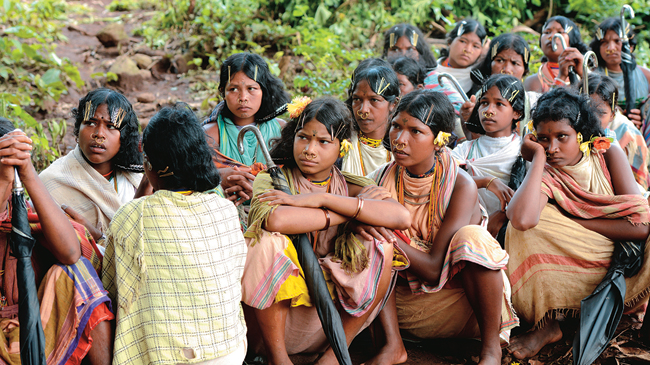
The petition urges the MHA to retract the statements made about the NSS in its report, to stop the intimidation of the adivasis and attempts to restart the mining, and to allow the Dongria Kondh and other communities of the Niyamgiri hills to live a dignified life of self-determination for their present and future.
Image: Business Today
Leading citizens, lawyers and activists have strongly protested the Ministry of Home Affairs, which has linked the Niyamgiri Surakshya Samiti (NSS) with ‘Maoist’ organisations. The Annual report (2016-17) of the MHA states that Maoists ‘guide’ the activities of the NSS. A strongly worded petition addressed to the president, Pranab Mukherjee, prime minister, Narendra Modi , the ministry of tribal affairs and the chief minister of Orissa, Naveen Patnaik has protested this stand of the MHA.
The Niyamgiri Surakshya Samiti is a collective of the Dongria Kondh tribal people and other local communities who have been organizing themselves against bauxite mining in Niyamgiri hills (Odisha), which is their only home, for more than a decade.
The petition raises a pertinent issue of whether, the continued targeting of the Dongria Kondh community (with a population of less than ten thousand people) in reports like these (and in continued state actions on the ground) raises serious doubts: is this being purposely done to break their continued resolve to oppose the mining of the Niyamgiri hills, and fragment their movement?
Further, the petition sees as devious the attempts by the state government to surreptitiously introduce the proposal to start mining from the backdoor, despite the Supreme Court having ordered that the Dongria Kondh need to be consulted about mining in the region in April 2013. Following the Supreme Court order, “and the complete and overwhelming rejection by the Dongria Kondh gram sabhas of the mining in the hills thereafter, “ the petition observes that these backdoor efforts continue. Recently, the Odisha Mining Corporation filed a petition in the Supreme Court to reopen the mining. The Supreme Court has refused to admit the petition and has asked the government to make the 12 gram sabhas that had earlier rejected the mining parties in the petition.
Besides, apart from these attempts, there has been constant intimidation and violence on the community by security forces. In the last 2-3 years, several Dongria Kondh youth and elders have been arrested, harassed, and killed, and one has committed suicide after repeated harassment and alleged torture by security forces. In none of these cases, have the forces been able to produce evidence linking them to so-called Maoists. One young adivasi was charged with arson, murder, attacking security forces, etc, and with absconding … the last one a blatantly false claim given that he was picked up from the main market of Muniguda town!
The Ministry of Home Affairs appears to have ignored the overwhelming response of the Dongria Kondh, when Maoist organisations told them to oppose or boycott the gram sabha meetings organised by the state at the behest of the Supreme Court order of April 2013. Hundreds of Dongria Kondh had flocked from village to village to take part in the meetings, openly defying this call[1][1].
The Government should also pay heed to the wisdom of the Supreme Court expressed in the case of Nandini Sundar and Ors vs The State of Chhattisgarh (Writ petition no 250/2007), also referred to as the Salwa Judum Judgement. In this reiterated that the current social order which treats any person speaking for human rights and questions the current paradigm of the State, as a maoist or a maoist sympathiser, has become a serious problem affecting our nation and that any peaceful dissent or dissatisfaction which is a positive feature of democracy, is often not recognized by the authorities and is met with severe repression.
The petition urges the authorities to use their responsibility of upholding the Constitution, and in particular the safeguards for Adivasis contained in it, to direct the MHA to retract the statements made about the NSS in its report, to stop the intimidation of the adivasis and attempts to restart the mining, and to allow the Dongria Kondh and other communities of the Niyamgiri hills to live a dignified life of self-determination for their present and future.
Related Articles:
SC Rejects Odisha Govt Plea for Mining in Niyamgiri: Watch 6 videos on Save Niyamgiri Struggle
Indian ulema seem determined to continue to wallow in their follies.
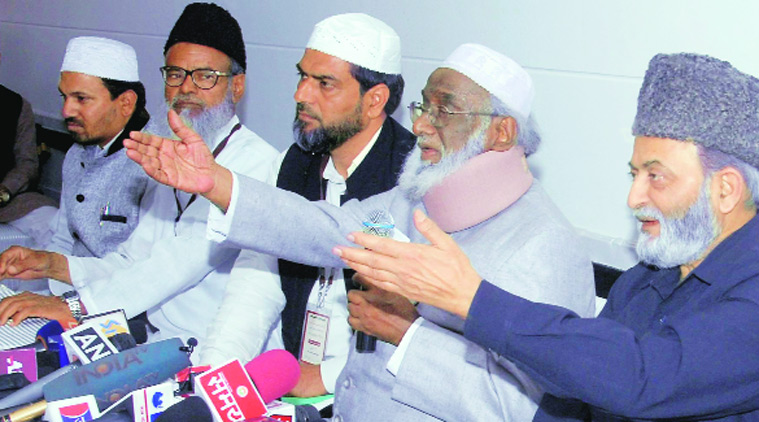
The Lucknow meet of the All India Muslim Personal Law Board (AIMPLB) makes it clear that they will not honestly introspect and change course. In the face of persistent demands from Muslim women and liberal elements of the community for change, it has simply asserted that Muslims have the "constitutional" right to follow their personal law. Of course, they do. But they also have the “constitutional” right to demand that this law be in conformity with their primary scripture, the holy Quran.
In an earlier write-up in this space I have shown how that is not at all the case with the Anglo-Mohammedan Law that goes as Muslim Personal law in this country.
AIMPLB general secretary Maulana Wali Rehmani is seeking to obfuscate the issue by saying, “if the law is misused, corrective steps should be taken, instead of changing the law.” The problem is that it is the law that is inconsistent with the Quran as well as demands of natural justice and gender equality. How is it being “misused” if it allows instant triple talaq and Muslim men are using that provision to get rid of their wives, with express support from the ulema, often without even pondering the issue.
The most vile and obscene practice of “nikah-e-halala,” prevalent only among Indian Muslims now, is a direct result of unthinking divorces due to the law that allows triple talaq in one session. A well thought out divorce following the method given in the Quran would not lead to such degradation.
The Board is suggesting “corrective” steps like social boycott for anyone who gives three talaqs in one sitting. This is juvenile and absurd. Who cares for a social boycott these days and in any case who will monitor the society and what punishment will be given to those in the society who continue to interact with such a person. Then, who will prescribe and administer this punishment.
Board ulema seem to be actually living in the 7th century when perhaps such medieval punishments could be effective. Quran, however, though a 7th century scripture, does not prescribe any such punishment. Nor did the second caliph Hazrat Umar, on whose authority the ulema justify the instant triple talaq as he is supposed to have accepted it as a fait accompli. But he had also ordered flogging for anyone who dared say Talaq thrice in one session.
In any case the issue is that of a bad law, not its misuse. Indeed, this bad law is even supported by infantile fatwas giving legitimacy to triple talaqs conveyed unilaterally through text messages, internet chats, and so on.
The root of the problem for the ulema lies in the stagnation in Islamic theological thought for over a millennium. Orthodox Islam had called for creative rethinking of issues as and when new situations emerged. This was called ijtihad. It was practised by jurists like Imam Abu Hanifa, Imam Shafei, Imam Malik, Imam Ahmad ibn Hanbal, etc. The gates of ijtihad, however, were closed after that. It was said that fresh thinking is no longer required.
No one had the authority to close the gates of ijtihad, but ulema accepted that. This is what has caused the biggest problem. Indian ulema are perhaps the most conservative of all today. They would not even accept what their counterparts in Pakistan and Bangladesh have.
The problem for AIMPLB arises from the fact that its ulema follow Imam Abu Hanifa who is said to have accepted a fait accompli as legitimate, even if the act was haram (forbidden). Other jurists like Imam Malik, Imam Shafei and Imam Hanbal do not accept a haram act as legitimate. The AIMPLB keeps repeating that triple talaq in one sitting is haram but says that once it is done it is done; it is a fait accompli and nothing can be done about it, it has to be accepted as legitimate.
This is what is taught tomuftis in Deoband and Bareilly and this is what they, therefore, say when asked to give a fatwa on such issues. Shias and Ahl-e-Hadith do not accept this position. But members of these sects in AIMPLB continue to support its position in the interest of community solidarity, even though this stand is contrary to their juristic understanding and practice.
Some people had started expecting something positive from the Lucknow meeting when its Shia member, Maulana Kalbe Sadiq hinted a couple of days ago that the Board might be willing to phase out the abhorrent practice of triple talaq within a year and a half. But apparently even the Shia and Ahl-e-Hadith members did not press for change.
The AIMPLB should, however, understand that whatever stand Hazrat Umar or a jurist like Imam Abu Hanifa may take, God did not accept the fait accompli as giving legitimacy to a vile act. The most relevant case in point is that of az-zihar, a pre-Islamic practice that some Muslims continued to engage in after embracing Islam. In az-zihar, a husband wanting to divorce his wife would simply say that she was like his mother and hope that this would be accepted as an indirect divorce.
This practice made God very angry. In Quran Chapter Al-Mujadila (58, verses 2 to 4), He calls this practice vile and falsehood, and a lie and prescribes punishment for those who engage in such vile practice. He does not accept it as a legitimate form of divorce.
“If any men among you divorce their wives by zihar (calling them mothers), they (wives) cannot be their mothers: None can be their mothers except those who gave them birth. And in fact, they use words (both) iniquitous and false: but truly Allah is one that blots out (sins), and forgives (again and again). (Quran Sura Al-Mujadila (58), verses 2).
I have made this point earlier, indeed very recently. Yet this bears repetition, as its implications are not well understood. The above verse makes it clear that God does not accept the fait accompli argument in the case of divorce by az-zihar: Quran tells them clearly “wives cannot be mothers.” Why should a so-called “fait accompli” be then applicable to triple talaq in one session? Our ulema agree and say repeatedly that the practice of instant triple talaq is vile and abhorrent and haram. But they don’t even prescribe any punishment for the evil-doer? They are talking of medieval absurdities like social boycott which simply cannot be enforced even if it were to be accepted as a legitimate form of punishment today.
Like ulema around the world, our ulema too should understand that now they are living in the 21st century, in the age of internet. Not only Quran but even the contrasting opinions of various jurists are available to all Muslims. It has become very easy for any interested person to study Islamic scriptures as well as books of jurisprudence.
Triple talaq is like the proverbial Sword of Damocles hanging over the head of our women permanently. Even in perfectly harmonious marital relationships, the consciousness of the sword remains present, vitiating the relationship, making it iniquitous.
Progressive Muslims, men and women, are no longer willing to allow this situation to persist. The entire Muslim world has accepted the un-Islamic nature of instant and unilateral triple talaq. The arguments that AIMPLB has presented before the Supreme Court have already been debunked in Islamic theological literature. Change is inevitable. Indeed, they should accept it as a fait accompli.
Sultan Shahin is the founding editor of a Delhi-based progressive Islamic website NewAgeIslam.com.
Media reports say that there were celebrations in the village on their arrival back
One of the accused in the lynching of Mohammed Akhlaq, Punit was released late last evening and media reports suggest that some villagers celebrated his release as he reached his village. Punit and another accused in the gruesome lynching of Akhlaq, Arun were granted bail by the High Court on April 6. Both were lodged in a jail in Greater Noida. Arun’s bail documents are expected to reach the district in next two days and till then he will remain in jail.
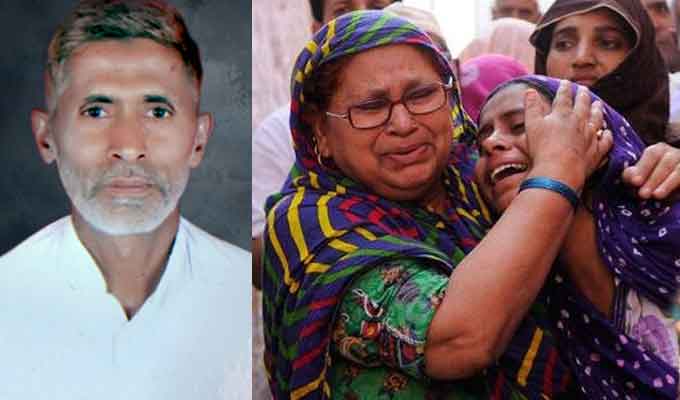
The two are accused in the murder of Mohammed Akhlaq in Bisada village in Dadri tehsil of Gautam Buddh Nagar district in September, 2015. Akhlaq was beaten to death by a mob on suspicion of cow slaughter after they barged into his house. His son Danish was critically injured in the attack. There was no proof that the meat found in the possession of the mob was beef at all. At the time a case was registered against more than a dozen persons, including the son of a local BJP leader, in connection with the attack. There were at the time only two Muslim families in the neighbourhood where Akhlaque's family stays. Akhlaque's family has almost decided to leave the village and shift out to the airbase in Chennai where his younger son Sartaj works as a technician. In other parts of the village, about 52 Muslim houses exist.
Central BJP leaders including Ministers have been, in brazen acts of defiance of the rule of law, been ‘paying homage’ to the accused since the crime took place. The Hindu reported on October 4, 2015, days after the killing by a lynch mob of Mohammed Akhlaq that Sangeet Som, then BJP MLA, visited the village Bisada amid rising communal tension and vowed to “ try to get bail for Dadri accused” . Som was himself accused in the brutal communal violence that swept four districts of western Uttar Pradesh including Muzaffarnagar, Baghpat, Shamli and Meerut in September 2013, eight months prior to the general election that swept the Modi government to power in May 2014. Som visited the village soon after the killing and made this controversial statement justifying the murder, addressing an excited mob and deliberately politicising the issue by addressing the mob from a local temple.
Without specifically referring to the Muzaffarnagar riots, Som an elected representative had taken law unto his own hands and warned, “ kanoon kanoon ki tarah kaam kare. Warna, ham pahle bhi muhtod jawab de chuke hai aur aage bhi denge [the law should act as law. Otherwise, we have given a strong reply in the past and would do that in future as well]” In keeping with his majoritarian, Hindutva image in western UP, Sangeet Som refused to condemn the mob lynching of Akhlaq. When the media had asked Mr. Som if he would go on to condemn the murder, he smiled and said,” Let the enquiry report come as to what happened that day”. Strangely the UP state administration under Akhilesh Yadav had banned the media from covering Som’s visit while allowing him to conduct himself with impunity.
Som had also met the families of accused arrested for inciting and killing Akhlaq. He assured the families and the crowd that he would try to get them out on bail. One of the nine accused, Vishal is son of Sanjay Rana, a senior and old time BJP worker from the area. Sanjay Rana alleged that his son was being framed in the entire episode and the actual conspirators were not being arrested.
Then again, last year, the Times of India reported how, on October 6, Tourism minister Mahesh Sharma in the Modi government visited the family of deceased Ravin Sisodia, also one of the accused in Dadri lynching case. Shockingly, the minister tweeted the pictures of his visit to Ravin's grieving family in Bisada village of Uttar Pradesh. The 22-year-old was one of the 18 accused for the murder of Mohammad Akhlaq last year over suspicion that he had eaten and stored beef.
"Met the family of deceased Ravin in Bisara village, Greater Noida. Bisara get settled now," Mr Sharma tweeted after his visit.The photo of Sharma folding his hands and paying obeisance to the dead body of Ravi, who had died in police custody of chikungunya, had gone viral on social media platforms. Sharma, who is the local MP, also handed over a cheque of Rs 5 lakh to the family of Ravi Sisodia, a key accused in the murder of Mohammad Akhlaq in September 2015.
Worse was the act of the body of the dead accused being draped in a tricolour, with the policemen and administration officials remaining mute spectators. Counter criminal cases were demanded by the mob, to be registered against both the brother of the murdered Akhlaq and the jailer. A pathetic level of competitiveness in demanding Rs 1 crore compensation for the dead accused was indulged in by the mob with the Central Minister Mahesh Sharma present. Shaken by the majoriatrian mobilisation, the Akhilesh Yadav government, instead of dealing with the issue through dialogue, succumbed to mob pressure and even announced Rs 10 10 lakh compensation to the deceased Ravi’s wife Pooja. Uttar Pradesh Police claimed that Ravi was suffering from high fever and his death was suspected to be due to dengue.
Sangeet Som and Suresh Rana Win Again Due to Vote Division Clearly the communal polarisation helped both BJP candidates Sangeet Som and Suresh Rana, who are accused of crimes in the Muzaffarnagar violence win. Som won from Sardhana and Suresh Rana from Thana Bhawan seats respectively.Sangeet Som secured 97,921 votes while his nearest rival SP’s Atul Pradhan got 76,296 votes in Sardhana (Meerut). In Thana Bhawan (Shamli), Suresh Rana got 90,995 votes while BSP’s Abdul Waris Khan secured 74,178 votes.