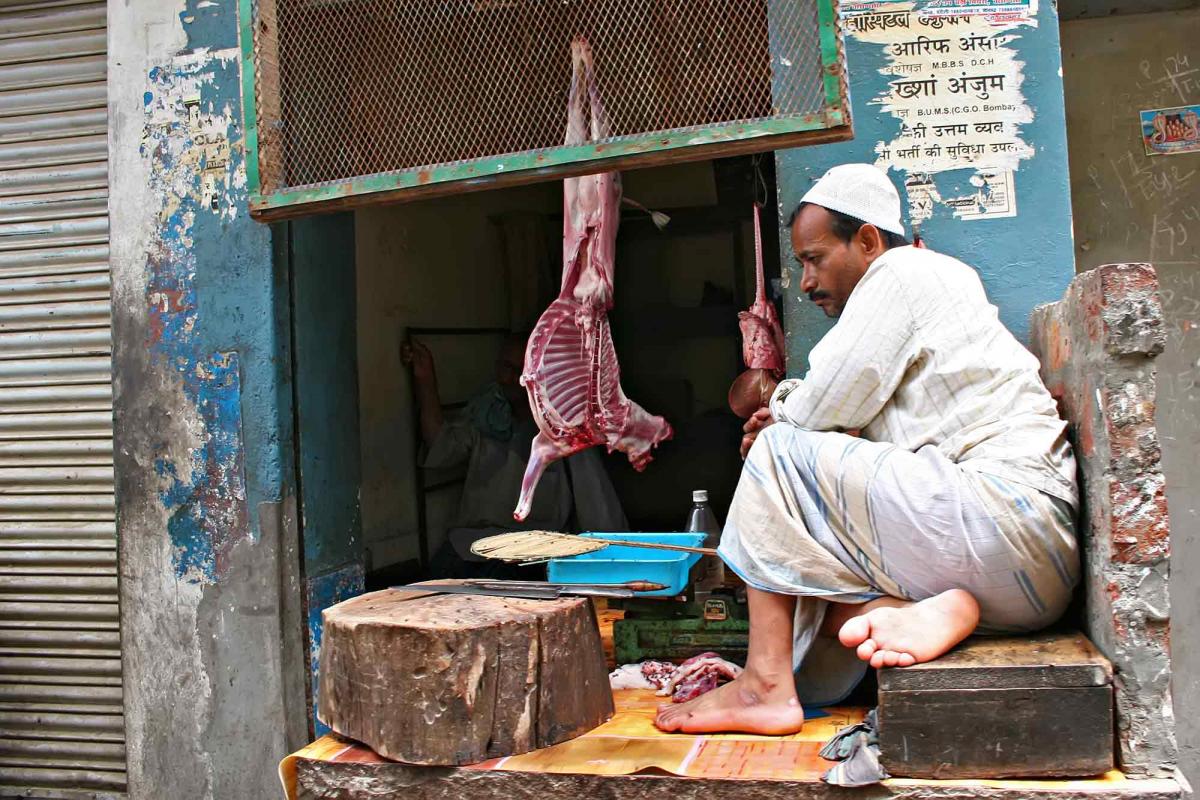
The Kotwali Police in Bhopal, Madhya Pradesh booked the private practitioner in his late twenties under Section 505 (2) of the IPC and produced him before a local court that sent him to judicial custody. In a clear attack on freedom of expression, this Muslim youth from Jhabua who shared an image of a Sadhu buying meat was arrested and sent to jail on Tuesday.
Section 502 of the Indian Penal Code(IPC) penalises “ Sale of printed or engraved substance containing defamatory matter.—Whoever sells or offers for sale any printed or engraved substance containing defamatory matter, knowing that it contains such matter, shall be punished with simple imprisonment for a term which may extend to two years, or with fine, or with both.”
The selective use of hate speech, hate writing and ‘defamation’ under the BJP ruled states is evident given the fact that inciteful speeches by elected officials against he minorities have been completely ignored. However, Atik Afzal Khan, a BMHS practitioner, had shared the image on his Facebook page on Monday with the caption: “Rahim Ki dukan se Ram hari sabjiya kharidate hue, ek durlabh tasvir (Ram buys green vegetable from Rahim’s shop, a rare photograph).
The Kotwali Police booked the private practitioner in his late twenties under Section 505 (2) of the IPC and produced him before a local court that sent him to judicial custody. Police constable Ramkumar Yadav said one Anil Hemraj Prajapati, 21, had lodged a complaint against Khan, a resident of Kailash Marg in Jhabua town.
· A Muslim youth from Jhabua who shared an image of a sadhu buying meat was arrested and sent to jail on Tuesday, March 29. · Atik Afzal Khan, a BMHS practitioner, had shared the image on his Facebook page on Monday with the caption: Rahim Ki dukan se Ram hari sabjiya kharidate hue, ek durlabh tasvir (Ram buys green vegetable from Rahims shop, a rare photograph). · The Kotwali Police booked the private practitioner in his late twenties under Section 505 (2) of the IPC and produced him before a local court that sent him to judicial custody. · Police constable Ramkumar Yadav said one Anil Hemraj Prajapati, 21, had lodged a complaint against Khan, a resident of Kailash Marg in Jhabua town.
As many as 500 meat shops, including a KFC outlet, in old Gurgaon were allegedly shut down by over 200 Shiv Sainiks for nine days on account of Navratri. They also threatened the shop owners yesterday to shut their establishments on every Tuesday.
Representation Image
"We have served notices to meat shop owners, including KFC, and other fast food outlets to shut their shops till Navratri ends and on every Tuesday," Gautam Saini, the president of Shiv Sena, Gurgaon, said to PTI.
The Sena workers assembled at Palam Vihar yesterday and forced the closure of meat market and dhabas such as Bismillah Khan eatery in others areas too.
However, ACP-PRO of Gurgaon Police Manish Sehgal said that though some meats shops were shut down but they were later opened. These shops have commercial licence to sell meat. Strict action will be taken against those forcing closure of shops illegally, he said.
According to S Anand, a report in 2007, has estimated that 22,327 sanitation workers die every year.
Reports on the deaths of sanitation workers in sewers and septic tanks has become a regular phenomenon. According to S Anand, a report in 2007, has estimated that 22,327 sanitation workers die every year. Leaving out the deaths, even the health hazards of people working in such occupations are numerous. If proper precautions are not taken, the workers die a premature death due to the deteriorated health conditions. It is estimated that the lifespan of a sanitation workers is 45-50 years.
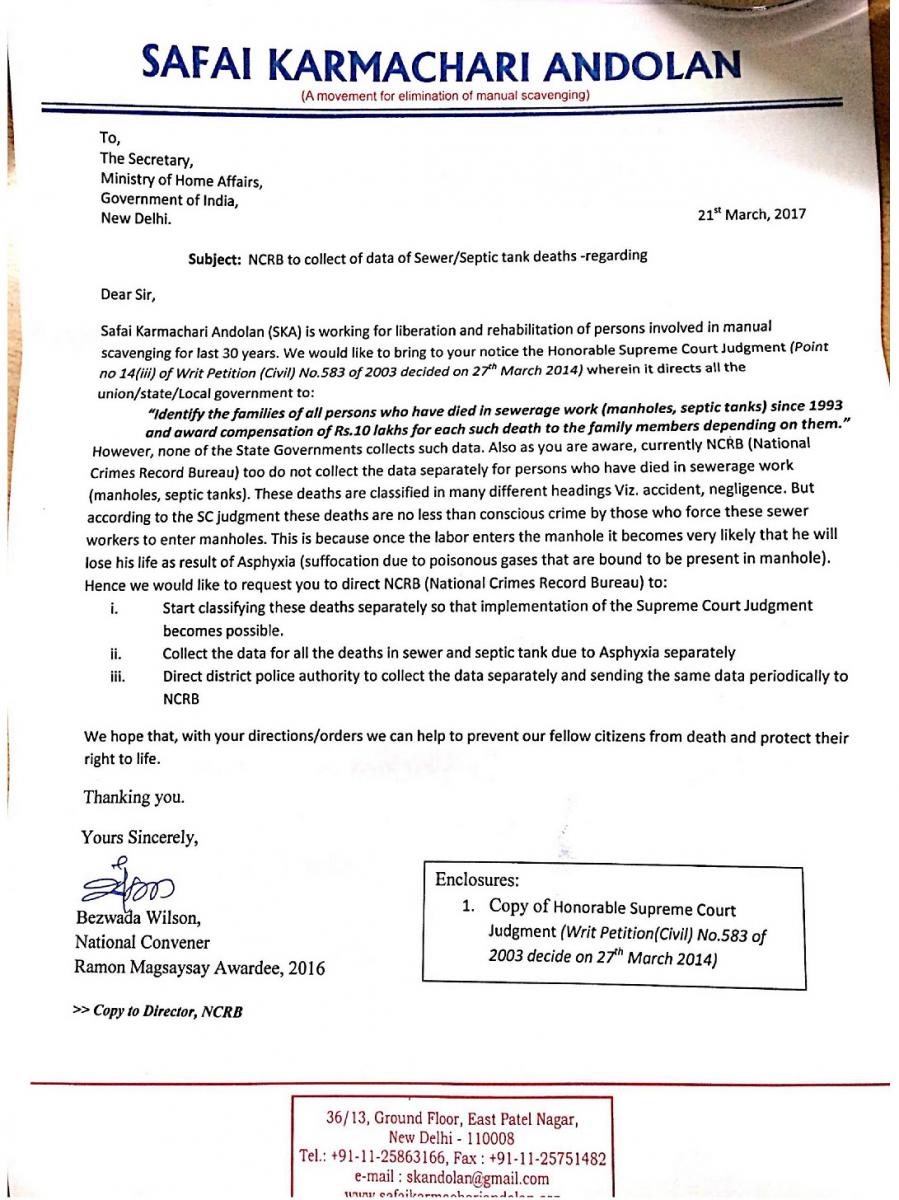
After a prolonged struggle by the workers and civil society groups working on the issue, Government of India had passed “The Prohibition of Employment as Manual Scavengers and their Rehabilitation Act, 2013.” This law has a provision for compensating and rehabilitating people working as manual scavengers. In a similar tone the Supreme Court gave its verdict on 27 March 2014 to provide compensation to the family members in the event of death of the worker in a manhole. In spite of many deaths and a law existing for disbursement of ex-gratia, currently there is no provision existing to register such deaths separately in the police records. Such deaths are recorded under ‘accidental deaths’ which makes it difficult for people and orgnisations to monitor deaths that occur in sewers and septic tanks.
In this context, Bezwada Wilson of Safari Karmachari Andolan, has written to the Secretary, Ministry of Home Affairs. He has asked the ministry to add a separate classification of the deaths that occur in the sewers, septic tanks etc. to facilitate compensation and relief work for the families of the deceased.
Shahid chacha, a 57-year-old “young” man, is furious, helpless and truly devastated as he has not earned a penny for the past 7 days. He says his family of six is forced to survive on his savings.
You must be wondering what has gone wrong with him. Let me bail you out of your misery.
Shahid chacha, or Mohammad Shahid Qureshi, is one of the biggest sellers of ice in Lucknow whose business has been virtually razed to dust ever since all the “illegal” slaughterhouses have been shut down in and across Lucknow.
“My entire business was dependent on the amount of meat that used to be exported from Lucknow as my job was to ensure a proper supply of ice for those delivery vans,” says Shahid, wondering if he would be able to bring his business back on track ever.
A major chunk of his business comprised of selling ice to mutton and beef sellers exporting their meat to traders or companies outside Lucknow but a blanket ban on the illegal slaughterhouses has hit him hard, so much so that he is mulling selling fruits in the local market besides selling ice to ice cream vendors in Lucknow.
The ban on slaughterhouses has considerably impacted lives and livelihood of thousands of people like Shahid chacha. The condition is such that small traders have no option but to start thinking about an alternative job option.
To get a real sense of their problems, I spent a whole day with the meat traders in old Lucknow’s Balojpura Lane that houses the most number of meat shops in the city of Kebabs.
While closure of slaughterhouses has resulted in downing of shutters of the meat shops of almost all the meat sellers here, the other big problem, in fact the biggest of them all, is sustaining the livelihood of thousands of daily wagers, who work in these retail meat shops.
“The condition is such that these workers have now started selling things of their basic needs — utensils, old clothes — to feed themselves. Those who have some ornaments are selling them off to sustain,” a jeweller told me on the condition of anonymity.
I myself roamed around the area and found the condition to be really disheartening. All the shops are shut, there’s no business whatsoever. People are planning to meet government with their side of the story.
It happened too on Tuesday when a delegation of workers met UP Health Minister Sidharth Nath Singh with their specific points and said they were “partially satisfied” with the meeting and the response that Singh has given them.
But, the real question is; who is really responsible for this fiasco?
Now, according to traders, their licenses have not been renewed for the past three years and as a result their businesses have now become illegal.
Question must be asked why Akhilesh Yadav mustn’t be held accountable to answer as to why their licenses weren’t renewed? Is it also not a responsibility of Azam Khan, the then Urban Development Minister, to come out and explain why the licenses were not renewed?
But for now, when the illegal slaughterhouses have been forcibly and rightly shut down, what it has led to is a massive scarcity of meat — especially buffalo and goat meat — in the market and as a result, some of the iconic restaurants and eatery joints in Lucknow and across Uttar Pradesh are suffering.
But will the problem of these age-old traders end? Will their be the “Buff Kebab” on platters of the Nawabs? Will the Yogi Adityanath govt renew their licenses in the coming days?
Well, these are some questions answer of which will be clear once a proper meeting is done and orders are made public in this regard!
But till then, While Nawabs are missing Kebabs, traders and retailers are waiting for that golden message (read order) from the government that can bring back cheers on their faces and glory in their businesses!
But for people in Lucknow, you’ll have to forget your favourite”Buff Kebabs” at the Tundey Kababi for sometime now.
The closure of Uttar Pradesh’s slaughterhouses could leave a couple of million people jobless in the state, affect its allied industries and choke small but important revenue streams for its poor farmers, especially in drought-prone areas, according to an IndiaSpend analysis of available data on India’s meat, leather and livestock industries.
A cow walks past a closed slaughterhouse in Allahabad, India
Half of Uttar Pradesh’s licensed slaughterhouses and scores of illegal ones have been closed after an order from new chief minister Yogi Adityanath against those that do not follow the law.
The drive against slaughterhouses could impact three critical industries in UP: Meat packaging, livestock and leather. With some of India’s worst development indicators, stagnant agriculture and industry, as IndiaSpend reported in March 2017, India’s most populous state is also one of its poorest with the second-highest unemployment rate–after Jharkhand–among India’s eighth most socioeconomically backward states.
With a population of 200 million people, equivalent to the population of Brazil, UP’s economy is the size of the tiny middle-eastern country of Qatar, which has 2.4 million people, the same as the UP town of Bijnore.
In 2015-16, more people per 1,000 were unemployed in UP (58), compared to the Indian average (37), and youth unemployment was especially high, with 148 for every 1,000 people between the ages of 18 and 29 years in UP unemployed, compared to the Indian average of 102, according to 2015-16 labour ministry data.
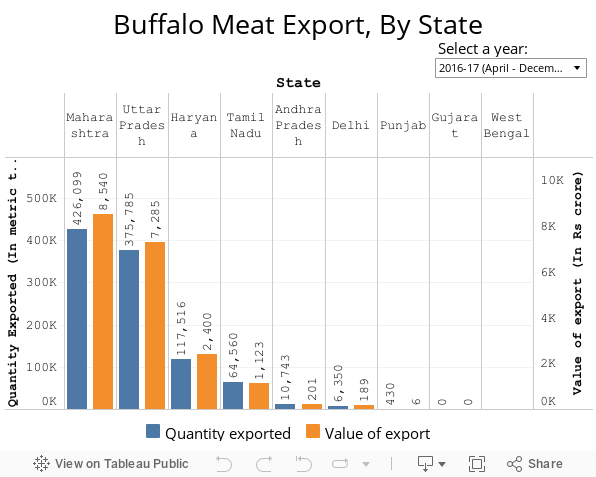
Meat-packing and leather industries make up the major share of India’s export earnings, with UP contributing significantly. UP accounted for nearly 43% of buffalo-meat exports in 2015-16, the highest among all Indian states, according to data published by the Agriculture and Processed Food Export Development Authority (APEDA). Leather ranks eighth among India’s top export earners, with about 46% of what is produced being exported, according to the Council for Leather Exports (CLE). A third of these exports go from Kanpur in UP, a city where the leather industry, as IndiaSpend reported in February 2017, is already in crisis.
The Bharatiya Janata Party’s (BJP’s) election manifesto for the UP assembly election had promised to shut all illegal slaughterhouses in the state. But “over-enthusiastic” officials–who appeared to be acting indiscriminately, shutting down even abattoirs with licenses–are now being reined in by the government, according to some media reports.
IndiaSpend research shows that the slaughterhouse ecology is complex and supports diverse, rural and urban economic and social systems not just in UP but nationwide. Here is a look at the three industries that will be most affected by the campaign.
1. Meat: UP accounts for 43% of India’s buffalo-meat exports
Illegal slaughterhouses being targeted by the UP government dominate the meat market in India: 4,000 are registered and more than 25,000 are not, among units that cater to the domestic market, according to this APEDA report. Even in the export market, registered and unregistered slaughterhouses both produce meat, APEDA acknowledges in this report.
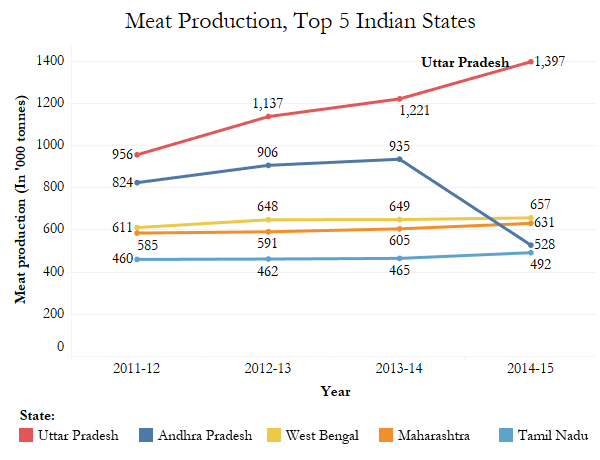
UP is the largest producer of meat in India, according to the Agriculture Statistics Report, 2015. In 2014-15, it contributed 21% of the meat produced in India. Of the 75 slaughterhouses registered with the APEDA for meat export, as many as 49 are in UP. This means the state is likely to have the large number of slaughterhouses, many illegal.
Buffalo meat is a major export from India, going to more than 40 countries. In the 2015-16, UP recorded the highest buffalo meat export, followed by Maharashtra. In 2015-16, India exported 13.14 lakh metric tonnes (MT) buffalo meat of worth Rs 26,685.42 crore.
There is no reliable estimate of people employed in UP’s slaughterhouses and meat shops, but it is likely to be in tens of thousands. Around 6.7 million Indians are employed in the country’s food-processing industry, which includes slaughterhouses and meat processing units, according to the Agriculture Statistics, 2015.
The issue of illegal abattoirs in UP is not new. The erstwhile Samajwadi Party government had also issued a government order in June 2014 to probe their operations. In May 2015, the National Green Tribunal ordered the state government to act against illegal slaughterhouses to curb the pollution caused by them. The BJP government’s move goes a step further, banning not only illegal slaughtering but also licensed mechanical operations, which are mostly legal and focussed on exports.
Previous governments, acknowledging the advantage of mechanised slaughter technology over traditional methods in increasing and improving output for the export market, had offered financial assistance for upgrades.
2. Livestock: UP recorded 14% growth, indicating economic dependence
Meat production is entirely dependent on livestock, a sector that contributed nearly 4.11% to India’s GDP at current prices in 2012-13. It also contributes nearly 25.6% of output, by value, at current prices in the agriculture, fishing and forestry sectors, according to the Livestock Census Report, 2012.
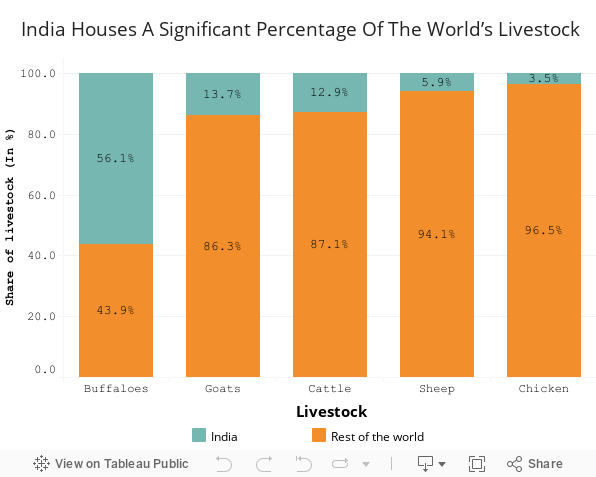
As the table above shows, India houses a significant percentage of the world’s livestock. A comparison of the last two livestock censuses reveals a 3.33% decrease in livestock in 2012 compared to 2007. But UP, along with Gujarat and Assam, registered growth (14%), indicating the economy’s dependence on livestock and allied businesses.
Livestock are an important economic resource, especially in rural areas. Cattle, buffalo, goat and sheep are maintained by agricultural families, mostly those with small land holdings, and by landless labourers who use them primarily for milk and also meat. Cattle are also loaned for agriculture and transportation. Poor families sell stray cattle to butchers. In drought-affected areas, such as parts of Maharashtra, Karnataka, Madhya Pradesh and UP, cattle are often sold to tide over economic crises.
3. Leather: Majority of employees from disadvantaged communities
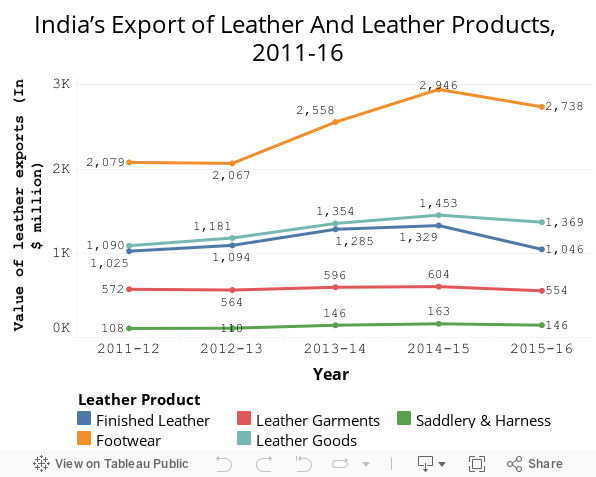
In 2014-15, India leather exports were valued at $6.4 billion (Rs 39,097 crore) and in 2015-16, at $5.8 billion (Rs 38,396 crore), according to Council for Leather Exports data.
The Indian leather industry provides formal and informal employment to 2.5 million people, mostly from disadvantaged communities: A third of leather workers are women and a fourth are scheduled castes and tribes, according to this 2009 study by the Labour Bureau of India. Leather workers who are not from traditional tanning communities or are not Muslims come from poor agricultural families, according to a study by the Centre for Education and Communication (CEC), an advocacy.
(Singh is an Associate Fellow at the Rajiv Gandhi Institute for Contemporary Studies in New Delhi.)
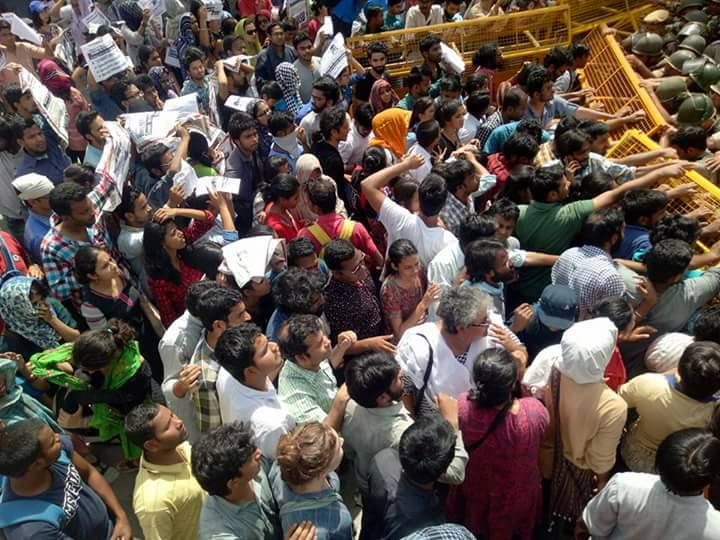
JNU students and teachers took out a demonstration today, against the UGC gazette notification of 2016. Thousands of students and teachers gathered in front of UGC today. A small scuffle took place between the protesters and the police.
We talked to the JNUSU Vice President Amal P.P. “A panel of representatives from JNUSU and JNUTA are waiting to talk to the UGC Chairperson. 4 teachers, JNUSU president and I, and 4 other MA final year students are waiting for the Chairperson of UGC for past 45 minutes. During our last visit as well, they made us wait. Last time, the UGC chairperson did not come at all. Only a Mr. Jagdish from UGC came and met us. He took the memorandum and walked away.”, he said.
“Police has lathicharged our peaceful protest. Many students have been hurt, some of them have even been hospitalized”, Amal added.
The UGC gazette enforced on JNU has led to a massive seat cut for research programmes. JNU is primarily a research university with 67% of the students enrolled in research. It has faced a huge set-back with the new UGC implementation. M.Phil and Ph.D seats in JNU have been drastically cut down by 84%. The seats have been reduced from 1,234 last year to 194 this year.
With the new prospectus, there would be no admissions for research this year in centres like Centre for Sociology, Centre for Pol. Science, Centre for History, Centre for Indian Languages and many more. The seats have been slashed in many other important centres as well. JNU’s oldest School, School of International Studies, will offer MPhil/PhD seats in only 3 out of 13 centres.
Three schools –School of physical sciences, School of computational and School of integrative sciences, and biotechnology – and two special Centres – Centre for law and governance and Special Centre for Sanskrit studies – have no seats for the integrated MPhil-PhD programme.
The JNUSU has also continuously pointed how the current Vice Chancellor, on diktats of the RSS, is dismantling the core structure of the University. Their press release on 3rd Jan read:
"The VC is repeatedly tampering with the autonomy and quality of the University in deciding course curriculum through his insistence on imposing courses dictated by the partisan views of the government of the day. For example, while JNU has no specialisation or departments related to areas like AYUSH, the VC forced the decision that the ‘AYUSH fellowship holders will be allowed to take admissions’ and also that the ‘AYUSH degrees can be considered for equivalence by centres’, without offering any academic rationale as to which centres and faculty will admit such students! In a situation where the already existing academic infrastructure is crumbling down, where no new hostel has been constructed for students, the sudden moves to introduce such spurious proposals is nothing but a toast to the loyalty of the JNU administration to the political agenda of the RSS-dictated government, at the cost of academic rigour and the inclusive infrastructure of JNU.” Read more here.
The demonstrations came after the Rakhine Advisory Commission, led by former UN chief Kofi Annan, urged Myanmar’s government to reconsider the ethnic group’s legal status. The government actually does not recognise the existence of Rohingya and rather considers them as Bengali.
Rohingya refugees return to their makeshift home at Kutupalang Unregistered Refugee Camp, Bangladesh. Mohammad Ponir Hossain/Reuters
Bangladesh has some 32,000 registered refugees in two official camps located mainly in the Cox’s Bazar district bordering the eastern Rakhine State. An additional 200,000 to 500,000 unregistered refugees live in makeshift camps there, alongside locals.
Having faced a continuous flow of Rohingya refugees for over two decades, the Bangladesh government is now planning to relocate the refugees to a remote island in Noakhali district, Thengar Char, about 250 km northwest of current camps.
The government says the move would improve refugees’ access to humanitarian assistance. But Rohingya refugees reportedly oppose the plan, and human rights groups have urged the government to cancel the plan, which the Asia Pacific Refugee Rights Network has declared to be “dangerous, absurd and inhumane”. Rights groups argue that the island is uninhabitable: it rose from the sea only 11 years ago and is highly prone to flooding and cyclones.
Reuters
Local integration
The Bangladeshi people of Cox’s Bazar and the Rohingya refugees share a common dialect and culture. As a result, law enforcement forces cannot always differentiate between refugees and locals. Despite restrictions on their ability to work, many refugees find employment in the informal sector, and some children go to local schools. The government has reluctantly allowed the refugees to stay so far, but it is clearly concerned that such opportunities will lead to integration.
Thengar Char is a remote island in the most literal sense. The nearest sub-district office, Hatiya, is two hours away by boat. The surrounding areas are poor and underdeveloped.
For the government, it is easier to manage a refugee population that is concentrated on Thengar Char. Locals there do not speak the same dialect as Rohingyas, decreasing the potential for integration. It will also be practically impossible for them to seek employment and education outside the camp.
Challenges for humanitarian agencies
But the relocation would also make it very difficult for the UNHCR/UN Refugee Agency International Organisation for Migration and local NGOs to provide humanitarian services. Currently, agencies are mainly based in Cox’s Bazar, a popular Bangladeshi tourist destination with the longest sea-beach in the world. It is well connected to Bangladesh and other parts of the world by land and air and offers staff the comforts of living in a city, including basic facilities and security.
The Bangladesh forest department has warned that the Thengar Char island is not yet suitable for human habitation, writing in a letter that:
The soil and environment of Thengar Char is not yet suitable for human settlement. The island is submerged in water during monsoon. Though it emerges during dry season, most of the island goes under water at high tide.
Cyclone are of significant concern. According to a catalogue of tropical storms in Bangladesh, 193 cyclones struck the country between 1484 and 2009. Arguably the deadliest tropical cyclone in history hit the region in 1970, battering the coast with a six-metre storm surge and killing some 300,000 people. If even a small-scale cyclone hits the proposed Rohingya camp, a human catastrophe is nearly certain.
The Noakhali district administration has written that the government would also have to “build flood protection embankment, cyclone centres and necessary infrastructure and ensure supply of drinking water” before receiving the Rohingyas in the Thengar Char.
Lost connections
For the Rohingyas, current border camps in Cox’s Bazar are close to home not just culturally but also geographically. For some, crossing into Bangladesh is as easy as wading through a little creek on foot or taking a short boat trip.
When Myanmar erupts in violence, many Rohingyas seek safety in Bangladesh, and, when it ends, some of them head back home. There is usually no asylum application, refugee-status determination procedure or UN-assisted voluntary repatriation; registration was last done in 1992. The country’s hundreds of thousands of unregistered Rohingya migrants live in limbo, as Bangladesh lacks specific refugee laws.
Rohingya fishermen near a refugee camp in Teknaf, 2011. Andrew Biraj/Reuters
During relative peace, many Rohingyas also cross the border to seek medical treatment, education, marriage, daily shopping trips, or to visit relatives. Some will embark on a secondary migration, heading to Saudi Arabia or Malaysia. Many of these practices likely violate Bangladeshi law, but they are locally accepted and have been going on for generations.
Bangladesh has been negotiating with Myanmar to repatriate the Rohingyas. Many Rohingyas in Bangladesh have expressed their willingness to go back to their homeland if state authorities can ensure their safety.
However, the risk of persecution and violence in Myanmar remains high, and most refugees do not consider it safe there. International law requires that the Bangladeshi government only send back refugees who would voluntarily repatriate.
If the alternative to life in Myanmar is banishment to Thengar Char, many Rohingyas might “agree” to return rather than face a dangerous and uncertain future on a remote island of Bangladesh.
(Thanks to the mediatised times we are passing through)
And thus it did not appear surprising that the decision by Posco, the South Korean steelmaker, the fourth biggest in the world, to exit the proposed 12 million-tonnes a year steel plant in Odisha did not cause much flutter. Yes, newspapers duly reported POSCO India’s ‘request to the Odisha government to take back the land provided to it near Paradip’ where it was supposed to invest 52,000 crore Rs.’ The letter stated company’s ‘failure to start work on the proposed plant’.
Perhaps none from the media wanted to showcase a negative example which is at variance with the efforts by the powers that be to project the idea of ‘ease of doing business’ here. Undoubtedly at a time when the government is keen to attract foreign capital and inducing it in very many ways, the way in which a Corporate Major – supposed to be one of the leading in the steel sector – had to exit from its project can easily shake their confidence about investing here. Or was it to cover up the fact that over the years how the South Korean Steel Major had dealt a heavy blow to the local environment by felling down more than eight lakh trees at the project site and residents are demanding accountability and compensation over such large scale environmental destruction. What is more disturbing has been the fact that while the Union Environment Ministry never gave permission to cut the trees the MNC with due help from the local administration and law and order machinery went ahead with it. A case has been filed before the National Green Tribunal about this issue. (http://www.orissapost.com/residents-demand-compensation-for-rampant-tree-felling-by-posco/) Question arises why did POSCO decide to quit despite receiving continued support from the central as well as the state government? Remember the company had been handed over 1,700 acres of land by the Odisha state for the project and around 1,000 acres of land was still lying with the state which it had acquired for the project. In fact, the Odisha government went ahead with the forcible land acquisition for the steel plant despite the fact that POSCO did not have an environmental clearance for the project. And also the environmental clearance given by the Ministry of Environment and Forests (MoEF) on January 31, 2011 had also been suspended by the National Green Tribunal (NGT) on 30 March 2012.
Whether it had a ‘change of heart’ about concerns expressed by local people – who were leading and continuing with the struggle which was billed as one of the ‘largest social movements in recent times’ – about the devastation it had brought out in the lives of the people or the company decided to become ‘green’ and decided to discontinue the project.
Definitely not.
Capital or capitalists never get moved by such humanitarian concerns ( which are exhibited by lesser mortals like us). Soul of capital or capitalists rest in profit only. It is the sole criterion for it to make decisions. (As an aside if capital/capitalist would have been really ‘moved’ by human misery neither we would have seen giant armament factories manufacturing weapons of death or and human trafficking becoming ‘lucrative’ business or crores of children slogging out on peanuts).
It is now history how the proposed project witnessed resistance by masses since its inception- which was spontaneous first and which later coalesced into formation of Posco Pratirodh Sangram Samiti – since the state government signed an MOU with POSCO in June 2005 to set up a steel plant on 4,004 acres of land in Kujang at a plan outlay of `54,000 crore. The project was then claimed as the ‘largest investment by any multinational in the country.’
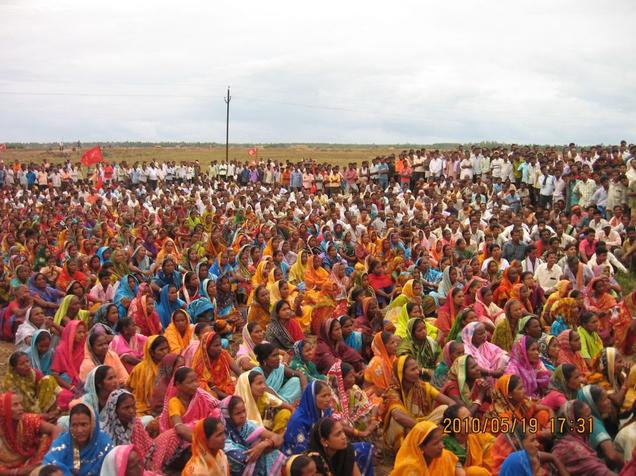
The mass movement which compelled the company to scrap its project altogether – wherein people showed exemplary courage, determination and creativity was led by activists of CPI (Communist Party of India) and other progressive formations – had to face brutal repression at the hands of the goons of the management which were in connivance with the police and administration. A statement issued by Posco Pratirodh Sangram Samiti (http://icrindia.co.in/mydirectory/2017/03/24/update-from-posco-pratirodh-sangram-samiti-ppss/) hailing the victory tells how four persons associated with the movement were martyred during the struggle and scores have been injured, how ‘several leaders of the movement have been jailed multiple times’ and how ‘more than 2000 warrants have been issued against the people and more than 400 false cases both men and women have been registered at the Kujang police station since 2005.’
Excerpt of a memorandum submitted by various organisations and individuals who had organised a protest in Delhi against killing of anti-Posco activists and forcible land grabbing makes it clear the intensity of violence perpetrated by the corporate–police-goonda nexus in the region to suppress the voice of the people. It said :
On 2nd March, hired musclemen of POSCO with the full complicity of Odisha Police threw bombs at anti-POSCO activists in Patana village, in which 4 activists were killed and several others were seriously injured. Out of the 4, 3 were killed as a direct consequence of the police’s refusal to arrive at the spot for 15 hours after the bombing, or arrange for an ambulance to take the injured to a hospital. ..(http://nsi-delhi.blogspot.in/2013/03/protest-held-in-new-delhi-against_10.html)
It is noteworthy that the victory achieved by the united struggle of peasants, fisherfolks, forest dwellers to protect their land, livelihood and environment is breath of fresh air for all fighting forces in this part of the world where one finds a strange co-existence of Corporate Interests and Religion centred exclusivist politics..
But while celebrating this victory we should also bear in mind that while Posco has quit the project the issue of land acquired and transferred to Posco still remains. Odisha’s Industry minister has told the assembly that the land will be kept in a land bank and plans are being made to fence the land. As rightly pointed out by Posco Pratirodh Sangram Samity it is “illegal, undemocratic, anti-peasants, and unwarranted” and the state government “must follow the Supreme Court decision on the pattern of Singur where land of farmers acquired by Tata’s Nano plant in West Bengal was returned to them.” (http://icrindia.co.in/mydirectory/2017/03/24/update-from-posco-pratirodh-sangram-samiti-ppss/)
Another important issue is related to chopping down of thousands of tress – like mangroves, cashew nut, betel vines, fruit bearing trees – in the project area and adjoining villages. These trees had played a key role in 1999 Super Cyclone when because of the vast green cover and sand dunes, while thousands of people from nearby villages perished, people in this area remained unaffected. Now with the cutting of trees, these villages have also become vulnerable to cyclones. While substituting the natural forest looks impossible, what the government can easily do is pay compensation to these concerned villagers who remained dependent on these trees. and initiate a campaign to plant eco-friendly trees in the region. One can be sure that people of Jagatsinghpur and adjoining areas who humbled a big corporate major with their collective efforts can as well compel the government to concede to their demands.
As rightly said by legendary revolutionary Che Guevara, people united are always victorious.