Bastar Solidarity Network, Mumbai organised the book release of “Bearing Witness:Sexual Violence in South Chhatisgarh” on 10th March 2017. The book has been brought out by Women against Sexual violence and State repression (WSS).
Dr. Ilina Sen, academician and activist released the book. While releasing the book she said that it would be naive to examine cases of violence in South Chhatisgarh independent of the resource presence there. Mineral deposits in the state, in most cases, intersect with traditional settlements of adivasis, and therefore places their eviction by the state, as an inevitable. The adivasis, in most of these cases, have displayed enormous courage, resisting the corporations, the governments and the vigilante groups. Hence the unforeseen and totally unjust presence and multiplication of violence. We have some of the richest corporations of the world—international as well as national—allying with the governments to annihilate the people and their ways of life. There are multiple forms of resistance that includes cultural forms as well, through which the people speak for themselves. The alliance between the corporations and the state and central governments is now quite obvious, and the onus is on all of us to critique, resist and extend solidarities towards the people.
Pushpa Rokde, who works with the Dainik Prakhar Samachar in Chhatisgarh is the only adivasi woman journalist from Bastar. She was one of the firsts to report the cases of rapes and atrocities by security forces in Bijapur in 2015. She spoke about the challenges of being an adivasi and a journalist. She spoke about how the state and the police view her as being pro maoist or going to meet maoists whenever she goes in the interior areas of Chhatisgarh to cover stories. She mentioned how the situation has deteriorated due to increasing numbers of fake encounters. Because of this fear, she said that men were afraid of taking ailing women to hospitals for fear of being killed midway. She said that Adivasis are truthful and have called encounters fake only when innocent people were killed. She said that the state has intimidated those journalists who have chosen to speak the truth.
Shreya K, a WSS activist, placed sexual violence within the larger history of violence of all forms in Chhattisgarh, which peaked between 2005 and 2009 where the Salwa Judum was in active operation. She asserted the presence of a pattern in terms of specific acts—unwanted touch on various body parts and especially sexual organs, pilfering of chickens, taking away money and so on—in areas filled with security forces. The incoming of forces has been continuing in newer forms post the Supreme Court banishment of the Salwa Judum, therefore contributing towards the manifold increase in multifarious instances of violence and sexual assault in particular. It has to be noted, she said, that one could derive identical patterns if one were to examine three factors in the state—the flow of government forces, constancy of violence and the presence of natural resources eyed by mining corporations. We’ve always been able to read the presence of sexual violence into incidents of warfare—where the inequality of power across spectrums are maximum, making justice an almost impossible end. Instances of sexual violence are seldom reported (due to the insistence of taboos), and if reported, the due process is seldom begun. Shreya spoke poignantly about the emotional and physical pain many victims she’d met had suffered, and one of the most important acts we could do, she said, is to bear witness, and hence the launch of the book.
Adv. Yug Mohit Choudhary, human rights lawyer, underlined the vulnerabilities to which people working in the state of Chhattisgarh— lawyers, journalists, academicians—are exposed, certainly caused by the absence of the rule of law. The instances of injustice and violence seems to be ever present in the state—and bearing witness to these events of urgency is a duty we all are responsible to. He examined an event that occurred in a village called Sarkeguda, in Chhattisgarh, in particular—where 17 villagers were killed by CRPF forces on 28 June 2012. The case, after analyses reveals stark violation of Standard Operating Procedures (SOP’s)—wherein there are evidences of gunshots at the back, head injuries, bodies shot when they were kneeling and incise wounds—which clearly indicate possible torture and fictitious encounters. The case is still undergoing a Judicial Commission Enquiry, awaiting justice, he said. He ended by highlighting that there is consistent lying from the side of the state, and this denial of truth seems to be the status quo. We should, he said, together think of strategies as a collective—to give and bear witness.
The three speakers were followed by the presentation of a few video documents from the state—recorded in 2016—recording state violence against the adivasis in Chhattisgarh, collected by Women Against Sexual Violence and Repression (WSS).
A photo exhibition on Bastar by renowned photographer Javed Iqbal was exhibited on the occasion. This was followed by a question-answer session with the speakers, and the session ended with a few cultural programme.
The 2017 Dutch election has taken on a significance for the international media that we haven’t seen for a long time here in the Netherlands.
Yves Herman/Reuters
Placed in the context of other European elections in France and Germany this spring and summer, the elections in the Netherlands are now often perceived as the first step in a populist revolution which has been shaking up Europe and the rest of the Western world.
In the wake of the Brexit referendum and Trump’s unexpected victory in the United States, populism now seems destined to conquer Europe’s mainland, starting with the Netherlands.
But all this analysis comes as somewhat of a surprise for the Dutch. There is no reason for us to talk about a new populist revolution at all. Ever since Pim Fortuyn’s revolt in the early 2000s, we have become all too familiar with the problems and anxieties of populism.
How Pim Fortuyn changed politics for good
Fortuyn, an openly gay sociology professor and publicist, rocked the boat of Dutch politics significantly more than the current representative of populism, Geert Wilders, is expected to do this time around.
Fortuyn ran on an anti-Islam, anti-immigrant platform. He claimed that Islam presented a threat to Western values of openness and liberalism, and wanted to restrict all immigration to the Netherlands.
He was killed on the campaign trail in May 2002 just days before the election. His assassin, Volkert van der Graaf, was an animal rights activist, who said he feared the effect Fortuyn would have on minorities in the country.
Fortuyn transformed Dutch politics. Paul Vreeker/Reuters
Fortuyn’s party, List Pim Fortuyn (LPF), went on to win 26 of the 150 available seats in the May 2002 elections, more than 17% of the electoral vote and enough to form a coalition with the Christian Democratic Appeal and the People’s Party for Freedom and Democracy. But the government of Prime Minister Jan Peter Balkenende was very short lived, mainly because of internal frictions in the LPF.
Fortuyn and the LPD broke open the political system with a force that still baffles Dutch political scientists and commentators.
At the time there was no indication that the centrist parties which had been in power for eight years, a coalition of social democrats and liberals (the Purple Coalition), were headed for a major defeat.
And the populist wave did not subside with the demise of the LPF – Wilders, a former conservative parliamentarian, has picked up where Fortuyn and his friends left off.
21st century populism
The central themes of the early 21st century right-wing populism of Fortuyn and Wilders have been fierce criticism of the political elite (usually portrayed as left-wing) combined with a steady flow of anti-Islam rhetoric and anti-EU sentiment.
Geert Wilders has repeatedly courted controversy, with his 2008 film Fitna, which compared Islam to Nazism, and a recent trial over his call to reduce the number of Moroccans in the Netherlands, expressed during a party rally just before the 2012 election, for which he was found guilty but not punished.
Look what the cat dragged in. Dylan Martinez/Reuters
To acknowledge the fact that populism has been around in the Netherlands for quite a while already is not to underestimate its profound influence. As well as the far-right, it also affected some centrist parties, such as the and the Christian Democrats and People’s Party for Freedom and Democracy.
The famous Dutch tolerance and progressiveness, if ever it existed, has turned into intolerance and a prolonged and painstaking search for Dutch identity.
Public debate has taken a nasty turn, blaming and shaming “foreigners”, Muslims mostly, but also the elite and Europe for the problems people experience. This opened up tensions and rifts which had previously been covered by a soft blanket of “political correctness”, which used to be regarded as civilised behaviour but is now seen as treason and deceitfulness.
Wilders’s first taste of power
Wilders has played a role in the Dutch government before. He won 24 seats (16%) in 2010, which gave him a role as a minor partner supporting a coalition between the Christian Democrats and the People’s Party for Freedom and Democracy in the first cabinet of Mark Rutte. In 2012, Wilders refused to accept major budget cuts which the cabinet had to take in order to meet EU requirements. The government collapsed.
Since 2012, another Purple Coalition between the Labour Party and the People’s Party for Freedom and Democracy has been in power, headed again by Rutte. The current government can claim credit for financial and economic measures which helped the Dutch economy through the recent economic crisis.
But both parties, especially the Labour Party, are probably going to be punished by voters for the austerity measures they imposed on welfare and health care, as well as raising the retirement age from 65 to 67.
What to expect in 2017
This time around we can expect success, again, for Geert Wilders, despite the fact that his numbers in the polls have been dropping slowly since early January. The Dutch electoral system’s threshold of 0.7% makes it very open to new parties, so we may see a few new right-wing parties getting some seats alongside Wilders.
A low election threshold means more right-wing minor parties could gain seats among a crowded field. Dylan Martinez/Reuters
Wilders’s success however is not going to bring him into government, because none of the other centrist parties wants to collaborate with him. Another condoning role for Wilders in a right-wing coalition is highly improbable; everyone remembers the debacle of the first Rutte cabinet, when Wilders backed away from his responsibility to the government.
A left-wing coalition is also highly improbable, because even the most flattering polls show a collection of left-wing parties falling short of a majority.
The Christian Democrats, recovering from the 2012 debacle, have already made it clear they will not get on board with a left-wing coalition. So, the remaining centrist parties will have to build a new coalition which will probably take a considerable amount of time to materialise.
The new nostalgia
Most scholars tend to interpret populism as a reaction to increasing inequality in the Netherlands, both in terms of income and of education. However, the Netherlands is still one of the most egalitarian countries in the world, and the rift between levels of education is not a new phenomenon either.
The so-called “losers of globalisation” are not the only ones who vote for Wilders these days. Nor do these voters in many cases seriously believe that Wilders should rule the country. What matters is that he is tapping into the anxieties of many voters. It is better to see these rifts and the turbulent public debate as the right-wing of the country calling to be heard and taken seriously. It involves people who don’t believe that things are going to get better. They long for the return to an imaginary former Dutch culture in which migrants, minorities and women don’t challenge the status quo and where the debate about blackface is not, as they see it, undermining Dutch culture.
Nostalgia is what moves them into the belief that new Dutch dikes are needed: to keep an ever-more-threatening outside world out of this low country.
After Uttar Pradesh election results, Muslim community debates whether their very presence in the political arena has become problematic for Hindus.
Manan Vatsyayana/AFP
Four months before the Uttar Pradesh election results sent Muslims in India reeling in shock, former Rajya Sabha MP Mohammed Adeeb delivered a speech in Lucknow, which, in hindsight, might be called prescient.
“If Muslims don’t wish to have the status of slaves, if they don’t want India to become a Hindu rashtra, they will have to keep away from electoral politics for a while and, instead, concentrate on education,” Adeeb told an audience comprising mostly members of the Aligarh Muslim University’s Old Boys Association.
It isn’t that Adeeb wanted Muslims to keep away from voting. His aim was to have Muslim intellectuals rethink the idea of contesting elections, of disabusing them of the notion that it is they who decide which party comes to power in Uttar Pradesh.
Adeeb’s suggestion, that is contrary to popular wisdom, had his audience gasping. This prompted him to explain his suggestion in greater detail.
“We Muslims chose in 1947 not to live in the Muslim rashtra of Pakistan,” he said. “It is now the turn of Hindus to decide whether they want India to become a Hindu rashtra or remain secular. Muslims should understand that their very presence in the electoral fray leads to a communal polarisation. Why?”
Not one to mince words, Adeeb answered his question himself.
“A segment of Hindus hates the very sight of Muslims,” he said. “Their icon is Narendra Modi. But 75% of Hindus are secular. Let them fight out over the kind of India they want. Muslim candidates have become a red rag to even secular Hindus who rally behind the Bharatiya Janata Party, turning every election into a Hindu-Muslim one.”
(Photo credit: Reuters).
Later in the day, Adeeb met Congress leader Ghulam Nabi Azad, who was in Lucknow. To Adeeb, Azad asked, “Why did you deliver such a speech?”
It was now Azad’s turn to get a mouthful from Adeeb. He recalled asking Azad: “What kind of secularism is that which relies on 20% of Muslim votes? The Bahujan Samaj Party gets a percentage of it, as do the Samajwadi Party and the Congress.”
At this, Azad invited Adeeb, who was elected to the Rajya Sabha from Uttar Pradesh, to join the Congress. Adeeb rebuffed the offer saying, “First get the secular Hindus together before asking me to join.”
Spectre of a Hindu rashtra
A day after the Uttar Pradesh election results sent a shockwave through the Muslim community, Adeeb was brimming with anger. He said, “Syed Ahmed Bukhari [the so-called Shahi Imam of Delhi’s Jama Masjid] came to me with a question: ‘Why aren’t political parties courting me for Muslim votes?’ I advised him to remain quiet, to not interfere in politics.” Nevertheless, Bukhari went on to announce that Muslims should vote the Bahujan Samaj Party.
“Look at the results,” Adeeb said angrily. “But for Jatavs, Yadavs, and a segment of Jats, most Hindus voted [for] the Bharatiya Janata Party.” His anger soon segued into grief and he began to sob, “I am an old man. I don’t want to die in a Hindu rashtra.”
Though Adeeb has been nudging Muslims to rethink their political role through articles in Urdu newspapers, the churn among them has only just begun. It is undeniably in response to the anxiety and fear gripping them at the BJP’s thumping victory in this politically crucial state.
After all, Uttar Pradesh is the site where the Hindutva pet projects of cow-vigilantism, love jihad, and ghar wapsi have been executed with utmost ferocity. All these come in the backdrop of the grisly 2013 riots of Muzaffarnagar, which further widened the Hindu-Muslim divide inherited from the Ram Janmabhoomi movement of the 1990s and even earlier, from Partition. Between these two cataclysmic events, separated by 45 years, Uttar Pradesh witnessed manifold riots, each shackling the future to the blood-soaked past.
I spoke to around 15 Muslims, not all quoted here, each of whom introspected deeply. So forbidding does the future appear to them that none even alluded to the steep decline in the number of Muslim MLAs, down from the high of 69 elected in 2012 to just 24 in the new Uttar Pradesh Assembly.
A relative holds a photograph of Mohammad Akhlaq in the village of Bisada near Delhi. Akhlaq was lynched by a mob in September 2015 after rumours that he had eaten beef. (Photo credit: AFP).
They, in their own ways, echoed Adeeb, saying that the decline in representation of Muslims was preferable to having the Sangh Parivar rule over them with the spectre of Hindutva looming.
“Muslims need to become like the Parsis or, better still, behave the way the Chinese Indians do in Kolkata,” said poet Munawwar Rana. “They focus on dentistry or [their] shoe business, go out to vote on polling day and return to work.”
He continued: “And Muslims?” They hold meetings at night, cook deghs (huge vessels) of biryani, and work themselves into a frenzy. “They think the burden of secularism rests on their shoulders,” said Rana. “Educate your people and make them self-reliant.” Readers would think Adeeb, Rana and others are poor losers, not generous enough to credit the BJP’s overwhelming victory in Uttar Pradesh to Prime Minister Narendra Modi’s development programme. In that case readers should listen to Sudhir Panwar, the Samajwadi Party candidate from Thana Bhawan in West Uttar Pradesh, who wrote for Scroll.in last week on the communal polarisation he experienced during his campaign.
In Thana Bhawan, there were four principal candidates – Suresh Rana, accused in the Muzaffarnagar riots, stood on the BJP ticket; Javed Rao on the Rashtriya Lok Dal’s; Abdul Rao Waris on the Bahujan Samaj Party’s, and Panwar on the Samajwadi Party’s. It was thought that the anger of Jats against the BJP would prevent voting on religious lines in an area where the Muslim-Hindu divide runs deep.
This perhaps prompted Rana to play the Hindu card, and the Muslims who were more inclined to the Rashtriya Lok Dal switched their votes to the Bahujan Samaj Party, believing that its Dalit votes would enhance the party’s heft to snatch Thana Bhawan.
Communal polarisation
Sample how different villages voted along communal lines.
In the Rajput-dominated Hiranwada, the Bahujan Samaj Party bagged 14 votes, the Rashtriya Lok Dal not a single vote, the Samajwadi Party seven, and the Bharatiya Janata Party a whopping 790.
In Bhandoda, a village where the Brahmins are landowners and also dominate its demography, followed by Dalits, the Bahujan Samaj Party secured 156 votes, the Rashtriya Lok Dal zero, the Samajwadi Party nine, and the Bharatiya Janata Party 570.
In the Muslim-dominated Jalalabad, the Bahujan Samaj Party received 453 votes, the Rashtriya Lok Dal 15, the Samajwadi Party 6 and the Bharatiya Janata Party 23.
In Pindora, where Jats are 35% and Muslims around 30% of the population, the Bahujan Samaj Party polled 33 votes, the Rashtriya Lok Dal 482, the Samajwadi Party 33, and the Bharatiya Janata Party 278, most of which is said to have come from the lower economically backward castes.
In Devipura, where the Kashyaps are numerous, the Bahujan Samaj Party got 86 votes, the Rashtriya Lok Dal 42, the Samajwadi Party 1 and the Bharatiya Janata Party 433.
In Oudri village, where the Jatavs are in the majority, the Bahujan Samaj Party bagged 343 votes, the Rashtriya Lok Dal 15, the Samajwadi Party 12, and the Bharatiya Janata Party 22.
This voting pattern was replicated in village after village. Broadly, the Jat votes split between the Bharatiya Janata Party and the Rashtriya Lok Dal, the Muslim votes consolidated behind the Bahujan Samaj Party, with the Samajwadi Party getting a slim share in it, the Jatavs stood solidly behind the Bahujan Samaj Party, and all others simply crossed over to the Bharatiya Janata Party. The BJP’s Suresh Rana won the election from Thana Bhawan.
“Can you call this election?” asked Panwar rhetorically. “It is Hindu-Muslim war through the EVM [Electronic Voting Machine].” Panwar went on to echo Adeeb: “I feel extremely sad when I say that Muslims will have to keep away from contesting elections. This seems to be the only way of ensuring that elections don’t turn into a Hindu-Muslim one.”
The Bahujan Samaj Party’s Waris differed. “Is it even practical?” he asked. “But yes, Muslims should keep a low profile.”
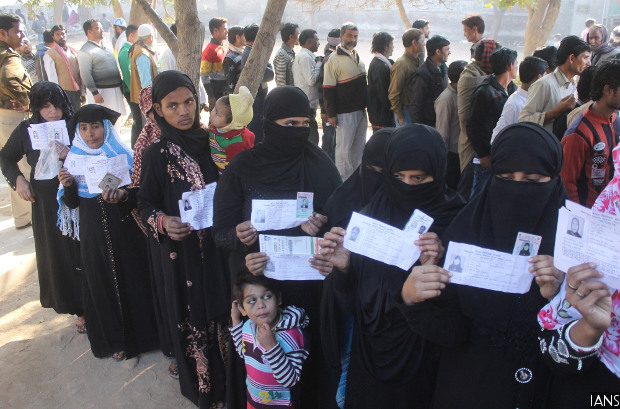
Women in Kairana village queue to cast their vote during the first phase of the Uttar Pradesh Assembly elections on February 11. (Photo credit: Reuters).
Hindu anger against Muslims
For sure, Muslims feel that the binary of secularism-communalism has put them in a bind. Lawyer Mohd Shoaib, who heads the Muslim Rihai Manch, pointed to the irony of it. “For 70 years, we Muslims have fought against communalism,” he said. “But it has, nevertheless, grown by 70 times.”
Indeed, those with historical perspective think Uttar Pradesh of 2017 mirrors the political ambience that existed there between 1938 and 1946 – a seemingly unbridgeable Hindu-Muslim divide, a horrifyingly communalised public discourse, and a contest for power based on mobilisation along religious lines.
Among them is Mohammad Sajjad, professor of history at Aligarh Muslim University. “The 69 MLAs in the last Assembly was bound to, and did, raise eyebrows,” he said.
But what irks Hindus even more is that Muslims constitute nearly one-third of all members in panchayats and local urban bodies. “It is they who have become a sore point with Hindus,” said Sajjad. “When they see Muslim panchayat members become examples of the rags-to-riches story, the majority community feels aggrieved. It is not that Hindu panchayat members are less corrupt. But every third panchayat member being Muslim has given credibility to the narrative that Muslims are being favoured.”
The Hindu angst against Muslim empowerment is also on account of both the Bahujan Samaj Party and the Samajwadi Party being popularly perceived to be indifferent to the aspirations of certain subaltern social groups. For instance, it is this indifference that has led to non-Jatav Dalits and most backward castes, clubbed under the Other Backward Classes for reservations, to leave the Bahujan Samaj Party, as non-Yadav middle castes have left the Samajwadi Party. They did so in response to Mayawati turning hers into primarily the party of Jatavs, and the Samajwadi Party pursuing the Yadavisation of the administration.
“These aspirational Hindu groups are angry with the SP [Samajwadi Party] and the BSP [Bahujan Samaj Party],” said Sajjad. “Their anger against them also turned into anger against Muslims.” This is because it is popularly felt that the support of Muslims to the Bahujan Samaj Party and the Samajwadi Party brings them to power, turning these parties callously indifferent to the aspirations of other groups.
It is to neutralise the efficacy of Muslim votes, and also to teach their parties of choice a lesson, that these aspirational groups have flocked to the BJP. “This is why the very presence of Muslims in the political arena has become problematic for Hindus,” Sajjad said.
So then, should Muslims take Adeeb’s cue and retreat from the political arena or at least keep a low profile?
Sajjad replied, “Go ahead and vote the party of your choice. But after that, play the role of a citizen. If people don’t get electricity, protest with others. You can’t be forgiving of those for whom you voted only because they can keep the BJP out of power. This is what angers aspirational Hindu social groups.”
(Photo credit: PTI).
Indeed, it does seem a travesty of justice and democracy that Muslims should rally behind the Samajwadi Party in Muzaffarnagar after the riots there. Or that they voted for the Bahujan Samaj Party in Thana Bhawan in such large numbers even though Mayawati didn’t even care to visit the Muslim families who suffered unduly during the riots.
Introspection and self-criticism
Like Sajjad’s, most narratives of Muslims have a strong element of self-criticism. Almost all vented their ire against Muslim clerics. Did they have to direct Muslims which party they should vote for? Didn’t they know their recklessness would trigger a Hindu polarisation?
Unable to fathom their irresponsible behaviour, some plump for conspiracy theories. It therefore doesn’t come as a surprise to hear Obaidullah Nasir, editor of the Urdu newspaper Avadhnama, say, “They take money from the Bharatiya Janata Party to create confusion among Muslims. I got abused for writing this. But how else can you explain their decision to go public with their instructions to Muslims?”
Poet Ameer Imam, who teaches in a college in the Muslim-dominated Sambhal constituency, said, “Muslims will have to tell the maulanas that their services are required in mosques, not in politics. When Muslims applaud their rabble rousers, can they complain against those in the BJP?”
To this, add another question: When Mayawati spoke of Dalit-Muslim unity, didn’t Muslims think it would invite a Hindu backlash?
(Photo credit: PTI).
Most will assume, as I did too, that Muslims fear the communal cauldron that Uttar Pradesh has become will be kept on the boil. But this is not what worries them. Not because they think the Bharatiya Janata Party in power will change its stripes, but because they fear Muslims will feel so cowered that they will recoil, and live in submission. “Our agony arises from being reduced to second-class citizens, of becoming politically irrelevant,” said journalist Asif Burney.
True, members of the Muslim community are doing a reality-check and are willing to emerge from the fantasy world in which they thought that they decided which party won an election. The Uttar Pradesh results have rudely awakened them to the reality of being a minority, of gradually being reduced to political insignificance, and their status as an equal citizen – at least in their imagination – challenged and on the way to being undermined.
But this does not mean they wish to enter yet another world of fantasy, which journalist and Union minister MJ Akbar held out to them in the piece he penned for the Times of India on March 12. Akbar wrote,
“…[T]his election was not about religion; it was about India, and the elimination of its inherited curse, poverty. It was about good governance.”
One of those whom I spoke to laughed uproariously on hearing me repeat Akbar’s lines. So you can say that with them believing their future is darkled, Muslims at least haven’t lost their humour.
Ajaz Ashraf is a journalist in Delhi. His novel, The Hour Before Dawn, has as its backdrop the demolition of the Babri Masjid. It is available in bookstores.
Exactly a year after the suicide of a Dalit research scholar, Rohith Vemula, shocked the nation, another Dalit PhD student from JNU has ended his life in a tragic manner.
The 27-year-old Rajini Krish reportedly committed suicide due to depression. He was a student of MPhil in JNU.
Police found his body hanging from the ceiling fan when cops arrived in Munirka in south Delhi.
In his last Facebook post, Krish wrote, “When equality is denied everything is denied. By saying Prof Sukhdeo thorat looking for the questions in the conference organized by UDSF in the SSS -1 Auditorium, behind Prof. Throat the white colour projector screen recalled Jeeva’s son memories about screen. From the 70mm new screen Jeeva’s son watching the Tamil Movie “Pithamagan”. After the movie ,the lights areon, screen became white, it was first day first show “Pithamagan”. Basically Jeeva’s son came to buy Maana in the Kitchippalyam , after the Dry fish flyover Maana market.”
No suicide note has been found till now, police said.
Till now no evidence has been found that the extreme step was taken by the student owing to any issues at the university, said a senior police officer.
He is said to have been depressed for sometime over some personal issues, he added.
A PCR call was received at 5.05 PM today that a person had locked himself in a room at a house in Munirka Vihar, said a senior police officer.
On reaching the spot, police forced open the door as a portion of the latch was uprooted from inside, he said. A young man was found hanging from the ceiling fan.
The crime team was called at the spot and the scene was inspected and photographed.
“He had come to his friends’ house this afternoon to have food. He said he wanted to sleep and went to a room and locked himself inside. “Later his friends called him out and on getting no response, they called the police,” he was quoted by PTI.
Here’s the full text of his Facebook post.
“When equality is denied everything is denied. By saying Prof Sukhdeo thorat looking for the questions in the conference organized by UDSF in the SSS -1 Auditorium, behind Prof. Throat the white colour projector screen recalled Jeeva’s son memories about screen. From the 70mm new screen Jeeva’s son watching the Tamil Movie “Pithamagan”. After the movie ,the lights areon, screen became white, it was first day first show “Pithamagan”. Basically Jeeva’s son came to buy Maana in the Kitchippalyam , after the Dry fish flyover Maana market.
After packing Maana in the Black colour plastic bag Jeeva’s son Walks through Old bus stand road, then he hooks the right, right side Oreiental Shakthi theatre, after a while he reached Laxmi Ice cream shop. From the shop everyone looking at the black carry bag. It is very obvious that the big black colour carry bag is for only parcelling Maana those days. Suddenly people turns the faces. With that 5kg Maana parcel, Jeeva’s son reached Salem Old bus stand clock house, then he was waiting for Satthiram, Lee bazaar route buses, Suddenly one of his school friend Ramana came near to him, Ramana supposed to get down in the 4 Roads bus stop.
Jeeva’s son thought, he can talk to Ramana till 4 Roads, but when the moment Ramana seen the Black carry bag, he started to look for some other bus, he did not even give face to him. Jeeva’s son entered inside the 6 A sathiram route bus.
Middle of the bus right side window seat, Jeeva son watching the road side shops. Salem Collector Office, opposite situated the Salem Government Hospital bus stop. An officer entered inside the bus after looking at the Black Maana cover, the officer did not sit with Jeeva’s son though there was a place and no other vacancy in the bus. After the Government Hospital, the bus claimed the flyover, after the flyover, Klapana Theatre bus stop, which is opposite to the Salem Anna Park. From the Park a couple came into the bus, they were searching for seat to sit with their 3 year old kid. Jeeva’s son want to stand from 4 Roads to Sathiram Bus stop since there is nobody to talk with him, so for them he woke up and gave place, but both of them did not sit after seeing the Black carry bag, now the Maana smell broadcasted throughout the bus, nobody sat on the seat till 4 Roads.
After 4 Roads Jeeva’s son foot boarded with other passenger’s From 4 Roads to Thammannnan Chetty road, other passenger’s angry on him just for the Maana bag, now the smell is very clear, some crushed him on the foot. Jeeva’s son walked through the Sathiram to Lee bazar road. Jeeva’s son intent to walk right side, to see the people’s reaction. Many people turned aside, and crossed opposite side, after seeing the Maana carry bag. In those days there was no equality for Maana, but nowadays there is no maana , that is to say there is no equality.
There is no Equality in M.phil/phd Admission, there is no equalitiy in Viva – voce, there is only denial of equality, denying prof. Sukhadeo thorat recommendation, denying Students protest places in Ad – block, denying the education of the Marginal’s. When Equality is denied everything is denied.”
The Supreme Court on Tuesday ordered a floor test in Goa assembly. The apex court’s order came while hearing the urgent petition by Congress challenging the BJP’s bid to form the government in the state despite winning just 13 seats.
The court had earlier asked Congress why the party did not approach the Governor of Goa over govt formation.
According to ANI, during the hearing, the Supreme Court bench headed by CJI Khehar observed that numbers ought to have determined the single largest party.
While Congress was being represented by lawyer Abhishek Manu Singhvi, renowned lawyer Harish Khare was representing the BJP.
Congress had decided to approach the apex court after the BJP stitched up an alliance seeking support from regional parties, which had fought assembly polls on anti-BJP agenda.
Two parties (Goa Forward and Maharashtrawadi Gomantak Party) who voters had preferred over the BJP, have now gone to support the saffron party to form the government in the state.
Goa Forward Party is led by Vijai Sardesai, who was a senior functionary of Youth Congress before he formed his own regional outfit a year ago. His entire election campaign was based against BJP. Speaking to me in January, Sardesai, a popular leader from south Goa’s Fatorda area, had said that he had always been consistent in his opposition against the BJP.
The Congress has also challenged the alleged ‘horse trading’ by the BJP in Manipur, where the saffron party has staked claim to form government despite securing just 21 seats in the 60-member assembly. Congress won 28 seats in the north-eastern state.
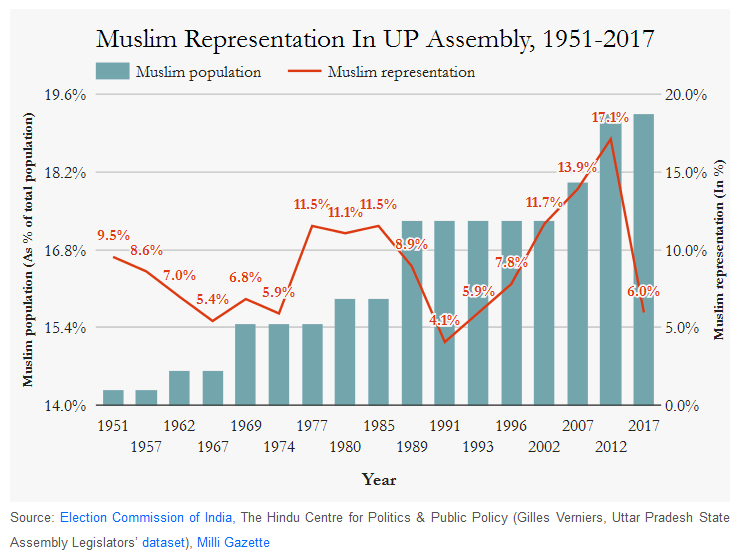
With the 2017 Uttar Pradesh (UP) assembly elections, Muslim representation in India’s most populous state has plummeted from 17.1% in 2012 to 5.9%.
Muslim women stand in a queue to cast their vote in the Uttar Pradesh assembly elections in Mathura. From 69 seats in 2012, the number of Muslims in the state’s assembly is down to 24.
This is equivalent to Muslim representation about a quarter of a century ago, in 1993, following the Babri Masjid riots of 1992 (5.9%) and less than two percentage points higher than recorded in 1991 (4.1%)–its lowest point–according to an IndiaSpend analysis of data from the Election Commission of India and The Hindu Centre for Politics and Public Policy (Gilles Verniers, Uttar Pradesh State Assembly Legislators’ dataset), a think tank.
UP has 38.4 million Muslims–19.2% of its 200 million people–the most of any state and third, by proportion, after Assam and Kerala.
Of 24 Muslim members of legislative assembly (MLAs) who won in 2017, more than half, or 14, had won from the same constituencies before. A sixth of Muslim MLAs have represented their constituencies for the last 15 years at least. None are women (9.9% of new MLAs).
Muslim MLAs In Uttar Pradesh
Constituency
Party In 2017 Election
Name Of The MLA
MLA Since
Mau
Bahujan Samaj Party
Mukhtar Anshari
1996
Mubarakpur
Bahujan Samaj Party
Shah Alam Urf Guddu Jamali
2012
Gopalpur
Samajwadi Party
Nafees Ahmad
–
Nizamabad
Samajwadi Party
Alambadi
1996
Lal Ganj
Bahujan Samaj Party
Azad Ari Mardan
–
Isauli
Samajwadi Party
Abrar Ahmad
2012
Bhinga
Bahujan Samaj Party
Mohammad Aslam
–
Matera
Samajwadi Party
Yasar Shah
2012
Sambhal
Samajwadi Party
Iqbal Mehmood
1996
Kundarki
Samajwadi Party
Mohammad Rizwan
2012
Bilari
Samajwadi Party
Mohammed Faeem
2012
Amroha
Samajwadi Party
Mehboob Ali
2002
Rampur
Samajwadi Party
Mohammad Azam Khan
2002
Chamraua
Samajwadi Party
Naseer Ahmad Khan
–
Suar
Samajwadi Party
Mohammad Abdullah Azam Khan
–
Moradabad Rural
Samajwadi Party
Haji Ikram Qureshi
–
Thakurdwara
Samajwadi Party
Navab Jan Khan
2014
Najibabad
Samajwadi Party
Tasleem Ahmad
2012
Saharanpur
Congress
Masood Akhtar
–
Kairana
Samajwadi Party
Nahid Hasan
2014
Pratappur
Bahujan Samaj Party
Mohammed Mujtaba Siddiqui
–
Kanpur Cantt
Congress
Sohil Akhtar Ansari
–
Meerut
Samajwadi Party
Rafiq Ansari
–
Sishamau
Samajwadi Party
Hazi Irfan Solanki
2012
Source: Election Commission of India The ‘-‘ sign in the ‘MLA Since’ column indicates the person was not an MLA between 1996 and 2017.
The constituencies of Muslim MLAs are largely located in the sub-regions of Rohilkhand and Upper Doab in Western UP and in the Poorvanchal region of eastern UP.
Muslim representation a third of what it should be
In the 2012 assembly elections, for the first time ever since Independence, Muslims achieved political representation (17.2%) almost proportional to their population (19.2%, according to the 2011 census).
Five years later, Muslim representation is a third of what it should be in proportion to population.
Muslim under-representation comes with the Bharatiya Janata Party (BJP)–the national ruling party–recording a sweeping victory across UP without fielding any Muslim candidate. The Muslim vote is a determining factor in 34 of 80 Lok Sabha constituencies, and in 130 of 403 assembly constituencies, according to political scientist Gilles Verniers in this 2014 report for The Hindu Centre For Politics and Public Policy, a think tank.
While the BJP’s popularity, in terms of seats, has increased six-fold–from 47 seats of 403 in 2012 to 312 now–Muslim representation has dropped nearly 65%, from 68 seats in 2012 to 24 now, data from the Election Commission of India show.
Similar under-representation in the Lok Sabha
Muslims are underrepresented in the Lok Sabha as well.
For the first time since Independence, none of UP’s 80 members of parliament is Muslim. “Many believe this is due to a spate of Hindu-Muslim riots, especially the Muzaffarnagar violence, which polarised both communities,” said this 2014 Business Standardreport.
Between 2010 and 2015, UP witnessed a five-fold increase in communal violence, and the polarisation was evident in village, towns and cities, IndiaSpend reported in February 2017.
The 2017 assembly results are reminiscent of the 1991 elections, when support for the BJP rose three times, as its tally rose from 57 seats in 1989 to 221 seats, and Muslim representation fell by more than half, from 8.9% to 4.1%, the lowest in post-colonial India.
There are three main reasons for low Muslim representation: Uneven geographic distribution across the state, “lost” seats due to reservations of constituencies for scheduled-caste candidates, and “vote-splitting”, caused by multiple Muslim candidates contesting from the same constituency, according to the Verniers report.
(Saldanha is an assistant editor with IndiaSpend.)
Muslims must accept that Islam is a spiritual path to salvation, one of the many, as we have been told in the Holy Quran, and not a totalitarian, fascist ideology of world domination
(Oral statement by Sultan Shahin, Founding Editor, New Age Islam, on behalf of: Asian-Eurasian Human Rights Forum on 9 March 2017)
Mr. President,
The Right to Freedom of Thought and Religion has been an article of faith for the world since the formation of the UN. Much effort has been made to turn it into reality, the latest being Resolution 16/18 adopted in 2011. Based as it was on a consensus of Islamic and Western nations, it had particularly raised hopes of minorities in Muslim countries. The assumption was that now member countries would repeal blasphemy and other anti-democratic, sectarian and anti-minority laws.
A moderate Muslim country like Indonesia prosecutes a Christian Governor for quoting Quran. Madrasas continue to teach xenophobia and intolerance across the world, including in the West.
But nothing much seems to have changed. A moderate Muslim country like Indonesia prosecutes a Christian Governor for quoting Quran. Another country Malaysia continues to uphold a ban on Christians using the word Allah to denote God. Madrasas continue to teach xenophobia and intolerance across the world, including in the West.
Blasphemy laws continue to be on the statute books, for instance, in Pakistan. Salman Taseer, the liberal Governor of Punjab was murdered merely because he showed compassion for a Christian lady wrongly accused of blasphemy and asked for the repeal of the blasphemy law.
On the basis of this law, religious minorities can be arbitrarily accused of blasphemy and killed, either by a lynch mob or by the judiciary. No evidence is required, as that would allegedly amount to accusers being asked to blaspheme the Prophet again.
Similarly, attacks on minority Hindu, Christian, Shias and Ahmadis continue under different legislations. Pakistani laws prohibit the Ahmadis from identifying themselves as Muslims.
It’s time the Council found some way to see that the countries that agree to its covenants also practice it.
Such anti-minority legislations not only violate the UN Resolution, but also Islam’s primary scripture. The Holy Quran does not prescribe any punishment for blasphemy. Nor does it permit any one to declare others kafir. It clearly says: La Ikraha fid Deen (There can be no compulsion in religion). (Chapter 2: verse 256).
If not the UN Charter, Muslim countries should at least follow their own primary scripture, the Holy Quran.
The Resolution 16/18 was specifically adopted by the Human Rights Council to combat intolerance, negative stereotyping and stigmatization of, and discrimination, incitement to violence and violence against, persons based on religion or belief. It had evolved as a consensus measure by the two blocs in the council represented by OIC and Group of Western European and other States.
Since 2000, OIC had been calling for a resolution castigating Defamation of Religions, while Western nations had opposed this and called for complete freedom of expression.
A secular, democratic government, particularly one that is a signatory to the UN Charter and various other covenants including Resolution 16/18, has no reason to be determining who does or does not belong to which religion.
In the case of Pakistan, the implications of Resolution 16/18 would include not just the repeal of the blasphemy law but also the law declaring Ahmadis as non-Muslims. A secular, democratic government, particularly one that is a signatory to the UN Charter and various other covenants including Resolution 16/18, has no reason to be determining who does or does not belong to which religion. This has to be entirely the prerogative of the individual or community.
Indeed in Quran Chapter 49, verse14, God talks about those nomadic desert Arabs who were claiming to have accepted Islamic faith after the Muslim victory at Mecca. They were told that faith has not yet entered your hearts, yet you will be rewarded for your good deeds. These people were not stopped from practising Islam in any way, although God had Himself testified that faith had not yet entered their hearts.
And here in Pakistan one finds a whole community of believing, practising Muslims, being denied their inalienable right to choose their own religion, simply on account of some marginal theological differences. What gives the Pakistani government the authority to decide who is and is not a Muslim? Is that the function of a government? Clearly the passage of consensus Resolution 16/18 and Pakistan agreeing to it has made no difference to its practices.
Similarly, literature that preaches hate continues to be taught at madrasas and schools in Muslim countries around the world, including in the West. Saudi Salafi textbooks continue to teach xenophobia to Muslim students the world over. They are told, for instance, that they should neither work for nor employ a non-Muslim, if there are other options. The term non-Muslim, for Saudi textbooks, means all non-Salafis, non-Wahhabis, including Muslims of other sects, particularly Sufism-oriented Muslims. Attacks on Sufi shrines like the one that happened recently in Sindh, Pakistan, killing almost a hundred devotees and injuring 250, is a natural outcome of such teachings.
It will be wrong, however, to put the entire blame on Salafi-Wahhabi ideology, which no doubt provides an extremist interpretation of Islamic tenets and has been spread around the world with an investment of tens of billions of petrodollars. The fact remains that Mumtaz Quadri, the murderer of Governor Salman Taseer came from a non-Wahhabi Barelvi sect and was incited into his act and promised heaven in lieu of this murder by a Barelvi Mullah Hanif Qureshi. A shrine has now been built in the outskirts of Islamabad to worship him.
Barelvis are considered Sufism-oriented and have been the main victims of Salafi-Wahhabi attacks on Sufi shrines. The half a million people who thronged the murderer Mumtaz Qadri’s funeral and the tens of thousands who are visiting his so-called shrine, however, are largely from Barelvi sect. They consider Governor Salman Taseer to be a blasphemer and his murderer an Aashiq-e-Rasool, i.e., some one who loves the Prophet (pbuh).
The fact is Salman Taseer had merely called for the repeal of this black Blasphemy law. Because of this law, religious minorities can be arbitrarily accused of blasphemy and killed, either by a lynch mob or by the judiciary. No evidence is required. Asked to provide evidence, the accusers or witnesses ask if they are being asked to blaspheme the Prophet by repeating the accused’s blasphemy. Hence no specific accusation, no debate, no proof is required for pronouncing a guilty verdict which invariably means death sentence.
An estimated number of 1,274 people have been charged under the blasphemy laws of Pakistan between 1986, from when they were included in the Constitution by General Zia-ul-Haq, until 2010. Currently, there are at least 17 people convicted of blasphemy on death row in Pakistan, with another 19 serving life sentences, according to United States Commission on International Religious Freedom. Several have died in custody or on the death row.
There is extremism of one sort or another in many Islamic sects and no one particular sect should be blamed entirely for the present state of affairs, despite the involvement largely of people from Salafi-Wahhabi school of thought in the extremist violence being perpetrated around the world
Clearly there is extremism of one sort or another in many Islamic sects and no one particular sect should be blamed entirely for the present state of affairs, despite the involvement largely of people from Salafi-Wahhabi school of thought in the extremist violence being perpetrated around the world.
It is strange that countries with such hateful practices, in clear violation of UN Charter and UNHRC’s resolutions continue to play an important role in the Council’s deliberations. Clearly there is need for both the Muslim governments and the larger international community to introspect if they have truly accepted the consensus Resolution 16/18.
We Muslims need an internally consistent, coherent Islamic theology of peace and pluralism.
If they are committed to it, they should be concerned about its non-implementation by member-countries, particularly from the OIC block. If nothing else the UN HRC rapporteurs should be naming and shaming those countries which continue to teach xenophobia and hate in their classrooms.
It should not be difficult to bring out Saudi textbooks for students from class VIII to XII, for instance, and tell the world what is being taught not only in Saudi Arabia but across the Muslim world where Saudis distribute their books for free. Even in the West most mosques and Islamic centres distribute Saudi published Salafi books.
Muslims have no option but to rethink their theology and bring it in line with the spirit of Islam, the Qur’anic ideals, as well as the requirements of life in the globalised, deeply inter-connected 21st-century world.
We Muslims need an internally consistent, coherent Islamic theology of peace and pluralism. All of us Muslims must accept that Islam is a spiritual path to salvation, one of the many, as we have been told in the Holy Quran, and not a totalitarian, fascist ideology of world domination.
The senator voiced her objections in a series of tweets Sunday morning
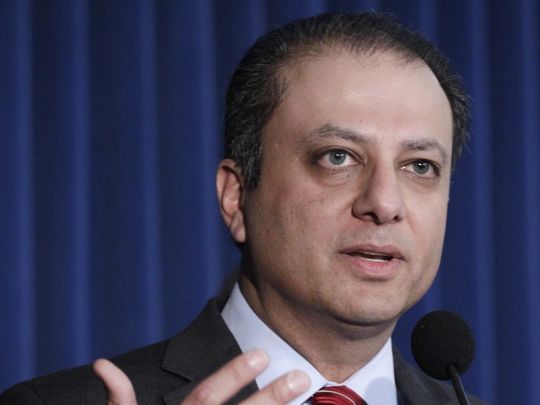
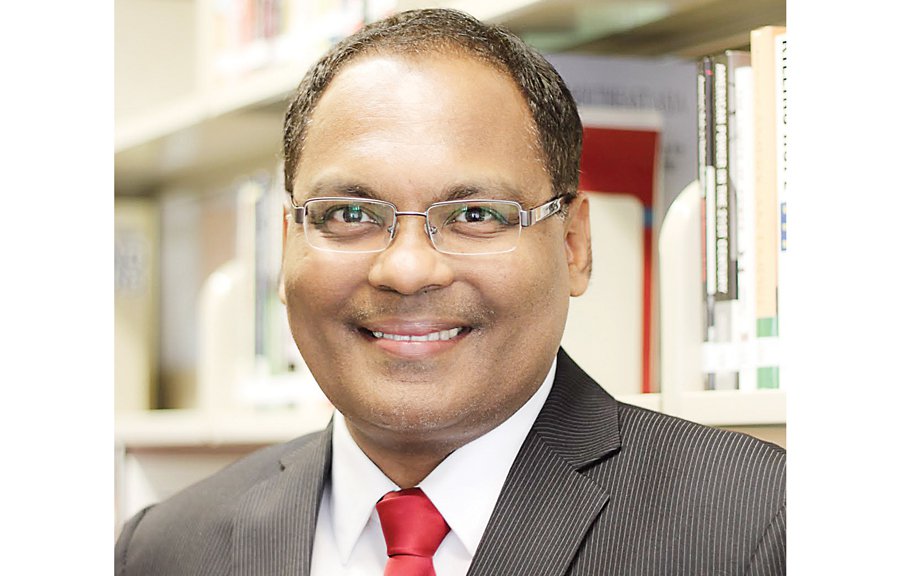
Preet Bharara
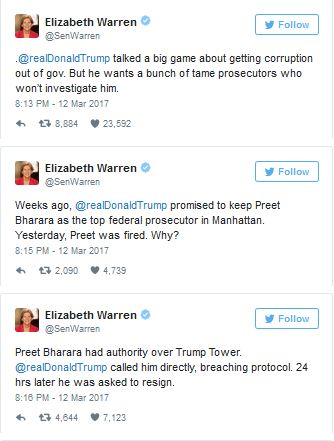
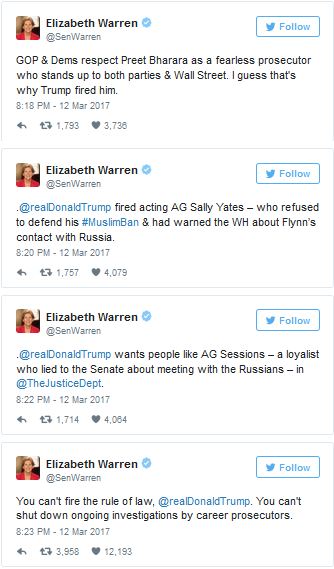
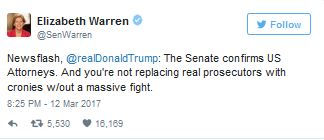
Senator Elizabeth Warren (D-Mass.) was among those raising questions on Sunday over the firing of U.S. attorney Preet Bharara, (Preetinder Singh, "Preet" Bharara is an Indian-born American lawyer) accusing President Donald Trump of getting rid of Bharara for political reasons and warning him that he won't replace "real prosecutors with cronies without a massive fight."
The senator voiced her objections in a series of tweets Sunday morning:
Representative Elijah Cummings (D-Md.) raised similar concerns Sunday during an interview with ABC's "This Week."
"Just not very long ago, the president was saying that he was going to keep the U.S. attorney there in New York. And then, suddenly, he's, I guess, changed his mind. I'm just curious as to why that is," Cummings said. "And certainly, there's a lot of questions coming up as to whether Mr. Trump is—President Trump is concerned about the jurisdiction of this U.S. attorney and whether that might affect his future."
A group of ethics watchdogs sent Bharara a letter recently, asking him to investigate whether Trump's conflicts of interest:
Democracy 21, Citizens for Responsibility and Ethics in Washington (CREW) and the Campaign Legal Center request that you undertake an investigation to determine if the Trump Organization LLC, the Trump Organization, Inc., and any related Trump businesses based in the Southern District of New York are receiving payments and financial benefits from foreign governments that benefit President Donald Trump and that do not comply with Article I, Section 9, Clause 8 of the United States Constitution, the “Foreign Emoluments Clause.”
Cummings confirmed Sunday that he believed there could be a connection between this call for an investigation and Trump's decision to get rid of Bharara, who is known as an aggressive prosecutor.