The Election Commission has ordered registration of an FIR against certain office bearers of the Manipur BJP and eight newspapers for publishing an advertisement without approval of its monitoring committee.
On the basis of a report by poll authorities in Manipur, the EC had yesterday directed the state chief electoral officer to get the FIRs filed.
The advertisements were published yesterday ahead of the first phase of elections in the state.
The Commission identified the papers as Sangai Express — Manipuri and English editions — Poknapham, People’s Chronicle, Naharolgi, Thoudang, Imphal free press, Echel Express and Huiyen Lanpao.
While there is no bar on the publication of election advertisements 48 hours before the polling, a rule introduced by the Commission during the Bihar Assembly polls says that such advertisements should be cleared by its media certification and monitoring committee.
It states that without approval no newspaper will publish such advertisements.
The new rule was enforced after the BJP brought out some controversial advertisements during the Bihar elections.
Tension prevailed on the Panjab University (PU) campus today as left-leaning Students For Society (SFS) activists staged a demonstration after they were denied permission by the authorities to organising a seminar.
SFS had proposed a seminar on the campus today which was to be addressed by human rights activist and journalist Seema Azad.
Image courtesy: collegedunia.com
She, along with her husband, was arrested by the UP Police in 2010 after being charged with sedition for alleged Maoist links. They were later released on bail.
Even as Seema was not allowed for the event, police took SFS president Damanpreet Singh into preventive custody so as to maintain law and order on the campus.
However, SFS activists staged a protest outside the office of Vice Chancellor, demanding they should be allowed to hold the event which was to be addressed by Seema, party members Arshdeep Singh said, adding police should immediately release Damanpreet.
The SFS activists threatened to hold the event outside the office of the Vice Chancellor even as rival ABVP opposed.
Yesterday, activists of ABVP had staged a Tiranga Yatra on the campus against the SFS for allegedly including Naxalite extremists in the audience.
“We will not allow Seema to enter the university,” ABVP member Harmanjot Singh Gill said. “How can SFS dub Army as rapist,” he said?
SFS members said they expect support from the authorities of PU for peacefully conducting the seminar.
“When PU authorities allowed the ABVP to hold Tiranga Yatra yesterday, we expect them to cooperate with us too,” SFS member Harman said.
“It is surprising to see the name of Naxal leader Seema among the speakers in the seminar. The PU authorities have withdrawn the permission to SFS for the event,” university syndicate member Subhash Sharma said.
The stalemate over holding the seminar continued as SFS members were adamant to hold the event.
Earlier, security was beefed up at the university to avoid any untoward incident in view of the SFS proposed event.
Heavy police force has been deployed on the campus, officials said.
Earlier on February 27, the echo of the violence in Delhi’s Ramjas College was felt on campus of PU where activists of ABVP and rival Students For Society (SFS) clashed with each other.
The incident took place when the ABVP activists were staging a protest against certain ‘derogatory comments’ allegedly made by some SFS activists against the security forces.
The activist-filmmaker was speaking at a protest in Mumbai.
Around 100 students from the Students’ Federation of India and All Indian Students’ Association protested outside Dadar Station in Mumbai against the actions of the Akhil Bhartiya Vidya Parishad at Delhi’s Ramjas College.
At the protest, documentary filmmaker Anand Patwardhan spoke about the history of the ABVP and offered a primer on the Rashtriya Swayamsevak Sangh’s student wing.
“The ABVP was born in the aftermath of Gandhi’s assassination,” Patwardhan began. “There was a ban on the RSS and to circumvent it, the organisation’s members formed other organisations, one of which was ABVP. And the work that we see today has been going on since then.”
The documentary filmmaker, who has made Ram Ke Naam, about the events surrounding the demolition of the Babri Masjid, and Jai Bhim Comrade, about the activist group Kabir Kala Manch, spoke about the harassment of Gurmehar Kaur after she protested against the group and also referred to an incident at FTII, Pune in 2013 when a group of ABVP members attacked students for not saying “Jai, Narendra Modi”.
He outlined the different between the ABVP of the past and the ABVP of today. “In those days, they would not carry out their activities openly,” Patwardhan said. “That was because people knew that the organisation was involved with Gandhi’s killing. But that has changed since they have come to power.”
As I see it, university spaces are being assaulted at least from two sides; though it seems as if the two sides are antagonistic to each other, in practice they come dangerously close to each other. How and why is this happening, and what can be done about it?
Prasanta Chakravarty, immediately after being assaulted on February 22nd. Image from the India Today Website.
The university is being seen as running on a different discourse and agenda, outside of the one that is necessary for a new cycle of nation building to take effect. This is happening because universities now have a chance to make a difference in the way our known world will be defined or undefined in future. Under these circumstances, universities can go back and celebrate themselves as safe havens. Or one may see this space as a continuum with the rest of our public life where the social must erupt from time to time.
The great project of revenge, being undertaken by the populist mass is apparent, whose emotional anger at not being able to be part of good life is vented through a great backlash against those who are able to reap the benefits of economic reform and globalization. But it is not just the revenge of the have-nots whom the far Right has been able to successfully mobilize right now. The role and the status of the mobilizers are also to be marked: these are deeply rational and smart people, ruthless technocrats who want to reap the benefits of extreme rationalization in the work space. But simultaneously these same people revel in a deeply prejudiced and regressive private sphere. This double life was always an aspect of modernity. It is only that the prejudice unleashed within the private sphere has now reached pathological proportions. This class of people, comprised of those who wish to peddle a technocratic rational economic view in our public sphere are at once worried and attracted by the great unwashed masses. The common ground is of course that the business-technocrats are culturally and socially irrational and regressive too since the education that they received had been illiberal. They hope that this cultural commonality with the masses might save the day. Many of us are not so sure that such a glaring contradiction will run its full course.
One thing is certain: that these tendencies are clear signs worldwide against the very critical nature by which reason looked at certain auretic tendencies in the last three centuries. And along with peddling these universal European norms (or even the indigenous argumentative tradition) such discourses have helped question not only our deep rooted cultural assumptions but also certain fundamental auretic tendencies: say, devotion to one’s nation, religion or community. And in personal relationships, it helped foster a discursive climate, by keeping at bay ‘loyalty’ to one’s blood or to one’s sensual/emotional faculties. At the deepest level these values stopped us just short of surrendering ourselves completely to our lovers, mothers or children—and yet we could be deeply in love in such relationships. It showed us that our deepest forms of attachment could also be critical. This porosity between reason and unreason is being now challenged. There is again a renewed bout of dissociation of sensibility.
This has happened from both sides. The passionate masses are always highly charged and prone to romanticism and to the unleashing of its fervour. The detached enlightenment scholar, lawyer, and essayist tended to curb this tendency by placing these under the rubric of the private sphere. But consequently something happened within the so-called enlightened minds too. They were left only with ideas at the great cost of the sensory and the sensual. Those who constantly argued in favour of materiality, themselves became empty and abstract creatures. So, the dissociation of sensibility has happened from the side of rationality too—since the great faculties of reason have been deployed often in order to mercilessly and righteously judge a large swathe of humanity. The gradual detachment of our best minds from the faculties of wonder and awe and the senses has much to do with this backlash that we now see. The lock-gates have been opened and the price that the great irrational forces are asking now from the critical brigade is the wholesale recantations of enlightenment values—lock, stock and barrel.
But does merely summoning the ephemera of the senses do the trick? Does a mere internalization of the ‘good irrationality’ reconnect us with the everyday and to our times? Not the least. Instead we have to rethink how to reorder the university space itself which is concrete and historical. And that can happen if we can relate our sense of wonder with a constant, practical critique of the university and its location. This is how one forces the truth of the event.
How is the nice person in each one of us reacting to all of these developments? Not acting. But reacting.
The well meaning liberal will continue to be concerned about irrationality in public life and yet be compromised in this whole warfare for two simple reasons. One, the nice, suave and tolerant person has lost complete touch with ground realities, and with the emotional quotient of people who are passionate and more directly connected to life and life’s joys and horrors. We are unable to take the side of passion and sensuality because we flinch from taking head on the many intensities of life. And hence we have no clue about ways of mounting battle against technocratic forms of irrationality in the first place. Unfortunately, the Right wing is forcing us to face that side of life with full virulence. But temperamentally liberals will be unable to do much and must capitulate after a point. We must remain plumed quetzals. Our sympathetic and grounded friends would love us for our generosity, humility and good sense. But at heart they will know how far removed we are from the real. These very laudable attributes are the greatest chinks in our armour. Hence, we have no other way but to participate in the politics of petition and consider that as solidarity.
There is another significant issue. Far too many liberals are intricately involved in the project of good life. Good life in academia, good life in literary festivals, good life in globetrotting, good life in clubs and sanatoriums, good life in echo-chambers. It is for this reason that we are seeing our public intellectuals and scholars in cahoots with the new shining malls that are also known as private places of education. Our scholars give these spaces legitimacy lest they turn irrelevant and the good life evades them. I am very much a part of such a group of people in many of these ways. Howsoever argumentatively I might teach Grundrisse or The Buddha and His Dharma, I remain beholden to Immanuel Kant’s idea of cautious Enlightenment. There is no other way out but to look at myself in the mirror. But I sometimes wonder whether others, those who risk life and career, seek paltry things from life when they at once confront the ugly and the joyous? Do others lionize suffering and struggle for the heck of highlighting such aspects? My being brought up in a certain way, the books I read, the films I watch, the friends I meet and the places I travel are very much part of the world view that I have just described. I am totally and completely cut off from my country and countrymen. But that cannot give rise to any politics of melancholy and mourning. Self reflection must lead to new action, fresh resolve. Silently and over a period of time.
It is impossible to blame ourselves for what has befallen us. Factionalism is a scourge. And yet far too many of us are undecided about taking a position. So we waver and try to balance within the livery of neutrality. We must continue to talk about a coming coalition in order to take the might of the worldwide resurgence of the Right. It is a popular movement and as such is deeply powerful. It might not vanish overnight.
But solidarity: this word is voided of all meaning if it comes to stand for periodic empathy for a likeminded soul who is the latest victim in the populist-technocratic deluge in which the world is inundated at this point of time. Many things are to be thought afresh, thought beyond events and petitions. Disciplines, wholesale, must create new ways of imagining themselves. For the available tools of thought and passion are being repeatedly found wanting and moribund. The critics of critique are not sitting silently either. So, we must start afresh. Universities are not isolated havens. They never were. And they ought not to be just silos. We want our students to be deeply passionate about life and yet be considered and matter of fact enough so that they are able to tackle the many hits that life is bound to buffet them with. Skirting issues is never an option.
It is a slow and painstaking process by which sanity can be again made lucid and insanity again turned poetic instead of being fanatical.
[ Prasanta is back home from hospital, recovering, singing about what it means to dance on a snake’s head. This video is taken from his Facebook page]
Prasanta Chakravarty edits humanitiesunderground.org and teaches in the English Department of Delhi University. He was seriously injured by ABVP activists who attacked the students and teachers protesting on 22nd February, 2017 against the ABVP’s disruption of a seminar organized by the Literary Society of Ramjas College, Delhi University on the 21st of February.
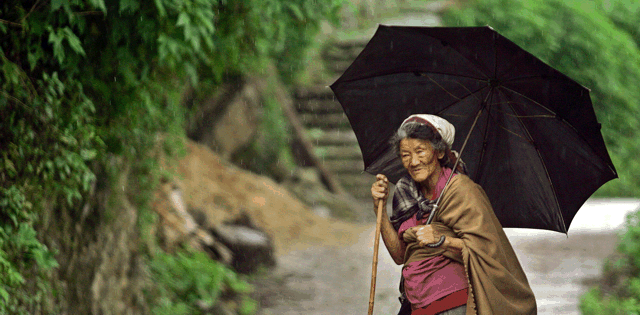
A woman from Khonoma village, Nagaland. Can women from ‘Naga’ tribes access to equal political rights ? Adnan Abidi/Reuters
Around the world, tradition often opposes equality. But when it comes to the question of gender equality, such situations can become volatile. That’s what happened in India’s Nagaland this February, when protests relating to women’s political participation killed two people. The conflict has also led the government of this eastern federal state to play a game of political musical chairs.
Nagaland, one of the eight northeastern Indian states, is mainly composed by ‘Naga tribes’ – a term coined by British anthropologists but which refers to various indigenous populations – who inhabited a large territory there before India’s independence. There are at present 17 Naga tribes in Nagaland, with distinct languages and customs.
The political violence erupted prior to municipal elections, when women’s organisations, under the leadership of the Naga Mother’s Association (NMA), demanded the application of Indian law 243(T) of India’s Constitution, which states that 33% of seats should be reserved for women within local political bodies.
Their demand was vehemently rejected, and male politicians invoked “tribal traditions” as their main argument. The conflict spurred deadly street protests in which mobs attacked offices, and shops were destroyed in the main cities.
But safety does not translate to equality. Naga society is also deeply patriarchal, and it is believed that women must be respected and their security cannot be compromised – especially by men.
But the traditional law of the Naga society clearly distinguishes gender roles and gendered responsibilities. For instance, women are in charge of domestic issues, such as family and its related issues, while man deals with society, including village administration and councils.
A woman prepares feed for her pigs in Nagaland, 2009.CC BY-SA
Women have therefore been excluded from the political realm. They are not allowed in the traditional village councils that oversee village management, and from “village development boards”, smaller local institutions that regulate economic projects.
Men have dominated the political space since the beginning of the 20th century, when the troubled history between Nagaland and India began.
Local consciousness of a distinct social identity emerged as part of a patriarchal discourse after the ‘Naga Club’ was formed in 1918. Young boys from different Naga tribes met in different educational institutions and hostels, and they together constructed a common “Naga” identity.
Women were largely absent during the rise of Naga nationalist movements, as, per the traditional fabrics of Naga society, any issues of social or political importance are the domain of men.
Indeed, the NMA also played a major role in the negotiations – the latest leading to a 2015 ceasefire – but were conveniently excluded from the negotiating table with the Indian States. It, apparently, was a “dialogue of men”.
The activism of groups such as the NMA has encouraged women to join pressure groups to defend their rights. However, the glass ceiling limiting their participation in politics and ability to own land remained untouched.
Women saw some hope in 2006, as the Nagaland Municipal (First Amendment) Act granted “33% reservations to Naga women in local bodies”, according to the Eastern Mirror. Since then, the NMA and others have been fighting to implement the law. Their efforts paid off when, last year, the Indian Supreme Court granted their petition.
The February 2017 elections could have changed history for Naga women.
An infringement on tribal customary law
Instead, confronted with violent civil unrest, the present Naga’s People Front (NPF) government had to defer the elections. The strong opposition came from traditional tribal bodies, including the Naga Hoho groups (an apex body of 16 Naga tribal groups) and a higher authority, the Naga Council Dimapur (which is accepted as a indigenous and customary body, representing all the Naga tribes).
These groups assert that granting women seats in local bodies would not only dilute the traditions of Naga society but also be “unconstitutional”. They refer to the Article 371(A) of India’s Constitution which says that “no Act of Parliament” should apply to the State of Nagaland when regarding religious, political, social or law practices of the Nagas.
Oren Mozhui, a pop-singer from Nagaland has released a single in tribute to ‘Naga heroes’
Tribal political bodies perceive both the February elections, which were pushed by a government allied to the central government, and the municipal institution itself as possible interference with tribal customary law. That is why, under pressure, over 150 candidates out of 535 have withdrawn their nominations.
Already, under pressure from local groups, several Naga women groups have severed ties with their lead women’s organisation pushing for the 33% quota, the Naga Mothers Association. Whether the authorities go ahead with the gender reservation or not, Naga women may now find themselves in a lose-lose situation.
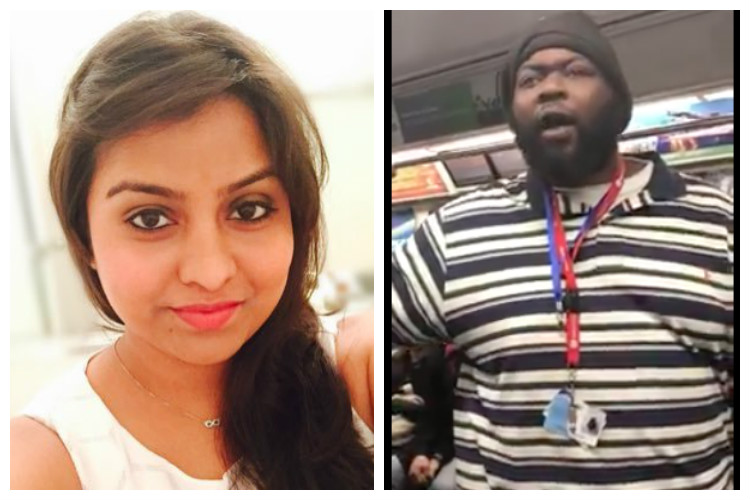
Ekta Desai, who stays in New York, posted a video on her Facebook profile that shows a man hurling racial slurs at her and another Asian woman on a train.
An Indian-origin girl was racially abused by a stranger in a New York train while she was on way to work. A video of the incident is now going viral on social media.
Ekta Desai, who stays in New York, posted a video on her Facebook profile that shows a man hurling racial slurs at her and another Asian woman on a train.
The video is now going viral on the social media.
"So this is something that happened while I was on my way from work today!! This man was on the same PATH train as me along with 100 other passengers, I had my headphones on and was like any other day. Next thing I know he is yelling on my face (Did not bother to listen/react). Knowing it's pointless I step away, next target alongside an Asian lady!" Desai wrote.
"Asian piece of s*** to I will F*** you all right here to get your F***ing ^$$es back to your country etc etc etc" (putting it in the best words here) he went on relentlessly!" Desai said in Facebook post.
When Desai threatened to inform the police, the man repeatedly shouted at her to stop shooting his video and was quoted as saying that he did not touch anybody.
"I did not touch anybody. I just expressed what I feel. Freedom of speech," the man was heard saying in the video.
"Not sure the cops found him or even took any action, though they showed up 15 mins after all this drama and he walked away with his friends!" she added.
The video was posted on Facebook on February 22 and within six days it got more than 49,000 views. It is being widely discussed after Indian engineer Srinivas Kuchibhotla was shot dead in Kansas in an apparent hate crime.
US President Donald Trump on Tuesday denounced the killing of Kuchibhotla saying the country "stands united in condemning hate and evil".
Curfew has been imposed in Lakhimpur city following clashes over an objectionable video which was allegedly circulated by two students.
The curfew was imposed last night. Tension had gripped the city after the video which allegedly hurt religious sentiments went viral on social media.
Image courtesy: indianexpress.com
The city police arrested the two students who had allegedly circulated the video.
However, protests began last evening and the markets were also closed. There were reports of clashes and firing following which the distict magistrate announced the imposition of curfew till further orders.
“To maintain peace and law and order, curfew restrictions in the city area have been imposed and people have been asked to stay home,” District Magistrate (Kheri) Akashdeep told reporters today.
Stressing that the situation was under control, he asked people to avoid spreading rumours.
The district magistrate and Superintendent of Police Manoj Kumar Jha visited the city and asked people to keep calm.
Akashdeep said a person has been reported to have been injured in a clash, however, he is reported to be out of danger.
Meanwhile, heavy police force have been deployed in the city. The IG and the DIG arrived at Kheri late last night and reviewed the situation.
Watch here for our latest video update by Rifat Jawaid, editor in chief, Janta ka Reporter.
When I think of my growing up years, one memory that flashes in my mind is that of watching you rule the cricket ground. My generation did not get to see Bradman. Neither did we see Sobers or Gavaskar. We missed out on witnessing India become the world champion in ‘83. But we’ve seen Sachin. We’ve seen our very own Dada. And we’ve seen you. We’ve seen how greatest of the bowlers used to become clueless about where to bowl the next ball, when you were at the crease. At a casual stroke of your bat, even the deadliest yorker used to fly into the stands. These are the images my entire generation grew up watching.
During your playing days, your critics often said that Virender Sehwag epitomizes thoughtless aggression. But we, the Sehwag fans, used to fight back. After all, who scored the first triple century for India? It is neither Gavaskar nor Sachin. It is not even Mr. Dependable, Rahul Dravid. It was you. That too, not once but twice. Even a third time almost came: you fell short by just seven runs.
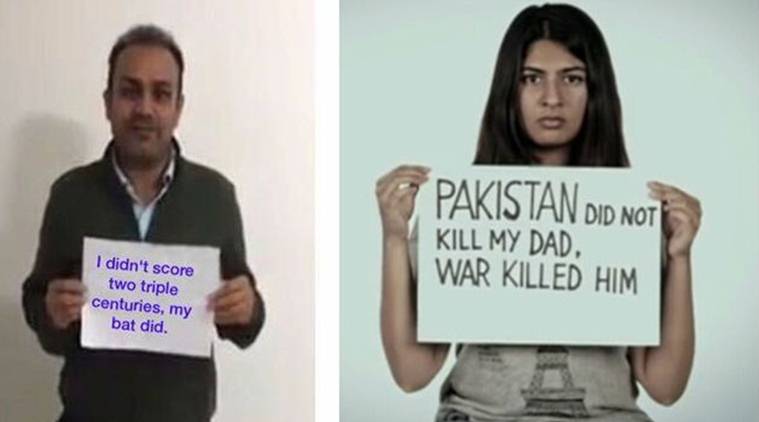
But a few days back, when you posted your picture holding a poster that read, “I didn’t score two triple centuries, my bat did,” even a staunch Sehwag fan like me thought it was really a poor shot-selection from my favorite batsman.
Clearly, your dig was aimed at. Gurmehar Kaur, a young student of the Delhi University, who had earlier posted a similar placard that read “Pakistan did not kill my dad. War killed him.” Now, one cannot expect this statement to go down well with everyone, particularly with the BJP-RSS clan, who are known to feed on the cuts earned from the coffins of martyred soldiers in Kargill. As one would expect, they immediately resorted to attacking the young lady. But Veeru, what suits the ABVP, does not suit you. Do you realize that with this one tweet, you have unwittingly joined the troll-army of those self-proclaimed patriots, who have stooped to the level of giving rape threats to the young lady?
Gurmehar had lost her father at Kargil War, when she was a baby. While we were celebrating our victory that came at the border, she witnessed her father’s body being carried in a coffin. Like your triple centuries, the war victory also made us proud. But the loss of her father taught Gurmehar the real cost of war. So today as we escalate our state sponsored, media pampered jingoistic nationalism, perhaps Gurmehar remembers her father.
Veeru, you may know that during the World War I, conscription i.e. compulsory war service was introduced in Britain. Thousands of college and university students had to give up their books, bid farewell to their loved ones, and go to war. Perhaps to not return ever again. That day, inside the army trenches, with their fingers on the rifle-triggers, poets like Wilfred Owen and Siegfried Sassoon were born. They wrote poetry about the loss of lives, and wastage of human resources caused by futile wars. History remembers them as War Poets. Their dispatches from the battlefield taught the following generations the hollowness in the celebration of warfare. Only the people fighting real battles understand its real cost. The young men at the battlefield that day realized that from either sides of the battle-line, the barrel of every gun targets a regular human being, who had also wanted to live and celebrate life. Just the way the pitch at the Multan Cricket Stadium had taught you that Shoaib Akhtar and Saqlain Mushtaq are your opponents, not enemies.
Veeru, you’ve also fought for your country like a soldier. But your battle was different from the one that took away Gurmehar’s father. Do you remember the day when you first got the call to fight? Celebrations must have swept your family. Perhaps happiness and pride for her son did not let your mother sleep that night. But do you realize when the battlefield calls out for Gurmehar’s father, and thousands others like him, their families also spend sleepless nights. Out of anxiety. When victory came from your bat, you were awarded man-of-the-match. But what if you lost? Honestly, did that make much difference?
Even when you lost, match-fee of a few lakh rupees used to reach your bank account. On scoring a century, thousands of autograph books chased you. But even when you were bowled out for a duck, fans used to cheer for you in the next match. At this point, does the other war look similar to the ones you fought?
Gurmehar’s father – his team, our team, won in Kargil. Still he could not return to his family. In whichever side of the border the victory comes, after the last cannon is fired, mothers will lose their children, wives will lose their husbands and the Gurmehars’ will lose their fathers in every battle-field.
How many of these martyrs do their countrymen remember? Veerupaji, we love cricket. We remember your triple centuries. But you seem to love war. So tell me honestly, did you even know the name of Martyr Captain Mandeep Singh, who died defending our border at Kargil, till her daughter took a stand against ABVP? And why blame only you? Did any of us remember? We didn’t. We don’t. Only the Gurmehars cannot forget their fathers.
Veeru, was it really necessary to mock the lady instead of sharing her grief? Couldn’t you even try to understand why she hates war? Do you realize how much strength and courage does it take for a 20-year old to point out what killed her father instead of dwelling on who killed him?
At Melbourne, while batting at 195, you once attempted a six; the ball went for a catch. But it wasn’t world-records or double centuries, rather this daring attitude that made you our hero.
However in the game of life, trying to hit a six at every ball is not a good idea! Many of your tweets stand out for their wit. Your strokes are as fluent in Twitter, as they used to be on the field. But this one shot really disappointed many of us. A young student is fighting her own battle with her head held high. If you can’t support her, don’t. But do you really need to taunt her so crudely? Break her heart? This certainly doesn’t suit our Sultan of Multan.
Please, take back that tweet. Gurmehar, along with many like her across the globe, are fighting to end every war in this planet. Stand by them. Every time seeing you walk into the crease gave us hope. This time please bat for humanity.