Before we start this article, we would like to appeal the government of Bengal to act against these terror camps and schools that are sheltering hooligans. We are ready to provide the proofs that we have gathered.
The videos in this article are exclusive.
RSS has always denied its links to terror camps supporting and nurturing Saffron terror. But these videos are the perfect proofs of what RSS shakhas teach and why. We would like you to see the RSS propaganda first.
They are constantly asking Hindus to take up arms against the state, an act of waging war against the nation. The “nationalists” are not only confined to cane and swords, they are encouraging people to take up illegal guns. Irony is, they blame people of Malda for the illegal weapon trade and terrorism while they themselves are preparing to wage a civil war. These videos are from Ichapur, Kolkata. The person who is seen teaching to use the cane is Arman Singh, who heads the local Shakha.
In this video, if we hear the conversation taking place in the background, we find that two men are talking about someone’s arrival with something and someone. The second man says very clearly that someone will be coming with a Bangladeshi man. At the end of the conversation one of them says,
‘Bomb- tomb plant kora uchit chhilo sala’ Meaning, ‘we should have planted a bomb’
The question which arises is, are bombs accessible to these men?
We have already seen what Mr. Singh had added to the BJP IT cell appeal of gathering weapons (The same IT cell whose members are found to have ISI links)
The confidence by which he writes makes the readers suspect that weapons worth 5000- 7000 INR are within his reach. It is alarming that a Bangladeshi man is visiting a not so known area of Bengal and that too to a group which is already gathering weapons as per the previous screenshots.
In the second video, we hear a conversation
…(laughs) the moment they’ll say “Eid Mubarak” they’ll get a blow on their heads.
Now, this shows the actual purpose of this training. RSS is running such terror camps in most of the poverty sickened areas of Bengal. Hate speech are made now and then, encouraging the Hindus to gather weapons against the other communities and the state. We need to understand that if we do not stop them now, they will destroy the country with their hatred.
This man doesn’t stop here, he uses photoshop to edit Bengali Hindu figures and tries to cause ethnic enmity too.
He is constantly visiting areas which have a good population of poor non-Bengalis. Particularly the areas near Shyamnagar and Bhadraeshwar. If these groups are not stopped now, they’ll end up with either communal riots or ethnic riots. We believe the videos are enough to suggest what’s going on in Bengal. Further this is another example-
“War exercise for violence in India”- that’s exactly what he has written. This statement is scary as well as painful.
This is Saradamoyi, Ramakrishna Paramhamsa’s wife who is considered a holy mother. We can see what exactly he has posted publicly. It is strange that those who scream around for the Hindu sentiments, didn’t even think twice before mocking a Bengali Hindu figure. This shows ethnic and communal discrimination of RSS/BJP. BJP- TMC politics could be experimented without dragging Saradamoyi. But constantly, RSS is trying to destroy the secular and diverse fabric of India.
Recently we saw the rise of fake personalities. The best example being, Deepak Dubey alias Shifuji Shaurya Bhardwaj who used Indian army insignia as a propaganda tool for BJP. The same tactic we see in Bengal where Sarup Prasad Ghosh roams around in Saffron clad styled in the same way as of the monks of the RKM order. We see a great similarity between Bhardwaj and Ghosh in terms of political tactic and inclinations.
Pictures like these, with real Army officer and monk, used by these men respectively to fool the people that they are associated with the institutions. When our article was published, Mr. Ghosh locked all his pictures while on being exposed by Mr. Abhishek Shukla, Dubey/ Bhardwaj (whatever it is) removed his pictures. If they weren’t doing anything wrong then why did they remove their pictures?
As per an article on The Logical Indian, people threatening Mr. Abhishek Shukla claimed to be commandos. And we have solid proofs (interviews of senior RSS members who accepted) that the name of Ramakrishna Mission is being used by RSS). We have written to RKM regarding this issue and hopefully we’ll get a detailed response. But the issue of fake commandos is problematic. We have seen videos of Shifuji training a large number of men dressed in camouflage but apparently, they aren’t soldiers. Then who these people are? For what purpose are these men trained?
The guns seen in his videos are M16, these are not used by Indian Armed forces but by the forces of a neighbouring country. Certainly, it isn’t China, Sri Lanka, Nepal or Bangladesh. It is a much serious problem that we are facing today. Bengal had never seen riots till BJP entered. In our first article, we have discussed how RSS is spending on migrations. It is our appeal to the Government of Bengal and secular forces to raise the issue and get these terror camps banned else India is deemed to break if RSS/ BJP continue to divide the masses for their political gains.
The two students were members of the Ambedkar Students Association (ASA) at UoH.
Days after two students from the University of Hyderabad (UoH) were denied their PhD entrance exam hall tickets by the English and Foreign Languages University (EFLU), they have now been allowed to appear for the exam.
The two students, Kavyashree Raghunath and Manani MS, are members of the Ambedkar Students Association (ASA) at UoH, were denied their hall tickets for participating the protests surrounding the death of Rohith Vemula.
While Kavyasree Raghunath is the General Secretary of the ASA, Manasi MS is the Cultural Secretary of the association's UoH wing.
The students claimed that they were not able to download the hall tickets online, and directly approached EFLU's administration.
Prakash Kona, the proctor of EFLU, stated orally that they both had actively participated in all the protests following Rohith's death, and that he had "photographs of you two on my table", the students alleged.
Several students condemned the alleged act by the university, also highlighting that the university has a "history of casteism".
However, the university defended its stand, saying, "There is a university rule which does not allow students involved in acts of indiscipline to write the entrance exam."
The students reportedly received an SMS on Sunday, stating that they are now allowed to write the exam and can download their hall tickets from the website.
Speaking to TNIE, Manasi said that they were asked to write a letter, regarding the denial of hall tickets and they did so. They were able to download the hall ticket on Monday afternoon.
The entrance exam is scheduled to be held on February 25, 2017.
Elections to the Brihanmumbai Municipal Corporation, India’s richest civic body, will be held on Tuesday.
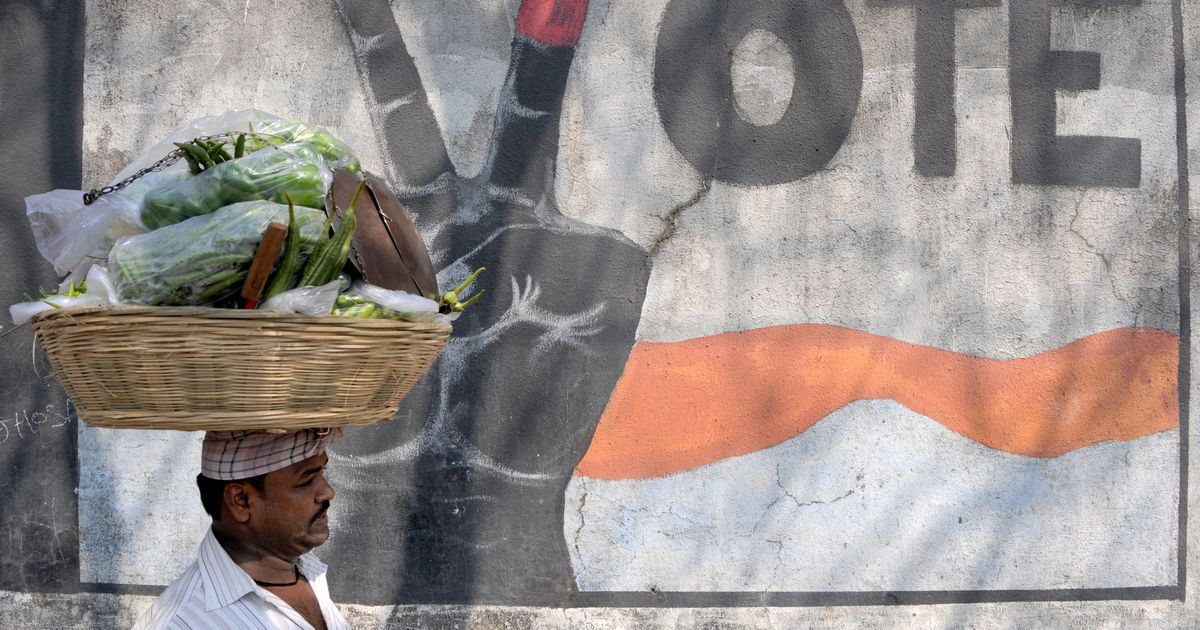
Indranil Mukherjee/AFP
Campaigning for the Mumbai civic elections reached a fever pitch on Sunday, the last day of canvassing. In the lanes of M-East ward in eastern Mumbai, the energy was electrifying. The streets were packed with rallies. Candidates and their supporters were out on bike and foot. Children ran around holding flags of various parties, and shouting slogans they perhaps could make little sense of. The campaign offices and booths of major parties buzzed with activity, and parties and candidates held street-corner meetings.
On Tuesday, people of this ward, and in 23 other wards across Mumbai, will vote for a new general body of the Brihanmumbai Municipal Corporation – the country’s richest civic body with its budget for 2016-’17 standing at Rs 37,052 crores.
As the campaign ended on Sunday evening, promises flew thick and fast: cleaner and regular water supply, water connections in homes, repairs to school buildings and better education for “our children, tomorrow’s future”, more study centres to help students in high school and colleges, improved health centres and expansion of the lone civic hospital in the area, jobs in factories or small units that would be set up here, increased security, and reducing and eliminating drug abuse.
If electoral promises were kept, Mumbai’s M-East ward – the poorest, filthiest and most under-served municipal ward in India’s wealthiest city’s – would be transformed over the next five years. However, residents of M-East ward, especially of its many slums that house nearly 78% of its nine lakh population, know better.
When residents of M-East ward head out to vote for their 15 corporators in the new 227-member general body on Tuesday, they go with the knowledge that their vote has limited power to change things in this most blighted of areas in Mumbai. That, at the end of the day, it is the informal, underground, illicit network of service providers who will determine basic services like housing, water, toilets, schools, gardens and jobs in their communities. But the residents of this ward vote because they must.
(Photo credit: Venkatraghavan Rajagopalan).
Below par civic services
“Those who are asking for votes are not those who give us civic services,” said Zulekha, 29, in Sanjay Nagar, a slum in M-East ward. “Those who provide the necessities won’t come for votes, they don’t need to.”
A number of men and women here also speak off-the-record of how elected representatives, civic officials and what they call the “mafia network” are hand-in-glove and how they all share a vested interest in maintaining the status quo of below-par civic services in the area.
The M-East ward will have as many as 15 corporators – the highest for any ward in Mumbai – in the municipal corporation’s new general body. In the previous house, the ward had 13 corporators: four from the Samajwadi Party, three from the Shiv Sena, two Congress, one each from the BJP and Bharatiya Republican Party, and two independents.
Abu Asim Azmi of the Samajwadi Party has represented the area in the Maharashtra Assembly in the 2009 and 2014 elections. The face of the Uttar Pradesh-based party in Mumbai, Azmi is better known for his misogynist comments and noise in the Assembly than for his work in the lanes and gutters of M-East. The current MP is Kirit Somaiya of the BJP.
“Of the corporators who spoke up for this area, it was Rais Shaikh bhai who took our issues to the big guys,” said Sunil, 31, who is a resident of Govandi and recently landed a job in a mall. “But it’s an entire system that is either corrupt or uncaring of this area, perhaps both.”
The non-profit Praja Foundation, which works towards enabling accountable governance, issues an annual report card in which its ranks the city’s municipal corporators depending on their performance. In the past, this report has evaluated Rais Shaikh as one of the city’s best corporators. His effort to reconstruct lanes and small roads in Govandi slums to prevent water-logging and water-borne diseases is spoken of highly in the area. However, his ability and willingness to be vocal about pressing issues of his constituency has not translated into concrete and comprehensive action on the ground.
Haphazard development, if at all
M-East ward has seen haphazard development with local politicians and various non-governmental organisations doing independent work to fill in for the absent or negligent civic administration. Over the years, every local election has been turned into an event in which candidates make promises, lay new pipelines for water, open some centre and then forget about it. Of the 13 corporators in the ward, three to four represent the better-off middle class areas in it. But the rest are hardly heard on the issues facing their voters.
“It is not for want of money that there has been no development in M-East ward over the last few years,” said Sabah Khan who teaches at the School of Habitat Studies at the Tata Institute of Social Sciences. “It is for want of vision, want of willingness on the part of the civic system.”
The institute’s campus is located in M-East ward, at Deonar, and Khan is a key resource person in the institute’s Transforming M-East Ward Project, started in 2011 to document and facilitate development in the area.
Khan continued: “This is why we, in the project, had suggested to the assistant municipal commissioner of M-East that the BMC should undertake slum mapping. This would help create models, and there will not be a haphazard laying of pipelines left unfinished, or yet another small school constructed, or another badly-planned community toilet block. Each agency would know what civic services are required in which slum and which remain unfinished. But this needs a vision.”
(Photo credit: Sanjeev Nair).
Without a vision, the municipal corporation’s efforts become discretionary.
Residents said that the Brihanmumbai Municipal Corporation administration, under assistant municipal commissioner Kiran Dighavkar, took a few initiatives such as opening study centres to stem the number of dropouts from the area’s 75 municipal primary schools, and allocating areas for makeshift playgrounds in the area that is starved of open spaces. But by and large, the municipal corporation was either absent or negligent in providing basic civic services such as sanitation and water, they added.
“We hold on to doors and slabs in the toilet blocks or fear falling into the septic tank below and dying,” said Akhtar Abdul, 40, a construction labourer living in the Shivaji Nagar slum. Once such mishap killed three people in this area earlier this month.
The Shatabdi Hospital in Govandi is another example of negligence. Constructed in 1986, its services need to be upgraded, especially considering that it serves a large low-income population. In 2006, corporators representing this area went on a hunger strike to demand that funds be allocated for its repair and maintenance. The municipal corporation unveiled a plan to renovate, expand and modernise it three years later. But the tenders for this plan were not opened till early this year, 11 years after the demand was first made. Neither the outgoing corporators nor the MLA Abu Asim Azmi made a noise about this.
Elections bring empty promises
Yet, candidates come around at election time to give assurances that have been given before – and broken. “There will be a change in this area, ” promised Samajwadi Party candidate Akhtar Razzaq Qureshim in Shivaji Nagar. “I will see to it that you all get water, good quality and good supply of water in your taps.”
Candidates hold out the same promises: water, power, better houses and schools every election – civic body, state Assembly or Lok Sabha. Only their methods of campaigning change. For instance, this civic election has seen a liberal use of mobile phones and messaging platforms such as WhatsApp. In fact, there have been regular fights between parties over the addition of ineligible voters to WhatsApp groups. Some parties are adding Bangladeshis to voters’ lists, we won’t allow that to pass, said campaigners of Maharashtra Navnirman Sena candidate Satish Vaidya.
“Why things do not change in M-East ward is a deep question,” said Arun Kumar, chief executive officer of Apnalaya, a non-profit that has been conducting programmes for pregnant women and malnourished children, women’s empowerment and gender justice, education and livelihood in the area for the last three decades. “It boggles the mind because there is enough political representation at the BMC level as well as state and national level. This isn’t some far-flung inaccessible part of the country.”
What the elected representatives of M-East do – or not do – in the municipal corporation matters. Four of the 13 corporators elected five years ago were on the civic body’s Markets and Gardens Committee but the ward suffers from an abject lack of gardens and open spaces. Shiv Sena’s Rahul Shewale, a corporator from Mankhurd-Mandala in M-East, was ranked 223 out of 227 corporators in the Praja Foundation’s annual report card 2015-’16. He had not asked a single question in the corporation last year. He is also a MLA since October 2014.
Mohammed Siraj Shaikh, independent corporator from Shivaji Nagar, neither attended the municipal corporation proceedings nor asked questions in the House in 2015-’16, according to the report card. Shaikh scored a rank of 211 among 227 corporators. Neither Shewale nor Shaikh were available for comment. Their offices said they were busy campaigning.
Communalisation of non-development
M-East ward has a large presence of Muslims, overwhelming poverty, appalling social indices and lack of imaginative development initiatives. The Samajwadi Party has often run electoral campaigns that were communal in nature but this year, Asaduddin Owaisi, president of the All India Majlis-e-Ittehadul Muslimeen, conflated religious and development issues in a perilous way.
In his bid to dislodge the Samajwadi Party as the voice of Mumbai’s Muslims, Owaisi alleged at a rally in January that the city’s Muslim-dominated areas are deliberately denied development funds. “If Muslims are paying taxes to the BMC, it is their constitutional right to get amenities as well,” he said to thunderous applause. “The Muslim-dominated areas of Mumbai must get 21% of the BMC’s Rs 37,000 crore annual budget, that’s Rs 7,700 crore, because it matches the proportion of Muslims in the city’s population.”
(Photo credit: Sanjeev Nair).
Since then, Owaisi has fielded the largest number of Muslim candidates in the BMC election – 57 in all compared to 39 by the Congress, six by the BJP and five by the Shiv Sena – and has concentrated resources in the 15 civic constituencies of the M-East ward. The population of Muslims in the ward is close to 51%. In some areas such as Shivaji Nagar, it is closer to 85%, according to studies conducted by Apnalaya.
Owaisi’s All India Majlis-e-Ittehadul Muslimeen won two seats in the 288-member Maharashtra Assembly in its first outing during the 2014 state election and has since won handsomely in municipal corporations in Nanded, Aurangabad, and Mumbai’s far suburbs of Kalyan-Dombivali. Owaisi is hoping to build on those gains.
However, not everyone in M-East is impressed by Owaisi and his party’s aggressive campaigning. “This kind of talk unnecessarily communalises the issue,” said Bilal Khan, a social activist who works in the realm of housing rights, “People need civic services because they live and work here, because they are citizens of Mumbai, not because they are Muslims.”
In the stinking bylanes of Rafiq Nagar adjoining the Deonar landfill, the All India Majlis-e-Ittehadul Muslimeen and Samajwadi Party battle for the attention of voters with competitive posters and booths. Residents said that the youth were getting attracted to Owaisi’s party. “So many political parties have failed to do anything here,” said Kabir Husain Sheikh, 36, a technician. “The youth is now hoping that the AIMIM [All India Majlis-e-Ittehadul Muslimeen] can.”
The older residents of this area are wiser. “There’s so much attention and visits for a local election,” observed Dil Mohammed Qadri, 62, social worker. “Once elected, no one bothers. Abu Asim Azmi who claims to be the father of this basti hasn’t done anything in the last eight to 10 years. The saying ‘naam bade aur darshan chhote’ [grandiose reputation and inconsequential work] suits him very well, but it’s amazing how stupid slum-dwellers can be.”
Money is not a constraint
In the last six years, the municipal corporation’s annual budget has almost doubled – from Rs 20,417 crores in 2010-’11 to Rs 37,052 crores in 2016-’17. Budgetary allocations to health and schools have seen an increase too. The M-East ward gets its allocations on paper. Moreover, in addition to the civic body’s planned outlay, each corporator gets Rs 60 lakh as corporator funds. Additionally, each corporator can draw from the area development fund, which was Rs 40 lakh till two years ago but was raised to Rs 1 crore in February 2014. That makes Rs 1.60 crore available to a corporator every year to undertake development projects in consultation and coordination with the civic administration.
(Photo credit: Sanjeev Nair).
“There are people interested in keeping this slum as a slum,” said Arun Kumar. “And over the last few years as the rest of Mumbai got attention, got upgraded, there has been a gradual invisibilisation of the M-East ward.”
The M-East ward has all but moved out of the attention of Mumbai’s mainstream media and the average Mumbaikar’s consciousness – unless there is a major fire in the ward’s Deonar landfill, which threatens the entire city’s air quality. However, the unkindest cut is that it seems to have fallen off the radar of civic and state administrations too. With the citizenship of its residents ambiguous, their voices are unheard.
Elected corporators may not have done much for the makeover of M-East ward but they remain the residents’ hope and voice – however feeble – in the city’s municipal corporation.
With additional reporting inputs by Suryasarathi Bhattacharya.
This is the concluding part of a series on the poorest part of India’s wealthiest city. The first three articles can be read here, here and here.
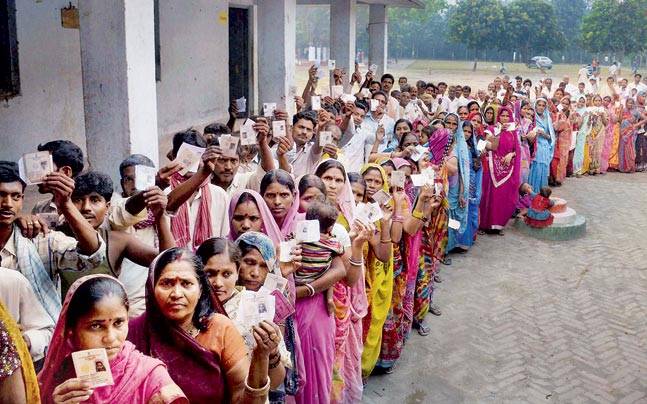
With 73 seats in the first phase, 67 seats in the second and yesterday, elections to 69 (12 districts) more seats having concluded, the dye has figuratively been caste in 219 seats and the halfway marked crossed. Other predictions apart, these first three phases have been marked with a high voter turnout, that fact alone leading to speculation, hope and apprehensions. What is marked about this election in the politically significant state of Uttar Pradesh is the extremely silent voter across the state.
In the 1989 general elections, some stray political pundits say this had resulted in a sweep for the redoubtable VP Singh who all but wiped away Rajiv Gandhi’s historic sweep of 1984 that came after Mrs Indira Gandhi’s assassination.
But will the analogy hold true this time, when there is more than one ‘secular option’ for the voter? Can it be decisively predicted that one of the two ‘secular’ options benefit? Or, if — as the tussle increasingly narrows down to one between a confident and resurgent BSP and the SP-Congress alliance — will the BJP sneak in from the backdoor in over 70 seats where these two ‘‘secular options’ run too close to the finish? These are the questions that are dogging journos and pundits who are finding it more and more difficult to offer a prediction. Let’s wait for March 11, is the commonly uttered refrain.
Which are the sections of the voter that have turned out in large numbers in the first three phases? And who stands to gain from UP’s high voter turnout in the three rounds already polled?
What appears clear from the first three rounds is that large sections of the Dalits have come out to caste their ballot as have the Muslims. Among the Dalits, except for a small section who may still remain with the BJP, the vast majority appears to have come back to Mayawati. Among Muslims, the vote is divided and confused. Far from their substantive vote share of close to 18 per cent across the state and as high as 45 per cent in some constituencies being a decisive and ‘tactical’ anti-BJP vote block, this voter is divided, giving some cheer to the otherwise jittery saffron camp.
Take for example the Behat constituency of Sahranpur that in 2012 saw a stiff contest between the BSP and the Congress. The BSP has held the seat in the 14th, 15th and 16th Vidhan Sabhas with Dharam Singh Saini and Mahaveer Singh Rana. Today with two Muslims in the fray, one a Pasmanda Muslim, Haji Muhammad Iqbal for the BSP and Imran Masood for the Congress, the split is evident and the outcome hangs in the balance. Far from displaying any unity against communal-fascist forces, the ‘secular political options’ are divided here and all over UP. That is one example of a secular split from the first round of polls in the state.
In the third round of voting that included Kanpur city’s seats, again there is a clear division of the Muslim votes in two of the seats. So despite there being vibrant ‘secular’ options, the threat of a saffron candidate sneaking past cannot be wished away.
De-monetisation finds no mention in the BJP’s campaign, never mind that the prime minister and his coterie stubbornly continue to peddle the propaganda about it’s ‘overall good.’ No wonder then, that the BJP, led by Narendra Modi has now come down to what it does best, running a negative and even communal campaign.
Akhilesh Yadav, the sitting chief min ister of the state appeared to breeze in late into the contest when he managed to swing an alliance with the otherwise faltering Congress. While the Samajwadi Party seeks to retain the state – albeit with the Congress this time, the BSP and BJP hope to regain power in the state after five and 13 years respectively.
Details of Voter Turnout In the first round, on February 11, it was an all-time high voter turnout of about 65 per cent in the first phase of the seven-phased Uttar Pradesh Assembly election and reports that first flowed in from the 73 Assembly constituencies, spread across 15 districts, and this polling indicated a high turnout of both Dalit and Muslim voters. This voter turnout in the first phase at 64.2 per cent – was an increase of nearly three per cent from the first phase turnout in 2012.
Then after voting was concluded in the second round on February 15, an equally impressive turnout of over 65% was recorded in 67 Assembly constituencies across 11 districts of western Uttar Pradesh. The districts where polling were held included Bijnor, Saharanpur, Moradabad, Sambhal, Rampur, Bareilly, Amroha, Pilibhit, Kheri, Shahjahanpur and Badaun.
The third phase that concluded yesterday, February 19 recorded 61.16 per cent of the vote regarded reasonably high. Last time, elections to this segment that include Farukhabad, Hardoi, Kannauj, Mainpuri, Itawah, Auriya, Kanour Rural, Unnao, Lucknow, Barabanki and Seetapur districts was at 59.96 per cent.
Sitapur in this segment was the highest at 69.50 per cent, followed by Barabanki at 68.13 per cent, Kanpur city at 67 per cent, Kannauj at 65.6 per cent, Kanpur Rural at 65 per cent, Farukhabad at 61.1. per cent, Itawah, Unnao and Auriya polled 61.61 per cent and it was Lucknow the capital that was the lowest at 58 per cent.
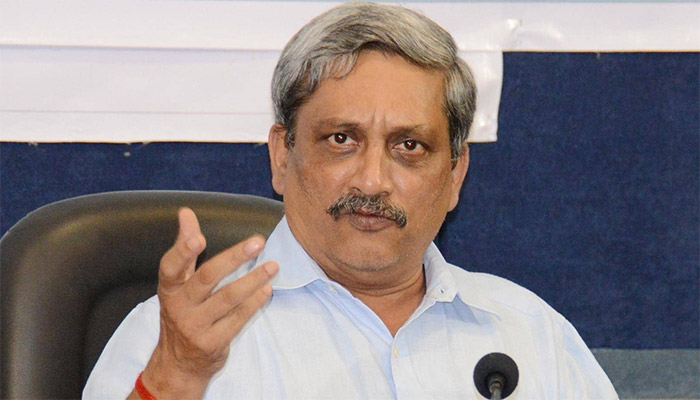
“You Vote by taking 2,000/- (Rs Two thousand) from someone. It is ok. Someone will hold a rally. There is no objection if someone roams there with Rs. 500/- (Five Hundred)But you shall keep in mind that the votes comes to LOTUS only.”
Is this an objectionable remark? Does it befit a minister in a Constitutonal position? No, says the Election Commission and ‘serves a notice’ on Manohar Parikkar, asking him to be ‘more circumspect in future’
The EC had first served a notice to the Minister on February 1. Parikkar had replied through his lawyer saying that the EC’s Transcript of the Speech in Konkani was not correct and demanded that a three member committee view it. This was also done after which the EC, once again re-iterated it’s conclusion.
Here we have a Minister condoning bribery in the election process. And he has been let off with a ‘warning.’
New York: Over a thousand people from various faiths declared ‘I am a Muslim too’ as they assembled at the iconic Times Square here to express solidarity with the Muslim community and protest against US President Donald Trump’s immigration policies.
Photo:Reuters
The rally was co-organised by the Foundation For Ethnic Understanding and the Nusantara Foundation in response to the uncertainty and anxiety created by Trump’s now-rescinded executive order to bar citizens from the seven Muslim-majority nations. The ‘I am a Muslim Too’ solidarity rally drew several thousand people who raised slogans and held banners of ‘Love Trumps Hate’ and ‘USA, USA’ and ‘No Muslim Ban’.
Headlined by American entrepreneur and author Russell Simmons and actress Susan Sarandon, the rally yesterday saw participation by several faith leaders who denounced the divisive political environment in the country and called on Americans to stand up for Muslims facing increasing threat and pressure.
Addressing the rally, New York City Mayor Bill de Blasio said America was founded to respect all faiths and all beliefs and stereotypes against the Muslim community has to be dispelled.
“The message I want to give as Mayor of the city to everyone regardless of background or faith or where you were born is that this is your city and this is your country,” he said.
The Mayor said America was founded by people who were fleeing religious persecution and was founded to respect all faiths and all beliefs.
“This is who we are as Americans and this must be protected. An attack on anybody’s faith is an attack on all people of faith,” he said.
Lauding the 900 Muslim members of the New York Police Department, de Blasio said the 1.6 billion Muslims in the world are “overwhelming peace loving” people who care about their community.
“We have to dispel the stereotypes” faced by the Muslim community, de Blasio said declaring at the end of his speech that “I’m proud to say today I’m a Muslim too”.
Eminent Sikh-American speaker and activist Simran Jeet Singh said he is supporting the rally “because as a Sikh, we know what discrimination and oppression feels like. We want a world that is acceptable and tolerant”.
Sarandon said given the political environment in the country, it is no longer possible to be neutral. “If you are silent, then you are complacent.
“We are here because we will not be a cog in a machine that is dismantling our constitution, that is dismantling our bills of rights,” she said to loud cheers from the crowd.
Sarandon added that New Yorkers should tell their representatives that the city is “open and accepting”.
“We will fight hatred with love, we will fight bigotry with inclusivity. And today I am a Muslim too,” she said.
American-Muslim woman Latisha James said she was proud to be part of the solidarity rally that was sending a strong message that people are coming together to support the community and will not tolerate discrimination against its members.
“Everyone is of the same nature. There should be no discrimination, we are all the same. We all migrated to America so for Trump to put a ban on Muslims and refugees is not appropriate. It s not going to happen,” she said.
She said a lot of Muslims and refugees have been discriminated against and “it’s good that everyone has come together finally to support the Muslims”.
So I got into a kali-pili (black-and-yellow) cab today, on my way to Bharatiya Vidya Bhavan. My driver had white hair; he had a Ganesha statue on his dashboard, and a small floral garland around the idol. He was from Uttar Pradesh, India's largest state, and expressed concern about my leg, asking me if I had any permanent injury.
Reassured I was only temporarily disabled, he asked me (I write below from memory, translating his text):
CD: Aap ko Modi-ji kaise lagte hai? (What do you think of Modi?) ST: Main to yahan nahi rehta hun, aapko kaise lagte hai? (I don't live here; how do you find Modi?) CD: Are, aap to padhe likhe hai, aap bataiye aap ko kaise lagte hai? (You are well-educated; you tell me what you think of him?) ST: Mujhe to pasand nahi hai. Aapko? (I don't like him. What about you?) CD: Are, ye kaisi baat karte hai? Aap to Gujarati hai, na? (What are you saying? Are you not a Gujarati?) ST: Haan, hun, lekin sabhi Gujarati ek tarah nahi sochte, na? (Yes, but all Gujaratis don't think alike, no?) CD: Aap Ramayan to jante hoge… (You must know the story of Rama) ST: Ji bilkul (Yes). CD: To Modi-ji to Ram jaise hai (Modi is just like Rama). At this I felt a sinking feeling. I thought he'd give me a lecture on how Modi was great and just what India needed, and we were about to enter the golden age of Rama Rajya. CD: Aap bandaro – yane monkey – to jaante honge (You must know monkeys – who were part of Rama's army)? ST: Haan (Yes). CD: To jab Ram ne Lanka se yudh kiya tab Vibhishan ke sar pe tilak lagaya, taki bandaro ko pata chale ke Vibhishan ko yudh me kuchh na ho. (When Rama invaded Lanka he smeared Ravana's brother Vibhishana's forehead with a mark, indicating he would rule Lanka after the war was over, so that the monkeys would know they should not attack Vibhishana). ST: Achchha (OK) CD: Vaise hi ab jo note-bandi hui tab Gujarati or Marwadi bijnesmen ko tilak lagaya gaya, taki unhe kuchh bhi na ho. (The same way during the currency ban Gujarati and Marwadi businessmen – presumably who support Modi – were marked out so that nothing would happen to them). ST: Achchha? Aap ko kaise malum? (Really? How do you know?) CD: Ek bhi Gujarati ya Marwadi bijnesman ko pakda gaya hai? (Has any Gujarati or Marwadi businessman been arrested?) ST: Pata nahi (I don't know). CD: Kaise pata chalega, jab hua hi nahi? Bandaro ko pata hai ki unhe kuchh bhi nahi hona chahiye (How would you know, if it hasn't happened? The monkeys know they should not harm them.) ST: Yane? (Means?) CD: Modiji Ram ki tarah hai. Ram ne Vibhishan ko bacha liya, Modiji ne apne sathio ko bacha liya. Aur bandarone Lanka jala di. (Modi is just like Rama. Rama protected Vibhishana, Modi protected his friends, and monkeys burned Lanka). I stayed silent. CD: Isi liye mai ab tihattar ka saal ka hun, din rat ye Taxi chalata hun, hame Modiji kahte hai Ola ke driver ban jao, PayTM lagalo, lekin ham apni mehnat karenge, ye dalalo ki zaroorat nahi hai hame. Bas aise chalata rahunga. Aur Modiji Ram Rajya basa lenge. (That's why I'm now 73 years old; I drive my cab day and night. Modi tells us to become a driver for Ola; to install PayTM. But I don't want those agents. I will keep driving and Modi will establish his Rama Rajya). —-
And I truly marvel at the wonderful, metaphorical way the driver told me how he saw the world drawing on this fine work of Indian literature.
Muzaffarnagar: At least 11 people, including two women, were injured in a clash between the members of two communities over an alleged eve-teasing incident in communally-sensitive Kairana in Shamli district.
SHO Umesh Singh said the incident took place last evening during a wedding ceremony in Paati village under Kairana police station limits.
He said some members of a particular community allegedly made lewd remarks against a women belonging to another community, leading to a tussle that grew into a clash.
The members of the two groups hurled stones at each other.
11 people, including two women, were injured in the violence, Singh said.
The injured have been hospitalised and extra police force deployed in the area in view of the tension following the incident.