Meerut (Uttar Pradesh): Bharatiya Janata Party (BJP) lawmaker Sangeet Som’s brother detained for carrying pistol inside a polling booth in Meerut’s Sardhana constituency in western Uttar Pradesh where polling in underway today for the first phase of the seven-phased election in the state.
A pistol was recovered from the possession of Gagan Som, the brother of the controversial MLA, when the security personnel deployed at the polling station frisked him.
Photo: Sangeet Som
He was immediately taken into custody and is quizzed by the police.
No one is allowed to carry arms and ammunition at a polling booth. Those who posses licensed weapons have to surrender them to the police when the Election Commission’s Model Code of Conduct comes into force, said officials. The permission to keep arms is granted in special cases only.
Earlier, Sangeet Som – an accused in the 2013 Muzaffarnagar riots who is out on bail – was booked after for screening the contents of the clippings of the 2013 communal violence in a public meetings in Fareedpur in his constituency during the campaign trail.
He was booked under several Sections, including Section 125 in the Representation of the People’s Act, 1951 (promoting feeling of enmity or hatred between people on grounds of religion, race, caste in connection with election).
Seventy-three assembly constituencies in 15 communally sensitive and highly polarized districts of western Uttar Pradesh are voting today. The first phase of the seven-phased elections is witnessing four cornered contest between the Samajwadi Party (SP)-Congress alliance, the Bharatiya Janata Party (BJP), the Bahujan Samaj Party (BSP) and the Rashtriya Lok Dal (RLD). A total of 839 candidates are in the fray. While Agra south seat has the highest number of candidates (26), the lowest – six each – are from Hastinapur (Meerut), Iglas and Loni seats. The seats that are keenly watched at are Noida where Union Home Minister Rajnath Singh’s son Pankaj is making debut in electoral politics, Mathura which is witnessing an intense battle between Congress legislature party leader Pradeep Mathur and BJP national spokesman Shrikant Sharma and Sardhana in Meerut where BJP’s Sangeet Som is challenged by SP’s Atul Pradhan.
Former state BJP president and sitting MLA Laxmikant Bajpayi is being challenged in a triangular contest by SP-Congress combine’s Rafiq Ansari and BSP’s Pankaj Jolly in Meerut city. Kairana, Thana Bhawan and Sikandarabad are other high-profile seats.
In addition, the fates of Muzaffarnagar riot accused Sangeet Som and Suresh Rana (both Hindutva poster boys of the BJP) too would be decided in the first phase from Sardhana seat in Meerut and Thana Bhawan in Shamli.
India's social-sector spending remains woefully low and despite claims of being a pro-farmer Budget, the effective allocations are nearly the same as last year.
Some commentators expected that the Union Budget 2017-’18 would craft a sharp departure from earlier budgets of this government. This it would do to mitigate the immense suffering of millions of casual workers, farmers and small traders caused by the “shock and awe” of the astoundingly callous and ultimately pointless decision to withdraw 86% of the country’s currency overnight.
Prime Minister Narendra Modi, Bharatiya Janata Party President Amit Shah, the government and its supporters continue to put up a brave face while talking about the demonetisation move in public, claiming that the vast majority of Indians support it. But behind closed doors, there are signs of unease in the ruling establishment.
With a fifth of the country’s voters going to polls in the days after the budget – elections to five states are being held between February 4 and March 8 – the ruling party felt compelled to shed its image of being uncaring of the poor and allied to the interests of the super-rich.
This year’s Budget was therefore one of exceptional interest and expectations, with some commentators believing it would contain dramatic and high-visibility measures for welfare and developmental equity.
No yield for farmers
However, a careful study of the Budget reveals that it gives away little to India’s long-suffering poor and takes away even less from its super rich. It hopes instead that rhetoric alone will suffice to convince the mass of India’s workers and farmers that their government is committed to their well-being.
Take firstly the claim, repeated for a second year in a row, that this is a farmers’ budget and that it will double their incomes by 2022. The route by which farmers’ incomes will double has of course not been clarified – as in the last budget – neither has the government specified if it is speaking about real income adjusted for inflation.
But the severe reality remains unchanged that although agriculture still employs more than 50% of the country’s workforce, it is allotted a miserly and shocking 2.38% of Union government expenditure.This amounts to just 0.3% of the Gross Domestic Product. Even if we combine allocations to the Ministry of Rural Development and Ministry of Water Resources, this is still as little as 0.98% of the GDP – even below the level of 1.07% of the GDP in Arun Jaitley’s first budget of 2014-’15.
Much was also made by the finance minister of the “record level” of Rs 10 lakh crore in 2017-’18 for farm credit. “For a good crop”, Jaitley declared, “adequate credit should be available to farmers in time”. But as with much else he claimed to do for India’s poor, this announcement was somewhat disingenuous.
Firstly, farm credit is not funded from the budget from tax resources: it is a target set for banks. Second, this target is not much higher than the revised one of Rs 9.5 lakh crore in 2016-’17. And there is no roadmap for bringing in small, marginal and tenant farmers, who constitute more than eight out of 10 farmers, into the formal banking sector. These farmers depend mainly on usurious private money-lending. Interest subvention also bypasses this mass of vulnerable farmers – many of who are women farmers with the growing feminisation of agriculture – as they are unable to access bank loans.
It is once again these small and tenant farmers who are excluded substantially from crop insurance under the Pradhan Mantri Fasal Bima Yojana. Government admits that only about a quarter of farmers have been covered under the scheme and aims to increase this to 40% in the current year.
But, as pointed out by Yogendra Yadav, former Aam Aadmi Party leader who founded the Jai Kisan Andolan, it is not clear how the government will do this because the Budgetary provision for the scheme has come down to Rs 9,000 crore in the coming financial year, from Rs 13,240 crore in the last budget.
Moreover, these percentages exclude a majority of tenant farmers and sharecroppers who are most vulnerable but rarely recorded. We also need careful studies on whether the premium under this central scheme is benefiting insurance companies or if it is actually being extended to farmers and what the business model of this insurance scheme is.
Most of all, the claims of this being a farmers’ budget rings hollow because it side-steps three major requirements of farmers. The first is for effective farmer income protection, either through a minimum support price guarantee or a subsidy for every acre cultivated. The second is to repair the near-broken system of agricultural extension (educating farmers in the latest scientific developments in the field) and public-funded research and development for sustainable agriculture. The third is the massive need for watershed development and other measures for raising productivity of rain-fed small and marginal farmers.
Instead, the Budget announcement supporting the advance of contract farming, wherein the farmer enters into an agreement with a buyer on what to produce and how much, can also deepen the disquiet of small farmers, with another threat – of corporate takeover – adding to their multitude of everyday challenges for survival.
Krishnendu Halder/Reuters
Rural employment
There was another dubious claim of “record” allocations in this Budget speech, regarding the Mahatma Gandhi National Rural Employment Guarantee Act. The irony of the government boasting of making the “highest” allocation to a programme that Prime Minister Modi had famously lampooned in Parliament as a “living monument” Congress’ misrule is hard to miss. But there’s another paradox in this claim too.
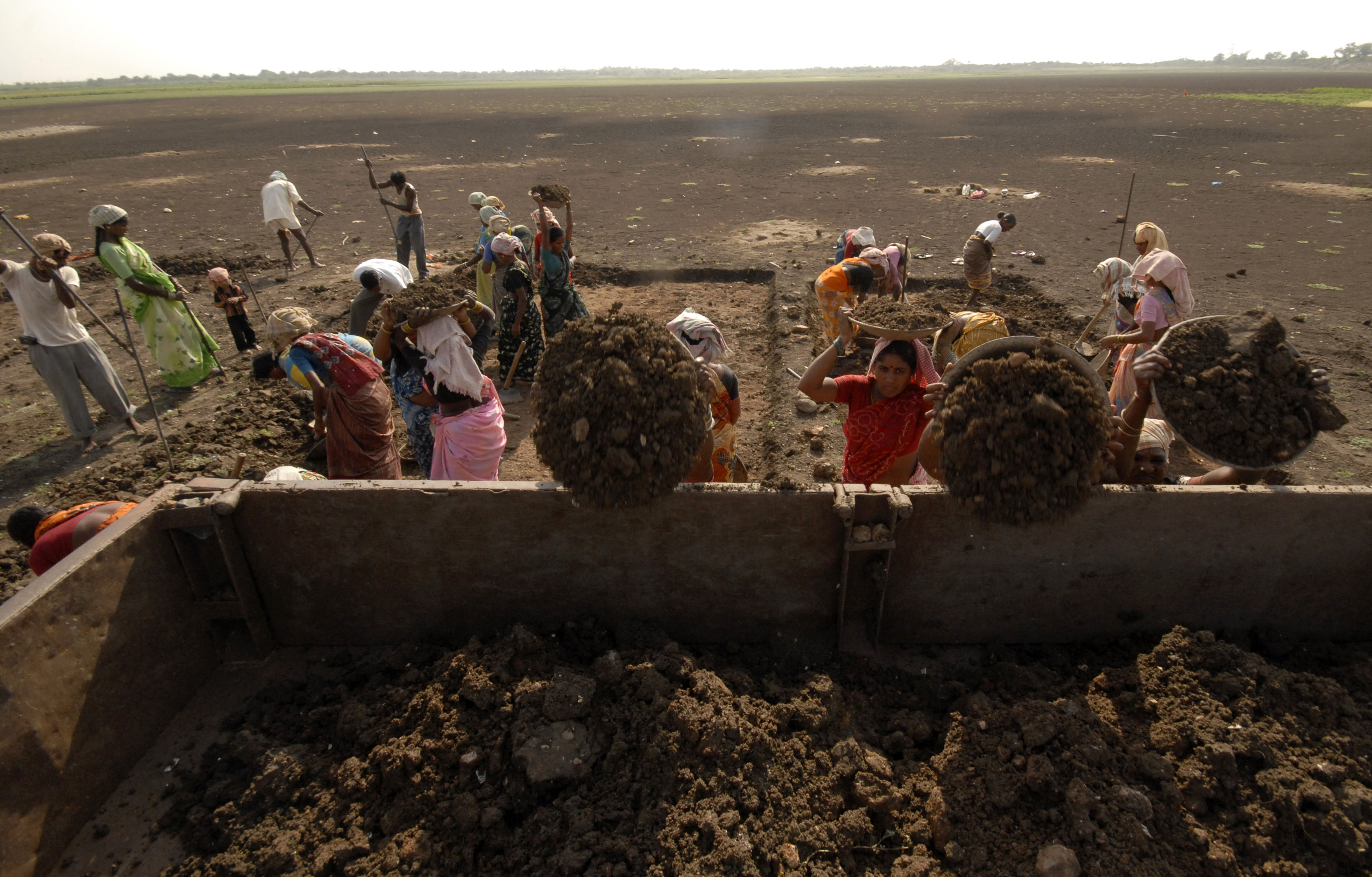
Last year’s initial budget allocation for NREGA was Rs 38,500 crore. At first glance, this seems like a significant 25% increase. However, the reality is that after a series of raps by the Supreme Court, the total allocations in 2016-’17 were raised to Rs 47,500 crore. Therefore, the effective increase this year is just by 1%. And we factor in inflation, this year’s allocation does not even match the previous year’s.
There have been widespread reports of job losses in the informal sector and many people are turning to MGNREGA to tide over these bad times. The Right to Food Campaign comments that the allocations are “woefully inadequate” to cope with the fall-out of demonetisation. They noted in a statement:
“The Economic Survey suggests that the number of migrant labour is to the extent of nine million. If we presume that 25% percent of them have been adversely affected and are unlikely to be absorbed in labour market in near future, they need support through MGNREGA. The additional minimum requirement would be for Rs 4,500 crore. Therefore total minimum allocation for MGNREGA should have been not less than Rs 60,000 crore keeping in view annual wage increase with commitment for need based extra allocation, if not Rs 80,000 crore as was demanded by concerned citizen groups. The budget therefore fails to ensure food security of tens of lakhs of poor migrant labour who have been adversely affected by the demonetisation exercise. By allocating Rs 48,000 crores and projecting this as highest ever the finance minister has misled the nation.”
Under-nourishing children
The claim of the budget serving the interests of the poor could have carried some credibility if the government had made significantly higher allocations in sectors other than agriculture, such as education, health-care and social protection. But here again, there is a stagnancy, and in real terms even a decline in allocations.
The Sarva Shiksha Abhiyan sees a 4% rise in allocations this Budget and for mid-day meal schemes, the increase is just 3%. If we account for inflation, which is around 5%, this is a decline. Costs norms for school meals and Integrated Child Development Services meal plans (allocation for which too has been increased by just 5%) have not been revised for many years, despite sometimes galloping food inflation. In real terms, children are being fed less and less.
The Centre for Budget Accountability and Governance, in its customary careful and insightful analysis of the Budget, notes that as a share of the total Union budget, allocations for education have remained stagnant at 3.7%. The share of school education has actually fallen from a very low 2.4% to an even lower 2.34%.
Higher education, although also very poorly resourced, has in comparative terms been prioritised over school education as has technical education over general education. The share of Union spending on education as a percentage of GDP fell further to 0.47%. Even the budget rhetoric regarding education was watered down. In his last budget speech, Jaitley spoke of “education, skill development and job creation” as one of the pillars that would transform India. This year, he only spoke of education as something that would transform the youth and did not discuss Right to Education.
With his continuing neglect of education, the finance minister has chosen once again to ignore the constitutional obligations placed on government under the Right to Education Act. The public school system is in a shambles and widely lacks the infrastructure and trained teachers that the RTE Act prescribes.
The Centre is therefore defying and disobeying laws passed in Parliament that oblige it to commit sufficient budgetary resources to enable all people to access their legal rights to education, rural wage work and food. There are specific provisions for educating children outside the formal schooling system who are in the toughest circumstances, such as street children, migrant workers’ children and child workers.
Ailing health sector
The public health sector does only marginally better. The Centre for Budget Accountability and Governance observes that the Centre’s allocations for the health sector as a proportion of the GDP saw a marginal increase to 0.30%, from 0.26% in 2016-’17.
However, this falls distressingly short of the long-standing demand to increase allocation to the health sector to at least 2.5% GDP, despite the fact that India has one of the most shamefully privatised systems of health care in the world. National Sample Survey Organisation data tells that nearly 70% of out-of-pocket expenditure is on medicines. Making free medicines available in all public health facilities would substantially reduce distress due to health costs and improve the access and the credibility of the public health system. But this Budget misses the opportunity of ensuring the availability of free generic medicines in all public health facilities.
Stagnating social spending particularly hits those sections of the population that are most vulnerable and actually deserve the greatest state support. The National Social Assistance Programme (which covers old age pension, widow pension and disability pension schemes) has been allotted Rs 9,500 crore rupees in 2017-’18 – the same level as 2016-17.
In real terms this is a decline. With nine out of 10 workers in informal and mostly uncertain employment, it is only the state that can secure pensions for all through public spending. It is unconscionable that government covers only those older people that it designates through its notoriously poor targeting to be BPL or below the poverty line, and that too with a Union government contribution of as low as Rs 200, unchanged for several years. Contrast this with the small percentage of us in the formal sector who will retire and receive half their last drawn salary continuously, indexed for inflation.
Likewise with maternity benefits. The National Food Security Act mandated the payment of Rs 6,000 to most women during pregnancy, but the Union government refused to fulfill its legal obligation for this. Modi chose to use his much-awaited end of 2016 speech – in which he was expected to give the country a report card on demonetisation but instead offered homilies and some welfare promises – to announce near-universal maternity benefits. But despite the imperatives of the law, and the prime minister’s prime-time announcement, the budget provision for maternity benefits is only Rs 2,700 crore for 2017-’18.
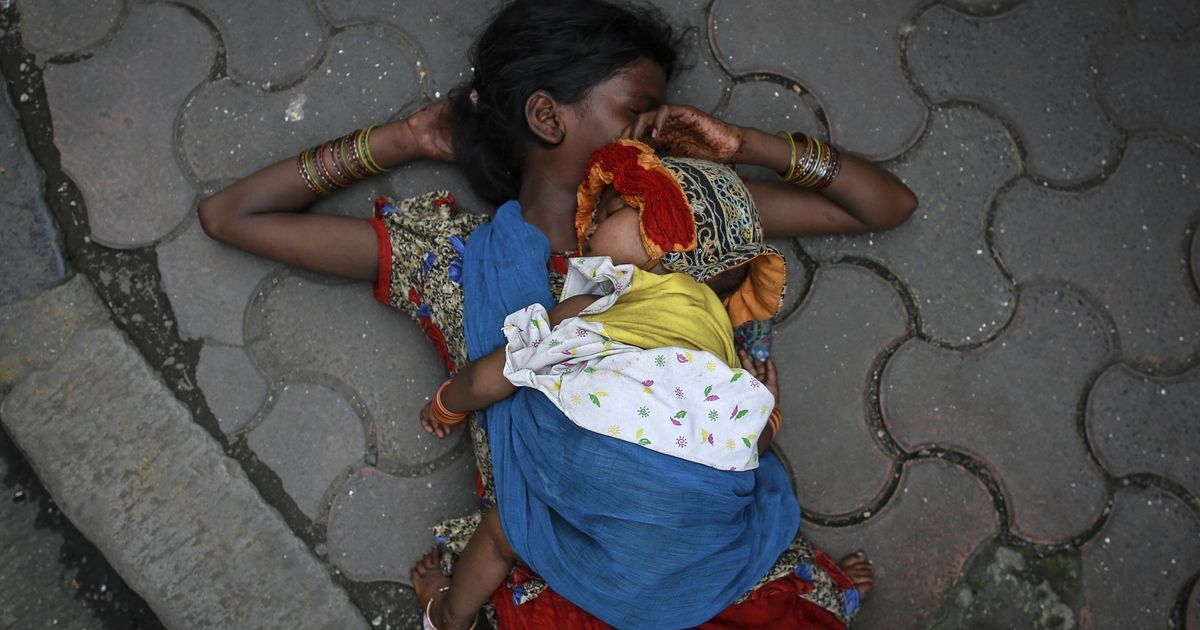
The Right to Food campaign estimates that about Rs 16,000 crore (0.2% of the GDP) is required for near-universal maternity benefits (Rs 9,600 crore from the Centre, as the amount is divided 60:40 with states). I have argued earlier in Scroll.in that the law provides for 26 months of fully paid leave for all women working in the formal sector. Rs 6,000 would be less than a quarter even of statutory minimum wages for unskilled work for 26 weeks. Even this has come so late and so reluctantly, and yet the Union government has not made the necessary budgetary provisions for this despite the law and the prime minister’s public pledge.
Danish Siddiqui/Reuters
Pro-rich Budget
Overall, India remains what development economist Jean Dreze memorably described as the “world champions of social under-spending”. As the Lokayat, a socialist group of activists in Pune, observes in a scathing press statement on the Budget, the total social sector expenditure of the government (Rs 4,92,635 crore) as a percentage of the GDP is only a lowly 2.92%.
This is even lower than the 3.23% level budgeted by Finance Minister Jaitley in his first budget of 2014-’15, and 3.43% in the 2010-’11 Budget of the United Progressive Alliance government. The total social sector spending of the governments at the Centre and states combined is a mere 7% of the GDP, which is far lower than not only that of industrialised countries (where it is upwards of 30%) but also other emerging market economies, like the Latin American countries, which spend about 18% of their GDP on the social sector.
In the end, below a very thin veneer, this remains a routine pro-rich Budget, with as little to offer the farmer, the worker, the woman, the child, the aged and the disabled as past budgets. To expect differently from this government would mean it was willing to move far from its ideological moorings of market fundamentalism and fiscal prudence.
In the first place, this would have required the government to substantially raise the levels of public spending. However, as calculated by the Centre for Budget and Governance Accountability, the total Union government expenditure as a percentage of the GDP has further fallen from 14.2% in 2012-’13 to 12.7% in the current budget.
The tax effort of the UPA government was already very low by global standards, but the BJP-led government contracts this effort further. The refusal of the government to expand its tax base means there just aren’t enough public resources for agriculture, education, health care and pensions. In the global recessionary context, it makes even less sense for India to adhere to the neo-liberal dogma of contractionary fiscal prudence. Higher levels of public spending will boost economic growth.
But a larger tax effort would require the government to tax big business much higher than it does at present. Economist Amartya Sen has criticised the budgets over the last several years for “revenues foregone” or gigantic tax holidays to the private sector of over Rs 5 lakh crore annually, enough to fund universal health care and substantial improvements in public education. Since criticism mounted as these tax holidays grew further under the Modi government – with no convincing evidence that this proportionately benefited the economy – this regime responded to these criticisms typically by simply changing the system of calculations and presentation of figures in the current budget document. However, experts observe that there is no evidence these tax concessions have been withdrawn or reduced.
Massive unpaid dues by big corporations also continue to be handled with kid gloves and taxpayers’ money. As the Right to Food Campaign observes, the government continues to use public money to safeguard the interests of big business by bailing out banks that have huge non-performing assets. The finance minister said government has provided Rs 10,000 crore for the recapitalisation of banks and has also raised the allowable provision for non-performing assets from 7.5% to 8.5% “in order to give a boost to the banking sector.” For corporate tax as well, there have been concessions with a reduction of tax rate to 25% for 96% of companies.
A truly redistributive budget would require the government to marshal the courage to tax the country’s super-rich higher, more resolutely and more transparently, with an inheritance tax or higher corporate and wealth taxes. The government would also have to reduce significantly the many tax exemptions and subsidies to the rich, instead of offering them sky-high tax concessions.
The influential French economist Thomas Pickety made a strong economic and moral case for an inheritance tax, but there is little chance of this becoming a reality in India in the foreseeable future. There are also no signs on reviving the wealth tax.
As I have observed elsewhere, I am anguished by the newest Budget of the Modi government, but not surprised. Even with its back to the wall, I do not expect this government to muster the moral and political resolve required to undertake large redistributive expenditures for India’s poor masses. To do so would run entirely against its ideological grain.
Madhya Pradesh ATS has arrested a Pakistani spy, who was allegedly a member of the BJP’s IT cell.
According to ABP News, 11 Pakistani spies nabbed by Madhya Pradesh ATS on Friday, also included Dhruv Saxena, who has been with the BJP’s IT Cell since last year.
Madhya Pradesh is governed by the BJP’s Shivraj Singh Chouhan.
The arrested spies are accused of taking out confidential information on government of India and sending them across the border to Pakistan. According to reports, Saxena chose to sell the information for earning quick buck.
Reacting to the development, veteran Congress leader, Digvijay Singh tweeted, “Not a single Muslim among the ISI agents arrested in Bhopal. Do ponder, dear bhakts of Modi.”
ATS Chief Sanjeev Shami, who’s credited with busting the racket, had made the disclosure about the arrests in a special press conference.
Time of India reported that the suspects were involved in espionage, money laundering and fraud, say police.
Besides the crime of spying against the country, they also caused significant loss to the telecom department.
“They were running a parallel telecom exchange, enabling cross-border handlers posing as senior Army officers to call up military personnel posted in Jammu and Kashmir and dig out details of operations, deployment and installations,” said Shami.
Noting that the job of literature is to question the ruler, veteran Hindi writer and poet Ashok Vajpayee today said at a time when dissenters are being called anti-nationals and traitors, if democracy doesn’t respect dissenters, who will.
The writer, who was in news last year for returning his Sahitya Akademi award, also supported “the right to dissent” at the inaugural session of the ongoing Delhi Literature Festival.
“Those who don’t agree with the government’s policies are being called anti-nationals and traitors. If a democracy doesn’t respect dissenters, then who will?” he asked.
“Literature, in one word, is a constant opposition. While people come into power or sit in the opposition, literature can never be on the ruler’s side. It is the job of literature to question the ruler,” said Vajpayee.
Highlighting the importance of literature in current times, he noted how it has become more important to revive it.
“Today when political powers are creating chaos, running after each other, wanting to destroy, at a time like this it is the job of literature to re-establish the connect in language and truth,” he said.
Urging people to read more, the poet said, “If literature can do so much for you, shouldn’t you do something for it in return?”
“And you don’t need to do anything of great measure, you just need to read. (That) we can read is the only difference between us and animals, birds and trees. We created a revolutionary thing called language and books are the biggest gift of language to us,” he said.
The session was attended by BJP MP Babul Supriyo, AAP minister Somnath Bharti, NASSCOM CEO Srikant Sinha and senior journalist Mark Tully.
The literary festival also aims to push the Indian Public Library Movement to save and develop the institution.
On behalf of NASSCOM, which is also the host of India Public Library Movement, Sinha emphasised the importance and need of public libraries in the country, saying he was here because of Delhi Public Library.
“You don’t see people in libraries today. But I’m proud of being here because it was Delhi public library which helped me study when I was growing up,” said the NASSCOM CEO.
On the need to revive the “library culture”, Sinha said that libraries today need to be open spaces where people can talk and discuss.
“World is changing and there can’t be a finger on mouth at libraries. We will have to turn them into open spaces. We will have to ensure people can discuss, talk and understand important matters. Libraries today should be community points,” he added.
He also mentioned the need for digital libraries and better books that can be read.
Supriyo and Bharti also talked about the need of literature and books.
While Bharti said they have “found reduced crime rate in areas where they opened libraries”, Supriyo stated if nothing else “reading leaves tender memories in you heart”.
Meerut/Muzaffarnagar: Two youths were killed and four others were injured in a violent clash between two groups in Ghosipur village here today, the police said.
File photo
According to SSP J Ravinder, the clash took place late night between the groups where firearms were used.
The injured youths were admitted to a hospital where they died during treatment, he said.
Eight persons have been arrested in the incident, he said.
Security has been tightened in the area, police added.
In a seperate incident, the headless body of a man was found in Taneda village here today, police said.
The body was found in the fields and is believed to be of a man aged about 30 years, a police official said.
The unidentified body has been sent for postmortem and investigations are underway, he said.
Washington: President Donald Trump has said he is considering issuing a “brand new” executive order on immigration by next week, even though he expressed confidence that he will win the legal battle over the immigration ban on nationals from seven Muslim-majority countries.
File Photo
“We will win that battle. The unfortunate part is that it takes time statutorily, but we will win that battle. We also have a lot of other options, including just filing a brand new order,” Trump told reporters travelling with him on Air Force One from Andrews Air Force Base to Florida.
Asked if his plan might be to issue a new executive order, Trump said: “It very well could be. We need speed for reasons of security, so it very well could be.”
Trump said that “in honour of the (9th US Circuit court) decision” he will likely wait until next week to respond with any action.
“Perhaps Monday or Tuesday,” he said.
The new executive order on immigration would include security measures, Trump said.
“New security measures. We have very, very strong vetting. I call it extreme vetting and we’re going very strong on security. We are going to have people coming to our country that want to be here for good reason,” he said.
Speaking at the White House Trump said: “We will be doing something very rapidly to do with the additional security for our country. You’ll be seeing that sometime next week,”
“In addition, we will continue to go through the court process and ultimately, I have no doubt we will win that particular case,” Trump told reporters during a joint news conference yesterday with the visiting Japanese Prime Minister Shinzo Abe.
“We are going to keep our country safe. We are going to do whatever is necessary to keep our country safe. We have had decision which we think will be very successful with, it shouldn’t have taken this much time because safety is a primary reason,” Trump said.
“One of the reasons I am standing here today, the security of our country, the voters felt I would give it the best security,” he said indicating that, despite the court setback, he would continue with his efforts for the safety and security of the US.
“While I’ve been President, which is just for a very short period of time, I’ve learned tremendous things that you could only learn, frankly, if you were in a certain position, namely President,” he said.
Trump said there are tremendous threats to the country.
“We will not allow that to happen, I can tell you that right now. So we’ll be going forward and we’ll be doing things to continue to make our country safe. It will happen rapidly and we will not allow people into our country who are looking to do harm to our people,” he said.
defibrillator, oxygen cylinders, intubating laryngoscopes and other safety drugs.
Eman is being transported by a fully equipped truck, which will be followed by an ambulance and a police escort to Saifee Hospital where a special room has been created for her.
Meanwhile Trump declined to respond to a report in Washington Post that his National Security Advisor General (rtd) Flynn discussed sanctions with Russia’s Ambassador to the US before he was sworn in as National Security Advisor.
Trump said he was not aware of the report.
“I don’t know about that. I haven’t seen it. What report is that? I haven’t seen that. I’ll look into that,” the President said.
He cautioned Iran when he was asked how he plans to respond to Iranian President Hassan Rouhani, who had earlier said that any nation that threatens Iran will “regret” it.
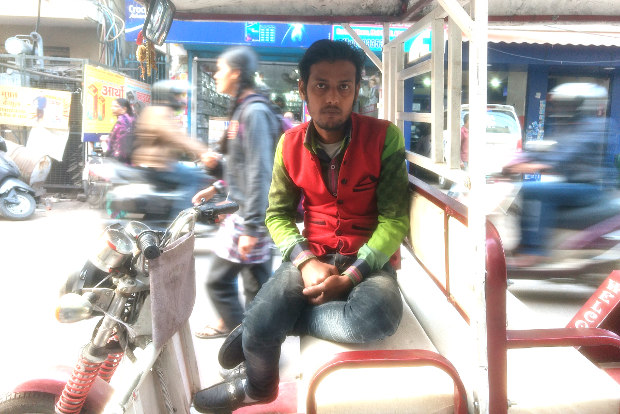
Kanpur (Uttar Pradesh): Shadab Hussain, 23, dropped out of school at age 11 to work in a leather factory in Kanpur, the oldest and largest industrial city of India’s most populous state. To support his family, parents and four siblings, he worked eight-hour shifts every day for a monthly salary of Rs 9,000.
Over eight years, he remained semi-literate, but he learned the fine art of creating new shoe designs from photos, making sure the shoes would fit, last and be comfortable. But his skills did not change his status as a casual worker with no medical or other benefits and no prospect of pension. As Hussain came of age working with cow hides, Kanpur’s once booming leather economy began to shrink, pushed to the edge by falling global demand, environmental regulations and contemporary cow politics.
Three years ago, with no prospects of a better life or a pay hike, Hussain and five friends from his mohalla (neighbourhood) quit the only job they knew. He drives an autorickshaw today; the others run roadside snack stalls.
In the 1990s, Kanpur’s leather industry employed a million workers (there are no official data), according to IndiaSpend’s inquiries with the government and leather-industry representatives. With 176 of 400 leather tanning units shutting over 10 years, according to a joint secretary–who requested anonymity since he is not authorised to talk to the media–in UP’s industries department, that number has halved.
But earnings from the auto were irregular, from Rs 15,000 to Rs 20,000 a month. So, Hussain is about to begin a job designing and fixing ‘uppers’ (the upper part of a shoe that contains the tongue) at a shoe factory in NOIDA, located in UP but an extension of the metropolitan region of Delhi, India’s richest province, by per capita income.
“They are giving me Rs 12,000 a month but the working conditions are good,” he said, describing how he would work in an air conditioned workplace, be given a managerial task, monitoring the supply line, and stand a better chance to get married.
“Kab tak auto chalaunga. Long-term mein thoda standard job chahiye na? (How long will I drive an auto to make a living? In the long term, I need a job of some standard, don’t I?)” said Hussain.
Hussain’s story is common enough in UP, a state with about 70 million unemployed young people, aged 15 to 34, comprising a fourth of jobless Indians. UP’s median age is is 23, the least in India, and jobs–as the findings of a poll commissioned by IndiaSpend reported on February 6, 2017–are this election’s leading issue.
The decline of UP’s industrial powerhouse offer clues to its future
To understand why UP–a state with 138 million voters–cannot offer gainful employment to young people like Hussain, we looked for answers in the decline of Kanpur’s leading industry, leather and leather products.
Kanpur’s financial wellbeing is important to UP. The district that houses the city and its industrial areas contributed Rs 19,000 crore–or 4%–to the state’s gross domestic product of Rs 4.6 lakh crore ($ 75 million) in 2013-14, according to UP government data. This is the fourth-highest contribution by a single district–the differences between the top four are slender–along with Agra, Lucknow and Gautam Buddha Nagar (which includes NOIDA).
With 2% of UP’s population, Kanpur employs 6% of UP’s urban workforce, according to the sixth economic census, 2012-13. Only NOIDA generates more jobs–it employs about 10% of UP’s urban working population.
UP has 16% of India’s working youth (15-34), and 20% of its child population (5-14), which will join the job market over the next decade. About 45% of voters are below 35 years of age, according to data estimate from UP Chief Electoral Officer’s website, highest proportion in India, alongwith Bihar.
The future for these children is not good. Like Hussain, nine in every 100 students in UP leave school before completing class IV, the highest primary school dropout rate among India’s large states, according to 2015-16 district information system of education data. It has one teacher per 39 school students, as IndiaSpend reported on January 5, the worst in India, and the lowest enrolment rate among large states.
To the ranks of 70 million semi-educated youth, this means, will be added more semi-educated youth. And, if Kanpur’s economy is any indication, even casual, semi-industrial jobs once available to people like Hussain may no longer exist.
How Kanpur’s leather industry lost its shine
Called ‘Cawnpore’ during the Raj, Kanpur was once among India’s leading cities. It ran its first electric tram in 1907, the same year as what was once Bombay, and seven years after trams were first introduced in Kolkata.
The first textile company—Elgin Mills—was started here, five years after the revolt of 1857, paving way for nine textile companies before the start of the 20th century, making Kanpur northern India’s biggest industrial city.
Post-independence, most large Kanpur industries hit a growth block. The textile mills went into decline, after nationalisation in the 1970s. The other big Kanpur brand, Lal Imli blankets, set up by British India Corporation in 1876, also died a slow death post-nationalisation. It was leather that led the revival of Kanpur’s manufacturing sector in the 1980s.
The district is still the leading producer of leather and leather goods—predominantly footwear—with a quarter (268) of India’s footwear factories. Footwear exports form 40% of India’s leather exports and a third of India’s leather (and leather-product) exports go from Kanpur. Multiple regions in Tamil Nadu together contribute to 34% of these exports.
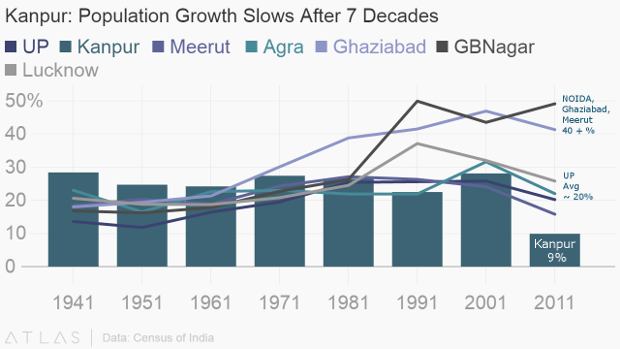
But Kanpur’s leather industry, as we said, is now in such a state of distress that large-scale migration is now evident, as the city’s population growth-rate drops.
Figures in %; Note: GBNagar = Gautam Buddha Nagar, includes NOIDA Source: Census of India
UP’s population grew 20% over the decade ended 2011, and while other large and growing UP cities, such as Lucknow, Agra and Meerut stayed close to this number, Kanpur’s growth rate fell to 9%, after seven decades of a 20% increase. Noida grew at over 40%, indicating rapid urbanisation and development.
Fall in global demand hit Kanpur the hardest
Global demand for leather, mainly from advanced economies, fell after 2014. This can be traced to the slowing of European economies and China. Leather exports from India fell by 4% in 2015-16 after growing over six years, but exports from Kanpur declined 11% over the same period.
Data obtained from Central Regional Office of Council of Leather Exports, Kanpur
Kanpur suffered especially in the footwear components and finished leather goods category. Saddlery–the leather gear used in horse-riding–is exported almost exclusively from Kanpur and its demand did not suffer, but did stagnate.
“Leather and products demand from the European Union has contracted in the past couple of years,” said Ali Ahmed, regional director (central region, Kanpur) of Council of Leather Exports.
Industry struggles to comply with green rules
Environmental regulations imposed on tanneries have crimped industry finances. The establishment of National Green Tribunal (NGT) in 2010 and its rigorous monitoring of pollution levels led to 128 of Kanpur’s 400 tanneries shutting. There are also at least 500 cases against other leather units in the principal bench of the NGT, as it records archive indicates.
“The tanning industry is known to be very polluting, especially through effluents high in organic and inorganic dissolved and suspended solids content,” noted this 2007 report. “A significant part of the chemical used in the leather processing is not actually absorbed in the process but is discharged into the environment.”
Cow politics now impacts the flow of raw material
Before 2014, about 1,000 cattle were brought to Kanpur’s largest abbatoir. Last year, after three years of political heat and emboldened Hindu vigilantism, this dropped to 500 and post-notebandi–as the scrapping of 86% of bank notes, by value, is termed colloquially–the number fell to less than 100, industry representatives told IndiaSpend on condition of anonymity because of the sensitive nature of the issue. The numbers are now rising, slowly.
“Cattle, which are now become a liability to farmers, run about 10 industries,” said Taj Alam, vice president of Uttar Pradesh Leather Industries Association. These industries include pharmaceuticals where gelatin prepared from hoofs, horns and the insides of hides are used, soaps where animal fat is used, upholstery where hair is used.
No place for the small entrepreneur
Worst impacted by the slowdown are small-scale leather shoemakers.
“Leather now represents the expensive segment in fashion merchandise,” said Mohammed Raees, a footwear maker in Begumganj, Kanpur’s traditional small-scale footwear hub. “Cheaper footwear and ladies’ purses can be produced using newly developed polymers, which people can afford and prefer as well.”
Begumganj and adjoining Chamanganj housed at least 1,000 household leather factories, according to local residents. These small businessmen had to adapt with changing market preferences. “Indians now demand cheaper stuff for regular use,” said Ahmed. “We had to change too.”
Guddu Mohammad, 50, a shoe worker, and his four associates work as skilled artisans in the only surviving household shoe making factory in Begumganj. “There were thousands of such shops in my childhood in Kanpur,” he recalled. “The large-industry revolution, which swallowed small shoemakers like us, could not accommodate all of us skilled workers.”
The party's tentative election campaign has failed to rally more groups and communities under its banner in western Uttar Pradesh.
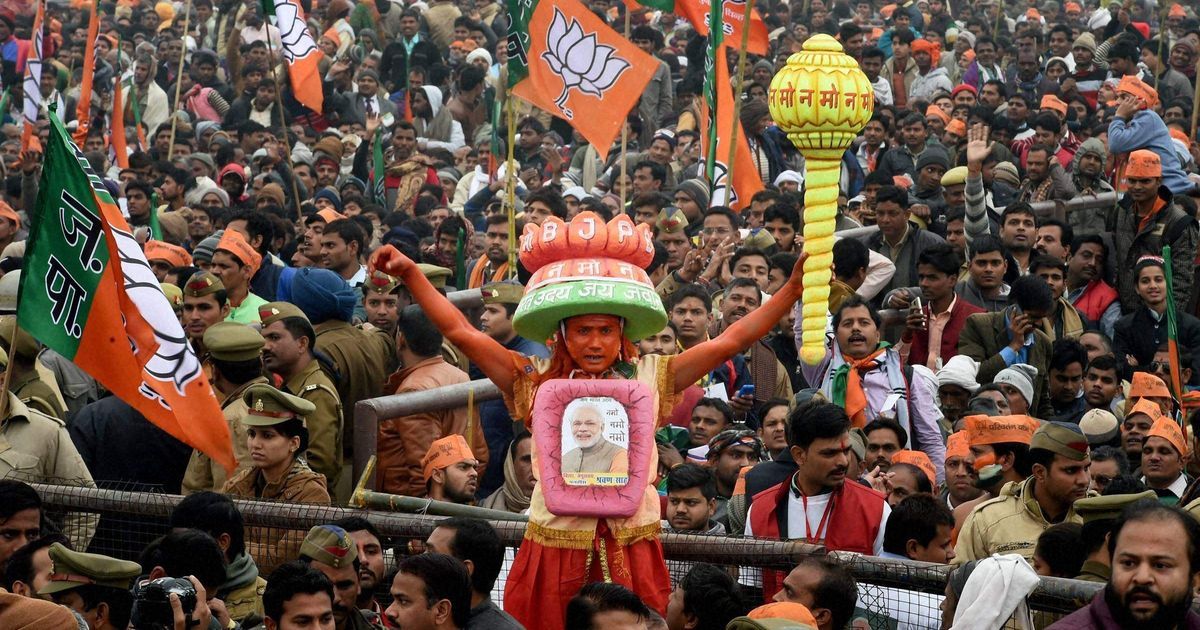
Confused and conflicting signals from the Bharatiya Janata Party to its supporters in the run up to this month’s crucial Uttar Pradesh assembly polls appear to have seriously handicapped the saffron juggernaut that had swept the state barely three years ago in the 2014 Lok Sabha elections.
The party today is trapped between its traditional approach of polarising the Hindu vote against the Muslim minority and the new stratagem of provoking a class war between the haves and the have-nots through Prime Minister Narendra Modi’s dramatic war on black money announced in early November. With only a few days left for polling in the first phase of elections, neither the old communal ploy nor the new demonetisation gambit appears to have taken off in the BJP campaign.
The absence of an emotive pitch to the voter that is normally the hallmark of the formidable Rashtriya Swayamsevak Sangh propaganda machine is palpable in western Uttar Pradesh where the polls begin later this week. Significantly, this is the same region, scorched by the communal flames of the Muzzafarnagar riots in 2013, that helped the BJP’s very successful campaign to polarise the entire Hindu vote in its favour some months later in the parliamentary polls. Even after the advent of the Modi regime in New Delhi, various groups allied to the RSS, helped covertly and overtly by BJP leaders, had kept communal tensions simmering in western Uttar Pradesh till not so long ago.
No communal problems
Yet despite initial fears that the region would be turned into a communal cauldron just before the state assembly to repeat the 2014 BJP triumph, there was little evidence of animosity between Hindus and Muslims to be seen during a recent road trip through several districts in the region including Muzaffarnagar and Shamli, which were torn apart by riots earlier. In fact, both communities seemed keen to forget the past and get on with their lives, stressing local civic problems and not the riots as the real electoral issues.
“The netas created the riots and all of us have suffered because of so much economic disruption. We don’t want to look back but need to move on,” declared a Hindu sweet shop owner in Muzaffarnagar city, echoing a common refrain from most members of the community across riot-affected areas.
Muslims seemed to consciously veer away from the subject of riots that killed, maimed and displaced so many members of their community. “We are worried about problems that face us today and not what happened in the past” was a common response from agricultural labourers, students and shopkeepers belonging to the minority community, when asked about the communal conflagration that had engulfed the region in the recent past.
Interestingly, in a recent television show, in which local residents in and around Muzaffarnagar participated , the entire audience, including a sizeable delegation of BJP supporters, loudly agreed that there was no communal tension in the region. Hindu-Muslim relations was not an issue in the coming polls, they said.
Tainted leaders
The BJP leaders from the region, such as Sangeet Som, Suresh Rana , Hukum Singh and Sanjeev Balyan, notorious for spreading communal tension, are on the backfoot.
Som, sitting MLA from Sardhana, is struggling in his constituency with many Hindus complaining that he had neglected the area.
Rana, MLA from Thana Bhawan, Shamli district is in trouble from various other caste groups in his constituency for favouring his own Thakur caste.
Hukum Singh, the BJP member of Parliament who created such a stir last year about an exodus of Hindus from Muslim dominated Kairana, is being criticised for choosing his daughter as the local candidate instead of his more popular nephew who is now contesting as a rebel.
Balyan, the BJP member of Parliament from Muzaffarnagar, who also happens to be a minister of state in Modi’s council of ministers at the Centre, is in a similar situation. A local BJP leader, who lives just few houses away from Balyan’s house in Muzaffarnagar city, shook his head sadly and claimed that although he had “captured” nine polling booths in 2014 on behalf of the BJP, he is unlikely to lift a finger this time beyond casting his own vote. “My own Jat community is very unhappy with the BJP so what can I do?” he lamented.
Disruption by demonetisation
The disarray among local BJP leaders and workers and their inability to polarise the Hindu voter partly stems from the confusion in the party created by the parallel strategy of pitting the poor against the rich suddenly introduced by the prime minister a few months ago. This unfamiliar politics of class war, never used by the Sangh or the BJP before, has alienated sections of their core base of traders, shopkeepers and farmers who have been hurt by the drastic disruption of cash flow. At the same time the party has simply not been able to convince the poor of the benefits of demonetisation particularly as they have emerged as the real victims of the unprecedented squeeze put on the cash economy.
Not surprisingly, the BJP is now hastily retreating from its earlier plan of using notebandi as its main weapon for the Uttar Pradesh polls. It is clearly on the defensive and at pains to claim that the sufferings caused by demonetisation were a temporary blip and are being falsely exaggerated by its opponents. The BJP leaders and workers hardly mention notebandi in their campaign pamphlets or posters and even Modi, in his public meeting in Meerut, made only a brief reference to it towards the end of his speech. At the Shukratal television audience show mentioned above, the BJP team, while countering sharp criticism of demonetisation by other participants, did not praise it but simply dismissed it as just a brief disruption that did not cause that much harm as opponents of the party were claiming.
The Jat anger
Unable to rally its supporters either on a communal plank or a war unleashed against the rich and corrupt, the BJP is facing defections from previously supportive groups, particularly the powerful Jat community in western Uttar Pradesh that had voted as a bloc for the party in the 2014 polls. The Jats are upset with the Modi government at the Centre for not doing enough to get them a good price for the sugarcane crop they grow in their fields. They are also increasingly restless about the delay in accepting the demand for reservation for their community and even more aggrieved with the way the BJP government in Haryana put down the Jat agitation in the state last year.
The disenchantment among the Jats with the BJP has led to the miraculous electoral revival of Rashtriya Lok Dal leader Ajit Singh, son of the late former Prime Minister and Jat patriarch Charan Singh. Not only is he taking away vital Jat votes but even the abrupt manner he was earlier evicted from the MP’s bungalow by the Modi’s government has become a matter of grievance and many members of his caste said this had hurt Jat pride.
So while the BJP is a contender in most seats in western Uttar Pradesh, its tentative election campaign and inability to rally more groups and communities under its banner means that the party may not get the kick start it would have hoped for in the first phase of the polls.