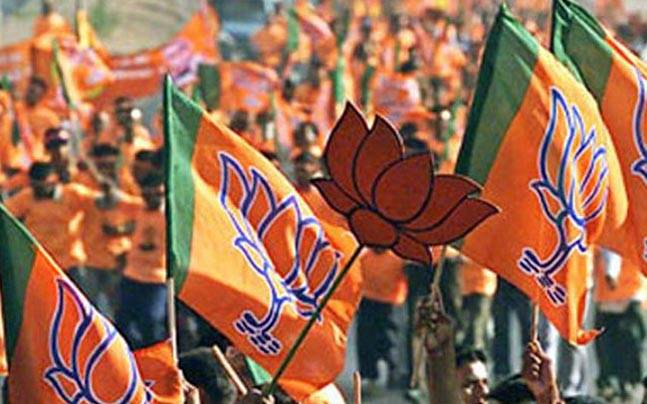
Three BJP leaders, including the district chief, were booked after they violated the mode code of conduct in Khatoli town here ahead of the Uttar Pradesh Assembly polls next month.
Cases against the party’s district chief Rupendra Saini, city president Prashant Deshval and trade union leader Ankur Singhal were lodged after they held meeting near a polling centre without the administration’s permission, SHO K P Singh said.
In another incident, the police lodged a case against BJP candidate from Budhana Assembly constituency Umesh Malichand for using a loudspeaker and possessing lathis during a procession before filing his nomination papers in Muzaffarnagar, police said.
They said procession taken out without permission.
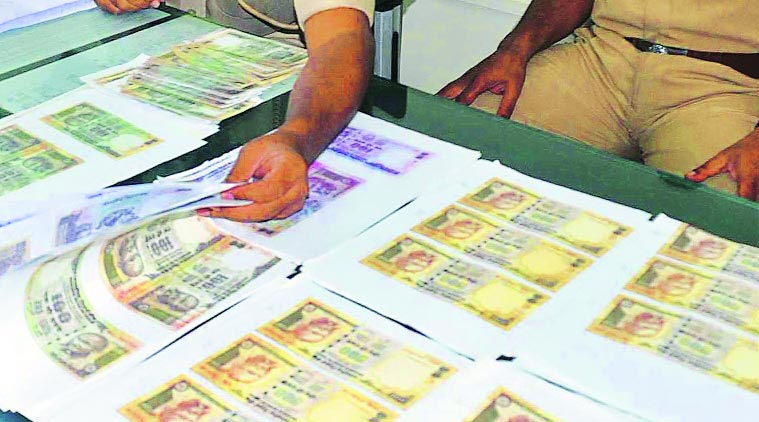
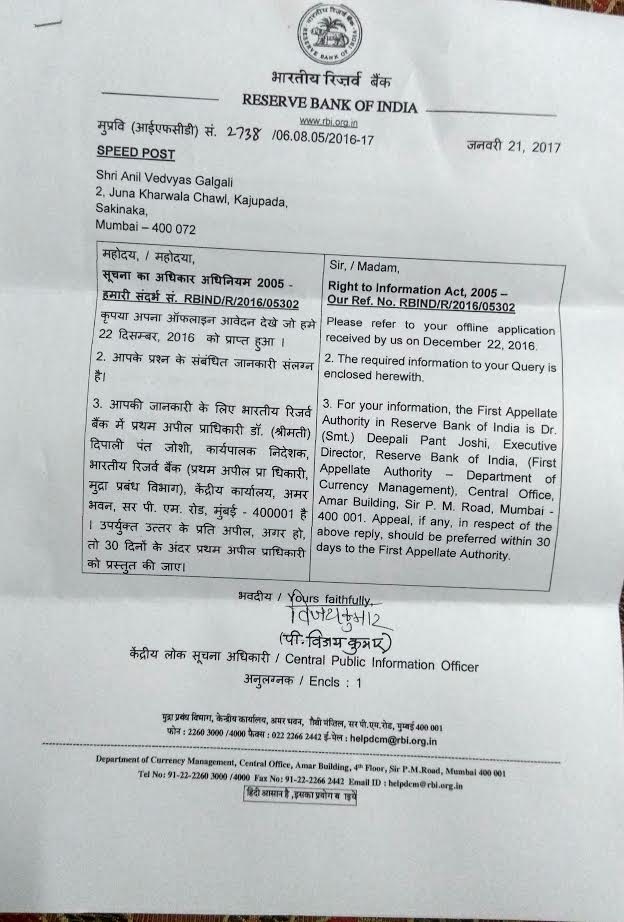
The Reserve Bank of India has admitted it has no confirmed data of the number or value of fake currencies detected since the demonetisation of Rs 500 and Rs 1,000 notes, a RTI query has revealed. The query was filed by the author, RTI Activist Anil Galgali.
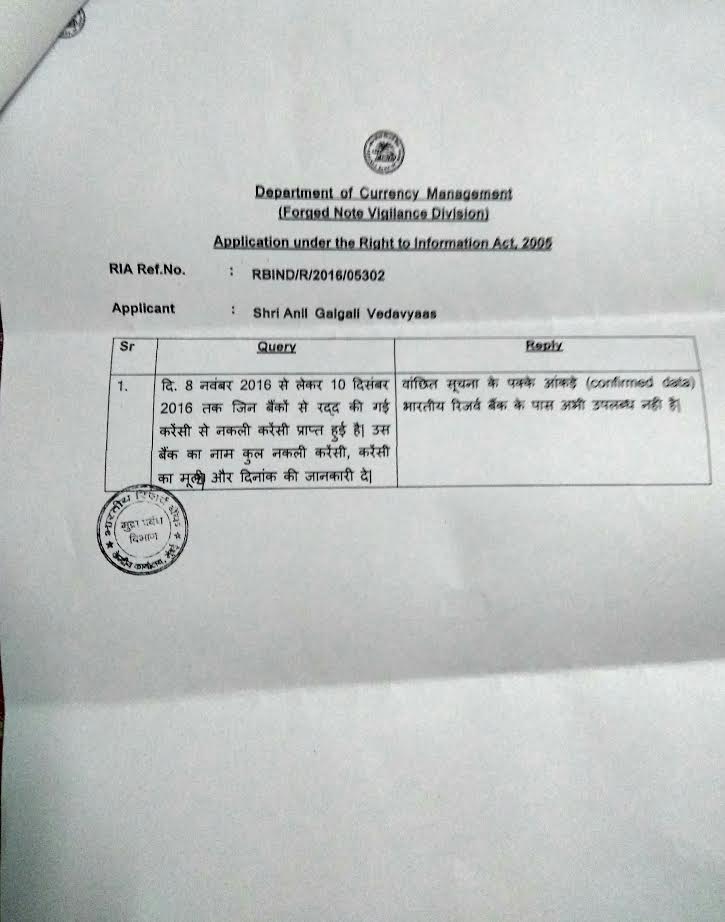
"We presently don't have the confirmed data on this query," said a reply from the RBI's Department of Currency Management (Forged Note Vigilance Division), to prominent RTI Activist Anil Galgali. In a pointed query, Anil Galgali had asked RBI to provide details of the number or value of the fake currencies detected post-demonetisation, the name of the banks, dates, etc, between November 8-December 10, 2016.
"However, the RBI has made it clear that nearly 11 weeks later, it has simply no data available on this crucial aspect. So the government's claims to demonetise as a weapon to kill fake currency is proving hollow," said Galgali. Galgali pointed out that Prime Minister Narendra Modi had said that demonetisation would help wean out counterfeit currency notes and choke terror fundings.
"The RBI's replies make it obvious that the government has failed in this endeavour or raised the bogey of fake currencies merely to implement demonetisation. It’s now up to the PM to declare the figure/value of counterfeit notes recovered, in national interest," Galgali said.
The day after the inauguration of Donald Trump as 45th president of the United States, almost three million women and men marched on the streets nationwide to show their rejection to the demonstrated sexism, xenophobia and Islamophobia of the new American president.
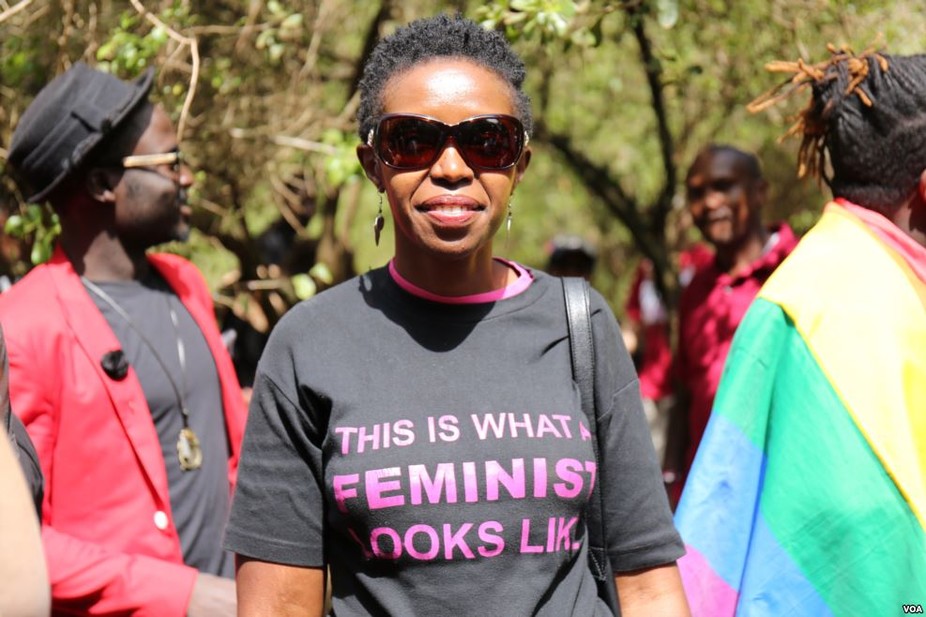
Kenyans marching in solidarity with Americans and women worldwide to protest the sexist statements of president Donald Trump. Voice of America
Americans and immigrants in the US were joined in their dissent by citizens on every continent. Thousands of Latin American marchers showed their solidarity across the region, from Mexico to Argentina. Africa and even Antarctica also showed their support.
This international march is a major achievement for the feminist movement. Feminists have finally achieved something the movement has struggled to do for decades: bring together Black, Latino and Indigenous women, the LGBT community, environmental activists, and many others groups under one umbrella.
And in adopting tactics from foreign human rights movements, American organisers and participants demonstrated a rare global and historical awareness.
Parisians joined the Women’s March on Washington, in solidarity with millions of other marches around the globe. Jacky Naegelen/Reuters
Women’s rights are human rights
This diverse coalition came out not just to protest Trump’s agenda but to state that women’s rights are human rights, and that the president of the United States is obliged to respect the rights of migrants, Muslims, Latinas and Latinos, people with disabilities and the LGBT community – under domestic and international law.
In Latin America, it was natural that women would take to the streets on this occasion. Women across the region are systematically killed and sexually abused with impunity under the same misogynistic culture that underpinned President Trump’s comments about sexual assault.
The Women’s March adds to the recent women’s movements in Latin America – Ni Una Menos and Paro Nacional De Mujeres (National Women’s Strike) among them – representing what the feminist movement has long aspired to: women’s unity around the world.
An woman at the Buenos Aires women’s march, with a sign rejecting the agenda of the US and Argentinean presidents. Marcos Brindicci/Reuters
Rarely have women’s movements and feminists managed to appeal to other identities. The most visible part of movement has, both intentionally and unintentionally, often excluded those with less privilege, like Latina, Muslim and Black feminists, by championing causes seen as narrow and concerning only white women.
Ditching the ‘nice white lady’ agenda
During the early stages of planning, the organisers of the Women’s March on Washington were accused of forwarding a “nice white lady” agenda that neglected the class, race, gender and religious issues facing non-white women. But by the end, the march’s list of speakers included not only white feminist activists like Gloria Steinem and celebrities such as Scarlett Johansson and Madonna, but also a long list of Latina, Black and Muslim feminists.
Black feminist Angela Davis speaking at the Women’s March on Washington on January 21, 2017.
The Women’s March on Washington was the first time in history that US women have helped launch an intersectional movement incorporating not only American citizens but also people around the world who are affected by US foreign policy. American women with their pink pussy hats are a symbol of meaningful unity against misogyny, racism, xenophobia and Islamophobia worldwide.
The discourse that minority and women’s rights are human rights framed the movement. Trump has spoken openly against women’s reproductive rights – seeking to restrict abortion access at home and abroad – and seems keen to dismantle the civil rights protecting minorities and migrants.
Despite his background living in liberal, gay-friendly New York City, has has also threatened to appoint Supreme Court justices that oppose the rights of gay, lesbian and transsexual people to marry.
The world did not observe the rise of Trump quietly: it marched along with American women and other minorities. This recalls the way that the world – headed by Americans – in the 1980s and 1990s marched to demand the end of Apartheid in South Africa, and to protest genocide in Argentina, Chile and Guatemala.
Mexican women protest violence against women, part of the #NiUnaMenos feminist marches of October 2016. Edgard Garrido/Reuters
Learning from the experts
The global nature and historical roots of the Women’s March were also evident in its tactics. Participants employed human rights strategies well-known in Latin America and Africa, such as naming and shaming.
Boomerangs and spirals – tactics used to mobilise international pressure against states that are violating human rights – were also at play in Washington.
Traditionally these strategies have focused on weak states, on the assumption that Western democracies have the authority to judge the human rights performance of other nations. Today, under Trump, the US is more akin to the rogue state that American scholars have previously described.
The US has long seen itself as exceptional, but Trump’s election has forced Americans to look toward other countries with experience confronting the brand of right-wing populism that Donald Trump now threatens to unleash on the US public.
It is invigorating and inspiring: if these strategies have worked in Latin America and Africa, why shouldn’t they work in the US? The feminist movement is finally going global. That’s good news for Americans, and for people of all genders, all over the world.
Author is Professor, Center for Research on North America, Universidad Nacional Autónoma de México (UNAM)
The Election Commission also stipulated that the finance minister should not mention the government’s achievements in these states in his Budget speech.
Image credit: PTI
The Election Commission of India on Monday granted the Centre permission to present the Annual Budget on February 1, but on two conditions – it should not announce schemes specific to any of the five poll-bound states in particular, and neither should the government mention any of its achievements in these states in the Budget speech.
The polling monitor further directed the governments of the five poll-bound states – Uttar Pradesh, Punjab, Goa, Uttarakhand and Manipur – to adhere to norms and not announce a full-fledged state Budget, The Indian Express reported.
The direction from the Election Commission came the same day the Supreme Court dismissed a petition demanding that the Union Budget be postponed and presented after the Assembly elections. “There is no illustration to support that presenting the Union Budget before the polls will influence voters,” the court ruled.
On January 6, the Supreme Court had rejected an appeal for an urgent hearing of a petition seeking to have the Budget Session postponed. Opposition parties had made the same appeal to the Election Commission, saying presenting the Budget before the elections would give the ruling Bharatiya Janata Party an unfair advantage.
Following Monday’s Supreme Court verdict, the Centre scheduled an all-party meeting for January 30 to discuss the Budget Session. While Parliament’s Budget Session begins on January 31, Finance Minister Arun Jaitley is expected to present the Annual Budget on February 1. The Assembly Elections will be held from February 4 to March 8, and the votes will be counted on March 11.
The girl’s body was thrown into the well and was found in a decomposed state with her hands tied.
On January 14, the Ariyalur police found the decomposed body of a minor Dalit girl who was raped and murdered allegedly by her estranged boyfriend and his three friends on December 29, 2016. Police have arrested four people in the case and have remanded them to judicial custody.
According to the police, the 17-year-old girl was in a relationship with Manikandan, the prime accused in the case, for the last one year. They both developed a relationship when they were working together. The girl was working as a daily wage labourer and Manikandan was working as a mason, police said. He was working as the union secretary of Hindu Munnani and belonged to Vanniyar caste.
Manikandan, sub-inspector of Irumbulikurichi police station, told The News Minute, “On December 26, she was kidnapped by Manikandan and was raped by Manikandan and his three friends, three days later. Then she was thrown into a well in Keezha Maligai village,” he said.
He added that the girl was one-and-a-half months pregnant. “She was pregnant and wanted to get married to Manikandan. But he wanted her to get the child aborted which led him to murder the girl,” he said.
The girl’s body was thrown into the well and was found in a decomposed state with her hands tied.
The three friends of Manikandan have been identified as Thirumurgan, Manivannan and Vetichelvan. Manikandan was arrested on January 14 and confessed to the crime. Police later arrested his friends on January 15, 2017.
A senior investigator from SC commission confirmed that rape and murder were included in the police report. “Police has included rape and murder as the accused confessed to the crime. Political groups had pressured police to question the district secretary of Hindu Munnani, Rajasekar, in this case,” he said.
However, Manikandan said that no evidence was found against Rajasekar, so he was not arrested in the case.
It's now up to the PM to declare the figure/value of counterfeit notes recovered, in national interest," the activist said.
The Reserve Bank of India has admitted it has no confirmed data of the number or value of fake currencies detected since the demonetisation of Rs 500 and Rs 1,000 notes, a RTI query has revealed.
"We presently don't have the confirmed data on this query," said a reply from the RBI's Department of Currency Management (Forged Note Vigilance Division), to prominent activist Anil V. Galgali.
In a pointed query, Galgali had asked RBI to provide details of the number or value of the fake currencies detected post-demonetisation, the name of the banks, dates, etc, between November 08-December 10, 2016.
"However, the RBI has made it clear that nearly 11 weeks later, it has simply no data available on this crucial aspect. So the government's claims to demonetise as a weapon to kill fake currency is proving hollow," Galgali told IANS.
He pointed out that Prime Minister Narendra Modi had said that demonetisation would help wean out counterfeit currency notes and choke terror fundings.
"The RBI's replies make it obvious that the government has failed in this endeavour or raised the bogey of fake currencies merely to implement demonetisation. It's now up to the PM to declare the figure/value of counterfeit notes recovered, in national interest," Galgali said.
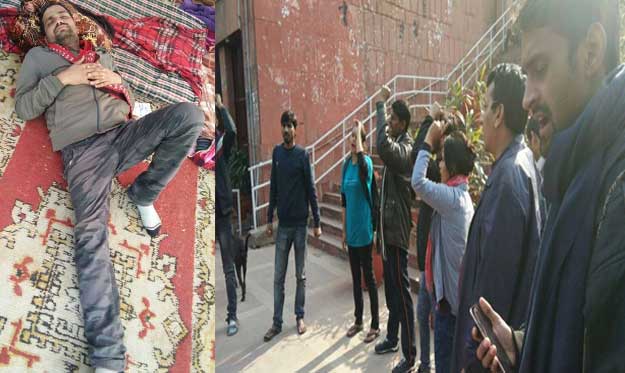
जेएनयू में अनशन पर बैठे दिलीप यादव को दिल्ली पुलिस ने किया गिरफ्तार कर लिया है। अभी कुछ देर पहले सादी वर्दी में कुछ पुलिस वाले आए और पिछले 4 दिनों से अनिश्चितकालीन भूखहड़ताल पर बैठे बहुजन छात्र दिलीप यादव को उठाकर ले गए। जब पुलिस वाले उन्हें ले जा रहे थे तो उस वक्त अनशन स्थल पर छात्रों की संख्या अत्यंत ही कम थी। इसी का फायदा उठाते हुए दिल्ली पुलिस ने उन्हें ले गई। उन्हें कहाँ ले जाया गया है, यह किसी को भी पुलिस ने नहीं बताया है। इस बात को लेकर जेएनयू के छात्रों में काफी आक्रोश व्याप्त है।
बताते चलें कि दलित-पिछड़ों के छात्रों पर जारी भेदभाव को रोकने हेतु नामांकन में वायवा अंक घटाकर तीस से दस करने, अब्दुल नाफे कमेटी की सिफ़ारिशों को लागू करने, लापता छात्र नजीब अहमद की वापसी सहित कई अन्य मांगों को लेकर दलित-वंचित समूहों के छात्र पिछले दिसंबर माह से ही आंदोलन कर रहे हैं।
जेएनयू वीसी द्वारा छात्रों की जायज मांगों को अनसूना करते हुए 15 छात्र नेताओं को ही निलंबित कर दिया है, जिनमें सारे के सारे दलित, पिछड़े, आदिवासी व अल्पसंख्यक समुदाय के छात्र हैं। अनशनकारी छात्र नेता दिलीप यादव को भी निलंबित कर दिया गया था। छात्रों का आरोप है कि विश्वविद्यालय प्रशासन जेएनयू में भी एचसीयू की भांति दूसरा रोहित बेमुला बनाने पर आमादा है।
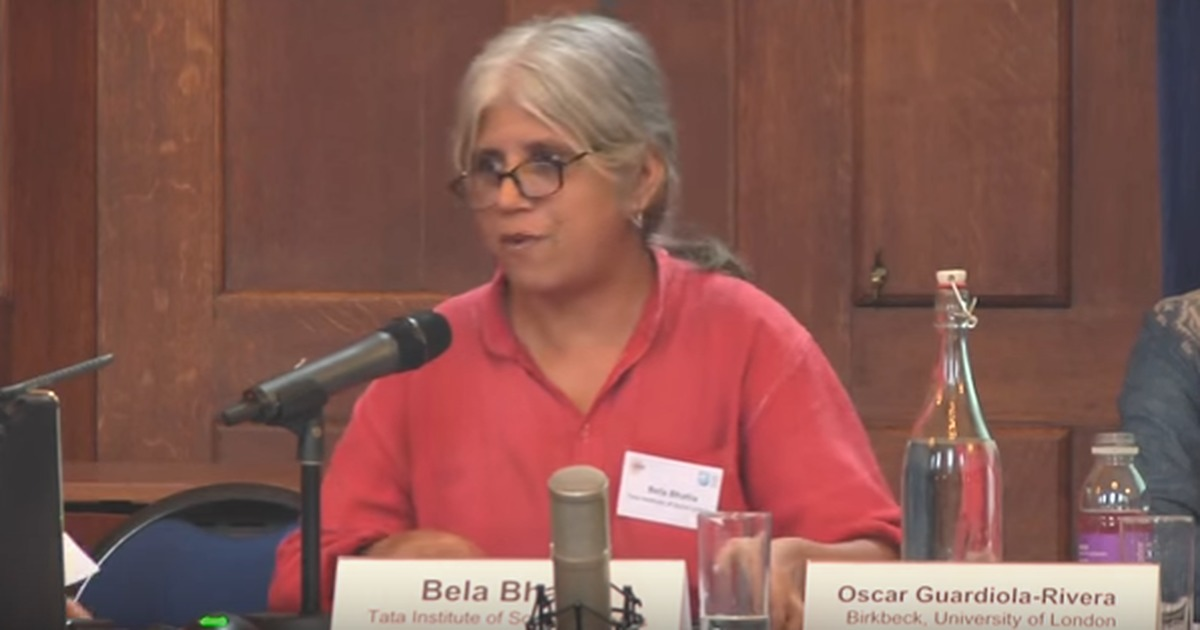
Bela Bhatia, researcher and human rights defender is not the first to have been threatened by a mob, clearly enjoying the protection and patronage of the powers that be, and probably will not be the last.
Today, Ms Bhatia has shared this account of what actually happened,
“ I have been attacked by a mob of 30 or so men who came in a white bolero-type vehicle and mobikes. This was the beginning. Later it became big and ugly. They threatened their way inside the house.
“They said I would have to leave the house immediately or they would burn the place. Somehow I persuaded them to allow me to change and that I would leave the house right then. I managed to call the collector and alert him to what was happening. I locked the house and came out. They had got the landlady to come out and were threatening her that she must see to it that I move out immediately.
“I kept reassuring them that I would asap. That my landlord and his sons had been called to the thana yesterday. And that they have already communicated to me that I must leave. They were very belligerent and kept threatening to break the lock and burn. The sarpanch had come by then and was watching.
“After about half hour police arrived from Parpa than a including the thanedar. The belligerence of the mob continued.”
Bhatia has been in the crosshairs of the Chhattisgarh administration ever since she helped tribal women register an FIR against security personnel for gang rape and grievous sexual assault last November, had reported The Hindu.
बेला का बेघर होना हमारे गणतंत्र में गण के सर पर छत का ना रहना है
आज खबर मिली कि बेला भाटिया को छत्तीसगढ़ के गाँव से धमका कर घर छोड़ने का अल्टीमेटम दिया गया है। मैं बेला को पिछले कोई बीस साल से जानता रहा हूँ। हम देश के सार्वजनिक जीवन में जिस सादगी, समर्पण, साहस और संकल्प की कल्पना करते हैं, उसकी जीती जागती मिसाल है बेला भाटिया। देखने में नाजुक, लेकिन स्टील सी मजबूत। नम्र, संकोची और शर्मीली लेकिन धुन की पक्की, जिसे दुनिया का कोई लोभ या भय हिला न सके। एक तरफ हम अफ़सोस करते रहते हैं कि ऐसे लोग हमारे देश में कितने कम हैं, दूसरी तरफ ऐसे लोगों का जीना दुश्वार करते रहते हैं। कितना पाखंडी है हमारा समाज!
बेला के बारे में सोचते हुए कई तस्वीर तैरती हैं …
नर्मदा बचाओ आंदोलन के साथ काम करने के बाद धीरूभाई शेठ को मिलने CSDS आई बेला… "कुछ सीखना चाहती हूँ"
इंग्लैंड की कैंब्रिज यूनिवर्सिटी में नक्सली आंदोलन पर रिसर्च कर रही बेला … "सिर्फ रिसर्च से क्या फायदा?"
हमारे आग्रह पर CSDS में फैकल्टी में शामिल हुई बेला … "आपको निराशा होगी, मैं सिर्फ अकादमिक नहीं हूँ"
उन दिनों 'संजय कॉलोनी' नामक झुग्गी-झोंपड़ी कॉलोनी में एक झुग्गी में रहने वाली बेला … "नहीं, कोई ख़ास तकलीफ नहीं होती, जैसे सब लोग रह लेते हैं, वैसे ही हम भी" नक्सली आंदोलन पर अपनी नम्र शैली में बहस करती बेला … "मैं हिंसा का समर्थन कैसे कर सकती हूँ? लेकिन आप जानते हैं…"
CSDS छोड़ती हुई बेला … "मेरा मन नहीं लगता ऐसी जगह पर, फील्ड में रहना चाहती हूँ"
मैं यहाँ बैठा उसके बारे में फेसबुक पर लिख रहा हूँ। बेला एक बार फिर अपना घर छोड़ने पर मजबूर आज रात सोच रही होगी कि कल कहाँ जाऊं। लेकिन मैं जानता हूँ हिम्मत नहीं हारेगी बेला … "मेरे साथ जो हुआ वो बड़ी बात नहीं है, लेकिन आप सोचिये वहां आदिवासी महिलाओं के साथ क्या बीती है" आपके इस जज्बे को सलाम, बेला! ज़िंदाबाद! ::: योगेन्द्र यादव