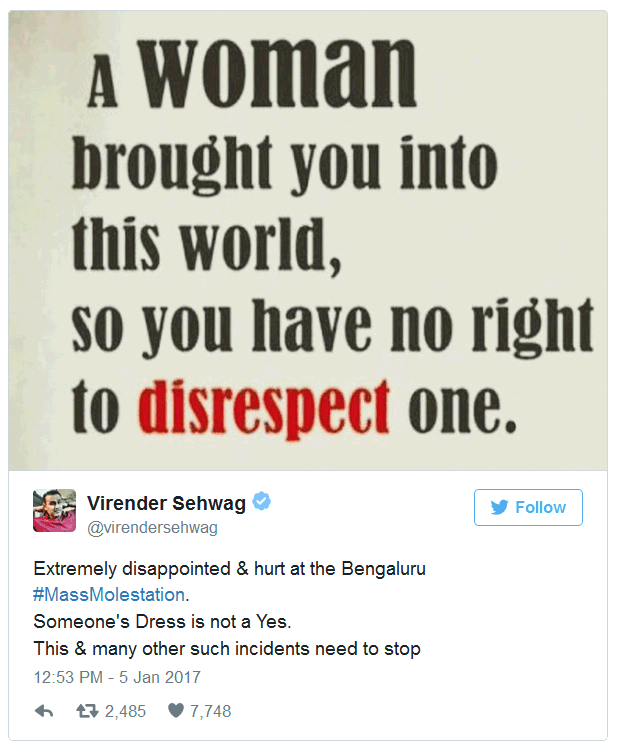
The outrage over sexual attacks against female revellers in Bengaluru on new year’s eve further grew after the video of a woman being groped and molested on a street in Kamanahalli locality the same night went viral. The main accused has been identified and four arrests have been made in connection with this incident, according to this report in Firstpost.
The new year’s eve sexual attacks against female revellers in Bengaluru may have generated nationwide outrage, but most such cases end up with no punishment: No more than one in 100 cases registered in Karnataka under Section 354 of the Indian Penal Code (IPC)–“Assault on women with intention to outrage her modesty–” ended in a conviction in 2015, according to National Crime Records Bureau (NCRB) data. Nationwide, one in 10 such cases ended in conviction, 10 times better than Karnataka’s record.
The outrage further grew after the video of a woman woman being groped and molested on a Bangalore street the same night went viral.
In 2015, of 5,112 cases registered under Section 354, only 69 (1.3%) ended in conviction. Of the 9,118 persons arrested in these cases, only 107 (1.2%) were convicted.
Across India, 82,422 cases of sexual assault were registered, of which 8,408 (10%) ended in conviction. Of 101,571 persons arrested for these attacks, 11,342 (11%) were convicted.
While the number of cases under this section rose by 92% from 42,968 in 2011 to 82,422 in 2015, conviction rates declined from 16% in 2011 to 10% in 2015.
Maharashtra reported the most sexual assaults (11,713), followed by Madhya Pradesh (8,049) and Uttar Pradesh (7,885) in 2015.
Source: National Crime Records Bureau; *Read as cases registered for ‘incidents’, and persons arrested for ‘persons’
The rise in cases registered can be correlated to the change in laws–which were tightened, possibly leading to higher reporting–after the 2012 gangrape of a physiotherapy student, now widely known as Nirbhaya, which sparked nationwide protests and outrage.
Conviction rates reduce by more than 1/4th for Section 509 cases
In 2015, 8,685 cases were registered in India under Section 509 of the IPC–“Insult to modesty of women”, of which no more than 870 (10%) resulted in conviction, a drop of 33 percentage points from 43% conviction rate in 2011.
Under this section, 9,870 were arrested across India, of which 1,108 were convicted (11%).
*Read as cases registered for ‘incidents’, and persons arrested for ‘persons’
In Karnataka, of 154 cases registered under Section 509 in 2015, no more than seven (5%) ended in a conviction. Of the 163 persons arrested in these cases, nine (6%) were convicted.
(Saha is an MA Gender and Development student at Institute of Development Studies, University of Sussex.)
How the international community is failing to protect the Rohingya people.
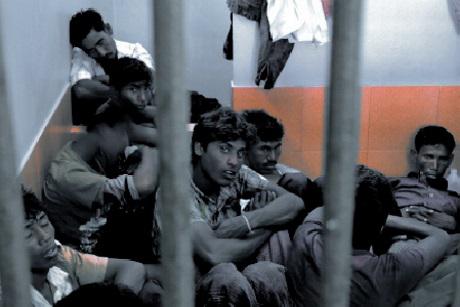
Rohingya. flickr/photographer AK Rockerfeller.
At this moment, a genocide is happening in Myanmar of which most of the world is unaware. On 9 October 2016, three border posts were attacked in Western Myanmar by an unknown armed group, killing nine policemen. Following the attack, Myanmar government forces have been conducting a coordinated attack on the civilian population which includes mass killing, rape, torture and the burning of houses and crop fields.
Because security forces have locked down the whole area, it is difficult to verify the reports of violence. Utilising independent sources, Voice of America has reported that the death toll could be 150 to 300 so far. Based on satellite imagery, Human Rights Watch (HRW) has observed that 1,250 houses or buildings have been destroyed as of 18 November. As a result of the military crackdown, thousands of people have been forced to leave their homes; many are attempting to enter neighbouring Bangladesh by crossing the Naaf river. However, the Bangladeshi government has refused to accept more Rohingya, stating that the highly-populated country is already hosting half a million Rohingya who have fled the previous violence.
The attacks on the Rohingya people in Myanmar are not a new phenomenon. The Rohingya have had an uneasy relationship with the state since Myanmar's independence in 1948. The Rohingya are an ethno-linguistic-religious minority group in Myanmar. They are followers of Sunni Islam in the Buddhist-majority state. The northern Rakhine State (formerly Arakan) where most Rohingya people live is in the middle of South East Asia and South Asia.
The Myanmar government argues that the Rohingya people have migrated from neighbouring Bangladesh and so denies them citizenship rights. However, the Rohingya people can trace their origin in the Rakhine State back for hundreds of years. Rakhine State was once an independent Arakan kingdom comprising north-western Myanmar and south-eastern Bangladesh before being taken over by Burma in 1784.
Within an independent Burma/Myanmar, the Rohingya people have faced widespread persecution in 1978, 1991-92, and 2012. This is in addition to continued discrimination and the denial of basic rights including freedom of movement, the right to livelihood, education, childbirth (the Rohingya are restricted to two children per family), and many aspects of everyday life. As a result, many of the Rohingya have left home and undertaken dangerous journeys in search of safe shelters. There are a significant number of Rohingya people in Bangladesh, Malaysia, Saudi Arabia, Pakistan, India, Thailand, and Indonesia.
Some have reached as far as Australia by boat though many died on the journey there. Still, there are 1.1 million Rohingya people left in Myanmar and the government wants to drive them out. A recent study by the Allard K. Lowenstein International Human Rights Clinic at Yale Law School demonstrates that the actions and inactions of the government satisfy the criteria for genocide as defined by the 1948 Convention on the Punishment and Prevention of the Crime of Genocide.
Another study by Human Rights Watch in 2013 found strong evidence of crimes against humanity and ethnic cleansing against the Rohingya committed by the Burmese authority, local Arakanese people, and Buddhist mobs. The report notes an incident on 23 October 2013 where at least 70 Rohingya were killed in a massacre in Yan Thei village in Mrauk-U Township by Arakanese mobs; state security forces indirectly helped in the massacre rather than protecting people. The death toll included 28 children who were hacked to death, including 13 under the age of 5.
Of the five acts of genocide mentioned in the 1948 Convention on Genocide, four have been committed against the Rohingya in Myanmar since 1978.
A research article published in the Pacific Rim Law & Policy Journal in 2014 also concluded that there is a slow burning genocide in the Rakhine State. Of the five acts of genocide mentioned in the 1948 Convention on Genocide, four have been committed against the Rohingya in Myanmar since 1978. The article concludes that: “the ruling Burmese, both the Buddhist society and the Buddhist state, have committed the first four acts, including intentional killing, harm to body and mind of the victims as a group, inflicting on the group conditions of life calculated to bring about its physical destruction in whole or in part, and preventing births.”
Researchers from the International State Crime Initiative (ISCI) at Queen Mary University of London School of Law, after months of field work in the Rakhine State last year, also concluded that “Myanmar state’s policies are genocidal.”
It’s clear that there’s an ongoing genocide against the Rohingya people in Myanmar. The state has not only failed in their duty to protect but also occasionally participated in the atrocities. However, that has not stopped powerful states and large corporations boosting business ties with Myanmar. The Myanmar state counsellor and Nobel Peace Prize winner Aung San Suu Kyi has clearly failed to stop the mass destruction of people and take any action against the military forces.
The international community has done little to stop the suffering of the Rohingyas. They have criticised Myanmar for human rights violations and asked for an independent investigation. However, it’s naïve to ask authorities to investigate the very crimes they support or even perpetrate themselves.
Once the Rohingya people took arms to solve their problems. However, the post-9/11 'war on terror' has made armed Muslims guerrilla-terrorists in the eyes of global media and western states. In consequence, there is currently no strong movement among the Rohingya people. Myanmar’s neighbours and regional powers, such as China and India, are busy securing the country’s untapped market.
The UN and human rights organisations focus on the humanitarian aspect of the problem: urging the Bangladeshi government to provide shelter to the fleeing Rohingyas. However, these organisations often lack the strong voice needed to deal with the violence in Rakhine state. Myanmar will not heed calls for human rights if such calls aren't backed by credible hard power.
The regional and global players are not sincere enough to engage with Myanmar strongly. Perhaps the only remaining solution lies in the hands of the people, who can put pressure on their governments to take immediate and serious action.
(Ashraful Azad is an assistant professor in the Department of International Relations, University of Chittagong, Bangladesh).
(This article was first published on openDemocracy).
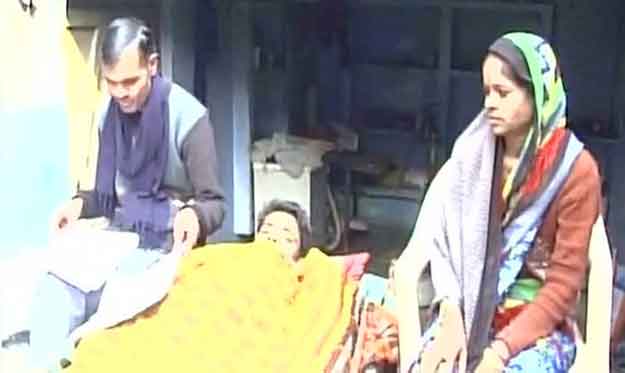
नई दिल्ली। उत्तरप्रदेश में रहने वाले एक परिवार ने प्रधानमंत्री और राष्ट्रपति से अपने बेटे के लिए इच्छा मृत्यु की मांग की है। आपको बता दें कि यूपी के आगरा में रहने वाले विपिन नाम के एक लड़के को अनीमिया नाम की बीमारी है। कहने को तो यह बीमारी लाइलाज नहीं है लेकिन उसके पिता पर इलाज का खर्च उठाने के लिए पैसे नहीं हैं।
जिसको देखते हुए विपिन के पिता ने राष्ट्रपति प्रणब मुखर्जी, प्रधानमंत्री नरेंद्र मोदी, यूपी के मुख्यमंत्री अखिलेश यादव को इच्छा मृत्यु को लेकर पत्र भी लिखा है। न्यूज एजेंसी ANI से बातचीत करते हुए विपिन के पिता ने कहा, ‘कृपया मेरे बेटे का इलाज करवा दीजिए या फिर अगर इलाज संभव नहीं है तो उसे इच्छा मृत्यु की इजाजत दे दी जाए। हम लोग अब इलाज का खर्च नहीं उठा सकते।’
आपको बता दें कि सुप्रीम कोर्ट ने 2011 में निष्क्रिय इच्छामृत्यु को वैध करने का फैसला सुनाया था। इसमें कहा गया था कि जो शख्स काफी वक्त से बीमार हालत में स्थिर है उसे इच्छामृत्यु की इजाजत है।
हालांकि, यह कानून उन लोगों के विषय में संशय पैदा करता है जिनका फिलहाल इलाज हो सकता है। भारत सरकार पिछले महीने इससे जुड़ा एक ड्राफ्ट बिल भी लेकर आई थी। उसमें लोगों को मुद्दे पर राय देने के लिए कहा गया था।
The Marxist philosopher, art critic and novelist, who passed away on January 2, popularised complex ideas and helped bring art into the mainstream.
Berger considered how through history and visual representation the male gaze has constrained women. John Berger's Ways of Seeing
The opening to John Berger’s most famous written work, the 1972 book Ways of Seeing, offered not just an idea but also an invitation to see and know the world differently: “The relation between what we see and what we know is never settled,” he wrote.
Berger, who died on January 2 at the age of 90, has had a profound influence on the popular understanding of art and the visual image. He was also a vibrant example of the public intellectual, using his position to speak out against social injustices and to lend his support to artists and activists across the world.
Berger’s approach to art came most directly into the public eye in four-part BBC TV series, Ways of Seeing in 1972, produced by Mike Dibb and which preceded the book. Yet his style of blending Marxist sensibility and art theory with attention to small gestures, scenes and personal stories developed much earlier, in essays for the independent, weekly magazine New Society (between 1951 and 1961) and also in his first novel A Painter of Our Time, published in 1958.
The BBC programmes brought to life and democratised scholarly ideas and texts through dramatic, often witty, visual techniques that raised searching questions about how images – from European oil painting to photography and modern advertising – inform and seep into everyday life and help constitute its inequities. What do we see? How are we seen? Might we see differently?
“Berger’s theoretical legacy”, the Indian academic Rashmi Doraiswamy wrote recently, “is in situating the look in the context of political otherness”. Berger’s idea that looking is a political act, perhaps even a historically constructed process – such that where and when we see something will affect what we see – comes across most powerfully in the second episode of Ways of Seeing – which focused on the male gaze.
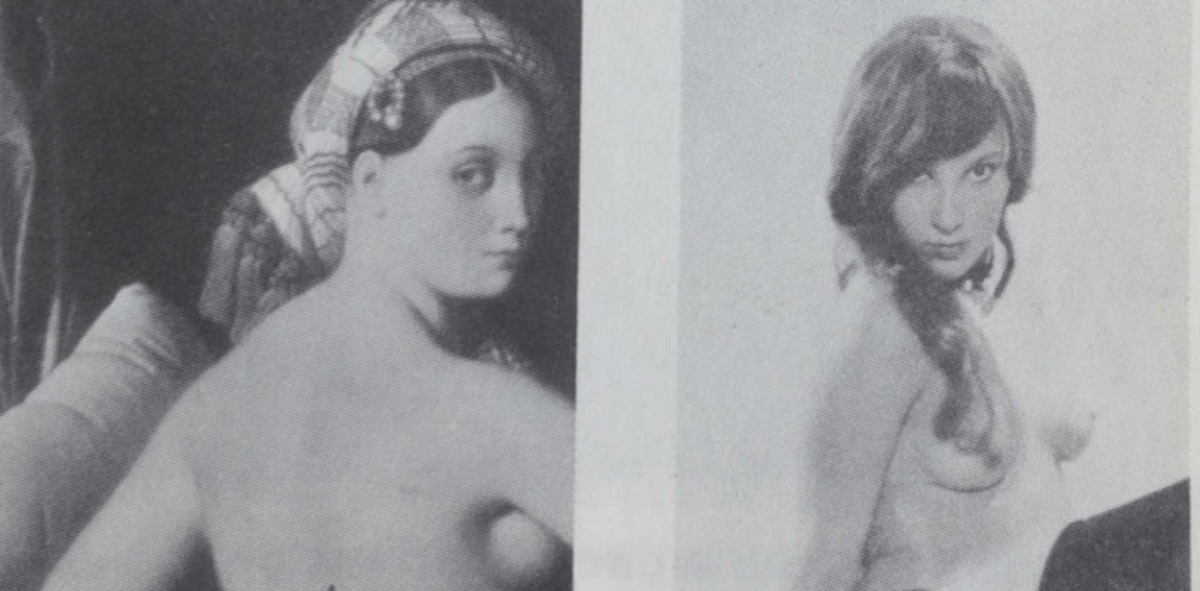
Here Berger showed the continuities between post-Renaissance European paintings of women and imagery from latter-day posters and girly magazines, by juxtaposing the different images – showing how they similarly rendered women as objects. Berger argued that this continuity constrained how certain forms of femininity are understood, and therefore the terms on which women are able to live their lives. He identified a splitting of the European woman’s consciousness, in which she:
has to survey everything she is and everything she does because how she appears to others, and ultimately how she appears to men, is of crucial importance for what is normally thought of as the success of her life.
How we see
Historical context, scale, and how we see were recurring themes in Berger’s writing, films, performance and in his collaborative photographic essays with Jean Mohr, Anne Michaels, Tereza Stehliková and others.
Images need narratives to make sense. Verso books
Berger’s essays and books on the photograph worry at the political ambiguity of meaning in an image. He taught us that photographs always need language, and require a narrative of some sort, to make sense.
He also took care to differentiate how our reaction to photographs of loved ones depends on our relationship to the person portrayed. In A Seventh Man, a collaborative book with Jean Mohr on Turkish migrant workers to Germany in the 1970s, he put it simply:
A photograph of a boy in the rain, a boy unknown to you or me. Seen in the darkroom when making the print or seen in this book when reading it, the image conjures up the vivid presence of the unknown boy. To his father it would define the boy’s absence.
Under the skin
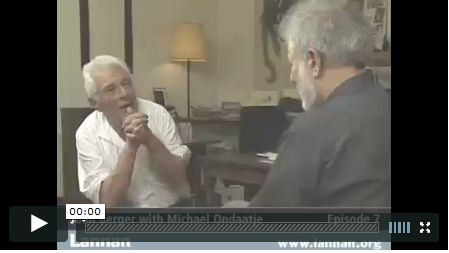
Because he had been a painter, Berger was always a visual thinker and writer. In conversation with the novelist Michael Ondaatje he remarked that the capabilities of cinematographic editing had influenced his writing. He identified cinema’s ability to move from expansive vistas to close-up shots as that to which he most related and aspired.
Click here to view video. Credit: The Conversation
Certainly Berger’s work is infused with a sensitivity to how long views – the narratives of history – come alive only with the addition of “close-up” stories of human relationships, that retell the narrative but from a different angle. For instance, writing about Frida Kahlo’s compulsion to paint on smooth skin-like surfaces, Berger suggested that it was Kahlo’s pain and disability (she had spina bifida and had gone through treatments following a bad road accident) that “made her aware of the skin of everything alive —- trees, fruit, water, birds, and naturally, other women and men”.
The character in Ondaatje’s novel, In the Skin of a Lion, to whom he gave the name Caravaggio, was partly inspired by Berger’s essay on the painter. In that essay, Berger wrote of a feeling of “complicity” with the Renaissance Italian artist Caravaggio, the “painter of life” who does not “depict the world for others: his vision is one that he shares with it”.
Berger’s writerly inclinations and sensitivities seem to echo something of the “overall intensity, the lack of proper distance” for which Caravaggio was so criticised – and which Berger so admired. This intensity was not a simple theatricality, nor a search for something truer to life, but a philosophical stance springing from his pursuit of equality. He gave us permission to dwell on those aspects of our research or our lives that capture us intensely, and to trust that sensitivity. His was an affirmative politics in this sense. It started with a trust in one’s intuitions, along with the imperative to open these up to explore ourselves as situated within wider social and historical processes.
Reflecting on his written work, Berger wrote in the recent Penguin collection Confabulations:
What has prompted me to write over the years is the hunch that something needs to be told and that, if I don’t try to tell it, it risks not being told.
He knew very well that writing has its limitations. By itself, writing cannot rebalance the inequities of the present or establish new ways of seeing. Yet he wrote with hope. He showed us in his work and – by example – other possibilities for living a life that was committed to criticising inequality, while celebrating the beauty in the world, giving attention to its colour, rhythm and joyous surprises. We remain endowed and indebted to him.
(Yasmin Gunaratnam is Reader in Sociology, Goldsmiths, University of London).
Was it really about "Number 2 ka dhan"? Photo credit: Business Standard
When demonetisation was announced on 8 November, 2016, our research team at Equitymaster thought it was a bold reform…a potential game-changer for the Indian economy.
But we don't simply form an opinion and go on vacation. We continue to monitor the facts, the numbers, and the reality on the ground. And if the truth demands it, we change our position.
As the influential 20th century economist John Maynard Keynes put it:
When my information changes, I alter my conclusions. What do you do, sir?
This way of thinking and processing information stems from our more than two decades of experience tracking, analysing, and evaluating stocks.
As the demonetisation saga unfolded, we saw the flaws…the big loopholes…the poor planning and execution. And we warned readers that demonetisation might not be the magic wand Mr Modi said it would be.
And now, a not-so-shocking Bloomberg report confirms our suspicion.
On 8 November, the demonetisation drive rendered high-denomination notes worth Rs 15.4 trillion worthless. PM Modi expected about Rs 5 trillion of that amount to remain undeclared as it may have escaped the tax net illegally.
But as per Bloomberg, 'people with knowledge of the matter' have disclosed that banks have received Rs 14.97 trillion as of 30 December 2016, the deadline to exchange the old bank notes.
That means 97% of the Rs 500 and Rs 1,000 notes in circulation until 8 November have returned to the banks.
Commentators say that's a big blow to Mr Modi's fight against black money.
But we have a question: Was this really a fight against black money?
Ask any random, illiterate stranger on the street who they think controls the largest chunk of black money in the system.
Without a single doubt, they will point to politicians and political parties.
It is strange how street wisdom could escape the mind of the country's prime minister.
If his fight was seriously against black money and corruption, he should have targeted the very root – electoral corruption.
A piece in Business Today nails the problem:
The decisive role money plays in polls creates a vicious cycle of corruption. A candidate who spends crores on his election goes on a recovery spree to make his investment pay back by all means, howsoever dubious. It does not take long for the politician-bureaucrat nexus to develop for making money. This unholy alliance between the two most powerful instruments of governance makes corruption unstoppable.
But instead of uprooting black money from the political parties, Modi has done just the opposite. In the so-called fight against black money, a key beneficiary of black money has been conveniently overlooked – the 1,866 political parties in India.
A draconian law is allowing political parties to get away with hundreds of crores in anonymous donations. Much of it is in cash, which the parties can deposit in a bank account without scrutiny.
Meanwhile, you and I must give detailed explanations for every deposit we make. Either now, or when the Income Tax officials come calling.
Something is not right. In fact, it's disgusting, this state of affairs.
Vivek Kaul, our big-picture expert, has been unravelling the truth behind the demonetisation drive ever since Modi announced it on 8 November, 2016.
Now he is on a mission to bring back equality between the people and the political parties.
But his success depends on you. Vivek asks you to sign a petition that he promises to send to the president of India requesting that Section 13A of the Income Tax Act be repealed.
Your signature will help him get closer to his goal of 25,000 signatures by 6 January 2017 (as I write he has already crossed 21,486 signatures).
If you go by what Section 13A of the Income Tax Act 1961 says, then you know political parties in India are special…They get privileges that ordinary mortals like you and I can't ever expect.
Like for instance, during the notebandi drive, political parties were free to deposit Rs 500 and Rs 1,000 notes in their bank accounts…no questions asked! (As long as the amount per donor was less than Rs 20,000).
But you and I had to furnish an identity proof while depositing our hard earned demonetised money.
Well, there is no denying that we are losing the fight for equality…But all is not lost yet.
Join over 21,000+citizens who have signed a petition to set this right…
Shirish Kunder, hubby of Farah Khan’s fitting response to obtrusive questioning on the faith of their offspring
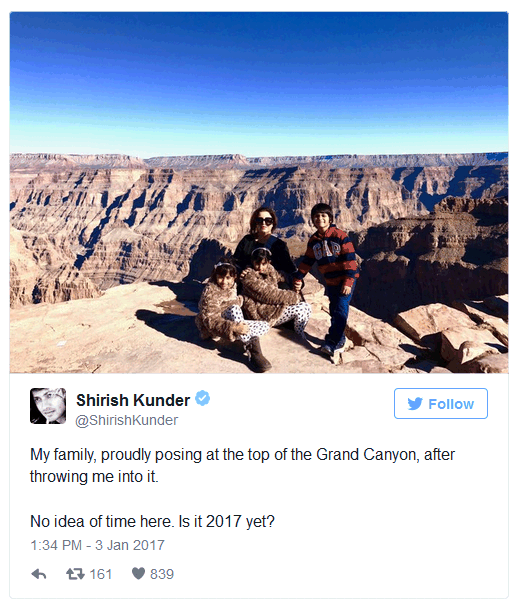
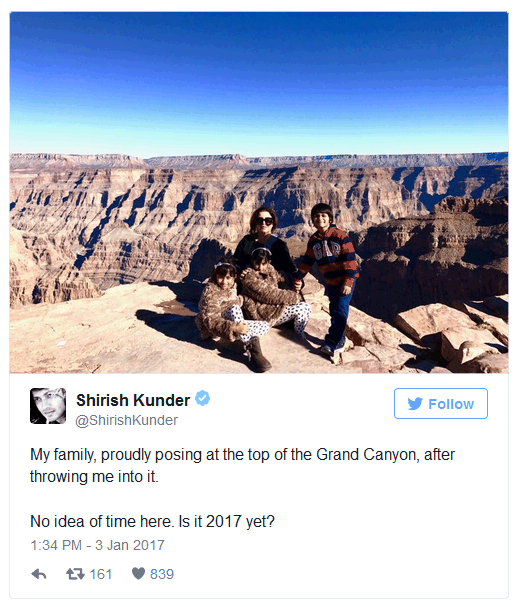
It began, as it almost always does with a photograph of this foursome at the Grand Canyon celebrating the onset of the New Year far away from home. Uploaded on twitter. No sooner had the photo been uploaded then the intrusive and offensive questioning began.
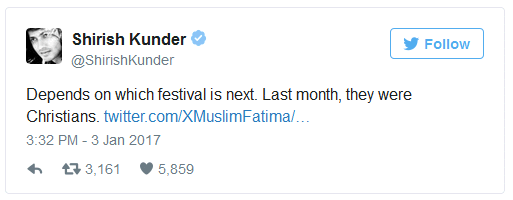
Are your children Hindu or Muslim, one ‘Fatima Arya’ began… Shireesh who has been known to say that he only takes to twitter when angry flashed back a response that has gone viral.
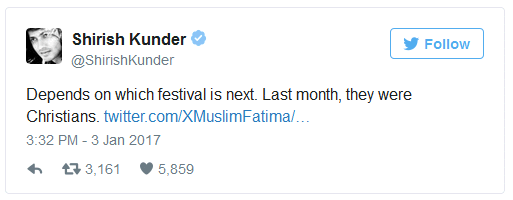
“Depends on which festival awaits us the next month. Last month they were Christians!”
The increasingly offensive and obtrusive nature of the social media has, under the new India been vocally inquisitive of the religion of the offspring of celebrities.
Recently Tina Dhabi and Mohammad Shammi were both trolled. Tina for tying the knot with her Muslim fellow IAS topper and Shammi for sharing his wife’s photograph that was too revealing for the Muslim hawks.
When CBI was faced with incriminating documents of bribery and corruption in high places, it simply passed the dirty job to the IT department and looked the other way. In sharp contrast is how the agency deals with ordinary citizens and human rights defenders
This morning, on January 5, newspapers reported how in a surprise and hastily passed order by the IT Settlement Commission (ITSC) the Sahara group got sudden immunity when the tax panel, the ITSC that had earlier rejected the application of the company suddenly on September 5, 2016 re-admitted it and accepted the companies claim that the seized papers are not real evidence!
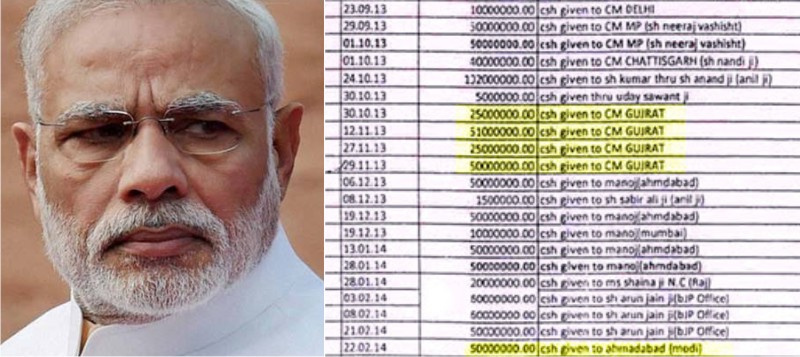
The ITSC order and other incriminating documents are part of the ongoing legal effort in the Supreme Court. The evidence so easily dismissed by the ITSC (that it discusses at length in the order) includes the loose sheets and computer print-outs which form the ‘Sahara diaries’ that have alleged payoffs to over 100 politicians from more than 14 parties. This had created a political storm in mid-November when the allegations became public though much of the electronic media chose to ignore them.
A petition pressing for a Supreme Court monitored investigation on the Sahara diaries was filed by Prashant Bhushan in the Supreme Court on November 15, 2016 and the next hearing is now scheduled for January 11, 2016. There were entries suggesting payments to several influential politicians.
What is most suspicious is that the ITSC order has concurred with Sahara’s claim that the “evidentiary value” of the “loose sheets” recovered during the raids “could not be proved” by the Income Tax Department.
The real question today however is whether the ITSC has completely ignored the “Appraisal report of the Income Tax Department itself that had held to the contrary and the incriminating supporting documents. This report is dated February 27, 2014.
Volume 3 and 4 of this Appraisal report have been filed today in the Supreme Court by Common Cause. The report was prepared after detailed questioning of relevant individuals in the Birla group by the department. A quick perusal of parts of the report and the documents annexed to the report, allegedly shows offences of bribery, corruption and black money.
At page 16 of the Appraisal report, IT Department recorded the documents which were seized during the raid. Regarding Annexure A-1, IT Department has stated: “This is a handwritten notebook containing page 1-49. This contains record of certain transactions relating to receipt and payment of unaccounted cash amounts under various heads. This pertains to the period from July 2010 to March 2012. This is the most incriminating document seized during the raid.” Regarding Annexure A-2, the IT Department has stated: “This annexure is a bunch of loose papers containing pages 1 to 16. These papers contain record of several transactions which are apparently unaccounted. Page nos. 9 and 10 contain record of certain money transactions under account heads similar to account heads mentioned in Annexure A-1”.
[[Some of the sensational items recovered s during the raids were seized documents which contain a record of cash transactions from May 2013 to March 2014. The said pages were signed by the Income Tax Officer, one person from the Sahara group and two witnesses at the time of the seizure (dated November 22, 2014 along with signatures]]
Some of the relevant documents are the printouts of the three Excel sheets showing cash receipt of over Rs. 115 crore and cash outflow of over Rs. 113 crore during a short period of 10 months. While the first sheet goes up to March 4, .2014, the others relate to February 22, 2014 and even November 12, 2013, respectively. The entries in all the three sheets tally with each other. The logs suggest that cash was apparently transferred to several important public figures. The excel sheets show the date of payment, to whom money was paid, the amount paid, through whom it was paid and the place of payment. Therefore, it has been argued, that they contain enough information to initiate a thorough investigation.
Unlike the Jain Hawala case, when diaries with initials tallying with influential persons was seized, the case of Sahara stands on a much better legal footing because here there is a seizure of about Rs 137 crores in cash during the raid.
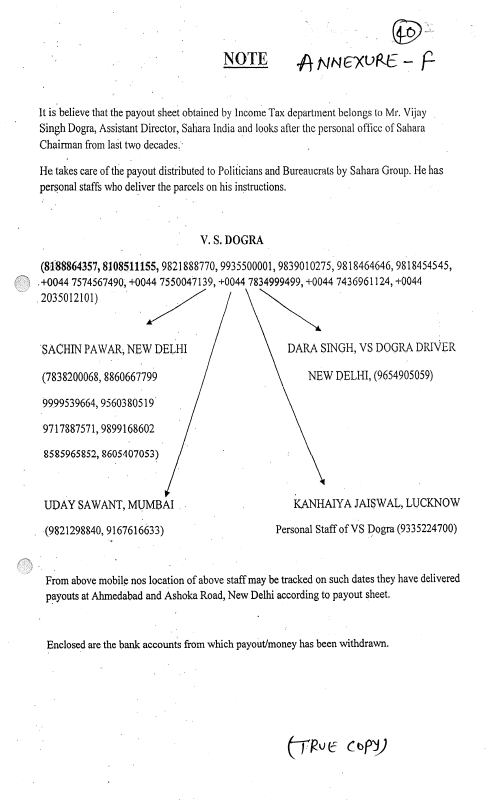
The excel sheet recovered from the computer of one Mr. Sachin Pawar of Sahara Group shows great amount of detail: date of payment, place of payment, person to whom cash is paid and the person who has delivered the case. It also shows corresponding cash received from different sources, primarily one M/s MARCOM. These could be easily further corroborated by checking for call records of the person who delivered the money and to whom it was delivered. Some noting of call records (payout sheet) made may be read here.
However, quite shockingly, the Income Tax Department under the Finance Ministry neither took any meaningful action nor forwarded the report to CBI or SIT on Black Money, as was required since incriminating documents showing corruption, bribery and black money had surfaced. It is this inaction that led petitioner Common Cause to move this Hon’ble Court in the coal scam case (WPC 463/2012) seeking a direction to CBI to investigate the documents. On October 12, 2015, the Supreme Court directed the CBI to take action in accordance with law if the documents surfaced in the raid on the Birla Group disclose offences, even though they might be unrelated to the coal block allocation cases.
Despite this order, the CBI did not investigate the matter nor register an FIR although many highly incriminating documents suggesting bribery of public servants were recovered and also analyzed by the IT dept. CBI merely transferred the whole investigation to the IT department.
After the Sahara Group approached the Settlement Commission to settle the matter, the IT Department strongly countered the company’s attempts to bury the investigation.
The IT Department had then stated:
“a) On the basis of these seized documents only the assesse firm has voluntarily surrendered income of Rs 1217 crores. b) When Sh. Sachin Pawar was examined in respect of entries recorded by him, certain contradictions were found in his version as discussed in detail in Rule-9 report. In one statement he states that the whole exercise was done to implicate Shri Dogra and get him punished from the Management. On the other hand in a later statement he says that he intended to pass on information to various Government agencies like IT, SIT etc. When this was pointed out in 245D(4) hearing it was stated by the AR that second statement was in continuation and in addition to first one. It is obvious to us that there is a direct contradiction here – if information was to be given to IT/SIT, it would not hurt Shri Dogra but the entire Management and the Group itself. Also it is correctly pointed out by PCIT that SIT did not even exist at that point of time.
c) Perusal of transactions recorded in the seized documents shows that they have been recorded in a detailed manner with specific amounts and names of persons/premises – something that appears to be true. Also, it is observed that so-called ‘meaningless’ transactions have been recorded on a regular basis over a period of 4-5 years – contention that it is only for the sake of implicating Shri V S Dogra – seems to be unbelievable. Further, on comparison of the entries of cash receipts as recorded in the seized documents with the entries in the ledger account of cash imprest given to Shri Sachin Pawar from MARCOM, it is observed that all the entries of cash imprest above Rs. 1 crore appearing in the books of Sahara India (MARCOM) in the ledger account of
Shri Sachin Pawar have been recorded by Shri Sachin Pawar in the seized documents on the same dates- strongly suggesting thereby that entries made were not fictitious and cannot be called meaningless.”
Despite these strong contentions, the Settlement Commission, settled the case on November 11, 2016 and absolved Sahara of all criminal and civil liability on specious grounds.
Prashant Bhushan for Common Cause had sent them a letter on November 8, 2016 requesting them not to allow any settlement in the matter.
Settlement Commission Order may be read here
It is not only the Enforcement Directorate (ED) but the Financial Intelligence Unit (FIU) under the Ministry of Finance that had found large number of suspicious cash transactions on a very large number of accounts linked with the Sahara Group. A list of as many as 4574 bank accounts was prepared showing such transactions.
Issues of transparency and accountability have also been raised by the disclosure of the fact that the GOI under Narendra Modi, on November 14, 2014 appointed by formal order K.V. Chowdury to the position Advisor to the SIT on Black Money, after demitting office as Chairperson, CBDT. Chowdury was given the supervisory charge on the subjects being handled by Member (Investigation), CBDT including investigations and subsequent actions. This is the relevant period when the raid on Sahara Group took place and the subsequent investigation was conducted by the IT Department. The office order appointing Chowdury may be read here.
Occupying this critical post as advisor to the SIT on black money, it was the duty of Chowdury to ensure that a credible criminal investigation was initiated by the relevant agency when incriminating documents of the Sahara Group surfaced showing offences of bribery and corruption being committed after the raid on November 22, 2014, especially since it is clear that the above documents disclosed the bribing of several influential persons by the Sahara Group.
All the information ought to have been shared by the IT Department with the CBI & the SIT on Black Money, since the matter under the SIT’s jurisdiction was not limited to Income Tax violations, but included bribery, corruption and possession of black money. The persons named in the diary ought to have been investigated, but it was not done.
Background It was during the investigations with relation to coal block allocations to Hindalco Industries, an Aditya Birla group company, that the CBI conducted simultaneous search operations in four cities – New Delhi, Mumbai, Secunderabad and Bhubaneshwar on 15.10.2013. The documents seized by the CBI in its search operation reportedly revealed massive bribery of politicians and officials of various ministries by the Aditya Birla group over several years. The simultaneous search operation conducted on October 15, 2013 by the CBI at the Aditya Birla group’s office at Parliament Street, New Delhi, reportedly led to the recovery of incriminating documents and a huge stash of unaccounted cash amounting to Rs. 25 crore. Although the documents seized indicated the commission of offences of corruption, bribery, possession of black money, and also of income tax violations, the CBI, instead of conducting a thorough scrutiny of their contents, simply transferred the highly incriminating documents to the Income Tax Department.
It is clear that ordinary citizens, human rights activists remain at the aim of fire of the CBI and India’s agencies while powerful men and women in power and corporations simply get away.
बॉलीवुड निर्माता-निर्देशक और फराह खान के पति शिरीष कुंदर से एक ट्विटर यूर्जर ने उनके बच्चों के धर्म पर सवाल पूछा तो शिरीष ने ऐसा जवाब दिया कि सबकी बोलती बंद हो गई और सोशल मीडिया पर हुई खूब वाहवाही।
दरअसल, शिरीष नेफराह खान के साथ बच्चो का फोटो ट्विटर पर अपलोड किया और केप्शन में शीरीष ने लिखा “ग्रैंड कैन्यन पर फख्र से पोज़ करता हुआ मेरा परिवार, मुझे वक्त का कोई अंदाज़ा नहीं है। पता नहीं, 2017 शुरू हुआ या नहीं”
इस फोटो के पोस्ट होते ही एक फातिमा आर्या ट्विटर यूजर ने शीरीष से सवाल कर डाला आपके बच्चे हिन्दू हैं या मुसलमान? इस बात पर एकदम मुहतोंड जवाब देते हुए शीरीष ने ट्वीट किया “ये इस बात पर निर्भर करता है कि कौन सा त्योहार आने वाला है। पिछले महीने वो ईसाई थे।”
शीरीष ट्विटर पर अपनी बेबाक राय रखने के लिए जाने जाते है और कई बार कंट्रोवर्सी में भी रहें हैं।
एक इंटरव्यू में शीरीष ने बताया था कि कैसे निर्भया गैंगरेप के बाद उन्होंने ट्वीट करना शुरु किया था फिर धीरे-धीरे ये उनकी आदत में शुमार हो गया था।
उन्होने कहा था, ” मैं तभी ट्वीट करता हूं, जब मुझे गुस्सा आता है। मैं ह्यूमर के जरिए भड़ास निकालता हूं। मैं उसी मंशा के साथ ट्वीट करता हूं, जिसके साथ आरके लक्ष्मण कार्टून बनाया करते । मैं उनसे बेहद प्रभावित हूं।”