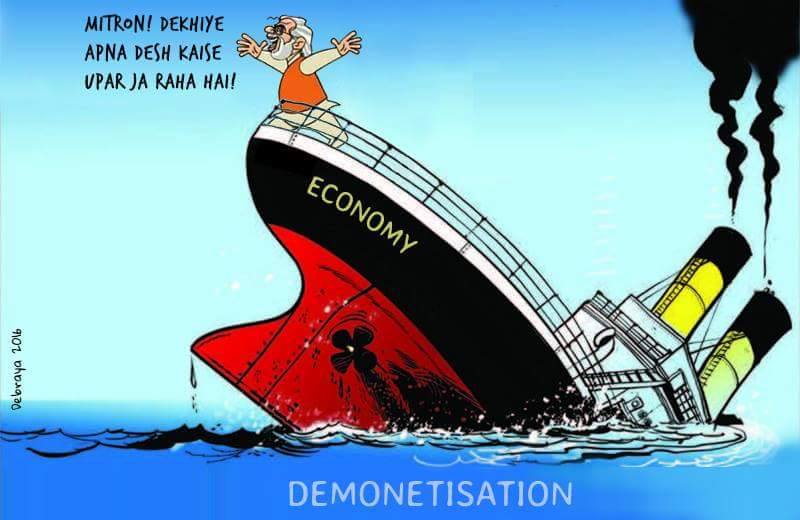
नई दिल्ली।कथनी औऱ करनी में भारी गैप को पाटने के लिए केंद्र सरकार लोगों के सामने फर्जीवाड़ा परोसने से भी नहीं हिचक रही। रिपोर्ट आ रही है कि भारत सरकार ने क्रेडिट एजेंसी मूडीज को लालच देकर उसे अपने पक्ष में रिपोर्ट देने की पेशकश की है। ऐसा पहली बार हुआ है जब किसी सरकार ने इस तरह का अनैतिक और गैर पेशेवर रास्ता चुना है। बहरहाल मूडीज ने न केवल सरकार की बात मानने से इनकार कर दिया बल्कि उसने इसके लिए सरकार की आलोचना भी की। इस बीच विदेशी अख़बारों ने जनता के दर्द को महसूस करना शुरू कर दिया है। और अब वो भी मोदी के इस फैसले को तुगलकी बता रहे हैं।
रेटिंग एजेंसी ने इसके पीछे भारत के ऋण स्तर और बैंकों के नाजुक हालत का हवाला दिया था। रॉयटर्स ने कई दस्तावेजों की समीक्षा के बाद इस बात की खबर दी है।
रिपोर्ट के मुताबिक, वित्त मंत्रालय ने अक्टूबर में कई लेटर और ईमेल के जरिए रेटिंग करने की मूडीज की कार्यशैली पर सवाल खड़े किए थे। इनमें कहा गया था कि हाल के सालों में भारत के कर्ज स्तर में नियमित तौर पर कमी आई है लेकिन मूडीज ने इसका ध्यान नहीं रखा। मंत्रालय ने कहा कि मूडीज जब विभिन्न देशों की राजकोषीय ताकत की समीक्षा कर रही थी तो उसने इन देशों के विकास स्तर को नजरअंदाज कर दिया। सरकार ने इसके लिए जापान और पुर्तगाल का उदाहरण दिया था। अपनी अर्थव्यवस्था से करीब दोगुना कर्ज होने के बावजूद इन देशों की रेटिंग बढ़िया थी। मूडीज ने वित्त मंत्रालय के इन आरोपों को खारिज कर दिया और कहा कि भारत के ऋण संबंधी हालात इतने बढ़िया नहीं हैं, जितना कि सरकार बता रही है। मूडीज ने इसके अलावा भारत के बैंकों को लेकर भी चिंता जाहिर की थी। मूडीज की एक प्रमुख स्वतंत्र विश्लेषक मेरी डिरॉन ने कहा था कि दूसरे देशों के मुकाबले भारत का ना सिर्फ कर्ज संकट ज्यादा बड़ा है बल्कि कर्ज वहन करने की इसकी क्षमता भी काफी कम है।
मीडिया रिपोर्ट्स के मुताबिक, डिरॉन से जब इस प्रकरण के बारे में पूछा गया तो उन्होंने टिप्पणी करने से इनकार कर दिया और कहा कि रेटिंग संबंधी बातचीत सार्वजनिक नहीं की जा सकती है। उधर, वित्त मंत्रालय ने भी इस बारे में कमेंट करने से इनकार कर दिया। वित्त मंत्रालय के एक पूर्व अधिकारी अरविंद मायाराम ने सरकार के इस अप्रोच को पूरी तरह असाधारण बताया। उन्होंने कहा, 'रेटिंग एजेंसियों पर किसी भी तरीके से दबाव नहीं बनाया जा सकता है। ऐसा नहीं किया जाना चाहिए।'
वकील और सामाजिक कार्यकर्ता जिगनेशमेवानी का नाम इस साल जुलाई महीने में पूरे देश में छा गया। दलितों को जमीन का अधिकार दिलाने के लिए अदालती लड़ाई लड़ने वाला यह युवक उना कांड के बाद उभरे आंदोलन का नेतृत्व कर रहा था। उना में चार दलित युवकों की सिर्फ इसलिए बर्बरता से पिटाई की गई थी वे मरे हुए जानवरों की खाल निकालने का अपना काम कर रहे थे।
इस घटना के बाद मेवानी ने देश के स्वतंत्रता दिवस पर इसके विरोध में दलितों के मार्च के नेतृत्व किया था। अहमदाबाद से उना तक निकाली गई इस यात्रा के चार महीने हो चुके हैं। इस अदभुत मार्च का नेतृत्व करने वाले इस दलित नेता और वकील से तीस्तासीतलवाड़ ने हाल की बातचीत में यह पूछा कि आज की तारीख में उनका यह आंदोलन कहां खड़ा है। इस सवाल के जवाब में जिग्नेश ने कहा- भारतीय समाज के सामंती ढांचे को तोड़ने के लिए बेहद अहम भूमि सुधार अब दलित एजेंडे में तेजी से शामिल होता जा रहा है। यह एजेंडा काफी वर्षों से लगातार उठाए जा रहे दलितों पर अत्याचार के मुद्दों के बीच दब गया था। दलित मुद्दों को ब्राह्ममणवाद और मनुवाद के विमर्श तक ही सीमित कर लेने की वजह से यह मुद्दा जोर-शोर से नहीं उठ सका। रोटी, कपड़ा और मकान जैसा आर्थिक मुद्दा नहीं उठ रहा था।
भारत के दलितों, दबे-कुचलों और हाशिये पर लोगों के लिए आत्म सम्मान का संघर्ष आर्थिक अधिकार और समानता की लड़ाई जितना ही महत्वपूर्ण है। ग्लोबलाइजेशन के बाद के भारत में ऐसी मांग को एजेंडे में आगे रखने की जरूरत और बढ़ गई है।
लेकिन अब यानी उना के संघर्ष के बाद भारत की निचली जातियों के लिए आर्थिक वंचना के मुद्दे एक बार फिर संघर्ष के एजेंडे में लौट आए हैं। दलित आंदोलन को अपने काबू में रखन वाला परंपरागत दलित नेतृत्व ने भी आंदोलन के दायरा बढ़ाए जाने का स्वागत किया है।
जिग्नेश कहते हैं – मैं कुछ नई चीजों को उभरता हुआ देखना चाहता हूं। हम 26 जनवरी से 5 मार्च तक माकपा शासित केरल में मार्च करेंगे ताकि केरल के पांच लाख दलितों को जमीन देने का जो वादा किया गया था जो पूरा हो सके। इसी तरह हम बिहार में बोध गया से पटना तक मार्च करेंगे ताकि जनता दल यू और आरजेडी की ओर से 22 लाख एकड़ जमीन चिन्हित करने और इसे दलितों में बांटने का जो वादा किया गया है उसे पूरा किया जाए। सामाजिक न्याय का यह कदम लोगों के दिल में घर कर गया है। हमारी कोशिश है कि सामाजिक न्याय का यह वादा धरातल पर उतरे न कि सपना रह जाए।
जिग्नेश के मुताबिक, चोटिला ब्लॉक के सुंदरनगर और सरोदा ब्लॉक के ढोलका में 700 एकड़ जमीन अब 300 परिवारों को मुहैया कराई जाएगी। यह पूरी जमीन 150 करोड़ रुपये की है।
आर्थिक और सामाजिक न्याय के लिए गुजरात के गांवों से होकर मार्च करते दलित महिलाओं और पुरुषों का नया नारा है- घूंघट से नाता तोड़ो, जमीन से नाता जोड़ो। गुजरात में 14 अप्रैल से यह नारा गुजरेगा। इस तारीख से हम गुजरात में कांट्रेक्ट सिस्टम के रोजगार का ना कहेंगे। इस सिस्टम से गुजरात में 50-60 हजार रोजगारों की गुणवत्ता प्रभावित हुई है। हमारी कोशिश है कि जातिगत भेदभाव और हिंसा तो रोके ही साथ आर्थिक वंचना के सिलसिले पर भी लगाम लगे।
गुजरात के मुसलमान भाइयों के लिए मूल नागरिक सुविधाओं की लड़ाई भी एक मुद्दा है। मुस्लिम एक इलाके में रहने को बाध्य हैं। वे झुग्गियों और चाल में रहने को मजबूत हैं। वे उन इलाकों में रहने को बाध्य हैं जहां न तो सड़क और न गटर और न बिजली-पानी।
कानूनीलड़ाई गुजरात की अदालत में दायर एक याचिका पर मेवानी खुद पैरवी कर रहे हैं। इस मामले में गुजरात सरकार के अधिकारियों ने यह स्वीकार किया है कि गुजरात में हजारों एकड़ जमीन दलितों की दी जानी है लेकिन एक इंच जमीन भी अब तक उन्हें नहीं मिली है। अहमदाबाद और सुरेंद्रनर (चोटिला) में दलितों को दी जाने वाली जमीन तय हो गई है। लेकिन इस जमीन पर दलितों के कानूनी हक साबित हो जाने के बाद भी राज्य के अंदर राजनीतिक और प्रशासनिक इच्छाशक्ति नहीं दिखती। दलितों को देने के लिए जमीनों की कोई नाप नहीं की गई। उनके हक की जमीनों पर न तो अतिक्रमण हटा है और न ही दलितों पर होने वाले अत्याचार पर दलित अत्याचार निरोधक कानून की धारा ३ (१) (एफ) के तहत कार्रवाई होती है।
जिग्नेश कहते हैं – अब आप ही बताइए कि कानूनी का क्या मतलब रह जाता है जब राज्य कोर्ट से कहता है कि समस्या और सूचनाएं इतनी अधिक है कि इस योजना को लागू करना असंभव है। किसी भी तरीके से यह बात समझ में नहीं आती है। मामलों की सुनवाई करने वाले गुजरात हाई कोर्ट ने शिकायतों में दम पाया और राज्य के तीन नोडल अफसरों की एक टीम बनाई। इस टीम ने जमीनी स्तर पर रिकार्डों की जांच की और माना कि दलितों के हक उन्हें नहीं मिले। राज्य ने शर्मसार होते हुए कोर्ट के सामने माना कि गवर्नेंस के मामले में यह फेल साबित हुआ है और अपनी ही नीतियों लागू करने में नाकाम रहा है।
जिग्नेश मेवाणी कहते हैं – हमें आंदोलन की जरूरत है। शिकायतों के निवारण और न्याय के लिए संघर्ष करना होगा। हमारी लड़ाई अदालत में चलती रहेगी। लेकिन हमें सड़कों और गलियों में भी अपना संघर्ष जारी रखेंगे। खुले मैदान की लड़ाई में हम ज्यादा सफल रहे हैं।
वर्ष 2016 में सुरेंद्रनगर के आंदोलन में हमने आंदोलन के दौरान हमने संपर्क सड़कों को बंद कर दिया और सरकार को इस बात के लिए बाध्य किया कि वह सुरेंद्रनगर जिले के चोटलिया ब्लॉक की 532 एकड़ जमीन की नाप कराए। इसी तरह ढोलका के सरोदा ब्लॉक में आंदोलन के बाद प्रशासन ने 220 एकड़ जमीन की नाप के लिए बाध्य हुआ। लेकिन तीन बड़े आंदोलनों के बाद। लेकिन इन आंदोलनों के जरिये हम एक महीने में हम 150 करोड़ रुपये की जमीन हासिल कर लेंगे। 700 एकड़ की इस जमीन से 300 से ज्यादा दलित परिवारों को उनका हक मिलेगा।
मेवानी कहते हैं- आंदोलन की राह में ये छोटे कदम हैं और उना आंदोलन के बाद की अहम जीत। लेकिन बड़ा सवाल अभी अनसुलझा है। हजारों एकड़ जमीनी ऐसी है, जिसे दलितों में बांटा जाना है। जब गुजरात और सौराष्ट्र अलग हुए थे तो उचंगभाई ढबेर की सरकार ने भूमि सुधार के जरिये 12 लाख और 25 लाख एकड़ जमीन हासिल की थी। लेकिन दलितों को क्या मिला। कुछ भी नहीं।
किसानों की जमीन गुजरात और देश के बड़े उद्योगपतियों की बन गई है मेवानी कहते हैं- भारतीय समाज के सामंती ढांचे को तोड़ने के लिए जमीन हासिल करना पहला कदम है। उसके बाद सब्सिडी पर बीज, खाद और अनाज हासिल करना अगला संघर्ष होगा।
गुजरात की बड़ी दलित आबादी के लिए आंदोलन और जागरुकता जरूरी है। जो अभी देखने को नहीं मिल रहा है। देश में यहां-वहां दलित चेतना के कदम उठ रहे हैं और इसलिए कदम इसे मजबूत करने पर होगा। पूरे देश में इस दलित संघर्ष को लेकर सकारात्मक माहौल है लेकिन चुनौतियां भी काफी हैं।
जिग्नेश मेवानी भारत के दलितों के लिए आर्थिक और सामाजिक न्याय सुनिश्चित करने के लिए युवा अंबेडकरवादी संघर्ष का चेहरा बन चुके हैं। वह कहते हैं कि गुजरात में दलित आंदोलन ने राज्य और इसके बाहर इस तरह के संघर्षों की एक दिशा तय कर दी है।
जिग्नेश के नेतृत्व में निकले आजादी की ओर मार्च की दस मांगें-
उना में दलितों के पिटाई के दोषियों के खिलाफ प्रिव्हेंशन ऑफ एंटी सोशल एक्ट लगे। ताकि वे जब जमानत पर रिहा तो उन्हें फिर गिरफ्तार किया जा सके। सभी आरोपियों को गिरफ्तार किया जाए।
11 जुलाई को दलित युवकों की पिटाई और अपमान में मिलीभगत रखनेवाले पुलिस अफसरों के खिलाफ आपराधिक साजिश और अत्याचार अधिनियम के तहत मामला चलाया जाएगा।
पिछले रविवार को 70-80 दलितों के खिलाफ शिकायतें दर्ज की गई हैं। सिर्फ ढोढका पुलिस ने 31 जुलाई को 43 ऐसे मामले दर्ज किए थे। सिर्फ इसलिए कि 31 जुलाई को ऐतिहासिक प्रदर्शन में इऩ लोगों ने हिस्सा लिया था। इनके खिलाफ दर्ज मामले तुरंत वापस लिए जाएं।
वर्ष 2012 में दलितों के शांतिपूर्ण आंदोलन (थांगड़, सुरेंद्रनगर) करने वाले दलितों पर एके 47 से गोलियां चलाने वाले पुलिस अफसरों के खिलाफ मामलों और मुदमों की सुनवाई तेज की जाए। इस मामले को चार साल हो गए लेकिन न तो जांच रिपोर्ट सार्वजनिक हुई है और न ही आरोपपत्र दाखिल हुए हैं।
दलित अत्याचार निरोधक कानून के तहत स्पेशल कोर्ट गठित किए जाएं। कानूनन गुजरात के 25 जिलों में इन्हें लागू करना कानूनन अनिवार्य है।
दलित अत्याचार निरोधक कानून की धारा 3 (1) (एफ) के तहत दलितों के पांच एकड़ जमीन देना जरूरी है। इसे पूरा किया जाए।
गुजरात के हर नगरपालिका और स्थानीय निकायों में काम करने वाले सफाई कर्मचारियों को छठे वेतन आयोग की तरह वेतन दिया जाए।
गुजरात में आरक्षण कानून तुरंत लागू किया जाए। गुजरात में आज की तारीख में रिजर्वेशन या अफर्मेटिव कदम कार्यपालिका की मर्जी पर निर्भर है। इन्हें सरकार के रेज्यूलेशन और जनरल ऑर्डर पर तुरंत लागू किया जाए।
अनुसूचित जाति-जनजाति के लिए जो बजटीय आवंटन है उनका इस्तेमाल सिर्फ इन्हीं पर हो। आज की तारीख में इनके लिए गुजरात में जो फंड आवंटित होता है उन्हें डायवर्ट कर दिया जाता है।
गुजरात सरकार देश भर के दलितों के सामने डॉ बाबा साहेब अंबेडकर की उस किताब के उन अंशों को हटाने के लिए सार्वजनिक तौर पर माफी मांगे, जिनमें हिंदू धर्म के खिलाफ उनके क्रांतिकारी विचार थे और बौद्ध धर्म की दीक्षा लेने के लिए उन्होंने 22 सूत्रीय शपथ ली थी।
आधिकारिक आंकड़ों के मुताबिक 2010 से 2014 के बीच गुजरात में दलितों के खिलाफ अत्याचार में 44 फीसदी की बढ़ोतरी हुई है। 2014 में देश में दलितों के खिलाफ अत्याचार के 47,064 मामलों में 30 फीसदी सिर्फ बीजेपी शासित राज्यों यानी राजस्थान, मध्य प्रदेश, गुजरात और छत्तीसगढ़ में हुए हैं।
पिछले कुछ सप्ताहों में बजरंग दल के कार्यकर्ताओं ने कांग्रेस शासित प्रदेश कर्नाटक में दलितों की पिटाई की। गुजरात और महाराष्ट्र में भी दलितों की पिटाई हुई। नीतीश कुमार शासित बिहार में उन पर पेशाब किया गया। लखनऊ और गुजरात में गोरक्षकों का अत्याचार जारी है।
आजादी कूच मार्च की कुछ अन्य मांगें इस तरह हैं- ♦ वनाधिकार कानून के तहत जमीन के लिए आदिवासियों की ओर से गुजरात सरकार को दिए गए 1,20,000 आवेदनों के आधार पर तुरंत जमीन का आवंटन हो। ♦ गुजरात में दलित आत्मरक्षा के हथियारों के लाइसेंस मांग रहे हैं। दलित खुद को सुरक्षित महसूस नहीं करते।उन पर हमले होते हैं। लिहाजा उन्हें हथियार लाइसेंस देने में तेजी अपनाई जाए। ♦ दलितों को मार्शल आर्ट, जूडो कराटे सिखाने के लिए तालीम सेंटर (ट्रेनिंग सेंटर) खोले जाएं। अन्य समुदायों और जातियों की तरह ही उनके लिए खेल महाकुंभ आयोजित किए जाएं। ♦ दलितों के लिए स्मार्ट सेंटर खोले जाएं ताकि वे सामाजिक भेदभाव से बच सके और दूरदराज इलाके में न रहें। वे भी नारंगपुरा के पॉश इलाकों में रह सकें। ♦ नरेंद्र मोदी के स्टार्ट अप इंडिया में दलितोंके लिए खास आर्थिक प्रावधान हों। इसके तहत दलितों का पुनर्वास किया जाए।
At least 150 protesters have been detained and the police has informally imposed Section 144 around the fishermen's colony.
Image credit: Aarefa Johari
With Prime Minister Narendra Modi on his way to Mumbai to inaugurate Maharashtra government’s controversial mid-sea Shivaji memorial, a police crackdown has forced fishing communities in the city to give up their planned protests against the memorial’s location.
On Friday evening, the Mumbai police detained at least 150 members of the Koli community who took out a motorbike rally with black flags in the Colaba neighbourhood. The detainees included Damodar Tandel, the president of the Akhil Maharashtra Machhimar Kruti Samiti, a leading state-wide fishermen’s association. According to other community leaders, the protesters are unlikely to be released till Prime Minister Narendra Modi has completed the inaugural “bhoomi-pujan” prayer ritual at the site of the planned Shivaji memorial on Saturday afternoon.
Various fishermen’s associations were also served police notices on Friday evening, ordering them not to hold any other form of protest against the memorial during Modi’s visit. Even though the police has not officially announced the imposition of Section 144 of the Indian Penal Code – which prohibits unlawful assembly of more than five people – fishermen claim it has been informally imposed.
“We are still ready to protest, but there is a lot of fear in the community because the police is not allowing groups of more than five people to even step out of our colony alone,” said Mahesh Tandel, the Mumbai president of the Macchimar Sangathan. “I have never seen so much police and coast guard security bandobast in our area.” The police crackdown will make it nearly impossible for the Kolis to carry out their planned sea rally of 5,000 boats with black flags and a rally of fisherwomen forming a human chain along the coast, without courting arrest or detention.
The fishing community of Mumbai has been opposing the 192-metre high Shivaji memorial ever since it was announced in 2010, because the location of the memorial is a breeding ground for at least 32 species of the city’s most commonly eaten fish. Building the memorial (which will include a statue, museum, amphitheatre and jetties) is likely to involve reclamation of around 60 acres of the sea. This, according to Koli groups, will effectively rob thousands of fishing families of their livelihoods.
This week, said Tandel, fishermen’s associations were finally granted two meetings with Chief Minister Devendra Fadnavis. “He assured us that after December 25, the government will set up a committee to look into our issues,” said Tandel. “Today we may not be able to protest but we are observing a kala din [black day] in our homes.”
Courtesy: Scroll.in Home page photo courtesy: The Hindu
The Agriculture Ministry claims wheat sowing is normal this year, despite demonetisation. But in Uttar Pradesh, officials say surveys have not yet begun
Image credit: Manas Roshan
In the beginning of November, Dheerpal Yadav had finished the harvest of his paddy crop and was preparing to sell at the mandi in town. Thanks to timely monsoon rains this year, his 10 bighas of land in Sainjhani village in Uttar Pradesh’s Budaun district had yielded a bumper crop.
Then the rug was pulled from under his feet.
On the evening of November 8, Prime Minister Narendra Modi announced the demonetisation of large currency notes. Over the next few days, there was chaos in the mandis, where all transactions between farmers and traders take place in cash.
“If we took the old notes, they [traders] would give us Rs 1,200 for a quintal. If it is the new notes you want, then just Rs 1,000,” said Yadav, standing in his fields outside the village. “Why would I take the old ones? I took the new notes. I wasn’t getting any from the banks.” Sainjhani has one bank branch, which also services residents from six surrounding villages.
Dheerpal’s larger problem was the sowing season for wheat that loomed ahead. He needed Rs 5,000-6,000 to buy seeds, fertilisers and hire a tractor to plough his little plot. The money he had earned from selling paddy was running out after he paid for the expenses of his household of six and settled his debts. Dheerpal borrowed about Rs 3,000 from a moneylender – at 5% monthly interest – but it was not enough to hire labour. In December, by the time he planted his crop with the help of his old tai and tau (aunt and uncle), he had lost two weeks.
Dheerpal Yadav (centre) with his family in Sainjhani village in Budaun, Uttar Pradesh.
Across villages in Budaun and Bareilly – two districts in Western Uttar Pradesh that Scroll.in visited – farmers said only about 70% of sowing was complete. Not only was sowing delayed, many farmers had not been able to purchase new seeds and had fallen back on the grain they had saved for the household. Many chose to forgo the use of fertiliser. But officials in the agricultural department denied demonetisation had dampened rabi sowing. “Sowing has been completed on 2.2 lakh hectares of the 2.57 lakh hectares target we had set. That is about 85%,” said Vinod Kumar, the district agricultural officer of Budaun. “The rest should be done by the end of December.” The Union Ministry of Agriculture’s weekly crop statistics since November have consistently painted a similar picture of normalcy for the country: steadily rising estimates of the sown area of wheat, with the difference between this year’s acreage and the five-year average narrowing down to just one percentage point.
But the ministry’s releases contain a rider: these are “eye estimates”. How reliable is the data, then?
‘Haven’t started survey, how can I give data?’
In Uttar Pradesh, which contributes a quarter of India’s wheat production, the largest share among all states, officials admitted that crop surveys begin only at the end of the sowing period in January. In the interim, the state agriculture department relies on “eye estimates” gathered through “general observation” by its field staff.
Dr Vinod Singh, a director at the state agricultural department, said it has at least three sources for the information. “Our krishi sahayaks on the ground in each block gather data,” he said.
Scroll spoke to one such sahayak or technical assistant in Budaun, Govind Sharma, based in Bisauli town. Sharma said that the technical assistant’s job is primarily agricultural extension work – informing farmers about new technology, fertiliser use and so on. Data gathering was limited to a few conversations with a few village pradhans once a month.
The other source pointed out by Dr Singh is the Mahalanobis National Crop Forecasting Centre in Delhi, established by the central government in 2012 to use satellite imagery to prepare crop forecasts and assess damage caused by droughts and other weather phenomena. “It’s a very accurate system and its findings are combined with data from the field staff,” he said.
But the most sophisticated satellite in space – which India does not possess – can at best generate images at a 0.41 metre resolution. This can help tell the difference between a car and a scooter. Standing on an empty plot, or even observing Dheerpal and his family scattering seeds in Sainjhani, it is difficult to tell which crop they were sowing.
The third source was the field staff of the revenue department. Since the department of agriculture has very few officers, it is the duty of the lekhpal, or the village-level accountant of the revenue department, to maintain a khasra (land use register) of the farmers. The khasras are updated after the sowing and harvest each season and a jinswar statement (sown area under various crops) sent to the higher officials at the tehsil level, then compiled for the district and finally the state. There are 33,000 lekhpals in Uttar Pradesh. Budaun and Bareilly each have about 100 lekhpals for over 2,000 villages.
“We get our data from their records, which describe the overall crop trend in each village,” said Yadav, the district agricultural officer, Bareilly.
But farmers said sightings of the lekhpal were very rare. “He sits in his office and makes up the numbers,” said Rishipal Singh, a 50-year-old resident of Sainjhani. Sunil Kumar, a farmer from Gangola village in Dataganj, another block of Budaun, said the same. “The lekhpals sometimes talk to the pradhan but how does the pradhan know what’s happening on everyone’s farm? Last year I finished sowing at the start of January. This year it will be delayed.” Kumar has finished sowing on an acre but still has three more to complete. In the second week of December, he spent six hours in line at the local bank and got only Rs 1,000 in the end.
The officials of the revenue department in both Budaun and Bareilly admitted their surveys for the rabi season only begin in the second week of January. “If I haven’t started my survey yet, how can I give you any data?” Suresh Pal Singh, a lekhpal in Budaun said in exasperation when pressed him for information. Then where did the department’s data come from? “It might be a modified version of the kharif estimates from September, or even last year’s rabi data,” he said.
Ninety percent of Budaun's farmers have land holdings of less than 10 bighas.
Sown area vs yields
The advance estimates, cursory as they are, tell us even less about how sudden disruptions, economic or climatic, affect farmers and agricultural production.
The data for sowing does not change dramatically at the end of each season because farmers don’t have the luxury of leaving their fields fallow. But the crop yield is affected by the inputs they are able to purchase and use – something that government data does not capture.
Both farmers and input traders said yields this year would be low. “Business in this market is down by 40%,” said Sumit Kumar Saxena, who sells seeds and pesticides in Bareilly. “Many of us have two or more trucks full of products sitting in the godowns.”
“The farmers can’t choose to skip an entire crop. He will definitely sow but yields will reduce by at least 30%,” Saxena added.
In an uncharacteristic embrace of organic methods, the agriculture department responded saying yields would be better this way. “Scientific studies have shown that soil fertility improves if farmers don’t use chemicals for one or two crop cycles,” said Vinod Kumar, the Budaun agricultural officer.
Rishi Aggarwal, owner of the Chola Seed Store in Budaun. He said seed and fertiliser sales had declined by sixty percent since the demonetisation.
Farmers like Rishipal Singh in Sainjhani also fault the technocrats in the administration for a lack of understanding of how the ability to take risks and withstand shocks varies between large and small farmers. Singh, who grows sugarcane on his land in the kharif season, said he didn’t have a contract with the local sugar mill, which would have ensured fair prices for his produce. “The private traders will give me Rs 250 per quintal if I take the old notes and only Rs 200 for the new ones.”
While Rishipal Singh delayed cutting the cane hoping for a better price, Sachpal Singh in the adjacent Qadar Chowk block appeared unaffected by the note ban. His family of four brothers has a contract with the sugar mill and receives payments in full directly into bank accounts. “We were able to sow [wheat] early,” said Sachpal. “There was some inconvenience but we made arrangements. The sowing has to be done on time.” The family owns 100 bighas (nearly 20 acres) of land. According to the Budaun agricultural department, 90% of the district’s farmers own under 10 bighas.
‘At best, an informed guess’
Unmindful of such nuances, Radha Mohan Singh, the Union Minister of Agriculture, has cited the weekly rabi sowing data as a rejoinder to criticism of the government’s demonetisation decision. “This is going to directly benefit farmers and poor people,” he said.
But there are signs that the government itself does not trust the data. On December 8, the Central Board of Excise and Customs slashed the duty on wheat imports into the country from 10% to zero. Some commentators read the decision as an admission by the government that demonetisation might lead to a decrease in yields and overall production across the country. The reduction in import duties was seen as a preemptive move to avoid a further rise in wheat retail prices. Earlier this year, private traders claimed that the Ministry exaggerated last season’s wheat production by about 10 million tonnes, which the ministry has refuted.
Himanshu, an associate professor of economics at the Jawaharlal Nehru University, studies agricultural markets and issues of food security. The Food Ministry, which oversees grain imports, has had problems with agriculture ministry data for many years, he claimed.
The Food Ministry did not respond to Scroll’s request for a comment, but the millers, who lobbied for the reduction in import duty, agreed that this was the case. “By last May, wheat stocks with the mills had dried up and we told the food ministry that the numbers weren’t correct,” said Veena Sharma, secretary of the Roller Flour Millers Federation Of India. “They reduced the duty from 25% to 10% in September. But they realised that even this wouldn’t be enough.”
Said Himanshu: “At best, the data is an informed guess by the officials. The guess could very well be misinformed, too. At worst, they could be cooking up the data.”
One of only two functional Hindu places of worship in Lahore, it is a rare example of religious syncretism in the country
Image credit: Haroon Khalid
The turquoise dome of a mausoleum rises from the middle of a congested market in Lahore, its octagonal white building lost among the cycle and cloth shops. This is the shrine of the 16th century Sufi saint Sheikh Abdul Razzaq. Not far from here is the final resting place of Qutb al-Din Aibak, who was sold as a slave but went on to found the Mamluk Dynasty and rule the Delhi Sultanate in medieval India.
Aibak’s mausoleum is a modest structure, a small building at the centre of which is the grave of the king. Across the turquoise dome are the remnants of colonial Lahore – the King Edward Medical University and the Mayo Hospital, named after Lord Mayo who was the Viceroy of India from 1869 to 1872 – in what is known as the Mall area. On the other side of the road are two premium Pakistani universities, also set up by the British: Punjab University and National College of Arts, earlier known as the Mayo School of Industrial Arts.
Qutb al-Din Aibak's mausoleum, via Wikimedia Commons
Almost prophetically, at the centre of these colonial symbols is the recently renovated Pak Tea House, once the hub of intellectual and Leftist activists in the city. Even before Pakistan was partitioned from India in 1947, the cafeteria used to entertain intellectuals and activists from surrounding universities. Liberal and progressive ideas, critical of the colonial state, were discussed here.
After Partition, as the State began clamping down on cultural and political activities in the name of nation-building, the meeting place, now re-christened Pak Tea House, once again became the forefront of anti-authoritarianism. But with the decline of Lahore’s opposition to hegemony and of intellectual and cultural activities in the city, the tea house too began to fade away. Brought by a car tyre wholesaler and stuffed with tyres, it was salvaged in 2013 after the intervention of the Punjab Government, renovated, and opened to people.
Temple in the midst
A few km from here is the mausoleum of Anarkali, from where an intriguing story emerges. Believed to be a concubine of Emperor Akbar, Anarkali fell in love with Prince Salim. Legend has it that she was buried alive in a wall when the emperor found out about her trespass. Later, when the prince became Emperor Jahangir, he constructed a splendid mausoleum to honour his beloved. It is a typical Mughal mausoleum, octagonal with a large dome on the top. The grave, which is surprisingly not at the centre but at one end of the complex, has geometrical patterns carved into it.
Wikimedia Commons
The area surrounding the tomb also came to be called Anarkali. The Anarkali bazaar here is one of the largest and oldest markets in the city. Next to this is the Neela Gumbad market (or blue dome market), which is seen as an extension of the Anarkali bazaar. This part of the market is dominated by cloth, bicycle and car-tyre vendors. Thousands of people converge here every day, making it one of the busiest areas of the city. The name of this market comes from the turquoise dome of the Sufi saint Sheikh Abdul Razzaq.
It’s almost impossible to find in this hubbub, but this market is home to one of only two Hindu functional temples in the city. The Neela Gumbad Valmiki Mandir is located in a small alley next to a big tyre shop. Its small metal door is like that of any other house in the area. The small saffron flag hoisted at the entrance is the only thing that marks it out.
The inside of the temple as well is like that of a house, with a vast courtyard, at one end of which are two rooms, one dedicated to Lord Valmiki and the second to other Hindu deities. In the verandah outside the temple is a large mural of Lord Valmiki, with his disciples Lava and Kush, a snapshot of the mythological origins of Lahore. It is believed that Lava, the son of Lord Rama and the disciple of Valmiki, who is believed to have written the Ramayana, founded Lahore while Kush founded the twin city of Kasur.
A cross on the opposite wall reflects the relatively recent syncretic nature of this temple, one it it had to unwittingly adopt after Partition. Many followers of Lord Valmiki converted to Christianity following Partition to avoid the discrimination that Hindus were subjected to in the newly created country. Most of them, however, retained retained their Valmiki identity along with a new Christian identity, adopting two names – one Hindu and the other Christian. They also started celebrating Christian festivals, along with traditional Hindu festivals.
In October end, as the Hindu festival of Diwali went nearly unnoticed in Pakistan, a few 100 devotees gathered at the courtyard of this temple to light lamps and sing bhajans celebrating the return of Lord Ram and Sita to their Kingdom of Ayodhya after 14 years in exile. In a few days from now, this courtyard will be lit up once again, this time celebrating the birth of Jesus on Christmas. A cradle will be placed in the verandah and female devotees will dote over on baby Jesus, in a tradition reminiscent of Krishna Janmashtami, or the birth of Lord Krishna, which too is celebrated at this temple. Incidentally, the same cradle is used for both celebrations. Even as Pakistan continues its sprint towards religious fundamentalism, this small temple at the heart of conservative Lahore continues to serve as an example of religious tolerance. All year round, dozens of religious festivals are celebrated at this temple, some events going on into the night.
Tenuous peace
There have been quite a few examples of hostile neighbors turning against religious minorities in their midst, particularly the Ahmadiyya community. Just last week, a mob besieged an Ahmadi place of worship (it would be illegal to call it a mosque according to the laws of Pakistan, as Ahmadis are not recognised as Muslims), to try and bring it down. Similarly a few years ago, another mob gathered outside another Ahmadi place of worship in Rawalpindi, demanding that it be shut down. And in May 2010, close to 100 people were killed after two Ahmadi places of worship in Lahore were attacked during Friday prayers. In most of these cases, the state sides with the mob, leaving the persecuted minorities in the wilderness.
But at Neela Gumbad, for many years now, there has not been a single untoward incident. It is for this reason that the Valmiki community of the city feels empowered. Religious festivals which were jettisoned after Partition have once again been adopted by the community, as it feels that those around it have become more tolerant towards their practices.
However, this was not always the case. In 1992, a day after the Babri Masjid in Ayodhya, Uttar Pradesh, was demolished by Hindu Kar Sevaks on December 6, a mob broke into the temple. While some attacked the, others destroyed idols of Valmiki and Krishna. Even personal items of the devotees were not spared. After taking out valuable items from the temple, and allowing the handful of Valmiki devotees to leave the premises, the temple was set on fire.
For almost six months after the attack, the temple remained desolate as Valmiki devotees remained hidden in their homes, afraid of what might happen next. Gradually, the community got together and rebuilt the temple of their ancestors. More than 24 years since that fateful day, both communities at Neela Gumbad have moved on. However, peace is always fragile as far as India and Pakistan are concerned. Any act of intolerance across the border will be retaliated against here. And so, the Valmikis of Lahore know their peaceful and neighbours can once again become hostile in the blink of eye.
Haroon Khalid is the author of the booksWalking with Nanak, In Search of Shiva and A White Trail.
Since notebandi, the over 80,000 power loom workers from Malegaon has been hit very hard. Incomes have halved, as the power loom now works three days a week instead of six
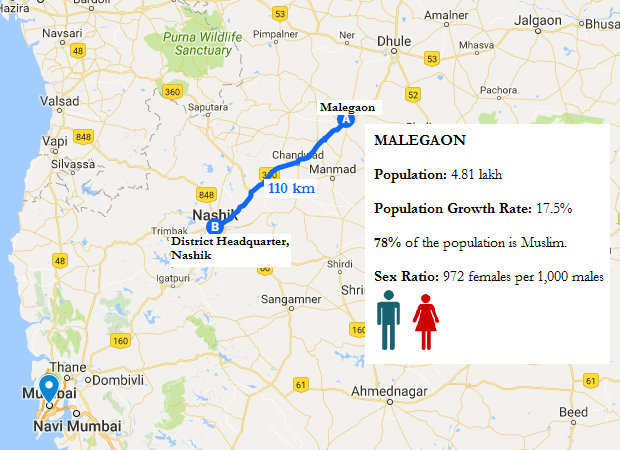
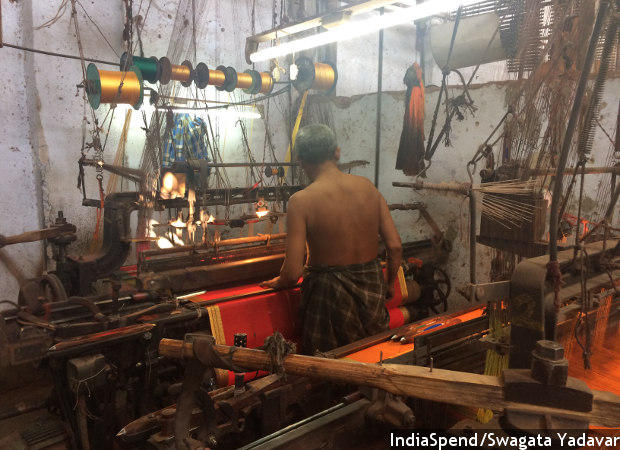
Malegaon (Maharashtra): Over the last two decades, the world has seen dramatic changes – people have moved from landlines to cellphones, from writing letters to using email – but little has changed for Nandan Pagare, a 41-year-old power loom worker. Pagare, who looked much older than his age, has been working in Malegaon’s power loom industry, 270 km north of India’s commercial capital, Mumbai, since he was 18 years old.
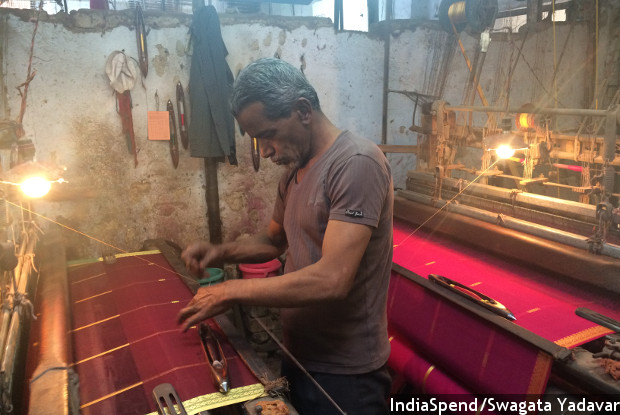
He has graduated to living in a pakka (or cement) house, in Sayni Bhadruk, a village 6 km from Malegaon, but still earns Rs 1,800 a week for spending half his day working in a large factory, whirring with 200 looms. Now, with looms working three times a week instead of six (Friday is the weekly off), Pagare earns half of what he used to. “We are careful with our expenses now. We spend only on the most urgent items,” he said.
High electricity costs, international competition, and widespread violation of complex, unreformed labour laws (144 central and 160 state) – these were the issues the government never addressed in Maharashtra’s northern textile town of Malegaon. Firms stayed small and the industry on an economic knife-edge. Now, the government’s decision to withdraw Rs 14 lakh crore – 86% in value of India’s currency in circulation – has dealt a hard blow to 80,000 workers, whose economy was defined by cash. Before notebandi, despite a growing downturn, the town soldiered on.
But when IndiaSpend visited Malegaon, the town’s market – usually bustling with shopkeepers, hawkers and roadside eateries on a normal day – was desolate. There was silence in the lanes, where until November 2016, the loud buzz of power looms usually masked all other sounds.
Since power loom is the largest industry in Malegaon, directly employing more than 20% of Malegaon’s 386,000 adult population, a recession in the power loom industry affects the economy of Malegaon.
Textile industry struggles with international competition, high input prices
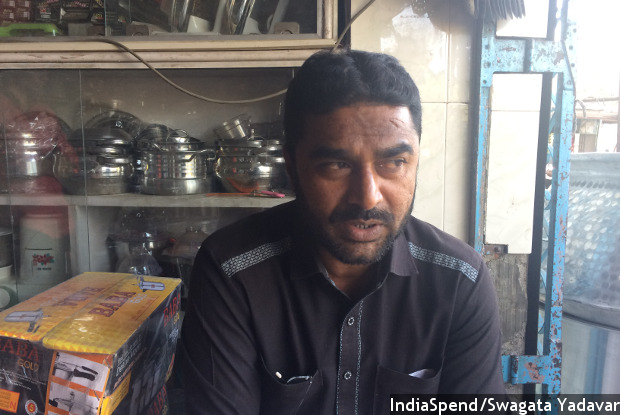
“The Malegaon power loom industry has been under pressure because of high cost of cotton, the main raw material; temporary shutting down of over 700 textile units in Rajasthan, where cloth made in Malegaon would be dyed; and international competition,” said Iqbal Amarveer, 44, a third-generation power loom owner.
Amarveer doesn’t believe his looms in Malegaon will last long enough for his children to take over the business.
Iqbal Amarveer, 44, a third-generation power loom owner, doesn’t believe his looms in Malegaon will last long enough for his children to take over the business.
The textile industry is the second largest employer in India, after agriculture, employing more than 25 million workers, according to the 2015 annual report of the textile ministry. The textile industry, of which decentralised power looms and knitting are the largest components, contributes 2% of India’s gross domestic product. Maharashtra, with over 1.1 million power looms, is one of the largest power loom hubs in the country.
Overall, the Indian textile industry is challenged by falling exports, low productivity and rising prices, IndiaSpendreported in July 2016.
“Textiles produced in Indian power looms are not competitive compared to Chinese and Bangladeshi textiles, which is why there is less demand and lower prices for Indian goods,” said Dinesh Patole, the state government’s labour officer for Nashik and Malegaon divisions.
Why looms work three times a week, instead of six
Most of Malegaon’s 1.1 lakh power looms are micro, and small enterprises, each with nine to 12 power looms, according to the 2012 economic report on the Malegaon power loom industry, submitted to the Maharashtra Minority Commission. These looms, many of which are outdated, function in small garage-sized rooms with tin roofs.
In the weeks following demonetisation, power looms, known to work 16-18 hours in a day for six days a week, were working only three days a week – Saturday, Sunday and Monday – halving the wages of thousands of workers.
Most of the transactions in the power loom sector are in cash – power loom owners buy raw material in cash, disburse wages in cash, and sell in cash. While many owners tried to work on credit, they couldn’t sustain the same level of production without cash for long, they told IndiaSpend.
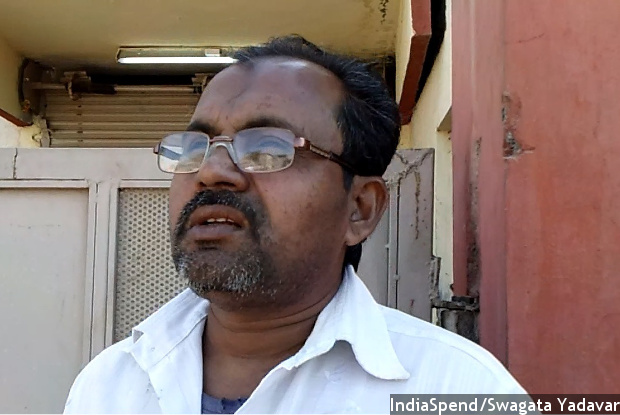
“Payments are delayed since owners do not have new notes to give us,” said Pagare. Many other workers were being paid in old notes, they told IndiaSpend on December 8, 2016. Many workers were fired as looms were working fewer days, or had remained shut for weeks, due to a cash crunch and fall in yarn prices.
Poor working conditions in factories, unaddressed by government
Even before the withdrawal of old Rs 500 and Rs 1,000 notes, the 100-year-old power loom industry in Malegaon, which earned more Rs 10 crore every day, was known for treating its workforce with apathy. The situation is worsened by India’s complex labor laws, and the small size of the power loom businesses.
Pagare is treated as a casual worker, not regularly employed or entitled to benefits of a regular worker, in spite of being in the industry for over 23 years. He is paid weekly wages in cash, has not been registered under the Employment State Insurance Scheme, has no paid leave, and no health insurance. He is forced to change his job every couple of years to negotiate a raise as there are no hikes or promotions in the industry. Spending 12 hours working on the noisy power looms, without ear plugs, has taken a toll on his hearing, he said.
Even before the withdrawal of old Rs 500 and Rs 1,000 notes, the 100-year-old power loom industry in Malegaon was known for treating its workforce with apathy. Workers in Malegaon, on average, work twelve hours or more in a day. Most power looms do not have facilities for drinking water or even tea.
“The work is very strenuous and there is lot of running around to handle eight machines,” said Pagare, adding he would have liked to to do another job but has few options as he is educated only until grade 4, and has no other expertise. Pagare is the sole earning member in his family of five.
“Power loom workers usually work 12-15 hours a day in poor conditions, without overtime or any protection, under the constant threat of losing their job,” said Sunita Kulkarni, president of the Malegaon division of the Indian National Trade Union Congress, a trade union affiliated with the Indian National Congress. A survey by the Tata Institute of Social Sciences found that the average monthly income of a loom worker in 2011 was Rs 911.
“Most workers are illiterate and unaware of their rights. All they know is the power loom owner, their work and wages,” she added.
There is widespread child labour in Malegaon, with children working in businesses from tea stalls to factories, said Patole, the government’s labour officer. Amanveer, the handloom owner, said that in many cases children come to the looms with their parents, and want to be trained. “We do not make them work (in our factory),” he said.
Three labour laws that the Malegaon power loom industry circumvents Minimum Wages Act, 1948:According to this Act, every employer should maintain registers and records of his employees, the work performed by them, and the wages paid to them.
What Happens in Malegaon: Till date, none of the power looms Pagare has worked in has maintained any record of his employment, he told IndiaSpend. Patole, the labour officer, said there is high attrition in the textile industry, and hence loom owners do not maintain records of their workers. Workers and owners have a mutual agreement about wages, and hence labour officers cannot intervene in most cases, he added.
Factories Act 1948:According to this Act, for all factories with more than 10 employees, normal working hours are nine hours a day and 48 hours a week. An overtime of two hours is allowed every day, with compensation twice the regular pay. A worker must get a break of 30 minutes after five hours of work, and factories should ensure the safety of workers while handling, storing and transporting articles.
What Happens in Malegaon: Workers in Malegaon, on average, work twelve hours or more in a day, according to Kulkarni, the trade union president. They are not paid overtime for the extra hours they work. “Most power looms do not have facilities for drinking water or even tea,” said Kulkarni. “Most power looms show that they employ less than 10 employees and do not fall under the Factories Act,” said Patole, the government labour officer.
The Employees State Insurance Act, 1948:Under this Act, all employees working in factories or establishments, who earn less than Rs 21,000 per month, should be insured. Employees, employers and the state and central government pay part of the cost of health insurance, and employees are entitled to medical treatment for themselves and their dependents, unemployment benefits in contingencies, and maternity benefits.
What Happens in Malegaon: Most power loom workers should be covered under the Act, since they earn less than Rs. 21,000, but most are not aware of the Act, and have never been registered under the Employee State Insurance Scheme, according to Kulkarni. “Most workers are not interested in getting insured,” said Amarveer, the power loom owner.
Small factory size makes it difficult to upgrade technology, improve labour conditions
Businesses in Malegaon are small– 40% of looms have an investment of less than Rs 5 lakh, and 50% of looms have an investment of between Rs 5 lakh and Rs 10 lakh . Less than 10% of the owners access funding from banks, since many banks are unlikely to give loans to unregistered, or very small enterprises.
The small size of power loom factories in Malegaon makes it is difficult to upgrade machines and provide better facilities for employees. Less than 19% of the power looms have upgraded looms, called auto or shuttle-less looms, which would make the workplace safer and increase productivity, according to the 2012 report on the textile cluster of Malegaon.
The small size of power loom factories in Malegaon makes it is difficult to upgrade machines and provide better facilities for employees.
Further, as many as 83% loom owners said there is a shortage of labour in the industry, as few young workers are willing to work for low wages, according to the same report.
India’s complex labour laws: 144 central laws, 160 state laws
India’s labour laws are rigid and complex, with about 144 central government legislations, and 160 state legislations. “Although the regulations are meant to enhance the welfare of workers, they often have the opposite effect by encouraging firms to stay small and thus circumvent labour laws,” according to one World Bank report. Restrictions on hiring and laying off workers, dealing with trade unions, and closure of plants incentivises firms to employ fewer workers and use capital-intensive approaches, according to this 2014 report.
For our continuing coverage of #notebandi see Currency Chaos.
(Yadavar is principal correspondent with IndiaSpend. Video produced in partnership with Video Volunteers, a global initiative that empowers disadvantaged communities with story and data-gathering skills, and trains them to use video as a tool to mobilise for change.)
Prime Minister Modi’s demonetisation seems to be pushing India to the brink of recession. With the slow pace of remonetisation, day to day transactions have been severely affected, leading to a contraction in the economy. Despite Prime Minister’s exhortations to go cashless, and shift fromcash to electronic transactions, the shift has not happened. RBI data on electronic payments show that contrary to Prime Minister’s claim that even beggars are taking electronic alms, there has been no significant jump in electronic payments.
Rs. 14.8 lakh crore was taken out of circulation through demonetisation, not even half this amount has been put back into circulation so far. Additionally, much of the fresh currency that has been issued,is in the form of Rs. 2,000 notes.The public are unable to use these notes for day to day transactions, due to the shortage of smaller denominations,which are required to change the larger value notes.
Despite the shrill propaganda of the government asking people to go cashless and use Paytm, debit cards, credit cards etc., there has not been a substantial jump in the electronic payments to compensate for the withdrawal of the currency notes. RBI’s own data on payments made through debit and credit cards at Points of sale (PoS), shows that such payments fell from Rs. 44 thousand crore in October to Rs. 35 thousand in November, which is a steep 20% fall. Not only payments through credit and debit cards have not picked up, butthey have actually fallen down. Transactions made through mobile wallets, like Paytm, have not compensated for this fall. The value of transactions through mobile wallets was only Rs. 1.3 thousand crore in November, or less than 3% of the debit and credit card amount for October. Even if we assume that there were no mobile wallet transactions in October, this amount isnot enough to compensate for a fall Rs. 9,000 crore in card payments at PoS.
There is an obvious fall in overall economic activityas a whole. People have reduced their spending. There can be very little doubt that Modi’s demonetization has put the economy in recession. According to McKinsey, 95% of all retail transactions in India take place in cash . Newsclick’s analysis shows that the economy has been deprived of at leasthalf the cashin this period. Obviously, this will cut down transactions in the retail sector. It will also create inventory in the manufacturing sector, finally leading to layoffs and shutdowns in the manufacturing sector. This is particularly true for the small scale sector.If there are not enough sales bringing in revenue, small scale business unitsquickly go into losses.They are unable to paywages to their workersand areunable to get short term business loans from banks.
Clearly, service sector, which is a lot more dependent on cash transactions, has been adversely affected.If service sector is affected, the manufacturing sector cannot remain immune either. This is indicated in the PMI for manufacturing, which has gone down from 54 to 52.3 between October and November. The impact on manufacturing is likely to be higher in December.
The growth will not pick up in the next quarter as well. The shortage of cash is likely to continue for at least next threemore months, by some estimates, up to May, 2017.It is going to take time for small scale industries and small service providers to recover from their losses and get back to normal production; if they manage to do so at all. Considering all this, we are probably looking at a recessionary environment that may last longer than a single quarter. Instead of being the faster growing economy in 2016-17, we are looking at almost zero growth in the second half of this financial year.
Prime Minister Modi’s demonetisation seems to be pushing India to the brink of recession.
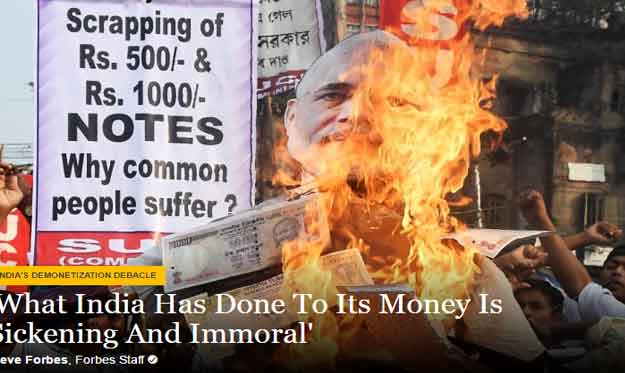
नई दिल्ली। भारत में नोटबंदी के फैसले को प्रतिष्ठित अमेरिकी बिज़नेस पत्रिका फोर्ब्स ने नुकसानदेय बताया है। फोर्ब्स पत्रिका के 24 जनवरी 2017 के संस्करण में छपे लेख में कहा गया है कि मोदी सरकार के इस फैसले से भारत के पहले से ही गरीब लाखों लोगों की हालत और खराब हो सकती है। जनसत्ता के अनुसार, फोर्ब्स पत्रिका के चेयरमैन और एडिटर-इन-चीफ स्टीव फोर्ब्स ने लिखा है, “देश की ज्यादातर नकदी को बंद कर दिया गया। स्तब्ध नागरिकों को नोट बदलने के लिए कुछ ही हफ्तों का समय दिया गया।”
फोर्ब्स के अनुसार, “आर्थिक उथलपुथल को इस बात से भी बढ़ावा मिला कि सरकार पर्याप्त मात्रा में नए नोट नहीं छाप पाई…नए नोटों का आकार भी पुराने नोटों से अलग है जिसकी वजह से एटीएमों के लिए बड़ी दिक्कत खड़ी हो गई।” लेख में कहा गया है, “भारत हाई-टेक पावरहाउस है लेकिन देश के लाखों लोग अभी भी भीषण गरीबी में जी रहे हैं। ” लेख में कहा गया है कि नोटबंदी के फैसले के कारण भारतीय शहरों में काम करने वाले कामगार अपने गांवों को लौट गए हैं क्योंकि बहुत से कारोबार बंद हो रहे हैं।
फोर्ब्स ने भारतीय अर्थव्यवस्था के नकद पर अत्यधिक निर्भर होने का मुद्दा उठाते हुए कहा है कि यहां ज्यादातर लोग नियमों और टैक्स के अतिरेक की वजह से अनौपचारिक तरीके अपनाते हैं। फोर्ब्स ने नोटबंदी की तुलना 1970 सत्तर के दशक में लागू की गई नसबंदी से की है। फोर्ब्स ने लिखा है कि 1970 के दशक में लागू की गई नसबंदी के बाद सरकार ने ऐसा अनैतिक फैसला नहीं लिया था।
फोर्ब्स ने नोटबंदी के फैसले को जनता की संपत्ति की लूट बताया है। फोर्ब्स ने लिखा है, “भारत सरकार ने उचित प्रक्रिया के पालन का दिखावा भी नहीं किया- किसी लोकतांत्रिक सरकार का ऐसा कदम स्तब्ध कर देने वाला है।” फोर्ब्स के अनुसार भारत सरकार इस तथ्य को दबा रही है कि नोटबंदी के फैसले से भारत को दसियों अरब डॉलर का नुकसान हो सकता है।
प्रधानमंत्री मोदी ने आठ नवंबर को 500 और 1000 के बैंक नोटों को उसी रात 12 बजे से बंद कि जाने की घोषणा की जिसके बाद से ही इसे लेकर आम लोगों के साथ ही विशेषज्ञों के बीच बहस जारी है। सरकार ने बंद किए जा चुके नोटों को बैंकों और डाकघरों में जमा करने के लिए 30 दिसंबर तक का समय दिया है। वहीं 30 दिसंबर तक बैंकों से हर हफ्ते 24 हजार रुपये और एटीएम से एक दिन में प्रति कार्ड 2500 रुपये निकालने की सीमा तय की गई है।