Home Blog Page 2306

Modi Is Wrong: His Govt Changed Law On Foreign-Funding Of Political Parties

0

fc_750 

Prime Minister Narendra Modi claimed on December 19, 2016, while addressing a Bharatiya Janata Party (BJP) rally in Kanpur, Uttar Pradesh, that his government has not changed “even a comma or a full stop” on laws that regulate funding of political parties.

The claim is false because Modi’s minister of state, Kiren Rijju, admitted in May 2016 that his government amended the Foreign Contribution Regulation Act (FCRA), 2010, through the Finance Bill 2016, passed in the budget session of the Lok Sabha on May 5, The Hindu reported in May 2016.
 
This how it works: A multinational company–Indian or foreign–registered abroad or with subsidiaries abroad is regarded as a foreign company, according to the Foreign Contribution Regulation Act (FCRA), 2010. Clause 233 of the Finance Act, 2016, changed the definition of a foreign company by saying a company with less than 50% of share capital held by a foreign entity would no longer be a foreign source any more, Newslaundry reported in October 2016. The amendment also came into effect retrospectively from September 2010.
 
The amendment, as passed in the Finance Bill 2016:
 

PART XIII

AMENDMENT TO THE FOREIGN CONTRIBUTION (REGULATION) ACT, 2010

233. In the Foreign Contribution (Regulation) Act, 2010, in section 2, in sub-section (1), in clause (j), in sub-clause (vi), the following proviso shall be inserted and shall be deemed to have been inserted with effect from the 26th September, 2010, namely:—

“Provided that where the nominal value of share capital is within the limits specified for foreign investment under the Foreign Exchange Management Act, 1999, or the rules or regulations made thereunder, then, notwithstanding the nominal value of share capital of a company being more than one-half of such value at the time of making the contribution, such company shall not be a foreign source;”.

Source: Finance Act, 2016

 
Quoting from parliamentary records, Newslaundry reported the comments of the member of Parliament (MP) from Hyderabad–Asaduddin Owaisi of the All India Majlis-e-Ittehadul Muslimeen–who noticed clause 233 and opposed its introduction in the Finance Bill, 2016, when the FCRA comes under the home ministry. On May 4, 2016, Owaisi also made the point that the amendment was being passed at a time when the government was withdrawing FCRA clearance from a string of NGOs.
 
“Sir, this is very wrong,” Owaisi said. “Retrospective legislation is completely wrong. You are against NGOs, but you are for corporates and political parties. You are legalising an illegal act of your party and Congress party. I want to know the jugalbandi between you and the Congress party.”
 
Finance Minister Arun Jaitley was supposed to reply to Owaisi’s point the next day. But amidst commotion, he did not refer to it, the speaker disallowed Owaisi’s point of order–a parliamentary procedure that allows MPs to question an issue at hand–and the Finance Bill, with 48 other amendments, was passed.
 
Once clause 233 was passed, the BJP and the Congress, on November 29, 2016, simultaneously withdrew appeals in the Supreme Court against a Delhi High Court verdict that held them in violation of the law on foreign funding.
 
“As far as election funding is concerned, what is important is to ensure that there is transparency as to what is the source of funding and the legitimacy of such funds,” G.V.L. Narasimha Rao, national spokesperson for the BJP, told Mint in April 2016. “These are not compromised in any manner as per the proposed changes.”
 
But election funding is not transparent because political parties can accept donations up to Rs 20,000 without revealing the source.
 
So, the major parties–particularly the BJP and the Congress–routinely take donations below that threshold. In 2014-15, 60% of the funding of six major parties–the Congress, the BJP, the Nationalist Congress Party, Bahujan Samaj Party, Communist Party of India and Communist Party of India (Marxist)–came from “unknown” sources, or donations below Rs 20,000, according to the Association of Democratic Reforms, a watchdog.
 
BJP, the main partner of the ruling National Democratic Alliance, reported an income of Rs 977 crore from unknown sources in two years 2013-14 and 2014-15, Factly.in, a data-journalism portal, reported on November 22, 2016. The Congress reported an income of Rs 969 crore during 2013-14 and 2014-15.


Courtesy: Fact Check
 

2016 में सुर्खियों में आए तीन युवा जिनकी हमारी राजनीति के भविष्य में अहम भूमिका हो सकती है

0

जेएनयू और उना विवाद से उपजे कन्हैया और जिग्नेश ने जहां सामाजिक-आर्थिक आजादी की मांग की, वहीं रोहित की खुदकुशी ने शैक्षिक संस्थाओं में भेदभाव को देश के सामने रखा

2016 में सुर्खियों में आए तीन युवा जिनकी हमारी राजनीति के भविष्य में अहम भूमिका हो सकती हैफ्रांस की क्रांति से लेकर साल 2010 में ट्यूनीशिया से शुरु हुई ‘स्प्रिंग रिवोल्यूशन’ के दौरान इस बात की पुष्टि हुई कि क्रांति और आंदोलनों की जरुरत कभी खत्म नहीं होती. जॉर्ज बर्नार्ड शॉ ने कहा था, ‘इतिहास हमें यह सिखाता है कि हम इतिहास से कुछ नहीं सीखते.’ शासक और राजनेता इतिहास से कुछ नहीं सीखते, से कहना बेहतर होगा कि वे अपनी सुविधा के मुताबिक ही कई चीजें देखते हैं और कइयों से आंखें फेर लेते हैं. उनका इतिहास से सबक न लेना ही कई बार आंदोलन और क्रांति की जरुरत बन जाता है. कई बार क्रांति या इंकलाब की आवाज बुलंद करने वाले ही बाद में एक और क्रांति की जरुरत पैदा कर देते हैं.

साल 2016 में भी देशवासियों को आंदोलन और इनका नेतृत्व करने वाले नेताओं की जरूरत महसूस हुई. चाहे वह जेएनयू विवाद हो या फिर गुजरात के उना में दलित अत्याचार के खिलाफ हुआ आंदोलन. दोनों ने देश को दो युवा नेता दिये, जिन्होंने राजनीतिक आजादी के आगे की मांगें देश के सामने रखीं. इसके साथ रोहित वेमुला की खुदकुशी और उनकी लिखी चिट्ठी ने शैक्षिक संस्थाओं में भेदभाव की परतें खोलकर रख दीं.

कन्हैया कुमार : एक छात्र नेता जिसे सत्ता की गलतियों ने एक राष्ट्रीय नेता की ऊंचाई पर ला खड़ा किया
जवाहरलाल नेहरु विश्वविद्यालय (जेएनयू) के पूर्व छात्र संघ अध्यक्ष कन्हैया कुमार ने अपनी जिंदगी से जुड़ी यादों को एक किताब की शक्ल दी है, जिसका नाम ‘फ्रॉम बिहार टू तिहाड़’ है. हालांकि देश के लिए यह जानना और देखना ज्यादा महत्वपूर्ण है कि वे तिहाड़ से बाहर आने के बाद क्या करते हैं? अंतरिम जमानत पर रिहा होने के बाद जेएनयू में दिए गए अपने भाषण में वे कहते हैं, ‘हमारे यहां एक कहावत है. बदनाम हुए तो क्या हुआ नाम नहीं हुआ!’ हालांकि उन्होंने यह बात विश्वविद्यालय के संदर्भ में कही थी, लेकिन यह उन पर भी उतनी ही लागू होती है.

कई जानकार कन्हैया कुमार के एक छात्र नेता की छवि तोड़कर नेता के रूप में उभरने के पीछे मोदी सरकार को ही जिम्मेदार मानते हैं जिसने जेएनयू के मामले को ठीक से संभाला नहीं. जिस तरह से सत्ता पक्ष के नेताओं से लेकर उसके समर्थकों ने ‘राष्ट्रवाद’ की लहर पैदा करने और ‘देशद्रोही’ होने का ठप्पा लगाकर उन्हें अदालत में पीटने तक की कोशिश की उसने भी कन्हैया के उदय में महत्वपूर्ण भूमिका निभाई. कई इंटरव्यू में जब उनसे यह पूछा जाता है कि क्या वे जेएनयू के बाद सक्रिय राजनीति में भी आएंगे? तो कन्हैया इसका साफ-साफ जवाब नहीं देते.
कन्हैया कुमार देश की मुख्यधारा की राजनीति का हिस्सा अभी भले न हों लेकिन देश भर में आयोजित होने वाली राजनीतिक बहसों का हिस्सा तो बीतने जा रहे साल में बन हीे चुकेे हैं. स्कूली दिनों में कई नाटकों में अभिनय कर चुके कन्हैया अब भाजपा और संघ के नारों का जवाब नारों से ही दे रहे हैं. संघवाद से आजादी का नारा बुलंद करने वाले कन्हैया मुख्यधारा की राजनीति में आते हैं तो किस तरह से और फिर क्या करते हैं, कर पाते हैं, यह आने वाले समय में हमें देखना है.

जिग्नेश मेवाणी : गुजरात में दलित आंदोलन का नया चेहरा

गुजरात के मेहसाणा जिले से आने वाले जिग्नेश मेवाणी उना में दलितों की पिटाई के बाद देश में दलित अधिकारों की बड़ी आवाज बनकर उभरे हैं. इससे पहले वे गुजरात के एक सामाजिक संगठन जन संघर्ष मंच से जुड़े हुए थे 2002 के गुजरात दंगों के पीड़ितों की लड़ाई लड़ रहा थाे. कुछ समय तक जिग्नेश आम आदमी पार्टी से भी जुड़े रहे. फिलहाल वे उना दलित अत्याचार लड़ाई समिति के संयोजक हैं. इस समिति ने अहमदाबाद से उना तक दलित अस्मिता पदयात्रा का आयोजन किया था.
इस पदयात्रा के अंत में स्वतंत्रता दिवस के मौके पर उना में जिग्नेश मेवाणी ने दलितों द्वारा किये जाने वाले पारंपरिक काम जैसे मैला और मृत पशुओं को उठाना आदि नहीं करने का ऐलान किया. ऐसा करते हुए उन्होंने सरकार से कहा, ‘गाय की दुम आप रखो, हमें हमारी जमीन दो.’ दलितों की सामाजिक और आर्थिक आजादी की बात करने वाले मेवाणी राजनीति में आने को लेकर इनकार नहीं करते हैं. हालांकि वे मानते हैं कि देश में कोई ऐसी पार्टी नहीं है, जो दलितों के मुद्दे पर मुखर है. उन्होंने देश की दो प्रमुख पार्टियों भाजपा और कांग्रेस पर निशाना साधते हुए कहा कि वे 'हमारी मदद के लिए आगे नहीं आएगी. दलितों के खिलाफ हो रहे अत्याचार को दलित एकता ही चुनौती दे सकती है.'
मेवाणी का मानना है कि आज गुजरात को मनुवाद और हिंदुत्व की प्रयोगशाला बनाकर रख दिया गया है. वे अपने भाषणों में प्रधानमंत्री मोदी पर लगातार निशाना साधते हैं और कहते हैं किे गाय को माता कहने की उनकी राजनीति चलने वाली नहीं है. जिग्नेश गुजरात में दलित नेतृत्व करने की अपनी इच्छा जता चुके हैं. उनका मानना है कि वहां पहले से मौजूद दलित संगठन उनके मुद्दों को सही तरीके से उठा नहीं पाये हैं.

रोहित वेमुला : जिनका आखिरी खत ही कई वंचितों के लिए प्रेरणा का गीत बन गया
हैदराबाद विश्वविद्यालय के 28 वर्षीय शोध छात्र रोहित वेमुला लेखक बनना चाहते थे, विज्ञान के लेखक कार्ल सागाना की तरह. वेमुला सितारों को प्यार करते थे और इस साल खुदकुशी करने से पहले अपनी आखिरी चिट्ठी में वे लिखते हैं, ‘मरने के बाद मैं सितारों तक सफर कर सकता हूं. दूसरी दुनिया के बारे में जान सकता हूं.’ वे खत में अपनी खुदकुशी के लिए किसी को जिम्मेदार नहीं ठहराने की बात करते हैं और लिखते हैं, ‘आप मेरे लिए आसूं मत बहाना. सोचना कि मैं आया और चला गया.’

रोहित वेमुला भले ही चुपचाप इस बनावटी प्यार वाली दुनिया से चले गए, लेकिन उन्होंने देश में एक बड़ी बहस छेड़ दी. बहस इस चीज को लेकर कि क्या विश्वविद्यालय राजनीति का अड्डा बन गए है? इसके साथ यह भी कि समाज के कमजोर और वंचित तबके के विद्यार्थियों के साथ इनमें किस हद तक और कैसा भेद-भाव किया जाता है? हमारी शैक्षिक संस्थाएं जिनकी जिम्मेदारी सामाजिक कुरीतियों के खिलाफ छात्रों को जागरूक बनाना है, खुद ही इन कुरीतियों से कितनी ग्रसित है. खुदकुशी करने से पहले रोहित ने कथित तौर पर विश्वविद्यालय प्रशासन द्वारा की गई प्रताड़ना को झेला, उसे देखते हुए कई लोग उनकी हत्या को ‘संस्थानिक हत्या’ का नाम देते हैं.

रोहित की खुदकुशी के बाद पूरे देश में दुख और प्रेरणा की मिली-जुली एक लहर देखी गई. दुख इसलिए कि एक छात्र जिसका सपना लेखक बनना था, उसे अपनी पीड़ा और सपनों का जिक्र अपने सुइसाइड नोट में करना पड़ा. प्रेरणा इसलिए कि जिसतरह से उनकी आत्महत्या का मामला देशके सामने आया, वे खुद को सिर्फ एक दलित के रूप में न देखने की इच्छा रखते हुए भी दलित और कमजोर तबके के छात्रों के लिए एक प्रतीक बन गए. रोहित को मरने के बाद की कहानियों में विश्वास नहीं था, लेकिन उनकी चिट्ठी कई लोगों के लिए जीवंत प्रेरणा का गीत बन चुकी है.

Courtesy: Satyagraha.scroll.in

Recent Police Raids & Searches in JNU: Some Serious Concerns

0


Following the Delhi High Court’s decisions, the Delhi Police has been searching the campus of the Jawaharlal Nehru University (JNU) campus, 65 days after the disappearance of post graduate student, Najeeb Ahmad.   The police, eager to police JNU has been combing all hostels, schools, the central library, the forests and other premises to find Najeeb or to get some clues that could lead them to his whereabouts.
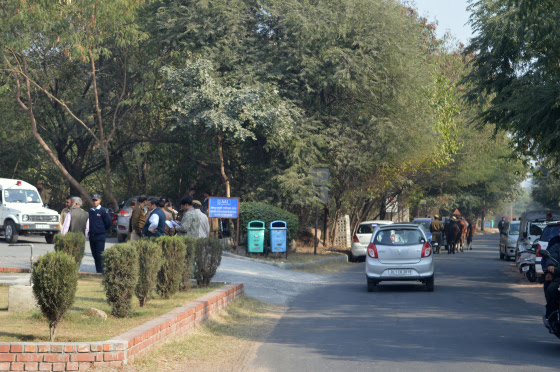
This search was conducted using horses and sniffer dogs, leaving the JNU community in the hope that this will bring some positive results, but the manner and fashion of this search has raised serious questions too. Since the onslaught of the Modi government and his Ministry of Human Resources Development on free thought and dissent,epitomised in its attempts at authoritarian control of all university campuses in the country, the presence of police on the campus is unsavoury.
Students are asking

  • Why the campus searches have been conducted so late, two months after the date of disappearance of Najeeb? Why did neither the court or police initiate a search in the initial days itself?
  • Is the search in hostels an indication that the police still believes or even thinks that Najeeb is still hiding in JNU?! The probability is less than 1% indeed because it is not easy to hide a person within the campus for over two months. Any possible clue or evidence that could have helped them solve the mystery must have by now vanished.
  • Could it be that the police thinks that Najeeb is being hidden by some students, say, the Left party people to get his perpetrators punished?
  • Has the police assumed that he is being hidden by his assaulters?
  • Is it that the police is trying to find if he is being hidden by some staff members, perhaps some teachers?
  • Does the police think that he is killed and buried inside JNU, then did they try checking every nook and corner? Then how would a search after two months will enable them to find that out?
  • On the other hand, the JNUSU has demanded that the search include the home of the controversial Vice Chancellow(VC) house also
  • The VC is being criticized for Najeeb’s disappearance. Repeated conflicts with the administration have,in fact further slowed down the investigation and has also at times dissipated people's attention and participation. 

Yes, a heartbroken mother can still be seen waiting there. We need an answer. If Najeeb is alive, he should be able to return to his normal life, meet his mother and family, and pursue his education.
 
BACKGROUND
On the morning of October 15, Najeeb Ahmed, a 27-year-old first-year postgraduate student of biotechnology at Delhi’s Jawaharlal Nehru University, was spotted getting into an autorickshaw on the campus. He has not been seen since.

In this period, his case has been shifted to a special investigation team, formed on the orders of Union Home Minister Rajnath Singh, from the crime branch of the Delhi Police. The reward for information on him has been increased from Rs 1 lakh to Rs 10 lakhs. The university authorities, fearing protests by students, have set up iron grills around the administration building. There have been numerous rumours about Ahmed being spotted in cities in Bihar, Uttar Pradesh, Madhya Pradesh, Rajasthan and even Nepal. None of these leads have worked out. Najeeb Ahmed is still missing.

“In the past two weeks, we received a lot of phone calls from people claiming to have spotted Najeeb,” said his brother, Mujeeb Ahmed. “Most of the callers later started asking for contact details of former JNU students’ union president Kanhaiya Kumar and former vice-president Shehla Rashid Shora, whom they have seen on TV. All such calls have so far turned out to be hoaxes.”

He added, “In the end, the last information about Najeeb is the one given by the crime branch, which claimed to have traced the autorickshaw that dropped him outside the Jamia Millia University campus on October 15.”

According to the police officer who headed the special investigation team, the number of calls from people claiming to have spotted Najeeb Ahmed rose with the increase in the reward money, from Rs 1 lakh in the beginning to Rs 2 lakhs, then Rs 5 lakhs and finally, Rs 10 lakhs. “Following such leads, we sent teams to several cities including Darbhanga, Bhopal, Bareilly, Aligarh, Ajmer and even Kathmandu,” the officer said.
Meanwhile, the Jawaharlal Nehru university Student Union (JNUSU)'s call for indefinite sir in, in late November which was followed by a crude and militaristic intervention by the RSS-inspired Vice Chancellor of this prestigious institution of higher learning. Freedom Sqaure, the locale for protests has been cordoned off.

Soon after JNUSU's call came, the space which used to be the spot for protest, inspiring speeches and meetings by students and teachers alike –a vacant space with powerful grafitti has been blocked with patrol vehicles.

Says a JNUSU press release, “This is the same space in Ad  block where we used to sit  during hunger strike or SIT-IN programs. First, blocking the space with vehicles, and now, installation of gates clearly indicate how the JNU VC has come down to even apply such cheap tactics to keep students away from raising voice. After having utterly failed to scare the student activists with notices, fines, disciplinary actions etc., the JNU VC is now trying to take away the spaces of protest. We want to reiterate, this university has a history of struggle and no gates can put a stop to this.” The statement was issued by Satarupa Chakraborty, General Secretary, JNUSU.

This move of the JNU VC came, after issuing circulars and reminders to the students of Jawaharlal Nehru University against carrying out protests, sit-ins and public events outside the Administration Block, the university on Sunday night “caged” the area traditionally used by the students to carry out protests.

Dubbed as “Freedom Square,” the students see the move to install iron grills as attack on their Freedom of Expression and a crackdown on dissenting voices.

The students have currently been using the space for an indefinite sit-in to demand justice for Najeeb Ahmed, the JNU student who has been missing for over 50 days now. Earlier this year, when some students of the university were charged with sedition, the others had camped there while on a hunger strike.

When the students refused to vacate the spot and refuted all moves by the university to block the sit-in space, the administration intentionally parked four cars on the both sides of the sit-in space and did not remove them even during the day, when they actually required them.

Late on Sunday night, while hundreds of students marched from Ganga Dhaba to the Administration Block against the token punishments to the ABVP members, the university had the protest site grilled within a couple of hours. The move came under severe criticism from students, with the former JNUSU vice-president tweeting: “JNU’s Freedom Square now equipped with a jail [sic].
 

  1. JNU student Najeeb Ahmed has been missing for 2 months, and the police are no closer to finding him
  2. Mumbai Asks, Where is Najeeb Ahmad?
  3. 41 Days On, Delhi Police is Clueless on Najeeb Ahmad’s Disappearance
  4. ABVP Member Found Guilty in Assault of Najeeb: JNU proctorial Inquiry
  5. नजीब की गुमशुदगी मामले की जांच अवरूद्ध