The NHRC has summoned the Chief Secretary of Government of Chhattisgarh and IGP, Bastar to explain the allegations of hostility and abuse of power against Human Rights Defenders

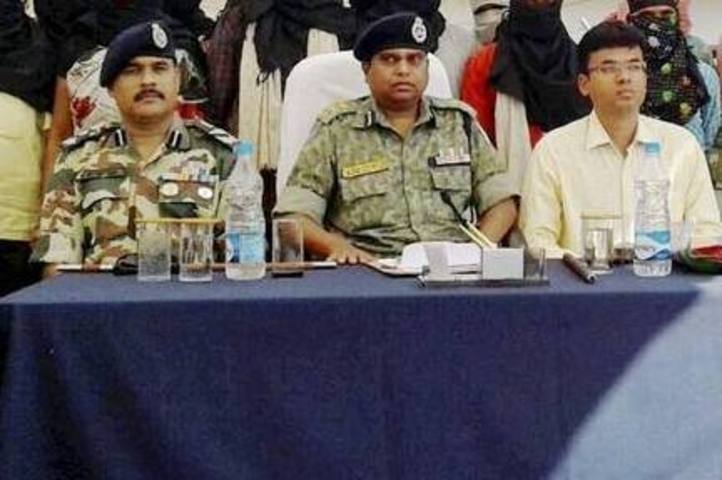
Bastar IG S.R.P. Kalluri (centre). Image: PTI
The National Human Rights Commission has noted and taken suo motu cognizance of "the nationwide outcry and protest on IG of Bastar Range Shri S.R.P. Kalluri for registering FIR No.27/2016 P.S. Tongpal dated November 5, 2016 against Delhi University Professor Archana Prasad, JNU Prof. Nandini Sundar, Vineet Tiwari, Sanjay Parate of CPI(M) and Manju Kawasi for offences of murder, criminal trespass, conspiracy and for offences under Unlawful Activities Prevention Act. It has been alleged that the professors (human rights defenders) are being threatened by the Bastar Police.”
Several reports in the media – print and electronic – have, over the last week alleged that Chhattisgarh Police have named professor Nandini Sundar and ten others as accused in the murder of a tribal Samnath Baghel in Sukma District on November 4, 2016. Reports leaked by the police state that he was killed by Maoists as he had been leading a campaign against Maoists activities since April, 2016.
Ironically, both academics have been involved over years in the developments within Chhattisgarh, especially with relation to brutal counter-insurgency squads instituted by the government and law enforcement agencies that have splintered the local Adivasi community. Sundar has been a petitioner against Salwa Judum and has, again, in 2016 moved the Supreme Court of India for the re-emergence of another brutal counter-insurgency outfit that was using violent methods against the local Adivasi population.
Five months ago, the two professors were part of a team that had visited Bastar in May, 2016, while this killing has taken place in November, 2016. There is no apparent connection between murder and the visit of these human rights activists and, therefore, it has been alleged that they have been framed in mala fide manner by police to settle scores. It has been stated that FIR has been registered in the name of the wife of killed Baghel. Media reports have however interviewed the wide of the slain tribal who has stated that she has not named any person in the killing of her husband.
The NHRC has also taken judicial note of the petition filed by professor Nandini Sundar in the Supreme Court recently that has highlighted the renewed atrocities by the Bastar Police against the tribal people by burning of their homes. The Supreme Court ordered investigation by the CBI. The CBI found S.R.P. Kalluri, IG of Police, Bastar Range responsible for the burning of homes. Sundar had also earlier filed a petition in Supreme Court in Salwa Judum case in 2007 against atrocities by police in the tribal areas. She, along with other lawyers and journalists has in the past brought to the notice of the Commission the mass rape of women, murders and other crimes by security officers under the umbrella of police. The Commission is separately examining those complaints and has sought comments from the State of Chhattisgarh on the findings submitted to the Commission by its team after visiting Chhattisgarh.
The Commission also took suo motu cognizance this month against the unprecedented acts of hostility and indiscipline by Chhattisgarh Auxiliary Police in burning the effigies of the professors, lawyers and journalists as they were instrumental in exposing the deeds of police.
The Commission on consideration of the whole situation obtaining in Chhattisgarh over more than a year views the action of registration of FIR against Prof. Nandini Sundar and others as an act in line with earlier acts of hostility displayed by police.
It has also been reported in the press that Mrs. Baghel, wife of killed Samnath Baghel had told NDTV on November 4, 2016 that she had not named Nandini Sundar or anyone in her complaint. She is reported to have said that t Maoists had attacked their house while they were sleeping on the night of November 4, 2016. The NHRC has also note that Nandini Sundar has told the ANI that she and others have not been in the area for the last five months.
The naming of these human rights activists in the FIR in the backdrop and circumstances mentioned above lends credence of the observation of People's Union for Civil Liberties (PUCL) that all this was part of the State Police vendetta against the lawyers, journalists and human rights activists who have been critical of fake encounters, mass rapes, arson, etc. by security forces. The naming of these persons in FIR appears to be the ploy to stop their entry and visit to the tribal areas for exposing their misdeeds.
In the considered view of the Commission, Police of Chhattisgarh in the circumstances mentioned above owes its explanation to the Commission as there are allegations and its action seems to be coloured by malafide, hostility and abuse of power on the allegations of false implication to silence the human rights defenders. Though, the Commission is aware of the direction of the Hon'ble Supreme Court given on November 15, 2016 directing issue of notice of four weeks before their arrest, yet the acts on the part of police stand on independent footing for the Commission to intervene.
It is the duty and function of the Commission to see that the faith of the people in the police is not eroded and society is governed by rule of law and faith of people in upholding the human rights of people is restored and vindicated at the earliest.
The Commission is deeply disturbed by the state of affairs in the State of Chhattisgarh over last one year or more and is of the view that the Chief Secretary, Govt. of Chhattisgarh and S.R.P.Kalluri, IGP, Bastar Range should appear in person before the Commission November 30, 2016 at 11.00 am with all reports to explain the allegations made against the police and administration in the press media and by human rights defenders.
The Commission also is of the view that since allegations are made against the S.R.P. Kalluri, IGP, Bastar Range, the Commission would like to know from them why the investigation in the FIR now registered should not be handed over to an independent agency like CB CID or CBI.
Related Articles:
1. Fact Finding Team Indicts State and Maoists, Govt Retaliates by Filing Case calling team ‘Anti-National’: Chhatisgarh