BJP’s much-publicised parivartan yatra, which was flagged off by Amit Shah two days ago, has become a topic of intense conversation on social media platforms because of association of bar dancers.
The video of bar dancer being used to woo the voters has gone viral on Twitter and Facebook.
On Monday, the yatra (road show) reached Tugana in Bagpat area of Uttar Pradesh. Senior party leaders including Sanjeev Balyan (minister in Narendra Modi’s cabinet) and Satyapal Singh (BJP MP) were expected to address the crowd.
But when they didn’t arrive at the venue at the scheduled time, the panic set in and the local leaders decided to entertain the crowd by employing a bar dancer.
A local BJP leader, wishing to be unidentified, told Janta Ka Reporter that the decision was taken because ‘we didn’t want crowds to leave.’
He said, “We saw what happened to Amit Shah ji’s rally in Lucknow in September, when lakhs of chairs remained unoccupied. We didn’t want the same to happen here particularly during our leaders’ speeches. There’s nothing wrong if we organised a little bit of entertainment for the crowd.”
Sri Lanka has been lauded for equal access to education for girls and boys, but textbooks and traditions continue to play a role in perpetuating inequitable gender norms and stereotypes.
Sri Lanka has in some circles been considered a model of post-colonial gender equality compared to its South Asian counterparts due to high literacy rates for men and women, 97.7 and 98.6 respectively, universal franchise for both sexes as early as 1931, and two female state leaders. Sri Lanka’s long history of free and compulsory education for boys and girls which was achieved shortly after independence, and girls’ equal access to education and gender parity in all three levels (primary, secondary, and tertiary) of education has been an important contributing factor to this idea of gender equality.
Yet women still continue to grapple with the same old questions of gender inequality in Sri Lanka. In addition to experiencing high levels of gender based violence, women’s labour force participation is half that of men and double their unemployment rates. In 2013 only 35 percent of the working population were women. Women continue to be under represented in upper level management and decision making positions in both the private and public sector. Equal participation, retention, and performance by girls in education has not led to equal representation of women within decision making. A glass ceiling continues to keep women out of governance. Currently there is only a five percent representation of women in parliament and two percent in local government. Which begs the question, what is going on here, why haven’t gains in education translated to economically independent and empowered women in Sri Lanka?
Education is often championed for its transformative possibilities related to liberation, empowerment, social justice, individual freedoms, human rights, and the reduction of social inequities such as gender inequality. From this perspective, education is regarded as a means that will enable learners to think critically and have the ability to challenge the status quo. Schools are sites for the construction of girls’ and women’s identities and should ideally contribute to their active role in society. Generally, however, education systems reflect and help to reinforce the prevailing power arrangements of the state and society. Many education reforms focus more on utilitarian goals, such as the transmission of knowledge and skills, to help learners become contributing members of the existing and often hegemonic, political, economic, and social order. This has been the case in Sri Lanka, where utilitarian goals have side-lined the agenda of promoting values of gender equality. Rather than challenging gender norms and stereotypes, education has played a significant role in perpetuating them.
Sri Lankan classrooms are often embedded with gender boundaries that reproduce powerful patriarchal hierarchies. Interviews with civics teachers, analysis of the civics curriculum, discussion with students and classroom observations show that there exist two key challenges to promoting gender equality in Sri Lanka through education. These include strong gender biases and ideologies held by teachers and a curriculum particularly social studies and civics curricula and a school system that emphasizes the protection of culture and tradition at all cost. These factors work in tandem to maintain the status quo when it comes to challenging traditional gender norms.
Teachers generally hold strong gender biases based on their own upbringing and ideologies. Though they agree that gender equality is important, many teachers believe that because girls are doing so well in schools there is in fact no gender inequality in schools or Sri Lanka for that matter. This may be true on the surface level with respect to the classroom, where girls are on equal footing with the boys in classroom discussion and marks. The differences are apparent in the subtle hidden curriculum of the day-to-day practices of teachers and students. Whether it is the way teachers only call upon female students to sweep classrooms or ask only the male students to move desks, gender roles and responsibilities are assigned in the day to day life of the school through teacher-student and student-student interactions.
Some teachers took the “I don’t differentiate between girls and boys” stance, not understanding the need to move beyond the equal treatment of boys and girls to the equitable treatment of them. The characteristics attributed to boys and girls respectively also impacted their engagement in learning. For example, many teachers and students felt that girls were better in the social science subjects because they were patient and good at memorizing information. Boys were perceived to be adventurous, problem solvers who could think outside of the box and therefore are more suited to science and technology subjects. One can only imagine the detrimental effects these fixed expectations have on girls AND boys.
The gendered expectations of teachers are reflected in the students’ civics textbooks that promote gendered forms of citizenship, which is further protected with the seal of tradition, and culture, thus creating a rift in the way boys and girls are able to engage in society. The mandatory civics curriculum from grades 6-9 continues to depict men and women and girls and boys in outdated traditional gender roles, despite mandates by the Ministry of Education to avoid gender biases in textbooks. Much of the text feature male role models and historical figures. In rare instances there are images of girls in leadership roles; however, these instances are relegated to the school. Images related to men and women’s roles in society, such as work, or family conform to traditional fixed gender roles, thus reinforcing the status quo that although women have full access to education they should still maintain their traditional roles in society in and outside of the home.
The disparity in gender roles is further reinforced with an emphasis on the theme of the protection of traditions, cultures, and customs. In all of the textbooks examined, there was a strong and repeated emphasis on the need to follow traditions. For example, the grade nine civics textbook states, “Social Security is ensured by virtue of the individual upholding the customs and manners, social values, rules and regulations as well as traditions that prevail in society” and the grade seven texts states, “You should be well aware of the traditions followed by members of the family. You should vehemently follow and practise these traditions”. The depiction of women and men in traditional gender roles alongside the emphasis on the need to follow tradition to uphold society leaves very little space for teachers or students to challenge the status quo. Interlinked with tradition is the family, a space that is exulted as sacred and foundational to the core of society. The civics textbook creates a direct link between the family unit and the nation as a whole throughout all of the grades. One should be obedient to the leaders of the nation just as one is obedient to the head of the household i.e. the father. Thus the curriculum and classroom are essentially grooming girls to become good (well educated) mothers and wives and boys into providers and leaders in society.
Students and teachers, particularly in war affected communities, echoed the text books’ emphasis on holding on to tradition, culture, and family values. This is in response to the destabilization of the traditional family unit as a result of three decades of war and the rapid influence of globalization. War affected communities had been sheltered from mass media and globalization for close to 30 years and are now dealing with the consequences of open access to everything from Facebook to pornography. Many teachers and students’ response to this is to fall back to traditional values and norms. Some teachers and students felt that the influence of social media on the way women dressed was leading to the increase in gender violence against women. The example provided was the predominance of young women wearing leggings rather than traditional clothing. There is a growing belief that the shift away from tradition puts women at risk of violence and that it is in some ways warranted because women had strayed from the model of the traditional good women. This creates a dangerous space for women and girls who may challenge the status quo.
Even though education in post-war Sri Lanka is contributing to reinforcing gender norms rather than challenging them, currently there is a significant gap in knowledge and understanding of the link between education and subtle day to day practices that devalue women and girls. A fixation with equal access has led to a dangerous complacency that facilitates and normalizes inequity. Officials and policy makers often fail to consider that the content of education perpetuates negative norms and stereotypes. Challenging these deeply entrenched practices will require the explicit integration of gender equality training for all those involved in the education system from policy makers to teachers. But before that policy makers at the highest level need to confront their own ideologies and have an open and honest conversations on how long we are going to continue to hide behind gender parity, tradition, and the traditional family unit to allow gender inequality to persist in Sri Lanka.
Thursica Kovinthan is a doctoral candidate and Vanier scholar at the Faculty of Education, University of Ottawa. Her research interests include gender, citizenship, refugees, and post-conflict education
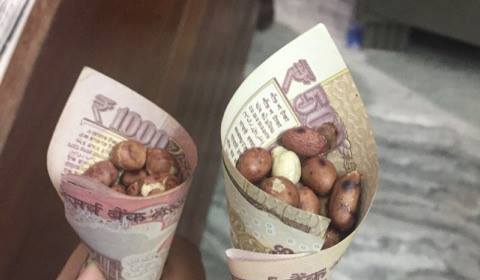
Modi, in his announcement, said that Rs 500 and Rs 1000 will become illegal from the midnight of 9 November and they will be replaced by new Rs 500 and Rs 2000 notes.
While the BJP’s political detractors such as Mamata Banerjee, CPI-M and Congress slammed Modi for his ‘draconian’ decision, his supporters in the party and media were nimble-footed in singing praises for him.
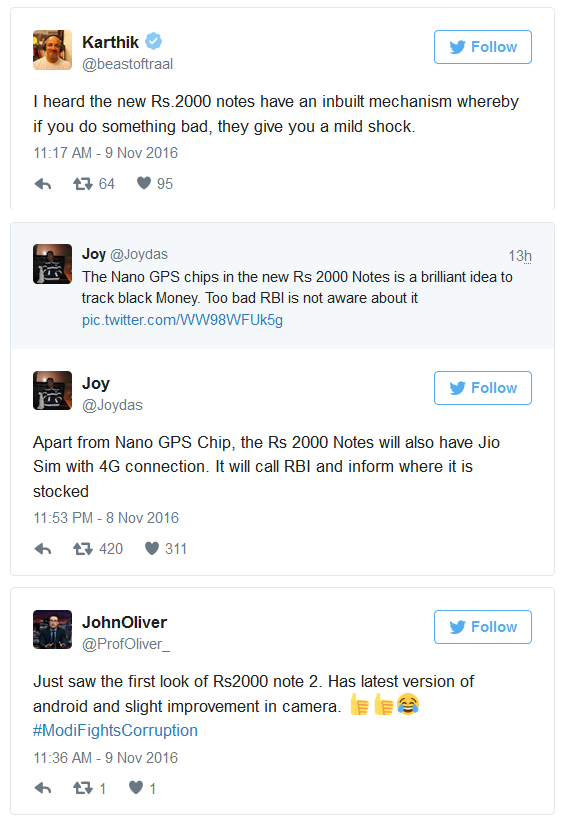
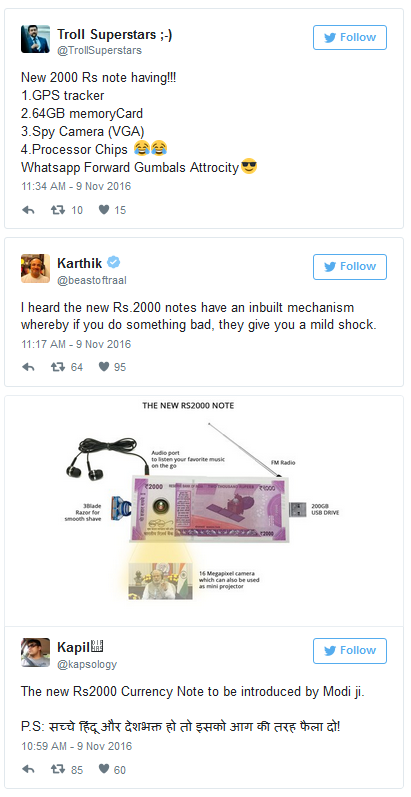
Awe struck by Modi’s supposed ‘masterstroke,’ Zee News owned by BJP Rajya Sabha MP, Subhash Chandra, went a step ahead to announce how the new Rs 2000 note will have a secret chip, which will help the central government agencies to trace the note even when it was buried under 120 meters.
The theory crafted by Zee News sounded more adventurous than even the makers of James Bond series could ever have come up with. (See below)
Zee News’ Rs 2000 embedded chip theory was widely shared on WhatsApp prompting even some of Modi’s critics to believe it as a real story. But, there was one problem. The story propogated by Zee News was fake.
This was enough to cause huge social media reactions as users on microblogging site posted funny comments.
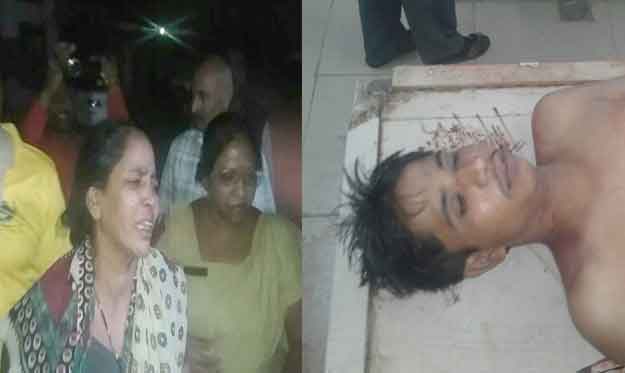
सूरत। गुजरात के सुरत में दलित युवक द्वारा पुलिस लॉकअप में मौत का मामला सामने आया है। पुलिस ने सुरत के पांडेसरा गाँव के नागसेन नगर निवासी प्रवीण अशोक इंद्रजीत को धारा 151 के तहत सोमवार को गिरफ्तार किया था। सुबह जब देखा तो युवक मृत था उसके गले में शर्ट का फंदा था। इस मामले में युवक के परिजनों का आरोप है कि पुलिस के टॉर्चर की वजह से युवक की जान गई है। उनका कहना है कि यह आत्महत्या नहीं मर्डर है। जबकि पुलिस इसे आत्महत्या बता रही है।
परिजनों ने बताया कि कल युवक को थाने ले जाने के बाद हमने पीआरओ से हिरासत में लिए जाने का कारण पूछा। इसपर उन्होंने कहा कि अभी मुझे इसकी जानकारी नहीं है कल बता दिया जाएगा। परिजनों ने थाने जाकर भी पूछताछ की लेकिन उन्हें कुछ नहीं बताया गया।
प्रवीण की मां ने बताया कि पुलिस ने उनसे भी दुर्व्यवहार किया। पुलिस वालों ने उन्हें धमकी दी कि यहां से चली जाओ वरना तुम्हें भी लॉकअप में डाल देंगे। अभी तक युवक की मौत का कारण पता नही चल पाया है। पुलिस अधिकारी की कहना है कि पुलिस स्टेशन के सीसीटीवी की फुटेज के आधार पर जांच होगी।
आपको बता दें कि गुजरात में दलितों को प्रताड़ित करने में पुलिस भी आगे रहती है। उना में चार दलित युवकों को पुलिस थाने के सामने ही पीटा गया था। कथित गोरक्षक उन्हें पीटते रहे लेकिन कोई भी पुलिसकर्मी पीड़ितों को बचाने नहीं आया।
Is the government really blameless for the crisis of credibility faced by the media?
On March 18, 2002, when the Gujarat violence had been dragging on more than a fortnight after its outbreak, then chief minister of the state, Narendra Modi, wrote letters of appreciation to over a dozen Gujarati newspapers for their coverage.
He was “grateful” to each of those newspapers for giving their “full support to the state government,” Modi wrote. “I am happy to note that your newspaper exercised restraint during the communal disturbances.”
Modi’s notion of “restraint” was, however, completely at odds with the damning evidence produced two months later by the Editors Guild of India against some of those very newspapers, particularly the big two of the time, Sandesh and Gujarat Samachar. Citing stories and headlines carried by the two “notable offenders”, the report of the Editors Guild said that their role during the riots was “provocative, irresponsible and blatantly violative of all accepted norms of media ethics”.
Thus, Modi’s praise for a section of the media was not for displaying restraint, as claimed by him, but for doing just the opposite, as brought out by the Editors Guild. This 2002 precedent, relating to the phase that led to Modi’s dramatic rise, vindicates a journalistic canon recalled by the Indian Express Editor Raj Kamal Jha at the Ramnath Goenka Awards function: “criticism from a government is a badge of honour”.
For, the Indian Express itself was among the publications that had been disfavoured by the Modi regime in 2002 for not toeing its line on Gujarat.
Raj Kamal Jha's speech begins at about 1.35 mark
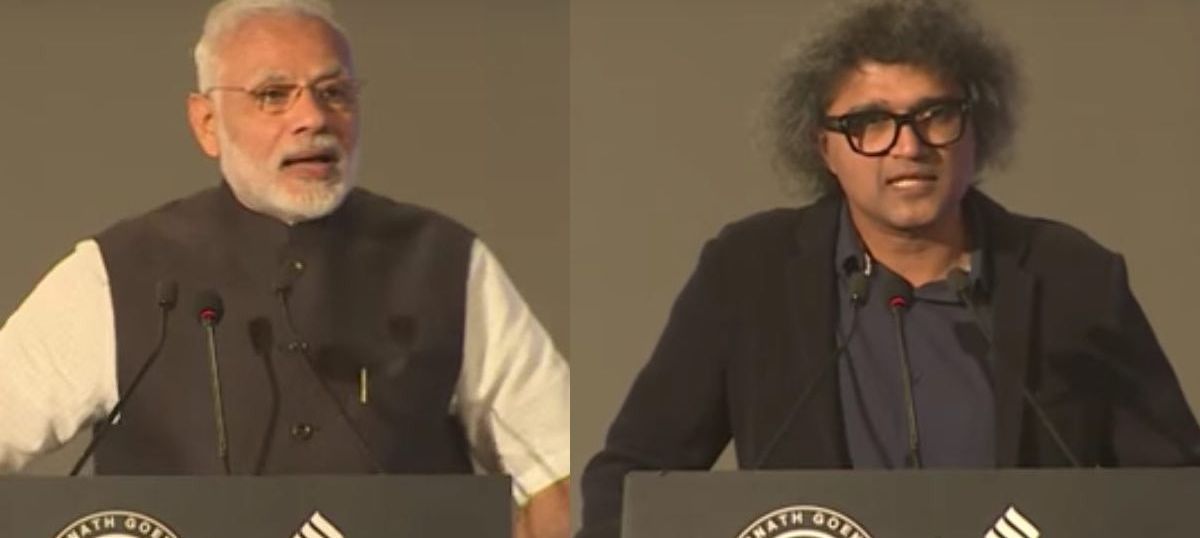
Responding to Modi’s speech at the awards function, Jha said that he was actually “nervous” about the Prime Minister’s compliments to the Indian Express for its record over the years. He seemed to have got too close to the bone for Modi’s liking when Jha jokingly suggested
"So just as they do in smoking scenes in cinemas, I think we should have a ticker tape running whenever we hear praise of a journalist that criticism from a government is wonderful news for journalism. I think that's very, very important for journalism."
The awards function, as it happened, was taking place on the day the controversial order banning NDTV India for 24 hours was being issued.
Even as he put in perspective the issue of “praise”, there was little of that spirit of speaking truth to power on the equally contentious subject of “credibility”. Switching as if to the polite mode in which a vote of thanks is meant to proposed, Jha accepted without demur the little lecture on credibility that Modi had delivered in the same speech. Thanking him for his “wonderful underlining of the importance of credibility”, Jha said: “We cannot blame the government for that. That is our job. We need to look within.”
Though journalists do need to engage in a lot of introspection, given the media’s growing vulnerability to political and business interests, is the government really blameless for the credibility problems faced by the media? Jha might not have quite thought through this angle as he gave his impromptu speech immediately after Modi had ended his. Whatever the reason, Modi got away with his sermon on credibility although he never made any secret of his disdain for the freedom of the press and his proclivity to polarise even the media, right from the days of the 2002 carnage. Adding to the irony is Modi’s homily to the media to refrain from being divisive in a country that is inherently diverse.
The credibility question
Given the context in which Modi came up with these terms, one cannot miss the pernicious interdependence of “praise” and “credibility”. One has to be as skeptical about Modi’s invocation of “credibility” as Jha was about his “praise”. The need for such skepticism is evident, for example, from his choice of the newspapers to which he sent his letters of appreciation in 2002. Clearly, who has credibility in Modi’s estimation is as subjective or questionable as who merits praise from him.
The determination of credibility is liable to be fickle even when it is left to other stakeholders in the media. Jha’s approach of looking within for the increasing credibility deficit holds good, to be sure, in the case of those media houses or journalists who choose to be in bed with the government. They have to take the blame for abandoning watchdog journalism for access journalism or, as Jha put it so evocatively, “selfie journalism”. But then, even those who take their watchdog role seriously may face the risk of their credibility being called into question, if the evidence they have relied upon, however official or irrefutable, happens to be disregarded by courts or other state institutions.
Indeed, the credibility of a journalistic work cannot be assessed without taking into account the frequent dysfunctionality of state institutions, especially the criminal justice system beginning with the police. After all, Modi raised the credibility issue just when some journalists were contesting the official line on the Bhopal jail break and encounter. Thanks to the glaring holes and contradictions in the police version, those dissenting journalists stuck their neck out to do stories that are more evidence-based than authority-based. Meanwhile, some of the journalists in the government camp, carried away by nationalist rhetoric, have dispensed with the norm against prejudging under-trial prisoners. An anchor who was found credible enough by Modi to be granted more than one of his rare interviews has repeatedly referred to the eight casualties of the Bhopal encounter as “terrorists” rather than “alleged terrorists”.
The saving grace is that, occasionally, the system does deliver justice. It helps to remember that on May 16, 2014, the very day Modi was sworn in as prime minister, the Supreme Court passed strictures on him in the 2002 Akshardham terror attack case. Acquitting all the six accused who had been framed on the basis of evidence that was found to be concocted, the apex court faulted the Gujarat home department – a portfolio then held by Modi – for not taking an “informed decision” while sanctioning prosecution under the terror law. “This would go to show clear non-application of mind by the Home Minister in granting sanction,” the court said.
More tellingly, there was “perversity in conducting this case at various stages, right from the investigation level to the granting of sanction by the state government,” the Supreme Court added. There is evidence of such perversity in a number of other cases too. The job of journalists is to expose it, against all odds, without fearing motivated attacks on their credibility from the government’s side.
Manoj Mitta is the author of The Fiction of Fact-Finding: Modi and Godhra
नई दिल्ली। दिवाली के बाद से दिल्ली और इसके आस-पास के इलाकों में छाई धुंध ने आम जनजीवन को इतना ज्यादा परेशान किया कि लोगों का जीना दूभर हो गया है। कुछ लोग इसका कारण दिवाली पर जले हुए पटाखों को मान रहे हैं तो दिल्ली सरकार ने इसे पड़ोसी राज्यों में पराल जलाने की वजह मान रही है।
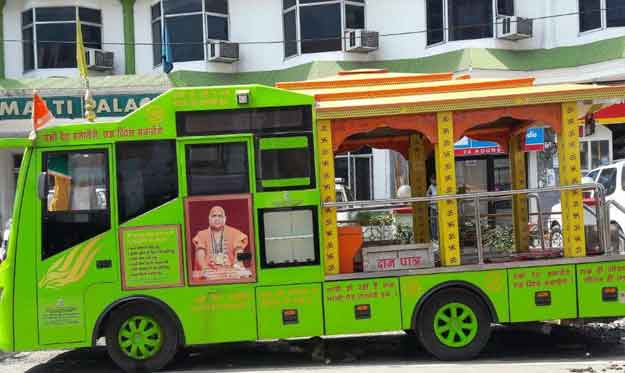
जहां एक तरफ एनजीटी और हाईकोर्ट इस धुंध को साफ करने के लिए जतन करने में जुटे हैं। वहीं राष्ट्रीय स्वयं सेवक संघ और महामंडलेश्वर श्रीश्री 1008 अनंत विभूषित अवधूत बाबा अरुणगिरि महाराज (पर्यावरण बाबा) ने धुंध को साफ करने के लिेए एक नया तरीका निकाला है। अब आरएसएस और बाबा जी मिलकर रथयात्रा और यज्ञों के सहारे पर्यावरण को साफ करेंगे।
न्यूज 18 की खबर के अनुसार महामंडलेश्वर श्रीश्री 1008 अनंत विभूषित अवधूत बाबा अरुणगिरि महाराज (पर्यावरण बाबा) ने वैष्णो देवी से कन्याकुमारी तक की 4500 किलोमीटर की रथ यात्रा आरंभ की है। बाबा का यह ऑटोमेटिक रथ फिलहाल दिल्ली में है। उनके इस प्रयास में राष्ट्रीय स्वयंसेवक संघ के नेता इंद्रेश कुमार भी सहायता प्रदान कर रहे हैं।
ऋषिकेश में रहने वाले पर्यावरण बाबा ने बताया कि दिल्ली में पर्यावरण की शुद्धि के लिए हिमालय में उगी औषधीय जड़ी-बूटियों से किए गए यज्ञ से इस तरह के हालात को नियंत्रित करने की जरूरत है। उन्होंने कहा कि यज्ञ के माध्यम से जहां परमात्मा वातावरण को साफ रखते हैं, वहीं सब 33 करोड़ देवी-देवता भी खुश रहते हैं।
इंद्रेश कुमार फिलहाल चंडीगढ़ में है और वह दिल्ली में पर्यावरण बाबा के पहले दिन के यज्ञ में भाग नहीं ले सकेंगे। लेकिन इस मिशन में वो अपना पूरा समर्थन दे रहे हैं। इंद्रेश कुमार ने कहा कि प्रदूषण के दानव से लड़ने के लिए हमें यज्ञ का आयोजन को सफल बनाने की जरूरत है। वहीं प्रदूषण के कारकों को मारने के लिए अगर हम गोमूत्र और जड़ी-बूटियों का इस्तेमाल करेंगे तो इसके काफी सकारात्मक परिणाम देखने को मिलेंगे।
दुनिया के सबसे बड़े लोकतंत्र भारत में मंगलवार को केंद्र सरकार ने सनसनीखेज कार्यवाई करते हुए हजार और पांच सौ के नोटों पर तत्काल रोक लगा दी। आज से पांच सौ और हजार के नोटों का इस्तेमाल लगभग गैर क़ानूनी हो जाएगा। इस निर्णय के लिए देश के प्रधानमंत्री को खुद जनता के सामने आना पड़ा। कम से काम मेरी यादाश्त में ये इस तरह रातों-रात निर्णय लेने का ये पहला वाकया है। किसी भी देश की मुद्रा उस देश की जान होती है। अगर अच्छे बुरे को दरकिनार कर दिया जाए, तो उसे इस तरह से गैर क़ानूनी घोषित करने के कदम को साहसिक तो जरूर ही कहा जाएगा। इस निर्णय के महत्व को इस बात से भी जाना जा सकता कि सामान्यत: इन फैसलो की घोषणा आर बी आई गवर्नर किया करते है पर इस बार देश के प्रधानमंत्री को इस घोषणा के लिए आना पड़ा।
अगर सरकार की मानें तो काले धन और नकली नोटों पर लगाम लगाने के लिए देश हित में उठाया गया कदम है। आम जनता को थोड़ी परेशानी होगी पर काले धन और नकली नोटों पर ये सर्जिकल स्ट्राइक जैसा काम करेगा।
जिनके पास हजार और पांच सौ के नोट के रूप में काला धन है वो मिटटी हो जाएगा। देश में आर्थिक सुधार होगा।
लेकिन अगर इस फैसले की आलोचना की बात करें तो बहुत सारे सवाल उठते है;
पहला सवाल इसके समयी और तरीके को लेकर है जो कहीं से भी लोकतान्त्रिक नहीं था। गवर्नर की जगह मोदी जी का आना और आधी रात से निर्णय लागू करना तानाशाही की तरफ इशारा करता है। दुनिया का हर तानाशाह देश की प्रगति का हवाला देकर ही आता है। यहाँ भी कुछ अलग नहीं हुआ है। तो क्या प्रधानमंत्री ही रिज़र्व बैंक के गवर्नर भी हैं, फिर संस्थानों की स्वायत्तता का क्या होगा? आगे किस संस्थान की बारी है?
दूसरा सवाल ये है कि किसी भी देश की मुद्रा का रातो रात गैर क़ानूनी हो जाना उस देश की प्रतिष्ठा को अंतराष्ट्रीय स्तर पर ठेस पहुंचाता है। उनके प्रति विश्वास को संदेह में लाता है। जहाँ आज रात एक निर्णय हुआ, कल रात दूसरा भी हो सकता है। ऐसी क्या मज़बूरी थी कि ऐसा निर्णय लेने की नौबत आ पड़ी? 30 दिसम्बर तक बैंक में नोट बदलवाए जा सकते है। अगर 30 तारीख तक जनता में इन नोटों का विनिमय जारी रहने दिया जाता तो क्या फर्क पड़ जाता? भारत की आम जनता वैसे भी संदेही है। एक बार दस के सिक्के नकली होने की अफवाह के बाद आज दस के सिक्के बाजार से गायब है, बावजूद सरकार के विश्वास दिलाने के।
तीसरा सवाल सरकार की अचानक बनी मंशा पर है। नंबर दो में तो वैसे ही कोई डील नहीं होती। कहीं ऐसा तो नहीं इस फैसले से जनता के विवेक का टेस्ट लिया जा रहा हो ? जनता के आरंभिक प्रतिक्रिया से लगता है कि सरकार सफल और जनता फेल रही है।
चौथा सवाल काले धन की रोक का है। केंद्र की भाजपा सरकार पर बड़े पूंजीपतियो से साठगांठ के आरोप लगातार लगते रहे है। प्रधानमंत्री जी का रिलायंस समूह की मोबाइल कंपनी के प्रचार का चेहरा होने की हर जगह तीखी आलोचना हुई थी। अब सवाल ये है कि ये निर्णय जितना आश्चर्य जनक आम जनता के लिए था, क्या उतना ही आश्चर्य उन समूहों के लिए रहा होगा; जिन पर प्रधानमंत्री कार्यालय के ट्वीटर अकाउंट हैंडलिंग तक के आरोप लगते रहे हैं? काले धन का मुख्य स्रोत और निवेश बेनामी जमीन और स्विस बैंक है, उसपर तो वैसे भी कोई फर्क नहीं पड़ेगा। दूसरी बात ये काला या सफ़ेद कैसा भी धन देश के मजदूरो और किसानों के पास तो है ही नहीं। ये बड़े या माध्यम वर्ग के व्यापारियों के पास ही है और वो सब आश्चर्यजनक रूप से, इस फैसले के समर्थन में है। ये बात अपने आप में संदेह पैदा करती है कि क्या उनको पहले ही अपना काला धन ठिकाने लगाने का समय मिल गया था, या उनका काला धन नकद के रूप में है ही नहीं।
पांचवा सवाल तो अब बात रही मझोले व्यापारियों की जो कि अपने पास एक से लेकर पांच या दस करोड़ तक का काला धन नोटों के रूप में रखे हुए है। उनके लिए इसका समाधान आसान है, भारत की वयस्क आबादी का एक बहुत बड़ा हिस्सा आज भी ऐसा है जिसके पास या तो पैन कार्ड नहीं है या आज तक उन्होंने कभी इनकम टैक्स रिटर्न नहीं भरा। ऐसे व्यापारियों के लिए कितना मुश्किल है सौ-पांच सौ ऐसे आदमी ढूंढना, जिनके अकॉउंट में एक दो महीने के लिए दस से पचास हजार तक रुपये जमा कराये जा सके। आसानी के लिए जन-धन खाता खुलवाया जा सकता है। आज पांच सौ और हजार के नोट जमा कराओ, दो महीने में दो हजार वाले निकाल लो और अपना कुछ हिस्सा ले लो। 2000 के नोट तो रखने में और भी आसान होंगे।
छठा सवाल रही बात नकली और जाली नोटों की तो वो जरूर एकबारगी बंद हो जाएंगे पर ये भी ध्यान रखा जाए कि नकली नोट बनाने वालों को वो पांच सौ या हजार रुपए में नहीं पड़ता। उनको वक़्ती तौर पर कुछ नुक्सान होगा पर ऐसा तो नहीं है कि भारत बड़े नोट बंद करने जा रहा है। बल्कि अब तो दो हजार का बनाने जा रही है तो नकली नोट भी मार्किट में फिर से आने ही हैं। सरकार के पास उनको रोकने का क्या दीर्घकालिक उपाय है?
सातवां सवाल नरेंद्र मोदी के चुनाव प्रचार में जो खर्च हुआ था, जाहिर है कि सफेद धन के इस्तेमाल से तो इतना खर्च हो नहीं सकता। तो क्या इस तरह के फैसले से सरकार, अपने ही चुनाव के फंडर्स को नाराज़ करेगी? और नहीं करती, तो क्या उनको पहले ही इसकी इत्तला थी? क्या ऐसा तो नहीं कि इस निर्णय का उपयोग, आने वाले विधानसभा चुनावों में बाकी दलों को कमजोर करने और अपने पास कैपिटल पहले से उपलब्ध रखने के लिए किया गया? क्योंकि चुनाव में जिस तरह भाजपा समेत सभी पार्टियां पैसा खर्च करती हैं, वह किसी भी तरह क़ानूनी पैसे से तो नहीं ही हो सकता है।
ऊपर लिखे संदेहो और सवालो पर एक बार विश्वास किया जाए तो अब प्रश्न उठता है कि सरकार ने इतना साहसिक और रिस्की निर्णय क्यों लिया। इस बारे में सिर्फ कयास ही लगाए जा सकते हैं।
आठवां सवाल भारत के बैंको की हालात बहुत कमजोर है आज उन्हें एक बार स्थापित करने की कोशिश है ? क्योंकि इससे बैंक के पास पैसा आ जाएगा एक बार.के लिए ही सही। ये खाली पड़े जन-धन खातों की मेंटेनेंस से त्राहि कर रहे बैंकों को थोड़ा राहत देगा।
नवां सवाल क्या यह भारत की उत्सवधर्मी जनता को बरगलाने और बहलाने की ये कोशिश है ? आज शहर के पॉश इलाको में पटाखे जलाये गए। अधिकतर आवाज उन कोठियो से आ रही थी जिनकी नींव काले धन से ही रखी गई थी। देश की जनता काफी सालो से एक तानाशाह की मांग कर रही है। क्या ये मांग पूरी होने का समय नजदीक है ?
सवाल कई हैं, संदेह कई है। चूंकि हमारे लिए ये एक बिलकुल नई घटना है तो सिर्फ कयास ही लगाए जा सकते है। असल परिणाम क्या होंगे ये तो अभी भविष्य की गर्भ में है। ये भी हो सकता है कि ये कदम, सच में सरकार ने ईमानदारी से देश हित में उठाया हो और देश को निकट भविष्य में इसका लाभ मिले। पर देश में कौन-कौन शामिल है ये एक अलग मसला है। किसान आदिवासी मजदूर दलित, क्या ये भी उसी देश की परिभाषा में शामिल है जिस देश को इस कदम का लाभ मिलेगा?
(लेखक पेशे से चार्टेड अकाउंटेंट हैं और राजनैतिक-सामाजिक रूप से सक्रिय हैं। फिलहाल हरयाणा में रहते हैं।) अमोल से amolsaharan@gmail.com पर सम्पर्क किया जा सकता
Delhi University (DU) professor Nandini Sundar, Jawaharlal Nehru University (JNU) professor Archana Prasad and eight others were booked on Saturday for the alleged murder of a tribal villager in conflict-ridden Sukma district of Chhattisgarh.
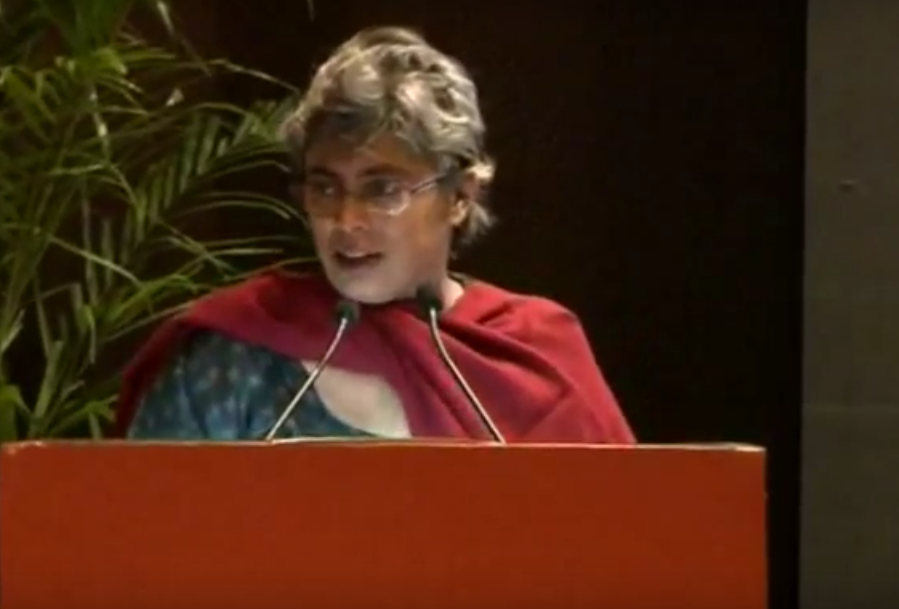
Prof Archana Prasad. Image credit: Youtube
Police said 10 persons have been booked under sections 120 B (criminal conspiracy), 302 (murder), 147 (punishment for rioting), 148 and 149 of IPC.
The FIR based on the complaint lodged by the deceased’s wife also names Vineet Tiwari associated with Delhi’s Joshi Adhikar Sansthan and Sanjay Parate, state secretary, Chhatisgarh CPI (M) and other localites.
Bastar SP Rajendra Dash told SabrangIndia, “This is an extremely serious issue. FIR has been registered and investigation is underway."
Interestingly, Prof Prasad told SabrangInidia that she hasn’t been to the village in last six months, and Prof Sundar has told ANI that she hasn’t been to the area since May.
When questioned about the role of the Delhi-based professors and the political leader in the case, he said, “All of them are Naxalites. All of them. Strict action will be taken against them.”
Armed Naxals had allegedly killed the villager, Shamnath Baghel, with sharp weapons on late night on Friday (November 4) at his residence in Nama village of Tongpal area. Earlier this year in April, Baghel had filed a complaint against Sundar and others with the police and had accused them of inciting tribals against the government and seeking their support for Maoists.
Dubbing the charges against her 'baseless', Prof Arachana Prasad told SabranIndia, “This is clearly done by Chhattisgarh government in an attempt to keep Salwa Judum alive. This is the reason they’re looking for scapegoats and we’re being targeted, because we’re academicians. I’ve been going to Bastar since last 30 years and know a lot more than the police, who’re speaking of ‘strict action’. All of this is politically motivated.”
Prof Prasad also said that she hasn’t been to Bastar in last six months and claimed that there is no connection whatsoever between her and the alleged murder.
Prof Prasad accused the government of waging an attack on activism through such scheming. “They [CPI (M)] are not Maoists. They have a political party. They’re trying to put the onus on democratic political parties. They (government) are obviously trying to attack the political activism.”
Parate expressed similar concerns over the allegations and said, “This is nothing but an offensive on the very structure of the democracy. It’s happening everywhere in the country, not just in Bastar. They are trying to impede the activities of political parties. They don’t want political parties who are speaking up for tribals, who’re taking a stand against the oppressors. They want to eliminate our activism.”
Calling the charges against him and the professors ‘bogus’ he said, “Even they (police) know that there is no case. Still, they’ll drag us into it just to make things difficult for us. But, it won’t work.”
Parate also said that a state-wide protest will be planned to condemn the alleged framing of the professors and political activists.