The organisation's new report said, ‘A relatively small number of aggrieved citizens can successfully deter many others from speaking out on sensitive issues'.
Free Speech and democratic freedoms in India are at risk because of vague and poorly applied laws, online harassment and the fear of retaliation, states a report released by international free speech advocacy group PEN in collaboration with the University of Toronto’s International Human Rights Program on Monday, September 18 The report, titled Fearful Silence: The Chill on India’s Public Sphere, was based on interviews with authors, activists, journalists, film-makers and lawyers from across the country, the organisation said.
It highlights “cases of film censorship, intimidation of writers and journalists, the arbitrary use of the law and online harassment”, and blames the abuse of India’s “vague and overbroad legislation” for the problem. It mentions the experiences of Jawaharlal Nehru Student Union leader Kanhaiya Kumar and civil rights activist Teesta Setalvad, adding “a relatively small number of aggrieved citizens can successfully deter many others from speaking out on sensitive issues.” In 2015, PEN had published a nearly 150-page report, Imposing Silence: The Use of India’s Laws to Suppress Free Speech,“about the use of outmoded legislation to stifle free expression in India”. The group chose India for the project after seeing media reports about banned books, intimidation of journalists, and citizens facing charges for online activity.
On Monday Sepoy K Vikas Janardhan, became the 18th solider to fall victim to the terror attack in Uri in Jammu and Kashmir.
Two other critically injured soldiers have also been airlifted to the military hospital in Delhi.
17 soldiers were killed in the attack on Sunday, while about 23 others injured.
The terror attack in Uri has left Indians shocked and enraged with many demanding firm action against Pakistan. Others on social media have been quick to remind Prime Minister Narendra Modi highlighting the perceived hypocrisy in his hawkish approach against the neighbouring country that he adopted during the Lok Sabha elections of 2014.
MUMBAI, INDIA ? APRIL 03: Arnab Goswami, Indian Journalist, Editor in Chief and News anchor of the news channel Times Now at his office in Mumbai.(Photo by Bhaskar Paul/India Today Group/Getty Images)
But the questions seeking to expose Modi’s stand, adopted to win elections, largely remained confined to social media users as none in the mainstream media could muster the courage to put the Centre’s BJP-led government in the dock on what was the worst terror attack for over a decade.
‘Patriots’ amongst us desperately looked at the ‘nationalist’ news channel Times Now to represent general public’s anger on its high-profile debate show Newshour, presented by the nation’s conscience-keeper, Arnab Goswami. Goswami remained true to himself and did host a special debate show despite it being a Sunday. His guests included the usual suspects, Lt Gen (Retd) Jaiswal, Times Now’s resident expert Maroof Raza, former army general and now the RSS’ posterboy, Maj General GD Bakshi and former India diplomat G Parthasarathy.
The dominating theme of the debate was that India must attack Pakistan without caring much about the nuclear reactions from the neighbouring country!
Another highlight of the debate was a unanimous praise for Narendra Modi government for using the ‘strongest’ condemnation of the terror strike yet.
In Raza’s words, ‘I don’t think that there’s been such clarity of intent (by the central government.)’
But, the killer blow came from Goswami, who blamed the former prime minister, Manmohan Singh, for Uri attack. Yes, you heard it right. According to the nation’s most patriotic journalist, the Uri attack was a fallout of the ‘biggest blunder’ by the former prime minister.
This is what India’s ‘second most popular hero’ after Modi had to say.
“My personal greatest frustration has been with the long-rope theory. And I don’t know why the people, when you say stop engaging with Pakistan, say ‘you are a hawk.’ But Parthasarathy will remember that the greatest mistake Manmohan Singh made was that he went and met Nawaz Sharif for one hour in a New York hotel on 29 September 2013, just days after the twin attacks in Jammu and Kashmir’s Kathua and Samba.”
Fantastic observation indeed! Many would argue why the Times Now’s editor-in-chief, who had recently received social media roasting for his ‘fixed’ interview with Modi, stopped at Singh. He ought to have blamed all non-BJP prime ministers going as far back as Nehru era for the alarming increase in terror attacks under Modi government. I mean blame everyone except Modi for the present mess.
Goswami also appeared to have forgotten that Pakistan-backed militants had mounted an audacious attack on India’s Air Force base in Pathankot earlier this year. This was barely a week after Modi had chosen to stop over in Lahore to enjoy the birthday bash organised by his Pakistani counterpart, Nawaz Sharif.
For Goswami, this too may have been a diplomatic masterstroke. Of course, Goswami did not find fault in Modi’s foreign policy when he invited the Pakistani delegation consisting of ISI officers to visit the Pathankot air base.
Instead of reminding Modi and BJP President, Amit Shah, for their tall claims made against Pakistan during the 2014 Lok Sabha elections, Goswami made several desperate attempts to exonerate the current prime minister on the Uri attacks on Sunday.
If one ever needed an example of an utterly biased piece of journalism by Goswami on his ‘nation’s favourite channel’, they need not look beyond Sunday’s Newshour debate on the Uri attacks.
You can watch the ‘historic’ Times Now debate below (Goswami’s gem appears 18 minutes onwards)
बागपत के बलूचगांव से सटे क्रान्तिग्राम बसौद में मिसाल बने सत्तार अहमद
प्रधानमंत्री नरेंद्र मोदी के स्वतन्त्रता दिवस पर बलूचिस्तान सम्बन्धी दिए गए बयान के बाद से बागपत जिले का बिलौचपुरा गाँव चर्चा में है।पिछले एक महीने से यहां हर रोज मीडिया द्वारा नई कहानी सुनने को मिल रही है ।लेकिन बिलौचपुरा गाँव से सटे क्रांति ग्राम बसौद की तरफ किसी का ध्यान नहीं गया । गाँव निवासी सत्तार अहमद पिछले 23 साल से अपने गाँव में शिक्षा की अलख जगा रहे है।20 बच्चो से शुरू किया गया उनका सफर आज 250 तक पहुच गया है ।
सत्तार अहमद ने सन 1993 में अपनी पंचायत के लिए कुछ करने की सोची । इसी सोच के तहत बी.एड कर चुके सत्तार अहमद ने अभिवावकों से बात की उनसे बच्चों को भेजने के लिए कहां ।धीरे धीरे लोग उनकी बात से प्रभावित हुए और बच्चों को भेजने लगे । बीस बच्चों से शुरू किया सफर 30,50,80,100 से होता हुआ 250 तक पहुच गया।
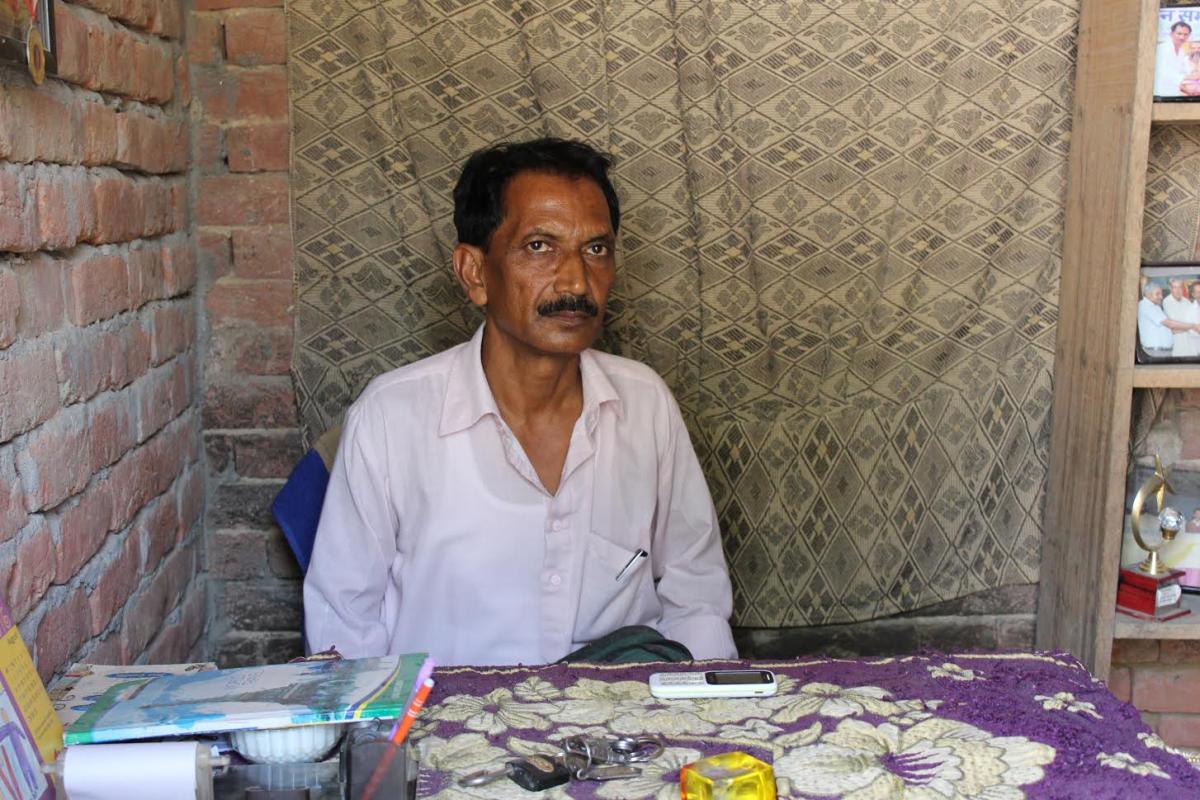
सत्तार अहमद ने अपने घर और द्वार को शिक्षा के मंदिर में तब्दील कर दिया है। उसी में एक पुस्तकालय भी है ।पढाने का उनका तरीका कुछ ऐसा है कि बच्चे किताबों में रमते चले जाते है । यही वजह है आज उनके पढ़ाये बच्चे शिक्षक बनने से लेकर आईटी फील्ड से लेकर डॉक्टर तक बन चुके है। इस काम के लिए उन्हें क्या मिलता है के सवाल पर सत्तार अहमद बताते है यह अपने गाँव के लिए कुछ कर गुजरने की जिद है जिसके सहारे यह काम हम कर पा रहे है । आगे वह कहते है कि हम केवल ख़राब शिक्षा व्यस्था को दोष देते है ,लेकिन उसके लिए खुद कुछ नही करते है।अगर एक गाँव से एक -एक भी आदमी समाज सेवा के तहत शिक्षा के लिए काम करे तो शिक्षा के क्षेत्र में देश और समाज बड़े पैमाने पर तरक्की कर सकता है। शिक्षा के साथ साथ सत्तार अहमद महिलाओं के लिए सिलाई-कढ़ाई का केंद्र चलाते है जिसमें मौजूदा समय में करीब 40 महिलाएं अपने हुनर को निखार रही है ।
सत्तार अहमद को मिशन की तरह किये जा रहे इस काम के लिए अनेक संस्थाओं ने पुरस्कृत किया है तो स्थानीय व्यापारी मेन चन्द्र जैन पिछले कुछ समय से उन्हें इस काम में सहयोग कर रहे है। फिलहाल बिलौचपुरा गाँव से सटे बसौद गाँव में सत्तार अहमद ज्ञान का उजियाला फैला रहे है । काश देश के हर गाँव को एक सत्तार अहमद मिल जाये जो अँधेरे में रौशनी की किरण बिखेर सके ।
रिपोर्टिंग-राहुल पाण्डेय (फोटोग्राफर), अनुराग आनंद , अभिषेक कुमार
गुजरात में भाजपा नेता की प्रताड़ना और पुलिस के रवैये से परेशान एक दलित सरपंच अपने परिवार समेत सहित रनपुर पुलिस थाने के सामने आत्मदाह का प्रयास किया।
Image: Ahmedabad Mirror
जलीला गाँव के सरपंच कालीबेन सोलकीं, बेटे और उपसरपंच मांजी सोलंकी और उसकी पत्नी गीताबेन ने रविवार को गांव के ही भाजपा नेता भगीरथ खाचर के खिलाफ परेशान करने की शिकायत पुलिस से की थी, लेकिन पुलिस उसकी रिपोर्ट लिखने को तैयार नहीं थी।
पीड़ित परिवार का कहना था कि भागीरथ पहले भी उनके परिवार पर दो बार हमला कर चुका है। उपसरपंच मांजी सोलंकी ने फिर से अपनी माँ पर हमला होने की आशंका जताई थी। दो साल पहले भागीरथ ने मांजी पर भी छड़ी से हमला किया था जिससे उसके हाथ में फ्रैक्चर हो गया था। तीन साल पहले भी भागीरथ ने उसके परिवार पर हमला किया था।
पीड़ित परिवार ने तब भी पुलिस से शिकायत की थी, लेकिन पुलिस ने न तब उसकी शिकायत पर कोई कार्रवाई की थी और न अब करने को तैयार थी। कालीबेन चार सालों से अपने गाँव की सरपंच है। उसका बेटा मांजी उपसरपंच और अपनी पत्नी तथा बेटे तुषार समेत कालीबेन के साथ ही रहता है।
रविवार को जब कालीबेन भागीरथ के घर के पास सफाई कर रही थी, तब भागीरथ ने उसके खिलाफ जातिसूचक शब्द इस्तेमाल किए और जान से मारने की धमकी देते हुए तलवार से हमला किया। गाँव वालों के बीच में पड़ने पर भागीरथ मौके से भाग गया था।
भाजपा नेता भागीरथ चाहता है कि अगली बार कालीबेन या उसका बेटा सरपंच के चुनाव में खड़ा न हो। इस वजह से वह अक्सर अकेले या कुछ असामाजिक तत्वों के साथ मौका मिलते ही कालीबेन और उसके परिवार को धमकाने लगता है और मारपीट कर बैठता है। बार-बार शिकायत करने पर भी पुलिस भागीरथ के खिलाफ कोई कार्रवाई नहीं कर रही है।
चार माह पहले सरपंच का परिवार डीजीपी के ऑफिस में भी शिकायत कर चुका है, लेकिन तब भी कोई कार्रवाई नहीं हुई। परेशान होकर सरपंच ने सपरिवार आत्मदाह की कोशिश की।
पुलिस सब इंस्पेक्टर वाघेला ने ज़रूरी कार्रवाई करने का आश्वासन दिया है, लेकिन ऐसा आश्वासन पुलिस पहले भी कई बार दे चुकी है और असल में करती कुछ नहीं।
ब्राह्मणवाद स्कूलों में निचले स्तर पर आज भी इस हद तक फैला है कि पंडितजी अब भी ओबीसी के बच्चों को पढ़ने-पढ़ाने से रोकते हैं। ताजा मामला तब सामने आया जब गोंडा के एक छोटे से बच्चे रामानुज यादव ने जिले के कलेक्टर को पत्र लिखकर बताया कि गाँव के स्कूल का हेडमास्टर शुक्ला उसका एडमीशन नहीं कर रहा है और अपमानित करके भगा देता है।
गोंडा जिले के लव्वाटेपुरा के खोदीपुरवा गाँव के रामानुज यादव ने परेशान होकर जिला कलेक्टर को पत्र लिखकर अपनी व्यथा बताई है। रामानुज ने लिखा है कि मैं पढ़ना चाहता हूँ, लेकिन जब भी मैं गाँव के जूनियर हाईस्कूल दाखिले के लिए जाता हूँ तो हेडमास्टर शुक्ला गालियाँ देकर भगा देता है और कहता है कि पढ़-लिखकर कौन-सा तू मुख्यमंत्री बन जाएगा, जा जाकर खेत में काम कर।
रामानुज पाँचवीं कक्षा पास कर चुका है और छठी कक्षा के लिए गाँव के जूनियर हाईस्कूल में दाखिला चाहता है, लेकिन खोदीपुरवा के हेडमास्टर हरिराम शुक्ला का कहना है कि ओबीसी और एससी को पढ़ाई-लिखाई से दूर ही रहना चाहिए और खेतीबाड़ी का काम ही करना चाहिए या मजदूरी करनी चाहिए। वर्ण व्यवस्था को लागू करने में जुटा हेडमास्टर गाँव के सभी ओबीसी और एससी विद्यार्थियों के साथ ऐसा ही रवैया अपनाता है।
रामानुज अपने पिता देवीप्रसाद यादव और अपने बाबा को लेकर भी दाखिले के लिए गया लेकिन हेडमास्टर हरिराम शुक्ला ने तब भी उसका नाम दर्ज नहीं किया और साफ कह दिया कि उसके रहते रामानुज का नाम नहीं लिखा जाएगा।
रामानुज कलेक्टर के नाम लिखी अपनी चिट्ठी लेकर साइकिल से कलेक्टर कार्यालय आया और कलेक्टर के न मिलने पर अधिकारियों को उसने अपनी चिट्ठी पढ़कर सुनाई। रामानुज का कहना है कि पिछले सात-आठ दिन से हरिराम शुक्ला उसे ऐसे ही भगा देता है। हैरानी की बात है एक तरफ अनिवार्य शिक्षा का अधिकार कानून बन चुका है, दूसरी तरफ शुक्ला जैसे शिक्षक आज भी शिक्षा जगत में जातिभेद लागू किए हैं और बच्चों को शिक्षा के अधिकार से वंचित कर रहे हैं।
रामानुज की शिकायत को बीएसए शिवेंद्र सिंह ने गंभीर बताया है और आश्वासन दिया है कि मामले की जाँच की जाएगी और हेडमास्टर हरिराम शुक्ला को नोटिस भेजा जाएगा।
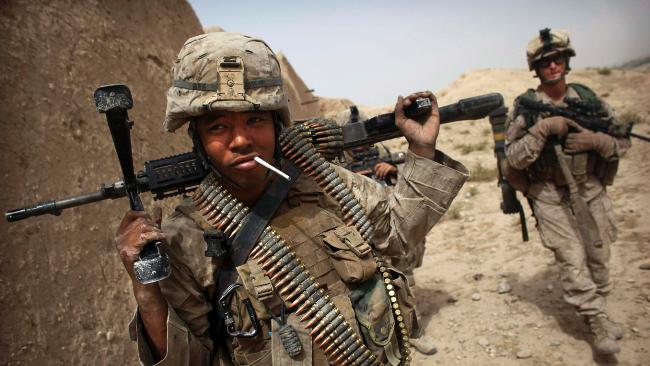
अफगानिस्तान में शांति स्थापित करने के बहाने पहुँची अमेरिकी सेना क्रूरता की नई मिसाल पेश कर रही है। अफगान नागरिकों को अमेरिकी सैनिक मजे और खेल के लिए भी मारने में संकोच नहीं कर रहे हैं।
Image: AP
ऐसे ही बारह अमेरिकी सैनिकों पर ऐसी गुप्त ‘किल टीम’ बनाने का आरोप है जो अफगान नागरिकों को मारकर उनकी उँगलियाँ ट्रॉफियों के रूप में इकट्ठी करती थी।
पाँच सैनिकों पर इसी साल अलग-अलग घटनाओं में खेल के लिए तीन अफगानी नागरिकों को मार डालने का आरोप लगा है। इन क्रूर घटनाओँ का खुलासा करने वाले एक रंगरूट को भी मार डालने का आरोप अन्य 7 सैनिकों पर है।
अफगानिस्तान की लड़ाई में सामने आया ये अब तक का युद्ध अपराध का सबसे गंभीर आरोप है, जो कंधार प्रांत में स्ट्राइकर इन्फैंट्री ब्रिगेड पर लगा है। जाँच से पता चला है कि मौज के लिए हत्याओं का ये क्रूर खेल पिछले साल नवंबर में स्टाफ सार्जेंट कैल्विन गिब्स के रामरोद के ठिकाने पर आने के बाद शुरू हुआ। गिब्स ने जेरेमी मॉरलॉक और अन्य साथी सैनिकों के साथ मिलकर ये किल टीम बनाई थी।
मॉरलॉक और एंड्रयू होम्स के साथ मिलकर गिब्स ने अफगानी नागरिकों को क्रूरता के साथ मारकर अपना मनोरंजन किया। इनका पहला शिकार गुलमुद्दीन था,जिसके बाद इन्होंने मराक आग़ा की भी इसी तरह से हत्या की। मुल्ला अदादाद की भी हत्या इसी तरह से मनोरंजन के लिए इन्होंने की।
आर्मी टाइम्स की रिपोर्ट के अनुसार, इन क्रूर सैनिकों ने मारे गए अफगानी नागरिकों की उँगलियाँ भी स्मृति के तौर पर एकत्र कीं और लाशों के साथ अपनी फोटो भी खिंचवाई।
अब पाँच सैनिकों- गिब्स, मॉरलॉक, होम्स, मिशेल वेगनॉन और एडम विनफील्ड पर हत्या समेत अन्य आरोप लगाए गए हैं और दोष साबित होने पर इन्हें मौत की सजा या आजीवन कारावास मिल सकता है।
इन हत्याओँ का खुलासा मई में तब हुआ था जब अपने साथी सैनिकों के गाँजे का नशा करने की शिकायत करने वाले एक सैनिक पर जानलेवा हमला हुआ था और सेना ने इस हमले की जाँच शुरू की थी। आर्मी टाइम्स की खबर के मुताबिक यूनिट के सैनिक ड्यूटी के दौरान नियमित रूप से गाँजा पीते थे और स्थानीय लोगों से भी छीना-झपटी करते थे। सैनिक शराब की तस्करी भी करते थे।
जब इस सैनिक के साथ गिब्स और उसके साथियों ने मारपीट की तो उसने अपने अधिकारियों से इसकी शिकायत की और गिब्स की किल टीम के बारे में भी जो कुछ उसे पता था, वो बता दिया। इसके बाद पूरा मामला सामने आया और पाँचों क्रूर सैनिक गिरफ्तार हुए।
This is a collaborative article, written by a Syrian refugee minor with additional information from the refugee communities of Konitsa Refugee Camp, Greece, with support from a collective of non-aligned academics.
Konitsa Refugee Camp protests in northern Greece, 1-3 September, 2016. Lampros Raptis. All rights reserved.
At the start of September 2016, I – along with thousands of other Syrians currently living in refugee camps – took part in street protests, peaceful sit-ins, strikes and marches in the cities where the camps are throughout the whole of Greece. You may not have seen information about the strikes or protests in the news. It is difficult for us – with little support, contacts and power – to get the information about this out, to talk directly to the people of Europe. We have kindly been given this platform in openDemocracy in order to address you, the people of Europe, directly.
We have been demonstrating because we need to ask for three things: (1) that the EU opens the Greek borders; (2) that better care is provided for refugees such as ourselves in the camps; and (3) that we be treated with dignity – as human beings, not as animals – and that we are able to achieve a future where we can live as we hope, in peace and in dignity.
The most important aim of the strikes and protests is to send the message to the Greek government and the EU that we need you to open the border, to let us into the rest of Europe. Everyone of us is asking that the borders be opened, or else that you find other ways for us to continue our journey. We recognise that there are steps being taken to reunite families and help minors trapped here without their parents or families – through the UN relocation and family reunion programme – but it is slow and we do not know how long it will take before we will see our families and loved ones again. As such, it has to be made faster.
Konitsa Refugee Camp protests.
Lampros Raptis. All rights reserved.Secondly, we need the camps to take better care of us. If you saw some of the camps in Greece, you would see that many of the camps are not able to provide even the basics: food, clothes, money, medication, care for children. In the majority of camps, all these things are lacking or are not of an acceptable, human standard. We are all asking that we are taken better care of. We need normal food and the opportunity to cook for ourselves, like normal people. We need housing. We need clothes, proper medication and healthcare. The clothes that we have are of poor quality and we need shoes, jeans, shirts, jackets – especially now that summer is ending and winter comes.
And most importantly we need money, or some way of earning money and supporting ourselves. Many of us want to work, we want to support the local economy, but we are denied this opportunity. Many of us are well-educated, and skilled workers. But now we are broke and we need to ask for so many things, as we have no money to buy things we need.
Konitsa Refugee Camp protest. Lampros Raptis. All rights reserved.
As well as facing difficulties with food, clothing, medication and shelter, we face other problems. We have all faced a difficult journey from Syria to Greece. We have lost our homes, the streets and the towns we grew up in. We have lost family members. We have lost contact with many of our friends and lovers, many we may never see again, many we know have died. We have paid thousands of dollars to leave Turkey, to travel over seas in a dinghy, and have suffered violence and brutality at the borders of Europe. Many of us need psychological care and support. And many are suffering from psychological pain and boredom, since the authorities are not able to tell us how long we have to stay in Greece, with some preferring to return to the war in Syria than to live a hopeless life in Greece.
Yazan Al-Shrif, the author of this piece.
Finally, we ask to be treated in a way in which we can achieve a future where we can live in dignity. We are humans, but in many cases we are being treated like animals. We want to reach other countries in Europe, where there are opportunities, where we don’t have to live in camps and survive off basic aid.
From September 1 – 3, 2016, I took part in the nation-wide protests in the Konitsa Refugee Camp in Northern Greece, along with 130 refugees from our camp. Even as demonstrations took place in the whole country, it was difficult to convince our camp to take part in the protest. We don’t believe that the media care about us, and it is hard to convince journalists and newspapers to cover our stories, even though we desperately need people to listen to us.
Konitsa Refugee Camp protests. Lampros Raptis. All rights reserved.
But we organised. We coordinated through Facebook, to keep up to date with how protests were going elsewhere. We shared pictures and experiences of protests throughout Greece. Although we heard about some police violence and intimidation at demonstrations in Thessaloniki, we made sure to talk to the police in Konitsa beforehand and to get help from the local people to ensure that the protest was peaceful and lawful. In the end, we staged a sit-down protest in the town square, followed by a march through the town. We took steps to reassure the town that we would not trash anything or do anything that could be bad or negative for the people of Konitsa. We went out onto the street. We held banners thanking the people of Greece but also making clear our problems, and stating our requests for opening the borders, providing better care in the camps, and enabling us to achieve a dignified life and future. These are just the start of a number of demonstrations which will continue until we can convince people to listen and change the situation.
Konitsa Refugee Camp protests. Lampros Raptis. All rights reserved.
I am a human, speaking to you. I am a Syrian refugee. I am 17 years old. I have family waiting for me in Germany and I cannot reach them. I am part of the UN reunification programme but I do not know how and when this will happen. Legal support is little, information is sparse, and until I hear more about my future, I am forced to wait and wait – for many weeks, months and maybe years. I am trapped here, without news, without purpose, without my family. We need to spread the word about our situation. If there is anything you can do, do it; just do it. I am a human, speaking to you.
All photos and media are to be accredited to Lampros Raptis.
Yazan al-Shrif is a 17.yr old Syrian refugee waiting at Konitsa Refugee Camp in Greece, to be reunited with his family through the UN reunification programme.
The Uri attacks have inspired some ballistic bombast.
A horrible attack on an Indian Army base in Uri, Kashmir leaving 18 dead and 19 injured.
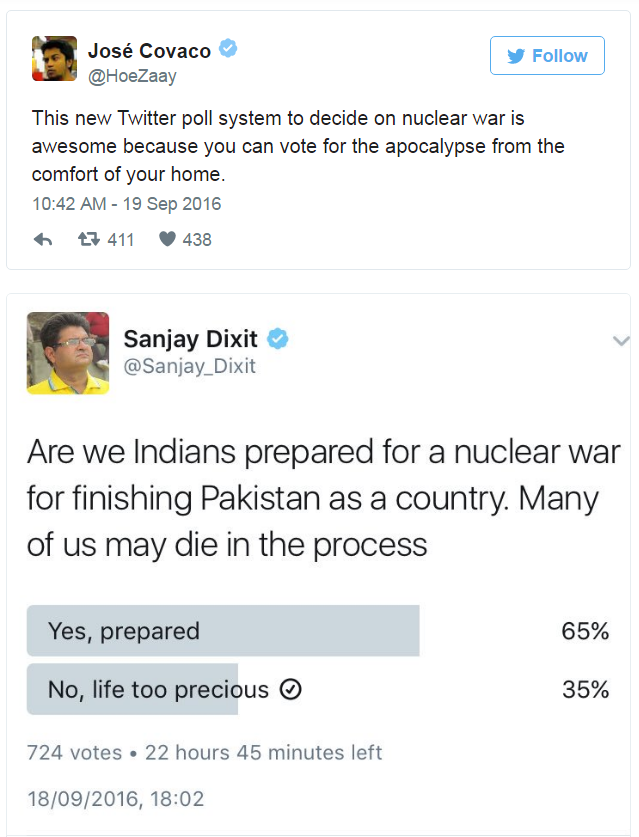
Social media, with characteristic restraint, decided to demand retribution by asking for more to be killed. Many, many, many more.
Here, an instant classic example:
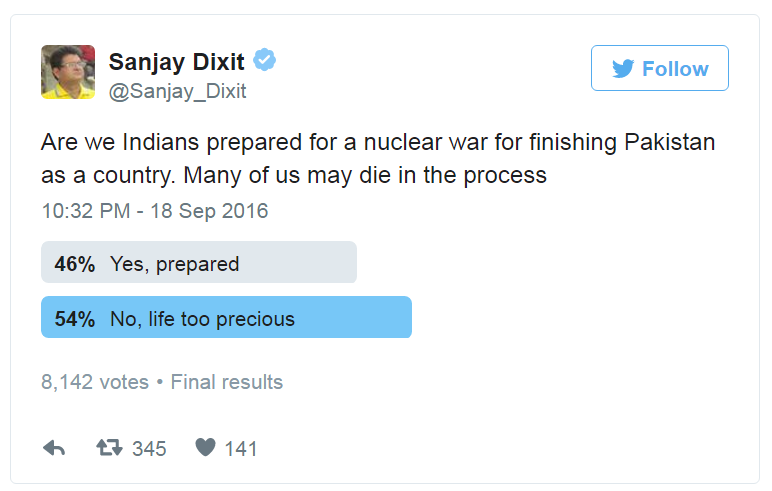
That's a former Indian Administrative Services officer who works with the Rajasthan government choosing to run a Twitter essentially calling for nuclear warfare. That might be worth underling and putting in bold: Nuclear warfare.
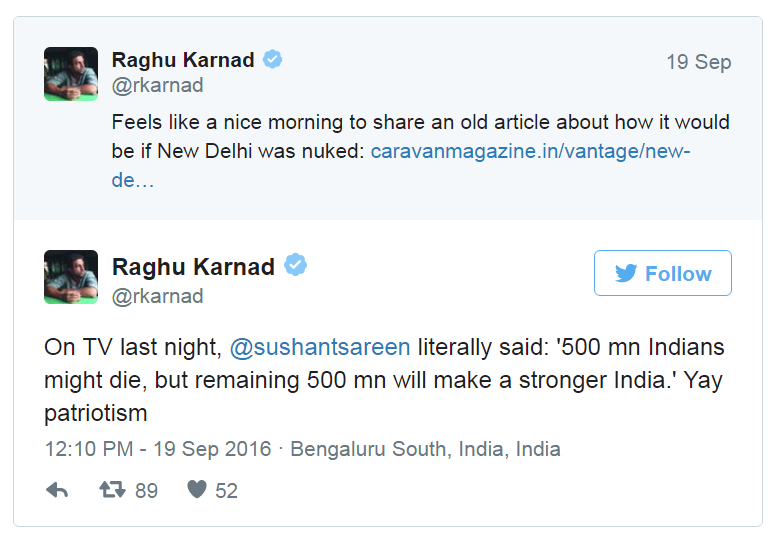
This bellicosity was not restricted to social media – the television channels certainly got in on the game too – but it thrived online.
Social media by its nature can be both trivial-seeming and more serious-than-you-realise, so it's worth spelling out exactly what is being demanded here: The use of nuclear weapons against Pakistan, a move that would almost certainly result in the use of nuclear weapons against India and kill untold millions.
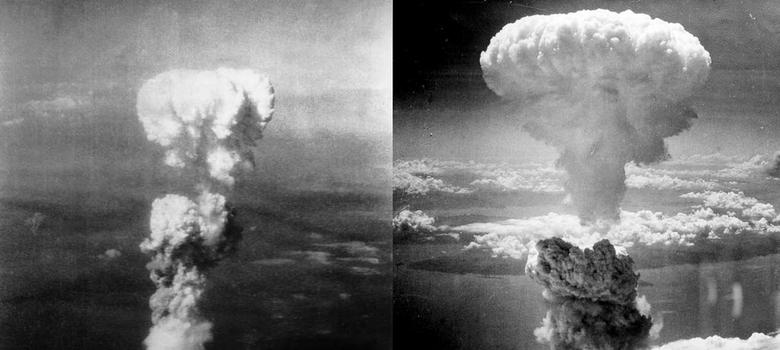
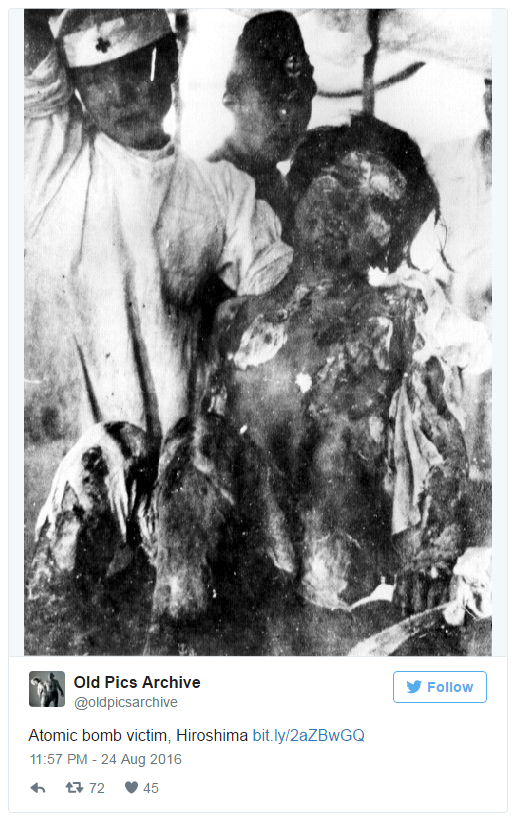
Let's spell that out even more. There are a lot of nuclear weapons on this planet. 15,375 according to the World Nuclear Weapon Stockpile. India and Pakistan have 250 between them. Even North Korea is believed to have a few. Despite all these weapons out there, using technology that was developed in the 1940s, nuclear bombs have only been used twice. Two times. Once on the Japanese city of Hiroshima and again on the city of Nagasaki in August 1945. There's a reason the weapons haven't been used ever since, despite plenty of conflicts. There's a reason those two weapons effectively ended the second World War. That reason is this (warning: graphic images):
More than 1,40,000 were killed in Hiroshima alone, in an attack that destroyed 70% of the city and left parts of it uninhabitable. The physical and psychological effects of the attack would persist for decades. A couple of days later America repeated its experiment, this time with plutonium, over Nagasaki. The results were equally disastrous.
Most of this should be obvious to anyone who has learnt about the horrors of the nuclear bombs, but as we get further away from those fateful days, it is possible that social media warriors have not fully understood exactly what they are advocating. This is destruction on an unimaginable scale.
India choosing to use nuclear weapons in retaliation for Uri – which would already go against the country's stated doctrine of no-first use – would most likely lead to Pakistani retaliation that could leave millions dead, and cause environmental devastation that would "suddenly dwarf any other global problem."
All of this for, as Dixit, says "finishing Pakistan", an outcome that is by no means assured even with the use of tactical nuclear weapons.
None of this is to suggest that India cannot find a response that might be an appropriate way to retaliate after the Uri attacks. India has one of the world's largest militaries and has presumably spent much of its time acquiring equipment and expertise aimed specifically at neutralising Pakistan's capabilities. But to suggest that this retaliation has to be nuclear suggests, at best, a certain level of delusion about India's capabilities (or a level of nihilism that is only appropriate for anyone who spends too much time on social media).
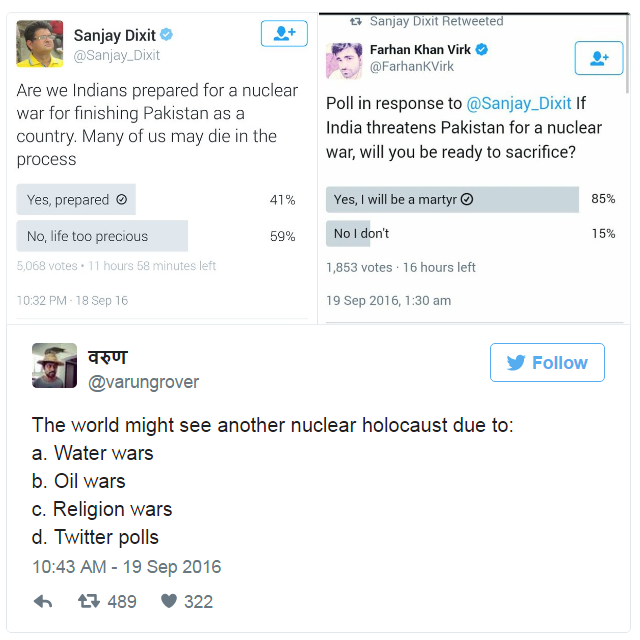
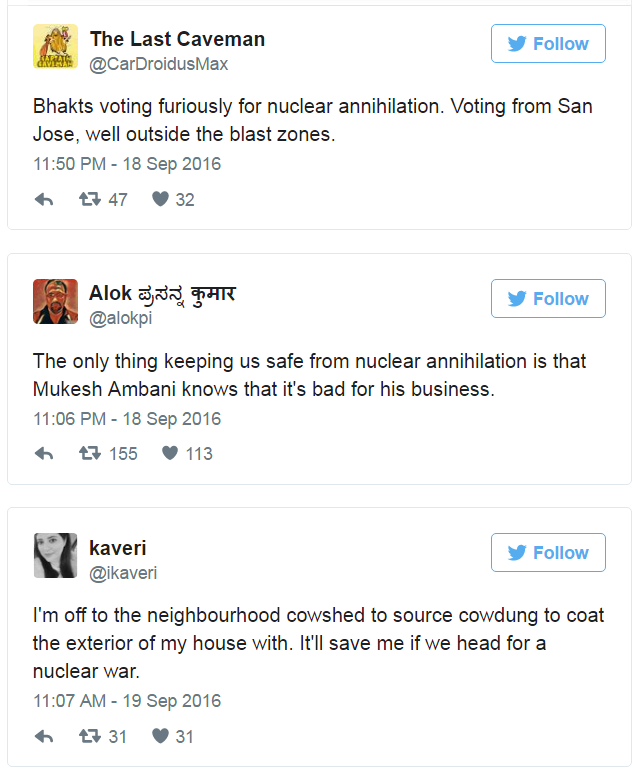
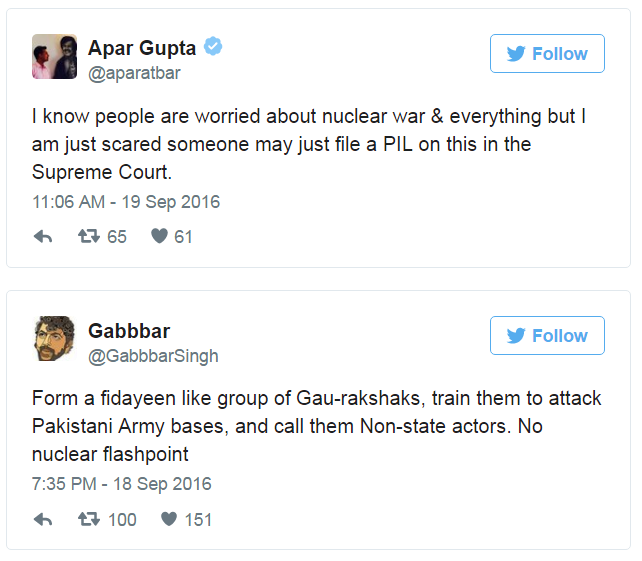
Thankfully, for every bit of such Twitter terror there is a wisecracker who can add some levity in reply.