Home Blog Page 2479

Why Gujarat appears to have fallen off the news map over the last two years

0

The almost-total blackout of the Dalit protests in Una is only the latest in the long list of stories that are conspicuous by their absence in mainstream media.

Even as Prime Minister Narendra Modi held forth on Balochistan from the ramparts of the Red Fort on August 15, hundreds of Dalits and their supporters were marching to Una to protest mounting atrocities on them by caste Hindus in the state of Gujarat.

While echoes of Modi’s statement on Balochistan continue to reverberate across sundry media platforms, the 500-kms-long march from Ahmedabad to Una – aptly termed “Azadi Kooch” (“march to freedom”) spread out over 10 days – is already a distant memory.

A near black-out by the all powerful television media, barring odd exceptions like the Indian Express and NDTV India who reported the march and filed regular follow-up reports, should not perhaps be a surprise.

“There was no other national media as far as one can remember – though there were some local newspersons, both print and television,” said senior NDTV India reporter Hridayesh Joshi, who travelled with “Azadi Kooch” for the last two days of the march.

A local journalist of the local paper Gujarat Mitra in Surendranagar spelled out the reasons for this on the condition of anonymity. “Gujarati media, barring one or two do not report anything unfavourable to the BJP government,” he said. “They are scared that advertisements will be stopped”. But that was not the only problem he mentioned. “In 2014 one leading regional language newspaper was shut down for around a month soon after Modi came to power for carrying anti-Modi stories,” he added.

To be sure the Dalit march had both drama and news value – elements central to television news. And this was no studio drama comprising hysterical anchors and studio guests. These were real people with real issues of exclusion and everyday oppression, which makes atrocities against Dalits in Gujarat one of the highest among all states.

Dalits marched in large numbers, wrote Joshi, chanting “gai ni puchdu tami rakho. Amey amari jamin aapo [Upper castes, keep the cow’s tail. Give us land instead]”. The protesters sang songs of liberation and held small meetings all along the way.

The march had a mix of Ambedkarites, activists of the Kabir Kala Manch and Dalit Panthers who had come all the way from Maharashtra, and even a sprinkling of Gandhians. “The presence of Muslims with the possibility of an emerging Dalit-Muslim political alliance is, I think, a development whose significance can hardly be overstated,” Joshi said.

All this drama in Modi’s backyard and that too less than a year before Assembly elections in Uttar Pradesh, indicating a palpable political churn, was of course not worthy of coverage for large sections of the mainstream media who chose to stick to Modi’s agenda of Pakistan bashing, this time on the back of the Balochistan issue.

A combination of fresh line-up of panelists along with the usual “foreign policy” experts, not to forget exiled Baloch nationalists, were paraded as the new cast of characters in prime time circus. The India Today TV, in fact, went a step further and aired an undated Al Jazeera ground report from Balochistan province. The only time the Gujarat Dalit issue got traction was when top political leaders from Delhi landed up in Gujarat to meet the victims of the public flogging by caste Hindus.

On August 15, Joshi filed a longish story, running to about 10 minutes. “As a matter of fact at least four, 8 to 10 minute stories were carried on successive days on prime time including some in Ravish Kumar’s news show,” Joshi said.
But the story remained missing from most networks.
 

Continuing battle

In the continuing battle of wits between Modi and the mainstream, largely the English language media, about who sets the “national agenda”, Modi appears to have won. And not for the first time – despite the continuing targeting of media by the Modi government.

On August 10, at a meeting jointly organised by the Press Club of India, the Indian Women Press corps and the Editors Guild, a call was given to resist attacks on press freedom, especially attacks on the Rajasthan Patrika and Outlook magazine. A Google search will indicate that the well-attended protest went unreported in the media.

Ever since Modi has come to power, Gujarat has fallen off the news map. Una is only the latest in the long list.

One instance of media’s capitulation has been the virtual disbanding of the Ahmedabad bureau of almost all the news channels, barring the NDTV. The Times Now, the most popular English language network, for example, does not have a Gujarat bureau. A reporter is flown down from Mumbai each time something big happens in the state. Trawling the Times Now website threw up this 16-second clip read out by the anchor in the “Speed News” format.

India Today TV, which previously had a full-time English language reporter in Ahmedabad, has no one now. There’s only one reporter for India Today’s Hindi network Aaj Tak. When Modi assumed power, the ABP News moved out its Ahmedabad reporter to Delhi in the hope that he would manage access to the PMO. That reporter is now back in Ahmedabad as the head of the ABP group’s regional Gujarati channel. Clearly reportage on incidents like Una rub the state government the wrong way, something a start-up can ill-afford to do. A search of the ABP News portal for the Una march yields only a two-minute clip in its prime time bulletin.

Contrast this with the so-called reportage in December 2014 when BJP President Amit Shah was exonerated by a CBI court.
 

Play
 

This 2014 Times Now clip could well be considered a template for reporting on Gujarat across news networks, as it pretty much anticipated the manner in which Gujarat and especially the 2002 riots would be reported by mainstream media in the months to follow.

The reporter, who was earlier stationed in Gujarat, can be strangely seen "reporting live" from Haridwar, parroting pretty much the arguments the Central Bureau of Investigation presented in court as reasons for exonerating Shah. There were no questions about the U-turn by the CBI in its stand after the change in government, nor any questions with regard to whether or not the agency wanted to appeal the verdict. The issue never figured in Arnab Goswami’s super prime time “newshour”.

The Gujarat Mitra journalist put it in perspective. “Most of what was reported in the national media about Gujarat’s Dalit unrest was purely accidental. TV journalists happened to be in Ahmedabad at a time [August 4 to 7] when the new leadership was being chosen in the state. For them, this was the side story.”

When it comes to the prime minister’s home state, reporters across TV networks – and even print – have little or no editorial say in the matter. “The decision to follow the Azadi Kooch for two days was entirely my editors’ idea,” Joshi said, admitting that his story would not have been possible without editorial backing.

Even a news agency whose business it is to objectively purvey information – in this case news footage – has been caught napping. A look at the ANI’s Twitter timeline and even Google search for August 15 yields virtually nothing on the Una Dalit congregation, though the agency took all the trouble to send its cameraman to cover Modi’s air dash to Sarangpur in Gujarat to pay his last respects to a departed Swaminarayan sect leader.

At a time when news organisations have shoe-string reporting budgets, ANI fills in a huge gap. It is the only source of news feed from the more remote corners of the country. When asked about this editorial oversight, Editor Smita Prakash, who happens to be part of the owner's family, defended ANI and blamed social media sites for not throwing up the relevant material. “Google doesn’t show up ANI live feed. Twitter is not even 20% of our live feed. We do about 70-80 bites/interviews in a day which run on live,” she said.

A former ANI staffer, however, provided an entirely different perspective. “ANI has been on the gravy train ever since Modi came to power,” he said. It is the only news organisation other than PTI to travel with the prime minister on his official trips abroad. “This gives ANI both access and revenue,” he added.

With the blurring of lines between editors and owners, mainstream media has itself become the establishment. The media and its practitioners are increasingly deriving their powers from proximity to political and bureaucratic structures rather than as interlocutors for the poor and the discriminated.

The task ahead for Dalit warriors of Gujarat or Uttar Pradesh or anywhere else is a dual battle – fighting caste Hindus and a tone deaf media feasting on the agenda dished out by the government.
 

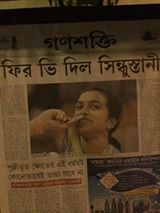
“Phir Bhi Dil Hai Sindhustani”- Many Newspapers, One Headline!

0

Courtesy: Soumyadipto Banerjee's Facebook Page

"I refuse to believe that every Page One editor in every leading newspaper thought of the same exact headline. My guess is: This headline has been plagiarised from a tweet or a Facebook post."- Soumyadipto Banerjee


Sudip Ghosh came on Soumyadipto's stream and asked- Btw, most newspaper headlines in english and (in my case) Bengali had been inspired by FB or Tweeter slogans from the previous night. Simple and understandable, since that's the trend. If we can collect leads from fb updates, make news from twitter status, why not plagiarise news headings from the same sources on a given day? I see nothing wrong in this. After all, social media is the future of media, right ?
 
Sarah Salvadore in the same stream says- I agree Sudipda, But the problem with this is the next day's edition ends up looking like a copy paste job. There is definitely no dearth of witty and smart people online. But whatever happened to exercising your grey cells in the newsroom? I mean we can quote people from social media, not sure I feel comfortable using their lines as headline. Also, I wonder what the ethics are regarding attribution?
 
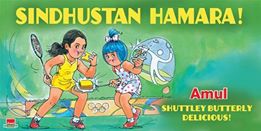
Neha Ved adds in the stream that the headline could have been inspired by Amul’s advertisement.


The discussion gets more vibrant and inquisitive when Ankur Pathak wonders- Even if the HL is plagiarised/inspired by a tweet/FB post, the point is the editors still decided to carry it same day, same edition right? The source material then becomes irrespective. It is baffling enough to know that they decided to go with this one and not anything else.

Soumyapta Banerjee continues- Yes Ankur Pathak. The headline is not even good. Times of India gave such a great headline when Abhinav Bindra won gold in the last Olympics. Sad to say newspapers are becoming a pale shadow of their earlier selves.Nothing wrong in picking up from social media but the result is what you see above. Gone are the days when I used to see my editors like Dipayan Chatterjee, Abhijit Dasgupta or R Rajagopal break their heads for a headline with alliteration. Those days editors searched in their heads, now the editors obviously log onto Twitter and Facbook for inspiration and it results into badly copied Hindi film titles. Nothing wrong in what is happening today, the difference is in the quality and herd mentality.
 
Mahul Brahma comments that it’s not just the English newspapers but Ganashakti, a reputed Bangla newspaper, that had also carried the same headline.

There were many LOLs (Laugh out Louds) and Hahahas in the stream! The virtual discussion was of course on Newspapers as big as Times Of India and Hindustan Times.
 
Dhiman Chattopadhyay on the same stream yet again finds the matching headlines weird. He wonders if the "headline writers are becoming lazier by the day – another side effect of crowd sourcing everything from story ideas to headlines from social media?"
 
Dale Bhagwagar, a PR agent comments- Arre yaar…. why is everyone thinking ulta. Might be a news agency report. Reporters/subs might have picked up the headline from an agency report and made it their own, adding individual inputs and bylines to the story (without realising that other papers might do the same.) Hota hai yaar. Any scribe/sub-ed would understand what I am talking about.
Yeh cheez aap logon ke dimaag mein kyun nahin aayee?
 
Soumyadipto Banerjee ends his Facebook stream with -News agencies (Reuters, PTI, UNI etc) have direct headlines that sound more like alerts. They won't suggest headlines like this.
I am not talking about their websites. I am talking about their news-feeds to leading media houses.
In any case, no news agency has suggested this headline.Also, if you are the page one editor dealing with the front page of a national newspaper and your headline is picked up from another web-site, you surely don't deserve the job.
 

JAITLEY CHARGED WITH ‘SEDATION’ – Vasudevan Narayanpillai

0

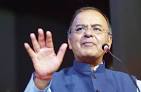
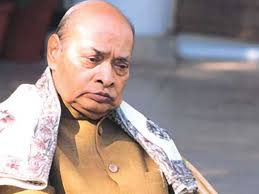
On August 20th, 2016 Arun Jaitley said  that former PM PV Narasimha Rao wasn't the economic messiah people believe he is, that the UPA neglected productivity, and that the post-independence Nehruvian model led to no development whatsoever.

Indian Finance Minister Arun Jaitley said-

"That (Nehruvian) model of development was the reason India couldn't get up to a growth rate of even 1 percent in those early decades," Jaitley said in Mumbai at a discussion on the Good and Services Tax regime (GST

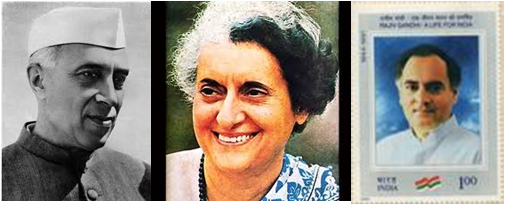
Here is a random list of achievements of Congress under the leadership of Nehru-Gandhis to build a poverty-stricken, illiterate, disunited resourceless India in 1947 into a modern nation, virtually from the scratch, brick-by-brick, institution-by-institution, project-by-project:

1. The Constitution of India (the very Foundation of our Nationhood)
2. Integration of 600-odd small and big Prncely Kingdom to create the Indian State
3. Abolition of Zamindari
4. Enactment of The Hindu Code Bill
5. Set up Planning Commission
6. Built Huge Dams (Bhakra, Hirakud, Idukki, Narmada, Tehri, Ukai, Indira Sagar, Sri Sailam, etc)
7. Expansion of Rail Network, including Konkan, Udhampur-Srinagar-Baramullah links, etc
8. Built Chandigarh and Bhubaneshar Cities and several State Secretariat Buildings
9. Huge Bridges (across Ganga, Brahmaputra, Yamuna, Mahanadi, Krishna, Godavari, Kaveri, AND Bandra-Worli Sea Link, Farakka, Vikram Shila, Rajendra Sethu, etc)
10. Built and/or expanded several Ports
11. Massive Expansion of Highways, Rural Roads and Border Roads and Highway to Burma
12. IITs (Indian Institutes of Technology)
13. IIMs (Indian Institutes of Management)
14. CSIR (Council of Scientific and Industrial Research)
15. AIIMS (All India Institute of Medical Sciences)
16. IARI (Indian Agricultural Research Institute)
17. UGC (University Grants Commission)
18. NCERT (National Council of Educational Research and Training)
19. AICTE (All India Council of Technical Education)
20. DRDO (Defence Research and Development Organization)
21. Massive Expansion of Ordnance Factories
22. ISRO (Indian Space Research Organization)
23. IMC (Indian Medical Council)
24. IAE (Indian Atomic Energy Commission)
25. BARC (Bhaba Atomic Energy Commission)
26. ISI (Indian Science Institute, Bangalore)
27. Airports Authority of India
28. IMA (Indian Military Academy, Dehra Dun)
29. NDA (National Defence Academy, Kadakvasla)
30. NHAI (National Highway Authority of India)
31. SAIL (Steel Authority of India: 1. Bhilai Steel Plant, 2. Rourkela Steel Plant, 3. Durgapur 32. Steel Plant, 4. Bokaro Steel Plant, 5. Visakhapatnam Steel Plant)
33. Shipping Corporation of India
34. Ship building, including Submarines, Aircraft Carrier
35. HEC, (Heavy Engineering Corporation, Ranchi)
36. HAL (Hindustan Aeronautics Ltd., Bangalore)
37. HMT (Hindustan Machine Tools, Bangalore)
38. Coal India Ltd
39. Locomotive Factories
40. Fertiliser Corporation of India
41. Cement Corporation of India
42. Rajasthan Canal Project
43. Engineers India Ltd
44. Indian Forest Institute, Dehra Dun
45. ISI ( Indian Standards Institution)
46. UPSC (Union Public Service Commission)
47. IAS/IFS/IPS/IRS pTraining Academies in Mussorie and Hyderabad
48. National Library, Kolkata
49. National Museum, New Delhi
50. Sports Authority of India
51. Indian National Science Academi
52. Sahitya/Lalita Kala/Natak Academi
53. Indian Film & Television Institute, Pune
54. National School of Drama, New Delhi
55. Zonal Cultural Centres (in Five Zones)
56. Children's Film Society
57. Expansion of All India Radio
59. Doordarshan
60. Space Exploration and Satellite Programs
61. Food Corporation if India
62. Expansion of Civil Aviation
63. Construction of New Modern Airports
64. NBCC (National Building Construction Corporation)
65. ITDC (India Tourism Development Corporation)
66. STC (State Trading Corporation)
67. KVIC (Khadi and Village Indutries Commission)
68. ONGC (Oil and Natural Gas Commission)
69. IOC (Indian Oil Corporation)
70. MMTC (Mines and Metals Trading Corporation)
71. BHEL (Bharat Heavy Electricals Ltd)
72. NTPC (National Thermal Power Corporation)
73. MTNL (Mahanagar Telephone Network Ltd)
74. GAIL (Gas Authority of India Ltd)
75. Bharat Electronics
76. Bharat Earth Movers
77. National Fertiliser Corporation
78. Hindustan and Cochin Shipyards
79. NTDC (National Textile Development Corporation)
80. IIPA (Indian Institute of Public Administration)
81. IGNOU (Indira Gandhi National Open University)
82. NID (national Institute of Design)
83. New Central Universities
84. Agricultural Universities
85. Green Revolution
86. White (Milk) Revolution
87. Abolition of Privy Purse
88. Bank Nationalisation and expansion of Banking services
89. CBSE (Central Board of Secondary Education)
90. Kendriya Vidyalayas and Navodaya Schools
91. Computer Revolution
92. Telecommunication Revolution
93. Auto Revolution
94. MGNREGA (Mahatma Gandhi National Rural Employment Guarantee Scheme)
95. RTI (Right To Information)
96. RTE (Right To Education)
97. Right To Food
98. Land Compensation Act
99. Adult Literacy Mission
100. Minorities Commissions
101. Metro and Mono Rail systems
102. Introduced AADHAR Identity Cards
103. Established Boards to promote Coir to Coconut to Cashewnut
104. Massive expansion of Food Processing Industry
105. Conducted First Nuclear Test
106. Nuclear Deal with USA
107. Manifold increase in production of electricity

INTRODUCED ECONOMIC REFORMS/LIBERALISATION BY CONGRESS IN 1991
# Opened up India's Equity Market in 1992 for investment by Institutional Investors
# Established SEBI Act in 1992
# From 1994 the National Stock Exchange (NSE) emerged as a Computer-based trading system, which served as an instrument to leverage reforms of India's other Stock
# Exchanges. By 1996, the NSE emerged as India's largest Exchange.
# Massive Foreign Direct Investment
When Indira Gandhi became Prime Minister, 65% of country's population was below poverty line.
# By 2013, it has come down to 25%.
# Similarly, literacy has Increased by 30-35%.
# Longevity has also gone upto 67+ years
# India is Self-sufficient in food/Second largest food producer in the world
# First in Milk production
# Fourth largest producer of Steel in the world
etc

Jaitley are you unhappy that GST will always be credited to Congress?!

‪#‎JaitleyWhatHasRattledYou‬

Response to Vasudevan's post on social networking sites-

Prerna Bindra I would also list the legal protection to wildlife, forests, Project Tiger. the many sanctuaries and tiger reserves -thanks to which we have whatever forests and wildlife left today. a fraction of it is here:

Malreddy Shankar Reddy- Indira Gandhi brought Land ceiling act which was major reform against the big and influential/feudal landlords.But what is the progress made by BJP/NDA government in their 8 1/2(Eight and half ) of their regressive rule except trying to bring back the draconian British Land Acquisition Act of 1894.?

G Pandarang Rao– Jaitley lives in la-la land. He really believes in the RSS line. And the BJP seems to have its own version of the truth or history, which says that India had no development until two years ago.

Aparajita Krishnan– There is a pattern to this madness. This govt too must be discredited to Nehru.

Rakesh Thind- Don't be unfair to Modi. Dekho Kaam toh Yeh bhi kar raha hai.

Robin Roy– He has gone senile