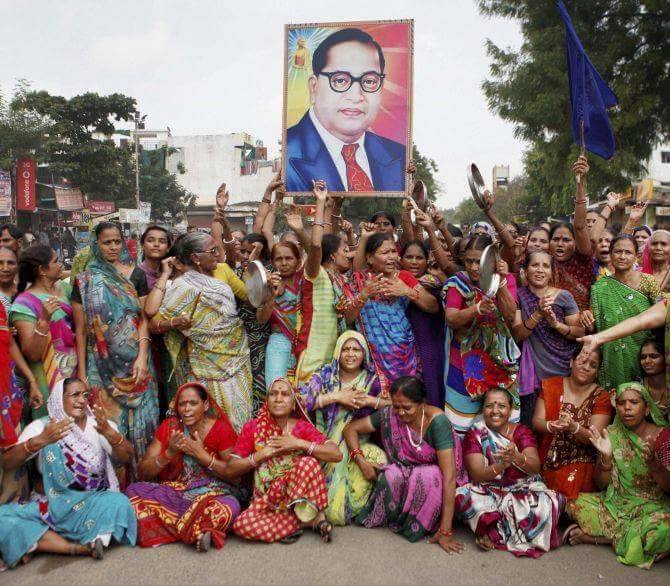
दलितों ने मुसलमानों और पिछड़ों के साथ मिलकर आपकी झोली वोट से भर दी. बदले में अगर उनकी स्कॉलरशिप बंद होनी है और विरोध करने पर लाठी ही खानी है, तो एक बात आप लोग भी समझ लीजिए… राजनीति में कोई अमृत पीकर नहीं आता.
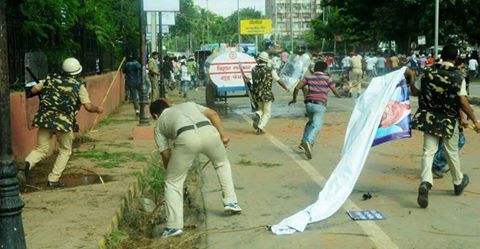
जो जनता बनाती है, वह बिगाड़ भी देती है. बहुत बेरहम होती है पब्लिक. इकबाल खत्म हो गया, तो बहुमत होने के बावजूद राज चलाना मुश्किल हो जाता है. देख रहे हैं न नरेंद्र मोदी की दुर्गति. अपना गृह राज्य नहीं संभल रहा है. दोषी पुलिस अफसरों को दंडित कीजिए. एक पत्थर नहीं उछला और छात्रों पर लाठी चार्ज कर दिया. क्यों?
Pandemonium prevailed in the Bihar Assembly on Thursday with the Opposition vociferously protesting over police assault on agitating Dalit students and a legislator fainting inside the House after being physically pulled down from a table he stood on during the protest. As the House sat for the day, Leader of Opposition Prem Kumar and former chief minister Jitan Ram Manjhi rose from their seats and demanded the Speaker take up the issue of police beating up Dalit students in the city on Wednesday while they were agitating over lowering of the post-matriculation scholarship amount for SC/ST students.
The Indian Express reported that when Speaker Vijay Kumar Chaudhary refused to do so, BJP and its allies trooped into Well of the House and raised anti-government slogans. Prem Kumar, Manjhi and senior BJP leader Nand Kishore Yadav also sat on the floor of the Well in protest. CPI-ML MLA Mehboob Alam, who had joined the Opposition protest climbed on a table holding a placard when Chaudhary ordered the marshals to take him down. As the marshals bodily lifted him down, the MLA slipped on the floor and fainted. As the marshals were busy attending to Alam, some BJP MLAs including Vijay Sinha and Sanjeev Chaurasia climbed on the same table. They were also brought down by the marshals. The CPI-ML MLA was latter brought out of the House by BJP MLAs and taken to Patna Medical College and Hospital in an ambulance.
The Speaker tried to conduct the Question Hour but had to adjourn the House till recess as all efforts to persuade the protesting legislators failed to bring order. The protesting NDA MLAs sat at the entrance of the Assembly and raised slogans against the government.
At least seven policemen and six students were injured in brick-batting and police lathicharge on Dalit students protesting against the lowering of scholarship for SC and ST students in Patna on August 3. BJP had attacked the government over the issue.
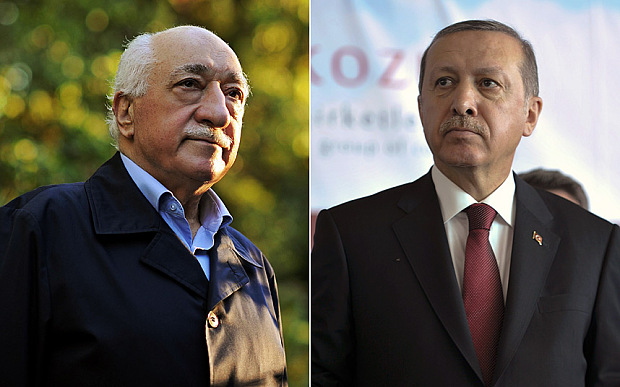
What does the power struggle between President Recep Tayyip Erdogan and powerful Islamic cleric Fethullah Gülen mean for Turks who want democracy?
Fethullah Gulen (Left) and Recep Tayyip Erdogan Image: AP/Getty Images
Turkey is in crisis. Its President, Recep Tayyip Erdogan, has declared a three-month state of emergency. His purge following the failed coup is just the tip of the iceberg, with much worse to follow. The aftershocks of Turkey’s failed coup on 15 July are unprecedented. The symbol of Turkish parliamentary democracy, the Grand National Assembly, was bombed by members of the country’s own security forces; police and military forces exchanged gunfire and coup plotters attacked civilians on the streets of Istanbul and Ankara. The human toll is high: there have been around 232 deaths, over 1,541 injuries,according to official figures,and more than 60,000 state officials jailed or dismissed, with numbers increasing ever day.Turkey’s international image as a strong member of NATO and a bastion of stability between Europe and the Middle East, has been damaged. Tensions in US-Turkey relations have increased since Ankara demanded the extradition of Pennsylvania-based Islamic cleric Fethullah Gülen, who is blamed by Erdogan for the coup attempt.
Turkey’s international image as a strong member of NATO and a bastion of stability between Europe and the Middle East, has been damaged.
On 15 and 16 July, people on the streets, as well as all party leaders —including AKP’s opponents sided with ‘democracy’. Or rather, with Erdogan. Once Erdogan was assured that the government had taken control, he quickly announced that this was “a coup attempt by a small faction in the military, the parallels (Gülenists).” Since 2010, Erdogan has accused the Gülen movement of running a ‘parallel state’ with the aim of overthrowing the AKP government. Erdogan said that this is “a gift from God to us because this will be a reason to cleanse our army”.
During his tenure in power, many argued that taking the army out of Turkish politics was one of his biggest achievements. However, Erdogan had in fact successfully co-opted high-ranking army officers. In the post-coup cleansing, Erdogan’s purge has extended beyond the army, including high-ranking officers of the Turkish Armed Forces (TSK), to the police, the judiciary, the National Intelligence Agency (MIT), the Ministry of Education and universities.
There is little doubt that Erdogan’s divisive and increasingly authoritarian policies pose a serious threat to Turkish democracy and secularism. The crux of the matter is Erdogan’s increasing personal power since his ascendance to the presidency in 2014. Prior to winning Turkey’s first presidential elections, Erdogan similarly blamed the Gülen cemaati (community) for creating a "shadowy state" within the Turkish state and engineering a "Gulen-Israel-axis" in order to overthrow him. This time the Turkish Ministry of Foreign Affairs stated that “this was more than a treacherous plot: it was a terrorist campaign”, the illegal “Fethullah Gülen Terrorist Organisation” staged it, and the “terrorists will be punished in accordance with the law”. The key to contextualising these allegations lies within the history of Erdogan’s relations with the Gülen movement, known as Hizmet (service) in Turkey.
Who is Fethullah Gülen?
Fethullah Gülen’s rise in Turkish politics began in the 1970s. Born to a pious family, Gülen became an imam and a spiritual leader who emphasised the importance of education to provide a moral compass for young people. His influence grew continuously within the country. He opened private schools, private tutoring centers and dormitories called ‘houses of light’. The origins of the Gülen movement were founded by the alumni of these schools, who built up a network of pious young businessmen and Muslim charity foundations. Following the 1980 military coup, the generals acting as the ‘guardians of secularism’ became highly suspicious of Gülen’s network and accused him of plotting to install an Islamic state. Gülen went into hiding for six years.
In the 1990s, the Gülen movement found a new purpose under the rule of Prime Minister Turgut Ozal. Opening Gülen movement schools in Turkic republics supported Ankara and Washington’s neo-liberal visions for the post-Cold war era. The first one was opened in Azerbaijan in 1991, they then spread to other post-Soviet Turkic republics. In 1999, a leaked video featuring clips from Gülen’s sermons was a turning point: Gülen was accused of infiltrating the Turkish military, the police and the judiciary in an attempt to undermine the secular foundations of the Republic. Gülen was again a wanted man. He has been living in exile ever since.
In post-9/11 international politics, the role of Islam gained new momentum which has benefited the Gülen movement. Gülen’s promotion of a humanist and moderate Islam was welcomed by Washington. This was also a turning point in Turkish politics, which has oscillated between secular state and Muslim society. The devout half of Turkish society found their voice in the AKP’s populist discourses in 2002. Its new leader, Erdogan, gained popularity as a result of his being victimised in the name of secularism: Erdogan was removed from his position as mayor of Istanbul and jailed in 1998 for reciting a poem, which included the lines: “the mosques are our barracks, the domes our helmets, the minarets our bayonets and the faithful our soldiers”.
Although Gülen and Erdogan never met in person before Erdogan became prime minister in 2003, they were both pious Muslims who opposed both secularism and the army’s role in politics. It was the Turkish military’s threat to the AKP which turned Gülen into a key ally of Erdogan for a decade. Gülen’s followers provided crucial support for the AKP, which subsequently secured them three election victories. In return, Erdogan offered protection to the Gülen community’s opaque businesses and pious activities.
The movement operates a global network of business, education, media and charitable organisations. Hizmet runs schools in over 150 countries, including more than 100 chartered schools in the US, and has grown into what is possibly the world’s largest Muslim network with millions of followers.
The power struggle
The power struggle to control the state has turned into an open war: Gülen is now public enemy number one and his movement is officially identified as a terrorist group
Gülen is arguably Turkey’s second most powerful man. Once Hizmet grew and the cemaat members started to be employed by state institutions in Turkey, tensions between Erdogan and Glen began to increase. A key turning point was a series of investigations carried out between 2007 and 2013 known as Ergenekon trials. Ergenekon, an ultranationalist terrorist organisation, was charged with plotting a coup against the AKP government. It was later claimed that Glenists orchestrated the trials which damaged trust between Erdogan and Glen. Thereafter, the power struggle between two factions began for absolute control of the state.
When the AKP won the 2011 parliamentary elections with a majority, Erdogan was strong enough to break his alliance with the Gülen movement. The final break came in late 2013 when Erdogan decided to close down Gülen’s prep-schools in Turkey and began to pressure other heads of states to do the same for Gülen's international schools in their countries.
In response to Erdogan’s offensive, the Glenists allegedly launched a high-level corruption probe in which businessmen close to Erdogan, party officials and three ministers’ sons were arrested. In a leaked conversation with his son, the prime minister talked about having millions of dollars stashed away in shoeboxes. Erdogan later blamed Gülen for launching a “dirty conspiracy” and Hizmet’s direct involvement in the corruption investigations. While Gülen denied all of these accusations, the AKP government has intensified the purging of state officials in the judiciary, the police and party officials considered close to the Gülen cemaati
The power struggle to control the state has turned into an open war: Gülen is now public enemy number one and his movement is officially identified as a terrorist group. In November 2015, 122 Glenists were indicted, including Glen himself. He is accused of tampering with an investigation and managing an armed terrorist organisation. On 19 July 2016, Ankara asked Washington for his extradition, while Gülen gave interviews to the international media, rejecting allegations that he was the mastermind. According to Gülen, the failed coup was staged by Erdogan himself.
There is no doubt that Gülen is a controversial figure. To his followers, he is a liberal Islamic modernist who preaches “interfaith and intercultural dialogue”. As stated on its website, the Gülen movement claims to be “a worldwide civic initiative rooted in the spiritual and humanistic tradition of Islam.” It regards Islam as broadly compatible with modernity, science and democracy. To his critics, Gülen is a threat to the secular character of the Turkish state and is plotting to install an Islamic dictatorship. The rivalry between Erdogan and Gülen is more about personal power than different interpretations of political Islam. If Ankara’s demand for his extradition is successful, Gülen might face the death penalty, the reintroduction of which is highly possible in Erdogan’s ‘new Turkey’.
In the long term, a failed coup does not mean that democracy has won
In the long term, a failed coup does not mean that democracy has won. Paradoxically, this attempt has helped President Erdogan’s quest for more power and greater authoritarian control over Turkish politics. He is perceived to be the defender of ‘civilian rule’, while simultaneously clamping down on civil liberties. It is likely that his approval ratings will rise during the next referendum planned for later this year. He will leverage this popularity into votes for constitutional change to replace Turkey’s parliamentary democracy with an executive presidency. Such constitutional changes would grant him absolute power, which is his ultimate goal under the cover of his conservative Islamism. The power struggle between Erdogan and Gülen is harmful to Turkish people who opted for democracy. Whoever was behind the failed coup did Turkey’s democracy a double disservice.
Ayla Gol is a Reader and Director of Graduate School at the Department of International Politics, Aberystwyth University. She is the author of Turkey Facing East: Islam, Modernity and Foreign Policy.
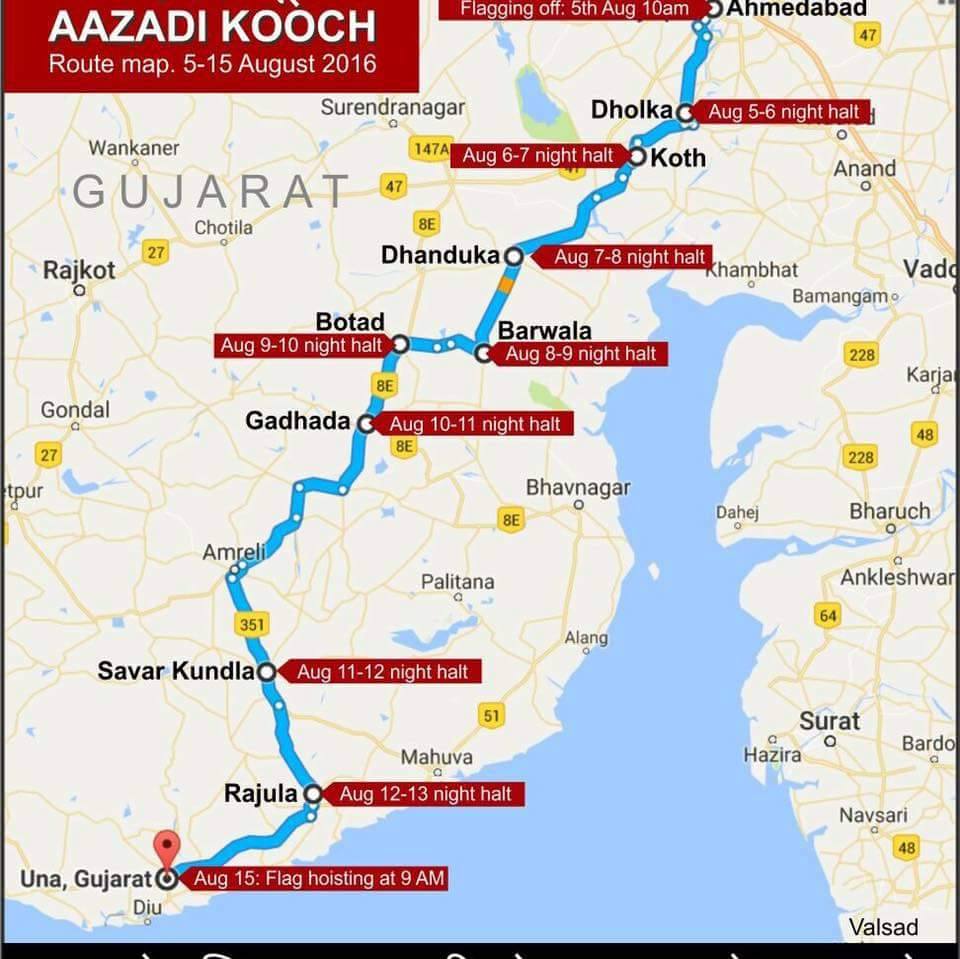
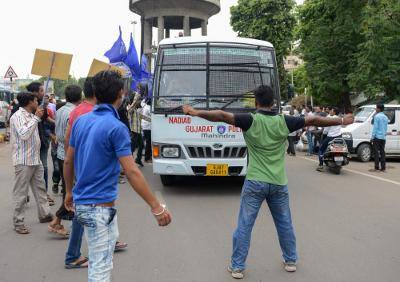
UNA DALIT ATYACHAR LADAT SAMITI From August 5 to August 15 A March for Justice
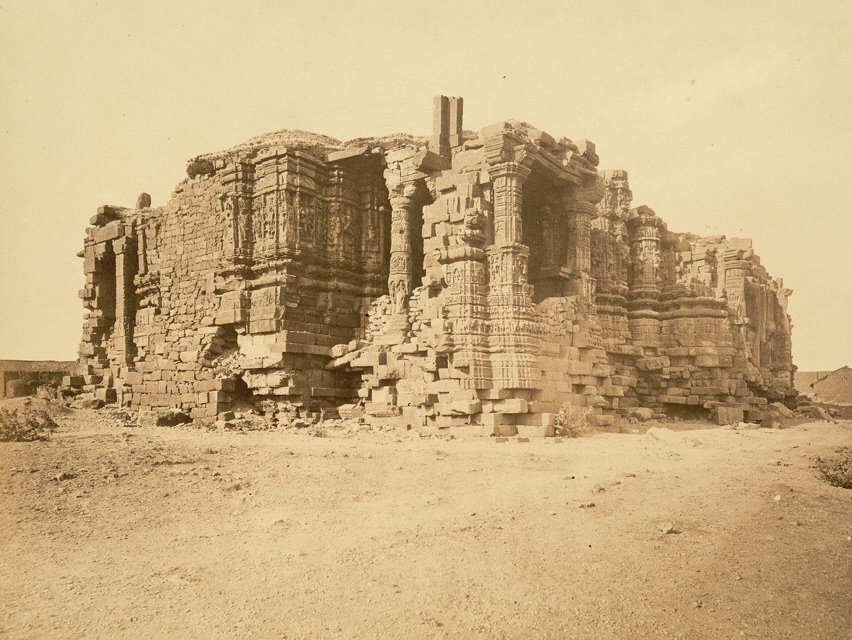
गुजरात में ऊना से, जहां गौ-आतंकवाद की घटना हुई, वहां से पास ही है सोमनाथ मंदिर. जब सोमनाथ का धन लूटने के लिए मुहम्मद गजनी ने हमला किया, तो मंदिर बचाने के लिए सिर्फ ब्राह्मण पुजारी थे. जाहिर है, उनके बचाए न कुछ बचना था, न बचा.
मंदिर बचाने अगर गुजरात की पूरी जनता आ जाती तो गजनी के चंद घुड़सवारों को पीछे हटना पड़ता. लेकिन 2016 में अवर्णों का हिंदू धर्म में जो हाल है, उस हिसाब से 11वीं सदी में उनकी दुर्गति की कल्पना कीजिए.
उस समय भी उन्होंने यही कहा होगा – आपका धर्म, आप बचाइए. जैसे कि आज वे कह रहे हैं – आपकी गोमाता की लाश, आप संभालिए. जिस धर्म में दलितों – पिछड़ों का कोई मान नहीं है, क्या आश्चर्य की वह दुनिया का सबसे तेजी से सिंकुड़ता धर्म है.
बाबा साहेब ने एनिहिलेशन ऑफ कास्ट में हिंदुओं से साफ कहा है कि तुम लोग बीमार हो, और बाकियों को भी बीमार बना दोगे. उन्होंने बीमारी से उबरने के उपाय भी सुझाए हैं. लेकिन भारत सरकार ने इस किताब को बेचना बंद कर दिया. बीमार ठीक होना नहीं चाहता. बीमारी से प्यार है उसे.
सामान्य समझ तो यह कहती है कि बेटी बचाओ, बेटी पढ़ाओ अभियान में फोकस मध्य और उच्च वर्ग पर होना चाहिए। आंकड़े बताते हैं कि इन वर्गों में लडक़े और लड़कियों की तादाद का अनुपात (चाइल्ड सेक्स रेश्यो- सीएसआर) सबसे खराब है। इसके बावजूद इस अभियान का पूरा फोकस देश के ग्रामीण और सबसे गरीब जिलों पर है।
Image: India.gov.in
पिछले साल जनवरी में प्रधानमंत्री नरेंद्र मोदी ने बेटी बचाओ, बेटी पढ़ाओ अभियान शुरू किया था। आजादी के बाद यह पहली दफा है, जब भारत सरकार ने किसी जन अभियान के तहत कन्या भ्रूण हत्या का मुद्दा उठाया है। अठारहवीं सदी के ब्रिटिश जनगणना आंकड़ों ने भारत में महिला-पुरुष आबादी के बढ़ते असंतुलन की तसदीक की थी। इन आंकड़ों में किसी न किसी रूप में कन्या भ्रूण हत्या से लेकर सती प्रथा के जरिये महिलाओं को मार डालने की वजह से महिलाओं की घटती संख्या के बारे में चिंता जताई गई थी। लेकिन आजादी के बाद आई सरकारें इस मुद्दे पर बेहद उदासीन रहीं, भले ही कन्या भ्रूण हत्याएं महामारी की तरह फैल गईं।
इस मुद्दे पर मोदी की पहल बेहद चौंकाने वाली थी क्योंकि उनके मुख्यमंत्री रहने के दौरान गुजरात में लडक़ों की तुलना में लड़कियों का अनुपात (चाइल्ड सेक्स रेश्यो- सीएसआर) का रिकार्ड सबसे खराब था। इसके अलावा महिलाओं के प्रति मोदी के विचार महिला अधिकारों के लिए लडऩे वाले कार्यकर्ताओं को हमेशा नागवार गुजरे हैं। जैसे- एक बार मोदी ने पांच साल से कम उम्र की लड़कियों में कुपोषण की वजह उनकी फैशन और डाइटिंग के प्रति सजगता को करार दिया था। हालांकि प्रधानमंत्री के तौर पर उनके बेटी बचाओ, बेटी पढ़ाओ अभियान पर महिला और बाल विकास मंत्री मेनका गांधी के विचारों की छाप साफ दिखती है। मोदी जी ने महसूस किया कि जिस तरह से अलग-अलग तरीकों से महिलाओं की हत्या की जा रही है वह एक राष्ट्रीय संकट बनता जा रहा है। इसके बावजूद बेटी बचाओ, बेटी पढ़ाओ के उनके नारे से लगता है कि वह बेटियों को बचाने की भीख मांग रहे हैं। इस मामले में वह अधिकार की भाषा बोलने के बजाय अनुनय-विनय करते नजर आ रहे हैं।
भारत में कन्या भ्रूण हत्या को गरीबी और अशिक्षा से जोड़ कर देखा जाता है। जबकि आंकड़े कुछ और कहते हैं। हाल के जनगणना आंकड़ेे (2011 के आंकड़ें) के मुताबिक चाइल्ड सेक्स रेश्यो यानी सीएसआर (यह जन्म से छह साल की उम्र तक लडक़े और लड़कियों की संख्या का अनुपात है) सबसे गरीब और कम पढ़े लिखे समुदायों के बीच सबसे अच्छा है। दुनिया भर में 1000 लडक़ों पर 950 लड़कियों का अनुपात आदर्श माना जाता है। लेकिन आर्थिक समृद्धि और शिक्षा में बढ़ोतरी के साथ ही यह अनुपात बिगडऩे लगता है। देश के सबसे धनी राज्यों में लडक़ों और लड़कियों की तादाद का अनुपात 850 और इससे कम तक पहुंच चुका है। 2011 की जनगणना में 1000 पुरुषों पर 914 महिलाओं का राष्ट्रीय अनुपात है। यानी धनी राज्यों में महिला-पुरुष अनुपात राष्ट्रीय औसत से भी कम है। 1000 पुरुषों पर 914 महिलाओं का राष्ट्रीय अनुपात आजादी के बाद से अब तक का सबसे खराब अनुपात है। आर्थिक समृद्धि में बढ़ोतरी और उसी के अनुपात में 0 से 6 साल के बीच की लड़कियों की हत्या के बीच यह जो संबंध है यह हर जगह यानी पड़ोसी इलाकों, जिलों, गांवों, शहरों और राज्यों में भी दिखता है। यानी कम समृद्ध की तुलना में अधिक समृद्ध जगहों पर महिला-पुरुष अनुपात ज्यादा खराब है। यही चीज जिलों, गांवों, शहरों और राज्यों में भी लागू होती है।
अगर धार्मिक समुदायों की भी तुलना करें तो यहां भी यह गैप आपको नजर आएगा। देश के सबसे समृद्ध सिख और जैन समुदायों में लडक़ों की तुलना में लड़कियों की तादाद काफी कम है। लेकिन इसके उलट आदिवासियों और कथित निचली जातियों में लड़कियों और लडक़ों का अनुपात सबसे अच्छा है। जबकि ये समुदाय सबसे कम शिक्षित और निर्धनतम माने जाते हैं। जिन आदिवासियों के बीच शिक्षा और नौकरियों से समृद्धि आ रही है, वहां लड़कियों और लडक़ों का अनुपात बिगड़ रहा रहा है।
केरल का इतिहास मातृसत्तात्मक रहा है। वहां कन्या भ्रूण हत्या का इतिहास नहीं रहा है। यहां लड़कियों और लडक़ों का अनुपात सबसे अच्छा था। उच्च साक्षरता दर (92 फीसदी) इसकी वजह मानी जाती रही है। लेकिन 2011 के जनगणना आंकड़ों में सीएसआर में 8.44 फीसदी की गिरावट दर्ज की गई। राज्य में कन्या भ्रूण हत्या और छोटी बच्चियों की हत्या की बेतहाशा बढ़ती दरों की वजह से ऐसा होना स्वाभाविक है। इसका संबंध भी आर्थिक समृद्धि में बढ़ोतरी से है। केरल में बाहर से (प्रवासी केरलवासियों की ओर से धन भेजने की वजह से) खूब पैसा आया है। हर साल यहां विदेश से 20 अरब डॉलर आते हैं। राज्य में लंबे समय तक कम्यूनिस्ट शासन रहा है। फिर आखिर लड़कियों से छुटकारा पाने की वजह क्या है? खास कर जब आप समृद्धि की ओर बढ़ते जा रहे हैं तो ऐसी क्या मजबूरी है कि लड़कियों को मारा जाए? दरअसल इसकी वजह है दहेज- धन के स्वामित्व और वितरण पर कब्जा जमाने के लिए एक घातक, महिला विरोधी और पितृसत्तात्मक राजनीति। जैसे-जैसे परिवार आर्थिक तौर पर समृद्ध होता जाता है वैसे-वैसे धन पर पितृसत्तात्मक पकड़ के उसके माध्यमों पर भी निवेश बढ़ता जाता है और यह बेटियों को अपने इस लक्ष्य में बाधक के तौर पर देखने लगते हैं। दरअसल, लडक़ी जितनी शिक्षित होगी और उसका परिवार जितना समृद्ध होगा, उससे उतना ही ज्यादा दहेज लाने की अपेक्षा होगी। दहेज को लड़कियों से छुटकारा पाने के रास्ते के तौर पर देखा जाता है ताकि वह परिवार की आर्थिक विरासत पर अपने हक की आवाज न उठाए। लेकिन अब बढ़ती शिक्षा की वजह से लड़कियां अपने मां-बाप की संपत्ति में अपने हक की लड़ाई लडऩे लगी हैं।
दूसरी ओर, एक पुरुष को न केवल अपने मां-बा की संपत्ति का हक मिलता है बल्कि उसकी पत्नी के मां-बाप की संपत्ति का भी हिस्सा मिल जाता है। बेटा धन हासिल करने का आसान माध्यम होता है। वह जितना शिक्षित होगा, उसका परिवार उतना ही ज्यादा दहेज मांगने का हकदार माना जाएगा। असल में शादियों की बातचीत के दौरान खुलेआम दहेज का रेट चार्ट बांटा जाता है। इसमें नकद, लग्जरी कार, प्रॉपर्टी, सोने और हीरे के गहनों की किलो के हिसाब से मांग की जाती है। वास्तव में जिन इलाकों में दहेज के रेट ज्यादा हैं वहां से इससे जुड़ी हिंसा, हत्या और आत्महत्याओं की रिपोर्ट भी ज्यादा आती है।
Image: India.gov.in
गरीब और निरक्षर समुदायों में जो चीज लड़कियों को बचाती है वह है पितृसत्तात्मक की विपरीत सामाजिक व्यवस्था का विस्तार। यह व्यवस्था उस पितृसत्तात्मक समाज के बिल्कुल उलट है, जिसमें महिला को इंसान न मानकर एक खरीद-बिक्री की वस्तु माना जाता है। ऐसी चीज जिसे इस्तेमाल कर फेंक दिया जा सकता है। गरीब घरों में बेेटियां इसलिए बची रह जाती हैं कि क्योंकि बच्चे के तौर पर उनसे आर्थिक गुलामी करवाई जा सकती है। गरीब घरों में बेटियां सफाई, रसोई के साथ, पानी और ईंधन इकट्ठा करने जैसा काम करती हैं। वे परिवार के लिए काम करके पैसा भी कमा सकती हैं। लाखों लड़कियों को उनके परिवार वाले शहरी इलाके में घरेलू नौकरानियों के तौर पर काम करने के लिए भेज देते हैं। श्रमिकों को तौर पर ये लड़कियां खेतों से लेकर फैक्टरियों और सेक्स इंडस्ट्री में काम करने लगती हैं।
इन लड़कियों के दम पर एक और धंधा फलता-फूलता है और यह है गरीब लड़कियों को धनी राज्यों में दुल्हन बना कर बेच देना। इन इलाकों में इन गरीब लड़कियों को गुलाम की तरह रखा जाता है और उनके साथ यौन दुव्र्यवहार होता है। इन लड़कियों को बच्चे पैदा करने के लिए लाया जाता है और फिर किसी दूसरे परिवार में दुल्हन के तौर पर बेच दिए जाने से पहले परिवार का हर पुरुष उनके साथ दुव्र्यवहार करता है और शोषण करता है। हैदराबाद में तो यह कारोबार खूब चलता है। खाड़ी देशों के कामुक अमीर यहां की मुस्लिम नाबालिग लड़कियों के मां-बाप को अच्छी खासी रकम देकर ले जाते हैं। इन लड़कियों से एक तरह की अस्थायी शादी की जाती है और फिर इनके साथ गुलामों की तरह बर्ताव किया जाता है। उन्हें प्रताडि़त किया जाता है और फिर स्वदेश लौटने से पहले उन्हें तलाक दे दिया जाता है। देश में बच्चों की खरीद-फरोख्त का नेटवर्क भी खूब फला-फूला हुआ है। यह नेटवर्क अक्सर सरकारी अनाथालयों से ऑपरेट होते हैं। यहां से गरीब आदिवासी समुदायों की नवजात बच्चियों को 5000 रुपये में खरीदा जा सकता है। हालांकि बेडिय़ा, बांछड़ा, कंजर,सांसी और नट जैसे कई ऐसे जनजातीय समुदाय हैं जहां बेटियों और बहनों को वेश्यावृति के धंधे में डाल कर उन्हें आय का ोत बनाने की परंपरा रही है। इसे परिवार का धंधा माना जाता है। इन समुदायों में लड़कियों की वर्जिनिटी को नीलाम करने की परंपरा रही है। दस साल तक की छोटी बच्चियों की वर्जिनिटी की बोली लगती है। जो जितना ज्यादा पैसा देता है उसे लडक़ी सौंप दी जाती है। 2011 की जनगणना में चौंकाने वाले आंकड़े दिखे हैं। आदिवासी समुदाय में प्रति एक हजार पुरुषों में महिलाओं की संख्या 950 है। लेकिन बेडिय़ा समुदाय में 1000 पुरुषों में महिलाओं की संख्या 1276 है। यह असामान्य रूप से ज्यादा है।
बेटी बचाओ, बेटी पढ़ाओ अभियान पर काफी पैसा खर्च किया जा रहा है। लेकिन इसमें बेहतरीन रणनीति और सूझबूझ भरी परियोजनाओं के बजाय नारेबाजी पर जोर है। इससे इसके लक्ष्यों के प्रति संदेह पैदा होता है।
सामान्य समझ तो यह कहती है कि बेटी बचाओ, बेटी पढ़ाओ अभियान में फोकस मध्य और उच्च वर्ग पर होना चाहिए। आंकड़े बताते हैं कि इन वर्गों में लडक़े और लड़कियों का अनुपात (सीएसआर) सबसे खराब है। इसके बावजूद इस अभियान का पूरा फोकस ग्रामीण देश के ग्रामीण और सबसे गरीब जिलों पर है। राजनीतिक नुकसान होने के डर से अभियान का पूरा फोकस गरीबों और कम समृद्ध इलाकों पर है। जबकि फोकस मध्य और उच्च वर्ग पर होना चाहिए।
गांवों में बेटी बचाओ, बेटी पढ़ाओ अभियान के तहत जिस एक पॉपुलर प्रोग्राम को खासा फंड दिया जा रहा है- वह है बेटी के जन्म पर एक पेड़ रोपना। इसके पीछे तर्क है कि जब बेटी को दहेज देना हो तो पिता इस पेड़ को काट कर इसकी लकड़ी बेचेगा और कुछ पैसे जुटाएगा। इस तरह से यह उसी दहेज की कुरीति को बढ़ावा देना है, जिसकी वजह से कन्या भ्रूण हत्या बढ़ रही है।
बेटी बचाओ, बेटी पढ़ाओ अभियान शुरू करने के वक्त जो दो अहम और प्रभावी परियोजनाएं सुझाई गई थीं वे अब तक शुरू नहीं हो पाई हैं। इनमें से एक सुझाव में कहा गया था कि हर इलाके मेंं एक सार्वजनिक बोर्ड लगाया जाए जिस पर पर हर महीने वहां और आसपास के इलाकों के सीएसआर आंकड़ें दर्ज किए जाएं। इससे लोगों को लडक़ों और लड़कियों के अनुपात के बारे में पता चलेगा। यह अभियान शहरी, मध्य और उच्च वर्ग वाले इलाकों में चलाया जाना चाहिए। इसे प्रभावी तौर पर लागू करने कि लिए पुलिस और लीगल सेल की भी मदद ली जा सकती है।
दूसरा सुझाव यह था कि सभी बच्चियों की जन्म और मृत्यु का अनिवार्य रजिस्ट्रेशन हो। इसके साथ ही 15 साल की उम्र तक हर लडक़ी की निगरानी की अनिवार्य मॉनिटरिंग हो। इस उम्र तक बड़ी संख्या में लड़कियां मार दी जाती हैं या गायब हो जाती हैं। वास्तव में कई बार निम्न सीएसआर अनुपात की वजह कन्या भ्रूण हत्या को माना जाता है। लेकिन जनगणना आंकड़ों के विश्लेषण से पता चलता है कि 84 फीसदी से अधिक लड़कियां एक से छह साल के भीतर मार दी जाती हैं। दरअसल भ्रूण जांच और जन्म लेने के बाद से एक साल के भीतर दस लाख से कम बच्चियों को मारा गया है। लेकिन एक साल से छह साल की उम्र तक पहुंचते ही 70 लाख बच्चियां खत्म कर दी गईं।
इस डरावनी स्थिति को देखते ही बेटी बचाओ, बेटी पढ़ाओ अभियान में इन दो परियोजनाओं को लागू करना सर्वोच्च प्राथमिकता होनी चाहिए।
( रीता बनर्जी लेखिका, फोटोग्राफर और जेंडर एक्टिविस्ट हैं। इनकी किताब – सेक्स एंड पावर : डिफाइनिंग हिस्ट्री, शेपिंग सोसाइटीज, जेंडर, सेक्सुलिटी और भारत मेंं सत्ता के संबंधों पर ऐतिहासिक अध्ययन है। वह 50 मिलियन मिसिंग कैंपेन की संस्थापक और डायरेक्टर हैं। )
Health department not lodging complaint against the culprits for fear of reprisal
Srinagar, Aug 03: Around 110 ambulances have been damaged by troopers and protesters till July 29, according to Directorate of Health Services, Kashmir (DHSK). However, it’s not registering any complaint in this regard, fearing that legalising the issue will make the ambulances more vulnerable to such attacks.
Riyaz Ahmad Khan, who is working on deputation with DHSK as Transport Head, said, “As of now our priority is to take patients safely to hospitals. So we don’t want to lodge any complaint because it might create further problems for ambulance drivers who are every now and then getting beaten up by police.”
“There are reports that from July 29 onwards, 15 more ambulances have been damaged,” Riyaz added.
In Anantnag district, highest number of ambulances (38) has been damaged followed by Kulgam (19), Pulwama (14) and Kupwara (12) districts.
“The ambulances are in a very bad shape. The windscreens, side and rear windows, lights, tyres and body all are damaged. The estimated cost of repair ranges from Rs 5000 to 1 lakh for each ambulance. As of now, we are just doing minor repairs so that we can run them again,” Riyaz said.
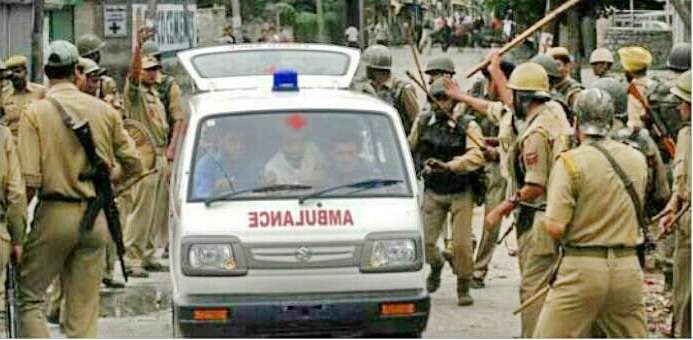
“Much of the damage to the ambulances has been done by policemen. When they see the injured being taken to hospital they get angry and hit the ambulance,” he added.
Many of the ambulances which have been temporary repaired have again been attacked by the government forces as well as protesters.
“Couple of days ago, we repaired a vehicle of district hospital Kangan, but again it was damaged,” Riyaz said. “We thought of filing a complaint against the cop who did it .But then we dropped the idea, thinking it will create unnecessary trouble for us.”
Medical Superintendent of SMHS hospital, Nazir Chowdhary, said: “We have given a list to the government about the damage done to the ambulance. Let them take action. As of now, we have not filed any complaint against the persons who has damaged ambulances.”
Meanwhile, the doctors have reiterated the appeal to government forces to allow smooth movement of ambulances, as they have been continuously found thrashing the hospital staff.
Number of ambulances damaged till 29th July:
District Number of Ambulances Damaged Ananatnag 38 Kupwara 12 Baramulla 05 Budgam 10 Pulwama 14 Ganderbal 07 Kulgam 19 Srinagar 06
Almost guaranteed to spread more misery across North Africa
The United States returned to aerial bomb Libya. The target is Islamic State (IS) positions in the north-central city of Sirte. IS has held Sirte and its surrounding areas since last year. Sirte is the birthplace of Muammar Qaddafi, who was also killed there. After the fall of the Qaddafi government, this central Libyan town languished. It had become the playground of the Libyan Dawn – the militia of the town of Misrata, led by Salah Badi – and later the Libya Shield Force of Benghazi. The latter had close ties to al-Qaeda and is now part of the Shura Council of Benghazi Revolutionaries. When the Islamic State attacked Sirte last year, the various militias had little incentive to stay. They delivered the city to the Islamic State and withdrew to their own hometowns. Attempts to erode the Islamic State by other militias and armies have thus far failed.
The US military says that it will continue to conduct bombing raids on IS positions as long as necessary. While there are US Special Operations troops in Libya, they are not engaged in this action. The Government of National Accord (GNA) – led by Fayez al-Sarraj – invited the United States to bomb the Islamic State. The GNA’s attempt to defeat the Islamic State on the ground has stalled after some rapid movement into the city. Aerial bombardment by the United States, it is hoped, will refocus the GNA troops towards their objection – the seizure of Sirte from the Islamic State.
These are not the first US strikes on Libya. It is important to remember that it was the US-led NATO war on Libya in 2011 that broke the Libyan state – destroying its institutions and allowing the West’s preferred rebels to chase out anyone with links to the government. This is precisely what the US occupation had done in Iraq; it was repeated in its details within Libya (I show this in my new book, The Death of the Nation). A Libya with a weak institutional scaffolding rapidly descended into chaos. Town-based militias took control over their domains, fighting between towns for control over the hinterland. Older extremist forces – the Libyan Islamic Fighting Group – returned to authority, with some of their fighters who had experience in Afghanistan and Iraq now leaders in their hometowns. Many of these young men went to Syria via Turkey to fight against the government of Bashar al-Assad. Once the West began to bomb IS targets in Syria, they came home to set up their own vilayat of the Islamic State. Fighters from other parts of North Africa – particularly Tunisia – joined them as they seized Sirte and its surrounding areas. The US bombed their positions last November and then again this February – to no avail. They dug in.
Benghazi is a real place In the United States, ‘Benghazi’ has become a slogan. It has come to mean that Hillary Clinton is not trustworthy. But Benghazi, of course, is a real city in eastern Libya with a population of over six hundred thousand people. It is a city in great distress, its unity fragmented and its people traumatized by an endless war that is taking place within the heart of its residential areas.
As the US bombed the IS positions this week, a massive car bomb struck Benghazi. This bomb killed at least twenty-two people and wounded twenty others. The bomb went off in the Guwarsha residential district in Benghazi, which has been the frontline for the past two years between various Islamist extremists – including the Islamic State – and the Libyan National Army led by a former CIA asset, General Khalifa Hafter. The various Islamist groups are mostly under the command of the Shura Council of Benghazi Revolutionaries, which includes Ansar al-Sharia. The most extreme elements of the latter joined the Islamic State. The Shura Council has taken responsibility for the most recent bomb blast. The Libyan National Army has conducted its own airstrikes against the Shura Council and Islamic State forces in both the Guwarsha and Ganfouda neighborhoods of Benghazi. In late June, the Libyan National Army carried out particularly severe bombing of these areas. Civilian casualties are suspected, although it is hard to verify what is going on within areas controlled by the Islamic State and the Shura Council. Al-Qaeda in the Islamic Maghreb’s leader Abu Ubaidah Yusuf al-Anabi, in an audio message, called on Libyans to fight the ‘Franks’ in Benghazi. He also called upon the Libyan National Army to allow women and children safe passage from Ganfouda. Haftar’s advisors rejected this proposal. A MIG-23, flown by the highly-regarded Major Idris Hamed al-Obeidi, was shot down in Ganfouda in early July. Mercy is not on the lips of his comrades.
Fragile politics Politics in Libya remains fragile. The Government of National Accord (GNA) emerged out of desperation. Two parallel governments – one in Tripoli and one in Tobruk/Bayda – had established themselves. They had begun to create parallel institutions, including two oil ministries. Meanwhile, in Benghazi, General Khalifa Hafter acted as a third government, unwilling to bring himself under civilian control. He began a war on the Shura Council in order to take Benghazi as his prize after being chased out of Tripoli. Pressure from the United Nations and the West forced the two governments of Tripoli and Tobruk to merge. They selected al-Sarraj, who comes from a family of Libyan grandees, to take the helm. Al-Sarraj came from the Western-backed Tobruk government. He has had a hard time gaining the trust of the Islamists of the Tripoli government.
When the new GNA passed Decree no. 1, which sought to bring all military forces under civilian command, General Hafter was not on the list. Nor was Ibrahim Jadhran, the head of the Petroleum Facilities Guards, who controls a swathe of Libyan oil lands. In Tripoli, the avarice of Haitham Tajouri and his militia competes with the old al-Qaeda hand Abdelhakim Belhaj. Al-Sarraj might be the leader of the GNA, but in Tripoli he exists at the mercy of these warlords. When the GNA prepared to release twelve men accused of crimes against the uprising of 2011 last month, unknown assailants executed them in the Ain Zara prison – just south of Tripoli. This is an example of how the armed militias continue to exercise control over Libyan society, with no expectation that the GNA could tether them. Libyan institutions – weak already under Muammar Qaddafi and then destroyed by the NATO war – are not strong enough to consolidate power. It is this weakness that will allow the Shura Council and the Islamic State to maintain its authority.
What will the US airstrikes do in such a brittle political environment? An advisor to the GNA says that they hope these airstrikes will allow their troops to take back Sirte. If they do so, he says, then the West and the UN will lift the sanctions that thus far prevent $67 billion of Libyan sovereign funds from being in the control of the Libyan government. The price for this money is to help remove the Islamic State. The West, in other words, is holding the money hostage till Libya’s government goes along with its agenda. It is important, therefore, to acknowledge that when the Libyan government requests US airstrikes, it does so not of its own volition but because of the conditions for the release of its own money. The airstrikes weaken the Libyan government. People are already saying that even General Haftar conducts his own airstrikes. He does not ask the Americans for help.
Will the airstrikes actually degrade and destroy the Islamic State? It is not merely the Islamic State that is Libya’s problem. Airstrikes such as this will only move these fighters to other locations – to Tunisia, for instance, or to Benghazi. They will continue to be a serious problem in North Africa. Indeed, if they return to Tunisia, they will bring great peril to that country, which has only just seen its head of government lose a vote of no-confidence. In March, the Tunisian town of Ben Guerdane, on the Libyan border, saw virulent clashes between IS and the Tunisian army. What is now being called ‘Islamo-gangsterism’ has entered Tunis’ slums such as Ettadhamen. These are increasingly tinder-boxes. Or they will head to Benghazi, where the battlefield has destroyed the city that started the uprising of 2011.
Vijay Prashad is professor of international studies at Trinity College in Hartford, Connecticut. He is the author of 18 books, including Arab Spring, Libyan Winter (AK Press, 2012), The Poorer Nations: A Possible History of the Global South (Verso, 2013) and the forthcoming The Death of a Nation and the Future of the Arab Revolution (University of California Press, 2016). His columns appear at AlterNet every Wednesday.
As the cow-gangs of Hindutva go on a rampage and the the prime minister, Narendra Modi, adopts a posture of strategic silence, the country is rapidly being pushed to the brink of a civil war. This might sound a trifle far-fetched but classically, when large numbers of people begin to believe that there is no government for them, the time is not far when they will start making preparations for defending themselves. It started with the attacks on Muslims but soon enveloped the Dalits as it was bound to. The Una incident, which sparked off a veritable revolt, was followed up by subsequent attacks in Lucknow. The Progressive Dairy Farmers’ Association in Punjab, involving large number of Sikh farmers, has also been fighting continuing harassment and violence by cow-gangs of Hindutva in Punjab for some time now. The PDFA president has also stated that they might be forced to act in self-defense. The president Daljit Singh Gill, in fact, reportedly told mediapersons that “(I)f someone attacks the farmers, we will stop them now,” and “(I)f something goes wrong, it is the government’s responsibility.”
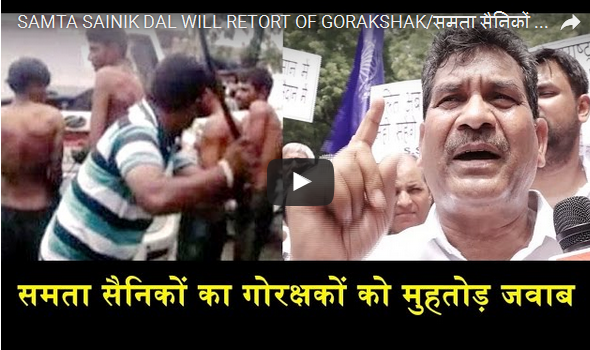
Even as the cow-gangs continue with their vigilantism unrestrained and unchecked, a large demonstration yesterday at Jantar Mantar by Samta Sainik Dal, actually sent out yet another signal. It spokespersons said in so many words that they were now prepared to take on the cow-gangs physically, if and where necessary.
Tracing SSD’s lineage back to Dr Ambedkar’s initiative in the 1924, the president of the organization openly blamed the ‘Manuvadi’ forces, in cahoots with the police and bureaucracy, backed by the government. He was candid that it is not the Sikhs or Muslims or Christians who are attacking the Dalits today but the Hindus who are doing it in the name of nationalism and that people were now in a mood to fight back unitedly together.
Not only is Modi’s deafening silence now coming to be seen as a sign of encouragement and complicity, with BJP leaders like Hyderabad MLA Raja Singh openly justifying the Una attack, and no action being taken against him by the party yet, it is clear that this vigilantism is endorsed by the highest quarters in the party. For those who may have missed seeing Raja Singh’s video, this is what he said:
“Jo Dalit gaye ke maas ko le ja raha tha, jo uski pitai hui hai, woh bohut hi achhi hui hai (Those Dalits who were taking the cow, the cow meat, those who were beaten, it was a very good thing to happen).
Even though top BJP leader and minister in Modi government’s cabinet, Venkaiah Naidu started once again on the by-now stale and predictable rant about “Dalit atrocities being a carry over from the [Congress] past”, there is little doubt in people’s mind that the Modi government by its encouragement to the cow-gangs has taken these to an altogether new level. It may be worth recalling that the other big incident of this kind – the actual lynching of Dalits carrying carcasses of cows in Jhajjar, too took place during the last NDA regime, in November 2002. The fact-finding report by some academics in Haryana (linked above) had observed even at that time, that
A very disturbing aspect is the involvement of communal forces like the Vishwa Hindu Parishad, Bajrang Dal, etc., who have been continuously active in spreading the virus of communal hatred in the area. They often spread the false rumour of cow slaughter in order to inflame the sentiments of the people against Muslims of the adjoining area of Mewat. Even in this incident a rumour of cow slaughter was used to inflame the crowd. The crime was perpetrated by the frenzied mob armed with irons, rods, spears etc led by these communal forces who controlled the mob and directed their ire against the dalits. The intensity of the communal frenzy can be gauged by an attempt to erase the name of the SSP Jhajjar from the board at chowkie because the concerned officer happens to be a Muslim.
This being the case, Naidu cannot really hide behind the Congress fig-leaf any longer. Even though some opinion-makers, intellectuals and media houses have made it their vocation to protect Modi from any culpability in this regard, the fact of the matter is that his role in all this is now increasingly becoming apparent to most people.
The ongoing revolt of the Dalit masses actually heralds the beginning of an entirely new situation in Indian politics, one whose implications are likely to go far beyond the UP elections next year or even the next general elections. For in its most fundamental sense, the virtual civil war, initiated by the cow-gangs of the Hindu Right (RSS/BJP being only one part of the larger constellation) represents an unprecedented rupture in the over-a-century old project of forging a Hindu Nation. At a very fundamental level, the project of Hindu Rashtra falls flat if the Dalits turn against it. This project was based not only on a proto-fascist desire to create a Nation that would be based on a reconstructed Hindu culture, it also rested on a fundamental cultural illiteracy of a revanchist Manuvadi Hindu elite about what constituted the large landmass that came to be called ‘India’. If Hindutva’s most megalomaniac desire was to recreate what it thought was a once united India (Akhand Bharat) stretching from Afghanistan at one end and Burma/ Myanmar at the other – its cultural imagination about what constitutes this entity was utterly impoverished. So much so that it could never see that different populations that inhabited the landmass that constituted colonial and even post-partition India, ranging from Kashmir to the North East on the one hand, and the very different cultural practices of even the supposedly Hindu southern India, with its highly sophisticated linguistic, cultural and philosophical heritage, on the other. All it cared for was the fascist ideal of welding this landmass and its population into one, single nation with a single culture.
What is however, more significant, is that this cultural illiteracy of the Hindu Right (and its centrepiece, the RSS) extended equally to its knowledge and awareness of the cultural practices of the Hindus as well. So for instance, vegetarianism is not common even among the Brahmans of say Bengal and Kashmir or of the hill regions of North India. All this was, in a way, already known to us. What the coming to power of the Modi regime has illuminated in a flash, thanks to the way RSS has gone about putting its nationalism into practice, is the fact that it has no understanding even of the religious beliefs and practices of many ‘lower caste’ groups and adivasi communities. This was dramatically illustrated by the way in which the issue of Mahishasur worship was dealt with during the Home Ministry’s RSS-inspired attack on ‘anti-national activities’ in JNU. The sequence in which this attack unfolded has now been recorded for us by Pramod Ranjan of Forward Press. It was first Panchjanya and Organiser, RSS mouthpieces, that listed Mahishasur worship as evidence of the antinational activities that go on in JNU. This was followed by the compilation of a dossier by some teachers close to the RSS (in JNU), who repeated this very fact (among others) as evidence of anti-national activities. When Delhi Police made its case against the students, it repeated, almost verbatim, all these allegations of Mahishasur worship, once again, as evidence of anti-national activities. And finally, to cap it all, the the HRD minister in her ‘sensational speech’ in parliament, in response to Mayawati, repeated the Mahishasur worship question, in exactly the same fashion. So, the dots are there, already joined for anyone who would care to see.
If we temporarily set aside the series of questions raised by the tragic suicide of Rohith Vemula of Hyderabad University, especially with regard to how Dalits are treated even within our most modern institutions like universities and simply focus on the cultural and religious practices of different subaltern Hindu and adivasi communities, it will be clear for an organization largely dominated by chitpavan brahmans, these are anti-Hindu and therefore, anti-national practices. Fundamentally, the RSS idea of what a ‘Hindu’ is or should be derives from a very modernist North Indian upper caste rendering of ‘Hinduness’. Even though it swears by the ancient texts like the Vedas, their illiteracy extends to those texts as well. As scholars have often pointed out, beef-eating was pretty much evident in Vedic practices as well and Hindutva’s aversion to it comes out of very modern identity concerns.
Its mind-numbing illiteracy, woven into a modernist proto-fascist project and combined with supreme intolerance of difference, has led it into other confrontations well, in recent months. That the Mahishasura episode in JNU was not an aberration is further illustrated by the fact that it led the Hindu Right to hold a demonstration in Bastar in March this year, attacking the “offsprings of Mahishasur”. The rally was attended by BJP MP Abhishek Singh and his supporters, among others. An extract from a report in Forward Press:
12 मार्च की रैली में हिंदुत्ववादियों द्वारा ‘महिषासुर के औलादों को जूते मारो सालों को’ कहना मंहगा पड़ा। कारण कि बस्तर के इलाके में स्थाई निवासियों के घर-घर में के नाम से महिषासुर (स्थानीय नाम भैंसासुर) की पूजा की जाती है। स्थानीय लोगों ने इस नारे को अपने ऊपर सांस्कृतिक हमला माना, और वे हिंदुत्ववादियों के सांस्कृतिक एकरूपीकरण के खिलाफ खड़े हुए, 30 अप्रैल को मोर्चा निकला और 12 मार्च हुई रैली में नारा लगाने वालों के खिलाफ एफआईआर दर्ज करवाया। हालांकि पुलिस ने कथित ऊपरी दवाब के कारण किसी आरोपी को अभी तक गिरफ्तार नहीं किया है। विवेक कुमार [a local journalist whose facebook post led to the storm] कहते हैं, ‘हिंदुत्ववादी सबको राम और दुर्गाभक्त बना देना चाहते हैं, उन्हें किसी की संस्कृति की कोई परवाह नहीं। उन्हें यह भी बर्दाश्त नहीं है कि बस्तर के स्थानीय निवासी दुर्गापूजा या दशहरा नहीं मनाते- यहाँ रावण का दहन नहीं होता है।’
That cow-gangs have sprouted up all over India and have become more and more brazen and aggressive in the recent past is not an accident. It was after all, Modi himself who introduced the cow-question with high-pitched rhetoric in the 2015 Bihar elections – and it is his complicit silence as these gangs go on the rampage, that has emboldened them. The fact that a figure no less than the prime minister sought to make the cow and beef-eating emotionally charged political issues should leave no-one in any doubt that the current campaign has the backing of the highest levels of government. They had simply assumed that this would be an easy and emotive way of whipping up sentiments against Muslims but had not anticipated that the vigilantism of the cow-gangs would eventually lead to attacks on the Dalits and perhaps to the unravelling of the very project of Hindu Rashtra.
This is where they made their biggest mistake. For the Dalit question is not like any other – it is in fact the unresolved traumatic core of the modern Hindu self, and by extension, of the Nationalist self. For the traditional Hindu, the Dalit was the excluded other, but whose exclusion could never be complete, for it was on the Dalit’s being that the purity of the Hindu Self was predicated and the traditionalist made no bones about it.
However, for the nationalist Hindu on the other hand, the Dalit is the excess that he cannot deal with. But the promise of the Nation remains hollow as long as the Dalits continue to be in the state to which traditional Hindu society has relegated them.
दलित मुस्लिम विरोधी हिंसा के खिलाफ’ लखनऊ में रिहाई मंच ने दिया धरना
तकरोही में दलितों के पीटे जाने की घटना ने साबित किया गुजरात दोहराने की हो रही है कोशिश मंच ने लगाया आरोप – पुलिस लगी है दोषियों को बचाने में
लखनऊ, 3 अगस्त 2016
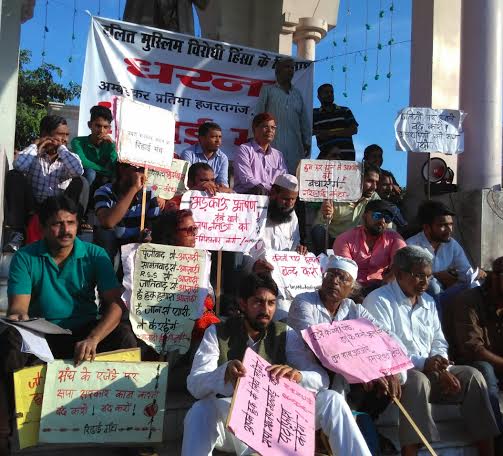
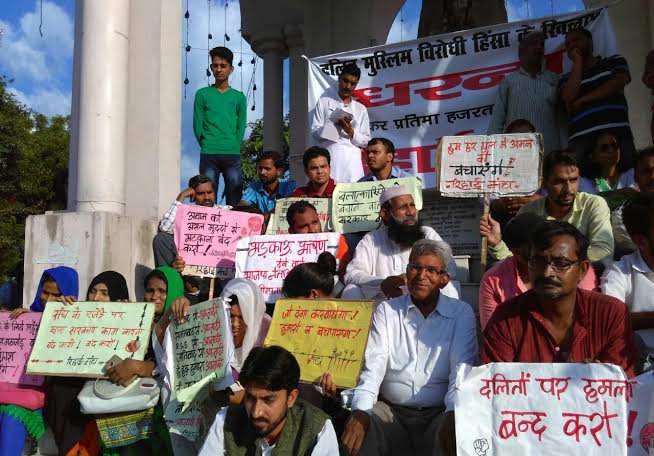
रिहाई मंच ने ‘दलित मुस्लिम विरोधी हिंसा के खिलाफ’ हजरतगंज स्थित अंबेडकर प्रतिमा पर धरना दिया। धरने के माध्यम से मुखयमंत्री को संबोधित 11 सूत्रीय ज्ञापन भेजा।
रिहाई मंच अध्यक्ष मुहम्मद शुऐब ने कहा है कि जिस तरह से 28 जुलाई को तकरोही इंदिरानगर में मृत गाय ले जा रहे दो दलितों विद्यासागर और छोटे को पीटा गया और गाली गलौज की गई, लेकिन पुलिस द्वारा आरोपियों के खिलाफ एससी/एसटी एक्ट/ और दो समुदायों के बीच घृणा पैदाकर सद्भावना को बिगाड़ने का अभियोग के तहत मुकदमा नहीं पंजीकृत किया गया, वह साबित करता है कि पुलिस अपराधियों को बचा रही है। उन्होंने कहा कि मुजफ्फरनगर में एक बार फिर जिस तरह से संघ परिवार ने दादरी दोहराने की कोशिश की और आजमगढ़ में संजरपुर के तीन युवकों को फर्जी मुठभेड़ में घायल व गिरफ्तार दिखाया गया यह घटनाएं साफ करती हैं कि प्रदेश सरकार आरएसएस के दलित-मुस्लिम विरोधी एजेंडे को ही लागू कर रही है।
रिहाई मंच लखनऊ की महासचिव रफत फातिमा और शकील कुरैशी ने कहा कि बुलंदशहर में हाई वे पर मां-बेटी के साथ सामूहिक बलात्कार की घटना ने एक बार फिर साफ किया कि सूबे में महिलाएं सुरक्षित नहीं हैं। उन्होंने कहा कि सबसे ज्यादा महिला व दलित उत्पीड़न की घटनाएं यूपी से हैं। वहीं रिहाई मंच नेता अमित मिश्रा ने कहा कि सपा सरकार में भी दलितों और मुसलमानों पर बढ़ती संघी हिंसा अखिलेश सरकार की संघी मानसिकता को साबित करता है।
रिहाई मंच महासचिव राजीव यादव ने कहा कि मृत जानवर निस्तारण से जुड़े दलितों को सुरक्षा मुहैया कराने में प्रशासन पूरी तरह विफल ही साबित नहीं हुआ है बल्कि ऐसी घटनाओं में खुद उसकी भूमिका भी आपराधिक साबित होती जा रही है। मुसलमानों को सम्प्रदाय सूचक गाली देने व उत्पीड़ित करने की बढ़ती प्रवृत्ति पर रोक लगाने के लिए एससीएसटी ऐक्ट की तरह ही नया कानून बनाया जाए। उन्होंने बताया कि पिछले दिनों अखलाक के बेटे सरताज ने रिहाई मंच दफ्तर पर आ कर नेताओं से मुलाकात कर पूरे मामले के बारे में बताया। सूबे में जगह-जगह गाय की रक्षा के नाम पर जय गुरूदेव, गोरक्षा समिति जैसे संगठनों द्वारा की जा रही वाॅल राइटिंग व उत्तेजक भाषणों पर रोक लगाई जाए।
रिहाई मंच नेता अमित मिश्रा ने मांग की कि गौहत्या के अफवाह में मारे गए दादरी के अखलाक मामले में फाॅरेंसिक जांच में की गई हेरा-फेरी के अपराधियों के खिलाफ कानूनी कार्रवाई करते हुए अखलाक के हत्यारों को सजा दी जाए और अखलाक के परिवार के खिलाफ दर्ज किए गए गोकशी के फर्जी मुकदमे को तत्काल वापस लिया जाए। उन्होंने कहा कि सरकार को यह बताना चाहिए कि दादरी में गौकशी के नाम पर हुए आपराधिक षडयंत्र की पुलिस द्वारा आज तक विवेचना क्यों नहीं की गई।
धरने का संचालन रिहाई मंच नेता अनिल यादव ने किया। धरने को अमित मिश्रा, प्रोफेसर रमेश दीक्षित, नीति सक्सेना, जनचेतना से लाल चंद, आली से रेणू, दीपक कबीर, कैराना के मोहम्मद अली, भूरे लाल, शाहरूख, डीएस बौध, जैनब सिद्दीकी, हादी खान, रफीउद्दीन खान, कमर सीतापूरी, जुबैर जौनपूरी, एहसानुल हक मलिक, अली रजज, इनायतुल्ला खान, एमडी खान, असगर मेंहदी, राॅबिन वर्मा, दलित शोषण मुक्ति मंच के विनोद रावत, शम्स तबरेज खान, अबू अशरफ जीशान, सृजन योगी आदियोग, विरेंद्र गुप्ता, अतहर हुुसैन, आशीष अवस्थी, रामकुमार, कल्पना पांडे, अजय शर्मा, डाॅ मजहरूल हक, आदि ने संबोधित किया। इनके अलावा धरने में यासिर अजीज, जौनपुर से इरशाद, शबरोज मोहम्मदी, अबुअशरफ जीशान, एच आर वर्मा, शाहनवाज आलम, जनचेतना की गीतिका, जीशान अहमद, भीम वर्मा, आली से प्रियंका, शबाना, फुहार, फैजी किदवई, हरिभान यादव, वर्तिका शिवहरे, प्रतीक सरकार, शशांक लाल, यावर अब्बास, मोहम्मद दाऊद आदि प्रमुख रूप से शामिल रहे।