Home Blog Page 2498

“Why Should a Military Be Deployed Against Its Own People”: Lalita Ramdas

0

Wife of ex-Indian Naval Chief, Admiral Ramdas, Lalita,  writes this searching post on Facebook, 23 hours ago:

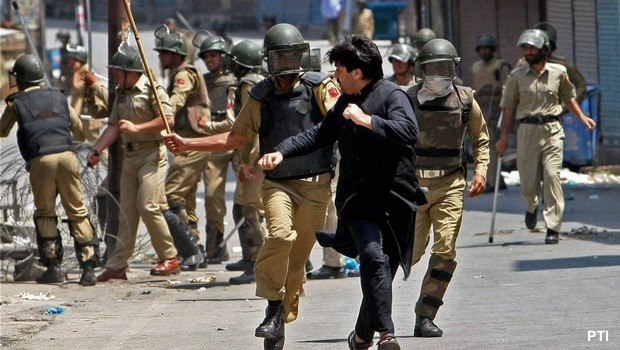
Photo Credit: Youth ki awaaz.com

It was when I saw a comment on my FB page from an old friend who asked me if I would like to spare a kind word for 'them' – those who lost their lives in Kargil – that I realised how deep was the yawning chasm between my world view and my interpretations about current affairs , role of the military , AFSPA, and issues like Kashmir, the NEast and the vicious killings in Chhatisgarh.

Dear friends – thank you for continuing to engage and listen and read – even though our views are clearly on opposing ends of a very wide spectrum. That is what a true and open democracy should be about and I like to think that we want to retrieve that kind of democracy.

Of course, like many others, I salute and remember those who have laid down their lives in the line of duty – be it Kargil, be it 1971, in rescue operations in peace time, or doing "counter insurgency" in the North East. Please don't for a moment get me wrong or judge me so hastily without trying to understand why today I seem to take so many positions which appear critical of the men [and increasingly women] , in uniform. I too was a part of the uniformed fraternity from birth until the age of 53, when my husband retired as head of the Indian Navy.

I am no less proud of the professionalism, the self lessness and valour with which our armed forces, as also other security forces have displayed as they are deployed on a variety of missions. In peace time too we have to deal with death and senseless loss of life -as indeed in the recent loss of the AN32

However, my own exposure to a very different reality – outside of the protected and often completely 'divorced from reality' lives that we have led in the Defence Services.

My political education, or should I say re-education, started when I spent a month in Bettiah, in Bihar in the seventies- I began critically exploring the causes of continuing poverty,hunger and want. Decades after our independence, why were we still seeing such abject poverty side by side with such wealth and opulence? And it has only become worse with the neo liberal economic model we adopted.

I also began asking questions about the roles of militarism, the military, the weapons business, and the completely obscene expenditures on arms in a land with such abject large scale poverty. This takes you in a logical trajectory to also asking uncomfortable questions about the nature of our politics and political leadership. And I hold accountable today – both our major parties and others too. Increasingly it was clear that not only had we failed miserably to settle our border issues with our neighbours – but increasingly we were turning on our own people with a brutality and level of utter violence -be it in Kashmir, the North east, or against Dalits, Adivasis, Muslims.

And it was my deep involvement with what happened in the pogrom against the Sikhs in Delhi in 1984, that truly opened my eyes to the sheer cynicism and perfidy of the state -which has selectively targetted vulnerable populations to meet its own narrow and selfish ends. There is no real interest in the good of the `people' – and after 1984, we saw it in the demolition of the Babri Masjid and with total impunity in Gujarat in 2002 where thousands died.

We have to learn to distance ourselves from the mainstream or governmental narrative – and increasingly of the shrill, venom and prejudice being spewed from so many of our so called national News Channels. And we have to learn to read, gather inputs from varied sources, and be able to make independent judgements and arrive at conclusions which might not find favour with the majoritarian views.

And this is why, I believe today, that our men in uniform – [lets face it for the bulk of poor boys from the villages the military – in the overall sense of that word – represents an employment opportunity, a security, which can only be marketed under the label of being the highest form of patriotism and service to the nation].

So if these boys are being killed – at one level it is an expected risk you take when you don uniform; and at another, it is the tragic ineptness and self interest of our politicians, and political parties – that sends them out to die – literally fighting their own people.

And finally – let us ask ourselves that most uncomfortable question – why should a fighting force who are supposed to be fighting at our borders – be deployed for over fifty years against our people in internal operations? And that too why do they need to do so under the blanket protection of a draconian law such as AFSPA – [the Armed Forces Special Powers Act] 

This is not necessarily the best platform for an in depth discussion – but hope that this will push some of us to delve deeper into many of these seeming contradictions and varying interpretations in our own recent history of what has gone wrong – what promises did we not keep – and have we seriously dealt with our people with an even hand and work to truly deliver on our promise of Justice without which these calls for "maintaining peace" are just meaningless. There may be many unpleasant surprises that we might have to face in the process.

Above all – as Manisha Sethi eloquently suggested recently – can we begin to listen before making up our minds that a 22 year old is a 'terrorist and a murderer' – just because Arnab Goswami and Zee News have rammed that into our heads?! Yes he was a militant – there is a tragic story of how he became a militant.

But killing in an encounter is not the answer —–if there is an answer my friends it is blowing in the wind …..and we have stuffed our ears with concrete and our heads with baggage – and cant hear what the wind is saying…..

Women are now Victims of the Cow Taliban: Madhya Pradesh

0


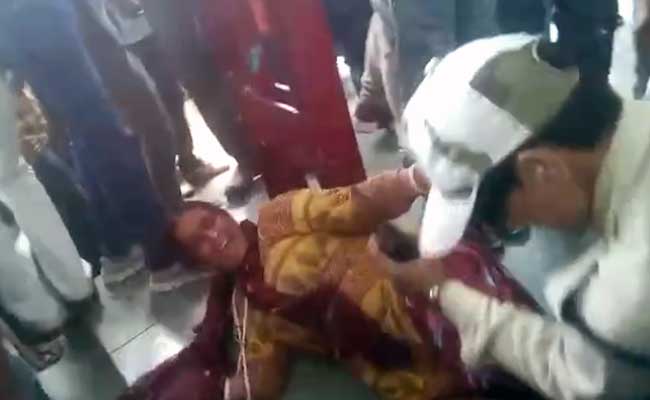
Two Muslim women were reportedly beaten up by members of cow vigilante groups at Mandsaur railway station in Madhya Pradesh on July 26 over suspicion that they were carrying beef.  This makes it the first incident wherein women have become victims of the cow Taliban.
 
The women were reportedly caught carrying 30 kg of meat after which police was informed. Never mind that initial reports by a veterinary doctor suggest that the meat was that of a buffalo, the regime in Delhi –backed by a supremacist Rashtriya Swayamsevak Sangh (RSS)– has empowered the Cow Taliban to take law into their own hands, kill, maim and terrorise. Is this not an indigenous form of terror? So far, we have had no wise words of warning or caution from the powerful powers that be, even those who globe trot their way to evade the murky politics back home.

Shockingly, crowd of people, including policemen, stood by and watched, two Muslim women were slapped, kicked and abused by a mob led by cow vigilantes at a railway station in BJP-ruled Madhya Pradesh on Tuesday. 

A mobile phone video taken by one of the spectators shows the violent incident, with policemen making only a half hearted attempt to stop the attackers. The police, NDTV reports, were at the railway station to arrest the two women. They had been tipped off about the women carrying a large quantity of beef to sell. As the policemen apprehended the women, a mob gathers and begins assaulting them. The women were beaten for at least half an hour, with chants of "Gau Mata Ki Jai (Hail holy cow)" resonating from the crowd. 

The policemen are seen making, at best, a half hearted attempt to control the crowd. The women are finally taken away by the police, after being subjected to blows, thrashes and verbal abuse. Police sources say about 30kg of meat was recovered from the women. However, the consignment was examined by a local doctor who pronounced it buffalo meat, not beef, reports say.


While importing of buffalo meat inside Madhya Pradesh without permission is illegal and thus both of them have been taken into custody for ‘smuggling and trying to sell’ the meat, the modus operandi is sinister as it suggests the illegal empowerment of mafias among the people, a mob empowered by the heady sense of impunity. Mob Terror: the video made by passers-by spread on social media giving rise to outrage following which state Home Minister Bhupinder Singh said that appropriate action will be taken.
 
Bahujan Samajwadi Party chief Mayawati also responded to this incident and said: BJP raises slogans ‘Mahilao ke Samman me, BJP maidan me, yet in BJP ruled Madhya Pradesh women are thrashed on beef rumours.” Mayawati made a fiery speech in the Rajya Sabha today on the issue.

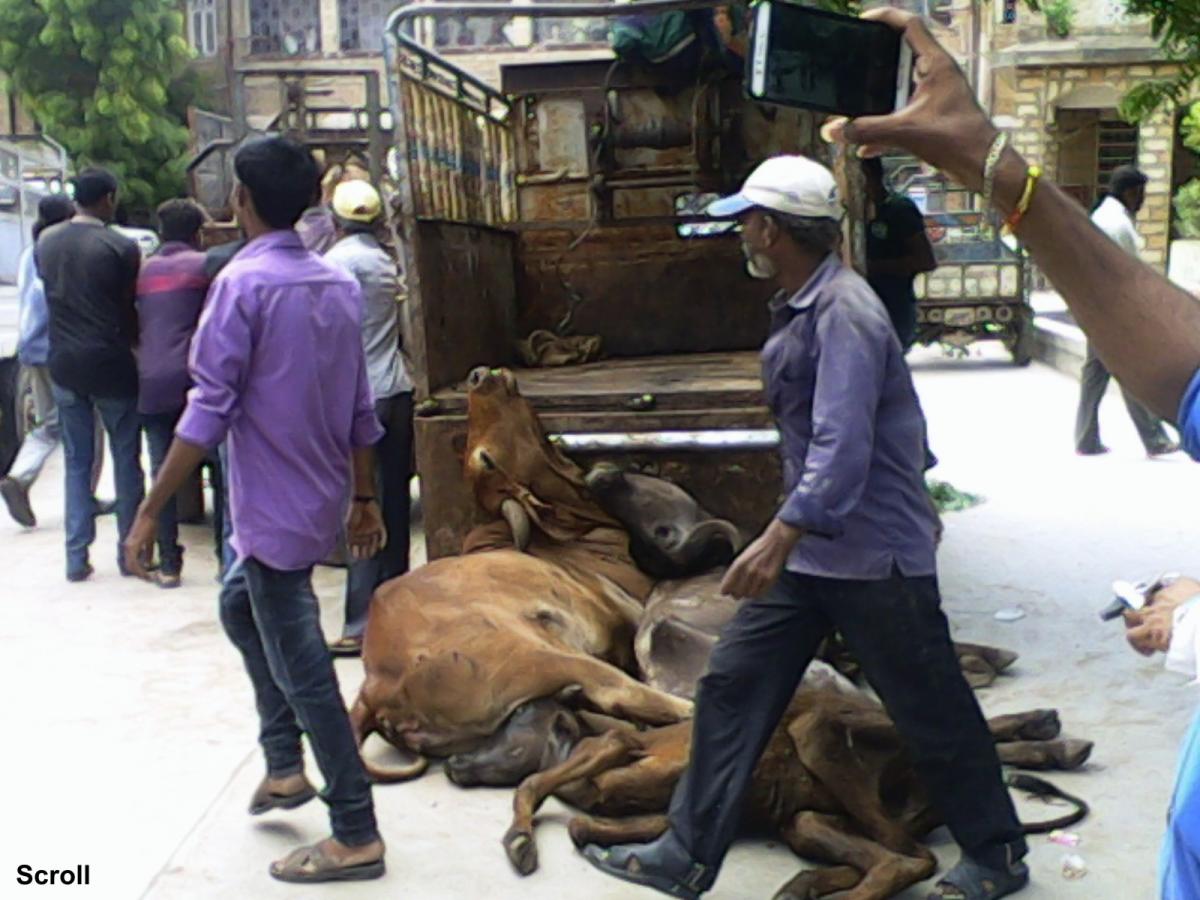
The incident has happened just a week after a video of Dalit youths being thrashed for skinning a cow went viral on the internet. It had been posted by the offenders, the law breakers themselves, revealing a brazen crass boldness and dare. It was this that has lead to the unique protests in Gujarat and other parts of the country. In Gujarat collectorates have been overwhelmed with dozens of cow carcasses dumped there; the traditional and legal occupation of Dalits (and Muslims –but who speaks of Muslims under RSS rule?) has been working with the hides of cows and buffaloes.

Cow slaughter is banned in Madhya Pradesh, but buffalo meat is still legal. The women, however, were still arrested as they did not have the necessary permit to sell the beef. 

At the time of writing, no action seems to have been taken against those who attacked the women. According to NDTV, the police say that no action has been taken against the cow vigilante group members leading the attack, because no one has come forward to complain against them. 

Attacks linked to beef rumours have seen an increase in India, ever since Mohammad Akhlaq was lynched in Dadri, Uttar Pradesh over rumours that his family were eating beef. More recently, a video of four Dalit men being flogged, tied to an SUV and paraded for skinning a dead cow in Una in Gujarat went viral.


Others include Zahid Ahmed who was killed over cow slaughter rumours in Kashmir; a truck driver who was lynched as Bajrang Dal activists suspected the smuggling of cattle; two youths who were beaten up in Karhal area, UP, as news spread that a cow had disappeared from a field near the village and was taken away for slaughter (the cow's owner told the police that the cow had died of natural causes) — amongst several other incidents. 

In fact, locally organised cow vigilante groups have sprung up across the country. These groups take matters into their own hands, using violence as a response to rumours and as a tool for fear mongering. Last month, Haryana Education Minister and RSS activist, Ram Bilas Sharma, went as far as defending the actions of these groups by saying, “The Hindu society has immense reverence for the cow. Youths are coming forward for cow protection like this. The law has brought a big change in the mindset of people and has swelled the reverence for the sacred animal.”
 

बेशर्म बहानों की आग में झुलसता कश्मीर

0

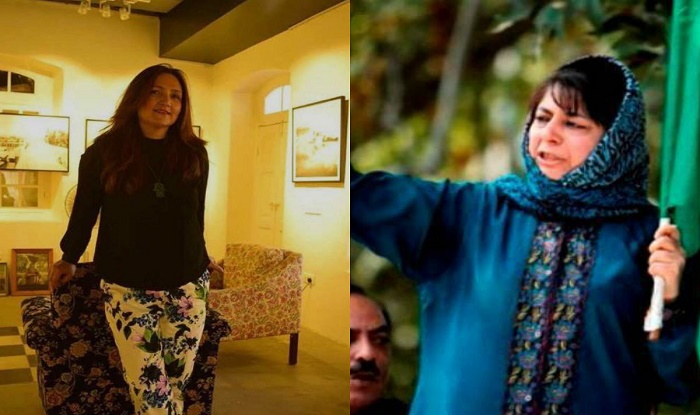
हसीब द्रबु की पत्नी रूही नाज़की टाटा में एक्स्कूटिव के पद पर काम कर चुकी हैं। हाल ही में वे झेलम के किनारे पर 'चाय जय' शुरू करने श्रीनगर में लौटीं। कश्मीरी उग्रवादी बुरहान वानी की हत्या के बाद समूचे कश्मीर में जन-उभार पर सरकारी के रुख को उन्होंने अनैतिक, त्रासद और गलत बताया। उनके पति हसीब द्रबु चूंकि पीडीपी और भाजपा सरकार की मुखिया महबूबा मुफ्ती के मंत्रिमंडल में वित्त मंत्री हैं, इसलिए उनकी सशक्त बातों को फेसबुक पर ज्यादा तवज्जो मिली।


इस साल की शुरुआत में उस चाय-हाउस का उद्घाटन मुख्यमंत्री महबूबा मुफ्ती ने किया था। हालांकि रूही नाज़की एक व्यवसाय करती हैं, लेकिन जनता से जुड़े मुद्दों पर अपनी राय जाहिर करने के लिए अपनी निजी क्षमता के दायरे में सोशल मीडिया का इस्तेमाल कर रही हैं। उनके फेसबुक पोस्ट ने इस बात का एक सशक्त चित्र खींचा कि कश्मीर में सरकार की प्रतिक्रिया के खिलाफ असंतोष की तीव्रता और निराशा कितने गहरे पैमाने पर फैली हुई है। भारतीय सेना की ओर से किए गए पैलेट गोलीबारी के शिकार होकर सौ से ज्यादा कश्मीरी युवकों और युवतियों की आंखें जिंदगी भर के लिए पूरी तरह से या करीब-करीब चली गईं। रूही नाज़की पीडीपी के वरिष्ठ विचारक और शिक्षा मंत्री नईम अख्तर, राजस्व मंत्री बशारत बुखारी और कश्मीर घाटी में मौजूदा पुलिस का नेतृत्व करने वाले पुलिस महानिदेशक सैयद जावेद मुजतबा गिलानी की रिश्ते में बहन भी हैं।

नाजकी लिखती हैं- “उन्हें हर हाल में रुकने की जरूरत है, ताकि हम यह मान सकें कि यह जरूरी नहीं है कि हरेक चुनी हुई सरकार सत्ता में आते ही गैरजिम्मेदार और केवल एक पत्थर के खंभे की तरह हो जाए! कश्मीर में हर सफल सरकार ने अपने पहले की सत्ता से अलग तरह से नहीं सोचा-समझा। हमारे नेताओं को सभी चीजों को भयानक, अदृश्य और बेआवाज शक्ल में तब्दील करने की जरूरत नहीं है।”

“मुमकिन है कि है कि उनका पीछे हटने से नाइंसाफी फिलहाल नहीं रुके। लेकिन यही सब कुछ नहीं है। उनके लिए अपने विरोध को दर्ज करना ज्यादा मायने रखता है। हमेशा की तरह अपराध में साझीदार नहीं होने के लिए… खामोशी के साथ इंतजार और चुपचाप देखने के रिवायत को तोड़ने के लिए… अपनी अंतरात्मा की आवाज को बनाए रखने के लिए… अगर इंसाफ नहीं तो सच के साथ के लिए…!” नाज़की ने सरकार पर यह कहते हुए सवाल उठाया कि “हमलोग हर वक्त के बहानों से तंग आ चुके हैं। यह अनैतिक है, त्रासद और गलत है। पिछले दिनों कश्मीर में जो हुआ वह भयानक तौर पर गलत है। बच्चों तक का बर्बर कत्ल, विरोध प्रदर्शन करने वालों की आंखों की रोशनी आपराधिक तौर पर हमेशा के लिए छीन लेना और एक समूची आबादी को बेशर्म तरीके से घुटने के लिए छोड़ देना..! अगर यह पिछले दो दशक या इससे ज्यादा से हो रहा है, तब भी यह गलत ही है। कश्मीर को जलने से बचाने के लिए कई एजेंसियां काम कर रही हैं, तब भी यह गलत है। यह गलत है कि कोई हमारे सामने तमाम बहाने परोस रहा है।”

“और सबसे बुनियादी रूप में, सबसे शर्मनाक और घातक तरीके से गलत है। यह कश्मीर के बच्चों के साथ हुआ, जो हमारे देश के उन सुरक्षा बलों के हाथों गलियों में मारे गए, जिसने उनके युवा शरीर में पैलेट डाले। यह एक लोकतांत्रिक देश में हुआ कि एक समूची आबादी को बिना किसी बुनियादी जरूरतों, बिना फोन, अखबारों के कई दिनों तक के लिए बंधक बना लिया गया। और यह एक बार फिर एक चुनी हुई लोकप्रिय सरकार की आंखों के सामने हो रहा है।”

सरकार की प्रतिक्रिया को अस्वीकार्य बताते हुए नाज़की इसे फिर से दुरुस्त करने की जरूरत पर जोर देती हैं- “सत्ता को गलत कामों को दुरुस्त करने में लगाने या फिर पूरी तरह छोड़ देने की जरूरत है। हमें भावी पीढ़ियों के लिए विश्वास पर ध्यान देना चाहिए था, ताकि वे अब सच के चेहरे के तौर पर जाने जाएं। उनका सच, हमारा सच। वे यह कर सकते हैं। और उन्हें यह करना भी चाहिए..!”


The Post That Facebook Blocked

0

Posted Again by Nishrin Hussain, daughter of Ahsan Jafri, July 27, 2016:


An Indian Army officer who served in Kashmir writes his heart out:

I was trained to kill, and armed for it. My literature was bloody. 
As a preparation, I was not educated on the beauty the land was but on the contours of terror that prevailed within the landscape.
I would have loved to say — 'Yes, we are. We are all Kashmiris. We are all heaven dwellers.'
I would have wanted him to know–'We are here for you. We are your men.'
Geetu's DT (Dinesh Tiwari)
July 19 2016

I have been to Kashmir. No, not as a tourist.
I have lived there. I have worked there.

I was part of the heavy military instrument of the Indian State in the paradise, guarding it from the heaven dwellers themselves. And some mischievous neighbors too.

As a 21 year old, with the might of one of the biggest militaries in the world behind me and its command pinned on my shoulders, its determination manifested in the AK in my hand, I have roamed the towns and villages with authority which none of the Burhan Wanis or Bhatts or Wazirs or Bhans or Wattals or anybody else whose land it was, would have dared to.

Ironically, as a Citizen of Nepal, serving in the Indian Army, I was a bundle of contradictions myself.

When I led a group of armed men through a tense neighborhood, I could not help recall the state I was in myself as a teenager, back home in Nepal, angry and frustrated because of the curfew imposed in my hometown, from six in the evening to six in the morning every day for years.

When the Maoist insurgency was at its peak, I was a teenager. I have been frisked, violated, insulted; made to do pushups and squats just because I asked the police man at the check post to repeat himself when he instructed something and I did not properly hear.

There were regular visits to our houses– by police in uniform, by police without uniform, by a secret police who every one knew was a secret police; also from unknown people with weapons prominently hidden under wraps, meant to be seen and feared, demanding food, shelter, and money.

I was angry, very angry. I was angry at the then mysterious figure of Prachanda, whose only one picture in combat fatigues was public at that time. I was angry at the ideologue Dr Baburam Bhattarai — legendary nepal topper (Board First) and PhD from JNU — who was known to be the brain behind the movement.

I was angry at the people who marched in my town with weapons held high, after they blew away the local bank and the police station.

I was also angry at the policeman who frisked me, dragged me by my arm, threw my bag scattering away all my stuff on the floor and pinned me down to the ground and poked the back of my neck with a pointed object. It wasn't a stick. It was cold and heavy. I did not see it but a chill ran down my spine.

It blew up the anger. I was angry at the government. At the state, which had ignored so many people for so many years that they were ready to fight, and kill and die.

Also, I was angry at myself. Without knowing the reason, without a target, the anger was building up and building pressure and engulfing me.

I was lucky. I had options to flee. I fled at the right time.

When I looked at a beautiful Kashmiri child, who approached me with an innocent admiration and a genuine query, 'You must be Kashmiri, are you Kashmiri?', I was fumbling for an answer.
I would have liked to tell him — 'Yes, I am.'

I would have loved to say — 'Yes, we are. We are all Kashmiris. We are all heaven dwellers.'
I would have wanted him to know–'We are here for you. We are your men.'

I would have wanted to give him a smile, a nudge, pinch his cheeks, and ruffle his hair a bit and say, 'Yes, I am a Kashmiri. And I love Kashmir. And you.'

But I did not. Because I did not. I did not love Kashmir. And I did not love that child.
I was not a Kashmiri. And I was not a tourist.

Kashmir, for me was a duty. An assignment, an ardous task that had to be fulfilled to my utmost capability and most importantly, survived.

I did not pack a camera, few romantic novels and Faiz and Gulzar's poetry books before stepping on to the heaven.
I was trained to kill, and armed for it. My literature was bloody.

As a preparation, I was not educated on the beauty the land was but on the contours of terror that prevailed within the landscape.

I did not go through accounts of romantic unions in the scenic backdrops, but brainstormed over hundreds of case studies of bloody and fatal encounters in the terrain.

For me Kashmir was not to be appreciated, but assessed, analysed and acted upon, and survived.
For me the innocent child was not that innocent.

The images of children carrying messages, supplies and even weapons, read in the extensive case studies, immediately cropped up in my mind.

Even before noticing his sparkling beautiful blue eyes, pink apple-like cheeks, and loveliest smile,
I had to scan through his whole body to know what was hidden.

Images of children blowing themselves away in front of security forces flashed before me even before I could comprehend the emotions in his voice.

Even before I could think of extending my hand to ruffle his hair, the grip on the AK tightened automatically and my trigger finger was alert.

No, my friend, I am not a Kashmiri. I could not be one. I was not expected to be one.
Therefore, I was not educated to be one. I was not trained to be one.

And I do not love you and your Kashmir. I could not. I was not expected to. I was not educated to. I was not trained to.

I was fumbling for an answer. I did not reply.
The child's mother came running, lifted him up and dragged him away hurriedly, slouching a bit, without even looking at me.

Today, he must be Burhan's age. And we don't love him still. And that is one of the reasons why Kashmir burns.

Meanwhile Dibyesh Anand on Facebook has also stated that other pro Kashmiri Voices and Videos are also being blocked:
Dibyesh Anand on July 27, 2016 On Facebook censorship of pro Kashmir voices (AJE)
 
While FB claims it is only blocking support of terrorism and accepts "error" in some cases, in the two sentences I had, I made it clear it is censorship. 
Some of the things I had said in the pre-recorded interview that was left out included:

1. If FB has to censor profiles and posts supporting terrorism, it should start with banning pages of military and in this context, profiles of all those Indians who are supporting violence and terror of their armed forces. 
2. FB is failing in its vision of providing alternative space and hence in this case is complicit with state atrocities against Kashmiris 
3. FB refuses to delete/block profiles that have sent death threats, threat of rape, etc but found perfectly reasonable and sensible posts on Kashmir objectionable.
4. If FB takes side this blatantly, it should expect us to not accept it with resignation.