‘You know these faces. Does that make the tragedies more important?’
Facebook/Never Forget Pakistan
What happens when the tragedy of other people suddenly takes on the faces of people you know?
A human rights group has done exactly that: it has superimposed pellet injuries which are currently being inflicted on Kashmiri people on the faces of popular Indian actors, famous people including Facebook founder Mark Zuckerberg and even Prime Minister Narendra Modi. The series of images titled ‘India Can’t See’ created by Never Forget Pakistan were uploaded on Facebook on Monday. Even as the images go viral, shocking people into looking at the pellet injuries differently, the CRPF has stated that while it sympathises with the people injured, it claimed it had no other choice.
“We feel very sorry for them as youngsters have to bear injuries due to the firing of pellet guns. We ourselves are trying to use it in bare minimum so that there are less injuries. But we use them under the extreme situation when crowd control fails by other means,” CRPF DG K Durga Prasad said on Monday.
The Indian Express had reported that half of the 317 people who had sustained pellet injuries had been hit in the eye.
The ‘India Can’t See’ campaign has gone beyond just shock value. The image of each famous personality on which pellet injuries are superimposed is accompanied by letters and the names of real victims.
Would we still be silent if it were them, the campaign asks. “Why do we need to glamourize a tragedy in order for people to pay attention. Have we all become that numb?”
What makes pellet guns so lethal? These small metal balls, which may or may not be covered by rubber, are shot at a close range. According to a report by Aviral Virk in The Quint, reports suggest that the CRPF has been using bare metal pellets and from a close range, causing more permanent damage than crowd control.
Pellet guns are also supposed to be fired below the knee. However, 92 Kashmiris have undergone eye surgeries in just one of Srinagar’s hospitals, indicating that the below-the-knee rule is not being followed.
A number of pictures and stories of Kashmiri youth and children as young as four being hit by pellet guns have been circulating on the social media.
Home Minister Rajnath Singh has said that the government would look for replacement to the pellet guns.
It has happened to me, and it can happen to anyone.
In plain sight of my unsuspecting family, I was radicalised during my teenage years. It did not matter that I lived a privileged life — not all terrorists fit the stereotype of poor, illiterate people who have nothing to lose.
The events changed my life, and would have ended it were it not for divine intervention. What I realised was that anyone can be systemically brainwashed to the point of committing violence.
How did it happen? How does someone growing up with a silver spoon connect with an ideology of anger and hate?
13-year-old me in 1997-98, during a visit to my house (under construction at the time) in Lahore.
Where it all begins In the late 1990s, my family moved back to Lahore from Saudi Arabia. I was enrolled at an elite boarding school, where I would meet our 9th grade Islamic Studies teacher, a stocky man with a flowing orange beard, always dressed in a spotless white shalwar kameez and a black waistcoat.
He claimed to have fought against the Soviets in the 80s. He regaled us with stories from his time as a Mujahideen fighter in Afghanistan. His lectures had little to do with our syllabus, and included colourful, emotional sermons on the devilry of Hindus, Christians and Jews, as well as Sufis, Shias, Ahmadis, and whoever he considered to be heretics, polytheists and kafirs.
For him, fighting the enemies of Islam was our divinely ordained duty. If we did not strike the heretics down wherever we found them, we were no better than men who ‘wear mehendi on their feet and bangles on our wrists’, that is, we were no better than women.
He termed this blanket call for violence in the name of honour as ‘jihad’.
For 13-year-old me, this message was inspiring. I was also insulted by his labels — I was not at all womanly, and I certainly did not own any bangles.
He instigated my sense of honour, and this was enough to spur me into action.
13-year-old me in 1997-98, during a visit to my house (under construction at the time) in Lahore.
It took only a month for me to go up to him and ask how I could further the cause of jihad. He suggested donating money. If I could spare 10 rupees for Allah, I could buy a bullet that would tear through a kafir’s chest in Kashmir. I started giving him whatever meagre sum I could, before spending the rest of my pocket money at the canteen. Rs50, Rs10, Rs5 — he had promised me I would receive a portion of the bullet’s 'sawab' .
Then, I wanted to learn more. My teacher offered me books if I was willing to pay for them. I could not read Urdu well, so I delved into the English translation of the Holy Quran and the Sahih Bukhari (a collection of hadith).
But balancing daily reading school work wasn’t enough for a teenager infatuated by the idea of martyrdom. Eventually, I found myself before my teacher, expressing my decision to go fight the infidels in Kashmir.
He did not respond immediately and put me off for another few weeks. I went to him several times until he agreed.
The plan was this: on the last day of school, I would leave for the training camp in AJK. I was to bring Rs700 and meet my teacher at his house. We would then go to the bus station at Minar-i-Pakistan, where I would be joined by a travelling partner.
Once I reached the camp, I was to write a letter to my parents informing them of my decision, and of my desire to embrace martyrdom in the way of jihad.
Divine intervention As fate would have it, my grandmother fell gravely ill the night before I was to leave. It was perhaps the last day before the Eid break, or the winter break, and I reached my hostel room to see my family already there, waiting for me.
My belongings were packed and ready and we immediately left for the hospital. My grandmother had contracted an incurable strain of Hepatitis C from a routine injection at the hospital, and survived the next few months in extreme pain. Greatly distracted by her illness, my parents decided I would commute to school from home for the rest of the school year.
I began living at home.
The tragedy wreaked havoc on my mother's emotional state, and it became a difficult time for my family. In such a state of sadness and loss, I could not leave them. In any case I had little time to myself on campus to consider meeting my teacher.
Somehow, someway, I kept putting off my trip to his house. By the time my summer vacations ended, I had shelved my plans of leaving for jihad completely.
Finding my way to jihad The spirit of what I knew then to be ‘jihad’ stayed with me and still shapes my life to this day.
There was an empowering sense of purity and certainty in my connection to the source of absolute truth. I felt mercy and forgiveness radiating from the Quran and the hadith, especially when I read them in a language I could understand. Most of all, I felt fulfilled: I was aware of the Creator in the smallest details and happenings of life.
But there was much that I now know to be gravely misguided. I was made to feel disdain against those who chose ‘inferior’ beliefs; I dehumanised those I wanted to fight, and I belittled the act of taking a life to the point where it seemed like nothing at all — like brushing away a troublesome insect.
When I realised that I had once walked a dangerous path, filled with both darkness and light, I tried to read and learn as much as I could to answer my questions and seek out the truth. I must report that every answer has led me to even more questions, and I have learned just enough to know that I know nothing.
I have come to see Islam as a vast ocean of knowledge, an expanse of philosophy, wisdom and truth, and in my sinful life so far I have just barely scratched the surface.
I cannot claim to be any kind of expert, but as a seeker and a student, it is evident to me that the extreme reduction of Islam to a list of do’s and dont’s is a great corruption of our religion. Perhaps it is the real cause behind how Muslims are now split into so many hostile divisions with mutual hatred and enmity.
In the years since my failed attempt at joining a training camp, I have felt the call of what I now believe is the real jihad.
I have worked in multiple careers; financial services, telecom, advertising, publishing, and even as a part-time debate coach at my alma mater. But each time, even after settling into a career, I have left the path in front of me to begin a new one. I have been restless, unable to find satisfaction or peace in worldly pursuits.
After December 16, 2014, my heart once against felt this long-forgotten call to jihad. This time the pull was irresistible. I could not go back to the way things were, and relieved myself from corporate responsibilities completely.
I decided instead to focus full-time on a new mission: addressing the problem of religious extremism in our society.
From the author's comic book series, Paasban — the Guardian.
I do this because I hold myself partly responsible for all the innocent men, women and children who have lost their lives in terrorist attacks.
I do this because I am indebted to those who have sacrificed themselves to protect us, and because I wish to be of service to the unnamed millions who continue to be misled into a false, hateful form of religion rather than the pure and everlasting truth of Islam.
For those of you who have made it this far in this very long post, I hope you have felt a calling as well. If you do feel the call, first learn, then do as you see fit to the best of your ability and position.
This is a dangerous time for those who dare to speak the truth, so if you can take action or speak out, you too must play your part. I do this because I cannot stand by while another 16-year-old is brainwashed into thinking he will go to heaven for killing a 12-year-old, is then labeled a ‘terrorist’ to be shot by his own kind, or blown up by a drone fired by a foreign country.
I do this because tomorrow, if God forbid one of your children or loved one is harmed, I don’t want to look in the mirror and realise that I could have done something, said something to stop it.
This article was first published in Dawn.comand is being re-published with permission
Watch the author speak about the socialisation of violent extremist beliefs within Muslim communities.
Mob of alleged Bajrang Dal men had beaten Dalits in Chikamagaluru with sticks and iron rods on July 10.
Image: MB Maramkal
An alleged assault by Bajrang Dal members on eight Dalit men suspected of stealing a cow, killing and eating it in a Karnataka village has led to two police complaints against both parties. The police first booked the Dalit men for displaying cruelty to animals, and registered a counter-complaint against the Bajrang Dal members a day later.
Though the incident took place on July 10, it has only surfaced now, against the backdrop of protests in other parts of the country against a brutal assault by cow protection vigilantes on Dalits found skinning a dead cow in Gujarat.
Police booked victims The residents of Kundur village – a small Dalit colony of about 150 residents in Chikamagaluru district of Karnataka – alleged that around 30-40 Bajrang Dal men had descended on their village and brutally beat up their fellow villagers with sticks and iron rods after tying them up.
The villagers said that the attackers did not allow the assault to be filmed by ensuring no villager came close to the house in which the men were being thrashed. The villagers said that the assailants also ensured that none of the victims sustained open injuries.
The house belonged to a 56-year-old disabled man, Palraja, who now has a fractured arm. While three of the eight men managed to flee the assault after escaping their bonds, the remaining Dalit men have several bruises all over their bodies.
Palaraja's home, where he and others were attacked. (Photo credit: MB Maramkal)
The police from the nearby Jayapura police station arrived at the spot on the day of the attack but arrested Palraja, Dhanu, Muttappa, Sandeep and Ramesh – all of whom had been attacked – on grounds of “cruelty towards animals” on the basis of a complaint filed by the Bajrang Dal activists. They were subsequently released on bail.
The following day, the Dalit men filed a counter-complaint after which seven of the alleged attackers were arrested under the Scheduled Castes and Scheduled Tribes (Prevention of Atrocities) Act.
‘Gift’ of cattle? According to Palraja, an estate owner by the name of Nagappa Gowda had caught an old cow grazing on his crops and handed it over to the Dalit men after no one came forward to claim it.
Villagers said that this was not the first time that Dalits have slaughtered and consumed cattle handed over to them by owners of the region’s coffee and pepper estates.
Guru Rao, a native of the nearby Koppa village, said that in the absence of hattis (cattle sheds or areas to keep cattle in villages), cattle were left free to roam around and invariably entered the estates.
“They [cattle] trek for miles together and end up in the estates,” said Rao. “Owners of these estates watch for a week or two to see if the owner of the cow or buffalo comes to get them. When cattle owners fail to do so, estate owners hand over the animals either to butchers or Dalit youths.”
Police apathy Palraja said that the police initially “failed to take note of injuries sustained by us on our body parts”.
He added that the police only did so when their lawyer, who came to jail to get signatures on their bail petitions, questioned the police.
“Our lawyer questioned the police asking why they failed to take cognisance of the injuries sustained by us,” said Palraja. “He asked them to book a case against Bajrang Dal activists.”
Palraja added that it was only after the lawyer’s complaint that they were treated at the government hospital in Koppa where doctors found that Palraja had sustained a fracture on his left elbow.
K Ashok, state convenor of Komu Souardha Vedike (Communal Amity Forum) blamed the growing influence of the Bajrang Dal in the region for the attack.
Ashok said that the Bajrang Dal had turned its ire upon Dalits after indulging in violence on churches and mosques in the past, as well as trying to impose their own code of conduct on women and youth in the area.
“Who are these people to question Dalits’ food culture?” asked Ashok. “Dalits in the country have historically consumed beef.”
Ashok blamed police inaction for the attack on Dalits at Kundur village.
Cattle thefts to blame? Santosh Babu, the Chikamagaluru superintendent of police, defended his team. “The police have acted impartially,” he said. “It booked a case and arrested the Bajrang Dal activists on the basis of complaint filed by Palraja.”
Babu added that the tension over cattle in the area would end once organised cattle smugglers were stopped.
“My suggestion to the government is that it should repeal the 1964 cow slaughtering Act [Prevention of Cow Slaughter and Cattle Preservation Act] to end slaughtering of cows surreptitiously by anti-social elements,” said Babu.
According to this law, only infirm and aged animals can be slaughtered after a doctor's certification.
Babu added that the soaring price of beef had given thieves an incentive to steal cattle and smuggle them to slaughterhouses in other areas.
Cattle thieving was a matter of concern, admitted local Congress leader HM Satish. He added that every month, 10-15 cases of stolen cows were reported in and around the neighbouring villages of Kopa and Balehonnur Hobli.
Police records show that in June, 10 cases of stolen cows were reported in the Kopa taluk of which Kundur village is a part.
Local resident Guru Rao said that cow thieves usually hailed from neighbouring districts like Udupi as well as Dakshina Kannada, which borders Kerala – where there is no restriction on the slaughter of cattle and consumption of beef.
Babu said that he had visited Kundur village and instructed the local police to keep a vigil on anti-social elements in an effort to assure Dalits of their safety.
But Dalit activists do not think that’s enough. The Komu Souardha Vedike has planned a torchlight procession on July 28 to highlight alleged police lapses and what they call the “increased goondaism and moral policing by the Bajrang Dal.”
No minister or senior official from the Social Welfare Department of Karnataka has visited this Dalit hamlet so far. Home minister G Parmeshwara, a Dalit, has not spoken on the issue either.
The allegedly fake Maoists encounter in Kandhamal has brought the communal violence hit district into focus, once again. Reportedly, the Special Operation Group (SOG) and Odisha Police gunned down six villagers that included three women and 15 month toddler while six other survived the gun injuries on July 8, 2016. The villagers were returning to their villages after collecting their wages for work under the Mahatma Gandhi National Rural Employment Guarantee Schemes (MGNREGS) from Balliguda town in overloaded auto-rickshaw covering 20 kilometres.
With no fair weather road to the village, the auto-rickshaw got stuck in the mud as there was heavy downpour then. The six deaths of three women and a child showed that women were already seated in the auto-rickshaw while the men were pushing the auto out of the rain soaked mud when the security forces started the indiscriminate firing that killed.
Odisha Police officials have, in turn, claimed that they had specific intelligence inputs of Maoists presence in the district. The police further claimed that since it was pitch dark and there was a heavy downpour, they did not have time to verify whether they are Maoists or not, almost conceding that those who were killed, were not Maoists. The security forces appeared to have functioned with certainty, dead sure of Maoists passing by and hence, the ambush. Under ‘normal’ circumstances, security forces would have celebrated such a trophy catch/killing with first, a parade of those caught; but this encounter took place close to the village where the victims’ hail from; this alerted nearby villagers to rush to the spot in response to the sounds of gun-shots. The six injured have survived to tell their stories. While anti-Maoist operations usually take place at night, and this time the regular game plan to portray innocent villagers into ‘dreaded Maoist’ could not succeed as the post mortem report too, has stated that the bullets were fired from a three to four meters distance, all from the same direction.
These deaths of Adivasi and Dalit villagers have put the Naveen Patnaik government in Odisha on a back foot even as a reasonable compensation package was announced: 5 lakh rupees each for the families of the dead was announced, a home at government expense and a government job for one family member of those who’s life was snatched away.
Was this fake encounter simply an accident? Ten villagers were killed in the Kandhamal district alone over the last four years and in each case, the police and administration appear to have succeeded in portraying them as Maoists sympathisers. Last year, on July 15, 2015 too, a Christian couple, who went on to a hill top to make a phone call to access network links and speak to their son working in Kerala as a daily wage earner were gunned down in a similarly cold blooded fashion by special operation groups(SOG). Initially, the SOG buried the bodies hurriedly; later apprehending they would be caught, the bodies were exhumed and taken for post mortem a distance away, bypassing four police stations and hospitals. The reports revealed that this was not simply a case of shooting down the couple: the woman had been gang raped and had severe and several injuries on her private parts.
This is the first time that both political parties and local media, that initially echoed the narrative of victims dying in crossfire, later actually factored in the the version of the villagers. In earlier cases –possibly because all the victims were Christians — there was not such a hue and cry as there has been in the latest case. Tragically, this means, that almost any action or absence thereof, by the state within Kandhamal district, invariably, needs to be seen from the prism of religious identity. In the latest killing, the national president of the Bharatiya Janata Party (BJP) made an appeal for the chief of the chairman of the National Commission for Scheduled Castes/Tribes leading and investigation. It also became an opportunity for the BJP to target the Special Operation Group of the Odisha Poolice.
Even the claim, made repeatedly, and again with this fake encounter, by the police that they have had specific intelligence inputs about Maoist movements, is not quite believable. Each time there has been sporadic violence since the 1970s, the administration comes up with this same lame excuse. Although a steady stream of attacks on the Christians had started since 1960s, the state government rejected any consistent pattern behind this and always claimed that these incidents were the result of intelligence failures. Public discourse seemed to accept this theory put out by the state. Similarly, this latest killing, too, has been seen a failure by the intelligence agencies.
This appears to be part of a strategy to create a sense of terror and keep the Dalit and Adivasi communities, as well as minorities under perpetual fear and terror. This is a way to keep them subjugated and under a sense of dominance.. Even during the communal violence that rocked the district in 2007(December)and 2008 (August), the state government had claimed that it was due to a failure of intelligence.
It is with regret that I say this: I do believe that both the intelligence agencies as well as the state administration have succumbed to the discourse unleashed by majoritarian casteist and communal forces; politicians backed by the petty traders lobby have been successful in feeding rumours as a part of well calculated design: rumours of ‘Maoist presence’ almost everywhere are deliberately spread to ensure an atmosphere that is conducive to for locale extortionists and businesses to continue, unchallenged. Here, tea stall owners and petty Rashtriya Swayamsevak Sangh (RSS) workers work as stringers and journalists of newspapers as well as informers for the intelligence agencies. What the intelligence officials dish out are the theories/stories peddled by these pressure groups; this is not unpartisan information gathered by professionals with an open mind committed to Constitutional values. This manner of functioning suits all: locally the petty traders and vested interests with their nexus and at the top the state government that can claim credit for anti-Maoist acts. Apart from all these developments, a recent state government survey to ascertain whether or not mining is undertaken in the Kandhamal district, is indicator of what the state is actually interested in. In the struggle for control over jal, jangal, zameen, the resistance of locals could thereafter be crushed.
A recent conversation, with a senior police official, now retired, revealed the power of these intelligence agencies. Men and women of the church who are perceived to be active o local social issues are monitored and kept a tab on; if found inconvenient they could be transferred simply by some such intelligence inputs being made.
In 2008, the Kandhamal violence had claimed around 100 lives, destroyed 6500 households and 350 churches and other charitable institutions. It appeared to be clearly part of a wider design that included petty traders, communal and caste forces in nexus with the state administration to eliminate Adivasi, Dalits and Minorities, who constitute 80% of the population in the district and 45% of the population in the state of Odisha.
There is every chance that the report of the Mahapatra Inquiry Commission, constituted in the aftermath of Kandhamal violence dubbed the 2007-2008 Kandhamals violence as ‘ethnic violence’ even before the testimonies of the survivors were recorded or their affidavits collected. This appears to be part of the obfuscation by the state administration, more interested in dividing communities even if this escalates conflict. Even the state government appointed Special Investigation Team (SIT) is unlikely to ensure truth telling or justice: the high ranking officers are likely to rubber stamp what the local police say. Every new mechanism that is introduced –Commissions of Inquiry, SITs etc end up becoming cover ups that protect structural offenders and re-inforce the violence that takes place against Adivasis, Dalits and minorities.
It is high time that the state administration recognises chronic intelligence failures for what they are and gets to the bottom of –through unbiased investigation — the larger game plan behind this pervasive nexus so that Kandhamal type of encounters are not repeated, in perpetuity. We remain in hope.
Housing is a necessity for a decent life. What would basic housing for all mean? Maybe a small house in a village, a second hand motorbike, some farm equipment. Electricity, a toilet with running water. A radio. Maybe it would mean a small apartment in a town or a city, a TV. But three out of four Indians do not own what is in this simple list. Don't we have enough money in India to make this list happen? Or is the money only there for some Indians, always in the pockets of a few?Following two documents are the sources of data for the video:
Cow vigilantism which has received tremendous boost since the ascendance of BJP at the centre got its first fitting reply in Gujarat recently. The way in which a self-proclaimed Gau Rakshak Dal – owing allegiance to Shiv Sena – attacked a group of Dalits in Una (11 th July 2016) who were skinning a dead cow, publicly flogged them, led them to the police station charging them with cow slaughter and even circulated a video of the whole incident on social media to spread further terror, has caused tremendous uproar.
Thousands and thousands of Dalits have come out on streets in different parts of the state, gheraoed government offices, damaged government property, enforced state-wide bandh and tried to bring the government to its knees, demanding severe punishment to the guilty and strict action against the police and government officials who failed to act upon their complaint when they were being publicly brutalised.
The wave of protests has still not ebbed. The anger still simmers. Protest rallies still continue.
There have been thirty incidents of suicide attempts by Dalit youth protesting the Una incident within a span of just one week. People across political spectrum are appealing to the angry youth not to resort to this extreme step and continue with peaceful struggle. Undoubtedly, Una incident and the consequent dalit assertion is proving to be a great turning point in the history of the dalit movement as Dalits have ultimately realised that politics of Hindutva is no friend of dalits and in fact, it is geared towards strengthening and further consolidating the purity and pollution based caste system.The growing disenchantment of Dalits with the politics of Hindutva was very much evident when their protests reached Narendra Modi’s home town of Vadnagar itself where thousands of dalits participated in a militant demonstration blaming the Prime Minister himself and BJP for the brutal thrashing of Dalits. Videos of the protest showed many Dalit people shouting, “Hai re Modi…hai-hai re Modi,” – modification of a slogan used by women during Hindu funeral processions.The outrage has rekindled memories of the militant assertion in early eighties led by the earlier generation of young dalits wherein they had fought to defend policy of reservation and also dared to take on the Hindutva formations head-on.
It has also been a great learning experience for ordinary dalits in the state who comprise around eight per cent of the population and who were largely co-opted by the Hindutva formations in their project of hate and exclusion. One unique form of struggle adopted by the protesters this time has rattled the ruling elite tremendously and has the potential of nationwide resonance. It involved throwing of carcasses of dead cows at government offices, outside the houses of prominent politicians, removal of which became a strenuous affair even for the establishment. A large section among them have even boycotted work of collecting dead bovines and have even declared that henceforth they are ready to die of hunger but would not take up the occupation again. In fact, by this simple act Dalits have rather issued a warning to the Manuvadi/Brahminical forces that the day they resolve to leave all those ‘dirty’ professions. for which they are stigmatised, a catastrophe like situation awaits them. One of the activists who ‘pioneered’ this unique form told a correspondent that they have stopped doing it to teach them a lesson
“The gau rakshaks beat us because they think the cow is their mother. Well, then, they should take care of her and pick up her carcass when she dies.”
Fact finding reports which have appeared in sections of the media tell how the police did not stop the perpetrators on their way and also took hours to lodge a simple FIR and arrest the criminals. There are even unconfirmed reports that local police had even tipped the Gau Rakshak Dal about the skinning of the dead cow. The complicity and connivance of the local police is evident also in the fact that despite enough proof available with it in the form of the video of the incident about involvement of more than thirty people in the thrashing incident, it has kept number of arrests limited at eight only and is trying to portray it as an one off incident.
The unfolding dalit outrage which found the state government in deep slumber has brought to the fore many other similar recent incidents where Dalits had come under attack at the hands of Gau Rakshaks and the silence maintained by the police which had even refused to entertain complaints lodged by the victims. It has also given a vent to pent up anger of the dalits against daily humiliations and discrimination faced by them, widespread existence of exclusion and untouchability in social life, denial of basic human rights and manifold spurt in atrocities in the state in recent times and failure of the powers that be to take proactive measures to curb the growing menace.
The criminal acts by the Gau Rakshaks and the impunity with which they are ready to take law into their hands which has received nationwide attention has also been an occasion for the senior members of the bureaucracy to speak out about the menace they have become all over the state. Chief Secretary of the state G R Gloria is reported to have told a national daily that
‘These vigilantes are self-proclaimed gau rakshaks but in actual fact they are hooligans’. According to him there are as many as 200 cow vigilante groups in the Gujarat who have ‘become a law and order problem because of their aggression and the way they take law into their hands’ and government is going to take strong action against them. The Chief Secretary was even categorical in admitting that lower level police personnel are hand in glove with these vigilantes.
It is worth emphasising that not some time ago even the Punjab-Haryana high court while ordering CBI probe into the death of Mustain, a transporter at the hands of members of another ‘Gau Raksha Dal‘ in Kurukshetra, Haryana (March 2016) had underlined the growing criminalisation of the Cow Protectors who work with impunity. It said that so called cow vigilante groups constituted with the backing of political bosses and senior functionaries governing the state, including police,
“..[a]re bent upon circumventing law and fleecing poor persons ferrying their animals, be it for any personal domestic use or otherwise…Apparently even the senior functionaries of the police are hand-in-glove with such vigilante groups.
Dalit anger witnessed on the streets of Gujarat – variously described as Dalit rebellion by a section of the commentators – has had spiralling effect in other parts of the country as well, and has also helped galvanise the entire parliamentary opposition camp which has even demanded that there should be immediate ban on all such Gau Rakshak Dals and all such miscreants who operate under its name and engage in mayhem. Members of parliament on the floor of the house have denounced all these vigilante groups who are targeting Muslims as well as Dalits, brutalising them in very many ways and on occasions lynching them and explained how the policies and programmes of the powers that be has made a conducive atmosphere for their proliferation and demanded ban on them.
The manner in which cow is being moved at the centre stage of politics and where mere a rumour that it is being slaughtered somewhere gives miscreants a licence to take law into their own hands with due connivance of the police and administration, is being compared with neighbouring Pakistan where the ‘crime of blasphemy’ serves similar purpose. Pakistan has lost many precious lives and many more are rotting in jail due to its refusal to check religious fanatics for whom the blasphemy laws have become a tool to intimidate innocents. Concerns are being raised whether India would similarly go ‘Pakistan’ way – unable to stop erosion of secular principles in polity and facilitating further legitimacy to faith in social-political lives.
The open letter by Lalu Prasad Yadav to PM Modi in the aftermath of the Una incident captures the prevalent mood in the country wherein he had described how actions by cow vigilante groups – which are receiving state patronage – has created an ambience of terror and intimidation among farmers, tribals, dalits and all those people who are engaged in cattle trading. In his open letter he has directly blamed ‘RSS as well as PM Modi’ being responsible for this state of affairs.
While the BJP and RSS having lost battle of perceptions are busy counting losses in the aftermath of the Una incident, and assessing its electoral fallout, the misogynistic remarks by a senior leader of the BJP targeting Ms Mayawati, leader of BSP and who has been Chief Minister of UP, has added further fuel to the fire. It is a different matter that all their ‘regrets’ about these remarks expressed on the floor of the house have proved to be an eyewash and at ground level they are trying to be on the offensive again utilising similar condemnable remarks allegedly made by fellow politican of the BSP.
Coming close on the heels of demolition of Ambedkar Bhavan, in neighbouring Maharashtra by a BJP led government – a decision which it regrets now because of spurt in voices of opposition to this act – and the nationwide mass movement which emerged after the ‘institutional murder’ of scholar Rohith Vemula of Hyderabad Central University, and the alleged role of few central ministers in letting it happen and a series of anti-Dalit actions and controversial statements by its top leaders targeting the community, or their attempts to discontinue the policy of affirmative action for Dalits and Adivasis, the unfolding Dalit anger has also seriously dented their well-planned strategy of consolidating their base among the Dalits at an all India level. Undoubtedly Dalit outrage has not only put the saffron dispensation at the state as well as centre on the defensive and has put paid to their well calibrated strategy of appropriating Ambedkar by projecting him as a ‘Hindu Social Reformer’.
Whatever might their claims vis-a-vis Hindu Unity, this incident – which was no exception and was part of a unfolding pattern of denying basic human rights to Dalits, intimidating them and using them as stormtroppers for their anti-minority actions – has laid bare the essentially Manuvadi/Brahminical core of their ideology based on exclusion and hate. In fact their worldview is basically anti-thetical to any vision of dalit empowerment/emancipation or for that matter inclusive development. And it has further demonstrated that their feverish attempts notwithstanding to aggravate tensions between dalits and muslims at grassroot level on flimsy pretext, in their worldview of Hindu Rashtra both of them are equally dispensable. The unprecedented fury shown by the Dalit masses in a state, which has been ruled by the Hindutva forces for more than 15 years, and was projected by them as a unique ‘Gujarat Model’ of development prior to the elections to the Parliament in 2014, has shaken them to the core and has left them scrambling for solutions. They are slowly realising that the assertion of the Dalit masses has the potential of disrupting all their political calculations in the coming elections to different state assemblies – Punjab, UP and Gujarat itself – which are scheduled to be held in 2017.
Another ignoble aspect of the present phase of ‘Dalit Uprising’ is the role of the media which (barring exceptions) seems to have become a handmaiden of Hindutvas exclusion centred politics. A cursory perusal of the coverage of the corporate funded and controlled media demonstrate that it has refused to report Dalit mobilisations on massive scale which have consistently challenged and questioned Hindutva politics. A representative example of their Varna dominated, anti-dalit worldview can be had from the way they completely under reported the massive gathering in Mumbai recently where more than 1.5 lakh people had gathered to protest the demolition of Ambedkar Bhavan by the BJP-Shiv Sena regime. Forget being watchdog of democracy as it is being projected elsewhere, forget its role of being objective in reporting events and analysis, it seems much happy in its metamorphosis of being spokesperson of the powers that be- a situation much worse than what existed during emergency when ‘it was asked to bend and decided to crawl’
It need be underlined here that the depredations of the cow vigilante groups are not limited to Dalits alone, in fact, Muslims have been their chief targets – as a cursory perusal of events since last two years makes it obvious. The latest in the series happened to be from Gurgaon where two Muslim transporters were attacked by a Gau Rakshak group and were fed with cow dung laced with urine since they were found to be carrying cattles. A video of the said incident had also gone viral. A leader of the group even claimed on camera that they have done it to ‘purify’ them of their sins. And since Haryana happens to be a BJP ruled state – which is also contemplating forming ‘Cow Protection Force’ much on the lines of Home Guards and has also appointed a special officer of the IAS rank to curb ‘cow smuggling’ there was no action against the perpetrators.
It was only last year that Palwal in Haryana witnessed communal riot like situation. The immediate trigger for the situation was the cow vigilantes themselves who had attacked a truck carrying meat and had spread a rumour that it was carrying beef. Police reached there within no time and instead of taking action against the perpetrators charged the driver and owner of the truck with criminal conspiracy and sent them to jail. The very next day government announced that all cases filed earlier against ‘cow protectors’ would be withdrawn immediately making it obvious that how it would have no qualms if similar actions occur in future.
End of December last year, village Banokhedi, district Karnal ( Haryana) witnessed indiscriminate firing by a cow vigilante group on a canter (mini-truck) which was carrying people – most of them belonging to minority community – who were travelling from Punjab to UP for the coming Panchayat elections. (Refer : Lok Lahar, 14 Dec 2015) It led to death of one youth and serious injuries to several others. Cow vigilantes attacked the truck in middle of the night and what was more worrisome that there were few policemen also with them. Later five people were arrested among them there were two policemen as well.
The menace of cow vigilante groups is not limited to one particular area or state, it has spread all over the country. Few months back cow vigilantes had lynched two youths belonging to minority community ( one of them a minor) near Latehar, Jharkhand and left them hanging on tree, as they were also found carrying cattles and the cow protectors wanted to ‘teach them a lesson’. Sarahan village, District Nahan ( Himachal Pradesh) was witness to an attack on a group of minority youth by cow vigilantes (Oct 2015) which led to death of one them and four others were seriously wounded. Cow vigilantes alleged that the youth were engaged in cow smuggling. Last year similar group attacked a Kashmir bound truck with petrol bomb which led to the death of a young man Zahid (19 years) because of serious burn injuries. It was only few months back that Mehbooba Mufti, Chief Minister of Jammu and Kashmir wrote to Chief Minister of Punjab how people from Kashmir who are meat exporters and traders are being regularly brutalised in the state by self-proclaimed Gau Bhakts. .
It is futile to imagine that BJP – an affiliate of the Rashtriya Swayamsevak Sangh -would rein in Cow Vigilantes, just because Dalits are feeling outraged over some incidents involving them or sections of judiciary or even executive are appalled at their transgressing of Constitutional values and principles or the peace and justice loving people of the country are reminding the Pracharak turned PM that he had declared in the august house of the Parliament that for him ‘Constitution is the most sacred book now.
We should never forget that the Sangh Parivar, operates through its vast network of what are known as anushangik ( affiliated) organisations – with a strict division of labour between them – to further the agenda of Hindu Rashtra. In fact, it would leave no stone unturned to deflect attention of the people from its essentially Varna mindset which refuses to even acknowledge that assertion of Dalits has basis in the age old hierarchy based system. They would be ready to go to any extent to silence all such voices which are questioning them, challenging them and are in a position to put roadblocks on their ‘path to victory’. An inkling of what is in store for all such voices can be had from the unprovoked attack on a public meeting protesting Dalit atrocities in Gujarat organised by a Dalit group in the heart of the capital itself by an organisation which is alleged to be close to the Hindutva Brigade.
Ongoing attacks on Dalits in the ‘model state of Gujarat’ or an overall spurt in atrocities against Dalits presents before all those Dalit leaders a pertinent question who had joined the Modi bandwagon before his ascent to power and in a way helped sanitise his controversial role in the Gujarat carnage (2002 )when he happened to be Chief Minister. Whether the likes of Athavales, Udit Rajs and Paswans would still cling to aprons of power, further facilitating whitewashing of this essentially anti-Dalit and anti-oppressed regime or would listen to the clarion call given by the Dalits on the streets of Gujarat that without fighting RSS and Modi led BJP, dalit emancipation cannot even be imagined.
The unfolding Dalit outrage also poses important question before the Dalit movement itself. Whether anger witnessed would just peter away or would be able to reinvigorate the radical agenda of Ambedkarite politics centering on caste annihilation and fighting capitalism and would present a systemic challenge before the Manuvadi-Hindutva forces forging alliances with like-minded forces. Parties like BSP have lot many things to answer on this issue.
No doubt, unfolding cow vigilantism and continued silence maintained by the net-savvy PM over attacks on Dalits and minorities has further exposed the real agenda of this government. Analysts are predicting that the ruling dispensation will have to pay heavily because of its essentially anti-Dalit worldview in coming elections to state assemblies. What is still unclear that how all such forces, formations who are opposed to the agenda of Hindutva and are keen to defend secularism in the country and further democracy to the grassroots level, are strategising so that the exclucivist agenda of Hindutva is delivered a crushing defeat not only at the electoral level but at the social level also and what role a reinvigorated left is ready to play in the unfolding situation. It remains to be seen whether there would be parallel realignment of various social – political forces at the ground level comprehending the menace the very politics of Hindutva presents before the country.
The present moment in the country’s history is pregnant with tremendous possibilities and demands a creative, energetic and strategic intervention from the revolutionary left.
One is reminded of the historic slogan raised during anti-fascist struggles in 30s which declared that ‘Fasicsm Will Not Pass’. It was a time when a united front of communists, anarchists, socialists and republicans had come up and were fighting shoulder to shoulder which was also joined in by non-party people from town and country, because everyone had realized what a victory for fascism would mean to Spain.
Perhaps there is need to learn from all such experiences and forge broadest possible unity to confront its 21 st Century avatar in this part of Asia and declare from rooftops that ‘Communal Fascism Will Not Pass’
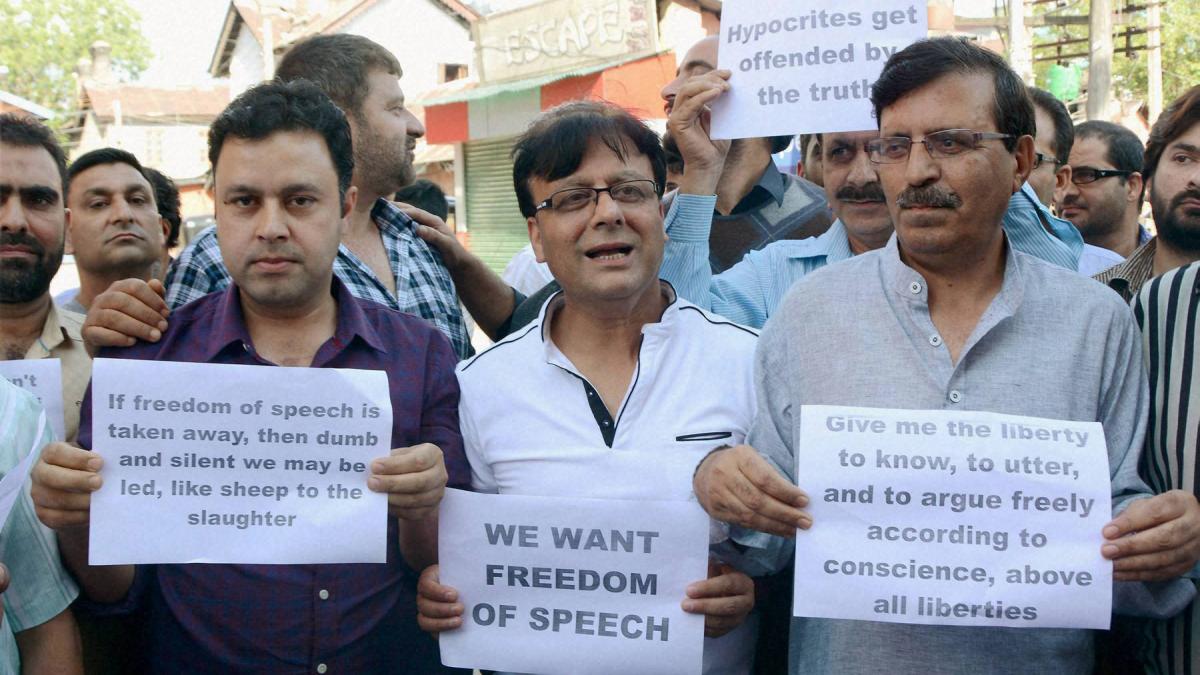
कश्मीर में मीडिया पहले से ही जंजीरों से बंधा हैं। राज्य में लगभग स्थायी कफ्र्यू के हालात में काम करने वाले मीडिया के लिए संचार के श्रोतों पर प्रतिबंध लगा कर और मुश्किल हालात बना दिए गए हैं। फिर मौजूदा दमन और प्रतिबंध अलग कैसे है? इसका मकसद क्या है?
Image: PTI
दरअसल यह दमन पुलिस की क्रूर ताकतों, कानूनों के खुल्लम-खुल्ला उल्लंघनों और नीति-नियमों और लोकतांत्रिक सिद्धांतों को दरकिनार कर राज्य को पूरी तरह काबू करने की सरकार की बढ़ती चाहत का नतीजा है।
प्रोपगंडा का शातिराना इस्तेमाल करें तो लोग जहन्नुम को भी जन्नत मानने लगेंगे और बेहद परेशान हाल जिंदगी भी जन्नत लगेगी। एडोल्फ हिटलर
हिटलर के नाजी शासन ने जर्मन जनता पर अपने दो औजारों के सहारे शासन किया था- प्रोपगंडा और सेंसरशिप। हर दिन हिटलर को महिमामंडित कर वह जनता पर अपनी पकड़ बनाए रखती थी। लोगों को अच्छी जिंदगी के ख्वाब दिखाए जाते थे लेकिन शासन यह भी पक्का कि ए रहता था कि नाजी शिविरों की जघन्य प्रताडऩाओं और नरसंहारों की बातें बाहर न आएं। लेकिन दुर्दांत यातनाओं, प्रताडऩाओं और हत्याओं की दिल दहला देने वाली कहानियां अंतत: बाहर आ ही गईं। कहीं कथाओं के रूप में,कहीं उपन्यासों कहीं डायरियों तो कहीं रिपोर्टों के रूप में।
इन कहानियों और तथ्यों को ढक-छिपा कर रखने का कोई तरीका नहीं हो सकता। आखिकार ये ब्योरे वक्त के साथ उभर ही आते हैं। ये बार-बार बयां होते हैं और सुने जाते हैं।
अगर यही सच है तो आखिरकार जम्मू-कश्मीर सरकार यहां के अखबारों को इतने निर्मम और बुरी तरीके से प्रतिबंधित करके क्या हासिल करना चाह रही थी।
किसी भी प्रतिबंध की जरूर तब पड़ती है,ृ जब कुछ छिपाना होता है। घाटी में 9 जुलाई से मोबाइल फोन और इंटरनेट कनेक्शन आंशिक तौर पर काट दिए गए थे। विरोध प्रदर्शनों से सबसे ज्यादा प्रभावित इलाकों में तो लैंडलाइन फोन भी काट दिए गए थे। कफ्र्यू लगे होने की वजह अखबार भी खुल कर नहीं बंट सके। इन हालातों की वजह से जनता से मीडिया और मीडिया से जनता तक पहुंचने वाली जानकारियां काफी कट-छंट कर पहुंच रही थी और रोक ली जा रही थीं।
जम्मू-कश्मीर में सरकार के इस कदम को देखते हुए कुछ अहम सवाल जरूर पूछे जाने चाहिए। भारतीय पत्रकारों के एक तबके और बुद्धिजीवियों की ओर से दिखाई गई असाधारण एकता की वजह से सरकार ने यह प्रतिबंध हटाया। लेकिन इस प्रतिबंध के पीछे किसी साजिश से इनकार नहीं किया जा सकता।
सरकार को डर है कि राज्य के मीडिया से जनता को जनता से मीडिया को मिल रही जानकारी अगर अखबारों में छपने लगेगी तो इससे हिंसा और भडक़ सकती है। अखबारों पर प्रतिबंध के बावजूद यह जानकारी डिजिटल तकनीक के जरिये एक छोटे तबके तो पहुंच ही रही हैं।
सरकार की एक और चिंता है । चूंकि छपे हुए शब्द की विश्वसनीयता ज्यादा है और वे दस्तावेजी सबूत के तौर पर ज्यादा दिन तक सुरक्षित रहते हैं इसलिए सरकार अखबारों पर बैन के लेकर ज्यादा दुराग्रही नजर आती है।
कश्मीर में अशांति के दौर में चौबीसों घंटे चलने वाले राष्ट्रीय चैनल प्रतिबंध से बाहर रखे गए। राष्ट्रीय प्रिंट मीडिया पर भी कोई प्रतिबंध नहीं था। सरकार ने अखबारों पर जो बैन लगाया या जिस तरह बैन लगाने की जरूरत समझी उससे कश्मीर के संदर्भ में क्षेत्रीय और राष्ट्रीय मीडिया के बीच की गहरी खाई उजागर हो गई। दरअसल कश्मीर को लेकर राष्ट्रीय मीडिया का रुख अति राष्ट्रवादी हो जाता है जबकि क्षेत्रीय मीडिया संघर्ष से पैदा संकट में आम कश्मीरी और जम्मू के लोगों की आवाज बनता है। दरअसल ये स्थानीय अखबार ही होते हैं जो राष्ट्रीय प्रेस की चु्प्पी या फिर अंध राष्ट्रवाद की वजह से पैदा खालीपन को भरते हैं। हाल के दिनों में कफ्र्यू की अड़चनों और संचार माध्यमों के दमन के बीच प्रामाणिक सूचनाओं को हासिल करने की मुश्किल में स्थानीय अखबार ही लोगों पर हो रहे बर्बर अत्याचार की खबरों के स्रोत बने हुए थे। स्थानीय अखबारों के जरिये ही कश्मीर में लोगों को मार दिए जाने की दिल दहलाने वाली खबरें आईं। इन्हीं अखबारों ने बताया कि सुरक्षा बलों की हिंसा की जद में आने वाले कैसे अस्पतालों में घिसट रहे हैं या फिर किस तरह पैलेट गनों ने लोगों को हमेशा के लिए अंधा बना दिया है। इन बंदूकों ने अब तक 130 लोगों को अंधा कर दिया और इनमें से ज्यादातर बच्चे और किशोर हैं। मुख्यधारा के राष्ट्रीय कहे जाने वाले अखबारों में ऐसी स्टोरी शायद ही दिखाई दे। कश्मीर के बारे में राज्य जो झूठ फैलाना चाहता है, उसकी राह में ये स्थानीय अखबार ही चुनौती बन कर खड़े हैं।
कश्मीर को एक तरफ तो अखबारों से महरूम रखा गया वहीं कॉमर्शियल टेलीविजन को पूरी छूट दी गई। दिल्ली से आने वाले उनके क्रू मेंबरों को सुरक्षा मुहैया कराई गई। इन टीवी चैनलों की ओर वही कहा गया जो सरकार को पसंद था।
कॉमर्शियल मीडिया और सरकार मिलकर किस तरह काम करते हैं, उसका एक तय पैटर्न है। स्थानीय मीडिया का गला घोंट कर सरकार जन प्रतिरोध के डर को बढ़ा-चढ़ा कर पेश करती है। और लोगों के दमन को छोटा कर दिखाना चाहती है। इस तरह वह अंध राष्ट्रवाद की हिस्ट्रिया पैदा करती है। अब तो कश्मीर के बारे में राष्ट्रीय मीडिया कहे जाने वाले अखबारों और टीवी चैनलों में सरकार के इस रुख को पुष्ट करते रिपोर्टों और खबरों का प्रसारण सामान्य मान लिया गया है।
स्थानीय मीडिया पर प्रतिबंध केंद्र से प्रेरित होकर लगाए गए होंगे लेकिन इस तथ्य से भी इनकार नहीं किया जा सकता है कि इसे पुलिस और प्रशासन में मौजूद उसके दलालों के जरिये लागू किया गया। राज्य सरकार भले ही इससे अनजान हो सकती है और वह ऐसा दिखा रही हो लेकिन इसके निष्प्रभावी रवैये और बिना कुछ सोचे-समझे कार्रवाई करने के फैसलों की अनदेखी नहीं की जा सकती। खासकर, इस रवैये की वजह के जो परिणाम निकले हैं, उन्हें देखते हुए तो बिल्कुल भी नहीं। असल में सरकार के कदम कश्मीर के हालात से जुड़े दास्तानों को जकड़ और काबू में रखने की कोशिश के नतीजे हैं। यह ब्योरों को बाहर आने से रोकने की कोशिश है। स्थानीय मामलों पर झूठ का मुल्लमा चढ़ा कर गढ़ी हुई कहानियों के जरिये यह सच को रोकना चाहती है। सरकार पेड एजेंट, जिहादी टेरर, हालात नियंत्रण में, दुश्मन पाकिस्तान जैसे जुमलों और सामान्य हालात बहाल होने और पर्यटन की खुशनुमा तस्वीर पेश कर असली हालातों पर परदा डाल रही है। कश्मीर के संघर्ष में सरकार की नैतिक हार का इससे बड़ा सबूत और क्या हो सकता है। गोलियां चलाने, बच्चों को अंधा करने, प्रताडऩा और क्रूरता की बदसूरत तस्वीरों को छिपाने के लिए ही झूठ के ये हथियार चलाए जा रहे हैं और प्रोपंगडा किया जा रहा है।
कश्मीर की दास्तानों को काबू मंे रखा गया है। 26 साल के अशांति के इतिहास में कई हथियारों जरिये मीडिया को चुप कराया जाता रहा है। नब्बे के दशक की शुरुआती में यह आतंकवादियों और सुरक्षा बलों की बंदूकों के बीच फंसा था। यहां पत्रकारों को काम करने से रोका गया। उन पर हमले हुए। उनकी हत्याएं हुईं। इन हालातों और कफ्र्यू के दौर के बावजूद अखबार लगातार प्रकाशित होते रहे। उन्होंने ज्यादा गहरी खबरें लिखीं और आत्महत्या करने की हद तक विस्तृत स्टोरी छापी। यहां तक कि दमन से बचने के लिए एडोटिरयल कंटेंट छापने से भी परहेज किया।
जब स्थानीय मीडिया ने आंदोलन विरोधी रुख और भारतीय राष्ट्रवादी विमर्श से खुद को अलग करना चाहा तो सरकार ने दमन का नया रास्ता निकाला। वह डीएवीपी विज्ञापनों को बंद कर अखबारों के वित्तीय प्रवाह को रोकने लगी। जबकि यही विज्ञापन जम्मू-कश्मीर के अखबारों की आय के प्रमुख ोत हैं।
2010 में केंद्रीय गृह मंत्रालय की ओर से एक पत्र मिलने के बाद डीएवीपी ने कश्मीर के कई अखबारों के विज्ञापन रोक दिए। बाद के दिनों में मनमाने ढंग से कुछ अखबारों के विज्ञापन जारी कर दिए गए । लेकिन श्रीनगर और जम्मू से निकलने वाले कश्मीर टाइम्स(इसमें मैं कार्यकारी संपादक हूं) को खास तौर पर निशान बनाया गया और इसके लिए डीएवीपी विज्ञापनों के दरवाजे बंद ही रखे गए। आश्चर्य की बात तो यह है कि 2010 की हत्याओं के बाद सरकार ने यह सुझाव दिया था कि श्रीनगर से राष्ट्रीय अखबार निकालने की जरूरत है क्योंकि स्थानीय अखबार विश्वसनीय नहीं हैं। 2010 में सरकार ने खबरों पर आधारित प्रोग्राम दिखाने के लिए श्रीनगर केबल टीवी चैनलों को यह कर बंद करा दिया था कि ये सही तरीके से रजिस्टर्ड नहीं हैं। हालांकि जम्मू में इस तरह के गैर रजिस्टर्ड चैनल चालू रहे।
कश्मीर में मीडिया पहले से ही जंजीरों से बंधा हैं। राज्य में लगभग स्थायी कफ्र्यू के हालात में काम करने वाले मीडिया के लिए संचार के ोतों पर प्रतिबंध लगा कर और मुश्किल हालात बना दिए गए हैं। फिर मौजूदा दमन और प्रतिबंध अलग कैसे है? इसका मकसद क्या है?
दरअसल यह राज्य में खाकी की क्रूर ताकतों, कानूनों के खुल्लम-खुल्ला उल्लंघनों और नीति-नियमों और लोकतांत्रिक सिद्धांतों को दरकिनार कर राज्य को पूरी तरह काबू करने की सरकार की बढ़ती चाहत का नतीजा है।
केंद्र और राज्य की अब तक की सरकारें स्थानीय मीडिया को ऐसी मारक मिसाइलों की तरह देखती आई हैं, जिन्हेें काबू में रखना जरूरी है। सरकारें उन्हें ऐसी सूचना देने वाले ोत की तरह नहीं देखती जिस पर लोगों की रोजमर्रा की जरूरतों के फीडबैक के तौर पर भरोसा किया जा सके। इन्हें लोगों की राजनीतिक आकांक्षाओं के वाहकों के तौर पर नहीं देखा जाता। सरकार इन अखबारों में छपी दमन की दास्तानों को नहीं मानती। जबकि राज्य में प्रोफेशनल क्षेत्रीय मीडिया अफवाहों को दरकिनार में अहम भूमिका निभाता रहा है।
एक स्वतंत्र मीडिया सरकार और जनता के बीच एक महत्वपूर्ण संपर्क बन सकता है। संघर्ष से घिरे क्षेत्र में यह जनता की आकांक्षाओं और भावनाओं को सरकार तक पहुंचाने का अहम जरिया होता है। यह याद रखना जरूरी है कि पीएम नरेंद्र मोदी ने 2015 में किस तरह मुफ्ती मोहम्मद सईद की इस सलाह की अनदेखी की थी कि कश्मीरियों से राजनीतिक बातचीत जरूरी है। मोदी ने बड़े ही रुखे अंदाज में कहा था कि हमें क श्मीर पर किसी से सलाह की जरूरत नहीं है। यही वह मानसिकता है जो लोगों को सत्ता में बैठे लोगों को न सिर्फ जनता को कुचलने को उकसाती है बल्कि उनके लिए बोलने वाली आवाजों को भी बंद करने लिए प्रेरित करती है।
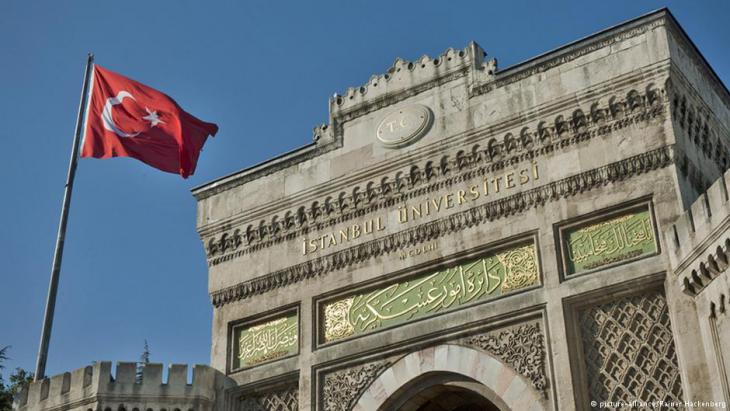
Turkish universities are coming down hard on academics who signed an appeal for peace, providing the government with an ideal pretext to deal with its political opponents, writes Joseph Croitoru
On 10 January this year, 1,128 Turkish academics published a petition sharply criticising the Turkish army's military operation in Kurdish regions in the southeast of the country, which has been ongoing since the summer of 2015.
The text speaks of a "deliberate and planned massacre", as well as the "targeted expulsion of Kurds and other ethnic groups". "We will not be party to this crime!" the signatories declared, demanding an end to the military operation and compensation for affected civilians.
The Turkish government intervened shortly after the publication of this appeal. President Erdogan insulted the signatories as "sinister and ignorant pseudo-intellectuals" and launched a witch hunt that continues to this day. The university council, a body loyal to the AKP, announced directly thereafter that the requisite steps would be taken.
At this point, many signatories were denigrated and threatened at their universities by ultranationalists to such an extent that they stayed away from their places of work. Disciplinary proceedings were opened against hundreds of academics, but not just within their universities: the authorities also opened investigations – among other things into the alleged supporting of terrorism. Many lecturers were discharged or suspended during this wave of sanctions.
When four representatives of the petition initiative protested against these measures at a press conference in Istanbul on 10 March, they were taken into custody for the alleged dissemination of terrorist propaganda. But accusations of assisting terrorism could not be upheld during the Istanbul trial against the academics, which began on 22 April. They were temporarily released and are now waiting for the case to be continued on 27 September, in which, based on Article 301 of the Turkish penal code, the charge sheet will read "Insulting the Turkish nation, the state of the Turkish republic and the institutions and organs of the state".
Layoffs, suspensions and dismissals The impending trial is just the spectacular part of the sanctions. The other part, which has thus far been more serious for those affected, has generated fewer headlines, because action has been taken against the rebellious lecturers individually and for varying reasons.
The latest report by the solidarity group "Academics for Peace" lists a total of 37 cases of dismissals, as well as 31 suspensions and 12 resignations. Disciplinary proceedings are underway against 513 signatories, with the authorities carrying out investigations against 412 of the academics. Upon closer inspection, there is a feeling that both public and private universities ("foundation universities") are using the petition as a pretext to get rid of an entire array of critical voices.
Ritual cleansing: some 35,000 members of the army, police, judiciary and civil service have been detained or suspended on suspicion of Gulenist links since last weekend's abortive coup, during which more than 230 people were killed. The purge extended to the education sector on Tuesday, with all university deans ordered to resign, according to state TRT television and the licences of 21,000 private school teachers revoked
In this process, owing to the greater freedom they have in the drawing up of contracts, it is much easier for private universities to discard disagreeable members of staff – so far, there have been many more dismissals at foundation universities (26 out of a total of 37 cases).
The most recent examples of these are the cases of the sociologist Asli Vatansever and the social-psychologist Serdar M. Degirmencioglu, both of them discharged from the private Dogus University in Istanbul. Both had come to the attention of the authorities even before the petition, through critical publications on the excessive privatisation of the higher education sector.
Asli Vatansever, who graduated in Hamburg in 2010, published the Turkish-language study "Willing to teach anything" in 2015, in which she spotlights the difficult working conditions at private universities that have put teachers in a precarious situation. Ms Vatansever reports that university managers began keeping a close eye on her as a result of the controversy resulting from this publication.
Just as in the case of many of the signatories, the first disciplinary proceedings were launched against the sociologist in February, soon followed by two more, as she continued her active involvement in the peace initiative – most recently in mid-March with the public reading of a press release in the Kurdish city of Diyarbakir under siege by the Turkish military.
The early termination of her temporary contract as assistant professor in the middle of the current term is proof, says the sociology lecturer, that the university management "is not taking its academic responsibility at all seriously". It is an indication of the "corruptibility and the ethical decline of the Turkish higher education sector," she says.
Criticism with grave consequences For Serdar M. Degirmencioglu too, his criticism of the state of the private universities was not without consequences. All the more so when he accused these institutions of disregarding their non-profit status to focus on their own enrichment. The social-psychologist had already been dismissed once because of this, back in 2013, just 40 days after his appointment as full professor – but he successfully appealed the decision. He also plans to take his case to court on this occasion.
The university is now citing the Civil Servant Act No. 657, Article 125/E-b. This Article allows for the maximum penalty of exclusion from public service for both the publication and dissemination of banned works and declarations with political and ideological content and their presentation in the form of flyers and posters in the respective institutions.
But Degirmencioglu says he does not see how this law can be applied to him. The reasons cited for the charges against his colleague Vatansever are even more vague: with the signing of the petition, she accused the state of a "massacre", which the university management claims justifies disciplinary proceedings. The sociologist also plans to appeal, saying that the university is using "a political difference of opinion to rob me of my contractual rights".
A veritable witch hunt: in the wake of the recent coup, Turkey's Council of Higher Education has announced that Turkish academics have been instructed not to travel abroad on assignments. Academics who are currently abroad and do not have a compelling reason to stay outside the country, should return
One does not have to search for long in the publications of both academics to find views that could ruffle the feathers of the AKP. Asli Vatansever's German dissertation is titled "Origins of Islamism in the Ottoman Empire. A World-System Analytical Perspective". In it, she ascertains "inherent contradictions in the Ottoman system of politicising Islam" and a "disproportionate state power", which is diametrically opposed to the current AKP line which glorifies the Ottomans as tolerant rulers.
And in 2012, Serdar M. Degirmencioglu analysed the "body politics and sexual education" of Erdogan's party, also outlining his personal views on the matter. According to him, the "ruler system" is finding increasing application in Turkish secondary schools: this increases the minimum distance between girls' and boys' desks from 45 centimetres to a whole metre.
In 2014, the social-psychologist published an anthology in Turkish that ventured into a taboo area: "They said die, so I died – myths of martyrdom in Turkey". In it, Degirmencioglu examined how Turkey commemorates the Battle of Gallipoli, an event that has undergone intensive Islamisation by the AKP. He castigates the subsidised excursions to this historic place, organised by local AKP politicians all over the country, as "martyr tourism".
The government clearly wants to gag these and other critics of the regime, who are also on the list of sacked and otherwise sanctioned lecturers. Even if those affected are able to defend their rights – many have been taken to court – the threat will by no means have been averted.
After all, should their colleagues, who have been temporarily released from detention, be given custodial sentences in September for "defamation of the state", all signatories could face the same fate. This would make it easy to eliminate the nation's academic elite. The fact that the initiative has been awarded this year's Aachen Peace Prize can only be welcomed.